
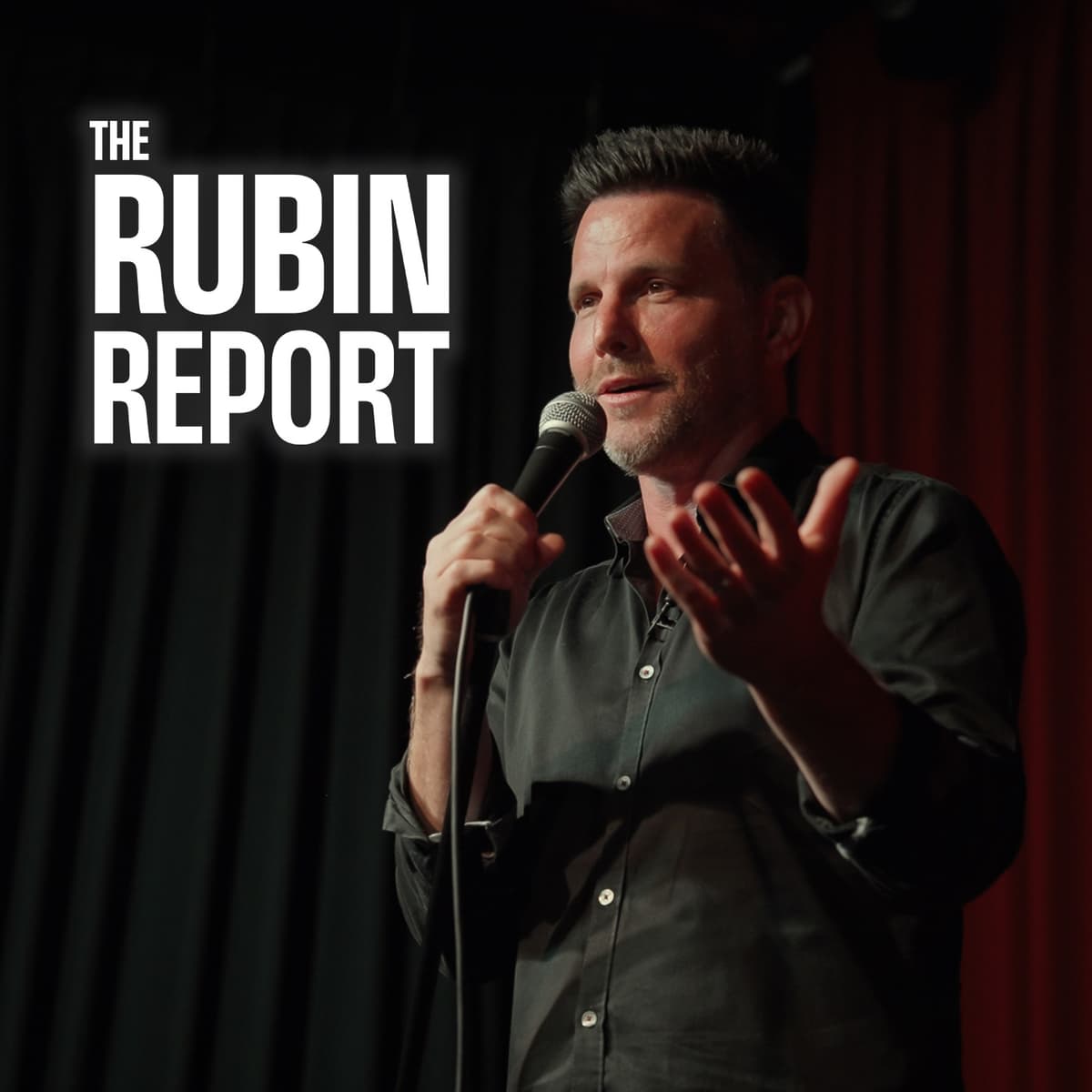

Podcast Summary: The Rubin Report
Episode: Listen to Room Go Quiet as Rubio Says the Ugly Truth About Iran
Date: January 16, 2026
Host: Dave Rubin
Guests: Mike Baker (former CIA operations officer), Elica Laban (Iranian-American activist & attorney)
Episode Overview
This episode centers exclusively on the volatile political and human rights situation in Iran. Dave Rubin leads a deep discussion exploring the vast gulf between the Iranian people and their ruling regime, the nature of recent protests, challenges faced by Iranian women and youth, and the dilemmas the West faces when responding to calls for intervention. The conversation is grounded in personal experience and expertise, referencing current news clips and reflecting on historical context, with both guests offering unique perspectives—Baker from an intelligence and military viewpoint, and Laban from her direct activist involvement and Iranian heritage.
Noteworthy Segments & Quotes
1. Guest Introductions (01:47–03:31)
-
Elica Laban gives background on her activism, emphasizing her accidental foray into advocacy and the importance of viewing Middle East issues outside of a Western lens:
"People need to understand the Middle East through a non-Western lens, which is often how they're looking at it." (01:47 – B)
-
Mike Baker shares his CIA background and expertise:
"About 20 years with the CIA in operations side of things, all of it overseas..." (03:04 – C)
2. The Rubio Clip – The Disconnect Between Iranians and Their Government (03:42–04:20)
- Senator Marco Rubio highlights the difference between Iran’s people and rulers:
"I don't know of any nation on earth in which there is a bigger difference between the people and those who govern them than what exists in Iran." (03:55 – D)
3. Deep Dive: Iranian Public Sentiment vs. Regime (04:41–06:52)
-
Elica explains the overwhelming opposition to Iran’s regime:
"As far as the percentage of people who are against the regime in Iran, it's at a steady 85%... you have to have the most bigoted assumption of any people to believe that... they enjoy being murdered for some type of upholding some type of ideological extremism." (04:41 – B)
-
Draws parallels to the Stalin era and critiques Western media for historic misconceptions.
4. Why Does the Regime Endure? (07:09–09:46)
-
Baker describes Iran’s "sophisticated and entrenched security apparatus" and cycles of crushed protest:
"The protests feel different... They were building, they were spreading. It crossed over a variety of sectors and demographics... But I got to tell you, I'm a very cynical person, because right now I'm feeling like this may just be part of that cycle." (07:38 – C)
-
He predicts little will change without real support from the US/international community.
5. The Plight of Iranian Women and Youth (10:27–12:17)
-
Elica details young Iranians' frustration due to exposure to global culture via technology:
"They can't make TikTok videos, they can't show themselves without their hair... They don't even have the ability to normalize their circumstances because they have access to the outside world now." (10:27 – B)
-
She highlights daily indignities and dangers, especially for women.
6. Technology, Revolution, and Repression (13:54–15:23)
- Rubin asks if the awareness sparked by technology makes revolution inevitable.
- Baker agrees tech makes suppression harder:
"There's no doubt that technology has made it more difficult for locking down a population... Now you can tweet through the Iron Curtain." (13:54 & 14:35 – C)
7. US Policy, Goalposts, and Realistic Intervention (16:23–18:44)
-
Elica criticizes shifting American "red lines" and empty rhetoric:
"The goalpost has been moved... The first statement was, if the killing begins, we intervene. Now the goalpost has been moved: since the killing has stopped, we won't intervene." (16:23 – B)
-
She expresses skepticism about bold US action, referencing history and pattern recognition.
-
Baker discusses practical US options: cyberattacks, sanction escalation, targeted strikes (rather than occupation or wholesale regime change):
"It's not as if the most recent NSC meeting was so we could come up with, well, okay, what targets do we want to hit? They know that." (18:44 – C)
8. Isolationism, Western Guilt, and Anti-Imperialist Narratives (21:53–24:36)
- Elica offers a scathing critique of Western moral confusion:
"It has gotten to the point where the crime is not the crime, the help is the crime? ... So much humanity has been forsaken for ideology... that is what's so scary about this entire situation is that we all have to surrender to these righteous fantasies of the intelligentsia." (21:53 & 23:39 – B)
9. Who Would Intervene if Not the US? (25:54–27:24)
-
Baker notes the world's dependence on US leadership in crises:
"People do turn to the US, they complain about it, but they do expect the US to lead in some fashion..." (25:54 – C)
-
Both discuss the massive challenge of supporting an unarmed population against an entrenched, armed regime.
10. "Regime Change": Messaging and Perception Problems (27:31–33:25)
-
Rubin identifies the term as politically toxic, leading to confusion and passivity.
-
Baker argues for reframing the issue:
"You'll never get stability or long term... peace in the Middle East... as long as the Iranian regime stays in place. It's that simple." (28:50 – C)
-
Elica says Iran is unique in the region, historically aligned with Western values:
"Persian values mirror Western values very closely... That is the thing that they don't understand, where they're against the concept of regime change." (30:51 & 33:25 – B)
11. US Policy Lessons: Iraq and Counterfactuals (33:25–35:48)
- Rubin speculates if the negative perception of "regime change" is due to how the Iraq war ended.
- Baker: Poor postwar management created a vacuum and chaos:
"If you'd had a successful end result... how I suppose the US population would define success... but there were a series of mistakes, starting with ousting the entire Iraqi military structure..." (34:09 – C)
12. The Betrayal of Human Rights by the Western Left (37:15–38:42)
-
Rubin reads a tweet criticizing leftist silence on Iranian atrocities.
-
Elica says campus leftists reflexively support Islamist regimes as enemies of the West, regardless of atrocities:
"They are openly admitting that they stand with the Islamists because the Islamists are against and Iran, where the Iranian people against these Islamists? Well, the Islamists are the left's ally. They are the ally in the war against the West." (37:15 – B)
-
Baker predicts student protests would resume if US or Israel took military action, regardless of context.
13. The Pre-1979 Iran and the Hope for Change (38:42–41:19)
- The show plays a nostalgic video of Iran pre-Islamic revolution, symbolizing how much has been lost.
- Elica says reminding people of Iran's cultural heritage—and using the language of anti-colonialism—might sway the undecided:
"If they see this... that this Islamist is force is like a colonial force that they're trying to free themselves from... the Persian culture and their values that are much more closely mirror to the West..." (39:48 – B)
14. Final Thoughts & The Stakes (41:29–42:32)
- Baker offers a cautious but hopeful closing:
"It wouldn't take much... just to see some meaningful support... so that perhaps this time... we get a different result... For the people of Iran, it would mean more opportunity, a better life, freedom... and for the rest of the world, it would mean a more stable region." (41:29 – C)
Memorable Moments & Key Quotes
- Rubio: “I don't know of any nation on earth in which there is a bigger difference between the people and those who govern them than what exists in Iran.” (03:55 – D)
- Elica: "The goalpost has been moved... The first statement was, if the killing begins, we intervene. Now the goalpost has been moved..." (16:23 – B)
- Baker: "Technology has made it more difficult for locking down a population... now you can tweet through the Iron Curtain." (14:35 – C)
- Elica: "How have we become so mentally distorted, that criminals committing mass murder is no crime, but the intervention from the outside world is the real danger?" (21:53 – B)
- Baker: "For the people of Iran, it would mean more opportunity, a better life, freedom... and for the rest of the world, it would mean a more stable region." (42:03 – C)
Important Timestamps
- 01:47 – Elica Laban’s personal and activist background
- 03:42 – Rubio’s "ugly truth" about Iran’s disconnect
- 04:41 – Elica on Iranian public opinion vs regime propaganda
- 07:38 – Why the regime survives: security apparatus
- 10:27 – Elica on the oppression and indignation of Iranian women
- 13:54 – Influence of technology, information, and revolution
- 16:23 – Shifting Western promises; skepticism about intervention
- 18:44 – Realistic US military options, beyond “regime change”
- 21:53 – The moral paralysis of Western anti-imperialist ideology
- 27:31 – The problem with “regime change” and Western perceptions
- 30:51 – Why Iran isn’t like Afghanistan or Iraq—cultural differences
- 33:25 – Could a different history in Iraq have changed everything?
- 37:15 – Betrayal of human rights by left/liberal circles
- 38:42 – Pre-1979 Iran and possible strategies to win support
- 41:29 – Final words of hope and caution
Closing Reflections
This episode delivers a passionate, informed breakdown of the Iranian crisis and the broader geopolitical and moral challenges facing the West. Both guests debunk misconceptions about Iranians and regime change, stress the unique historical moment enabled by technology, and challenge listeners to recognize the cost of inaction. The show is punctuated by pointed observations about Western hypocrisy and ideological confusion, ultimately making the case that meaningful support—however modest—could still make a decisive difference for Iran and the world.