← The Rubin Report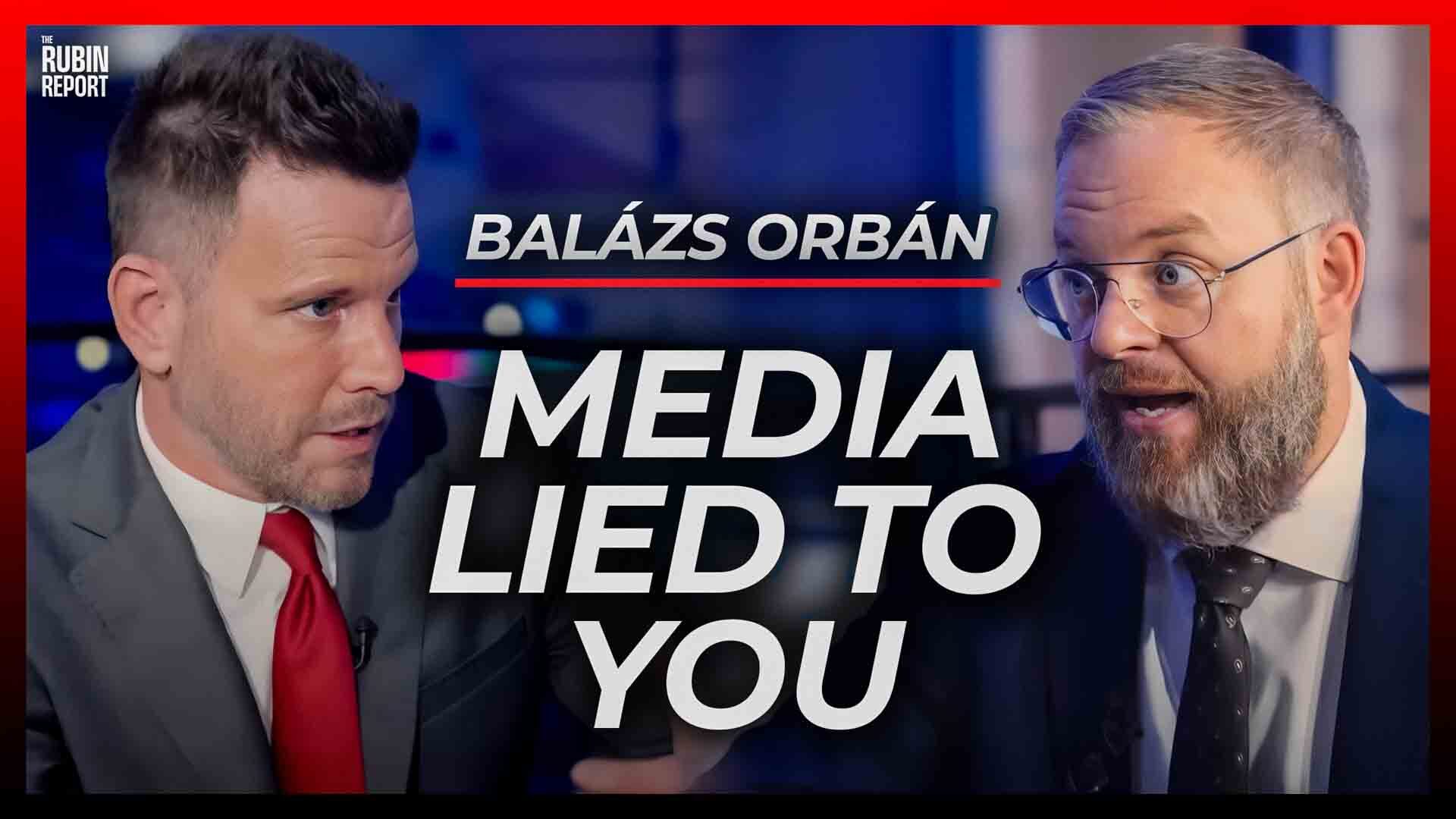
The Rubin Report
How Media Lied to the World about Hungary | Balázs Orbán
00:11:14
Dave Rubin of “The Rubin Report” talks to Balázs Orbán about Hungary’s misrepresentation by mainstream media; the cultural challenges posed by Hungary’s unique language and history; how liberal media falsely portrays Hungary as...
Loading summary
Transcript29 lines
- [00:00]
Richard Karn
Hi, I'm Richard Karn and you may have seen me on TV talking about the world's number one expandable garden hose. Well, the brand new Pocket hose Copperhead with Pocket Pivot is here and it's a total game changer. Old fashioned hoses get kinks and creases at the spigot, but the Copperhead's pocket pivot swivels 360 degrees for full water flow and freedom to water with ease all around your home. When you're all done, this rust proof anti burst hose shrinks back down to pocket size for effortless handling and tidy storage. Plus your super light and ultra durable pocket hose Copperhead is backed with a 10 year warranty. What could be better than that? I'll tell you what an exciting exclusive offer just for you for a limited time, you can get a free Pocket Pivot and their 10 pattern sprayer with the purchase of any size Copperhead hose. Just text water to 64,000. That's water to 64,000 for your two free gifts with purchase W A T E R to 64,000.
- [00:54]
Unknown
By texting 64,000, you agree to receive recurring automated marketing messages from Pocket Hose. Message and data rates may apply. No purchase required. Terms apply. Available@pocket hose.com terms the mainstream media, which.
- [01:02]
Balazs Orban
Was back at the time also controlled by the liberals, they started a political campaign against us. And they were portraying Hungary like, like, like fascist dictatorship type of country and no one else. And the voters, the politicians on the other side, actually no one knew that who we are and what we're doing. So no one was speaking against it. And that was the liberal propaganda against Hungary everywhere. But then with Donald Trump, the situation changed.
- [01:42]
Dave Rubin
Okay? Balash Orban Political Director for Prime Minister Viktor Orban Every time I've interviewed you, I have to point out you are not related unless something has happened in the last.
- [01:51]
Balazs Orban
No, everything is unchanged.
- [01:53]
Dave Rubin
Still not married in the family yet. You know, it's funny, when I see you now, we've been doing this for a couple of years. It seems like it's like seeing an old friend we've both put on. You've gone a little more rustic than me. We chatted a bit last night and one of the things that you mentioned that I think we're going to talk about on stage in a few minutes and then again later tonight at the Danube Institute is how the country of Hungary is so misportrayed by the mainstream media. And as you know, that's something that I really focus on from an American perspective. And you guys Played a montage or cpac played a montage at the beginning, just with some of the ways that that Orban, Viktor Orban and country are perceived. And it's rather extraordinary, even though it's kind of old hat for us because we've been through this game.
- [02:38]
Balazs Orban
Yeah, it's true. I think, you know, when I think how the situation was looking like 10, 15 years ago, I remember that it was very hard to explain for us Hungarians who we are and what we are doing, because we have a very special language. It's only 12 million people on earth is speaking this kind of language. And you don't know the cultural and the linguistic context. You have no idea what's going on in the country. So it's very hard to explain to the foreigners what's going on. But. And the mainstream media, which was back at the time also controlled by the liberals, they started a political campaign against us and they were portraying Hungary like fascist dictatorship type of country and no one else and the voters, the politicians on the other side, actually no one knew that who we are and what we're doing. So no one was speaking against it. And that was the liberal propaganda against Hungary everywhere. But then with Donald Trump, the situation changed. Because I think American people and many Western European people realized when the liberal media started to spread lies on Trump, they realized that, oh, they are lying on this issue.
- [03:57]
Dave Rubin
So start seeing it in one place, the next thing you're seeing it in.
- [04:00]
Balazs Orban
And then they realize that if they lying about Trump, it's possible that they are lying about Viktor Orban in Hungary as well. And they are lying about many things. And people started to be curious about what's going on. And this is why we are very happy to have so many Americans who are here and they have field experience what's going on and they can broadcast a different context, which is closer to the truth than the liberal one.
- [04:29]
Dave Rubin
The media compilation they showed beforehand, I mean, the things they were saying about Hungary and about your prime minister, it's exactly the same stuff. It is exactly the same playbook over and over. Interestingly, you mentioned at an event last night that we were at the Roger Scruton Cafe, which there are several of here. Great conservative thinker who unfortunately is an longer with us. But you mentioned there that right next door was a communist and Bark s Cafe in this place that we are told is authoritarian and has no dissent. That quite literally next door the Marxists have their own cafe. The bar is anyone there? Was anyone.
- [05:04]
Balazs Orban
The bar is called Red Ruin. So that's A that's on the notes.
- [05:09]
Unknown
Yeah, yeah, yeah.
- [05:11]
Balazs Orban
And, and they live next to each other.
- [05:13]
Dave Rubin
So you have dissent here. There are people who are not happy with the government and they're in jail.
- [05:17]
Balazs Orban
And there are, yeah, there are many people. But you know, we try to convince them that it's a, it's the best decision to, to, to, to support the government. But if you are not able to convince everyone, we still can convince the people that even if you dislike the government, there are some important civilizational issues which are not, which is, which, which is not about party politics. It's about, it's about the country and about how to defend it. So the migration issue, it's a perfect example. Now I would say 80, 90% of the society begs the Hungarian government on the migration policy which is basically just closed borders.
- [06:03]
Dave Rubin
That's the most simplest way to put it.
- [06:06]
Balazs Orban
They don't like us, but they support our migration policy. And I think it's very important for every country to have you know, like cultural, civilizational, society based agreements within the society shared by the leaders. And it has nothing to do with party politics. You can love, you can hate politicians and you can do whatever you want, you can say whatever you want. But there are some basic things like leave alone our children, protect the borders, preserve the sovereignty not to bring a country into a war and things like this. This is above politics or should be.
- [06:45]
Dave Rubin
You also mentioned something last night that I will bring up when we're on stage later, which I thought was interesting, which is that in some sense what you're suffering from right now is a function of your own success. That because you guys have done this right as it pertains to the border, you're obviously at odds with the European Union. Your economy basically is doing well, especially to the backdrop of what's happening in a lot of other Western European nations that at some level the electorate kind of doesn't realize that things could be significantly worth.
- [07:12]
Unknown
Today we'll attempt a feat once thought impossible. Overcoming high interest credit card debt. It requires merely one thing, a SOFI personal loan. With it you could save big on interest charges by consolidating into one low fixed rate monthly payment. Defy high interest debt with a SOFI personal loan. Visit sofi.com stunt to learn more. Loans originated by SoFi Bank NA member FDIC terms and conditions apply nmls696891 yeah.
- [07:42]
Balazs Orban
And this is why, this is why it's very important for us to have the foreigners who are, who are here in Hungary and they are explaining to the Hungarian public as well, that, that. Guys, this is unfortunately not the case in every country. So. So politicians are persecuted, people are persecuted based on their comments, their tweets, their. Their political opinions. The migrants are on the street. And it can happen in Germany. There was no politician or in France who was saying back in the time, 20, 30 years ago that, guys, what's going on 30 years forward will change our country, so we should rather stop it now. No one was saying it in those big countries. And people I think would be, would love someone who is telling them the truth. So this is why for us, it's important to have our friends here in Hungary and explain to the Hungarian audience what's going on. And things unfortunately can be much worse. So we have to be able to defend our values.
- [08:50]
Dave Rubin
Would you have ever thought years ago that Hungary would become sort of an epicenter of freedom the way that it is? I mean, you're a country of, I think 9.7 million people. You just mentioned only 12 million people worldwide speak your language. And yet you really do seem like the European epicenter of freedom. America is sort of the world epicenter. And you guys are the satellite in.
- [09:10]
Balazs Orban
This part of the world. We talked a lot about this with the Prime Minister and he many times said, he said it publicly as well, but also many times told me that, you know, our job is not to save the word, our job is to save Hungary. So it's like we don't want international attention. It's like we just want to have a government which helps the nation to thrive. This is the only important part of the job. But what happened? The attacks came from outside. And we realized that if we are only focusing on domestic issues, then we will lose the battle because they will destroy us from outside. And they have the power, they have the media, they have the sanction regimes, they have the political pressure, they have the NGOs and everything. So this was the point where the Prime Minister said that we have to create a system which is helping us to defend the country. And on this level, we have to engage in international politics. And they have the conservative right wing sovereignty forces all over the world.
- [10:29]
Dave Rubin
So since this is one of three events that we'll be doing together, I'll save the rest of the questions for later. Let me ask you one other thing for now, which is, so when people look at a small country that has its borders under control, that has confident governance, what is the biggest external threat? The things that you just mentioned, what is the biggest thing that you could be sanctioned by the European Union or that they can hamper your ability to trade. What would say, the biggest threat from sort of like what we call the globalist order?
- [10:55]
Balazs Orban
I give you one example. We are already under sanction by, by the European Union because we are defending our borders. The Hungarian government has to pay 1 million Euro per day because we are not opening our borders. So it's, it's, it's, it's a sanction which is, which is operating every day against us and.
- [11:18]
Dave Rubin
Probably so they can fund propaganda against you.
- [11:21]
Balazs Orban
Yes, yes, exactly. And you know what is going on, what happened with the war in the last three years? Prime Minister Orban was saying that there is no solution on the battlefield. The sooner we get back to the diplomatic track, it will be better for everyone. But the European leaders were pushing, pushing, pushing to another direction. And it caused a massive destruction. The negative consequences on the field of energy, on the field of inflation, on the field of general stagnation. What you experience in Europe are affecting the Hungarian people. So the biggest challenge for us now is, it was mentioned by the Prime Minister, how to deliberate Brussels, how to regain the control, because now it's controlled by a globalist machinery and they are using everything what they have against the nation states and the national governments. It's not democratic at all. It's the opposite of democracy. What is going on there? So if we want to preserve Hungarian sovereignty, then we have to be part of the European cooperation of the nations, but also defend the country from the Brazilian liberals.
- [12:36]
Dave Rubin
You may continue this on the main stage.
- [12:38]
Balazs Orban
Thank you very much, Dave.
- [12:44]
Unknown
Marketing is hard, but I'll tell you a little secret. It doesn't have to be. Let me point something out. You're listening to a podcast right now and it's great. You love the host. You seek it out and download it. You listen to it while driving, working out, cooking, even going to the bathroom. Podcasts are a pretty close companion. And this is a podcast ad. Did I get your attention? You can reach great listeners like yourself with podcast advertising from Libsyn Ads. Choose from hundreds of top podcasts offering host endorsements or run a pre produced ad like this one across thousands of shows. To reach your target audience in their favorite podcasts with Libsyn ads, go to Libsynads.com that's L I B S Y N ads.com today.