← The Rubin Report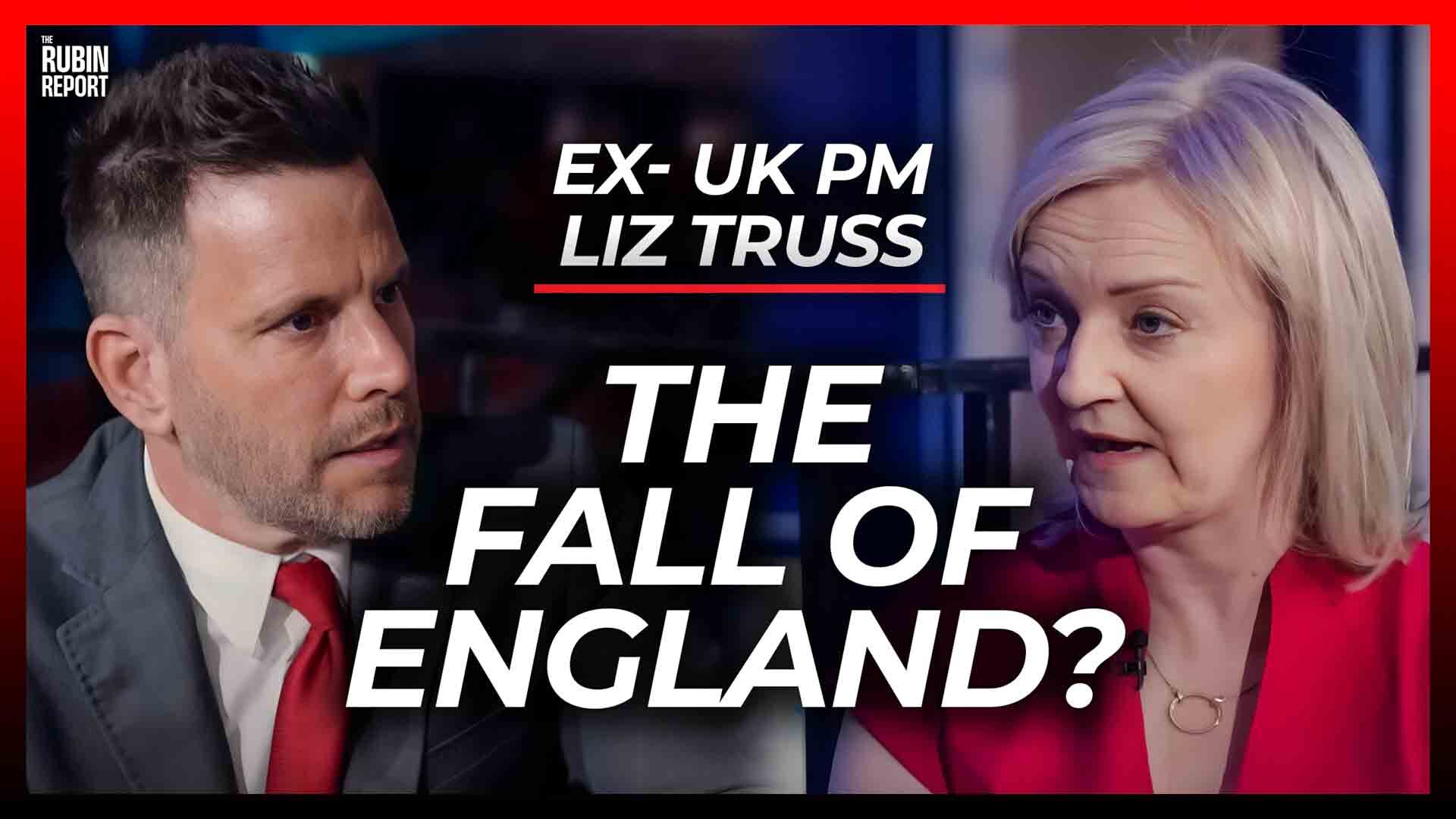
The Rubin Report
If This Isn’t Stopped, UK’s Fall Is Irreversible | Liz Truss
00:13:35
Dave Rubin of “The Rubin Report” talks to Liz Truss about the decline of free speech in the UK; the rise of mass immigration and de-industrialization; the failures of the Conservative Party to back real reform; how establishment orthodoxy stifled...
Loading summary
Transcript32 lines
- [00:00]
Liz Truss
So there are lots of different problems here. But what has happened is an orthodoxy has taken over British institutions in the same way as it's taken over European institutions. And that orthodoxy believes in mass migration, multiculturalism, toleration of Islamism. And we've seen appalling cover ups of grooming gangs in Britain. You know, girls as young as 12 being systematically R ped you've covered and now no national inquiry. It's been covered up. So there is a group of people who have essentially taken over our institutions with a particular worldview and they don't want to be challenged.
- [00:49]
Tucker Carlson
All right, former British Prime Minister Liz Truss. It's nice to see you here in Hungary.
- [00:53]
Liz Truss
Great to be here.
- [00:54]
Tucker Carlson
What brings you to this fine country on a shorter flight than I had from America.
- [00:59]
Liz Truss
We have a big issue in Britain, which is our traditional British liberties are under threat, in particular, free speech.
- [01:06]
Tucker Carlson
Yeah.
- [01:07]
Liz Truss
And what we want to do is work with our allies across Europe, across the world, including the United States, to restore what made Britain great. And that's why I'm here to talk about that, to promote that, to get support for that agenda.
- [01:24]
Tucker Carlson
So I want to talk specifically about three speech. But broadly, I've been to the UK a couple times in the last few years. People are alarmed. I mean, I would say almost more than any other Western European, European nation, at least the ones that I've been to. There is a real sense that your country is slipping away. What level do you think this is at at this point?
- [01:44]
Liz Truss
It's a very severe level. And I believe unless there's change in the next few years, it could become irreversible. We've got a major problem with mass immigration. We've got a major problem with deindustrialization, with stagnation. So people's incomes aren't going up. They're seeing their towns and villages change, their cities change. Things are getting worse. But we have a very powerful status quo, a very powerful establishment that doesn't want the radical change that our country needs. So it's a very serious situation we're in.
- [02:17]
Tucker Carlson
So let's deal with the borders and immigration first, because that seems to be a top of mind. And here we're in Hungary, a place that closed their border, and, you know, they're paying the price from a European Union perspective. I talked with Balash Orban on stage. They pay a million euros a day to the European Union just because they keep their borders closed. It's quite absurd, frankly, from an American. What do you do? I mean, not only do you have illegals in the country. But you also have a lot of legal people that seemingly don't want to adopt the British values that you're talking.
- [02:44]
Liz Truss
So there are lots of different problems here. But what has happened is an orthodoxy has taken over British institutions in the same way as it's taken over European institutions. And that orthodoxy believes in mass migration, multiculturalism, toleration of Islamism. And we've seen appalling cover ups of grooming gangs in Britain. You know, girls as young as 12 being systematically raped and no, no national inquiry, it's been covered up. So there is a group of people who have essentially taken over our institutions with a particular worldview and they don't want to be challenged, which is why we're seeing free speech being suppressed, because they don't want people to know just how badly wrong it's going. And I think all of these problems are connected. So mass migration is putting pressure on housing costs, which means that Brits aren't able to start a family, they're not able to buy a home because it's too expensive. That's creating a population crisis which then creates a demand for more migration. You've also got a left wing ideology in terms of things like net zero, which is making British energy very expensive. So our energy costs in Britain are four times what they are in the United States. So all of these things are compounded and people feel that things are getting worse and they can't even say what is wrong. So they can't even complain about the grooming gangs or speak out about what happened in Southport because they're literally fearful of getting arrested. And that is what we've seen.
- [04:24]
Tucker Carlson
So what do you do at the cultural level first? So when you talk about the Islamization problem, I mean, I walk around London. It does not, you know, from an American perspective, we think it's all Downton Abbey. It certainly doesn't feel like Downton Abbey if you walk around London anymore. It just feels different now. So, so what do you actually mean?
- [04:43]
Liz Truss
Well, what you have to do is, first of all, you have to restore justice to our justice system. So at present we have a two tier system where if you tweet is getting worse. If you tweet something, you could be put in jail, but if you're found abusing children, you might not be jailed. I mean, it's a ludicrous system. So what we need to do is restore accountability. And a similar thing has happened in Britain that happened in the United States, which the deep state, the unelected bureaucracy accumulated A lot of power, particularly under Tony Blair. He gave more power to judges, more power to so called independent bodies. Those bodies have now been captured by WOKE ideology, by Islamic, extreme Islamicism, by the sort of multicultural human rights lobbyists. They said, we don't really care if you're British or if you're Afghani. You've got the same rights in Britain. The British public don't agree with that. They believe that if you are British, that is what those are, the people the government should be prioritizing. So all of that has to be changed. And the way to change it is to do what President Trump is doing in the United States, win an election. But once you've won an election, you need to take on the institutions. So in the same way as President Trump is taking on Harvard, you know, a new government needs to take on the culture in British universities, the culture in the British civil service, the culture in the BBC, because the policies that we've been talking about, those are not things the British public support. But at present, politicians can't change them because the power is held by the bureaucracy. So that's what's going to change.
- [06:26]
Tucker Carlson
So what's going on with the Conservative Party in your country right now? It's a little hard to figure out. Like, are they, do they have the, the wherewithal to do?
- [06:36]
Liz Truss
Well, what I discovered when I became Prime Minister back in 2022 is the Conservative Party would not back me up to take on the establishment. I faced a massive push against my policies from the bank of England, from the treasury, from all of the bureaucracy, because they wanted to carry on with net zero, they wanted to carry on with high taxes, they wanted to carry on with high spending. And there were too many people in the Conservative Party who didn't want to take those people on. That is the problem with the Conservative Party. And it's why we left office after 14 years in government with record immigration, with the highest taxes for 70 years, because those MPs were not prepared to take on the establishment and reverse the policies Tony Blair has done. So it's a bit like the rhinos in the Republican Party. You know, they went along with the establishment, they went along with things like transgender ideology with net zero, you know, the environmental extremism, they went along with all of those policies. So what has now happened is because a massive vacuum has been left, you've got Nigel Farage and Reform have filled that space. And I think the Conservative Party is in a very difficult position, unless the only way the Conservative Party can save itself is to say, we're not going to be this party that just goes along with the status quo, that goes along with a gradual Islamification of our country, with the net zero policies, with the human rights ism. We're going to leave the echr, we're going to repeal all the Tony Blair laws, we're going to make the judiciary accountable. We're going to stop, we're going to leave. We're going to get rid of the Human Rights act so we can deport illegal immigrants. Unless the Conservative Party take that type of line, they are finished, in my opinion.
- [08:35]
Tucker Carlson
Do you think there's any reason to believe that they will? It seems like the Reform Party and Nigel have taken whatever the energy would have been there. It seems like that's what's driving Nigel.
- [08:44]
Liz Truss
That is definitely what's happening at the moment. Moment. I mean, the next election in Britain is in 2029, so it's a long way off. So things could change.
- [08:51]
Tucker Carlson
Yeah.
- [08:52]
Liz Truss
You know, suddenly the Conservative Party could wake up. But I feel like I was the person with the defibrillator trying to get the Conservative Party to wake up and say, look, if we don't change course, this is what I said in 2022. If we don't stand up against the transgender ideology, if we don't stand up against the net zero stuff, if we don't start getting our economy going, we will be finished. That's what I said in 2022. They didn't want to listen. Rather than listening to me, they decided to boot me out of office because they didn't want to hear the truth in 2024. We then got the worst election result since 1834. And now things are getting even worse because they've still got their hands over their ears and you've got. The British public are so frustrated. If you go around Britain, you will find huge frustration about the direction our country is going in.
- [09:43]
Tucker Carlson
Well, one of the interesting things that I found walking around London, this is just a few months ago, where I just saw. It just did not feel like old London to me. I started asking some people, well, where is everybody? Where are the people that I consider British? Well, they're in the pubs. They're in the pubs in the afternoon, and whoever's on the streets don't quite seem like the Londoner of old. Do you think you could have done anything differently? I mean, it seems like you had the right idea, but do you think there was a way that you could have managed your relationship?
- [10:10]
Liz Truss
I think it was just. I think if you look at what happened to Trump in his first term. He faced people inside his own organization that weren't loyal to him and wanted to undermine what he was trying to do. I faced that on steroids, to be honest. So Conservative MPs who were disloyal and wanted Rishi Sunak to become prime minister, but also the bureaucracy that were, you know, leaking, briefing, undermining what I was trying to do, including the bank of England, who were actually responsible. And they've since admitted that two thirds of the market movement that took place was down to them. So I think it was. I think it is pretty impossible to make the type of change I was trying to make without replacing the senior levels of the bureaucracy. So that's what I've learned and probably was I able to do it with that makeup of Conservative Party? No. You know, there just weren't enough true believers on my side. That's the situation. So I faced, you know, the type of situation that President Trump faced in his first term of finding there just weren't the people who were willing to stand up and fight.
- [11:27]
Tucker Carlson
Do you think it has to happen sort of all at the same time with the European countries? Like, do you think that the UK and France and Germany and Holland, but they all have to reset at the same time because. Or can it happen sort of separately?
- [11:44]
Liz Truss
So what I hope is that Trump is the first domino and that we're going to see that domino across Europe.
- [11:51]
Tucker Carlson
We have it here. It's in the backdrop of these explosions.
- [11:53]
Liz Truss
Well, definitely, definitely in Hungary, and we're also seeing that in Italy. I think Britain will probably be the first because we have a first past the post system. So if you do get 350 MPs with backbone, you can deliver the change Britain needs. It is possible. Whereas with France and Germany, Germany particular, I think it's harder in a proportional representation system. So I would. From what I see, I think Britain is most likely to have a Trump revolution first. Or maybe I'm just wishful thinking. I don't know. Maybe that's what I want.
- [12:29]
Tucker Carlson
But maybe we need a little wishful thinking. Right.
- [12:32]
Liz Truss
Well, I think we need hope. And that's. You asked me at the start of this, why am I here? Because I want to meet fellow conservatives who want to shake things up, who know how badly wrong it's going in Europe. And we need to work together because the left work together. If you look at the World Economic Forum, the Soros Network, the imf, all of these organizations, the devil is due.
- [12:57]
Tucker Carlson
They're doing horrible things, but they know.
- [12:59]
Liz Truss
How to do it and they have huge resources, they have huge money, they have huge sway over the mainstream media. That's another thing we need in Britain is a much more developed, independent media to take on the mainstream media.
- [13:13]
Tucker Carlson
It's been a pleasure and I wish.
- [13:14]
Liz Truss
Thank you. Thank you. Very nice to see you.
- [13:17]
Tucker Carlson
If you're looking for more eye opening and worldly conversations, make sure to dive into our international playlist. And if you want to watch full interviews on a wide variety of topics, watch our full episode playlist, all right over here. And to get notified of all future videos, be sure to subscribe and click the notification bell.