← The Rubin Report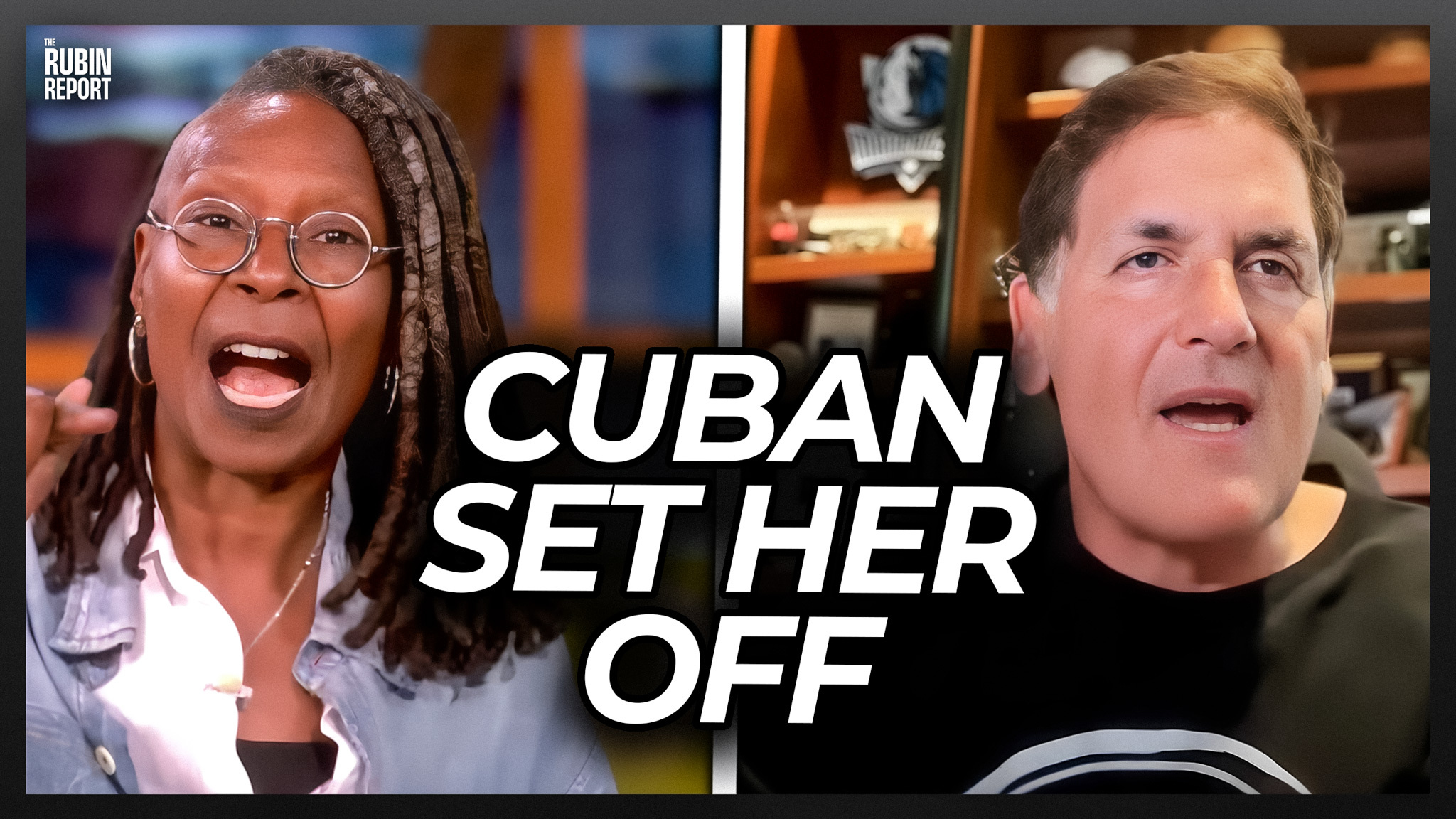
The Rubin Report
Listen to ‘The View’ Crowd Gasp as Whoopi Melts Down Over Mark Cuban’s Mild Criticism of Dems
00:38:39
Dave Rubin of “The Rubin Report” talks about ”The View’s” Whoopi Goldberg lashing out at Mark Cuban for his stating the simple facts that Democrats need to do more than just be anti-Donald Trump; CNN’s Ana Navarro and Abby Phillip telling...
Loading summary
Transcript1 lines
- [00:00]
Dave Rubin
Foreign. What's up, guys? I'm Dave Rubin. This is the Rubin report. It is July 17, 2025. We are live streaming via the Internet on rumble, YouTube and locals. I'm not even going to tell you to subscribe today. I know you've subscribed. Why even bother having to say that? And we just got a whole. We got a Rubin Report, Locals, community Q and A, and just like a whole bunch of stuff that I think loosely has a narrative to it, but mostly it's a bunch of stuff that I wanted to get to and talk about. And it's my show and that's what I'm gonna do. So let's start. We haven't shown you a clip of a woman who smokes her own dreadlocks lately. Yes. I'm talking about half Jabba the Hutt, half the Predator. Whoopi Goldberg, the moderator of the View. She was talking to Mark Cuban, and Cuban was, I think, laying out something that sounds kind of right, like the Democrat messaging has to be better than Trump sucks. And, well, here's Whoopi's response. Trump says, you know, this guy is blue. Trump sucks. You can't. That's not the way to win. It's just not, because it's not about Trump. It's about the people of the United States of America and what's good for them and how do you get them to a place where they're in a better position? Okay. Yeah. Okay. So let me remind everybody who was out in the front lines marching when we had the giant marches that went on. It was the people. The people went out. They were not navel gazing. It was older people who were saying, why are you touching my Social Security? It was not people whining. It was about people saying, why are you taking these rights from my child? When my child was born here, this has not been about Democrats laying back. This has been about y'. All. And when you say Democrats, he's talking to us saying our messaging is bad. And I'm saying, no, our messaging has not been bad because people have been out. She's starting to scare me. It's like something has shifted with her where she's actually starting to scare me. Now. First off, let me just address Mark Cuban for a minute. Cuz Mark Cuban, you know, he's sort of, I would say a not totally insane leftist. That's that always like ever decreasing sliver of people that are kind of liberals, but they still don't know that they really should just be alongside with the conservatives fighting for Freedom and America and GI Joe and all that stuff. And then. But he also has a degree of Trump derangement syndrome because he was wildly against Trump. He was for Kamala. He was constantly fighting with Trump surrogates during the election and everything else. And what I would say to Mark Cuban, and then we'll get to Whoopi is Mark, first off, I'd love to have you on the show. We have communicated a little bit in the past, but Trump's doing a lot of the stuff that you want done. You're a tech guy, you're a business guy, you're an entrepreneur. He's bringing businesses back here. He's incredibly bullish on AI and crypto and things that you care about, which we'll get to later in the show. He's getting fairer trade deals. I think, Mark, that you're probably okay with America having a border and some of the other stuff. So you're right that they need a better policy than just Trump derangement syndrome. But that's that mirror thing that I'm always talking about. But let's put that aside for a second. The whoopee thing. I mean, she's just so confused and angry and everything else. First off, nobody touched old people's Social Security. Social Security was cut for illegals and people that don't want to work, but who are able to work. And then all we asked was, could you check in twice a year if you're getting government benefits? So she completely made that up. Then she said that children's rights are being taken away. I don't. I've no idea what she's talking about. And then just this general thing with them that it's not about the policies, that somehow it's about the messaging. If they could just clean up the messaging. And no, people don't like your racist policies. They don't like your hatred of America. They don't like that you sit at a table with a bunch of women. I'm mostly looking at you, Sunny Hassan. But we'll get to you, Anna Navarro, in just a second. Who constantly call this place horrible and judge everybody by the color of their skin, not the content of their character. But now Anna Navarro, who. You know, I keep saying that CNN is like the receptacle now. It's the garbage receptacle for everyone that gets fired from other networks or kicked out of government or publicly shamed. If you masturbate on a zoom camera, you get fired by CNN and then brought back in. That's Toobin. If you get Kicked out of Congress, embarrassed, like, who's the fat guy in Westchester? Jamaal Bowman. Then you get a gig at CNN and msnbc. If you're Joy Reid, you get booted from msnbc. You're on cnn. It's just bizarro land over there on these panel shows, except for, obviously, you know, with a few exceptions. But here is Anna Navarro, who works at the View, but they somehow bring her over there to sit at these panels, and she gets into it with Brad Palumbo. Brad Palumbo, I think I had on the show years ago. I've done his podcast. Nice fella. I heard he just moved down to Miami, actually. And they're getting into it. And of course she's upset because you're not going to believe it. He's the worst of all things, a white man. Also, I want to respond to you saying that I was hyperbolic when I talked about a reign of terror. No, it might be hyperbolic for you as a white man. Oh, it's certainly not hyperbolic for me as a Latino. No, I'm not being racist. My opinion for being a white man. No, I'm not dismissing your opinion. I am telling you that. What? Latin? Latino? The Latino community, The brown community in America. Okay, well, let me speak with my voice. I mean, you said I was being hyperbolic. Let me racially. Sure, I'm not. You being a white man as an insult when you invoke it. To dismiss my being a white man as an insult when you invoke it. Are you. Do you think. Do you. Do you think Latinos are living under circumstances that other people may not be right now? We're about to have a whole conversation about that very thing. But I just want to make a point that. Brad, all she's saying is that her view of the situation is different from yours. I don't think that's an insult. She basically said I'm wrong, because I know. She just said, I see it. I see it. She said, I see it differently from you, which is not an insult. It's not. And it's also not a racial. It's also not an explanation. But we have a lot more to discuss on this very topic, so we'll have some time. All right, first off, Abby Phillips, she is just. I'm telling you, she is the dumbest person on television. She watched something happen right in front of her face where, of course, Ana Navarro was dismissing Brad's opinion because he's white. That's exactly what she did. And then Abby Phillips. 10 seconds. Later says, no, what just happened in front of your face to you, that isn't what happened. And there's just something, you know, there's just like nothing happening in her eyes. You can just see it. But, yes, that's exactly what you did. Ana Navarro. It doesn't even matter what the topic obviously was about immigration and that. What Ana Navarro is saying is that Latinos are living in some horror right now, except Donald Trump is not sending ICE to look for legal Latinos who live here. They're looking for illegals. And you're not going to believe this. There are illegals who are white, and they've got to go. There are black illegals, there are Asian illegals, there are gay illegals, there are lesbian, Latino illegals. There's all sorts of illegals, but they're not like, my God, there's some lati. There's some white illegals. Let's leave them and go catch the Latinos. It's just the. It's the height of absurdity. And good, good job, Brad. Just going up there and not, you know, I think it. Maybe it was his first time on that panel and just, good job. Just not kowtowing to those ridiculous people. And again, Abby Phillips should just be utterly, utterly embarrassed. And yes, Ana Navarro is a racist. But. But I want to address the specifics, actually, of what Ana Navarro was doing there, because it's a trick that we all need to get over, because we've all been in that situation where you're arguing with someone and they'll say, well, you're a. You're white, so you don't have ability to talk about it. You're straight, so you shouldn't talk about it. Or you're this. Or you're privileged, or you have money and you shouldn't talk about it. And we've largely gotten over that in America. But I thought it was worth. This is a throwback from. What year is this? It's from about five years ago. You're gonna see it's Rogan's old studio. Won't even recognize the studio. This is Texas Congressman Wesley Hunt talking about when people say to him, how could you be a black Republican? And what the tactic is actually trying to do. I always push back on people that start a question off like this. Wesley, how could you. Wrong. Let me. Let me just stop you right there. What do they say that about the question? Lots of things. Give me one. How could you be a black Republican? Just. Just the wrong question to ask anybody. The question is, is why are you or why do you? Yeah. Either you're seeking to condemn or you're seeking to understand. If you're seeking to understand, you're asking the question why? Because you want to learn something. If you're asking how do you or how could you? You've already made your mind up, right. You're casting judgment with your question. You've already done. Grief do you get for being black and being Republican at the same time? I wouldn't say grief. I do get a lot of pushback. I get a lot of pushback on social media, as you could probably imagine, until somebody sits down and actually have a conversation with me. Right. And then all. And then all of a sudden you're reasonable. All of a sudden. Yeah. Well, I can't imagine anybody listening to this conversation not thinking you're reasonable. The absence of nuance is very dangerous. Yes, it is. Human beings are nuanced. There's no if, ands or buts about it. We are complicated. Super. We are nuanced. We are complicated. Unless you're on cnn, in which case you're mostly a dullard. Although I'll give Brad and Scott Jennings and sure, Michael Singleton and a couple other people who occasionally appear there. My friend Jillian Michaels, who was just on the other day, like, otherwise it's just non nuanced morons. But that's exactly right. We know what you're doing. Anna Navarro. Anna Navarro, you want to make an argument? I'll give you a little hint so you could be a little bit better at your job. So I'd have to talk about you a little bit less. Stop bringing up someone's race. Stop. Stop bringing up their sexuality. Stop pretending that because you, Ana Navarro, are a Latino that you are a victim. I know a lot of Latinos down here in Miami. Miami is considered North South America. I hear a lot of Espanol during the day. And guess what? My Latino friends here are not victims. Many of them are successful millionaires, own businesses, boats, all kinds of stuff. But you would rather they think that they're illegal and that someone is going to come get them while they leave the white guy to go play checkers, you ridiculous buffoon. Here is a bit more from that panel. Obama's falling into the messaging trap. The issue for Democrats is not just the messaging. A lot of them seem to think that, well, if we just got the messaging right, America would love our ideas. Actually, no. A lot of their ideas are deeply unpopular. The Democrats have allowed themselves to become the party that stood on in almost uniform behind child sex Changes across America. That's just not true. I'm sorry, I can explain it in 30 seconds how true it is. Joe Biden brought Dylan Mulvaney to the White House for an interview, talking about how important it was to keep those procedures legal in all 50 states. Every Democrat. After the recent Supreme Court decision, almost every Democrat in Washington put out a statement decrying it. That states would dare regulate puberty blockers being given to 11 or 12 year olds on the border on inflation. There are many issues where it's not a messaging issue. The policy is also the problem for Democrats. So what I would say is that on that piece that is not true. Democrats did not campaign on that. Yes they did. Yes they did. And yes, he's completely right. The Democrats new meme Brad's completely right is that it was a messaging thing. That's what I just referred to in the Mark Cuban clip. That was somehow about messaging. It wasn't about the policies, but the policies are horrible. People know that boys and girls are different. People know that communism is bad. People know that America is fundamentally good. People know that the founding principles of this country were not slavery and racism. We could do the laundry list of things. And the idea that the Democrats have sort of pushed is instead of perhaps taking a moment and taking a breath and being like, guys, did we really bungle this thing? Because you know, Trump is, at least before the election, in many ways, his negatives were so high we could have done a better job than maybe a guy with dementia and a diversity hire that nobody liked who soft cooed him. Instead of taking a little stock in that, they've decided this is all about messaging. Now, ironically, I will give the devil his due here. What they're doing with Mamdami is interesting because they're now packaging it differently, right? It's got that soft light that I'm talking about and the ambient music and he's smiling constantly. And they're pushing something very evil, the same bad policies, but they are packaging it differently. That's not a messaging issue. I do wanna make one other complete side note. I will never mention it again for as many times as we talk about if Brad becomes a regular on CNN or something else. Brad happens to be gay. He's openly gay. I'm not outing him. And I'm glad that it didn't come up in that debate. But imagine if he had turned to Anna in the previous segment and said, what right do you have to talk to me like that? I'm a gay man and they're Grabbing gay people off the streets. You know, you see how absolutely ridiculous that would be. So everyone on earth can figure out what their disability, which I assume he considers it a disability is, and what their problem is, and their axe to grind and the chip on their shoulder and throw it back at somebody else. And the truth is an edbaro, nobody gives a shit except racist morons like you. Let's move on. This from Eric Daughtry. Breaking. President Trump has told Texas Republicans that the GOP will now look to add five new red seats to the state's congressional map by redistricting before the 2026 midterms per Punchbowl. Whoa. It's really happening. This could have huge ramifications. So obviously both sides do redistricting when they're in power. Redistricting, it's literally a redrawing of the congressional map. And you figure out, and sometimes they're drawn in the craziest ways. Like, you know, you would think districts would just be like, you know, something like a bunch of squares and rectangles that kind of make sense. You know, something like that. And then you look at the way they redistrict things, and they're often like this in crazy ways. They end up being these crazy Tetris pieces that don't really fit together. Both sides do it. Here is Timu Obama, the apparent leader of the Democrat Party, half human, half nothing, on House Democrats and how they are going to fight Trump when it comes to redistricting. You may note that over his shoulder is Al Green, the man who has never found a razor and who also tried to impeach Trump. Enjoy. Those choices should be made by the voters in Texas alone, not Donald Trump, Mike Johnson, Governor Abbott, or MAGA extremists who want to manipulate the election, which will have an adverse impact on the quality of life of the people of Texas. We are unified. I'm thankful for the leadership of the members of the Texas delegation who are fighting on behalf of their constituents and every single resident in the great state of Texas. All of us should be focused on rescue, relief and rebuilding, not egregious redistricting of the Texas congressional map as part of an effort to undermine free and fair elections in Texas and in the United States of America. He just doesn't really sound like a person when he's talking. They all have their weird robotic hand motions, like Gavin Newsom. I just think it's okay. Redistricting aside, why doesn't he turn around and be like, this man behind me is literally turning into a Werewolf. Could somebody do something? Anyway, here's Scott Jennings explaining what redistricting is and how both people do it. So what does it signify that Republicans ahead of the midterms believe that, that it's going to be so necessary to get an upper hand that they have to actually redraw an entire state's congressional maps in order to get five whole seats out of it? Oh, probably the same thing that it signifies when they did it in Illinois and got a 143 delegation for Ds. Maryland 7 to 1, Massachusetts 9 to 0. We know what happened here in New York, California, even though they have a commission, we all know what goes on there in the, in all these. In a mid cycle specific are all of those cases in mid cycles? All of these cases are where Democrats use the power to have to give them an advice. But just to be clear, because I didn't do the research that you did in the break here, is it that they're changing it after the actual census process where you're supposed to create a, you know, you're supposed to go through the congressional redistricting process? Does it matter? Yeah, I think that's the whole point. So it's okay for Democrats to upside these states nine nothing in. Here's what I will say about this. I mean, I'm a Republican. I love that she admits she didn't do the research. She's like, I didn't do the. I was working on my hair. It's crinkly today. Didn't you notice it's crinkly? It's usually straight. Look, putting aside what you think about redistricting and I have just no doubt that it's highly corrupt. And it really does come down to usually to the state senates who are doing all sorts of corrupt things on both sides of the aisle. Scott's point is both sides do it. So I'm not defending what's going on in Texas right now without knowing all of the specifics, but both sides do it. And Abby Phillips, again, the dumbest person on television, but congratulations on the new hairstyle. You, you are up there litigating as if you're a Democrat. Pretend, lady, just pretend that you're nonpartisan. That's what the job is. I think otherwise you're not going to have that job very long and you're not really qualified to do a lot of other stuff. Speaking of women who aren't qualified to do things, here's lady eyelashes happen if they gerrymander. Can you talk on that? Thank you. Yeah. So first of all, it hasn't quite been said clearly that Texas has always been found to be intentionally discriminatory. And so I want y' all to understand the makeup of my state. The state is a majority minority state. And what this legislature historically has done is what they plan to do again is to dilute the voices of people of color in order to make sure that they can get to where they're trying to go. That state was grown by 95% people of color. They went out of their way to make sure that we got zero new seats for people of color. So that's exactly what they're gonna do this time. Well, werewolf guy's there and she's just calling everybody racist. And it's like, I don't know. I mean, I know I have a couple friends in Texas. It's like you guys are able to get around. She's implying black people can't get around Texas. Like, what are you talking about? What are you talking about? 95 rockets, by the way. All five starters, black. There you go. Check this out. From Derek Evans, he's a former West Virginia state delegate. Just to talk about redistricting and all the sort of craziness that's happening with illegals, because these things are all connected. California has 2.7 million illegals, giving them an additional five congressional seats. 22 states in the US have less than 3 million people in total population. California's illegals currently have as much congressional representation as around 20 states. So again, I'm not saying anyone's hands are totally clean here. Both sides do it. But if you eventually bring in all these people, you let them vote, you give them stuff, you put them in this perpetual slavery that is these low paying jobs and all of these things, like we kind of see through your fairly. Your fairly not so great written script. How about that? Let's talk about royal bread, which I'm absolutely loving these days. If you guys have tried so called healthy breads and bagels, you know, they usually taste like cardboard. That's what I expected from Royo until I tried them. Royo's breads and bagels are baked fresh with clean minimal ingredients. They're low in carbs, high in fiber and protein, and they actually taste amazing. Some have just two net carbs, so you can still enjoy your favorites and stay summer ready. Grab 20% off@eatroyo.com with promo code Rubin. That's eatroyo.com, code Reuben. All right, so you know, yesterday we showed you the video of Trump talking about a $92 billion investment flowing into Pennsylvania, mostly related to AI and to energy. We have a bit more on that right now. There's a lot going on, actually. Blackstone is pledging. This is from Gemini AI. Blackstone is pledging 25 billion for data centers at natural gas power plants in northeastern Pennsylvania. Google has announced a $25 billion investment in data centers and AI infrastructure across Pennsylvania, Jersey and Maryland, along with 3 billion to upgrade two hydropower plants in Pennsylvania. CoreWeave is building a $6 billion data center in Lancaster. Amazon is committing 20 billion for new data centers in Pennsylvania. Pennsylvania data center partners and powerhouse data centers are planning a $15 billion data center. Hub is investing a 1 million in cybersecurity education and a million to Carnegie Mellon University for energy research. And Meta is investing 2 and a half million with CMU to support rural startups and small businesses. So good things are happening in Pennsylvania, which, by the way, has a Democrat governor and that John Fetterman, the one, same Democrat, he is a senator there. But Trump is doing an awful lot that's helping the people of Pennsylvania. And here is Howard Lutnick on why they're focusing on Pennsylvania at the moment. So the, the key that we all know to the AI revolution is power, right? Power has to drive the energy, right? These, these chips, which you all think are little chips, these are giant chips, right? And, and, and a new Nvidia Blackwell is the size, the smallest you can buy is the size of a refrigerator, okay? And these suck energy like they're going out of style. So what has to happen is you've got to have the gas, right? For now, you need the natural gas or coal infrastructure in order to provide these giant AI data centers the power that they need. And it's the combination of technology investment and power accessibility that makes a location key and successful in Pennsylvania, as you all know, has that power. All right? So, as always, these are competent people Trump has put around him. You know, remember when Joe Biden a couple years ago announced accidentally that he had cancer and everyone was like, no, it's because he has dementia. And now it turns out he does have cancer. But he said it was because he was driving around Pennsylvania when he was a kid and the oil on the car washed on the car window and something, something, something. Well, you know, there are miners, Scranton, Pennsylvan, an energy situation there that is slowly dying, that those jobs are driving up. And now the United States government is investing and getting companies to invest. 92 billion. That is good. And I want to show You. One other thing about, we don't talk about Pennsylvania that often. One other interesting thing here, because Josh Shapiro is the Democrat governor of Pennsylvania. He's not great. He's just like an average, kind of nothing Democrat, but he's not a complete lunatic. He also happens to be Jewish, which is why they didn't select him as vice president. And they went with Tim Walls and God bless him for that. But he's. The guy's basically relatively sane. He's just wrong with his policies. But here he is talking about how he's willing to work with anybody because the AI race is here and we better lead on this thing. Look, let me be clear. You want to create jobs and economic opportunity in Pennsylvania. I want to work with you whether you're on the other side of the political aisle or whether you're in the private sector. Private sector, public sector, Democrats, Republicans, you got to work together to create economic opportunity. That's been the mantra of my work as governor. You know, our motto is gsd, get stuff done cnbc. So I got to keep it clean. And you've got to make sure you work together. And that really is, I think, at the center of what we're talking about here today. How do we work together to make sure that we are not just the dominant state, but the dominant country when it comes to I, I think this is one of the most critical national security issues of our time. Someone's going to win this race on AI. It's either going to be China or the United States. I damn well want to make sure it's the United States of America. And the way we win that is through the power of Pennsylvania energy and the ingenuity of the Pennsylvania workforce force. Well, Democrats, you could have had that guy. Actually, since you soft cooed Biden, you could have had him as the presidential nomination nominee. You could have had him as vp. You went with Walls, you went with Kamala and that guy. Again, I'm not on board the larger panoply of Democrat policies, but he is right. We're going to have to work together to lead on AI and we certainly don't want to fall behind China on that. And Pennsylvania seems to be a place that some of these data centers will flourish and they do need some jobs there. And that is all good. I would say to Josh Shapiro, I think you're probably in the wrong party, but patience, man, you'll figure it out. Here's some other good things that are going on via the Trump administration. We are working on bringing pharmaceutical manufacturing back to the USA and some stuff with Indonesia, which would probably be pretty good. They're a small country, but, you know, they're pretty good. We made a deal with Indonesia. I spoke to their really great president, very popular, very strong, smart. And we made the deal. We have full access to Indonesia, everything. As you know, Indonesia is very strong on copper, but we have full access to everything. We will pay no tariffs. So they are giving us access into Indonesia, which we never had. That's probably the biggest part of the deal. And the other part is they are going to pay 19% and we are going to pay nothing. And you have to understand, we had no access into any of these countries. Our people couldn't go in. And now we're getting access because of what we're doing with the tariffs. Pharmaceuticals will be tariffed probably at the end of the month. And we're going to start off with a low tariff and give the pharmaceutical companies a year or so to build, and then we're going to make it a very high tariff because we got to move them in. Look, there's two ways you do it. You make money and. Or. And. Or you have them move here so they don't have to pay the tariff. Those are the two ways the pharmaceutical companies are moving back to America where they should be. Okay, so look, what did I say from the beginning with the tariff stuff? In principle, I don't love tariffs, but I do like using them as leverage, which obviously that's what Trump was doing. And what was the whole point? The line that I quoted sacrifice David Sachs a million times on, we have to see where they land. Well, now we're starting to see. We've already gained $108 billion in tariffs. Now we'll have access to the Indonesian market and copper and some of the other stuff that Trump is talking about. And then certainly on the pharmaceutical side of this thing, I don't know if any of you remember Covid. It was a little mild cough that a few people had a few years ago, and then you had to lock your children in the basement, basically. But it would be nice if we were able to produce more of these things so that we're not dependent on, say, China for pharmaceuticals or when we need masks or other bizarre things. So that would be nice, too. And I thought this was a nice story. This is video of Home Depot co founder Kevin Lagone. And he has completely flipped on tariffs. Now, he was against tariffs, but he suddenly, as a businessman, seeing the lay of the land, realizing what's going on here. He realizes that what Trump did actually made sense. Initially, my concern was I don't like tariffs. That's what I mean. I like free trade. Right. However, I think, damn it, give Trump credit. His instincts are good. Look, let me tell you right now, I am sold on Trump. In fact, I'll say this. I think he's got a good shot at going down in history as one of our best presidents ever. That is a real turnaround because you didn't want to vote for him. I told you the reason. I want to tell you I'm a believer what I'm seeing happening is absolutely nothing short of a great thing. Yeah. You know what? Sometimes if your brain is working, if you got a couple neurons going on in there, you realize, boy, I was against this guy. Or I had this principle in theory, I had this principle in theory that I'm a free trade guy and I don't like tariffs. But then I saw how actually what this guy was doing was using them as leverage so that actually we would get more free trade instead of being screwed on every bit of free trade. Hot damn. Sometimes there's a little bit of a show involved with international trade deals. I can't believe it. Guys, let's talk about TWC parasite cleanse and then we'll get to a couple of rubinreport.locals.com community questions. Most people don't realize that pork is one of the top sources of parasites worldwide. The WHO and CDC both list it as a major source of tapeworms and toxoplasmosis. And research shows pork's poor detox pathways make it easy for parasites to thrive and spread. If you eat pork or sushi, travel at with pets, or just want to protect your gut and immune system, it's smart to do with the medical grade parasite cleanse at least once a year. That's why the wellness company created the Ivermectin and Babezadol parasite cleanse, a powerful combo that helps flush out parasites and supports your immunity and digestion. Just fill out a quick intake form and get a 4 use medical grade cleanse delivered to your door. Head on over to TWC Health Reuben and use code REUBEN to save 90 bucks and get free shipping. Don't wait. Your gut will thank you. All right, Joe says. Any books on the agenda for off the Grid August? May I politely suggest On Democracies and Death Cults by Douglas Murray and After the Pogrom by Brendan o'? Neill? Well, actually, I have both of those books in the office right over there. Obviously, I Have all of Douglas's books and I have a signed copy actually of Democracies and Death cults and Brendan o' Neill I've had on the show years ago. It's been a long time. We should get him back on. So, you know, I've had this odd thing when it comes to reading when I'm. When I'm gone. The first couple years, I would read a ton. I would sit on the beach and read a ton. And really now these days the only time I really have to read is on airplanes. And so I would do a lot of reading during August, the last like two years. I just am in shutdown mode. I really don't want to do anything. I can sit at the beach and stare at the ocean for literally five hours and David will be tapping me every now and again. Like, are you awake? Are you sleeping? Are you thinking? Are you. What's going on? And I'm just completely fine. I'm literally like, I can feel my brain just like going through it like a file cabinet. And I'm just getting rid of extra garbage and all of the stuff that we're all hit with for 11 months out of the year. And that's why I do this off the grid August thing, which is coming up in about two weeks. And I am very excited. Every year I'm excited in some sense. I view this as this is the end of our season right now in July and the beginning of our season. And we've got a couple great surprises coming and some new things that we're going to be doing with the show in the fall. But I probably will not read much. But you know what, you know what I'll try to do? I'll try to read one fiction novel. If someone gave me good fiction, I usually, I'm more of a sci fi guy, obviously. If someone gave me a great science fiction novel, we'll look in the comments, we'll try to find something. The idea of reading a political thing, nonfiction during August, probably not gonna happen, Talwai, but I appreciate the suggestions. Talwai says, what are your thoughts on the Democrat party spending $20 million to try to reach out to young men? And what do you think it will take for them to be successful? Well, it's sort of a theme of what the earlier portion of the show was about. Messaging versus policies. I mean, they would have to. They can dump all the money they want into messaging things differently. And by the way, I'm giving credit to Mamdani and the way that they are doing the soft lighting and the. And the lo fi music and that they are slick as fuck and it's grotesque if you really understand what they're doing. But I'll give credit where credit is due. He smiles all the time and it confuses people. Like, how can you be so evil and smile? Even though Ronald Reagan famously said, when socialism comes, it'll come with a smile. But I think basically $20 million to. No, they. You want to bring young men back? How about let them be men? How about stop emasculating them? How about stop pushing them to cut their genitals off? How about stop telling them that they're bad because of the color of their skin? I mean, all of the stuff that's. You want that, like, make it, you know, like create something functional so there's a reason to vote for a Democrat, otherwise get the government out of our way. And Trump's done doing a much better job of that. And there is some sort of alpha beta version happening with the Republican and Democrat Party and kind of is what it is. Minnie. Sorry, I'm going a little fast here, guys. We're crunched today because there's so much going on before off the great August Mini says, why are Democrats saying that they are agreeing with the MAGA base on Epstein? So this is one of the crazy things. I referenced it earlier in the week. Look, just like you guys, I don't know what the truth of this entire thing is. I want everything released that can be released as long as the innocent are protected, right? Every person of power, whether it was a former president or an actor or whatever you did, some shit with kids like that should be released. And as long as there's evidence of it, not hearsay and conjecture and all that. What the hell did Pam Bondi mean by the files? All of that. I think we will. Some of that will leak out. But there is this tension right now between Trump and the base. But your point is the one that I made a few days ago, which is, it is very strange to me that there's an awful lot of Democrats, including Timo Obama and many others, suddenly saying we should release these files. That's what the MAGA base wants. And I think that's what Trump is responding to when he's hitting back so hard. Because Trump has been through this with Russia, Russia, Russia. He's been through the Hunter Biden laptop. He's been through all the hoaxes. And do you think the Democrats are suddenly like, as if they were like, yeah, you know, we had the House and the Senate and the presidency and we didn't want to release them. Now they want to release them while the Trump base wants release them. Like it's not cynical to think that they are up to new. No good. I think I said it on the show yesterday, but this is a very. Admiral Akbar, it's a trap moment. So I don't, I, I would, let's put it this way. I would hope that Trump and Bongino and Cash and Bondi are competent and honest and decent and we'll do the right thing. Lois says, what would you like to see happen after it's been revealed that Biden's pardons were done by auto pen under the direction of an assistant? Do you want Trump to go full scorched earth on those guys, Foushee, Mark Milley, etc. Well, look, we know it. We, we now know it. I don't, I don't think there's any doubt that the, the auto. Whether we find out that Biden was sleeping while the auto pens were being signed or whether he, what did they tell him? Mr. President, we're gonna sign all these things by auto pen as if he was paying attention. Like, who the hell knows what is what as it pertains to all that. What do I want Trump to do? I think if there was a way, but I don't know exactly how this would work. Like, you'd have to somehow, you would have to somehow contest the pardons via the auto pen. So then you could go after, say, a Fauci if they were able to really. Fauci lied under oath, for example. We know, but that's probably one of 20 crimes that this guy committed. But you'd have to then that's why probably nothing ends up happening with this because you would have to litigate what they did with the auto pen, get people to really turn on Biden, blah, blah, blah, blah, blah, and then go after Fauci. So my guess is not much happens other than, again, we just keep exposing things and we keep waking people up. All right, let's talk about Tax Network USA for a moment and then a couple more questions. This month, Tax Network USA is celebrating American Pride Month with 10% off all services honoring freedom, resilience and financial independence. If you missed the April 5th 15th deadline or you have back taxes, don't wait. The IRS is ramping up enforcement fast. Penalties can hit 5% per month. The good news, Tax Network USA can help. Whether you're self employed, run a business, or your finances are a mess, their experts know how to get Results. Consultations are free, and acting now could save you from wage garnishments or bank levies down the road. Call 1-800-958-1000 or visit tnusa.com dave to get started, take advantage of this month's sale for 10% off. Bambi says Dave. What's your favorite ice cream flavor? That's my kind of question. We're always talking about politics around here. I love the cookies and cream. Wherever Dave goes, if he's gonna have ice cream, and it's pretty rare these days. I'm not having much sugar, but I'll have a little bit in August. Cookies and cream. Not cookies and. Or cream. Cookies and cream. It's just the Oreo, basically, with the vanilla ice cream. Pretty good. Crush it up. You're gonna get a bigger chunk in there every now and again. Very nice, Cam. Final question says, any good recipes for Kopal? I missed the live stream earlier this week. Yes. I'll give you two. I'll give you two very simple ones. First off, grab me a bottle. Someone grab me a bottle right over there. Very excited about our new bottles that just came in. So I talked to you guys about how every bottle of Copal, you grab me both bottles, I'll illustrate something right in front of the camera. Good move. It's fast. It's fast. That's why I pay this guy. So every single bottle of Copal is an individual piece of artwork. As you can see, these are different. The artwork on each bottle is different. Sometimes it's subtle differences, sometimes it's very different. But you can see they're subtly different, each one. So some of them have much more blue. Some of the lines go differently this way or that way or the other thing. You can see that, right? People can see that they're different there. Yeah. But I will give you. And the tequila is just spectacular. The liquid, as we call it in the biz, it's a great, beautiful, exquisite reposado. And there's no burn, and it's light and refreshing and all that stuff. So look, I like it just on the rocks. That's it. I like one big rock. Very happy. You can drink it just neat with nothing, if that's the way you want to do it. But I'll give you two quick recipes. One, it's the simplest thing possible, and I'm telling you, it's phenomenal. Take a wedge of watermelon. You don't even have to squeeze it. Just stick it in there with the ice. Let that thing soak you're gonna get that beautiful aroma of the tequila and the watermelon. Absolutely beautiful. You can put a little lime juice in there if you want. Like the tiniest squeeze. That would be great. And another one. Tequila mojito. I think I made it up. I'm the first person ever in the history of the world to do it. I want you to muddle some lime. I want you to muddle some mint. Get it together nice and easy. Ice, tequila, club soda. Swirl it. Drink it. That's it. Gotta go. Goodbye, governor. What kind of gun is it? This is a Beretta A400 I brought. I bought it when I was shooting a lot of trap because it has a kind of their patented thing, a kickoff. So when you get old, it doesn't hurt your shoulder as much.