← The Rubin Report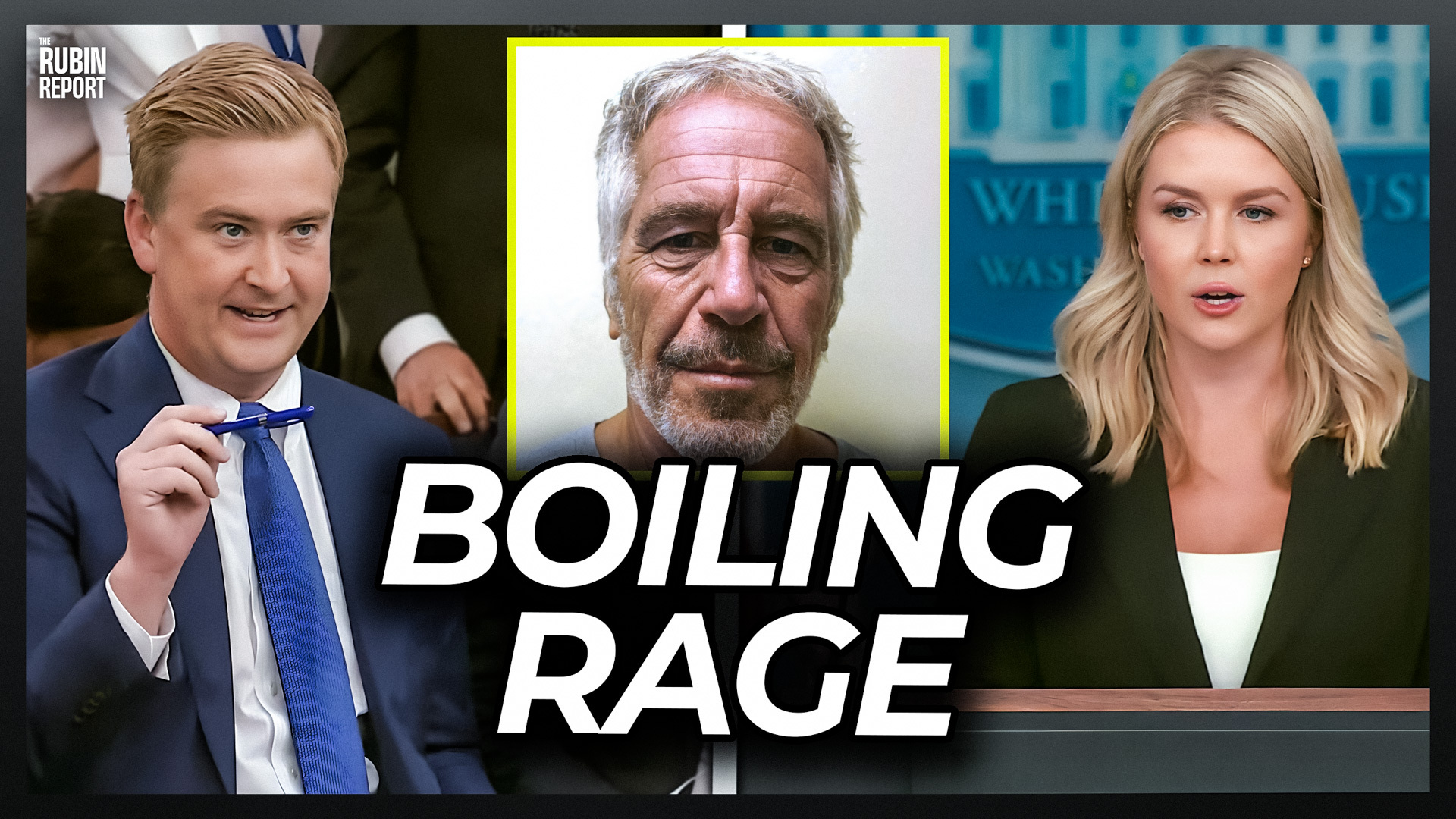
The Rubin Report
Press Sec. Struggles to Hide Her Anger as Reporter Implies He Doesn’t Believe Her Epstein Story
01:04:43
Dave Rubin of “The Rubin Report” talks about Fox News’ Peter Doocy confronting White House Press Secretary Karoline Leavitt about the inconsistencies in Pam Bondi’s story about the existence of Jeffrey Epstein’s list of clients; Los Angeles...
Loading summary
Transcript1 lines
- [00:00]
Dave Rubin
Big beautiful bill means I will lose my health insurance, my job and my house. You're on your parents plan, you're unemployed and you live in your parents basement. That's a good point. All right people. This is the Rubin Report. I am Dave Rubin. It is July 8, 2025. We are live streaming on Rumble on YouTube on Locals. Share Subscribe Tap the notification bell. I'm not even going to say the thing that you know that, that I'm about to say about the thing as it relates to the subscription thing. Just do what you gotta do. If you have not done it yet. And we are just diving in today because I don't know if you heard but the Epstein list either did or did not come out yesterday. It's a little unclear to me what happened here. I do have a piece of paper on my desk that says the Epstein list, exclamation point. So who knows what the rest of this is filled with. But we're gonna dive in. I am going to, as I always try to do, I'm going to try to do this in the most honest, clear cut way possible. There are so many voices on every side of this thing just kind of making up nonsense. I'm just going to try to lay out some facts and we can and we'll play through this thing together. So we're going to start with the Epstein stuff. Then there was a huge ice raid in Los Angeles yesterday and surprise, surprise, Karen Bass, for some reason the mayor of that city, she's not happy with it. We'll get into a little bit of the media coverage as it pertains to this horrific Texas flood which is still unfolding. And I didn't wanna do too much of the political portion of it yesterday. We'll do a little bit more on that and then some of the wacky Democrats, et cetera, et cetera. So the show's a little all over the place today. Join me for a crazy ride. Let's dive in with this Epstein stuff. Check this out. From Eric Daughtry. Breaking a new internal Trump DOJ FBI memo concluded there is no evidence Jeffrey Epstein had a client list, was murdered instead of committing suicide or blackmailed. Powerful figures. Axios claims the administration is supposed is supposedly to wait. The administration is supposed, not supposedly. The administration is supposed to release a video showing nobody entered the area of the prison where Epstein died. And let's just go in a little bit more before I share some thoughts. This is from Colin Rugg. New Justice Department releases 10 hour video of the night Jeffrey Epstein died. C saying it proves he took his own life. Say there is no evidence he kept a client list. The FBI's Independent Review of this footage confirmed that from the time Epstein was locked in his cell around 10:40pm on August 9, 2019, until around 6:30am the next morning, nobody entered any of the tiers in the shu, the FBI and DOJ said in a memo. This systemic review revealed no incriminating client list. There was also no credible evidence found that Epstein blackmailed prominent individual as part of his actions. We did not undercover evidence that could predicate an investigation against uncharged third parties. And then Colin wrote, what a complete disaster. Now, interestingly, there was a community note. What you're seeing on the right there is the video that was included in Colin's tweet there. And interestingly, there was a community note put on that which says, this video doesn't show Jeffrey Epstein's cell. Only a tiny sliver of a staircase leading to Epstein's wing can be seen. Now, I want to show you one other thing, and then I'll offer some thoughts, which is this was an interview with former mobster Michael Franche, who was actually in the same prison as Epstein, and he recently offered some of his thoughts as to whether Epstein might have killed himself or not. You were in the same prison as Jeffrey Epstein? Yes. What do you think happened? Jeffrey Epstein would have to be a magician to. To try to hang himself in that cell. I was in that cell. You just. There's no way to. There's nothing on the ceiling. The bed post is this high. I couldn't even go to a restroom without them walking back and forth and having me on camera. You know, there's no way he committed suicide. So you reckon he was killed? Yeah. Why? I believe that. I mean, look, there's no doubt there was powerful people involved with him, 100%. These people have a way of, you know, covering things up. Okay, so, look, I don't know that I can trust the former mobster any more than I can trust any of the people that are talking about this thing, but something does seem a little odd here, to say the least. Right? Giselle Maxwell or Giselaine. What's her name? Ghis. Elaine. Ghis. Elaine. That's a hell of a name. Ghizelane over there, she's in jail right now. She was his partner in this whole thing, and she is in jail. Can you give me the actual. What's the actual charge that she's in jail for? So there's something kind of stinky. Let's say around that. We also know that these flight logs exist, meaning that there were all of these flight logs that have all sorts of people on them, from Donald Trump to Tom Hanks to a whole bunch of other celebrities and politicians and influencers and all this stuff over the course of years that were going to Epstein Island. Now, just because you went on a plane to an island doesn't mean you did anything or knew anything bad was happening there. But clearly something bad was happening there, and that's at least partly why Giselaine is in jail. Okay. But again, I don't have any more information on any of this than you do. Where this is starting to get weird and this is what the administration is going to have to clear up is that over the last couple weeks. Well, first off, there's a portion of the Trump base that has been screaming about this forever that has been saying, release the files. Release the files. Release the files. We had that sort of fake release file thing a couple months ago. Remember when there were a couple influencers at the White House and they walked out with these binders and there was basically nothing in there? I think there seems to be some confusion around what a flight log would be, which just shows the names of people versus a client list, meaning you were the clients for these potentially underage girls or whatever else was going on there. So there's a lot of confusion there. Do we have the title on what was Jillian. What was she actually put in jail for? She was put in jail for. She was put in jail for one second period. Conspiracy to entice a minor to travel to engage in illegal sex acts. Count one. Wait, hold on. You know, we're. Phoenix. Phoenix. Put it in the prompter so I can get. We can get the full thing. Okay, so we'll get that for you in just a second. But now. So partly what's happened here, of course, is that the administration, which has basically been saying, we're going to put this out. Pam Bondi had said, I have the files on my desk, all of these things. Now. It's. They're basically saying, well, this thing that we said existed doesn't really exist. Okay, I have the info on Ghislaine Maxwell. She was charged with the following in her. In. With the following specific offenses in her federal sex trafficking trial as outlined in the indictment. Conspiracy to entice a minor to travel to engage in illegal sex acts. Enticing a minor to travel to engage in illegal sex acts. Conspiracy to transport a minor with the intent to engage in criminal sexual Activity transporting a minor with the intent to engage in criminal sexual activity, conspiracy to commit sex trafficking of minors, sex trafficking of a minor. So six counts. Those are pretty significant things. So the issue, issue is if she was Epstein's partner, which basically everyone says, and they've got her on these things, there has to be some evidence of it. Right. And who were the clients? That really is what everyone's asking right now. Like who, if she's in jail for doing this, as it pertained to underage girls, who were the clients? And does a list of those clients exist? And because Trump has talked about this a lot, obviously his base is very riled up about it. Here's Peter Doocy over at the White House asking White House Press Secretary Caroline Levitt if something's missing as it pertains to Attorney General Bondi's comments. And now that we don't seem to have this list. So the FBI looks at the circumstances surrounding the death of Jeffrey, Jeffrey Epstein. According to the report, this systematic review revealed no incriminating client list. So what happened to the Epstein client list that the Attorney General said she had on her desk? Well, I think if you go back and look at what the Attorney General said in that interview, which was on your network on Fox News, John Roberts said DOJ may be releasing the list of Jeffrey Epstein's clients. Will that really happen? And she said, it's sitting on my desk right now to review. Yes, she was saying the entirety of all of the paperwork, all of the paper, in relation to Jeffrey Epstein's crimes. That's what the Attorney General was referring to, and I'll let her speak for that. But again, when it comes to the FBI and the Department of Justice, they are more than committed to ensuring that bad people are put behind bars. They have an operation going on right now called Summer Heat, which has our murder rate trending in the lowest direction in United States history. Their emphasis on violent crime and locking up violent criminals has led to the arrest of 14,000 violent criminals. That's a 62% increase from the same time period last year. So this Attorney General and the FBI director are committed to putting bad people behind bars where they belong. They promised an exhaustive review. That's what they did. For any further details, I would refer you to the Department of Justice. Okay, so we're going to show you that video of Pam Bondi in a second. But basically, what Caroline Levitt is saying is that when Pam Bondi said she has it on her desk, she had just a big file, like whatever you want to call the Epstein file. It was sitting on her desk, and the team had to go through it. Not necessarily that it was a. I think this is what she's saying. Not necessarily that it was a client list. Because again, what does. What does a client list mean? Like, if you have a list of people that have flown to the island, and God knows what they were doing on the island, and God knows what people who got on that plane knew, and why did Bill Clinton go there so many times and all of those things. Right? So that. That's. All those names are on there now. You'd also have to verify that they didn't just put names on there that weren't. That didn't actually go. The whole thing was just like an evil honeypot or something. Like you could just incriminate all these people just by putting their names on there. Again, I don't know any more than you know about any of this. But the issue about client list seems to be the confusing part, because the question is, okay, so you have a list of people, let's say, who all flew there, and let's say that's a legitimate list. They flew there. Now, you don't know that they knew what was going on or did anything or anything else. Maybe some of them did, maybe some of them didn't, but is there a separate list? It seems to me that this is what everyone's getting hung up on. Is there a list like a book somewhere that said, these are the people that do these acts with these kids. This is what they pay, this is how often they come back and da, da, da, da. By the way, there's plenty of other people that have been to this island. Reid Hoffman, Bill Gates. Like, it's a long list. It's like a really nutty freaking thing. Anyway, let's jump back to February 21, when Pam Bondi said that the client list, that's what she said was sitting on her desk. The DOJ may be releasing the list of Jeffrey Epstein's clients. Will that really happen? It's sitting on my desk right now to review. That's been a directive by President Trump. I'm reviewing that. I'm reviewing JFK files, MLK files. That's all in the process of being reviewed because that was done at the directive of the president from all of these agencies. So. So have you seen anything that you said? Oh, my gosh, not yet. Okay, well, we'll. Okay, so look where we're at, basically, it seems to me, is we're missing information. Right? Either intentionally or Unintention or something like that. There's a certain set of people that are somehow, like Dan Bongino and Cash Patel and Pam Bondi have all flipped and Trump has flipped and everything else. Like, personally, I cannot go down that conspiracy path. Yes, they've all flipped on us. Trump, who is all about this, Pam Bondi, Bongino, who I know, et cetera, et cetera. Like, that just seems crazy to me. But again, did she say there that the client list is on her desk? She did. Did she mean by that there's a file of stuff on my desk, but they may just not have it? Like, maybe Epstein was smart enough not to have an actual list written out that said all of the specifics? I don't know. But I want to show you a portion of my video of my interview that went up this past Saturday with Glenn Beck, which we taped a few days before. So we taped it last week. So it's before all this stuff dropped. And I asked him about what was going on with the Epstein stuff, and I thought Glenn's answer completely vibes with what I feel about this. Take a look. Dan Bongino and Cash Patel came out and said that Epstein killed himself. Yeah, yeah. And I said, really? I mean, from everything I know now, I don't know what the FBI knows, but from what I do know, that doesn't seem very likely. And then Dan Bongino came out on TV and he said, no, I've seen the footage. And I said, okay, we're at a crossroads here. We're at a crossroads because I know Dan Bongino. I have to choose. Do I trust a guy I've known forever? Personally? No. I've heard him talk about things forever. And then he was appointed by the president, who I trust. I mean, he's the only guy that is exposing any of this stuff. And if I don't trust them, who's left? That's the crux of, I think, where we're at at the moment. I don't have any more insight to any of this than you do, as I said, but I do know Dan Bongito like, I know him pretty well over the last couple years, not only professionally in podcaster land, but we were partners in Rumble and all of that stuff. We've done plenty of stuff together. I know him to. I've never known him to be anything other than a good, decent, honest man. Even when we've had business arguments, I know him to be that way. So the idea that he somehow got in there and has now flipped. And that Kash Patel, who all of these people loved before that he went in there and now has flipped and that Donald Trump has now flipped. Like, once you go down that road. Well, I would say it's Carl Sagan, right? Extraordinary claims require extraordinary evidence. We seem to be missing a piece of the puzzle here, and I think this is gonna lead to all sorts of crazy things. But I would just say before we move on for the moment, look, something weird happened there without question, and that's why Maxwell is in jail. And they should be. If you want to ask a question that it seems like we have to have an answer to, if there's any journalists out there watching this, the question to ask maybe is not about the client list, which either may or may not exist and may be fabricated or whatever. The question to ask is, okay, if, if Maxwell is in jail for those six counts of child trafficking and intent to have sex with a minor and all of those things, well, then where's the evidence around that? Who does that point to? Who was having sex with the kids, et cetera? That might at least to a little something. So, anyway, I think we'll leave that there at the moment and maybe we'll get more on this. But I just. The idea at this point, the way the Internet works, just the way everybody goes down their conspiracy holes and the way the, the algorithms feed everything, like, I just can't go down the hole of, okay, now everybody has flipped against us. Like, that just seems crazy to me. But we shall see. Let's talk about Tax Network USA, and then we'll get to ICE. In Los Angeles. This month, Tax Network USA is celebrating American Pride Month with 10% off. All services honoring freedom, resilience, and financial independence. If you miss the April 15th deadline or you have backed taxes, don't wait. The IRS is ramping up enforcement fast. Penalties can hit 5% per month. The good news, Tax Network USA can help. Whether you're self employed, run a business, or your finances are a mess, their experts know how to get results. Consultations are free, and acting now could save you from wage garnishments or bank levies down the road. Call 1-800-958-1000 or visit tnusa.com dave to get started. Take advantage of this month's sale for 10% off. All right, so ICE, these are people who have been hired to get illegals out of the country, which is the mandate by the President of the United States, who was elected by the people and is in charge of the executive branch they are out there now. Months and months went by where Donald Trump begged the blue states and blue cities to get people out. He offered people a free app to self deport. There was plenty of warning that if you don't take care of business, whether it's you yourself, the illegal, or it's you, the mayor or the governor, et cetera, et cetera, that we are going to come in and fix this crap. Well, then ICE has started to come in over the last month or so to fix that very crap. And of course, the blue states and cities are not happy about it. Take a look at this from Bill Melusion over at Fox. Breaking we are with hundreds of federal agents and military as a massive federal immigration enforcement operation is underway in the MacArthur park area of the sanctuary city of Los Angeles, an area with heavy Ms. 13 influence. Mayor Bass has demanded the raid stop. Feds respond with one of the largest yet, including Border Patrol agents on horseback. Protesters are already showing up and you see some images there. And let's just show you some video of this quickly. I mean, this is happening in one of our most important cities in the United States. There's a lot of troops out there. There's, you know, obviously officials on ice, agents on horses, et cetera, et cetera. And as Malusian. And Bill is quite a good reporter, actually. He's a journalist. I don't have to put air quotes around. As he points out, this area is known to be kind of an Ms. 13, an MSNBC 13 stronghold. Okay? Now, Karen Bass, who has allowed LA to become the shithole that it is and the sanctuary city that it is, she's not happy about this. You might think, well, Karen, these people are illegal. They're not supposed to be in this place. They didn't vote for you. Why do you care about them? But she's a Democrat, thus she's very confused about things here. She is. She got out there. Apparently it's not the area that they were at was not very far from her office. And here she is, big spectacle. She wants ICE out. Any comment, Mayor Bass, any comments? My comment is they need to leave and they need to leave right now. Who did you speak with? Who did you speak with on the phone just now? Who did you speak with on the phone? All right, Mayor Bass, I have a couple questions for you. Why do they need to leave and why do they need to leave now? What are they doing there? Well, actually, lady, I'll answer the questions for you. They're doing the job you refuse to do. They're not just randomly picking up black and brown people as certain fired MSNBC hosts would like you to believe. They're going in there and looking for gang members and illegals and other people who are not supposed to be here and they're taking them out of the country for some reason. Again, you seem to really care about those people. Here's a bit more from Karen Bass. Well, I call it a political stunt. If you want to call it a dog and pony show, go right ahead. Same thing. With this going on for more than a month now, are you starting to feel like you're not even in control of the situation or is there a feeling and helplessness? No, I will never feel helpless and I don't think anybody here feels helpless. That's not in our DNA. We're going to continue fighting. Summer resistance started. He's calling for you to get used to it. What is your. I'm not going to get used to it. I'm not going to get used to it because last I checked, I was elected to be mayor of the city that did not include. Include a federal takeover. So. So either you believe in democracy or you don't. Oh, either you believe in democracy or you don't. Well, there's something called the executive branch and they're in charge of immigration and deportations. And you, as mayor of Los Angeles, did something highly illegal, which is make your city a sanctuary for illegals to come to, which has caused criminality and drug use and all of that stuff. Interestingly. It's very interesting. She's very concerned that the feds are going in and getting illegals off her street. I want. Is she doing anything about skid row? Because we got a little skid row video and I'm pretty sure she's not doing anything about this. You get it? That goes on and on and on. And it's not just skid row and there's drugs and all of the rest of this stuff. And let's not forget this is only to the backdrop of a couple weeks ago where, remember they were burning down buildings in la. It was the good, tolerant progressives burning down buildings in la. But they were just places where businesses were not where too many people left. So you people have abdicated all of your authority and, sorry, we're just not gonna listen to you anymore. That's how it's gonna go. We're going to talk a little bit more about some crazy leftist stuff this time coming out of Texas, unfortunately, in just a sec. But first, fatty 15, let's be real aging Shows up in all kinds of ways. Poor sleep, low energy, stiff joints. I've felt it. Yes, it's true. And maybe you have too. That's why I'm excited about fatty 15. The first essential fatty acid discovered in 90 years. Designed to support healthy aging at the cellular level. Developed with help from the US Navy and backed by over 100 studies, Fatty 15 helps strengthen cells, improve sleep BO and support long term wellness. It's vegan, clean and delivers three times the cellular benefits of Omega 3s. Fatty 15 is on a mission to optimize your C15 levels and help you age better. Go to fatty15.com Reuben and use promo code Reuben for 15% off their 90 day starter kit. That's fatty15.com Reuben code Reuben. All right, so one of the things that I think is a constant theme around here is that the left never knows when it's gone to far. And they do that all obviously guised intolerance and decency and rainbows and furry masks and all of these things. But what lays underneath that is something that is really dangerous. And they have been encouraging violence for quite some time. We know they burn down cities in the name of tolerance and they call for genocide in the name of decency and all of these things. Well, there's a really wild story that I think is going to go largely underreported by the mainstream media. So we thought it was worth covering happening in Texas right now. This is really nuts. Listen to this from Fox News. An active shooter armed with tactical gear and a rifle opened fire upon Border Patrol agents as they arrived at a Border Patrol Annex facility in McAllen, Texas. In the Rio Grande Valley on Monday. Law enforcement sources said agents and local police returned fire and killed the gunman. No federal agents were hit, but one McAllen police officer was struck. Law enforcement sources say the officer is in stable condition. Okay, so this is, this is pretty wild. So we have a bunch of people shooting at federal law enforcement officers, Border Patrol agents. What is going on here? Well, listen to this. There were a total of 12 sets of body armor found during various searches of vehicles, defendants and the area around the Prairieland Detention Center. And this included a flag saying resist Fascism, Fight oligarchy. Law enforcement officers found spray paint. They found flyers such as Fight ICE Terror with Class War, Free all political prisoners. Okay, so this is kind of at this point I would say standard left 101 stuff. Resist fascism, Fight the oligarchy. That's what Bernie and AOC's rallies are all about. These people were firing at border agents, they had body armor, et cetera, et cetera. Here's an image of 12 of the mug shots of these people. Are these dangerous right wing white supremacists or they kind of, they all look like kind of run of the mill lefties, and they've got their literature and they've got their body armor and their weapons and all of those things. And we've known, We've known for a while. I mean, what have I been saying for a while? As it comes to the Hamas protests all over the place, it's like, it's one thing they yell river to the sea, fine. But at some point they'll decide to put on suicide vests. Of course they will. They believe that political violence is okay. Where was all of the left when it came to, I don't know, the assassination of the United Healthcare CEO in midtown New York City by Luigi Mangione. He's now a hero to much of the left. Yes, he actually is, believe it or not. So we know that when you. That at some point, if you say it's ironic, they tell us words are violence. And they don't seem to think that violence is violence. But if you're going to gin up a set of people, especially with algorithms and the way that our education system has failed them, put the images up again, because those are all relatively young. Like, all of these, they all look like they're, what, probably in their mid-20s, maybe the guy looks a little bit older there, upper middle, but they all look like relatively young people. So what would it take? What would happen to a society over time if you had education system that was constantly telling them that the founding of the country was bad? And then they had politicians telling them that the earth is going to end soon because of climate change. And they're told that they're growing up in fascism, and they're told that capitalism is evil, and they're told that everything is systemically racist. And then they're confused about their gender. Like, we can combine all of these things and then you understand that you get left with a toxic stew that then young, sorry, put it up one more time. Like, just look at any of these young girls in their 20s. Like, these young girls are suddenly like, okay, I'm gonna put on body armor, I'm gonna be part of an insurrection and call for anarchy and all these things. Like, I don't have sympathy for any of them in that. They, they tried to do some pretty horrific things and were shooting at federal officers. But you have to have in the in the meta sense, I suppose you could have sympathy for young people whose brains are broken. And then you have a media that throws, that pushes all of this nonsense and all the layer, the institutional layer and everything else. Here's Tom Homan talking about how they have been warning about this rise in extremism within these fringe, barely fringe, but within these, let's say progressive enclaves been around a long time. As if the rhetoric didn't decrease significantly. It's going to end up with loss of life. It's going to end up with a use of force either against a protester turning criminal or against ICE or border Layton. Someone's going to be seriously, seriously injured if not killed. And of course the media attacked me. You know, fear monger Homer, you know, he's threatened that someone's going to die. Look, I've been around a long time. You got members of Congress, Jayapal comparing to terrorists. AOC says we're out there violating people's civil and constitutional rights. You got Jeffries out there running his mouth about the Gestapo, you know, and it just, the ramped up rhetoric is going to cause a situation where someone lose their life. We saw that today. I was hoping I'd be wrong, but I wasn't. And I'll tell you something else. It's not the end unless we stop the hateful rhetoric against ICE and border comparing to Nazis. There's going to be more situations like that. Yeah, that's just absolutely right. It's just one of those things that is obviously true. What did you think of for a decade you kept calling all of these people Nazis and Donald Trump Hitler. Then he gets into power, starts doing what he said he was going to do which was clean up the border and deport illegals. But then you have this again, brain broken is the best way to describe it. You have a brain broken set of the populace that then is also kind of told being violent is okay. And then you have the Democrats that are constantly we have to unmask ICE and they're the Nazis and all of those things. And then what do you get? You get a set of people that are going to be actual insurrectionists. Not like the one day we got a Lego set, let's go to the Capitol for one freaking day. Insurrectionists. But real planned out coordinated insurrectionists. Here's Stephen Miller on that ICE agents, border patrol agents, cops are now getting shot at. How is this happening? It's happening because Jesse, there is an insurrectionist movement in the Democratic party that is inspiring domestic terrorism against ice. When you have the mayor of Los Angeles mobilizing agitators, mobilizing the mob against ice, saying that federal law enforcement has to leave her city, this is a settled constitutional question. Federal law is the supreme law of the land. You cannot nullify it, you cannot secede from it. It is the law of the United States of America. So these insurrectionist Democrats are every day engaging in rhetoric that is incentivizing, that is encouraging, that is fomenting violent terrorist attacks against ICE and ICE officers. Not only in the shootings that you've seen recently, but ICE officers are being doxed, their families and children are being threatened, their addresses are being posted online. They are being subjected to a campaign of terrorists by these radical Democrats. Yeah, and we know that is true, but don't take my word for it. Here's an old fashioned Internet compilation of Dems demonizing ice. Every single ICE agent who's engaged in this aggressive overreach, no matter what it takes, no matter how long it takes, will of course be identified. This is not the 1930s secret police who are masked, who are intimidating, who are, are scaring people. These Gestapo like tactics, this is Gestapo like behavior. Donald Trump's modern day Gestapo is scooping folks up off the streets. When you compare the old films of the Gestapo grabbing, grabbing people off the streets of Poland, it does look like a Gestapo operation. You posted on social media that, quote, ICE is acting like a terrorist, terrorist force, Ice ages. They are coming and kidnapping and disappearing people on the streets of the United States. But this terror campaign of having masked people rolling up in vans. But we also have to talk about the agents themselves that are carrying this out. If you have any decency, quit now, because just doing what you were told has been the justification for some of the worst whores and crimes against humanity. The level of hypocrisy and everything else is just insane. First off, the Gestapo going on the streets of Poland, they were pulling their own citizens out. Right. That was part of the problem, let's say, okay, without doing too much of a deep dive on this Gestapo, but what these guys are doing are doing exactly what the President promised. And they're taking illegals who shouldn't be here. They're the ones defending the law. All of the people that we just showed you there, those are the people that don't want the law defended. Those are the people that don't seem to care about their constituents or Americans or anything else. But after you hear a compilation like that where they're called, what were they called? Terrorists, Gestapo like, we know, the usual Nazi stuff, white supremacists and everything else, demanding they take their masks off, which, ironically, they love. The Hamas guys in the streets with the masks, they don't like it when the good guys have the masks, even though they're the ones under the threat of being doxed and then having someone go after their kids or show up at their house or anything else. It's incredible because every single thing that they say is completely the reverse of the truth. It's not 179 degrees, it's 180 degrees. Right? It's 180 degrees. The reverse. But this is what they do with everything. And then you wonder, so why is it that a group of. I don't know. Again, should you show that picture one more time? It's just worth showing, like, these are just human beings. Something happened to these people, right? Like something happened to these people along the way. And you go, okay, so what happened to these young girls that they would end up with body armor and leaflets for insurrection and shooting at border agents? Well, you don't have to think about it that much, right? It's kind of obvious. They were told that Nazis took over the country. The world is going to end because of climate change, blah, blah, blah, blah, blah, algorithmic manipulation. And then next thing you know, they are going crazy. Now, interestingly, this is a great clip because the Democrats have a huge problem on their hand right now. They've had a series of problems and they always make the wrong choice. And I have no doubt that that's what they'll do here. But over on the View, Alyssa Farah, and you know, she's the pet Republican who gets the cookie and just sits there and takes abuse, but every now and again says something saying they had Hakeem Jeffries on. And Alyssa Farah asked Hakeem Timo Obama, who apparently is somehow like, he talks. He talked for eight hours without peeing, also very impressive. But he is one of the leaders of the Democrat Party. She asked him if it's a good strategy to defund ice. And watch the tension with the internal tension with this guy. He knows the inmates are running the asylum. He as this, this quasi humanoid, not very advanced robot trying to be like a moderate Dem, doesn't know what to do with it, and they are just screwed. Watch this. Now, some Democrats, amid the criticisms of ICE right now due to these ICE raids, have started calling for defunding ice. Do you think that's effective going into the midterms? And do you support those calls? Well, I definitely think that, you know, we need aggressive oversight as it relates to the overly aggressive behavior that we've seen, you know, from ice, from the Department of Homeland Security. It's not what the American people actually, in my view, voted for. Yeah, actually it is. And what over? Of course. What do you want? You want more oversight? So that's your problem. We have all these ICE agents out there doing their job, the very same people who you're saying should be demasked and all and calling them extremists and everything else. The issue is for you, if we just had a little more government over, if Trump would just have a little more government oversight on them, then things would be okay. Of course it's nonsense. And then to say this isn't what people voted for. It's exactly what people voted for. I don't know one person that voted for Donald Trump that is seeing what ICE is doing and is suddenly like, my God, this isn't what I voted for right now. You might argue that. Okay, are they gonna get more law abiding? It's an oxymoron. But law abiding illegals than you intended? Maybe. And is there some debate around what do you do? I've said it from the beginning. Is there some difference between someone who's been here years and otherwise been law abiding and the guy who just got in a year ago through Biden's non wall and then was also committing crime? Of course there's some difference there. But at the end of the day, are they both illegal? The answer just is yes. Right? Like that's just like the legal answer to that is yes. But I don't. And I would I query you guys. Do you know anyone that voted for Donald Trump and is pissed about what's happening right now or thinks too much is going on or thinks ICE is being unfair again? Trump gave the cities and the states months. They gave them a freaking app. They told them get on a list so that if you leave maybe you'll come back in. What more could you. But he just. And this is what they do with everything. Trump's actually doing the things that he promised to do. And it's just that we just didn't have enough over. I just don't like the tone he's doing. It's just the freaking tone. It's just the oversight and the tone and can we get a little more of that? Yeah, let's talk about 1775 coffee and then we'll get to more on the ridiculous media and the Behavior towards Trump as it pertains to this actual tragedy in Texas. You know that feeling when your coffee actually does what it's supposed to do? It clears your head and lifts your energy. That's what good coffee is supposed to feel like. And that's what you get with 1775 Coffee. Their coffee's organic, single origin, high altitude and small batch roasted. That means no toxins, no acidity and no jitters. Just smooth, clean coffee that fuels your day without weighing you down. From bold everyday roasts to brain boosting mushroom blends and anti Aging formulas, 1775 has the functional coffee option to match whatever mission you're on. Holbein ground or pods. Your morning just got an upgrade. Go over to 1775 Coffee.com, use code REUBEN for 15 off your purchase and enjoy some coffee. All right, so you all know about these. Absolutely. I mean, just horrific. It's not even the word. This just unbelievable tragedy that's unfolding in Kerr County, Texas right now. There were these massive floods and the death toll is now, it sounds like it's at about 104 people, which probably by the time we do, the show will probably be increased a little bit. Here's a little bit of video from ABC just getting us caught up and then we'll get into some of the media reaction to it. Hey, look, there's my living room, that new couch I just bought. RVs and homes washed away by the raging river. He backed up to a trailer and he had to leave. That's how fast the water was coming. The water was coming up the hill probably 5ft every second. David Chambers owns this RV park in the city of Centerpoint. When he learned about the incoming flood, he tried to come help save people. And while they survived, they are now working to pick up the pieces. All right, so the waters mostly have receded at this point and they're starting in the cleanup and they're still gonna find bodies and everything else sounds like about 104 people. Look, tragedies happen all the time. They happen when we get massive hurricanes here in Florida. They happen when we get, you know, what was it Hurricane Helene up in North Carolina about a year ago. You get earthquakes, there are all, you get bad hail, there are twisters, all sorts of things. The problem and humans all, as I said yesterday, the best that humans can do is hopefully you've elected competent people so that when the acts of God happen, when the shit hits the fan, that you can't stop it from happening. Right? We're not gods. We can't stop these things from happening. But what we can do is hopefully have built infrastructure that's proper, have elected the right people, so that systems are in place so emergency responders actually know what to do. So red tape has been cut so that you could rebuild a bridge quickly or make sure that that electric poles could go up quickly or everything else. And clearly in some places in America, we do that to the best of our ability. Like here in Florida, where we're, you know, we're sort of the number one gonna get smashed by hurricanes every year. So far in 25, we've actually been basically okay. But we're rolling into hurricane season right now. It's mostly through the hardcore part of August into September. So we'll see. But we know that we have some level of functionality here. Now, the broader issue as it pertains to all of this, beyond the real tragedy, is what the media does when it relates to all of these things and how, of course, now we have a Republican administration with Donald Trump at the helm of it and how they are, of course, going to blame him. So here is Joe Scarborough. We haven't shown you a video of him over on the televised mental institution known as MSNBC for a while. And he starts making sense. You'll see for the first two or three sentences and then watch where the but comes in. It's always about the but. Just on government staffing. It is far, far too early to draw any lines between a lack of government staffing cuts and what happened here. But much like after the plane accident, the plane crash in Washington, D.C. in January this year, people are going to look, was there. Why was there only one person here? I'm sure people are going to be asking why was the person who coordinated the emergency response not on. But it seems to me, David, there's just a bigger question as we move forward for the next flood, the next storm, the next hurricane. We've been talking about this an awful lot over the last six months. The group of people that put together Project 2025, the group of people in Washington that have talked about cuts, cuts, cuts, cuts. Well, they're talking about cutting 8, 8, 9% of the budget. We've always said this. The 8 or 9% of the budget. That is actually what government does to help people, to save people's lives. Beyond defense, Medicare, Medicaid, Social Security and interest on the. He is not a good man. Did you get what he did there? He said it's far too early. That's how he opened up that little segment right there. It's far too early to talk about it. And then he spent the rest of that talking about the thing he said it's far too early to talk about and then invited a guest on to do it. And. Yes. Oh, somehow. Somehow. The argument then would be that if Joe Biden was president right now that those floods would not have washed away those homes and that those 104 people would be okay because the budget would be slightly different. And the implication, and we're going to get to this, the implication is that the area there, the local weather people were understaffed, so they were not able to put out warnings. That's the implication. We're gonna clean that up in just a moment. But now I wanna show you three videos. And these are the. Everyone loves these videos. It's just comparing and contrasting how media treats natural disasters when It's a Democrat versus when it's a Republican. So you're gonna see 2024 coverage. We'll start with CNN's Abby Phillips. Her feelings about Hurricane Helene in 2024 when Joe Biden was president versus this Texas flood in 2025 when Donald Trump is. We have three versions of these. We'll start with CNN. Why does Donald Trump continue to insist on politicizing the storm? The only person making an accusation that people are not getting what they've asked for is Trump. The only person who is politicizing this is Donald Trump. He's the one doing it. The doge of it all was essentially all the things that the federal government is spending money on, for the most part, is wasted and fraud. But clearly there are some things where spending money saves lives. And it may not save lives in the moment that you spend it, but at some point, somebody's life, somebody's child could have been saved. Ah. So let me get this straight, Abby Phillips. When Joe Biden was president, the issue was that Donald Trump was politicizing it because he was trying to get those people more help. And we actually do know that the Biden administration did not do much. And now that Donald Trump is president, you can politicize it in the middle of it, because this has something to do with Doge. And again, we're going to get to the staffing issue in just a second. In case you're watching her going, well, maybe she's Abby Phillips over on CNN and she went to Harvard, she knows what she's doing. Maybe there is a staffing issue. We'll clean that up. Let's continue adding to all of that chaos. All of that concern is politics and the rampant disinformation that's being peddled by Donald Trump and some Republicans politicizing a natural disaster. What FEMA is warning about, there's been so much doubt sewn into it that people no longer trust, you know, the NBC Newss, the MSNBCs, et cetera, of the world and said they trust a person that they see on their social media feed. There are also questions about cuts to critical systems like the National Weather Service, which handles forecasting. Did those cuts hurt the response time or the ability of officials to coordinate? Okay, Katie tur. So in 2024, you guys get it. She didn't want it to be politicized. She wants people to trust her and not people on social media. Now she's allowed to ask some questions about the funding of these things. And again, we'll get to that in just a moment. But let's show you one more. It's my favorite chick over on cnn. Dana Imagine you're a business owner relying on a dozen different software programs, each one disconnected, more expensive and more complicated than the last. It can be incredibly stressful right now. Picture Odoo. Odoo brings all the tools your business needs into one simple CRM, accounting, inventory, manufacturing, marketing, HR and more. All seamlessly connected. Everything works together, giving you the peace of mind that your business is running smoothly from every angle. Odoo's open source applications are user friendly and designed to scale with your business, saving you time and money. Say goodbye to juggling multiple platforms and hello to efficient integrated management. Stop wasting resources on complicated systems and make the switch to odoo today. Visit odoo.com o d o o.com and discover how Odoo can simplify and streamline your business operations. Odoo Modern Management Made simple why is he spreading misinformation in a crisis like that? And does that concern you about your fellow North Carolinians? You have migrants being housed in luxury hotels in New York City. We have paid so much money from our tax dollars into the crisis that didn't need to happen. We could redirect money to help people immediately on the ground in north they're saying that they have probably going to have but that's separate. That's a separate day. That's a separate tranche of money. That's a separate tranche of money. Just talking about the federal government and even the local government to Texas National Weather Service offices involved in forecasting and warning about flooding on the Guadalupe river are missing some key staff members. A director of the NWS Union told CNN the Austin San Antonio office is missing a warning coordination meteorologist due to the Trump administration's buyouts. All right, so you get it again, 2024 North Carolina. Biden's in charge. We're going to go after Trump for spreading misinformation. It's a different tranche of money to help the people in North Carolina while we're putting up these people in luxury hotels. Nonsense. And now suddenly she's very concerned because what they want you to think is that Donald Trump did something that led to. So the implication there is that there wasn't proper staffing with the weather service in that area and they weren't warning about what might happen with this river, et cetera, et cetera. Well, ironically or not ironically, I guess obviously this is according to the ap, which is no friendly to Donald Trump. Weather service had extra staffers. That's right. The National Weather Service office in New Braunsfels, which delivers forecasts for Austin, San Antonio and the surrounding areas, had extra staff on duty during the storms, Runyon said, where the office would typically have two forecasters on duty during clear weather, they had up to five on staff. There were extra people in here that night. And that's typical in every weather service office. You staff up for an event and bring people in in overtime and hold people over. So they had extra staffing. That's according to the New York. To the ap. Do you think the AP wants to run a headline that's friendly to Donald Trump? But why is it that we were just able to very quickly and easily find videos online of cnn, msnbc, et cetera, saying that this is a staffing issue and it's a cutting issue, when clearly it wasn't. And I would even go a step further than that. Whether they were staffed properly, whether they had two people or five people or nine people or anything else, doesn't mean you can stop natural disasters. Again, the hope is you've put in the proper systems in place to mitigate the damage, to have early warning and everything else. But bad things are gonna happen one way or another. And I would hope. I would hope that if all of this was reversed and there was a Democrat in charge, that I would not be immediately blaming them for everything unless. Unless it had become patently obvious that everyone in their administration was hired for the wrong reasons and that you actually can make a legitimate claim on with the Biden administration because they hired people repeatedly based on their gender and their skin color and their genitals and their sexual attraction and a whole bunch of other stuff rather than their qualifications. So that really is the issue here. But now let's move on for a moment. We'll stick with someone over on CNN, Dr. Sanjay Gupta. And Dr. Gupta went on Gavin Newsom's podcast and have they just dropped the ball on us? They're just not responding to us anymore. They're not responding to us. They're just not. Okay. So we tried to get me on Gavin's show. Gavin, I want to do the show, man. Anyway, they are not responding to us anymore. But anyway, Sanjay Gupta, who, he's CNN's resident doctor, he went on Gavin Newsom's show just this week. I mean, this is just so crazy to explain that Covid vaccines actually did work. They didn't, by the way. They did not stop people from getting Covid, nor stop you from transmitting Covid. But it was really just about a communication problem, I think. You know, when textbooks are written about scientific achievements, the idea that they were able to create a vaccine essentially in nine months and be able to, you know, protect so many people, There's a lot of people who think they don't work. They do work. I mean, if you looked at the data, California or the country as a whole, who was in the hospital during the huge sort of swings in Covid, it was primarily people who were not vaccinated. So it was helping protect against illness and death. What I think was unfortunate, frankly, and this was a communications problem, was that they seem to also intimate that it would protect you from getting Covid at all, from carrying it. And there was not great evidence behind that. And you know, we reported as such that you don't have great evidence that shows that. No, no, Sanjay, you didn't. They seem to also intimate that you wouldn't get Covid. Actually, Joe Biden, you won't get nor transmit Covid. Maddow, Rachel Maddow, you won't get. With that long winded babbling, you won't get it. It's the greatest thing ever. Fauci. You won't get nor transmitted. They seem to intimate you were all part of it. Now, the thing is, the reason people say, dave, how do you not get duped by all of these things? I just, I have a way. I have a way because I remember things from the past. And when Covid happened, I had remembered that a few years before that during a massive pandemic that he was pushing a drug called ribavirin. And here's Sanjay on that. The drug ribavirin has been shown to be effective against this virus yet. Homeland Security is telling the CDC not to make any announcements until stockpiles of the drug can be secured. Well, Dr. Gupta, there continue to be evaluations of several drugs. Ribavirin is a among them, but right now. Oh, right, that was a movie. That was a movie called contagion from 2011, which is a spectacular movie if you haven't seen it. Matt Damon's in it, Gwyneth Paltrow's in it. You got Matrix guy over there and Lawrence Fishburne and a whole bunch of others. But you see, they're just actors. He's. There is Sanjay Gupta acting, telling people that Riveran is pretty good, just the same way that they told us the vaccines were good. It's just, just all theater, absolute theater. And let's jump around here a little bit because this it. I'm just trying to illustrate. Just like they've just got nothing right now. They've really just got nothing. So look at this once again, from Timu Obama on the Instagram. Watch this. There he is. House Democrats will keep the pressure on Trump's one big ugly bill. And there he is. Bad angle, man. You look ridiculous. Your batting stance is terrible. You gotta first off, he's choking up on the bat a little too much. But you gotta put those hands together. I mean, anyway, Connor, you were a ballplayer. You gotta just like, come on, man. But they just have nothing. So, okay, congratulations. You filibustered the bill for eight hours. You're standing there with the bat. I don't know. You know, if a. Ironically, if a Republican was standing with a bat nude, people would be saying it was a threat of violence and everything else. But why is it, if nothing else, if. Let's just say, let's say Trump is kind of bad. I'll try to do it the best way. I'll give you guys a little bit. Trump's really kind of a bad guy and all the people he's hired are bad guys. And these ICE people are bad. It's just a whole bunch of bad, bad people. Okay, fine. That's the right. They're just bad, mean people. Well, why is it that in the places that you people govern that all hell is breaking out? All hell is breaking loose constantly. This is from philly. Over the July 4th weekend, today, we'll attempt a feat once thought impossible. Overcoming high interest credit card debt. It requires merely one thing. A Sofi personal loan. With it, you could save big on interest charges by consolidating into one low fixed rate monthly payment. Defy High interest debt with a SOFI personal loan. Visit sofi.com stunt to learn more loans rich designated by Sofi Bank NA member FDIC terms and conditions apply. NMLS 696891 and that's why you make sure when you order a cheesesteak at Pat or Geno's, you order it correctly wit whiz. Otherwise you're going to get shot. But you guys get it. It's just like, it's just endless violence in these places. Then the feds come in, try to clean it up, and they scream at them all along, all along. What is happening? Well, it's the thing that I'm really going to be trying to push all year, as long as it's real and honest. And it is, which is that there are a lot of good things happening in this country right now. So now I want to jump over to Scott Bessen because here he is talking about how the trade deals, you know, we've all been talking about the tariffs and the trade deals and how it affected the stock market, which is extremely high right now, and everything else. Well, the trade deals are coming in soon and he's feeling quite good about them. Take a look. Yeah, we are going to have several announcements in the next 48 hours. And Joe, I think what President Trump is concerned about is the quality of the deals, not the quantity. As you could imagine, as he started herding the cats and trying to get everyone across the finish line when he said that there's a chance that countries could boomerang back to their April 2nd reciprocal tariff levels. We've had a lot of people change their tune in terms of negotiations. So my, my mailbox box was full last night with a lot of new offers, a lot of new proposals. So it's going to be a busy couple of days. But importantly, too, that President Trump has said that they would, the countries would not go back to the reciprocal rate until August 1st. All right, so this is, this is getting us almost to endgame on that. What did I say from the beginning? It was a line I got from crypto and AI czar David Sachs. We have to see where all these trade deals land. Well, there you have it, Scott Bessen saying, hey, in the next 48 hours, we're going to have some answers. My inbox is full. Things are looking better. And what he said was, it's quantity over, it's quantity over. It's quality over quantity. Right. So maybe not everything is gonna come back perfect, but we will have a bunch of deals that will be better and then maybe we figure out new ways of trading with people. So again, not going towards hysteria, just going to, oh, competent people are trying to do things. It takes a little time. I do want to show you this video though, because obviously the big story yesterday was that Elon is starting this America Party. And what, what the ramifications will be of that we do not know because if it's going to really exist and pull from one side, it obviously is going to pull from the Republicans, not from the Democrats, because it's all about fiscal responsibility. Democrats don't care about that. Obviously the more libertarian leaning Republicans do. So we'll see where that shakes out. We'll have more on that in just a second. But also, it does appear that some of the friction that has burst forth between Trump and Elon Musk had a lot to do with Scott Besant and Elon. Here's Besant talking. Well, here's a message that Besant has for Elon, the principles of Doge and maybe how Elon's personality sort of fit into all of that. I let you go. It's not a big secret that you had your differences with Elon Musk when he was working in the administration. He announced this weekend that he is starting a new political party. Does that worry the Trump administration? Look, the principles of Doge were very popular. I think if you looked at the polling, Elon was not. So I believe that the boards of directors at his various companies wanted him to come back and run those companies, which he is better at than anyone. So I imagine that those board of directors did not like this announcement yesterday and will be encouraging him to focus on his business activities, not his political activities. Let me try to give the devil his due here. I don't know that exactly. That what Besson said there was exactly correct. The Doge mission statement was very popular and was exactly what we all voted for. And that's the thing that brought Trump and him together. Right. So that I do agree with that. His next thing was that more popular than Elon? I don't know. My feelings about Elon haven't changed at all. Look, I don't like some of the infighting here. Again, it's sort of like the when they're always saying, oh, people are abandoning Trump in droves. It's like I don't know that anyone has really turned on Elon Musk other than people don't like the friction that now exists there. Now, is it possible that people at the boards of the companies. You told me what was it yesterday. Tesla was down about 6% yesterday. Where are they at right now? We'll check on that in just a second. But I could see. I think that's a completely legitimate criticism. Let's say you were a shareholder or on the board of one of his companies and you thought, boy, he's too distracted over here, or he's doing all of these other things or the political stuff of it put some stank on our stocks. I could see why you'd be pissed at that. Up 2.5. Okay, so it was down about 6 yesterday. It's up 2.5 today. That's a bit of how the stock market goes, but I think. But that's like a legitimate criticism. If you were a Tesla shareholder on the board, you might be critical of that. I think that's fair to say. Now what this all leads to though, is are we going to have an actual third party in America and what could that do to our system? Here is cnn. And even though I think obviously the America Party would ultimately help the Democrats because it splits the Republicans, here they are talking about how third parties are historically almost ridiculously unpopular. What's the history of third party candidates in congressional races? Horrible, Awful, terrible, terrible, terrible. What are we talking about here? All right. Elected the Congress from a third party since 1970. Just 0.2% of all winners of all winners were either third party independent or right. And we're only talking about 24 out of over 13,000 winners. The bottom line is third party independents, they just don't succeed. Donald Trump is right when he's talking about the fact that third parties, simply put, don't work. This guy's talking like this the whole time. So it's kind of. Listen, that may all be true. I'll grant you that. What you just laid out there was true. I was 24 out of 3,000, something like that. Whatever those numbers were, it doesn't even matter that 30 parties don't do well. That's not a reason not to do a third party. If you're Elon Musk. Right, Elon. If I can only take Elon at his word and what his word is, I want the deficit to be reduced. I don't want us to be a debtor nation. It's going to destroy everything. If that really is what Elon believes, well, then it doesn't like telling Elon. Oh, well, no one's ever done it before. No one's ever successfully launched a third party party. Well, that would make him want to do it more. He's the man who does the impossible. Right. It's similar to Trump. No, you'll never be president. Well, okay, I'm going to go ahead and do it. You can't fight the system, Yellow. Yes, I can. Same thing as Elon. You can't go to Mars. Well, yes I can. You can't make it so that you can implant something in the brain of a quadriplegic and then they can play chess with their mind. Yes, I damn well can. So the idea of getting up there and genu flecting with their arms like nobody's ever done it, you think that's going to stop Elon Musk? I think the thing that Elon may want to think about, however, is what Scott Jennings lays out here, which is what I've been talking about, which is that if you bring in a third party now, ultimately are you ushering in something much more dangerous? And I get why that argument kind of sucks. Cuz then it's like, well, nothing will ever change. But here's Scott Jennings laying it out pretty cleanly. Yeah, I don't know whether it's possible or not. I hope it is. And hope springs eternal where I come from. But I wish they would come back together. And I wish Elon, who I admire greatly and I think was a big part of what happened for the Republicans in 2024, would realize we live in a two party system and you know, from time to time people try to go off and start these third parties and never really works out. And the best way to effect change in American politics is to participate inside the party that best reflects what you want. As I understand it, Elon Musk wants to save the country from going bankrupt and he wants to save Western civilization, you know, from unfettered mass migration. Well, this is actually the Republicans that best represent him. This is the platform. Musk reposted this from a user who asked, is this the America Party platform? And then listed the following priorities and Musk replied, yeah. So I assume this is the platform. Reduce debt, responsible spending only modernize military with AI and robotics. Protech accelerated, accelerate to win in AI. Less regulation across the board, but especially in energy free speech, pro natalist, which is policy that would promote higher birth rates and centrist policies everywhere else. It's a lot of yada, yada yada. He's a Republican. He's a Republican. Yeah. So Scott is laying it out properly. Right. Let's put this screenshot up of what the policies potentially are again, because Elon did respond. Yeah. To this. So this is just a random person, as far as I understand. Reduce debt, responsible spending only. Okay, so it is true that the big beautiful bill will not reduce debt, but it is doing a lot of cuts. And Trump is saying that the cuts and everything else and the tax breaks and all those things are necessary, and we do have to spend on border and whatever. But, okay, you can see a difference, let's say, between Trump and Elon on that one. Modernized military with AI and robotics. I think Trump actually is all about that and has brought in some great tech people on that. But, okay, let's say Elon wants to lean into that a little bit more. Let's just try to do this as fairly as possible. Protech, accelerate to win. AI Trump is doing an absolute ton on that. We have AI Czar David Sacks, who's one of Elon's best friends involved in the administration right now. Less regulation across the board, but especially in energy. I mean, drill, baby, drill. Like, that's absolutely Trump. Free speech. That's absolutely Trump. Pro natalist, pro family, meaning tax breaks to encourage people to have more kids so we don't have population collapse. Absolutely. Trump. And centrist policies everywhere else, whatever that might imply. Let's say somewhat moderate on abortion or something like that, or you don't care about the gays or whatever. Trump is about all of that too. Right? So Elon responds. Yeah, so Scott's point is what I've been laying out here, which hopefully, over time, maybe gets Trump and Elon to put this thing back together, because I'm pretty sure you weren't watching anyone else online that was screaming more for the last two years, about the wide tenth. And. And if at the very, let's say, elon, you're getting 80% of what you want out of Trump, now I get it, the debt thing's huge for you, so maybe that looms large. So you don't view it as 80%, but if it's some big chunk of percentage that you're getting out of Trump, then the question is, are you gonna risk blowing up Trump, blowing up maga, and then causing something really horrific to come in, like an AOC or even worse than that next time around in the name of getting the smaller percentage that you're really focused on? And that's something that Elon's gonna have to think about, and hopefully we'll be able to sit down with him and talk about it and all the rest of it. So I thought we'd end with this. Regardless of whether you fall more in the Elon camp on that. You fall more on the Trump camp on that. As long as you're not a crazy wackadoodle progressive who thinks the government is here to just save you and the government here to tell you what to do, I think you're in line with what most Americans want. And I think that's a huge percentage of us, whether we know it or not. And there once was a man who originally was an actor who became a pretty good president, who was also quite a good orator, who explained a little something about that. We the people tell the government what to do. It doesn't tell us. We the people are the driver. The government is the car. And we decide where it should go and by what route and how fast. Almost all the world's constitutions are documents in which government tell the people what their privileges are. Our Constitution is a document in which we the people tell the government what it is allowed to do. We the people are free. And I hope we have once again reminded people that man is not free unless government is limited. There's a clear cause and effect here that is as neat and predictable as a law of physics. As government expands, liberty contracts. That's right, Ronald Reagan. And as the Democrats continue to veer off into Zorhan Mandami, communism and socialism, and if only the government had more money to have bigger budgets to do more things, even though it doesn't do anything well, like let them have that. They don't know when to stop. They cannot stop that car from careening off the cliffs. But the rest of us, and I really believe it is the vast majority of us, way bigger than Trump's election numbers. Like, I think if most people really started thinking about it, what Ronald Reagan said right there really makes sense to people. Do you want the government to give you things, to tell you what your freedoms are, or is it innate in you and you're driving the car and the government just happens to be the vehicle? And that's actually quite a good analogy when it comes to Trump and Elon and Tesla and everything else, right? The government is the vehicle, we're the drivers. And we gotta figure out a way to stick together amidst the madness. Ladies and gentlemen, that is our program for today. I thank you for watching. We've got a post game show@rubenreport.locals.com and if you're watching on Rumble, jump over to Tim Pool right now. See you tomorrow. Marketing is hard, but I'll tell you a little secret. It doesn't have to be. Let me point something out. You're listening to a podcast right now and it's great. You love the host. You seek it out and download it. You listen to it while driving, working out, cooking, even going to the bathroom. Podcasts are a pretty close companion. And this is a podcast ad. Did I get your attention? You can reach great listeners like yourself with podcast advertising from Libsyn Ads. Choose from hundreds of top podcasts offering host endorsements, or run a pre produced ad like this one across thousands of shows. To reach your target audience in their favorite podcasts with Libsyn Ads, go to Libsyn ads.com that's L I B S Y N ads.com today.