← The Rubin Report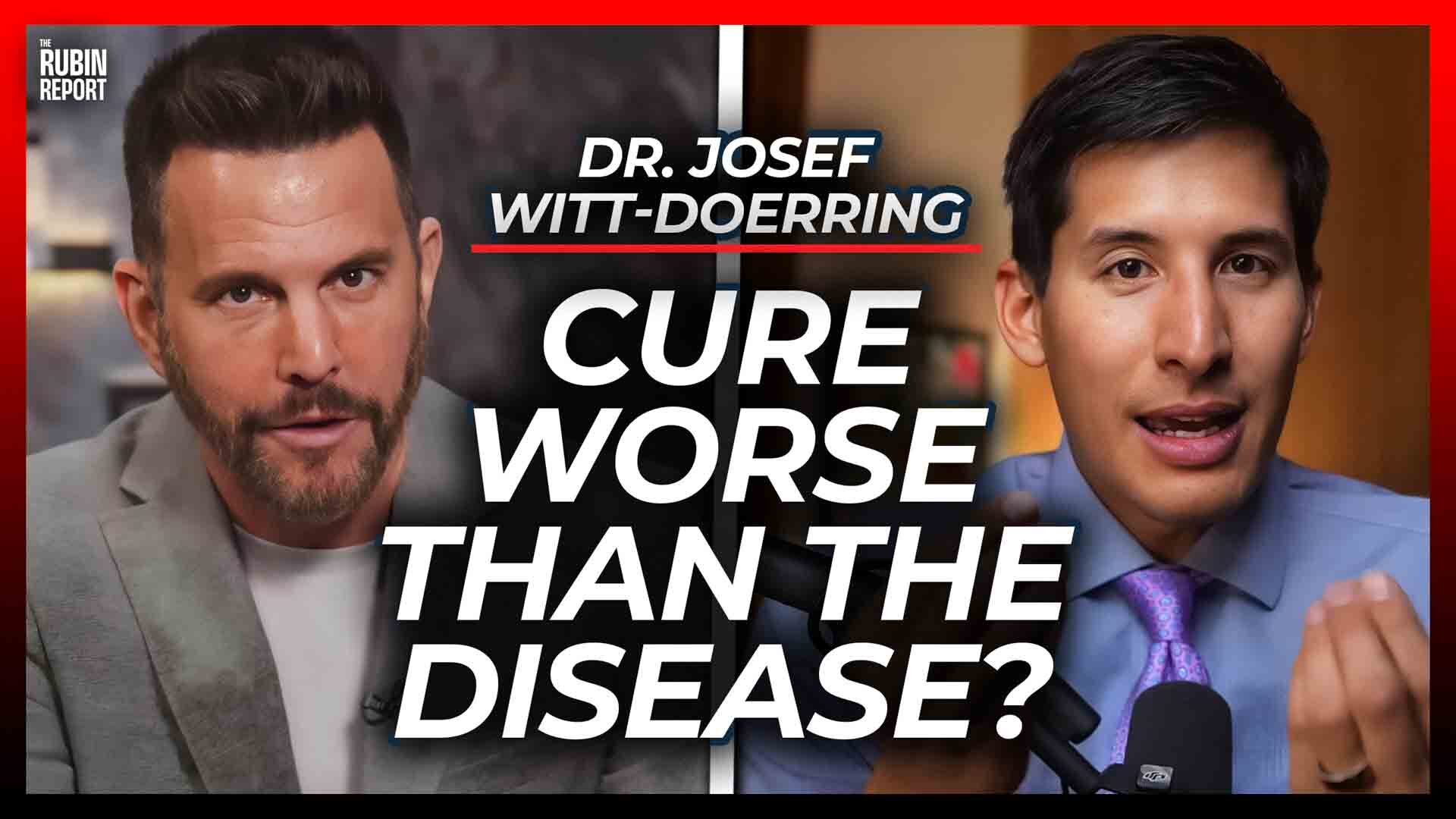
The Rubin Report
Proof That Medications Are Making Mental Health Crisis Worse | Dr. Josef Witt-Doerring
00:31:11
Loading summary
Transcript53 lines
- [00:01]
Mayra Ameth
A Mochi moment from Sadie who writes, I'm not crying, you're crying. This is what I said during my first appointment with my physician at Mochi because I didn't have to convince him I needed a GLP one. He understood and I felt supported, not judged. I came for the weight loss and stayed for the empathy. Thanks, Sadie. I'm Mayra Ameth, founder of Mochi Health. To find your mochi moment, visit joinmochi.com.
- [00:27]
Dr. Joseph Witt Doring
Sadie is a Mochi member, compensated for her story.
- [00:30]
Mint Mobile Advertiser
Well, the holidays have come and gone once again, but if you've forgotten to get that special someone in your life a gift. Well, Mint Mobile is extending their holiday offer of half off unlimited wireless. So here's the idea. You get it now, you call it an early present for next year.
- [00:45]
Dr. Joseph Witt Doring
What do you have to lose?
- [00:47]
Mint Mobile Advertiser
Give it a try@mintmobile.com Switch limited time.
- [00:50]
Mayra Ameth
50% off regular price for new customers. Upfront payment required $45 for 3 months, $90 for 6 month or $180 for 12 month plan taxes and fees. Extra speeds may slow after 50 gigabytes. Network is busy. See terms.
- [01:00]
Dr. Joseph Witt Doring
It's commercially in their best interest to do so because it's a lot easier to say, okay, you've got these five symptoms. You meet criteria for depression. I know nothing about your life, but you meet criteria for depression. And don't worry, there's an FDA approved treatment for it. Take this drug. You know, I'll take $500 and I'll see you in three months. And when I see you in three months, I will not ask you about things in your life. We'll talk about whether the drug dose goes up, down or stays the same. That is the experience a lot of people have these days. And one of the big issues is, like you had mentioned a moment ago, Dave, that's how psychiatrists differentiate themselves from other professionals in the mental healthcare space that they use the drugs. And so they are very hesitant to ever talk about some of the huge gaps in research. For instance, that none of these drugs are studied any longer than a year and we have no clue really what they do long term.
- [02:06]
Dave Rubin
I'm Dave Rubin and joining me today is a board certified psychiatrist and founder of The Taper Clinic, Dr. Joseph Witt Doring. Welcome to the Rubin Report.
- [02:15]
Dr. Joseph Witt Doring
Hey Dave, thank you so much for having me.
- [02:17]
Dave Rubin
Well, I'm glad to have you. I've been seeing you make the rounds on social media. You keep popping up on my Instagram doing something that I'd like to talk about other than politics for a moment, which is mental health. It seems to be, let's say, on the precipice in America right now. What's going on with mental health, the general state of mental health in the country at the moment?
- [02:41]
Dr. Joseph Witt Doring
Well, the general state of mental health is poor. In fact, you know, our levels of depression are the highest they've ever been. The suicide rate is very high right now. It's the highest it's been in 20 years and it's been steadily rising. And the curious thing about all of this is these mental health care outcomes are worse, but we're using more psychiatric medications than ever. And that seems a little bit counterintuitive to me.
- [03:11]
Dave Rubin
Yeah, so that's basically your area of expertise that there seems to be a disconnect between these things. We're prescribing more drugs which are supposed to make people less depressed, and yet people are more depressed. Well, maybe, maybe before we dive fully into that, if you could just give me a little bit of your background. So for someone that hasn't seen you before, they have a sense of where you come from, that accent that is clearly not American and what brought you into this, and then we'll get into the specifics.
- [03:35]
Dr. Joseph Witt Doring
Okay, so. So I'm originally from Sydney, Australia. I did medical school over there, came to the US and studied psychiatry at Baylor College of Medicine. And you know, after that worked in the pharmaceutical industry and the FDA and specialized in the research behind psychiatric medic. And throughout this journey through psychiatry training and the pharmaceutical industry and the fda, I noticed that we really aren't helping people with their mental health care problems. And it's a mixture of things. You know, some of it is the pharmaceutical industry, which has a huge influence over controlling the narrative about the drugs. But then there's also just economic factors where in order for doctors to make ends meet, you have to see four patients an hour. Now it's this combination of things that has led to a state of affairs where we pretend that we can help people with serious mental health care problems that require a lot of understanding and a lot of effort to help with simple drug solutions. And as I dug into this more and more, I actually believe in many cases medications are making people worse and the overuse of these drugs is actually fueling the mental health care crisis. And so that's a little bit about what I'm about. You know, I also have a medical practice which I've run for five years, helping people come off the medications using non drug alternatives. And those are the things I like to talk about.
- [05:01]
Dave Rubin
All right, so to that point and now to connect it with some of what you just said. So depression is up, suicide is up, and yet all the prescription stuff is up. How much of this would you say is the fault perhaps of talk therapy that so many people turned to prescription as opposed to working it out old school on the, on the couch?
- [05:23]
Dr. Joseph Witt Doring
Yeah, so I think, I don't think it's the fault of that. Where I really think things have fallen apart is that we, we don't have, we don't really investigate the reasons why people are unhappy in mental health care these days. It feels like there's two options for people. It feels like if you're having a problem and it's related to stresses in your life, go and see a therapist. Now there are a lot of people out there who feel very anxious and very depressed and it's quite serious. But it's completely out of context to the stresses in their life. Now traditionally, well, not just traditionally, right now, most doctors, when they see those patients, they say, you have a chemical imbalance, there's something wrong with your brain because we can't explain it with your life. And so you need to go and take a drug. Now there's another category in there that is constantly overlooked and it's, you know, it's gonna seem so self evident. A lot of people are feeling shit because they're not looking after their health, they're eating bad food, they're not moving their bodies. You know, they're, and you know, they're smoking cannabis or, you know, drowning themselves in stimulants and you know, all of these things. And so we've completely ignored very common sense things. We don't investigate it and we end up just putting a whole bunch of these people on medications while the underlying issues aren't really being addressed.
- [06:55]
Dave Rubin
So it's also part of that. And you addressed the sort of selective pressures they have to make money. You have to bring in a certain amount of clients. But if you go to a psychiatrist today, if anyone watching this, walked into a psychiatrist today, they could pretty much walk out with a prescription for almost anything. Because that's what the psychiatrist is there to do do. They're not there to either talk it out. Right. Or do some other thing. They are there to prescribe drugs ultimately. So unless they are going to say, no, I can't help you go somewhere else, thus I'm not going to make any money off you, they're going to give you something.
- [07:26]
Dr. Joseph Witt Doring
Yeah. And, and usually it's commercially in their best interest to do so because it's a lot easier to say, okay, you've got these five symptoms, you meet criteria for depression. I know nothing about your life, but you meet criteria for depression. And don't worry, there's an FDA approved treat treatment for it. Take this drug, you know, I'll take $500 and I'll see you in three months. And when I see you in three months, I will not ask you about things in your life. We'll talk about whether the drug dose goes up, down or stays the same. That is the experience a lot of people have these days. And one of the big issues is, like you had mentioned a moment ago, Dave, that's how psychiatrists differentiate themselves from other professionals in the mental health care space, that they use the drugs. And so they are very hesitant to ever talk about some of the huge gaps in research. For instance, that none of these drugs are studied any longer than a year and we have no clue really what they do long term.
- [08:28]
Dave Rubin
What do you make of the amount of drugs that have been prescribed to young people? And I'm talking probably almost to preteen. Right. I mean, the amount of ADHD stuff and all of that, that we're basically hooking a generation of young people onto things before they can even make any decisions about what their mental health should look like or before they're even able to view it from an adult perspective and say, oh, I don't necessarily want to be drugged for the rest of my life. I'm going to guess if you get on some kind of ADHD thing as a young teen, getting off that when your early 20s is going to be pretty damn, if not totally impossible to do.
- [09:03]
Dr. Joseph Witt Doring
Yeah, I mean, it's really challenging. I mean, there's also a lot of very concerning data about the, the effects of exposing young people with maturing brains to drugs. I mean, I mean, there's a huge amount of just neurological maturation during that period. And if you start putting chemicals in there that alter neurotransmitters, you end up with, you disrupt the normal trajectory of development. And we see that in MRI scans. We also see it in brain activity in the amygdala, which is the area responsible for fear. And it does seem like some young people especially exposed during their mother's pregnancy, so in utero during that period, that leads to different outcomes. But I mean, the amount of psychiatric drug use right now, it's substantial. I mean, it's about 5% of kids are on antidepressants, about 6% of kids are on ADHD medications. So if we're talking about a classroom of, I don't know, you know, 20 people or something like that, that's like four kids. A sizable number of them are on some psychiatric drug nowadays. And I just think mental health is complicated. I don't want to make it seem like it's as simple as just diet and exercise. Obviously if someone's in a traumatic household, a parent has mental illness, maybe there's some abuse that needs to be dealt with therapy and social services. But there's a lot of kids who are having concentration and behavioral issues or you know, normal sadness that we're missing all of these opportunities for non drug approaches which are very effective and we're putting them right on medications.
- [10:47]
Dave Rubin
So what would you say to the average, let's say young adult who's dealing with the stresses of life, you know, work stresses, relationship stresses, you know, they're staring at the phone all day, just like the basic stuff of life. Maybe they've got some family stuff, but you know, it's within, it's within whatever the sort of general parameters would be and they just can't, they just can't get out of it. What do you think is the right road to go down before you go down the road of these drugs?
- [11:16]
Dr. Joseph Witt Doring
So the first thing to do is to get a good understanding of where the symptoms are coming from. And so when we talk about things, the intuitive things happening in their life, a lot of the time it's relationship problems, it's social isolation, it's a lack of purpose and meaning. Those are the fundamentals. And so a lot of people can audit their lives and just, and right then and there they could say, yeah, hey, there's something out of alignment there. Then find a professional, someone who has experience in that space and have them make that break that complicated problem down where it doesn't feel like this overwhelming thing where you can never escape because that's what the licensed professionals are there to do to help you find that way out. Now if you're someone where the symptoms just appear to come out of nowhere, I think the main areas that you need to look at are diet. I think the new MAHA food pyramid, the upside down pyramid, is excellent. It has a heavy emphasis on removing ultra processed food added sugars and I think minimizing refined carbohydrates. You know, get a lot of fruit and veg and meat. This isn't just some fad stuff. I mean we have multiple, at least three that I can think of, randomized controlled trials. Showing that in patients with severe depression and poor diets, when you put them on diets like the MAHA diet, that it reduces depression substantially. And one of the studies, it was four times more effective than antidepressants. And this was repeated two more times after that. This is like case closed. This stuff works for depression. That's coming out of nowhere. Exercise is really important. And one thing that doesn't get enough attention is really cannabis use. The cannabis that people have been smoking in the last 10 years is insanely different from what was going around in the early 90s. And before that. We've gone from cannabis that was 5% and lower THC concentration to most of it being like you know, 20 to 35. And if you're using vape pens and things like that, that stuff destroys your mental health. And everyone out there right now is thinking like, hey, it's just safe, all of that. So that would be the next category of things I would look at. It's just fix your overall health.
- [13:28]
Dave Rubin
In what sense is the cannabis part of it destroying the mental health? Is that just like people are paranoid? Like you just think of like the stoner that's paranoid about stuff, or is it like a series of things?
- [13:38]
Dr. Joseph Witt Doring
Well, I think it's actually directly neurotoxic based on the data that I've looked at. So, you know, so the background rate of schizophrenia in the population or a psychotic break sits at around 1%. When they looked, they did a study recently in the UK in the last 10 years and they compared people smoking 5% kush to 15%, like skunk style weed and the 5% stuff, which is what I grew up, you know, experimenting with, that there was no difference in the background rate of schizophrenia. But when you went to the 15 it was 5%. So that's a five fold increase from daily use of 15 concentrate THC. Now if you've been, if you're in the, if you know what's been going on with the strength of cannabis nowadays. Most of the stuff you're getting in dispensaries right now, it's like 25 to 30%. And some of the concentrates it goes up to 90. And so 15% was 5x ing the amount of psychotic breaks. You can imagine what's happening with, you know, 35% or even 90% if you're smoking vape pens. And so we're seeing a lot more psychosis and mania from cannabis these days.
- [14:50]
Dave Rubin
God, I mean, that's really crazy because I think a lot of people think, oh, you're smoking the pen, like somehow that's more either medicinal or controlled or something. But actually you're saying it's completely the reverse.
- [15:02]
Dr. Joseph Witt Doring
Yeah, it is. It's the worst thing you could do for your mental health. I mean, researchers also looked at people who came into the hospital with drug induced psychosis and then they followed them over time to see who went on to develop schizophrenia, essentially enduring psychotic symptoms. And the drug at the top of the list was cannabis. It wasn't methamphetamine, it wasn't lsd, it wasn't cocaine, it wasn't all of the drugs that people think are worse. There's something uniquely neurotoxic about the cannabis that we have going around today that makes that, that increases the risk of worse mental health care, worse mental health outcomes. And even worse than those vape pens are things like Delta 8 and synthetic cannabinoids. They are, they are the worst. You know, I would not touch them with a ten foot pole.
- [15:55]
Dave Rubin
So. So I actually don't even fully know what those are, other than you see signs for them in places that marijuana is illegal. Can you, can you explain what those are a little bit more.
- [16:05]
Dr. Joseph Witt Doring
So it's a type of cannabis that, well, it's a synthetic cannabis product that people use to evade drug tests. So it's like maybe you're a professional athlete or you're in a career where you have routine drug tests. You can use synthetic cannabinoids that don't turn up on drug tests. So that's why there's a market for these things.
- [16:25]
Dave Rubin
But is the effect. The effect? Oh, sorry, sorry.
- [16:30]
Dr. Joseph Witt Doring
I was gonna say normal thc, it's a partial agonist at the cannabis receptors in the brain. But the synthetic cannabinoids are full agonists and so they are a lot more potent and they're much more likely to tip someone into severe anxiety, psychosis, mania. I mean, they're essentially just synthetic designer drugs.
- [16:52]
Dave Rubin
That's nuts. So where do you think social media comes in on all of this? I think we're probably of a similar age, didn't grow up with all these. Now you got a generation that has grown up on all of this. And it was supposed to make them more social, but everyone knows it's made them largely antisocial. What's the, what's the role there?
- [17:10]
Dr. Joseph Witt Doring
Yeah, I mean, I mean, social media these days, I feel like for many people it's just scrolling through reels on Instagram or TikTok. I mean, we're not really connecting with our friends. So I mean, Jonathan Haidt's really one of the biggest researchers in this area, and his statistics are, frankly horrifying. I mean, if we look at young adults, so sorry, teens, they're spending three and a half hours on social media these days, you know, scrolling reels. And this used to be time that they would be spending with their friends, exercising, sleeping, doing all of the things that would help you develop. Instead of that. I mean, I feel like pedophiles are reaching out to them through like, Roblox or you have young girls uploading photos of themselves, you know, to Instagram for likes and, and things like that. To me, it just seems. I mean, it's. It's the worst of the worst. I mean, it. There seems to be very little, like, kind of nutritional value for the brain in there. I feel like you go in there and it's just like, how much money do you have? What job do you have? How beautiful are you? Like, it's. I think it just. It just sends poison. You know, there's a. There's a lot of really bad things about there, about it. So. Yeah, I mean, I think it's detrimental to mental health.
- [18:27]
Dave Rubin
So when you're, when you're detoxing people at the taper clinic, I mean, is that, is that part of it? Like, what is a. What does a program look like? I mean, people walking in going, man, I'm on my phone five hours a day. I'm smoking Delta 9. You know, I got 10 other things going on. Like, what, what sort of. Is the. Is the general state of someone walking in and what you have to deal with?
- [18:47]
Dr. Joseph Witt Doring
Yeah, I mean, so I mean, we deal with everything from someone who just got put on an antidepressant 20 years ago from a divorce. And it's pretty straightforward. They just need a very slow taper. I mean, that's the thing that makes us unique. Most doctors pull people off in like a couple of weeks, and it usually fails. They go into withdrawal, and then the doctor just says, hey, it's your underlying illness. You have to stay on this for the rest of your life. That's usually not the case. And they can come off with a really gradual taper. But sometimes we get train wrecks. We have people on five different medications. Some of the drugs are making them worse. And they also have legitimate problems in their life. A lot of the things we mentioned, you know, you know, relationship issues, but also serious problems with their physical health. The other thing that I'll mention, a lot of, like, these unrelated problems are really the same Thing, you know, whether we talk about pornography addiction or you know, social media, you know, overuse or even gambling and things like that, a lot of this ends up being just like revved up, anxious nervous systems because people aren't looking after themselves. Like the mind breaks in different ways. Some person who's super stressed will start gambling, another person will get stuck into pornography. I mean, it's just. But what we notice is when you help people get healthier, you give them the right food, you get them moving, you get them off toxic substances that are poisoning their mind, those impulses go down. And so what we really do at the Tapir clinic is we do very gradual, slow, patient LED tapers so no one goes into withdrawal. And then we've helped them, we understand their life and then we put together a custom plan to help them with all of those non drug approaches that are suited to the specific problems they're having.
- [20:32]
Dave Rubin
Do you think some of this is that we're all just kind of taught? And again, this kind of gets a social media thing that we're just supposed to be happy? You know, Jordan Peterson often talks about how you should, you should, should chase what is meaningful and then maybe you will become happy in the process rather than chasing happiness because then you likely will not find anything meaningful. That basically our aim is off as to what we're going for and that then leads to all of these idiosyncrasies.
- [21:00]
Dr. Joseph Witt Doring
Yeah, I think that's a really wise perspective, Dave. And if you study Buddhism, I think one of the central tenets is life is so suffering because there's something just innate about being alive where sooner or later every single person will have to encounter hardship. And that's just part of life. Now we have a bit of an issue right now and part of this is because of social media actually that people interpret difficulties as being mental illnesses. Now they don't look at it as, hey, this is a temporary thing that I'm going through. You know, I'm a teenager and I don't know what I want to do. I don't know who my friends are and what I want to be. They we have, you know, with our medicalization of human, of the human condition, many people, they just go, yuck, what is this? What is happening? And they look online and this celebrity is taking this drug and this one's on that one and they say, well I guess, you know, clearly there's something wrong with my brain when it's like, no, that's absolutely normal what you're going through. And one of the saddest things is we've had a full frontal attack on teachers and parents by essentially the pharmaceutical industry working through fake astroturf patient organizations which represent drug interests, saying we need to raise awareness about mental health care problems. This is an epidemic. We need teachers to know. Many teachers and parents don't feel like they're equipped to comfort and guide and shepherd young people through difficulties. Now whenever something comes up, they say, go and see a professional. Whereas in the past teachers and parents saw this as normal stuff and they would just reassure the kids and they would help them get through it. But now we just medicalize a lot of things. It's very sad, right?
- [22:58]
Dave Rubin
Well, we've probably medicalized and drugged the generation of teachers that's supposed to be doing that in the first place. And then you just get the secondary effect with the kids. Are there some drugs that you have found that actually really do work in most cases that if someone says to you I'm on, maybe you're less inclined to move them off of, as you just said, you're not a no medication person. And then some that when you hear someone's on it, you go, boy, we've really got a long journey here.
- [23:24]
Dr. Joseph Witt Doring
So the first question is, I think that all of the medications work. So I mean they all reliably induce a drug effect that can be experienced as therapeutic. I mean the SSRIs, they mutang anxiety. And don't get me wrong, if you're severely anxious, you'll experience that as therapeutic or sometimes even life saving. And so all of the drugs work. The issue is that, I mean, they're drugs, they don't get to the underlying problem. The effects gradually wear off over time. You need higher and higher doses. And for some people who are on them for several years, I mean the brain is simply not designed to be in a drug state that long and they, they become toxic and they make people worse. And so when the drugs are used, they're effective in the short term, but they must be used in conjunction with non drug approaches to either get them off the medications completely or on the lowest dose possible. And so, I mean, that's how I look at it. I think I have a very pragmatic perspective. But the other thing that you said, are there any questions? Any times where someone says I'm on this drug that inside I get a pit in my stomach and I start getting worried? That would be like any benzodiazepine or sedative. So Xanax, Klonopin, Valium, Ambien, Sonata, that kind of stuff. Long term, it ends up making people very anxious and ends up disrupting sleep. And they can be very challenging to come off. They tend to be the ones that cause the most problems.
- [24:56]
Dave Rubin
What do you make of the laundry list of side effects of most of these things? I don't have cable TV anymore, so I don't get to see these commercials anymore. But, you know, back in the day, just any one of these commercial commercials, you know, somebody has got a cartoon, you know, cloud following them. They say, okay, take Celexa or Alexa or whatever it is. Suddenly they feel better. But then the next commercial is like, all right, if you're on that, then this other cloud's falling. You got to take this. And then you're gonna have diarrhea and vomiting and restless leg syndrome. And it's like, well, now I'm depressed because I have real problems.
- [25:25]
Dr. Joseph Witt Doring
The, the.
- [25:26]
Dave Rubin
The fact that there are so many side effects associated with so many of these things, to me, that's a bit of a warning.
- [25:31]
Dr. Joseph Witt Doring
Yeah, I mean, it's particularly the behavioral ones. I mean, you may hear. May cause suicidal behavior, thoughts of suicide. Yeah, yeah. Gambling problems and, you know, I mean, there's all sorts of crazy stuff. I mean, at the end of the day, these are potent neurological drugs. Our brain controls our whole body. We shouldn't be surprised that when we start tinkering with the chemistry, we gain a lot of weight, we develop diabetes, our cholesterol goes crazy. And that a small proportion of people who are very sensitive to the drug may become disease disinhibited, they may become suicidal or sometimes even violent. And that's what we're looking at right now with the whole Nick Reiner story. Right before he killed his two parents, there were sources that told news outlets that they were having a lot of difficulties with his medications. And what we know about antipsychotic medications that were given to him is that they can cause severe restlessness, known as akathisia. And in some individuals, that state of mind will make them homicidal. And so these are things that happen to people. When you take these potent psychiatric drugs.
- [26:44]
Dave Rubin
What do you make of sort of the herbal or natural, I suppose, side of some of this ashwagandha, things of that nature, to either wean off some of this stuff or to just be on. If you're just feeling just kind of a generalized state of anxiety, let's say.
- [26:59]
Dr. Joseph Witt Doring
I take a skeptical approach. I mean, when we talk about supplements, I usually throw them into two camps. I mean, you can, you know, Some people take like vitamin D or magnesium or zinc and things like that. And it's usually to bring your levels up into a normal range, especially if you have a bad diet and you're malnourished. So that's like the kind of repleting and replacing use of supplementation. But there's this whole other space, and I call it the nutraceutical space, where if you take enough of a plant compound or even some minerals, you can induce for real drug effects. And just because they're not coming through a pharmaceutical company doesn't mean these aren't potent drug effects. I mean, ashwagandha, they say, oh, it's an adaptogen. It's something that's gonna help your body adapt to stress. No, this is a neurological drug that has a drug effect that is calming and, and people enjoy that. But listen, usually there is not a free lunch. You become dependent on them, you have a little bit of withdrawal when you come off. Generally they're much safer than hardcore pharmaceuticals that have been specifically engineered to nail those receptors in your brain and make changes. But I've also seen a lot of people who have problems with ashwagandha and lion's mane and all of that. And so I would just look at them as just over the counter drugs that you can get. But they are drugs.
- [28:27]
Dave Rubin
Last question. Will the state of America's mental health be better in say, 5, 10, 20 years than it is right now? Because a lot of the things that we're addressing here, social media particularly, I mean, that does not bode well for the amount of time we're going to be spending online in the future. So do you think the overall generalized sense of mental health will be better or worse as the years go by?
- [28:52]
Dr. Joseph Witt Doring
You know, I have this, like, I want to say, I think if we can keep Bobby Kennedy and his gang there doing the maha thing, I think that's a really positive thing. But I have this like very apocalyptic view of AI, which I really hope I'm wrong about. You know, I worry that in 10 years time we have humanoid robots and a lot of people lose their jobs. We don't need soldiers, we don't need, you know, maids and landscapers and a lot of these physical jobs. And we simply lose purpose and we descend into this hedonistic place where you can just use grok to AI generate like sexualized content or whatever fantasy world that you want. And we become like the human batteries in the Matrix. And so I have a pretty bleak outlook for 10 years from now. I really Hope it's not going to happen. But Dave, you tell me what do you must have an opinion on this, where we're going with all of this stuff.
- [29:56]
Dave Rubin
Well, it's funny, the reason I'm smiling and looking off to my director is I talk about that all the time, that we're going to end up as the human batteries in the Matrix that we will just be feeding this artificial world. And in some sense we're already doing it. I'm a big sci fi dystopian guy, as you can tell. So I can do all the versions of where AI is going to go crazy and the robots turn on and Terminator and Skynet and all of that and Total Recall and Minority Report and, you know, you can do all of those things, but, you know, humans find a way. We find a way to persevere and get through it and everything else. But I do think there will be, you know, people think of everything in like sort of an economic divide or an east west divide, but I think there will be a psychological divide between people who are living more in the real world and people who are living in the digital world. And there's kind of no way around it because the Grok, you know, create my robot. That's my perfect fantasy. Like, it's coming. We can't stop that. All of the. And by the way, Doc, maybe I should whisper this, but I'm pretty sure they'll be able to replace you and me too. So, you know, good luck.
- [31:00]
Dr. Joseph Witt Doring
Well, that's depressing. It was good while I lasted, Dave.
- [31:04]
Dave Rubin
Wow. Wait a minute, wait a minute. I can't have somebody talk in psychological health and then end on a depressing note. Give me something positive now. I asked you, I go, where are we going in the future? And you're depressing everybody.
- [31:14]
Dr. Joseph Witt Doring
Come on. I know, I know. Let's think about some of the positive things going on right now. I mean, one of the big one. Yeah, I'm going to end with the Maha win over the weekend. The upside down pyramid is one of the best things to ever happen to our health. You know, having government say we're not doing ultra processed food, we're not doing added sugars. The way that this is going to trickle into our schools, into the meals that our veterans get, and to nursing homes and things like that. I think it's going to have a profound effect and I think let's celebrate the recent wins that we have right now.
- [31:48]
Dave Rubin
Who would have thought eating real foods might be good for your real body and mind? Pretty sweet, doc. I've enjoyed this. Please come back anytime and we'll pick the. Well, let's do it. And we can do it more recently than that, but five, ten years? We'll keep picking it up and see where we're at.
- [32:05]
Dr. Joseph Witt Doring
I'd love to. Dave. Thank you for having me.
- [32:07]
Dave Rubin
Thanks.
- [32:12]
Libsyn Ads Narrator
Marketing is hard, but I'll tell you a little secret. It doesn't have to be. Let me point something out. You're listening to a podcast right now and it's great. You love the host. You seek it out and download it. You listen to it while driving, working out, cooking, even going to the bathroom. Podcasts are a pretty close companion. And this is a podcast ad. Did I get your attention? You can reach great listeners like yourself with podcast advertising from Libsyn Ads. Choose from hundreds of top podcasts offering host endorsements or run a pre produced ad like this one across thousands of shows. To reach your target audience in their favorite podcasts with Libsyn ads, go to Libsynads.com that's L I B S Y N ads.com today.