← The Rubin Report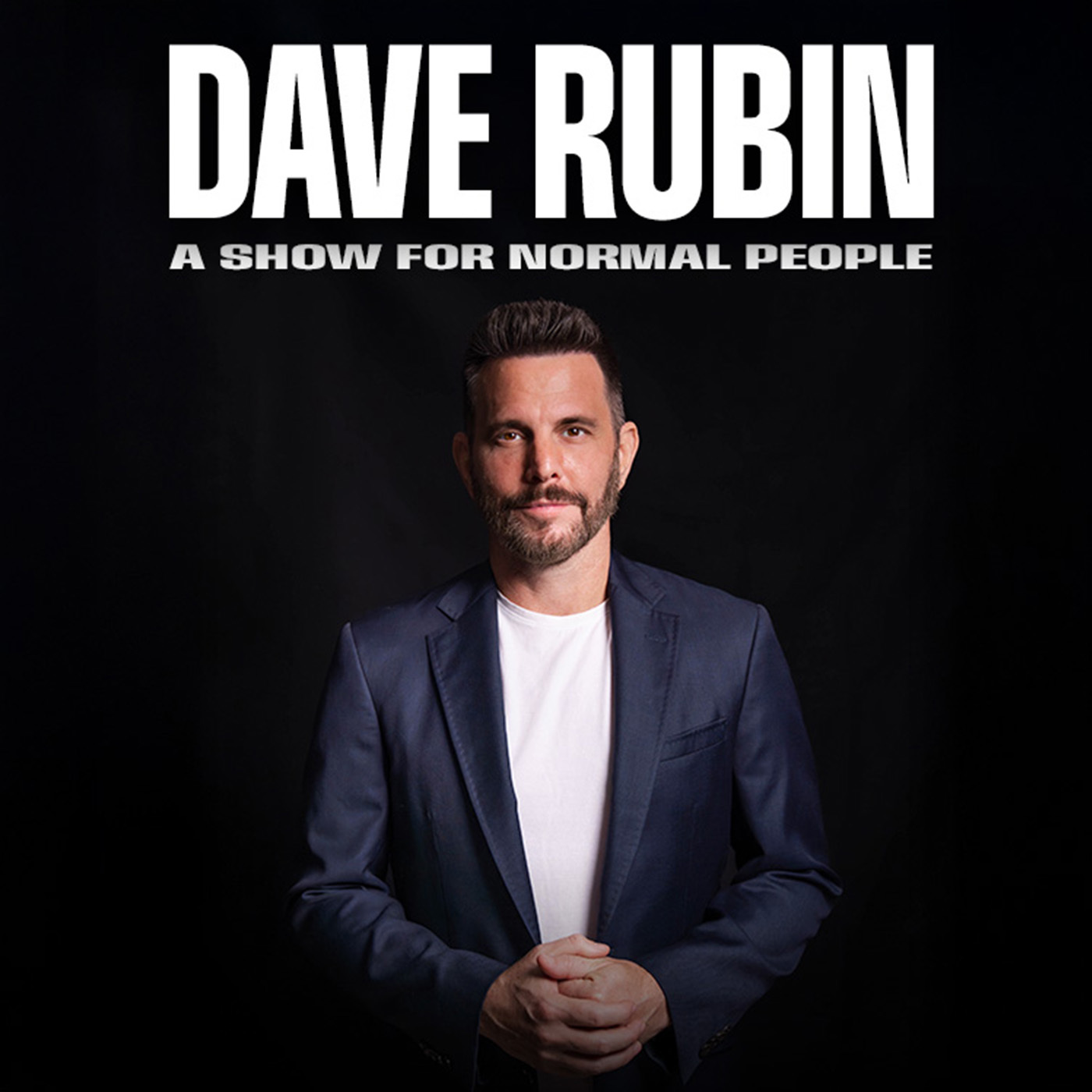
The Rubin Report
Skip navigation dave rubin Create Avatar image Richard Nixon's Biggest Mistake Wasn't Watergate, It Was This | Presidents Series | Jeffrey Tucker
00:30:05
Loading summary
Transcript57 lines
- [00:01]
Amazon Music Advertiser
Ever notice how ads always pop up at the worst moments when the killer's identity is about to be revealed during that perfect meditation flow. On Amazon Music, we believe in keeping you in the moment. That's why we've got millions of ad free podcast episodes. So you can stay completely immersed in every story, every reveal, every breath. Download the Amazon music app and start listening to your favorite podcasts. Ad free included with Prime.
- [00:34]
Jeffrey Tucker
Record sales have not exactly been stellar. Look, I need this tour. It's the only place I feel like I can breathe again. Based on the incredible true story. I'm Tim.
- [00:43]
Dave Rubin
I'm Mark's Warm up.
- [00:44]
Jeffrey Tucker
It's my first tour this Friday. I just want to write something that helps people. You will never understand what I'm going through. Imagine what God can do again.
- [00:54]
Dave Rubin
Whatever you're going through, you're never alone.
- [00:57]
Jeffrey Tucker
God is in fire, and it is beautiful. I can only imagine two Only in theaters Friday. Rated pg. Nixon inherits this situation. And Fort Knox was being drained. You know, they're banging on the doors. Give us our gold. Give us our gold. Give us our gold. So he's. He's dealing with this in 1971 alongside innumerable, you know, political problems for himself. And so he went to his advisors and said, what can we do? And really, there were two choices. You could deflate, cut the budget, live within your means, Right. Which could probably provoke a recession and tank Nixon's popularity. Or you could just make an announcement. No more gold exchange. The US is shutting the window. I think it was August 15, 1971. It's called the Nixon shock for a reason, because the last president you would have expected to untie the dollar from this last tenuous link to gold would have been a Republican president. Well, so now what happens after that? Well, again, the most horrifying thing you could ever imagine, which. He imposed wage and price controls. So under penalty of law, nationwide wage and price controls to prevent inflation that would inevitably result from a shutting of the gold window.
- [02:39]
Dave Rubin
I'm Dave Rubin, and joining me on this President's week to discuss former president Richard Nixon is the founder of the Brownstone Institute, and Rubin Report regular Jeffrey Tucker. Jeffrey, my friend, how are you?
- [02:51]
Jeffrey Tucker
I'm good. So nice to see you.
- [02:53]
Dave Rubin
It is good to see you. I always credit you for getting basically everything right on Covid Day 1. You're also a wickedly smart economic pundit. And I am told that if I ask you a question you don't know the answer to, your bow tie will spin. Is that true?
- [03:11]
Jeffrey Tucker
That's not true because it's naturally tied. That only works with different kind of contraptions.
- [03:18]
Dave Rubin
And I feel like you're in the drawing room at Downton Abbey over there. Now I know what's going on at the Brownstone Institute. All right, let's dive in. Let's talk about. Let's talk about Richard Nixon. Actually, out of all of the President's week shows that I'm doing, you know, we're doing a bunch of the founders and some of them more modern Trump and all that sort of thing. But I feel like Nixon is the one that people sort of think they know in some sort of comically villainous way, but maybe don't really know or only have the image of him in the debate with jfk. So where do you want to start with Rich?
- [03:48]
Jeffrey Tucker
Nixon, I should say. Nixon was kind of the beginning of my political awareness because the very first political thing I can remember is Watergate. It took over the country. My grandparents just watched it constantly. Why were they watching? Were they able to follow all this stuff? These endless wall to wall hearings lasted weeks, months. I'm not sure they could figure it out, but it was this big scandal at the time. My father was always a Nixon fan, so I don't remember the details, but he just liked Nixon. And I remember being very young, like in one of those. You're going to be astonished to hear this, but I was in elementary school and we had like a propaganda newspaper for kids. It's like the Washington Post, except marketed to third graders.
- [04:40]
Dave Rubin
Now, the Washington Post is angled at people with the intellectual capacity of a third grader.
- [04:46]
Jeffrey Tucker
But okay, yeah, I'm sure that even regular Washington Post readers couldn't read the edition I was reading in third grade. But it had this bent. So even in those days, everybody knew who was who. It was kind of like team Red, team blue, I think we called it. Liberal, conservative, whatever. But the teacher wanted to know who in the classroom after the Watergate thing, who in the classroom supported Nixon and who didn't. And she started with, who didn't? And everybody in the whole class raised their hand and said, who did? And I was alone. I was the only kid in the class raised my hand and said, I support Richard Nixon. That's literally my very first memory. I have no idea why I supported Richard Nixon. It was like a timing thing.
- [05:31]
Dave Rubin
Yeah.
- [05:32]
Jeffrey Tucker
I don't know why, but I was like, no, no, Nixon's a great guy. He's getting a bum rap. I couldn't have filled in any details beyond that, but I Think actually a lot of subsequent research has thrown a lot of sort of doubt on whether or not this is really the Washington Post. Intrepid reporters holding government officials feet to the fire on behalf of a public and its right to know there's a mixed story there. So I'm not entirely sure that story is correct.
- [06:03]
Dave Rubin
Well, especially when you see how partisan in their later years, Bernstein and the other guy, his name's flitting me at the moment. When you see how partisan they've got. Woodward. Thank you. It does make you question some things, but. All right, let's put Watergate. Let's put Watergate aside for a moment.
- [06:20]
Jeffrey Tucker
Can you talk to me a little
- [06:21]
Dave Rubin
bit about a little, A little bit about his policies? I feel like people have no idea anything about him other than Watergate and the scandal and impeachment and that sort of thing.
- [06:31]
Jeffrey Tucker
Right. So we use this word sometimes in political analysis called triangulation, which is that you're able to get away with things because people don't expect you to do them. Right. So triangulation, he was the master of it. So he was an anti communist. Yeah, that was his history. He was, I think, the Senate interrogator of the his chambers trial, you know, kind of grafted onto the McCarthyite movement. But it was he who opened up China as a way of creating a sort of counterweight to Russia and dividing China and Russia's interest vis a vis the United States. So this a brilliant move. They say that Nixon went to China because nobody expected that. This is the last thing you would expect that he would do. But he gained so much success from that. He kept doing this. Right. So one wonderful thing is that he actually was very instrumental in putting an end to the Vietnam War, which is a beautiful thing. Wasn't a warmonger in that sense, but he was a big regulator. He created the epa, which is another thing you would not have expected. Right. From this right wing Republican that everybody in the left dreaded. He did a lot of the things that the left would have favored. He was wildly concerned about his poll numbers all the time. A deeply insecure person who just wanted to make sure that people liked him. So he had his pollsters out there all the time asking for who likes me? How does this policy play in with the public? Just a fanatical guy. Deeply insecure with. He might have had a lot of internal convictions, but those internal convictions did not translate into public policies. He always considered high poll numbers to be sort of a ratification that he did the right thing, even when he was doing the wrong thing. So now, Dave, we have to get to the most serious and significant thing he did during his entire presidency, which was to close the gold window and take the dollar off the gold standard and in effect, the entire world economy off the gold standard. So just to review here why this is so important. So a fiat money system with a roiling, boiling international market between arbitrage, market between currencies, that's such a source of fanaticism. And in the world economy today, I mean, this is. Trading currencies is such a big deal. That wasn't before Nixon. The reason is the entire world was on what's called, they called it the gold standard. It was really a kind of gold exchange standard or dollar standard for the world. But the dollar itself was tied to gold at $35 an ounce. So the reason I say it wasn't quite a gold standard is because in the old days of the gold standard, you had domestic convertibility. You could take dollar to the bank and get silver. You could take precious metals, right? Gold and silver were exchangeable domestically. FDR put an end to that in 1933 with an executive order that banned holding gold. Right? I mean, like you couldn't hold gold unless it was on a necklace or jewelry or something like that or a filling in your teeth. But apart from that, you could not legally own gold.
- [10:05]
Dave Rubin
And what was the. I don't want to get too sidetracked, but what was the rationale for FDR doing that?
- [10:10]
Amazon Music Advertiser
This precedence day, Upgrade the look of your home without breaking your budget. Save up to 50% site wide on new window treatments@blinds.com blinds.com makes it easy with free virtual consultations on your schedule and samples delivered to your door fast and free. With over 25 million windows covered and a 100% satisfaction guarantee, you can count on blinds.com to deliver results you'll love.
- [10:32]
Jeffrey Tucker
Shop up to 50% off site wide plus a free professional measure during the
- [10:35]
Dave Rubin
President's Day mega sale. Last chance happening right now@blinds.com terms apply
- [10:39]
Amazon Music Advertiser
real skin results start with one daily ritual. Meet daily microfoliant from Dermalogica. This iconic exfoliating powder activates with water to gently polish away dullness and uneven texture. It leaves skin instantly smoother and more luminous while supporting your skin barrier. Formulated with professional expertise to deliver visible results daily, even on sensitive skin. Discover your healthiest skin today. Visit dermalogica.com and use code smooth at checkout for an exclusive gift with your $65 purchase.
- [11:10]
Jeffrey Tucker
Well, this is a devaluation measure as part of his effort to combat the Great Depression. I mean, he was following Keynesian kind of prescriptions. He wanted looser money. He wanted to bail out the entire US Economy with loose credit and money printing and couldn't do that so long as the obligation was there to have to convert because everybody would immediately convert the dollars. So he wanted the government to own all the gold in the country, and he took it. I mean, we think we're dealing with government tyranny today. I can't even imagine what it must have been like to be alive in 1933 when you see that the government's actually collecting the gold in your vault. You know, post Great Depression, trying to
- [11:57]
Dave Rubin
get out of that.
- [11:57]
Jeffrey Tucker
And then.
- [11:58]
Dave Rubin
Oh, my God.
- [11:58]
Jeffrey Tucker
Yeah, yeah, it was 1933. It was one of the first things he did as president. Well, the first thing he did was end Prohibition. Talk about triangulation, right? Everybody cheered. Great. Let's have a beer. Yeah, Enjoy your beer while I take your gold. You know, you're gonna need it. Yeah. So this went on. So after World War II, we had this new system come along called. It was devalued from the New Deal period, but we had a new system called Bretton Woods. So under the Bretton woods system, the entire world economy, industrialized world economy, would be on the same system of dollars priced at $35 an ounce. The gold would be exchangeable in dollars only on a nation by nation basis. So it was a gold standard in the sense that, like, Britain would ask for redemption for its dollars held in gold, and the US Would send it, or there would be gold held in the US and other nations would ask for gold in return. So we had boatloads of gold being shipped around the world to maintain this system called Britain woods, that was established in 1944 as part of the Bretton woods system, along with the World bank and the International Monetary Fund and a nascent World Trade Organization. This is the gold standard. Now, the thing about this system is that it absolutely required that the US Maintain some fiscal and monetary discipline. If things got out of hand, you could easily anticipate that the calls for gold out of the US Would become so exorbitant that it could essentially bankrupt the entire country. So there was a discipline on the US but it wasn't immediate, like domestic convertibility. It's just the prospect that something bad could happen in the future. So in the 1960s, let's say, starting 20 years after the Britain woods system, the US found itself under LBJ, and we started, you Know, Vietnam War. So we had the war warfare state roiling and blowing up all over the world. So dollars being sent all over the world. Then you had the welfare state with growing deficits, and then you had this rise of foreign aid to help other countries. I mean, the US became this kind of empire in the name of countering the influence of Russia. Right. But that's what blew up the entire financial stability of the monetary system. So in 1967, 68, 69, the calls on gold were just growing and growing and growing. So suddenly Nixon inherits this situation and Fort Knox was being drained. They're banging on the doors, give us our gold, give us our gold. Give us our called. So he's dealing with this in 1971 alongside innumerable political problems for himself. And so he went to his advisors and said, what can we do? And really there were two choices. You could deflate, cut the budget, live within your means, which could probably provoke a recession and tank Nixon's popularity. Or you could just make an announcement, no more gold exchange. The US is shutting the window. I think it was August 15, 1971. It's called the Nixon shock for a reason, because the last president you would have expected to untie the dollar from this last tenuous link to gold would have been a Republican president. Well, and so now what happens after that? Well, again, the most horrifying thing you could ever imagine, which he imposed wage and price controls. So under penalty of law, nationwide wage and price controls to prevent inflation that would inevitably result from a shutting of the gold window because prices were going to bound up. Everybody knew that. People warned about it, said, not a problem, we'll just make an edict to stop this. Well, this is a level of government imposition on people's lives that that generation had never experienced before. We thought we were done with this kind of intrusive government with FDR in the first half of the 1930s. And probably all told, we had not experienced anything like that until the COVID period. Really, that level of sort of top down management?
- [17:00]
Dave Rubin
Everyone's talking about weight loss injections because the results can be dramatic. They work by lowering blood sugar and reducing appetite. But what if you want to lose weight and don't want painful weekly injections or the risk of serious side effects? That's why doctors created a weight loss supplement called Lean. And the numbers are impressive. The studied ingredients in Lean help lower blood sugar, burn fat by turning it into energy, and reduce appetites and cravings so you'll naturally eat less. Lean isn't for Some someone trying to lose just a few pounds. It was created for frustrated dieters who have 10 pounds or more to lose. Get started today with 20% off and free rush shipping. When you add lean to your healthy diet and exercise plan, visit takelean.com and enter code RUBEN at checkout. That's promo code rubenakelean.com now what I
- [17:45]
Jeffrey Tucker
find interesting about Nick, I've spoken about with him with some affections. In some ways, I almost regard him as a tragic figure. So I'm reading his autobiography about this period and Dave, he says two. He says, look, I'm a big champion of sound money and fiscal responsibility and good management of government. And the gold standard is a great source of discipline and every country should have it. And that's what we should have maintained in this country. I knew it was a terrible idea to get off the gold standard, but what could I do? The gold is flying out of the country. The entire country's being bankrupted. It wasn't my fault. This is all the fault of my predecessors and, and I did the right thing. And what I did, I acted responsibly to achieve this great new system. And by the way, polls showed that the people really loved it. Okay, so this is Nixon writing his autobiography. So it's sad. How do you do it?
- [18:48]
Dave Rubin
But did the people love it? So then wait, then price controls come in and did the people love it?
- [18:56]
Jeffrey Tucker
For all I know, his Advisors Tell him, Mr. President, our polls show that everybody loves what you're doing, right? This is how it works, I guess. I don't know. So he says these two things. It was the wrong thing to do, but it was the right thing to do. He says both these things in his autobiography. But actually it was catastrophically terrible day for America because it was the last source of fiscal discipline we had. I mean, you think about what unfolded in the 1970s. We had one wave of inflation. The Fed raised rates, cracked down on that inflation, said, well, inflation's gone. So they lowered rates. We had a second wave of inflation. The Fed said, oh no, what are we going to do? Raise rates? And inflation died down a little bit. And so they lowered rates a third time and boom. The most catastrophic inflation up to that point since the Revolutionary War hit the United States with double digit inflation, gutting the capital stock, ruining the savings of every pensioner, throwing the entire American economy into massive upheaval. Only a few years after that, inflation. We saw households going from one income, able to sustain two cars and kids in school and a nice middle class lifestyle. And Home ownership, to only been able to do that with two incomes. So by 1985, the 18th, the average mom with little kids was out working, paying taxes to the government. This is a direct consequence, not of Gloria Steinem or whatever, this is a consequence of the inflation, the third wave of inflation in the 1970s. This never could have happened without the gold standard. So this fiat money system, it reduced the purchasing power of the dollar dramatically. It really took the brakes off Congress. So now suddenly you have a Congress that doesn't even have to pay attention to how much debt it's creating with the spending plans. It could just add zeros and zeros and zeros like we saw in the COVID to these preposterous bills and go, well, it's just. That's the way it goes. Treasury gets a note, make debt. And who buys the debt? The Fed? They're creating money. Okay, so this is. This is the system that Nixon's catastrophic decision in 1971. This is what the system that he made possible with his Smithsonian agreement and ending the dollars linked to gold. Big government just was unable to ever get back. We are never able to cut it again. We've really never cut the budget since those days. It's fascinating to me, Dave, because there still remains a kind of nostalgia for the gold standard within the Republican Party. In 1980, Reagan ran on a platform to restore the gold standard. He didn't do it, but he always wanted to. And I think we still have some talk about that. I mean, Elon and Trump are talking about auditing Fort Knox to find out if the gold is there or not. I think it's probably not there. Right?
- [22:09]
Dave Rubin
Well, didn't Elon say something like even the elevator that they would have to go down there to get it hasn't been used in 40 years or something like that. Makes it sound like the place has been raided.
- [22:20]
Jeffrey Tucker
I think probably it was all gone. And that's the reason why Nixon closed the Goldwinder. So I don't, you know, you say, well, did he have a choice? Yeah, he had a choice. He could have done the right thing, but he decided to do the wrong thing. Okay, so that's just a fact. That's Richard Nixon. So in some weird, strange way, Nixon, the Nixon presidency was this sort of shepherd or handmaiden to the whole of giant leviathan that, that we now live with. And nobody seems to know what to. What to do about it. And this was Nixon's doing. It was not the legacy he wanted.
- [22:56]
Dave Rubin
It's so interesting because you're linking his economic. You know, what you're basically arguing were his economic failures to now what we all see as huge government overreach in almost everything. But really, as you pointed out, the COVID stuff shows you, like, the hyper craziness of all of it. But the other part of it that's interesting was he was also president in a time when the media was changing, and he seemed to not understand how to deal with that. Can you talk about that a little bit?
- [23:23]
Jeffrey Tucker
That's a really interesting point. Well, he got slaughtered, I guess it was in this debate with Kennedy. Right. In the early 1960. Is that the election? And yeah. Performed terribly. He didn't. He wasn't media.
- [23:40]
Dave Rubin
We'll get the exact year. We'll give me the year. We'll get the year on that.
- [23:43]
Jeffrey Tucker
Yeah. He was a very, very grumpy guy. Hated the press. Hated the press more than you can possibly ever imagine. The press hated him. But the funny thing about Nixon is that he remained an enormously popular president, actually, during his. During his first term, which began in 1968, and then his second, second term in 1972, if I'm getting this correct. And then he. When Watergate came along and destroyed him, I guess there was a threatened impeachment. He just said, look, I hate you guys guts. And so he walked away from the whole thing, which I get it. But he was very popular. The reason for his popularity. And I promise you, I think about my own father in this case. My father's a very gentle, very rational man. But he loved the fact that Nixon was hated by all the people that he hated. Do you see what I mean? Like, popularity was sustained by his enemies.
- [24:44]
Dave Rubin
Right. So there's a Trumpian quality to that.
- [24:47]
Jeffrey Tucker
There is very much that. And so Trump gets more popular the more the media attacks him. I mean, it's like just advertisement for the MAGA movement. You know, that's. We've. Been, We've been watching this for 10 years. This dynamic was foreshadowed in the world of Nixon. And, and it's unclear. I've thought about this a lot. Why did the left and the media hate him so much? And I really do think it traces back to the 1950s and his role in that Hiss Chambers trial, which for that generation was the most exciting thing to discover that there were communists in the State Department. And Richard Nixon is the guy who proved it.
- [25:31]
Dave Rubin
Guys, you may have seen conversations happening online lately. Censorship is back and it's everywhere. Big tech platforms control narratives and push only what they want us to See? And we need to fight back. Rumble is the one company that has consistently stood up to big tech censorship. And now they're taking it even further. Banks can cancel accounts and freeze cards anytime. That's why Rumble launched Rumble Wallet, a wallet that cannot be canceled. With Rumble Wallet, you control your money. Not a bank, not the government, not a tech company, not even Rumble. You can buy and store digital assets like Bitcoin and Tether Gold, which represent real physical gold, the blockchain. You can also instantly tip creators like myself with no middlemen and no fees. Download Rumble wallet today@wallet.rumble.com or search rumble Wallet in the app stores and step away from the big banks for good and right. It's. It's rather amazing. So they. They. You'd think by our definition now they would have loved him because the government got bigger under him, budgets got bigger under him, control got bigger under him. But actually because of the relationship with the communists, it puts a little wrench in that.
- [26:40]
Jeffrey Tucker
Something like that. I suppose he was a bit of a populist, too, whatever that term means. He always appealed to the middle class and to the people and over the heads of the overclass and had all sorts of nasty names for media elites and government bureaucrats and that sort of thing. So that was very appealing to Republicans of the time. And he was loved for his role in the Hiss Chambers child and trusted for that reason. And again, I don't think of Nixon as being a bad guy in a sense, but the problem was he was undone by his wild insecurities. He was desperate to be known as a great man and wanted to be a great leader and was seething with hatred of the media class and the elites and really wanted to rule them and show them that they were wrong and that he was a great man and a great president. And this sort of internal psychological dynamic that comes through in his autobiography, I think ultimately led to his undoing. Because if you look at things like why did he create the epa? Why did he impose wage and price controls? Why did he take us off the Gold Center? Why. Why did he become basically the godfather of late 20th century and 21st century big government? He did it because he wanted to be loved. More than anything else, he wanted to be loved. And so confounding his enemies by doing their bidding was one of the ways he went about it.
- [28:26]
Dave Rubin
So was that so to kind of bring this all together? Because I'm glad that we spent so much time on the monetary side. Cause that's not really something that people know And I think you laid out quite an nicely how it is so connected to really wildly out of control government that we all now see. But to tie this to Watergate, which ultimately is the thing that people remember him about, was it really just his hubris then thinking that he was. There's that quote, I forget exactly what it was, but that's. If I say it's true, it's true. And in essence I can do anything as president and that kind of is what took him down.
- [28:59]
Jeffrey Tucker
I just don't think he ever took Watergate seriously. As many people said at the time that I used to hear all the time, it was like a two bit burglary. And I don't think he thought it was very serious. And he thought that it was being used as a pretext to attack him basically for his chambers trials. I mean, he just thought Washington was filled with his enemies and the press was filled with his enemies and Watergate was the great excuse, so he didn't take it seriously. And that moment when he finally just resigns, God, that must have been really tough for him. But he was tired and exhausted and of the whole thing, they ganged up on him, the press ganged up on him like never before. Can you imagine? There were three networks at the time and it seemed like all three networks all day were just reporting on Watergate. I mean, it's amazing. I remember as a little boy eating a salad called the Watergate salad. You know, you can look up the recipe, it's terrible.
- [30:02]
Dave Rubin
What did it have? Did it have flashlights in it? I mean,
- [30:06]
Jeffrey Tucker
yeah, I remember it definitely had Cool Whip and it was green, so I don't know.
- [30:12]
Dave Rubin
Cool Whip in a salad.
- [30:14]
Jeffrey Tucker
There you go.
- [30:15]
Dave Rubin
Any, any final, we're just really, this whole week I'm just trying to give sort of blue sky versions of everything with all these people. But if you had to give me a one minute synopsis.
- [30:25]
Jeffrey Tucker
Yeah, so I, I, I would say, you know, Nixon deserves more credit than he gets for having ended the draft and ending the Vietnam War. So this, and also I don't object to the efforts he made on behalf of peace internationally, both with China and with Russia. So in this sense I think he probably had a savvy international sense of things. But domestically this was catastrophic. I mean, he ruled in a way that traumatized his base and gave us big government like we had never seen before, including aggressive wage and price controls that didn't work, obviously and gave us three waves of inflation by the end of the decade, ended up gutting the American capital stock and sending financial upheaval to the middle class American family. So this is the real legacy of what I think was a very tragic man in some ways.
- [31:30]
Dave Rubin
Right. And really what he's remembered by, for most people that didn't live through it was I'm not a crook yet, stepping away from the whole thing. So, Jeffrey, I thank you for your time. You are welcome back on the show whenever. And you gotta teach me how to tie a tie. You know, I'm doing the T shirt thing lately so I'm not doing as many button downs. But next time in person, you can teach me how to do that.
- [31:52]
Jeffrey Tucker
I'll send you a link to my favorite T shirt. I had to look and look and look for it. I finally found it. I'm going to send you a link when we're off this, but it's always a pleasure to be with you, Dave. Thank you so very, very much.
- [32:01]
Dave Rubin
Good to see you, my friend.
- [32:08]
Libsyn Ads Advertiser
Marketing is hard, but I'll tell you a little secret. It doesn't have to be. Let me point something out. You're listening to a podcast right now and it's great. You love the host. You seek it out and download it. You listen to it while driving, working out, cooking, even going to the bathroom. Podcasts are a pretty close companion. And this is a podcast ad. Did I get your attention? You can reach great listeners like yourself with podcast advertising from Libsyn Ads. Choose from hundreds of top podcasts offering host endorsements or run a pre produced ad like this one across thousands of shows. To reach your target audience in their favorite podcasts with Libsyn ads, go to Libsynads.com that's L I B S Y N ads.com today,
- [32:50]
Dave Rubin
dreaming of buying your first car or new home? Knowing your FICO score is the first step to making it real. With Myfico, you can check your score for free and it won't hurt your credit. You'll get your FICO score, full credit reports and real time alerts all in one simple app. Your credit score is more than just numbers. It's the key to building the future you've been working toward. Visit myfico.com free or download the MyFico app and take the mystery out of your FICO score.