Loading summary
Transcript64 lines
- [00:01]
A
This is a message from sponsor Intuit. TurboTax Texas was getting frustrated by your forms. Now Taxis is uploading your forms with a snap. And a TurboTax expert will do your taxes for you. One who's backed by the latest tech which cross checks millions of data points for absolute accuracy. All of which makes it easy for you to get the most money back, guaranteed. Get an Expert now on TurboTax.com only available with TurboTax Live full service. See guarantee details@turbotax.com guarantees.
- [00:37]
B
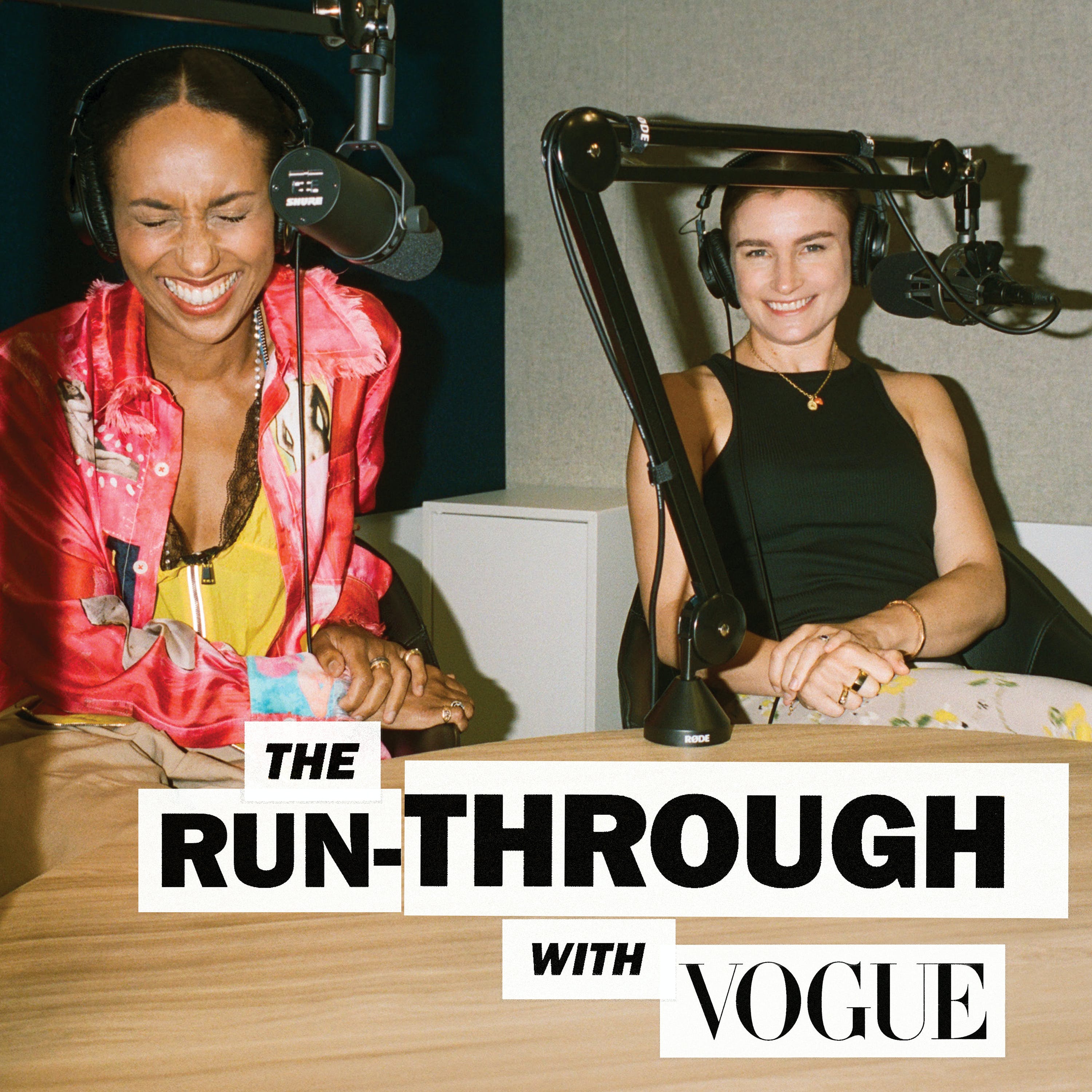
This is the run through. I'm Nicole Phelps and today on the show I'm joined by Nicolas de Felice, the artistic director of Courreges. In four years, Nicolas has turned Courreges from a nice to see show in Paris into a must see show in Paris. And I think he's done that with a combination of very sexy clothes and incredible savoir faire that's really elevated. So here's my conversation with Nicolas de Felice. Welcome Nicolas. Thank you for joining me on the run through.
- [01:07]
C
Thank you, Nicole. It's an honor to be here.
- [01:10]
B
We've only talked in Paris. This is the first time I'm seeing you on the other side of the Atlantic.
- [01:16]
C
Yeah, it is true I don't come that often, but I remember last time I was here I already made a little visit here, but not on the studio. So I'm really glad.
- [01:28]
B
What are you doing in New York?
- [01:30]
C
We are here for a dinner with a collaboration with Nordstrom and it was the occasion to meet all the people that supported me for a few years now. And just to, I mean, I love to come here. It really reminds me of my beginnings, you know, when I started this job that we used to travel with Balenciaga to show the pre call back in the days and it was, I mean, really new for me. All these travels and everything. And each time I come here, you know, the energy, the lights, the views, I feel like, yeah, it's moving a bit.
- [02:08]
B
I want to start even further back. I've never heard you talk about how you got your start in fashion. What was it that turned you on about design that made you want to get into fashion?
- [02:21]
C
You know, I'm coming from a little town in Belgium and we didn't really have access to fashion as you know it. Obviously there was like bookshop, but there was no Vogue there. So I think that as I remember my first fashion souvenir are more related to mtv. Like a few, I mean a lot of designers from my generation coming from a little countryside so we didn't have much, but we had TV and we had mtv. And I quickly realized that clothes can really participate to. I mean, the expression of yourself. And so I would say that I've been introduced to fashion through clothing more than fashion itself. And then my father was. He received every week a certain newspaper. There was a small amount of like Belgian fashion in it. And this is the first time that I realized that there was a good school in Brussels actually. And they were always promoting the students from the school. And I decided to do it Lacrom. And everything started like that. But I started this school without really knowing that much about fashion. But then when I quite. I can be geeky when I like something, I can dip really fast. And this is what I did. So I have the feeling that I. I knew a lot about fashion history in like less than one year.
- [03:54]
B
I was like, do you remember any of the videos that made a big impact on you on MTV? I was a Duran Duran fan in the 80s, so I was watching Hungry like the Wolf over and over again.
- [04:06]
C
I see, I remember it. You know, it's weird because there was. They're really like really different. I remember my sister was more into rock. So there were like this video clips from Guns N Roses. November Rain. Oh yeah, so beautiful. Like a little short movie. Really sad though. But I remember D Light, so really colorful. Super 60s. And then in Belgium you have a lot of electronic music that was on television and with like new beats looks. And it's true that I mean they were so different, you know, it was so many different styles. And yeah, I quickly realized that it was. Was passing through clothing, you know, of course the hair, makeup, the songs. But yeah, the clothes.
- [04:58]
B
I just turned my 16 year old son onto the song November Rain. I really love that song. So I wanna talk about La Cambre because it has produced some of the stars of the moment. You, Matthieu Blaisey, Anthony Vaccarello, Maureen Sur, I believe went there as well. What is special about that school?
- [05:17]
C
You know, what is special is that first of all we have only eight hours of fashion a week. The rest of the week is just like general art lessons. So you can have like cinema, music, drawings, you know, model vivant, architecture. They kind of force you as well to do like an internship in another. In another field than yours as well. So all of this to say that it's certainly a school that really opens your imagination, that teach you lots of things and that from the beginning they kind of, I mean the way they teach really show you that it's important to be inspired by everything and to look around and to be curious and not only about your. The lessons that you wanted to learn. So this is the first really important point. The second one, I think that it's a good mix between technique and finding your own style. I remember our fashion drawing lessons. You know, if you would like draw like nice silhouettes, you know, like with a super tall and everything, they would give you like 0 out of 10, you know, so they force you to really find your end and find your way of drawing instead of just like copying Parisian style drawing, you know. I wish that courage will grow even more so I can help the school. Because actually what's amazing with this school is that it's not an expensive school. There is a lot of people that wants to get in. But once you're in about like 20 person in the first year, it's less than $500 really a year, which is really nice because I mean, that's unique.
- [07:13]
B
Design schools are sort of famously really expensive.
- [07:15]
C
Yeah. In France. Yes.
- [07:16]
B
In Baltimore and in America for sure.
- [07:18]
C
Yeah, yeah, yeah, I heard. So it's true that they would need I think a bit more help. I know that Anthony helped them a lot with Saint Laurent and I hope I will be able to do it as well one day.
- [07:30]
B
So you graduated and did you go straight to Balenciaga?
- [07:34]
C
Yeah, I actually didn't really finish last year.
- [07:37]
B
I want to talk about those early days because you arrived at Balenciaga, it was really Nicolas Ghesquier's peak. I mean he's still a fabulous, incredible talent, but there was a magic about Balenciaga in those days and we all hold it in such high regard. Still talk more about the atmosphere and also what you learned from him as a designer.
- [08:04]
C
Nicolas was there a lot. So it would mean that if you show something to him that he reacts. You wanted to do it again for the day after. So we were staying a lot, every day, sometimes in the weekend as well. But I mean we all learned so much and it was exciting. You know, the show themselves, I worked for on the show for last, this last show actually, you know, if you remember. Well, there was not that many looks, you know, and at the end we were quite a lot of designers. So some of us would have only just a few pieces as preco and show they were separate. So some designers, they would work on a piece for like a few months, the same piece again and again and again until it was perfect. And I always say back in the days we would use Less Photoshop, you know, now we Photoshop a lot, the pictures and everything looks perfect. Everybody's happy. When you look at Balenciaga pictures, they're not that Photoshopped because the garment, the look itself looked Photoshop. I remember we would. Nicola would be. Would ask to redo or to remake a garment for a top stitch, you know, top stitch size. And I'm not going to lie, I understand the importance of that. Just that me, I don't have the same. I mean, I. I had to come down a bit and to find the right balance between what I think is really important and what it is at the end of the day. But all of this to tell you that we learned to be so precise. The thing with Nicolai is that he's always searching and he learned so many things to all of us because he always came with amazing docs, you know, inspiration ducks. And we will all dig in, like the story that he wanted to tell the Charlotte Perrion period. You know, we all. I think that we all dig so much about. I mean, we all know everything about Charlotte Perrient because, you know, it's going really, like, deep and full on and not just in surface, which can happen in our business, you know, because you have to do something else a few months after. So. So, yeah, but, yeah, the precision and l'exigence. I really. I already. Already have this technical thing in me, but I think that working with him was.
- [10:31]
B
Yes, I can see the precision in your work. So let's. Let's talk about Koresh. You arrived during the.
- [10:38]
C
Yeah.
- [10:38]
B
What made you want to take the job? It is a heritage house. Andre Courreges got his start, I believe, in the early 60s, and his legacy is for this space age chic, this sort of retrofuturism. In the 60s, designers were really focused on, I guess, the space age, what they imagined the future would look like. And so it's, you know, half a century later. What did you want to do at Courrez?
- [11:08]
C
I never really wanted to. It was not my biggest dream to do that job. You know, I was good where I was. I had a good life, you know, and I loved my team. Yeah, I had a good life. So I was not in a hurry to take this because I knew that it would be. It is something, you know, to engage in such a project, but with courage. I had no doubts. I was like, okay, yeah, this. I want to do it. I think I can do it. And it's important to say this because I really have the feeling that to Accept this kind of challenge. You really have to kind of have an idea, precise idea of what you want to do. And everything goes so fast. And I had a clear idea with this and I think that's thanks to the clarity of the house itself. First of all, as you just said, it was talking about certain revolution of the 60s. You know, he kind of like not created, but participate to the fact that before there was you were a little girl or a wife. And then in the 60s, the young lady, I mean la jean femme arrived, you know, with her freedom. And he's really, I mean, he participated to the look of this jean femme. There were like dreams that were really different. You would dream to go on, you know, to discover the moon, et cetera. I mean they were like. Yeah, he was thinking. And it was clearly turned towards the future 60 years later. I think that with the pandemic there was something that there was an echo between these two periods, you know, putting things in question. Maybe.
- [12:54]
B
When my colleague Mark Holgate wrote about you for Vogue, you told him that Andre Courreges really created to let women feel more free. And that sounds like what you were just saying that it wasn't just about like an a line, space age, futuristic looking dress. It was about addressing a changing, like a changing generation. You had women's lib sort of at the same time. Right. And women were going into the workforce more than they had a generation before. So there really was. It was an important turning point in the culture.
- [13:35]
C
Yeah, this quest of freedom, you know, and this need of freedom. And this is something that I think really inspiring. And I think it's. I mean, it's a forever subject, even now, nowadays. Yeah, it's true that I'm. There's a social part, you know, about his work, you know, because it's a correspond at a certain period where this happened. And this is an aspect of his work that I really like as well. I try to, yeah. To approach as well in my work in a way looking at the society around us. And quest of freedom is still really. I mean, now I think.
- [14:21]
B
Okay, we're going to take a quick break.
- [14:35]
A
Ready to add a touch of Vogue to your collection? Browse shop.vogue.com for exclusive merch like limited edition mugs. And here's a treatment. Get an exclusive 15% discount with code VOGUEPOD15 at checkout. Happy shopping.
- [14:59]
B
And we're back. I think one thing that critics and reviewers identified very early is that you have a very good sense of how young people who are going out and you know, to raves or to dance are dressing. You have a real eye for how young women want to look. Now, how do you develop that eye? Where does that come from, that instinct?
- [15:26]
C
Well, you know, Nicole, I go out even if I don't have times. You know, I'm not gonna lie. This last month, I didn't really go out that much, and I really missed it. I felt like it's really important for the people that has this job to still live in the real world and to go and see. I think it's so easy with our schedule to kind of like. Yeah. To just work and go home and then to do the same thing the day after. And I think it can be dangerous if you start to be out of touch with reality. It will clearly, I mean, show it in your work. And I mean, it depends where you are. But with my brand, it's like that. And with courage, it's like that. So, yeah, I forced myself to do it, and I was like, no, you. I mean, you have to go. And I had fun. I did it. And I even kind of like. Because my boyfriend was not there. So I went with the friends and I was like, oh, they wanted to go, go back home. And I was like, go, go home. And I stayed by myself and I went. I came back home walking from this party, like, one week ago, all by myself, and I felt good. And I need to. I need to see, I need to. And I actually need to dance. You know, I'm from Belgium, and in Belgium, there's not this guilt related to partying in bigger cities, like Paris, for example, you know, there's always that. Oh, you know, he parties, man. Actually, after a good party, I feel really healthy. You can be tired, but in a way, it gives you lots of good energy as well. When the music was good, it's the same with the concert, you know, so.
- [17:17]
B
Music is really important to you. What makes good music and what makes good music at a show? Because when we talk before your shows, you often talk about the soundtrack element and the vital role that place.
- [17:32]
C
Yeah, you know, I start to think about music. Weather 1 At the very beginning of a collection. Sometimes it can. It can. It can arrive at the same moment as the set and even the design of the clothes.
- [17:46]
B
Tell us. Tell us about the Spring 2025 soundtrack, because I think it might surprise people what it. What it was.
- [17:52]
C
The last one? Yeah, the last one. Actually, it's the first time that we do a set design that is participate to the soundtrack because it was a sonor set. It's inspired by an ocean drum, which is an instrument used most of the time in this kind of sound healing session. So I've been lucky. I did a sound healing session, like one year ago. And this season I wanted to work around repetition cycle. And I quickly had this image of a wave, because the wave is like a cycle, you know, it's always come back to you and go. And doing just waves with water would have been a bit too much first degree. So I quickly remember this instrument. It was amazing, this ocean drum, which is a percussion normally and I order. The first time I did this only link session was a beautiful one. But when I ordered one online, it arrived. It was transparent with little silver ball inside. So I was like, that's why the set is. Is like that, actually. But it's an instrument that's used to kind of calm you. And it's like these rain. You know, rain sticks, so it makes the sound of the waves.
- [19:12]
B
The circle is a really big symbol for you. Thinking about the set from the season before, which was like the breathing set, but it was also sort of round. And then the amazing show that you did a year ago with the mirrors, the circular mirrors, and now you're talking about. So explain a little bit by what you mean, what you were interested with cycles and how that affected the designs of the spring collection.
- [19:42]
C
You know, it's true that when you say this, even like the show with the sand, you know, the big hourglass, with the time that was passing. It was. Yeah. I have the feeling that I have a bit of an obsession with this, with the. But, you know, when you take over a house with an heritage, it's always a dialogue as well with the past. So I think it kind of like comes naturally in the process of my work, looking through the archive and then, you know, and, yeah, just find what's interesting or what's touched me or that's why I'm kind of like always in a cycle, you know, even every day, you know, at the studio, I'm in this building that was owned once by Andre. So, yeah, I'm actually between. Even on my legs, I have futurism and fascism on the other side. So it's always a dialogue, you know, when you have this kind of house in your hands.
- [20:40]
B
More with Nicolas de Felice after the break.
- [20:49]
A
I'm Nomi Fry. I'm Vincent Cunningham.
- [20:51]
B
I'm Alex Schwartz. And we are Critics at Large, a podcast from the New Yorker. Guys, what do we do on the show every week?
- [20:58]
A
We look into the startling mob of our culture and try to figure something out.
- [21:01]
B
That's right. We take something that's going on in the culture now. Maybe it's a movie, maybe it's a book. Maybe it's just kind of a trend that we see floating in the ether.
- [21:11]
A
And we expand it across culture as kind of a pattern or a template. We talked about the midlife crisis starting with a new book by Miranda July, but then we kind of ended up talking about Dante's Inferno. You know, we talked about Kate Middleton, her so called disappearance, and from that we moved into right wing conspiracy theories. Alex basically promised to explain to me why everybody likes the Beatles.
- [21:35]
B
You know, we've also noticed that advice is everywhere. Advice columns, advice giving. And we kind of want to look at why. Join us on Critics at Large from the New Yorker. New episodes drop every Thursday. Follow wherever you get your podcasts.
- [21:50]
A
I have to admit my very favorite part about the holidays is doing all of my gift giving and gift prepping. I love getting a special thing for everyone who are the hardest people on my list to shop for for quality gifts at an affordable price. My go to is Quint. Something that everyone needs in their closet in my opinion is Quince's iconic Mongolian cashmere sweaters which start at $50. Personally, I love getting these for my kids. They have Quince jeans and Quince cashmere pullovers. Whatever you're looking for. All Quince Items are priced 50 to 80% less than similar brands. How do they do that, you wonder? By partnering directly with top factories and cutting out the cost of the middleman which passes the savings on to you. Gift Luxury this holiday season without the luxury price tag, go to quince.com runthrough for 365 day returns plus free shipping on your order. That's Q U I n c e.com runthrough to get free shipping and 365 day returns. Quince.com runthrough.
- [23:04]
B
So you've really built a community, a real following for Koresh in quite a short time. What do you think the women and men who are shopping at Koresh are responding to? I mean, is it the the sort of your sensibility and your understanding of the heritage, or does it have nothing to do with the fact that it's a heritage label?
- [23:31]
C
I think that what's kind of special with this brand is that we realize that we, I mean there's so many different type of people interested in the brand. I think it's one of the key for our kind of success right now is that we're don't really talk to only like one generation. Or we can talk to someone really young and someone a bit less young. And no matter the gender, because we do it as well, like menswear. Some people, they will come because they know that we do parties and we're like talking to these kind of people and some other will be more attracted by. You know, it's funny because I kind of look at Top Sellers like every week, and it's funny because it's this week again, it was the three objects. The three items are really like different. And there's always like a coat. There's always a jersey a bit more like, I would say sexy or more like club wear. And then there's always kind of a more men's, you know, piece in the top sellers. And I think it's really the image of the. The clients that we talk to. I have the feeling that people are seeing like different things. Maybe they will be attracted by the more heritage. But I realized that, yeah, courage talks to a lot of people. And this is kind of something really interesting. We wouldn't expect that.
- [25:03]
B
You know, to me, you have managed a very neat trick of making these really sexy clothes that, you know, the Kendall Jenners of the world like, like to wear and look very, very good in. But then you have an incredible savoir faire. Going back to what you said at the earlier part of this conversation, this, this obsession with technique.
- [25:24]
C
Yeah, it is true. I love it. I love to make clothes. This is my job. This is why I'm. I mean, this is what. This is what I studied. You know, we were talking about Lacombe, and this is where and when I'm happy. Obviously I learned so many new job, you know, doing this. You know, like even talking to you is new for me in a way. You know, I had to. And you know that now nowadays this job, it comes with like so many different things. More marketing. But it's really when it comes to clothes. And I try to kind of make clothes kind of every day because I go to the studio like five days a week, and there's a model there and there's like fabric rolls. And when it comes to make clothes, this is where I'm the most happy person. You know, we. Okay, now we put play on the music. The model is there, we cut like 1 meter of fabric and then we start.
- [26:23]
B
Well, I think it was definitely that, that technique that you have that probably turned on. Jean Paul Gaultier, who invited you to be the guest Couturier at the show in July, and he was at Forces of Fashion a couple of weeks ago here in New York, Vogue's conference. And he said that he thought your collection for his label was the least obviously connected to his archive. And I wanted to know if you thought that was a compliment and what you learned from the process of working on that Gaultier collection.
- [26:56]
C
You know, it's true that when they proposed me this, it's. I mean, obviously it's like paying homage when you accept these kind of things. And as Jean Paul, he always searched as well. You know, he's always like. He worked, he was there as well, in the studio, the time, and he always searched for something. For me, it was important not to just copy and take the patterns, but it's the same with Courage. I tried to just look at it and then do it my way. But he had to take the time to make my own version of his ideas because most of the looks are coming from images from his work. But it's true that we tried not to just hold with a pattern and to do it again because I don't know if they needed me for that. You know, even when it comes to embroidery, I didn't want to just select some swatches, existing swatches, and I wanted to. To find my own way of doing embroideries. Looking at the atelier, for me, I understand that he said that, you know, I hope he liked it.
- [28:06]
B
I think he did. I saw him across the way. He seemed to be enjoying himself at the show. And many of the rest of us really liked it.
- [28:14]
C
Thank you. Yeah, I think it's important for me when you pay homage. I mean, you can pay homage in so many different ways, you know, but my way, as I love technique, as you just said, it's for me to pay homage is like to try to. We work and we're gonna redo something with your ideas.
- [28:30]
B
You know, it was a really high profile moment for you. A lot of people pay attention to those Jean Paul Gaultier collections. They happen twice a year now during couture. Tell me about a red carpet mom working with a celebrity that made you particularly happy.
- [28:49]
C
I love to dress like different people, like lately. And I love to see sometimes people that are getting really different when I see them in my clothes. Louisa Jacobson, not a long time ago, she wore one of the dresses from last preco and she looked stunning, you know, because she's in a series where normally it's like old costume. And to see her such in a like, you know, geometric kind of sexy and daring dress. I was kind of like, okay, I've seen something different from her otherwise. Yeah, there's been like, it's not about, like, being super famous or, like, less upcoming, you know, I can have good surprises with lots of different people because we did dress like huge celebrity, you know, we did Beyonce. We did, several times. And of course, I'm always super happy and super excited. But yeah, I love to dress really different people as well. This is something that excite me.
- [29:56]
B
Do you consider yourself ambitious?
- [29:59]
C
Yes, I am. I am, I am, I am. I'm ambitious for the house. I always say that. I. When people are telling me, like, what can we wish you? You know? And I'm always like, yeah, you can wish that the house still grows in a healthy way. Yes, I'm ambitious. I try to be ambitious with wisdom. I don't know if you can say this in English. Yes, Saj, in a way, but ambitious. Yeah, yeah, yeah, of course.
- [30:34]
B
Thank you.
- [30:34]
C
Thank you, Nicar.
- [30:35]
B
It's great to talk to you as well.
- [30:38]
C
Thank you.
- [30:44]
B
That's it for the Run Through. See you Thursday.
- [30:52]
A
The Run through is produced by Chelsea Daniel, Alex DePalma and Joanna Solotaro. It's engineered by Jake Loomis and James Yost. It is mixed by Mike Kutchman. Stephanie Karaoke is our executive producer and Chris Bannon is Conde Nast's head of global audio.
- [31:14]
C
From prx.