
Podcast
The RunRX Podcast
Hosted by Coach Valerie & Coach Caroline · EN
RunRX is the prescription for running pain-free. With two decades of teaching running technique, Coach Valerie knows a lot about how to run without pain. Coach Caroline works with Valerie on the mindset of the athletes in their membership. Join them as they answer questions and talk about topics that many runners have asked and some that they don't realize they should ask.
19episodes
Episodes
Newest firstAll episodes

The Day-Two Runner: Why Recreational Runners Need a Different Coaching Approach
May 1500:12:40Tap to summarizeCoach Caroline and Coach Valerie talk about the “day two runner” and why the average recreational runner needs a different kind of coaching than the elite or professional athlete. The conversation starts with the reality that major races are expanding and attracting huge numbers of everyday runners, which means more people need support, guidance, and a standard of running that is built around efficiency, injury prevention, and long-term progress rather than just chasing speed.Valerie explains why injuries have stayed just as common even as shoes, braces, and tape have improved, and why the real solution is not more gear but better movement. She shares how she went from running marathons in the eights to racing in the sixes after learning how to fall, accelerate, and train intervals correctly. The episode also covers the value of gait analysis, Zoom coaching, and check-ins, plus the importance of learning to activate the glutes and hamstrings so the hip flexors do not do all the work.Key takeawaysRecreational runners need a different coaching approach than elite or professional runners.More gear has not solved the injury problem; movement quality is still the key issue.A standard of running helps every runner, no matter their age, pace, or distance goals.Learning how to fall and train intervals can improve speed without just working harder.Gait analysis, Zoom coaching, and regular check-ins help runners make faster progress.Hamstring and glute activation are essential because the hip flexors often try to take over.Coachability and repetition are what help movement become natural for life.Where to find us ▶️ Free 30-Day RunRX Reboot — Skill, Strength & Self-Care https://www.youtube.com/watch?v=a0N-GZ0AosI&list=PLDPcF8ZrDdILC8bYyn2zR-4xvqKRzp2re▶️ Join the RunRX Membership https://runrx.fit/join-runrxstrongWebsite: https://runrx.fit App: RunRx Academy — search “RunRx Academy” on Apple App Store or Google Play Support email: support@runrx.fit
Transcribe →
Why Stretching Matters More as You Age
May 800:14:15Tap to summarizeCoach Caroline and Coach Valerie talk about stretching, mobility, and why your body’s needs change as you get older. Valerie shares how she went from being a bouncy, high-impact fitness instructor who barely stretched at all to realizing that range of motion work becomes essential in your 50s and beyond. They discuss the long-running debate around stretching before workouts, the difference between stretching, flexibility, and mobility, and why dynamic flexibility and full-range movement matter for runners.The conversation also covers the role of the couch stretch, how stretching can reveal what your body has been missing, and why many runners feel mentally “closed” when their bodies are stiff and restricted. Coach Valerie explains how stretch bites, doorway stretches, and short mobility sessions can make it easier to stay consistent, and why the goal is not to become a gymnast but to keep your joints, hips, and torso moving well enough to support pain-free running for years to come.Key takeawaysStretching matters more as you age because range of motion tends to decline if you do not use it.Mobility and flexibility are not the same as “doing the splits”; runners need usable range of motion, especially in the hips and torso.Dynamic flexibility can be a better starting point than forcing long, static holds.Small stretch bites throughout the day can be more realistic and more effective than waiting for one long session.Opening the body can also open the mind, helping runners see more potential in their movement.Where to find us ▶️ Free 30-Day RunRX Reboot — Skill, Strength & Self-Care https://www.youtube.com/watch?v=a0N-GZ0AosI&list=PLDPcF8ZrDdILC8bYyn2zR-4xvqKRzp2re▶️ Join the RunRX Membership https://runrx.fit/join-runrxstrongWebsite: https://runrx.fit App: RunRx Academy — search “RunRx Academy” on Apple App Store or Google Play Support email: support@runrx.fit
Transcribe →
Fear of Gravity
May 100:09:52Tap to summarizeCoach Caroline and Coach Valerie dig into a fear many runners do not name out loud: fear of gravity. This episode explains why runners often brace, overreach, and put a “kickstand” foot out in front of them when they get nervous about falling, and how that creates more impact instead of less. You will hear why controlled falling is a skill, how gravity and elasticity work together, and why learning to stop fighting the fall can make your running feel lighter and more natural.The conversation also covers practical drills for building confidence in the fall, why runners are often afraid to leave the ground, and how this fear shows up not only in running but also in everyday movement and walking. Coach Valerie explains how curb pulls, plyo-style work, and simple at-home drills help runners rebuild trust in their bodies. The episode closes by connecting this skill work back to RunRx’s larger method: skill, strength, and self-care as the foundation for better movement at every age.Key takeaways:Fear of falling is real, and many runners compensate by braking with the foot instead of trusting gravity.Running is controlled falling, not leaning or reaching.Curb pulls and other simple drills help you practice leaving the ground safely.As you age, balance and fall confidence matter even more for long-term movement and quality of life.Walking, standing, and running all improve when you keep better communication with the ground.Where to find us: ▶️ Free 30-Day RunRX Reboot — Skill, Strength & Self-Care https://www.youtube.com/watch?v=a0N-GZ0AosI&list=PLDPcF8ZrDdILC8bYyn2zR-4xvqKRzp2re▶️ Join the RunRX Membership https://runrx.fit/join-runrxstrongWebsite: https://runrx.fit App: RunRx Academy — search "RunRx Academy" on Apple App Store or Google Play Support email: support@runrx.fit
Transcribe →
Minimum Effort for Maximum Gain
Apr 2400:09:21Tap to summarizeCoach Caroline and Coach Valerie break down a big training truth: if you want better running results, it is not just about more miles, it is about better variety. Using the Boston Marathon winner’s training as an example, this episode explains why elite runners combine recovery runs, tempo work, and fast intervals instead of running every mile at the same pace. The conversation also revisits the RunRx triangle: running works best when strength and self-care support it, and when those pieces fall out of balance, progress stalls.You will hear why easy miles alone will not automatically make you faster, why interval work matters, and why honest self-assessment is essential when you are working with a coach. The episode also explains how foam rolling, mobility, and self-care fit into the larger picture, and why runners often need a three-legged stool approach to stay balanced, improve, and avoid getting rickety when one part of training is missing.Key takeaways:More miles are not the whole answer; running variety matters more than running volume alone.Elite runners do recovery runs, tempo runs, and interval work at different paces.If you want to get faster, you need interval work plus the support of strength and self-care.The RunRx triangle works like a three-legged stool: running, strength, and self-care all need to be supported.Honest check-ins with your coach help you see what is missing and what needs more attention.Where to find us: ▶️ Free 30-Day RunRX Reboot — Skill, Strength & Self-Care https://www.youtube.com/watch?v=a0N-GZ0AosI&list=PLDPcF8ZrDdILC8bYyn2zR-4xvqKRzp2re▶️ Join the RunRX Membership https://runrx.fit/join-runrxstrongWebsite: https://runrx.fit App: RunRx Academy — search "RunRx Academy" on Apple App Store or Google Play Support email: support@runrx.fit
Transcribe →
How Long Should You Foam Roll
Apr 1700:11:09Tap to summarizeValerie and Caroline break down why foam rolling and daily mobility work are essential for runners — not as a luxury, but as practical self-care that prevents adhesions, restores range of motion, and keeps you running pain-free. In this episode Valerie shares her own wake-up story (an unexpected leg injury) and how regular rolling, short mobility bites, and simple movement habits transformed her approach to recovery. You’ll learn why a little rolling often — five minutes before a warmup, during TV time, or between sessions — adds up, how to spot scar-tissue “knots” before they harden, and simple ways to normalize rolling so it actually happens (spoiler: leave the roller out of the car and put it in the living room).Practical tips included in the episode:• How to mix rolling, stretching and movement into one efficient routine.• Why adhesions form and how rolling prevents them from hardening into chronic limitations.• Quick roll + micro-mobility ideas you can do in 5–10 minutes when life gets busy.• How to modify rolling and mobility when you’re injured so you can keep practicing running technique while you recover.• How to make foam rolling a habit in clubs and groups (and why many runners don’t do it yet).▶️ Free 30-Day RunRX Reboot - Skill , Strength & Self-Carehttps://www.youtube.com/watch?v=a0N-GZ0AosI&list=PLDPcF8ZrDdILC8bYyn2zR-4xvqKRzp2re▶️ Join the RunRX Membershiphttps://runrx.fit/join-runrxstrong📱 Find us in your app store for Apple and Google - RunRX Academy
Transcribe →
Gel in Your Knee Not Your Shoes
Apr 1000:12:55Tap to summarizeA deep, practical conversation about running shoes, cushioning, and joint care. We unpack the history from motion-control to maximal cushion, explain why more foam didn't solve running injuries, and how overly-cushy shoes can actually mask impact and lead to harder landings. Learn what really protects your joints (movement, foot strength, consistent prehab/rehab), what “super-shoes” changed for elites and recreational runners, and non-surgical options like viscosupplementation (gel injections) and smart rehab. Actionable takeaways for older runners and anyone who wants to run longer, healthier, and with less pain.▶️ Free 30-Day RunRX Reboot — Skill, Strength & Self-Care (YouTube playlist) https://www.youtube.com/watch?v=a0N-GZ0AosI&list=PLDPcF8ZrDdILC8bYyn2zR-4xvqKRzp2re▶️ Join the RunRX Membership https://runrx.fit/join-runrxstrong📱 App: Search RunRx Academy in Apple App Store or Google Play — join the membership and upload check-ins, gait videos, and get coached directly.
Transcribe →
Drill vs Easy Running
Apr 300:13:03Tap to summarizeCoach Valerie and Coach Caroline explain why that perfect, effortless feeling you get during a Zoom drill or in-room practice sometimes disappears the moment you step outside — and exactly what to do about it. This episode walks through the practical steps to bridge practice and real runs: how to treat runs like interval practice, when and how to stop and reset, small “mini” strength and mobility sessions that preserve progress when life gets busy, and why consistent check-ins (gait analysis and video feedback) speed learning and prevent injury. If you're recovering from an injury or trying to hold on to form while building distance, this episode gives tactical, coachable advice — warmups, pacing mindset, how to use brief drill sessions as maintenance, and simple ways to make running feel good again so you actually want to keep doing it.Where to find us ▶️ Free 30-Day RunRX Reboot - Skill , Strength & Self-Care https://www.youtube.com/watch?v=a0N-GZ0AosI&list=PLDPcF8ZrDdILC8bYyn2zR-4xvqKRzp2re▶️ Join the RunRX Membership https://runrx.fit/join-runrxstrong📱 Find us in your app store for Apple and Google — RunRX Academy
Transcribe →
Myths About Running After 40
Mar 2000:06:15Tap to summarizeCoach Caroline and Coach Valerie tackle the most common myths about running after 40 and explain what’s real, what’s nonsense, and how to start (or restart) running with confidence. This episode covers why age is not a barrier to beginning or improving as a runner, practical changes to training (warm-ups, recovery, nutrition, and sleep), how to build a safe marathon timeline if you’re new to long distances, and coach-tested strategies to keep running for decades. Whether you’re a newcomer thinking “I can’t start now” or an experienced runner worried about knees, this episode gives concrete, actionable guidance and real member examples to help you move forward.Key takeaways:It’s never too late to start running — how you start matters more than your age.Warm-ups, recovery, sleep, and nutrition become more important as you age; the workout itself can still be strong.Progression: build foundations with 5Ks → 10Ks → longer distances; allow 6–12 months when aiming for a first marathon.Micro-sessions and efficient strength/self-care keep you moving even when life is busy.Real-world proof: members in their 60s–80s keep training and improving with good foundations and coaching.▶️ Free 30-Day RunRX Reboot — Skill, Strength & Self-Care https://www.youtube.com/watch?v=a0N-GZ0AosI&list=PLDPcF8ZrDdILC8bYyn2zR-4xvqKRzp2re▶️ Join the RunRX Membership https://runrx.fit/join-runrxstrongWebsite: https://runrx.fit App: RunRx Academy — search "RunRx Academy" on Apple App Store or Google Play Support email: support@runrx.fit
Transcribe →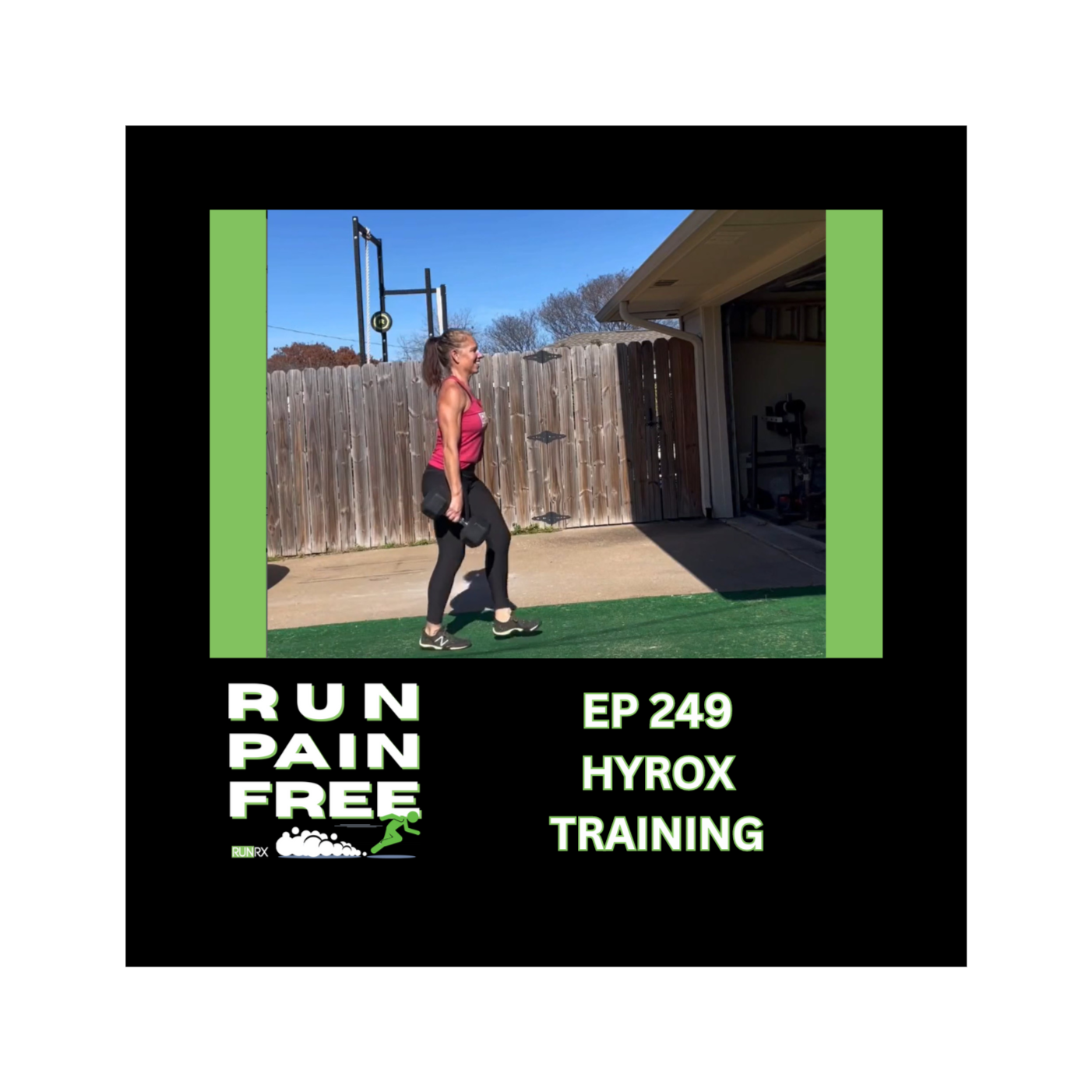
Hyrox Training
May 3, 2024Tap to summarizeConsidering a Hyrox event and need Hyrox Training? If we’re speaking Greek to you, tune in now to find out what all the hype is about!Timestamps of big takeaways[00:46] Introduction to Hyrox - Coach Valerie explains what Hyrox is: a race run event with 8 kilometers of running and 8 stations with various exercises like ski machine, rowing, burpee broad jumps, lunges, wall balls, and farmer carry.[01:41] Valerie's Decision to Participate in Hyrox - Coach Valerie shares her decision to participate in Hyrox after watching a friend compete and being asked by a 62-year-old woman she trains.- Valerie believes that participating in Hyrox will help her better understand and train others for the event.[03:13] Diverse Group Training for Hyrox- Coach Valerie mentions that she has women in their 30s, 40s, 50s, and 60s joining her in training for Hyrox.- She emphasizes that regardless of age, everyone can follow the same training plan and movement patterns, even if their speeds differ.[04:18] Importance of Running in Hyrox - With 8 kilometers of running in Hyrox, Coach Valerie stresses the importance of being comfortable with the running aspect of the event.- She hopes to spread the message that people of all age categories can do this event safely with less chance of injury while still enjoying the running experience.[06:00] Hyrox Appeals to Older Women - Coach Valerie notes that many older women are getting into Hyrox because they love the competition and the opportunity to work hard without feeling like they might hurt themselves.[06:28] RunRX YouTube Channel to Feature Hyrox Training and More- The RunRX YouTube channel will document and feature the Hyrox training, showcasing how the same movements can be performed by people of different ages and in various settings, such as home gyms. It will also feature a bunch of other things we’re trying out so you can see what we are up to. From pickleball to triathlons, we’re going to share a bunch more over there.Rate, Review & Subscribe ReminderDon’t forget to like and subscribe to our show. You can also rate and review our show on Apple Podcasts! We’re on Spotify as well!Links to check out-- https://www.runrx.fit/-- FREE 30 day reboot on YouTube by RunRX https://www.youtube.com/playlist?list=PLDPcF8ZrDdILC8bYyn2zR-4xvqKRzp2re-- Follow us on Facebook https://www.facebook.com/runrxfit/ and Instagram https://www.instagram.com/runrx/ -- Have questions? Email us at support@runrx.fit-- Subscribe to Our YouTube Channel: https://www.youtube.com/@RunRX
Transcribe →