← The Russell Brunson Show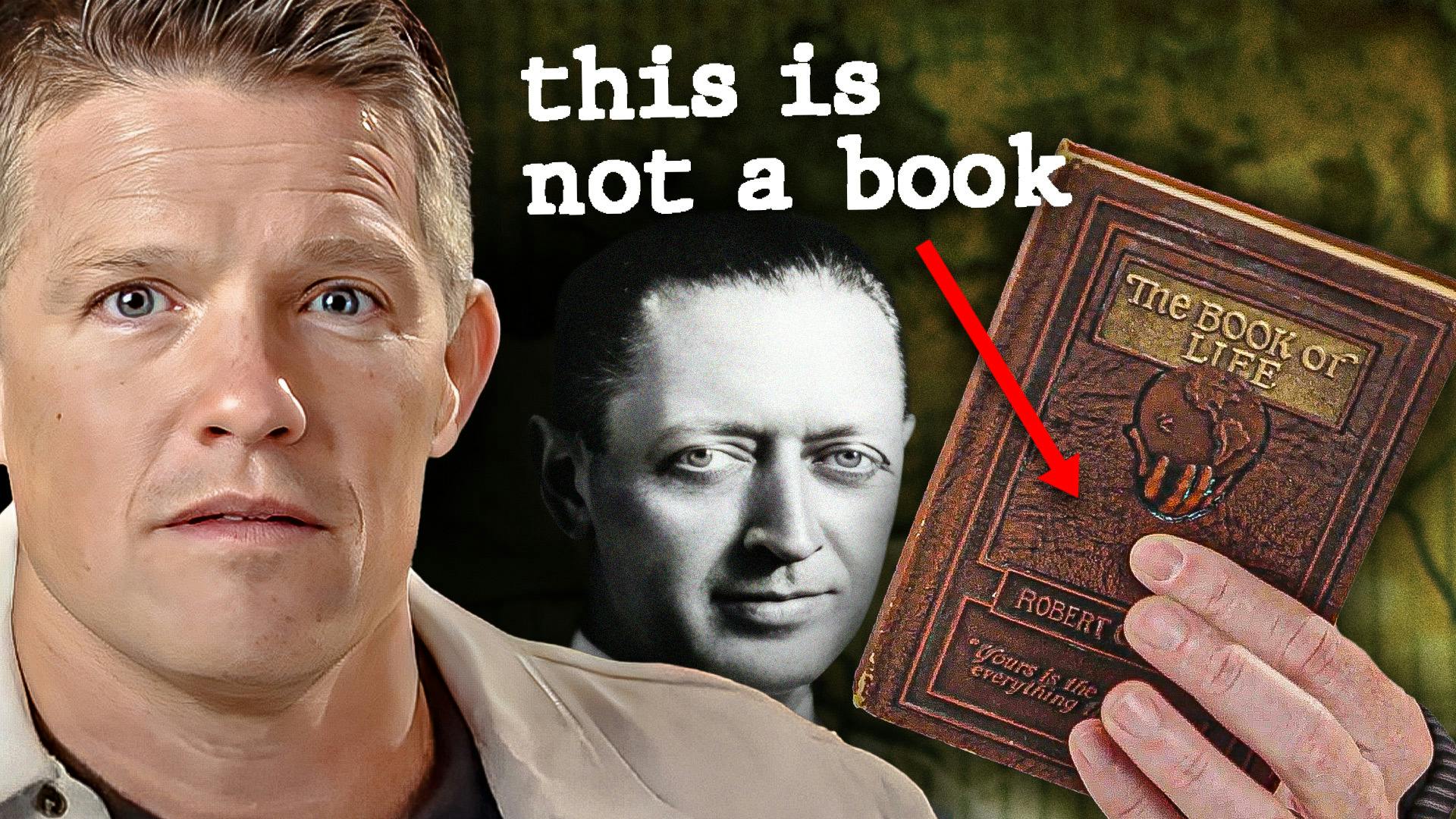
The Russell Brunson Show
Dissecting The Book of Life Ad Copy and Magalogue Framework by Robert Collier | #Marketing - Ep. 59
00:16:46
Loading summary
Transcript1 lines
- [00:00]
Russell Brunson
Do you have a funnel? But it's not converting. The problem 99.9% of the time is that your funnel is good, but you suck at selling. If you want to learn how to sell so your funnels will actually convert, then get a ticket to my next selling online event by going to sellingonline.com podcast. That's sellingonline.com podcast. This is the Russell Brunson show. Hey, this is Russell. Welcome back to the Vault. Today I got some really cool things to share with you. I got a really cool old original signed book set. But more importantly, today we're gonna talk about the. The ad that actually sold this book set, which is what's gonna be really fun. I spent about $500 for this book set. And then the ad, I spent $50 just for the return reply card because I can't believe I found this. And I don't know where I got the sales letter, but it's one of the coolest things in the world. Okay, so this book set right here is called the Book of Life, and it's written by someone named Robert Collier. Now, some of my marketing friends and advertisers probably know of a guy named Robert Collier who wrote a book called the Robert Collier's Letter Book, which one of the greatest advertising books of all time. But what a lot of people don't know is that Robert Collier, he was a great advertiser and he wrote books on advertising. But what he was advertising was his own personal development books. He is one of the most prolific writers in the personal development new thought movement. One of my favorite authors. He wrote so many amazing books. And this was the one of the very first book sets he ever wrote. Is exciting because I found a copy that came in the original box they would have shipped it in. And so it's got like the original postage, it's got the branding on here and everything. And then when you pull the books out, gives the first edition. But this edition also is actually signed by Mr. Robert Collier right there. This book was published in 1925. Again, he sold this book set. He sold other book sets. He had a magazine called House 7. Then he had another magazine that he launched later called Mind Magazine, a whole bunch of other stuff, tons of booklets and like. But what's crazy is that during his time back in 1920s, he sold over $200 million worth of his information products through direct mail. So there's not very many people today's world using Facebook and Instagram, all sorts of stuff that sold $200 million. And this guy did it, but by writing letters like these ones, which is why this is so cool. And so you can read about the letters and his advertising philosophy in the Robert Collier letter book. But to actually find one of the original ads is really rare. It's a Magalog, as I'll show you here with a return reply card to get this exact autographed book set. And so together, these things all kind of weave together to one of the coolest things inside of my collection. Back then, people would send sales letters out or ads in magazines. Like, he was writing what nowadays we call Magalogs, right? So it's like a magazine. So people didn't know this was an ad. They get this thing and at the top there's this picture of a genie in a lamp. It calls the secret of the ages. Says you remember the story of Aladdin and his wonderful lamp? How he had to but rub this lamp and there sprang forth a powerful genie ready to instantly do his bidding. Riches, fame, power. This marvelous genie carried them into the hollows of his hand. Anything that Aladdin might wish for, from power to fortune, to the hand of the beautiful princess, he had but to command. And the servant of the lamp would forthwith produce it. Oh, such good copy. And, like, imagery is how he's pulling you in here as you look through the page. Like, just how it's structured, like how you can live your dreams, right? So he's likening this book set to a genius on lamp, right? He's not just saying, like, buy my new book, you're gonna learn how to blah, blah, blah, blah. Like, he's like, imagine having your own genie where you could rub it and anything you wanted could come true, right? So he's creating this visualization inside your mind of what anyone would want, right? Like, who wouldn't want their own genie in the lamp? And as he goes through this now, he's talking about, you can live your dreams if you have this genie, right? And he starts telling stories and case studies of people who, like, had the secret that's just like a lamp and, like, what happened to them. And he's sharing case studies, right? He used the word the secret of success, which is now trademarked by me. So it's kind of cool that he was using my phrase in his ads in 1925, which is kind of cool. And then he even has down here, like, you start noticing the call to action, start coming to the Magalog. You can try it for free for a week without cost. She's like, Wait, wait, what am I trying? Like my own genie in the lamp for free for a week. Like, what does that look like? Right? So it tells. This story here, tells a story about how fortune came to John Randall. And this is my favorite part, the middle insert here. Here's your genie. What will you ask of him? And this is where it starts blending in together. Like the genie, the visualization of the genie, and then you rubbing the genie. And in between the genie and that are the book set. Like, these are the books. Like, this is the equivalent of the genie in the magic lamp. How different is that than just going out there and like, hey, here's my book. You're going to learn how to blah, blah, blah, blah, blah, which is what most people do, right? I always think about this when I'm creating a product or off now, it's like, what is this? Like, this is the equivalent of in their life, right? Like if you have a product teaching weight loss, right? Like, what's the equivalent? Like, this is the equivalent of having a trainer living by you 24 hours a day doing liposuction while you're walking and eating cheeseburger. Like, whatever. Like. Like the visualization of that, of the thing that they want the most, that would be the most appealing. I'm sure the liposuction actually would not be that appealing. But you get, I mean, like creating that visualization inside someone's mind. And the way he did it here with the genie and the lamp is so beautiful. In fact, with my new book coming out soon, and I guarantee you'll see some versions of this, I will be modeling and funnel hacking. But here's your genie, what we ask him. Then it starts introducing the chapters. Like, here are the chapters of the book. The first, the law of gain, the magic secret, the unappropriated millions, the three questions, open sesame. Like just the acres of diamond. The one thing I can do. Like, it starts like building intrigue, right? And you start coming more. Here's success, right? And you look at this imagery, it's like success at the top of this ladder. What is ladder? It's all these books lined up. Like you read the first book, the second book, and he's moving you towards success. Like, he's doing it through words. And also the imagery, like showing you how this is going to pull you to be more and more successful succeeding with what you have. Then notice down the bottom, it starts moving to the next call to actions. Like, if the enclosed card does not uncover your acres of diamond, it'll cost you Nothing. And then payday starts going through and then fanning anyway, will you try for a free week? Then use the enclosed card. And then the back of the thing here is when he goes back through the rest of it and that starts adding in benefit. Like do you want to use it to make money? Here's how to make money, blah blah blah blah blah. And then he goes to the call to action. And again back then, like nowadays, right click the link down below. Like it's so easy to call to actions. These guys had to get people to literally go like find their wallet, write a check, send something in the mail, right? And so the call to action here, I'm closing with you, a convenient postcard that will bring you the seven small volumes of the Book of Life complete for a full week's examination and trial for free. So there's been a trial offer back then. Don't decide about ordering now, you can do that later. Simply return this free trial courtesy card and by return mail I will send you the Book of Life postpaid. Then after seven days examination, after you have a chance to look into it and actually test it on your own self, if it won't do everything I've said and more, send it back my way. You realize that of course I couldn't make an offer like this if I didn't know what this Book of Life will do for you. But I do know. So I'm willing to do my part. Are you willing to put me to the test? Robert Collier? And then inside of the mailer, that's what came in is this courtesy card, which is why I spent 50 bucks for it, because I was freaking out when I saw this is like the actual one. So someone would then take this courtesy card and if you notice it's already pre stamped, it's got a 2 cent stamp on it with his information and it says on the front this Coupon saves you 40%. And on the back it says, Mr. Collier, free trial. Yes, you may send me one of the advanced sets of the Book of Life, beautifully bound in autograph. Send me an autograph set to examine and try out for a week at your own risk and expense. At the end of the week, if I want to keep the set, I will send you in your special introductory price on this advanced autograph edition of $6.85, which I don't know what that is equivalent of today's money, but great offer or $1 and the $1 a month for 7 months. Otherwise I'll put the books back in their box and return them to you, in which event I shall owe you nothing. And they put in their at shipping address. And that was it. So he made this as risk reversal as humanly possible. Right. They filled out, send it out. He'd ship in the box of books. They got seven days to try it out. If they didn't like it, then they would start sending him a check for $1 a month for seven months, which is kind of crazy. Or the $7 up front. And that's how he sold this book. And you can tell this book sold a lot. You can always tell, like which authors from back in the day were great marketers because it's easier to find their books. You can tell which ones were not good marketers and good advertisers because it's hard to find any copies. Like Napoleon Hill, you can tell he was a great advertiser marketer. Much of his stuff out there you can still find. Robert Collier is the same way. If you go to ebay and you guys search, you could probably find a first edition like this because he was such a great marketer. So many of them were out there. I don't know how well this specific campaign did, but you can tell just the fact that there's so many of these out here that they sold a lot of them back in the day through this whole advertising campaign. I want to go through and kind of diagram out what he did in this magalog, because the framework he took people through is very similar to the framework you're going to be using in your advertising, in your sales letters, a lot of places you'll be using them online. You can learn so much from someone. Like this whole didn't have the luxury of just creating a page and launching it and putting 50 bucks in Facebook ads to see if it worked right. Like for him to do this campaign, I mean, who spent insane amounts of money like printing shipping stamps, postage pre shipping out a book before somebody even had success. Like, they thought through their advertising, their marketing, way more than any of us do nowadays. And so I love kind of dissecting to see what we can learn from the framework. So if you look at kind of the breakdowns, as I'm seeing it, right, number one is that they are starting very quick with obviously a hook and visualization. So we're throwing out this hook to grab their attention, which is again, hooks a lot of things. Like you can tell from the image, from the headline, the secret of the ages for the intro story. I've called this the lead. So that's number two, actually. I'll go that a little deeper. But it's all there to like to grab their attention so they're not going to throw it away. I remember Gary Halbert used to say that people would sort their junk mail over the garbage can, like throw it, throw it, throw it. And then they keep the two or three things they actually want to read, right? And so you think about that similar like this is getting someone's hand. Like you need to get them actually read it. I wish I had the original envelope it came in. It's the last piece I need in this whole thing. I'm not sure what the actual envelope look like. They would have pulled it out and boom, that's initial, like hook. They would have seen in the instant. Like visualization of like. That would be cool to have my own genie in the lamp, right? That's number one. Then you need to move into the leads. The lead, when I talk about the frameworks I teach all the time, like, hook, story off, right? So the hook is the first and then story. The lead is the very beginning of the story. It's the thing that it's like you're grabbing the attention, the headline, and you got to grab them really quickly, start pushing them through led, right? You need to engage them very, very quickly. So his lead is so, so strong, the Ladden story and moving through it. And then from there, the lead is going to start transitioning to an ownership experience. So I'm trying to is like, I want them to experience what's like owning this without actually owning it yet, right? So how do we do that? Like, so a couple different ways. There's different techniques you can do to increase. To create an ownership experience for somebody. But one of the easiest ones, sharing case studies, right after the hook and the lead then transitions into case studies of somebody who's actually experienced the product, right? And so he tells the case study here, bubbles, right? And then transition to the case study of John Randall, right? And then from there, this is where the transition begins. Everything up to this point, right? This is the hook we're talking about. Genie lamp. Here's the lead telling the story. Here's somebody that's experienced the end result of it, right? Boom. Case study, case study. Now we're going to transition into how the thing that you are creating. So in this example, the genie lamp, how his product actually is the equivalent of that, right? It's showing like the apples, apples comparison now. So transition to your product, the transitions. Now you see, okay, this is the Genie, we're going to ask them. That's the equivalent of this book set you're going to be going through. Typically, after we introduce the offer, from there, we have to justify what they're buying, right? So I introduced here's clickfunnels. I have now to justify, like, all the reasons why you should then buy this thing. Does that make sense? So we're building the story up, introduce the offer, justify the price, coming back down the other side. Number five is justification. And he's doing this through a lot of things, talking about success. So here he's taking you through the success pool and then succeeding to what you have and then payday. So these are all like justifications. Like, imagine payday. Imagine having success in your happiness, in your marriage, in your life, making more money, and kind of goes on all these different justifications, building up the value. So justifications start building up the value of the thing they offer. And then number six here, then they're moving into the cta. This is where you're going to ask somebody to go and actually do whatever the offer is that you are trying to create. Okay, now again, if you look at this through, like, the lens of Russell Brunson, where I teach my books and things like that, it literally is kind of like this. Like, here's your hook, here is your story, right? And then last up here is the offer. I always tell people this. If you think about this like, the job of the hook is to grab their attention just long enough that you can then tell them a story. The goal of the story is to build up the perceived value of the thing you're about to sell to them, right? And the offers, then to make the offer. And so everything happens in that order every single time. And so Robert Collier framework is very similar to mine, probably because I learned so much from him as one of the greatest advertisers of all time in a genre that I love, which is personal development, which is why I love this guy again, because again, he was an advertiser who taught advertising, but he's also selling his own stuff that he believed in, that he loved, which is all the personal development stuff. The question you may be having is, do maglogs work today? Obviously, when you focus on the magalog. But I also first want you to think about the offer and the way he structured it, okay? Because one thing I love about these guys back in the day is how they structure offers. Like, how do they create so much risk reversal? Do you see how much risk reversal is his offer? Like, Literally it's like, just send this to me, I'll send you the box. If you like it, you can send me money. If not, send it back. Right? The risk reversal in that offer is so insane. Like, how do you create an offer that has that where someone is like, there's no risk, it's going to change life. If it doesn't, they can send it back. Like creating that risk reversal was so powerful and like a lot of times we're lazy with like, oh yeah, if you don't like 30 day money back guarantee, blah, blah. Like they're lazy with it versus like they spent so much time figuring out how to structure the offer. In fact, back in the early 1900s, they called people who were in charge creating offers, they called them scheme men. It was an actual job title. You're scheming, your job is to go and create the scheme or the offer. And they paid scheme men insane amounts of money. Like David Ogilvy when he was a scheme man for a company before he had his own advertising agency, he was getting paid 100 grand a year, which is equivalent of like $1.2 million a year right now to be the scheme managers, think about the offer. So look at the way they structure the offers. Like the first thing I would say, number two, Maglog may seem like a dead media in our world, but the reality is, I'll give you two and a half reasons why. Number one is this is basically the equivalent of a sales letter today. Like you can take this and you can do a long form sales letter inside your funnel. We can take this and turn into a video. You can take this concept and turn it into a webinar, right? So copy is the same whether you're doesn't matter the matter the medium you're using, if it's text, if it's print, if it's video, if it's web, it's the same thing. You're still taking people through the same process, right? So reading things like this give you the ability to kind of see through those things and like, and learn how to really master. Now number two, right now, every single person on the Internet in your industry is all fighting to get inside of your customer's email box and they're fighting to show their attention inside of their feeds on Instagram and Facebook and everything. Literally. I spent the last four days of my life sitting behind my computer writing, don't tell anybody this. I wrote a magalog. We are literally sending out a magalog to sell a $25,000 offer. This will not be on the Internet. I am only sending out to a certain specific select group of buyers once a month. And so does it still work? Yeah, because everybody else in my world, all competing, sell their high ticket things through webinars and challenges and all sorts of stuff, whereas I'm bypassing all the attention that all the noise. I'm having the postman literally come and hand deliver my sales message, put it into their mailbox, they can open up and then they can read it. So do they still work? Yeah. Am I still doing my business? Yeah. I spent the last four days literally writing one. Some of you guys will get in the mail, some of you guys probably won't. But now you know what I'm doing behind the scenes. Robert Collier maglogs. He's the man. Get in your customer's mailboxes. It'll change everything for you. How many of you guys right now are like, I want to read this ad now. Russell, you sold me. So obviously I don't have notes of the ad. I'm going to scan this entire ad and put it in the notes section. So if you go down below, click on the link, go opt in for the notes, and when you come over here to the Robert Collier section, you have a scanned PDF where you can actually read the entire sales letter as a whole. I will also scan the courtesy card because the copy on this is insane. You can see the actual offer. And so I'll put those down in the notes, click link down below, opt in, and we'll give you guys access to that. With that said, let me know in the comments down below if you like this as well. We've been covering a lot of books. I've just been curious, like, do you guys want to see the ads and these kind of things? I collect a lot of other memorabilia from this time period as well. It's not just the books. Buy stuff from the authors and sometimes there's some really cool stories that you can learn from your business. So if that'd be interesting, if you want to see more artifacts, more ads, more things like this, please let me know because it'd be fun for me to share them with you if you're interested. So that's the thing. So much. We'll see you guys on the next video.