← The Russell Brunson Show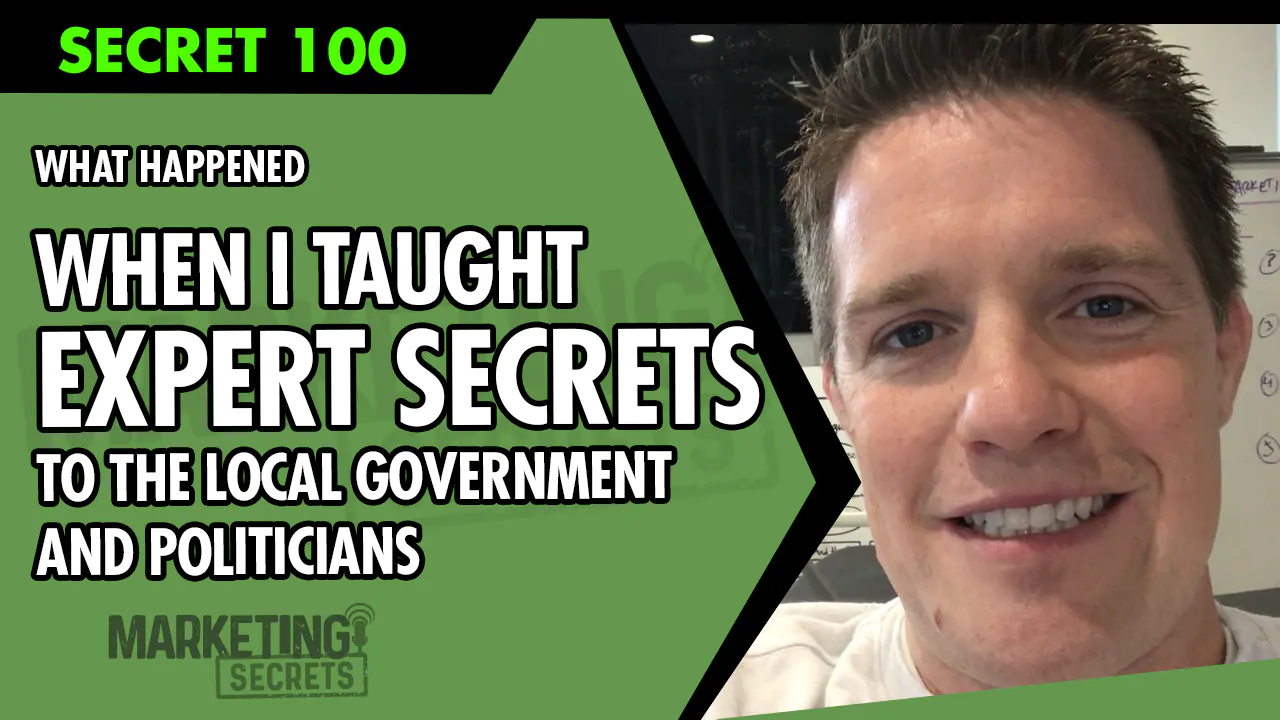
The Russell Brunson Show
What Happened When I Taught Expert Secrets To The Local Government and Politicians
01:28:25
What Happened When I Taught Expert Secrets To The Local Government and Politicians
Loading summary
Transcript1 lines
- [00:00]
A
What's up, everybody? This is Russell Brunson. I want to welcome you guys to a very special episode of the Marketing Secrets podcast. Now this is an episode that will not be on YouTube or anything. It's only going to be here in an audio format for those who are. Who are listening in. I'm excited for you guys to hear it. So some of the backstory. As you guys know, I am always excited about all this marketing stuff I'm talking about all the time. I get a chance to speak all over the world, but I say no to like 99.9% of people asking me speaking just because time and energy and money and all that kind of stuff. Right. It's just not possible to do. But recently my father in law asked me if I would come speak at an event that he was putting on. And it was in Burley, Idaho, which is a little small town about two and a half hours south of Boise. And obviously I'm like, well, I can't justify it from a business standpoint, but my father in law, that'd be awesome. And then obviously it would give me time to hanging out with my wife. And so my wife and I jumped in a car on Wednesday and we drove two and a half hours down to Burley and spoke at this event two and a half hours back. So it was a really fun time for us to spend together without any kids. And then had a chance to speak down there. And it was cool. But to preface it, it was a completely different audience than I've ever spoken to ever. Okay. It was for the most part, government officials from all around Idaho, those who were involved in economic development, how to grow the economies. And so there are people from all over Idaho who came to this thing. There's probably 70 or so people. And as you gu. I'm used to speaking to entrepreneurs who are trying to change the world. And here's like government officials who are also have good intentions as well, and they're trying to do some awesome stuff. But they're definitely like an older demographic. They're not like running their own companies. And so it was just. It's different. Right? And so anyway, I was really struggling, like what should I teach on? What should my presentation be about? And I didn't really know and took me while kind of figured out and finally I realized what I wanted to share with this audience was basically the stuff that you guys are very familiar with, which is the expert secrets thing. I want to talk about building a mass movement influence and persuasion and storytelling and how they can use that in their own sphere of influence. And so how them as government officials can do can build a movement to help people change and then how people and then also like how they could use it for the family. Like if you have with your family, how do you create a movement within your family? How do you create a movement in different places? It's not just like a mass movement of your customers. Like we talk a lot about inside Expert Secrets, but also like the internal movements inside your companies and then your family and then inside governments or whatever sphere of influence you have. And so that's kind of what this presentation is. And I'm gonna. I hooked up my iPhone and clicked record and so I kind of recorded it. The audio, I don't have any idea how good or how bad it'll be. That's what it is. So there's some context when you hear the presentation. It was definitely a different audience. Energy level is way different. So if I sound weird, that's why I was trying like crazy to get this older group of government officials to be as excited as I am about business, about economic growth and development. I also tried to show those guys how they're crazy because they don't understand the right ways to the right ways to run like a political campaign. And I kind of tease them about that. A bunch of other fun stuff. So hopefully it'll help you guys if you're listening in on us. For those who know Expert Secrets, lots of will be kind of review for you, but you have a chance to see it through different lens, like how this would work inside your family, how this works inside of a business, and a bunch of other things like that. So hopefully it helps. I hope you guys love it. That said, let's cue the intro music and then we'll start at the event there in Burley, Idaho. So the big question is, how are entrepreneurs like us who didn't cheat and take on venture capital were spending money from our own pockets? How do we market in a way that lets us get our products and our services and the things that we believe in out to the world and yet still remain profitable? That is the question, and this podcast will give you the answers. My name is Russell Brunson, and welcome to Marketing Secrets. Well, I'm excited to be here with you guys today. This is a little different audience than I normally speak to, but I'm really excited about it. I normally go around the world and I speak to entrepreneurs who are creating products and businesses and all sorts of stuff. And I'm super passionate about it because I love entrepreneurs. I love what they're able to do and how they're able to create ideas out of thin air and turn them into businesses and help other people. And so when Doug asked me if I'd come speak here, I was like, I've never spoken to people that aren't like full time hardcore entrepreneurs. And I'm like, what do you want me to talk about? He's like, I don't know, stuff that's gonna help them. This is about economic growth and about development, all sorts of stuff like that. So I was like, what can I share that's gonna help you guys the most in your communities and what you guys are all doing? So that's kind of why I put together this presentation today. I was working on it on this car ride down. Doug asked me. He's like, I was out there finishing before we got started. He's like, are you just finishing it right now? I'm like, yeah, that's how I always work. So I'm always kind of last minute. But I wanted to make sure that I kind of catered this to you guys and made sure that it would help you guys with what you're doing and hopefully be really good. So to begin with, actually, what I wanted to do is I wanted to show a really quick video. We had a couple technical difficulties. It wasn't working in my slides. I have to go and actually push play to get it to work for you guys, and then we can kind of go into it. But this is a video we showed at our event. We do a big event every single year. So about a month ago, we had a big event in Orlando with 3,000 entrepreneurs from all around the world. Every country was represented there, and they're all entrepreneurs who had ideas to start to change something. And this video we made to kind of encapsulate that group as a whole, I wanted you guys to kind of see it because not only is it true, I think for entrepreneurs, I think it's true for all sorts of people who are trying to make change in the world. How many of you guys, your job, your business, what you guys are doing is trying to make change in some aspect of something, right? All right. And typically, when we try to, like, make change in things, there's a lot of resistance, right? And so that's why we kind of made this video. So it's about a minute long. I'll show it to you guys really quick. And there we go. Here's to the crazy ones, the mysticals, the rebels. The troublemakers, the round pegs in the square holes, the ones who see things differently. They're not fond of rules and they have no respect for the status quo. You can quote them, disagree with them, glorify or vilify them. About the only thing you can't do is ignore them, because they change things. They push the human race forward. And while some might see them as the crazy ones, we see genius. Because the people who are crazy think that they can change the world are the ones who do. Ken so my entire goal, what I do for the last decade of my life, is going around trying to help people to change the world and the way they see fit. Because as you guys probably are all fully aware, there's a lot of messed up things that are happening in this world. And I believe that it's people like us who are going to make a lot of those shifts and those changes. And so that's what I've dedicated my life to, is really working specifically with entrepreneurs, but with all types of people, leadership, anyone who's trying to make change. And I want to share a couple stories of entrepreneurs that have worked with us who have gone through this process. And the process I take them through is simple. I'm not a technical person, though. I own a software company. I got partners who are techie nerds. I'm the one who just helps entrepreneurs, people try to get their message out to the world to try to actually make changes. So what I'm sharing with you guys over the next hour or so is how to find your message, how to build a tribe of people, and then how to actually change the world. That's kind of my goal. So this is a couple that we had a chance to work with a lot over the last year or so. And about 19 years ago, they just got married. They were struggling like a lot of married people do, and almost fell apart the entire marriage. They're about to leave. He came to her and said, I'm going to leave. It's over, it's not working. And she decided at that point she needed to change. She's like, I can't lose this person who I love. I need to figure out a way to fix this marriage. And so she went out of her way and focused her entire life to try to figure out how to fix and how to save her marriage. And she did that. And afterwards she became so obsessed with me. I helped my marriage. She started seeing people around her whose marriages were collapsing around. She's like, I can't let these people's Marriages fall apart, like, I got to help them, right? So she went out there and she started trying to figure out, how can I help other people? And over the last 10 years, Stacy and Paul, they've now helped save over 10,000 marriages and bring the spark back to tens of thousands more. And so look at someone like that, who's just one person who had a struggle, had a frustration. They figured out how to solve that problem for themselves. And then they went out there and they, instead of just keeping that to themselves, they said, I need to help other people. And they went out and literally have changed tens of thousands of marriages, which is amazing. Next one here. This is Annie Grace. She's another amazing person. Annie was a very corporate business person. She was traveling around the world doing all sorts of stuff. And when she was traveling corporately, a lot of times, apparently they have a lot of social drinking. And so everywhere she'd go, they'd, they just, everyone would drink on these trips. And so she started drinking more and more to be social with everybody. And eventually she got addicted. And she said, she told me one day she woke up, she was with her husband and her little daughter. And that morning, it was like 9 o' clock in the morning and she was getting something out of her bag and she spilled her beer all over her clothes, all over her kids stuff, all over everything. She said she sat there and at first they kind of laughed and she started crying, thinking, man, it's nine o' clock in the morning and I can't stop. And she said, I gotta fix this. And so she tried the traditional routes, aa some other things that and really struggled and didn't have any success. And she's like, I gotta figure out a way to actually break this addiction for myself. And she starts a year long program trying to figure out how to do this and eventually was able to break and free herself from the chains of alcohol addiction, which was pretty amazing in and of itself. But then she thought, you know, I can't just stop here, like I need to, I need to help other people with this because I went through this pain and I felt that pain, I felt the relief afterwards, like I need to do that same kind of thing. So she went out there and started helping other people. And in the last 12 months, she's helped over 50,000 people in her online communities to break the chains of alcohol addiction, which is amazing. 50,000 people who have struggled with that, who've now been able to be free of that because she was willing to share her message with the world and get it out there to other people, which is pretty cool. Next one. This is Pamela Wyble. How many of you guys watch Dr. Oz? It's like three weeks ago, she was on Dr. Oz. So Pamela grew up. She was a doctor and her parents were doctors. Her whole life was everything. She grew up in doctor, like, in the lifestyle of doctors, right? And as she got older, she wanted to go to medical school. Like, she had a dream of being a doctor. So she went through the whole process, gets into medical school, and I think first or second year residency, she's sitting there and somebody that she knew in medical school committed suicide. She was just devastated. And then two people that she dated in medical school ended up committing suicide. Other people she knew, and within a very short period of time, everyone. Not everyone, I mean, a dozen, two or three dozen people that she knew and loved who committed suicide. And she found out a little later, the doctors have the highest suicide rate of any profession, almost double the number two. And she started freaking out, like, this is a problem. We need to fix this. I got to figure out a way to do this. And she went out there and tried to figure out, how do I stop this problem? And she didn't go and do what a lot of people do and say, oh, this is a government problem. This is a, you know, medical school problem. She's like, this is my problem. I'm going to take responsibility for this. I'm going to figure out how in the world I can do this, how I can save these people. And so she went out there and has made this her personal mission. She's written two different books. She's one of the doctors, like I said last month, sharing this message. She's finished a documentary. It's going to be going live. But what's amazing, she saved hundreds of doctors lives so far through getting her message out to more people. And what's cool is that not only that, is she was talking to me about this. She said, the coolest thing is, like, when you save a doctor's life, it's not just the doctor. There's all the patients that that doctor affects and then their families. And it's this huge ripple effect that goes out from one person's life who's touched or who's saved, who's changed. Okay? And so this is just one, another amazing person we work with to get. To get their message out to more people. Next one is Tim Ballard. How many of you guys have heard of Tim Ballard? So Tim runs a group called Operation Underground Railroad. They're out of Utah. It's a non profit, and they help save children from sex slavery. Right now there's over between 2 and 3 million children right now in sex slavery, which is crazy around the world. And they built a team. They go and they save these kids from all around the world. And the same kind of thing, the same process I'm going to be sharing with you guys today is the same thing we're working with Tim with to get this message out to more people. So far, they've saved over 1,000 children from sex trafficking. The rest over 433 traffickers. And the coolest thing is, like, the thousand is amazing. But what's amazing is when you save a child, you save a group of children, not only does it save those children and you arrest traffickers, how many more people would they have? I mean, the ripple effect from every one of their rescue missions is just. Is huge around the world, and it's pretty amazing. So these are people that we work with every single day. And I could share with you thousands of stories. It gets me so pumped. I'm so excited. And that's why I love working with people like you guys, like entrepreneurs, people who have the ability to make change. Because when you have a message or mission or something, you can literally change the world. And I believe that. That's why I'm so passionate about this kind of stuff. I don't feel like I have any magical superpowers other than I've become really good at helping people like this to amplify their message. And so I know for all of you guys in your individual spheres of responsibility, you've got something, right? There's a reason why you're here. There's something you can do to effect change. And so I'm going to walk you through some stuff that I've learned over the last decade to effect change at a big mass. Mass scale. My name is Russell Brunson. For those who've never heard of me, I have had a chance over the last 10 years to work with a whole bunch of amazing people like the ones I shared. I also worked with Tony Robbins. We did a lot of work with him. Marcus Lemonis from the Prophet. We've done a bunch of work with him. How many of you guys have watched the show the Prophet? Okay, it was cool. He had me on one of the episodes a little while ago. One of the companies, it's on cnbc, they go and they help businesses. And one of the businesses they brought on was a watch company. And we just had him Come speak at one of our events. So he called me a week or two later and was like, hey, do you want to be on the show? And like, are you kidding me? Yes, I would love to be on the show. It was the coolest thing ever. And we got to come on and actually help this watch company to get their message out to more people, which is really fun. Alright, so a little background on kind of where I come from and what I do. So we started a company called click funnels September 23, 2014 and we were just like all the other people. Like all I knew is I had an idea, we had a vision, we wanted to do something. We had no money, we were working off of credit cards, we weren't backed by any cash people, venture capitalists or anything. It was basically me and my two partners. This is Todd Dickerson, lives down in Atlanta, Georgia. This is Dylan Jones, is up in Canada. And this is us mapping out Click Funnels on a whiteboard. These guys are geniuses. They know how to code and do techy nerdy stuff. I don't. So I just get to stand in front and cheer and get all excited and tell everybody how awesome it is. They do all the hard work of actually building the software. But after we created this, our goal with this was like I wanted to create something that would free all entrepreneurs. Okay. The biggest thing I find out is not that people don't want to make change, not that they don't know what to do or how to do it. It's like they either run out of time or they run out of money before they ever get to the finish line. Right? Like they got a dream and a vision, they start going and they got hired, the technical person and the programmers. And then all this stuff starts happening and they run out of time before they get to actually see their vision fulfilled. And so we wanted to create a tool that would free all entrepreneurs so they could just focus on saving and fixing their customers lives. And so what our software company does is it makes creating online web pages and sales funnels and marketing, all that stuff really, really simple. Where people with no technical skills can do it. Anyone? If you can use Microsoft Word, you can use our software. That's how simple it is. And that's what we do. And it gives the entrepreneurs, I showed you guys earlier, it gives them ability where they can, if they've got an idea, they can sit down at the computer, send 15 minutes, have something out there and then get it out to the world. Pamela Wibel, before she went on the Doctor. She messaged me. She's like, I'm gonna be on the Doctor tomorrow. What should I do? I was like, like, when you're on the show, what are you gonna. Like, where are people gonna go? Like, I don't know. They're go to my website. So what should I do? I'm like, put up a page that tells people they can get a free copy of your book or something so you can capture all those names so you can help them. She's like, okay. And then she jumped off. And like 15 minutes later, she's like, okay, it's done. It's in Click Funnels. She's like, I didn't have to hire any techie people. I just did it by myself. And next day she was on Dr. Oz. And then this whole thing. And she's able to capture tens of thousands of people's names now. Now she can help serve those people. And it's just. It's really, really cool. So that's what. That's what I'm passionate about. That's what we do and why we do. We. We launched the company three years ago. Year first year, we got 10,000 members to join. Year two, we had 20,000. Year three at 50,000. And this morning I checked, we're at 62,189 active people are actually using the software, which is pretty exciting for me. That's 62,000 entrepreneurs who we've helped free. So they can actually get their message out without having any of the technical things that can keep them from doing it. Now, we were trying to do some math this morning because I was like, what does that actually represent? That would actually be kind of cool for you guys, because you guys probably don't care about that. So I was like, okay, how many jobs has this actually created? I was trying to do the math on it. So this is 62,000 entrepreneurs. Our average entrepreneur has anywhere from three to five employees working for them. Some companies got 50, 60. And then inside the ecosystem, people that have a funnel now, they need graphic designers. They need people to drive traffic. And we were doing the math based on, like, conservative numbers. And based on conservative numbers, since we've launched Click Funnels, over 250,000 jobs have been created inside of the Click Funnels ecosystem from people now who are doing stuff and creating things. And so I thought that was kind of cool to look at that. That number is like, actual growth, right? Actual effect on economy. Right. If you look at entrepreneurs, like, if an entrepreneur does their job, right, and actually a success, like It's a ripple effect that creates jobs, it creates opportunities, it makes so many other things come from it and that's why it's so important. And so the other cool thing we looked just recently passed over a billion dollars. Not for me personally, I wish that would be amazing. But a billion dollars, Our customers have processed over a billion dollars in sales, which is kind of funny. I was looking at the national, the GDP of like all the countries in the world and that's higher GDP than 15 other countries. So we're like the number 16th country if we were country. So that's kind of cool I think. 258 people in the last two years have won an award that we call the 2 comma club award, meaning they made at least a million dollars inside of our software. And this year we had 17 people who qualified for eight figure award, meaning they made at least $10 million inside of one of their funnels inside of our software. Which is really fulfilling for me. But the coolest thing is that of the 62,000 members, every single one has a story. And so I want to share these guys story right here. So this is Brandon Poland and his wife Kaelyn and they're some of my, one of my favorite stories ever. So they, they joined click funnels and joined our community about three years ago. @ the time they had just lost, they were in a, they were, they had a way, they're making money. The whole thing collapsed and it was just kind of over. And they came to me and they're like, we're broke. And I'm like okay, what should we do? I'm like, you should get my software and read some of my books and try to figure this out. So they went on this journey trying to figure everything out. Fast forward now three years later. They were on stage last month getting this award. They made over $10 million inside of their, inside one of their sales funnels. I think he's 24, she's 23 years old. Before she started this company, she's about 5 foot 1 or 2, really short and she was like 60 pounds overweight. And she tried and struggled for her whole life losing weight. And finally she figured out a process. She lost a whole bunch of weight. And so their business helps other women to lose weight. So far They've helped over 100,000 successful women lose weight inside of their programs, which is amazing. Inside their company they have over 30 full time employees working for them. And so look at these, this couple who are just, she lost weight and she wanted to Help other people lose it. And they decided to go for it and to, like, get their message out. Now 100,000 women have lost weight. What does that cause? How does it cause different? How does that shift their relationship? How does it shift their families? How's it shift everything else about them and around them? Right? So 100,000 women, but the ripple effect goes bigger and bigger. And then they got the employees on their team, and, like, it's just amazing what happens when one person is willing to stand up and actually get their message out there. And it's one of the coolest things in the world. So this was stuff that just fires me up. And I love sharing. I wish I could spend, like, three days with story time sharing all the stories with you guys, because it really, really inspires me. But I want to kind of go through the process, because if you understand the process, then it makes it a lot easier. Okay, now this is the problem with entrepreneurs. How many of you guys work with entrepreneurs? How many of you guys are entrepreneurs? Okay, so this is the pros and the cons of entrepreneurs. So the things that make entrepreneurs awesome are also the things that make entrepreneurs terrible. Okay? We have, like, a billion ideas every 30 seconds. We're all excited. We get stuff started, and then we go to the next thing, and this thing collapses. We go to the next thing, the next thing. It takes a lot to get an entrepreneur to actually focus. In fact, most entrepreneurs really, really, really, really struggled in school. I was that kid in school who the teacher was talking, and I'm doing, like, 15 other things. I couldn't pay attention. It was really, really hard to do, Right? And so a lot of things, this happens a lot of times. Entrepreneurs, they get excited, start a business, and they get bored and they lose focus. They shift to the next thing. The next thing. If you look at my first 10 years of me doing my own business, you can ask my beautiful wife. She went through this with me. There was ups and downs and ups and downs and ups and downs. I remember my first business, I got to the point where I was making about a million dollars a year. I'm like, this is amazing. And. And I tried to figure out how to grow it, and I couldn't figure it out in, like, five minutes. So I'm like, I gotta figure out something else. I'm gonna launch another company. And so I launched another company. I was like, If I have two of them making a million, that's $2 million a year. That'd be awesome. So I launched the first one, launched the Second one. And I got this one up to a million dollars a year. But what happened to the other one? It just completely died. I was like, oh, dang, maybe I need another company. So we launched another company. This one built up and then this one dried. And then I had the brilliant idea four and a half, five years ago. I was like, well, if one crashed, then we build another one. And we had three. I was like, we should launch more companies. So we launched 17 companies in a 12 month period of time. And what was amazing from that is one of them blew up and all the rest collapsed. And like the net dollar at the end day was almost nothing. And this is what's really bad at entrepreneurs. This is why so many businesses are started and so many businesses fail. I was looking at numbers. One of my friend, he runs a podcast called Momentum Podcast for entrepreneurs. His name's Alex Charfen. And it's all about entrepreneurs helping them to understand, like our superpowers, but also like our kryptonite, right? And he talked about like businesses. If you look at this, it's interesting. So there's about 16, 16 billion billion or million, 16 billion startups, meaning they're making, if you look at companies, and this is in America, so that many companies make under $40,000 a year. Okay, so there's a lot of companies started, right? Every single year. I think I was reading this morning, it was like 300 and no, 500 and some thousand new startups in America are launched every month. So that's whatever the math is on that. Okay, so companies that actually get successful enough to make more than $40,000 a year, it drops a lot, right? Boom, it drops down. So only 6 million businesses in America ever make it to $100,000 a year. Okay, you go the next rung from that. Only 700,000 ever make it to a million dollars a year. Most of those still aren't profitable. That's just to top line revenue. From that, only 100,000 companies ever make it 10 million. And from that, only 23,000 companies in America making over $10 million. And a lot of it's because of the entrepreneurs. Like they're up and down, up and down, up and down. Have you guys ever been involved in entrepreneurial startup before? How many of you guys were part of the craziness? Right? And so it's one of the reasons why I'm so passionate about entrepreneurs. Because I was on that roller coaster ride for 10 years. I figured out how to like focus. And so I try to spend a lot of My time getting entrepreneurs to focus. Because when they focus their energy on something, it's amazing what can happen and how it can grow and how it can explode. Okay? And the reason why it's so important, because I'm actually not very money motivated, but I'm impact motivated. Like I love seeing the result that happens because of it. And so the reason why I'm so focused on numbers for myself and people that work with us is because if your business can't make money, you can't have the impact you want. Okay? Brandon and Kaitlyn, they could have helped people for free to lose weight. But the problem with that, there's no way they could have gotten the message out to 100,000 women. It's impossible. It costs money to get distribution to get it out there. There's no way they could have 30 full time employees on their team. There's no way they could have all these other amazing things unless they're making money. When they're making money, they can have the impact they want it to have. And so that's why it's such an important thing. Alright, so what I'm talking about now is when I'm working with an entrepreneur and this is where I want to make the transition. Because this isn't just for entrepreneurs, this is for anyone. It's all about creating a movement, right? And there's movements that happen all over the place. Like if I'm starting a company inside of my company, I need to create a movement. I need to get people to believe in a vision and be part of something, right? When I'm starting a company, I'm starting to sell something. I need to get my entire, like all my customers to believe in something. I'm creating a movement for them to kind of move with me. Okay. But it's not just true in business, it's true in all sorts of things. So I was thinking internal company. When I'm creating company, my internal team needs to believe in a vision and have movement or else they're not going to, we're not going to get very, very far. Right? Our customers need to believe in the movement or they're not going to continue to buy our product. But this also works at a, at a micro level. I did a presentation a little while ago about this concept. How do you create a big movement of people and get them to follow you? And right after me, there's this guy named Chad Hymas who spoke and Chad's in a wheelchair and he heard me give my presentation. It was the most amazing thing he came in his wheelchair, but afterwards he's like, I had a presentation prepared, but based on what Russell said, I want to kind of share something with you guys. And he said Russell was talking about how to create a movement to get people to come buy your products and your services so you can change their lives. But I want to take that down to a micro level. He said, I want to talk about creating movements within your family. Everything Russell talked about is true. But how do we do that within our family? Okay. Because we know how to do it in a company or within a society or within things like that. How can we do it outside of our family? And then I was thinking about this presentation for you guys today. I'm like, I want to. Like, what other houses? This. How is this applicable to all of us? Okay? It's true in any kind of politics. It's true inside of a church. It's true in, like, all different aspects of life. If you really want to cause change, there are things that have been proven throughout the history of time, from the very beginning, time till now, that causes change. It causes movements. It gets people to actually make the shifts that we need to get them to change so we can serve them at a better level, right? And so creating movement is something that I started geeking out on, in fact, when we launched the software company ClickFunnels. ClickFunnels is just like. It's funny if you look at it. I know most of you guys don't know probably what our company is, but it's a software company, right? And most software's kind of boring. How many guys have, like, an emotional connection to any software you use? Most people don't, right? It's like, it's software. It's boring. And so I was actually at this. I was in Salt Lake, and there's a network marketing company. One of my friends is really big and makes a bunch of money, and it's a software company as well. And they. They send out cards and all this stuff like that. And it's kind of this thing, right? And he invited me to come to the big event to see how it works. I go to this event, and I walk in this room, there's like 6,000 people in this room, and people up there crying and jumping around and dancing and. And they're bringing everyone on stage giving awards and all sorts of stuff. And I'm, like, so confused. Like, why is everyone so happy here? Like, I couldn't figure it out, right? And I'm watching this for two or three days and finally, my friend leaned over to me and he said. He said, you know what's happening here? I'm like, I have no idea. Like, I'm so confused why everyone's so happy. And he said, they're not selling software. He said, they've created a movement. Software is just the thing that they happen to sell. They created a movement. That's why people are here. That's why they have emotional connections with this thing. So by that time, I'm launching click funnels. And I was like, okay, I don't want to sell software. Because if I sell software, what's going to happen is as soon as I create this thing, I'm going to launch it out there. And if we do well, all of our competitors are going to see it and they're going to try to knock us off. And then they're going to try to do, like, we're going to undercut you on pricing, we're going to add more features. We're going to do this thing they can't do. And there's going to be all these things where I'm competing on, like, price or technical things and stuff like that. And I was like, I want to create a movement where it doesn't matter if someone comes out with a better product or different product, whatever. Like, our people are going to stay with us because they're part of something bigger than just the software. And so after my friend said that they created a movement, I started thinking like, okay, well, how do you create a movement? Like, how does that. How does that work? I want to figure this out. And so I started studying how movements from time have happened. And I started studying all sorts of things, from political movements to business movements. Like, how did Apple become Apple? How did. How did Elon Musk do what he did? Then we started again, started looking at political movements, and I started looking on the scarier side of the world, because what happens a lot of times there can be really, you can learn a lot from. So I started studying how do cult leaders cause people to change and to follow them? Okay, how did the Nazi party, How did Hitler do this thing, this horrific thing, but how did he get an entire country to believe in this? Right? I'm looking at everything from the super negative side to the super positive side. And what was fascinating to me is it didn't matter if I was looking at, like, the worst of the worst, like Hitler and the Nazi party, or if I was looking at the greatest thing on earth, like Christ and Christianity or any of the things in between. The most fascinating thing is that the pattern between all of them was the same. Every mass movement there was a pattern. And what's cool about patterns, as soon as we can identify a pattern like this is the pattern. As soon as we're aware of it, then we can affect it, we can start amplifying it, right? So I'm sitting there reading books and looking at stuff and watching videos and like seeing these things. And very quickly I started seeing these patterns. I'm a big pattern person. If I see something five or six times, I'm like, that's what they're doing. Oh my gosh. Now how can we take that information and how can we leverage it? And so the last, the last piece of this, actually my wife and I were in Kenya three or four years ago and we had like a four hour drive. And I'm sitting there reading this book about. It's called True Believer by Eric Hoffman. You guys have read that book. This is like the good stuff, you guys. Anyway, it's all about like all the mass movements and the cults that have ever happened. He's going through everything. And I'm sitting there in this little. We're on a dirt road, bouncing around and I'm sitting here with my book trying to highlight. And all of a sudden, like, that's when the pattern became super clear to me. And I was like, oh my gosh, they all have it, every single one of them. And so I sit there and I doodle out this thing. And my most recent book, like this became. The premise of the book was how do you create a mass movement? And I doodle this little triangle here. I think it's the next slide. I created this triangle and what I noticed is that this was the pattern. Every single mass movement from the beginning of time till now had this. Everyone that was successful, the ones who failed didn't. Okay. And I'm going to go through all these pieces in a lot of detail. But as soon as I was able, as soon as you, you see those things, like as soon as you're aware of the pattern now you can manipulate it, you can amplify, you can do things about it, right? And so as soon as I saw a pattern, I'm like, okay, how can I, how can I do this? So I'll kind of go through these really quick and then we'll go deep into each one of them. So the first one is every single mass movement had some type of charismatic leader. I like to call them an attractive character. But there's somebody that people Were connecting with. Right. Where human beings like to connect with people. Okay. They all had that. Okay. Number two, all of them were focused on a future based. Cause they weren't telling their people, like, hey, we're going to, you know, we're going to try to fix things today. We're going to like, it was never talking about today. Okay. They always were talking about a future based cost. Something that was in the distance they could pull people towards. Okay. And then the third one is they always offered their people a new opportunity. Okay. So I'm going to kind of break these down so you kind of see them. Because this pattern right here, again, when I first figured this out, I started doing it for my company. If you look at our company now, so in the three and a half years since we launched ClickFunnels, we've had 37 people who've come out with competing software companies trying to beat us. 37 people, all of them launched their company saying, this is the next click funnels killer. I know that because I get like 400 emails every single time one comes out from every single person. And what's insane, we had a group of my friends just launched their ClickFunnels killer like three weeks ago. And it was funny because I looked in our Facebook group, we have like 150,000 entrepreneurs in our Facebook group. And over and over and over again, people said, I saw the program, but I didn't even look at it because I'm part of clickfunnels culture. I'll talk about in a minute. They said, I'm part of this. Like, this is my family. This is where I belong. They wouldn't even look at the competitors. Cause they don't care. The 37 competitors that have come out in the last three and a half years, only one still in businesses because they launched three weeks ago. All the rest have come and gone. And every single one of them had lower pricing than us. All of them had different features than us, but none of them are around anymore because we built this movement where people stick with us. But again, this works from a company standpoint. But then my wife and I were actually talking about some of the drive through with our family. How can we use this within our family to get our kids to move and to change? I was thinking about for a lot of you guys in different businesses and different government organizations, the different things you guys are involved. How can you, if you, you understand this pattern, like, how can you use these things to get the change that you need to have? Okay, so I'm Going to go through the stuff. I'm going to share a lot of things that I did. I'm going to try to relate it back to stuff that's the specific for you guys. But for anybody, it's just kind of figuring out how would this relate to your situation. Because we understand that you can create a movement. When you create a movement, you create change. And that's what we're all talking about, right? Okay, so number one, the charismatic leader or the attractive character. Now this is what I found with most people, specifically entrepreneurs, I see it well, but with most everybody, this is kind of the path, right? There's a time in our life where we are students, okay? When we're in a phase where we're learning, we're growing, right? How many guys remember that, like, whatever you're doing today, how many guys remember the growth phase where you were, like, going to school, you were studying, you were learning, you probably were obsessed with it, you were loving all the information. Have you guys remember that part? Okay, so this is where most all of us go through this, right? And what's interesting, I found is that when you're in this growth phase, like, there's a time, especially if you're passionate about what you do, there's a time where it's like, insatiable, like, you can't get your hands enough information. You're reading books, you're listening to podcasts, you're watching videos, you're, like going to conferences and events and seminars. You're just obsessed with this stuff, right? You keep growing, you're growing, you're learning. It's like the most amazing thing in the world. And then what happens to every single person eventually get the spot where, like, for you to continue to progress, you can't keep learning more things. I can't read more books on marketing and continue to progress. I can't lose more weight, right? For Caitlin, like, she lost her way, she's down spot. She keep learning about losing weight, but she can't continue to progress. The only way for her to continue to progress is to shift her mindset from growth. How do I grow? To how do I contribute outside of that, okay, it's kind of cool. You look at the schooling system, right? There's time where you're a student and eventually you get your degree and you've kind of grown. You can't. You can go to higher level education, things like that, but eventually, like, you peek out like you. You kind of got all you've gotten. And the only way for this to Actually keep affecting you is now to transition into contribution and helping other people. The first time I ever got this, I'm a wrestler. I wrestled in. Actually wrestled at Boise State. Prior to that, I wrestled at BYU before they cut the wrestling program. But when I grew up. I grew up in Utah and I started wrestling in high school. And I got to point, I was a pretty good wrestler. I was a state champion my junior year and did really, really well. And I would. My dad was obsessed with wrestling. He would buy every single video. There were the old VHS videos and we'd watch them over and over again, practice the moves and. But eventually, like, I knew all the moves. Like, for the most part, I was always like, a weird move you might learn. But most part, I knew the moves. I practiced them a whole bunch of times. And like, it was hard to get new stuff. I was going to wrestling camps, trying to find little pieces here and there, but it's hard to get more right. And then my senior year, after I graduated from high school, one of my coaches was like, hey, I'm running a wrestling camp this summer. Do you want to come coach at it? I was like, I don't really want to coach. He's like, I'll pay 100 bucks a week for the week. And I was like, I had no money. 100 bucks. Done it. Awesome. I'm like, I'm in. So I went to this wrestling camp and the very first day he put me in charge of these kids. He's like, hey, teach them. There's a move that I. My favorite moves is called a cheap tilt, which is a little thing you turn people on their back and you get points really fast in wrestling. So I teach these guys a cheap tilt. So I come out as a, you know, 18 year old kid. I'm like, this is how it works, you guys. You do this and then that's how it works. So go do it. So all these little kids go out there and they all start trying to do it. And like, not one of them was even remotely close. I was like, no, get back in here, you guys. You're doing all wrong. You do this like this. I show them, like, go back out and do it. None of them could do it. And after two or three times, I was like, I'm so frustrated. Come back in, you guys. I'm like, okay, this is how it works. Like, first thing you got to do. And I started, like, really figuring out, like, why did this thing actually work? Like, I've been doing it forever. But why? Like, what was the pattern behind, like, what did it actually work? I started figuring out, like, oh, the bottom knee needs to be under, like, this, and my hip position is here, and I'm actually pulling the arm here, and my head's here, and I'm like. I started breaking it down for the kids, and they all started trying to do it. And soon I was like. As soon as I figured out the pattern, I was able to show it to him then. So I know the pattern. Then I could, like, start figuring out, like, oh, that's why this move works, and that's why when I get in trouble in this move is because my elbow's out of position, but if I keep it in position, I never get in trouble. Oh, my gosh. And all of a sudden, I started learning through the contribution, okay? This is the magic of when you start contributing. That's when you start learning so much more. Okay? When I went from being an entrepreneur selling potato gun DVDs and selling all the things that I was doing to start helping entrepreneurs to grow their companies, man, my growth, like, a thousand times faster because I was watching what they were doing. I'm watching everyone do things. And, like, when I started contributing, that's when I started growing way faster. For Kalen, okay, Again, she lost her weight. She could not continue to grow as a student. But as she started helping women, that's how she started growing again, okay? She helped 10 women and a thousand. Now 100,000 women around the world. She's helped change their lives, okay? Because of that. And so this is the. This is a natural progression, okay? This is where people become a leader. This is where people become an expert, whatever you want to call it, okay? And so for all you guys, like, you're probably somewhere in this phase right here. You've gone through this. You figured it out, and now you're in your spot where you're a leadership. You're. You're having. You're helping people. You're helping. Helping to move people, right? So now it's like, now you're in this phase here. Now we know that, like, how do we. How do we. Like, how do we become good at that part of it? Okay, now I'm gonna show you guys another video clip. Yeah, I'm gonna show it to you. It'll be fun. All right? So a lot of times when I talk to people about this. This part, and I'm, like, talking about leadership or being an expert or finding your voice or being willing to go out there and talk, a lot of people get nervous, okay? And I 1 billion percent understand. Like, I. It's the weirdest thing in the world. Like, I love standing on stage. Like, I feel super comfortable right now. But I promise you guys, like, when we're done here and you guys say something to me in the hallway, I. I will feel so awkward. And I'm severely introverted. I get really nervous around people. So I can stand on stage in front of 3,000 or two months. I was in front of 9,000 people. I felt so comfortable in the hallway. People come talk to me, and I was just like, it's weird, right? So I understand. Like, if you're like, I don't. I'm not a leader. Like, I don't want to be that person. Like, I understand a billion percent. Like, I don't. Like, I mean, Doug saw me when I asked his beautiful daughter to marry me, and was I, like, the awkward, nerdy, weird kid who didn't dare to even talk to anybody? Yeah. So grateful he said yes. I would have been, like, looking back on it now and like, no. So I understand that. So it's like, how do you find your voice to be able to do that where you're actually comfortable? Right. Okay. And there's a process. Most of us don't just begin one day, and we're like, oh, we're amazing. Okay, so first, you're going to be really, really bad, but you can get better. So that's what I want to show you guys, this one video clip right here to help you guys understand how this works. This is one of my friends, Garrett J. White. He has created a movement that has helped over 10,000 men to reclaim and save their marriages and reclaim their bodies. And he's an amazing person, and this is the message he had for all of you guys today. So first, I'll understand. No matter what you try in the beginning is going to suck because you suck. But you'll get better, and you'll suck less as you keep doing this. And eventually you'll suck less so little that you'll actually be good. But just surrender to the fact that you're going to suck. All right? He has all surrender the fact you're going to suck at first. You okay with that? Because that is. That is the key when you take. When you decide to take this scary leap from, I am a student, I'm learning, I'm absorbing to. I'm going to be a leader, and I'm going to change people's lives. It's a scary shift. Every person I know who's taking that shift, it scares the crap out of them. Okay. And if you guys are sitting here, like in whatever position or role you're in right now, if you're not stepping up like you should be, it's because you're scared, right? How many guys are willing to admit that, that, like, you know, you should be stepping up more than you are right now in your. In your current role? Yeah. Scary. So how do we get over that? So I'm going to doodle some stuff. If you've ever read my books, every other page is a doodle. I'm a doodler. So that's what they all look like. So if you think about this, if I'm leading people, there's this thing up here, and I'm trying to get them a result. So this is the top of the mountain with the result. So for every one of you guys, it's different. For the people you're serving, what is the result you're trying to get for them? If it's your family, what's the result you're trying to get for your family? If it's a business, what's the result you're trying to get for your customers? What's the result you're trying to get for your employees on your team? Okay. If you're in the government, what is the result you're trying to get? Like, there's a result we're all trying to get, right, and we're looking towards that. And so a lot of us want to do is we want to become the expert after we've gotten up here on this hill and we've figured out we've got the result. Okay? The problem is most of us will never feel like we got there, ever. Right? This is weird thing about us humans that the closer we get to the. To the horizon, the further away it looks we never get there. So because that we're waiting, like, someday I'll be ready. Someday I'm going to be awesome. Someday I'm going to feel comfortable in front of a stage. Someday I'm going to. And we start waiting, right? Okay. That's what I'm going to create. So for my people, the biggest thing I teach all of them is like, we all have to be publishing something. We have to be like, putting stuff out there into the world. Okay? Most days it's going to be nervous. But the goal is I want you guys all documenting. That's what's documenting the journey. Okay? I want you guys document the journey. How many of you guys here like to write? You Feel like you're a writer. Okay, so everyone's hands up right now. So there's my writers. Okay. How many guys, like the thought of writing, like, you'd rather die, but, like, you would love to, like, have a radio voice and, like, talk. How many guys, like, feel good talking? You like to talk about things. Okay. Doug's like, I've been on both of those. That's awesome. Okay, so we've got talkers, we got writers, we've got talkers. And then the third one is, how many of you guys like to be on video? And you can just be like, this is me. I'm amazing. Ah. No one wants to be on video in this room. Wow. In the entrepreneur room, this is all they want to do is video. They all want to be on tv. Like, oh, look how great I am. All right, so video. So what I recommend doing. This is gonna feel super uncomfortable for you guys in your pursuit of this result. I want you guys documenting the journey, okay? This is important, because if you want people to follow you, they need to see the process of where you're going, or they're not gonna believe you. They're not gonna follow you. Okay. Four and a half years ago, my company at the time went through almost bankruptcy. I don't know how we didn't. It was like I had 120 employees. I had a fire. One of them woke up, had to fire 80 people in a day. And then over the next year, I had to fire almost everybody else. I had people I love, people I thought were my best friends, walk out on me the most. My people, my family who walked out on me. It was the most vulnerable, scary, painful, dark spot I've ever been in my entire life. And I had this vision of what I wanted to create, but I knew how to get there. I had no money. I had no team. Now I lost everything. I'm like, I got to get here. You know what I'm going to do? I'm going to launch a podcast. Like, that's the worst time to launch a podcast, right? Okay. I'm going to launch a business podcast in the middle of my failures. I'm like, why am I doing that? Like, I don't know, but I feel like I need to do it. So I launched this podcast because I'm a talker, right? And so what I would do is I would. I had my iPhone, and I would drive from my. From my house to my new office. After he fired everybody, we moved down to the little tiny office. It was four minutes from my house and on the drive, I would talk. I'm like, hey, guys, I'm going to the office today. I'm going to try to do this. I have no idea if it's going to work. Crossing my fingers. I hope and pray it works. And I called it the marketing in your car podcast. And every day for three years, I would drive and just tell people what I was trying to do and the successes and the failures and what's amazing. Now I fast forward four and a half, five years from there. Clickfunnels is a company. We did over $70 million last year. We're on track this year to do over $150 million in sales. We are trying to change the world. And what's amazing is that I have documented the entire process from being at the darkest, scariest part to here. What's amazing is that entrepreneurs, people who follow me, come in and they're down here right now. If they see me right here, like, oh, here's Russell doing all this amazing stuff, they look at that and they're like, I can't do that. That's never going to be possible. Right? It's hard when you see somebody at the success point, but he came back and they all come in and they start listening to podcasts. And I tell them all, go start episode one, List episode one and listen episode two. And they know what the result is. They start following me on this journey, and guess what starts happening as they go on this journey. They know where I'm at. They start having belief of like, oh, my gosh, like this, where he was at three and a half years ago. Like, I think I could be there. I believe I could do that. And they start following you. Okay, now they've rapport. They believe you, and now they will follow you anywhere you want to go. Okay, so inside what you guys are doing, if you just try to be this perfect person, we have this weird thing as humans where we think that us posturing ourselves and talking how amazing we are is what gets people to connect with us. Is the most untrue thing on earth. When you posture and try to show amazing you are all it does. It pushes people away. I've seen it time and time again. One of our success stories names Natalie Hodson. She lives in Meridian, Idaho, and she was a weight loss guru, and she was always postured and positioned and, like, trying to be all awesome. And she struggled. She never made any money. And one day she's on a weight loss video and she's sitting there and she had two kids, two 10 pound kids prior to this. And apparently I didn't know this. This is something awkward for Doug. You're going to find this out with me as well. Apparently women after they have kids have a problem sometimes where if they sneeze or they laugh or they jump on a trampoline, they pee their pants. Do you guys know about this? The men? I didn't know this. Okay, yeah, for the man. Hate to ruin this. Like, so Natalie, Natalie is doing a live video, streaming it to thousands of people, doing a workout. And in the middle of her workout, wearing shorts that were gray, she pees her pants. And she's like, I can't hide this. I just peed my pants. What would you do in that situation? Most of us would run and hide, right? And we would never come back again, ever. But Natalie sat there after it ended and she got over the initial like embarrassment, humiliation. She said, man, I bet you other people are struggling with this besides just me. I can go and hide in the shell and disappear or I can figure out how do I solve this problem. I gotta figure this out for myself because I just peed my pants on live tv, right? And so she went, she hired a doctor, she figured out some exercises, and in about a 30 day period of time, she figured out a way to strengthen the muscles or however that all works and figure it out. And she documented this journey and then this doctor that helped her on the process, she, she asked the doctor, this thing you're doing with, that you've been helping with, can we like, can I write a book, I'm writing an ebook and kind of explain this whole process to other women like me. And they're like, sure. And so she wrote the whole thing. And after got the ebook done, she put up a website, sell it for $37. She came on video in front of everybody and said, check out this picture. You guys peed my pants. It's really embarrassing. But I got some good news for you. I figured out how to stop it and I can help you guys as well. Okay? This was in February of last year. It's a $37 ebook from February. It took her four and a half months to sell a million dollars of her ebook. Okay, now imagine if she would have been posturing like, oh, like I met this person who peed their pants this one time. And like, nobody would have done, but because she was vulnerable and she let him in, she's able to change their lives. Okay? Almost 100,000 women now bought her ebook. And she's Got tens of thousands of success stories of people's lives. She's changed because of it. Okay? So we have this weird thing where we want to only show off the highlight reel. You show the highlight reel, you push everybody away, okay? You show yourself, document the process, talking about the frustrations, the problems, things you're trying to figure out. It brings people close to you. The vulnerabilities will get people to actually listen to you. Okay? True leaders are vulnerable. That's why people follow them, not because they're perfect. It's the opposite of that, right? Think about perfect people. How many guys like superhero movies? All right? So if you notice that, like, Superman is the worst character of all time unless or until he had kryptonite, right? When he's flawless and he can't die, like nobody. Like, you can't relate to Superman, right? So they introduced kryptonite. Now he's got a weakness. Now people actually care about him. He's got a family. People care about him, right? Most superheroes have these insane flaws because that's what makes people connect with them. Most actors, actresses, people who are like celebrities. Like, the people we connect with the most are not the perfect people. So people that are vulnerable, who have connection with. Okay? So for you guys in whatever sphere of influence you are in, if you want to actually influence people and get the change you want, you need to start opening those things up. I feel like the best ways to document. So for those of you who are writers, I highly, highly, highly recommend that each of you guys starting your own blog. It's going to be scary for some of you guys. You should start a blog. You start documenting this process. My goal is to get here. I want to lead all these, whoever it is and just start writing. Now. The best thing about this, actually, I'm going to step back. So the writers do that, the talkers. You should start a podcast. These things are all free to start. We just jump on your phone when you're driving or when you're on a little microphone and, like, podcast the journey of what you're trying to do. If you're in a video, you can do videos as well. You should pick one of those and you start documenting the process. Now, again, this is this thing right here where we're scary, right? I don't know if the good thing is that at first, nobody will actually ever follow you or see you or whatever, right? Most of you start a blog, you start blogging. Nobody will ever see it because there's nobody there. Okay? When I set up My podcast. I didn't know how to set up a podcast because, again, I'm not technical at all. So I figured it out. It was live. I didn't know how to see if people were watching it or if people were listening. I had no idea. It took me three and a half years before my brother, who's the more technical than me, like, figured out if people were listening. What was interesting is for the first year and a half, nobody's listening to my podcast. I'm so grateful. I never knew that I would have stopped. Okay? But now I have this amazing thing, so that's the best things. Like, you should, even if you, like, just start publishing it, I promise you guys, this will open up people to you so much more when they start seeing what you're going through. Okay? Think about people you connect with. Think about the blogs you read or the articles or the podcast. Like, the characters we follow and we listen to and we respect the people that we follow them on this journey. Okay? All right, so that's the first big part. So document the journey. Alright? So just a practical example of this. So this is one of my friends named Anthony DiClementi. He wrote a book called the Biohacker's Guide to Upgraded Energy Focus. And he put it out there and guess what happened? Nothing. Nobody bought it. You remember the movie Filled of Dreams? Like, if you build it, they will come. Yeah, it's not true. If you build it. Like, you spent like a year writing this book. He's like, universe, here's the book. And then nobody bought it. And so he's like, what should I do? I was like, okay, do you want to write? He's like, no, writing sucks. He said, it took me a whole year to write that book and it was horrible. I'm like, okay, do you like talking? He's like, I can't figure out how to, like, a microphone. I'm like, how about video? He's like, I love video. So he's the Biohacker. Some of you guys probably know what biohacking is. Biohacking is like this weird science of ways to, like, make your body more amazing, right? And so he does all sorts of crazy, weird things. So I said, this is the. This we need to do every single day. Get your phone out your iPhone and go to Facebook. And you guys know what Facebook Live is? The button you click and all of a sudden you're live in front of everybody. I was like, go to your fan page and do a Facebook Live every day. Doing one Biohack from your book and just showing people how it works and tell me, go buy your book. And he's like, well, like, where do I do it to him? I go to your fan page. He's like, I don't have a fan page except a fan page. It was like biohacking, whatever. Anthony's biohacking fan page. And then I went and I liked it. And then his mom went. So we had two followers, him and his mom. That was it. I was like, hey, go live in there every single day. And he's like, but there's only two of you. I'm like, just trust me. So we went live every day. So the first day, I was like, the more weird the thing is, the better. So he, like, put on these laser glasses that shine infrared light lights into your eyes, which help stimulate something and makes you do something, and who knows? So he did a weird thing like that, did the Facebook live. And he's like, hey, you saw it on my mom's side and nobody else and nobody has sold any books. I'm like, it's all right. Do it again. So I told him he had to do it every single day until I told him to stop. So every single day for the next 90 days, he did a video talking about something from his book and saying, go buy the book and talk about the book and go buy something from the book. What we were able to do in Facebook, so there's a bunch of them, what's cool on Facebook. I don't know how many of you guys know about online advertising and stuff, but what's cool about it is that I could go and we can find like, hey, who are people that might be interested in this? Who are people that bought other books related to this or they follow different people or whatever. And so what we do is we'd spend about this video be done, and I'd go, I spend $5 and say, show this to a bunch of those people and see if, like, it gets any traction. So we'd send this one out and spend $5 in ads. And, like, it didn't get much traction. So that message was wrong. Okay, let's try another one. So we try another one. Put it out there, $5. Nothing happened. It didn't work. And we did that for 17 days in a row. 16 days in a row. Then day number 17, I think he was lazy or something, so I wanted to do the weird stuff. And so day day 17, I think he was tired or lazy or something. He's like, I'm going to Teach people how to biohack their vegetables. I saw the video going live and I was like, biohacking your vegetables? Like, that's weird. And it was like he had a pan and he had organic grass fed butter and he put it in a pan and he put his vegetables in there and he cooked them with organic grass fed butter. And that's how you biohack vegetables apparently. I was like, dude, you totally wasted a day. Like you should have done something weird. And he's like, no. Like this is. So we put it out there. I sent $5 in ads to an audience that might be interested in this. And guess what happened? We sold a couple books. I was like, weird. So we spent a little more money and we sold some more books. We sent some more money, we sold more books. And in that video ended up getting 1.5 million views. All profitably. It didn't cost us any. Every dollar we spend would make $2 back out because they'd go buy the book and they'd buy some of the upsells. And so it was all profitable. So we were just funding this thing and it blew up. His message. Within 60 days, he had 50,000 people following him online. He sold over 30,000 copies of his book. And what's exciting is in 12 months he won a 2 comma club. Made over a million dollars inside that one little funnel selling his book. Is that amazing? Okay, so that's for him. But I'm not a biohacking guy. It doesn't work for me. Right. So I have some questions for you guys. Let's just say Anthony had like a roadside sign. People drive. Do you think, like he'd sell very many books that way? At least 50,000 of them in a year? No. Right? Yet I look at like how people are doing stuff. This morning we were driving by, leaving Boise, coming here, and I saw this. These are all the politicians, how they're trying to win. How many votes. Do you think they've ever gone off any of these? Zero. Zero. Okay. If I had a book there for Anthony selling this book, I guarantee there'd be zero booksells. Okay? I'm a direct response nerd. I watch every dollar I spend and exactly what happens, how much money I make back. I know that if I was to spend an ad sign, put an ad on the side of the thing. I get zero clicks from that. And like I'm looking at these. Tommy Alquist, like, what is. What's that? I see names. I don't even know what these are. Blows my mind. Now imagine, and we've got people doing this in different states around the world, winning elections, like, killing it. So instead of putting a random sign in the middle nowhere with your name on it, it doesn't tell you anything. Imagine if Tommy or Scott or any of these guys started doing Facebook Live every day. And they did a Facebook Live. And he said, I want this Facebook Live to be shown to all the people in my voting districts who are Republicans or who are Democrats. You make one for the Republicans, one for the Democrats, right? Or one for whatever party. You just show that video to those people, right? And when you do it, you test out a message every day, do a video. And the first video you put out for your political campaign, it's like this. And nobody responds. Like, huh? Nobody actually cares about that. I watch these political commercials that are online and like on tv, and I'm watching these things and it blows my mind because I'm like, these are issues that I don't think people still care about. But we have no idea. They're just guessing, right? We're here. I knew exactly which message people cared about, which ones they didn't. And the ones that people cared about, we blew up. The ones that didn't, they died. Like, if I was running for any political office right now, man, I'd be doing a Facebook Live every single day, testing out message after message after message after message. I'd be testing on this audience versus this audience versus this audience, and finding out what were the things that the Democrats responded to and the Republicans and who everybody responded what messages. And we'd spend money on those ones and blow it up. Okay? We got people winning. Brandon and Kaelin, the weight loss couple, I showed you guys earlier, they had a friend in New Mexico who was like, they're running for some political office. This two years ago, I was like, this Internet stuff work for me. And they're like, do anyone know who you are? He's like, nobody knows who I am. I'm a brand new politician. And they're like, let us show you. They did a little bit of this stuff and won the election, okay? It's understanding some of these basic principles. You guys like getting them out there, okay? If I saw any of the politicians again, I'm not somebody who follows politics super close. I don't even know who's running, to be completely honest, other than that sign I just saw. But if I saw Tommy Alquist or I saw C. Scott grow or any of those guys on the sign, every single day, my newsfeed popping up explaining things. Some of the messages I'm not going to care about but every once in a while something's actually going to hit me. I'm like, oh my gosh, that's something I actually care about. I'm going to comment, I'm going to share. And that's how social media is. Like when people understand how to harness, they're like, it's the most amazing thing in the world to get your message out there. Okay? So when you're trying to become this expert, like half of them, half of the job is to figure out what your voice is. Like, what do people actually want to hear? Okay. And I let the people actually vote and tell me by what do they click on, what do they share, what do they actually watch? Okay. That's what actually matters. Okay. I don't want to get political but I thought it was funny say seeing that I'm just like, man, I don't know much that sign cost. I could buy a lot of Facebook ads for that sign. And the thing about Facebook or Instagram or YouTube I can target so hyper focused like just people in my voting districts who are leaning this direction on a policy or this way. And you can make different messages for all of them. It's magic. Alright. Okay, so step number one, charismatic leader. Okay? That is you guys in whatever role you're in, parent, teacher in the government, politician, entrepreneur, salesperson, somebody working in a company. Like I don't care what role it is, like you have to be that charismatic leader. My wife and I are talking about this like we need to be the charismatic leaders for our kids. Okay? They need to plug into us or else they're not going to go anywhere. Okay. I have no idea how I'm doing on time either. So someone just cut the mic when I'm like way over. I'm just going to keep going until you guys are bored or we're done. Is that right? Okay. And number one. Now moving on to number two. So second piece in this, after you've got yourself and you're becoming the leader. The second thing is if you lead people just on a direction, you're going to struggle, right? So the second thing is a future based. Cause I'm going to show you guys another video really quick, I believe. Yeah. Okay, so how many of you guys do CrossFit this room? How many guys are aware of the CrossFit cult? Okay, so that's what this video is about and I promise there's a point to it besides just watching it. So I said to Her. I said before you go farther. Why are you talking like this? You're so sweaty. Yeah, we just got back from the box. Hardwide. Hard five. I just did 6,000 burpees and I feel great. That is not okay. Sorry. I need a smoothie. It's fine. It's pa. I don't care. Stop saying things. I'm never gonna make this. I don't care. Well, I don't care that you don't care. First rule of CrossFit, always talk about CrossFit. CrossFit's not just an exercise. It's a cult. I mean, way of life. Did you say it's a cult? Yo, ass. Fine for legs. Fight. Two photos to Instagram. Trinity, you gave me three. Three photos to Instagram. Didn't you guys just exercise without showing off? Nope. Facebook tweeted. Reddited. Oh, Jesus, they're everywhere. Kettle bell sweets. Injure yourself. You guys seem really sick and hurt. Disturbing. I respect that you have this new hobby you're really excited about. You don't have to let it change your personalities. Wrong. CrossFit is not a hobby. It's a cult. You said it's a cult. You said cult again. No, it's a hobby. It's the second time you said it's a cult. The floor is covered in vomit. What are you doing? I don't know. There's just so much social pressure to accrue. That doesn't mean you have to do it. It's actually a pretty good workout. All right, so we saw that video in our office, and it was the funniest thing ever for next. Like, everyone knows someone's in CrossFit, and it was a big joke. Like, oh, you're the cult. Sure. And so I started teaching them about entrepreneurs. I'm like, you want to create a culture of people, Right? But it's similar to a cult. But obviously cults are evil. So it's like, how do you do that? So I'm going to talk about how we build culture inside of movements, right? Because that's big. It's a big part. So the first step in creating a culture to get people to follow you on this journey so you can actually change their lives. Okay. Again, I was doing all this study looking at all the mass movements throughout time. The one commonality is that all of them focused on some future based cause. Okay, now, when I was writing my last book, it was interesting. It was during the middle of the presidential elections and I was actually writing this chapter. It was right after the Trump, Hillary Debates had just happened. And so the TV was still on. I had it muted, but it was kind of playing in the background. I'm writing this chapter, I'm doing research, trying to figure out just a bunch of different examples of this part in action. And as soon as I saw that, I looked over and I saw the different campaigns. And what was fascinating was this. Hillary's campaign was Hillary Clinton fighting for us. Hillary Clinton, I'm with her. Everything's very, very present based. I was like, huh, this is before anyone won. So I'm like, huh. I look over and see Trump's and Trump's is future based cause make America great again. Come on, guys, we're making America great. Let's go. Come on, come on. Now I know who's gonna win during that election. My watch. And I was like, huh. I was like, I wonder like if I go back in time, if there's a pattern here. So I went back to Wikipedia, I started searching what were the presidential slogans of every single presidential campaign back to George Washington. And I started looking. What was fascinating was this, almost 100% accuracy. The candidate who had a future based cause one and the candidate who had a present based cause lost. Fascinating. Okay. George Bush, a proud tradition, very president based, right? Bill Clinton, it's time to change America. Let's go. We're changing. Come on, guys, let's go. Okay, John McCain, country first, Obama change. Come on, let's go. You go back in time, it's almost 100% accuracy. The person in the future based cause won the election. The person who was in the present base lost. Is that fascinating? Okay, look at again, every, every mass movement. Look at the Nazi party, look at Christianity, look at Apple computers, look at all of these things. It was a future based cause. All of them had that. Okay, so again, when we're aware of the pattern, like, how do we, how do we, how do we magnify that? How do we manipulate that? How do we, how do we use it for our good, right? So for me, I'm selling software, and our software builds funnels. Funnels sells people's products. I was like, how do I, how do I create a future based cause amongst my community? Okay? And I remember we were doing one of our big events and I was sitting here and I was trying to write the headline for our event. And I had this headline. I said, you're just one funnel away from getting rich or something. I was like, oh, that seems so, like, dirty. And like, so I deleted that. And I'm like, and A lot of people, that's not why they're doing this, right? So it's like, hey, you're one funnel away from getting your message out to more people. And I was like, that's better. But that's not why everyone's doing this. I'm like, oh, you're one funnel away from. From getting out of bankruptcy or from firing your boss. I tried five or six different extensions. I didn't like them all. It's funny, I deleted it all. I'm sitting there looking at it and all I had is your one funnel away. And I was like, that's it. That's my future based cause. All people understand when you were here and you're part of what we're doing, you're one funnel away. The first one you launched may not be successful, maybe the second one or the third one. But if you keep focusing on this, eventually you hit the right one and you're gonna be one funnel away. So we launched this event with the theme of, you're one funnel away. We had 1500 entrepreneurs come to this message. We did the whole thing. And from there it created belief in their minds. And we had person after person get up and like, this is the first funnel I launched. It bombed. Here's the second, here's the third. But the fourth one for me was the one that hit. Let me tell you what happened and how it worked. They showed that one. The next speaker came up. I tried this and I tried this site, but this was the one that worked for me and how I got free. And so everyone started sharing their thing and all of a sudden people started believing it. I had members, people who would email our customer support and say, you know what I'm paying for? Click funnels now for six, six months. People pay between 97 and $297 a month. I'm paying for six months now. I haven't a single funnel that's successful. But every time I want to quit or try to cancel, I hear Russell in my head saying, you're one funnel away. And I get back to work, focus on the next funnel and the next funnel. And for me, this future based cause has been huge. Okay? People stick with us and they keep working towards success with us because they all believe in this. Now, all of our events, all my podcasts, all my books, is always talking about this concept. You're one funnel away, okay? And we showcase people that have done it over and over and over again. Now people believe, okay? If you want people to follow you, they have to Believe, okay? As they believe in the cause, they have to believe where they're going. All right? Number two, you have to figure out some kind of process within what you're doing to help them to break their four minute mile. Okay? I'm sure most of you guys are familiar with the story of Roger Bannister. Roger Bannister was the first person ever, I think was 1965, he broke the four minute mile. And prior to that, for 6,000 years on Earth, human beings thought it was impossible. People tried and tried and tried. No one did it. Roger Bannister did it. It was crazy. As soon as he did it, as soon as he broke the four minute mile, people believed it was possible. I think it was John, I'm gonna mess with the name now, John Lang. I think it was like 46 days later, I believe, broke the four minute mile. And since then, tons of people have done it, but they believed in it, right? And as I was creating our company, I started thinking back, like, why did I believe that what I was doing really worked? I thought back when Colette and I had first just gotten married. It was like our first or second year marriage. And we were on a family reunion out in Bear Lake. And it was before cell phones, before Internet access. And so the only Internet access was this little tiny library at Bear Lake. And so we go there and I go over to the computer, check my email. I'm checking my email on the computer there at the library. And I got an email from this guy. And I knew who he was, but I didn't know much about what he was doing. And the email said, we did it. I'm like, what? So I just read the email, and in the email, he had set a goal. He said, I want to make a million dollars in a day. That was his goal. I was like, that's a big goal. And I set up this whole thing. And he had launched a product, and he launched that product in 18 hours. He made a million dollars with it. And I'm a 21, 22 year old kid sitting there reading this. And I was like, there's a human being just like me who made a million dollars in a day. Like if he could do a million dollars in a day, like, I wonder if I could do a million dollars in a year, is that possible? Because John Reese did it. I believed I could do it. So I was like, I'm going to. That's my goal. And that day, that became my goal. Make a million dollars in a year. I don't know how I was going to do, but now it became a thing I believe was possible. Right. Because John Reese said, I'm going to do it. So I started, I started in January. I wanted to in the calendar year, so start January 1st. I started going as fast as I could, see if I could make a million dollars a year. The very first year I didn't hit it, I missed it by a little bit. Second year I went through and I missed it again. Third year I went through by October 16th. That third year, I made a million dollars in a calendar year because John Reese did it. I knew that I could do it. Now, since then, this is awkward, talking about my in laws, but since then I've had multiple times we've done not just a million dollars in a year, We've done a million dollars in a month, multiple times a million dollars in a week, multiple times a million dollars in a day. And about 45 days ago, I was speaking at an event on stage and I did $3 million in 90 minutes because I believed that I could. Right? The reason why I share that is I hate people to brag. It's not to share. It's for all of you guys to understand, like, it's possible. Right? And for my entrepreneurs, I share that with them. So they're like, oh my gosh, like, Russell looks like he's 14 years old. Like, you can barely even talk to people. Like, one on one. Like, this is. He's not technical and he did it. If he can do it, then I can do it. So for you guys, what's the four minute mile for the people you're trying to lead? Like, what is that for them? Okay, you create that. So for us, we created the 400 mile. It was called the 2 comma club. Okay? At the time, we had like 17 people qualified for it. We told them about it. Within a year, we had 93 people who qualified for that. This year we had 258 people who got that award. Okay? Then I was like, all these people made a million bucks in a funnel. We need a new 4 minute mile. So we made the 10 figure award. We had 17 people this year hit $10 million inside of a funnel. Okay? And we got a whole bunch of people that are going now for the next one, trying to hit the next one. But we keep creating these things where people are moving towards. And so for you, whatever sphere of influence you're at, like, what's the four minute mile for you? Okay, My wife and I were talking about this again, like, how do we rep? How do we replicate this in our family? I was like, what's the four minute mile for our family? What's the thing we want to get to? Okay. And we're Mormons. And so we. What our four minute mile that we're working on is like, I've got five kids now. And I was like, how cool would it be if like each of our kids, like we had goal, like, we want to make sure that they hopefully go on missions, hopefully they get married in the temple, all those kind of things. I was like, what if all of us as a family could all be together for our youngest daughter, her name's Nora, she's like three years old right now. She's the stinking cutest thing in the world. And I was like, what if we were all able that when she was. When she's able to get married in the temple, that all of us would be in a spot where we could be in the temple with her together. And that became like our four minute mile. And we talked to our kids about that. Now they're all excited. Like, yes, that's where we're going. We're going to do it. We're all going to be together as a family. And how does that shift the focus of the family when. That's the thing now, if you guys, it's gonna be something completely different, I'm sure. But for your family, for your movement, for your business, for whatever it is, like, have these things. My internal company, I tell all my employees, like, like we have internal things like this as well. Like, because I want people growing within our company so we have things, landmarks and things they can work towards. Because when they have something like that they can move towards, then they will move. If they don't, they're not going to move. Okay, so create the four minute mile. How am I doing on time? All right. Some said five, some said a half an hour. Which one is it? Okay, the stories can go longer or shorter. All right, four minute mile. All right. Next thing, you got to help people to self identify with your cause. Okay. This was a test we did that was a complete accident. We had people joining click funnels and they were canceling. And we're like, how do we get people to stay? And we kind of internally call ourselves funnel hackers. Like that was like this cool term. We kind of made it for ourselves. And so I decided, I'm like, what if when someone creates their free account, click funnels, we make them watch like a 20 minute video. It shows them how to actually use it and Then if they watch the video, send them a shirt for free that says funnel hacker. And I was like, I have no idea if that's gonna work or not, but let's just try it. So we tried it, and we started shipping out a lot of shirts. Like, hundreds a day, and then thousands a day. And it was really expensive. Clint, who's my. It's part of the family here. He's our cpa, and he came and he's like, dude, this is, like, really expensive. We can't keep shipping out shirts for free. Like, you need to sell these. I'm like, I know, but, like, I want people having them. And then finally, he talked to me. The point like, we should just cancel as part of the program. So we're about to cancel it, and I got a message from this guy, and the guy sent me a picture on Facebook, and he had this shirt on. He was like, hey. And I was like, hey, man. Like, nice shirt. He's like, this is the coolest thing. He's like, hey, I got something. I got to tell you, this is kind of awkward, but he's like, I've been using Click Funnels now for. He's like, I've had an account to ClickFunnels now for, like, five months. He's like, I've never logged in after that first day. He's like, you sent me this shirt. And, like, I'm a funnel hacker. I'm part of this movement. Like, I believe in what. I will never cancel my account, even though I've never logged in. I was like, what? Doesn't make any sense. And I start seeing other people at airports taking pictures. I'm at the airport. I'm a funnel hacker. And other people. And then people, like, would meet each other wearing our shirts at, like, random weird spots. And then I have these big reunions together and, like, having these throw. And posting pictures back to our group. Like, I met this guy at the airport World Funnel Hackers. And, like, it became this thing. And I was like, oh, my gosh. Like, this is, like, feeding our movement. People are like. They feel a sense of belonging. I am a funnel hacker. Build funnels then. So we started a whole T shirt company. Just with things like this. We give to people now because when they can put on a T shirt, they feel part of something. If you ever come to the Click Funnels offices in Boise, you walk in. Every single person on my team, all they do, and this is not, like, required at all, but they have, like, there's no one on my team. That doesn't wear click funnel shirts every single day. You look at my customers, they all are so proud of, they'll show pictures of their closet and all they have is all of our T shirts all lined up and all they wears click fun stuff. Okay? Now when the competitor comes, they're trying to beat us because they're cheaper or because they have more features. What do you think those people say? I'm a funnel hacker, I don't care about your stuff. Right? Okay, so you want to create self identity within the movement you're creating. So for you guys, like, how do you create that self identity you see in politics, right? People are very, I'm a Republican, I'm a Democrat. People have kind of done that. But within what you're doing, your organizations, your businesses and your companies, like, how do you create that? How do you create that, that self identity where they put this on, they become a superhero. Kailyn, the weight loss person told you about earlier, she does this really good with her, with her culture of people. She does a, she does every single week they launch new swag. And she says that my women, I'm teaching them how to become superheroes. And she said, this is their super, this is their caution. They put it on. And so they change. They put it on. Now I can go lose weight because I'm a lady boss. That's her business, the lady bosses. Okay, so getting people to self identify. Okay, alright, so I'm gonna move a little faster. But step number one again is about you guys developing yourselves as leaders, documenting this process, being vulnerable, sharing the stuff that gets people to actually connect with you. Number two then is figuring out the future based cause. Okay. Every book I read on mass movements was fascinating. They talked about how like if you look at typical businesses or schools or organizations, like people come in and then they start at the bottom and they start slowly work up the corporate ladder, things like that, right? He said no mass movement was ever, ever launched based on that philosophy of slowly growing within. It's all about future based cause. They're going somewhere big, they're doing something different. That's how you inspire people, actually follow you. Okay, now number three, this is one that's like the hardest to explain but the most important to understand. Okay. Number three is every mass movement, the leader of the mass movement shared a future based cause and then offered his people, his or her people, a new opportunity. Okay? And this is, this is the key to understand. If you look at it even again, negative or positive, you look at, I'll talk About Hitler and the Nazi party, right? So Hitler was there. He didn't come to the Nazis and be like, hey, guys, this is the deal. He talked about. We're free Germany. We're going to be the chosen people. He didn't come back and said, what we're going to do. Then all the war reparations that we have from World War I, we're just going to. I'm going to figure out a way to make it better. Better for you guys. We're gonna make it less. He was like, no, this is wrong. We're ripping this up. We're creating a new opportunity, new government, new everything. We get rid of all this stuff, and it's gone. And people are like, yes, I want to take that. When Christ came with Christianity was the same thing. He didn't come back and say, hey, law Moses, you know, it's kind of annoying. We're gonna, like, simplify a little, tweak some stuff, make a little bit better. He's like, no, I'm here. This is now gone. There's a new covenant, and this is the new thing. Come follow me here. Okay? Look at every mass movement. And when Steve Jobs was at Apple, he didn't stand on stage in his black turtleneck and say, you guys, this is the deal. You all have CD players. They can play up to 12 songs. I got a CD player that can play 20 songs. No, he said, these CD players are dead. Let me show you the new opportunity. And he pulled out, boom, the ipod. People went crazy with the phone. He didn't say, hey, guys, I got a phone now. I got a cell phone that, like, you can flip it up and, like, it flips backwards, too, and there's two antennas. Like, no. He said, boom, the iPhone. He offered his people a new opportunity, okay? And this is the key. Especially, like, in business, this is the key. It's true in politics, like, everything. It's like, your people have to be excited about the new opportunity, okay? So the best way to kind of. Again, this is the hardest one to explain, but the most important. So the opposite of a new opportunity is what we call an improvement. Offer people like, the idea of improving, right? Like, oh, yeah, I want to lose weight. I want to feel better. I want to get smarter. I want to. Typically, it's anything with an ER after better, smarter, faster, healthier. But the problem with ERs is, like, we have desire to do that, but most people don't have actual ambition. If you look at the world as a whole, I would say maybe 2% of the world actually has ambition to do anything. Right? So when you're trying to create a movement and you're giving somebody an improvement, like, hey, we're going to do this better than they did. Okay. Most people don't take it. Okay. Because when you're offering improvement, first, if I come to you and I'm like, I'm gonna help you to live healthier, for you to say yes to that opportunity, you have to admit that you suck at being healthy. Right? Which is hard for us as humans. Like, we think we're amazing. Even people I know who are severely overweight all think that they're weight loss. Get experts. It's amazing. When I started losing weight, every single person who's overweight started telling me what I was doing wrong. Okay, well, right. It's hard. If you offer improvement, they have to admit that they're bad at the thing you're offering them. Whereas if I offer you a new opportunity, it's like, that thing over there sucks. It failed. You don't worry about that. Like, don't do that. This is where we're going. This is the new opportunity. Come over here. Okay. How do you create a new opportunity for your people? Okay, when I came out with click funnels, everyone, how many of you guys have a website? Okay. If I came out with click funnels, I'm like, hey, guys, I got a way to make websites. It's way faster. You can, like, move things around. It's better. It's really, really awesome. How many of you guys would be in on that? One person would be in. Okay. It's hard to create a mass movement. So when I came in, when we came in, I said, look, guys, websites are dead. They're eight track player of how to get people to listen to your message. Like, it's the. We literally had videos. Like, the death of a website, the website's over. Like, this is like the worst thing in the world. We're talking about websites, how they're literally, like, slamming a bunch of people into a brick wall. Like, it's just like your customers don't come in. Okay? But having websites, like, literally having a salesperson who, like, walks up somebody and hands them a brochure and like, here you go. And then runs off in hopes that they come back and buy something. Now, if you guys had a salesperson on your team, that's how they sold stuff. How long would they last for you? You fire them, right? So what? A funnel is new opportunity. It's not a brochure. It's not something like that. What a funnel is, it's like having a salesperson come to someone and say, hey, what's your name? Oh, your name's Julie. Come on in, Julie. So what are you looking for for today? Oh, you want that? Let me take you over here. And the funnel takes them through an actual buying process, is customized for them. That's the future of commerce. That's the future of everything we're doing. So we offer people a new opportunity because they sync all the funnels, okay? And that's what caused this movement to create for us. That's why people are, like, shifting from their things. If I said this is a better way to do websites, like, I already have a website, though, it's hard that it's paying to disconnect, to do that. But if I offer you new opportunity, like, okay, that's nice, you should just delete it and start over here. This is the new opportunity. Come on, guys. That's what we got. 65, 2000 entrepreneurs to follow us right now by offering them a new opportunity. So within the sphere what you're doing, it's like figuring that how do you create those new opportunities? I got one more thing I want to share with you guys, and then I'll be done for today. So now you kind of understand again, this whole thing is like, understanding, here's the pattern. And after you know the pattern, now we can amplify it, right? So I want you guys thinking about this in any sphere of influence that you're in. Because persuasion and influence is not just about business or just about entrepreneurs. It is. It works really good there. It's a fun testing ground because you can test things at scale. But this is true in everything with your family, your sphere of influence at church, what's your sphere of influence in your businesses and your government organizations? Whatever it is you're doing, you have a sphere of influence, right? If you want to persuade people to move and to change, look at the pattern. It's been proven over and over and over again. And understand it's about developing yourself. It's about building a cause that people believe in. It's about offering these people new opportunities. They will follow you. The promised land, okay? That's the key. So then the next piece of this, that's why I share really quickly, and I wish I could go on for days about this kind of stuff. I totally probably can tell. I geek out on this stuff. I love it, is how do you get people to follow you, right? They always say that facts tell and stories Sell. And I'm a big, huge believer in storytelling and I wish I had time to go super deep into it. But I do want to share. I do want to share one thing because I think it's one of the most powerful things you can, you can learn and understand is you were trying to help people. How many guys in this room, guys and gals in this room feel like you're good at selling stuff? How many guys, like feel like you're horrible at selling stuff? Okay? I don't care what thing you're doing, you're at all in sales, okay? When I want to go to movie, I have to sell my spouse or my friends on coming to the movie, if I'm eating dinner, I have to sell. Like, why would she. This versus this. Like, if you want somebody to move inside your organization, anything you're doing, you're always involved in sales. So we have to all become good at it, okay? One way or the other. And if we understand this, this is the easiest, if you can grasp this, it becomes really, really easy to sell anybody anything, right? So the first thing to understand is this is each of you back when you were a normal human being. How many of you guys remember being a normal human being? Okay, I remember I was normal. I used to wake up in the morning, I'd go to school, come home from school, I'd eat Rice Krispies and Cheerios while I watch cartoons till my mom made dinner and I'd eat dinner and I go to bed at night and everything was awesome and like, it was so fun and everything was perfect. And then something happened to me, okay? For me, I was like a 14 year old kid when it happened. I saw this infomercial about this guy making money and like my mind shifted and all of a sudden I became obsessed with like business and entrepreneurship and I just became. But I had this thing that happened to me, right? And for all of you guys, that same thing happened for you, right? I think about like Caitlin in the weight loss market. Like, she was this normal everyday person. She was fine. And all of a sudden she decided she had to make a shift in her own life. She lost all this weight and then she made the shift that I'm going to help other people. And like it began her on this journey, right? You look at for each of you guys like, however you gotten to where it is today, something happened to you, right? There's something. It could have been school, it could have been church, could have been somewhere in your life, something happened. All of a sudden you went on this journey, and you started changing, right? So this thing happened. Something emotional. It's usually an emotional experience. Something happened, and you're like, oh, you had the angel singing. You're like, that's I'm gonna do the rest of my life. This is my thing. Like, this is the best thing ever, right? You guys all remember that for yourselves. If not, we gotta go back and remember that, okay? So something happened. Then you go on this journey and during this journey. So what happened? You had this. I'll call epiphany. See this epiphany, right? Of like, oh, this is the thing. And then you went on this journey over here, and you start, like, obsessing about it, right? You start studying about it and learning. And, like, you start geeking out on your reading every single thing you can find. You're in listen to podcast, podcasts, the blogs and everything, and you're just become obsessed with it, right? So you go on this journey, and all of a sudden you become like Superman or superwoman, okay? And you totally geek out and put glasses on here. This means you geeked out. You start geeking out. And as you start geeking out, what happened is you started trying to logically convince yourself of the thing you had the emotional experience about, right? Like, I got to figure all the facts and the data that backs up what I believe over here. So we only start to logically try to figure out how to sell ourselves, okay? And what happens is we get all these words. So I have a chance to work with network marketers sometimes, and they're the worst of this. How many of you guys have ever been approached by a network marketer? And the person comes to you and you're like, how's it going? All of a sudden, they jump on you. They start telling you about Depends, whatever company they're in, but, like, about the technology and the nutrition and the this and that and like, all this stuff, right? They start just splurging things on you. I see this in religion all the time. People come, they're just like, they'll find you and they'll pounce on you. They'll start, like, dumping things on you, right? We call this technobabble. Technobabble. This is all the stuff that's logically in your head. When you see your perfect customer or prospect, you just want to spew it out on them because you've got all the facts to prove it, right? And so that's what happens. I helped launch a network marketing company a little while ago. I wrote the sales scripts for them, it was funny. I went to the to speak at one of their events. I was sitting in the lobby way and you company sells these things called, called ketones. You put in your body and it helps put your body into ketosis. And this is a big thing, right? So I'm sitting there in the lobby before watching all the people in this company running around. They all have T shirts on. They have like, ketones are greater than glucose and they're all in spandex and they're running around like all excited. And I remember seeing like normal human beings coming into the hotel to like check in and get their room, right? And these guys are like, oh my gosh, this is our time. We're going to go. And they come in, they pounce on everybody. I'm listening to conversations and they're like, start spewing this technobab. I got my one shot and I prospect I'm going to sell this person. And they're like, you need to have this. Because these beta hydroxybutyrate salts can put your body in ketosis. That way you're no longer burning glucose, you'll be burning ketones. And you're going to lose more weight and you're more energy and all this stuff. And you see these people are just like a deer in the headlights and they just run off, right? Person after person after person. I'm watching this in the lobby, just laughing since the coolest thing in the world, knowing that in like an hour I'm going to be speaking to the same audience. So now we're letting go speak to this audience and they're like, they asked me if I could share one thing with them, what would it be? And I doodled this out for him. I said, this is the deal. I watched all you guys in the audience, okay? How many guys got like. How many guys remember what happened that got you into this company? And they're all like, they all remember the moment, why they got all excited, right? They tried something, the tastes or whatever it was for them. Everyone had their own epiphany that happened. I said, then how come in the hallway when I was listening to you guys, you were all talking about beta hydroxybutyrate salts and about ketosis and ketones and glucose and all this stuff. Did any of you guys in this room sign up because of any of those words right there that nobody understands? None of them, okay? Yet that's how you wouldn't pitch all your prospects, okay? When you're selling anything to anybody, the reason why, if you suck at selling is because you're doing this. You are taking your technobabble and shoving it down people's throats. Okay? For you to become a good salesperson, you have to just get rid of your technobabble. You have to go back in time. Remember what was the thing that, that gave me the emotional experience over here that got me excited about this thing that I'm doing? Why am I pumped about it? Why am I excited? Why don't want to tell everybody? Why am I trying to cross the movement and create people to change? There's some reason why I got involved and why I got emotional about it. What was that reason? What was the story? Okay, now my job is remember that story and then to tell them the story. And I hoping that if I tell them the story about how I had my epiphany, they'll have the same epiphany as well. I want them to be like, oh my gosh, that is the coolest thing in the world. When Marcus Lemonis came to our event, we paid him to come speak at our event. He's the guy from cnbc. He's the prophet. He's sitting there in the room. We had about 30 minutes with him before we went on stage. And he's like, he comes in, he's like, there's a whole bunch of people out there who are really excited. I'm like, I know. He's like, I thought you guys were like a website building company. I'm like, well, yeah, we are. We build these things called funnels. And he's like, well, why is everyone so excited? I'm like, huh? Well, it's because they're funnels. And all of a sudden I started trying to speak, spew out this tech. And Bob, I'm like, yeah, they higher conversion rates and we can take them on a customer journey. I'm like spewing out stuff and his eyes completely glaze over and I'm like, crap. Alright, so let me tell you a story. So I'm back in time. I was like, why do I believe in funnels? Why is this, like, why am I so excited about this topic? And so I told him about the very first business I had, which was selling a potato gun dvd. I told him the story, how it worked and I went through this whole thing, I told him the story and at the end of it he was like, wait a minute. So he got the story. He's like, so how does this work for this type of business? And I tell him I want to work for this type of business, he asked two or three times and all of a sudden he goes, man, every business needs a funnel, huh? He had the epiphany. I was like, yes. And he goes, do you want to be on the show? I was like, yes. Okay. He had the epiphany. So if you want to sell anything, guys, the key is to understand, like this is why you logically have sold yourself on it. But nobody buys things logically. You don't go down to the car dealership and buy a Ferrari logically, right? You buy it emotionally, you drive it home and you try to convince your wife, like, well, it gets really good gas mileage and like it's got a bumper to bumper, like rear end warrant, whatever. No, like you convince yourself logically, but you bought emotionally and everybody buys emotionally, okay? So we got to figure out when you're telling your story, you're selling your team, your family, your business, your church, whatever thing you're trying to sell to people. You have to get rid of the technobabble, tell them the story that gave you the epiphany. And if you do that in the right way, they'll have the same epiphany you did, then they'll follow you. That's the key. Okay? So that's what I want to share with you guys. Because I know that every one of you guys in your sphere of influence are inspiring. You're persuading, you're influencing people. And if you understand these core principles, some of these basic things about like how every other mask movement's been happening, like now that you know the pattern, it's not hard to replicate it and to amplify inside of what you're doing inside of your sphere of influence. We understand this. Like, quit trying to convince people with all this techno babble, share your story. The stories, what moves people, what motivates people, okay? That's the magic. That's how you persuade people to get them to do what you need to do so you can change their lives. I believe honestly, the reason why I'm here today, outside of my father in law asking me, and he's awesome. The reason why I'm here though is because I honestly believe every single person has something inside of them, right? How many guys honestly believe you can change the world? Half of you guys believe it. I believe it for every one of you guys. I've seen it. I've seen it so many times, I can share with you a thousand stories. If we had three days, I would do it story after story after story. People who weren't super amazing. They weren't extraordinary. Okay. Kayla was 5 foot 1, 60 pounds overweight. She's not super, like, extraordinary yet. But when she found her voice, when she found her message, when she learned how to tell stories, helped over 100,000 women now. Okay. She's changed each of their worlds. That's what we can all do with our messages and what we do outside of our sphere of influence. So thank you guys for letting me be here. I appreciate it. Thank you guys so much. And yeah, would you like to see behind the scenes of what we're actually doing each day to grow our company? If so, then go subscribe to our free behind the scenes reality TV show at www.funnelhacker.