
Podcast
The Ry Cooder Story
Hosted by Frank Schnelle · EN
“The Ry Cooder Story“ delves deep into the legendary career of master guitarist Ry Cooder. Prepare to embark on a journey spanning 60 years of musical genius. From his humble beginnings as a session musician with the likes of The Rolling Stones or Randy Newman, to his rise as a solo artist (“Bop Till You Drop“), film composer (“Paris, Texas“), or world musician (Buena Vista Social Club), Ry Cooder's contributions to the world of music are unparalleled. Each episode provides comprehensive insights into Cooder’s creative process, collaborations, and profound influence on countless artists.
This podcast uses a new production method. Thanks to a text-to-speech generator, all voices are spoken by an AI. But don't worry: it sounds like good radio, with pleasant sound, changing voices, and - most importantly - decent English.
This podcast frequently uses small snippets of musical recordings in podcast episodes for educational, review, and commentary purposes. In all cases, without exception, we believe this is protected by fair use in the U.S., fair dealing in the U.K. and EEA, and similar exceptions in the copyright laws of other nations. No more of the original than necessary is used, and excerpts are edited into long-form narratives, making the use transformative in nature.
Written, produced and edited by Frank Schnelle
Theme and background music by Chris Haugen
Follow us on Facebook, Instagram, Tik Tok and YouTube
Support us on Patreon
Hosted on Acast. See acast.com/privacy for more information.
10episodes
Episodes
Newest firstAll episodes
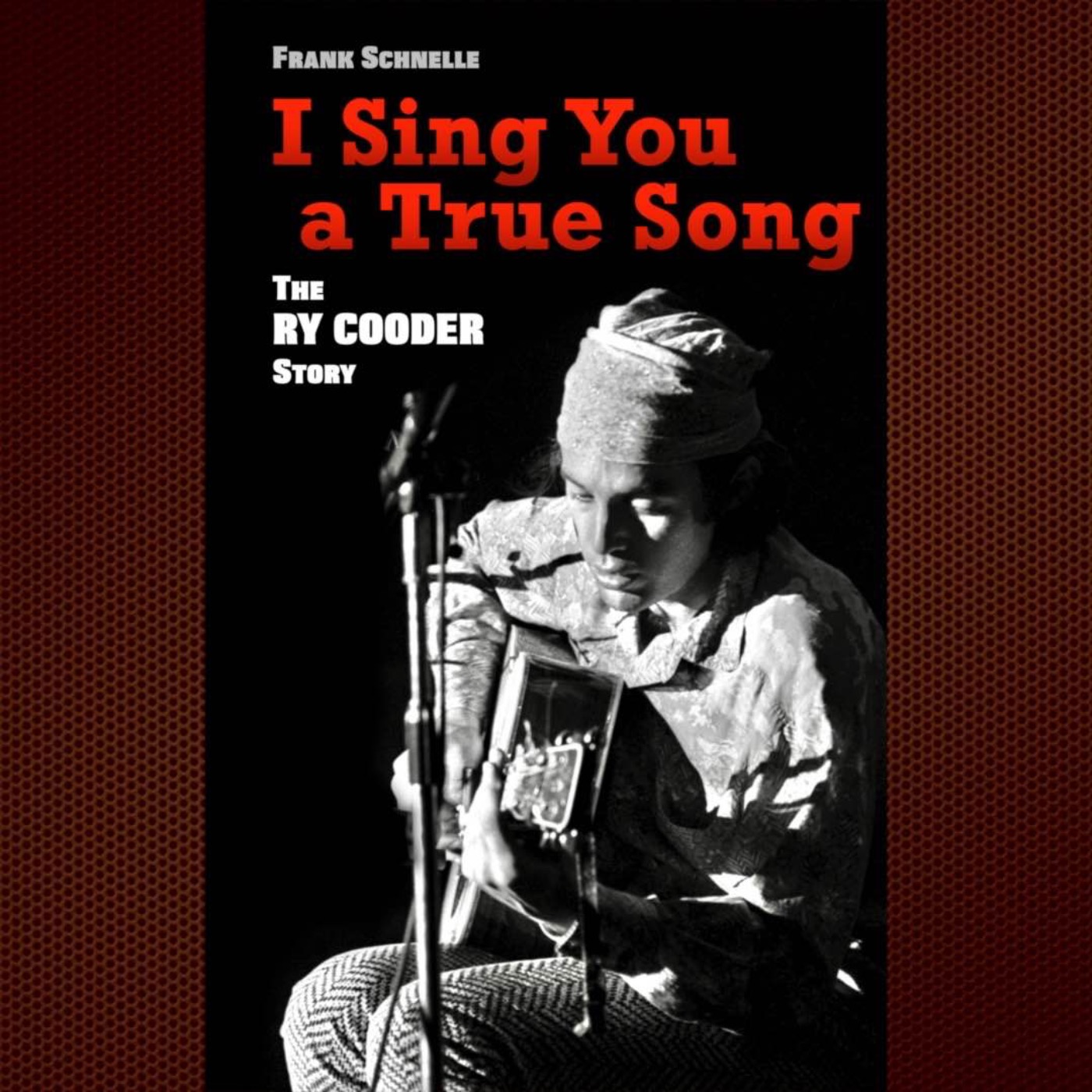
Book trailer "I Sing You a True Song: The Ry Cooder Story"
Aug 5, 202500:06:40Tap to summarizeWe are proud to present our brand new Cooder book! "I Sing You a True Song: The Ry Cooder Story" is now available! Listen to this short trailer to learn more, including an excerpt from the preface.I Sing You a True Song on AmazonWritten, produced and edited by Frank SchnelleTheme and background music by Chris HaugenVoices produced with text-to-speech AIFollow us on Facebook, Instagram, Tik Tok and YouTubeThe Ry Cooder Story WebsiteSupport us on Patreon Hosted on Acast. See acast.com/privacy for more information.
Transcribe →43 Get on Board (2022)
Jun 19, 202501:07:40Tap to summarizeIn our final episode for now, we discuss Cooder's brief U.S. tour with Rosanne Cash, titled "The Music of Johnny Cash," as well as his latest collaboration with Taj Mahal, Get On Board. On this album, they pay tribute to two of their early musical heroes, Sonny Terry and Brownie McGhee. We're still hoping for a sequel, but this could be a fitting conclusion to their long careers.This podcast frequently uses small snippets of musical recordings in podcast episodes for educational, review, and commentary purposes. In all cases, without exception, we believe this is protected by fair use in the U.S., fair dealing in the U.K. and EEA, and similar exceptions in the copyright laws of other nations. No more of the original than necessary is used, and excerpts are edited into long-form narratives, making the use transformative in nature.Written, produced and edited by Frank SchnelleTheme and background music by Chris HaugenVoices produced with text-to-speech AIFollow us on Facebook, Instagram, Tik Tok and YouTubeThe Ry Cooder Story WebsiteSupport us on Patreon Hosted on Acast. See acast.com/privacy for more information.
Transcribe →42 The Prodigal Son (2018)
Jun 5, 202501:02:40Tap to summarizeIn 2015, Cooder went on tour with bluegrass legend Ricky Skaggs and Sharon White of the renowned country band The Whites. The tour featured a lot of gospel music and directly inspired Cooder's presumably final solo album, The Prodigal Son. It's a great and fitting farewell, and there is much to say about it, as well as the subsequent North American and European tours.This podcast frequently uses small snippets of musical recordings in podcast episodes for educational, review, and commentary purposes. In all cases, without exception, we believe this is protected by fair use in the U.S., fair dealing in the U.K. and EEA, and similar exceptions in the copyright laws of other nations. No more of the original than necessary is used, and excerpts are edited into long-form narratives, making the use transformative in nature.Written, produced and edited by Frank SchnelleTheme and background music by Chris HaugenVoices produced with text-to-speech AIFollow us on Facebook, Instagram, Tik Tok and YouTubeThe Ry Cooder Story WebsiteRy Cooder making The Prodigal Son on YouTubeRy Cooder - Everybody Ought to Treat a Stranger Right (Live in studio) on YouTubeRy Cooder - The Prodigal Son (Live in studio) on YouTubeSupport us on Patreon Hosted on Acast. See acast.com/privacy for more information.
Transcribe →41 Live in San Francisco (2013)
May 22, 202500:48:22Tap to summarizeHard as it is to believe, 2013's Live At The Great American Music Hall was only Cooder's second official full-length live album. As with 1977's Show Time, he had no intention of putting the emphasis on a new album, but instead performed a great mix of his live classics. His band consisted almost entirely of old friends like Flaco Jiménez and Terry Evans, and family members like son Joachim, Juliette Commagere, and Robert Francis. In this episode, we introduce them – and a few others – and the albums they made with Cooder in the years that followed.This podcast frequently uses small snippets of musical recordings in podcast episodes for educational, review, and commentary purposes. In all cases, without exception, we believe this is protected by fair use in the U.S., fair dealing in the U.K. and EEA, and similar exceptions in the copyright laws of other nations. No more of the original than necessary is used, and excerpts are edited into long-form narratives, making the use transformative in nature.Written, produced and edited by Frank SchnelleTheme and background music by Chris HaugenVoices produced with text-to-speech AIFollow us on Facebook, Instagram, Tik Tok and YouTubeThe Ry Cooder Story WebsiteSupport us on Patreon Hosted on Acast. See acast.com/privacy for more information.
Transcribe →40 Election Special (2012)
May 8, 202500:34:59Tap to summarizeA year after the deeply political Pull Up Some Dust And Sit Down, Cooder went one step further and made Election Special, his contribution to the 2012 presidential election in the United States. Clearly on Obama's side and genuinely angry about the corporate takeover of society, he made an album in the tradition of Woody Guthrie, Joe Hill and Pete Seeger: a collection of folk and rock songs for the modern depression. It is as relevant today as it was then, to say the least. This podcast frequently uses small snippets of musical recordings in podcast episodes for educational, review, and commentary purposes. In all cases, without exception, we believe this is protected by fair use in the U.S., fair dealing in the U.K. and EEA, and similar exceptions in the copyright laws of other nations. No more of the original than necessary is used, and excerpts are edited into long-form narratives, making the use transformative in nature.Written, produced and edited by Frank SchnelleTheme and background music by Chris HaugenVoices produced with text-to-speech AIFollow us on Facebook, Instagram, Tik Tok and YouTubeThe Ry Cooder Story WebsiteSupport us on Patreon Hosted on Acast. See acast.com/privacy for more information.
Transcribe →39 Pull Up Some Dust and Sit Down (2011)
Apr 24, 202500:50:08Tap to summarizeIn response to the Bush presidency, Cooder produced what could be described as the modern-day equivalent of the kind of dustbowl ballads Woody Guthrie once sang. On Pull Up Some Dust and Sit Down, he took aim at politicians, corporate greed and military action – all issues close to Guthrie's heart in the 1930s and '40s.– In this episode we also talk about Cooder's first and only book, and a few other things. This podcast frequently uses small snippets of musical recordings in podcast episodes for educational, review, and commentary purposes. In all cases, without exception, we believe this is protected by fair use in the U.S., fair dealing in the U.K. and EEA, and similar exceptions in the copyright laws of other nations. No more of the original than necessary is used, and excerpts are edited into long-form narratives, making the use transformative in nature.Written, produced and edited by Frank SchnelleTheme and background music by Chris HaugenVoices produced with text-to-speech AIFollow us on Facebook, Instagram, Tik Tok and YouTubeThe Ry Cooder Story WebsiteSupport us on Patreon Hosted on Acast. See acast.com/privacy for more information.
Transcribe →38 I, Flathead (2008)
Apr 10, 202500:40:41Tap to summarizeOn I, Flathead, the final part of his California trilogy, Cooder turns his attention to the blue-collar types of the fifties and their music. It is about the kind of workers who toiled in the old Santa Monica airplane factory a few blocks from his childhood home, and the country, honky-tonk, and western swing he listened to so intently on the radio as a boy.This podcast frequently uses small snippets of musical recordings in podcast episodes for educational, review, and commentary purposes. In all cases, without exception, we believe this is protected by fair use in the U.S., fair dealing in the U.K. and EEA, and similar exceptions in the copyright laws of other nations. No more of the original than necessary is used, and excerpts are edited into long-form narratives, making the use transformative in nature.Written, produced and edited by Frank SchnelleTheme and background music by Chris HaugenVoices produced with text-to-speech AIFollow us on Facebook, Instagram, Tik Tok and YouTubeThe Ry Cooder Story WebsiteSupport us on Patreon Hosted on Acast. See acast.com/privacy for more information.
Transcribe →37 My Blueberry Nights (2007) / We’ll Never Turn Back (2007)
Mar 27, 202500:36:38Tap to summarize2007 brought us not only Cooder's solo effort My Name Is Buddy, but also some very interesting contributions. He composed film music for Wong Kar-wai's My Blueberry Nights. And with Mavis Staples, he made an album that's right up there with his best productions. We’ll Never Turn Back is not one hundred percent Cooder, but it's certainly ninety-nine and a half. We also take a look at some more session work.This podcast frequently uses small snippets of musical recordings in podcast episodes for educational, review, and commentary purposes. In all cases, without exception, we believe this is protected by fair use in the U.S., fair dealing in the U.K. and EEA, and similar exceptions in the copyright laws of other nations. No more of the original than necessary is used, and excerpts are edited into long-form narratives, making the use transformative in nature.Written, produced and edited by Frank SchnelleTheme and background music by Chris HaugenVoices produced with text-to-speech AIFollow us on Facebook, Instagram, Tik Tok and YouTubeThe Ry Cooder Story WebsiteSupport us on Patreon Hosted on Acast. See acast.com/privacy for more information.
Transcribe →36 My Name Is Buddy (2007)
Mar 13, 202500:44:26Tap to summarizeTwo years after Chávez Ravine, My Name Is Buddy was a return to folk and dustbowl blues. In other words, to the kind of music Cooder had begun his career with. It is a song cycle set in the 1930s, but with clear references to the present – another California opus that would become the middle part of a full-fledged trilogy. Needless to say, it was another masterpiece.This podcast frequently uses small snippets of musical recordings in podcast episodes for educational, review, and commentary purposes. In all cases, without exception, we believe this is protected by fair use in the U.S., fair dealing in the U.K. and EEA, and similar exceptions in the copyright laws of other nations. No more of the original than necessary is used, and excerpts are edited into long-form narratives, making the use transformative in nature.Written, produced and edited by Frank SchnelleTheme and background music by Chris HaugenVoices produced with text-to-speech AIFollow us on Facebook, Instagram, Tik Tok and YouTubeThe Ry Cooder Story WebsiteSupport us on Patreon Hosted on Acast. See acast.com/privacy for more information.
Transcribe →35 Chávez Ravine (2005)
Feb 27, 202500:52:13Tap to summarize"Chávez Ravine" can mean many things. Obviously, there is an area in Los Angeles by that name. But there is also a book, a short documentary, and a Ry Cooder album, in that order. Cooder's 12th solo effort wouldn't exist without the book or the documentary. Like the Buena Vista Social Club, it came about almost by accident. And again, it was an opportunity he knew how to seize. It became his own ode to a lost Shangri-La – a masterful street-corner opera.This podcast frequently uses small snippets of musical recordings in podcast episodes for educational, review, and commentary purposes. In all cases, without exception, we believe this is protected by fair use in the U.S., fair dealing in the U.K. and EEA, and similar exceptions in the copyright laws of other nations. No more of the original than necessary is used, and excerpts are edited into long-form narratives, making the use transformative in nature.Written, produced and edited by Frank SchnelleTheme and background music by Chris HaugenVoices produced with text-to-speech AIFollow us on Facebook, Instagram, Tik Tok and YouTubeThe Ry Cooder Story WebsiteSupport us on PatreonChávez Ravine: A Los Angeles Story on YouTube Hosted on Acast. See acast.com/privacy for more information.
Transcribe →