Loading summary
Transcript1 lines
- [00:01]
Ryan Lee
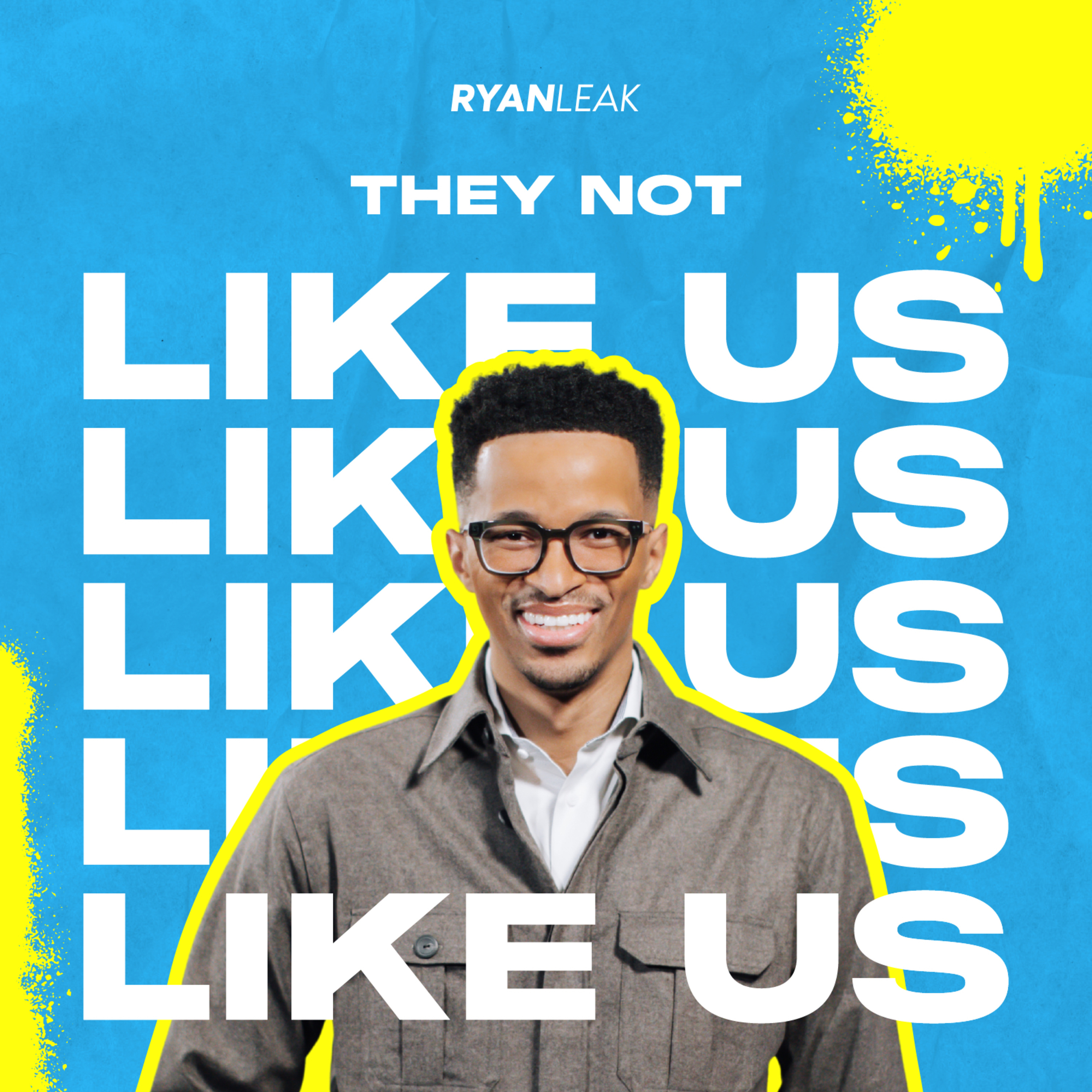
What's going on, my friends? Welcome to the Ryan Lee Podcast, where we keep things short and sweet. Today's episode is entitled they Not Like Us. Regardless of how you feel about the song Not Like Us, it's hard to go anywhere and not actually hear it. Not Like Us by Kendrick Lamar has absolutely dominated charts, hitting number one on the Billboard Hot 100 for multiple weeks. It has racked up over 250 million views on YouTube and counting, streamed over 500 million times on Spotify, and won Best Rap Song and Best Rap performance at the 2025 Grammy Awards. Now, whether you care about the Drake and Kendrick beef or not, this is what I know to be true about you and me. We all face somebody where we find ourselves on the opposite end of them. They not like us. I think what really reveals our character is what happens when we find ourselves sitting across from working with, zooming with, or having a meal with someone and they not like us. When a Republican is sitting in the cubicle next to a Democrat, they not like us. When a Muslim family is living next door to a Christian family, they not like us. When it's a leader who is one of those leaders that lives by the mantra, it's not personal, it's just business. And they collide with a chief people officer whose entire job is about people. They not like us. Ooh, my favorite is when introverts intersect with extroverts. They not like us. You got those people that are just super, super chill and then you got those people that are just ocd. You're like, hey, man, hey. They not like us. You got those early birds versus the night owls. You got the minimalists versus the hoarders. You got the Mac people versus PC people. You got vegans versus carnivores. You got people that grew up on Jeopardy versus people who are reality TV bingers. They not like us. You've got generational differences. You know, you got boomers that value loyalty and staying at a company for 30 years versus Gen Z who sees a two year job stint as normal. Like, if you dare, past two years, it's like, hey, man, are you okay? What's going on? They not like us. The reality is it doesn't matter where you go in life. The reality is we're all going to collide with people who aren't like us. And sometimes if we take it even further, they don't like us. And perhaps we don't like them. And when we collide with those people, we have options. Yeah, we've got options. I don't know which option has been historically, but I'm going to explore those options with you today. Number one, we could just ignore them. Yeah, we could just pretend they don't exist. We could live in an echo chamber of people who talk like us, think like us, and believe like us. But here's what I learned. Ignoring them doesn't make them disappear because they're everywhere. I know some people are like, I'm just gonna quit my job because I can't stand these people because they're not like us. Okay, you just gonna find a new job and just find more people that are annoying or don't agree with you. And so again, here's the deal. You can ignore these people, but I mean, I think they're pretty good at being unavoidable. So again, while it's a plan, I'm just not sure that it's one that's going to actually help you grow. I actually think some of these people can give you a deeper perspective of the world. I think when we ignore people not like us, I think our world stays small and we just become more out of touch. Nevertheless, you're grown. I mean, at least I think you are. You can do whatever you want. But that's option number one. Option number two is you could try to change them. That's an option. Because when they not like us, well, we can just say, well, what if we just help them be more like us? Let me show them the error in their ways and persuade them to see things through my lens. But let's be honest. Often does this work, People rarely change because someone else demands it. If anything, they dig in deeper, proving why they're right in the first place. People don't change when they're backed into a corner. They change when they feel safe enough to explore something new on their own terms. Again, you could try, but I'd love to see somebody do the same with you. Option number three is this. You could cancel them. Yeah, yeah, yeah. Some people, they choose to cancel those who don't align with their values or views. Yeah, yeah, yeah. I've seen kids stop speaking to their parents over political disagreements. I've seen employees resign because they refuse to work under someone with opposing beliefs. I've seen lifelong friendships disintegrate, siblings become strangers. And while there are certainly times when boundaries need to be set for personal well being, I've yet to meet the person whose people skills improved by canceling everyone who didn't fit their mold. Canceling may create distance, but it rarely leads to resolution. Writing People off may be a go to strategy for some, but again, it's not a growing one. Oh, and guess what? It's not an inspiring one. And it's certainly one we don't want to teach our kids. If you're a leader and someone came to you right now and said, hey, hey, hey, I've got this person that I don't like and they don't like me, what should I do? Is the best advice you could come up with? Just ignore them. Write them off, stop talking to them, ask for a transfer. Now, is any of the aforementioned necessary? At times, sure. But I would argue that's the outlier, not the norm. I don't think it should ever be our go to response again. You're grown. You can cancel whoever you want. It's your right. But I would be remiss if I didn't tell you that I think that there's a better option. And it's the fourth option. You could try and understand them. Why? Well, because I think that's what you would want, right? You wouldn't want to be ignored, forced to change, or canceled. You'd want someone to pause long enough to understand you, why something hurts, what makes you tick, what your dreams are, what your fears are. The same courtesy we want is the same courtesy we should give. Understanding doesn't mean agreeing. It doesn't mean compromising your values. It just means seeing people for who they are, not just who they are to you. When we choose understanding, I think we create space for connection. And connection is where real change begins. Imagine, just imagine for a moment, if we could be the kind of people who move towards others when they are clearly not like us? What if we could love them? What if we could work better with them? What if we could win with them? What if instead of responding with judgment or fear or assumptions, we responded with curiosity and grace? How different would our relationships look if we approached people not like us? A little bit different? How different would our world look if. If we all did it together? My friends, I've got a new book coming out called how to Work with Complicated People. It's releasing on April 15th, and this book is all about helping us navigate relationships with people who challenge us, those who think differently, act differently, and see the world through a different lens. It's designed to equip you with the tools to communicate, to collaborate, and thrive in environments where differences are unavoidable. If you've ever found yourself struggling to work with someone who's not like you, my friend, this book is for you. So I'm going to encourage you to pre order your copy today on Amazon and perhaps take the first step toward mastering the art of handling complexity with wisdom, grace, and confidence. So the next time you collide with someone who isn't like you, I want you to ask yourself, what would happen if I chose to understand instead of ignore, forced to change or cancel? The answer just might surprise you. My friends, thanks for listening to the Ryan Lee Podcast. Today's episode helps you at all. Don't keep it to yourself. Share with a friend and hey, it would mean the world to me if you would take a moment to rate, review and subscribe. Your support helps us reach even more people with these short and sweet nuggets of inspiration. Thanks for being a part of the journey and I'll see you next time.