← The SaaS Podcast - Real Lessons on Growing Profitable SaaS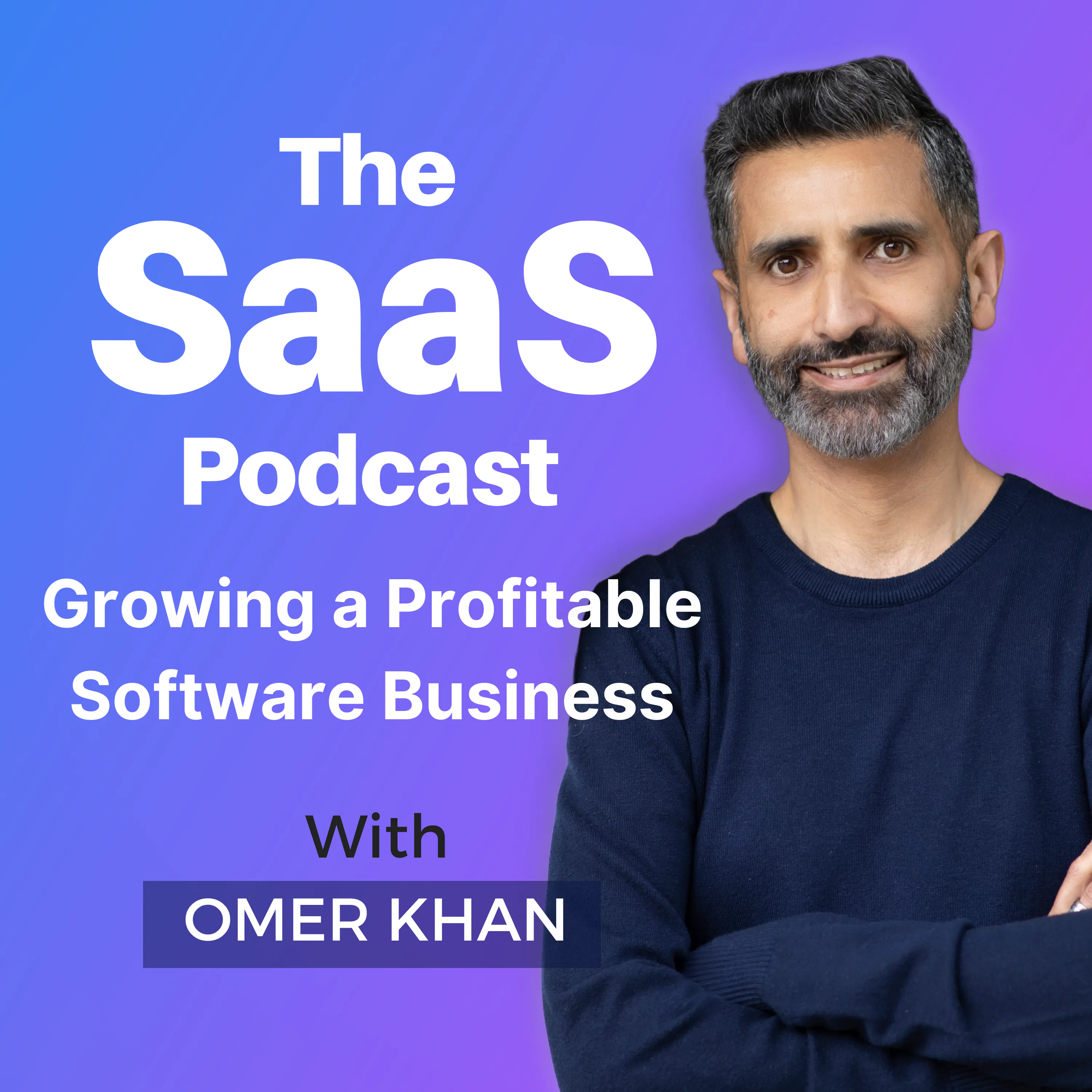
The SaaS Podcast - Real Lessons on Growing Profitable SaaS
SaaS Product-Market Fit: Zero Code to 8-Figure ARR
00:39:29
Sarah Ahmad (Stable) on testing SaaS product-market fit with a no-code MVP and growing from zero to 10,000 customers and 8-figure ARR
Loading summary
Transcript61 lines
- [00:03]
A
Welcome to the SaaS podcast. I'm your host, Omer Khan. AI has changed the playbook for building and growing SaaS. Every week I talk to founders who are writing the new one. My guest today is Sarah Ahmad, the co founder of Stable. They're a virtual mailbox service for businesses that handles the physical mail that still shows up even when your team is 100% remote. Stable currently has over 10,000 customers and and they've crossed the 10 million ARR mark. But Sarah's first startup failed. She offered the product during COVID for free and still couldn't get anyone to sign up. With Stable, they took a completely different approach. They didn't write any code. They just used Google Drive, Zoom calls and a stripe link to sell to their first 100 customers. And then the SEO playbook that built the entire business stopped working. If you're building a SaaS product or an AI agent, there's a good chance you're about to spend weeks and thousands of dollars on the basics. Things like AWS setup, authentication, admin panels, dashboards. Gearhart built something called the Basement platform that covers around 80% of the foundational needs out of the box. That alone can save you 5 to 10k in development costs and get you to market way faster. One of the products they helped build is SmartSuite, which raised $38 million and is used by companies like Capital One. They only take on a handful of new projects each month, but right now they're offering our listeners the first 20 hours of development for free. Book a call@Gearheart IO. That's Gearheart IO. If you're building or investing in a SaaS company, you already know security isn't optional. One breach and everything you've built can be at risk. That's where ThreatLocker comes in. Imagine having the power to decide exactly what's allowed to run in your environment and blocking everything else by default. No guessing, no hoping your existing solutions catch it. Real enforceable control. ThreatLocker is a zero trust platform that locks down your environment without disrupting operations, gives you total visibility, and stops unauthorized applications before they become a problem. If you want stronger security and tighter control, visit threatlocker.com that's threatlocker.com Right now, there's a number hiding in your SaaS metrics. The exact point where your growth will stall. You can change it, but first you have to see it. It's simple math. When your churn catches up to your new revenue, you stop growing. You're running just to stand still. I've Built a free calculator that shows you exactly where your ceiling is and the fastest way to break through it. Find your ceiling at SasClub I/O slash calculator. That's SasClub I/O calculator. Sarah, welcome to the show.
- [02:50]
B
Thanks for having me.
- [02:51]
A
So tell us about stable. What does the product do and who's it for?
- [02:55]
B
Yeah. So we are the leading AI powered virtual mailbox for businesses. And so this is one of those universal problems every single company has to deal with. You need a business address on file with the irs, different tax agencies, and the byproduct of using that address is there's still a lot of important notices that come in through physical mail. And so we transform all of those paperwork flows into automated systems. And so today we work with over 10,000 companies. So from your earliest stage, solopreneurs that are just getting started to large enterprises like DoorDash Realty Income and GitLab.
- [03:30]
A
Okay, and so give us a sense of the size of the business. Where are you in terms of revenue, size of team and so on.
- [03:35]
B
Yeah, so we have a team of 50 to 60 people and we're doing eight figures in ARR.
- [03:41]
A
Awesome. So I want to talk about where the idea came from and really it was a series of pivots that led you to where the business is today. So maybe a good place to start would be is. Why don't you tell me like how you met is Colin, your co founder and what was the first version of this startup that you guys built?
- [04:06]
B
Yeah, yeah. So we go. My friend and I go way back. So we've been friends now for over 10 years. We met freshman year of college, lived on the same floor. And in college we were both very entrepreneurial. So we had our own startups then and we both moved out to San Francisco for our first jobs as well. So working in tech as engineers. And we started just working on different ideas nights and weekends. We went through even before we quit our jobs, we went through even other ideas too of just like how do we make meetings more efficient? Like what is happening with all the packages getting lost and stolen in sf? So we went through a lot of those and ultimately we could our jobs on an earlier idea called and that company was called Mistro. And basically we're providing benefits internationally for remote teams. So everything from coworking spaces to health insurance, we were helping companies basically provide and operationalize these workflows for like in the future of work.
- [05:05]
A
Cool. And so what happened with that business? How far did you get before you decided to Pivot.
- [05:11]
B
Yeah. So we signed a few pilot customers and that was really like the indicator of, okay, let's quit our jobs and let's see how far we can take this. And so we raised like our first pre seed round around that. We got into Y Combinator. This was the winter 20 batch, so definitely a lot of scar tissue around that or started in person, ended up going remote. But it was really an opportunity to visa built the product. We had paying customers and so we had some momentum on it. But ultimately the interesting thing that happened with the whole world going remote with COVID is that it really pressure tested product market fit. And so while we previously could get people on a demo at least pretty easily, suddenly we're in a time where you would think we'd be super busy, where companies will be coming to us left and right. It was silent. And so we were even looking at giving the product away for free and people still don't want to use it. So it was just this really good opportunity for us to just learn really fast that hey, this doesn't have arms and legs. And so we went back to the drawing board. And I mean at that point, and I come from a design background, so I've always very much valued just like talking to folks and understanding what are their challenges. So we had done discovery with hundreds of operation managers, founders. And the interesting thing is that for companies without a physical office, it kept coming back to what do I use as the business address? And so in looking at what are the other challenges that companies are facing, it always was just like coming back to this, like, what do I use my address, what do I do about the physical mail? And when you look at a lot of the other incumbents in the space, it's been a very old fashioned industry. So a lot of these companies have been around since the 2000s. Their software is really clunky. We talked to people using them, no one was really raving about it. And so that really gave us that first insight of there's a really big opportunity to build a number one product in this industry.
- [07:12]
A
And so when did that pivot happen? Like was this, like there was this sort of a second pivot and then stable was the third iteration, Was that right?
- [07:23]
B
Yeah, I would say in terms of what we actually had paying customers around. So yeah, we had Mistro and then we pivoted to stable, but we had a lot of other ideas behind the scenes. And I think that's the part that sometimes gets overlooked with founders of just like how many ideas and reps you have to get through and there's a lot of bad ideas in the midst of it where you think you are onto something. You talk to a few folks in the space and you realize pretty fast that hey, no one's going to pay for this. Let's move on to the next idea.
- [07:58]
A
Yeah, yeah. So I'm curious, what was the signal when you pivoted to the current idea with Stable that was different from what you had done before that told you this one looks like we're actually onto something real here this time.
- [08:19]
B
Yeah, yeah. And it's really hard too. There's so much noise in all of that. And I think the mistake that we felt we made with Mistro was that we had built the whole product out and the then realized that we don't really have product market fit. So we wanted to do that a bit reverse this time of how do we really validate the market demand before building the software. So we put together a landing page and luckily because we had gone through Y Combinator and we had thousands of founders at our disposal, that was a really great community to launch it. So we put together a launch book face is what they call it. And basically it was just like, hey, we have business address in San Francisco. We'll help you change your address. Here's some things the software does. We'll open scan your mail. But really we had nothing. So it was just like a way to test, oh, do people want this? And when people sign up and you know, we had done the launch in the community for a previous product, how the few people reach out. When we launched for this one, it was immediately clear how much more like market pull there was. We had dozens of founders emailing us like signing up, saying, hey, I need this tomorrow. I'm closing down my office. And so that was really the signal of okay, there's something here. Now let's go back and figure out how to actually offer this product and solution. And we were very hacky in the early days. Like we found a male partner in San Francisco, super awesome, still work with them today. And so signed with them. And then the first version of the product, our MVP was basically just Google Drive. We put their address in a Google Doc, we onboarded them on Zoom, sent them a stripe checkout link and it was just like we'll upload your mail to your drive when you get anything. And I was like manually, manually sending emails to you when something would come in. So it was very hacky at the beginning. Now we have full software automations, all of that, not hacky by any means, but you have to start somewhere. And so it was very much like, hey, we need to capture the time and opportunity. You could wait months to build the software perfectly, or you could just launch today. And a lot of people, I think we were lucky that, like a lot of these companies and early customers were willing to basically take that risk alongside with us with the vision of what this could be.
- [10:39]
A
So what would you say to a founder who is maybe stuck in a place where they know that they could probably do what you just described, set up Google Drive, a Google Doc, stripe link, and yet they're reluctant to do that because will people pay for this? This isn't software. What am I doing? And there's this real reluctance to put that in front of people because then it might just laugh you out of the room. And so what would you say to a founder who's maybe sort of stuck in that place right now?
- [11:18]
B
Yeah, I mean, I will say the first version of Stable was embarrassing. It wasn't like, we put that out and we were very proud of it. And it's like, oh, this is amazing. It's going to change the world. And I think one of the things that is interesting to me too is that part of our compliance requirements is we have to have IDs of an officer on file. And in those early days when there was no portal, they were sending us IDs via email. And so you just think about just what people are willing to go through because they have this really deep pain point that you're able to solve. And so if you're solving something that is a worthwhile problem to be solved, people, like, there are people out there that will be okay with it not being provided in just like the best polished product. And I think the way you compensate for that in the early days is the customer experience. And so, you know, I mentioned that we got on Zoom with every single one of our first customers. Like, we had a conversation, either myself or my co founder, we were the ones that were replying in support every day. And we really just went above and beyond for them and use it as an opportunity to learn about not just even, like, what our core product is and what we want to build there, but what are other verticals that we could eventually help to solve for them as well. And so there's a way to compensate for that. I think, especially in this age of AI, it's like, so much easier to build something that, you know, I think you could make it a little more polished than even what we had. But it really is like people will be forgiving if you're solving a real problem for them.
- [12:47]
A
Yeah, it's great, great perspective. The one thing that hits me is that what you do with stable today, obviously it's a lot more evolved than what you started out with with Google Drive. But even back then there was a lot of, I guess legacy players, people offering registered agent services and some of them doing something like they'll forward the mail to you or some of them might even scan it. What was it about what you were offering that resonated with people? Were you hearing how is this different to whatever? Or was this something that you were focusing on as a pain that you knew that really was a frustration for people using these existing companies?
- [13:40]
B
Yeah, I mean we've always positioned ourselves as the modern player. So when we first launched what that means and what we our hypothesis in looking at what they were offering and or what they weren't offering and we could, it really came down to a lot of the little details like we halt from day one with the change of address process. We know there's friction around if you're using previously your home or another office to change your address to stable. So we help with that process for example. And then we always have had some layer of automation. So in the early days I was like a slack integration will push your mail to Slack where a lot of people are doing their work day to day. And today too it's like, you know, I think AI has unlocked a lot of what is possible. So the automations that we can provide are way more advanced where it's like you get something, it's automatically open scan, we're routing it to the right person on the team or we're pushing that information, extracting data into different systems. So that has always been like what how we see it as like hey, these other old school players, you know, they're not necessarily best in class engineering teams that are building the software behind it to make sure it's powered.
- [14:52]
A
So having access to YC founders, great advantage to get access to early adopters, initial customers and so on. But I think you got to at least 1,000 customers before you even hired anybody to do growth on your team. So how big was the team getting to those first thousand customers and beyond yc, how did you find and acquire them?
- [15:23]
B
Yeah, I think our team when we got to a million in ARR was six or seven people. We were very, very small at the time and I do believe and luckily too YC was a really Great catalyst building something that people really needed and wanted. We had a lot of organic traction where people would just like, word of mouth would spread. Some of the other areas that we started to invest in was of course, like the blog. This was back when SEO was a much bigger opportunity. I would say today everything's changing in that landscape very fast. But we were writing the blog post ourselves in that time, which was crazy to look back on, learning just like what the strategy is around that. We also invested some in paid ads. Looking back, that's an area that I think we underutilize. I think we could have taken bigger swings. I know now with like, now we have a full marketing department and, you know, we were just kind of making sure we were kind of visible. But in that time where it was like so many companies were shutting down their offices and needed a solution, it was like, I wish we took, took a bigger swing around it and actually like, looked at bigger amounts of data as opposed to, we were optimizing things week over week, but really only spending like a few hundred a week. It was very, very, very little.
- [16:42]
A
Yeah, there's always this reluctance. I really find a founder who says, I got paid ads working and I'm really happy with what I'm getting from that. And it's just so easy to sink money into setting up these Google AdWords campaigns or whatever you're doing now. Looking back at it, you can see that and there was an opportunity there. But, like, going back to the trenches when you were there, what do you feel like again? What were some of the signs that told you that maybe you should have done things differently back then?
- [17:23]
B
Yeah, I think knowing now, you have to take just really big swings to understand if a channel is working. And in the early days, we were basically like micro optimizing and just like not getting enough data or signal of like, is this channel good or not? And I think the thing about marketing too is that a lot of the attribution can be very fuzzy. And so a lot of it is around just like brand awareness. And it's just like, do people know who you are? And I, you know, I fully attest we could do a better job at this even today. And, you know, at the scale that we're operating at, but especially in the early days, optimizing actually more for getting market share and visibility after you prove product markets. I like, I think there's a certain point on the path to a million that it's okay, this is really working. And how can I start to like, sink more Resources into it and smart resources of course as well. And so I think like understanding that turning point a bit more strategically is like what I wish like looking back at we, we could have taken out,
- [18:29]
A
if you could go back, how much would you spend on paid ads in your first three months to figure out if it was a channel worth exploring further or not?
- [18:41]
B
I mean knowing how much we're paying now, I would say at least thousands. Whereas like you know, going, you know, I think like upping the budget. I mean it's all things of like, you know, do you have the capital to spend or not as well. But I know we weren't saturating even. I think the main thing is for us very concrete example, people type in virtual business mailbox or something along those lines. It's like we should always be basically showing up when someone is searching that especially in that time where we basically on organic search were not showing up. We were just so, so new. And so how do you make sure that people with high intent can find us? And so I would say like whatever the amount is that you kind of like need to saturate that and then you can optimize to get the numbers to make sure they make sense for your business. But I think with paid ads too, it's like you can get in this place of, of over optimizing but you have to look at it in aggregate of all of your other channels. So all of our other channels were essentially zero. Right? Like we weren't really spending anything for them. And so you can kind of, you know, if we're getting more market share and that creates more of like that viral loop of word of mouth, then it's worth it to spend a bit more there. So it's a different take. Like I, you know, I, I don't even know if knowing what I know now, my previous self would have still wanted to let me do that. But yeah, I, I would have. That's how I would have approached it differently knowing what I know now.
- [20:12]
A
Building a SaaS company from the ground up is tough. Protecting your data and securing your environment shouldn't be. With Threat Locker, you can deploy application control in days to weeks, not months to years and enable your IT team to decide exactly what's allowed to run and deny everything else by default, lock down your environment without disrupting operations and operate with confidence. No guesswork, no reactive solutions, just true proactive control. ThreatLocker is a zero trust platform that mitigates the risk of downtime reputational damage and cyber attacks, including ransomware. And zero day exploits. If you want stronger security and tighter control, visit threatlocker.com that's threatlocker.com One of the hardest things about building a SaaS product or an AI agent is not having a technical co, founder or CTO to guide the decisions. That's where Gearhart comes in. They can act as your fractional CTO and technical team. They bring AI expertise from projects from Meta and Google and they have strong Silicon Valley connections with founders and VCs. And since they're a Ukrainian born company with offices in San Francisco and London, you get senior level talent at an offshore pricing model. Right now they're giving our listeners the first 20 hours of development for free. Go to Gearhart IO to book a call. That's Gearhart IO. Okay, so you tried paid ads. Didn't really get traction there. You've got word of mouth helping to get you some customers, but getting to a thousand customers is no easy feat. And so you've got a very small team. Can you just explain a little bit like what did week to week growth look like? And was it mostly through word of mouth and content that you were acquiring these leads and customers?
- [22:00]
B
Yeah, it was mostly word of mouth and content that we were getting them. I don't know if I remember off the top of my head the actual growth rate. I know at that time we were growing about 2 to 3x year over year, so I think you could kind of back into that. But it was definitely very, very spiky. There were some months because of that that we didn't add that much revenue. I think our percent growth was probably more in the 4% or so. So it was definitely very up and down.
- [22:31]
A
And how far did you, how many customers did you get before you stopped doing like the manual thing? Was that just like for the very early customers or did you try to really push that as far as you could with your, you in the background manually like scanning and uploading stuff?
- [22:49]
B
Yeah, it was the first hundred customers or so that it was very, very manual. So we hadn't written any code and just like, you know, just sending all of these Basically photos and PDFs like through email and Slack. Then we started writing the software. So I mean it was all piece wise, like it was probably another hundred customers until you could start taking action in the dashboard, for example. And so it wasn't like, okay, we decided to build it and then we released the whole dashboard at once. It was just like, okay, let's one by one start to take pieces of that and what the core functionality, table stakes functionality needs to look like and start putting that into software. And I think the interesting part is that our customers are very familiar with our external software that they're using. But we also had to invest and build our internal software that actually powers the mail operations. And so you can kind of imagine an Amazon warehouse esque operations at least like today. I think at that time it was definitely a lot less smaller in scale. But with that it's how are you keeping track of all the requests that are coming in if you're open and scanning forwarding, how are you keeping track of SLAs for each of those and prioritization. So there's a lot that just goes into the actual software part. We have to integrate with all the equipment like scanning, shipping labels, all of that. So there's a lot that we've had to build in that. And so I think that's like a unique challenge of our business where yes we have the SaaS software side of it, but we also have to invest in the physical operations to keep up with that side.
- [24:28]
A
Yeah, that definitely struck me like you know, most of the I talk to are just dealing with software and you're dealing with this physical operational thing. Can you, can you walk through like what's involved in getting a new location up and running? I just want to understand like what you have to do to get there.
- [24:47]
B
Yeah. So we're in over 20 locations today across the US and it's a mix of we either partner with local businesses, whether that's co working space courier service, logistics company and then there are a few locations that are stable operated. So we have offices that double as a stable address as well. And then on top of that we have a few processing centers. We process mail in the Bay Area, New York and Dallas. Dallas is our, our biggest processing center, over 10,000 square feet. And so that's where all the magic happens. So we store the mail, we have folks there, we have all of our machinery as well to actually automate the mail operation side. And so for our end customer it's very magical experience. We do a fun thing called we send every single customer a welcome letter, which is a tangible letter, but it's like welcome to this table. So it just gives you the orientation of the product but you see it come in, we'll scan in the envelope and then for a lot of our customers we'll automatically open and scan it as well and then you can forward the mail or deposit and so you're just clicking buttons or a Lot of it's automated for the customer side of it. It's very magical. But yeah, there's a lot of steps and operations that goes in behind the scenes to make sure everything happens without a hitch.
- [26:04]
A
Yeah, I started thinking about what was involved in doing it and it made the software side look really easy when you have to deal with this kind of physical processing of mail and all the other stuff that goes with it. Let's go back to software. Let's talk a little bit about AI. What's the biggest impact that AI has had on your business so far?
- [26:34]
B
I think there's a few areas that we can talk about and it's one of those areas that is just changing so fast. So every day, every week we're thinking about this iterating. I'll start with the actual product itself because I think that's just very top line for a lot of founders that are building of just how are you utilizing AI in your actual product and your offering? And for us, it very much is this natural progression of, okay, we do some of these automations. How can we get even smarter about how we do that? Extracting data that's coming out of it. So a lot of healthcare and property management companies, it's really the workflow starts with mail as opposed to ends at mail. And so when they get say like an HOA notice or a patient record, how do you take out the important information and put that into different systems? So for us, it's like what's been really cool about AI is just like the democratization of a lot of this technology where previously you really had to build it in house and make it super tailored to each of these use cases. And now it's like it's very smart. So it's like, well, you can basically figure out how to provide that logic tree, take something that our customers are doing and just automate it end to end. So that's been really exciting for just the application. And I think as founders, we have to constantly be thinking about how is this evolving and how does that impact our product. And just other we're starting to compete with a different type of product that's more in document processing on top of just the virtual mailbox side of it. So that's exciting. Part I think the parts that are more on the what does this look like is that the B2B marketing playbook definitely flipped on its head in the last couple of years. And so there used to be this pretty repeatable like plug and Play Playbook that like people would follow or especially for us, it's like, yeah, let's, let's rank in Google Search. Like, let's really invest in SEO and organic. And that's just not the case anymore. And so what saw last year, with AI overviews in Google Search really taking over all that is just a lot of our blog posts, for example, that were performing really well, just like people weren't clicking down even into them. And so that really changes. Just how do you think about growth in this next stage where you still have to invest in some of the more commercial intent pages, but you have to start to shift towards thought leadership, just like other ways to get eyeballs. Like Outbound has gotten very noisy as well. Again, I'm sure we all get all the emails from just people wanting to sell us things. So how do you stand out? Right. How do you really make sure that people know who you are? So that's an interesting area that affects the marketing side. I'm sure you're probably seeing that in a lot of these conversations that you're having with folks too, of just also being directly impacted by some of the changes there.
- [29:32]
A
Yeah. So are you still doubling down mostly on content or. It sounds like, you know, you're going back to paid ads and spending more money there now than before. But what are the channels that are driving most of the growth for you today?
- [29:49]
B
Yeah, content is a place that we're investing a lot into. And content too. Like in the early days was it was just like the blog essentially, and diversifying, you know, podcasts. Of course, I've been posting more regularly on LinkedIn. And so, like, how do we really utilize myself as a founder as the voice and partnerships has been really, really great for us as well. So how do you leverage other companies in similar spaces or similar types of companies there? And so, yeah, there's. And I think the thing that we've been thinking about, and I think a lot of startups are having to just think more creatively of just like. Yeah, like, how do you get in front of folks? We've been sending direct mail, which I think is a fun one because it directly, you know, applies to what we do as a business. It's just like the reverse of it. So that's like an area too that, you know, we've seen some good results and excited to continue to double down.
- [30:44]
A
What. What do you think is the biggest threat to your business from. From AI? What's the thing that keeps you up at night? I mean, every founder has some. Some kind of fear about where AI may Not go the way they hope it will. So what is it for you and what do you think? Think is the moat for stable?
- [31:03]
B
Yeah, I'll start with the moat question because I think that's the easiest side where it's like, we do have physical operations, which AI is not that good and I don't know if it can. It'll be a while maybe until robotics or anything can catch up there. But just having the physical operations, we have, the logistics network, I think that lets me sleep a little more peacefully at night. I do think the scary thing is what does software and the actual workforce start to look like in the next five to 10 years? And I think that's a lot of just like what people are talking about and like, no one really knows. And so when we're looking at new product lines to bring to market, you know, that's something that we have to think about. And then when we think about the workforce as well, to me, it's really important that everyone on the team understands and is using AI and also staying on top of it. Right. I think, like, I used to use ChatGPT a ton and I recently moved over to using Claude Opus because it's so good. And it is just this crazy time in the world where if you're not constantly tinkering yourself, and I think leaders have to be tinkering themselves so that they can speak to how do you get some of the outsize impact on productivity there? But it's like, how do you also make sure that the people on your team are learning that? Because the skill sets that are required in the new age of work are going to be very different. The people who understand how to use AI are the ones that are going
- [32:29]
A
to win exciting and kind of scary times, you know, But I think, I mean, for me, it just feels like whenever this kind of change, I mean, this is probably like, we've never sort of gone through something like this before, but there's always opportunities that new opportunities get created and it's just really interesting to see how things are playing out. I love vibe coding, but I don't think everybody is going to be vibe coding everything and waking up and saying, oh, let me build my own version of Microsoft Word or Google Docs or whatever it is. But what, what do you think is. Has been the, the hardest part of building this business so far?
- [33:24]
B
Yeah, that's a really good, good question. I mean, like any founder, at every stage, there's a new set of challenges that you have to, to overcome. And, you know, there's some that are easier, some that are harder. And it's really just like staying, staying positive like through all of that and just like not giving up. Right. Like I think that like some of the best founders like we have that grit to just like keep going and the confidence that we're gonna figure it out. And even in the times that like yeah, it's just, you know, everything's like on fire. You're just like, I don't know how we're gonna get through this, this next phase but it's just like you always do, right? And so that like helps to like really like just like validate that like confidence and keep going.
- [34:07]
A
What about you as a leader or a CEO? You've gone from being an engineer to very quickly, relatively quickly, having an 8 figure ARR business and evolving into a role as a CEO. What has that transition been like?
- [34:31]
B
I mean it's a lot of new challenges day to day. I mean it all feels like it's one of those things that day to day it doesn't feel like that much changes. But then in startup land, you look back on six months and a year and your team is much bigger. The types of problems get bigger, especially if they're coming back up. To me, I think one of the biggest things and I think a lot of founders speak to this is when do you make that leap from going from product building to company building? Because in the early days it really is just like, okay, do we get this product off the ground? How do we make sure our customers are happy? And you as a founder are very in the weeds on a lot of that. And then you kind of hit this inflection point. I think for me it was probably around 15 to 20 people on the team where you need to start going into more of the company building side of how do you make sure everyone is aligned, knows what the biggest priorities are in the business. We're all moving towards the same goal. And I think the learning for me too is people can't read your mind. So it's really important to say what you think about things but also say it many times. One time is not enough to get through to folks. And so learning that muscle too of just like I think in the last year made a lot more investments in my own time of thinking about company communications and what are some of the structures to help keep everyone on track and just investing more time in some of the strategic work which I think that related is just like doesn't really matter so much. Like you just need to get to product market fit. But at this stage, it becomes a lot more important so that you can empower your team to move fast.
- [36:15]
A
SaaS companies move fast. Most teams are focused on building and optimizing, not thinking about vulnerabilities, ransomware or zero day attacks. But they can strike without warning and put your entire business at risk. With the Threat Locker Zero Trust platform, you can get ahead of these attacks and stop them before they start. Instead of allowing everything and trying to spot the bad, Threat Locker blocks everything unless you approve it, giving your IT team full visibility across your environment. The result is stronger security control and your business keeps moving without interruption. Visit threatlocker.com that's threatlocker.com if this episode got you thinking about building your own product or scaling what you've already started, check out Gearhart. They're not just a dev shop. They're a full product development studio that handles everything from strategy and design to engineering and launch. They've done it over 70 times for B2B SaaS, products and AI agents. And as serial entrepreneurs themselves, they know what works and what's a waste of your time and money. Head over to Gearhart IO and grab 20 hours of free development before their slots fill up. That's Gearheart IO. Right now, there's a number hiding in your SaaS metrics. The exact point where your growth will stall. You can change it, but first you have to see it. It's simple math. When your churn catches up to your new revenue, you stop growing. You're running just to stand still. I've built a free calculator that shows you exactly where your ceiling is and the fastest way to break through it. Find your ceiling at SasClub IO calculator. That's SasClub IO. And on that note, we should wrap up. So let's get onto the lightning round. I've got seven quick fire questions for you. You ready?
- [38:00]
B
Yeah. Let's do it.
- [38:01]
A
What's one of the best pieces of business advice you've received?
- [38:05]
B
It just gets harder. This wasn't Y Combinator. Every founder that I spoke to us would just say, it just gets harder. And it always stuck with me. And it's very true.
- [38:16]
A
What book would you recommend to our audience and why?
- [38:18]
B
Yeah, so one of my favorite books when starting out was Sprint by the Google Venture guys. And it's basically how to rapidly test and iterate on ideas in five days. And I feel like going through that process of discovery very helpful for launching or pivoting in different products.
- [38:37]
A
What's one attribute or characteristic in your mind of a successful founder.
- [38:42]
B
So kind of like I said, you're being going to have to have relentless confidence that you're going to figure it out even when times get hard and that you're just going to find a way out of it. You can really overcome anything. And that's the truth there.
- [38:57]
A
What's your favorite personal productivity tool or habit?
- [39:00]
B
Get enough sleep? I make sure to get seven to eight hours of sleep every night.
- [39:05]
A
What's a new or crazy business idea you'd love to pursue if you had the time?
- [39:08]
B
A next generation college? I think the college experience is so critical in development, but the actual skills that learning day to day is very antiquated. Like I don't necessarily believe that professors are best suited to teach those classes. Like it should just be people in the workforce. So some trade schools like this. But I would be interested to see how do you actually make it the default as opposed to what it is today?
- [39:34]
A
That's a cool idea. What's an interesting or fun fact about you that most people don't know?
- [39:40]
B
I spent 2023 being nomadic, so I spent my time between SF and New York, but then a lot of Latin America and Europe as well. And so it was a great time. Working remote and building stable.
- [39:53]
A
Nice. And what's one of your most important passions outside of your work?
- [39:56]
B
Yeah, I recently got into strength training. I'm a small woman so I can't lift a ton, but I do it is pretty fun. I use the app called Fitbot which highly recommend to track everything and it's fun to be able to gamify and I think just gets you in a really great headspace for the day and the week ahead.
- [40:16]
A
Awesome. Nice. Nice boost of cortisol. Actually I get that now. Taking my daughter for driving lessons. It's like I come back pumped. It's like awesome. Well, thank you so much for joining me. It's been a pleasure. Appreciate you making the time and sharing your story and some of the lessons you've learned along the way. If people want to check out stable they can go to usestable.com and if folks want to get in touch with you, what's the best way for them to do that?
- [40:50]
B
Yeah, you can find me on LinkedIn. So I'm Sara Ahmad on there. So yeah, that's probably the best way to get in touch.
- [40:57]
A
Awesome. Thank you so much Sarah and I wish you and the team the best of success.
- [41:01]
B
Thank you.
- [41:02]
A
My pleasure. Cheers.