← The SaaS Podcast - Real Lessons on Growing Profitable SaaS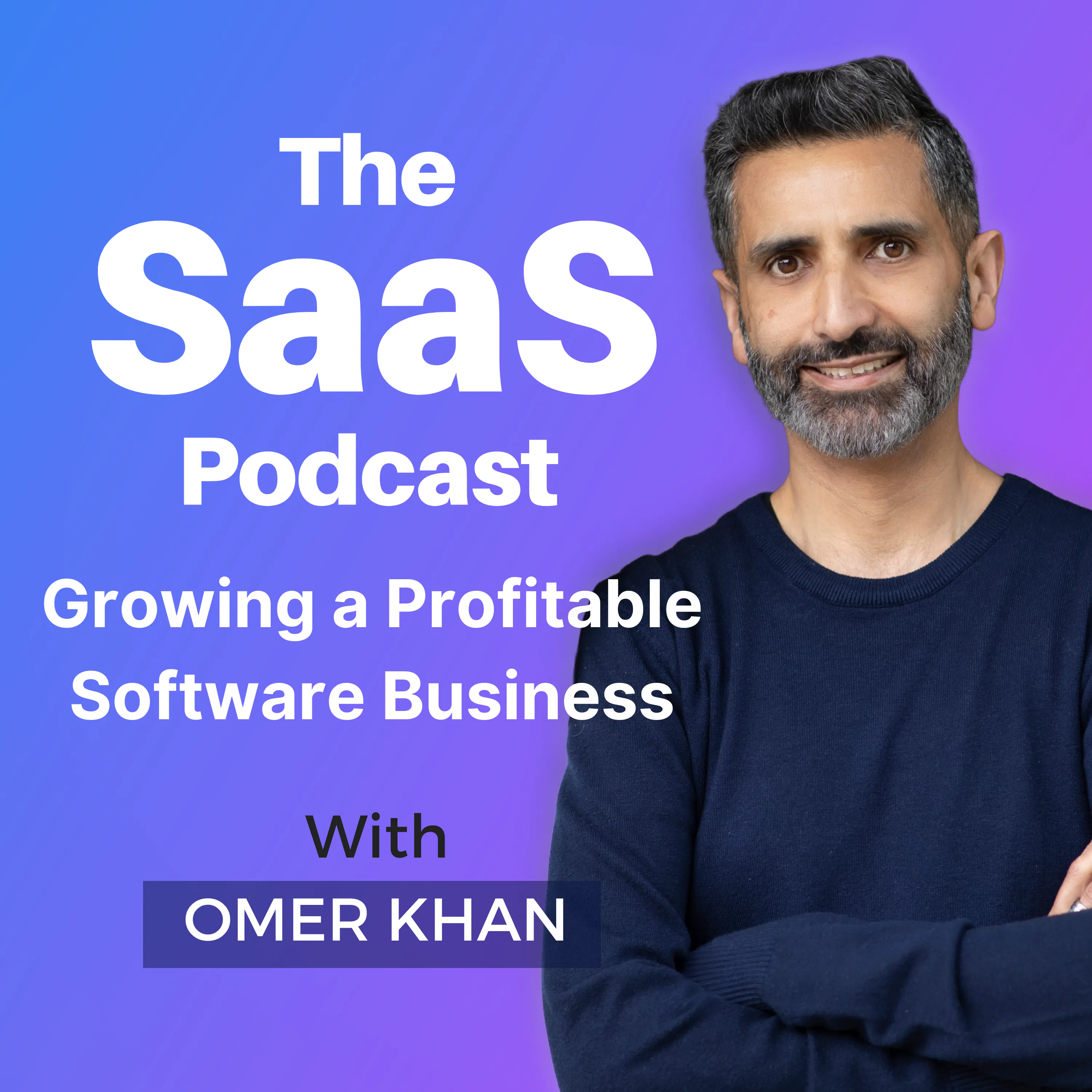
The SaaS Podcast - Real Lessons on Growing Profitable SaaS
The 8-Figure Open Source SaaS Playbook
01:09:12
Ev Kontsevoy (Teleport) on turning a free open source SaaS tool into an 8-figure enterprise platform with 500+ customers
Loading summary
Transcript61 lines
- [00:03]
A
Welcome to the SaaS podcast. I'm your host, Omer Khan. AI has changed the playbook for building and growing SaaS. Every week I talk to founders who are writing the new one. My guest today is Yves Konsavoy. He built and sold Mailgun and then grew his second company, Teleport, to eight figures in ARR with over 500 customers. But the product that got him there stuck started as a free tool that he was giving away just to get leads for his real product. One day a customer called asking to add a feature to the free product and he was willing to pay for it. Eve didn't have a price in mind, so he made up a crazy number and the guy paid it. But then the demand for his real product vanished overnight. In this interview, Eve breaks down how to figure out if you're selling to the wrong buyer and why companies deploying AI agents are now lining up for his product and why that was never built for AI. If you do SEO for your SaaS, you already know AI is changing how people find products. Buyers are asking ChatGPT and relying on Google AI overviews for recommendations. Instead of browsing traditional Google search results, Respawna helps you show up in those AI answers. They get your brand featured on the sites that AI tools actually cite. They helped Opus Clip hit number one in AI visibility and add over 100,000 visitors to their monthly organic traffic. SaaS. Podcast listeners get $1,000 in credit when you sign up for a subscribe and save plan. Just mention my name after you sign up. Visit respona.com to get started. That's R E S P o N a dot com. I talked to a lot of founders stuck in the same spot. They've got a clear vision. They just need the right team to build or scale it. That's where Gearhart comes in. They're an AI powered product development studio that handles the entire technical side of building your B2B SaaS platform or AI agent. Built by serial entrepreneurs, they understand the unique challenges of startups and can plug into your team to accelerate growth. They've built over 70 successful products, including SmartSuite, which raised $38 million and is used by companies like Capital One. Right now, they're offering our listeners the first 20 hours of development for for free. Just book a call@GearhartIO. That's GearhartIO. I've interviewed over 450 B2B SaaS founders on this podcast. Success leaves clues and I've been taking notes. Every week I send out the shortcuts the blind spots and the tactics that actually work so you don't have to learn everything the hard way. Over 5,000 founders read it. You probably should too. Sign up free at Sasclub IO newsletter. That's Sasclub IO newsletter. All right, Ev, welcome to the show.
- [02:55]
B
Hey, Omar, nice to be here. Thanks for having me.
- [02:58]
A
It's my pleasure. So tell us about Teleport. What does the product do? Who's it for? What's the main problem you're helping to solve?
- [03:05]
B
Well, Teleport, we're a technology company based in Oakland, California. And our product, which is also called Teleport, is an infrastructure identity platform. The problem that we solve. And we solve this problem for people who run and kind of build run and secure computing environments for their organizations, usually kind of VP of infrastructure engineering kind of person. So the problems that we solve to them, the use cases are, I'm sorry, the problems are that their identity is fragmented. So machine identity, human identity. Infrastructure is actually full of things that need identity. And humans are not the only ones. And that identity currently is fragmented. And the second kind of root problem of all of their concerns is that there are many, many different credentials that engineers use to access all of these different identities that exist inside of an infrastructure. So we bring a technology in called an identity layer. So infrastructure now has its own identity layer that keeps track of all the laptops, humans, servers, databases, AI agents, essentially everything you have. And that creates a trusted computing model. And the use cases for this technology, they're basically two major ones. One is giving engineers secure access to their infrastructure, kind of replacement of legacy privileged access management technology, which is not based on credentials at all. And the second use case is containment of artificial intelligence and data centers. So as companies starting to build and deploy and run AI agents in production on their existing infrastructure, they're obviously concerned that because these agents need to be contained, because they behave non deterministically, so it's kind of scary what they will do. So in order to be able to have full control over what they're doing and prevent them from doing something they aren't supposed to, that's like a very quickly growing use case for our technology.
- [04:55]
A
Okay, awesome. So I guess your story, well, your story starts from when you were born, but for this interview, I would say we can talk about back In, I guess, 2010, when you founded a company called Mailgun, which anybody who has done any kind of product building will be familiar with, and then you sold that. Like, was it like a few years later?
- [05:22]
B
Yeah, Mailgun was founded in 2009. And we got acquired in 2012 by Rackspace.
- [05:28]
A
Yeah. And so one of the things that I sort of picked up was you said that that product or that business was built to sell. What did you mean by that?
- [05:40]
B
Well, actually there was a very specific event. So when I founded Mailgun, I did not really have any grand strategy on what kind of company I want to build. Frankly, I just needed a job. Because remember 2008, 2009, there was a time where there was just kind of, it was like, we're in the middle of financial crisis. The startup I was with at the time kind of went under and I just knew that everyone is going to be moving to this new thing called the cloud. Like in my mind, cloud was really invented in like 2008, kind of. Prior to that it was not a big deal. And starting like 2008, 2009, people started to move to this kind of software defined infrastructure. And one of the technologies that just didn't work in that world was email. Like you could not send email out of aws. You could not receive an email. And it was just a problem I personally faced. So I built a. Yeah, I built a product to solve it, but it didn't even occur to me that it could be a company until Twilio happened. Because Twilio essentially told like back then, like now we take it for granted. But in 2008, building a company which essentially was an API, that was not a thing. It was a groundbreaking realization that API could be a product. And when Twilio launched and they raised their first round of funding, I just realized, oh, like Mailgun is like Twilio, but it's for email. So you should actually have a company. So that's kind of how it happened.
- [07:11]
A
That's funny.
- [07:12]
B
And kind of. I'm sorry, back to your question. Back to your question. So, and I just like, okay, so we're going to, so we're going to incorporate this company. We got funding from Y Combinator. And then I'm having my first conversation with a real venture capitalist because I like, I didn't come from the Valley. Okay. So I moved to Bay Area from New York and like the first VC that I'm meeting kind of, you know, this kind of magical creature because I like, I, I've never seen them before and I was young too. And so this guy was, Lewis was his name, so he was from Sequoia. And he asked me like, is your company, how are you going to build this into a billion dollar company? And I'm Thinking, how is it even possible to build a billion dollar company by just sending email? And I just told them like, no, mailgan is just a feature. It's not really a company in retrospect. Turned out it was spectacularly wrong. Programmable email turned out to be a much bigger business. So mailgun itself grew to become a multi billion dollar company. This is like, way after we sold it, our competitors grew to be quite big. Like SendGrid for example. Yeah. But at the time when I was asked that question, I just felt like, hey, sending a or receiving an email is a capability that every cloud provider should have. And I already built it and I'm already making money with it. So it will be really natural that one of these cloud providers will acquire us in the future. And that's indeed what happened.
- [08:38]
A
Great story. So after the acquisition, I think it was a few years before you, you founded, let's call it the first iteration of teleport in 2015.
- [08:56]
B
Yes. So like the story there was. And actually I get asked this question by kind of younger entrepreneurs a lot. There's like, how do we get an idea what kind of company to build, what to do? And I understand why it could be difficult or not intuitive for folks to figure this out, but my advice to them just like, hey, go get a good job. Okay, So I was a Rackspace after that acquisition. Rackspace at the time was probably the second biggest cloud provider. So rockspace is running this public cloud thing and they have hundreds and thousands of customers. Each customer is a SaaS company. Okay. So, yeah, go listen to support. Go look at support tickets. Go join your sales team. Like, go talk to these customers. They will always come to you with problems. It's like, why a problem is the most common topic for a conversation with your cloud provider. So just go sit there, listen to all of the problems. It'll be very obvious what you can build for these people to make them happy. In my case, the problem that I've heard a lot that was kind of resonating with me was it would roughly go like this. Like, hey, we built this application. It's a SaaS application. It's running over here, over here. It could mean like in a specific Rackspace region, or it could be on AWS region, like it's like in Amsterdam or like Virginia. And then they would say, like, hey, and we want to close this large contract with a customer, and that customer wants us to be on a different cloud provider, or that customer wants us to deploy our application in their own data center. So how Do I lift my entire SaaS stack and move it somewhere else and continue to deliver updates? So that was a problem that surprisingly large number of SaaS companies face. And because it's difficult, it's difficult to go from single cloud to multi cloud, they just, most of the times they just give up. And I thought, like, why don't we build a solution that would allow them to run exact same application with the exact same overhead? Because we didn't want to increase overhead in many, many different environments. So that's how this business got started. It was called Gravitational initially. And the product that would allow you to run your application everywhere, anywhere in the world was called Gravity. So that's what we started building in 2015.
- [11:11]
A
You worked on that idea for four or five years before you founded Teleport. First of all, tell me a little bit about the transition, because this wasn't like a pivot. It was more like you identified a specific, I guess, feature that seemed to be more getting more traction or solving more of a problem than everything else.
- [11:45]
B
Yeah, transitioning from kind of Gravitational Gravity story to Teleport. It was interesting because if you think about our kind of original vision that we wanted to give you a solution that allows you to kind of pack your entire SaaS stack, package it in something and then move it somewhere and then recreate it. Like, a lot of people would tell me that, oh, you guys are building like a Docker that encapsulates my entire AWS environment inside. And I kind of like that comparison because indeed, like, the Gravity essentially had three components. The component number one was the packaging component, which you would point our solution at your Kubernetes cluster, and it would basically take a snapshot of that cluster, everything that's running inside the configuration, everything you could think of. So that would create essentially a giant file that's your deployment unit. So that was the first component. The second component is how do you actually install and run it? So in a fully autonomous way, because again, the point was not to increase the overhead. So that was the Gravity itself. Let's call it Orchestration, Orchestration kind of layer. And the final thing is how do you actually manage trust and relationships and identities of all of these different environments? Because we talked to some organizations who needed to run a complex SaaS application in 50,000 locations. So how do you manage kind of user logins? How do you manage identities? How do you manage privileged access? So that component was called Teleport. And from the beginning it was built to manage identities of hardware. Because when you're Deploying your application, you need to make sure it goes onto kind of approved hardware. That was like one of the requirements from the early days. It also managed the identities of workloads themselves. You know, like the microservices and databases and kubernetes, clusters. They needed identities, environments themselves needed identities. Because some environments would have like, this is a fedramp environment, this is PCI environment, this is like test for staging environment. Very different. And then obviously things like humans and laptops. So that was Teleport. And Gravity was actually doing pretty well. I think we spent first couple years essentially building it like no Raven, you just coding in a cave. And then if I remember correctly, we went like something from 0 to 4 million ARR in maybe 2, 2 1/2 ish years. So it definitely didn't feel like we were failing. But then Covid happened, and when Covid happened, a lot of engineers found themselves working from home. In fact, briefly, it felt like everyone was working from home. And surprise, surprise, a lot of organizations actually did not have a robust security story, robust access story for employees outside of a corporate network. Okay, so that's where a ZSCALER also kind of blew up. And there was a lot of attention to Teleport as well, because Teleport was an open source library living on GitHub. And people would just find it's like, oh, this is something I could use to access my servers like via SSH or Kubernetes or something like that. And we started to get a lot of interest for Teleport as being its own product, even though it didn't even have a price tag, which is kind of interesting. So we had this Teleport thing, which was Apache license, very permissive open source. Go and use it, it's free. And then we would try to use it as a lead gen to go and sell them Gravity, our kind of packaging and deployment solution. But people started to raise their hand and they started to ask, hey, can I just buy Teleport instead? Can you just give me a giant discount? I don't need the rest of your solution, I just want that. And it happened once and then twice, and then three or four or five times. And at some point we said, you know what, let's put a price tag on this thing. Let's launch Teleport Enterprise. Even though initially it had almost no differentiation versus open source product. And then Teleport started to catch up in terms of revenue to Gravity, but because it was much smaller product in terms of kind of product capabilities and feature and Surface area of features and it had fewer engineers on it, but it was equally, but it was making equal amount of money and growing faster. So the writing was on the wall like, we need to stop doing everything else. We need to concentrate just on Teleport. We probably need to rebrand ourselves as Teleport as a company. So we've accomplished all of that in November of 2020 and that is when we became Teleport. So people sometimes would congratulate me on a successful pivot and I would always tell them like, look, we didn't pivot, we just focused. We stopped doing like four out of five things we were doing at the time and just focused on, on Teleport. Focus on identity and focus on trust.
- [16:39]
A
So you basically started selling the lead magnet to your other products.
- [16:47]
B
Exactly, exactly. So the original approach was we're going to have Gravity. This is our crown jewel, this is our product, we're proud of it. And here's Teleport, which is very easy to use, an amazing system to manage pre release docs. So we're going to make it free and we are going to use that as a demand generation for Gravity. But then turned out the demand generation thing turned out to be more valuable to people than flagship product.
- [17:14]
A
You presumably got to a point where you had to make a decision between, because you've got these things happening in parallel, right? At some point where you've got, you've got the existing business, which is not, you know, you know, inconsequential. I mean, when you're getting a 4 or 5 million ARR, that's, there's more at stake there. Just to kind of walk away and say we're going to do something completely different. And at the same time what you're doing with Teleport is starting to grow and get more traction. Tell me about how you, when you were at that sort of that decision fork where you're like, okay, it's clear there's something here with Teleport, but we need to decide whether we go all in, whether we keep these two things going. What was the decision that you had to make back then?
- [18:07]
B
You see, I wish I could brag, I wish I could say, you know what, we were so freaking smart. We had this criteria, we had this philosophy, we had this metric, we had this trigger. No, we didn't have any of that. In fact, it was extremely painful. You're trying to survive, you're a seed stage company. We didn't even have like venture funding at the time. Right. And let's say you're making like $4 million a year and, and you're about to break even. And it's. And both of your products are like about 50, 50 in terms of revenue. So it is incredibly tempting to just like, continue doing all of these things. And I would even argue that we waited too long. Like, we could have became Teleport actually much sooner, maybe a few months sooner. But as I said earlier, the COVID made it crystal clear because Covid did two things at the same time. It completely killed gravity pipeline. So we essentially stopped getting leads for that flagship product and it accelerated teleport pipeline. So then you basically look at your present situation. So, okay, I have these two products that are making me money, like 50, 50 revenue wise. But then you look at the pipeline and it's all one product. And that happened literally almost overnight because do you remember how, how abrupt Covid felt? Right? Like the world was normal. And then like, I, I believe it was Tuesday. I don't even know why. Like, I don't even remember why. But, like, on Tuesday, there's this shelter in place, order comes out and everyone is freaking out. And, and, and all of your kind of deals that you're working on, like, people are not showing up for sales conversations. And then you start thinking, okay, my business is over. But then on the other side, like, people start reaching out and asking for this privileged access capability, like, with increased frequency, day after day. So, yeah, like, that became very clear
- [19:56]
A
very quickly because of COVID So Teleport was open source. People were finding it themselves. When you started getting this, this request for buying it, what specifically were people looking for that they wanted to pay for? And what was the, like, the first attempt at monetizing it? How did you do that?
- [20:18]
B
So, like, without knowing, you're kind of leading me to probably one of the funniest moment in my career as an entrepreneur. So Teleport had, interestingly, extremely permissive license, originally Apache 2. Okay. You could do anything with Apache code. You could even put your own logo on it and start selling it as your own. It's super permissive. And because Teleport was never meant to be a product on its own, it never had an enterprise version with premium features. Essentially, open source is all we had. And people would still try to pay us money for it. And I would ask them, what do you want for your money? And in one phone conversation, the person said, I just want relationship with the vendor. And I'm like, what do you mean? And they would say, well, we're using Teleport for A kind of mission critical kind of workloads. We're managing all of our access, so it would be nice to be able to call you. And I'm like, so you essentially want to pay for support? And they said yes. And I was like, no, I don't want to be a support company. I don't want to be a services company, so just go away, please. Just use open source on your own. And most of those conversations were like that. People would come inbound essentially asking for a support package, which at the time felt kind of a little bit depressing. Like I wanted to have a product you getting paid for a product you built. Nothing. Not to support the product we built. For some reason, that difference felt very significant at the time. But then I remember this one call. So this one guy calls and it's a cold call. Like they didn't fill out a form on our website. Somehow they just googled me, maybe just found my cell phone somewhere. And you know how we all feel when a spammer calls, like with unknown number. So I was like in a bad mood in the very first second I picked up the phone. And this guy goes, is like, how much would you charge for Teleport? And I'm like, where'd you get this number? Like, why are you calling me? And they're like, no, I found your name as a contributor to the product. And look, I want to be respectful of your time. And I remember that he asked for a very simple feature that Teleport didn't have at the time. Something ridiculous like something like a button. This. Add us a button. I don't remember exactly what it was, but it was trivial, something you could do like in five minutes as an engineer. And I'm like, so you want me to add a button and you're offering money? And then he's like, yes. And then he's like, how much would that be? And right there on the call, I'm just improvising and I'm saying 25. And the guy goes, is it a hundred or is it thousand? And I'm okay, here's the moment, here's the moment. And I'm like, it's going to be a thousand. I'm feeling very brave in the moment. And then the next question, is it per month or is it per year? And this is where I chickened out. And I said, okay, it's per year. And that's literally how the first Teleport deal got closed. So the. And we got that button, although I don't remember what that feature was. And that's how Teleport Enterprise was born. So after that conversation we decided, okay, let's go and have an enterprise version. But we didn't know what else to add to that version other than that button originally. So what we've done was we added a footer to our documentation, open source documentation. And the footer said, if you're interested in Teleport Enterprise, please send us an email to salesport.com we didn't even explain what the difference was because we didn't know that either. And then we started to get emails from folks and we started to sit down with them and they was like, why is open source not good enough for you? And they would tell us their reasons and we would just go and implement all these capabilities. So this is why it became like super clear that the first thing you need to do. This is what all serious companies want is SSO integration. Single sign on. It's probably very common. A lot of people who love and use open source products, they're usually like pissed that open source products don't have SSO support. Well, it's because that's what market wants to pay for. So please don't be mad at your open source developer. Let them have an enterprise version with SSO because that's how you could support the product. But then over time we started to learn that bigger and bigger organizations, essentially once you're operating at a scale, there is a whole class of features and capabilities that you're not even thinking about early on. And by now Teleporter Enterprise is a significantly different solution that has a lot of capabilities that enterprise wants.
- [24:52]
A
And then when that happened, did offering support not feel like a bitter pill anymore?
- [25:03]
B
Strangely no. Once we had the real enterprise product, yes, offering support for it kind of felt natural.
- [25:09]
A
Love it. That is a great, great story.
- [25:12]
B
I will say that we had, and maybe to this day it actually happens where people would just buy Teleport Enterprise but they would continue to use open source anyway. And the reasoning was like, why open source has all the features we want. Open source actually is moving faster, right? Because you can always just go and build your own master like from master branch and whatnot. So it's kind of strange they want to pay for enterprise for that support reason, but open source is what they actually need. So in the end, so you kind of end up in the same situation, but it feels differently because you do have a real enterprise offering.
- [25:49]
A
Is there like downsides to having like a security type product? Because as open source, because the core of Teleport is still open source today, right?
- [26:00]
B
Actually, I would argue that it's an incredible advantage. So if you are starting to build like a product that has severe security implications for the user for a buyer, you will be facing skepticism initially, right? So like the first use case for Teleport was that it's a much, much more modern, much, much better ssh implementation than OpenSSH. And people would always say, like, hey, open SSH has been around for, you know, 20, 30 plus years. And you guys like a new kid in the blog, like, how can they trust you? So if you could point a finger at a repository and say, hey, teleport, open source, like teleport code is in open, you could actually go and audit it line by line. And we would hire companies that would come and do that and we would publish report. This is the report on the kind of state of Teleport source code. And then you would even see where engineers would be discussing your solution on social media with each other, maybe on hacker news or Reddit or someplace like that. Actually, I remember one of these conversations really well where someone was wondering all these guys doing, I don't know, like something properly and someone would just like dive into the source code and they would find a way how we generate like a, like a random hash or whatever the value or whatever. It's like that's how they're doing it and that's the best way to do it. So now you see that the users who are comfortable with your code are answering questions on your behalf, making skeptical users feel more comfortable with your solution. All of that is only possible because you're an open. It allows you to build trust faster. And then we had examples where, like universities, for example, like where a professor would be doing a class and they would be asking like students to do like an assignment using Teleport because it's open source as well. So you're feeling like you're much bigger. Being a part of a community is empowering, like when you're small. And additionally, it's not just about having open the code. Code is maybe even the least interesting part. What we were also doing is like when we would start designing a new feature, we would put our design document in the open and you would let people review it. So then you have like world best security people working at all these like fantastic companies, they would take a look at your, they would give you comments or suggestions for improvement. And all of that is happening in the open and other people are looking at it too. And, and now it starts to feel that this teleport, this solution, is a collective brainchild of the best security people in the world. That's something that you cannot say if you're developing in this kind of closed process where your product is like something that you will only experience once you sign up or sign a purchase order. So I would say that in the security field, being open, open source definitely speeds things up in the early days because it allows you to gain trust.
- [29:03]
A
Yeah, I think gain trust and probably build a more robust and more secure product. But I guess the fear would be that by putting everything out there, you're also letting attackers, potential attackers, see how everything works under the hood.
- [29:22]
B
So again, I would argue then from a security perspective that is a good thing because security by obscurity is not a long lasting thing. So when attackers understand, like if you could say that even with all, like, even when attackers know and understand how teleport works and they still cannot break through, that is a kind of testament to how good your solution is. But again, frankly, that very same argument applies to the entire security foundation of a Linux. So PGP, OpenSSH or oh, I'm sorry, OpenSSL. So all of, like Linux itself, all of these projects are open source and yet they're extremely secure. Like the entire world's economy is running on them. So that is hardly unusual.
- [30:12]
A
Now you described that most of your early customers were inbound, either discovering the teleport on GitHub, these people asking you for support going into this enterprise version of the product, was it all inbound or did at some point did you had to decide, okay, we need to actually go and start doing outbound, we need to build some kind of sales motion.
- [30:42]
B
So that is a great question, but I would refuse to answer that question directly and instead maybe I will make a step back and share something that was hugely influential for me at the time. So when we raised our Series A, we got access to the network of our lead investor. In our case I was Kleiner Perkins. And Kleiner Perkins obviously is a kind of storied, kind of iconic venture fund. And they can connect you to almost any person you want to meet, like here in Silicon Valley. And because my background is product and engineering, I didn't feel like I needed much help on that front. But I was very much interested to learn more about sales, about marketing, about GTM in general. And I was trying to essentially get access to like high quality marketing people as much as I could. So I will quickly educate myself. First of all, what to look for in my first head of marketing hire, but also just generally how marketing works. And one of the most valuable pieces of advice I got from those conversations is that you, as a business, you should be very, very good at understanding who your buyer is and what their expectations are, and therefore your behavior, like the way you behave, you need to mimic expectations of your buyer. And when I would sit down and someone asked me like, who is your buyer? And I would say, okay, usually a tech company. And they would interrupt me right away like, that is not a buyer. But buyer is a person. Buyer is not an organization. So you need to understand like the personal motivations and the personal situation of a person who is going to be a champion. What is their title, where do they work? Like, what is the kind of the biggest headache that that person with that title in that industry or even in that specific geographic location has? And once you start to understand that everything else is a derivative. So in your question, you're essentially asking, are you doing like, are you selling kind of. Is your motion sales led or is it product led? The answer is, depends on the buyer. So because we initially started as an open source project, who usually plays with open source projects? Engineers do so, technical practitioners, individual contributors. So these people don't have like enormous budget to pay for your solution. So if you want to continue attracting them, you need to find who they. You need to find them where they hang out and you need to put information that they're looking for in front of them. Again, goes back to mimicking their behavior. So, and in the first couple years, our GTM was essentially content marketing. We would maintain a blog where we would regularly publish articles on cybersecurity or, or cloud computing in general. And people would come and find us. And from there they would just go discover teleport. They would download open source, but then they would come back to us and say, hey, I want to purchase enterprise version because of this feature. And look, life was actually good. I couldn't complain. Over the first couple years we were like, so we crossed the million ARR fairly quickly. And then we were like pretty close to triple. Triple, like double, like all that, like what VCs expect you to do. But here is the thing. At some point I started asking our customers, I would ask them, do me a favor, sell teleport back to me, explain to me what teleport is and what it does. And they started giving me completely different answers. I remember I met one of our customers. I don't know if I can disclose their name. I don't remember the kind of terms of their agreement. Like they said, oh, Teleport is DVR for the cloud. Do you remember what DVR was? It's like something you could like record like tv. Yeah. And I'm like, hold on a second, DVR for the cloud? Like what does it even mean? And how did you discover Teleport? Because we never published any articles about being DVR for the cloud. And they said, hey, like we had this problem that we needed to record all of the kubernetes sessions, interactive sessions with Kubectl. And we were looking for session recording tool and we found Teleport. And I'm like, that's the only thing you use in this entire platform. Because hey, we bring identity to your infrastructure, we manage identities of your servers, of your databases, of your engineers, like client, device, but you only care about session recording. Turns out they didn't even know about all these other capabilities. So the lesson there that even though we had a fairly successful business on our hands, but we were selling to the wrong person. So selling to practitioners turned out to be the wrong Persona for us because the problems that we solve are the problems that VP of platform engineering has. So. And then we said, okay, let's now rebuild our kind of messaging. Let's, let's update our positioning and let's actually target these VPs. And we said if we successful at doing that, we should see our average contract value. Like when you sell a product and you sign your first contract, it should go up. And we said it should probably like double if we, if we are stopping the PLG motion when we upselling to open source users who are practitioners, instead we're going to hire a sales team and they're going to start selling top down to VP of platform engineering. We should expect the average deal size to go up by a factor of two. So it almost tripled in a year. That's how successful that switch was. And that is the lesson that wasn't like obvious to me because when people like asking, I never felt what the right answer was to this kind of, is it sales led or product led? Is it PLG or is it traditional salesforce? Like what is better? Like I would listen to all this podcast and all the marketing gurus and it would be like the answer would always be very complicated. But like for me, what I distilled down from that experience is that the answer is actually very simple. You need to understand whose problem you're solving. The person, not the company, the person. And then how does that person expect to buy if that person Expects to have a sales conversation, you need to do the sales first. If that person prefers to download something or sign up for something with a credit card or whatnot and they want a free trial offering, that's what you should do is just mimic their behavior. You need to meet them where they are. You should not surprise them with how you behave that because it's all of these things, they, they introduce friction. So remove the friction from sales process. And then the PLG versus sales led, it becomes very trivial thing to answer towards the end.
- [37:34]
A
Yeah, great, great answer. So it strikes me that you keep sort of niching down and the more you do, the more you seem to grow. Today, Teleport is doing well in the eight figures in ARR. And you went from this gravitational product to saying, we're going to pick this one lead magnet thing and just focus on that. And then you got to this point where you said, no, our ICP is this one person and we're going to focus on them and fine tune our messaging. And that worked. But many founders who get to that point are afraid that they're going to lose all the revenue that they've managed to build up with this, you know, this wide collection of different types of customers. Was that, was that a concern for you guys when you said, no, we're just going to focus on one ICP and ignore these guys who are already paying us money?
- [38:42]
B
Yes, as I said earlier, When you look, I don't want to trivialize it. It's a complicated situation. It's also something that you cannot just extrapolate from my experience or our experience because every situation is different. But, but the overarching, the approach to solving this problem, and I'm sure your audience have like, they've heard this before. Talk to your customers and don't be afraid to ask them like silly conversations like, I'm sorry, silly questions like what I said earlier, like, hey, can you sell me teleport? And then you started learning that a lot of your existing customers use like a tiny fraction of your product, which means you, you're leaving a lot of value on the table. But when it comes to having bad customers, that is the case as well. Let's just make things very, very simple. Let's just say that you have 10 customers and five of these customers, they bought product A from you and five others, they bought product B. And then you go talk to all 10. It's not hard, it's doable. It's only 10 conversations. You could do it in two days probably. And then you would notice that with Saladin, you click, you have an interaction that just feels great, you completing each other's sentences. You, I don't know, like you care about same things. Like, you start to feel, these are my people, I want to keep helping them. And you will notice that some customers just don't make sense at all. They think that you built a DVR for the cloud, they consume a lot of support, they ask you questions that don't make sense. And the thing is, do you want to keep doing that? Do you want to have the same conversations with these unpleasant people? They're not unpleasant because they're bad. They're just unpleasant because they don't appreciate what you build because they have different background. Like, for example, I would use mailgun as an example here because it's very easy to understand. So mailgun was an API to send and receive mail and it had the user interface that you could use for testing. Like, this is my email goes out. This is an email coming in. And I met a customer who used that instead of Gmail. So essentially it was a small business with some employees. Somehow they signed up for the product and they thought that this is an office kind of email suit that all, like regular people, not engineers, should be using, even though in reality it was frankly just like a testing user Interface for an API. So do you want to have, I don't know, 10 million ARR from customers like that? Because like all of their feature requests, all of their support questions, all of their user experience expectations, they all going to be completely off. So expose yourself to that. It will give your gut a direction and then your gut will tell you what you have to do next.
- [41:31]
A
I love that. I love that because I think that's a much better answer because any founder in any situation can go and apply that and just by using the principles you shared very quickly, if they really listen to their gut, their intuition, really figure out very quickly who their ideal customer is, who do they want to keep serving for the next five, 10 years, whatever. Now you have this slightly other problem is that you're solving a problem for human identity. But now you've got to also think about AI identities and all this sort of agentic stuff that's going on. What's that meant for the business and product?
- [42:19]
B
Actually it's one of these examples where we got lucky. But I'm proud of it because one of my favorite sayings, I believe it belongs to a football coach whose name I unfortunately don't remember. That the luck is when opportunity meets preparation so in that case, we were prepared because our view is that there is no such thing as human identity. There is no such thing as machine identity, There is no such thing as agentic identity. If you start doing that, you're essentially fragmenting identity. Fragmentation of identity is the root of all evil. All of your cybersecurity problems, they will stem from identity fragmentation. Instead, you should have a single identity layer that keeps track of everyone and everything that you have. And it's even obvious from like, you don't even have to be a cybersecurity expert. Like, if I ask you, don't you want to enforce a rule that says that developers should never touch production data? Right. So enforcing that rule actually requires you to apply policy to all identity types at the same time. So you want to be able to say, hey, this person is actually a developer because of whatever like Octa group that they're in. And this person is accessing that particular machine and that machine, its identity says that it's in production. And then because that machine has a role, and that's a data role, it means that particular machine has data on it and that data has an attribute that maybe it's a PCI data that has something to do with like payments, okay. And then when that engineer interacting with that thing, that engineer is going to be using like Jenkins or Kubernetes, and that thing has an identity as well. And an engineer can actually write some like, instead of directly accessing that data, they could build like a microservice and deploy and run that thing. So that's another identity type, which basically means that in order for you to enforce that policy that engineers shouldn't have access to production data, you actually need to have a system that keeps track of all of these identities. Or another example, when you have a person asking AI agent the question, who's the highest paid person in this company? So how do you manage policy? How would agent will be able to answer that question? Because you need to look at the title or the role of a human who's talking, who's asking, and then agent needs to assume like the privileges apply to that role. And when the agent goes and queries your compensation database. So like the role of a person who's asking needs to be accounted for as well as the identity of an agent is also probably identity of a database. Right? So which basically means that all the practical applications of policy requires you to reason about all identity types at the same time. And that's just unfortunately not how traditional cybersecurity solutions work. They're really fragmented. You have like a network security tool, then you have human identity tools and you have workload identities. Now there are all these agencic identity startups. So they put this identity in silos and that basically enables impersonation, that enables attackers essentially to pretend to be a microservice, to pretend to be an AI. And also it creates massive amount of overhead, massive amount of credentials, massive amounts of groups and roles and complexity. Like the attackers, the hackers, they love complexity because it's easy to hide when your victim doesn't know what they have, when they don't understand what's going on, when they have no visibility and no ability to reason about their security posture. Sorry, I'm passionate about these topics. I could be talking forever and ever and ever. So in our case, because we had this view when AI showed up, we already supported AI out of the box. Like everything that you have in your infrastructure, we have identity issued for it or for him or her. So therefore we got really, really lucky because AI, it was like Covid 2.0 for us. So we got the first influx of customers because of COVID and then we now started and then we're seeing re acceleration of our business because of AI, because it really makes people think differently and think deeply about identity.
- [46:42]
A
Let's talk about another topic that I know you're very passionate about, just the future of AI. Obviously we're going through a time of huge transformation and a lot of opportunities, but it's often the headlines and the clickbaity LinkedIn posts and all of these things are often dominated by the doom and gloom and how everything is going to. Yeah, so like tell me like what's, what's your sort of point of view on where you think AI is going?
- [47:18]
B
So I'll say a few things. First of all, I believe that generally we as humans, like the biggest threat to our well being is this lag that exists between technology that we're actually inventing and using and the human systems that we have. Even if you look at things like U.S. constitution, if you look at the kind of system of government, how we organize ourselves, all of that reflects the state of the world. I don't know from 200 years ago. A lot of things have changed since then and it's not just about the government, it's how the companies organize themselves. If you take a look at the org chart of teleport today, like we have all these different roles and groups, you know, like people report to each other. It's like it looks like A tree. But then you look at the org chart of, I don't know, AT&T from 1935, something like that, you will notice that the org chart is drastically different. Again, what is the reason for org charts to evolve? It's the technology. Org charts actually quite frequently mimic what you have in your, what technology you're using in your company. Like we didn't have computers then we built computers, now we have IT teams. Okay, so then we started to use networks. Now IT teams within them they have network teams. And then we started to get hacked. So we started to invest in cybersecurity. And at first it was a network function, right? So within network we have Netsec team. So you see that's the kind of how like your human system, your org chart is going to following the technological progress with some kind of lag. So in my mind that lag, that's really, really a dangerous thing. So there is no question we are going to adopt to AI. There is no question that we're going to extract enormous amount of benefit from this technology. But we just need to like that lag, like if we don't move fast enough, if we hesitate or if we just fall victim to this, like all the gloomy negativity that's happening on social media. So that would be very unfortunate. And the one worldview that I almost laugh when I hear is when the people say, and even famous folks like Peter Thiel say that hey, AI is going to kill all these stem jobs, the engineering jobs, you don't need to write code anymore. And the question then comes like, well, what's going to happen then? So that all the normies, non tech industries, non tech people, they will just wipe coding all of their solutions. That just seems unlikely to me. Instead I would flip the question and if I were to kind of address your audience and ask them a question, which industry do you think is the best positioned to take advantage of technological change? Which industry has been doing it professionally for decades, over and over and over again, rebuilding itself from scratch? So which industries actually has the built in immunity to that? I would argue it's a tech industry. So because if you're telling me that all the insurance companies and law offices and car dealerships, they're going to be vibe coding solutions that they like to their problems, I will remind you that these are exact same people who kept using fax machines for 30 years after Internet was invented. So don't take me there. I just don't follow the logic here because like vibe coding is going to be Hard, it's hard. Today it will be even harder. And that is going to be the job of software engineers. And if you ask me what the future is going to look like, I would say that the trend that we will probably start seeing more and more is the SaaS companies will start competing with their customers. That I think is more likely. And by the way, I'm not saying it's going to exactly what is going to happen. In fact, I believe that predicting the future is a bad business to be in because you're going to make a fool of yourself. But I just want to inject some positivity into the world and I'm ready to make fool out of myself. But I do think that's what will happen. In other words, like companies like Adobe, instead of building tools for creators like Photoshop and stuff, they will be transitioning into something that resembles a full service design studio. So they will be employing all the artists instead of design studios employing all the artists. It probably means that Teleport, instead of just providing like tools for DevOps teams and for security teams to secure the infrastructure, maybe we will start slowly, slowly, but offering more and more higher level services, essentially give us your environment, we're going to completely protect it. Like you don't need to worry how it's done. So that's what AI will allow us to do. And generally, and it has always been the case with technologies like that, AI will generate more jobs than it will kill, just like Internet did, just like Industrial Revolution did. And I think it's really, really important, particularly for you young, every young generation needs technology like this disruption because when technology changes, it invalidates experience. And lack of experience is your disadvantage. So the fact that AI is coming in and it's making a lot of this kind of older people less relevant, it's great for you. It was great for me. Like when I was in my twenties, Internet itself was a thing. I was too young maybe to capitalize on it. But when I was in my 30s, then cloud computing started to grow. That was my technology, that was my edge. That's what allowed me to outcompete people who are older than me. And I wish every young generation, because we talked earlier, that I recently became a father. So I wish my children and all the young folks to have their own disruptive tech that they will use to build their careers and just to be successful without having to rely on experience. Only because experience unfortunately is an older people's game.
- [53:15]
A
Yeah, and I think it's interesting that we talked earlier about problems I don't ever think we're going to live in a world without any problems. Perhaps with AI solving a lot of the problems we tackle today, we're just going to be solving much harder problems that today we've been ignoring because we thought they were impossible to solve. And that's kind of exciting. And then I think there will be a lot of companies who start to think about or do vibe coding, building their own products. I've heard some people talking about how maybe they won't build a replacement product, but they might build some kind of an add on to give them the, like the Adobe example you gave. You know, maybe they're not going to build, they're going to vibe code a replacement for the whole Adobe product suite, but they may say we have some specific workflows in our company and we're going to vibe code something which is going to integrate with Adobe's product suite, but help us work in a slightly different way to what our company needs and so on. And then the other thing that you just kind of reminded me about Jobs was, you know, for a while now all the developers I know haven't been looking that happy and it's been like all this news about, you know, coding is a waste of time, you don't need to, you know, these jobs are going away and so on. Firstly, there's a lot more to a software engineer than just writing the code. And the other thing, I think it was Aaron Levy, CEO of Box, who shared a data, some, some data. I can't remember where it was from that now that demand for software engineer jobs was actually going up because when people were starting to vibe code, they were realizing that they actually needed a developer or a software engineer to help them do this better than they were able to do themselves. So I think it's just a really interesting space. I'm, I'm like you, I think, you know, there is a lot of change and if you have maybe got a product, you know the term like you know, a lazy SaaS, you built something, you just hope people don't notice that it doesn't do much. Yeah, you're going to be, you know, you're going to have some issues. But in many ways I think for people who are solving, you know, who know who their buyer is, who know who their customers are and are solving really meaningful problems could be a really exciting time.
- [55:56]
B
Yeah, I tend to think maybe in slightly more abstract terms about these things, but generally I would say like all products that we built, not just software, but just all Products general, like they would probably fall into two categories. Category number one, this product makes a hard thing easy for you, right? So it used to be like hard to get from one continent to another and then we now have jets that fly you from A to B. And so it wasn't impossible you could get in a ship, but now it's just much easier, faster. So that's one type of product. And the second type of product is that they make impossible things hard. Something that wasn't even possible before, but now it sits hard because it's new. It wasn't possible before, but now you could do it. And I would say that there is a certain ratio between those two. For each Impossible Products you get 10 products that make things easy. But the thing though, if you don't introduce products that genuinely solve something for the first time, you essentially run out of things to improve. And that's what AI is going to do. It will introduce a whole class of new solutions to problems that we just, just couldn't solve it before. And initially it will be very hard. And that would create an opportunity for 10x, like the volume of products that will simplify all of these things which now like if you think about it, that's a creation of a new industry just like Internet created like Internet economy. So AI is going to do something similar. So this is why I'm not concerned about the future at all. The only thing that I said earlier is that I'm concerned with is this lag that it's not obvious initially to see like what is around the corner. And people get scared, depressed, confused. And there is so many incentives for social media influencers or for mainstream media as well. It's just to kind of inject negativity constantly into the society because it's just beneficial to them. So my advice to young people, don't listen to any of that crap that the future is going to be better than the present and just be excited about it. Just go out there and build and
- [58:14]
A
learn as much as you can. Yeah, love it. If you're building an AI agent, a SaaS product or stuck trying to scale, check out Gearhart. They can act as your fractional CTO and technical team, bringing AI expertise from projects for Meta and Google plus, strong Silicon Valley connections with founders and VCs. And since they're a Ukrainian born company, you get senior engineers with an offshore pricing model with offices in San Francisco and London and a distributed team of 40 experts. They've helped build over 70 successful products. Right now they're offering our listeners the first 20 hours of development for free, just book a call at Gearhart IO. That's Gearheart IO if you want your SaaS product to show up in ChatGPT or Google AI overviews. When people ask for recommendations, Respawna can help. They get your brand cited on high authority sites that AI tools actually pull from. Completely done for you. And Pay per placement SaaS podcast listeners get $1,000 in credit on a subscribe and save plan. Just mention my name after you sign up. Visit respona.com that's R E S P O N A dot com. You're putting in the hours, but your SaaS isn't growing. It's not your product, it's not your pricing. It's the way you're wired as a founder. And once you see it, everything changes. Every founder has a blind spot. The builder ships great code but forgets to sell. The visionary chases big ideas but can't execute. The optimizer tweaks endlessly instead of finding customers. Which one are you? I created a free quiz that identifies your founder archetype and gives you a specific playbook to fix. What's holding you back. Take the Quiz at Sasclub I.O. quiz. That's Sasclub I.O. quiz. All right, we should wrap up, so let's get on to the lightning round. I've got seven quick fire questions for you.
- [60:11]
B
Let's do it.
- [60:12]
A
Okay, what's a piece of common startup advice that you think is wrong?
- [60:16]
B
I don't know how common, but I was bombarded by this advice. Just like hire the best people you can. It is true that you should be trying to get the best people you possibly can, but you quickly face a situation that there is just a lot of work around the company that really frankly doesn't require a PhD in physics or whatever. So just keep it real. Particularly if the product you're working on is not like a hard tech hard science problem. So first of all, best people will probably not even want to work on it. But secondly, they're just going to be expensive. So there is something to be said about just intelligently matching the kind of skill set and background of a candidate to the actual job you have for them. So instead of just constantly shooting for L5 Engineer out of Google, just get real. But I think it should be obvious. But that's the common thing I used to hear when I was starting.
- [61:12]
A
What book have you read recently that stuck with you?
- [61:17]
B
How about this? Like, for your audience, I highly recommend zero to one by Peter Thiel that's basically, in my opinion, it encapsulates like 90% of what every person who's starting a company should understand. But in terms of recently, actually, the book that I'm finishing right now, it's called Freedom Forge. It's a history book. It's about how the the United States entered World War II and we had to retool our entire industry to build our arms. And we did it incredibly quickly. And the reason why I recommend it because again, it will inject positivity and optimism into your life. Because it's just a reminder of what we're actually capable of when we decide to go out there and build. So we are a nation of builders. Let's not forget that. And that book is a extremely colorful reminder.
- [62:07]
A
What is something that you're good at now that you were terrible at in the first year of building a business?
- [62:12]
B
I became a much better listener. It is exhausting to practice this attentive listening, but it is a skill you have to develop to minimize number of nasty surprises that you will face in your career as an entrepreneur. I already gave you some examples, like listening to customers, even provoking them with interesting questions. That should be your compass because it's kind of tempting not to do that and instead try to rely on kind of Internet education. You know, I just going to keep following these bloggers, I just going to keep following these investors. What they say on social media, like that is not the source of truth. The source of truth is in you listening to your employees, listening and listening to your customers.
- [62:59]
A
What's something you do that many founders might think of is a waste of time.
- [63:04]
B
I try to read a lot of literature that is adjacent to tech. So at some point it becomes kind of game of diminishing returns if you learn yet another programming language, yet another framework, yet another tech, like basically something in hardware. And it helps to start like for example, for a while. Actually I have a much better example. So one of the techniques that they teach in universities and if you take like artificial intelligence classes was simulated annealing. This is when metals are as they're cooling, they start to form a certain shape. And there is this technique that allows you to jump out of the local maxima, local minima, if you're optimizing a certain function called simulated annealing. And I'm thinking, hold on a second. The person who came up with that had to have the knowledge of computer science and AI and at the same time understand metallurgy somehow. You see so many insights, they actually come from other fields so this is what. So I see that as hugely valuable that even though like your primary focus, like be it sales, be it marketing, be it engineering, like pick something else adjacent to it because you like that cross pollination between adjacent fields, there is something magical about it. You will start getting insights that will help you with technology from non technical field or vice versa.
- [64:40]
A
If you had the time, what's a new business that you'd love to start?
- [64:44]
B
I believe that maybe I should have taken longer to think about it, but it just instantly comes to mind the second you ask this question is I believe there is something there in the area of programming and programming languages and AI. What I mean by that is what is a programming language? It's kind of like simplified English, isn't it? Particularly if you look at languages like Ruby, they sometimes even read like plain English. So why do we have them? Why did we invent programming languages? Well, it's because machine language was hard to us and English is hard for computers. So we came up with this kind of thing in the middle. So that's the programming language. Okay, but now we have computers who understand English. What does it mean? Is really English the true, like the most optimal language to express your demand for a computer to do something? And the answer is probably no. Which means that there is kind of room to innovate or kind of explore, which I just find exciting is either we would have AI generate binaries directly, like why do we need to translate from English to C for example? That intermediary step feels just strange. Or maybe we should have a better language designed specifically for AI native world. That's the language that we would use to basically instruct AI to build these binaries that should be more efficient than English. At this point it's just an area of curiosity for me. I don't know whether it's a product. I'm not even sure what problem I'm trying to solve here, but I just tend to be fascinated about this right now.
- [66:19]
A
I just had a flashback of me learning assembly like back in the day and how difficult that was and compared to what you're able to do now.
- [66:35]
B
And by the way, when high level programming languages came around, there were similar conversations. We don't need programmers anymore because back in the day a programmer was someone who memorized all the OPS codes for processors, essentially people who code in machine code and then if you look at something like Lisp, it's like, oh, now anyone can code. And then look what happened instead. Instead the complexity of software just went up dramatically and we ended up with a completely new industry and drastically more people entering the field. So. Yep.
- [67:09]
A
What is something about you that most people don't know?
- [67:11]
B
Actually, you just reminded me that most people don't realize that the first language I truly learned and started using, like actually programming, it was assembly. So I was growing up in Soviet Union and I did know English at the time, so like, frankly, I just couldn't really learn like, I don't know C or Pascal or any of these languages on my own. There were no books, no nothing. But if you bought a computer, like with a DOS operating system, at least like in my case. So there was a manual for 386 processors. So you basically take a look at all the commands and that's how I started programming. And I didn't even understand, I didn't even know actually that there are higher level programming languages. Yeah. But I was like, I don't know, like maybe 10 years old at the time. So, yeah, assembly was my first programming language. So this is why I'm. Maybe that's why I'm not scared of AI.
- [68:04]
A
And finally, what's something you're obsessed with that has nothing to do with startups?
- [68:09]
B
So we talked a little bit about my kind of recent fascination with human systems, like how do we actually organize ourselves in a society? And I definitely want to, like when or maybe if I retire, I will probably kind of dive kind of deeper into those topics. But just to enjoy my free time. I love, and I absolutely love kind of all the analog technology, particularly with photography. So I have a massive collection of film cameras, a lot of them actually bought during COVID because there was nothing else to do, basically sitting on ebay, kind of sniping like good deals. So yeah, there's just something about it, like the process of creating an image that's like fully physical from the beginning to the very end.
- [68:54]
A
Love it. So that wasn't quite the lightning round that I was thinking, but great answers and I'm glad I asked you those questions. So thank you for that. And overall, thank you for making the time to chat and share your story with your audience and the lessons along the way. If people want to check out teleport, they can go to goteleport.com that's correct. And if folks want to get in touch with you, where do you hang out?
- [69:23]
B
They can find me on Twitter, now known as X, just by my last name, Konsavoy. Or you can shoot me an email@evoteleport.com awesome.
- [69:33]
A
Ev, thank you so much. It's been a pleasure, and I wish you and the team the best of success.
- [69:38]
B
Thanks so much. It was great being here.
- [69:40]
A
Cheers.