← The SaaS Revolution Show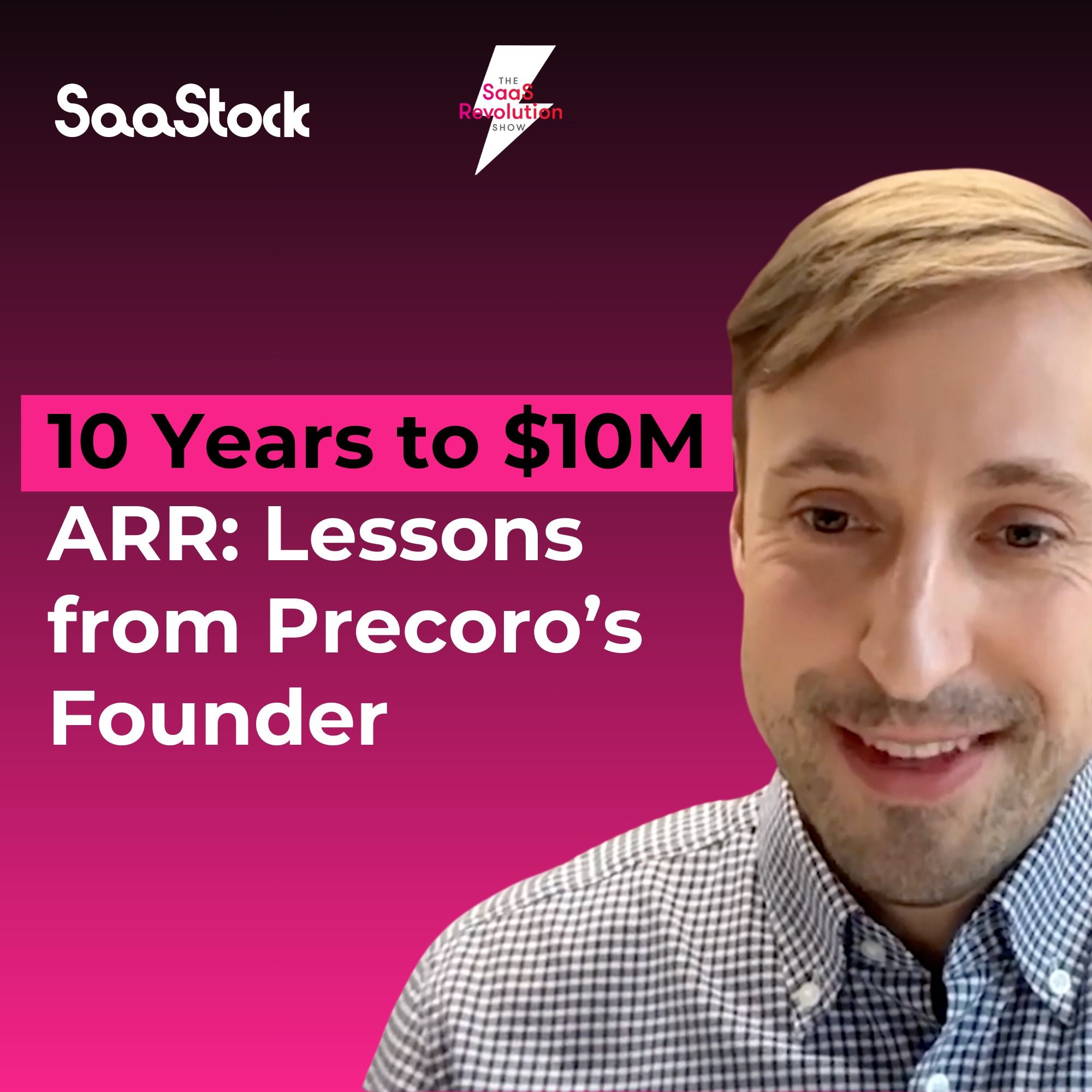
The SaaS Revolution Show
10 Years to $10M ARR: Lessons from Precoro’s Founder
00:31:28
SaaS Revolution Show with Alex Theuma and Andrew Zhyvolovych, CEO and Founder of Precoro. Together, they unpack a 10-year journey of building a B2B SaaS business to nearly $10M in ARR. Andrew shares how his early career in car sales, finance, and Groupon shaped his mindset as a founder, and how those lessons helped him build Precoro through disciplined execution, customer-funded growth, and a strong “sports team” culture. You’ll learn: - How Precoro grew from idea to nearly $10M ARR - Why revenue is the best form of market validation - How to build and motivate a high-performance team - What AI really means for B2B SaaS today - Why cold calling is making a comeback - How Andrew plans to scale to $100M ARR This episode is packed with practical insights for SaaS founders, operators, and anyone building a serious B2B business.
Loading summary
Transcript38 lines
- [00:01]
Andrew Zavolov
My deep belief is that if we have smart enough people and these people have enough motivation to work together, we can do whatever. So we don't care about one market, we don't care about economy. So if we are selling globally, we can't say that something went wrong. But we are good.
- [00:18]
Alex Diemer
Welcome to the SaaS Revolution Show, a podcast by SaaSdoc. Here we interview SaaS founders from around the world who've been there and done that as they share the ins and.
- [00:29]
Podcast Narrator
Outs of how they built their businesses.
- [00:31]
Alex Diemer
Their operations, their path to securing investment and more.
- [00:34]
Andrew Zavolov
Our mission with the podcast is to.
- [00:36]
Alex Diemer
Help you, the founder, learn how to scale your SaaS, maintain your well being.
- [00:40]
Podcast Narrator
And navigate the complexities of this ever changing industry.
- [00:43]
Alex Diemer
I'm your host Alex Diemer and together we'll explore the good, the bad and.
- [00:47]
Podcast Narrator
The ugly in the journey to SaaS success. Ready to connect directly with AI and B2B software decision makers who need solutions like yours. This April, saasdoc USA is home to hosted meetings performance based sponsorship that puts you face to face with qualified AI and B2B software founders and C suite executives who want to meet you. Buy packages of pre scheduled 15 minute conversations with buyers who've opted in to meeting you. And the best part is you you only pay for meetings that actually happen. It's event sponsorship built for results. Connect with the decision makers who matter. Secure your hosted meetings@sasdoc-usa.com hosted meetups.
- [01:46]
Alex Diemer
Welcome back to the SaaS Revolution Show. I am your host Alex Steamer, CEO and founder of SaaSdoc, also general partner of Back Future Ventures today. Delighted to be joined by Andrew Zavolov who is the CEO founder at Procoro, which is a procurement centralization and automation platform and obviously a B2B SaaS company. Andrew, good to have you on. Good to see you again. We actually saw each other last week. You were all last week in London attending an event and then we hosted a nice dinner on Thursday as well. So good to see you. How are you doing?
- [02:24]
Andrew Zavolov
Yeah, doing well. Thank you so much for invitation and I always glad to meet you or part of community and yeah glad to be here.
- [02:36]
Alex Diemer
Yeah good, good stuff. Well you're paying it forward today like sharing your story of growing to procure growing procuro to you're touching on. You're getting close to 10 million ARR. You've been running the business for 10 years so you know great achievement and where you're going to and believe obviously like bigger things still to come having you know got to know you better over, over the last year because you've been attending a few SaaS docs but I think this year we've spent a little bit more time together. But hopefully we'll get to know even more today and share that with the, with the audience and learn from, you know, how you've grown procuro to the size that it is. So like I learned, you know, before the podcast, just like doing a little bit of study about you Andrew, that one of your first jobs was selling cars, you know. So I think you were a sales manager at Volkswagen. And then I think like not long after that you then went to Groupon, which I imagine was probably an interesting journey as well. How did these two roles shape you as an entrepreneur, as a future CEO and the CEO that you are today?
- [03:53]
Andrew Zavolov
Yeah, I think this different experience helped me much also. I had one more. I worked as an equity trader in a small investment bank. So I tried these different shoes. Definitely I understood that I'm entrepreneurial and I didn't have a moment when I understood that I have to build something. I feel like I knew it all the time. But at the beginning I loved cars so much and I was so excited. So I was 18 and it was so difficult for me to get this job. So I've tried to apply in whatever companies I could. I knew so much about the cars, I wanted to sell cars and I think it's great experience. And also like waiter in restaurants, it helps you to start talking to people, not to afraid people try to build connections. And I would say that cars sales experience is so great. So you, you understand that almost all the cars are pretty the same but you have to explain and, and it's not about the car, it's more about the needs of a person and especially when you're doing it offline and especially cars. This, this is so emotional thing for people, especially for men because they want to be smart enough to choose the best car. They, they spend so much time trying to explain to themselves why this car is better than that one. So it's so great to, to understand how it works and definitely it helps me still. I would say that sales maybe is most important part for any entrepreneur. Yeah. But I feel like working in from Groupon, it was also great. It's a big public company at that time. I'm not sure for now, but maybe it's still. Yeah, so it was.
- [05:51]
Alex Diemer
You didn't do a sales role at Groupon. Right. So you went from sales and then you went to Groupon. What was the role that you did there and then you became an equity trader. So three very different journeys before becoming an entrepreneur again. Was that intentional? I want to learn different skill sets.
- [06:07]
Andrew Zavolov
Yeah. So I was looking for opportunities because I'm done with selling cars. I was the best sales manager for region and at some point of time I understood that I have to move on. And my education was finances and economics and financial markets. And that's why it was an opportunity to work for a great company at that time. And I knew nothing about equity and trading and it's just another world comparing to people selling cars. So it's so interesting, you know so much about different companies, valuations, all these things. And when you understand how how trading works. You work on Bloomberg Terminal. Yeah. So I mean and the quality of people investment bank is much, much better than when comparing to car dealerships. So it was very interesting for me. And yeah, I still keep converts and have some friends with whom I worked there. And the next one was Groupon. So it was very interesting because I knew nothing about the Internet. I'm not a tech guy, so I'm not a developer. But it was interesting for me just to understand how it works. Yeah. And occasionally after this experience with Groupon, I've started my entrepreneurial journey as the model of Groupon is similar to gift cards model like you selling certificates or vouchers with discounts. And you're doing pretty the same but without discount. It called gift cards. And I started the company locally in Eastern Europe who started selling gift cards. So we built the first marketplace, we added brands. It was a crazy interesting time because most retailers said for me that it's impossible when somebody comes to the point and give a card and receive goods. So it will never work. But we use it. It's a huge market in US which is the most developed market for gift cards. Then we understood that it doesn't. So this business is very low marginal. So you can earn up to let's say 5% from each gift card sold. But acquisition costs through the wrap is so, so big. That's it. Like acquisition cost is like 30%. So you sell more gift cards, you lose more money. Not the best business to do. But then we understood that we have to go and find B2B clients. We have to finds companies who use gift cards for boosting their sales. So there are so many different interesting cases. And all these gift card business, I would say it's the biggest part is down the water. So nobody understands how it works. I mean in general. But as you go Deeper you get insights. As you get insights, you know how to perform better and better and better and better. And I was trying to find a way how to sell more gift cards to one company. You can sell thousands or thousands or 100,000 of gift cards. So yeah, I think it was a great also experience. And yeah, at some point of time then I understood that as we were looking for more and more B2B clients with my friend, we decided to build a platform which gave ability to our clients to order whatever they need for offices on a daily basis, like water station or whatever. And as soon as they will need gift cards, they would buy gift cards from us. And as soon as they need catering, my friend's business was catering. So they would order this and we started doing this. It was also great experience. The problem was that we started locally and the market was not big enough. And I believe the solution was great, but we couldn't scale it abroad. And people. Yeah, it was a tough lesson. We did so many B2B sales. It was interesting. But the next step for me was to the idea of starting Precora was to build something and not to have any excuses for a failure. So my deep belief is that if we have smart enough people and these people have enough motivation to work together, we can do whatever. So we don't care about one market, we don't care about economy. So if we are selling globally, we can't say that something went wrong, but we are good. So. And that's how we started and that's how we go.
- [10:39]
Alex Diemer
How, how did you, how did you find? Like just on the topic of motivation then I agree, obviously it's very important. How do you get, you know, recruit people that, that are motivated in the right way, you know, for your business and keep them motivated as well, you know, what are you, what are your insights into that?
- [11:03]
Andrew Zavolov
Yeah, it's a very good question and it's a difficult one because I mean what I love about doing business is that I can help people grow. So I love seeing people grow and inside of our company and I like to find people who can grow and find a way to do it with them together. So it not always works. And yeah, I think the most important part of founder job to find the right people and to help them grow. Actually I, I feel that you have to be fair with them, you have to build connections. I believe that you have to spend time with them, you have to spend enough time to understand what are these people about, what they care about, where you should help them and if they feel that you are really open to them and trying to help them. It would work. So most of our managers works for seven, eight, nine years. We have sales people working for us for six, seven years. And I would say the, it proves that we are, I mean good people, that we are fair with them. We don't do something which will distract us or I don't know. So. And I, I love giving chances to people who are not looking great from the beginning because I feel that I'm the person who exists because it was difficult for me to, to, to find the first job. And we always feel ourselves as underdog. You know, we are never number one in this competition but we keep going and we keep winning and that's our ambition and that's why we're also trying to find. Not always, but it's always great to hire somebody who is not skilled enough but he really wants to do it and sometime it really works. Yeah, we all mistakes.
- [13:00]
Alex Diemer
Well, we all do mistakes and obviously try and learn to do fewer and fewer and that's obviously very much helpful around the growth and velocity side. But it's just interesting on the winning side of things. And so from motivation to winning and how do you build that winning culture within the company? So what is your way? Why does Procoro win over others?
- [13:30]
Andrew Zavolov
I mean from the day one we depended on money we received from the clients and we don't have this any kind of bullshit like we're great feature, whatever, great presentation we can show you. So we need money to keep going and the best feedback from the market is money. So we need our clients to pay bills and that's from day one till now. So I really care much about the motivation of each department, each person. I believe it should be very straightforward like customer success. Have quarters, they deliver, they care about churn revenue. But at the end of the day it's revenue sales revenue for sure. Product manager. So and I, I'm trying to build in this way that each employee of a company knows where are we now in terms of our goal to this quarter or so. We share almost all the numbers. We are very transparent and that's why we motivate people and we want them to grow. We don't want people come to Pecora and stay for years, but not growing. So we want them to grow and we give them opportunities. So I, I believe it helps and as soon people feel themselves as a team. I would say that my goal is to build a team like a sport team. So I want to be part of Olympic team. So it means it's not a family like some businesses saying we are family. You can't fire your father or mother or whatever people in your family. So it's impossible. But we are in a competition and we spent this time, 10 years to get to this championship. And if somebody, it's a teamwork and somebody wants to drink some beer in the morning, you can let him to do it because he will fail. And you spend 20 years training to get to this Olympic Games, you know, so that, that kind of a culture and that's why we are trying to, to give all people motivation to, to get some satisfaction from getting the quotas, getting the product down and loads and things over. I think it's, it's very important. It's not ideal. We are still in the process but I believe that motivation really core.
- [15:56]
Alex Diemer
So it's been a, a ten year journey to get to as you say, you're, you're, you're knocking on 10 million ARR. What are some of the key things that you've done to kind of unlock the growth to get to where you are as CEO of the company? When you sort of look back, what were some of the key things that key levers that you've pulled?
- [16:18]
Andrew Zavolov
Yeah, I would say this was a combination which is the most difficult one. I mean at some point of time you have to be very open minded because you want to listen to people, talk to consultants, whatever, people who knows how to build and knows how to do it. And at the other point of time you have to be very focused on what you are executing. And I've, I believe that there are so many people who can't combine two of these things because if you are open, open minded enough and you want to listen, you will have so many suggestions and, and you don't know what the decision to make to make. So I believe that entrepreneur has to do to make decisions really fast but on the other side to keep, keep it open minded and sober and like. Oh like as I talking to some investors or some other people, they are asking me they want to have a plan for next three years, whatever strategy. Especially on what's going on in the market right now in the world, political economy, economically, technology is changing. So my goal is to be healthy enough, sober and ready to keep doing it. So that's why I don't know what tomorrow would happen. But I will be ready to do it, to make a right decision in a fast way.
- [17:47]
Alex Diemer
So, so with that how far do you plan out then? Like is it Quarter by quarter, you know, 12 months ahead.
- [17:55]
Andrew Zavolov
Yeah, definitely we are planning for one year ahead and we have a product plan and so on and so forth. But I understand that we are really a small business like so I have to be in a position to be, to make a decision fastly depending on how things change. And you know, all people, all of us have so many great opportunities during their life. But at some point of time you were sleeping or not in a condition to take this opportunity. So my goal is to be ready to take the opportunity and I believe that each day could give you a great opportunity. So that's, that's my large emancy.
- [18:36]
Alex Diemer
Speaking of let's say fast change, we've definitely seen the impact of AI in B2B software. And in respect of like let's say a classic B2B SaaS company and what they need to do and think about to become AI first versus the AI native companies that seem to be growing very quickly. How are you looking at this? How are you looking at AI? What have you done so far? You know, what are the plans there?
- [19:10]
Andrew Zavolov
Yeah, first of all I would say that most of the companies using AI for marketing and we have to do it also. I believe strongly that AI is not a destination, it's a tool. But having a tool doesn't mean that you will do the job. So in our case we use AI to capture data from invoices which helps much. It's a huge improvement in how people work with it. Most of companies don't know enough about why do they pay invoices? Because accountant receive an invoice and she has to pay her not to pay. She don't order this did we receive the goods or services. So it's huge. But nobody's talking about this because it's not so, so interesting as go to market. For example, part for ea. Yeah, definitely we have a chat so our clients can get all the data from the platform about budgets and other things, expenses, all this. So so many things. I believe AI is huge, but we don't have to overestimate it. And the biggest insight I think is that as usual, so to make EI work you need capital and people so you have to invest dike, you have to build a dedicated team working on some task and then it would work. But most of us people, we are lazy enough so we want to buy something and it will do the job for us. It doesn't do this job so we are not going to use it anymore. And as we are seeing so the country which would be the most successful in AI is a country who would adopt this faster, not who developed this technology. So I mean adoption is huge and we are, I mean people are not ready to change so fast. But to win the market definitely we have to invest our time and energy and people to make it work.
- [21:11]
Alex Diemer
Are you assessing. So you mentioned obviously one of the use cases around like marketing for instance and using AI for gtm. Do you find obviously within the current company that the people that you have, you know today are willing to embrace AI and learn and learn at the right pace for that or are you having to look and think about hiring specific people with the AI mindset and skill set?
- [21:41]
Andrew Zavolov
You know, I mean we care much as I said before about money receiving from our clients. So we don't care how you do it. If you don't do it cheap or if you do it. Definitely AI helps but for some people it helps much for some. So I don't believe that it should be a goal. So let's spend time implementing AI, whatever. I think that if we have motivated and smart enough people they will do their best and I believe that they are doing it. So there is no goal for AI adoption but for stressor we don't have to say to people you have to check your emails with AI. It's so basic right now and definitely content creation. All other things go to market gets changed. So it was yesterday. Why do we have to explain people that it's important if they're working in the marketing. So I don't feel that we have to have goals on implementing. I'm still so. And I believe that especially in let's say go to markets like you know, previously to send message costed zero like a couple of years ago, five, ten years ago and creating message costed at least something because some somebody should write something now it costs zero. What does it mean? You have so much spam so people don't want to talk to AI, don't want to reply to AI. It's crazy. So these channels are not working good. I mean LinkedIn or emails or. That's why we are doing cold calling. And it works because AI can talk to people, but people want to talk to people. You don't want to read materials created by AI. So it's crazy. We have one life and we have to spend time like creating whatever amount of content which was created and costed zero. So it's crazy. That's why there are more and more opportunities and we have to see how it changed.
- [23:36]
Alex Diemer
And yeah, no, I think it's an interesting point. We obviously see, see this a lot. I think in the age of AI it's creating this abundance of maybe like an oversaturation, let's say within the email channel of a lot of emails and then the volume becomes too much for people to read. So it becomes in effect and the email quality is not as good. So for you, you mentioned like cold calling. So whilst everybody is doing this, you're doing cold calling and this is working maybe interesting to dive a little bit deeper on that. Like how big is the, like who's doing the cold calling? Have you got a specific cold calling team? Maybe you can share some insights into that and how effective it is.
- [24:21]
Andrew Zavolov
Yeah, definitely there are some ways to do it. So the easiest one to hire an agency, the next one is to hire an agency to hire SDR3. So we did in the most expensive way because we didn't want to lose time. So we hired a person who hired SDRs. They do cold call and they are in us and they call to us. I think it's important we use so much software. I would say that software sometimes costs more than people doing cold calling. So we use software to predict who will pick up the phone. We have researchers who search for accounts. So you have to do it in a smart way and it takes time and as soon as you invest enough money and enough time it starts working as usual. So yeah, I mean we are targeting mid market and I believe there is a huge opportunity. Absolutely crazy, total addressable market. So all companies have to earn money and spend money to earn money. You need some CRM to spend money, you need something. Now you have all the Google spreadsheets, emails like whatever, it's not the tool. So we need software and if we're talking about AI also it's a point that if you have a mess or you even don't have data, AI will not help you. So you need a system, track record, something and then you can add AI on top of this. And if we're talking about mid market, so definitely the market in a position when they don't have a system. That's why it's a huge opportunity for us big market. And that's why I believe we can make economy work to make our outbound sales motion efficient. But also you have to support it with brand and you have to support it with all this new true materials.
- [26:04]
Alex Diemer
What about other like other non AI channels? So cold calling is working for you. If you're selling to mid market, like are you doing a lot of in person stuff like whether it's field sales meetings or B2B events or dinners, you know, other routes to find.
- [26:22]
Andrew Zavolov
No, to be fair. So we've been doing only inbound for last 10 years. It worked pretty well for us. It's like product LED grows everybody trying to make it work and it works for us. But I would say that it's not so great as it is because it's difficult to build the best product for all industries, all verticals, all sizes. So we have almost 80 countries, we have whatever industry starting from churches, manufacturing, IT companies, private schools. So it's difficult and that's why we keep doing inbound. But we're focusing more and more on outbound. And definitely I would say that inbound is changing so fast with AI. So we have to optimize and I think it gives more leverage for buyers because previously they had to search for procurement software. We are in the first place in US in PU search. Okay, that's done. But now they're looking for procurement software for a company of X amount of people who need some kind of inventory. Also we need integration with Xero and I want to do this and that. And also we have an entity in Spain. Like they are in a much better position right now compared to where they've been like one year ago. And that's why our marketing team have to optimize for this. And if we win this stage, this, this, I don't know, something new happening in the market. So we will get benefits and we will keep growing and the goal is to keep, grow faster and yeah, so.
- [27:55]
Alex Diemer
You, you're, I, I guess kind of maybe next goal is, you know, hitting that 10 million sort of mark and you're not far off when you get to 10 million. I guess just thinking bigger, like what, what is the goal for you and for Procuro? How big do you want to make this business for?
- [28:18]
Andrew Zavolov
Sure. So I think that we are at the stage when we have to execute. It's not more about market feedback or finding a niche. I think we understand this. We worked so hard and figuring out the ICP we have to get to make a company successful. I believe we have to get to 100 million. To get to 100 million, we need five more years. So we have to grow, let's say 70% year to year. It's doable. If you look at the companies growing right now, I know companies for 200 millions and growing 50%, 60, 70%. It's totally doable. In a case if we have smart enough people motivated to do something together and as a day one and I believe that it becomes more and more interesting because we can hire better talent, we can hire more consultants, we can so many things are starting so so many new ways. We can sell our products or we can start doing brand, we can start doing pr because as you are a small company and you have a couple of millions of revenue, you don't have any way to do it. So I'm very excited about the future and it would be tough, but I really enjoy it.
- [29:37]
Alex Diemer
Good stuff. Well, Andrew, thank you so much for coming on the podcast today and sharing your insights and journey so far. I also believe you can do it as well. So yeah, looking forward to seeing your journey over the next five years and will have you back on when you're you're at 100 million ARR. So I look forward to having that conversation and unpicking that journey with you. So thank you so much Andrew for coming on the podcast.
- [30:10]
Andrew Zavolov
Yeah, thank you so much for invitation and one more time, thank you for all you're doing. So I'm sure you're doing absolutely amazing. Great job with SaaS community and events. I believe it helps so much to connect to people, to find the right service providers to to grow your product and just to talk to people who are in the same position. So it helps to understand much better where, where you are and just to get, get out of the whole frisk, get out of operations and just to think more strategically. So thank you so much for doing this. It's a great journey.
- [30:49]
Alex Diemer
Yeah, no, no, thank you and I appreciate that you're part of the sasnut community coming to our events and part of the sassnoc founder membership. So thank you so much Andrew and we'll speak soon.
- [31:01]
Andrew Zavolov
Thank you.
- [31:03]
Podcast Narrator
Thanks for listening to the SaaS Revolution Show. If you enjoyed this episode, please leave a review and follow the show. It helps more AI and B2B software founders to discover the podcast and keeps us bringing you the leaders who are shaping the future of the industry. For more resources and to join the SASDOC community, head to sasdoc.com.