← The Sage Steele Show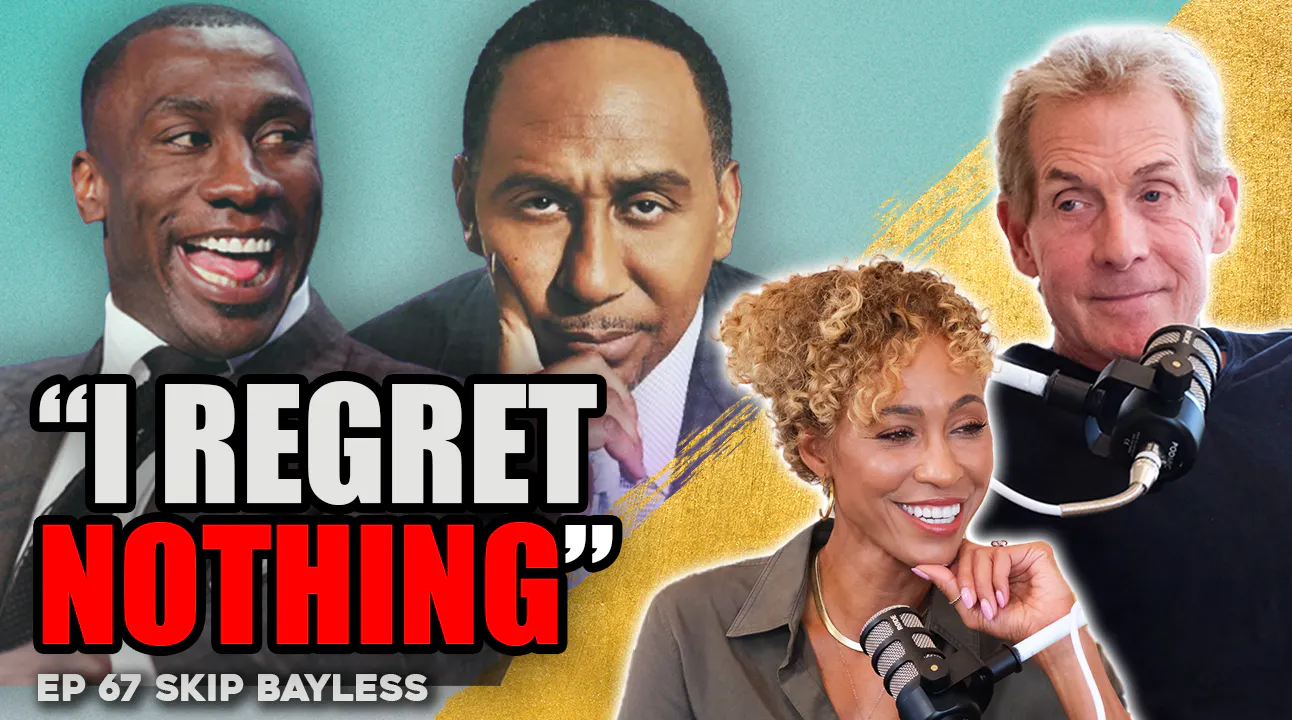
Loading summary
Transcript459 lines
- [00:00]
A
All right, I'm pulling out all the adjectives for this man, this guest on the show, one of the most brilliant, controversial, passionate, analytical, entertaining, for sure. Influential, unapologetic journalists ever on sports tv. Skip Bayless, the one and only. He's done it all. He has seen it all, and yep, he has said it all. But what you don't know about Skip just might surprise you. We've talked about a lot of it today on the show, too. I've known him for more than 18 years, back when I first started at ESPN, and let me tell you, one of the best teammates that I've ever had. He actually had my back when very few other people did. Hopefully, by now, you know what I want to do on this show? I want people to share their why and what makes them tick, their personal stories. And Skip did that and much more on this episode, starting with his traumatic upbringing to his passion for helping people, really uplifting people, even when nobody else would admit that he was doing that. Skip is one of a kind. He is awesome. He's fearless, and he's also kind at the same time. The stories he shared today on this show are proof of that. Thank you, Skip Bayless, for never, ever backing down. I hope that you at home enjoy this episode of the Sage Deal show with Skip Bayless. One of the first things I learned about Skip Bayless in 2007 when we met.
- [01:27]
B
Gosh, we're old.
- [01:28]
A
That was a long time ago. Was that you, at that point, you hadn't eaten meat in how many years?
- [01:35]
B
Red. Red meat.
- [01:36]
A
Sorry. Red meat. And forever. Right.
- [01:39]
B
Well, at that point, since 1982.
- [01:41]
A
Goodness.
- [01:43]
B
My last red meat.
- [01:45]
A
Yeah. And you still no red meat. No, no. You look exactly the same from the last time I saw you, but nine years ago.
- [01:55]
B
That's not true, but I'll take it.
- [01:57]
A
You know, I'm honest because you've always been honest with me.
- [01:59]
B
I have.
- [02:00]
A
How do you feel?
- [02:01]
B
How do I feel?
- [02:02]
A
Yeah.
- [02:04]
B
I feel the best I've ever felt. That's the truth. My energy is higher than it's ever been because I think. I think I eat better than I've ever eaten. I think I've continued to sort of clean it up and shape it because you are what you eat in the end, as you well know. And so I don't know, my. I have some issues with. I got a knee issue that I fight through. But in general, my. My workouts are exactly the same that they've been for a long time. I just don't change or miss. And so the, the routine of that I feed off of, it energizes me and on, on all my endeavors and everything I do, I, I just feel like my energy is supreme. So that makes me happy. I, I don't feel like beaten up. Over the 20 years I was on national TV getting up for the last eight at 2 o' clock in the morning out here, la time, I, I feel stronger than ever and I've been through a lot and it made me tougher and stronger and more energized than I've ever been. So can I brag?
- [03:29]
A
Thank you for asking about your age.
- [03:32]
B
You can.
- [03:33]
A
73 years.
- [03:36]
B
Young male. Thank you. I'll take that.
- [03:40]
A
This comes from that structure that you're talking about, right? And not missing workouts and staying disciplined.
- [03:46]
B
I don't miss my wife Ernestine, who's somewhere in the vicinity listening, watching this will attest. I just don't miss. Maybe to a fault, but I just don't miss cardio every day. And I do the weights three days a week religiously. And I look forward to the weights because I know you can't do them every day. You'll just tear yourself apart. But I go hard. I, I just, But I. People say, how do you do it? But, but they, they look at it like a sentence, like you have to do it. And I, I want to do it, I like to do it. I'm addicted to it. So it's not, it's not a task or drudgery or painful. Again, as Ernestine will attest. I just really like it. And I, it's my escape and it's my release and it's my sanity is my workouts, especially my weights over my cardio. Cardio is just important. It's just like the elixir of life to me. It. Just because it keeps your metabolism running like a Ferrari engine, you know, like you, you have to keep it up. It's like a morning tune up is cardio to me. And so it's, it's a little, it's a little harder. I'm, I'm happy when it's over, but. But I do it for an hour every day at 2:00am Well, I, I used to when I was at school, when you were doing right, I would do it at 2:30 every. The reason I got up at 2 was I needed. The day is coming quickly again. When I was at ESPN back in the day, your day, it was up at 5 to get ready for 10am and now here in LA, it was up at 2, which was 5 in the east to get ready for 9:30 in the East AM kickoff, so to speak. And out here it was 6:30. So if I, I can't get awake unless I do cardio. I don't, I, I don't want to look at myself in the mirror unless I do cardio. Like it's, it's, it steals me for the day. And then I, I do fight with the, the eating syndromes of if, if I know I did the cardio and I have a slightly bad day because it's a hard day or nervous day or whatever it is, and I don't eat. Exactly right. I defeated it already with the cardio. Right. So there's a little bit of exercise bulimia that I fight with, sort of that idea. But I have to do it every day before I do anything professionally. I need to do that because I wouldn't respect myself if I didn't.
- [06:46]
A
Wow. Where does that come from?
- [06:49]
B
I don't know. It's just the way, the way I'm made, you know, just. It's classic overachiever. I feel like. I think it comes from my home situation, where I came from, what I was dropped into with. On a mom who did not want children and had three for her mother's sake, and a father who definitely didn't want children, especially me, because my mom doted on me a little more than him, and she was the apple of his eye. My mom was pretty and flirty and dynamic, charismatic, took over every room. And so my father wanted all of her affection because he definitely had married up. But they both had alcohol issues one before the other. My father had them from the start, and then my mother fell into that trap a little later, and I was the oldest. So you have to figure out quickly how to survive this because you can't trust either one of them. And by the way, neither of them, I don't think, graduated from high school, so. So there's no pressure to, to achieve or succeed except to survive. So all the overachievement came from, wait a minute, where am I? And what did I get dropped into? And from day one, I, I realized that, that I had to overachieve to get out. And then that was my mindset all through grade school, middle school, high school, and then I was blessed enough to win a full scholarship to Vanderbilt, which freed me. So it was like my ability, that was my ticket out, out of the.
- [09:01]
A
Family situation in Oklahoma.
- [09:04]
B
Oklahoma City.
- [09:05]
A
Oklahoma City, Completely different. But I remember talking to you about this probably on the road during NBA Finals or something when we would try to escape a little bit. But what age do you really first remember thinking that you were on your own at 4?
- [09:27]
B
And you'll laugh again. My wife will attest to this. I have what's called biographical memory where I can remember what I got for Christmas when I was three for sure, but definitely when I was four. And the first thing that happened that these happen in reverse order. But. But when I was four, two events happened that really shocked me and opened my eyes that. Let's go to New Year's eve of my four year old year. We lived in a little two bedroom, one bathroom house on 43rd street in Oklahoma City. And on New Year's Eve my parents got drunk. Drunk with their friends. So they invited over to our house on that New Year's Eve three other couples and my father, who was always jealous of my mother's doting on me because I think I was a cute kid. And so she tried to show me off. And do you know what Tom Thumb weddings are? Do you know? Does anybody know? Do you know what, you know what they are? She knows what they are, right?
- [10:32]
A
It's a Tom Thumb wedding, okay?
- [10:34]
B
It's, it's where parents stage a wedding of little kids. That's. You can look it up. I don't know what it is, but I was four years old. But this is when I was three years old where I was forced to beat the groom in the wedding and they actually staged a wedding with little kids. It's pretty sick. But I didn't know better so I participated. I still have a picture of me in the Tom Thumb wedding dressed up in a tuxedo where I'm the groom. I'm getting married to some little three year old girl.
- [11:07]
A
What.
- [11:08]
B
Whom I didn't know. So that's the, that's my mom trying to show me off. Oh, my kid's so cute. He can be the groom in a Tom Thumb wedding. And I have no idea where this came. This is Oklahoma city in the 1950s. But on New Year's Eve of the next year, I asked if I could stay up for 12 o' clock because I want to see what happened. Like it's going to be some magical event. And they said, yeah, sure. And so I'm just hanging out with these drunk people. And my father gets the idea that how about use me as a little bit of a party trick. And he invited me in front of everybody to take a sip of his very adult beverage. He was a vodka guy. I have no idea what this was, but it was probably vodka and coke. If I know him. It probably wasn't vodka because it was bitter. So it's probably bourbon because to me, from what I remember of his, vodka is kind of tasteless. I don't know anything about alcohol because I never drank, but they did. And I took one big sip of whatever it was, and predictably, I ran to the kitchen to spit it out because it's. It's like the foulest taste I'd ever had in my mouth, including any medicine. I don't think I had castor oil, but that's sort of a cliche for what. Yeah, would be the. The worst taste you could put in your mouth. Whatever. Bad medicine. That's what it tasted like to me. And ironically, that's the only favor my father ever did for me because it immediately taught me, this stuff is awful. Why would you drink this? Because how could they like putting that in their mouths? So I never had a taste for alcohol after that day. And of course, everybody broke up because they were all drunk and laughed at me, which pleased my father to show me up in front of my mother. And then I'll go back a few days to that Christmas, my father, because I'd asked for a bicycle for Christmas, because you can start in that range, four if you have a little one. You can figure it out. It probably needs training wheels. But he got me a girl's bike. And I knew what a girl's bike was because I saw him in the neighborhood. And when I saw it under the tree from Santa Claus, I was like, why would you get me a girl's bike? Because it's embarrassing, because I'm a boy. And I was an athletic little boy who prided himself on his prowess as a baseball player. Whatever. I was in the neighborhood, and so with the girl's bike, I was embarrassed to ride it. And I asked my mom, why did he give me a girl's bike? And she said, again, I knew it was from them, even though it was supposed to be from you know who. But she said, I don't know. I'm going to ask him. So in front of me, she said, why did you do this? And he said, it's my father, because if. If he slips off the seat, he'll crush his. And I didn't know quite yet what goals were, but I kind of figured it out. Oh, yeah. And I knew they were tender, but that was his rationale for getting me a girl's bike. That. That I thought was pretty crazy, because I Didn't have any plans to slip off the seat, right? Yes, because it's of kind. Kind of a big seat that curves up and you don't usually do that. I guess you could, but. But the boys bike had a bar.
- [14:53]
A
Oh, yeah.
- [14:54]
B
Across. Right. And so when I was five, I still had that bike, which I rarely rode, but I. I needed to ride it to school because it was a few blocks to school. And so I would go to school and tell people it was my big sister's bike because they didn't know any better. They didn't know I didn't have a big sister because I was the oldest. But those are the kind of things that happened early where I'd say these people are pretty crazy. And so a lot of nights, a lot of Friday and Saturday nights, all through my childhood, I would spend the night elsewhere. I would go to friends places, and not once in my life did I ever invite a friend to my house, because I wouldn't have done that.
- [15:37]
A
You're embarrassed?
- [15:38]
B
Well, I just. It's just too threatening. It's just too volatile. It's too. My. My father was just a bad guy. Just a bad guy who tried at every turn to sort of derail me or undercut me. And I'm. I'm thankful for it because it made me every bit of, you know, who I am. So that's what drives when you say, why do you still get up and do cardio? I'm still trying to show that. That I can survive all of that. And to survive in this world, I need to be fit. Like supremely fit. And I continue to be. Thank you, God.
- [16:26]
A
Did you ever talk about any of this with your dad?
- [16:28]
B
All right.
- [16:29]
A
If you've ever wondered how scammers get your phone number or why your inbox is flying, flooded with spam, I can tell you why. And frankly, it's not good news, but it's definitely something you need to hear. It's also the reason why I am thrilled that ARA is the sponsor of today's show. Here is the deal. There are companies called data brokers that sell your data, and they do it without your consent. And they make billions of dollars selling your data to marketers, scammers, and even stalkers. And while they're legally required to remove your info if you ask the. They make the process so confusing and they make it hard on purpose. So Aura takes care of the hard part for you. Automatically removing your info from these sites, and they keep it off. It's kind of important, right? ARA is all in one digital security. Maybe you already have a digital security tool but Aura is different. And if you don't have it, it's kind of like locking the front door but leaving the back door open. So Aura will alert you. Number one, alert you if your personal info is found on the dark web. That's number one. They also number two give you real time fraud alerts for credit and banking. Number three. Aura is committed to 247 monitoring to help keep your identity secure. Support teams based in the US and they're available around the clock if God forbid something does go wrong. All of us need insurance, right? Aura includes $5 million in identity theft insurance protection. That's a big deal. So one app, every layer of protection. Something I need for myself. I, I use it and my three college age kids too because I need them to be protected as well. So why not try Aura for free for 14 days. Aura.com sagesteel that's two weeks. Enough time for Aura to start scrubbing your personal info off these data broker sites without you lifting a finger. I'm not leaving myself vulnerable and neither should you. Aura.com sagesteal try for 14 days free a u r a.com sage stage deal.
- [18:25]
B
No, I, I know I rarely spoke to him at all. He was verbally abusive and for a while physically abusive. I did have a brother two years younger and a sister seven years younger. And if I ever dared to, when I was 5, 6, 7, bullying my little brother, he took that as an opening to jump in and bully me. And he would, I guess the irony was he always hit me. He would slap me open handed but with his wedding ring, perfect. You know, like Freudian. He would slap me and leave welts on my face from where the ring was. I didn't mind the slap, but I minded the bruise of the wedding ring. Right on his right hand. Is it? Yeah, right hand or wait, do you wear your left? But, but he had, he had another big ring on his right hand. But, but he would slap me and leave a welt and probably when I was 10ish. I just finally told him because I was starting to grow. I was, I was big for my age. I grew fast. And finally I told him no more of that, you know, if you do it again, I'm going to swing back. And he stopped because he was a little afraid of me. But we did have one last battle when I was 16, he did force me. He ran this, he owned and operated this little hole in the wall barbecue place on the south side of Oklahoma City. It's the rough side. Every summer, every holiday, both Christmas break and spring break, my brother and I were forced to work at the Hickory House. And I had no aptitude for it, nor any ambition or initiative to do it. And he just said, that's, this is what it's going to be. And again, that's a blessing because it did teach me hard work. I did a lot of hard work. Like my biggest duties were, especially through the lunch rush to clean off tables. I did that for years. And you got to clean fast because you want to turn it over so more people can get through at lunch. And then my other big duty was to sweep out what they called the bullpen, which is where all the trash cans were. And it was just disgusting because it's, it's a lot of throwing away food and the flies are thick and it's, it's nauseating. But I cleaned it twice a day every day for a lot of years. So I was still going out there when I was 16, in the summer I was working, he would pay me what, whatever the going rate was. And I, I did pretty well. And I never asked him for a dollar. Like I, I always had my own spending money because I earned my own spending money. We were at this place called the Hickory House and they catered an occasional party in a big truck. I don't know if I can explain what it was. It was a walk in truck. We were loading it with cookers of ribs because that was the staple, obviously ribs, and they were steaming hot cookers with two plastic handles on the end. But if you touch the silver, the whatever it was stainless steel, right? It would definitely burn your hand because they were on fire. So I was standing up in the truck and he and another guy who worked there, who was his right hand man, were handing up these cookers of ribs for me to, to put in a row in the back of this walk in truck. And the first one he threw, he threw it up like he, he literally heaved it to me so I had to try to catch it in midair, the plastic handles. And I missed a little bit on the right one and it burned me and I dropped it, of course. And I told him, don't do that again. But the ribs stayed in the cooker and I was able to get the lid back on. And he shook his head and threw me another one and I caught this one on both handles and sat it down and I said, that's enough. And he said, well, what are you going to do about it? And I said, well, I'll show you. And I came down and. And he was pretty drunk, but he was. He lived drunk. He. He was one of those functional alcoholics who would drink from the time he woke up. He would have vodka and orange juice from the till the time he drove home with vodka and Coke. But he was always just sort of a little off.
- [23:11]
A
Yeah.
- [23:11]
B
A little out of it. And he got in a fighting stance, like. Like, we're gonna fight. And I'm like, okay, let's go. And he comes at me and throws a big, wild roundhouse, which it was easy to duck. And I hit him one time and just dropped him with one shot to the jaw. Just dropped him. And there was some. There was like a. A container of potato salad that was going to go in the truck. And it had Saran Wrap over the top, but his head went back. Oh, my. Splattered in the potato salad.
- [23:50]
A
Yummy. That's great. Yes. And so that's a turning point.
- [23:55]
B
That was the end of us.
- [23:56]
A
Really.
- [23:56]
B
Yeah. And he said, go home to your mother. That's what he told me. Go home to your mother. He told me, you know, all along sports were useless and a waste of your time. And so I'm not. I don't ever think about it. I'm not bitter about it. I. I think it was all meant to be. It was a God thing that. That's the way I needed to get raised, to do what I do and what I've done. Because all that drives me when you ask about my fitness or whatever, it's all from that. It's from my upbringing.
- [24:29]
A
But so interesting that the career that you have, I mean, you helped change this industry.
- [24:36]
B
I appreciate that.
- [24:37]
A
It's a fact.
- [24:38]
B
Yeah.
- [24:39]
A
And in incredible ways, and helping so many people along the way. So the useless sports.
- [24:47]
B
I know. Yeah. It's. It's funny, in the mornings, I would always get up before he got up in. Back to my sort of junior high, high school days, and I was a sports nut. And of course, going to devour the sports section back in the newspaper days every morning. So I would be the first to go retrieve the newspaper from the porch in rain, sleet, or snow, and I would bring it into the living room. And because he always came in after me and sat in the chair, I would always take the sports section and dump the rest of the paper on the chair for him to peruse. Never said good morning. He would just come in and take the paper and sit down and start to thumb through the main sections. And I would take the sports on my knees, on the floor and spread it out and just absorb numbers and stats. And. And in. In some ways, I'm. I'm showing, you know, I'm. I'm doing this. And I got really good at it. Not. Not like a statistic, just. Just a knowledgeable way of. To where. And I always had, like, a flash, like a photographic sort of memory where, if you. This helps when you're doing live debate, where I could just look over my notes and they just go in my head. And they might not be in my head by tonight, but for right now, they're in my head. And. And then I had a coach in junior high school who loved me. And. And we would play golf in the summer occasionally, and. And he would come pick me up and get pancakes or something on the way to the golf course, and he would take the sports section that I had already memorized and asked me questions out of it. He would just be astounded. Like, he'd asked me. I was a big St. Louis Cardinals baseball fan, so he'd ask me the box score. Like, what did Lou Brock do last night? He was two for four, two stolen bases. I. I just. Because I would drink it in. So this all set me up and made me better for what was about to be, which was debate. And I. I didn't choose it. It kind of chose me. But. But I was always passionate about sports and about what was really going on in sports, and I was always psycho competitive in whatever I did. And so that translated from real sports, playing sports. Still do it. Playing golf, like I'm crazy psycho competitive to a fault. But. But I. I took it into television by accident because I just wanted to argue. And. And if you're wrong, I'm going to tell you you're wrong, and I'm going to explain to you why you're wrong on every single level. And if you want to try to defend yourself, I'm happy to listen.
- [27:51]
A
No, you're a great listener.
- [27:53]
B
Yeah.
- [27:53]
A
You always listen to us.
- [27:54]
B
I will listen.
- [27:55]
A
And then you will. Methodically, one by one, point by point. Yes.
- [28:01]
B
Yeah. So. And I can do it either way you want to do it with Stephen A. For all those years, he always wanted me to go first because he hadn't really thought that hard about it. So he needed to hear me set the table. Boom, boom, boom, so that he could sit back and stroke his chin and think, wait a second, and he would pick my E or F point of my opening salvo, something that didn't matter that much. And say, did you just say that? So and so is so and so. And I'd say, yeah, you want to make something of it, right?
- [28:41]
A
Lean forward in your chair.
- [28:42]
B
And he would say, yeah. And of course, in the control room, they're like, what's happening? That's not the question. That's not the topic for today. And we go way over here because Stephen A. Was sly enough, savvy enough to say, I think I could go play over there. I think I could hold my own over there.
- [29:03]
A
I can't do it here, but I.
- [29:04]
B
Can'T do it with his main point. So he took my fourth or fifth point and turned the topic on its head to go here. And. And then good. Maybe even great TV might happen, because he has the greatest gift of gab in the history of gab, and he can just wing it, and it's just going to be fun, funny, entertaining, crazy, and maybe wrong, but. But I'm fighting back and he's making me laugh for all the wrong reasons. You know, like, this is crazy. What are you talking about? So that was Stephen A. But then if you want to do it the other way with Shannon Sharp, he always, always needed to go first because he wanted to get all of his stuff out there and then heave a sigh and sort of sit back and wait for the blowback. Right? And. And then maybe, maybe he would reorder my points where I would have to attack what was going to be my third point first and do it a little backwards to go back at him. But however you want to argue, I can argue. You can go first or you can go second.
- [30:17]
A
Which did you end up liking more?
- [30:21]
B
I don't have a preference. I don't.
- [30:24]
A
I liked it. Can I tell you what I liked as a viewer and sitting there in studio watching for all those years on first take, for hours, hours and hours, every day, I liked someone else going first. And there were a lot of guests that would rotate it on and off. That's.
- [30:40]
B
They would always go first. The guests would always.
- [30:42]
A
There you go. Ladies first, Guests first. And you already knew exactly your points.
- [30:47]
B
Of course, I would usually just give it a roll of the eyes, like, yes, you did.
- [30:51]
A
Your. The drama factor was there. But you. Along with knowing what you were going to say, you also would scribble down something that they said, and I would flip that over, tell them why they're wrong, and then go with your points. Like, I don't think it's anything you can teach, like what you did and do, especially those years with those Two co hosts in particular. It's not something you can teach. You could maybe become a better listener. And you saw the growth of Shannon.
- [31:28]
B
I did.
- [31:29]
A
Big time. You saw the growth of Stephen A. I did.
- [31:33]
B
Because in the beginning, Stephen A. Was just a basketball guy. And as you well know, you have to do football. You have to do the National Football League and some college football. And he got more and more into it, but it took him a while. And so I have to play a little slowly in the very beginning until he figures out what his fortes are, such as he hates the Dallas Cowboys because I love them. And then we can definitely go play over there for most of the show if we have to. And yeah, it took a while. It takes reps, but you can't teach chemistry. You just can't. And I was so blessed have Stephen A. And Shannon. I was. You cannot imagine. Because it's hard to find that chemistry and that connection across the table on live tv. It's. It's. You know this because you sat in between it occasionally and you were. You're watching it from a distance, but also you could see it in operation up close, where, yeah, I prepped hard. Shannon prepped hard. Stephen A, not so much, but he prep got in the way for him. And when Jamie Horowitz took over the show and we brought in Stephen A. Full time, that they would try to prep him. You know, like, think about this. You need some ammunition. Fight back with. With a couple of numbers. You don't need to stat him to death, because that's boring. But occasionally there's one killer stat that. That I would usually have that he needed to figure out how to counter with. With. With. What's the. What's the flip of that stat? What's. What's the. What do you need to defeat it? And. And so they were trying to teach Stephen A. To fight fire with fire more than. Than he would, but he just fought fire with gift of gab. And he's. It's just.
- [33:33]
A
And volume.
- [33:34]
B
Blessing and volume. But he's good. He. He can just talk and talk. And sometimes, yeah, if in the few times that he would go first, it was hard on him because you would just watch his brain working on live tv, where he's just rambling for a while, and then you can see the eureka of oh, wait, wait, I got my point. Now I got a point. And boom, boom. And I'm like, thank you. You finally got there. Now we can go, right? And yet I prepped hard, but I wasn't an actor. So as God is my witness, I couldn't stand to watch myself back. I never watch. I don't know if you. In your early anchor days, I never watched it because I feared if I watched it back, that I think, you know, I should have rolled my eyes more there or I should have raised my voice more. And now you're acting. You're actually. It's like you're trying to script it out. And the beauty of it was it was utterly unscripted. And sometimes we ran the show off the rails, obviously, because you do have to take these breaks. But more with Stephen A. Than Shannon, It. It might go someplace that. That I certainly couldn't predict, but I was prepared to go anywhere he wants to go. And I would tell him, just. Just let it fly, man. I'll be with you. And the beauty of those two partnerships is you. You have to trust each other beyond what you might even think, because you can't push each other over the cliff. And as I always said about. From the early days of first take, no punches pulled, but none thrown. You can't get to the point where you get mad and want to throw punches. Sometimes Shannon and I would get mad at each other. Other. Sometimes Stephen A. And I would get mad, and I'd say, boy, you woke up on the wrong side of bed today. Because he would just. But. But his problem was in the early days of Twitter, and I don't know if he still does it, but. But he would just. In the breaks, he would just read his phone. I. I don't know. Yeah, just. He just read the responses. And if he read one response that said, you just got your ass kicked, you know, like on live national tv, then we. We come out of break and go into the next one, and he would be in this surly, foul mood. I'd say, what are you doing? I. It's not that big a deal. It's okay. Let it go. It's okay. I mean, I would say that to him on the air because it would be clear it was obvious somebody had pushed his button. And it's always just one guy on Twitter. And I know I was a victim in the first year of Twitter. I would read my mentions, ads, whatever.
- [36:15]
A
Yeah.
- [36:16]
B
I don't know how you felt about it, but.
- [36:18]
A
Well, I was shocked that they actually at ESPN told us to get onto Twitter well early.
- [36:24]
B
They did.
- [36:24]
A
At the beginning, they're like, get on this. It'll get. Get it out there.
- [36:27]
B
And in 2009, when it first started, we. We had a. I don't know if. Where Were you in 2009?
- [36:34]
A
Still doing.
- [36:34]
B
Still in the middle. But one day we had a first take meeting in which we were all instructed, you have to do this. Yeah, go.
- [36:43]
A
We all were on SportsCenter, too.
- [36:45]
B
And you have to read your responses. And. And it can be instructive because I. In the. I would get up in the mornings in 2009 and read the overnight responses just to see what was hot, because they would lean on me to sort of program the debates and pick the hottest topics and was revealing to me. But there would always be that one comment about, your hair looked awful yesterday. Do you have any plans to get it cut anytime soon or whatever, you know.
- [37:20]
A
Oh, no. It can be brutal.
- [37:22]
B
Well, it's just. And you can't. For the rest of the day, you're thinking about your hair.
- [37:26]
A
Right.
- [37:27]
B
And I don't even know who this person was. You're thinking about your hair because some guy in his mother's basement in.
- [37:33]
A
Exactly.
- [37:34]
B
Iowa City, Iowa. I don't have any.
- [37:37]
A
But you're not.
- [37:38]
B
Yeah.
- [37:38]
A
You don't even follow anybody.
- [37:40]
B
I don't.
- [37:41]
A
And so you don't respond to anybody because you don't follow anybody. So you never go in.
- [37:46]
B
Even now, 2009, I quit looking at anything. I. I didn't look at one thing ever. And then I like to say I'm. I like to consider myself a leader, not a follower. So I want to set the tone. I want to set. Set the agenda in sports. And I don't. I don't need to be watching my timeline of. Oh, oh, wait, Stephen a already tweeted this. And then Shannon tweeted this and Mike Golick tweeted this and Mike Greenberg tweeted this. And now I'm thinking, huh, that's interesting. And then you find yourself thinking about their ideas and maybe borrowing a piece of it.
- [38:31]
A
Yes.
- [38:32]
B
I don't need that.
- [38:32]
A
You don't need it. Exactly.
- [38:34]
B
I am an authentic thinker. And you can call me crazy or nutty or warped or whatever you want to call me, but it's. It's truly authentic, as my wife will attest. I sit mostly by myself. She won't watch games with me because I go too crazy, especially cowboy or any sort of big basketball games. I just go crazy. But. But she watches my mind work. And I'm just constantly thinking, what is really happening here? Because I'm going to come. Not with a shock jock take just for the sake of shock. I'm going to come with what actually happened last night in that game or what so and so actually meant by what he just said after that game, I'm going to tell you the truth of what's happening. And if I may, most people don't think that way. And they're going to be a little more predictable.
- [39:32]
A
Oh, yeah.
- [39:33]
B
In their responses to what they saw. And I've just.
- [39:41]
A
Do, you know, it's the question that I'm asked the most about you for all those years. And then years later, after you were gone, you've been gone for me, espn, for nine years, I've been gone for two.
- [39:51]
B
Yeah.
- [39:52]
A
And everyone would say there's no way. Skip means everything.
- [39:57]
B
He says he doesn't believe it.
- [39:58]
A
There's no way he believes that. And I look at them and I say, yes, he does.
- [40:03]
B
Yes, he does. 100%, 1,000%, every single.
- [40:07]
A
And he will tell you why. Back it up with facts and numbers. And you can hate it, but he means they're like, there's no way. I'm like, you don't know him.
- [40:16]
B
He.
- [40:17]
A
He means every single thing that comes out of his mouth. And you're not doing it to stir the pot. You honestly believe it. Obviously, when you're formulating those and you're watching the games and you're thinking ahead about the next day's show, you know it's gonna push some buttons, especially based on who's across the set from you, potentially. But it is genuine.
- [40:36]
B
No, it's a genuine thought.
- [40:38]
A
Yes.
- [40:41]
B
It's a heart and soul thought. And at night, occasionally, I would have a trepidation of God, I don't know if I can say that. Or maybe like with LeBron, like, have I beaten on him too much? And then I would think, no, I haven't, I haven't. It's just the truth. And if it's the glaring truth and it's right before you, nobody else has the guts to say that. I'm going to go say that, even though I'm going to take lots of abuse. And I don't mind the abuse. I definitely don't mind it on social media, but I don't mind the abuse across the table. I relish that. I. I enjoy those confrontations. As long as we don't want to fight in the hall after the show. Right.
- [41:24]
A
When did you. When have you come closest to fight? Fighting?
- [41:30]
B
Probably with Shannon Sharp. And I would have lasted about four seconds. Right. With a fight, really? Fight fought. No, I mean, that's absurd. But I don't know. We get mad at each other, but. But remember the dynamic is different because Stephen A. And I are both journalists. He was a pretty good high school basketball. I was a basketball player. I was a pretty good high school baseball player. But that none of that matters anymore because Stephen A. Is a smart man, and he, especially on basketball, he really gets it. And. And so we can have some deep but fun conversations flying back and forth across the table. And he would get. He would get miffed at me, and he would complain, like, almost on a nightly basis about. Can you believe. And he called Jamie Horowitz, our producer. Can you believe what he said to me today about so and so? Oh, come on. It's okay. It'll be okay tomorrow. And there are many nights, not many, but some nights I had to call him and say, it's just okay. I didn't take it home with me. You shouldn't have taken it home with you. We're gonna be just fine tomorrow. Trust me. I got your back. I love you and I trust you. But he needed to hear that occasionally to be reminded it's okay. Like Stephen, I knew. I think Shannon knew. My heart is good. My heart is good. And I'm not a cutthroat. I'm not evil. I'm not looking to cut your legs out from under you on live national tv. I'm going to beat you, but I'm not going to shame you. And. And I'm not going to try to humiliate you personally in any way, shape or form on live national TV, because you are my partner. We are 50, 50 partners in this. And the only way it's going to last for any amount of time is if we trust that that's the bond across the table. And I think the audience wants to know that. Yeah, you get into it, but you love each other. That's the operative word, is love. And I, to this day, I love both those guys with all my heart.
- [43:45]
A
And do you feel they love you equally?
- [43:49]
B
I believe they do. No, I do. Deep down, I think they do. I don't know. They'd have to speak for themselves, but I think I wore both of them out. I did. And like I always say, I wouldn't want to debate me every day because it would wear on me. It would just. It would.
- [44:06]
A
But they both know. I know they know because they have said it in different ways, how much you taught them and their careers would.
- [44:14]
B
I showed them. I didn't teach them. I just showed them. You know, I just showed them how you do it, how you get ready for this and how you keep your poise under fire and how you don't overreact and how you come every single day and you bring it. You bring it with. With everything you've got, every minute of every show. That's what I showed them. And by example, maybe taught them how to prepare.
- [44:42]
A
Yes.
- [44:43]
B
How to watch every game that's ever played. It feels like.
- [44:47]
A
Oh, yeah. Let me. Let me share a story.
- [44:50]
B
Okay.
- [44:51]
A
One time in probably 2010 or 11, I invited you over to my home for dinner. I don't know if Ernestine was in town, but I just fell in love with you based on how caring you were about everyone on the staff. And I was this young, scared rookie when we first met in 2007.
- [45:16]
B
You seem scared.
- [45:16]
A
It was such an intimidating place to come into. And 2007 is very different now, of course, but I remember just. We connected in a different way. Where you saw my professionalism and what I was trying to do to prove myself. Whatever.
- [45:32]
B
I liked you right from the start. You were kind. We were cut from sort of the same.
- [45:38]
A
I think so kind of old school in many ways.
- [45:40]
B
Your parents a lot.
- [45:41]
A
Yes. And my parents love you and said, please. My mother especially. Please tell us goodbye. They met you in person at espn. The weekend at Disney World, I think was the first time.
- [45:49]
B
At the swimming pool.
- [45:50]
A
Don't forget it. Skipping a speedo. Guys.
- [45:55]
B
Who knew?
- [45:57]
A
But they. But I was going to say I invited you over to the home, to the house for dinner.
- [46:04]
B
You did.
- [46:04]
A
And you had thought about it, and you called and you said, sage, I am so sorry. I'm gonna have to cancel. The women's college softball regional is on, and I have got to watch this game because.
- [46:20]
B
And I said, okay, remember, I'm from Oklahoma.
- [46:23]
A
I don't care where you're from.
- [46:26]
B
Like the dynasty of dynasties. And I have to watch this.
- [46:30]
A
He promised after months of trying to come over for dinner, the kids were excited. And he calls and he says, I gotta watch regional softball. And I said, well, at least he was honest.
- [46:42]
B
I was.
- [46:43]
A
He could have. And then. So that's a story that I crack up when I tell people because it backs up what you say.
- [46:50]
B
I don't think it was regional. It had to be the college world.
- [46:52]
A
No, it wasn't even. It was like, first round. Exactly. I'm sure it was more important. But the point is. What? You watched every single game for every single sport. You could talk curling and be like, this guy's a nut job, 100%. But it proved your passion for sport.
- [47:13]
B
It's a form of competition that Involves human error because we're all flawed and, and we all choke under pressure occasionally. I'm all eyes. I'm. I'm there because that's debatable why that happened. Why did so and so fail when the pressure rose to the highest level? And you know, my, my wife always says she uses that as an example of. Would you believe he even watches women's college softball like a fanatic. I do. I know I did this year.
- [47:47]
A
But what that did is it actually elevated the sport because then you would bring it to the table, the debate table, and it would force your teammate to pay attention to women's softball as well, or women's basketball.
- [48:00]
B
I think I give people interest in women's college softball because I'm not like campaigning for it like the PR person for it. But right away, back in 2007. Ish. Actually, when we first started Cold Pizza in 2005, I started watching it and I would push to do topics. There was a pitcher for UCLA named Jelly Seldon, a black girl who, who was really good, but she couldn't throw overhand to first base. She could. She was a great underhand, fast pitch pitcher, but she had a hard time throwing overhand to first base. And we did a whole topic about the dynamics with Woody Page back in the day.
- [48:40]
A
Oh, my goodness.
- [48:41]
B
And I got him to watch it and he started to like it. Because the skill level is supreme in women's college softball because it's a tiny diamond and it's happening so fast where the slap hitters can just slap it to third base and beat. Beat your throw to first if they're left handed because they're out of the. That left hand batter's box and they, they can just fly to first and you have to come up cleanly with their little slap ground ball and throw it perfectly and hard before you see what I'm saying.
- [49:12]
A
Do you see what I'm saying? We're getting into a women's break.
- [49:16]
B
It's fascinating.
- [49:17]
A
It is.
- [49:17]
B
I'm sorry.
- [49:18]
A
No, don't be sorry. It's one of my favorite stories. Because I said, you can call him what you want. Don't try to start an argument with him about really anything, because, I mean, you can. But just know that Skip will always come with a point and say, okay, I respect why you think that's true. Now let me tell you why it's not. It was a. It was a beautiful thing to watch.
- [49:43]
B
And then it would segue into all the analysts who came through first.
- [49:49]
A
Well, then they wanted to shot at you.
- [49:50]
B
They did because they played and we didn't play.
- [49:53]
A
Correct.
- [49:53]
B
Okay. So that's all I heard for all those years was you don't know because you didn't play. And then I started to ask them, like today, Howie Roseman in Philadelphia is the GM of the Philadelphia, the world champion Philadelphia Eagles. He didn't even play high school football and he is by far the best general manager in pro football today, creating these teams. Two years ago he, he set up, he won the super bowl in the off season because he won the draft and he won free agency back to back. It's hard to do, but he drafted the best two corners in the draft.
- [50:30]
A
Yes.
- [50:31]
B
And both of them changed the way the Eagles played defense last year. And those were two of the biggest reasons they broke. They're not to mention Saquon that he obviously signed as a free agent and won the super. So, so these, these were happening back in those days. I was a big spurs fan and RC Buford, who was a walk on college football player, became the best GM in the NBA. And arguably, if you look at his body of work, he's the greatest GM in the history of the league.
- [50:59]
A
Still there, still in San Antonio dynasty.
- [51:01]
B
He's still. Still in a consultant type role upstairs position, but, but still, when you look at the acquisitions of Ginobili and Tony Parker and Kawhi, they're astounding how he beat the league at its own game. So yeah, I would tell them across the table, well, how does R.C. buford know anything about how to build an NBA team when he didn't even play high school basketball?
- [51:27]
A
Didn't play.
- [51:28]
B
He didn't play. Yeah, well, he gets it. He sees it and so do I. Thank you. God, I have a good head for this. I have a good eye for who can play and who can't. And I'll put myself out on the end of the limb before a draft or a season about he can play and then have to back it up and live with it.
- [51:49]
A
I always made the same kind of comparison with like Bob Costas, who might be five, seven, I don't know. Pretty sure he didn't play much basketball.
- [52:00]
B
I don't think he played much of.
- [52:01]
A
Any maybe past junior high school. I don't know if that. Or in the NFL. So to say that because you didn't, therefore you don't know that was. And that's what the beauty of watching you was, is to break them down.
- [52:15]
B
He didn't try to debate sports with former player analysts.
- [52:20]
A
No, sure. But when people come with that argument that, well, you never played. You were never there. I need to. I need to ask you about. About. I'm not sure if this memory is accurate. It has to do with race and why every time someone said, oh, he's a racist, he's this or that again, I was. I was Skip Bayless, biggest fan and always defending, because I'm like, no, no, no. I know the human. I know the person, period. Does it bother you when people throw that word out there, that accusation of being racist, or, you know, you only crush the LeBrons of the world. And it. I mean, people will say anything, of course.
- [53:04]
B
See Aaron Rodgers, I've crushed him more than I've crushed LeBron, so. And the last time I checked, he's white. But we could go on and on with all the white victims of or targets of my abuse on. On.
- [53:19]
A
There's a good long list.
- [53:22]
B
One other note about my upbringing was that because my home life was such a wreck, and I think I told you this.
- [53:33]
A
This is what I.
- [53:34]
B
Okay. So as the oldest, I would often get left at my grandmother's house because my parents both worked that little hole in the wall restaurant. And my mother was off doing God knows what, but she would sort of conveniently just dump me at my grandmother's. A house that was run by a woman named Katie Bell Henderson, a black woman from Chicago, by way early on. She was born in Birmingham, Alabama, but she grew up in Chicago, so South side of Chicago, and then came to Oklahoma City to get away from that cold of weather. Oklahoma City can get cold, but not like Chicago. But I always hesitate to tell the story because it comes across as. As Katie Bell was the help, or this was plantation mentality, and it wasn't remotely this. She ran the household for my grandmother who traveled for her work. So my grandmother was often gone and. And Katie Bell was there, and it was just us. And she took me under a strong wing from the time I was three or four and taught me everything I know about life, right and wrong. She taught me right and wrong. And she scolded me and she punished me. She would take me by my collars and shake me and tell me what a hypocrite. I learned the word hypocrite. Hypocrite from Katie Bell Henderson. You're being a hypocrite. And I watched her TV shows with her. She left the Edge of Night, the old soap opera. Is it still. I don't even know if it's still on. No, I don't think it is. And she loved a show back in the 50s called Gunsmoke, which you can still see the reruns of, but it was a great Western. And she just. It came on once a week, and I would sit with her and watch it. And I came to love that woman because she was my mother. And she was way more of my mother than my mother ever thought about or wanted to be. So every summer, her granddaughter would come down from Chicago named Audrey. And so the days I would get left over there, Audrey would always be around the summer. So we would just to pass the time. Occasionally, after I worked at the Hickory House, like late afternoon, we would make up games in the backyard. Just stupid, silly games. And yet I'm getting to interact with a black girl from Chicago. And I'm asking her, what's it like? Well, it's like this. Well, that's not like here, right? No, it's not like here. And the education of that was the biggest blessing I ever had because of Katie Bell. From the start in my career, if you look back, I was always more comfortable with the black athletes than the white athletes. You know, maybe to a fault. I just was more comfortable because I got them and I was. I. I understood that I could. I could speak to them. I didn't like the stuffy, you know, sort of politically correct white athletes who said and did all the right things. They weren't very interesting to me as a young writer in the newspaper realm. And so I gravitated to the black guys who always liked me. And all the way up to my days in Chicago, Michael Jordan just took to me right away. He just liked me and he trusted me, and he. And he gave me way more than he gave a lot of the media members he didn't have any respect for. So that was. Thank you, Katie Bell. And I told the story on my show, but I'll tell it quickly. This came full circle to maybe 5 years ago. My wife connected with a shaman, a psychic named Joseph, a black man from New Orleans who was working, living in New York City. He's not with us anymore. May he rest in peace. I'm sure he's listening as we speak. But my wife Ernestine said, you have to talk to Joseph. And I didn't buy into that world. I didn't believe in shamans or psyche weeks and had never really tried that at all. And she said, just. Just give it a shot. What do I say? What do I do? Well, you can ask him questions. Just. Just see where it goes. Because she really had come to love Joseph and believe in his eye for detail, that he. We're just talking on the phone. He didn't need a lock of your hair. He just needed you on the phone.
- [58:28]
A
Yeah.
- [58:28]
B
And the first time he talked to her, he referred to the little white dog in the room, which was our little Maltese named Hazel, who's white as the driven snow. And she's like, there's no way he could know this. It's like he's sitting in the room with me. So I tried Joseph one fateful afternoon, and we weren't a minute in, and he said, oh. He said, a woman wants to join. And I'm like, what? Okay, number one, I'm not buying this.
- [59:04]
A
Right?
- [59:04]
B
Like, yeah, right. And number two, if. If this is happening, I don't want to talk to my mother. I'm done with that. Like, I don't. And it had to be my mother, right? And he said, no. He said, it's a black woman. I thought for a second, I said, katie Bell. He said, yep, it's Katie Bell. And she wants you to know how proud she is of you. That's the God's truth. That's what he told me within one minute of me getting on the phone with Joseph in New York City just five years ago. No, five years ago. And it just. I cried. I. Because it felt. It felt real. And there's no way Joseph could have known any of that. There's just no way. And in my life, nothing has ever meant more to me than that moment with a psychic, I quote, unquote, didn't believe in a minute into the conversation.
- [60:10]
A
Where do you think your life would have been, Ben, without Katie Bell?
- [60:16]
B
That's a great question. I think I would have gone the wrong way because I was capable, because I have some bad boy in me. I mean, I'm. I'm a fighter. I'm a. And I fought a lot as a kid. I. At school, grade school. I fought my way home. More days. I'm just like that. If we're playing backyard football, inevitably it ended in a fight. Me against five guys, and I'd fight them one at a time. You know, like that kind of thing. So that. That's my nature. And listen, I had this. This is a beautiful thing, but a scary, dangerous thing. You would be able to appreciate this. But I had no parental guidance and no rules. And so when I was. When I was. When I turned 14, my mother forced my father to go buy me a very cheap motorcycle because she was tired of having to take me places so she said, just. Just get him. And, and this is back in the day, there's no. No helmet law. So I am riding a motorcycle. And by the way, I made 100 on the test. I had to take the same driver's test that you have to take to drive a car at 16. I took it. I made 100 on my birth date on December 4th of whatever year that was. 65, I guess, or. Yeah, 65. I. I did that. And my father, to his credit, he was against this. He said he'll die on a motorcycle because people died all the time on motorcycles. It's just so dangerous. And he took me to get what I wanted, a red Honda 90. And they go like 40 miles an hour, top speed, but it's fast enough to get killed in traffic.
- [62:10]
A
Oh, yeah.
- [62:10]
B
And he literally. We bought it off the showroom floor. They weren't expensive. And I had a church league basketball game on Saturday morning, and it was freezing cold in December. December. And I took my stuff in a bag and strapped it on the back and I took off. And I never looked back. And for the next two years, I could go wherever I wanted, whenever I wanted, with no curfew, no check in, nothing required. I could just go. So my point is, if. If I, If Katie Bell hadn't instilled right from wrong, I would have just gone off the deep end because it was there for the taking. I could have. Whatever I could have gotten into, I would have gotten into. But fortunately, I didn't want to drink. And so that led me to not want to do drugs in those days. There weren't really many drugs. No. But she, you know, she saved my heart. She just did. She was a powerhouse. And she was so loving, but so strong and stern with me. She read me the riot act numerous times about how I treated my little brother and sister read me the riot act. And by the way, there was one moment that deeply affected me with her was. I'm going to say I was 7. And I had a cousin on a summer day who was also, for whatever reason, over there, who was a little older than me and maybe two years older. And I knew this word from the playground, but I knew I would never, ever use this word because it's the. The. The ultimate inward, the one that ends in the hard er. And I got into it with him over something, and out of the blue, she was there. She was ironing. Katie Bell was ironing in the living room. She just had the ironing board set up. And out of nowhere, he calls me The N word. And I was beyond. It's. It's the most horrified I've ever been for another human because I. I just knew and I knew what was coming.
- [64:45]
A
Yeah.
- [64:46]
B
She put the iron down and she walked over and she picked him up by the lapels and held him close to her. He would have been 9ish and told him, don't you ever speak that word again as long as you live. Right in his face. And I would like to think he never spoke it again. I don't know that. But his eyes were like, that big. And I felt so ashamed for him and for her to have to go through that moment. And it rocked me. It just. I'm getting chills just remembering my emotions of that moment. And I went over and put my arm around her, you know, like. Like, just tried to show her. I'm so sorry. Like, I didn't know what to say because it's. It's like the most evil word in the language. It just is. I. I've often said. I. I wish somehow we could. We could abolish it from the language because it's just so evil.
- [65:51]
A
Anyway, first, that's for Katie Bell to come through that psychic and tell you how proud she is of you.
- [66:00]
B
Wow.
- [66:01]
A
Something you never heard.
- [66:02]
B
Because that was my mother telling me. That was my real mom telling me she was proud. And it wouldn't have meant anything if my, quote, my biological mom had told me that. But for Katie Bell, that. That I knew she was watching, keeping score, you know? You know, like, wow, that was cool. And thank you. You know, I. Again, I never believed in that before, but I believed in that moment that that was real. Did it change you at all that she would. That maybe it evened me out a little bit. Like I felt like I'd actually arrived. That's an arrival moment after all those years, that I actually did something right to please her. She was hard to please. She was a tough critic in a great way. And she would come to some of my games. I went to church with her a couple times. She would take me to church if they left me for the weekend, to an AME church and in Oklahoma City. And I would be the only white person.
- [67:17]
A
I was going to say, you stood out a little, huh?
- [67:18]
B
I was the only white person. And they treated me like a little prince. It was so cool. And I loved the way they worshiped, as opposed to the way the white people worshiped because they were very emotional and effusive and they would shout out whatever they wanted to shout. Out even during the sermon, which in a white church, nobody's to the peep, silent, right? But they would. They would aim in the sermon like crazy. You tell it, you know, like. Like open, gushing outward. And the hymns we sang like this. It was by rote, you know, like just routine. You have to sing the hymn. And they actually sang it like. Like they were recording it, right.
- [68:07]
A
Like they meant it and it was fun. Is it fair to say you're proud of yourselves?
- [68:17]
B
Yeah, no, it is fair to say, but I'm. I'm not finished. I got a lot more I'm going to do, but I'm. I'm proud of. Look, I keep a little saying up on the refrigerator from a Supreme Court justice from a long time ago. And he has a weird name, so forgive me, you'll probably chortle at his name, but it's Felix Frankfurter. But look him up. He was a Supreme Court justice, like in the 20s and 30s, 1920s and 30s. And he said, anybody who is any good is different from anybody else. That is the truth of life. Anybody who. Who separates themselves and rises above, they're just different. And I know again, as my wife will attest, I'm extremely different. Different, but I think I'm good different. And so I am proud of myself for being fearless. You have to be fearless. You're fearless. You. You. You have to. You have to believe in yourself and have conviction, the courage of your conviction about what you believe. And then you have to damn the torpedoes because they're going to come and you're just going to have to let them thud against your side because they won't explode, they won't sink. You just damn the torpedoes.
- [69:48]
A
You are an incredible example of. You know, people think they know you because you come into their living rooms every day. You know, once you're in the public eye, or even for others who are not, they look at you, they hear some of the words, and they judge you. And they assume a lot. If people knew about Katie Bell and how she changed your life.
- [70:15]
B
She did.
- [70:15]
A
Yeah. This is. I think it's just a bigger lesson and reminder for everyone. You never assume. You don't know what someone's been through. You don't know where their heart is. And it's actually something that's quite dangerous, but it's something that I loved. When you shared that story with me so many years ago, didn't surprise me because you've always just been you, but it's something I've shared a few times because I'm like, no, no, no. Let me tell you about Skip, who's actually probably more familiar with the black culture in that way, going to certain churches than I am. I grew up in a Catholic church, so people think they know.
- [70:51]
B
I get it. You know, I don't know. And then people ask, well, which is real, this side of you that we're talking about, or the tv, which is the real guy? Well, they're both. I don't know.
- [71:04]
A
Absolutely both.
- [71:05]
B
I mean, like I say, I'm not an actor, so I get worked up for television, man. I get. And. And for the digital. Every digit, every video I post, I get. I don't use anything. You know, I don't. I don't drink. I don't need drugs. I just. I do have just a sports high. I do. I have it every night where I'm. I'm just obsessed with speaking out about what I just saw.
- [71:37]
A
Yes.
- [71:38]
B
So I'm. I'm not going to do it like this because that's not real. That's not true. I'm just going to let it fly. And so if you only know the guy who lets it fly about sports, that's a big part of me, but it's not all of me.
- [71:51]
A
No, there's so much.
- [71:52]
B
We're just talking about.
- [71:53]
A
No, there's so much more. But I think that this part, sometimes when someone says something you're trying to understand makes more sense if you know from where they come and if you know their why. And that's why I think this is important for, you know, maybe people don't care. For me, it matters. And so you can be upset at how someone, what they say, how they vote, et cetera, but you don't know their why. And all those opinions are based on experiences, aren't they? For the most part. So that's our responsibility, is to put it out there. It is one thing that you have. My goodness, the number of Bayless quotes. They're endless. The number of times you've pissed off a long line of people. And I always say, okay, he means it. Let's listen to his reasoning because you'll state it and then you'll back it up.
- [72:52]
B
Okay.
- [72:54]
A
In the last week or so, yeah, this one got kind of big around surrounding Scottie Scheffler.
- [73:01]
B
Okay.
- [73:04]
A
The quote was, a guy who has a chance to beat Tiger woods, maybe even Michael Jordan was questioning what it all means on the eve of a major championship that he had never won. My initial reaction was, RIP Scottie Scheffler as a major Championship winner.
- [73:21]
B
I was, I was actually offended by that because Scotty is authentically a God guy. However you want to label him. He's a Christian. I don't love that label, but he's a God guy.
- [73:36]
A
He's very open about his faith.
- [73:37]
B
Very open. And it's faith, family golf. But on the eve of a major championship, when you have been given the ability from God that he's been given, you can't completely undercut it and deflate your enthusiasm for it by saying, it just doesn't matter to me anymore. It's unfulfilling because it lasts only a couple of minutes. And he told the story at that press. This is the day before the British Open. He told a story about growing up and focusing on and being driven to win his Dallas PGA stop, the Byron Nelson, which I, back in my day in Dallas covered many times.
- [74:28]
A
Yes.
- [74:28]
B
So all he wanted to do in life was to win the Byron Nelson, which this past year he won. And he said, my sister came and hugged me on the edge of the green and I hugged my wife and I kissed the baby. And two minutes later they're saying, well, where are we going to go eat? Like, it ended in two minutes. No, it didn't. Because obviously Tiger woods and Jack Nicklaus would have been saying, looking at their watch, like, when do I get to do this again? Sure, I'm going to dominate. I'm going to win eight of these in a row. And he's, he was risking wasting the gift that God gave him because if you maximize, like I always said, whatever God gave me, I'm going to maximize it. I'm going to give back every ounce I can give every single day. And Scotty needed to understand. Maybe he had jet lag or he just had a bad day, but, but he needs to understand the gift is, is Tiger esque.
- [75:32]
A
But don't you think he understands that?
- [75:34]
B
Well, I, I wasn't sure that night at that moment.
- [75:36]
A
Yeah, but, but it worked out.
- [75:38]
B
He double shocked me because he came right back the next day and maybe he was trying to take a little pressure off, but it's just the wrong mindset to enter into because golf is way harder than anything else. It's, it's the hardest game to play. It's the hardest thing sport to consistently win at. Which is why I have the utmost respect for Tiger and Jack. But they were cold blooded killers. And you have to, you're going to have to make some sacrifices family wise, not faith wise, but family wise. Where, yeah, you're going to have to travel quite a bit. Those guys did. And Scotty's been away from his family. He's going to have to be a way to maximize the. The gift that God gave him. And we're not talking about an average gift. We're talking about he could be better than Tiger woods or Jack Nicklaus. And again, Jack won more majors than Tiger, but he has a chance to win 19 majors. He's that good if his mind stays right. And that's not right. Where.
- [76:41]
A
Well, it was right enough to win another major open.
- [76:46]
B
I mean, turned right around. And I can't believe it.
- [76:49]
A
If you're him.
- [76:50]
B
Yeah.
- [76:50]
A
He is doing it the right way. Why would he change anything?
- [76:54]
B
Yeah.
- [76:54]
A
You know, and, and it's his way.
- [76:57]
B
Okay.
- [76:58]
A
Right.
- [76:58]
B
But if he said tomorrow, which seemed possible at that point, hey, I've won enough money. I've made enough money for my endorsements. I'll still have some endorsements. I'm just going to quit playing golf. To me, that's blasphemous. That's, you know, like that. You know, you. We talked about the analysts, that they were all given gifts that we weren't given. You know, we're. Okay, maximize it. Take it. Take it to the nth degree. Whatever it, Whatever it should be, it. You should make it.
- [77:31]
A
So Tiger did that, right? Tiger. Tiger did that. And one of his. I mean, arguably his biggest downfall, though, is that he did not take care of his personal life.
- [77:41]
B
He didn't.
- [77:42]
A
And then look what happened after he was on the verge of passing.
- [77:46]
B
Well, I'm not sure he maximized it because at his peak, he. You and I talked about this one time in 2007. I talked to you in the green room in 2007 when you were raving about Tiger. He won the US Open on a quote, unquote, broken leg. He had a fracture his femur. Remember this?
- [78:04]
A
Yes.
- [78:05]
B
And he's limping around. Remember in San Diego.
- [78:08]
A
Exactly.
- [78:09]
B
Yeah. And he had to win a playoff against Rocco.
- [78:11]
A
Rocco Mediate. Yes.
- [78:13]
B
Who's not very good. Like, Tiger could win that one in his sleep, you know, like with one eye closed. He could win that one. But. But the point was, he was training with the Navy seals. He was. He was going on. On maneuvers with the, with the Navy seals when you were at the peak of your prime.
- [78:34]
A
That's killer.
- [78:35]
B
Okay.
- [78:36]
A
That's killer instinct.
- [78:37]
B
But he wanted to be his dad. He wanted to be a military man because his dad served in Vietnam. I'm not sure exactly how much of the fighting he was in, but he served in Vietnam and he was a career military man.
- [78:48]
A
Right.
- [78:48]
B
So Tiger said, I want to follow in those footsteps, but you can't risk your body like that. He was running distance in army boots and he tore his Achilles tendon. And he's had, if you look at his surgeries, they're way beyond any NFL players career surgeries. He's had like 15 different surgeries and now he's torn his Achilles again. Back issues, several big knee surgeries. And I think what if he had been as healthy as most golfers stay. Because it's not an injury riddled sport. Sometimes you get elbow problems just from overuse and some back issues over time. But it's not injurious, right? Right. It's a non contact sport. You don't get put in perilous situations.
- [79:35]
A
Although we talked many times about the violent nature of his swing and as.
- [79:42]
B
Amazing as it was threatening to his.
- [79:43]
A
Back, the back, I mean, that was awful just to watch. Right. So part of this was almost predictable based on how he played the game. And you could not hold him back. Right.
- [79:53]
B
But Jack Nicklaus swung hard because in his day he was the longest out there off the tee and he didn't have any back. Jack didn't have anything go wrong. Okay, what if Tiger stayed relatively healthy? How many majors would he have won? 25.
- [80:10]
A
True.
- [80:11]
B
No, my God.
- [80:12]
A
I just think, and I haven't thought much about this until you said it and even really not much until now because yes, Tiger is Tiger and I don't know that they'll ever be anybody else like him with all those components. And he is a broken. I don't know where he is today. He seems quite happy with Donald Trump Junior's ex wife. And I, I hope he is.
- [80:35]
B
Yeah, he's happy.
- [80:36]
A
But man, that road.
- [80:37]
B
His kids mean a lot.
- [80:39]
A
Yes, but the road to get there has been absolutely brutal. And so, you know, Scotty Scheffler watched that because the whole world did, and he's probably thinking, you know what? I'm gonna kick butt at golf and give it everything I've got, but not sacrifice like Tiger woods did. So to me he's smarter because of that.
- [80:59]
B
He's got a better chance at longevity because his personal life seems to be in pretty good order.
- [81:04]
A
And so then there's that balance because you put everything in to just golf and then your body gives out on you and what happens? I'm not talking about the extracurricular stuff even. Right. So to me, Scottie Scheffler is such a breath of Fresh Air because, I mean, who's more likable than Scottie Scheffler right now? Nobody. And it's so rare to have a professional athlete that's that good who is also proclaiming his faith in God unabashedly true. And a wife and a child. And you can tell that he loves her and is probably faithful and all those things so unique.
- [81:37]
B
Every time we say that, it turns out wrong. But I don't know anything about Scotty.
- [81:41]
A
But he seems safe.
- [81:43]
B
It seems. It seems like it's all in order. I agree.
- [81:46]
A
How refreshing. Isn't it refreshing to see you're like.
- [81:49]
B
Yeah, but he's not nearly as entertaining to watch as Tiger, because Tiger was like a thunderstorm of emotion that could fly at any moment. You know, it could just explode and he might scream a curse word occasionally, but it was just. It was just riveting.
- [82:04]
A
It was just, well, how lucky are we that we got to witness that really firsthand? I wonder. The more that I think about this now, I wonder if your aversion to him not having that killer instinct and focusing more on family and God than sports is because of your background and where you came from and how this was just an escape.
- [82:29]
B
Okay, all I meant was this is a gift from above that he has. And he's 29. He's not 39. If you're 39, say, okay, I get it. But no, you're. You're actually just entering your prime and you're saying, what's it all mean? Well, you should know what it all means, that you can build a platform from which you can talk about God and your. Your faith and what God means to you and how God has changed your life. You can actually, in. In some ways, you can preach from that platform. You can pick your spots and your moments because a lot of people are going to be more open to what you believe because you're an athlete. Because we look up and especially in the world of golf, he has a chance to be all time, all time. And so many people over time, once he becomes a thing that, by the way, he actually. Happy Gilmore 2 that just came out. He. He stole the show in it, which was great to watch because he, he's the one who is the least captivating personality. Okay? And. And yet he was the one. Of all the golfers, and all of them are in there. Nicholas and Trevino and Freddy Couples, they're all in there. And all the middle aged golfers and the young golf, they're. They're all represented and Scotty took it over because. Because he was willing to make fun of himself for getting arrested.
- [83:59]
A
So self deprecating. Yes. I mean, how great was that?
- [84:02]
B
So it was a big breakthrough for him.
- [84:05]
A
It showed us a completely different side. Yeah. And he was so gracious during that silly arrest. Anyway. But when you think about the personal lives of the all time greats. Tiger, Tom Brady, Michael Jordan. Michael Jordan, all of the greats have had these public downfalls with their personal lives.
- [84:25]
B
Yeah.
- [84:26]
A
And we'll see how it plays out. It'll be really interesting with you.
- [84:31]
B
He has a chance to be breakthrough on the golf course and off the golf course in ways we've never seen. But I just didn't want to hear him say it's all unfulfilling to me.
- [84:44]
A
And I, and I, I agree. I, I wonder if a couple of words can. Could be changed because obviously winning and winning at something you work so hard at is fulfilling. It's just not everything. Yeah, Tim, it's, it's third on his list.
- [84:57]
B
And by the way, on the golf course, under fire, he's a cold blooded golf killer. Yes, he, he is.
- [85:04]
A
I mean when he's in that zone.
- [85:06]
B
He is. And he grew up competing and he wanted to do this from day one because they said when he was a little kid he would wear long pants on the golf course. Course at Royal Oaks in Dallas. And Trevino says he saw him one time when he was six or seven years old and said, young man, why are you wearing long pants? It's 105 degrees. Because they wear them on the tour. The pros. Okay, I'm going to do that because that's what I'm going to do. I'm getting ready to do that.
- [85:33]
A
Yes. Oh, okay. Yes.
- [85:35]
B
Yeah.
- [85:35]
A
Is there one quote through the years that you remember? Well, you remember all of them because you're Skip. That you regret that you would take back. No, nothing.
- [85:46]
B
Not one. Seriously Not. I would tell you if I had one, but I don't.
- [85:50]
A
What's your favorite?
- [85:54]
B
I don't know. I don't know. I just tell the truth as obviously as I see it.
- [85:59]
A
Okay. Maybe if we break it down to like LeBron. What's your, what's your favorite take that you've had on LeBron?
- [86:06]
B
No clutch gene.
- [86:07]
A
No clutch gene.
- [86:08]
B
Unfortunately, God didn't give him a clutch gene and he is really gifted. Obviously. And talk about health.
- [86:17]
A
Crazy.
- [86:18]
B
The man upstairs said let there be LeBron. Longevity health. He's had no surgeries, no shoulder surgeries, no knee surgeries, no Achilles Problems that I'm aware of. I mean, nothing public publicized, it's impossible. He's had little nicks, and obviously they all do, but his longevity is the goat. He's the goat of longevity by far. Like nobody's ever been. Well, come on, man, like 41, 20 year, 23. It's crazy to still play at that level with that commitment to your fitness. I'm in awe. I honor. But fourth quarter, I. I don't want the ball in his hands because he's had his moments here and there because he played 23 years. But for the most part, he has been a liability in playoff fourth quarters. For the most part. And I can prove it. I don't want to spend all the rest of your time, but.
- [87:23]
A
But I don't know that we've ever. I mean, I think back 10 years ago during that run with the warriors, that we've ever wanted him to have the ball in his hands. He didn't want to have the ball in his hands.
- [87:34]
B
He did not. He ran from the ball when it mattered most. And Kyrie.
- [87:37]
A
Kyrie is the reason for 2016.
- [87:39]
B
Yes, that is true. And he had the chase down block. Although I always made the point that J.R. smith actually. Oh, gosh, Cuts off Iguodala, Igadala is about to dunk it, and JR Cuts underneath him and he has to pause for a second and say, oh, I better just lay this up. And LeBron swoops in. Ambush block from behind at 6, 9. And can jump out of the gym, obviously, and swats it. Okay, I give you that. But it wasn't the greatest block ever I've seen because it was out of nowhere block. It wasn't a face to face. I'm going to go up and make you eat this shot. Okay, so it's a chase down. And. And you, you laud him for not giving up on the play as.
- [88:21]
A
As every basketball player should.
- [88:23]
B
Just, just real quick. Just look at the last, Just the last three years. Just while he's been a Laker. The last three years, okay? We've had. He, his team and him are 2 and 12 in their last 14 playoff games. Well, nobody knows. I think I'm the only one who points this out. Hey, does anybody wake up and see this? And if we go back three years ago, they made it to the Western finals against Denver and they got swept because four times they entered the fourth quarter right there where it's either tied or a point different one way or the other. And in those four combined fourth quarters, he shoots seven of 23. That's 30% in those four fourth quarters. And he goes one of 10 combined from three in the four fourth quarters. And in game four, closeout in his house in LA, he gets two shots in the last few seconds to tie the game. And neither shot hit the rim. And I'm saying, did anybody see what I just saw? Like, I feel like I'm the only one who gets to see that. Like I have closed circuit TV of LeBron choking. And it's not that. It, everybody should be able to see this. Then the next year they, they open with Denver, at Denver in the first round. And in the fourth quarter he pouts and won't. He runs from the ball because he's still upset by the criticism he did take for, for the last year. And then in game two, he gets a wide open Jordan s kind of shot where he gave Jamal a little push to get a little open. He had a wide open like a free throw of a three point shot and he labricks it. And I'm like, does anybody see this? Like Kobe makes that with his left hand. Jordan makes it underhand. He would have flipped it under him and made it. And then this year, just for the record, nobody seemed to pick up on this, but they were pretty heavily favored to beat Minnesota in the first round. And they got gentlemen swept in five games because the last three games, three, four and five, they go into the fourth quarter quarter dead even with Minnesota. It's a point either way, but it's, it's a close game. In the fourth quarter winnable by the Lakers. And in those three fourth quarters, he went a combined 27 straight minutes without scoring a point. The greatest score in the history of basketball. Didn't score a point for 27 combined minutes. Six minutes to close game three. Then all 12 minutes of game four. And then the first nine minutes of game five, he didn't score a point.
- [90:57]
A
It's insane.
- [90:58]
B
It hurt his team. Luka wasn't any better, but sure, but.
- [91:01]
A
It is, it is unacceptable when you talk about that Mount Rushmore. I don't know any other player that would have allowed. Allowed that. Do you ever talk to him?
- [91:10]
B
No, I don't know him. He's talked about me several times, but he's called me as Howard Cosell. Do you remember? That's way before your time.
- [91:18]
A
No, it's not, but that is my time.
- [91:19]
B
Cosell and Ali. So he's compared like I'm Cosell and he's Ali. I don't think he's Ali. Ali was my childhood hero. Come on. Come on, man. No, and I definitely don't want to be Howard Cosell, but that's.
- [91:31]
A
If you ever met him, what would you say?
- [91:35]
B
I don't know. The truth is I don't want to meet him because I think he's a really good guy. I do. I do. I think he's a nice guy.
- [91:42]
A
You'd have to soften on him.
- [91:44]
B
And that's what's wrong with him. He, he, he doesn't. He. Jordan was just not a nice guy. I. I got to know him. He. He's just cold blooded. All he wants to do is, basketball wise, slit your throat.
- [91:57]
A
Yes.
- [91:58]
B
And. And LeBron doesn't have the throat slitter in him, you know, like, he's not. He's just a good guy and he wants everybody to love him. And most people do love him. And I don't want to know him. One time when I was first out here with the LA Times, out of school. School, as a newspaper writer, I was talking to the film critic about some sports movie, and he asked me, he said, you guys in sports? He said, you guys, you hang out with these athletes, right? And I said, yeah, you do. Sometimes you get to know them and you have interactions where you have a comfort level and they'll give you things. And he says, I would never want to get to know any of the actors that I critique because I like him. Yeah, right.
- [92:43]
A
It's a great point.
- [92:44]
B
Okay, so I want to keep an arm's length, especially from LeBron. I don't know, maybe someday. I. I just think he's a good guy. I really do. I like a lot about him. I think he's been a good father to those kids. I think he did a great job. I don't know the other kids, but I've been able to see Bronnie in action. And Bronnie seems like a really good kid to me. Like, they raised that kid right because he could be entitled and spoiled rotten. Right.
- [93:13]
A
Some would say he is. And maybe based on how he entered the league.
- [93:18]
B
Yeah, well, I know, but again, that could ruin you. Right?
- [93:22]
A
Yeah. But there does seem to be kindness there.
- [93:24]
B
Yeah.
- [93:24]
A
Okay. So don't ever meet him.
- [93:26]
B
I don't want to meet him.
- [93:27]
A
Little word association. So LeBron James and doesn't have to be one word, obviously. I guess you said it that. No clutch Gene.
- [93:35]
B
Yeah, I. Unclutch would be the word.
- [93:38]
A
Unclutch.
- [93:39]
B
How about that Michael Jordan goat? Just he. He's. He's the goat of Everything. Of all sports, of all together. He's just a goat of goats.
- [93:52]
A
Wow.
- [93:52]
B
Yeah. I've never been around a force field like his force field. He was just again, I'm not, I'm not trying to, to present him to the world as a role model because there's not a lot not to like about him. But, but as a, as a clutch performer, I've never seen anything like it before.
- [94:16]
A
Amazing.
- [94:17]
B
Yeah. And I've seen him compete in free throw games after practices, like shooting with blindfolds on. I've seen that. And shooting left handed free throws. And I couldn't ever ascertain exactly how much money was on the table, but it seemed like it was a lot.
- [94:34]
A
Yeah.
- [94:35]
B
And he's just unbeatable. He is going to out clutch you every single time. I think he tried to do that with golf and it's just too hard. It's just beyond him.
- [94:46]
A
And certainly baseball. He tried, he tried that. Yeah. I do think people are prisoners of the moment, which is understandable.
- [94:56]
B
I love that phrase because most are.
- [94:59]
A
I think so and so with the olive, kids come up to me or if I'm speaking somewhere. Who's that? I mean, LeBron, obviously. I'm like, okay, yeah, he is a great, an all time great. What a blessing that we got to witness. Michael. I was a young sports reporter in Indianapolis, like 96. So yeah, Pacers, Bulls, like the whole back and forth and Eastern Conference finals. I was there through the 98 season.
- [95:25]
B
Because that seven game series in the conference finals, I mean, I remember the.
- [95:33]
A
Feeling and just gutted as a Reggie fan and a Pacers fan with, though at the same time, all the respect in the world for Michael Jordan and jealousy that we didn't have him. Because for Reggie Miller it was all about timing, right? It's just timing. I mean, for so many people.
- [95:52]
B
Reggie Miller was really good and really clutch. But he wasn't Michael.
- [95:57]
A
No, but Reggie knows that, right? I know, but timing is everything.
- [96:01]
B
That indie team with Larry Bird coaching. Yeah, it was really good.
- [96:05]
A
Was good. It was a quick switch because Larry Brown had been there right before Larry Bird, Bird. And of course Brown just exhausts everybody in his presence within a week. Right.
- [96:15]
B
He's very good. I mean he's very smart, an incredible coach.
- [96:17]
A
But I mean, I think he ended up coaching at 96 different places in his career.
- [96:21]
B
He had high burnout, quick burnout, but a genius.
- [96:23]
A
Yes, a genius. Kobe.
- [96:31]
B
Near Michael. Like, like that's, that's how. If you want just a quick response. He was the closest thing to Michael I ever saw to the point that he actually imitated Michael. The way Michael walked, the tongue wag, the. The body language. And he was. He was a killer. I'm talking about a basketball killer. But he wasn't Michael. He just wasn't quite Michael. He was really, really good. But Michael, I know he had Scotty, but Kobe did have Shaq, who was, to me the most, for about three years, when Shaq was in some semblance of shape. Shaq was the most unstoppable force. It was hard to watch, but he was the most unstoppable force I've ever seen. It was impossible to referee that force. It was a lot of elbows and shoulders and knees flying and bodies flying. It was close to football, basketball, but I've never seen or experienced up close a force like Shaquille O', Neal, who is a very athletic, as you know, 7ft 1, crazy very soft hands and skilled. And so Kobe did benefit that. And to me, Scotty Pippen was. Was very good, but way overrated as a sidekick to Michael. That team was all Jordan all the time.
- [97:58]
A
Absolutely.
- [97:59]
B
Yeah. Stephen Curry, just revolutionary as a shooter. And I am proud of the fact that I fought for him in that draft. I did show after show. We even did outside the lines, Chris Broussard and I, because he was all about Blake Griffin in that draft, and I was all about Steph. He's too little. He's not a point guard. Yes, he is. I said, you got to watch the handle, Davidson, the handle. It's. It's supreme.
- [98:27]
A
It's crazy.
- [98:28]
B
And I'd watched a game. I'm an Oklahoma fan, and Blake. In fact, I went to high school with Blake's mother, who was a six, maybe six one head cheerleader with red hair. And so he got some of that reddish, right? And so I was all over Blake from the time he was in high school in Oklahoma City. And then he goes to OU and he stays for two years. And if you're that good, you don't. You just don't stay for two years, obviously. And he couldn't make a shot, Blake, from like more than a foot away from the basket. That's the truth. And he turned himself into a very good three point shooter later in his career as almost a journeyman in the NBA. And so Stephen, that second year, early in the year, Davidson played at Oklahoma, and Steph just flat out outplayed him. Because Steph's real man. I mean, he is really a basketball genius. And obviously his father was a really Good shooter and he took it up a whole nother level. His brother's a good shooter and he took it up a whole nother level and he revolutionized the game. And now it's all about the three point shot. And it used to be about the dunk and now the dunk contest is archaic and, and prehistoric.
- [99:46]
A
And the days of Blake Griffin jumping.
- [99:48]
B
Over the Kia, that kind of ended it.
- [99:50]
A
Who thought we would long for that?
- [99:52]
B
You know, I know he jumped over the hood of IKEA. Yeah.
- [99:55]
A
Okay, good highlights, good top 10 on sports center.
- [99:59]
B
White guy has won it now three years in a row and he, he actually jumped over the, the roof of a car.
- [100:05]
A
He can fly.
- [100:07]
B
I don't know what got into him.
- [100:09]
A
But what, 6:1 maybe?
- [100:11]
B
I don't even know if he's 6:1. He's listed at that. He doesn't look like he's that tall and he's not a great basketball player, but he's like, white men can jump. He can actually.
- [100:23]
A
You all have hope.
- [100:24]
B
Wow.
- [100:26]
A
Caitlin Clark.
- [100:34]
B
Is, she is just intensely watchable to me where I can't take my eyes off her on the basketball court. And she, she is revolutionizing women's basketball in two ways that I have never seen. And that is she's not Steph. But, but she shoots real live jump shots where you're actually jumping and shooting logo threes. Steph range threes effortlessly step footlessly where she can rise and hold the pose and shoot long range jump shots that require incredible strength that people don't get. And she doesn't look like she'd be that strong, but it takes supreme strength to get the ball that far. And she gets it that she's not a high, high consistency shooter. She's not like right now she's in a terrible slump. She's not playing. But, but the point is when she makes a logo three, we've. No one's ever done that. We've seen some really good shooters before in the league, but they're just shooting your routine three point line three point shots and she's shooting it from 10ft beyond the three point line and occasionally making them. And they look real when she makes them. And then I didn't see this at Iowa, but she's the best passer I've ever seen in women's basketball. Genius Passer. Where 4 so is LeBron. LeBron will make two passes a night where I'll just sit back and say, God, you know, like I, I don't know. That's, that's like thank you, God. On that pass.
- [102:26]
A
And again, six, nine.
- [102:28]
B
Yeah, you're six nine and she's six feet, but she'll make four or five a nine. Yeah, she'll make up court passes off a rebound where she will drop a dime and hit somebody like a fly pass with a two hand push pass and hit them right there where they're like, oh, wait a second, I only have to dribble at one time and lay it up on a breakaway. And she'll make backdoor passes where it'll bounce through three people and somebody will say, oh, I got a layup where that's just genius. So she's captivating, she's intensely watchable because we've never seen anything like this before. That's just me.
- [103:12]
A
Skip Bayless.
- [103:14]
B
Yes, ma'. Am.
- [103:15]
A
Word association. Skip Bayless.
- [103:17]
B
Yeah. Oh, you're, you're, you're.
- [103:20]
A
Yeah.
- [103:24]
B
Tough. That's what I would say. Tough.
- [103:31]
A
You said fearless earlier.
- [103:33]
B
Yeah, I battle, I survive, I fight. I don't know, I'm just tough. I, I just, that's how I see myself.
- [103:40]
A
And you have such a huge heart. I don't know if you remember 2014 finals, do I? We were in Miami.
- [103:50]
B
Yeah.
- [103:51]
A
And there was some drama going on behind the scenes on NBA Countdown.
- [103:56]
B
I remember this. Yeah.
- [103:57]
A
And we went on a walk.
- [104:00]
B
I remember this.
- [104:00]
A
We can cut this out later if we need to. But you know, we had a great walk around the lake and I didn't know what was fully happening around me with Bill Simmons, who did not want me on that show. And you gave me the heads up and just were kind with no ill words about him. It was literally like, I know you, I see you, I love you as a friend and you need to watch your back and you need to be careful and know that they're coming.
- [104:36]
B
I had heard things and we, we looped around your hotel about 18 times, I think in the heat of the afternoon. And we saw Mark Jackson and was Doc there?
- [104:52]
A
Doc was there.
- [104:53]
B
Yeah. And they were just having like up on the balcony on the veranda watching Wife to them. And that's all we talked about for at least an hour. And I just poured my heart out to you because I believe in you and definitely believed in your ability then. And you just needed to keep your eyes open and be tough and you were.
- [105:26]
A
That's when it began. That's when the toughness kind of began, I think when I, that whole season when I thought, wait a minute, I'm just here to be a host. Why doesn't he like me. What did I do wrong? And it was not even about me. It was when someone doesn't. He didn't want a host and wanted a talk show format without a host. And they happened to throw me in. So I was the double. But you didn't have to. You didn't have to do that. And we're leaving out a lot of details because it's not necessary, but you didn't have to do that. And I never forgot that either, along with the many other things. And that's what I. You are. There will never be anybody better at debate. There'll never be also anybody better and more fair at bringing people together and giving people a chance and saying, yes, absolutely. Jemele Hill, come on that set.
- [106:19]
B
I did do that.
- [106:20]
A
You did that.
- [106:21]
B
I did. I welcomed her.
- [106:22]
A
So many people and all different hosts with Dana Jacobson and like you name it, you brought countless people in. You gave Stephen a. That. You greenlighted Stephen A. You greenlighted Shannon Sharpe. All of these people whose lives have been changed. And you don't need to pat yourself on the back, but I mean, I hope you do in your quiet moments. But I want to because you changed our industry and in doing so changed lives. You were the support system for me and so many others. So that's why no matter where you've been, where you've gone, what you've said, I'm like, no, that guy's real. And he is a beautiful soul who has chosen to be tough and to overcome a lot of adversity to push through. I have since you were three years old.
- [107:20]
B
I appreciate you saying all the above. I have always had love for you. It comes across wrong when you say I love you, but I do love you because I have lots of love for. For you and did from the start. And we went through a lot of stuff and I watched you grow and stand on your own two feet when you. You should have been more confident from day one because you had gift. You had. God was good in so many ways to you. And it. I treasure. We got to work together quite a bit, actually, for those years when we were still kind of cold pizza. Y. We moved to Connecticut. But because you didn't come to New York, I don't think I.
- [108:08]
A
No, I. I started right when you guys brought cold pizza to Bristol, which turned into first take.
- [108:14]
B
Yeah. Because I.
- [108:15]
A
You came in like May of 07.
- [108:17]
B
Yes. And I watched your first six o' clock sports center.
- [108:20]
A
Oh, what?
- [108:21]
B
No, I did. I saw.
- [108:25]
A
Was the worst day of my life up to that point.
- [108:28]
B
But you, you rose above. Yes, persevered. You were tough and you were blessed and you were so gifted. And I really enjoyed having you because we were still kind of this hybrid morning variety show, plus sports debate, which was pretty weird in 0789, all through there until Jamie Horowitz took over and just said, okay, enough of all that. We're just gonna go two hours solid of debate.
- [108:55]
A
Embrace debate.
- [108:56]
B
Embrace debate. Which I didn't love it. But. But the look, we were told by a lot of people in the hallways in those days that this would be career suicide for everybody involved, for Jamie, for me, for anybody who was on the inside of the new first take, that it would collapse quickly and the rest is ratings history. So it is, because the numbers we did, we had Tim Tebow for that one year non stop, and we did it for two hours a day, and nobody turned it off. Brutal. Yeah. Oh, I know.
- [109:39]
A
But, but, but the numbers.
- [109:41]
B
Captivating. And listen, the numbers we were doing on NFL Mondays off Tebow escapes like miracles that he wrought. There was one against the Bears in Denver that went to overtime and, and Marion Barber could have just run. He could have just run to the sideline and just taken a knee and the game would have ended. But he ran out of balance and it gave them, you know, it wound up adding a couple seconds that Tebow needed for a 70 yard field goal or whatever it was in the altitude that sent it to overtime. It was just drama, madness. And so, so every.
- [110:23]
A
So the next morning it would be, what did we all do?
- [110:26]
B
Yeah.
- [110:26]
A
Yes.
- [110:26]
B
Okay. So I would just sit there and we would just move in more bodies. You know, you're wrong, you're wrong, you're wrong.
- [110:34]
A
Yes, yes.
- [110:34]
B
But all I heard was, he can't throw. And I'd say, all he does is win. Okay. And they made a video called all he does is win. And it was historical. Thanks to DJ Steve Porter.
- [110:46]
A
Yes. Oh, my gosh.
- [110:47]
B
My favorite moment of that year, quickly was we did a show in Denver before New England and Brady played at Denver on Sunday. We actually did a show on that Friday morning from a bar in downtown Denver.
- [111:03]
A
Gosh.
- [111:04]
B
That commenced at 8:00am Denver time. So who's going to be at the bar at 8am? But it was packed. They're hanging from the rock, the rafters. And the night before, I, I had terrible plane trouble. We got diverted to Minneapolis. It was just brutal. And so I get in at like some like 2 o' clock in the morning and I'm going to sleep for an hour and get up to get ready. So I walk in, and there's one woman working the front desk at the downtown Marriott, I think it was. And she looks up as I walk in, bedraggled traveler that I was, and she says, it's the all he does is win guy. And I'm like, what? It's the only does win guy.
- [111:47]
A
No way.
- [111:48]
B
All she knew was the music video. It's him.
- [111:50]
A
Yes.
- [111:51]
B
And she ran to the back to get the operators to come out and look, it's the all he does is win guy. Well, I. I do tv. I'm on the show. They didn't care about that. They. Yeah, that's how big the video.
- [112:02]
A
That was your name. Oh, it was insane.
- [112:04]
B
Yeah.
- [112:04]
A
Yes.
- [112:04]
B
I'm the all he does is.
- [112:05]
A
So many incredible memories.
- [112:07]
B
Yeah.
- [112:08]
A
So many. And I'm so grateful.
- [112:10]
B
And you told me the most important point that I've always cherished and taken with me all the way through my rise through sports media. You told me, you have to do your eyebrows before a show. Do you remember this? You pulled me aside and you said, you. You have to get something, somebody to do your eyebrows. And I actually. Usually, my wife does them before these shows, but today I just did them by myself. And I didn't do very well, but I did it myself.
- [112:36]
A
No way.
- [112:36]
B
I actually used an eyebrow pencil and did my eyebrows. I think they look pretty good.
- [112:41]
A
Well, I would see them in the makeup chair, and I'd walk by Ernestine, and then there'd be a couple that were, like, poking out, like, trying to attack me.
- [112:50]
B
And she would say, do you mind if I just pull this out? And I'd say, yeah, I do, actually. And she'd say, well, it's the only way to get it is to pluck it. And I'd say, okay. And it would. It would kill me. It would be like. I knew I would need a bandage.
- [113:05]
A
And then I would fall over and laugh so hard because he'd be, like, writhing in pain as he goes on tv. You're welcome. Right. I will say the best news, because we talked about this, and I'm like, why haven't you married Ernestine? What the hell? It's none of my business. I was just a fan. Yeah.
- [113:23]
B
She set it off.
- [113:24]
A
And. And now, you know.
- [113:25]
B
Well, we. We couldn't even live together because I was living in Bristol, Connecticut, or Southington.
- [113:31]
A
And she was at the Residence Inn, for God's sake.
- [113:33]
B
I lived there for 10 solid years in which I kept the room 360 years.
- [113:38]
A
You could have bought a house, Skip.
- [113:40]
B
I know, but I really enjoyed the Residence Inn because the warm cookies. No, they cleaned my room every day and brought in fresh towels, and it was great. And they let me have a dish. They. They actually let me. Because we kept the room the whole year, you know. Yeah. Unfortunately, ESPN paid for it, so. So they let me install a dish outside the window on the top floor of the Residence.
- [114:01]
A
People don't know what a dish is. A satellite dish.
- [114:04]
B
I get every game. Because you can't.
- [114:06]
A
Every softball game. So you couldn't come to my house for dinner?
- [114:08]
B
The regionals. Yes. Just the regionals. I. I start with the regionals. Yeah. I actually love the Residence Inn, and I. I love my time in Southington, Connecticut. It was great.
- [114:20]
A
And now you love your time in Los Angeles.
- [114:22]
B
I do.
- [114:23]
A
You're also welcome. Usually I make people put fuzzy socks on, but your shoes are too hot. No, because it was ready. You were.
- [114:31]
B
Yeah. I put on good black. Okay.
- [114:34]
A
Just for. As we wrap this up. As we say goodbye.
- [114:38]
B
What, do I put them on now?
- [114:39]
A
Yeah.
- [114:40]
B
Oh, why not? Oh, you know what? This is a good sign if one shoe comes untied. I had a good show. It's my right shoe, and I don't know why, but if it comes untied.
- [114:50]
A
You are crazy.
- [114:50]
B
I know, but this is from my early first take, days. That one shoe would always be untied. My right shoe. And I don't know why. Just comes untied.
- [114:59]
A
Have you asked the psychic?
- [115:00]
B
That's a sign from above. That we did okay.
- [115:02]
A
We did okay. It took a decade to be reunited, but we did okay. And you talk about secureness, masculinity. Yeah. This is just. Yeah. Yeah. I don't want to see your toes. I mean, I'm sure they're perfectly manicured. I mean, just for posterity's sake. You are the best. They kind of do. Their flowers aren't a steam. Well, I know you're kind of a germaphobe, so I wasn't gonna ask you to do it. And then now at the end, I'm.
- [115:37]
B
Like, screw it, we're doing it. Can I keep them?
- [115:39]
A
They are yours.
- [115:40]
B
Thank you.
- [115:41]
A
They are so yours.
- [115:42]
B
For surviving Sage's show.
- [115:45]
A
Surviving. Right. Well, thank you so much.
- [115:47]
B
Thank you.
- [115:47]
A
And since you wouldn't come to my house, I'm just gonna invite myself to your house next time I'm in la.
- [115:52]
B
Okay, you're in.
- [115:53]
A
Because I think I have your address now.
- [115:54]
B
You are welcome.
- [115:55]
A
I am so coming over to crash the party.
- [115:57]
B
No, s. Seriously, you're welcome at any time.
- [115:59]
A
And I won't touch your eyebrows. Okay, we're past that.
- [116:02]
B
All right.
- [116:02]
A
Thank you. Love you, Skip. Bayless. Thank you.