
Podcast
The Sales Evangelist
Hosted by Donald C. Kelly · EN
I believe in doing BIG THINGS! You should be earning 6 figures easily as a sales rep. But chances are you are not...yet! Sales is the most important department in every company but many sellers are never taught how to effectively sell, much less how to earn their way to high-income status. My own career limped along until a company I worked for invested in sales training to help me succeed. Immediately afterward, I closed a deal worth 4X what the company spent on me and saw hockey-stick improvement in my performance. So I started a podcast to “Evangelize” what was working.
Today I interview the world's best sales experts, successful sellers, sales leaders and entrepreneurs who share their strategies to succeed in sales right now: folks like Jeffrey Gitomer, Jill Konrath, Bob Burg, and Guy Kawasaki to name a few. They share actionable insights and stories that will encourage, challenge, and motivate you to hustle your way to top income status. If you’re someone looking to take off in your sales career and earn the income you deserve, hit subscribe and let’s start doing BIG THINGS!
54episodes
Episodes
Newest firstAll episodes

The Fortune Is in the Follow-Up | Donald C. Kelly - 1983
Mar 900:17:07Tap to summarizeYou probably thought following up on a deal would be easy, but many sellers struggle with it. I’m sharing a simple way to make the process easier and stop assuming that no response means something negative.The Data Behind Effective Follow-UpLet me share a few statistics that might change the way you think about follow-up.About 85 percent of sales require five or more follow-ups, yet 44 percent of sales reps stop after just one follow-up. On top of that, only 2 percent of sales happen during the very first contact.What does this mean for you? It means persistence matters. If you are giving up after the first attempt, you could be walking away from deals that simply needed a few more conversations.Why Many Reps Avoid Following UpNow the question becomes why do so many sellers avoid following up in the first place?In many cases it comes down to psychology. Some sellers worry about being annoying. Others fear rejection. Sometimes pride gets in the way and we think the buyer should be the one reaching back out to us.Another issue is the lack of a system. When you do not have a clear follow-up process, it becomes easy to forget to reconnect with prospects or to rely on hope instead of a plan.What Strong Follow-Up Looks LikeWhen you do follow up, avoid sending messages that simply say “just checking in.” That approach does not add value.Instead, focus on sharing something useful. You might provide a helpful insight, remind them about the next step you discussed, or share information that supports the conversation.I also recommend planning the next follow-up before you end a meeting. When the next step is already scheduled, it becomes much easier to keep the deal moving forward.“No response isn’t a no. It’s often an invitation for professionalism.” — Donald C. KellyResourcesKeep track of your sales activity and boost your results with the Prospect Pro sales tool.Step up your sales game with Sales Mastermind. Get accountability, stay motivated, and tackle the blockers keeping you from hitting your goals.Visit Blue Mango Studios for help in creating podcast production content. Sponsorship OffersThis episode is brought to you in part by Hubspot.With HubSpot sales hubs, your data tools and teams join a single platform to close deals and turn prospects into pipelines. Try it for yourself at hubspot.com/sales.This episode is brought to you in part by LinkedIn.Are you tired of prospective clients not responding to your emails? Sign up for a free 60-day trial of LinkedIn Sales Navigator at linkedin.com/tse.This episode is brought to you in part by the TSE Sales Foundation.Improve your connection on LinkedIn and land three or five appointments with our LinkedIn prospecting course. Go to the salesevangelist.com/linkedin.CreditsAs one of our podcast listeners, we value your opinion and always want to improve the quality of our show. Complete our two-minute survey here: thesalesevangelist.com/survey. We’d love for you to join us for our next episodes by tuning in on Apple Podcast, Google Podcast, Stitcher, or Spotify. Audio provided by Free SFX, Soundstripe, and Bensound. Other songs used in the episodes are as follows: The Organ Grinder written by Bradley Jay Hill, performed by Bright Seed, and produced by Brightseed and Hill.
Transcribe →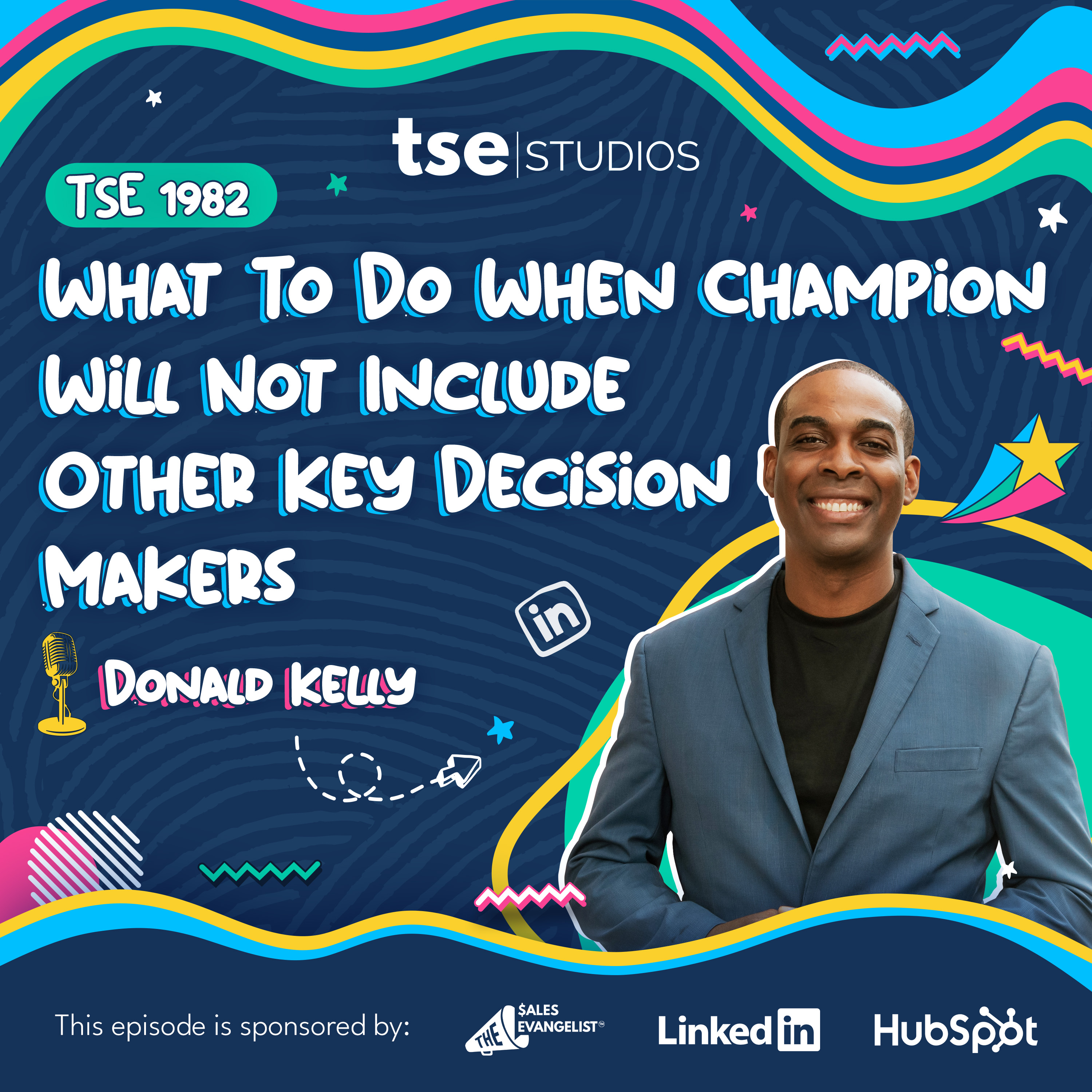
What To Do When Champion Will Not Include Other Key Decision Makers | Donald C. Kelly - 1982
Mar 600:23:43Tap to summarizeDuring a deal, you might spend weeks speaking with one person only to realize the real decision makers were never involved. So how do you get your champion to bring the stakeholders into the conversation? I’m bringing back an old concept that can help prevent this situation from happening again.When Your Champion Won’t Bring Others Into the DealDuring a deal, you might spend weeks speaking with one person only to realize the real decision makers were never involved. It can feel frustrating, especially when you know that IT, finance, or leadership will eventually need to approve the purchase.So how do you get your champion to include the stakeholders who actually sign off on the deal?One approach is to start thinking about the buying process earlier and making sure the right people are involved from the beginning.Start With MultithreadingOne of the best sales strategies is multithreading. This simply means building relationships with multiple people inside an account instead of relying on a single contact.When selling a solution, there are often several people who influence the decision. There may be an end user who will work with the product daily, a manager who oversees the team, and an executive who approves the final purchase.Mapping out these roles early can help prevent deals from stalling later. I like using LinkedIn Sales Navigator to identify these stakeholders and make it easier to start conversations with them.Identify the InfluencersNot everyone involved in a deal holds a formal decision making title, and that’s something I want you to keep in mind. I’ll give you a quick example. My wife once worked closely with the executive team at a company. Whenever the CEO was considering working with a vendor, he would often ask her opinion about the people he had interacted with. If a vendor was respectful and easy to work with, she would share that. But if someone treated her poorly because they didn’t think she had any influence, that feedback made its way back to leadership as well.The lesson here is simple. Everyone inside an organization can influence a deal in some way.Have an Honest Conversation With Your ChampionIf your champion continues to avoid bringing others into the process, it may be time to address it directly.Try sharing your concern. Let them know that in most successful projects there are several people involved, including technical teams and leadership. Then ask if there is a reason those stakeholders have not been included yet.Often the answer is straightforward. The champion may be busy, unsure how to involve others, or simply gathering more information before expanding the conversation.“Preemptively build those relationships so you don’t get stuck relying on one person to close the deal.” - Donald KellyResourcesKeep track of your sales activity and boost your results with the Prospect Pro sales tool.Step up your sales game with Sales Mastermind. Get accountability, stay motivated, and tackle the blockers keeping you from hitting your goals.Visit Blue Mango Studios for help in creating podcast production content. Sponsorship OffersThis episode is brought to you in part by Hubspot.With HubSpot sales hubs, your data tools and teams join a single platform to close deals and turn prospects into pipelines. Try it for yourself at hubspot.com/sales.This episode is brought to you in part by LinkedIn.Are you tired of prospective clients not responding to your emails? Sign up for a free 60-day trial of LinkedIn Sales Navigator at linkedin.com/tse.This episode is brought to you in part by the TSE Sales Foundation.Improve your connection on LinkedIn and land three or five appointments with our LinkedIn prospecting course. Go to the salesevangelist.com/linkedin.CreditsAs one of our podcast listeners, we value your opinion and always want to improve the quality of our show. Complete our two-minute survey here: thesalesevangelist.com/survey. We’d love for you to join us for our next episodes by tuning in on Apple Podcast, Google Podcast, Stitcher, or Spotify. Audio provided by Free SFX, Soundstripe, and Bensound. Other songs used in the episodes are as follows: The Organ Grinder written by Bradley Jay Hill, performed by Bright Seed, and produced by Brightseed and Hill.
Transcribe →
How to Hit Your Number Without End-of-Quarter Panic | Donald C. Kelly - 1981
Mar 200:23:17Tap to summarizeAt the end of every quarter, many sellers feel shaken when they look at their quotas. You’re putting in the work, yet the results still aren’t where they should be. I’m sharing a few ideas from The 12 Week Year that can help you rethink the calendar quarter and develop habits that take some of the stress out of selling.The 12 Week Year MindsetInstead of thinking about your annual quota, start treating every 12 weeks like its own year. When you see the quarter that way, your focus shifts to what needs to happen right now instead of assuming you still have plenty of time.Putting the 12 Week Year into ActionFirst, define your outcome. Set a clear goal for the next 12 weeks. For example, you might set a target of closing $300,000 in new business during that period.Next, break that outcome into the activities that lead to it. If your average deal size is $30,000 and your close rate is about 25 percent, you would need around 40 qualified opportunities to reach that goal. That might translate to about 80 discovery calls, 400 meaningful conversations, and roughly 1,200 outreach attempts.Then create a weekly scoreboard. Track the numbers that actually move deals forward. This could include outreach attempts, conversations, meetings, pipeline created, and deals that are advancing. When you track these numbers each week, it removes the guesswork and keeps you focused on the right activities.Finally, build strong daily habits. Set non-negotiable time blocks that help you hit those activity numbers. For example, dedicate at least 90 minutes each day to pipeline creation. A good reminder here is that you do not rise to your goals. You fall to your daily structure.The Role of Sales ManagersSales managers play a big part in making this system work, but it is not about micromanaging. The focus should be on managing the activities that lead to results.That means making sure reps are consistently completing the daily and weekly tasks that drive deals forward. Tools like a team leaderboard, like the one in Prospectpro.io, can make it easy to see who is on track and who needs support.Every manager should be able to answer this question: Do your reps know exactly what they need to do each week to stay on pace? When managers keep the focus on activities and check in regularly, the system becomes real, not just a plan on paper."Sales are not won in the last 14 days of the quarter. They are in the first 14 days." – Donald KellyResourcesKeep track of your sales activity and boost your results with the Prospect Pro sales tool.Step up your sales game with Sales Mastermind. Get accountability, stay motivated, and tackle the blockers keeping you from hitting your goals.Visit Blue Mango Studios for help in creating podcast production content. Sponsorship OffersThis episode is brought to you in part by Hubspot.With HubSpot sales hubs, your data tools and teams join a single platform to close deals and turn prospects into pipelines. Try it for yourself at hubspot.com/sales.This episode is brought to you in part by LinkedIn.Are you tired of prospective clients not responding to your emails? Sign up for a free 60-day trial of LinkedIn Sales Navigator at linkedin.com/tse.This episode is brought to you in part by the TSE Sales Foundation.Improve your connection on LinkedIn and land three or five appointments with our LinkedIn prospecting course. Go to the salesevangelist.com/linkedin.CreditsAs one of our podcast listeners, we value your opinion and always want to improve the quality of our show. Complete our two-minute survey here: thesalesevangelist.com/survey. We’d love for you to join us for our next episodes by tuning in on Apple Podcast, Google Podcast, Stitcher, or Spotify. Audio provided by Free SFX, Soundstripe, and Bensound. Other songs used in the episodes are as follows: The Organ Grinder written by Bradley Jay Hill, performed by Bright Seed, and produced by Brightseed and Hill.
Transcribe →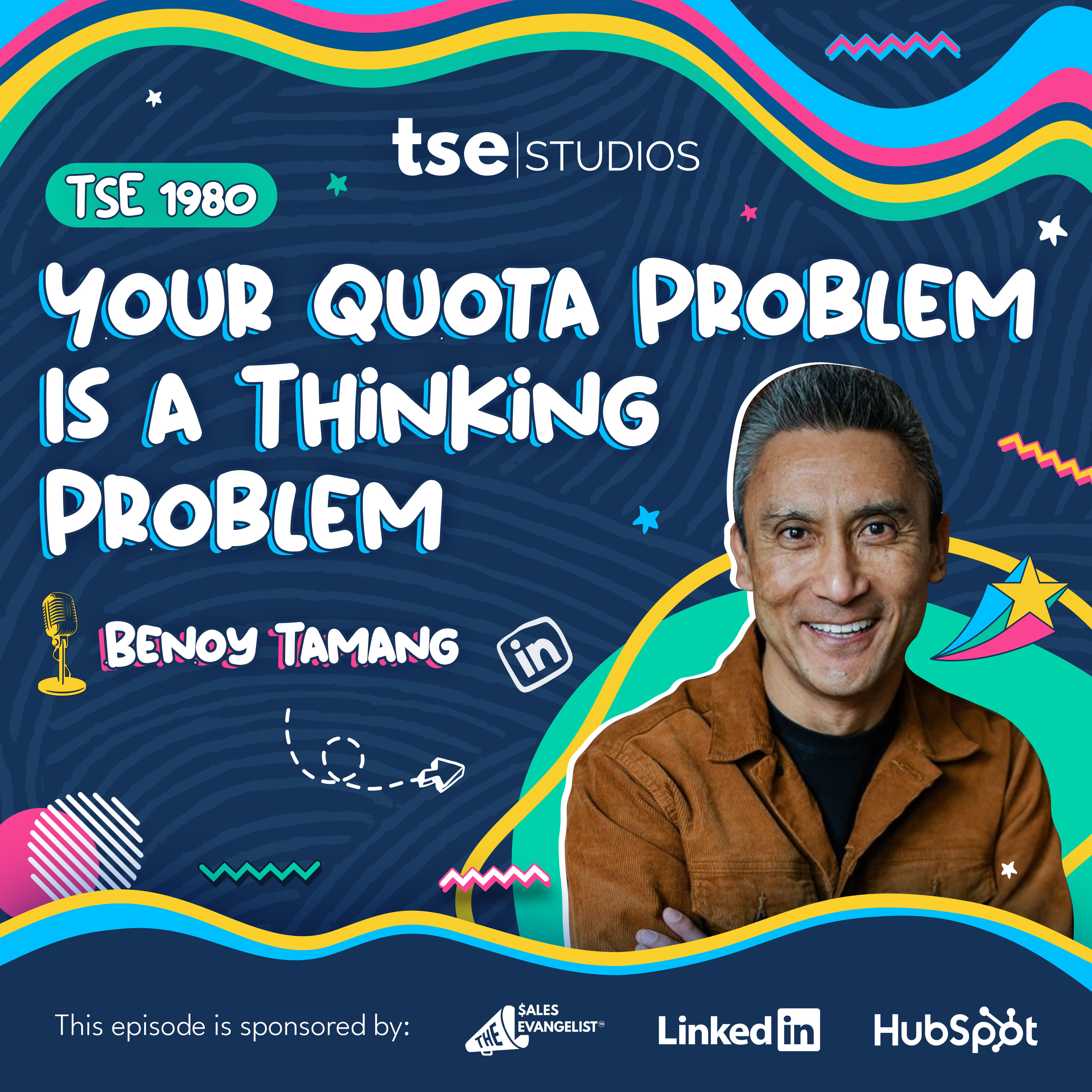
Your Quota Problem Is a Thinking Problem | Benoy Tamang - 1980
Feb 2700:30:48Tap to summarizeNegative thinking can hold you back from success. I sat down with Benoy Tamang, an entrepreneur who has started and exited seven companies, to talk about mindset. How a leader or even an individual sales rep thinks can make all the difference in results.The Underdog’s AdvocateBenoy is passionate about helping startups, shaped by his own experiences with adversity, including racism his father faced in the British army. He sees startup founders as underdogs who sacrifice health, finances, and relationships to chase a dream. Now, he coaches tech CEOs with venture funding who are ready to grow. Through his work, he gets to learn, serve, and create alongside these founders.Overcoming Self-Doubt and FearSelf-doubt is a huge obstacle for sales professionals and leaders. Many people feel “less in their own mind” and carry fears like “I am not good enough” or “my future is at risk.”Benoy believes everyone is capable of creating their own future. His advice is to let go of a tight grip on control, take a loose grip, and stay in the flow.The Whole Person in SalesLeaders need to care about the whole person, not just the employee. Benoy encourages teams to get full physicals because undiagnosed health issues, whether mental or physical, can affect performance. How someone thinks about themselves follows them everywhere, including work.Modeling Vulnerability as a LeaderHolding reps accountable is important, but leaders also need to provide clarity, training, clear job descriptions, compensation transparency, and the right tools. Benoy stresses modeling vulnerability, rewarding it, and sharing mistakes. This helps create a safe environment where team members feel comfortable asking for help, even in competitive settings.“Show them how to win, not just tell them how to win.” - Benoy TamangResourcesYou can find more information about Benoy Tamang, his book, and his podcast, Fearless Founders Club, at techceocoach.com.Keep track of your sales activity and boost your results with the Prospect Pro sales tool.Visit Blue Mango Studios for help in creating podcast production content. Sponsorship OffersThis episode is brought to you in part by Hubspot.With HubSpot sales hubs, your data tools and teams join a single platform to close deals and turn prospects into pipelines. Try it for yourself at hubspot.com/sales.This episode is brought to you in part by LinkedIn.Are you tired of prospective clients not responding to your emails? Sign up for a free 60-day trial of LinkedIn Sales Navigator at linkedin.com/tse.This episode is brought to you in part by the TSE Sales Foundation.Improve your connection on LinkedIn and land three or five appointments with our LinkedIn prospecting course. Go to the salesevangelist.com/linkedin.CreditsAs one of our podcast listeners, we value your opinion and always want to improve the quality of our show. Complete our two-minute survey here: thesalesevangelist.com/survey. We’d love for you to join us for our next episodes by tuning in on Apple Podcast, Google Podcast, Stitcher, or Spotify. Audio provided by Free SFX, Soundstripe, and Bensound. Other songs used in the episodes are as follows: The Organ Grinder written by Bradley Jay Hill, performed by Bright Seed, and produced by Brightseed and Hill.
Transcribe →
How To Sell With Integrity In The World of AI | Mark Hunter - 1979
Feb 2300:29:21Tap to summarizePeople crave genuine connection, and that can feel harder to create in today’s AI-driven world. But when you sell with integrity, buyers trust you more and move forward with confidence. Joining me in this episode is Mark Hunter, longtime friend, professional seller, and author, to talk about his new book Integrity First Selling and his passion for authentic, trust-based sales.Why Integrity Still Matters in SalesYes, AI tools are handy but nothing can replace genuine human connection. Buyers want to know that you care enough about their problem to actually fix it. Mark defines integrity in sales as honoring commitments and refusing to sell what clients don’t need. He emphasizes that great selling is rooted in serving people, not just closing deals.Lessons Learned the Hard WayMark shares stories from his early sales career, including being fired after chasing short-term wins over long-term relationships. He reflects on a deal that ultimately harmed both the client and his company’s reputation, showing the real cost of compromising integrity. His experience reinforces that quick wins are never worth lasting damage to trust.The Power of Referrals and RelationshipsA key theme is how integrity naturally leads to referrals and repeat business. Mark encourages sales professionals to give value, speak honestly even when it’s difficult, and recommend other options when they are not the right fit. He stresses that leaders and sellers alike must model integrity and commit to the long game.“Just speak the truth 100% of the time and you're going to sleep a lot better.” - Mark HunterResourcesFind "Integrity First Selling" on Amazon or visit thesaleshunter.com for more resources.Check out my past episode 426 with Mark to hear his advice on high profit prospecting. Keep track of your sales activity and boost your results with the Prospect Pro sales tool.Join the LinkedIn Prospecting Course to improve how you use LinkedIn and book more consistent, high-quality sales appointments.Visit Blue Mango Studios for help in creating podcast production content. Sponsorship OffersThis episode is brought to you in part by Hubspot.With HubSpot sales hubs, your data tools and teams join a single platform to close deals and turn prospects into pipelines. Try it for yourself at hubspot.com/sales.This episode is brought to you in part by LinkedIn.Are you tired of prospective clients not responding to your emails? Sign up for a free 60-day trial of LinkedIn Sales Navigator at linkedin.com/tse.This episode is brought to you in part by the TSE Sales Foundation.Improve your connection on LinkedIn and land three or five appointments with our LinkedIn prospecting course. Go to the salesevangelist.com/linkedin.CreditsAs one of our podcast listeners, we value your opinion and always want to improve the quality of our show. Complete our two-minute survey here: thesalesevangelist.com/survey. We’d love for you to join us for our next episodes by tuning in on Apple Podcast, Google Podcast, Stitcher, or Spotify. Audio provided by Free SFX, Soundstripe, and Bensound. Other songs used in the episodes are as follows: The Organ Grinder written by Bradley Jay Hill, performed by Bright Seed, and produced by Brightseed and Hill.
Transcribe →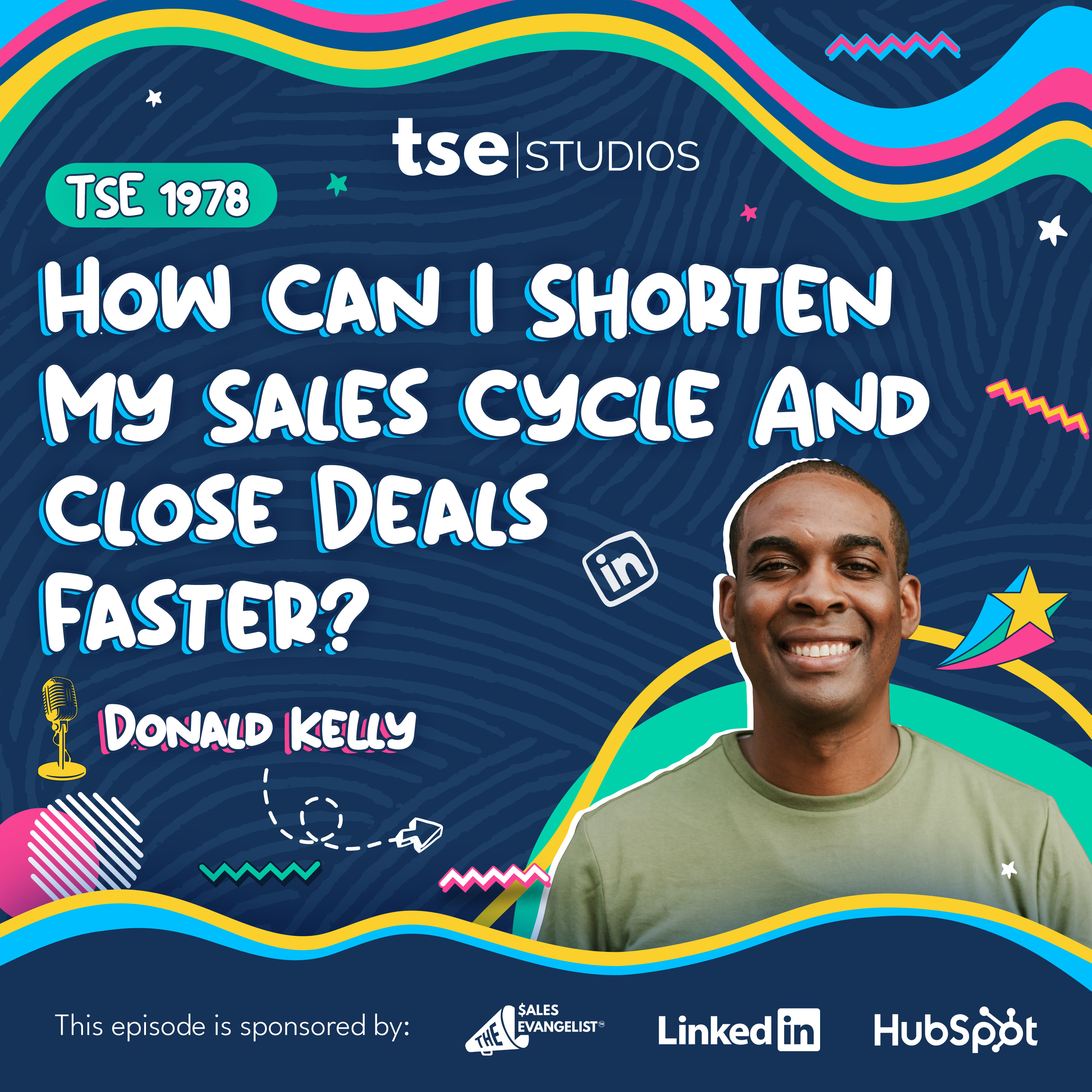
How Can I Shorten My Sales Cycle And Close Deals Faster? | Donald C. Kelly - 1978
Feb 2000:24:14Tap to summarizeYou’ve been working on closing a deal for the last six months, but you thought you would have closed it three months ago. Why didn’t you reach your deadline sooner? I’m going to tell you why in this episode and show you how you can shorten your sales cycles.Why Are Your Sales Cycles Longer?I’ve found there are several reasons sellers experience longer sales cycles:Fear of making mistakesJob security concernsReliance on decision-making committeesBut remember, you’re a consultant. Your job is to guide buyers to understand why your product is the solution to their problems. Don’t be an order taker. Lead with confidence to help move deals forward faster.Introduce a Mutual Action Plan EarlyThe first step I share to shorten your sales cycles is creating a mutual action plan. You go over clear expectations and timelines with the prospect to let them know what their buying journey will look like.Multi-ThreadingThere are way more people involved in closing a deal than you think. At first you may be talking to Sally, then Billy, then Jen. Keeping up with so many stakeholders can get confusing fast.If you don’t have a clear way to track relationships, tools like LinkedIn Sales Navigator can help you organize an account map and piece together your conversations across contacts.Understand Individual Stakeholder ValueYes, you’re trying to close the deal faster, but don’t rush through the sales cycle. Instead, identify what matters most to each stakeholder involved in the buying decision. Ask questions to uncover specific priorities and pain points for every committee member, not just your main prospect.De-Risk the PurchaseWith so much noise being thrown at buyers, they often don’t feel safe making decisions or find it difficult to move forward. Provide multiple purchasing options, bring in testimonials, and address concerns directly to help stakeholders feel more confident.“Every conversation you have with the team, bring it back to the value. Because the value is going to be different for each individual.” — Donald KellyResourcesKeep track of your sales activity and boost your results with the Prospect Pro sales tool.Join the LinkedIn Prospecting Course to improve how you use LinkedIn and book more consistent, high-quality sales appointments.Visit Blue Mango Studios for help in creating podcast production content. Sponsorship OffersThis episode is brought to you in part by Hubspot.With HubSpot sales hubs, your data tools and teams join a single platform to close deals and turn prospects into pipelines. Try it for yourself at hubspot.com/sales.This episode is brought to you in part by LinkedIn.Are you tired of prospective clients not responding to your emails? Sign up for a free 60-day trial of LinkedIn Sales Navigator at linkedin.com/tse.This episode is brought to you in part by the TSE Sales Foundation.Improve your connection on LinkedIn and land three or five appointments with our LinkedIn prospecting course. Go to the salesevangelist.com/linkedin.CreditsAs one of our podcast listeners, we value your opinion and always want to improve the quality of our show. Complete our two-minute survey here: thesalesevangelist.com/survey. We’d love for you to join us for our next episodes by tuning in on Apple Podcast, Google Podcast, Stitcher, or Spotify. Audio provided by Free SFX, Soundstripe, and Bensound. Other songs used in the episodes are as follows: The Organ Grinder written by Bradley Jay Hill, performed by Bright Seed, and produced by Brightseed and Hill.
Transcribe →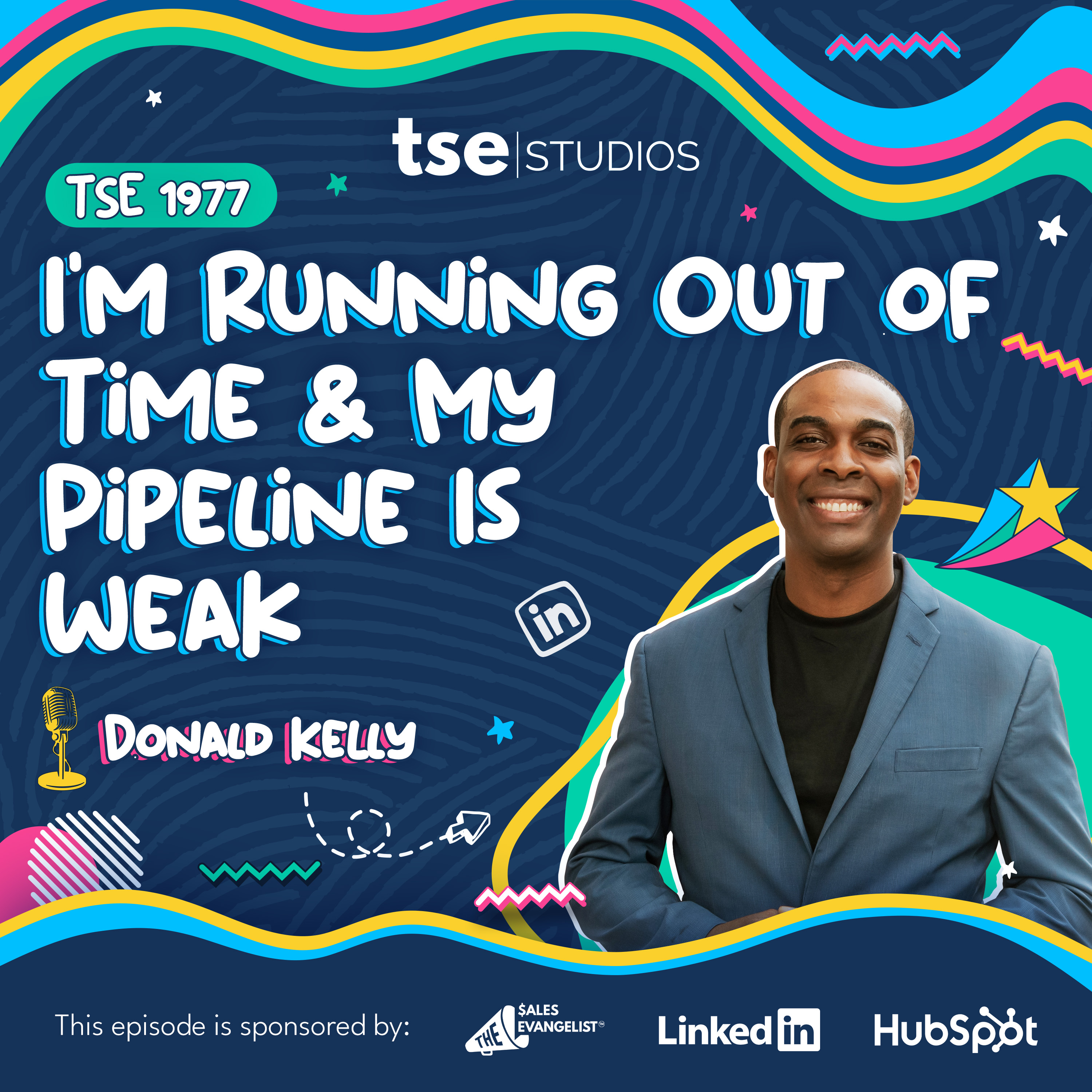
I'm Running Out of Time & My Pipeline Is Weak | Donald C. Kelly - 1977
Feb 1600:17:52Tap to summarizeshow notes
Transcribe →
How to Get Quality Referrals To Skyrocket Your Sales | Donald C. Kelly - 1976
Feb 1300:17:11Tap to summarizeI know referrals work. You just have to get them from the right people. In this episode, I am sharing three ways to get high quality referrals that will help you build your sales pipeline.Ask Your Happy CustomersThe most common way to generate referrals is by reaching out to customers who are thrilled with your service and asking for an introduction to their network. Here is the surprising part. While 90 percent of customers say they are willing to refer others, only 11 percent of salespeople actually ask. If you are not asking, you are leaving opportunities on the table.Request Referrals from Non BuyersDo not overlook the conversations that do not end in a sale. Even when someone tells you no, that does not mean the relationship is over. It is still perfectly reasonable to ask if they know someone who is dealing with the challenges your product solves. When you position it around helping others, the request feels natural and value focused.Leverage LinkedIn ConnectionsYou can also take a more proactive approach by using tools like LinkedIn Sales Navigator. Look at your customers’ first degree connections and identify people who match your ideal client profile. Then ask for a specific introduction. This method takes more effort, but when you are intentional about who you want to meet, the results can be powerful."Your goal is to get them to be able to be your evangelists." — Donald KellyResourcesKeep track of your sales activity and boost your results with the Prospect Pro sales tool.Join the LinkedIn Prospecting Course to improve how you use LinkedIn and book more consistent, high-quality sales appointments.Visit Blue Mango Studios for help in creating podcast production content. Sponsorship OffersThis episode is brought to you in part by Hubspot.With HubSpot sales hubs, your data tools and teams join a single platform to close deals and turn prospects into pipelines. Try it for yourself at hubspot.com/sales.This episode is brought to you in part by LinkedIn.Are you tired of prospective clients not responding to your emails? Sign up for a free 60-day trial of LinkedIn Sales Navigator at linkedin.com/tse.This episode is brought to you in part by the TSE Sales Foundation.Improve your connection on LinkedIn and land three or five appointments with our LinkedIn prospecting course. Go to the salesevangelist.com/linkedin.CreditsAs one of our podcast listeners, we value your opinion and always want to improve the quality of our show. Complete our two-minute survey here: thesalesevangelist.com/survey. We’d love for you to join us for our next episodes by tuning in on Apple Podcast, Google Podcast, Stitcher, or Spotify. Audio provided by Free SFX, Soundstripe, and Bensound. Other songs used in the episodes are as follows: The Organ Grinder written by Bradley Jay Hill, performed by Bright Seed, and produced by Brightseed and Hill.
Transcribe →
Are Sales Frameworks Ruining Real Conversations? | Donald C. Kelly - 1975
Feb 900:18:44Tap to summarizeRecently, a seller sent me a voice note asking why his framework is failing him every single time. I am sure other sellers are facing this same issue, and in this episode, I am going to share how to fix it. Sales is not a black and white solution. It is filled with ambiguity. My advice will help you navigate those gray areas with more confidence.Beyond the FrameworkI start by challenging the idea that just following a sales framework guarantees success.Every sales scenario has unpredictable human factors, so sticking strictly to a process is not enough. You have to be ready to adapt and read the situation in real time.The Power of Reviewing the TapeOne of my biggest recommendations is to listen back to your recorded calls, either on your own or with someone you trust. This gives you a more objective perspective on what is working and what is not. I also suggest using tools like ChatGPT to analyze transcripts or get external feedback. It is a great way to spot patterns you might miss.Taking and Maintaining ControlBefore every call, set an agenda and make sure both you and the prospect are aligned on the outcomes. If you give up that control, the prospect will take the lead and that usually leads to ambiguity or stalled deals. Staying in control does not mean being pushy. It means guiding the conversation toward results.Always Secure a Next StepNever leave a meeting without scheduling the next step. I have lost deals in the past because I did not do this, and it kills momentum fast. Make it a habit to lock in what comes next before the call ends.Courage to Ask the Tough QuestionsGoing through the motions is not enough. Developing the art of sales means reading between the lines and asking the uncomfortable questions. That is what separates great sellers from everyone else. You have to be willing to challenge your prospects in a way that adds value and drives clarity."There's a lot of gray areas in sales, especially when you're dealing with humans who tend to be unpredictable." - Donald KellyResourcesKeep track of your sales activity and boost your results with the Prospect Pro sales tool.Join the LinkedIn Prospecting Course to improve how you use LinkedIn and book more consistent, high-quality sales appointments.Visit Blue Mango Studios for help in creating podcast production content. Sponsorship OffersThis episode is brought to you in part by Hubspot.With HubSpot sales hubs, your data tools and teams join a single platform to close deals and turn prospects into pipelines. Try it for yourself at hubspot.com/sales.This episode is brought to you in part by LinkedIn.Are you tired of prospective clients not responding to your emails? Sign up for a free 60-day trial of LinkedIn Sales Navigator at linkedin.com/tse.This episode is brought to you in part by the TSE Sales Foundation.Improve your connection on LinkedIn and land three or five appointments with our LinkedIn prospecting course. Go to the salesevangelist.com/linkedin.CreditsAs one of our podcast listeners, we value your opinion and always want to improve the quality of our show. Complete our two-minute survey here: thesalesevangelist.com/survey. We’d love for you to join us for our next episodes by tuning in on Apple Podcast, Google Podcast, Stitcher, or Spotify. Audio provided by Free SFX, Soundstripe, and Bensound. Other songs used in the episodes are as follows: The Organ Grinder written by Bradley Jay Hill, performed by Bright Seed, and produced by Brightseed and Hill.
Transcribe →
Your Sucks At Using AI, Here How To Fix It | Eve Kedar - 1974
Feb 600:32:53Tap to summarizeThere is a specific way to use AI technology to get the results you want. To show us how to do this, Dr. Eve Kedar, a community builder, enablement strategist, and educator, joins me for this episode. Drawing on her experience supporting over 18,000 AI enthusiasts, Eve shares strategies to help sales teams use AI without amplifying the overwhelm that can come with new technology.Meet Eve KedarEve Kedar is a sales enablement strategist, author, and advisor with over 15 years of experience helping sales organizations move from scattered training to scalable systems that actually drive results. She’s the author of Build a Kicka$$ SalesTeam and Build a Kicka$$ Online Community, and works with SaaS and tech leaders to improve ramp time, execution, and alignment.Eve brings a practical lens to AI adoption, focusing on cognitive diversity, real workflows, and helping sales teams use AI as a thinking partner, not a replacement.Empowering Sellers Through Cognitive DiversityWe begin by talking about how effective AI integration starts with recognizing the unique strengths each seller brings to the table. Eve explains that instead of forcing uniformity, leaders should support and amplify those differences with the right tools. She shares stories of helping one seller who is highly data driven and another who is a natural storyteller use AI prompts tailored to their individual styles. The goal is not to replace human skills, but to enable them.Practical Steps for AI AdoptionWe also break down simple, actionable steps sales leaders can take right away. For example, setting up a team chatbot such as ChatGPT that is loaded with your company’s sales processes can give both new and experienced reps targeted guidance.This helps them become more independent while also personalizing their development.Eve reminds us that leaders do not need to master every AI tool. What matters most is encouraging curiosity, exploration, and the sharing of best practices.Maintaining Humanity, Curiosity, and CreativityAnother major theme in our conversation is balancing productivity with preserving the human touch. Eve suggests gamifying prompt writing, celebrating creativity, and encouraging bold curiosity so teams do not become overly reliant on automation. While entry level roles may evolve as AI takes over repetitive tasks, sellers will be expected to think more deeply and build stronger relationships than ever before.Community and CollaborationWe also discuss the importance of leveraging AI communities, both internally and externally. Creating space for open dialogue and experimentation allows teams to learn from one another, spark new ideas, and reduce the overwhelm that often comes with adopting new technology."Cognitive diversity is a great thing on a sales team. Don’t suppress it with AI tools. Use the tools to help them, you know, amplify their diversity. But leverage the results. The outcomes are still what’s important." - Eve KedarResourcesFind Eve Kedar on LinkedIn and check out her thriving AI community for more insights and resources on AI adoption in sales.Get Eve’s books on Amazon: Build a Kicka$$ SalesTeam, Build a Kicka$$ Online CommunityKeep track of your sales activity and boost your results with the Prospect Pro sales tool.Join the LinkedIn Prospecting Course to improve how you use LinkedIn and book more consistent, high-quality sales appointments.Visit Blue Mango Studios for help in creating podcast production content. Sponsorship OffersThis episode is brought to you in part by Hubspot.With HubSpot sales hubs, your data tools and teams join a single platform to close deals and turn prospects into pipelines. Try it for yourself at hubspot.com/sales.This episode is brought to you in part by LinkedIn.Are you tired of prospective clients not responding to your emails? Sign up for a free 60-day trial of LinkedIn Sales Navigator at linkedin.com/tse.This episode is brought to you in part by the TSE Sales Foundation.Improve your connection on LinkedIn and land three or five appointments with our LinkedIn prospecting course. Go to the salesevangelist.com/linkedin.CreditsAs one of our podcast listeners, we value your opinion and always want to improve the quality of our show. Complete our two-minute survey here: thesalesevangelist.com/survey. We’d love for you to join us for our next episodes by tuning in on Apple Podcast, Google Podcast, Stitcher, or Spotify. Audio provided by Free SFX, Soundstripe, and Bensound. Other songs used in the episodes are as follows: The Organ Grinder written by Bradley Jay Hill, performed by Bright Seed, and produced by Brightseed and Hill.
Transcribe →