← The Science of Scaling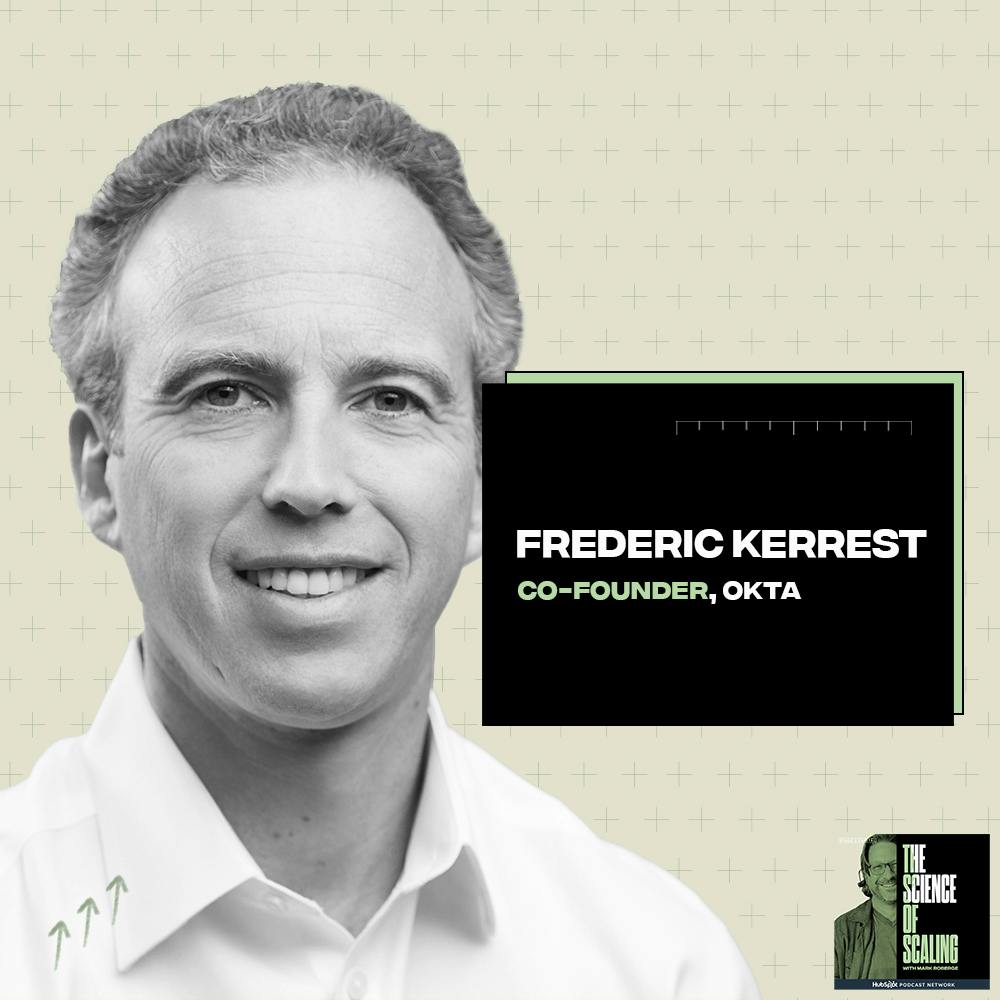
Loading summary
Transcript65 lines
- [00:00]
Freddie Kerrest
Your number one job as an entrepreneur anyways, to sell. If you are not comfortable selling, you need to get comfortable selling.
- [00:05]
Mark Berge
Founder selling. It's a phrase that's gotten more popular in the last decade. More and more product founders, technical founders, v lies, that's their job in the early days, the first dozen customers, the first few dozen conversations, stay close to the market, get the beta, get the design partners, get the first revenue. But I think the mistake is they think it's over once that's done. Once they get the a. Once they hire the professional team. No, the founder still has a role not just with the customers and the investors and selling them and the buying, the vision, but still in the funnel with the revenue, with the reps. Probably one of the best in the business is Freddie Kerest, the co founder of Okta. Today, in our last episode of the season, we're going to unpack how he magically navigated those waters and brought Okta to a successful ipo. I'm Marco Berge and this is the Science of Scal. So, hey Freddy, welcome to the show.
- [01:06]
Freddie Kerrest
Thanks, Mark. Thanks for having me. Thrilled to be here. Longtime listener, first time caller.
- [01:11]
Mark Berge
Well, thanks, man. You've been so supportive of everything and it's awesome to see all the great success. Let's unpack it. Like, talk to us. How was it was the first ideation during the classroom.
- [01:21]
Freddie Kerrest
My co founder, Todd McKinnon was the head of engineering and product at Salesforce while I was there. He started in 03, so the year after me. And he was there until 09 when we started. We started Okta second year, second semester at MIT. We started working on it together, kind of dating in that spring. Spring semester right before I graduated, we said, hey, you know what? We're not exactly sure what this integration is going to be. In fact, at first it wasn't identity where we ended up. It was system management. It was something else. But we said, hey, we think there's something here and let's go try and figure it out together. And. And that was the founding of Okta.
- [01:56]
Mark Berge
Were you capitalized at that time or you guys do nights and weekends? Ramen noodle, bootstrapping or did you get a C ch the ladder?
- [02:02]
Freddie Kerrest
No, seed checks. So we were the seed checks. We both wrote checks into the company and then we raised a friends and family seed round. We raised a seed round of a million bucks in the summer of 09 and that got us going.
- [02:16]
Mark Berge
When did you decide you wanted to start? Like trying to charge for the thing?
- [02:20]
Freddie Kerrest
Yeah, the first few Years were definitely hard. I mean, first of all, the macro was hard, right? This is the Great Recession or whatever. So people were not buying software, people were not investing. Although it turns out in hindsight, obviously we were geniuses because you should always start these kind of companies during downturns. But it took us like two and a half years to get a product that was really out there that could work, that could work at scale with hundreds or thousands of users.
- [02:46]
Mark Berge
It is very common that these more like it ops, DevOps, like more middle layer take longer to get to something that can be sold because there's such a high bar for security. You talked about the million dollar angel check. I'm assuming that wasn't enough to get to, you know, this product being ready these two year journey. Can you talk about how that unfolded?
- [03:07]
Freddie Kerrest
For sure. We raised a Series A. So we raised a million dollars of convertible debt in a, in a, you know, safe in the summer of 09. And I'd spent a little bit of time in venture capital while I was at mit working at Hummer Wimblatt Venture Partners, now known as Aspenwood Ventures, working for Mark Gorenberg, who's actually the chair of the MIT Corporation. Now. Everyone said, well, don't go back to business school for your second year, just stay in venture capital. And I said, well that's interesting. So I used the opportunity to go out and meet actually 20 different venture capitalists. And they said, well, do you want to get a job? And I said no, no, no, I'm going back to MIT and then I'm gonna build a company. But it was great, cause then I'd met them, so at least we had like a way to, you know, to get to know them. But one thing in particular that stuck with me in my time at venture capital was entrepreneurs did a poor job of under promising and over delivering. They'd come in with these giant plans and say, I'm gonna crush this, I'm gonna crush that. And then they'd show back up six or 12 or 24 months later and they'd miss and they'd still done well, but it had missed the promises they'd made to the investors. And the investor was like, well, whereas if the dynamics had been shifted and they'd set a lower bar and come in and beat that bar, it would have been up and to the right.
- [04:14]
Mark Berge
Hey folks, just Mark here. Yeah. This is what I really see amongst serial entrepreneurs. And even like VPs of sales and CROs, the lesser experienced folks are just overly optimistic. Like promise in the sun and I fell into this trap myself. But like once you get experience and you see this a lot in like really good, like football coaches, for example. And that's what I did. Like we had one up here in New England, Bill Belichick, right? Like, who is famous for this, where it's like when I showed up to the board and gave the update, you couldn't tell if I missed by 20% or hit beat by 200%. It was just the same thing. It was like, hey, this is what we did. Well, this is what's off. This is what I'm worried about. And this is our plan. That's what they want to hear. They know that not every business crushes every quarter and every business is going to hit their every single plan, but they just want to make sure that you're on top of it, you're diagnosing it well, you're being realistic about the expectation. And Freddie is crushing this out of the gate. He's managing a seed funded business as if it's public. Let's get back to him.
- [05:22]
Freddie Kerrest
But instead you should probably set some metrics that you can beat and raise. Just think about being a public company when you're a seed funded company, basically, and be like, okay, I'm going to beat and raise every quarter, every six months, I'm going to beat and raise the number just like you do when, when you have earnings, you know, you always have a chance to reset also right after financing. So you can have this whole plan and then right after the financing. You know, this is a little dirty secret that our venture friends are not going to like. But the reality of it is that first board meeting after the financing has closed, you can come in and say, you know what, we really scrubbed the plan. And I think this is where it's going to come in. And I know it's 20% lower than what you have in the, in the data room that you did the diligence on. But I think this is a good plan and kind of reset from there.
- [06:05]
Mark Berge
Love it, Love it. All right, so let's get to some of like the go to market stuff.
- [06:09]
Freddie Kerrest
Great.
- [06:09]
Mark Berge
So like talk to us how. Okay, fine. Andreessen Hortz, like give this gives the check you're building, Todd's building the product. You're. Yeah, like what? How is that, how is the go to market developing in parallel in these early days, you know, just living and
- [06:24]
Freddie Kerrest
learning and talking to people. I think one of the big, big mistakes that entrepreneurs make, especially, you know, very smart entrepreneurs, will sit there in their ivory tower and build something and say, you know, it's kind of like the Kevin Costner movie. If I build it, they will come. Field of Dreams. It's actually, that's not how it works. How it works in particular in enterprise software, right is you have to go out and you have to talk to these folks. There's a couple good books that I recommend people look at. Zero to one is a good one. Peter Thiel, the Four Steps to the Epiphany. Steve Blanks, kind of an older one from him, but it basically just says, hey, go out and talk to people and understand and show them, show them drawings, show them pictures, show them documents, show them the product. And we did that. And so starting in, I think August of 09 for four months I had a monthly plan where I had to go talk to 18 net new IT professionals and just talk to them and say, hey, what kind of problems do you have? Do you have this problem? Would you use this? You buy this? You know, how would you think about this? Some months I missed my number. I had them all colored, color coded. I still saw, I pulled this out like 6 months ago. I was looking at it. It's like green, yellow, red for each of the names and what date I talked to them.
- [07:36]
Mark Berge
This is just like classic, you know, pursuit of product market fit in the science of scaling framework is like, yeah, go in front, get you know, 18 calls a month. And yeah, they're going to gravitate small, that's fine as long as they're in tam. That's who we get in front of. He's not going and pitching. This is my product, you know, what do you think he's talking about problems. In fact he's leading in with like I've been studying this particular space. I'd love to share my findings. Perfectly aligned with the awareness stage and gets them talking about the problem. So you can understand if you even focus on the right problem and reading the market right before you actually present the product. And then finally like he's getting the meetings through the network. We need 100 meetings. That means we need to reach out to 300 people. And of those hundred meetings we're get 20 customers. So he's combing the alumni network, his password network, his VC's network. That's how we get to those first meetings. We don't need to stand up this like very sophisticated outbound cold calling or inbound marketing program at this point. We need to achieve product market fit and get those early beta customers. This is the Science of scaling, pursuit of product, market fit down to the T. Let's get back to Freddy.
- [08:49]
Freddie Kerrest
It was super valuable and it was just, it was like, you know, no one's going to talk to you. You two guys in a trick duck in a garage. So it was using the networks, it was banging the phones. It was, yeah, that's what I wanted
- [08:59]
Mark Berge
to unpack because a lot of the founders, they're just sitting here being like, how the heck did you get in front of these people? Help them, help them put that together.
- [09:07]
Freddie Kerrest
You are an sdr. You are a sales development rep. I mean your number one job as an entrepreneur anyways, to sell. If you are not comfortable selling, you need to get comfortable selling. Now I' saying you need to become a seven figure ACV sales rep, right? But you need to be comfortable convincing people and talking to people and you need to get out from behind email. Well, they didn't get back to me. Well, what do you mean? Well, I sent them an email. I mean how many personal emails do you get every day, Mark? Personal email, Hundreds emails. What other people want you to do, it's not what you should be doing. You need to be able, able to become a communicator on the value of what you're trying to build. It's true for hiring, it's true for raising money, right? You got to convince investors of what you're going to do. It's true for everything. All the time, you know, is a practice of going through my LinkedIn network. Think about what jobs you had or what those alumni networks are. And I was just inside the university databases. I was inside LinkedIn all day long, cold calling people, figuring out what email taglines worked, right? Highlighting what I had known in the past. And then the last big thing I would say is in these kinds of things people are willing to help you. But point out to them what you can bring to them too. Make sure it's like a two way thing. So when I call you, I say, hey Mark, I have this new product, I'd love to show it to you. You're like, okay, great, yeah, maybe I'll do it. I mean, I know Frederick or someone asked me as a favor if I say, hey Mark, I'd love to update you on the latest of what's going on in AI and cybersecurity in Silicon Valley. By the way, I have a product that I think is addressing some of these issues and concerns and I'd love to bring it up to you. Is it okay if we schedule 20 minutes? I'm happy to start with the AI cyber piece and answer any questions you have. Turns out that if you're willing to do something back the other way and make it a two way street, you'll get a lot more and better response. One of the really good things I like about Steve Blank's approach is the hardest thing in business is separating someone from their wallet.
- [11:05]
Mark Berge
That's the final decision point. Do they write the check? Do they cut the budget? And that's what I like to do, like, even before I have the product right we've talked about in this past. But it's just like, okay, Steve, thank you so much for elaborating on the issues. It's actually interesting that, you know, what you talked about is just like the 73 other people we spoke to, and we're going to launch that product in two months and it's going to be like $50,000 a year. But we're just looking for five design partners to sign a letter of intent to be our first five design partners. And in exchange, we're going to give you a 90% discount at $5,000. Would you sign that right now? No, I won't. Now the real stuff happens, or, yes, I will. I'm dead serious. This is really good stuff. But by pushing them to separating them from their wallet, gives us the real feedback. It's a differentiation between a false positive and a true positive. Let's get back to Freddy.
- [12:03]
Freddie Kerrest
You're like, oh, would you use this product? Oh, yeah, of course. Okay. Would you use products if I charge you $100,000? Like, whoa, whoa, whoa, whoa, wait, what? And so figuring out what, what is really the problem, what people are really willing to pay for, which usually is pretty simple, right? In enterprise software, you're usually increasing revenue, you're decreasing costs, you're enhancing security. Like, it's not too hard to figure out the roi, return on investment, the tco, total cost of ownership, buckets of what it could possibly be. But really identifying that and then helping them stick a number on it. This is why I'm going to buy or think. It's going to help me build more and grow more and sell more, because I'm going to save a bunch of money or I'm not going to get hacked or whatever it is, just figuring out what that is. Those are the key, key parts of early sales.
- [12:54]
Francis Fry and Anne Morris
Hi, I'm Francis Fry. And I'm Anne Morris. And we are the hosts of a new TED podcast called Fixable. We've helped leaders at some of the world's most competitive companies solve all kinds of problems. On our show, we'll pull back the curtain and give you the type of honest, unfiltered advice we usually reserve for top executives. Maybe you have a co worker with boundary issues or you want to know how to inspire and motivate your team. No problem is too big or too small. Give us a call and we'll help you solve the problems you're stuck on. Find fixable Wherever you listen to podcasts,
- [13:33]
Mark Berge
I imagine some of those early conversations with the IT director, you didn't have anything to sell them yet.
- [13:39]
Freddie Kerrest
No.
- [13:39]
Mark Berge
Was there ways to push them toward like, okay, now let's, let's see if this is really a false positive or true positive.
- [13:47]
Freddie Kerrest
First of all, let's talk a little bit about enterprise sales. Enterprise sales is not transactional. You know, buying a pencil is transactional. You go to a store, you want to buy a pencil. You don't want to buy a pencil. It's $3. It's very simple to buy it or don't buy it. Enterprise software is not that way. You're not going to walk in and say, oh, you want to buy my CyberSecurity software for $50,000? You don't want to buy it. No, it's a process. And so a lot of times enterprise sales is relationship sales, especially in those early days. And so it's like, who's the person and what do they care about and what are their goals and what are they trying to get done inside a company? And you gotta remember in enterprise sales, a lot of times the goal of the meeting is to have another meeting. So I think that, you know, when you're pushing someone towards it, to use your terminology, what you're really doing, especially early when you don't have product, is you're just trying to see if there is a potential demand for what you're trying to do. Back in the day, it took a lot longer to build product. Today you can build products a lot faster and you can build them much more inexpensively. So I would actually argue that, like the lessons that we learn there should actually be modified for today's world. So today it's like you should have it up and running. You should be able to spin the core of it up at least so that people can have an idea of what you're trying to do and how it could be valuable to them from the get go. Right? And so you can do that much more quickly, much more efficiently effectively today. So, but yeah, you're trying to get them to say, okay, is this valuable to you? Okay, what are the top three problems you have? Is this one of the top three problems you have? And then understand. I mean, you know, we should probably talk at a very high level about sales methodologies. I mean, just understanding basic sales methodologies. And a lot of times today, I can think of multiple times this week already when I've talked to technical founders who are CEOs, and I've said, hey, well, what's going on with your sales process? And they're like, you know, time out. What does that mean, sales process?
- [15:34]
Mark Berge
I have a deck that explains what my product does. That's my sales process.
- [15:37]
Freddie Kerrest
Exactly, exactly. Totally. And at the end, there's an ask. I think that there has been a great refinement of sales methodologies and sales processes in the last 20 years, too, that have, that are very advantageous to today's technical founders. I advocate something pretty simple like Medic, which you can look up. Right.
- [15:54]
Mark Berge
Which is perfect for Okta's approach.
- [15:56]
Freddie Kerrest
Yep, it's perfect. We actually made it a little more complicated. We use Med Pick, so you can start to add in different pieces. But something very simple. Who's buying? Why are they buying? What's their process? Are you replacing something or increasing revenue? Are you creating new, you know, new category? Is it a greenfield opportunity? Are you going to be more evangelical, or is it going to be very clear that this is a better mousetrap than what you had before and it's 10x better. Who's. Who's going to be your coach? Right. Who's going to be your champion? What's the difference between a coach and a champion? And by the way, who's trying to, like, jam you when you're not there? You're guaranteed whatever super innovative product you're bringing to market is going to upset someone's Apple cart.
- [16:35]
Mark Berge
Yeah. The sales playbook is not a presentation about your product, about the features and benefits. It's how you navigate this conversation. It's how you qualify. It's how you discover. It's how you uncover pains. It's how you understand if this is a champion or a coach. And yet Medic is perfect for them. Right? Metrics, Economic, buyer, decision maker, decision process, Identify, pain, competition. Great for complex enterprise sales. And he customized it to Medpick, which is a popular customization. So point number one, you need that. Point number two, you start with the vanilla one and you can customize it to your business. You add one more point, you take away one. Right. Other popular ones, Bant Budget Authority, need, timing, super simple. I like to have most people start there. Especially if you're not doing enterprise sales. You can try from winning by design. You could do spice situation, pain, impact, critical event and then decision. Right. And then. Or gpct. That's what we used at HubSpot. Goal plan, challenge timeline. Really great for discovery. But bottom line is hopefully you're getting a better picture of like the sales playbook is not the pitch deck. It's more complicated than that. It's really about understanding the buyer, their qualification, their pain, their ability to make a decision. Let's get back to Freddie and just
- [17:54]
Freddie Kerrest
like understanding those little dynamics inside companies is very, very valuable. And it's. And it's not rocket science, but it's tractable. Problem you have, but you just have to know what to do.
- [18:02]
Mark Berge
And when we were talking, you've told me a few times about the Tulsa, Oklahoma, Oklahoma.
- [18:07]
Freddie Kerrest
Yeah.
- [18:08]
Mark Berge
And I think that's a great representative example of that. Like when was that? And why don't you tell the audience how that unfolded?
- [18:14]
Freddie Kerrest
February and March of 2011. But I know what month it is because the whole thing started because I got the month wrong. So we had this opportunity in this company, oil pipeline servicing company, and they were looking for a new identity management Solution. This is 2011. They bought Salesforce, they bought Workday. Their big thing was workday. And Workday as a master was brand new functionality for us. So we're just trying to get it to work. And I remember they said, okay, well, there's two finalists. And they said, hey, come visit us in Oklahoma. I said, great, I'd love to. So I go to the airport, sfo. And they said, well, this is a great ticket, but this is the wrong month. And I said, well, what do you mean? It's the right day of the week, Sunday, and it's the right day of the month, but it's the wrong month because February has 28 days. They're like, well, this is a great ticket, but this ticket's actually for the month of March. And they're like, this, this the flight that you want, the direct to Tulsa from SFO on Sunday afternoon is full. So I call the guy, I call our, the director of IT who had set up the meeting with the cio. And I said, hey, Jeremiah. I mean, I remember his name. I said, jeremiah, how's it going? He said, oh, Frederick. I said, I'm really sorry to bother you on a Sunday, but here's kind of my situation. I'm at the airport and they don't have a flight for me today. And I was wondering, is it okay if I. If I just, you know, fly in tomorrow night? And. And he's like, well, I understand your predicament, but that's not possible. I said, what do you mean? He said, well, there's two finalists. You're going tomorrow, the other guy's going Tuesday. We're making a decision, so you gotta be here tomorrow morning. I wish you the best of luck. And I'm like, all right. So I go back to the terminal. Anyway, long story short, I ended up having to get a red eye through Chicago, which as you know, is not really red eye, and then transferring at like 6am to a flight to Tulsa. I land in Tulsa, like 8am and it's a blizzard. Oh, okay. Get to my hotel. I go to the front desk. I'm like, okay, I'm gonna need a cab in like an hour or two to get to this. And the lady laughs. And I said, well, I'm just asking for a cab. Said, do you see what's going on outside? I'm like, yeah, it's blizzard. She's like, there's no cabs coming. And I was like, well, I need to get like two miles down the road. And she's like, well, I understand, and I'm sympathetic to your plight, but you know, that's not gonna happen. So I'm like, okay, I've got a suit and tie on. I'm like, all right. So I put on my jacket and I walk down a regional highway and I get to the office. I get to the place like 20 minutes ahead of time and I'm dripping wet. And I walk in the door and you know, the person at the front desk is like, are you okay? I was like, yeah, yeah, I'm okay. I'm here for a meeting with, you know, so and so and so and so. And they're like, are you. But are you okay? I was like, yeah, I'm great. Why? And they're like, you're totally drenched. So she was nice enough to go to their on site gym and got me a towel. And I'm wringing out my suit pants and they're dirty and grimy. I mean, I'm disgusting. And I use the towel to clean myself up as best as I can. And I walk in and you know, Jeremiah, the director, it is like, well, it's good to see you. I'm glad you can make it. You know, so and so. And the CIO walks in, he's like, what happened to you? And I'm like, you know, it's a long story, but the bottom line is I'm here, we're very excited about this opportunity. Let me talk to you about it. Blah, blah, blah, two hour sales call, you know, went back to my hotel, flew out the next morning and you know, a month later we got the deal.
- [21:27]
Mark Berge
Unbelievable, man. Biggest question I get every day, how do you build the next unicorn? How do you build predictable scalable revenue growth? Luckily, the folks at HubSpot have put together the science of scaling database. Real playbooks from companies that have gotten to the scale of like 40 billion in market cap. The playbooks cover key decisions like hiring, compensation, go to market strategy, ICP development, even stuff on AI in sales. All from the folks behind the fastest growing companies in tech. It's not fluffy, it's super tactical. You know my content, you know my brand. It's stuff that you're going to pick up, download and put to use within an hour. So head to the description, click on the link and download your free copy to start scaling your business today, talking about being a co founder with a sales orientation and then building and leading a team. Now you also hire a VP of sales.
- [22:31]
Freddie Kerrest
Yeah.
- [22:31]
Mark Berge
So can you just talk about those dynamics as you hit that next stage of growth?
- [22:34]
Freddie Kerrest
So first of all, you always should be the salesperson as the CEO or the founder. From day one, I closed the first 20 customers. You need to not disassociate yourself with actually what's going on. And you need to listen carefully. You need to be the Fennec fox, not the alligator. Right. Small mouth, big ears. Not big mouth, small ears. And you need to, you need to do a lot of active listening. What is this person telling me? What are these customers telling me? What's the trend that I'm seeing that they're actually talking to me about? The challenge when you intermediate with a salesperson is salesperson is trying to hit a number, they're trying to hit a quota. So they're going to come back to you and say, we absolutely Mark, we absolutely need to build this feature.
- [23:11]
Mark Berge
Yes.
- [23:12]
Freddie Kerrest
You'll be like, do we need to build? Yeah, yeah. If we build this feature, we're going to get this big customer and everyone else wants it. Turns out no one else wants it. Turns out that's the only customer that needs it and it's a really corner case and you're going to use your precious resource of engineering and product to build this one thing that one person might want. They might or might not even need it to do the deal. But if you're not talking to the customer, you don't get all of that, you know, beta on what's actually going on. So that's the first thing. Second thing is you want to build a lot through customer marketing, customer success. And to do that, you have to build champions. And you have to build relationships with these people who are going to help you grow your company. And if it's like upfront and early on, they're buying into you, they're buying into you and your vision and your promise and your personality and your commitments.
- [23:57]
Mark Berge
I actually think I learned this one from Salesforce. I bet that's where Freddie picked it up too. I'm going to even expand it beyond just general references and selling against the competition. I invested time just like Freddy did. It's like, okay, I invested my time on the folks that switched from our competition. Right, whatever, we're closing, whatever 500 customers a month or 500 customers a quarter. But like, here's two customers that switch from our competition. I call them up. Thank you so much for the business. Very excited. Why did you decide to switch? By the way, here's my cell phone. Call me directly as CRO anytime you need anything. And by the way, you're in Chicago, Bill, next time I'm there, I'll take you to steak dinner. How's that sound? Oh, you're in Seattle, Mary. Next time I'm there, you know, why don't we grab a coffee together? Why are they getting that attention? The only, I just want to hear feedback. I want to stay close to customers. I'd like to stay close with you. And the only favor in return is maybe once a month. If we have a customer that's considering competitor A and us, I want my salespeople to be trained to say, hey, would you like to talk to a customer that's used both? And I'd like if you'd be okay to take that call. It's like a beautiful approach to competitive selling, to building up those references and to really creating a high scalable, high impact opportunity as a C level executive. Let's get back to Freddie.
- [25:25]
Freddie Kerrest
You always need to start number one. Number two, you should always hire three salespeople once you kind of have enough that someone can get going and replicate what you're doing. Always hire them in threes. Hire them threes because they're competitive. Hire them threes because it'll be great learning for you. All salespeople, even if you give them methodology, they'll have their own way of selling you'll see what works better or what doesn't work. And then finally, you know, you can put a scoreboard up. And they're very competitive people. And finally, you don't know what the quotas are. You're like, oh, a quarter should be a million bucks. If you are 3 and 1 does 1.1, 1 does 3.6, probably $3 million. So just so much more learning in that. In my opinion, it's like after that, if you're really starting to see traction, success, it probably makes sense to hire your first sales manager. We could talk about the criteria, the qualifications, who you're actually looking for, who you're not looking for. If you want to hire a player coach who carries a bag but also manages the first three, that's okay too. If it's super technical, you might have to have a sales engineer too. And then you slowly build the machine.
- [26:23]
Mark Berge
Yeah, I love that.
- [26:24]
Freddie Kerrest
I want to add one more thing on salespeople, which I think is. Is misunderstood. People say, well, do I have enough pipeline to hire salespeople? And what you'd be surprised about is that salespeople create pipeline, in particular in enterprise and in particular in the field. So a lot of times I'll see people are saying, yep, my enterprise sales motion is working. I'm selling into upper mid market, lower true enterprise. I'm thinking of hiring a first few salespeople. Ooh, I don't know if I should hire one in Dallas and Chicago just yet, because fill in the blank. And the answer is maybe, but maybe not. And you got to realize that when you're hiring a salesperson in Dallas, if you're hiring the right person, they've probably been there 20 years, they probably have a bunch of connections, they probably know a lot of people, they probably built a lot of really successful relationships. So actually, hiring that person, of course, you need some pipeline, you need some marketing coverage, you need some event coverage, you need some inbound lead flow, you need some partner network to generate some opportunities for them. But you'd be shocked that that person is also going to create their own pipeline because they're going to call the last 10 buyers who are now good friends of theirs, who they bring to sporting events, who they go to cook offs with, and they're going to say, hey, actually, I've got a new opportunity for you, Mr. Mrs. Customer, who I've worked with for 10 years, who trusts me. Let me come and show you what I'm up to now. Don't say to yourself, oh, man, I can only Hire sales reps once I have pipeline coverage. And if you wait for that, you're probably too late.
- [27:47]
Mark Berge
That's a great point. Especially at this day where like the age of PLG and MQLs and so much more dominance and heavy handed role by marketing. It's not always that dependency. You don't have to wait.
- [27:59]
Freddie Kerrest
And by the way, the agents are not going to be buying seven figure deals from the agents anytime soon. So enterprise software where you're trying to do 6 figure, 7 figure 8 figure ARR deals will for now and for the rest of my lifetime be done between people. It's not companies buying software from companies at that size, it's people buying software from people. And that's why it's so important as the founder to understand that, to identify and associate with that, but also to realize that like you're going to be creating these relationships. I still have amazing relationships with customers that started as customers 15 years ago where now we go skiing together or we'll share book recommendations or whatever else it is. And so you know, these are just people, they're trying to solve a problem and hopefully you have them for them. But also you can build a great relationship. The AI is common and we'll talk a little bit about that. But enterprise sales as a practice, as a profession and as an expertise is not going anywhere.
- [28:54]
Mark Berge
All right, now let's talk a little bit. We got like five minutes or so. AI, like what are the. Well you can go in any direction whether it's like challenges to the go to market playbook, you know, future in cybersecurity. Also like you and I live through the on prem to cloud transition which you can draw some historical analogs to try to pontificate on what's going to happen in the, you know, cloud to AI. So you, whatever you're excited about, I
- [29:20]
Freddie Kerrest
think that there's a lot of tools and techniques that processes and systems that salespeople frankly can use to make themselves more efficient and effective to increase, you know, their value to companies but without worrying that the AI is going to replace you. So certainly, you know, let's talk about some specific things. I think it'll certainly help salespeople in my opinion in ways like focusing, qualifying leads faster, making sure that they're focusing on what the opportunities might be that they can't see. It's not obvious but maybe there's a company in there in the lead set that should pop for whatever reason. I don't think it's going to change. Look, large deals are still Going to be face to face meetings. And so people should realize that. But I think there's a lot of ways to enhance all of the work. I mean, how much work did we used to do as sales professionals? Just prepping things and writing our meeting notes and filling out the templates and making sure that we communicated up and down our internal organization. And a lot of that can be automated and that's great. That's busy work.
- [30:26]
Mark Berge
You clearly had an amazing vision, as you saw on prem switch to cloud.
- [30:31]
Freddie Kerrest
Yeah.
- [30:32]
Mark Berge
That led to the birth of Okta. Now granted it pivoted a little bit, but do you see, I don't know how to ask this, like, if you were to restart like that, solve that problem in the AI world, does it change? And do you see a similar vision
- [30:45]
Freddie Kerrest
there in enterprise infrastructure and cybersecurity? I definitely see new opportunities that are rising all the time. I mean, I'm going to keep out the AI native, new innovation around LLMs and all those kinds of things, because that's just foundational models. And unfortunately, all that value is going to accrue to the hyperscalers anyway just because they have all the capital, they have all the resource, they have all the compute and they have all the data. So I think that's, it's unfortunate, but I think it's going to be like the larger, going to get larger. But when it comes to enterprise infrastructure and cybersecurity, I think absolutely, first of all, the way to process, I mean, there's so much signal in today's world on who Mark is, where Mark's authenticating from, how he's getting into services, what services he's getting into. Oh, Mark's actually using AI. Which AI platform is he using? Ooh, does he actually have the right to use that data in the AI? Oh, when Mark's logged into an AI interface and he's trying to do something, what data is he actually authorized to go and access and how fine grain is that access? So complexity. It's almost like the matrix just went up a dimension on, on addressing cybersecurity and a lot of the infrastructure opportunities. It's just shocking to see like privacy. Privacy is kind of like, you know, a fast follower in AI. And I don't, I don't know that that's necessarily ideal.
- [32:04]
Mark Berge
That could be dangerous.
- [32:05]
Freddie Kerrest
That could be very dangerous. So yeah, I think there's a ton of opportunity. The other thing is you also see these cybersecurity and infrastructure software companies growing so much faster than we did. You can see them going Yeah, I mean, the acceleration because of that opportunity is. Is. Is really amazing.
- [32:22]
Mark Berge
A big part of your motivation with these new ventures is your philanthropic side. You want to talk for a second about any organizations that you're excited about that you're supporting?
- [32:30]
Freddie Kerrest
We started Okta For Good when we were very, very young as a company. In fact, some of our investors thought that we should focus more on building the business in those early days than Okta for Good. But it all worked out okay. The same is true. Yeah. In my personal life. The book's a great example. You should all buy a copy of the book, 0ipo. All the profits go to two amazing nonprofits that help black and underrepresented kids stay in school using entrepreneurship and leadership. There are some amazing organizations. BUILD.org is one of them.
- [32:56]
Mark Berge
Actually, that's where mine goes to. Love it. Love it.
- [32:58]
Freddie Kerrest
It started in Boston and then it came out throughout North America. The Hidden Genius project is an amazing group that actually started here in my backyard in Oakland and that has now gone out. Tipping Point organization, which helps poverty and homelessness throughout the Bay Area. The Green Light Fund, which was started by John Simon, actually out of Boston, founder of General Catalyst, does an amazing job. And then, I mean, there's so many others. But I think it's really important, especially in this day and age when some of the federal and local funding might be on hold for a little while, that those of us who can support these organizations continue to do so. So I appreciate you bringing it up. I think it's really important.
- [33:40]
Mark Berge
Thank you for being supportive of so many of my ventures, including coming onto the show. And this has been such an important gem for the ecosystem in enterprise, sales in general, go to market, and how to build a unicorn. So thanks for being here, Freddy.
- [33:55]
Freddie Kerrest
Thanks all for having me, Mark. I really enjoyed it and appreciate the opportunity.
- [33:59]
Mark Berge
All right, that does it for today, folks. Our episode was written and produced by my favorite producer, Matthew Brown. Editing comes from Patrick Edwards. The science of scaling is a proud part of HubSpot Media. And if you like what you heard today, make sure you follow or subscribe to us wherever you're a fan of the show. And if you're a founder ready to scale, check out my VC firm, Stage 2 Capital. We are backed by over 800 CROs, CMOs, CCOs from the best companies in tech. And we're ready to help with your skill scaling journey. Okay, see you on the next episode. Today's episode is brought to you by HubSpot for Startups. Right now with HubSpot for Startups eligible startups can save 30 to 75% on the AI powered and connected CRM that 248,000 plus customers, including some of the fastest growing startups trust to increase leads, accelerate sales and streamline customer service, grow better and scale smarter. Visit HubSpot.com HubSpot for startups or click the link in the episode description.