← The Science of Scaling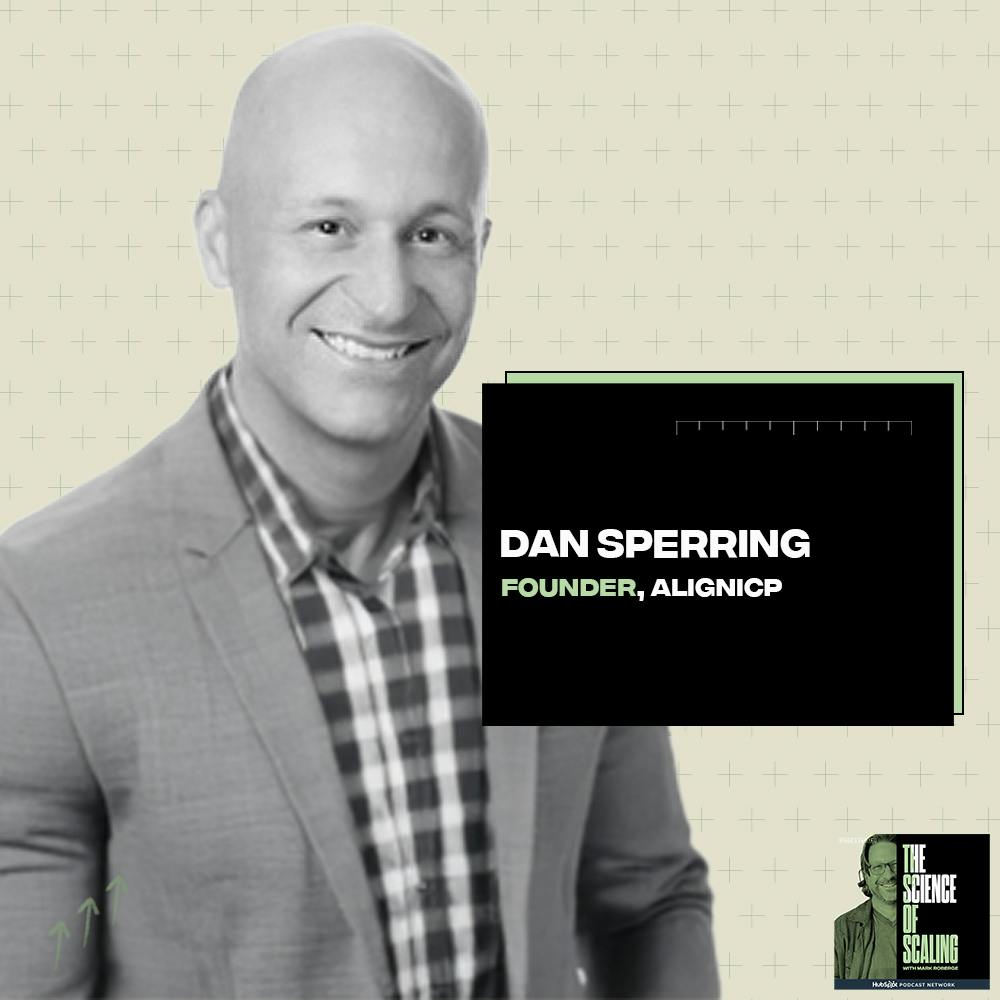
The Science of Scaling
The Critical Importance of Focusing Your ICP w/ Dan Sperring (Founder, AlignICP)
00:32:10
Loading summary
Transcript47 lines
- [00:00]
Dan Sparing
Just be best in the world at that one use case. Earn the right to basically expand by focusing on solving use cases. And this is a really, really big, important one for your Persona.
- [00:12]
Mark Roberge
All right, interesting data. Listen carefully. Companies with a very tightly defined ICP that is operationalized on the front line spend 50% less on sales and marketing. They have CAC payback periods that are 24% shorter than the mean. And those ICP customers have a 425% higher expansion rate in the first 12 months compared to those that are not. That's intuitive, but this is crazy. 20% of open pipeline opportunities from the average company is in the ICP and 30% of their customer install base is in their ICP. We are not aligned. There's huge upside here. And I learned this from a LinkedIn comment from a very smart gentleman, Dan Sparing, the founder of Align icp. We got into a great conversation and I was like, we gotta share this on the episode. So here we are. We're gonna do something different today. It's not a unicorn executive talking about how they won't. It's a gentleman that has passion for the frameworks and components we've been talking about and how they apply in practice. My name is Marco Berge and this is the science discussion. All right, so Dan, welcome to the show.
- [01:39]
Dan Sparing
Thank you so much for having me on, Mark. I'm a longtime listener, first time caller.
- [01:44]
Mark Roberge
Well, thank you. That's awesome. You sent me a great note and it was like, I got to talk to this guy more. I. I guess let's start at the beginning. Dan, how did you even, like, stumble across the work of the science of scaling? And I know as you dug in, many different points kind of like resonated. But like, what was the initial point that like, really like, drew you in?
- [02:06]
Dan Sparing
I guess I was incredibly fortunate in 2013 to go to work at an early stage SaaS company that had the potential of becoming a unicorn. Eventually ended up as a CS leader doing quarterly win loss analysis. And through that analysis started to see a lot of trends and patterns in the data, eventually stumbled across the science of scaling. And all of a sudden there was a lot of dots that I could connect that I couldn't do. So before coming across that work, quarterly.
- [02:37]
Mark Roberge
Win loss, if it was in the CS context, am I interpreting this correctly, that it wasn't sales opportunity win loss, it was customer win loss. Like we'd signed them up and then were they going to renew? Is that that, Is that the context?
- [02:51]
Dan Sparing
All of our win loss analysis That I did was looking at this idea of more of net revenue retention. How do we efficiently grow the existing customer base?
- [03:00]
Mark Roberge
Got it. Okay, so what were the trends? You know, Cause there were trends you were seeing, and then you came in and you saw some codification.
- [03:05]
Dan Sparing
There were certain types of segments or customer types that would easily, they would, they would sign an agreement and then very quickly get, get what I, I use the term value realization. So you know, within weeks they would be using up and running, using our, our software and getting tremendous amount of value. And those were the customers that tended to grow and expand. And then there was other customer types that they would sign an agreement, six months later, they still wouldn't have the software implemented. And ultimately those companies, they were interfacing with our same kind of, you know, onboarding teams, implementation teams. And so what was different wasn't us. It was the customers and the Personas associated with using and implementing the software.
- [03:58]
Mark Roberge
We're at one particular juncture of, you know, is this customer going to be successful or not? And it's purely onboarding. And then your conclusion was it wasn't really the variance and how the customer was onboarded. It was more of a variance about who the customer was. Can you unpack that more?
- [04:17]
Dan Sparing
When you think about software products, typically the way that they're built and constructed, they're really good at maybe 1, 2, 3, 4 use cases. But as you start to get to like the 8th, 9th, 10th use case, the ability for customers to actually derive value from that use case gets compromised. For example, a retailer use case may be foundationally different than a media company's use case. And so the jobs to be done and the features that those clients leverage to realize value can be foundationally different across each one of those verticals or use cases.
- [04:57]
Mark Roberge
Biggest question I get every day, how do you build the next unicorn? How do you build predictable scalable revenue growth? Luckily, the folks at HubSpot have put together the science of scaling database. Real playbooks from companies that have gotten to the scale of like 40 billion in market cap. The playbooks cover key decisions like hiring, compensation, go to market strategy, ICP development, even stuff on AI in sales. All from the folks behind the fastest growing companies in tech. It's not fluffy, it's super tactical. You know my content, you know my brand. It's stuff that you're going to pick up, download and put to use within an hour. So head to the description, click on the link and download your free copy to start scaling your business today. So at the point of signing up a customer. When you're looking at, you know, given your experience and your recent work of just kind of obsessing and researching on this, you feel like you're pretty good at. When a customer signs up, if you were to just do like a 10 minute interview on that customer and dive into the use cases by for which they signed up, you can predict pretty accurately whether that's going to be a long time, 10 year customer or whether that's going to be a customer that just never engages based on the use case that they made their, their decision on.
- [06:27]
Dan Sparing
Without a doubt. And so the use case is foundational to a client's ability to derive value. There's another really interesting dimension to this which is the way in which we construct the quote or another way to say is our pricing and packaging. The way you structure the deal like the amount of services you include on it can have a dramatic impact on the client's ability to actually derive value from their purchase.
- [06:53]
Mark Roberge
Hey folks, just Mark here, I've actually never heard it described that way. I like it, I like it like he's, he's saying he could predict ltv high ltv of a customer based more on the use case by which they bought than their size, their location, their revenue, the Persona that bought in, etc. I like that a lot. And I'm going to root it here in go to market methodology because one of the biggest mistakes that people make when they get to that presentation stage of the go to market and sales process is they do great discovery but then they give the same demo to everyone. Like what was the point? You know, everybody can perceive your product differently and you need to if as long as they're a good fit with these use cases, you need to explain your product in a way that resonates with the use cases that they care about. But most folks just give that generic demo and you're just suboptimally executing. And so that's really hard to like teach this to a 26 year old account executive that doesn't have decades of experience in sales. You're basically saying like tailor your pitch to the needs of the customer. Well, that's hard. Like the best salespeople, yes, they never give the same demo but like that's hard and that takes a long time to understand. So here's a way to training wheels it that's aligned with what Dan's saying. And I did this with our first sales trainer at HubSpot, Andrew Quinn. We sat in a room for a day and we listened to 20 discovery calls of 20 different customers. And we crafted the perfect demo for each customer based on the discovery call. And after we reflected on that exercise, we realized that those demos fit into basically three buckets. There was like demo one, demo two, demo three, and now we were able to training wheel it for our account executives. It wasn't like, hey, tailor every demo to the needs of the buyer. It was like, figure out what they need, what their perspectives are, and then choose one of three demo options. That is a huge move beyond just the generic demo. And it made it really easy for folks to align with this. Now I add Dan's work on this, and it's like, if you can align those demos with the use cases that are proven to yield high LTV customers, now we're cooking, and now we're finding ways to, to align our great ICP strategic work with what's happening on the front line, both in the sales process and this continues on to customer success. Because it's the same thing. It's like, this is awesome. You just explained to me exactly the use case I need. Now if they get thrown over to customer success and onboarding and they go through a generic onboarding process that every customer goes through bad. So there's continuity opportunity here that allows just like they tailored the presentation on the use case, now the onboarding process is tailored to them as well. It feels custom, but it's just configured so it still scales in services. Great observation by Dan and pretty easy way to operationalize this on the front line. Let's get back to him.
- [10:17]
Dan Sparing
So David Spitz died, did a study comparing horizontal SaaS companies to vertical SaaS companies, and he looked at public companies. And what he did is he narrowed the sample size to companies with similar amounts of ARR, like within, let's say, 5%, and then companies with almost identical growth rates. And in the study, what he was able to prove and demonstrate is that the horizontal SaaS companies had CAC payback periods 24% shorter. And so right now the average CAC piggyback period is 36 months. So I think for vertical SaaS companies, I believe it's 26 months right now. And then the other metric that David was able to demonstrate is they spend about 50% less vertical SaaS companies do on sales and marketing operating cost.
- [11:12]
Mark Roberge
And what do you think is the driver?
- [11:14]
Dan Sparing
There's.
- [11:14]
Mark Roberge
Because in. In payback, it's, you know, it's, it's acv, it's gross margin, it's cac. I don't know if payback accounts for retention.
- [11:23]
Dan Sparing
You're right, it, it doesn't factor in for retention, but it does look at the, the contract value. Um, and so there's a bunch of other metrics that when we start to triangulate this it becomes really clear what's happening.
- [11:39]
Mark Roberge
Hey folks, it's Mark here. I love the fact that this is data supported this observation because I see us falling in this trap quite a bit. In the entrepreneur ecosystem. When VCs are looking for a billion dollar TAM at your seed stage, it doesn't mean you have to prove that with every customer in every segment out of the gate. In an extreme situation, you don't want to be selling. One customer in Australia that's huge healthcare system, one customer customer in Europe that is a small manufacturing firm and one customer in South America that is a mid stage fintech player. They just need to believe your vision. But we fall into this trap where the entrepreneur goes out and paints a picture for a big team, which is good. But what they do is in their 0 to 1, 1 to $10 million journey, they build for that huge market and they sell to that huge market and you end up boiling the ocean and you fail. And that's what Dan is bringing to life here and the research that he's showing is bringing to life. And what we need to do instead is yes, paint the big picture, but find that first minimal viable product and market which he's talking about in use cases to exploit. Find the lowest risk way to go from 0 to 1 and 1 to 5 and 5 to 15. And while you're doing that, if you're humming, that is a two to three year journey, that is plenty of time and you have some disposable resources and some disposable capital to exploit the known, but test the new. So during that three year journey, you're exploiting it from 0 to 1 to 5 to 15. And you're testing that new market or new product. That new use case is the way that Dan's talking about that you're maybe testing a couple. This might be like going to the enterprise or it might be a tangential product, or it's both. And you're setting those tests up so they don't exhaust resources. Two will fail, one will succeed and that one that succeeds gives you the next three years to go from 15 to 30 to 60 and that allows you time to build the next tangential product or test the next market like perhaps international and then you can expand into that. And now you've architectured your Way to a billion dollar company. Tell the big story, but exploit the simpler use case initially.
- [14:16]
Dan Sparing
Let's get back to Dan. As we worked with clients, what we typically see is less than 20% of the pipeline is with ICP customers. We've also seen that less than 30% of the customer base is representative ICP customers. For horizontal SaaS companies. For vertical SaaS companies, it's closer to 50% of the pipeline is with ICP customers and then it's around 60% of the install base.
- [14:47]
Frances Rai and Anne Morris
Hi, I'm Frances Rai. And I'm Anne Morris and we are the hosts of a new TED podcast called Fixable. We've helped leaders at some of the world's most competitive companies solve all kinds of problems. On our show, we'll pull back the curtain and give you the type of honest, unfiltered advice we usually reserve for top executives. Maybe you have a co worker with boundary issues or you want to know how to inspire and motivate your team. No problem is too big or too small. People give us a call and we'll help you solve the problems you're stuck on. Find Fixable wherever you listen to podcasts.
- [15:27]
Mark Roberge
So there's just like you're throwing some awesome numbers at us. I want to make sure we like back up and just make sure we unpack all this. So number one is over the last 20 years we've come to the realization in B2B software that it's hard to argue that one of the main North Star metrics, in fact most of the time the North Star metric is customer retention, net dollar retention and customer. It's very difficult to build a business if you're not on top of that. Now let me play founder who is now playing devil's advocate and perhaps like vc, which by the way, I agree with you, but this is just what we hear. It's like, okay, well Dan, that's fair. But like I raised venture capital or want to raise venture capital and all most VCs want to see an IPO potential business. So if I follow your advice, my TAM is too small and I'm never going to get funded.
- [16:18]
Dan Sparing
The belief that that we have is it starts by really understanding and optimizing for product market fit. The second most important variable to drive company valuation is your efficiency metrics related to go to market. And so things like LTV to CAC ratio. The price of acquiring ARR is an iterative path and it's one that should start by, you know, and this probably makes a lot of sense. Focus on A market in which you can help customers derive immense amount of value and then be thinking about this idea of product market fit. And where can we, where do we potentially have product market fit in adjacent markets? When most founders and companies think about expanding the tam, they typically actually jump over a bunch of, like, foundational things that could do first. And so I'd argue first as. As you know, I'm having discussions with customers all the time about their ICPs. Most of them say, My current ICP isn't the one that I really want. But what most of them can't tell you is what percentage of that market have they already penetrated. Start by looking at your customer base and saying, you know, of our 500 customers, where do we have the strongest product market fit? And I would look at metrics like customer lifetime value logo retention, net revenue retention.
- [17:37]
Mark Roberge
Hey, folks, just mark here. Yeah, like ICP decision, product market fit. It's not based on where you're closing customers. That is like market message fit. You can sell ice to Eskimos. Big deal. It's product market fit is about where people are seeing value from your product that ultimately leads to retention and expansion. Beautiful. You know, one way to codify this around what he's saying, these words of, you know, customer setup and success. We can also call the leading indicator of retention, which is P percent of customers achieve E event every tee time. Right. Examples Slack. 70% of customers send 2,000 team messages every month. Dropbox. 85% of customers back up the device every day. HubSpot. 80% of customers use five more features in the 25 feature platform every month.
- [18:36]
Dan Sparing
Beautiful.
- [18:38]
Mark Roberge
We can define it. It's not the same for everybody, but you can define it and then we can measure it. So in your journey of zero to 20 customers, it's like, okay, great. We acquired one customer in January and they never lit up green. They never achieved that lead indicator attention. But guess what? Six months later, we reflected and we've pivoted. We learned more about our business. They're no longer in istp, so it doesn't matter. February, we signed up two customers and look red for two months. But customer number one lighted up green. Then they went back to red. Why? So you can start to see here that, like, very simple codification of these observations into the operation, such that the upper left here is like, we need 70% of our ICP customers to be hitting us. That's product market fit.
- [19:25]
Dan Sparing
Beautiful. Beautiful.
- [19:28]
Mark Roberge
And then we can know if our categorization of leading indicator attention is right a year later, because we actually have churn numbers and we can see that the people that we've signed up in the last year, those that did hit the lead indicator retention have very high retention and those that do not have very low retention. You learn something better.
- [19:48]
Dan Sparing
Beautiful.
- [19:48]
Mark Roberge
Probably the most important Learning in your 0 to 1, 1 to 5 journey that you got the lead indicator attention right. Or maybe you got it wrong. Maybe there isn't a variation as you look at those buckets, but you have plenty of probably logs, customer logs, usage logs, et cetera to that week. Analyze things and figure out what's right. Maybe it wasn't first lack the number of messages, it was more about the number of users. Great, let's run the correlation. Okay. So this is just a remarkable way kudos to Dan that the North Star is product market fit. And product market fit is not about sales and customer acquisition. It's about customer value creation and retention. And this is a way to codify into your business. Let's get back to him.
- [20:30]
Dan Sparing
Once you understand that hey, this is where I have the strongest product market fit. What's the TAM for those segments? And then through that process, chances are what will happen is because you haven't done this before, you, you will find areas of product market fit within the market that you're not aware of, that you've organically acquired like 35, 40 customers in a segment that you haven't been proactively targeting that are growing, you know, at a very healthy rate. You're retaining them, they're giving you positive NPS scores. And so rather than go to an adjacent market and then have to find product market fit, you can simply double down on those existing customer types where you're already successful.
- [21:10]
Mark Roberge
Okay, Dan, I love that. And I'll throw one more related devil's advocate to you, Dan, which is if I follow your advice and focus on a vertical, don't I hand the other verticals to someone else and what if they take a horizontal approach and I'm stuck in this little vertical and then they can outmaneuver me because they've got more capital.
- [21:32]
Dan Sparing
Agreed.
- [21:33]
Mark Roberge
And all in the backdrop that I agree with you Dan. But just so we can kind of surface what's going on in the founders.
- [21:39]
Dan Sparing
Heads right now, I'd argue you don't have to actually pick a vertical. Pick a use case and a use case that you know, is very prevalent across multiple horizontal markets.
- [21:54]
Mark Roberge
That's a great clarification.
- [21:56]
Dan Sparing
Yeah, yeah. Just be best in the world at that one use case and focus on being more of a point solution and then earn the right to basically expand by focusing on solving use cases. And this is a really, really big, important one for your Persona. And so I have just seen situations where we try to, for example, you know, as we're scaling, we're like, okay, we have to go multi product, but we do multi product for different Personas and that creates a whole different beautiful.
- [22:29]
Mark Roberge
Thank you for that clarification. I think that probably gets some light bulbs and some comfort going around and this attaching this data of success to your current execution and strategy. Now you keep throwing around some nomenclature I think we all understand, but I think it's important to double click into. So like, how are people defining like ICP and Persona and what are some of the potholes or best practices you're seeing there?
- [22:50]
Dan Sparing
The best metaphor is think about a dartboard. And, and so the dartboard's your target market. And then on the dartboard you have these concentric circles. And so your ICP is the bullseye of the dartboard. And so what we're finding as we do this analysis is what are the best fit customers? The ones that they're renewing, expanding, growing. And typically those customers represent a small subset of your install base. But when you really look at the ICP specifically to go to market, the real purpose of the ICP is to help the organization focus on the accounts that are going to really drive the business forward. And so the jobs to be done for demand gen, the people that have the $3 million budget that have to create the great leads, the ICP typically fails them. It doesn't give them the information they need and they end up leaning more into quantity versus quality. HubSpot has a great stat which states that organizations that have well defined ICPs, they have 68% higher win rates, which is pretty fascinating to see, which is, you know, again, probably isn't really too surprising. The companies that know their customers best probably, you know, do much better on the go to market side. HubSpot also has another quote which is less than 7% of salespeople feel like the marketing organization is creating high quality leads. And so the reason for this is we don't have a programmatic process in place to operationalize our ICPs. And so a question becomes, how do we actually turn this into a program and use this to guide our, our activities around go to market? And it starts with us creating these definitions and then tagging our accounts within the CRM with these, with these labels. And once we have that foundational layer there, then we can start to programmatically measure our ability to build quality pipeline and close deals with accounts that have a higher propensity to renew and expand.
- [24:54]
Mark Roberge
Yeah, that's crazy, Dan. Now, let me just take a step back and you know, you and I are coming to these conclusions based on the last, whatever, 15, 20 years of sales and customer funnels and buyer journeys and ICPs. And arguably we might be going into a dramatic shift because of AI. What's your thoughts on that?
- [25:15]
Dan Sparing
Today we have, I believe, Brinker published the latest report. I think it's maybe it's 15 to 17,000 different martech companies. And so when I take a step back and I think about this space, when you really distill what these companies do down to their real core foundational levels, there's massive amounts of overlap. So when I think about this market, I do believe that it's one in which is right for disruption and a lot of commoditization. What I'm seeing are companies like ZoomInfo is a great example where what they're doing is ultimately selling leads and they're selling contacts. And today, when I. If you take a few steps back and especially if you look into a CRM, what you'll see is there's probably maybe like 30,000 accounts within a CRM. Of those 30,000, there's probably a very small subset that are active customers. And then in terms of which ones are part of the ICP, it's probably a really small, like, like maybe there's 3,000 accounts that are really part of the ICP. So as you start to think about this idea of the future in AI, if AI can help us dramatically reduce who we're focused on selling to. And what I think most organizations want is they, they would like their CRM updated with the accounts that matter and probably the contacts that are going to be members of the buying committee. And we know that individuals especially go to market side, we know that they're changing roles like every, you know, 15, 24 months. And so there is a shelf life in terms of the value of a contact. And so I, I see a day in which where we have these foundationally different licensing models where rather than buying, for example, you know, a hundred contacts for bank of America or maybe a thousand contacts for bank of America, we have 20. And they're constantly being updated as the buyer committee evolves over time.
- [27:18]
Mark Roberge
Yeah, I agree with that. I mean, I think AI, arguably at a mature state, can do a much better job of, of defining the ICP according to something about the customer, whether it's the use case or the Persona or the demographic or preference or whatever that will correlate with a high lifetime value customer. There's an agent in there that does that. Okay. That we're currently doing today with a lot of error and a lot of simplicity because of the limitations of humans. Right. And so once that's discovered, then you can incorporate that into your demand gen strategy, where those are marketing campaigns or SDR campaigns or whatever to acquire the right customers. And right customers are things that can be identified before you even talk to a customer, like demographic stuff and stuff that needs to be understood when you talk to the customer. Like, what strategically are you prioritizing these days, which can't be read necessarily publicly in many cases. And so there's a much better opportunity for AI to align the ICP with the demand gen strategy and investment to your point, to make it far more efficient. What if the buyer is an AI agent too?
- [28:33]
Dan Sparing
Thematically, I can see that happening. My intuition is it's going to take a lot longer than we think. But I do without a doubt see opportunities, especially for gen AI, to drive more efficiencies in, into that process. And so you maybe, you know, rather than going from 10 to 1, maybe it's, you know, 10 to 8, you know, over five years or something like that. But yeah.
- [28:56]
Mark Roberge
Dan, I just want to thank you for coming on the show to share this knowledge.
- [29:00]
Dan Sparing
No, no, I appreciate it. And yeah, keep up the, the work. There's just so many massive insights that that work unlocks. So nicely done. Thank you.
- [29:07]
Mark Roberge
Thank you, Dan. All right, that does it for today, folks. Our episode was written and produced by my favorite producer, Matthew. Editing comes from Patrick Edwards. The science of scaling is a proud part of HubSpot Media. And if you like what you heard today, make sure you follow or subscribe to us wherever you're a fan of the show. And if you're a founder ready to scale, check out my VC firm, Stage 2 Capital. We are backed by over 800 CROs, CMOs, CCOs from the best companies in tech, and we're ready to help with your scaling journey. Okay, see you on the next episode.