Podcast
The Secret War on Cash
Hosted by Dean Heskin · EN
The U.S. Government and Federal Reserve are fighting against cash on many fronts. Banks must now report cash withdrawals or deposits of $10,000 or more. Furthermore, banks must report to the government any financial behavior on your part it arbitrarily deems "suspicious" or "unusual."
The World Economic Forum and World Bank are touting the creation of an international digital currency, an increasing number of businesses and venues in the U.S. have become "cashless" and the devaluation of the dollar has been in full swing in recent years.
Swiss America CEO Dean Heskin says we need to be aware of the campaign against cash due to current and coming policies and prepare for what is to come through our podcast, THE SECRET WAR ON CASH, powered by Swiss America.
The World Economic Forum and World Bank are touting the creation of an international digital currency, an increasing number of businesses and venues in the U.S. have become "cashless" and the devaluation of the dollar has been in full swing in recent years.
Swiss America CEO Dean Heskin says we need to be aware of the campaign against cash due to current and coming policies and prepare for what is to come through our podcast, THE SECRET WAR ON CASH, powered by Swiss America.
34episodes
Episodes
Newest firstAll episodes

Most First-Time Gold Buyers Don’t Know This
4d ago00:15:10Tap to summarizeMany experienced investors understand stocks, bonds, real estate and mutual funds but have little experience buying physical gold or silver.In this episode of The Secret War on Cash, Dean Heskin and Chris Agelastos provide a practical introduction to the different categories of physical precious metals.They explain the distinction between gold and silver bullion, modern minted coins, common collectible coins and genuinely rare investment coins. Chris discusses familiar products such as American Eagles, Canadian Maple Leafs and bars produced by established mints, then explains how older coins may carry additional value based on rarity, condition, scarcity and collector demand.The conversation also explores coin denominations and why some buyers prefer a mix of sizes rather than placing their entire allocation into large coins or bars. Smaller denominations may provide greater flexibility, much as carrying several bill sizes can be more practical than carrying only $100 bills.Dean and Chris emphasize that product selection should begin with the buyer’s goals. Someone seeking straightforward metal exposure may have different needs from someone concerned with privacy, long-term growth, emergency access or leaving assets to future generations.They also explain how opening a complimentary Swiss America account can provide access to pricing, order history, electronic materials and daily or weekly financial newsletters without requiring an immediate purchase.The key takeaway:Understand why you are buying before deciding what to buy.Brought to you by Swiss America.Get your complimentary Secret War on Cash Report:Call or text: 1-800-289-2646Visit: https://www.swissamerica.com/social
Transcribe →
Gold and Silver Buying Opportunity After Market Pullback
6d ago00:11:06Tap to summarizeSilver’s recent pullback has been dramatic, but has the market changed, or has the price simply moved faster than the fundamentals?In this episode of The Secret War on Cash, Dean Heskin and Chris Agelastos discuss silver’s reported decline of roughly 53% from its $118 high and why the move may have created a new opportunity for investors.According to the article examined in the episode, approximately 40 percentage points of the decline occurred during the first six days. Dean and Chris argue that such a sharp move may reflect a market overreaction rather than a disappearance of the forces supporting precious metals.Those forces include several consecutive years of silver production deficits, declining above-ground inventories, growing investment demand, persistent inflation, geopolitical conflict, energy disruption and pressure on the U.S. dollar.The conversation then turns to gold. Dean and Chris discuss gold’s reported floor near $4,000, its previous high near $5,500 and predictions that another major geopolitical or monetary event could accelerate prices rapidly.They also explain the different roles the two metals may play. Gold tends to offer greater stability, while silver can produce more dramatic gains and losses.Rather than trying to predict the exact timing of the next breakout, the episode explores whether a balanced allocation to physical gold and silver can help protect purchasing power while preserving the potential for long-term growth.Brought to you by Swiss America.Get your complimentary Secret War on Cash Report:Call or text: 1-800-289-2646Visit: https://www.swissamerica.com/social
Transcribe →
Could an AI Crash Trigger the Next Financial Crisis?
2w ago00:12:14Tap to summarizeThe financial system may be confronting two major disruptions at once: an overheated artificial-intelligence investment boom and the rapid expansion of stablecoin payment infrastructure.In this episode of The Secret War on Cash, Dean Heskin and Chris Agelastos discuss warnings that OpenAI and the wider AI sector could become a modern “Lehman moment.”AI companies have attracted enormous investment and helped lift the broader stock market, but many businesses are discovering that automation is more expensive and less effective than promised. If the gap between investor expectations and actual returns becomes too wide, the consequences could spread beyond technology stocks and into retirement portfolios.Dean and Chris also examine Visa’s new stablecoin platform. With more than 200 million merchants connected to its network, Visa could introduce stablecoin settlement to millions of consumers who have never deliberately chosen to participate in cryptocurrency markets.Stablecoins aim to combine the efficiency of digital currencies with the relative price stability of the dollar. But moving payment traffic outside traditional banking channels could place additional pressure on an already-fragile banking system.The episode asks two urgent questions:What happens when the AI investment narrative stops matching financial reality?And what happens to banks when consumers and merchants can move money through payment networks that no longer depend on traditional bank settlement in the same way?Brought to you by Swiss America.Get your complimentary Secret War on Cash Report:Call or text: 1-800-289-2646Visit: https://www.swissamerica.com/social
Transcribe →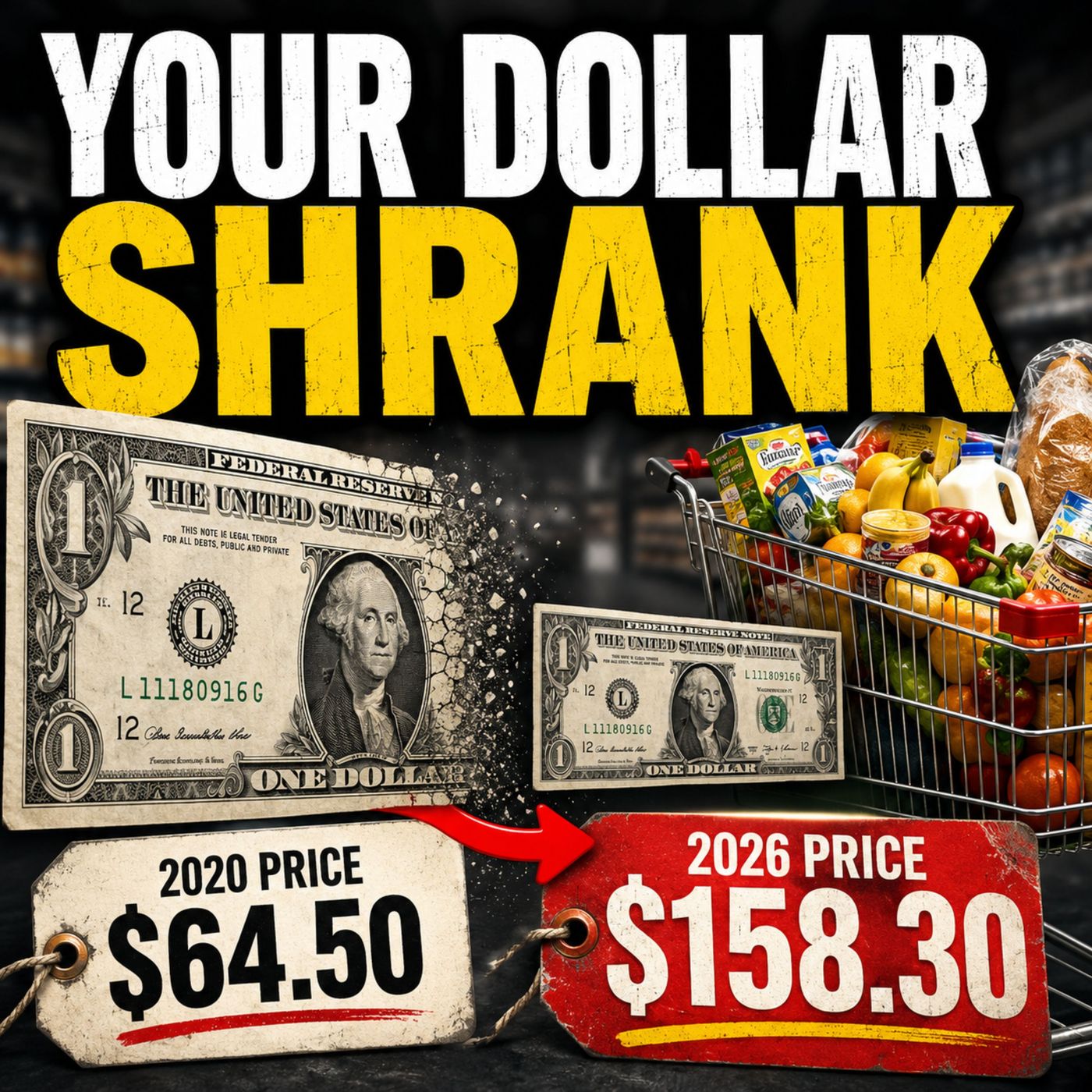
The Same Groceries Cost 145% More Than in 2020
2w ago00:12:09Tap to summarizeA 28-item grocery order that cost $64.50 in 2020 reportedly costs $158.30 today.In this episode of The Secret War on Cash, Dean Heskin and Chris Agelastos use that receipt comparison to expose the deeper erosion of household purchasing power.Food is only one part of the pressure. Families are also facing rising rents, higher energy costs, growing credit-card balances and an increase in home foreclosures. Many are no longer cutting luxuries. They are cutting meals, delaying bills and returning to work after retirement because the basic cost of living has moved beyond what their income can support.Dean and Chris also discuss the worsening public outlook on the economy, the political consequences of prolonged financial pain and the challenge facing millions of Americans who remain outside the labor force.When two-thirds of the country describes groceries as unaffordable, the problem is no longer abstract inflation data. It is a direct threat to household stability.The conversation asks a simple question Washington still seems unwilling to answer:What happens when food, shelter and energy all become unaffordable at the same time?Brought to you by Swiss America.Get your complimentary Secret War on Cash Report:Call or text: 1-800-289-2646Visit: https://www.swissamerica.com/social
Transcribe →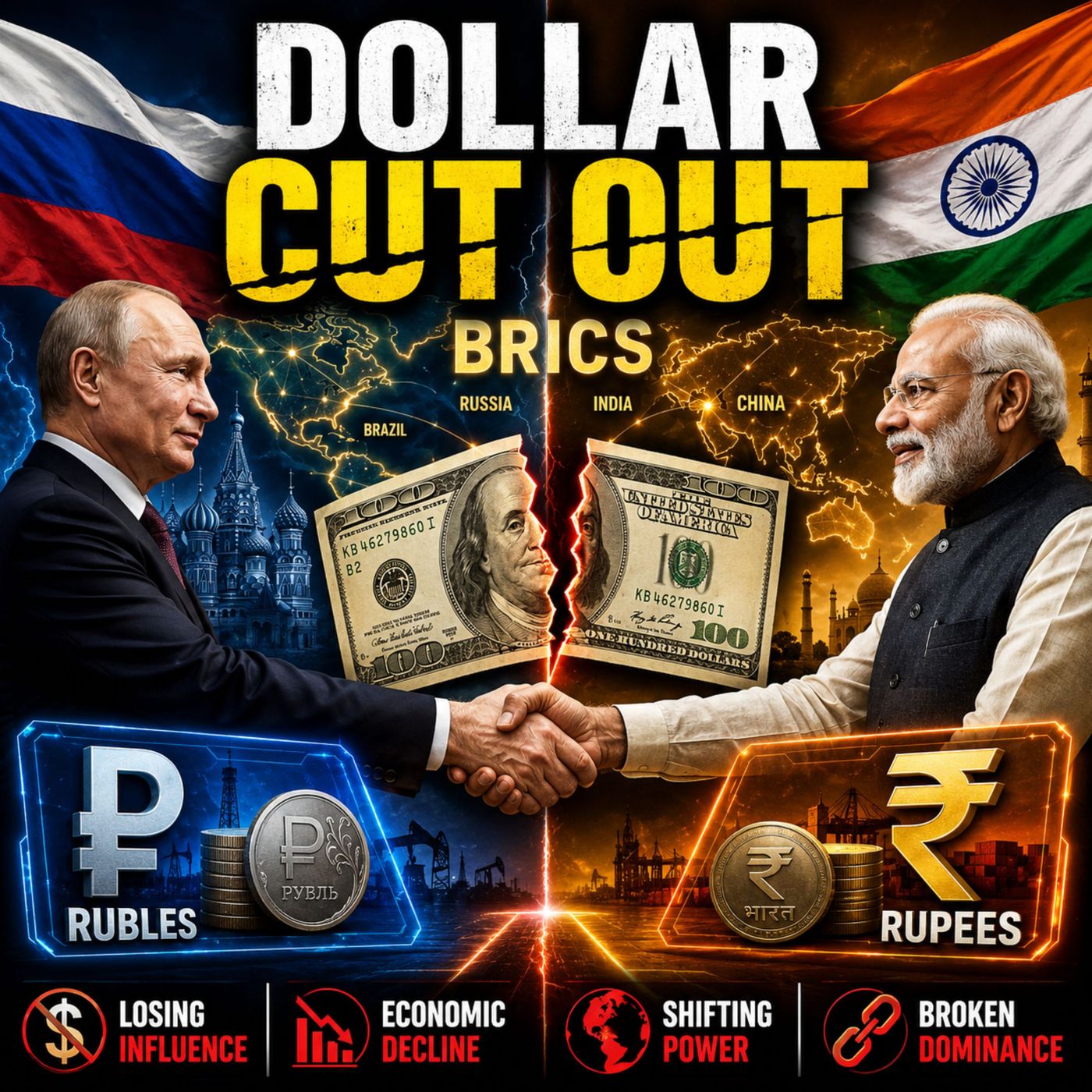
Russia and India Are Cutting Out the Dollar as U.S. Debt Explodes
3w ago00:13:05Tap to summarizeRussia and India are working to expand trade without relying on the U.S. dollar. At the same time, the United States continues adding trillions to its fiscal deficit.In this episode of The Secret War on Cash, Dean Heskin and Chris Agelastos connect those two developments and examine what they could mean for the dollar’s long-term global influence.Russia and India are increasingly settling trade in rupees and rubles, reducing their exposure to U.S. payment systems, exchange-rate volatility, and sanctions. Their reported goal of reaching $100 billion in trade demonstrates how quickly financial relationships can grow once the dollar is removed from the middle.Dean and Chris then turn to America’s debt problem, including a reported $1.4 trillion fiscal deficit during the first nine months of fiscal year 2026. They illustrate the enormous difference between millions, billions, and trillions and explain why the federal government remains trapped by growing entitlement costs and political resistance to spending cuts.The episode asks a question that becomes harder to avoid with each passing year:What happens when America cannot meaningfully reduce its debt and other nations no longer need the dollar to conduct trade?The discussion concludes with the importance of diversification and the role physical gold and silver may play when confidence in traditional financial systems weakens.Brought to you by Swiss America.Get your complimentary Secret War on Cash Report:Call or text: 1-800-289-2646Visit: https://www.swissamerica.com/social
Transcribe →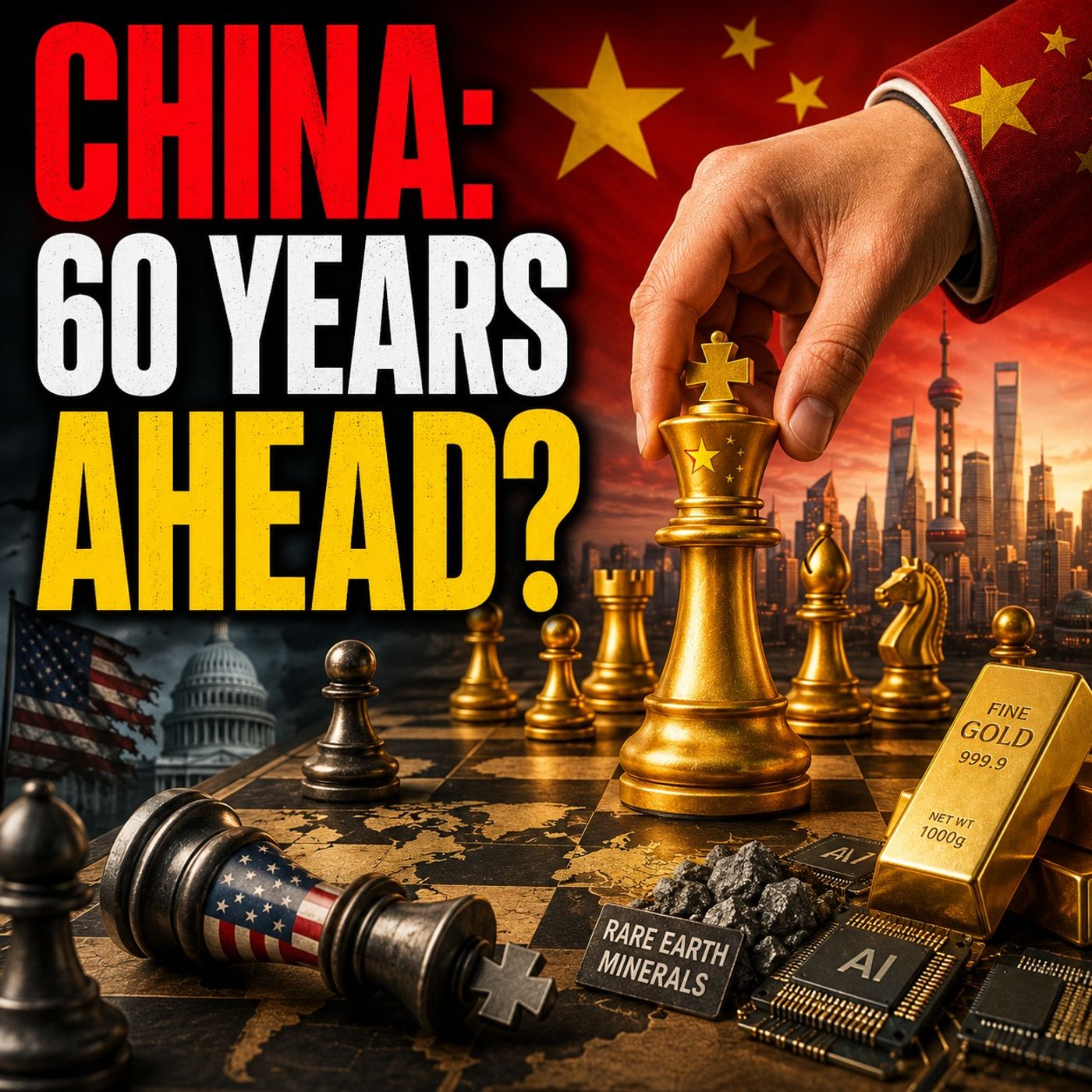
Why China Is Dumping Dollars and Stockpiling Gold
3w ago00:11:17Tap to summarizeChina is not merely buying gold. It may be building the financial and industrial foundation for a world less dependent on the United States.In this episode of The Secret War on Cash, Dean Heskin and Chris Agelastos explore reports that China is selling dollar-denominated assets, reducing its exposure to U.S. Treasury securities and importing vast quantities of physical gold and silver.They also examine China’s control over the critical minerals and rare earth elements used in smartphones, semiconductors, artificial intelligence, robotics, electric vehicles, military technology, aerospace and renewable energy.The episode asks several urgent questions:Why has China spent decades accumulating control over strategic resources? How vulnerable is the United States after outsourcing so much mining, refining and manufacturing capacity? Could Hong Kong eventually challenge London and New York as a center of global gold trading? And what happens to the dollar when major countries choose physical assets over fiat currency?China’s strategy did not emerge overnight. It was built over roughly six decades while much of the West focused on short-term costs and quarterly returns. America may now face an expensive race to restore the industrial capacity it allowed to migrate overseas.Brought to you by Swiss America.Get your complimentary Secret War on Cash Report:Call or text: 1-800-289-2646Visit: https://www.swissamerica.com/social
Transcribe →
AI Is Coming for More Jobs Than People Realize
4w ago00:19:00Tap to summarizeIn this episode of The Secret War on Cash, Dean Heskin and Chris Agelastos examine a growing economic threat that reaches far beyond tech headlines: the expanding disconnect between the number of Americans working, the number dependent on government support, and the rapid rise of AI-driven job displacement.They discuss the claim that 111 million U.S. adults do not have a job, the much smaller official unemployment figure, and the questionable categories used to soften the appearance of deeper labor-market weakness. The conversation then turns to the rising cost of government support, which now exceeds $1 trillion annually, and why that burden becomes more dangerous as fewer productive workers support more recipients.Dean and Chris also explore the next phase of the AI disruption story. Instead of just replacing low-skill or entry-level work, AI is now cutting into administrative jobs, coding, customer support, and middle management, while prices for groceries, fuel, and everyday life continue to rise anyway.Key topics include:the real labor-force problem behind official unemploymentAI layoffs in white-collar and administrative sectorsgovernment support spending and long-term sustainabilitywhy automation does not necessarily lower pricesinflation, job displacement, and shrinking purchasing powerwhy this could become a much deeper structural problemBrought to you by Swiss America.Get your free Secret War on Cash Report today.Call or text: 1-800-289-2646Visit: https://www.swissamerica.com/social
Transcribe →
Your Money Can Vanish Faster Than You Think
4w ago00:13:57Tap to summarizeDean Heskin and Chris Agelastos examine two related warning signs in today’s financial system. The first is the rise in bank-account scams, with billions reportedly drained from Americans through impersonation schemes, spoofed caller IDs, and pressured electronic transfers. The second is the continued strength of physical gold demand at a time when paper claims on metal remain widespread and Comex gold inventory has fallen sharply.Dean and Chris explain why account-based wealth can feel increasingly exposed in a digital-first system, why scammers are exploiting fear and urgency so effectively, and why some investors are becoming more focused on direct ownership of physical assets. They also break down why paper gold products are not the same as holding real metal, and why shrinking physical inventories could matter if more institutional holders seek delivery at the same time.Key topics include:bank scams and account-security riskcaller ID spoofing and impersonation tacticshow to protect yourself from fast-pressure fraudwhy physical gold demand remains strongComex inventory decline and paper-metal exposurethe difference between gold funds and owned metalBrought to you by Swiss America.Get your free Secret War on Cash Report today.Call or text: 1-800-289-2646Visit: https://www.swissamerica.com/social
Transcribe →
What the Collapse of the Continental Currency Teaches About Gold and Inflation
Jul 200:15:38Tap to summarizeIn this episode of The Secret War on Cash, Dean Heskin and Chris Agelastos reflect on 250 years of American resilience and the financial lessons embedded in the nation’s founding. The conversation revisits the collapse of the Continental currency, the phrase “not worth a Continental,” and why the Founders later emphasized gold and silver as anchors of real value and safeguards against inflationary government overreach.Dean and Chris connect those early lessons to the modern era, where runaway inflation, insurmountable debt, and the erosion of monetary discipline once again raise serious questions about the long-term strength of the dollar and the financial foundation of the country. They argue that America’s story is not only political and military. It is also monetary.Key topics include:the collapse of the Continental currencywhy the Founders distrusted unchecked paper moneyhow gold and silver supported the early American systemthe link between sound money and national strengthmodern inflation, debt, and monetary driftwhat financial independence means in America’s 250th yearBrought to you by Swiss America.Get your free Secret War on Cash Report today.Call or text: 1-800-289-2646Visit: https://www.swissamerica.com/social
Transcribe →
Is the Financial System Quietly Breaking Right Now?
Jun 2600:12:46Tap to summarizeIn this episode of The Secret War on Cash, Dean Heskin and Chris Agelastos examine two major fault lines forming at the same time inside the financial system. The first is the push toward stablecoin regulation, where new customer ID requirements could make digital currencies more mainstream while also reducing privacy for users who were drawn to them partly for anonymity and independence from the traditional banking system.The second is the growing fear that the broader market is sitting inside a bubble built on easy money, debt expansion, inflated asset prices, and investor excitement untethered from economic reality. Dean and Chris connect these concerns to AI-fueled optimism, real-estate inflation, stretched stock valuations, and the historical pattern that systemic collapses tend to develop gradually before they become impossible to ignore.Key topics include:stablecoin customer ID rules and privacy concernscrypto volatility and digital-currency trust issuesstock-market bubble warning signseasy money, debt expansion, and inflated assetsAI optimism versus consumer and economic weaknesswhy larger systemic fractures may already be formingBrought to you by Swiss America.Get your free Secret War on Cash Report today.Call or text: 1-800-289-2646Visit: https://www.swissamerica.com/social
Transcribe →