← The Shit No One Tells You About Writing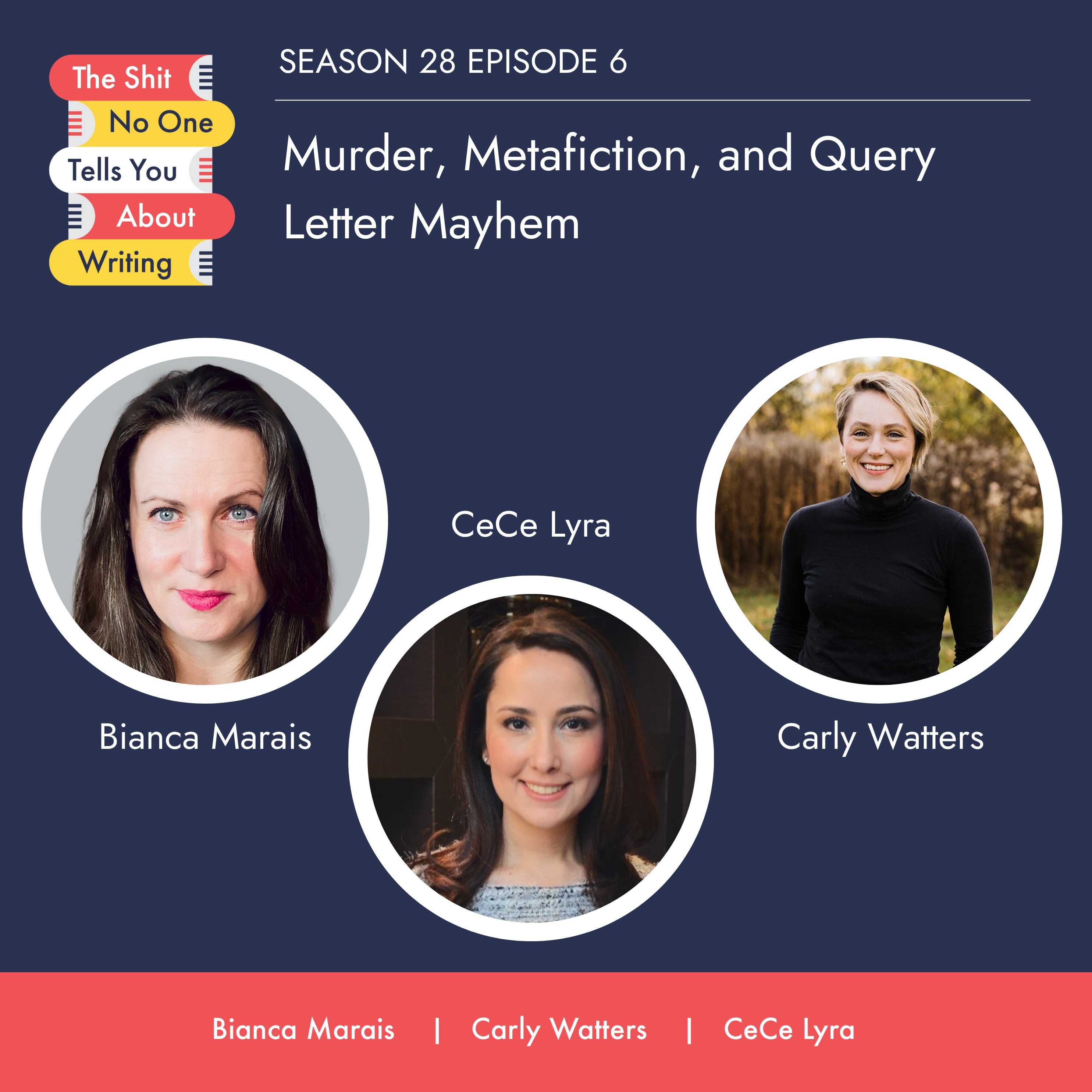
The Shit No One Tells You About Writing
Murder, Metafiction, and Query Letter Mayhem
00:43:43
Books with Hooks, Bianca, Carly and Cece
Loading summary
Transcript53 lines
- [00:00]
A
As the air turns crisp and the holidays draw near, comfort becomes the best gift of all. Quince delivers layers that last. Sweaters, outerwear and everyday essentials that feel luxurious, look timeless and make holiday dressing and gifting effortless. By working directly with ethical top tier factories, Quince skips the middlemen and offers prices 50% less than similar brands. That's how you get amazing deals like the ones that I am obsessed with. Honestly, the Italian wool coats are at the top of my list. They cuts feel designer, the quality rivals high end brands, but without the high end markup. Quince truly has it all. $50 Mongolian cashmere sweaters made for everyday wear. Denim that never goes out of style. Silk tops and skirts that add polish and down outerwear. Built to take on the season. Perfect for gifting or upgrading your own wardrobe. If you guys watch my reels on Instagram and you see me in a soft gray sweater tee that is my favorite quint piece and now I have it in two colors. All of my Mongolian cashmere items are staples in my wardrobe. I have the cashmere sweater tee in gray that's the one you see on Instagram and the Mongolian cashmere mock neck sweater vest in oatmeal. There's something so classy about a sleeveless sweater look and it doesn't bunch up in a coat so seamless and classy and so warm. At these price points I am happy to wear them to the hockey rink and to go out for dinner with friends. The timelessness of them makes them so functional. So if you want to be effortlessly warm and chic, I recommend those picks. Quints also has things for everyone on your list. I've shopped for my boys as well. They are great kids. Basics to be found. Step into the holiday season with layers made to feel good, look polished and last from Quince. Perfect for gifting or keeping for yourself. Go to quince.com teessnotya for free shipping on your order and 365 day returns. Now available in Canada too that is Q U I N C E.com tsnatyaw to get free shipping and 365 day returns. Quince.com tisnaya Woohoo.
- [01:56]
B
It's deep dive time again where we host a two day virtual retreat attended by writers from across the world. And if you haven't been monitoring our socials or subscribing to our substack, you won't know yet that we've announced that this will be our very last deep dive ever. So you definitely don't want to miss it. We'll be focusing on giving you access to a whole host of agents and editors who have worked on some of the last decade's best selling books, building a bridge between you and the so called gatekeepers of publishing. Subscribe to our substack or follow us on Instagram so you can be the first to be in the know as we begin to reveal our incredible lineup. Each week, mark these dates in your calendars. The Deep dive will happen on 31 January and 1 February, with 20 pre and post deep dive sessions happening the weekends before and after. And make sure you have 12pm Eastern Time on the 21st of November marked in your calendar for the early bird registrations. Hi there and welcome to our show, the ship no one tells you about writing. I'm best selling author Bianca Murray and I'm joined by Cece Lehrer of Wendy Sherman Associates and Carly Waters of P.S. literary.
- [03:24]
A
Hello everybody. You are back at Books with Hooks with Carly and CeCe. If you guys are watching this on YouTube, which you should be, I want to point out that I am wearing my Blue Jays shirt today because the Toronto Blue Jays are doing so well. And it's not a podcast unless you talk about sports. Right? Like, this is how we're going to climb the rankings, guys. We got to climb the rankings by talking about sports. Podcast. It is baseball, Okay?
- [03:47]
C
I don't know what it is. I don't know anything.
- [03:49]
A
This is the baseball. This is Blue Jay. Anyway, it says Blue Jays over here, but yeah, I'm repping Toronto Blue Jays today.
- [03:57]
C
When I lived in Boston, my friends made me go to a Red Sox game. Yes, poor.
- [04:02]
A
You had to go to Fenway. We feel so bad for you.
- [04:05]
C
I was wildly hungover that day. Like, wildly hungover. I really liked the snacks. The snacks were very yummy. I didn't understand anything that was happening, though. Like, I know the rules really well because for PE class, the only reason why I passed PE class was the written exams.
- [04:20]
A
Okay?
- [04:20]
C
So I memorized all the rules, but it was just very boring. Like, the balls kept going back. Like just. No, no, thank you.
- [04:26]
A
Yeah, well, listen, we got a rep Toronto. So there we go. We're getting in our sports content. And also, this isn't a shooting the shit episode. This is a books with hooks episode. So we should follow the rules and get to our program.
- [04:37]
C
Yes, let's do it. Okay, so I will ask Carly to read the first query letter.
- [04:44]
A
Here we go. Dear Carly, your podcast with Cece Lear is rich and inspiring. Also thank you. Full stop. Based on your wish list, I hope you will be interested in representing the Precise man. Complete at 95,000 words. Market historical fiction with both a mystery and meta fiction lurking within. Ned Tilney, the humorless master of the rebels, struggles to maintain his position and reputation in Jacobean London. His carefully structured life is collapsing. His wife is dead, official quarters lost. He now works in a smoky tavern. He is deeply in debt to the manipulative Edward de Vere, and he was the last to see the tavern Serving woman alive. And Will Shakespeare's new play mocks and rebukes him. Desperate as he faces accusations of murder and treason, he begs assistance from the playwright who despises him and the tavern keeper whose animated beauty terrifies him. With their help, Tilney must confront his own repressed emotions in order to uncover the truth. If he can escape debtors prison, the Hangman, and labyrinth of conspiracy, he may find both friendship and love. One more twist hides within this thrilling tale of betrayal, hypocrisy, redemption, and Will Shakespeare. The Precise man purports to be the transcription of Tilney's newly discovered diary. However, the scholarly annotations and glosses slowly reveal a parallel story, that of an academic who, like Tilney, has utterly lost his footing in the world. The Precise man will appeal to readers who love Maggie o' Farrell's Hamnet Lightborn by Hess Phillips and Flora Carr's reimagining of Mary Queen of Scots in the Tower. Brett Salish worked for Microsoft through the 1990s and 2000s, then spent another decade teaching business skills to lawyers. He has contributed short stories to anthologies published in the United States and South Africa. He's also directed a number of Shakespeare's plays. And he is neither a doctor nor an academic.
- [06:33]
C
Thank you, Carly. Will you please let us know the word count and what you thought of that query letter?
- [06:38]
A
All right. It clocked in at 313 words, so not super long for this one. This is like, as a concept, very interesting. I think our word count's on point. I do think we have three genres here. Three genres in one. It's kind of like upmarket historical mystery, metafiction. We don't really get comps until the bottom. Normally we do comps at the top where we recommend, you know, comps at the top. Completely up to you. It does help frame the a little bit, but I think that we just stick with upmarket historical fiction. I don't think the meta fiction is doing us any good here. I think it's just makes it seem More complicated than it is. I think a story within a story is a better way to describe it than potentially metafiction. So starting with the character's name. So we start with Ned Tilney as that body paragraph. It looks like a synopsis to me. It's just like, default synopsis. So it makes me think that you kind of just pluck this synopsis and try to turn it into a query. From there, I would think about a way to reword this paragraph because I find that these sentences in general are quite choppy, not very long. In the next body paragraph, we start to get longer sentences, which are a little bit more interesting. But I don't know. I just found it very, very choppy. So you call him the master of the rebels. I don't know what that means. What do they do? I'm assuming this is something to do with the theater world, which we figure out eventually. But I didn't really understand. I also don't really understand who the murder is. Is it the wife or is it. And it says, like, also, he was the last to see the tavern serving woman alive. Was that the wife? Or who was that? And what exactly is happening with who is dead? How does he potentially feel about that? Is he actually involved in it? I just have a lot of questions about the actual story. I do love a fictional Will Shakespeare. I will say. I think that is a huge, huge selling point. So I do love that. But I think we really just have to simplify the story a little bit more. You're making it sound more experimental than it is. I think, obviously, we're going to find out in the execution exactly how experimental it is. So, yeah, I don't know how exactly we can simplify this because, again, I haven't read the whole story. But instead of the choppy sentences, figure out a way to help us know what the inciting incident is. I don't feel like I know what the inciting incident is, essentially because we're just kind of like, here's some facts about Ned, and here's Will, and this is his drama. There's just a lot of vague stuff happening here, like his carefully structured life is collapsing. I'm gonna be honest with you. That line, carefully structured life is collapsing could be copy and pasted into every single query that we ever get. Every character's life is collapsing. Everyone. Why else are we reading a story about this character? So I don't want to see anybody writing these lines because they kind of drive me nuts personally. But I can get off my high horse about this. You know, the wife is dead. Great. How does he feel about this? Obviously, back then, people didn't always marry for love, and there's a lot of complicated things. It's just so factual and, again, makes it feel like a synopsis. So I would probably rewrite most of this, if not all of it, to just get at the little bit more of the heart of this. I think there is something super interesting here because he clearly has to dodge, you know, the debtors, prison, all of this sort of stuff. But then we also end up with, like, he may find both friendship and love. Are they both with Will Shakespeare? Is this a gay romance? I love this for our characters, but if that's not true, I don't want to project that on these characters either. So, again, lots of questions. I don't feel like I really have an understanding of what happens in this book, to be honest, but a fictional Will Shakespeare will get you pretty far. So I think there's a good start here. Regarding the bio paragraph, I don't think it needs to be in third person. I would probably do this in first just because it kind of stood out to me a little bit. And that's kind of my main note. Cece, what did you think about this one?
- [10:26]
C
Yeah, honestly, you echoed all my comments. When I started reading the plot paragraph, I didn't pick up on the fact that it was probably from a synopsis, but I think your diagnosis is right. But I have a little note here that says, and again, our Substack supporters will be able to see this. But I said, this isn't how you write pitch copy. You're just sharing facts about the protagonist. You're not giving me a sense of plot causality. What is the inciting incident? How does it escalate? There's a lot that's unclear, and that kind of lack of clarity, I don't think is serving your story. Well, the line that reads, he was the last to see the tavern serving woman alive. So that, to me, was probably put there to indicate that he is a suspect. But then why not outright say it? You know, like, she was murdered and he is a suspect, and so he must investigate to save himself from prison. Right. And then there's a line that says, he's facing accusations of murder and treason. Again, I think the murder is of the serving woman. I'm not actually sure if that's true, but I think so. But what about the treason? The treason, like the serving woman, I don't believe would constitute treason. Right. Treason is against whatever king or queen or. And so, again, how does treason play into this? I'm just not sure. I guess my thing is there are query letters that have to be edited, and then there are query letters that need to be rewritten. I am saying this with love. This needs to be rewritten. Like, completely rewritten. Put this aside. Just don't look at it anymore. And then I want you to get at least. At least 30 books that you adore. And I want you to sit down and I want you to literally write out, like, you can use. You can do it by hand, you can use your computer, whatever you want. Write out the pitch copy on the back of those books again. Like, literally, like, you're transcribing it right as you read it. That's going to train your brain to think in pitch copy language. Okay? And then try again and do this, do this. Rinse and repeat until you find that voice. You are focused on facts, and that's just not what you're supposed to be focused on. I think you're supposed to be focused on story. Okay, Sorry, I forgot we don't have Bianca. We are great today. We're so great without Bianca.
- [12:35]
A
B.
- [12:35]
C
We miss you. You know, she's so mad. If she listens and she knows that we're, like, doing small talking about sports, she's gonna get so mad. She's gonna be like, what are you doing? Like, I run a tight ship.
- [12:47]
B
Yeah.
- [12:47]
A
Yeah. You know, I listened to the Amy Poehler podcast, which I love. Plug for that podcast. It's great. And whenever the producers in the background laugh, it always makes me laugh. So I feel like that would have been a moment where if we had live producers, they would have laughed if we had producers.
- [13:01]
C
Okay, so, Carly, will you tell us what happens in the opening pages?
- [13:06]
A
All right, here we go. So we start off with an introduction. And it's not called a prologue, it's called an introduction, which is a letter that explains from a academic in the present day called Dr. Brent Salish, who is presumably the author of this book, London 2024, pretending that they have found this. Ned Tilney's diary. Laying out, you know, basically an academic analysis, as somebody would do in this environment of we found this diary, and, you know, the following pages are how we brought this to life in a modern way for the modern reader. Then we start with chapter one. We have a setting in the pub, in the tavern between Will, Ned, and the barkeep woman who was mentioned in the query letter. We have a bunch of footnotes because presumably this is Attempting to be an academic text or simulate an academic text. So we have kind of the interactions between them. They're arguing about something. There's some banter. They're kind of trying to undermine our Ned character because he is the one who gets to decide what plays go on. And I think this is what leads to the treason that was mentioned in the query letter. But there was somebody who got to decide again what. What plays were presented to the queen. And they're talking to him in jest about the situation. Lots of dialogue, and that's where it ends.
- [14:29]
C
Okay, and what did you think of the execution?
- [14:32]
A
I actually really liked the introduction. I did think it was kind of cheeky to be like, you know, this diary was found in the Brit libraries. Da, da, da, da. I just. I genuinely liked it. I thought it was a great way to kind of bring the reader in. If this is, again, what we're attempting to do for the story, it didn't come off super experimental, which is why I think this queer letter needs to be rewritten. I don't like that the person who is presumed to have found it is the author of the actual book, Dr. Brent Salish, because he is not a doctor. He says this like he does not have a doctorate is what I mean. He doesn't have a doctorate, as he says in his query letter. So I feel like he's misrepresenting himself. So I don't think that the author, like Brent himself, can pretend to. To have a doctorate in this situation. To me, that's like, it's not meta. It's misrepresentation. So I think you have to find another character, another academic character to play this part. So that's my take on the introduction, but I actually did kind of love it. Now I have some thoughts about these footnotes. I think they are a bad idea. And the reason I think they are a bad idea is because it's a bit of, like, a yellow red flag situation here. Because, again, whether you think it's a yellow flag or a red flag is kind of up to you. But we are going to base our entire foundation of assumptions on this book from the first page. Everything from style to tone to format and half of this first page is two footnotes. And the idea behind footnotes, again, as any studious person such as myself that went to university and got two degrees knows, the footnotes are there when you need to, again, go a little bit deeper or find the source or, again, there's. There's something that didn't feel fit within the actual paragraph, and there was no need for it in the actual paragraph. Therefore, it is just supplemental material that you go to in case you want to read a little bit more. Not everybody reads footnotes. So the fact that this person put half a page of footnotes in here, knowing that most people don't read footnotes, was just kind of strange to me, because if something was integral to the story, then it should be in the story. It shouldn't be in a footnote. So that's just me, again, getting on my high horse about that. So let's presume again, this is a reenactment essentially, of a diary entry. I don't think that we would be spelling things out as much as we would. This feels very much for the reader because if somebody was writing a diary, they wouldn't, like, recount how every character looks and acts in the opening pages of every diary, because they would be living in their mind. You know, I wouldn't say sitting with Cece, doing the podcast. Cece's wearing her glasses, her reddish pinkish lipstick and of cream blazer cardigan. Cream blazer cardigan with stripes. You know, I just. I wouldn't do that in my diary. I would just talk about what Cece and I were talking about. I just sound that bit odd. So, for example, he says, isabel sweat is short, slightly rounded in the waist, small of breast with hair of damp straw, green eyes, and a round face that carries beauty despite markers of the pox. I just don't think that, again, somebody that he would interact with all the time, he would write in his diary like that. That just seemed a bit strange to me. So that was just really took me out of the story to be like, I think he's just doing this for the reader. And I found that a little bit odd. I also didn't really feel like we got to the root of this kind of frenemy relationship between these two male characters, between Will and Ned. I think there's a lot here. I think this is very interesting. Clearly, it is a symbiotic relationship. They need each other, right? Will needs him to the play, and Ned needs Will to give him plays to put on, presumably, right? So, like, these two need each other. So I just don't really understand the banter. At one point, they say his words sting. I was like, why? Like, why do his words sting? What are we getting at here? You know, he's insulting his professional abilities, I guess, but I guess I just understand why he cares so much about this job. I don't Know, I just didn't. I just couldn't figure out the heart of the why of it all. But I really did like the setting and the kind of the tone of the song. Except for the part where he describes what the woman looks like. I don't like that part. But I do like this reimagined Shakespeare world, I will admit. I guess I'm a sucker for it. Cece, what did you think?
- [18:42]
C
The hook is great. You know, fictional Shakespeare, great. I will say. And this is 100% a matter of taste. I struggle with metafiction. Sometimes it's fine, but when it's too on the nose, and in my opinion, this is. I can't handle it. I, for example, did not like the introduction. I did not like the letter. And I actually, when I saw that it was signed by the author, I was like, wait, what? Because we just read a whole paragraph about how he's not a doctor, not an academic, not. And then I'm like, but why would you use the same name? And I even thought, maybe this isn't the writer's name. But then I think it is, because he's signing the query letter. I just had so many questions and that kind of confusion, you know, this is the opposite of what I think a writer wants. When an agent is reading pages, I go into a world you created. I'm supposed to be seduced by this world. I am not supposed to be going, wait, is this. Wait, hold on. Let me read this again, because maybe I missed something. Like, that is the worst. Now, when that happens, one of two things could be the cause. The first is you need to work on your story. The second, and I think this is actually what's happening, is I am not the right agent for the story. You know, and in this case, I think I need to recognize this about myself. I think I need to practice self awareness. Like, I don't love these kinds of stories where you have so much overt and explicit metafiction. Like, we have the letter, we have the author's name, then we have the footnotes. It's just way too much. There are novels that have a story within a story that I really enjoyed, but they're just a bit more subtle, you know, And I guess that's just my taste. So I do think that it was, you know, very well written and polished in terms of, like, the scene work. I knew what was going on. I knew who was talking. The interiority was very precise, and I just. I knew what the character was thinking and feeling. And, you know, that that does take work and I recognize that. I just did not feel intrigued by the story itself because I wasn't in the story. I didn't get sucked in. And again, matter of taste, right? Like, it's just one of those things.
- [20:47]
A
All right, thank you so much, Cece. Okay, we're going to turn it over to your query letter now. Can you read it for us? Yes, that's right. The countdown is on. Holiday shopping season is here. Uncommon Goods takes the stress out of gifting with thousands of unique, high quality finds that you won't see anywhere else. Don't wait. The most meaningful gifts get scooped up really fast and now's the perfect time to cross the names off your list. Stop scrolling endlessly for generic gifts. Head to Uncommon Goods. They do the heavy lifting, hunting down products that are not just high quality, but genuinely unique. We are talking about items that are often handmade or crafted in the US and frequently sourced directly from independent artists and small businesses. It's the secret to giving a gift that is both perfectly made and truly memorable. I was on the site getting Christmas gift ideas from my boys when I spotted the perfect thing. A little bedside caddy for their books. Made of repurposed quilts, it was absolutely stunning and so practical. It tucks in between the bed frame and the mattress and has tons of pockets for notebooks and books and pencils and water bottles and more. My older son has just learned how to fully read on his own. I know I am absolutely obsessed with this, so he needs a place to tuck those new books. When he's done for the night. All of us can go to any other old website and get something made quick and cheap. But a unique quilted item that has personality and is truly one of a kind because it is made of random fabric. That is what I am looking for. Uncommon Goods has something for everyone. From moms and dads to kids and teens, book lovers, history buffs and die football fans to foodies, mixologists and avid gardeners. You'll find thousands of new gift ideas that you won't find anywhere else. When you shop at Uncommon Goods, you're supporting artists, small and independent businesses. Many of their handcrafted products are made in small batches, so shop now before they sell out. This holiday season and with every purchase you make at Uncommon Goods, they give back $1 to a non profit partner of your choice. They've donated more than $3.1 million to date, so don't wait. Cross the names off your list before the rush to get 15% off your next gift go to uncommon good.com tsnatya that's uncommongoods.com t s n o t y a w for 15 off uncommon goods we're all out of the ordinary. Hey everybody, guess who's back from France. I was thinking of you guys listening to me talk about getting ready for the trip and practicing my French while I was doing my best order at the cafes. It went well. I was a bit nervous, but when we were in the countryside and I could take my time thinking about what I wanted to to say, I was able to say it. Being a bilingual family is high on my list of things that are super important to me as a parent and a mom. If we're going to show them the world, we also need to appreciate and respect the language and culture by learning it. Imagine how much richer your travel experience could be if you could speak the local languages. When you travel with Rosetta Stone, you'll gain the confidence to have real conversations and create deeper connections wherever you go. Rosetta Stone is the trusted leader in language learning for over 30 years. Their immersive, intuitive method helps you naturally absorb and retain your new language on desktop or mobile, whenever and wherever it fits your summer schedule. With 30 years of experience, millions of users and 25 languages to choose from including Spanish, French, German, Japanese and more, Rosetta Stone is the go to tool for real language growth. You can learn faster and retain longer. There's no English translations. You truly learn to speak, listen and think in your chosen language. There's an intuitive learning process. You start with words, build the phrases and progress to full sentences. It's designed for long term retention so it sticks with you. You can work on your accent with the built in True Accent speech recognition technology so help you sound more natural. You can learn anytime, anywhere. It fits with your lifestyle with the flexible on the go learning style desktop or mobile app and there's incredible value. A lifetime membership gives you access to all 25 languages so you can learn as many as you want whenever you want. Don't wait. Unlock your language learning potential now the shit about writing Listeners can grab Rosetta Stone's lifetime membership for 50% off. That's unlimited access to 25 language courses for life life. Visit Rosetta Stone/Visit RosettaStone.com today to get started and claim your 50 off today. Don't miss out. Go to Rosetta Stone.com today and start learning today.
- [24:40]
C
Let's do it. So Dear Cecilia, this person called me Cecilia. This is. I feel like I'm being scolded. Dear Cecilia. I hope you're having a lovely summer so far. I'm a big fan of your podcast which I watch on YouTube.
- [24:54]
A
Yay.
- [24:54]
C
Shout out to YouTube and I really enjoyed the episode you did for the Fold which I attended this year. I also connected with your manuscript wish list. I'm so excited to be querying you. Given your interest in dark thrillers, dysfunctional protagonists, feminist stories, female friendships, and moral ambiguity, I hope that you will consider my completed 99,000 word upmarket thriller Bibliomaniacs. My novel blends the seeking of connection and self discovery through literature explored in the novel the Jane Austin Book Club by Karen Joy Fowler with the murder, vigilante justice, and eventual female rage depicted in the television show you it's been 12 years since Fareeya Shah watched her abusive father kill a man. No matter how hard she's tried to shake off her past, she's lived with the kind of crushing loneliness that won't let go. Now, as a college student struggling with depression, Faria joins a book club of classmates she's only ever studied from afar. Finally included in a group of friends, she's desperate to ignore their red flags. But when a devastating murder takes place during a book club meeting. Faria. Faria. I don't know how to pronounce this person's name. I feel so bad I'm just gonna say Faria. Faria pieces together the truth that Samuel, their obsessive book club leader, is not just interested in debating and dissecting his prized books. He draws out ideas on torture and control from the most wicked stories on his shelf. As Samuel's real life crimes begin to mimic the dark novels chosen for their club, Faria is determined to get justice for Samuel's victims and save herself. Unable to turn to the city's corrupt police force, Faria rallies together a group of wronged women to devise a plan inspired by her favorite novels to get rid of Samuel, get back at her father, and to get away with it. With its gritty exploration of toxic friendships, female rage, class privilege, and intellectual obsession, bibliomaniacs will appeal to fans of Ju10 is Dead by Lian Zink I have Some Questions for you By Rebecca Mackay and Babel by RF Kwink I hold a Master's degree in Gender Studies from the University of Kwazulu Natal, along with an undergraduate degree in psychology and politics. Through writing scholarships, I have completed a writing course with author Tracy Skuse, a novel revision course at the Writers center, and a manuscript publishing course with Authors. Publish. Although my heart remains in my birthplace of South Africa. I now call Canada home, where I live close to Toronto with my mother and siblings. Thank you for considering my submission. I look forward to the possibility of working with you. Best wishes, Aziza.
- [27:36]
A
Awesome. Thank you. Cece, how many words was in this query letter? And what was your overall thoughts?
- [27:43]
C
Counting the words because I forgot to do that because I am not a good student. Okay, so this one came in at 454 words. Okay. In case you're Listen, I was totally joking when I said I feel scolded when you said Cecilia. It's totally fine to call me Cecilia. I just don't want anyone to think that I was serious. I don't mind at all. I did notice that you said, you know, I'm excited to be querying you, and I'm assuming you're writing that because you're practicing your query. I just want to make super clear to everyone who's listening, when you submit to the podcast, you are not querying cece, you are not querying Carly. You are submitting to an educational resource in which we share notes and thoughts and offer suggestions on improvement and also compliments. And so, again, I just want to make that super, super clear. And I'm pretty sure that you know this, but just in case someone's listening and they picked up on that, I want to make that abundantly clear. I love that you watch us on YouTube, but also the idea of people watching me is terrifying. So this is one of those situations where, like, half of my brain is going, please, dear God, don't watch me. And the other half is going, yeah, you got to watch us, because we need to improve our YouTube. You know, running a podcast to everyone listening is a lot of work. It involves a lot of costs. So we're always trying to find ways to bring in revenue so we can pay for the podcast's costs. And YouTube gives us no revenue, but maybe one day it will. So we're like, yes, please watch us on YouTube. So anyway, this is my YouTube brand title, Bibliomaniacs. This title to me speaks of, like, book club fiction, you know, I guess more relationship driven. It doesn't say Thriller to me. I don't get Thriller. The COVID art could potentially convey Thriller, like the word bibliomaniacs with an Oscar. Awesome cover art. I could potentially get that vibe.
- [29:32]
A
I don't know.
- [29:32]
C
I guess my question is, how attached are you to this title? You have a lot of comps here. You have comps in the metadata paragraph. Up top, you have the Jane Austen Book Club. And then you have you. And then you also have comps in the bottom right. Like, too many comps. Too many comps. You're going to pick two really awesome strong comps, and you're going to lead with that in the first paragraph. Don't do the this to our brains. I know a lot of authors think, hey, but if I use two comps and the agent doesn't like these two comps, I'm shooting myself on the foot. I'm going to book in my query letter and add more comms at the end because the more books I mentioned, the more chances of the agent going, that's so exciting. I really like that title. That is a really bad idea. Don't do that. It just confuses us. It causes whiplash. You do not want whiplash. So I also, you know, recommend title should be in all caps or italics if you prefer italics. I like all caps because italics can often get wonky with formatting. But just remember, everyone listening, all caps, please. So, okay, plot paragraph. Let me obsess about the part that I care about the most. This reads, faria joins a book club of classmates. She's only ever studied from afar. I had to read that twice because study afar. I thought of study abroad and I thought, wait, the book club is virtual? Later on, I understood that she meant more like she was an outsider looking in. She's an outsider looking into a group, and she was studying them in the. In the way an anthropologist studies someone, which everyone does.
- [30:59]
A
Everyone does.
- [30:59]
C
You know, you study groups that you don't belong to. You look at their mannerisms, you look at their, you know, who's the group leader, all that. That's great. But I wouldn't use that verb. I would say maybe she admired them from afar. You know, like, I just think that the sentence could be confusing. And so I would not give yourself that problem. So I also want to say something. The inciting incident seems to be, she joins the group and the plot escalation seems to be the murder. Like, that seems to happen early on. I really like it when thrillers have such a clear inciting incident and plot escalation, especially when it's in keeping with the genre, like murder.
- [31:38]
A
Awesome.
- [31:39]
C
So we have devastating murder takes place during a book club meeting. After that, I was expecting investigation. She's a suspect. She needs to, I don't know, like, again, plot points that would escalate that further, tying it to her. Because she wasn't murdered. It wasn't her friend who was murdered to the Best of my knowledge. So how does that murder tie with her? That's what we need after the murder, you know, making it the protagonist's problem to solve. However, what the author did here was shared lines. That felt like a really odd follow up to the murder. It felt like the author took her time to give context, when really the best thing to do after you say there's a murder is to launch into more plot points about that. And again, you were giving context on the murderer, and I don't think that you should be doing that. So I think that you need to reframe that. There's also a line that reads as real life crimes, plural, begin to mimic. And so then I'm going, wait, was there more than one murder? Because that's. That's what I'm supposed to be learning about. Like, that's the plot point that I think you should get to. And clearly your book has a lot, so good for you. So I was confused about that. And then the line that reads, get back at her father. Do not understand how these things are tied. I love that that is her story setup. Witnessing that, that gives her really interesting emotionality and emotional makeup to work with. And I mean, it's super cool if you're going to be able to, like, tie this thing that happened in her past to the present plotline. But I don't get it, and I need to get it or remove that. And yeah, I just want to say again, lots of potential here because thriller, murder, campus setting, this is all really awesome. But I was confused about a lot of things as hopefully you can see. So I do think I needed a little bit of work. Carly, what did you think?
- [33:28]
A
I agree. I think this has tons of potential. I think we're coming at it oftentimes from the wrong angle here. Our calm. I agree with cece. This is a campus novel. I don't know why we don't have any campus novel comps. These comps are quite old. Both of them were books and then became television shows, movies. So the books themselves are now older. Yeah, we definitely. We need to, like, completely update all of that. I also made a note of, like, I don't understand the logistics of the plot. What's the inciting incident? How many murders? And how did this all not stop because people knew about it then? Couldn't these murders have stopped? Like, I. I read this as there's more than one murder. So if I'm that confused about what's actually happening in the plot, I think we have some issues. And then we have more comps at the bottom, right? Like, why do we have more comps at the bottom? And again, the only campus novel here is, I have some questions for you. So that one definitely needs to come back towards the top, if that's the vibe that we're going for. I think a lot of this could be straightened out by just being a bit more straightforward with us. Not to saying that you're trying to, like, pull one over on us, but really just laying things out and a much more straightforward way is the goal here. I just don't know what parts of this is supposed to be something only Fariah knows versus what the rest of the campus knows versus, again, what's happening in the larger campus community. So I just don't. Again, I don't understand. Like, so it says when a devastating murder takes place during a book club meeting. So again, was it in front of them? Was it just at the time of the meeting? Did other people, like, witness it? Who else was around? Was this murder reported? Again, there's just a lot of things I'm not fully understanding. So I think this one needs a rewrite, a top to bottom rewrite. You know, I'm kind of of two minds on the title. I like, kind of reminds me. And, you know, again, this person would not know this because it seems like they. Their birthplace was South Africa. But there was a show when I was a kid called Animaniacs, which was like, again, I don't know if it's North American or just Canadian. So it kind of reminds me of like, Animaniacs, but bibliomaniacs. I know we're trying to get in, like, biblio, the book part, the maniacs. But something about this portmanteau feels a bit childish to me. Feels a bit young, but it could be. Again, it's a campus novel, so the youth element here can. Can come into play. So those are kind of my notes. I don't really have, like, a concise analysis here other than I think it needs to be done.
- [35:49]
C
Again, Animaniacs was world. Like, I mean, okay, I can't say that it made its way to South Africa, but it made its way to multiple countries with different. Different names, though. So then.
- [36:00]
A
Oh, okay. You know, as TV shows do. Okay, cc, what happened in these pages?
- [36:05]
C
Okay, so we start with a prologue, which is a letter, so epistolary prologue, addressed to the unlucky person who finds this letter and signed by our protagonist, where she basically says, you know, I. I killed him. And these are my reasons. Not sorry he died. I'm sorry I had to kill him. And then we go to chapter one, which starts with a timestamp one month earlier. The protagonist is on a bus ride on the way to university, and she's not doing well. You know, internally, through her interiority, we know that she's really, really struggling. And she is very open about this. All of a sudden, someone she calls her Goldilocks sits next to her. And Goldilocks is like, popular, right? And she's thinking to herself, oh, my gosh, get it together, because this popular girl's talking to you. And the popular girl just says, sorry, not girl, woman, woman, cc. The popular woman starts a conversation with her about, you know, what are you reading? And there's a lot of friendliness coming from her. And she asks, what are you doing after class? We should hang out. And she makes something up and tries to act cool. And we learn through her interiority that she is thinking of. And I do want to stress content note here, trigger warning, really. She is thinking of ending her own life because she's struggling so much. So again, there's going to be a little bit of discussion on this for anyone listening. And when she gets to the end and, you know, she has this invitation, she thinks to herself, maybe I would consider not ending my own life because, you know, Goldilocks will speak to me after class. Maybe if that happens, I'll consider not doing it. So. So that is what happens.
- [37:49]
A
Cece, what did you think about the execution of this one?
- [37:53]
C
Okay, so, small note. Let's talk about the prologue first. Prologues. Prologues that are epistolary are especially hard to pull off. I felt like this one was very, very on the nose and very, very plain plot convenient. She is writing a letter for someone who we don't know. She calls this the unlucky person confessing to murder, signing her name. That I don't buy. She needs to get this off her chest so bad, she walks into a police station and confesses. Now, if she were leaving this inside a time capsule that will only be open in a hundred years, I would get that because she would want to confess. But by in 100 years, she'll be dead. So I totally get that. That I also understand that, you know, the first pages make it clear that she is thinking about ending her own life. And so perhaps she wrote this letter thinking that she wouldn't be here, you know, given whoever found this letter. But I don't know. I just. I just for me, it didn't work. I really. I Thought it was really well written. I loved the line, I'm not sorry that he died. I'm sorry I had to be the one who killed him. This is both my confession and my goodbye. Which again speaks to the idea of she probably is still thinking about ending things, but for me it was not the best beginning. I do like, however, the idea of establishing that she's going to kill someone and then going back in time and having the a month earlier timestamp that I really like. I just don't know that the letter is the way to do it. If it is, if you're like really serious about this letter, then I don't know, it has to feel less convenient to me. I just wondering like, why not make it a bird's eye voicey prologue, you know, maybe because you don't want us to know if she's going to be there. So then maybe I don't know, an article. I just. The letter didn't work for me is what I'm saying. So we go back in time a month earlier and there's a line that reads, she's saying that she's feeling a persistent feeling of sinking a weight on her chest. And then I'm going to read a little bit the writing for you guys. If I had to explain this persistent feeling of sinking this weight on my chest to people who just didn't get it, I would say imagine what it would feel like if you were an Indian mother discovering that your frenemy son got into med school while your own man child son filmed prank tiktoks as a career. Or if you were a Gen Z who attracted only three measly likes on your thirst trapped selfie. Or if your favorite professor refused to give you a reference letter for grad school. Or if your hard earned promotion went to your boss's Tesla driving nephew, you. But worse. Inexplicably worse. I am all for sharp specifics. Sharp specifics are awesome. I don't think these sharp specifics are working. They don't seem to connect to her reality and they all seem unlinked. One of them is about rivalry, like the frenemy situation. And then one of them is about aging. I think the other one I have no clue. And then finally the other one is about being passed over for nepotism. So again, this to me is not the best way to frame your your story or the protagonist. This emotionality, I will say it seems like you know her really well. It seems like you know this person. I can just tell when I'm reading a book and someone has, like, real depth. The protagonist has real depth. She clearly has real depth. But these sharp specifics are not doing her depth justice. I will also say that, you know, it got a little repetitive. I feel like a big meanie saying this, but there are a lot of lines about how, oh, my God, it's a miracle that Goldilocks is talking to me because I'm essentially pathetic. She doesn't call herself that, but, like, I'm a loser. I'm pathetic. Like, once is fine, but you don't need to keep repeating it. The fact that Goldilocks just talks to her at all out of the blue, way too plot convenient. I don't recommend it. I would find a way for that to be intentional, you know, like you can come up with something clever. I do think that you're right. Interiority very well. Because you do something that I recommend that everyone does, which is the protagonist is observing another character. And the protagonist says, you know, she adjusted her beige wool sweater, which she had paired with oversized brown slacks. It should look boring. But it didn't on her. It would have looked like my grandfather's clothes on me. A very important technique that I really encourage all writers to do is when a protagonist is describing another character, after the sharp specifics on the appearance or whatever else you're highlighting, bring it back to the protagonist, meaning, oh, on me, those clothes would have looked like grandfather clothes. You know, that is a great way to tie things to the protagonist, to maintain your protagonist as the sun of your story. S U N sun. And also to develop the protagonist and this other character that's there, like two birds, one stone, horrible expression. So, yeah, I really like that you did that. Now I want to talk about something big picture, which is the fact that, you know, this protagonist is thinking of dying by suicide, but then towards the end, she's like, maybe I won't do it. This reminded me of the Wedding People by Alison. I don't know how to pronounce her last name. Espach. Espach. I don't know. Espach. Whatever her last name is. Brilliant, brilliant author. Both her novels are fantastic. Highly recommend notes on your sudden disappearance and the Wedding People. But on the Wedding People, we are introduced to a protagonist who is arriving at a very fancy hotel. And this is very atypical for her. You know, we know this is a big deal for her big deal day. She's wearing fantastic outfit, and she's arriving at this hotel, and this is a huge thing for her. And there's a wedding party at the hotel, and it's only when she is forced to interact with the bride because they're taking the same elevator together. I believe that she discloses the fact that she is thinking of dying by suicide. Why am I breaking this up right now? The way that she brings up the fact that, you know, she's thinking of dying by suicide, it's all in her interiority. It just hinges on her confessing to the reader. I don't think that's the most. Most compelling way to share that. And I feel awful and frankly terrified of giving this note because I'm talking about how to make someone thinking of dying by suicide more compelling. And yes, I am, because it's a novel and we're supposed to make people curious. So that is my job. At the same time, it's like, oh, this is such a big subject matter. Please don't anyone think that I'm trying to be insensitive here. But essentially, like, if you're going to start with that, I don't think you should be on the nose interiority. I think you should make it a reveal, you know, not have her just be thinking about it so blatantly. Her interiority is way too transparent right now. Storytelling is seduction. And the biggest thing about seducing is figuring out what to withhold, what to reveal, when to withhold, when to reveal. And I think you're revealing too much. I also don't think that for someone who has these thoughts in her mind, the mere conversation would be enough to make her change her mind. But maybe that's your intention. Maybe your intention is to show that, you know, she.
- [44:41]
A
She would.
- [44:42]
C
She's just so desperate. But I think that the mix of this person approaching her and just randomly talking to her for no reason and the mix of her just telling us, you know, what her intentions are, it just makes it way too much, like, way too much way too early. I would rethink how to start this in case the author's thinking, well, there's a reason why Goldilocks approached her. The protagonist doesn't know the reason, though, you know, there's actually some, maybe even nefarious reason. That's fine. That's a really interesting reveal. But for the protagonist and for the reader, there has to also be another reason. Not the true reason, obviously, which we will later find out if that's the case. But we still need another reason. Or else again, 2. Plot convenience. Plot convenience is often the death of first pages, because I go, I don't believe that this would happen. So, yeah, those are my notes. I know that we're dealing with a really sensitive subject matter here. And so to everyone listening, please take care. Carly, what did you think?
- [45:37]
A
All right. I feel like I also don't have the happiest of notes because I think what is happening here, which also encompasses Cece's notes, is it. To me, it feels like this is an adult writing a child, and it's coming off as an adult writing a child. And so I think that it is a bit simplistic in how we are approaching this, because so if somebody's taking the bus to university, we can assume they're anywhere from kind of 17 to 21 years old. And to me, this, again, that's a child. So we're pitching this as an adult book. To me, this is actually new adult, especially the way this is written, even young adult. I actually don't think that the way that this is written is an adult book. I'm making all these presumptions based on five pages. I just didn't get adult vibes. So the difference between this and your comp of Rebecca Mackay's, I have some questions for you is that is written from the perspective of the adult professor, not the child who is in the class. And so this is about the children in the class, and I call them children. Like, I know when you are a university student, you don't feel like a child, but most of them legally are, and you're still in that, like, new adulthood. So I felt like this was very much an adult. I felt like I was watching an adult writer tried to write young, and it wasn't coming off right. So the section that Cece highlighted actually was a section that I highlighted which was discovering your frenemy son got into med school while your own man child son filmed pranks on Tick Tock. I actually highlighted that as well, because she is Gen Z. So why would she be taking herself out of that? I guess? Would she be Gen Alpha at this point? I don't know. But. So let's say she is Gen Z, a young Gen Z. Why is she separating herself from her own cohort like that? To say, like, the first thing, feel like you're an Indian mother discovering that your frenemy son got into med school while your own man child son filmed tiktoks as a career. Or if you were at Gen Z, who attracted only three measly. Like, she would say, like, my generation, like, what? What if you were me who only attracted three measly likes on her thirst trap selfie. Because maybe that did happen to her. To me, she's like, talking about her own cohort as other than her. Therefore, she doesn't feel like she is of the cohort. And so maybe this is somebody who's like an old soul, right? Like, maybe this is an old soul character. I can. I can run with an old soul character. And then later on you say her last sentence, we should hang, echoed in my mind like a scratch CD and a record player. So what does she know about CDs? And what does she know about record player? So you wouldn't put a C player. Maybe that's an error that you would make. So maybe that is a young error. We like, I would these little discs, so I put them on a record player. Then the pin drops and, you know, the needle drops. I don't know. I just felt like these completely chaotic references were just, like, not in communication with each other at all. And I actually really liked that whole, like, you know, imagine this happened. I actually really like that section, but I just don't like how it. It doesn't place this character within the context of time and space. It just makes them feel so observant. And again, maybe that's the goal. This character is trying to be an old soul. They're trying to be very observant of their own situation, of their own cohort, of this own moment, of this own scene, of this own setting. But it just did not work for me. So I don't. Again, this could be, like Cece said earlier, a case of this is just not for me. This, to me, is ya. And I just. I can't place this character within. In time and space right now. So maybe again, this is just not for me, unfortunately. Yeah. Yeah.
- [49:08]
C
That was really interesting what you said about her, her age and her being a child. I. Yeah, I hadn't realized it when I read it. Like, I didn't do the mental math, but you're right, she does read like an adult writing like a teen, you know? Yeah, that's true.
- [49:25]
A
That's true. Tons of like. I think this is an incredible hook. I want to say that I think this is a incredible hook. I think there is so much potential here. I just don't think that everything's in communication with each other. But you got a great hook, and a great hook can take you pretty far.
- [49:40]
C
Yeah, that's true. So good luck. Good luck working on this. Thank you, everyone, for joining us for another books with hooks. Bianca will be back soon, guys. We promise. And so the whole mess that we're doing won't last forever. You won't have to deal with our messy, messy ways forever.
- [49:54]
A
All right, I'm going to stop us there before we make any more mistakes. Bye, guys.
- [49:58]
B
Cece Lira is a literary agent at Wendy Sherman Associates. If you'd like to query Cece, please refer to the submission guidelines@www.wsherman.com. carly Waters is a literary agent at P.S. literary Agency, but her work on this podcast is not affiliated with the agency and the views expressed by Carly on this podcast are solely that of her as a podcast co host and do not necessarily reflect the views, opinions, policies or position of P.S. literary Agency.
- [50:34]
A
Woohoo.
- [50:35]
B
It's Deep Dive time again where we host a two day virtual retreat attended by writers from across the world. And if you haven't been monitoring our socials or subscribing to our substack, you won't know yet that we've announced that this will be our very last Deep Dive ever, so you definitely don't want to miss it. We'll be focusing on giving you access to a whole host of agents and editors who have worked on some of the last decade's best selling books, building a bridge between you and the so called gatekeepers of publishing. Subscribe to our substack or follow us on Instagram so you can be the first to be in the know as we begin to reveal our incredible lineup each week, mark these dates in your calendars. The Deep Dive will happen on 31 January and 1 February, with pre and post Deep Dive sessions happening the weekends before and after. And make sure you have 12pm Eastern Time on the 21st of November marked in your calendar for the early bird registrations.