← The Shit No One Tells You About Writing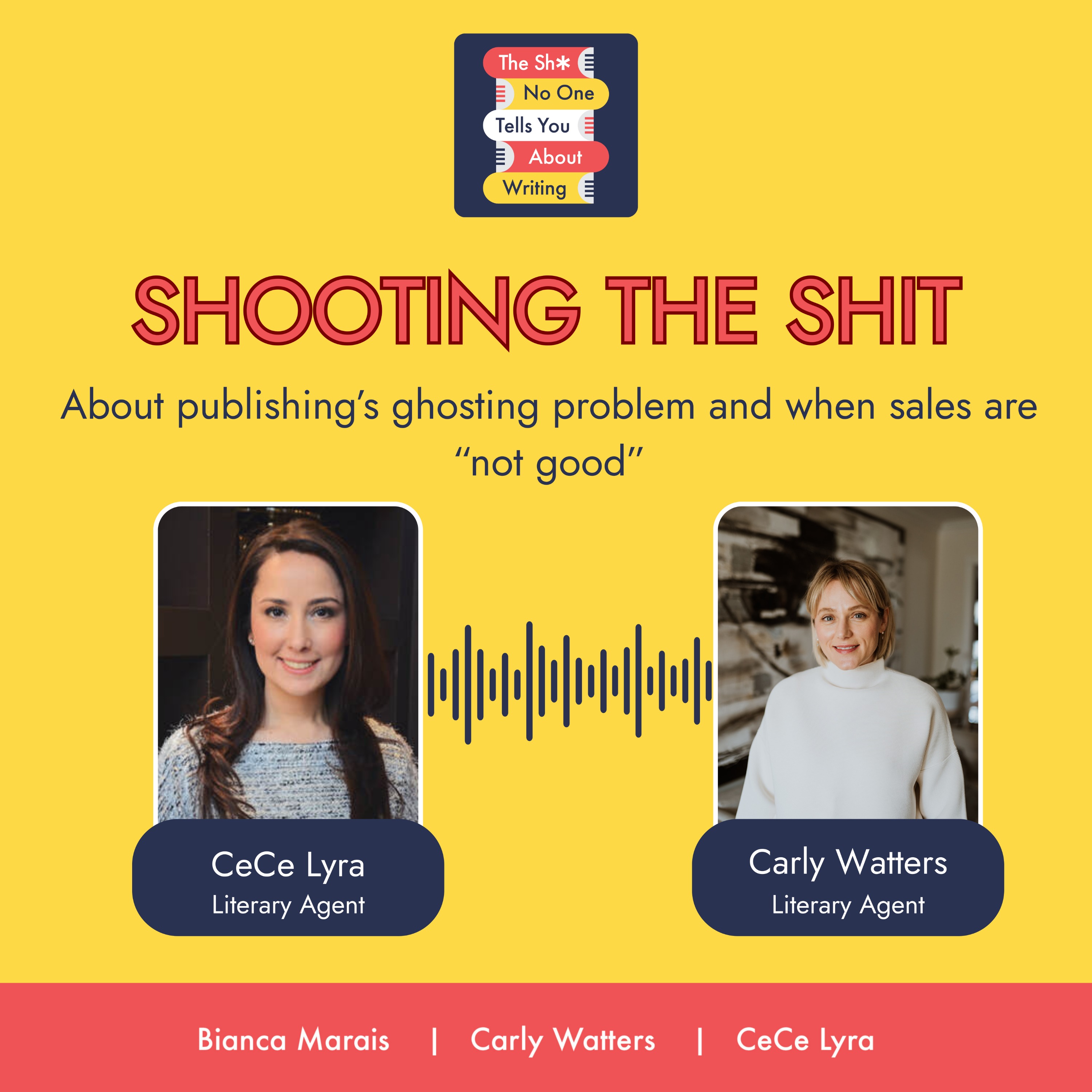
The Shit No One Tells You About Writing
Shooting the Shit: About publishing’s ghosting problem and when sales are “not good”
00:28:25
Shooting The Shit
Loading summary
Transcript56 lines
- [00:00]
A
We always have family coming to stay with us during the holidays. Our boys are so lucky that they have great relationships with their grandparents. Because of that, I love making sure that the guest room has everything it needs. I open the linen closet to check out our guest towel situation and I realize we have had those for a long time and we need a refresh. The towels we are using were from our wedding shower 10 years ago and right away I thought Wayfair and the next thing we knew Our Edison collection 100% cotton 4 piece luxury Turkish bath towel set was on the way to as the holidays approach, make sure you get what you need to personalize your home with Wayfair. Refresh your guest room with the bedding, linens, row pillows, towels, tech storage, bookshelves and way more for way less. Our new set of towels are soft and fresh looking, curating a great home experience for our guests and myself is the highlight of entertaining and enjoying your home to the fullest. Romanticize your life with everything from linens to decor. Now is the time ahead of the holidays to get your house in order to Next on my list is the Tablescape for the Holidays. I like subtle accent pieces from candlesticks to trivets and table runners that evoke the holidays but can last through the whole winter season. You can find all your seasonal must haves from furniture to holiday decor to appliances and cookware. Hosting just got a lot easier. Don't forget the free and easy delivery, even on the big stuff. No more hidden delivery fees for furniture. Get big stuff like dining tables and desks shipped for free. Get organized, refresh and ready for the holidays. For way less, head to Wayfair.com right now to shop all things home. That's W-A-Y-F-A-I-R.com Wayfair every style every Home.
- [01:35]
B
Have you been sitting on the fence about signing up for the beta reader matchup? Or have you signed up before but haven't as yet found your writing soulmates? The next matchup is the last one of the year, so don't snooze on it. Get matched up with those writing in a similar genre and or time zone so they can critique your work and as you critique theirs, your manuscript doesn't have to be complete to sign up for this 3,000 word evaluation. This particular matchup will be open to registrations from now until the 2nd of November, with the matchup emails going out on the 3rd of November. For more information and to register, go to Biancamarae.com and look for the beta reader matchup tab, please spread the word, even if you aren't signing up this time. So the more writers we have registered, the better the matches will be, which means you'll be paying it forward to your fellow authors.
- [02:30]
A
Welcome to another episode of Shooting the Shit with Literary Agents Carly Waters and Cece Lira, where we dissect publishing gossip, discuss book industry trends, and the overall state of the book business. If you've ever wanted to grab a coffee with two literary agents, grab your mug and pull up a chair. Hi, everybody. Happy October. It is fall in publishing. That means that we are overworked, under slept, maybe over caffeinated, but definitely all sharing some bugs. Cece, I think you. You caught something on your way back from New York, didn't you?
- [03:09]
C
I have a cold. For anyone watching on YouTube, I guess for anyone, because you can also hear me, even if you can't see me. I have a cold, which is very annoying. I am not a good sick person. Some people are good sick people. They know how to rest. I am not a good sick person. I'm a bad sick person. But it was well worth it, because I'm pretty sure I caught it. So last Thursday, Wendy Sherman Associates had a party for its 25th anniversary. And it was a room with myself and my agent colleagues. So obviously Wendy, Shareese, Laura, Callie, the members of our team, like Oni, who's our intern, and Irene, who does our social media. And it was us in the room and, like, a hundred editors. So it was the best. Because it's everything you want in a party, right? Just to be talking to people who buy books. You're like, hello, I'm Cece, in case they didn't know me already. And just talking about books all night long. And it was so much fun. It was magical and amazing, and it was so much fun that I barely took any pictures, which I know is. That's, like, my metric of, like, how much fun you had. When I'm not paying attention to taking pictures and stuff. I'm sad now because I don't have pictures on my phone, but we do have pictures that a photographer took, so Laura's daughter is a great photographer, and she was there to take pictures, and it was awesome. But it did mean that I was around a lot of people, and my immune system was just like, no, no, we're gonna make you rest. And, yeah, that's my situation.
- [04:38]
A
How about you?
- [04:39]
C
How are you doing? Are you sick, too? Please tell me you're not sick too.
- [04:42]
A
I'm not sick. My Kids, they're kind of the type of kids where they'll just like, spike a fever for a day and then they're fine the next day. It's like their body's way, like, gotta kill off some germs and then they're back to equilibrium. So, knock on wood, I've only had one kid homesick this fall, and it was just for like one or two days. So we're doing pretty good over here. We're recording this during Frankfurt Book Fair Week, and we are not at Frankfurt. So it's kind of nice because then I get to like, not feel overworked and overwhelmed. At lunch today, I taught a class. I taught a class to the Muslim Literary Festival. We did a presentation on just like, how book deals work. Book deals beginning to end, which is great.
- [05:17]
C
Yeah.
- [05:17]
A
I did it with an editor at Simon and Schuster, Canada, Brittany Lavery, who is great. And she's been around, which I learned today. Both of us have been in the business since 2009. So anyway, we did a, like a joint presentation today. I wrote down some notes because we obviously did the presentation together. But we always, you know, off the cuff when you're presenting. Right. You just kind of go on some tangents. And she said something very similar to what we always say, which I wanted to bring up, which is like, you know, we always say publishing is a business. I don't know how many more times we can say it. It's just obviously something in our lexicon. But she said something really interesting. She says publishing is retail business. And I think that's a really interesting distinction. Publishing is a retail business because, yes, we obviously talk about it as a business and it is a business. But she was even taking it further to, again, like, how the consumption of the product happens, which is like, it's a retail business. And obviously so much is done via E commerce. But at the end of the day, we're obviously still trying to sell a lot of books in person. And it is all retail, whether it's like E tailer or retailer. So anyway, I just thought I'd bring that up because I thought that was a really interesting distinction and provide me with some good food for thought this afternoon.
- [06:20]
C
Yeah, it's especially true because although, I mean, maybe someone listening might be thinking to themselves, wait, but hold on. Publishers, they sell to bookstores. And you know, bookstores, like, they're big accounts, right? But I mean, a Carly, to your point, so much of it is direct to consumer, like on Amazon and stuff, but also, like, books are returnable. You know bookstores, if they don't sell a book, they'll return it to the publisher. So at the end of the day. Yeah, that's a really great way to put it. I'm gonna borrow that. I'm gonna start saying that too, because it's true. We're in retail.
- [06:51]
A
Yeah, we are. We are in the retail business. So that was a fun, fun little adventure today. I've been working through lots of emails, working on client projects. I'm trying to get out about probably two more books out on Sub this fall. I have like two or three option projects to get out this fall. I have like a book I'm waiting to hear back about acquisitions. So I have like a lot just like swimming around. Still a lot of fall publishing work to do, which is great. Obviously I have a bunch of clients that delivered me manuscripts, so I'm like still reading all that, prepping everything for Sub. I'm going to LA in November for TV film meetings. So I organized, started to organize those. And yeah, that's, that's my, my current week in publishing and with other things we have going on. We also have our excellent newsletter that comes out every Tuesday. I wanted to give you guys a heads up about what's coming out in tomorrow's newsletter. So the. In the newsletter you're going to get the books with hoax critiques. We also have an essay with Hannah Beer, author of I Make My Own Fun. Like many of us, Hannah fell in love with writing at an early age, but felt that it was too precarious of a career choice, so she chose something else. And then she found herself no longer writing at all. And her essay explores how she found her way back to the craft. Take her hand, let her guide you back. And as you read, if you are not having a good time, what are you doing it for? So check out that great essay. We also have hilarious video from Rachel Lithgow, author memoir My Year of really Bad Dates. She focuses on the advice of write what you know and what it means to her, which is great. She also discusses her campaign to bring back words that are no longer common in the modern vernacular and why we need to fight back against AI, which, you know, is one of my passion projects. Gish Jen, author of Bad Bad Girl, joins us for our Q and A. Unlike Rachel, she doesn't believe in writing what you know, which seems to have really paid off for her. And she shares writing advice she swears by. She also shares the one thing that she regrets about her journey thus far. And we think it's going to resonate with a lot of you. It definitely did for us. And we' reminder that this month marks our last Beta Reader Matchup of the year. So don't miss out on the incredible opportunity to find your community. We know so many of you guys are still in touch with your Beta Reader matchup groups and continue to be friends, continue to critique, which is great. So we have some fun topics today to talk about. We are going to talk about publishing's ghosting problem. We're going to talk about what does it mean when sales are not good. But first we're going to hear from our sponsors. Hey everybody, guess who's back from France. I was thinking of you guys listening to me talk about getting ready for the trip and practicing my French while I was doing my best to order a francaise at the cafes. It went well. I was a bit nervous, but when we were in the countryside and I could take my time thinking about what I wanted to say, I was able to say it. Being a bilingual family is high on my list of things that are super important to me as a parent and a mom. If we're going to show them the world, we also need to appreciate and respect the language and culture by learning it. Imagine how much richer your travel experience could be if you could speak the local languages. When you travel with Rosetta Stone, you'll gain the confidence to have real conversations and create deeper connections wherever you go. Rosetta Stone is the trusted leader in language learning for over 30 years. Their immersive, intuitive method helps you naturally absorb and retain your new language on desktop or mobile, whenever and wherever it fits your summer schedule. With 30 years of experience, millions of users and 25 languages to choose from including Spanish, French, German, Japanese and more, Rosetta Stone is the go to tool for real language growth. You can learn faster and retain longer. There's no English translations. You truly learn to speak, listen and think in your chosen language. There's an intuitive learning process. You start with words, build to phrases and progress to full sentences. It's designed for long term retention so it sticks with you. You can work on your accent with the built in True Accent speech recognition technology so help you sound more natural. You can learn anytime, anywhere. It fits with your lifestyle with the flexible on the go learning style desktop or mobile app. And there's incredible value. A lifetime membership gives you access to all 25 langu so you can learn as many as you want whenever you want. Don't wait. Unlock your language learning potential now. The shit about writing listeners can Grab Rosetta Stone's lifetime membership for 50% off. That's unlimited access to 25 language courses for life. Visit Rosetta Stone/Visit RosettaStone.com today to get started and claim your 50% off today. Don't miss out. Go to Rosetta Stone.com today and start learning today. The holidays sneak up fast, but it's not too early to get your shopping done and actually have fun with it. Uncommon Goods makes holiday shopping stress free and joyful with thousands of one of a kind gifts that you can't find anywhere else. Uncommon Goods looks for products that are high quality, unique and often handmade or made in the U.S. many are crafted by independent artists and small businesses and because they're made in small batches, best finds can sell out fast. I was on the site getting some ideas for my boys Christmas gifts and I spotted this bedside caddy for their books. Made of repurposed quilts which was stunning and so practical. It tucks in between the bed frame and the mattress, has tons of pockets for notebooks and books and pencils and water bot. All of us can go to any other old website and get something that was made quick and cheap, but a unique quilted item that has personality and is one of a kind because they're made of random fabric. That's on my list. My older son just learned how to fully read on his own. I know I'm obsessed with this and he needs a place to tuck his books when he's done for the night. Uncommon Goods has something for everyone from moms and dads and kids and teens to book lovers, history buffs and die hard football fans to foodies, mixologists, avid gardeners, you'll find thousands of new gift ideas that you won't find anywhere else. When you shop at Uncommon Goods Goods, you're supporting artists and small independent businesses and many of these products are made in small batches. And with every purchase you make at Uncommon Goods they give back $1 to a non profit partner of your choice. They've donated more than $3 million to date, so shop early, have fun and cross some names off your list today. To get 15 off your next gift, go to uncommongoods.com t snottyaw that's uncommongoods.com t S N O T Y A W for 15 off. Don't miss out on this limited time offer. Uncommon Goods we're all out of the ordinary. Okay, and we are back. All right, so we are going to talk about a lot of different things today. We have a good Little list going. We had some good DMs kind of come into us. I've been collecting a few here and there. So I had one that said. Hi there, Carly. Yeah, love your advice in the podcast. I wanted to ask anonymously something that other listeners might be wondering about. If an agented author gets ghosted by their agent after their manuscript dies on sub, what is the protocol for severing ties with the agent? And how and when should it come up in querying the next project? Do agents consider this a black mark for taking on new authors? So I wanted to talk about a few things. I wanted to obviously talk about this DM that I got. I also want to talk about, like, the term ghosting, because I think that the term ghosting is used for a lot of different things. Like, people use the term ghosting when they just mean, like, somebody's not getting back to them versus truly ghosting in terms of somebody, like disappearing and blocking you. So, anyway, that's on my mind. Cece, do you want to tackle the question first, or do you want to talk about ghosting first?
- [13:42]
C
I feel like the question, I mean, I know it's anonymous. I just want to hug this person who asked this, because agents not responding. Agents disappearing is not okay. Like with clients, obviously, we're talking about with clients, right? Like, these people signed a contract. This agent signed a contract with this person. I can't even wrap my head around what that means. And to the author, what I would say is try to contact someone else at the agency. It's possible. It's a solo situation. Some agencies are. In which case, I don't think you have any recourse other than to write an email saying, I'm terminating your contract as per clause X. I would really appreciate hearing from you, but if I don't, I will simply take that to mean that you have accepted this or whatever, like something like that. But I just think that there's a lot of talk about when it's okay to expect an answer from an agent and when it's not. And I. There is no doubt in my mind that if you are an agented author, your agent should respond to you. If your agent is not responding to you, that is not okay. And I'm so sorry this happened to you. Like, that just sounds like a nightmare.
- [14:56]
A
I know, I know. And it's hard on so many levels, right? Because obviously you're thinking, did my agent, like, get hurt? Are they ill? Is there some reason that they're incapacitated and they can't actually do their job. In which case you should know, ideally, other people at the agency and you should have access to their email addresses so that, you know, again, if something happens to. For that sort of thing or just, I don't know, it would. It worries me if this is like again, a sole proprietor who there's no assistant or nobody else to contact and all of a sudden did this business go under. And that is one of the risks you take with the sole proprietor, you know, the agent who's starting that business solo or you're an author working with somebody who is a one person show. Like if you're working with something that's one person show.
- [15:36]
C
Yeah.
- [15:36]
A
What happens if somebody gets sick or, you know, isn't able to fulfill their duties of their contract? Right.
- [15:41]
C
So yeah, it's all the eggs in one basket.
- [15:44]
A
Yeah, yeah, yeah. There's lots of layers to this question. So you person also said, yeah, what's the protocol? I agree with Cece. Like, you put it in writing, you get it to them or however many other people you can contact at the agency. Also, ideally you'd get a list of who it went on sub to. Right. Like, you're kind of also owed that information. So trying to track down somebody at the agency, I know it's uncomfortable at this point, but if you can track somebody that's getting that sub information.
- [16:12]
C
Yeah, Try and also, like send a registered letter. I would also send a registered letter in addition to an email. Like, I feel like, I feel like overkill is best in these situations. If you're ever in a situation where you're like, well, can you prove to me that you. That you communicated XYZ to this person? Yes. Here, here's my email, here's my registered letter. Like, here's all the things. I'm really sorry this happened to you. Like to, to the person who hopefully is listening like that.
- [16:37]
A
Yeah.
- [16:38]
C
Phew. That's not okay.
- [16:39]
A
Because worst case scenario, say this person went. Went and found a new agent and this new agent went on sub with this stuff and then the old agent came back and said, you didn't terminate with me. I'm actually due some revenues from that manuscript that I worked on with you. Like, that's worst case scenario. I'm not saying that's happening. I'm just. My mind goes to worst case scenario a little bit here. So cece's right. Like, do your due diligence, read your agreement, know what you have to do, go above and beyond. I'm sorry this happened to you. And you have to be the person, you know, to have to do this. But, yeah, definitely take care of all this on your end. And then you said, how should this come up? In querying the next project, the future agent's gonna want to know, like, who is this project subbed to? Right. And is this a black mark, you know, for taking on. No, I mean, unfortunately, we know that. No.
- [17:25]
C
A black mark on you. No, no, this is not a mark on you. Gosh, please never feel that way. It's not a black mark on you. It's a black mark on whoever's dropping the ball.
- [17:34]
A
Yeah. You'll have to explain the situation, but we're gonna know that, like, again, sometimes crappy stuff happens in the business, and this wasn't your fault, but it will be very hard for an agent to sub like that project again. Again, if we don't know who it was subbed to and we don't have the information, that's the part that's going to be hard for you. Yeah. So I'm. I'm sorry. I'm sorry. That is. That is a true ghosting, because. Okay, coming back to my original point is that people. How we use the term ghosting. This is an appropriate use of the term ghosting. So I've seen people use the term ghosting. Somebody said something about, like, an agent ghosted me on a manuscript they're reading. And I said, how long had they had it? And the person said, a month. And I said, this person did not ghost you. Like, yeah, that's not ghosting. That's not ghosting. So let's be careful about our use of the word ghosting, because it is an accusation. So this person is using the term ghost incorrectly. And obviously, we're. We're sorry that this happened to you.
- [18:27]
C
Yeah, for sure. Oh, gosh. Like, this is too much. Do we want to talk about the next dm?
- [18:32]
A
Yeah, why don't you take this one?
- [18:35]
C
Okay. So this is also one that Carly got. Hi, Cece and Carly. Love today's episode. Well, I love all of them. I got a question. In your opinion, when an editor tells their client your book sales are not good, what does that mean? What sales numbers are they talking about? What is good sales for a debut author and their book was not the lead title. It didn't happen to me. It happened to my writer friend.
- [18:59]
A
I love how we get all these. Like, my friend, the friend of a friend. We're asking for a friend. Asking for a friend. How much of this is asking for a friend versus asking for yourself? Because the person said, like when an editor tells their client. Because an editor wouldn't tell their client, it would be an agent tells the client. An editor would tell their author. So I could tell this was secondhand information.
- [19:20]
C
Some editors also just go to the author. Like I've seen it happen. It's not, it's not common.
- [19:25]
A
But the fact that this person said client, like if you know what I'm trying to say.
- [19:28]
C
Good point. As opposed to author.
- [19:29]
A
Yeah, yeah, yeah, yeah, yeah, yeah, yeah. No, I know what you mean. So, you know, I think there's a lot to unpack here, right? There's the unpacking of what makes quote, unquote good sales, right? And so to me, it always comes back to expectations. Expectations of what was the advance, how much was the print run? Those are two indicators of, you know, a book doing well, right? So generally within the industry, and this is hard in genres where, where there's more E and digital sales versus print. But traditionally it's always been known again within the industry that once an author is halfway through earning out their advance, that the publisher is starting to make money. And so that second half of earning out the advance generally is like, you know, the, the bonus that the publisher gets, you know, that from, from taking on this project. And then obviously the royalties come to the author after that. So that's again, very loosey goosey.
- [20:24]
C
It's a back of a napkin type calculation. You know, it's, it's really useful to have keep it in mind. But it is by no means like something that will work in every case. It's not a formula, it's. It's a back of a napkin. Really useful, like rule of thumb.
- [20:39]
A
Yeah, exactly. So that's kind of something to think about. The other thing is print run, right? So say your publisher prints 50,000 copies. That's a huge print run right now, 50,000 units. And then the orders come in from. Usually the, the print run is based on the orders, right? So the orders come in from the stores, they print the 50,000 print units, they all go out into the world and then say the sales are like 5,000 within, I don't know, six months or something like that, right? Like also time frame has to come into this because we also need time for these books to sell. That would be something that would be a hard number to swallow, right? Because the publisher's thinking, we just printed 50,000. I'm just picking random numbers, right? But like if we printed 50,000, we sold five. How are we going to sell the rest how are we going to sell 45,000 units? You know, ideally they're out there in the store, but so that, that's really, really, really hard to come back from because let's say that's hardcover. And then they'll say, okay, you'll want to know, why don't we do a paperback edition? And then the publisher will go, we can't do a paperback. We can't invest in a paper TOBAC edition because we're still clawing back these other copies. And no store is going to take paperback if they haven't sold through their hardcover. So there's a lot of, like, the economics that has to kind of come into this. And so everybody loves this idea of like a big deal and like a huge print run. And then you get into the math and you're like, how are we actually going to move this many copies? And you start to realize, you know, how hard this is. So anyway, that's my two cents.
- [22:03]
C
Yeah, for sure. And, and you know, you asked what sales numbers are they talking about? I, I struggled to understand what you meant by that. You, the person who's asking the question, obviously, I'm pretty sure they just mean the actual sales of copies, like sales of books. That's pretty, pretty straightforward. Yeah.
- [22:19]
A
Units.
- [22:20]
C
One of the hardest things I think for an author to grapple with in the publishing industry is that they want to know what is a good number of sales, what's a good deal, what are good sales, what's good, what are the expectations? Publishers typically will not tell you. We expect to sell X titles in X months. They will give you indicators like Harley mentioned of print run and you can know, like your advance and you can take a look at like, what's being done on the publicity front, but you're not going to get a super objective answer. And part of being in this business is kind of accepting that because you will be really frustrated if you expect publishers to tell you, this is 10% less than the copies we expected to sell this month. Like, it is not that granular. It's just not.
- [23:02]
A
Okay, so next question is about the aala. What if an agent isn't a member of the aala? And I'm going to cut in and just let everybody know that it's IS that stands for the association of American Literary Agents. This person says, why aren't they a member? And how can writers gauge their reputation? Aside from the yellow and red flags that have been mentioned on the show, this question also requires a bit of context and history as well. Because the current state of the AALA is great. You know, it's very welcoming, very accommodating. They have tons of incredible programming where if you feel like you're paying your dues in terms of your membership fees, you're getting a lot out of it. When I started agenting, the AALA was very exclusionary. The goal was to keep people out. The current AALA is to bring people in to like, again, help educate and, you know, just really try to be democratic with the information sharing and things like that. Back then it was very exclusionary. It was like, you know, we're, we're not letting you in for all of these reasons. You have to jump through all of these hurdles. If there was also a clause in their canon of ethics, let's just say that said you can't make money from anything else other than agenting. Like, agenting had to be your sole source of.
- [24:12]
C
I heard that.
- [24:13]
A
And so, yeah, and so I used to teach Writer's Digest workshops. And so because I taught Writer's Digest workshops, I was not eligible or. Or because I took an honorarium for doing a conference. So if you took an honorarium for a conference or if you taught like webinars or courses or again, you taught at a university or anything like that, you weren't eligible to join the ala. So there is a history of exclusionary practice. Again, as I prefaced, I think the ALA is an incredible organization now, so it's changed a lot. And so if somebody isn't currently a member of the ala, it could just be again that they remember the times where it was more exclusionary. They just never joined it in the past and they haven't since. Or it could be that they don't meet the criteria. There's. I think there is still criteria that has to be met. So it could be, it could be one or the other. So you also said, how can writers gauge the reputation? Aside from the yellow and red flags? One of the things that you can do is check Publishers Marketplace. You can get a short term subscription usually around Thanksgiving and the Christmas holidays. There's like a little promo, but it's basically, I think it's like 30 bucks a month now. I think they upped it by $5. It was 25. I think it's 30 bucks a month where you can just kind of like go in and check the agent out, see who they're selling to, their history of sales, the agency they work at, their history of sales, and just kind of get a sense of like what kind of business Are they conducting? If they're newer, you know, are they working with an established agency? If they have been around a long time and haven't done a lot of deals, then you're kind of like, huh, okay. You know, just information to know that you know, when you're making your list of questions to ask them some things you might want to ask about. And there's also Writers Beware blog where you can learn about different agencies who have some predatory practices and. Yeah. Cece, anything else to add?
- [25:51]
C
Yeah, I will. Yeah, I will say, you know, as someone who is a member of the ala, and I know you are too, Carly, their resources are amazing. And I know they're agents who listen to this. So I want to be clear. Yes, I'm a member, but I don't get anything for saying this. I have no incentive to say this other than it's true. The library of resources they have is the coolest thing ever. I have listened to so many great presentations. There's one called Data and Publishing. It's like four parts. I cannot recommend joining enough. It is a great, great organization. It's so good. It's so useful. And for writers who are thinking, do I want my agent to be a member of the aal? I think you can want that. Like, it's great. Like, I'm a member. It's awesome. But, you know, before I was a member, I was also an awesome agent. It's a little bit more organic than that. I'm thinking of someone I know who. She's not a member. She's, you know, considering joining and is just working on her application. But, you know, she. She works at an agency where everyone else at the agency is a member. She's just newer, so she hasn't, you know, done it yet. And that's a green flag because, you know, she. She's eligible. She's going to join. She just needs some time to do it.
- [27:01]
A
So I think.
- [27:02]
C
I think, you know, as. As with so many things in this industry, like using your critical thinking and really just doing the research and putting in those hours to get as much information as possible and then knowing how to make an intelligent decision based on that information.
- [27:16]
A
Yeah, exactly. Yeah. It's not like, this is good, this is bad one side of the line.
- [27:20]
C
Yeah.
- [27:21]
A
You can also ask the agent and then listen to their answer and then see how that answer sits with you as well. Yeah. Okay. We had another DM about pitch contests from a literary agent. We love when our literary agent colleagues send us us things to talk about and Deep dive on and shoot the shit on. She wants to hear our thoughts on pitch contests and how we feel about editors involvement. Is it a way for them to bypass agents? Pitches don't reflect the quality of the material. So how useful are pitch contests? I know personally, I don't really do that many of them anymore. Cece, do you do any pitch contests these days?
- [27:53]
C
No, I don't have the like. It does. I've tried because I was like, yay. A great way to find clients. It's not a great way to find clients for my brain. I'm sure it's great for a lot of people and that's so cool. It doesn't work for me. I'd much rather just look at my slush pile. I review my slush pile myself. That is a good place for me to find clients because I get to actually read their material and not just listen to a, you know, two sentence hook. Like, it doesn't work for me. It doesn't work for me at all.
- [28:20]
A
Yeah, so I remember. Yeah. As you guys know, I love to talk about how old I am in publishing, but basically there used to be this wonderful, wonderful pitch blog contest called Pitch wars and somebody named Brenda Drake ran it and she did such a great job and it was so much work. But basically, typically she would set everything up on the back end of like a blog where it would be every blog post would be a pitch and then they would go live at a certain time and then agents would like go in the comments and comment on it. And it was great because I could. I knew it was like a high quality contest. I knew it was like competitive to get in. There was also like Pitch wars mentors, so quality writers would like mentor the mentees who would like get onto the blog. And lots of high quality agents such as myself, you know, would be the invited agents to then go on the blog dogs and decide whether we wanted them. So a lot of it depends on the quality. And early on that was just one of the original places to do that and it was really well run. And as what happens with the Internet, more and more of these things start popping up. Some of them good, some of them not so good, some of them well run, many not so well run. The quality just starts to go downhill, the algorithms change, so on and so forth. So I feel like they were of an era and I think that era might have passed again. I'd love to be surprised. I'd love for somebody to tell me there's a wonderful pitch contest out there. But I think the heart of this question also is around editors who do these pitch contests. That's a really tough one because I'm of two minds, because I understand editors wanting to stay kind of, like, plugged into the more nascent literary community. And that makes sense. Is it a good use of editor's time? I don't think so at all. Because they have so much to do, so many other things going on. They have all these agent subs. So say somebody, you know, gets a like or a heart from an editor, and then they still have to get an agent, and then the agent has to send it to them. So. So this person's kind of getting at. Is it away from the bypass agents? Meaning could the author then just send it directly to the editor? I think we all know that the big five editors aren't doing, again, don't have the time and capacity to do this. So then is it potentially presses that are smaller who potentially. Again, I don't want to get anybody into trouble or get myself into trouble, but smaller presses or, you know, digital first presses or hybrid publishers that call themselves editors could get themselves, you know, authors could just get themselves into a situation where they think this is an accredited contest. And then all of a sudden, like we talked about on the last show, all of a sudden this accredited contest, you know, has a lot of red flags, and this editor requesting it isn't who they say they are. So I don't know. Know, I'm. I'm down on pitch contests right now, but. Cece, what do you think?
- [31:01]
C
Yeah, I'm. I'm down on participating in them myself, personally. Not for me. Like I said, I don't think it's necessarily a problem for editors to participate. Absolutely understand the rationale of this question. Like, is it bypassing? As long as editors are ethical about it. Editors also sometimes attend writers conferences, and they also take pitches there. Sometimes they even read materials. And, you know, a good editor will say, once you have an agent, I am interested, but they don't try to cut the agent out. So I think it all depends on how the editor is acting. And I've seen a lot of editors do it wonderfully, you know, in a way that's very ethical, very inclusive, very respectful, very encouraging. I've never seen a bad situation, but I'm also not on those platforms. Looking at the behavior, I'm sure it happens because there's always bad actors. I would just say, you know, this person also asked, like, is this worth it? Because they don't reflect the quality of the materials. It's just a hook, right? Like, a hook can be so great. I can right now tell you 10 really great ideas for hooks for books. There's no material to go with it. Like, it's much harder to actually execute and write the material. So to this person's question, I would say, no, you're right. Like, you can't tell if something's good based on that. But different brains work in different ways. Like, some people have the kind of brain where they do want to go into a platform, look at a whole bunch of hooks, like, the ones that works for them, and they do want to get those. Those submissions, and then they'll analyze the material. I actually really admire people whose brains work like that. And so if it works for them, that's great. You know, they can be a perfectly ethical, perfectly reasonable way to conduct business as long as it's. You know, as long as the people do it right. I guess at the end of the day, Yeah.
- [32:44]
A
I feel like we switched chairs today because I'm the pessimistic one and you're the optimistic one. I feel like I don't know what happened with this Freaky Friday business.
- [32:52]
C
It's the cold meds. I'm telling you.
- [32:55]
A
It's the cold meds, I guess.
- [32:57]
C
Yeah. But you know what? I feel a little drunk. Like, I feel like cold meds make me feel a little out of it. Almost like I had, like, a tiny bit of wine. I didn't. To be clear, everyone. Ooh, we should record assuming that the. In the evening where we have the after dark. We should do that one day. It'll be so much fun. I'm, like, such a lightweight. I drink, like, two sips of wine, and I'm, like, hello. I'm tipsy. Anyway, we should do that. But, like, yeah, today. Today, I'm. I'm an optimist because I'm popped up on cold meds. Says a lot about me.
- [33:31]
A
Yeah. Okay. Shooting the shit After Dark. I'm gonna bookmark that for another time, maybe. We'll have to take special questions or put in special topics for Shooting the Shit After Dark.
- [33:42]
C
Yeah.
- [33:43]
A
Okay. Well, that's it. Cece's not feeling well, so we're gonna. We're gonna cut it short today. But thanks for hanging out with us, guys, and we will see you next time.
- [33:50]
B
Cece Lira is a literary agent at Wendy Sherman Associates. If you'd like to query Cece, please refer to the submission guidelines@www. Carly Waters is a literary agent at P.S. literary Agency. But her work on this podcast is not affiliated with the agency and the views expressed by Carly on this podcast are solely that of her as a podcast co host and do not necessarily reflect the views, opinions, policies or position of PS Literary Agency have you been sitting on the fence about signing up for the Beta Reader match up? Or have you signed up before but haven't as yet found your writing soulmates? The next matchup is the last one of the year, so don't snooze on it. Get matched up with those writing in a similar genre and or time zone so they can critique your work as you critique theirs. Your manuscript doesn't have to be complete to sign up for this 3,000 word evaluation. This particular matchup will be open to registrations from now until the 2nd of November, with the matchup emails going out on the 3rd of November. For more information and to register, go to Biancamarae.com and look for the Beta Reader Matchup tab. Please spread the word even if you aren't signing up this time. The more writers we have registered, the better the matches will be, which means you'll be paying it forward to your fellow authors.