← The Shit No One Tells You About Writing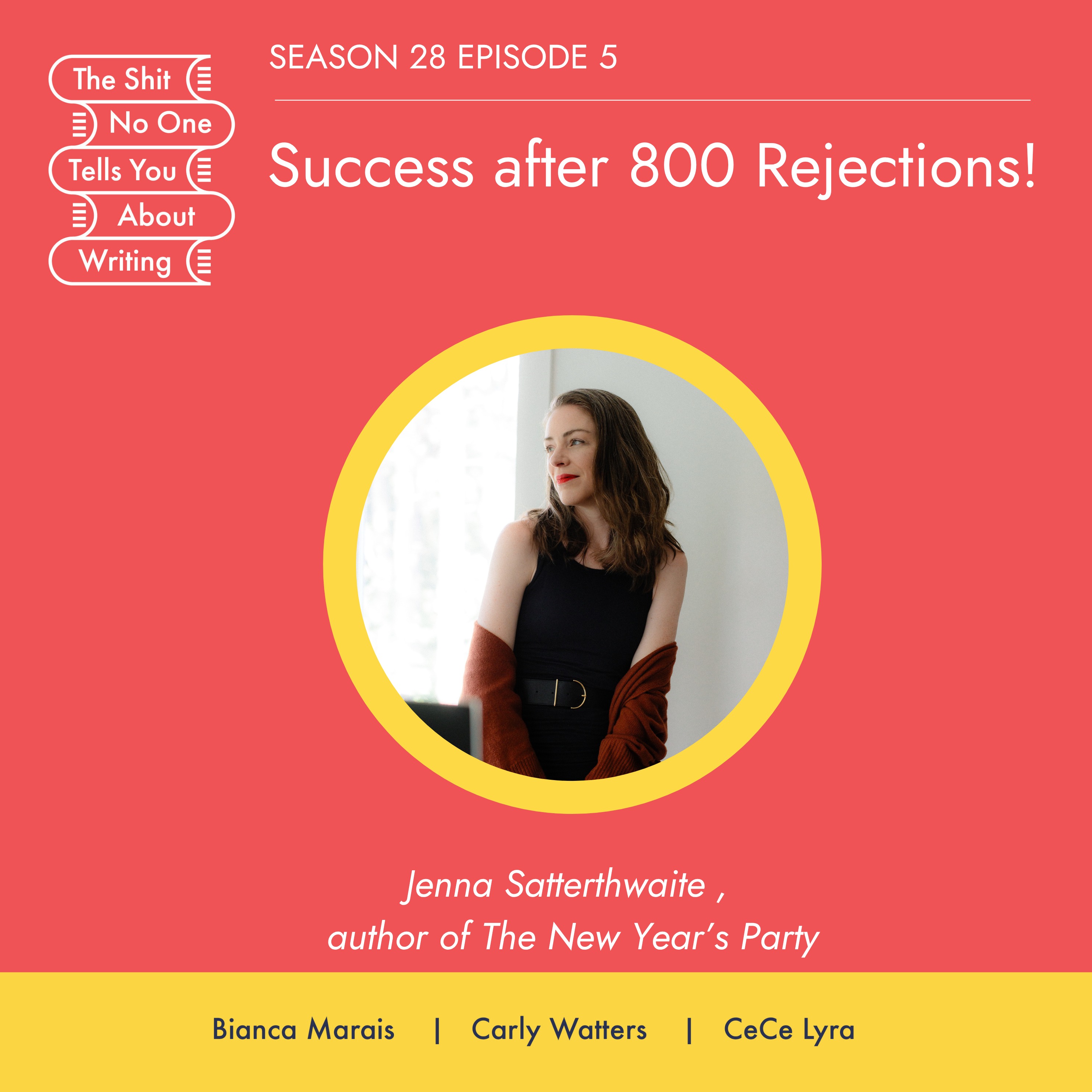
The Shit No One Tells You About Writing
Success after 800 Rejections!
00:29:22
Author Interview Jenna Satterthwaite
Loading summary
Transcript45 lines
- [00:00]
Lifestyle Influencer
As the air turns crisp and the holidays draw near, comfort becomes the best gift of all. Quince delivers layers that last. Sweaters, outerwear and everyday essentials that feel luxurious, look timeless and make holiday dressing and gifting effortless. By working directly with ethical top tier factories, Quince skips the middlemen and offers prices 50% less than similar brands. That's how you get amazing deals like the ones that I am obsessed with. Honestly, the Italian wool coats are at the top of my list. They cuts feel designer, the quality rivals high end brands, but without the high end markup. Quince truly has it all. $50 Mongolian cashmere sweaters made for everyday wear. Denim that never goes out of style. Silk tops and skirts that add polish and down outerwear. Built to take on the season. Perfect for gifting or upgrading your own wardrobe. If you guys watch my reels on Instagram and you see me in a soft gray sweater tee that is my favorite quint piece and now I have it in two colors. All of my Mongolian cashmere items are staples in my wardrobe. I have the cashmere sweater tee in gray that's the one you see on Instagram and the Mongolian cashmere mock neck sweater vest in oatmeal. There's something so classy about a sleeveless sweater look and it doesn't bunch up in a coat so seamless and classy and so warm. At these price points I am happy to wear them to the hockey rink and to go out for dinner with friends. The timelessness of them makes them so functional. So if you want to be effortlessly warm and chic, I recommend those picks. Quince also has things for everyone on your list. I've shopped for my boys as well. They are great kids. Basics to be found. Step into the holiday season with layers made to feel good, look polished and last from Quince. Perfect for gifting or keeping for yourself. Go to quince.com teessnotya for free shipping on your order and 365 day returns. Now available in Canada too, that is Q U I N C E.com tsnatyaw to get free shipping and 365 day returns. Quince.com tisnaya Woohoo.
- [01:56]
Bianca Murray
It's deep dive time again where we host a two day virtual retreat attended by writers from across the world. And if you haven't been monitoring our socials or subscribing to our substack, you won't know yet that we've announced that this will be our very last deep dive ever. So you definitely don't want to miss it. We'll be focusing on giving you access to a whole host of agents and editors who have worked on some of the last decade's best selling books, building a bridge between you and the so called gatekeepers of publishing. Subscribe to our substack or follow us on Instagram so you can be the first to be in the know as we begin to reveal our incredible lineup. Each week, mark these dates in your calendars. The Deep Dive will happen on 31st January and 1st February with 20 pre and post Deep Dive sessions happening the weekends before and after. And make sure you have 12pm Eastern Time on the 21st of November marked in your calendar for the early bird registrations. Woohoo. It's Deep Dive time again where we host a two day virtual retreat attended by writers from across the world. And if you haven't been monitoring our socials or subscribing to our substack, you won't know yet that that we've announced that this will be our very last Deep Dive ever. Dun dun dun. So you definitely don't want to miss it. We'll be focusing on giving you access to a whole host of agents and editors who have worked on some of the last decade's best selling books, building a bridge between you and the so called gatekeepers of publishing. Subscribe to our substack or follow us on Instagram so you can be the first to be in the know as we begin to reveal our incredible lineup each week, mark these dates in your calendars. The Deep Dive will happen on 31st January and 1st February with pre and post Deep Dive sessions happening the weekends before and after. And make sure you have 12pm Eastern Time on the 21st of November marked in your calendar for the early bird registrations. Hi there and welcome to our show the Shit no one tells you About Writing. I'm best selling author Bianca Murray and I'm joined by Cece Lehrer of Wendy Sherman Associates and Carly Waters of P.S. literary. Hi everyone. Welcome to today's Author's interview. Born in the Midwest, our guest today grew up in Spain, lived briefly in France and is now happily settled in Chicago with her husband and three kids. She studied classical guitar, English lit and French and once upon a time was a singer songwriter in a folk band field. She loves sushi reading in her natural habitat, AKA her bed and women taking back their power. It's my pleasure to welcome Jenna Satterthwaite. Jenna, welcome to the show.
- [05:03]
Jenna Satterthwaite
Thank you so much. I'm excited to be here.
- [05:06]
Bianca Murray
I'm so excited to have you here. There's so much that I want to pick your brain about. So for our listeners, Jenna is not just an amazing author, she's also an agent. And so there's those different sides of her that I'm definitely going to want to explore in today's interview. In the meantime, I'm just going to tell you about the book that we're discussing. So it's the New Year's party. Here is the flat copy.
- [05:28]
Lifestyle Influencer
Y.
- [05:29]
Bianca Murray
So for those of you who are watching on YouTube, you will see that Jenna's holding up the COVID which is stunning. I still have the advanced reader copy that's covered with my notes, so that's.
- [05:40]
Jenna Satterthwaite
Love it.
- [05:41]
Bianca Murray
No help to anyone at all. But, yeah, it's a. It's a stunning cover. Okay, so here we go. This is what's in the flap copy. So New Year's Eve hits different in your 30s, especially when the party ends in murder. It used to be an annual thing, the raucous New Year's party full of games and hors d'.
- [06:02]
Jenna Satterthwaite
Oeuvres.
- [06:03]
Bianca Murray
But for Olivia and her friends, the chaos of their 30s has really challenged the definition of annual. It's been a few years since the close friends were last close, but this year is going to be different. The burnout, parenting stress, credit card debt, job drama, marriage troubles, addiction. They're going to set it all aside for the night. No, really? They swear. Oh, except for the secrets. Every last person has one. But secrets are only as good as the people you trust to keep them. And when the wrong one slips out, well, friends or not, that just might become motive for murder. Everyone thinks they know their closest friends until somebody winds up dead. So love, love, love the flap copy. So before we dive into this, Jenna, you had quite an unusual journey to publication, and I like exploring that for our listeners because there are so many different paths. So can you take us through that?
- [06:57]
Jenna Satterthwaite
Oh, gosh, yes. So I started writing. I think it was 11 or 12 years ago at this point. I had just become a mom recently. I'd had my first daughter and then I actually lost a pregnancy between her and what would become my next kid. And it was kind of this weird grieving period and I really needed some kind of distraction to take me out of my pain during that time. And my mother in law happens to be obsessed with cozy mysteries and had given me a ton of them as just candy reading, you know, during those, I think, like the past couple years. And the format just stuck in my Head. And so something clicked in those days after losing the pregnancy. And I was like, I'm gonna write a cozy mystery. And I went to my room with my laptop one night, started writing. And I got addicted. And I've never looked back. It was the most incredible feeling of leaving the world as we know it and entering into a perfectly safe space of my own creation where I could just forget my sorrows. So that was kind of the beginning of writing. Fast forward a few years, I started querying, I wrote more books. I queried for four and a half years. Over five different books accumulated something like 700 rejections.
- [08:22]
Bianca Murray
Yeah, impressive, impressive.
- [08:25]
Jenna Satterthwaite
It was a whole journey. So this was my early to mid-30s. And then I finally got an agent to offer on a book. And then I got a second offer, chose my current agent, Lauren Baker at Fine Print. And then a whole other journey began where we went on submission over the course of many years with six different books. Five of them died on submission. And we finally, thank God, sold number six. So it was, you know, between agent rejections and editor rejections, it added up to over 800. It was kind of wild. But I just kept wanting to write more books because it was fun. And I think my hedonism drove me forward during the rejection. I like to have fun and writing was fun and it was again, escapist. A lot more crap happened to me during, you know, the. All of those years. And I just never forgot that superpower of being able to go away and take care of myself. So I am very happy that something finally happened. But even if it hadn't, I don't consider all that writing to be a waste. It was just a real anchor for me, like a life anchor. And it added this not only escape, but dimensionality, catharsis, processing. You escape, but you also end up processing a lot of your stuff through writing. So that's what happened. I sold my first book a few years ago in a two book deal. New Year's Party is the second book in that deal with Mira. And then I have another stream going on here. I have this one as well with my pseudonym, Sienna Sharpe. This came out with Sourcebooks this summer. It was originally bought by Penguin Random House uk. And there is another book coming from Sienna that I can't talk about yet, but it's. I'm in revisions and it's painful, but we're marching through.
- [10:14]
Bianca Murray
I love that whole journey. I love, you know, that you keep bringing it back to the love of writing, the hedonism. Because if you do not absolutely Love it. If you're not passionate about it. People would have given up after 50 rejections. I know people who've given up after way fewer. Right.
- [10:31]
Jenna Satterthwaite
And I don't think that's a bad thing. I think I kind of have destigmatized the giving up because I thought about it a few times and then rejected it. I was like, no, I don't want to give up. But I realized, like, for some people, if that love of writing isn't there or if it's not helping them in all the ways that it helped me, yeah, it does become. I think it can become destructive to stick with it for longer than it's healthy. So I think everyone has to discover, how long do you want to keep going? Because publishing is tough, and rejections will always come on either side of being a published author. And I think it's very healthy to let yourself consider walking away and ask, is this serving me? Does this make me happy? And for me, the answer was yes, but that won't be the case with everyone. That's my controversial take, because a lot of people are like, keep going, keep going. I'm like, well, you can or you cannot, and both are valid.
- [11:21]
Bianca Murray
It's. It's up to each person to decide in terms of their mental health, etc. And I'm also not an advocate for. Just. Just keep going indefinitely. Especially if you're not changing things. Especially if you're not mixing things up or doing something different. You know, they say what insanity is the definition of doing the same thing over and over and expecting different results.
- [11:41]
Jenna Satterthwaite
Yeah.
- [11:42]
Bianca Murray
So, you know, you've definitely got to pivot and learn and adapt. But I love that you persevered. So something else I love about you, Jenna, is. I mean, I started this podcast called the Shit no one tells you about Writing because I really wanted to destigmatize so much and show people behind the curtain of publishing. But again, a lot of the times our hands are tied as authors. We have to be so careful about what we say publicly because you don't want to offend somebody in publishing, it's a very small industry, etc. And so, you know, you might have a book that goes out on submission and nobody buys it and it gets rejected or they turn down an offer, and so you don't speak about that. But I love how transparent you are. And, you know, I was recently at Calgary word fest Imaginarium, and we were in a panel called the Shit no one tells you about Publishing. And people were saying, you know, how distant they feel from agents and editors. And I was saying we're in a period right now where this is the closest that you can ever be to agents and editors, because follow them on social, subscribe to their substacks. People are talking about these things. So can you speak a bit about, you know, your Instagram account and how you do speak about these things, both as an author and as an agent?
- [12:59]
Jenna Satterthwaite
Yes. So I love transparency outside of even publishing, just as a person in general. I kind of weighed that many years ago when I started a blog that no one should ever read. It was many years ago and it was mostly cooking focused and I talked about like my first pregnancy and, you know, yada, yada, yada. But I remember grappling at that time with how public do I want to be and what are the risks of disclosing X, Y or Z and playing it forward in my mind, like, who could this possibly offend? And if it does, are there actually consequences beyond my hurt feelings? And then what is my story and what is someone else's story? Kind of figuring out my lane. Like I shouldn't talk about someone else's private business, but I can choose to talk about my own. So maybe that sounds kind of silly, but I do feel like when we're, you know, in the age of social media, and especially when so many of us authors are expected to be present and active and engaged and so forth, you do have to have a reckoning moment of what do I want to do, what feels comfortable and safe enough. Of course, there's always risk and I'm happy to have already done that work, like probably 20 years ago at this point. 20 years ago. I don't know, a really long time ago with my personal blog that I've since abandoned. So I think when I came into this, I had a sense of what the things I like to talk about and what feels like I'm allowed to share these parts. I do think I'm much more transparent than other people and I think it's fine to be private. I always want to say I don't think the way I do things is how everyone should do things. For example, I have my Instagram but also a substack. Right now it has couple thousand subscribers. And I talk about agenting and authoring and share quite a bit of specificity regarding advances. For example, I share exactly how much money I made as an agent last year. I'm going to be sharing that again for this year. Like literally, these are the dollars and cents that came to me this year. And here's how it breaks down between book deals and sub rights and royalties. Same with authoring. Here's my advance. This one didn't earn out. You know, I had one finally earn out this year. So when I share my report next year for 2025, I'm going to kind of break down. This was the royalties that came from this one. And I don't think everyone should share about money. I think some people want to be private about that, and that's fine, but I just don't feel any sense of risk. I don't feel that there's any connection between the money I make or don't make and my value or worth. I don't know. And at this point in my life, I'm like, well, let's just talk about it. Yeah, here's how much they paid me. And it's a lot more than some people get, and it's a less than others get. But I feel like for people entering careers as authors and agents, if no one is talking about it, it's quite hard to make smart plans. You know, you hear people debating all the time online, ooh, should I quit my day job? You know, or what would it take to quit my day job? And it's hard to make those calculations unless you can look at someone who's gone before and see how the finances break down for them. So from an authoring side, but especially from an agenting side, because lots of agents become agents and can quit quite quickly, which I don't mean any shame on them, but it's a very tough job. And I just want to be the person who you can kind of go to and be like, how does it actually break down in real life? And what are the dollars and cents of it? And display that openly. So that's an example with money. But I, you know, the same way about when my option book was declined, I was like. I had a moment of like, should I talk about this? I was like, yeah, it was declined. Like, who cares? I don't know. It happened. Let's talk about it. I know so many authors whose option books were declined, like, bajillions. It happens so commonly, and I just refuse to feel any sense of shame about it. It's, you know, for them, a dollars and cents decision based on how well my first book performed, since my second book wasn't out yet at the time, and in their perception, it failed. But that's not really personal to me. That means nothing about me as a writer, the quality of my book. It just means it didn't take off, as most books don't. So I think being transparent also forces me to destigmatize it for myself. I have to come to peace. And then. Does that make sense?
- [17:16]
Bianca Murray
Yeah, totally. And I really appreciate their transparency, and I know many of our listeners will as well. So please follow Jenna on Social. Subscribe to her substack. It's just invaluable resource and information. Okay, so let's discuss the book now. So this was such a hugely ambitious novel. We have seven POVs, I think, some in first person, some in third person. Again, I always say to people, please approach POV with great intentionality. Do not just be, oh, I like third person, so I'm doing that, or I like first person, so I'm doing that. So when you sat down, how did you decide which ones were third? Which ones were first? How did you approach that?
- [17:57]
Jenna Satterthwaite
It was very much a vibes and a voice thing. I wasn't sure how many POVs I would have. When I started, I had kind of mapped out, I want some of these characters, but I didn't even know how many characters there would be total. I just kind of started writing, and I think you pantsed a puzzling murder. Is that you? Yes. So I did pants a lot of this book.
- [18:21]
Bianca Murray
Yay for pants.
- [18:22]
Jenna Satterthwaite
Yay for pants.
- [18:23]
Bianca Murray
I'm all for pantsing. I'm all for pants.
- [18:25]
Jenna Satterthwaite
I would say I'm not a complete pantser. I used to be, and that caused me much trouble with many of my early books, pre having an agent and even post having an agent. Now I would say I'm probably more of a plantser where I'll start. Find the voice, find the vibe, find what tense I want to use, and so forth. And then once I've kind of latched on to, ooh, this is how it feels, now I can actually think more about the plot. I really have trouble thinking about plot in the void if I don't understand who is walking through this plot. So it's a bit of a stop.
- [18:58]
Lifestyle Influencer
And hey, everybody, guess who's back from France. I was thinking of you guys listening to me talk about getting ready for the trip and practicing my French while I was doing my best order at the cafes. It went well. I was a bit nervous, but when we were in the countryside and I could take my time thinking about what I wanted to say, I was able to say it. Being a bilingual family is high on my list of things that are super important to. To me as a parent and a mom. If we're going to show them the world. We also need to appreciate and respect the language and culture by learning it. Imagine how much richer your travel experience could be if you could speak the local languages. When you travel with Rosetta Stone, you'll gain the confidence to have real conversations and create deeper connections wherever you go. Rosetta Stone is the trusted leader in language learning for over 30 years. Their immersive, intuitive method helps you naturally absorb and retain your new language on desktop or mobile whenever and wherever it fits your summer schedule. With 30 years of experience, millions of users and 25 languages to choose from including Spanish, French, German, Japanese and more, Rosetta Stone is the go to tool for real language growth. You can learn faster and retain longer. There's no English translations. You truly learn to speak, listen and think in your chosen language. There's an intuitive learning process. You start with words, build the phrases and progress to full sentences. It's designed for long term retention so it sticks with you. You can work on your accent with the built in Truaxent speech recognition technology so help you sound more natural. You can learn anytime, anywhere. It fits with your lifestyle with a flexible on the go learning style desktop or mobile app and there's incredible value. A lifetime membership gives you access to all 25 langu so you can learn as many as you want whenever you want. Don't wait. Unlock your language learning potential. Now the shit about writing listeners can grab Rosetta Stone's lifetime membership for 50% off. That's unlimited access to 25 language courses for life. Visit Rosetta Stone slash Visit Rosetta Stone.com today to get started and claim your 50% off today. Don't miss out. Go to Rosetta Stone.com today and start learning today. The holidays sneak up fast, but it's not too early to get your shopping done and actually have fun with it. Uncommon Goods makes holiday shopping stress free and joyful with thousands of one of a kind gifts that you can't find anywhere else. Uncommon Goods looks for products that are high quality, unique and often handmade or made in the us. Many are crafted by independent artists and small businesses and because they're made in small batches, best finds can sell out fast. I was on the site getting some ideas for my boys Christmas gifts and I spotted this bedside caddy for their books. Made of repurposed quilts which was stunning and so practical. It tucks in between the bed frame and the mattress has tons of pockets for notebooks and books and pencils and water bot. All of us can go to any other old website and get something that was made quick and cheap but a unique quilted item that has personality and is one of a kind because they're made of random fabric. That's on my list. My older son just learned how to fully read on his own. I know I'm obsessed with this and he needs a place to tuck his books when he's done for the night. Uncommon Goods has something for everyone. From moms and dads and kids and teens to book lovers, history buffs and die hard football fans to foodies, mixologists, avid gardeners. You'll find thousands of new gift ideas that you won't find anywhere else. When you shop at Uncommon Goods Goods, you're supporting artists and small independent businesses and many of these products are made in small batches and with every purchase you make at Uncommon Goods they give back $1 to a non profit partner of your choice. They've donated more than $3 million to date. So shop early, have fun and cross some names off your list today. To get 15 off your next gift, go to uncommongoods.com t snottyaw that's uncommongoods.com t S N O T Y A W for 15 off. Don't miss out on this limited time offer. Uncommon Goods were all out of the ordinary.
- [22:31]
Jenna Satterthwaite
Start, start, do some discovery, you know, experiment a little bit and once I understand better what I want to do then I can figure out what is the mystery, who has secrets, map out a couple ideas. But then I abandon but you know there is some plotting before it gets tossed in the bin and we head off in another direction. So it's a very organic pants plot, pants plot, pants plot, journey until we get to the end. So anyway, back to your question of how did I decide I didn't have a plan mapped out. I just kind of started writing and I think some of the characters I just wanted to be deeper in their head and to me first person just feels more natural to me for that to be the most intimate, you know, close feeling vibe that you can get. I think it can be achieved in third, but I just gravitate towards first. So some of the more challenging characters I wanted to do in first person because I wanted to understand them better. Some of the more average characters I felt third was fine. So I just, I don't know, it happened.
- [23:36]
Bianca Murray
It's a masterclass in capturing voice. So for our listeners who are writing multi POV novels, this is really something to study in terms of reading the consistency of the voice of the different characters as you move through the chapters, you know, you can see their, like, word choice, the way they think, the things that they focus on, the things that they prioritize, the things that they obsess over. It was just really, really brilliant in terms of characterization. Yeah, it was, it was really excellent. So for our listeners, go and have a look at that to see how you can capture voice not just in first person but, but in third person as well. Because, you know, voice is just as important in third person as well. So let's also discuss your flash forward prologue because we're always talking on the podcast about should we prologue, should we not prologue? Your book ended it with an epilogue as well. And this was such a good prologue. Was it?
- [24:32]
Jenna Satterthwaite
Oh, thank God.
- [24:34]
Bianca Murray
Did it come later? How did that come about?
- [24:37]
Jenna Satterthwaite
It was pretty much just me knowing that the murder wouldn't happen until quite deep in the book. And so for readers of murder mysteries and thrillers, often there is a prologue, I think. Does Lucy Foley use them? I feel like she does, maybe she doesn't, but I've read and now I won't be able to think of them. But many thrillers that use this convention of we're going to give a hint of the murder up front, but you're not going to see who's dead or who did it. But just as the premise to the reader, like, here's my engagement ring, where we are going to go through with the commitment of a murder and then it seeds that curiosity of who's dead and who did it and gives you like a little fuzzy snapshot that you get to then work towards as you move through the plot. So it really was the murder didn't happen until quite late in the night. So we need to give a little teaser up front, show some blood and then proceed from there.
- [25:33]
Lifestyle Influencer
Yeah.
- [25:33]
Bianca Murray
And to write a whole book that takes place over the course of like.
- [25:37]
Jenna Satterthwaite
How many hours is it? 24 hours?
- [25:38]
Bianca Murray
Yeah, yeah, it's 24 hours, you know, but you play around with timeline as well. You know, we get backstory and context, etc. But to write a whole novel that takes place over 24 hours as well was really fascinating because it just keeps that simmering tension going the whole time, which I loved as well. Let's talk a bit about writing so called unsavory characters so that we're so grounded in their points of views that we find ourselves at times agreeing with them. I mean, some of these characters are not great and there are times that I was like nodding along and I was like, yeah, I can kind of understand. And then I'm like, no, wait, I shouldn't be agreeing with you. So, again, I think it's so important to know your characters before you worry about plot, because if you know the characters so well, that kind of informs plot. What do you think?
- [26:30]
Jenna Satterthwaite
I completely agree. I was recently talking with an editor, and during that conversation, we had some disagreements about the book that I'm working on currently. And as we kind of worked through, like, she's coming from here and I'm coming from here, I really realized something about myself that I don't know if I had articulated before, which is kind of actually what I just said to you a little bit earlier. I cannot envision executing a plot if I don't understand who's doing it and why. I can come up with random plot points. I can, but they don't make sense to me, and I don't feel compelled to write them unless I can understand the motivations and the backstory. And I think that is my strength and my kryptonite. It's my Kryptonite in the sense that frequently my first drafts are too backstory heavy, too thematic, and there's just more there than the reader needs to know that can drag the plot down. I've done that countless times, and then I have to cut it all out. But the benefit of that is that, well, I hope. What I hope to achieve with, I think all my books is by the time you get to these climactic points of the plot, it makes sense. The reader is tracking with, yes, of course this person would do this unbelievable thing. People do unbelievable things all the time in real life. But for me to be satisfied as a reader and as a writer, when I go through a thriller, I want to believe it. I want to believe that this could actually happen in the context of the world that the book is. So, yes, I think voice, backstory, personality, and really understanding this character wants this and is scarred by this and is triggered by this. Knowing all those things helps it feel dimensional and tight and gives that profound sense of satisfaction when it all comes together of, you know, you believed it.
- [28:26]
Bianca Murray
Yeah, yeah. And you gave each character, like, a wound. You know, you gave them this wound that drives an insecurity or a secret that they obsess over. And I love as well how we saw the characters through other characters point of view, because that's so important, because when you write from a first person point of view, for example, you've got to decide whether that is a reliable narrator. How self aware are they, because Some you can write a narcissistic character from the first person who has zero self awareness and all we've got to go on is their own narration of themselves. But when you have this kind of ensemble cast, each character views somebody differently based on their past, etc. And I could see you had a lot of fun with that as well.
- [29:13]
Jenna Satterthwaite
So much fun. That is was one of the most delightful parts of this writing experience was during the switching POVs. You're looking at everyone again, but from a different place in the room and the person whose perspective you were just in, where you're hearing their story, suddenly you're doubting their story because now you're seeing this other character and their experience and how they remember what happened. So it was really fun to kind of build their backstory in this choral way with all the different voices participating and you know, who do you believe and where are you going to put your trust? That was an exciting challenge and it really was fun to. To write. Yeah, yeah.
- [29:55]
Bianca Murray
And something that I found really interesting and I didn't notice it in the beginning and I noticed it later, is that these kinds of books, authors tend to focus more on wealthy characters, like really well to do characters with a certain kind of lifestyle. And I don't know if it's because we're obsessed with wealthy people or we're obsessed with that kind of lifestyle, but here we've got really like middle class kind of characters. You know, I'm assuming that was a very deliberate choice on your part.
- [30:22]
Jenna Satterthwaite
Yes, it was very deliberate. I do love me a good rich people thriller. And I love, you know, Lucy Foley's the Hunting Party, the expensive vacation they all go on and they're trapped in the cabin. And that's very fun. But this was inspired by a real life party that was kind of the spark. So my husband is from northern Indiana where the book takes place. It's a very post industrial kind of struggling area. Lots of drugs, lots of poverty, lots of issues. I didn't know that world at all until I met him when we were 18. I'm 42 now, so between 18 and 42 I've gone back to that region over and over again and met his high school friends and you know, his family is from there obviously like my in laws and his brother. And I've really kind of absorbed to a certain extent the flavor of where he grew up through being married to him for 20 years and dating him for four years prior to that. Let the record show. So his high school friends literally did start A New Year's party. You know, obviously these are made up characters and no one murdered anyone at the real parties and so forth. But in terms of the vibe, I really wanted to, I guess, explore the troubles of that area that I've seen in real life. I guess I'm always interested in discovering things as I write. I like starting to write when there are questions that I don't have answers to. And I, you know, I wonder, like, what is with the self sabotage that I have seen? I'm 42. I. You know, you see things by the time you're a certain age, you see people's stories from when they're young to when they're older, sometimes head south in very sad ways. And unless you're BFFs with them and getting the inside view, I think it's natural for all of us to kind of see people's stories and wonder why. What happened? Right. What happened to this person? Why did they do that? And so for me, this was a very fun way to explore. Well, what can I come up with? What reasons might people have? What wounds might be driving these decisions that sent their life off in a different direction? Yeah. So I think I really did want to explore, I would say, working class culture that I have been a part of through my husband and his circles. And I think the intense loyalty that you can find there and hopefully, hopefully some of the beauty of that did come through. Even though there's also. The characters have a lot of damage and trauma, there is a sense of togetherness and community that's quite powerful. And so in the real life New Year's party that did go on for over a decade, and we flew in, I mean, people flew in from across the country because, you know, people dispersed after high school and college, moved different places. And every year we would all come back, sometimes at great cost, to have a party that one night. And it was incredibly special. It did not fall apart dramatically like this one. You know, it was more natural. Like, we all had kids and it got really hard to keep seeing each other. But I think when I was thinking after writing my debut, Made for your, when I was thinking, what do I want to write next? The New Year's party had always been in my head as, like, wouldn't that be a fun setup for a murder? Little locked room, one night only, you know, old friends getting together, old wounds being activated. So one day I sat down and started and the book just kind of came out.
- [33:52]
Bianca Murray
Yeah, I liked seeing a different sort of class, you know, in terms of reading this kind of book because you do eventually get sick of the wealthy people. And it's not that wealthy people don't self sabotage. It's not that they don't have their own problems, but these are kind of different problems and a different perspective, which I really, really enjoyed. We're almost out of time, Jenna. So I just want to ask, in terms of your agenting, are you open to submissions? I. People are going to fall in love with you after this interview and that's what they're going to want to know. Is she open to submissions? Tell us about your agencing life.
- [34:27]
Jenna Satterthwaite
I'm not open to submissions. I'm so sorry. I have been wanting to open for so long, but here we are. Yeah. So a quick summary of my agenting life. I've been agenting since January of last year, so almost two years now. I recently got promoted from associate literary agent to literary agent, which is a fun little moment. My agency is Storm Literary. I represent, I would say the majority of my list is adult. I also adore young adult and middle grade. I don't do picture books, but I do everything else. And I also do adult nonfiction. And I would love to find some more experts in their fields who have something to say. So I hope to open to submissions before the year is over. I really do. It's just been very busy with lots of fun things happening. I have some prolific clients who are doing very well. That has kind of prevented me from opening to queries, as it should be. My clients get my first focus, but it is the job. I. I can say post midlife crisis when I turned 40 has given just new breath and energy to my life. It is a delight to work with creative people. It is a delight to edit books, to dive into story and help, you know, bring home the structure of what they're trying to do. I love the line editing, like working on prose. I just love books and authors. They're the best. And I love the sales side. So it's a dream come true for me and I feel lucky every day that I get to do it. Even though it's hella tough. Hella, hella, hella. You can look at my substack for stories about how tough it is. But yes, once I open again, I would love to see absolutely everything from romantasy to horror to upmarket to literary to thrillers. My taste is, is completely omnivorous. I'm a voracious reader across genres and there's literally nothing I won't look at. Yeah, except for picture books. At this point because I don't have expertise there. Yes.
- [36:21]
Bianca Murray
Right. So for our listeners, if you want to know when Jenna's opening, you need to follow her on socials and subscribe to her substack and then you'll be in the know. Jenna, thank you so much for this discussion. It was so wonderful chatting with you. I wish you all, you all the best with the New Year's party for our listeners. We're going to link to it on our bookshop.org affiliate page. If you buy the book there, you support an independent bookstore and the podcast at the same time. Thanks so much, Jenna.
- [36:48]
Jenna Satterthwaite
Thank you, Bianca.
- [36:50]
Bianca Murray
And that's it for today's episode. I hope you'll join us for next week's show. In the meantime, keep at it. Remember, it just takes one. Yes. Woohoo. It's Deep Dive time again where we host a two day virtual retreat attended by writers from across the world. And if you haven't been monitoring our socials or subscribing to our substack, you won't know yet that we've announced that this will be our very last Deep Dive ever. So you definitely don't want to miss it. We'll be focusing on giving you access to a whole host of ages and editors who have worked on some of the last decade's best selling books, building a bridge between you and the so called gatekeepers of publishing. Subscribe to our substack or follow us on Instagram so you can be the first to be in the know as we begin to reveal our incredible lineup. Each week, mark these dates in your calendars. The Deep Dive will happen on 31st January and 1st February, which with pre and post Deep Dive sessions happening the weekends before and after. And make sure you have 12pm Eastern Time on the 21st of November marked in your calendar for the early bird registrations. Woohoo. It's Deep Dive time again where we host a two day virtual retreat attended by writers from across the world. And if you haven't been monitoring our socials or or subscribing to our substack, you won't know yet that we've announced that this will be our very last Deep Dive ever. So you definitely don't want to miss it. We'll be focusing on giving you access to a whole host of agents and editors who have worked on some of the last decade's bestselling books, building a bridge between you and the so called gatekeepers of publishing. Subscribe to our subject substack or Follow us on Instagram so you can be the first to be in the know as we begin to reveal our incredible lineup. Each week, mark these dates in your calendars. The Deep Dive will happen on 31 January and 1 February, with pre and post Deep Dive sessions happening the weekends before and after. And make sure you have 12pm Eastern Time on the 21st of November marked in your calendar for the early bird registrations.