← The Shit No One Tells You About Writing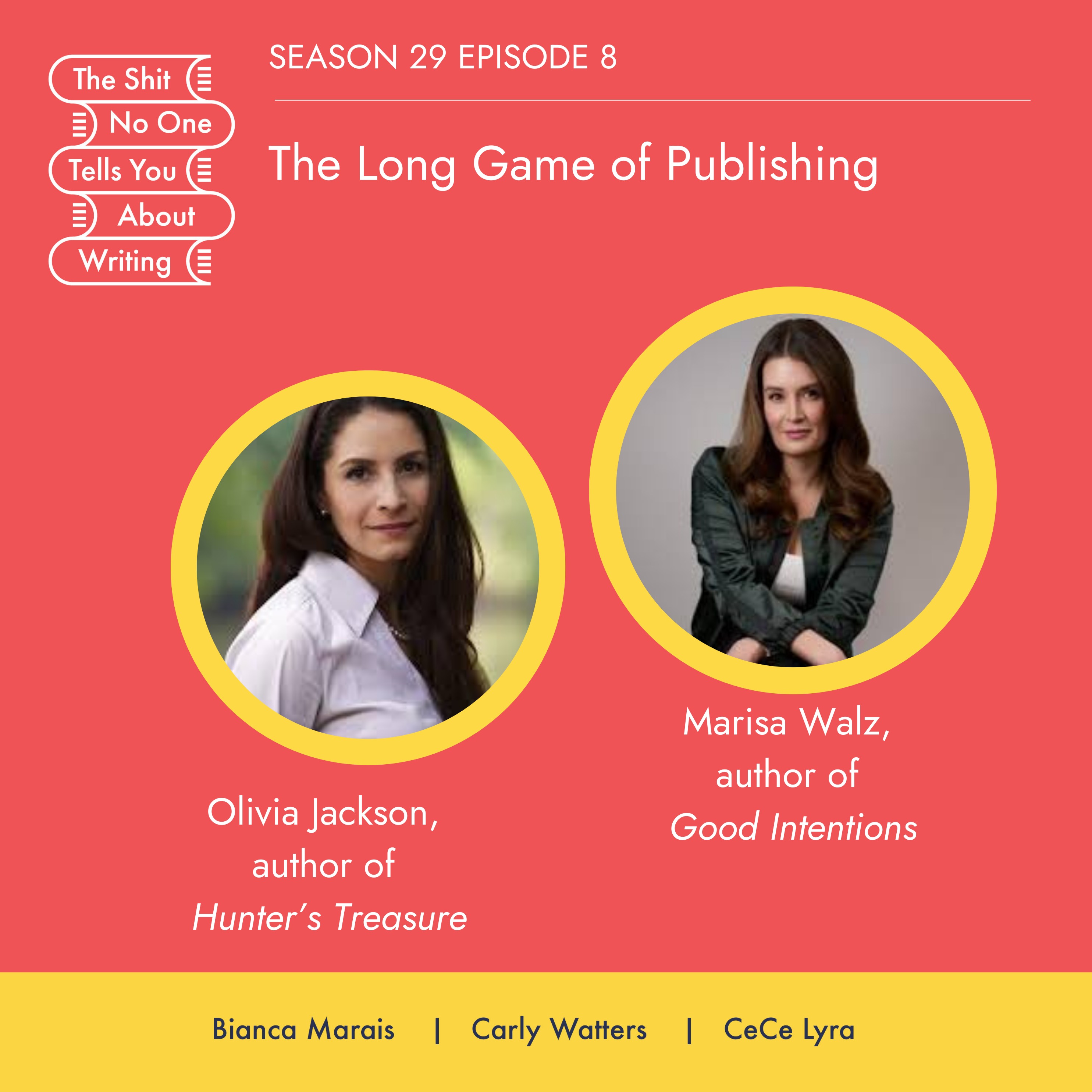
Loading summary
Transcript74 lines
- [00:00]
A
What's up, everyone? This is Cece. Do you know something I'm always looking for when I review the slush pile? Strong interiority. Well written interiority shows what your protagonist is thinking about in a way that is realistic and interesting. It propels the story forward instead of holding it back. But it doesn't stop there. A strong writer will leverage interiority into a superpower, into something I call psychological acuity. Think about it this way. Plot is what happens. Interiority is how your protagonist processes what happens. And psychological acuity is why it matters. It gives a book depth and meaning and staying power. All breakout books have psychological acuity. You have been asking me to teach a course about psychological acuity for years.
- [00:48]
B
Years.
- [00:49]
A
Well, it's finally here. Why did it take me so long? Because my courses take years to build. They're dense, they're thorough, and they're filled with examples and specific techniques. So this five day course begins on March 2nd. We'll have an optional interactive component. Students are invited to submit excerpts from their work for a chance to have them critiqued live during a class. If you're ready to take your writing to the next level, join me for writing interiority and psychological Acuity. Don't worry if you can't attend live. The sessions will be recorded. And for more information, check out my bio on Instagram or the podcast website. I'm looking forward to seeing you there.
- [01:35]
B
Hi there and welcome to our show, the shit no one tells you about writing. I'm best selling author Bianca Murray, and I'm joined by Cece Lehrer of Wendy Sherman Associates and Carly Waters of P.S. literary. Hi, everyone. Today's guest is a Federal Reserve executive who also writes novels about people behaving badly. She lives in the Chicago suburbs with her husband and two young children. It's my pleasure to welcome Marissa Waltz. Marissa, welcome to the show.
- [02:08]
C
Thank you so much. I'm excited to be here. I've been a listener for a long time.
- [02:12]
B
Yeah, we're gonna actually discuss that soon. I've got a few things to discuss before we dive in. So, normally I tape one or two episodes a day. Today I'm setting a record for the podcast and I'm taping four. Four segments. And for those of you who aren't watching on YouTube, I want you to see my T shirt, which is stay trashy, and it has a raccoon doing burlesque on it. So now that people have established that I'm a raccoon fan, I'm getting the cutest stuff. So I just wanted to show this off. Okay. The next thing I'm showing off is the book cover for Good intentions. Such a stunning cover really grabs your attention. Kind of simple. But also not for those of you who are driving and not watching. Please, at some point, check in on YouTube. Okay, I'm going to read the flap copy, and then I'm going to ask Marisa to read her chapter one. And many of you who've been listening to the podcast for a long time are going to be like, hold on a second, I recognize this. So here is our flat copy. Katie has it all. A thriving luxury event planning business, a packed social calendar, and the man she's loved since she was 17. And most importantly, she has Dana. Who? Identical twin, her mirror, her closest bond. Until the day she doesn't. When Katie gets a call that Dana has been in a serious accident and arrives moments too late to say goodbye, her world shatters. But it's not just the loss that consumes her. It's also Morgan, a grieving mother Katie notices in the hospital waiting room the day her sister dies. A stranger. And yet Katie feels a pull she can't ignore, convincing herself that the only way to heal is to help this woman recover from her own devastating tragedy. Or is it possible that Katie wants something more from Morgan? Dun, dun, dun. Okay, will you read us that first? Well, not the whole first chapter, right? It's just gonna be. Oh, no, it is the first chapter.
- [04:10]
C
It's pretty short.
- [04:11]
B
Yeah, it's pretty short. Great.
- [04:13]
C
Okay. The sun is leaving for the day. And I probably should, too. I shouldn't be here at all. This has to stop. Everyone says so. It's not healthy, Katie. It's not right. Not normal, not legal. But I'm only watching. Watching never hurt anyone. There's not much to see anyway. Just another house sucked dry. The only sign of life. The pulse of a television's blue light. It flickers from the back of the house, where I've always imagined her living room to be. I can't know for sure, though. I've never been invited in, despite those months when we were what I would consider friends. The house, a small brick bungalow, has the look of something kept nice out of duty, not love. The driveway and sidewalk are neatly shoveled, but that's all that suggests someone cares. There's no month's old Christmas wreath she's too busy to take down. No welcome mat for visitors to wipe their snow packed boots on. No sled lying forgotten in the yard, no smoke curling from the chimney. Not even the bronze lantern hanging over the door has been left on, away from the house, closer to me. Azalea's skeletons guard her concrete walkway. Their fleshy leaves and magenta flowers fell off a long time ago, blowing away and decomposing beneath the weight of the snow, leaving behind a network of woody rib cages. Above a gray sky blow a dirty white carpet, snow slashed by the brown dirt of boot treads and the spray of muddy tires. It didn't have to be this way. It did not have to be like this. Her in there with the TV's sad blue light casting ugly shadows on her pretty face. Me out here in my car, lights off, engine cold, winter biting into my bones until my muscles cramp protectively around them. I tried to help her, the woman inside, the one watching TV alone and dutifully keeping her driveway shoveled. But it's hard to help someone hanging on by a thread, Dana. Impossible if you're hanging onto the same one. At some point, despite your good intentions, the instinct to survive kicks in and you claw for that last piece of the thraying Fred for yourself. This, though, the watching, it has to stop. And it will. Soon. I've promised the therapist it will. We had a session tonight, right before I came here and I told him I'd given myself one last visit. This was when he suggested I start talking to you. He thought it might be easier for me to tell you all the things I can't won't tell him. Anyway, he wasn't impressed. And then what? He wanted to know. And then what will you do, Katie? Wrong question. He always asks the wrong questions. It's not what I'm going to do that we should be talking about. It's what's already been done. But I can't tell you that, Dana. I can't tell you anything without telling you everything you've missed.
- [06:53]
B
Wonderful. Okay, so you were on books with hooks. When was it you weren't on it? We reviewed your critique.
- [07:00]
D
Right.
- [07:01]
C
Yes. Yes. It was February, I think. Of 2024. Yes. Yeah, February of 2024.
- [07:10]
B
That's what I'm thinking as well. And that must have been really close to when you sold this book, considering how slowly publishing moves. So I'd love to hear your journey to publication as well as your experience with books with hooks. If you changed anything, if you didn't. How that process worked for you.
- [07:27]
C
Yeah. So my history with books is. Well, first of all, I've always wanted to be a writer since I was a little girl. Since I was at least seven. I have it recorded in my diary that I'm going to be a famous author one day. And I've always been writing in some capacity my whole life, whether it's for school, newspapers or having my own blog, or if anybody remembers the days of the e zines. I had a few of those. I've always been writing. But I didn't really get serious about writing a novel until I had my firstborn, my son. And I remember he was a few days old, and I just looked pretty back at him in the backseat of the car. And I remember this moment and this feeling so vividly that I just really wanted him to do something with his life that excited him and just made him wake up every day with, like, a fire burning in his belly. And I've always known, and I think there's a lot of people that don't know what their thing is or it takes them a very long time to figure out. And I've always known it. And it just kind of hit me that I was given this gift of knowing what my thing is, but I hadn't really done too much about it, and I wanted to be a better example for him. And so I just. That day or the next day, I can't remember. It was very shortly after that I really set out in earnest to write my first novel. And I was like, I'm just going to write it. And then I could say, I wrote it. But then I was like, well, I wrote the whole thing. Let's see if I can get an agent. And I didn't get an agent for that book. But, like, I had a taste of it. The fire was lit, and it was not going to go out. And so I wrote several more books. And I think it was. Let's see, it was my third book that I had that I got two agents with. We went out on submission. It died on submission. So I started writing another book. They didn't really love that book, so I wrote another book. And it was good intentions.
- [09:24]
B
I wanted just to really experience the emotions of a book dying on submission. Because it's easy for us to say this book died on submission, but there is so much hope in terms of getting an agent. And we believe, oh, my goodness, if I can just get an agent, then my book's going to get published. And to have a book that an agent says yes to, you work with them on it, it goes out to all these editors, and then it dies on submission is a particular kind of heartbreak.
- [09:53]
C
It is. It's absolutely devastating. I will say that I read Voraciously like, anything that everybody. Every author sub stacks, every aspiring author sub stacks. I listen to all the podcasts, including the shit no one tells you. And so I kind of had prepared myself, like, okay, it might not happen this time, but you're right, I thought it didn't matter because I had the safety net of agents now. So, like, even if this book died on submission, there are all these stories that keep you going. Like, oh, well, 18 months later. I thought it was dead on submission, but it really wasn't. And, like, it's these little tiny scraps of hope that just keep you going on and on and, like, doing the crazy work of writing another whole book, not knowing if anything's ever going to happen with it. But I definitely did feel like, you know, even if. Even if this book doesn't sell, I have agents now, so I'm set. Now all I have to do is get the right book at the right time. I got the hard part down. I've got the agents. No, no, no, no, no. So I wrote another book to keep myself busy while I was on submission. And that really does help, by the way. It really does help keep you sane. And while my agents didn't really like that book, which was a huge disappointment, because right now I may be, like, six or seven months past submission, and we've gotten, you know, some nice feedback, but nothing even close to going to take this to acquisitions. And so that was kind of like a double whammy, because I thought this was my. Like, this was my backup hope, right? Like, okay, if that one didn't work out, then this one would. And I really liked that story, but I just let it go and I wrote another whole book. I wrote Good Intentions, and I knew this book was good. I loved this book. I couldn't imagine that there wasn't some editor out there that was also going to love this book. So I excitedly sent it off to my agents, and they took a while to, like, read it. And when they finally got back to me, they did not love it. They didn't even seem to think it was workable. And I had a writer friend at the time who she was becoming very successful in her writing career. And she told me, you know, she's like, a lot of writers have to leave their agents because it's such a subjective business, even though they were great people. And there's no ill will between any of us. There was just a clear difference between our tastes. And apparently I'd written one book that they really liked, but. But that seemed to be the extent of it for us. It was really, really hard. But this other author who was kind of like a mentor to me, not so much through writing. We didn't really talk about writing so much as we did the publishing industry. Like, how difficult it is, how unique it is, how heartbreaking it is. And I really suggest having somebody like that in your corner, even if they're not an established published author. Like, just having a community is so important for getting through this, to remind you that you're not alone, it's not you. And to give you the good advice you need. Because she really pushed me. She's like, I'm telling you, she's like, you need to find a new agent. I know. That's so scary. And it is terrifying because you really think when you get your agent that that's it, that you two together will produce more and more books and one of them will work. And that just didn't work for me. So it was terrifying to go back in the query trends just again. But, okay, I'm going to lose a lot of people here with my relatability maybe, but I kind of like the excitement of querying agents. And I'd already been through such a long process with it that I felt like I kind of knew what I was doing now and what I wanted. So I felt more confident going into it this next time. And I started querying November 2023. And then I was, I don't know, I had gotten a lot of full requests and it was over the holidays and stuff. And like, I could just feel it. It felt like last time when I was getting close and starting to get interest, I was like, it's coming. I think I feel it. And getting really excited. And then I found out that my query was going to be on the shit no one tells you. And that was in February, early February, I think. And yeah, so I got the feedback on the show and, you know, I don't think it was like, that bad. I distinctly remember there was like, everybody unanimously agreed that I had to take the Birkin out. There was like a Birkin mentioned in.
- [14:36]
D
The opening scenes.
- [14:39]
C
And there was a lot of discussion around that. Birkin.
- [14:41]
B
I want the record to show I, I was probably not that person because I know nothing about fashion, I know nothing about bags, but I know Carly generally has a Birkin problem. Yeah. Did the Birkin stay or did it get taken out?
- [14:54]
C
It stayed in my editor and nobody, nobody else said anything else. So I let it stay. I, I, I mean, maybe it's one of those things, like, we have to suspend a little belief in fiction. But also, she has a multi million dollar company and her husband does too. So I was like, I, I think this is reasonable. But anyway, yeah, I, I didn't actually have time to implement any feedback because within a couple weeks of the podcast being aired, I landed the agent that I have now. And it was such a relief and it felt, it just felt so good and so right. And I knew I'd been there before and had those same feelings before. But you still have to trust that it was right because I, I still don't regret those first two agents because, like, it all was me here. So if you have a good feeling, I mean, or a bad feeling, I think in this industry you just really have to trust that it's the main thing that you really have to go on. And. Yeah, so we started working on some revisions to the story, and then my agent told me that we were going to go out on submission in June. She was aiming for. And I was like, oh, because, you know, like I said, I listen to all the podcasts, I read all the substacks. Like, I'm in all the forums. Like, I know you don't go on submission in the summer. This was going to be a disaster. I was going to have another book die on submission. But I was like, okay, she's my agent. She knows what she's talking about. She must feel good about it. And that's not my job. Right. That's her job, and I have to trust her through that. So, anyways, we go out on a Thursday in June, and that Saturday night, I'm at my husband's work party. Sorry, this is a little detour, but this is like one of my favorite parts of the story. That Saturday night, my husband has a work party downtown. We go, there's a tarot reader there. I've never had my cards read, so I was like, okay, I'm gonna try this. I go with a couple other women because my husband was not interested in having his cards read. And I let the other ladies go first, and they're getting their cards read and it all sounds vague and ambiguous, like it could really, like, apply to anybody. And I'm like, okay, maybe I won't do this. But I end up doing it. She starts flipping the cards over and she gasps and she hasn't, like, gotten excited about anybody else's cards. And she's like, oh, my God. She's like, something big, career wise is in the cards for you. Very soon, very soon. And I was like, oh, okay, cool. You know, I work at the Fed. I'm like, what's going to happen at the Fed? Nothing's going to happen at the Fed. There obviously was a piece of me because when you're on submission, especially when you're like two or three days on submission, that's all you're thinking about. So there was a piece of me that was like, oh, really? Like, it has to be about the book. But, you know, I was trying to play it cool. And I was like, oh, okay, nice. And she's like, no, seriously. She's like, something huge, career wise is coming for you in the next couple days and it's going to be life changing and you're going to have to make a decision really, really fast. She's like, get ready. Buckle up, buttercup. She really said that. And she made me take. She didn't do this with anybody else. She made me take a picture of my cards. She's like, you're going to want to remember this the rest of the weekend. I was like, all buzzy because I was like, maybe there's something to it. But, you know, that huge piece of me that was like, no, no, no, like, come on, be rational. Was trying to temper my expectations because I'd been on submission before, right? And I knew quick was, you know, could be months. Monday morning, my agent calls and says that Sarah Canton from St. Martin's Press wants to talk to you. She read the book over the weekend and she loved it. And I about died. And the first thing I thought of was like, the Tarot card readers. And I was like. But my other thought was, like, oh, it's finally happening. Because I will say, looking back, like, I always had this feeling from the time I was a little girl that this was gonna happen. And it's always been for me, just a matter of when. Like, I was always so sure it was gonna happen. I don't. I don't know how to explain it. And. And I didn't really realize that I'd always felt that way until it all started happening for real. And then I was like, oh, you know what? This is that feeling I. I always knew was coming. And, yeah, I just, I knew it was going to happen. It was, it was really just I didn't know when. And so it was more of an impatience than anything this whole time, I think. Yeah.
- [19:46]
B
Well, a few things to unpack there. So those of you who've been at previous deep dives, we've had Sarah Canton be a speaker at Our deep dive. So she's absolutely incredible. So it's a dream, a dream editor to get. 2. Weirdly, it was also a tarot reader that got me to not give up on writing. And I never told the Tarot reader that I wrote. And as I was actually leaving the table, the tarot reader said to me, you write? And I said, well, I did. And he said, you have to carry on. There's a book about a little girl and you're going to get published with that book. And that was my debut novel that I went on to write. But that was very far in the future. It was definitely not. You're hearing good news soon. 3. I know what I. There are two questions that our listeners are wondering about now. One, where is this tarot reader so that they can go and visit?
- [20:37]
C
So I did, I did take that picture. And she did give me her card that night. And since it happened just a couple days later, I still had her card. I reached out to her on Instagram. I said, you were right and now we're actually friends. And she, she actually helped me. I was really struggling with book two. A little bit, a lot of it, and that's a whole nother story. But she gave me a reading during that time to kind of help center me again. And that was amazing. And then on my book launch party, I've invited her to come and she's agreed to give free tarot readings to all my guests at my book launch party. And so if you want her information, she does virtual appointments and she's tagged on a post on my Instagram page. You'll see the tarot card reading from that actual night.
- [21:22]
B
Okay, so listeners, go and follow Marisa on Instagram post, find that link, get hold of that Tarot reader. And then two, Also, you kept saying two agents for that first book. Was that a junior agent and a senior agent working together? How did that work?
- [21:40]
C
Kind of. So one of my agents, the one that I had queried and was most interested, I don't know if her title was a Junior agent, but she was a newer agent. She'd been in publishing for a long time as a magazine editor, but she was new ish to being an agent. And I think maybe the genre might have been newer to her. And she hadn't sold in my genre or sold much in my genre. And so as she was reading and realizing that she liked my submission, she started having somebody else at her. Another, more senior agent. Yes. At the agency read, which I understand is fairly common. And they, and they teamed up and they both wanted to represent me.
- [22:25]
B
Okay, perfect. So I just wanted to clear that up for our listeners. Yes. And it is quite common. Right. We're almost out of time, which is horrible because I have the whole list of questions we haven't gotten to, but I'm going to ask two quick ones that I'd like you to tackle. This is so assured for a debut. The line level writing is excellent. It's exquisite. And so do you feel like this came from all of the books that came before that guide on submission and that's where you were flexing that muscle? Or is it a case of just revising this book over and over to get the line level to that elevated point?
- [23:01]
C
Yes, it's definitely my first book. Sounds nothing like this one. It's not near as sophisticated or polished. It's. The line level reading is not as satisfying. I'm so grateful, in hindsight, that nothing else had gotten published before this one. I'm so proud of this one. And I really feel like I needed all those other books to be able to write the way that I now can. And who knows, maybe in 10 years I'll look back and be like, oh, wow, geez, I wish I could go back and write Good Intentions again. But for now, I'm really proud of it.
- [23:33]
B
Yeah, and you should be. It's really, really an excellent, assured debut. Besides the plot and the story and characterization, etc. Like, the line levels is just exquisite and you don't often see that with a debut. So again, proving that nothing is wasted along the journey, no matter all the heartbreaks, everything helps polish it up. I want to discuss the hybrid sort of second person point of view that you used. You know, so she is speaking to her sister, but it isn't entirely second person. Is that how it began? And that's the way it went through, all the way through. I remember Carly and Cece, I think, saying, I hope this is hybrid second person, and then getting to the name. And I think cece then said, oh, yes, it is. And she was very excited about that.
- [24:19]
C
Yes. Yeah. So it is a very unique point of view. I did not start out writing it that way. I originally started writing it in first person. And as I was writing it, I was struck by a couple things. One is, I had really wanted this to feel like a very intense, almost claustrophobic story. Like, I wanted readers to feel like they wanted to, like, kind of like get away from this woman. Like, she made you feel very uncomfortable and it just, it wasn't coming through. As strong as I want. And I wasn't sure why. And I was also struck by this other thought of, you know, once you get to know Katie, it kind of becomes unbelievable. Like she doesn't have a lot of self awareness in many ways. So her just like telling the story and admitting all of this to herself. Like, I just don't really think she would have admitted all of the things in the story to herself. I think she really needed somebody to open up to. And Dana was gone, but Dana would have been that person out of anybody. Right? And it was safe now to tell Dana because Dana was gone. She couldn't say anything back or do anything about it. So I was like, yes, she has to tell this story to Dana. And so I started rewriting it in second person. And as I was doing it, I was like, oh, yes, this feels like you're in Katie's head. Like she's whispering this dark, terrible story directly into your ear. And that's what I wanted. So from there on out, it was like, nobody's going to talk me out a second person here. Even though I know it's a little.
- [25:54]
B
Yeah, no, it worked brilliantly here because even though she has a therapist, right. A lot of people aren't honest with their therapists, especially when the therapist does not approve of the what you're about to be doing, etc. So a lot of stories have a therapist so that the character can unpack to them. But often a person is not going to be 100% honest with their therapist and whereas with their sister who's just passed away, like you said, there's no reason for her not to be honest with her. So that worked really well. So for our listeners who want to look at excellent line level writing, who want to explore the hybrid second person, or who just really want a really good read, we're linking to Good Intentions on our Bookshelf affiliate page. If you get the book there, you support an independent bookstore and the podcast at the same time. Marisa, we wish you so much luck with this book.
- [26:45]
C
Thank you so much. I'm so glad to be on here. It feels like a little bit of a full circle moment, especially with this book. This was the first time anybody ever heard any of these words. And now we're back here again.
- [26:58]
B
I absolutely love it. I love nothing more than celebrating our supporters who get published. For me, it's always an absolute thrill. So congratulations.
- [27:06]
C
Thank you.
- [27:08]
E
As you know, we have booked our summer adventure. We're off to Germany and Austria for the kids summer break. I've been to Frankfurt for the book fair but nowhere else in Germany. I've been to Zurich, Zurich, but nowhere else in that region. So I am pumped. I can't wait to carry the kids up the mountains while we hike.
- [27:21]
C
Kidding.
- [27:21]
E
But what they often excel at is language. My kids are getting really strong French skills, but I can't wait for us to learn some German before we go so we feel less like tourists and more like locals connected to the country and coffin when we are out and about. Rosetta Stone has been the trusted leader in language learning for over 30 years. Their immersive, intuitive method helps you truly pick up your new language naturally. No memorizing random vocabulary lists. No feeling lost. Since we're traveling soon, we know that Rosetta Stone always has our back. They trusted language expert with 30 years of experience, millions of users and 25 languages to choose from, including Spanish, French, German, Japanese and more. It is a go to tool for real language growth. You can learn anytime, anywhere. Rosetta Stone fits your lifestyle with flexible on the go learning. You can access lessons from your desktop or mobile app. Whether you have five minutes or an hour. Don't wait. Unlock your language learning potential now. Shit about writing Listeners can grab Rosetta Stone's lifetime membership for 50 off. That is unlimited access to 25 language courses for life. Visit Rose to get started and claim your 50% off today. Go to Rosetta stone.com today.
- [28:28]
B
Hi everyone. Today's guest is a former software engineer who writes steamy contemporary romance. English is her second language and the use of the articles the and A is her Kryptonite. She lives in Atlanta with her husband, two kids and two naughty cats, Harry, Houdini and Bess. Besides writing, she enjoys traveling and experimenting with cooking and most of the time ends up eating the new meals herself because her family has a limit on how much they love her. She is a member and volunteer at Georgia Romance Writers and the Atlanta Writers Club. It's my pleasure to welcome Olivia Jackson. Olivia, welcome to the show. Hi.
- [29:08]
D
Thank you so much for having me here. I'm a huge fan and it's a huge honor to be here.
- [29:13]
B
It's so lovely to have you here. We love chatting to people who've listened to the podcast for a long time and what they've learned along the way. And it's especially wonderful to celebrate their books when they come out. So take us through your publishing journey from your first book to now when your second book's about to come out. And I really want to pick your brain about the Lessons learned by being a debut author. Because here's the thing, there's so much that we don't know until we publish and then we having to tread water figuring a lot of this stuff out as we go along. And for authors out there who don't want to go through the same thing, hearing your experiences are going to be so incredibly helpful.
- [29:55]
D
All right, so I started writing in, seriously writing in 2017 and I made pretty much every single mistake the new writers make when they try to find agent. And I'm saying almost because I have not tried to pass a query letter to an agent through the stall in the bathroom. So. But everything else, I made those mistakes. And as I was learning, I found a lot of critique partners. Some of them I found through your better reader matchup. And they were fantastic. They brought my writing to the next level. And I think that's how I was able to successfully find my agent. And oh gosh, once I found my agent, she sent me a 11 pages long critique letter of my novel and I had a summer to rewrite it. And then we went on submission in October of 2023. And in February of 2024, we had an offer through one more chapter. It's a HarperCollins imprint in England. And a year later my first book came out. It was in May 2nd of 2025. It was really big year for me. I turned 45, I had my first book come out and. And what, like nine months later? My second book is coming out in February. So it was very fast debut year in February. I'm no longer going to be debut author because I have a second book. So that's in a nutshell how it happened. And the lessons. Oh good God, how many lessons? I don't think we have enough time to list them all, but I'll go over the main one. As a debut author, we all have expectation what it's going to be when the books comes out. And we all dream of book signing and hitting the bestseller list and this and that. And my first mistake was I did not understand what digital first means. And that's what one more chapter is. It's a digital first imprint. When my book came out, it was available in England, but it was not available in the United States. So I was not able to do book signing events. Nobody knew about my book here. So my excitement crashed so hard and with it I crashed. And it's nobody's fault. It's just basically me not exactly understanding what it means and then still have some kind of expectations that no you know, it's still going to be in the bookstores.
- [33:11]
B
So when you say digital first, does that mean that the first run of it is only on Kindle? It's only available on Kindle or what does that mean for our listeners who don't know what that means?
- [33:23]
D
So yes, it first comes out as an ebook and audiobooks and then a week later in my case, because I think for different authors it's differently. In my case it came out as an ebook and audiobook in the United States first, but in England it came out as paper book, ebook and audiobook. And then two months later the indie bookstores in United States were able to order my book to put on their shelves. And in United States a week later when it came out in May, you were able to order it online through print on demand. So only on Amazon and on Barnes and Noble you could order the book. I made my trip to Barnes and Noble and I talked to the booksellers and they said they see it online but they cannot order to put it on shelf, but readers can order it through online. So I guess that's what it means. It's just print on demand first and then later it comes out as a paperback. And it's a slightly similar situation with my second book. It also comes out as an ebook first and then it comes out as a paperback. But this time around in the United States it, it's coming out everywhere in Barnes and Nobles they will put it on the shelves and indie bookstores already pre ordering them. So it's a slightly different situation. Don't ask me why. I don't know.
- [35:04]
B
Oh yeah, I was about to go. Why? Because it's what? It's the same publisher, right?
- [35:08]
D
Yes.
- [35:10]
B
Did you sell it on a two book deal? Like was it a two book deal?
- [35:14]
D
Yes, I was lucky to have already two book written and they're similar, they're both action adventure, both treasure hunting books. So my agent was able to sell them together.
- [35:26]
B
Perhaps it's because, I mean digging Dr. Jones, so that was your debut. Perhaps those sales were so good that that set you up to show that it's worth printing them earlier because I mean they have quite. Digging Dr. Jones has got quite a lot of Goodreads reviews for a debut, you know. So, you know, I don't know if it was because of sales or whatever. But also here's the thing is I think something that debut authors don't do because one, they're so grateful to just have a book deal and two, they don't want to Rock the boat. And I know I did this a lot. I would get a cover I didn't like or whatever, and I would be like, I'm just going to keep quiet because I don't want to seem like I'm not grateful, etc. But communication is so important. Being able to have meetings with your editor, with your marketing team, with your publicist, having your agent there answer all these questions is so important. And what I'm thinking here is that that's also something that you did. You were just like, I'm going to be so grateful and I'm going to sit here and be quiet and not be too demanding.
- [36:33]
D
Yes, I, yeah, I did not want to bother my agent with too many questions because, well, she's also very busy and here I am being like constantly bugging her with question, what's going on? And this and that. So, yes. And also my book came out in the beginning of May and then we rode into summer. And summer is such a quiet time in publishing because everybody going on vacations that I thought they forgot about me, they didn't like me, and I was spiraling into this dark place of worry. And at the same time, I'm a part of a debut discord where people sharing their stories. And of course I'm focusing only on bad things that people are sharing scary stuff, how their books failed. Like the first book has failed and their contracts got revoked or they're not getting a nice second cover for the second book. And I'm just sitting there, it's like, oh my God, this is me. That's it, that's the end. And then I think, not only debut author, I think as any author, but again, I'm very new to this. I was comparing myself to other authors on social media because I have to promote my book on social media. So you can't really avoid it. You can't not look at other things and social media. The best way I can compare it, now that I understand it, it's like when I was young, I would look at the magazines of celebrities and their airbrushed bodies and faces and I'll say, oh my God, look at me. I'm like, ugh. And not even thinking that this is partially kind of fake. And same with social media. I'm not saying that what people post are fake, but it's created in such a way that they show only the best parts and not actually all the hard heartache and broken hearts and tears that actually stands behind those happy moments. But, you know, you don't think about it. You don't stop your brain and say, wait a minute, this is great for these authors that they have signing events, they're traveling, they have so many people coming to their book signing. And then you talk to them and they say, well, actually, all those people came not for me, but the author. Next table. But it just kind of looks like they came all for me, or they're saying, no, I actually paid for all my traveling and I did the hard work of connecting with booksellers and creating those events. And yes, it might appear that it's all great, but in reality, it's not necessary, I guess that. Great. I'm kind of mumbling here.
- [39:46]
B
No, not at all. That makes complete sense. I mean, I know that, you know, for me, a lot of people looked at my launch and There were like 400 people there, and it was like, wow. But again, I paid for that whole thing myself. It cost me an absolute fortune. And again, it was me reaching out to author friends and inviting them to be a part of it and reaching out to the bookstagram community and reaching out to the podcast community. So it's definitely not something that my publisher did for me at all. And, you know, for my first book, I went on a book tour, and my publisher paid for that. For subsequent ones, not if I did that. I had to do it myself. And this time around, as a Canadian, I had to say, am I prepared to go to the US with the way things are there now, to travel in the US And I was like, no, I'm not prepared to do that right now. And so that affected my sales in the US So there are so many considerations, you know, and like you say, you do look at other authors and you're going, oh, my goodness, you are with my publisher. And yet you are getting X, Y, and Z. But when you do speak to them about it, they will show the picture of them doing some signing table, and you'll go, wow, that was amazing. And they'll tell you, two people showed up for the signing or two people showed up for whatever. So it is so important to not be comparing yourself to others. So, Olivia, in terms of the questions you would have asked up front, because I think this is so important now for our listeners to kind of think of that if you had it to do over again, and one perhaps should have. And I don't want to say demand, because, you know, it's a.
- [41:23]
E
How is it?
- [41:23]
B
I'm going to say demand? Because male writers demand things. Female writers are like, oh, I'm so sorry to Bug you. And I'm so sorry, but it should be like, I want to have a group meeting, a zoom meeting with my editor, with my publicist, with my marketing people. And I really want to understand what's going to go on so that I can manage my expectations. Like, if you'd had that meeting, what kind of questions now do you wish you'd ask that would have helped you down the line in terms of not having that kind of disappointment?
- [41:53]
D
Well, I would have that meeting. I didn't demand that meeting now. I would have. And I would have asked them to spell it out in the plain English, what to expect. And hopefully I would have got those answers because they did explain. But it was, I guess, just in the vague. Maybe they understand it and in the email, I didn't want to. Well, can you please explain more then? Because then I, I feel like, well, I probably an idiot who's supposed to know it and I don't. And then it's like, who wants to work with the idiot? So it's.
- [42:34]
B
People do use like publishing contractions. Any business has got like, contractions. You know, there'll be an R and R&PNF and a P and L or whatever. And they used to using those words. And as a debut, you're like, I have no idea what any of that means. And I think it's completely acceptable to say, I'm so sorry, I don't understand that. Could you please explain it to me? You know, this is my debut. This is the first time I'm doing this. And in order for me to be a big asset to you as the publisher and a big asset to this book, look, I really need to understand where I can add value and how I'm going to do that. Yeah.
- [43:14]
D
And like when they send the whole marketing list and stuff. This is where I learned the word pod. And I had to Google it because I didn't want to ask anybody what pod means. And it's print on demand. So. And it's just, it's a fear of being that nuisance and annoying, I guess, authority. And since publishing is such a small world, everybody knows somehow. Everybody. And then, you know, your word will, the word will get out that, oh, you don't want to work with Olivia because a, she doesn't know anything and then she's like, demands a question. So. Because if I was, I guess, the bestseller, I had some muscle to flex, I probably would ask questions. But as absolutely new person to this world and being a very, very small fish in a very big, big Big ocean. Yeah, I didn't ask anything. And I mean, my agent is very good in bugging people, so. But I also didn't bug her too much because I did not want to be too big of a pain in the neck. And so. Yeah, so authors don't be afraid to be a pain in the neck. That's my advice.
- [44:35]
B
You know what? I'm even going to take it further than that because I think that publishers want to work with authors who know the industry, who know what to expect from the industry, who know how to promote themselves, etc. Like, I think with my last book, it served me well that I work on this podcast and that I know how publishing works etc, and that comes from experience. But I think a publisher would always rather work with an author who is informed. And the only way you can be informed, besides asking other authors, is to ask them. And it's the way you do it. Like, if you are going to email people every day something snippy like, why don't I have arcs? Or why don't I have this? Or why don't I have that? Or why does this author have this and I don't have it, then of course they're going to view you as difficult. I also don't have a problem with women being viewed as difficult because men don't have a problem with it. But there is a way to do it, and I feel like if you put down a document with all of your questions and just ask them to please answer it for you. And even if you do that once a month, that is not harassing them and it's showing how much. How invested you are in the book, how much value you want to add. So, yeah, I think we need to move away from this mindset where, you know, I should be grateful. I don't want to ask any questions and I don't want to bother anyone because at the end of the day, you and your agent, it's a partnership. It's a very important partnership. It's like a marriage, and no one's going to go, well, I'm not going to ask my person who I'm married to for this or that, because they're going to view me as a pain, you know, so you do need to view that as an equal relationship. And I certainly think that when it comes to an editor as well, you know, there's. There's a way to do it that is not going to make you come across as difficult. So now with the second book, like, how are you going into the Second book in a different mindset compared to the first.
- [46:30]
D
So in the summer and towards the end of the summer, my anxiety was spiraling so hard that I haven't heard much for anything really from I was getting royalties, so I knew that they still like I had a contact with my publisher, but everybody were on vacations and they're in England and I think they have better vacations than we do here. So anyway, so can I say so one more time? I received email with my second book cover sketch and this is my second book. And I cried because I loved it so much. And I got such a huge relief that my publisher still loved me because they still used the same awesome illustrator. And maybe same week or a few days later I received my manuscript with editorial notes and there was not that many of them. So life got back on the brighter side. Oh, I sound less than paying attention to the nice stories that the author shared and I became happier. I finished my edits and I also found out from just by sheer luck, I was in the Barnes and Noble and the bookseller looked up my book because I was talking about them about my book the Hunter's Treasure. And she said, oh, we already have some on order. I was like, oh my God, that's fantastic. And I knew that since it will be available right away to the readers here in the bookstores, I start planning my book events because now I could have readers to come and actually have a book to sign for me. And I feel like with Book two, this is actually feels like my debut book because it's going like it's supposed to go. Or at least in my mind I have a book tour. I'm calling it Book Tour because I'm going to two different states. Even it's Georgia and Florida next to each other. But it doesn't matter. In my mind, this is a milestone. It's a book tour.
- [48:52]
B
That is a book tour. I hope you're gonna go to Foxtail bookstore. Are you going there?
- [48:57]
C
Yes.
- [48:58]
D
They actually having an early book release party on Valentine's Day. They secured early copies with HarperCollins and we having this big party. In my mind it's big with Prosecco and non alcoholic bubbles and cookies and what's not. And we having a treasure bag ruffle with a bunch of beachy stuff for people to win who comes there. So yes, they are my biggest fan and I'm very grateful for them.
- [49:31]
B
Shout out to Foxtail. Absolutely. Love them, love them, love them. What day is your party? So that any of our listeners who might be around can pop in. Is it an open party or is it a closed party before I invite everyone there?
- [49:45]
D
It's open, it's on February 14th, Valentine's Day at 2:00'.
- [49:51]
B
Clock.
- [49:52]
D
So yeah, if you in Atlanta area and want to drive to the Foxtails which is in Woodstock, Georgia, please come by, enjoy some good food and Carly Walker, she will be with me as a partner in conversation and it will be fun. So yes, now I feel very excited about my book and everything what happened with my first book. It's all forgotten. It still was all great. It was still very good debut. What nine months is just. I think this is going to be better and I'm a little bit braver now to talk to readers because I had few book signings and with Diggy Dr. John and other stores like in October and August and I'm ready to meet more readers. And yeah it's just, it feels different. And I also now taking a publicity class so I can learn more how to do it myself because a lot of it's and it's not only my imprint, you can, I don't know, talk to an author from Berkeley. A lot of publicity marketing still falls on authors shoulders. So I'm learning, I'm taking classes and anyone who's new or about to become a debut authority, they can reach out to me and I will share any knowledge I have learned and I will advise, I'll direct them onto websites, books, classes that helping me to become better writer in the sense of not actually crafting but managing a business of writing or business of being an author.
- [51:43]
A
Yeah.
- [51:44]
B
Because they're two very different things. You know when you're sitting with your imaginary friends writing, that's one thing but the business side of writing is different. And I remember the thing that I still haven't actually got to accept about publishing because I am such a control freak is how much hurry up and wait. There is like you won't hear from your editor or anyone at your publisher for like eight months and you kind of want to be, hello, do you remember me? I sold the book to you and then suddenly boom, you have a cover and suddenly boom, there's the flat copy and they need you to sign off on the flat copy. And then suddenly there's copy edits and then suddenly edits and you, you know, and nobody like says to you this is when it's coming through. You should get some idea of the workflow. They should be like these are the dates that you're getting your developmental edits. These are the Dates you get your copy edits, because I like to sort of put it in my calendar, keep open this week because you're going to have to be working on this. But that doesn't happen. You're busy working on a million other things and then suddenly your inbox full of 20 things that your publisher all needs in three days. So that's the part of publishing that still drives me nuts and that I still cannot manage. And I've just had to realize, okay, as a control freak, just give up on it. That stuff is just gonna happen. There's nothing you can do about it.
- [53:01]
D
Yes, agree. It does happen like that when you don't hear from them for a long time. I mean, you can try to focus on your next book, but then when you're getting into really good part of your new book that you're writing, then you get that email that interrupts your flow and they say, yeah, can you get us back in a week or in three days? And since that other book is under the contract, you're obligated to get back. So yeah, you have to pause your great scene that you're writing and do your other under the contract job. But no second book. Been great experience. And I was going to show you. I was very nervous when we were in Hunter's Treasure. They exchanged notes on a paper because they're on deserted islands so they couldn't use their cell phones. And I had this idea that we would actually have images in the book. And I hand draw the images, not hand draw them on a paper, but on an iPad.
- [54:10]
B
I just want to say for our listeners who are listening to the podcast and not watching on YouTube, Olivia is holding up the drawing. Hold up again for our YouTube. There we go. Yep, there you go. Great. Yeah.
- [54:23]
D
And I proposed to my editor, what if we will have an images throughout the book of the exchanges. And I thought you're going to say no because it's extra work for them to figure out the images and then put them in the book. And the whole layout about. And she loved them. And all those images in the books that people are gonna see, those are my drawings and my stuff. So if you don't like my cat butt over here, sorry, I love the cat butt.
- [54:55]
B
Love the cat butt. But again, like, you don't know until you ask, right? Until you say to them, this is what I'd like to see. Are you able to do it? Sometimes it's like, no, it's too expensive. We can't add that. And sometimes they're like, yeah, I absolutely love this.
- [55:08]
C
That. Yeah.
- [55:10]
D
So this is like the most excited part of. Of the book that. That I going to have my doodles there.
- [55:18]
B
Amazing. Well, Olivia, we've come to the end of our time. Thank you so much for being so candid and for being so open. Because, you know, the podcast is called the sh. No one tells you about writing. And a lot of the times authors just feel like, well, we're going to complain until we get an agent or until we get published. And after that, we can't actually, like, tell the truth or we can't really be transparent about things. And I think it's so important to manage expectations and to know the mistakes other people have made so that you can avoid making those mistakes yourself. And that's something that you are really helping a bunch of future debut authors avoid, which is incredible. So for our listeners, we are going to link to the book on our bookshop.org affiliate page. If you buy the book there, you can support the podcast and you can support an independent bookstore at the same time. And if you can come out to Olivia's launch party at Foxtail, please be there to support Foxtail and to support Olivia. Thanks so much for joining us.
- [56:17]
D
Thank you so much for having me.
- [56:18]
B
And that's it for today's episode. I hope you'll join us for next week's show. In the meantime, keep at it. Remember, it just takes one. Yes.
- [56:32]
A
What's up, everyone? This is Cece. Do you know something I'm always looking for when I review the slush pile? Strong interiority. Well written. Interiority shows what your protagonist is thinking about in a way that is realistic and interesting. It propels the story forward instead of holding it back. But it doesn't stop there. A strong writer will leverage interiority into a superpower, into something I call psychological acuity. Think about it this way. Plot is what happens. Interiority is how your protagonist processes what happens. And psychological acuity is why it matters. It gives a book depth and meaning and staying power. All breakout books have psychological acuity. You have been asking me to teach a course about psychological acuity for years. Years. Well, it's finally here. Why did it take me so long? Because my courses take years to build. They're dense, they're thorough, and they're filled with examples and specific techniques. So this five day course begins on March 2nd. We'll have an optional interactive component. Students are invited to submit excerpts from their work for a chance to have them critiqued live during a class. If you're ready to take your writing to the next level. Join me for writing interiority and psychological acuity. Don't worry if you can't attend live. The sessions will be recorded. And for more information, check out my bio on Instagram or the podcast website. I'm looking forward to seeing you there.