← The Shit No One Tells You About Writing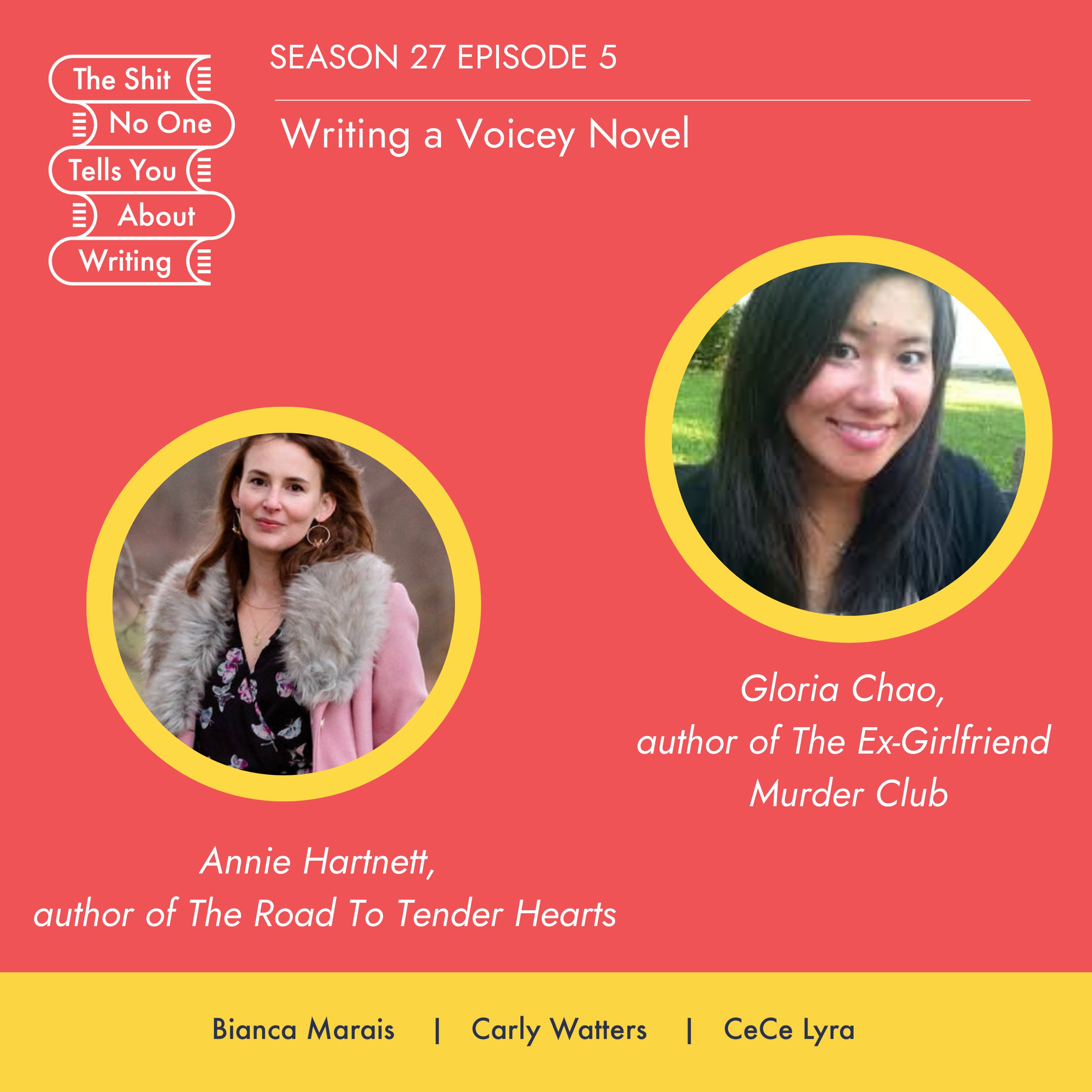
The Shit No One Tells You About Writing
Writing a Voicey Novel
00:56:06
Author Interviews Annie Hartnett and Gloria Chao
Loading summary
Transcript72 lines
- [00:00]
Host - Wayfair Ad Speaker
As summer winds down and we get back into back to school mode, thinking cozy interior decor is top priority. From layering fabrics and textiles to extra pillows and fresh sheets and plush bath towels, I can't stop thinking about being enveloped by my home. Whether it's by the fireplace or a piping hot bath or making sure the kids are tucked in their beds. We recently redid our bathrooms in our house. Goodbye 1990s and I love how they've come together, but one thing that always solidifies the look is the towels, soap bottles, hooks and more. Whether it's hand towels or guest bath towels, I like to make sure the textiles, textures and our handpicked items and they feel like a hotel bathroom or spa and each detail is considered Wayfair has the perfect options for us. Wayfair always delivers so quickly so you don't have to wait and second guess any decision making. It's already at your door. You can make confident choices that suit your style instantly. I like luxe, detail oriented, minimal, individual and stylish pieces and Wayfair's got me covered. I think about how the pieces of my house communicate with each other while also being unique and Wayfair is the best place to shop because your house is not going to look like everybody else's. It's going to reflect you if you're thinking of a room or a space that needs a refresh for fall as we get back to routine, Wayfair's huge selection is easy to navigate with detailed filters to make sure you're getting the best selection for your taste and your budget. Wayfair makes it easy to tackle your home goals with endless inspiration for every space and budget. Get organized, refreshed and back to routine for way less Head to Wayfair right now to shop all things home. That's W-A-Y-F-A-I-R.com Wayfair every style every Home what's up everyone?
- [01:29]
Cece Lehrer
This is Cece. If you're a writer, then chances are you've wondered if your story is good enough. Maybe you're wondering that right now. I get it. Here's what I can tell you. As long as your story is making the reader curious, you're good. Now, I'm not saying you won't have to make edits when working with an agent or publisher. Edits are part of the game. But I am saying that you will get ahead in your career if you know how to make the reader curious. The best way to do that? Infuse your story with plenty of tension, conflict and stakes. Which is why I'm so excited to invite you to join my four day course, writing Tension Creating Tension, Conflict and Stakes in youn Story. It starts on October 13th. My favorite part about this class is that there are formulas. Yes, formulas for tension, for conflict, for stakes. And for the first time ever, we're having two optional interactive components including a query letter studio and live critiques of select first pages. I'm super excited about this new format because I've seen it yield results in writers works and it works for writers of any genre as long as you're serious about improving your work. So if you're ready to take your writing to the next level, you join me for this four day course. Don't worry if you can't attend live, the sessions will be recorded. For more information, check out my bio on Instagram or the podcast's website. I'm looking forward to seeing you there.
- [03:07]
Bianca Murray
Hi there and welcome to our show, the Shit no one tells you About Writing. I'm best selling author Bianca Murray and I'm joined by Cece Lehrer of Wendy Sherman Associates and Carly Waters of P.S. literary.
- [03:23]
Podcast Host / Interviewer
Hi everyone. Welcome back to another author interview. Today's guest is the author of Unlikely Animals, which won the Julie Award Howe Prize for Fiction and was longlisted for the Joyce Carol Oates Prize. She is also the author of Rabbit Cake, a finalist for the New England Book Award and a COCUS Reviews Best Book of the Year. She has been awarded fellowships and residencies from the McDowell Colony, the Sywanee Writers Conference, and the Associates of the Boston Public Library. Along with writer Tessa Fontaine, she co runs the accountability workshops for writers, helping them commit to routines and embrace the long, slow, joyful, terrible process of doing the work. She lives in Massachusetts with her husband, daughter and dog. And it's my pleasure to welcome Annie Hartnett. Annie, welcome to the show.
- [04:13]
Annie Hartnett
Thanks so much for having me. I'm thrilled to be here.
- [04:15]
Podcast Host / Interviewer
It's wonderful to have you here. For those of you watching on our YouTube channel, I'm holding up the book we're discussing today, the Road to Tender Hearts. I will read the flat copy to give you some context, but I just wanted to say, Annie, that it was our newsletter editor, Suze Dugard who read this book and immediately contacted me and was like, oh my God. Oh my God. You have to read it. It's so good. And you have to have her on the podcast. So shout out to Suz, who has excellent, excellent taste in Built so nice. Okay, so just for our listeners, I'M reading you the flat copy so we have some context and then we'll dive in. At 63 years old, million dollar lottery winner PJ Halliday would be the luckiest man in Pondville, Massachusetts, if it weren't for the tragedies of his life, the sudden death of his eldest daughter and the way his marriage fell apart after that. Since then, PJ spends both his money and his time at the bar, and he probably doesn't have much time left. He's had three heart attacks already. But when PJ reads the obituary of his old romantic rival, he realizes his high school crush Michelle Cobb is finally single again. Filled with a new enthusiasm for life, PJ decides he's going to drive across the country to the Tender Hearts Retirement Community in Arizona to win Michelle back. Before PJ can hit the road, tragedy strikes Pont Conville, leaving PJ the sudden guardian of his estranged brother's grandchildren. Anyone else would be deterred from the planned trip, but PJ figures the orphaned kids might benefit from getting out of town. PJ also thinks he can ask Sophie, his adult daughter who's adrift in her 20s, to come along to babysit. And there's one more surprise addition to the roster. Pancakes, a former nursing home therapy cat with a knack for predicting death, who recently turned up outside PJ's house. This could be the second chance PJ has long hoped for, a fresh shot at love and parenting. But does he have the strength to do both those things again? It's very possible his heart can't take it. So, so much to love here, right? So for our listeners, whenever we talk about voicy narratives, when we talk about voicy narration, we say on the podcast how difficult it is to define voiciness. But I want to read you just a short excerpt here to show you the example of voice in us and also to lead to our next question, which is about omniscient POVs. So leaving Pondville, the sound said at town's edge. Be careful out there, it said underneath that Pancakes had learned to read from one of the patients in the nursing home. Alberta Russet would read aloud from the Russian Masters while Pancakes snuggled on her lap. Alberta Russet hadn't made it to the end of Anna Karenina before her death, had missed the entire part about the train. Pancakes walked to the other side of the road sign. Welcome to Ponville, it read, and then in smaller letters written in yellow on a white sign looking like piss on snow, the town motto read, you safe here. Bullshit, thought the cat because he had seen his fair share of bad things, and he was only two and a half human years old. No one was safe in Plonville because no one is safe anywhere. Pancakes knew with certainty that there had been violence in the town. He remembered that the first events of King Philip's War happened in Ponville in 1675, and that war was an absolute bloodbath. All cats have had an ancient knowledge. It's dogs that are born with blissfully a clean slate. But this isn't a story about cats or even dogs. It's a story about horrible things that happen to people and how on earth anyone can stomach raising children in a world where doom and disaster lurk around every corner. So, no, it's not a story about a cat. It's just a story that starts with the cat and goes from there. So can you tell us, Annie, in terms of capturing the narrative voice and setting the right tone, how long does that take for you in the process? How do you set about doing that?
- [08:06]
Annie Hartnett
So I've always been sort of a voicey writer. I think some of that is because of what drew me to writing in the first place, what drew me to creative writing classes. It was the first place that I could love books but not be well behaved like I had felt like in English classes, I had to be well behaved. And suddenly in creative writing classes, I could use swear words and I could tell dirty jokes, and I just felt like I belonged there. And that is sort of what, you know, now it's a long time since I've actually been in those classes. But that is where my writing career has grown from, sort of that desire to have fun with writing. And so the voiciness kind of comes from that desire. It's part of my own desire to amuse myself first and then hopefully to amuse and delight readers. Delight and like, pings of joy are what I'm trying to give readers. But I also have a very dark sense of humor, so it's not necessarily for everyone. But that sort of mischievous voice is in all my books, although it's different in each one. This book in particular came from. I don't write at all about my own life, but I was parenting a small child during the pandemic in a house that was trying to kill us. We had every single problem. We had black mold. We had lead in the water. We had rats in our car. We had trees that were gonna fall in our house. In the rental house, we had a teenager that crashed his car at the base of our driveway. It was, like, absurd. As I was parenting a young child, so I knew I wanted to write a book that was about all the fear and anxiety I have about raising children both in that situation and sort of like the larger world where it feels like things are falling down all the time. But I don't write about my own life. So I just thought, I will write a comedy that is about those fears. And so that paragraph was there very early on. I find, and I would tell this to my students, that you don't have to keep it in, but at the end of every first chapter, if you write some sort of paragraph, paragraph, that's kind of like, here's what I promised to give you in the rest of the book. The line that you just read about, like, how do we raise children in a world where doom and disaster lurk around every corner? In my first book, there's actually a very similar line in Rabbit Cake. I don't remember exactly, but it's like I had no idea what was in store for us. Like, the disasters in store for us. I actually use the same word, disasters. I remember. And so the voice kind of comes from those things, is letting my personality get into the book and also trying to put the darkness in the book while keeping this sort of silly, mischievous tone. So it's not something necessarily that I can teach. Although I think it's like, it's good to let your own personality into a book.
- [11:10]
Podcast Host / Interviewer
Yeah. Yeah. Especially if you're doing third person point of view so that you, as writer, as narrator, get to choose the narrative voice. So because if you were obviously doing first person, you'd have to capture the voice of that particular character as opposed to a narrative voice. And what you were just saying now reminded me of that Phoebe Waller Bridge quote that says, disarm the audience with comedy, then punch them in the gut with drama when they least expect it. And I feel like your work is so much about that.
- [11:40]
Annie Hartnett
That's great. My friend Rufus Thorpe said something similar that was like, tickle people. And then that's when you slide the knife in. So that's kind of. But, yeah, it's a balance. I've always thought my books were funny, but I wanted to write something that was more in the sort of Schitt's Creek universe where it's like, we know this is funny, but then there's also. There's actual real emotions in there. And I. And I didn't feel like there were as many books that tries to do what something like Schitt's Creek Does. That was kind of my goal because it was sort of. It made sense for me at that place in my life with all the darkness around me and while parenting. So I love that quote, that Phoebe.
- [12:19]
Podcast Host / Interviewer
Yeah, it's wonderful. And so on the podcast, we always talking about intentionality, that you can do anything, you can break as many rules as you want. Just approach it with intentionality. Now, what I want to do is pick your brain about why an omniscient kind of point of view rather than choosing multiple POVs in third person kind of in the same chapter. You know, what is it that omniscient brings to the story that you wouldn't have been able to achieve any other way?
- [12:49]
Annie Hartnett
Yeah, that's interesting because someone asked me recently at a book event if I got any pushback from agents or editors because they heard that omniscience is unpopular. Which I guess if that's true, I wasn't paying attention.
- [13:04]
Podcast Host / Interviewer
It's unpopular because so many people don't do it well. It feels like head hopping and jumping between people. So I think it's unpopular because it's so difficult to do. So when I see somebody do it really well, I'm like, okay, I need to kind of get into their brain and figure out their approach to that.
- [13:21]
Annie Hartnett
Yeah. I mean, it makes sense to me that Ann Patchett said it took her four books to learn how to do omniscience well. So I think omniscience is a skill because you have to be in total command of the world. And I think I learned to do it over time. What happened with me is my first book is First Person. It's very voicey, that book. When I got an agent, it did not have a climax. It was kind of a mess. But the voice was so strong that I got a fellowship, that I got an agent based on the voice. So that was kind of what I had, naturally. And then I, you know, my agent asked me, what is the climax? And I was like, I have no idea. No one talked that way in my MFA program. So I really appreciate this podcast where you kind of talk about that, that stuff, and it's just a resource I didn't have, you know, 10 years ago. So when I went to write a second book, I wanted to do something different. So I knew I couldn't do another first person voice because, like, I felt like that that voice was so strong in my head and that even if I had a new voice, it would pale in comparison to what I felt like I still am. Like, that might be the best the only first person book I can ever write because that voice was so strong. So then I went to write. I did write a sort of. It was kind of omniscient. It was kind of written in these chunks of third person, and it was also written in first person. It was. It was kind of. It was a mess, as most first drafts are. But I gave it to a friend and I had put it all in third person. Omniscient. And he asked. He said, well, who's telling the story? Like this Omniscient character keeps making these jokes, but I don't know who's talking. And so I knew that was a problem. And I actually just told him when he said that, I was like, shut up. I'm just trying to get the plot down. But then what I did is I this sort of like the magic way that novels sometimes happen. So I knew that I had this first draft. It was written in omniscient. I knew the omniscient wasn't really successful. I got a fellowship at McDowell. On the first day you get to the McDowell colony, they take you on a tour and they tell you like, this is the James Baldwin Library. This is where he wrote Giovanni's Room. And you're kind of like, why am I here? When are you going to kick me out? And then I realized on the second day there after that tour that Thornton Wilder wrote our town at McDowell and that I could do the omniscience but from the voices of the cemetery, so that they could sometimes pop up and make the jokes. And then I could have go into the heads and kind of go in and out. So I feel like that book, not that it was training wheels for the next book, but it did teach me sort of like how to do omniscience. And so now with the third book, I realized once I had the first couple chapters down, I didn't think those three chapters. And when people read them, they will see what I mean. I didn't know if they all belonged in the same book, but then I realized that I could. Because you meet these three different. These sets. You meet the cat, you meet the old man, pj and then you meet the kids. They don't know each other in the beginning. And I realized that they all had to be tied together through voice. And if I use the right omniscient voice and I put the cat first, then I could use the cat to tie them all together. They're also all tied together through the theme of the newspaper. So I did have to learn omniscience. But I just kept trying it because I do love books written in omniscience. I'm a huge John Irving fan. He, I think, is the ultimate master of omniscience. And I think with voice, the other thing that I've said to people is like, you keep trying and trying and trying and smashing your head against the concrete, and then one day the voice might click. And then you kind of have to trust that you have it. I think you really feel it. It's a physical click. I was like, oh, it gelled one day for me. I remember it was February, and I was like, this works. Now the book makes sense. It didn't make any sense before. Now it makes sense. And then I just trust the voice. And I feel like once I get to that place, then I can do whatever I want in a book. But it does always come down to I need the voice. I guess I never tried to write it in different third person sections. I think I prefer, as a reader, Omniscience. And there are books that I like that do this, but I don't always like when it's just a new chapter and it's a new person, because then I'm like, I like the old person that we were just with, and I got attached to them. So I kind of find that, like, less absorbing as a reader, which is personal taste.
- [18:00]
Podcast Host / Interviewer
Yeah, no, all of that makes complete sense. And it was just. I feel like the Omniscient works as a bridge between the different POVs, whereas a break would just kind of stop you off, whereas you're bridging us the whole time and preparing us for the next pov. And we come back so it feels much more fluid as opposed to more just disjointed. Something that I want to chat to you about as well, because on the podcast, we have two agents. We read query letters and opening pages to try and help people polish it up ahead of going out on submission. And we generally say, begin with the main character. Right. Because for that exact reason, the reader immediately becomes attached to the first point of view that they were. And yet you broke that rule so brilliantly. So for our listeners, we begin with Dr. Gust, who runs a nursing home in Pondville. He's not the main character. He's like a catalyst character that starts all the dominoes tipping so that everything else falls in place. And he introduces us to the cat. So that's how we begin in chapter one. And then I just want to read the beginning of chapter two so you can see how Annie has sort of jumped from. Because obviously Dr. Gust dies because Pancake has been attached to him. And we know Pancake can figure out when people are going to die. So chapter two begins with Dr. Gus Debit. Ran in the South Coast Daily sun two weeks later, on May 3, 2014, to be exact. Yet another day that P.J. halliday, a 63 year old Pondville resident, would wake up as usual, all alone in his house full of shit. That morning, PJ had no clue, not the slightest inkling, how much his life was about to change. PJ Halliday didn't read Dr. Gust's obituary, even though it was right next to another obituary that day, the one that would change his life. And all of it would be connected in the end. So, you know, so amazing that you begin with this character who's not the main character at all. We don't hear about him afterwards, but that's the catalyst to get everything going. So again, can you speak a bit about that? Was that to introduce us to the cat and what the cat's capable of and then the dominoes start tipping?
- [20:06]
Annie Hartnett
Yeah, I had to introduce the cat first because it would be too goofy to bring him in later. I think, like, you know, the rule I've heard about magic is that you have to do it as soon as possible. And so the cat that can predict death had to happen as soon as possible. And so, yeah, he predicts. Dr. Gust dies. You meet Dr. Gust, and I always read the first chapter to people at book readings and people are so like, oh, what happens to Dr. Gust? I was like, oh, he dies. He dies right away. He's not in the book. But so Pancakes is really like the main character of that chapter. Pancakes was described to me as a main character, as the main character by another podcaster. I was like, no, PJ Holiday is the main character. He made him in second chapter. But usually, yeah, you do meet the main character in the first chapter. But I think with Pancakes, like the magic, establishing the magic was more important than establishing the main character. One thing that I use throughout the book, which I think is I'm sure some of your listeners are writing road trip books, because I have suddenly become aware that it's a very popular genre, which I really didn't know until I published one. And then I found out that people have a huge bias against road trip books too. But in a road trip book, because you can't have recurring characters, what you need to have are recurring objects. And objects have to have an extra importance in this book, objects are really important. They're like, some of them are even magical. But the newspaper really was the thing that ties those first three chapters together, that otherwise they're all different characters who are not connected. But they all, like, have this string of the newspaper. So the cat appears in the newspaper. PJ is opening the newspaper. Then he sees the obituary for for his high school friend, and he realizes that if that guy is dead, then the woman that he married is single again. And so that's where he decides he's going to go on the road trip. But then the other detail about PJ that you learn in the first chapter is that his ex wife cuts up the newspaper for him because he says he's so sensitive that he can't read anything bad happening to children and animals. So what I realized as I was writing, because that was my original inspiration, I knew a person whose wife cut up the newspaper for him. And so once I realized that I had written the cat chapter and then I had written the PJ chapter, and I realized that they were tied together by the newspaper, and then I had written the children chapter, but I didn't think it was the same book. But then I realized, oh, who is being cut out of the newspaper? The cat and the children would be the people cut out of the newspaper. So they're already all connected. So objects really allows me to break some rules and to also keep the road trip feel like it's all connected. You can steal an object from somewhere on your road trip and you can take it with you in the car, and then it can, you know, continue to echo.
- [23:04]
Podcast Host / Interviewer
So smart to introduce the magical element of the cat so that people can suspend disbelief immediately because like you say, if it came later, they'd be like, what, a talking cat who can sense death? No. So really smart to do that. Something you said now was so interesting. What is the bias against road trip books? You said you realize there's a bias against it.
- [23:22]
Annie Hartnett
Yeah, well, I see on Instagram people are like, I hate road trip books. But I liked this one and someone asked me, were you aware. Actually, multiple people have asked me, were you aware of the bias people have against road trip books? I think the reason that people dislike road trip books is the same reason I kind of just said that it's hard to have recurring characters. But I also think my own agent doesn't always like road trip books because she represents a lot of children's books and middle grade books, and she says they're hard to pull off for that age group because the kids are just passengers and they are not able to be that active. But I have kids in my book, and they are plenty active in the book. So even, you know, this is not a book for children and don't let your kids read it. But I think you could do the same things I have done and make it appropriate for children where you just have to work. Be aware that that's the bias that people have, that the kids aren't active or that the people in the car aren't active, or that every time they meet a character, if it's only for one chapter, you just have to work to make that person really memorable and actually do something in the story. They can't just meet the people and then have nothing happen in the plot.
- [24:35]
Podcast Host / Interviewer
So these kids have so much agency. And the things that they do affect the plot. It tips the dominoes over so they're not like just passive characters who are, you know, at the mercy of adults. And we keep getting told that adults don't listen to them, you know, so they constantly are asserting themselves, which was amazing. And like I said, that that added to all the dominoes tipping. I have a ton more questions, Annie, but we only got time for probably one more to do it justice. A character like PJ is so deeply flawed. You know, he's an alcoholic who used to drive drunk, and a lot of people would immediately get their backs up against him, that he's someone who won the lottery but has pretty much spent all of that money. He needs his ex wife to mother him pretty much all the time. And yet I loved him so much. I was so protective of him. Even though there were times that I wanted to thruffle the man, I was like, he would do and say things that were so cringe and he didn't realize they were cringe. And I was just like, oh, my God, pj, get a handle on this. So can we talk a bit about forming this kind of character, writing this kind of character, who is so clueless in so many aspects and kind of unlikable in so many others, but is so vulnerable that we do love him. So how did you set about creating pj?
- [25:47]
Annie Hartnett
Yeah, I mean, PJ is. Yeah, you described that he is a character that maybe readers might hate. I was a little bit like, can I have a character who has three DUIs and have him still be a likable guy? But when I create any character, I have always, like, have contradictions, you know, he won the lottery. He does spend a lot of it at the bar, but he also will give it away to anybody who asks. And like, you know, he built a playground at the nursery school. He doesn't have kids in the nursery school. His ex wife is fed up with him, so she does divorce him, leaves him for the man down the street, but she still cuts up his newspaper every morning. And that's kind of the relationship we all have with pj. We would leave him, but we would still need him in our life because he's this very. He's very complimentary to her. Every morning he has breakfast with her and her new boyfriend. And there is a little bit of a shift. People always say it's his best friend, the new boyfriend. But there's a shift in the first chapter where he keeps calling the new boyfriend a dweeb. And he like clearly loves him, but he also keeps kind of like saying he's a dweeb and he can't tell a good joke. And then Fred, and this is a spoiler, it's in the first chapter, Fred, the boyfriend asked PJ to be the best man in the wedding. And then he, after that he switches and he's like, he's my best friend. And he calls him his best friend for the rest of the book. So that's kind of pj that he's a little bit self serving, but he also loves people and he is just such a people person. And so people love him. They call him the mayor of the town at the bar. He is heavily based on my own father. So that makes it a little bit easier that I can kind of kind of take the, like my feelings about my dad that are warm and also see his flaws. But I couldn't just write a man that was really just straight my father. It wouldn't work for me. I have to fictionalize him heavily. My dad is not a hoarder. He's not an alcoholic. He does like to go to the bar. But it's a, it is a balance. You have to kind of have these contradictions which are like if you have something that is really negative about a person also like putting it in their past. Like it was eight years ago that he had these DUIs. I think it would be harder to forgive if they were more recent. And then there's a reason why. And I think this is like why we always want to know the villain's backstory. We want to know what happened to Cruella de Vil or whoever. The reason he has those DUIs is because his daughter died 15 years ago. So then we become a little bit more forgiving, even if we know that it's not good.
- [28:25]
Podcast Host / Interviewer
And also I think what helps is that we see him struggling. He is trying to.
- [28:29]
Annie Hartnett
Yes, he's trying.
- [28:30]
Podcast Host / Interviewer
Yeah. And I think that's so important because he fails a lot, which is so deeply human. But he does listen. He takes on what his daughter says, he takes on what people say, and he is really trying. And I think there's like a redemptive arc in that as well.
- [28:45]
Annie Hartnett
Yeah, yeah, he's really trying. He's totally bumbling. He's really trying and he is capable of growth. The other thing that I'll say is that people always say, well, he's 63 and you keep saying it's he's almost dead and he's had three heart attacks. But I did have to have him be 63 so that there was a real possibility for sex this spring.
- [29:06]
Host - Wayfair Ad Speaker
Watching everything outside bloom. I'm also watching my kids blossom in their French immersion program at school. It's amazing, but also a big motivator for me, especially because we are headed to France next month. I want to be able to join in more, you know, Paris. If you want to connect more with your kids language journey or maybe prep for your own adventure this season, Rosetta Stone helps build those skills. Rosetta Stone is the trusted leader in language learning for over 30 years, offering an immersive and effective approach that helps you absorb and retain new language naturally on desktop and mobile, wherever and whenever it fits your lifestyle. It is a trusted expert for 30 years with millions of users in 25 languages offered. Spanish, French, Italian, German, Korean, Chinese, Japanese, Dutch, Arabic, Polish and so many more. There's fast language acquisition you can immerse in so many ways. No English translations. It's an intuitive process. And don't forget the speech Recognition True Accent feature. It gives you feedback on your pronunciation. It's very convenient, flexible learning anytime, anywhere, on the go with the mobile app or on your desktop at your schedule. And there's amazing value. Lifetime membership for all 25 languages for Nel trips and language needs in your life. Lifetime access. So don't wait. Unlock your language learning potential now the shit about writing Listeners can grab Rosetta Stone's lifetime membership for 50% off. That's unlimited access to 25 language courses for life. Visit RosettaStone.com today to get started and claim your 50% off today. Don't miss out. Go to RosettaStone.com today and start learning today. Did you know that your calendar age doesn't always match how old your body truly is? I recently took The True Age Test from True Diagnostic to discover my biological age and I know it's going to completely change the way I think about my health. You guys know I take my health very seriously. From training for triathlons to wanting to live a long time to raise my boys and watch them grow. Health is such an important part of my life and family. Biological age is a powerful indicator of how fast you're aging internally, which directly predicts your risk for serious diseases. Here's why that matters. Research shows that if your biological age is even just five years older than your actual age, you risk developing diseases like cancer or heart disease and they can jump by as much as 30 to 50%. That's a big deal and it's completely avoidable. The good news is nearly 90% of biological aging is in your hands. Yes, it's driven by things like your lifestyle, habits, environment, which means you have a lot of control over it. I recently sent in my sample and I can't wait to see what the results are. I'll keep you posted about what my true age is and what other health indicators I found. The True Age Test doesn't just give a number. It quickly shows your heart, brain and liver immune system and how they're aging. I'm looking forward to getting these results back. I can't wait to get my actionable strategies from acting academic scientists at Harvard, Yale and Duke to help me slow aging and reduce my risk of disease. The test itself is super easy and convenient. I did it from home. No doctor visit or big needles, just a quick painless finger prick. Send off that tiny sample in a prepaid package. In about two or three weeks you'll get a detailed online report about your aging and health fast and hassle free. If you care about protecting your health and want to find out what your real age is, head over to truediagnostic.com and use my code TSNATYAW to get 20% off your entire order or subscription. That's truediagnostic.comand use T SNOTYAW at checkout to get 20% off your future self will thank you.
- [32:26]
Annie Hartnett
Chances for him that he really needs the possibility where these children could live with him until they're 18.
- [32:34]
Podcast Host / Interviewer
Yeah, and there's much younger characters who die like Dr. Gust.
- [32:38]
Annie Hartnett
So yeah, anyone could die at any time.
- [32:41]
Podcast Host / Interviewer
So yeah, that to me was perfect. Annie, thank you so much for joining us. I really appreciate for our listeners. We are going to link to the Road to Tender hearts on our bookshop.org affiliate page. If you get the book there you support an independent bookstore and the podcast at the same time. Run and get this book. You will not be disappointed and let us know what you think. Thanks so much, Annie.
- [33:02]
Annie Hartnett
Thank you.
- [33:04]
Bianca Murray
Hi everyone. Welcome back to another author interview segment. Today's guest is a screenwriter and the award winning author of the Ex Girlfriend Murder Club X marks the spot when you wish upon a lantern, Rent a Boyfriend, Our Wayward Fate and American Panda. She graduated from mit, then became a dentist before realizing she'd rather spend her days in fictional characters heads instead of real people's mouths. When she's not writing, you can find her on the curling ice where she and her husband are world ranked in mixed doubles. It's my pleasure to welcome Gloria Chow. Gloria, welcome to the show.
- [33:43]
Gloria Chow
Thank you so much for having me. And I have to say I'm so excited to be here because I'm not just a fan of the podcast, but I am a fan of you. A Most Puzzling Murder was one of my favorite reads. And when I saw what it was about, I remember thinking like, was this written specifically for me? I feel like it had fantasy, it had puzzles that you get to solve and a mystery. And when I read it, there were so many twists and turns and anyway, I'm still thinking about it and so it is my honor to be here. Thank you for having me.
- [34:12]
Bianca Murray
Thank you, Gloria. So for those people listening, I ask Gloria to please blurb A Most Puzzling Murder. This is the worst part I think, of being an author. I don't know about you, Gloria, but asking people for favors is always the worst.
- [34:25]
Gloria Chow
It's the worst. But the funny part is on the other side of it. I mean, I was so happy that I got to read your book early. That was an honor. But then still, as an author, you just feel so awful having to ask someone, even if they end up liking it. You just feel like you're putting yourself out there and. Yeah, it's terrible.
- [34:44]
Bianca Murray
No, it is.
- [34:44]
Podcast Host / Interviewer
It's awful.
- [34:45]
Bianca Murray
So for our listeners, when you get published one day, that is something to really look forward to. Not right. So the book we're talking about is the Ex Girlfriend Murder Club. Gloria, it has been amazing to see your success with this book. You have been on the USA Today bestseller list a few times and it boomerangs back, which has been so fascinating. Can you speak a bit about that?
- [35:08]
Gloria Chow
I was thrilled to see that and I was just surprised when it went off the list and then it came back. And the funny part is I was trying to to analyze it and Thinking, okay, you know, what was different about this week? And I was trying to look into things and I talked to my husband who this is actually his expertise, what he does for work. And he was like, I think you just don't know. There's no way to know. And so it is a funny thing where in publishing you try to figure things out so you know what's working and what's not. But even having feedback like that, it's impossible to know what exactly caused the change.
- [35:40]
Bianca Murray
Yeah, absolutely. So, I mean, my book as well made the USA Today bestseller list just once, four weeks after it came out. And I had to cancel all my US events. I didn't even get to do any US events this year, which I was so depressed about. And then it made it and it was just such a surprise. I didn't even check that list. I was like, there's no chance I'll ever make that list. And then suddenly it's on there. And I was the same as you. I was like, I didn't do any events. I'm trying to figure that out. It wasn't pre orders, but it's a gift when it happens. And I guess you don't look a gift horse in the mouth, right?
- [36:10]
Gloria Chow
Yes, exactly.
- [36:12]
Bianca Murray
Yeah. So for our listeners, I'm holding up the COVID of the book. For those of you watching on the YouTube channel, it is such an incredible cover. It's really simple but attention grabbing. And it works so well as well in Gloria's socials, which, you know, she's been posting about it and the COVID just really pops there. So I'm going to read you the jacket copy and then we're going to take it from there. In this laugh out loud murder mystery, three women dating the same man band together to get revenge. But when they discover his body, they'll need to solve his murder before they go down for it. So the body in the closet was going to be a problem. Catherine, who knew it? Yes, Tucker Jones was a cheating scumbag. And yes, she'd agreed to meet Olivia and Al, Tucker's other girlfriends, to exact revenge for all he'd put them through. But then they found him dead. Do they look guilty? Yes. Do they feel guilty for having wished him dead just hours before? Maybe a little. But solid motive in a crime scene covered in their DNA aside, they're innocent. They swear to clear their names. Kat, Olivia and Al team up to find the real killer. But as they go undercover and lie to everyone, including the hot detective working the case, they realize that every person in their ex's life had a reason to want him dead. Will they uncover the truth before they go down for a murder they didn't commit? Done. So, so much shenanigans, so much fun. Okay, so before we dive into the book, Gloria, I want to discuss sort of your journey to publication, how you've switched genres along the way. Because I'm an author who does that as well. It's not easy to do. We make our lives sort of harder. So can you take us through that?
- [37:54]
Gloria Chow
Yes. So I had a very windy journey here where I loved reading as a kid. I always had a babysitter's club book in my hand. And then in high school, I really was kind of pushed away from that. I had English teachers who told me I wasn't good at writing, and I didn't want to read the books they chose by dead white men. And I ended up even sparknoting them. And so I always thought, you know, I'm not a reader. I never thought of myself as a writer. And then I studied business in college, and then I went to dental school, and I was miserable. Please have some sympathy for your dentist. It's gross to have your hands in people's mouths all day. And it was just such a bad fit for me. And the only thing that was getting me through my week was I fell back in love with reading. And so I was reading, I started writing more just for myself at first. Just, you know, I had some ideas, and I was just jotting things down. And it was my husband who really first saw how much I loved it and said, have you ever thought about me becoming an author? And I remember when he first asked me that question, my first thought was, of course not. Like, I'm not allowed to be an author. And authors were almost these mythical beings in my head, and it wasn't a job that you got to pursue. And he was the one that had to keep encouraging me and saying, you really love it. Why don't you try it? Why don't you see what happens? And it was because of that that I really decided, okay, I'm gonna see if I can make this happen. But it was a very tough decision to turn away from a more steady career, as much as I hated it to go into something like writing, but really, I was just so passionate about it. I loved it that I decided, you know, I really want to give it a shot and see if I can do this and be happy. And I have to say, you know, six books later, I am incredibly happy. But it was A very difficult journey.
- [39:42]
Bianca Murray
You know what? I am not beyond being petty, and I hope that you've sent your USA Today best selling sort of, you know, caption to whichever English teacher said you were not good at writing.
- [39:53]
Gloria Chow
Because, I mean, I had one English teacher who is great. And actually I emailed them and we're back in touch, which was a lovely.
- [40:01]
Bianca Murray
Okay, good for them. Because I'm like, it's normally the teachers who are encouraging us. I would never become a writer without my English teachers. So I'm like, send that damn notice to the person who said you weren't good. But also, you know, you started off writing more romance, and then you moved across to the murder stuff. Have you kept the same agent? Have you kept the same publishers? What did that look like to you?
- [40:23]
Gloria Chow
So I've been with the same agent since the beginning, which I know is very rare. Most writers have switched. I mean, most of my friends have switched at least once, often more than once. And I mean, that's. It's a tough thing to find someone that you work well with that you want to stick your whole career with, especially with genre changes, age category changes. A lot of writers end up having to switch. And the interesting thing for me is that my agent is Kathleen Ruschall, who is wonderful, and she is at Andrea Brown Literary, which mainly does children's books, so YA and below. But even when I was deciding on the agent, I knew that at some point I wanted to write adult. And I brought that up in my first conversation with her. And the funny thing is, she was like, I know it's a question of when, because she knew the kinds of books I wanted to write. And even American Panda, my first novel, I had to rewrite three times in three different age categories because I didn't know how to sell it. So I knew I wanted that to be in college. This was back in 2016, when there was no ya that was in college. Everything ended in high school. And so it started out as, I can't even remember now, but I rewrote it as women's fiction as new adult. And then it became young adult. And so she always knew, you know, at some point that I would want to go to adult. And she had told me, I am very happy to go there with you. And so I was lucky that I was able to stay with the same agent, even though it wasn't a category that she normally did. Although I have friends who also have a separate agent for young adult versus adult, and that works great for them, too. So there's a lot of different options out there.
- [41:53]
Bianca Murray
I love what you said, that you spoke to her about it on that original call. Because, you know, it's so important to have those discussions up front. Because if you don't have those discussions up front, down the line, you may hit a crossroads where the agent wants something very different for you than what you want for yourself. And it's so important to know the kind of author that you want to be. So for our listeners, I know that when you get the call you are so excited and you just trying to sell yourself to this agent, but really they should be selling themselves to you in equal measure. And that's the perfect time to bring up these things. So always give thought before you have that call to the kind of author you want to be, the genres you want to write in, the age brackets, et cetera. So yeah, that's very inspiring. So this book is so voicey. Oh my God, I loved the voiceiness of it. And everything you write, Gloria, is super, super voicey. So I really want us to do a deep dive into that today because we often speak to voiceiness on the podcast and it's not always easy to pinpoint what voiceiness is. We always say we recognize it when we see it, but, you know, it's kind of difficult to define. So for our listeners, I've asked Gloria to please read. I think I asked you for the first two pages, but I'm actually going to ask you to read to the middle of page five, Gloria, so that we can get some of the texts as well, so that we can get an idea of the voice in us.
- [43:19]
Gloria Chow
Okay, great hypothesis. Bad luck in motion stays in motion even if another force acts upon it. Otherwise known as Catherine's first Law of Luck. Unlike Newton, I was using my first name because whose first law of luck was the start of an Abbott and Costello bit? I can already imagine it. Whose first law? Whose? Exactly whose? I didn't laugh at the jokes playing out in my head because of said law and the fact that at only 10:30 in the morning I was in the work bathroom for an unusual reason. For the second time today. Trip number one had been two hours ago when I'd spilled coffee on my favorite button down shirt, which was pink, professional and made my small boobs look bigger than they were. I didn't even drink coffee. Normally I was a tea gal through and through. But after lying awake last night worrying about today's experiment, I needed an extra large jolt of caffeine. Unfortunately, most of it ended up on my shirt not in my stomach. As for Bathroom Trip two, well, I wish it had been a number two. That would have been cleaner, less smelly, and more pleasant. Instead, I just had another run in with the lab tech who's had it out for me since the first day of my Harvard chemistry postdoc, when he introduced himself and I misheard Johannes as your Highness. Of course, when I called him that, he told everyone I made fun of his name, then stopped aiding me in the lab. It didn't help that my attempt to apologize was a joke about name confusion that did not land who is sorry? I tried to say, to which Johannes had said, you. You should be sorry. It also didn't help that I have poor social skills and am maximally awkward when I'm uncomfortable. Needless to say, I've been the lab pariah since. Johannes and I have had many incidents in the three months I've been here, and this particular time he deposited a pile of dirty beakers in front of me, claiming I wasn't following Prado autoclave protocol and was thus banned from using the autoclave or beakers, I wasn't sure. In the process of shaming me, he spilled some of the beta mercaptoethanol I'd just retrieved, which of course he then reprimanded me for since I hadn't brought it to the fume hood as I was supposed to. The stench of rotten eggs quickly permeated the air and I frantically cleaned it up, then ran here to the bathroom to dry heave into the sink and also to escape the flaming daggers my lab mates were throwing at me. I was not doing my already abysmal popularity any favors in a small shared space. Bad smells travel even faster than the latest gossip, especially smells as revolting as beta mercantoethanol. Today was so not my day. To be fair, most days did not feel like the universe was on my side, but this was worse than usual. After I opened a bathroom window for some fresh air, I retrieved my phone to text my boyfriend. Terrible day with all kinds of bad luck. Spelled A L K Y N E S. Then I sent a close up photo of my shirt's coffee stain as three dots popped up on my screen. I smiled, already feeling better, and a second later I burst into laughter at his response. Oh no. How can I help get rid of the unsaturated hydrocarbons containing a triple bond? Tucker Jones wasn't a science nerd like me, but he always looked up what he needed to in this case alkyne. So he could understand my jokes and make some of his own. Then he added, the stain looks like a fried egg with the blobby shape and darker center. How perfect is that? I looked down at the stain again. It did look like a fried egg, which was perfect, as Tucker said, because frying an egg was how I fell in love with chemistry. When I was younger, I started learning to cook as a way to bond with my parents, whose main way of showing love was making Taiwanese dishes for me. And none of it made sense until I learned the science behind it. Frying an egg was simply changing the egg's molecular structure irreversibly with heat energy.
- [47:06]
Bianca Murray
Amazing, Gloria. Absolutely amazing. So I really want us to do a deep dive into your approach in terms of voiceiness, because voiciness, especially in the first person, comes from characterization, which means all that work needs to be put in. Gloria, take us through it.
- [47:26]
Gloria Chow
So I think it's exactly what you said. Voice really comes from character. And I think something that took me a little bit to learn, especially after my first novel, is that you really have to lean into what makes your character unique. And this is not only from other characters and other books, but from other characters within your book. So as an example, I'm hoping that in the first few pages, you get a sense of Catherine. She is incredibly nerdy. She is lonely. She is not confident in her skin because people don't seem to like a lot of what makes her unique. Pretty soon, she's going to start making chemistry puns in the lab to try to make up for the spill that she just had. And even they hate that. And she's thinking, oh, this is the perfect audience for it, and they don't like it. And so she goes through life at the beginning, you know, trying to hide all of these parts of herself. And the heart of this book really is about the friendship that forms between the three women. And I knew from the beginning I wanted these three girls to have very different personalities. And part of that is I wanted them to have great banter. And I also wanted them to be able to help each other see a new perspective so that they could help each other not only get over this horrible thing that happened to all three of them, but to grow from it. And so in all the scenes where you see the three girls, I really tried to lean into that. It made for funnier jokes, it made for more banter, and it really helped you kind of figure out who was who, and it made especially Kat stand out. Who is the person whose point of view we are In. And so I think one part of that is really knowing your character. I always used to like to think, you know, own the weird, because I used to shy away from that. So when I wrote American Panda, I wrote that in a bubble. I didn't think anybody would read it. And I think that ended up being great for me because I put in things that I probably wouldn't have otherwise. And then after I knew it was going to be a book, I realized, oh, I'm so glad I wrote it the way I did. Still was hesitating. So there's an example where this was a big turning point for me, where I had this fun idea where I wanted there to be no chapter four in the book, because in Chinese culture, the word for four sounds like the word for death. S. And so it's unlucky. And if you're in a hospital or the hotel, there's actually no fourth floor. They skip to five. And so I wanted no chapter four, and I also wanted no chapter 13 to represent that she is also American. And that really is what. What the book is about is her dealing with these two cultures and not feeling like she fits in in either one. And I remember even emailing my editor and asking for permission, like, do you think this is something we could do? And she was like, of course. That's so fun. And then later, that was something that most readers brought up to me when they saw me. And I remember thinking, oh, like, why did I doubt it? Why was I so scared? And I think it was because I'd never seen it done before. And I was thinking, I don't know if this is allowed again. There's that word allow, right? I felt like I wasn't allowed to be an author. I was. I wasn't allowed to do this or that. But that lesson taught me those are the things that people remember. It's the unique things. It's what makes the characters stand out, your book stand out, and so, you know, lean into that. And then with the Ex Girlfriend Murder Club, the other part I think about getting the voice for this one in particular, was that this premise, the title, even the COVID which we talked about, the COVID artist is Quinn Banting, who did a fantastic job. It all, you know, screams humor. You know, there's gonna be funny things, you know, there's gonna be shenanigans. And so I really let that help me make my decisions. Where at every point where I knew I needed to reveal a piece of information, I stopped and asked myself, what's the funniest way I can come up with to reveal this piece of information, which is why at the end of the first chapter, Catherine walks in half naked on her boyfriend, proposing to another girl. And that's how she meets the first other girlfriend. And so I think just leaning into the characters, leaning into, you know, whatever premise your story promises, I think will help you find that voice. And I think voice is all about uniqueness.
- [51:35]
Bianca Murray
Yeah, that scene was so brilliant. I was reading it and I was cringing. I was absolutely cringing for her, but killing myself laughing.
- [51:45]
Podcast Host / Interviewer
But.
- [51:45]
Bianca Murray
But it's amazing how the minute you feel embarrassed for a character and you're really cringing for them, how you get on board with them and you stop rooting for them, it's a shortcut to make you like them. Even if you didn't like the science stuff, even if you aren't a science nerd and didn't love her jokes, you're immediately on board with it because you're just like, oh, my God, this is the worst thing that I can imagine happening. But can we talk a bit about how, like everything you chose for her fit that voice in it? So you were very intentional with the name you chose for her because that allowed for these jokes and for her to be self deprecating. So, you know, for our listeners, we often just think, oh, a character's name is just something we thumbs up. I mean, that was something you chose very intentionally.
- [52:28]
Podcast Host / Interviewer
Right.
- [52:29]
Gloria Chow
The funny thing is I think I actually chose the name first and then I realized, oh, there's a lot I can do with it. So there's a funny question of what comes first. And sometimes you almost need something there to be able to work with it. And I think, I think forgetting that sometimes makes me pause because I keep thinking, oh, I have to come up with something that's going to lead to X, Y, Z. But it's hard to think of that. Sometimes you just need to pick something and see what comes from it. And sometimes you end up changing the name if you realize, oh, I need it to do something specific. But it's like what people say about the blank page. You know, you need something there to be able to move forward from it. And I do like the names to mean something. So Olivia, their shared ex, calls her Liv, and that was their backstory as he teaches her how to live. And so that name also, I think I chose it first and then I realized, oh, here's the perfect connection. So it is funny how many times, you know, you already have something in place and then you can Use it.
- [53:23]
Bianca Murray
I always trust your subconscious. The amount of times, I mean, like, I pants my way through a most puzzling murder, and yet things ended up working out, because I think half the time these things are in your subconscious. And I feel like you chose the name for a reason, and then you were able to lean in to that. Same goes for, you know, like, she has these hypotheses, you know, Catherine's first law of luck, etc.
- [53:48]
Podcast Host / Interviewer
Etc.
- [53:48]
Bianca Murray
So, again, these are things that you were able to use throughout as situations arose, and she was like, this is what my. My law says, et cetera. So, again, it tells us so much about her as a character that she's actually come up with her own laws, her own scientific laws that govern her life.
- [54:05]
Gloria Chow
Yes, exactly. So that ended up being very important, and it actually bookends it. It starts and ends the book. And Catherine also has a funny quirk where she likes to know the origins of sayings, and I felt like that really fit with her nerdy personality, and that's something that she hides from people. And this actually stems from something that I've always been interested in. Where I grew up, I learned Mandarin first, and then I learned English when I went to school. And so I was learning both from context, and both languages have a lot of idioms and sayings, and those you cannot figure out from context, because if you literally translate it, it's so weird. For example, one of the examples that Kat gives is the term no dice. So that actually comes from gambling, where back when it was illegal, if the police showed up, if there was no evidence, you couldn't get charged with a crime. So people would even eat the dice. If there's no dice, there's no crime. But you would never know that just from hearing the term. And so growing up, I was always looking up these sayings, and then I was fascinated by where they came from because they have very fun, fun stories sometimes. And so I decided to give that to Kat. And then it kind of played into everything. I was like, oh, that works out great with the fact that she also likes puns. She's really into wordplay. And then I ended up being able to use that where Olivia teaches her a new thing that she learned because of Kat, which is called the male for which is when you combine two phrases together to create something that's either funny or doesn't make sense. And so that becomes a bonding thing for the girls. And it's the first time that Kat feels like she can be herself and people actually like her. Her for it.
- [55:39]
Bianca Murray
Yeah. Yeah, I loved all of that. And that all comes from characterization. So when you sit down to capture a voice, do you put yourself in the character's position, become that character, sort of do method acting? Do you start writing and. And then go, okay, this is not the voice I need to circle back. Like, what does that process look like for you?
- [56:00]
Gloria Chow
So for me, the way I come up with the book is it's actually changed throughout. Where with my third book, my process changed because after I came up with it, it's called Rent a Boyfriend, and that was my first book where you knew from the title what the book was going to be about. And I could pitch it in one sentence. It's based on a real thing that happens in Asian countries where females feel so much pressure to bring home the perfect man to introduce to their family that they will actually hire an actor from a company to come pretend to be their boyfriend, usually for Lunar New Year. But then the character falls for real guy behind the role, and after she has just introduced him to her parents as somebody else. And so that I saw the difference when I was pitching that book versus my other books where people just latched onto it immediately. And so now moving forward, I always like to have that one sentence pitch. I wanted a title that told you what the book would be about. And from there, then I tried to go think about who is the character that makes sense for the story to happen to, and in some ways, who's the worst character that it will happen to. So who would have the most problems with this premise? For Ex Girlfriend Murder Club, I really thought about. I wanted Kat to feel very lonely and to not really have anyone in her life. So you would understand why she really latched on to these two new women and why she really relied on their friendship. And so the premise will kind of help you determine the characters. I think it's hard to start. Start with the characters without knowing where you want them to go. And then before I start writing, I always want to know where they start and then where they're going to end. And it always has to be, how does this story, this specific plot, get them from point A to B? And once I know those things, then I can really try to figure out who this person is, how they sound. And then it's just a lot of trial and error of writing to kind of figure out their voice.
- [57:58]
Bianca Murray
I love that you start with, like, almost the hook. So what was it for this book? Was it. That's what's at the top of the book. The three jilted lovers, one dead ex. Let the investigation begin.
- [58:07]
Gloria Chow
Yes. So I was brainstorming actually a romance. And I was thinking about, okay, three women are dating the same guy. They find out. And then I thought, okay, I want them to band together and, you know, get revenge on him with funny pranks, you know, glitter in the washing machine, that kind of thing. And then I was trying to up the stakes. I was like, how do I make this book unique? And then just one day it popped into my head. I was like, what if he dies? And then I was like, wait, that's perfect. Because they've just covered the scene in their DNA. They're going to be the number one suspects. They're going to be in so much trouble they have to solve it. And this was one of those ideas that once I thought of it, I was like, I have to write it. I actually didn't really even think about at first. I was like, oh, this is actually a mystery. This is a new genre. And then when I really thought about it, I was like, oh, that they should be adults. Because I want the relationship to be more serious. I want them to have careers that are going to end up either helping or hindering the investigation. And so I don't even think about the market. You know, am I changing genres or age categories until later or you know, how this is going to fit in with my brand? Because I think it's hard enough to come up with a good book idea that if you're factoring all those things in from the beginning, I mean, I feel like I would never come up with anything.
- [59:22]
Bianca Murray
I feel like brand is the B word that drives me nuts. It's like when I hear author, brand, I'm just like, oh, God, I hate it. I hate it.
- [59:29]
Gloria Chow
Yeah. But I feel like if it's the same author writing it, that is your brand. Right. There's always going to be a few things for you that's going to be in all of your books. And for me it's the humor, the specific type of humor. And so I feel like, yes, it's a different category or genre, but readers will still be able to know that it's you.
- [59:48]
Bianca Murray
Yeah, absolutely. You bring yourself to the book and that is the biggest asset for the book as well. So was this book like on a two book deal? I'm just trying to understand if you were meant to be writing a romance, then did you have to go to your editor and go, listen, I know it was meant to be a romance, but it's kind of Changing or did you wait until it was done? What did that conversation look like?
- [60:08]
Gloria Chow
That's a great question. This was not under contract, so this was just. I was brainstorming my next book idea, and I thought romance, just because that's what I had been writing. And then this idea came, came about. I sold it on Proposal, but I went wide because it was a new category, it was a new genre, and I sold it as a standalone. So I sold one book. I finished that out, and I. I wrote this book exactly how I would have if it were a standalone. But then I did sell a sequel to it. And so this did become a series, which I'm very excited about. But I think the nice part about a mystery series is you do wrap everything up, up within that book. So you have to solve the murder. You have to give an answer. And so really it's about. You just get to write about these characters again, which it was so much fun getting to dive back in, since these are some of my favorite characters I've written. And then it actually was very nice. I was like, oh, the world's all established. I already know who they are. And that was the easiest proposal I ever written.
- [61:09]
Bianca Murray
That's amazing. Amazing. I have so many more questions, Gloria, but our time has run out. So for our listeners, for those of you, you who are doing things like including text messages in your novel or what Gloria did brilliantly as well is that there's a podcast that they reference, which is called Dish Served Hot, and there's podcast transcripts throughout that help move the story along, etc. So, so much fun was had and you could just see how much fun you had in this. It was incredible. So, so much to enjoy. For those of you who want to nail voiceiness, get the this book. I'm holding it up again. Ex Girlfriend Murder club. We linking to it on our bookshop.org affiliate page. If you get the book book there, you support an independent bookstore and the podcast at the same time. And who knows, maybe we could get Gloria back on the USA Today bestseller list again for a victory lap, which would be amazing. We're so looking forward to the next one.
- [62:03]
Gloria Chow
Thank you so much for having me. And I just wanted to add that if I can do it, you can, too, because I didn't know anyone. I didn't. I didn't have training. And so please keep at it. You can do this.
- [62:14]
Annie Hartnett
I love it.
- [62:15]
Podcast Host / Interviewer
I love it.
- [62:16]
Bianca Murray
And that's it for today's episode. I hope you'll join us for next week's show. In the meantime, keep at it. Remember, it just takes one yes, Beta Reader Matchup Time Is Happening Again it's been so gratifying over the summer to be tagged in so many posts about beta readers who've become writing besties and who are still going strong many years after they were first matched. Some even travel to meet up and do writing weekends together. Which sounds incredible. I can't guarantee any of that. That's entirely up to you. But what I can guarantee is that you'll be matched with a group of people working in your genre and or time zone who will critique 3,000 words of your work as you critique theirs. In return, you can sign up from now until the 31st of August with the matchup emails going out on the 1st of September. Head to my website Biancamarae.com and look for the Beta Reader Matchup tab.
- [63:21]
Cece Lehrer
What's up everyone? This is Cece. If you're a writer, then chances are you've wondered if your story is good enough. Maybe you're wondering that that right now I get it. Here's what I can tell you. As long as your story is making the reader curious, you're good. Now, I'm not saying you won't have to make edits when working with an agent or publisher. Edits are part of the game. But I am saying that you will get ahead in your career if you know how to make the reader curious. The best way to do that? Infuse your story with plenty of tension, conflict and stakes. Which is why I'm so excited to invite you to join my four day course Writing Tension Creating Tension, Conflict, and Stakes in youn Story. It starts on October 13th. My favorite part about this class is that there are formulas. Yes, formulas for tension, for conflict, for stakes. And for the first time ever, we're having two optional interactive components including a query letter, studio and live critique weeks of select first pages. I'm super excited about this new format because I've seen it yield results in writers works and it works for writers of any genre as long as you're serious about improving your work. So if you're ready to take your writing to the next level, join me for this four day course. Don't worry if you can't attend live, the sessions will be recorded. For more information, check out my bio on Instagram or the podcast's website. I'm looking forward to seeing you there.