Podcast
The Shopify App Show
Hosted by Martin Cox · EN
The Shopify App Show goes deep with "indie" developers who build the most innovative stuff on the Shopify ecosystem. This is not a product demo show!
Hosted by a 14-year ecosystem veteran, we skip the sales pitches, demos, and pricing talk. Instead, tune in for fun, 25-minute chats with founders about their craft, origin stories, and the specific use cases that help you win.
Find the hidden gems that outperform the VC-backed giants.
Real builders. No corporate fluff. Just great apps.
Subscribe to build a better tech stack.
13episodes
Episodes
Newest firstAll episodes
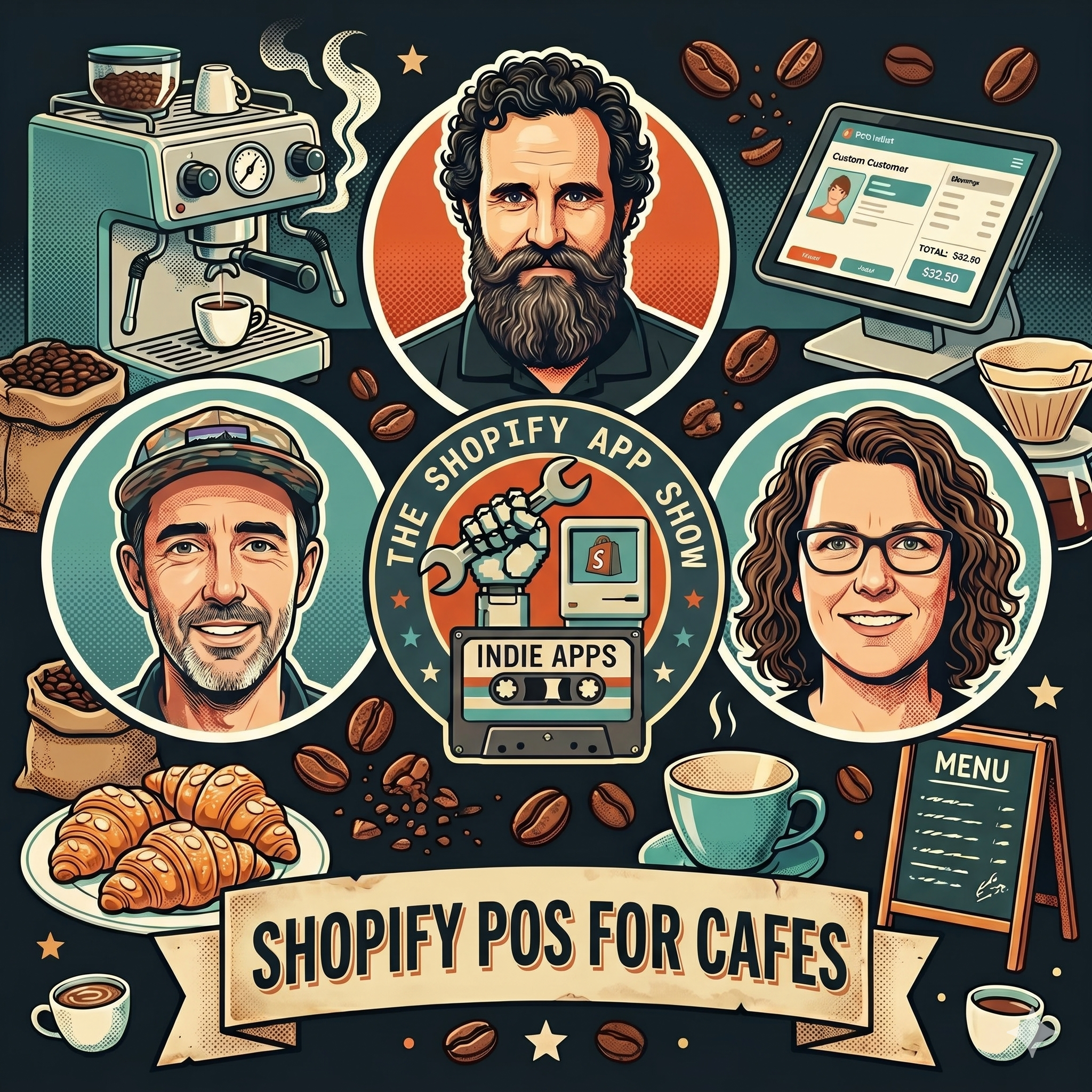
Spilling the Beans on Shopify POS for Cafes with Adam & Carmel Wooding
May 1500:29:01Tap to summarizeShopify POS is one of the biggest unlocks on the platform, but most merchants are scared to make the move — and honestly, a lot of POS apps are half-arsed. So this episode I'm going proper niche: POS Cafe, built by Carmel and Adam, who run the whole thing out of remote Queensland and service merchants all over the world.We get into how two ex-agency operators stumbled into a gap nobody was filling (a merchant wanted to open a coffee shop inside their store), why the "do one thing well" advice broke down for them almost immediately, and how they've ended up with what's basically 5–10 apps in one, including an Uber Eats–style online ordering extension.If you run a retail or food business, build apps, or you're weighing up a POS migration — this one's worth your time. Bonus: I've put together a Mastering the Move to Shopify POS Playbook drawing on this chat plus my earlier ones with Josh Bitossi and Jordan Finneran.Sponsor The Support Heroes — trained Shopify support specialists who plug into your help desk, learn your brand voice, and handle your tickets like they actually give a shit. Carmel and Adam set night alarms to check their tickets — they could use these guys. Tell them I sent you.And one from me — Product Pelican. Audits your whole product catalog, finds the gaps — missing alt text, weak descriptions, uncategorised products — and helps you fix them in bulk. Free to try.In this episodeHow an agency side hustle became a Shopify POS appThe cafe gap nobody was fillingWhy "do one thing well" didn't work for POS CafeModifiers, KDS, print servers and online orderingBuilding the "Shopify way" — metafields, metaobjects, draft ordersWhy POS apps have to be stable 100% of the timeThe POS APIs they're still waiting onWhere Shopify POS caps out (and why they think it doesn't)The other niche POS devs worth knowingChapters0:00 Intro 1:05 From custom furniture to Shopify — Adam's origin story 3:40 The cafe request that started it all 4:22 What a food service business actually needs 5:00 Launching POS Cafe and 18 months of feedback 6:13 What POS Cafe does that Shopify POS can't 6:57 Modifiers done properly 7:26 KDS, print servers and receipt printing 8:30 Native discounts and online ordering 9:33 Why "do one thing well" broke down 10:58 Sponsor — The Support Heroes 11:27 Product Pelican 12:07 Why good service is what makes the product 13:08 Building for scale and stability 14:30 The "Shopify way" — metafields, metaobjects, draft orders 16:07 What's still hard to do on Shopify POS 18:42 Bringing merchants into the feedback loop 20:00 Where does Shopify POS cap out? 21:14 POS as the front door to Shopify 22:04 Other niche POS devs worth knowing 23:54 The Shopify dev community 25:08 Marketing a product from remote Queensland 25:25 Building trust from the other side of the world 27:17 Why passion cuts through 28:26 Wrap up
Transcribe →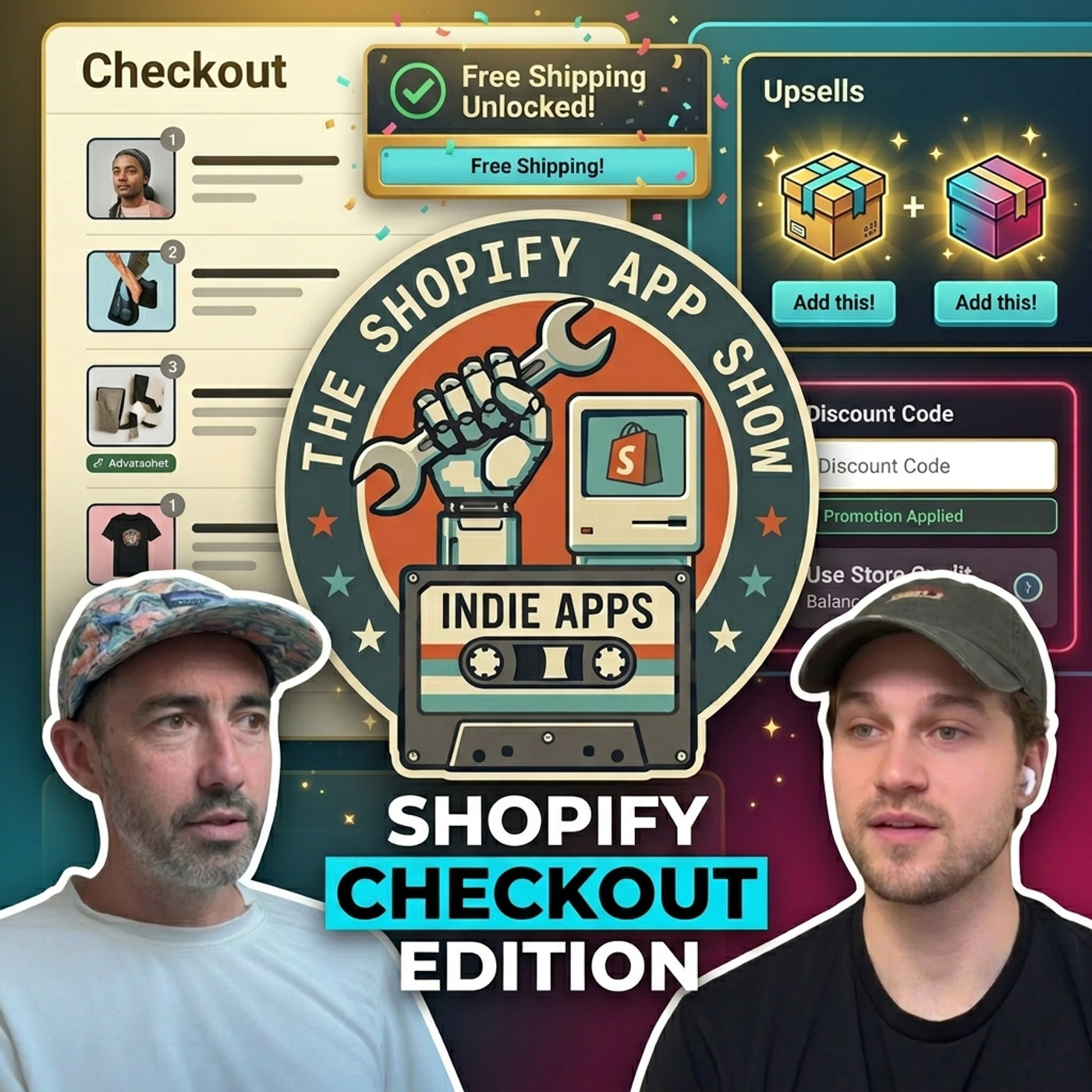
Check, Check, Check, Check Out - Shopify Checkout Wisdom with Blake Waldron from Checkout Components
May 700:36:21Tap to summarizeThe Shopify checkout is the one part of the customer journey that's guaranteed — every customer goes through it, no matter how they got to your store. So I've grabbed Blake Waldron, who spent years building Shopify stores and now runs Checkout Components, the app for making that critical moment actually work for you.We get into what makes a good checkout (hint: stop assuming every customer wants to see the same thing), why an always-on upsell isn't distracting — it's table stakes, and the body shop trick that lifted sale conversions instantly.Plus we cover ShopPay rendering gotchas, Australia's at 50% ShopPay adoption and what that means for your extensions, and the OpenAI backflip that confirmed checkout is now the only guaranteed touchpoint.We also get into the basics everyone's ignoring — clean product data, accurate prices, Shopify's product taxonomy — and why getting those right matters more than chasing the agentic commerce hype.If you run a store, build apps, or you're an agency still treating checkout as "set and forget" — this one's worth your time. Bonus: I've put together a Checkout Playbook to go with this episode.Sponsor The Support Heroes — trained Shopify support specialists who plug into your help desk, learn your brand voice, and handle your tickets like they actually give a shit. Tell them I sent you.And one from me — Stork Credit. Dead simple, native-built Shopify app for issuing store credit instead of discount codes. Free to install.In this episodeWhat actually makes a good checkoutWhy an always-on upsell is table stakesThe ShopPay rendering toggle most people missThe Body Shop sale-banner trickHonest analytics vs vanity attributionWhy product taxonomy is the real agentic commerce prepWhat Blake saw at Shop Talk in VegasWhere Checkout Components is heading nextChapters0:00 Intro 0:57 What makes a good Shopify checkout 2:48 The always-on upsell (and 10,000 pairs of socks) 3:43 Why replatformers don't touch checkout — and why they should 5:33 Upsells without overwhelming the form 7:31 ShopPay — the toggle most extensions miss 8:54 ~50% ShopPay adoption in Australia 10:50 Sponsor — The Support Heroes 11:35 Stork Credit 12:00 Agentic commerce and the OpenAI backflip 13:43 Checkout as the only guaranteed touchpoint 14:38 The body shop sale-banner trick 17:00 Honest revenue attribution vs double-dipping 19:35 Building an analytics system that actually works 21:13 Product data, taxonomy, and the low-effort high-impact win 24:28 Plug — Product Pelican for bulk catalog cleanup 25:48 Inventory and prices — the boring stuff that matters most 27:25 Two takeaways: get your data right, get your checkout right 27:42 Shop Talk Vegas — what's happening in North America 30:27 Translation, Europe, and 600+ installs 33:19 What's next for Checkout Components 37:03 Wrap up
Transcribe →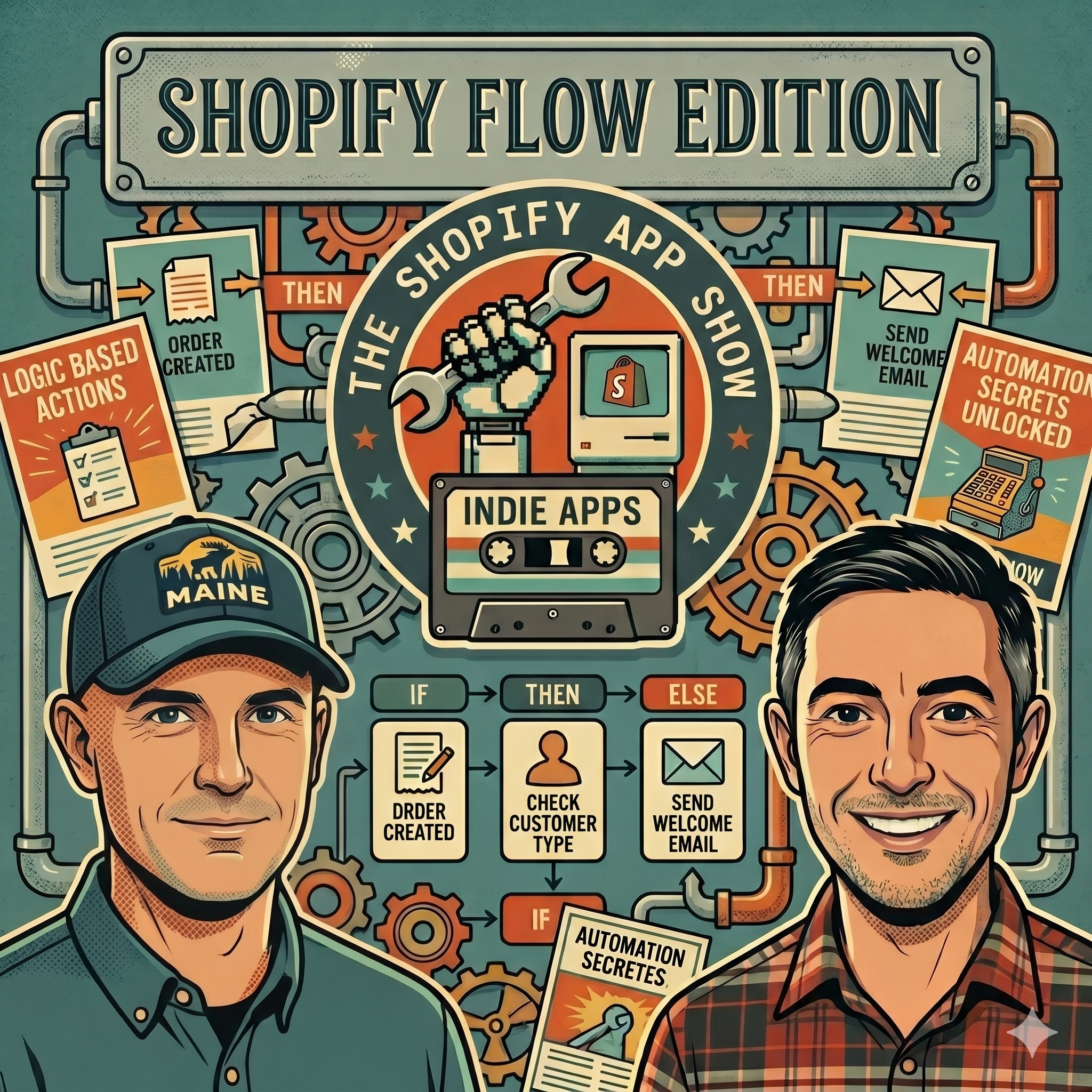
Inside Shopify Flow: Under the hood with Paul Nuschke from Shopify
Apr 3000:38:32Tap to summarizeThis is a big one. Shopify Flow has had the biggest glow-up of any feature on the platform, and today we're going inside the mothership to talk to the bloke running it. Paul Nuschke leads Shopify Flow, and he joins me to unpack one of the most insane stretches of shipping in Flow's history - Sidekick integration, and so many other improvements.We get into what it took to make Sidekick build working workflows without hallucinating itself into oblivion (fact: 40% of new Flows are now created with Sidekick), why Flow has out-shipped Zapier for Shopify use cases, and the apps doing the most interesting things with Flow connectors.Plus: scheduled jobs vs product update triggers, why Flow doesn't do Git integration (yet), Flow vs custom middleware, and what's coming at Editions and Dotdev.If you build apps, run a store, or you're an agency still telling clients "Flow can't do that" — this one's going to change your mind.Bonus: I've put together a Shopify Flow Playbook to go with this episode. Link below.SponsorThe Support Heroes — trained Shopify support specialists who plug into your help desk, learn your brand voice, and handle your tickets like they actually give a shit. Tell them I sent you.And one from me — Stork Credit. Dead simple, native-built Shopify app for issuing store credit instead of discount codes. Free to install.In this episodeTeaching Sidekick to build working workflows40% of new Flows are built with SidekickUsing Flow templatesThe product update trigger problem (and the workaround)Flow as middleware — when it makes senseWhy there's no Git integration (yet)App connectors — who's doing it rightWhat's coming at Editions and Partner ConferenceChapters0:00 Intro 1:08 Welcome Paul + recent Flow updates 1:34 Top-down editor, testing, Sidekick 3:26 New queries and closing API gaps 4:38 Has Flow out-shipped Zapier? 5:08 Sidekick — how big a lift was it 6:06 Teaching Sidekick to build workflow JSON 7:19 Why testing was non-negotiable 7:31 The drill-down problem Sidekick killed 8:30 Order confirmation emails + run code 10:06 40% of new Flows built with Sidekick 10:55 Sponsor — The Support Heroes 11:35 Stork Credit 12:14 Templates and the blank-canvas problem 13:10 Why describing what you want is the bottleneck 14:03 The gnarliest workflows Paul has seen 15:08 Metafields — Flow's most underrated unlock 15:25 The product update trigger problem 17:03 App-built triggers and infinite loops 18:15 Flow as middleware vs Boomi 21:09 Version control and managing Flows across stores 25:25 Why editing a .flow file outside Flow is risky 27:30 Copy to another store 28:00 App connectors — who's doing it right 30:14 Why most app-to-app integrations should use Flow 32:16 Advice for app devs building connectors 34:18 Get involved in the dev community 35:05 What's coming at Editions and Partner Conference 37:03 Wrap up
Transcribe →