← The Spiritual Life with Fr. James Martin, S.J.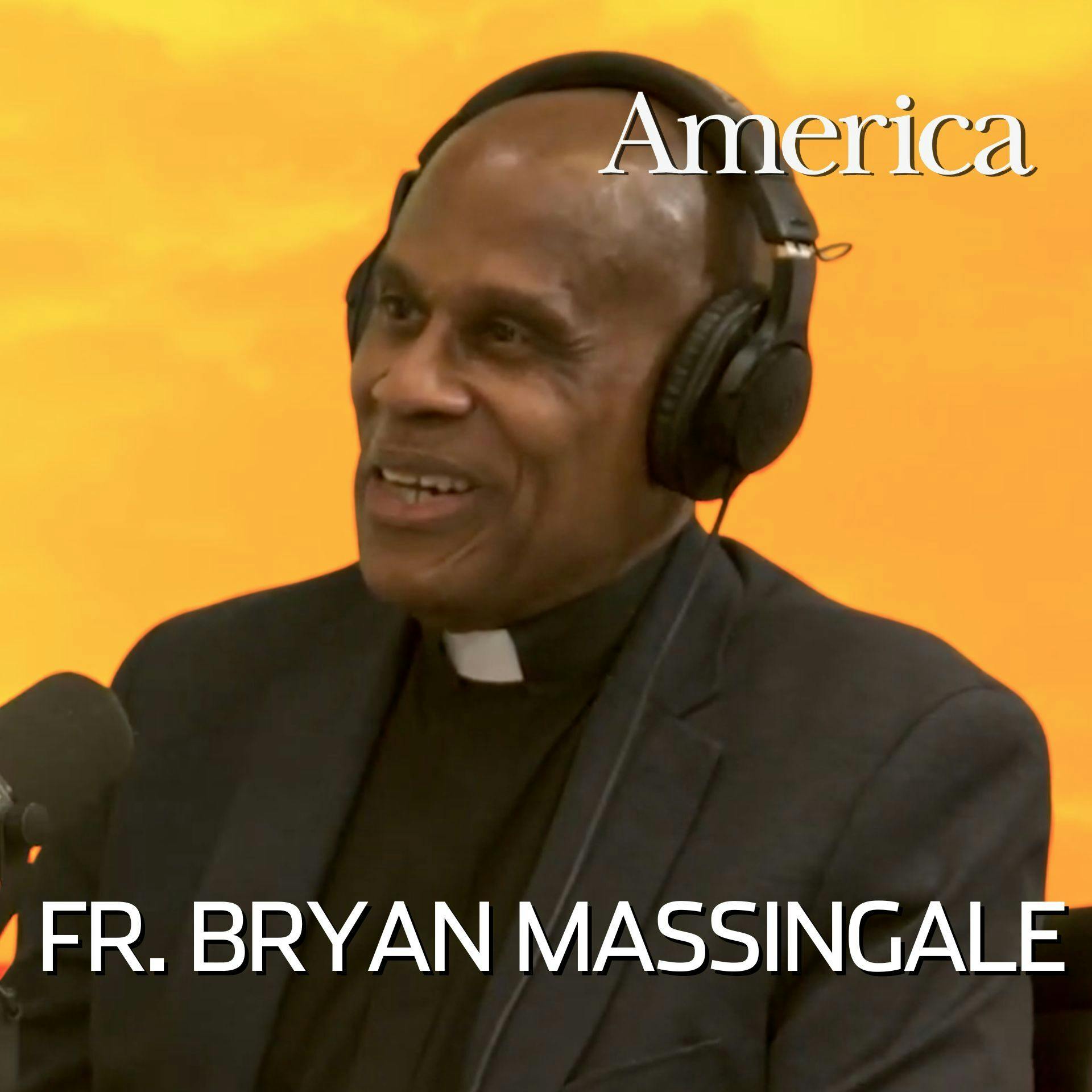
The Spiritual Life with Fr. James Martin, S.J.
A Black, gay Catholic priest on living authentically
00:51:43
Loading summary
Transcript90 lines
- [00:00]
A
Why does the term healthcare leave people feeling sick to their stomach? Maybe it's because instead of being tied to health, the word seems to have a deeper connection to industries. At Catholic Healthcare, we're returning the word healthcare back to its former glory. Because when healthcare really cares, communities thrive, prevention is prioritized, and everyone has access to care. Say it with me, health care sounds better already. Catholic Healthcare, we care you flourish. Sponsored by the Catholic Health Association.
- [00:32]
B
It isn't about me. It was really my coming out was passionately motivated. In many ways it was to say, I am with you in this journey. And as I often say, I came out to let God's love come through that God's love is for all of us.
- [01:00]
A
Welcome to the spiritual life. I'm Fr. Jim Martin. On this podcast, we reflect on how people experience God in their prayer and in their daily lives. And I'm here with my magnificent producer, Maggie Van Doren. Maggie, good to be with you.
- [01:15]
C
It's great to be with you, Jim. I appreciate the alliteration.
- [01:19]
A
And this time we're very excited to be speaking with Brian Massengale.
- [01:23]
C
Yes. Who is a personal hero of us both. So last week we had this conversation with Ben Witherington, the great New Testament scholar, to help us kick off Lent. And this week, of course, we are continuing with that Lenten observance, but we are also celebrating Black History Month. And Brian Massengale is really the perfect person to have on because in addition to being a black Catholic priest, he's a foremost scholar of racial justice.
- [01:50]
A
Yeah. And can you tell us more about his background, Maggie?
- [01:53]
C
Absolutely. So Brian Massengale is a professor of theological and social ethics at Fordham University in New York City and he's the author of Racial justice and the Catholic Church. He's also the co editor of a volume of essays, all of Us A New Agenda for Catholic Theology from Queer Catholics of Color. And in addition to his impressive academic pursuits, Brian strives to be a scholar activist through serving many civic and faith based groups, including, but definitely not limited to the U.S. state Department strategic Religious Engagement Unit, the United States Conference of Catholic Bishops, National Black Catholic Congress, Catholic Charities USA Catholic Health association, and the National Catholic AIDS Network, and of course, several more. So if you can't tell by that bio, Brian is a wonderfully complex, multifaceted individual. And in the conversation he really underscores that he is a compound reality that you can't segment his blackness or his gayness and reduce him just to these things. But Jim, I think it is important to at least begin by saying, why are these identity markers such a big deal?
- [03:16]
A
Yeah, that's a good point. And he even calls himself a kind of unicorn. But as you say, he says that these identities are all part of him, and it's not that he wears kind of different hats to begin with. There are proportionally fewer black Catholic priests in the United States than there are white Catholic priests or even Hispanic Catholic priests. So it is. It's not as if it's sort of vanishingly rare, but it is, I would say, look less common than a white priest. That's the first thing. The second thing might need a little bit more explanation. What does it mean to be an openly gay priest? I would say that there are probably only a handful in the United States who are out publicly. And by that, I mean out to their congregations and their friends, and, you know, even out in the media sometimes when stories are written about them, he talks about the Associated Press story that was written about him. Now, one of the most important things to say is that this means an openly gay and celibate. Celibate priest. Right. Or if you're in a religious order, chaste priest or brother, which is the
- [04:18]
C
same for a straight priest, that you are taking a vow of celibacy.
- [04:22]
A
Absolutely. And despite the fact that, you know, there are many in the Catholic Church. I know many. And despite the fact that Pope Francis had said that he knew many holy and faithful and celibate gay Catholic priests and seminarians. I'm paraphrasing a bit, but this is something he told me and that he said I could share that, you know, he knew this, despite that they are very rare. Right. The openly gay priest. And it's somewhat controversial.
- [04:52]
B
Right.
- [04:52]
A
We talk about the reasons why that's not common, that these gay priests would not be open about their sexuality. So for someone like Bryan to be out, in a sense, and also to be black, you know, makes him a really rare priest. But he's also very gifted and really articulate and really deep and, you know, an important theologian in his own right. So it's a really powerful conversation, and so we're really happy to have him on.
- [05:22]
C
Yeah, we sure are. Now, the audience question for this week that both Father Jim and Brian will answer together is anonymous. But I think that many parents will relate to this question, and it is, what can parents of LGBT children do to support their kids when they refuse to come to Mass? If you would like to ask Father Jim a question, you can write to us@thespirituallifeamericamedia.org well, thanks, Maggie.
- [05:53]
A
And now onto our conversation with Father Brian Massengill. So, Brian Massingale, welcome to the spiritual life.
- [06:06]
B
Good to be with you, Jim.
- [06:07]
A
Great to have you. Bryan, I want to start off with a question I've been hoping to ask you for a while.
- [06:12]
B
Uh oh. Uh oh.
- [06:14]
A
You are a black, openly gay Catholic priest, and for our audience who may not understand that that means celibate and gay, according to your ordination promises. But you are really a rare priest in regard to your being black and gay. How do you navigate those identities, and is it ever lonely for you?
- [06:33]
B
Wow. Let's start with something easy. You sound like my students at Fordham, who find me endlessly fascinating. They tell me, you're black, you're gay, you're Catholic, you're a priest. How do you put all that together? And I tell them it's a project that's day by day. And by that, I mean that I don't have a blueprint that I can follow. There isn't really a blueprint for how to do the how to live these. Not intersectional identities, but compounded identities. And so I'm kind of, like, making it up as I go along. But I think the one thing that puts it all together is that I'm trying to be faithful to who I believe God has made and called me to be. And that's fundamentally what I'm doing. That from the outside, it looks like, oh, you're this kind of rare unicorn. But for me, I just think I'm being me. And so I don't often think, until someone raises the question, like you do, of how strange this is now, does it get lonely? Yes. And I would say it gets lonely. Not from the standpoint of the laity. The laity, by and large, have got no problem with me being who I am. A nice story about that.
- [08:09]
A
Please.
- [08:09]
B
The Associated Press, a few years ago, is doing a profile on me for precisely the reasons that you're talking about. And so they came to St. Charles Borromeo here in New York, in Harlem, where I do Sunday services, and. And they wanted to kind of see me in action, take pictures and everything. And so I introduced. I told the congregation, associated Press is here. They're taking pictures. This is why they're doing it. And the people were upset, not because the press was doing a profile of a black gay priest, but because I didn't alert them beforehand so they could wear better clothing. They were more concerned about how they were going to look in the pictures than the fact that there was a profile being done of a black gay priest. And that kind of shows you that they didn't have a problem with this. The problem comes, frankly, from bishops and my brother priests. People often ask me, what was the reaction after I publicly came out? And this was. I became public about this in 2019. And I tell them that I, frankly, have lost priest friends over this. And the feeling was, from those who told me, they said, well, if we're friends with you now, what will people think about us? Wow. And so there was a loneliness. And there is a loneliness that the most rejecting or standoffish reactions I've gotten have come from my fellow clergy.
- [09:54]
A
Well, I'm sorry to hear that. Is it an embarrassment on their part to be seen with a gay priest? Because people will think that they're perhaps gay.
- [10:03]
B
Yeah, exactly. That they think that people will think that maybe they are gay. And the terrible thing is that gay priests. This is not. This is not breaking news in the Catholic Church. We know that there are many gay priests who are serving the church generously, faithfully, and well. I think the problem is that there is still a stigma in our church and sadly, in society over gay identity or queer identities. And there are still many priests involved, religious, who don't feel they can be honest about their sexuality. It's a terrible thing that they feel that they feel a stigma so deeply that they cannot be associated with a priest who happens to be honest about who they are. Yeah.
- [10:52]
A
And for people who might not be familiar with this conversation, which I know you and I have talked about in different venues, there's so many reasons for it. One reason would be the bishop himself or the religious superior might say, don't do it, because they themselves might be uncomfortable with it.
- [11:09]
B
Or.
- [11:10]
A
Or they're worried about what would happen in terms of the fallout. The priest himself might be ashamed of it interiorly. Also, the priest might feel it's gonna divide people. So there's all sorts of reasons. And I think there's also the stereotype that being a gay priest means being sexually active. There's. That.
- [11:28]
B
I think that that's a real big one, that they presume that if you're. If you're. I think in general that if you're gay, then you're a walking sex act, basically. And that's. Nothing could be further from the tr. The other thing I want to point out is that people often ask me, well, why was it important for you to come out? And I tell them, it's not really about me being a poster child for some cause or anything. I tell the story of why I made the decision. And it happened because I was giving a keynote at a meeting of the Global Network of Rainbow Catholics. And that's an international group of Catholic leaders who are working for the fuller inclusion of lgbtq, LGBTQ people in the church. And so before I spoke, the delegates from all over the world were introducing themselves. And the way they introduced themselves was to bring an artifact from their country that spoke to the situation of queer people in their country. So there was this woman from the Congo, the drc, who brought a poster board, and all that was on it was the faces of people who had been beaten, tortured, imprisoned, killed because of their sexuality or their sexual identity. There was silence in the room, and there are, like, over 85 delegates there. And the silence was broken by a woman from India who said, I feel as if we are at the foot of the cross. Then we took a break, and I was supposed to speak after that, and I had a real crisis. I said, what can I possibly say to this group of people who are doing such courageous and dangerous work? And they challenged me. They said, no, we need your words. Because of our situations in our countries, we can't speak the things that you're. But we can use your words. We can use your message. And I realized that I could not ask them to continue to do the dangerous, courageous work that they were doing if I wasn't willing to take a risk as well. And so I began my address to them by saying, I come to you as a black gay priest. Afterwards, they came to me and said, can we publish your address? And I said, sure. Went home, cleaned it up, hit send. And then I thought, oh, shoot, what did I just do? And then it got published on their website, and of course, it was translated into five different languages. So it became very much of a global kind of coming out. But I tell that story to say that it isn't about me. It was really my coming out was passionately motivated. In many ways. It was to say, I am with you in this journey. And as I often say, I came out to let God's love come forth, that God's love is for all of us. And my being open about that, I think, I hope, can be a witness to the wider church that, yes, God's love, God's grace can be found even here in this black gay body. I guess my deepest call in life, I think, is to be a black gay embodiment of Christ's presence in the world. And to say that God's grace can be found Even in this package where many would say that, you know, in our society, even in our church, sadly, that God's grace cannot be found there. I think that's my deepest calling, and that's my deepest aspiration, frankly, is to be a black gay embodiment of Christ's presence in the world.
- [15:53]
A
Had you been thinking about coming out publicly before that, or was this more of a sort of inspiration on the spur of the moment?
- [16:00]
B
That particular was a spur of the moment inspiration that was preceded by another prior event where I publicly talked about my dual compounded identities. I was giving a keynote address for the association of U.S. catholic Priests. This was in 2018, I believe. And they gifted me with an award or recognition. And in my acceptance speech, I didn't use the words, I'm a black gay priest. It became very apparent in my acceptance remarks that that was exactly who I was. And there was this kind of hushed, sacred silence because people were realizing, oh, he's trusting us with this information. Afterwards, a Catholic leader who we both know, but I won't name wanted to write it up. And I said, no, I didn't want it to be revealed then because the person wanted to speak about me as only a gay priest. And I said, I spent most of this conference talking about race and racism, and yet you're going to focus only on that. And I said, no, I'm not a hybrid car. I don't have my black hat and my gay hat. I mean, this is. Use a scientific word. This is a compound reality, not a mixture. You can't segment me and yet have the mystery of who Brian is. And so I decided not to let it be known then, because I said, if you're going to talk about me, you have to talk about all of me being black and gay. And both of those are who I am by God's grace, I believe.
- [17:50]
A
Now, you talked a little bit about feeling rejection from some priests and bishops. Were there positive reactions as well? Has it made it, in a sense, more easy for you to minister to LGBT people or people in general?
- [18:03]
B
Would you say it's been amazing? I mean, yes, we talk about the negatives, but the negatives are far, far, far exceeded by the positives. I sense that my students, as I said before, when I talk about being Catholic, they hear me in a different way, because it's like, well, wait a minute. If you're black and you're gay and you're Catholic, that means there can be a place for me, especially for LGBTQ Catholic students, even for those who aren't it's an amazing thing for me and a humbling thing to realize how they see me and they support it and they're tell a story about that. Two years ago at Fordham University, we have various kinds of graduation ceremonies for some of our various student groups. So there's one for African American students who are graduating, what we call the Rainbow Convocation, which is for the LGBTQ group that's graduating. And they asked me to be the speaker at their event. And I said, sure, I'll be happy to. And so I did. And I got up there and I said, I really don't know how to act at one of these things, because when I was graduating from Marquette University back in the day, they didn't have one of these back in 1979. And so I got done with speaking, and then I sat down, and they called me back up to the front, and they said, we know it's your 40th anniversary of priesthood ordination, and so we want to give you some kind of recognition for that event. And so they called me back up, and they gave me this present. I opened it up, and inside it's a coffee mug with the Star Trek insignia on it in rainbow colors. The big thing about me is that I'm a Trekkie. I always tell my students, anything you want to know about life, you can learn either the Bible or Star Trek. So I'm a big Trekkie, but they got this rainbow insignia, the Star Trek logo, and I had tears in my eyes because this is a group of about 150 queer students, some with, you know, pink hair and everything else. Many of them who have been hurt and even traumatized by the church. But they still. They wanted to do something to honor my priesthood and the fact that I am a gay man who has answered this call. And they recognized that, and they wanted to honor that and respect that.
- [20:56]
A
It's beautiful.
- [20:57]
B
So in answer to your question, I think there's been so many graces. Another grace was I was giving a talk at Chicago Theological Union, and after I was done with my talk, a woman came up to me and said she was an African American woman, and she said, thank you. Thank you for helping me to love my gay son. And I said, you don't know the gift you've given to me. Those experiences make the pain, the loneliness, the isolation, the rejection, those experiences make all of that pale in comparison, and they make it worth it. I would not take back my decision for anything.
- [21:46]
A
Thank you for sharing that. That's very powerful. I was thinking the truth will Set us free. And it's all of us, Right? So your truth sets you free, but it also sets this woman free, you know, to love her child.
- [21:58]
B
And it sets us all free because one of the deacons at St. Charles said, it's just so refreshing to be with a priest who's just authentic. And he said, you don't know, but your authenticity has freed others to do the same. And he said, not even about their own sexuality, but just in other areas. And so I think there's a real profound truth here that when we allow ourselves to be authentic, when we allow ourselves to be known for who we are in the sight of God, that allows others, that gives them the courage, the witness, to also embrace who they are, whatever they are, in the sight of God.
- [22:40]
A
Yeah. And I think, you know, in a sense, we all feel like unicorns. Everybody's a unicorn, right? We all have these kind of unique constellation of challenges and gifts and whatnot. And I think sometimes everyone feels like that. So to have someone who can be themselves and be their true self, to use Thomas Merton's line, is it's freeing. Like, gosh, I can be my true self, too. We're going to pause for a short break, but we will be right back.
- [23:04]
B
If you're thinking about what's next in your life and you have questions that you want to explore, and you want to explore that with some other people, the Boston College Companions program will help you. It will provide a context for you to explore some of those questions and an incredible environment to ask the biggest questions of life and the most personal questions. This episode is brought to you by White Claw Surge.
- [23:37]
A
Nice choice hitting up this podcast. No surprises.
- [23:41]
B
You're all about diving into tastes everyone
- [23:43]
A
in the room can enjoy.
- [23:44]
B
Just like White Claw Surge, it's for
- [23:46]
A
celebrating those moments when connections have been
- [23:48]
B
made and the night's just begun.
- [23:50]
A
With bold flavors and 8% alcohol by volume.
- [23:54]
B
Unleash the night. Unleash White Claw Surge. Please drink responsibly. Hard seltzer with flavors, 8% alcohol by volume.
- [24:00]
A
White Claw Seltzer works Chicago, Illinois. When you were struggling with some of the negative things that were happening, how did that influence your prayer and your relationship with God or Jesus? Because it must have been painful to be rejected and isolated like that. Did it change your spirituality at all?
- [24:22]
B
Hmm. I would say in one sense, no. Because for most of my life, I've been dealing with rejection because of race in various forms. And so part of my spirituality, in a sense, has always been nurtured by means of Rejection, that says it too negatively. I've learned that God is with me even through the rejection. And this is going to sound more pious than I mean it to. It makes me understand the cross a little better. I've had a spiritual director for the past 35 years, and so she gets to know me, knows me very, very well. And there was one time when I was meeting and I was just in a very low point and I was just kind of just pouring my heart out about, you know, something that the bishop had done to me and clergy, not feeling, you know, welcome, not being understood, not being accepted. And she just kind of listened to me. And then at the end, she said very softly, very gently, she asked, how much is your integrity worth to you? Wow. Exactly. It kind of shut me up. And it made me understand that the hurt, the rejection, that is part of the spiritual life and the spiritual journey, that sometimes is the price of integrity.
- [26:17]
A
Well, which Jesus finds out in Nazareth. Rejection at Nazareth.
- [26:22]
B
Right. Or when he's going through in Garden of Gethsemane, where he says, you know, father, take this, let this pass away from me. And he realizes, no, it's not going to pass away, that the cross is the price of integrity. Now, as Christians, we don't believe the cross is the end, but we can't get around it. We sometimes have to go through it.
- [26:50]
A
Is that the advice you give to people who are struggling? So if you're speaking to a young or old or middle age person who's black or LGBTQ or poor or feeling in any way marginalized, is that what you would share with them? Because sometimes that might put people off. I don't want the cross. I just need more help. So what would you say to someone who's struggling with isolation or even isolation in the church?
- [27:17]
B
Yeah. One is, I start by saying on behalf of, of the church, because that's why we wear this collar. On behalf of the church, I am sorry. I am so sorry that the church has inflicted that pain upon you. I'm so sorry you suffered at the hands of the church. But then I also share my own experience. And to say that, and I say that not only as someone who represents an institution that has hurt you, I also say that as someone who's also been wounded, institution. And I want you to also know that sometimes in our situations, the cross is unavoidable. The cross isn't something that's a good thing. It's not. The cross is an instrument of evil, of torture. And we have to be honest about that. That what You've suffered is unjust. But we also believe that it's unavoidable. This is part of life. But there have been those who have made that journey before you and are making it with you. And you're not alone in this journey. I think that's the most important thing we can sometimes do with people who are in such trauma and distress is to assure you you aren't alone. You aren't alone. And it's in that walking together that we can find grace. I know it's a hard thing. I guess that's because being a black man in American society, I remember my father telling me often, he said, when you have experienced rejection or hurt or exclusion, saying to me, brian, it's not fair, and you can't use that as an excuse to not contribute. And so I guess I learned that from a very early age with my father. And now as an adult, I realize that what my father was saying to me, without using the religious language, is that, you know, sometimes for many of us, being faithful to who we are means following in the footsteps of Christ, and those footsteps inevitably will lead to the cross.
- [29:43]
A
Yeah. In my own LGBT ministry, I sometimes say to people who ask me that that's part of the ministry. It's not, in a sense, the result. It's not some distraction. That's part of it.
- [29:53]
B
Well, I mean, again, when we look at the Beatitudes, you know, blessed are those who are persecuted for the sake of righteousness or the final one. Blessed are they when they insult you and persecute you and utter all kinds of slander against you because of me. And I often sometimes joke, if Jesus were around today, he'd say, blessed are you, and they blog about you. But again, this is the ministry. This is the call. Especially when we're trying to help institutions accept truths that they are growing into and they find hard to accept.
- [30:32]
A
You know, you brought up something I want to talk about. Obviously, you are one of the foremost commentators on race in the Catholic Church, and I don't know if I've told you this. I think I have. One of the best talks I've ever heard, ever, in any setting, was your talk on racism and the church at the Ignatian Family teaching a couple of years ago. Truly one of the best talks I've ever heard. So where do you think the Church. This is a big question. Stands today in terms of racism in the United States, at least?
- [31:03]
B
Yeah. Sadly, the Catholic Church in the United States has a very tragic track record when it comes to race. That Standing for racial justice has never been a major badge of Catholic identity in this country. It's not to say that the Catholic Church is for racism. It just means that compared to other issues, abortion, for example, or its witness on sexual issues, its voice when it comes to race has been rather muted. And it's a very sad thing. I don't say that, you know, with any kind of gladness at all. I mean, one of the things that troubles me is that an institution I've given my life to is not proactive when it comes to the issue of race and racial justice. I still find most of my students that I teach at Fordham will tell me that they've never heard a homily on race or racial justice ever.
- [32:06]
A
Now, why do you think that is? I mean, because the church. I mean, we see right now the church stands very strongly with migrants and refugees. Right? Maybe it's because there are so many migrants and refugees who are Hispanic, and there are Hispanic Catholics in the United States. Do you think it's the fact that there are fewer proportionally black Catholics and so they don't. The bishops don't know them as well? Do you think that's part of it, or do you think it's kind of internalized racism? What do you think? What is the reason for us not being as good as we could be?
- [32:37]
B
Okay, this is going to. I mean, to be honest here, there is what I call a normative whiteness that characterizes American Catholicism. And by that I mean a pervasive belief that only European products, European music, European theology, European persons, European aesthetics, that these and only these are standard, normative, universal, and truly Catholic. All the other forms, especially non, western, African, black, are Catholic by exception, by toleration, but they're not truly really Catholic. That, or as I put it in my book on racial justice in the Catholic Church, there is a pervasive feeling in this country that Catholic equals white or Roman.
- [33:40]
A
Would you say European or more Roman?
- [33:42]
B
No, I mean white. Let me give an example of that again. It's happened more than once when I'll tell the story. In this particular instance, I was a friend of my priest friend of mine had gotten sick. And this is when I was in Milwaukee. I'm a priest of the Archdiocese of Milwaukee. And so I showed up at a suburban parish to offer a Mass in his place. And so I enter the church doors, and I asked the ushers, I said, well, can you direct me to the sacristy? And he looked at me and said, why do you want to know? Gosh and I thought, I'm wearing a collar, you know, so this is. I said, well, I am a priest. And he said, well, why are you here? And I explained that I'm here because my friend Father so and so is sick. He's asked me to come in to offer Mass in his place. And he looked at me and said, well, he should have sent us a real priest. Wow, that's shocking. But sadly, that's not the first or the only time that that's happened. When I was newly ordained, my first parish assignment, you know, we had my first Mass in the parish. And, you know, we're all excited young priests afterwards. I'm greeting the people afterwards. You know, we do that all the time. The first person to come up to me shakes my hand and says, father, you're being assigned here is the worst mistake the Archbishop could have ever made. You will divide this parish. You will not be accepted. God bless you.
- [35:21]
A
Oh, my gosh.
- [35:21]
B
And walks away. Now, again, in his defense, he was not entirely wrong. One of the Eucharistic ministers a few months later told me, father, your being assigned to this parish was the best thing that's ever happened for lay ministers of Communion, because people crossed from your line to come to our line.
- [35:46]
A
So where do you find nourishment within that normatively white Catholic church? Where do you find hope and your place and love?
- [35:58]
B
Let me answer the question by casting it this way. People often ask me, well, why do you stay Catholic in an environment like that? And I give a couple of answers. I say, I stay Catholic because I love the Eucharist. I love the sacramental tradition of the Church. I think the sacraments are the best thing the Catholic Church has, frankly, the belief that material realities disclose the sacred to us. I mean, I get that. I live that. I love the intellectual tradition of the Catholic Church. I love the fact that we as Catholics believe that faith and reason are not opposites, but are complementary, and that at our best, we're a church that thinks, and we're not afraid of hard thinking at our best. I also love the fact that the Catholic Church is a worldwide communion. I love going to St. Peter's for example, and walking in there and realizing that I have sisters and brothers in the faith who are praying in all kinds of languages. And I love the fact that Catholic means universal. But I also stay in the church because even when there are times when I want to leave or I'm tempted to leave, that this is where God has called me. This is the work as an ethicist. Friend of mine puts it, this is the work my soul must do. And even when I would want to not do it, there's something within me that says, this is what I have to do.
- [37:43]
A
Yeah, it's a call. I mean, to call it your baptism and call it your priesthood.
- [37:46]
B
Yeah, it's the call that. Another reason why I stay is that the church needs me. Frankly, it does. And I don't say that, you know, to blow my own horn, but to say that, yeah, in many ways, the church needs me. It needs the witness of black Catholics. It needs the witness of LGBTQ Catholics, that each of us are trying to help the Church become who it says it is, that it is a universal group. We learned that. What does Catholic mean? Catholic means universal. Catholic means here comes everybody. I think that Leonard o' Connor said that our job, though, is to help this imperfect institution to become, in the words of Pope Paul vi, a less and less imperfect witness to the reign of God.
- [38:37]
A
Well, to help it to become its true self.
- [38:39]
B
Exactly.
- [38:39]
A
Without masks.
- [38:40]
B
And to realize that it's. Yes, that this is what the church is called to be by God's will. And sometimes we're, you know, tasked with dragging it kicking and screaming, into that deeper fidelity, and sometimes we have to pay a price to do that. But that's what it means to follow Jesus. I mean, we're doing this taping on Ash Wednesday. We're entering into the season of Lent, and I love Lent. It sounds crazy, but I do love Lent because I think Lent is a reality call for all of us. Lent is a time for us to realize that asking tough questions and doing tough things is part of discipleship, not the whole of it. There's a lot of joy, too. I mean, I love being a priest. I love being a professor. I would not trade this life for anything. I've been doing it now for almost 43 years, and I know I look young.
- [39:42]
A
Very. That was my next comment.
- [39:46]
B
No, but I've been doing this for a long time, and I really. The joy is amazing. And, yes, there have been struggles and trials along the way, but the joy of being able to be with people in their harder moments and to being able to show them that God is with them. To celebrate Mass at St. Charles Borromeo, and it truly is a celebration. We have one of the best gospel choirs I've ever heard in my life. The community There is a wonderful community that is an uplifting, wonderful highlight of my week when I celebrate Mass with them.
- [40:34]
A
Well, other than Mass, this is a good seg. Because I wanted to talk about your own spiritual practices other than Mass and the Eucharist, which you love. What are your own spiritual practices day by day, week by week, year by year?
- [40:46]
B
I'm a journaler. I started keeping a journal when I was in college, and I've kept one faithfully ever since. So I must have about 60 volumes now. People keep asking me, what happens to them when you die. He said, burn them, please. But I'm a big journaler. I keep a journal regularly. For me, that's very helpful. And what's helpful is not just writing it in the moment. I find when I journal, sometimes I say things or write things that I was not expecting to. And there's a moment of honesty there. But what's even more important for me after I journal is to reread it. And one of the ways in which I mark the passing of the year is that on New Year's Eve, I read the journal from the previous year. And I write a kind of summary entry on New Year's Eve of kind of the highlights themes I've noticed. And then on New Year's Day, I write the first entry of the new year where I talk about my hopes, my dreams, my aspirations for the coming year.
- [42:00]
A
Where do you find God in all that? In the journaling.
- [42:03]
B
For me, journaling gets me. And I always. I don't type it on a computer. I have to write it. Because I find when I type something, I go into professor mode, edit it, or worry about getting the right words. When I'm writing, I get much more in touch with who Brian really is. I deeply believe that when I become deeply centered in the reality of who I am, that's where I encounter the voice of the spirit. That's where I encounter God. And so journaling helps me, especially when I'm writing things that surprise me. Then I understand that that's a revelation, that something's coming up and it's not what I planned. It sounds mysterious, but it is mysterious. But, yeah, that's where I find God. The other thing where I find God is music. I was thinking about this this morning and I thought, what questions would I ask me if I were in your place? And I thought, well, I would ask me, what are your favorite kind of hymns or spiritual songs?
- [43:16]
A
What are your favorite hymns and spiritual songs, Brian?
- [43:19]
B
I'm glad you asked. I'm glad you asked. There are two. The first is All Creatures of Our God and King. It's a tune everyone knows, but it's all creation is entering this Praise of God. The second is Blessed Assurance. It's a more African American gospel hymn. Blessed assurance, Jesus is mine. Oh, what a foretaste of glory Divine heir of salvation Purchase of God Born of his spirit, Washed in his blood. This is my story. This is my song. Praising my Savior all the day long. And the third verse of that hymn always gets me perfect submission, all is at rest. I in my Savior am happy and blessed. When I sing that or when I hear that song, I'm just resting in the presence of a God who knows me and loves me deeply and knows all of me. You know, the light, the shadow, the accomplishments, the struggles. And yet I'm held. Another stanza of the verse goes, Angels descending Bring from above Echoes of mercy, Whispers of love. And so the other thing I do for my prayer is sometimes I just sit in my apartment and I light a single candle, and I'm just in silence. Nothing much happens, but I'm just there and listening for those echoes of mercy.
- [45:31]
A
Yeah, it's great. You can find God both in the music and the silence. Let me shift now to an audience question, and it's a good question. I'll answer it first, and then you answer it. That's our practice.
- [45:44]
B
Give me a chance to think about it. Give me a chance to think. Okay, great.
- [45:48]
A
So the question is, what can parents of LGBTQ children do to support their kids when they refuse to come to Mass? So I've been asked that question a lot, and I'm sure you have. People are upset about their kids, many of whom feel rejected by the church or feel uncomfortable in church, and, you know, they sort of distance themselves from the church. I often say to people that, in a way, to the parents, you're the church for these kids now. Like, you're the church. You're their connection to the body of Christ. The kid is, of course, part of the body of Christ, but you're the Catholic representative. And so it's to continue to love them, pray for them to be open. I sometimes also talk about practical things, like maybe help them find a welcoming parish. So a lot of times, if there's a devout Catholic family, you know, they might know about outreach or New Ways ministry or, you know, all sorts of different places that they can look to for resources and that the children may not be as familiar with that. So I sometimes just say, you know, point them to a welcoming parish and then just continue to support them, because there's a lot of reasons why people fall away from the church. What would you say, too? I'll repeat it again, what can parents of LGBTQ children do to support their kids when they refuse to come to Mass?
- [47:07]
B
The first thing I would say is, one, be a good parent and to understand the pain of your child. And I think parents hurt when their kids are hurting. I think what the kid doesn't need is a sermon of morality, like, you should be going to church. No, be with your kid in your child's pain and to validate it and to say, I understand. I mean, this church that means so much to me has really hurt you, and I'm. You know, I'm sorry. I wish I could do something to take it away. And I think parents can say that very honestly, because most parents really do. They would do anything to take away the pain for their pain from their children. Then I think you're absolutely right to lean into the fact that the church is not an institution. I mean, it is that, but it's much, much more. The church is the body of Christ, and a church exists where people are doing what Christ did. And Christ, we know from his earthly ministry, was always with those and for those who were made outcast, who were made marginalized. And so to be the church for your child who is feeling outcast and marginalized, and I would remind a parent of the parable of the shepherd who was present to the one sheep, and to say, yeah, just be present to that one right now. That's okay. And then absolutely to say, when you're ready. There are so many ways of finding out that there are Catholics who are just like you, people who have been hurt and wounded and have found a way to celebrate their membership in this community. And you don't have to be ready for that now, but when and if you're ever ready, you know, let's together look for these resources. That's what I would tell the parents.
- [49:15]
A
Well, Brian, thank you on behalf of these parents. Thank you for all the advocacy you do on behalf of black people in the church, LGBTQ people in the church, people who feel marginalized. Thank you for your witness. I really do admire you. Your friend, but also a hero to me of the way you're able to manage and navigate all these things. And thank you for coming on and sharing your faith with us. Thanks.
- [49:38]
B
It's been wonderful. It's been a trip down memory lane in many ways. But, no, it's good to be doing this work and be doing it in a company with great people like you, Jim. So thank you for the work that you're doing, too.
- [49:49]
A
Thank you. Also, I'd like to let you know that I have a new book out, a memoir called Work in Progress. It's the story of finding work through a variety of crazy summer jobs like busboy, dishwasher, caddy, factory worker and many more, and eventually finding God. Basically, it's a light hearted spiritual memoir about growing up in the 60s, 70s and 80s and is available in print, ebook and audio anywhere. Books are sold. I really hope you enjoy Work in Progress. The Spiritual Life with Father James Martin is produced by Maggie Van Doren, Sebastian Gomes and myself. Production assistants from Kevin Christopher Robles and Will Gualtieri. Adam Buckmuller engineered the show. The theme score is courtesy of Teddy Abrams and Nate Farrington. You can follow me across social media. Amesmartinsj. Thanks so much and God bless you.
- [50:52]
B
Foreign.
- [51:00]
A
Monster Energy Everybody knows White Monster Zero Ultra, that's the og. It kicked off this whole zero sugar energy drink thing, but Ultra is a whole lineup now. You've got Strawberry Dreams, Blue Hawaiian Sunrise and Vice Guava and they all bring the Monster Energy punch.
- [51:18]
B
So if you've been living in the
- [51:19]
A
White can branch out. Ultra's got a flavor for every vibe and every single one is Zero Sugar
- [51:26]
B
Tap the banner to learn more.