Loading summary
Transcript355 lines
- [00:01]
Host 1 (Podcast Co-host)
The following podcast is a dear media production.
- [00:04]
Maddie Mastro (Olympic Snowboarder)
I'm literally strapping a piece of wood to my feet and riding it down a mountain right now. Like, it's not that deep. It's just snowboarding by any means necessary.
- [00:16]
Host 2 (Podcast Co-host)
Everything I'm doing is legendary.
- [00:17]
Maddie Mastro (Olympic Snowboarder)
If this is what you want to do, we got you. I don't think it, like, really clicked in my head of doing it for a career until I was on a podium. I do snowboard half pipes. You have a bowl and you cut it in half once side to the other side, like airing out and doing tricks. Higher, higher, higher. Until I got to 22ft and I was like, oh, my God, that actually is really tall. I was getting in this place where there was a lot of mental stuff going into it.
- [00:45]
Host 1 (Podcast Co-host)
The.
- [00:45]
Maddie Mastro (Olympic Snowboarder)
It was kind of like a final blowout where there was like, a pretty big incident that, like, this is not okay. This is affecting my snowboarding now. My coach should never be the reason my days are getting ruined. Like, you're scared of that. No, you're not. Just like, go do it. It's fine. I didn't even, like, realize that was. You don't have to suffer to achieve your goals.
- [01:21]
Host 2 (Podcast Co-host)
Hello, Lemon Drops. Welcome back to another episode. I'm so excited. You guys know how much I'd love to interview athletes and specifically Olympians, and they are just a different breed of human. The type of discipline and heart that these professional athletes have to have is.
- [01:41]
Host 1 (Podcast Co-host)
So special, and it's something that I.
- [01:42]
Host 2 (Podcast Co-host)
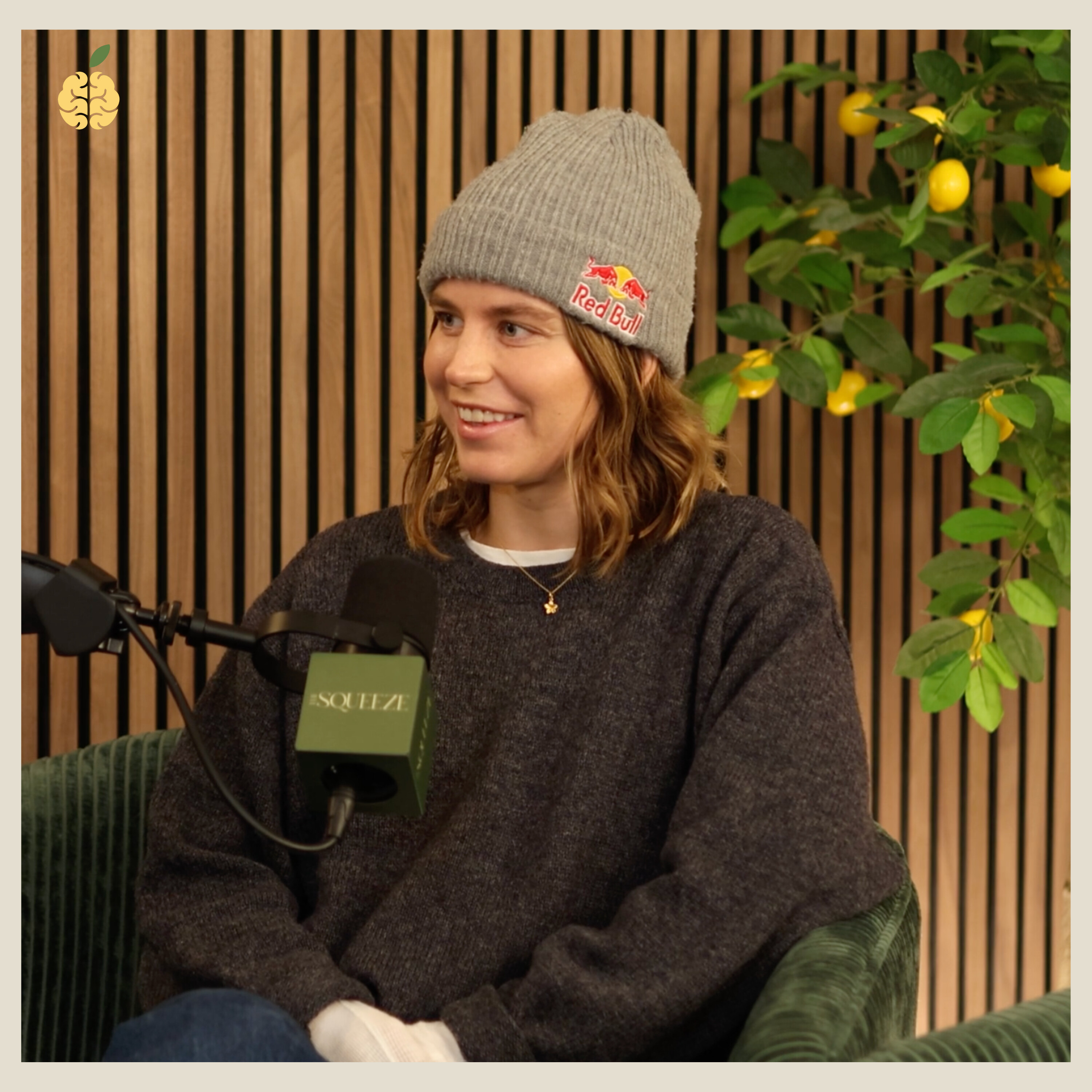
Love just hearing about and learning. And on today's episode, we have Maddie Mastro on. She is an Olympic snowboarder, X Games medalist, and one of the most influential women in half pipe snowboarding. Today, Maddie made her Olympic debut at just 17 years old and quickly became known for her fearless style and technical progression, including becoming the first woman to land a double crippler in competition. She's been open about navigating major issues, intense pressures, and the mental side of committing big tricks. In this conversation, Maddie shares how her mindset around success has changed the mantra that's guided her through it all. Her experience with therapy and sports psychology, and how leaving a toxic coaching relationship completely transformed her relationship with snowboarding and with herself. This conversation is so great and just in time for the Winter Olympics, where you can see Maddie competing this week. So I hope you guys enjoy this episode. Maddie, welcome to the Squeeze.
- [02:37]
Maddie Mastro (Olympic Snowboarder)
Thank you. I'm excited to be here.
- [02:38]
Host 1 (Podcast Co-host)
I'm so excited. I love having athletes on the podcast because I just love hearing your guys's mentality And I always feel like every time we have one on, there's just so much wisdom and words.
- [02:50]
Maddie Mastro (Olympic Snowboarder)
Oh, gosh. I don't know if I've got wisdom.
- [02:53]
Host 1 (Podcast Co-host)
No, you do.
- [02:53]
Host 2 (Podcast Co-host)
You do.
- [02:54]
Host 1 (Podcast Co-host)
So we start each episode off with this jar. It's a little game called Citrus Got. Want to pull one of those little, like, pieces of paper out of there.
- [03:03]
Maddie Mastro (Olympic Snowboarder)
And read it with the little one over here? Okay. What is your guilty pleasure TV show? O Guilty Pleasure. The Summer I Turned Pretty, I feel like, was my guilty pleasure TV show this last. It wasn't even summer, I feel like, but I guess it was over the summer. Yeah.
- [03:25]
Host 1 (Podcast Co-host)
We're rent to. We're rent to be friends. Yeah. So obsessed with that show.
- [03:29]
Maddie Mastro (Olympic Snowboarder)
So obsessed.
- [03:30]
Host 1 (Podcast Co-host)
And now I'm just, like, patiently. I don't know if I'm, like, happy or sad that we're getting, like, a movie.
- [03:35]
Maddie Mastro (Olympic Snowboarder)
It could be either really good or just, like, not the same as the show, you know? Go either way there.
- [03:42]
Host 1 (Podcast Co-host)
Yeah.
- [03:42]
Host 2 (Podcast Co-host)
Like, I feel like it might leave me wanting more.
- [03:45]
Host 1 (Podcast Co-host)
Like, I feel content where the show left off.
- [03:48]
Maddie Mastro (Olympic Snowboarder)
Same.
- [03:48]
Host 2 (Podcast Co-host)
The first couple episodes took me a.
- [03:50]
Host 1 (Podcast Co-host)
Minute, and then I've, like, re. Watched it many times now.
- [03:54]
Maddie Mastro (Olympic Snowboarder)
Yeah. I've been thinking of doing a rewatch recently. I'm like, yeah. Like, I need to rewatch and get some Conrad in my life.
- [04:00]
Host 1 (Podcast Co-host)
Yeah. Well, I restarted season one not that long ago. After. After season three, I, like, went back and watched and I forgot, like, how, like, where the characters all started. Like, obviously. I know, but little, like, sayings or.
- [04:16]
Maddie Mastro (Olympic Snowboarder)
Yeah, all of it. The little details.
- [04:18]
Host 1 (Podcast Co-host)
Yeah.
- [04:18]
Maddie Mastro (Olympic Snowboarder)
Yeah.
- [04:19]
Host 1 (Podcast Co-host)
And I feel like it helped me because so much time went by before.
- [04:22]
Host 2 (Podcast Co-host)
Season three, from season two.
- [04:23]
Host 1 (Podcast Co-host)
Like, I feel like it made me, like, realized why, like, certain characters piece.
- [04:28]
Maddie Mastro (Olympic Snowboarder)
It all together more. Yeah. Connect with it.
- [04:30]
Host 1 (Podcast Co-host)
Certain things.
- [04:30]
Maddie Mastro (Olympic Snowboarder)
So good.
- [04:32]
Host 1 (Podcast Co-host)
Well, let's dive in. We were just talking. You're from Southern California. How did snowboarding start?
- [04:38]
Maddie Mastro (Olympic Snowboarder)
Well, I grew up actually in a small town outside of LA called Wrightwood. There's a small mountain called Mountain High that's about five minutes down the road from there. Okay. Um, and I just. That was, like, our backyard. So it was just what you kind of did on the weekends in the winter.
- [04:55]
Host 1 (Podcast Co-host)
Yeah.
- [04:55]
Maddie Mastro (Olympic Snowboarder)
Or like, in the free time that we had. It was just a part of our family in a way of being outside of being outdoors. And it just so happened that happened to be on a mountain.
- [05:03]
Host 1 (Podcast Co-host)
Yeah.
- [05:04]
Maddie Mastro (Olympic Snowboarder)
In my backyard. So I got pretty lucky with that.
- [05:06]
Host 1 (Podcast Co-host)
It's so funny because I feel like when you're from California, like, it's you either are completely like, engulfed in like mountain snowboarding, snow activities or not at all. Like, I never.
- [05:19]
Maddie Mastro (Olympic Snowboarder)
Yeah.
- [05:19]
Host 1 (Podcast Co-host)
Ever did any form of snow activity. Like, I just never. I mean, being from here, it's not like, it's not a far drive, but it's not a close drive.
- [05:27]
Maddie Mastro (Olympic Snowboarder)
No, there's definitely like a cult following in the sense of like, everyone's got like, driving around in Southern California with their like, mammoth bumper stickers and like, you just know there's like this group of people that are so. For snowboarding and skiing.
- [05:42]
Host 1 (Podcast Co-host)
Yeah.
- [05:42]
Maddie Mastro (Olympic Snowboarder)
And then the other half that are like, grew up here and never ever, like went skiing or snowboarding in their life. It's one or the other for sure.
- [05:49]
Host 1 (Podcast Co-host)
So it was just like fun for you growing up. When did it like, shift that you were actually like, work and sport?
- [05:56]
Maddie Mastro (Olympic Snowboarder)
I don't think it like, really clicked in my head until I was like, on a podium like, of unlike a professional contest of like doing it for like a career.
- [06:09]
Host 1 (Podcast Co-host)
Yeah.
- [06:13]
Maddie Mastro (Olympic Snowboarder)
I. So that was probably not till I was like, which sounds funny, but like 16 or 15. 15 or 16. Yeah. That's when it like, kind of clicked that, like, this could be my career or more so like this is my career that I'm living in right now. It definitely took some time because I felt like I got kind of lucky with how I, like, grew up. Of like, I had a very normal life. Of like, I went to high school. I, like continued playing soccer and doing other things. So it wasn't until I was like fully thrown in or like, in it that I. It clicked that this was like my. This could be my career if I wanted it to be.
- [06:51]
Host 1 (Podcast Co-host)
Yeah. So what does life look like after you're like, okay, maybe I do like, really start to pursue this, take it more seriously. Do like, what are next steps in that?
- [07:00]
Maddie Mastro (Olympic Snowboarder)
Yeah, that's a good question. I was a lot of like, I think like sacrifice is a word, but like, of no longer playing other sports, not going to public or like in person high school anymore. Like going homeschooled and then like traveling most of the year doing school, like around the clock to try to get as much done as you can so you can snowboard whenever you want. And kind of going like full 100 all into that. When you're 15, 16, 17, like, it looks a lot like that. And then when you're older, it's pretty similar of like, you're traveling a lot, you're. You're gone most of the year. You don't have much time at Home with family or friends, but it's definitely worth it. I say these things are like sacrifices, but, like, it's kind of weird to label them as sacrifices because what I get in return is like, yeah, so awesome.
- [08:00]
Host 1 (Podcast Co-host)
Yeah. No, for sure. Were your parents, like, game for you to pursue it or what was their, like, take on it?
- [08:09]
Maddie Mastro (Olympic Snowboarder)
They were, they definitely were full supportive of, like, if this is what you want to do, we got you. But at the end of the day, we like, really don't care what you do as long as you're happy with your decision of that. So they were really supportive in that sense. But they, they weren't like, they didn't have any hesitations or anything like that.
- [08:27]
Host 1 (Podcast Co-host)
Yeah.
- [08:27]
Maddie Mastro (Olympic Snowboarder)
Which was super nice.
- [08:28]
Host 1 (Podcast Co-host)
Yeah. That's awesome.
- [08:31]
Host 2 (Podcast Co-host)
Can you explain to our listeners a.
- [08:33]
Host 1 (Podcast Co-host)
Little bit about what you do and specifically the half pipe, like, what it is? Because I thought, I, I don't really know.
- [08:41]
Maddie Mastro (Olympic Snowboarder)
That's okay. So I do snowboard half pipe. I can, that's what I compete in. And we call it like a discipline and snowboard half pipe is literally if you take a, a bowl, I guess you have a bowl and you cut it in half. That's what a half pipe looks like. Just like a U shaped.
- [09:00]
Host 1 (Podcast Co-host)
Yeah.
- [09:00]
Maddie Mastro (Olympic Snowboarder)
Large mounds of snow. It's 22ft tall. So it's really tall. And we go from one side to the other side, like airing out and doing tricks. And then we get in a competition. We get like scored and graded on those runs against everyone.
- [09:16]
Host 2 (Podcast Co-host)
Yeah.
- [09:18]
Maddie Mastro (Olympic Snowboarder)
And so I do that competitively year round. I, that's probably like. I don't know if that was a confusing answer or if that made any sense.
- [09:28]
Host 2 (Podcast Co-host)
No, I did.
- [09:29]
Maddie Mastro (Olympic Snowboarder)
Okay. Okay.
- [09:30]
Host 1 (Podcast Co-host)
I mean, obviously, like, I've seen your videos and I've seen you compete, but it, I, it's just, it's just so crazy that, that, that, that tall, like, it's crazy.
- [09:40]
Maddie Mastro (Olympic Snowboarder)
Yeah, they did like, I recently did like some type of media and they like brought out a huge, like, long stick and they're like having me raise it up and they're like, higher, higher, higher until I got to 22ft and I was like, oh, my God, that actually is really tall. Like, you don't really quite grasp it from like tv.
- [10:00]
Host 1 (Podcast Co-host)
Yeah.
- [10:00]
Maddie Mastro (Olympic Snowboarder)
At all of like, it's actually really tall.
- [10:02]
Host 1 (Podcast Co-host)
Yeah. How did you decide that that was what you wanted to, like, specialize?
- [10:08]
Maddie Mastro (Olympic Snowboarder)
No, I mean, I don't really know. I, I grew up and like, so half pipes, you have to have a lot of snow to build.
- [10:16]
Host 1 (Podcast Co-host)
Okay.
- [10:16]
Maddie Mastro (Olympic Snowboarder)
So like in Southern California, it can be quite hard to build those because we don't have.
- [10:21]
Host 1 (Podcast Co-host)
Yeah.
- [10:21]
Maddie Mastro (Olympic Snowboarder)
Like large quantities of snow a lot. So I didn't like grow up at my small little mountain.
- [10:29]
Host 1 (Podcast Co-host)
Yeah.
- [10:30]
Maddie Mastro (Olympic Snowboarder)
Riding half pipe. They had a half pipe at Mammoth, which was like a six hour drive away.
- [10:34]
Host 1 (Podcast Co-host)
Okay.
- [10:35]
Maddie Mastro (Olympic Snowboarder)
And I grew up going to that on like the weekends and like for holidays. So I feel like it was kind of like one of those things of like, you want what you can't have.
- [10:44]
Host 1 (Podcast Co-host)
Yeah.
- [10:45]
Maddie Mastro (Olympic Snowboarder)
And like it was this like special thing that I wanted to do because I didn't have it. But it doesn't really make. I don't really know why I chose it, but I love, I love writing half pipe and I love that I did choose it and I'm very happy that I did. But I don't know, like when I was 15, 14, 13, what really was like the deciding factor is just like you want what you can't have kind of vibe.
- [11:08]
Host 1 (Podcast Co-host)
Yeah.
- [11:09]
Maddie Mastro (Olympic Snowboarder)
That's interesting.
- [11:12]
Host 2 (Podcast Co-host)
Lately, my life has felt like a constant juggling act. Between work, social plans, travel, trying to move my body and still show up for myself. There are so many days where my own health ends up taking a back seat. I'll look up and realize I've been running around all day, answering emails, hopping from one thing to the next and haven't actually fueled myself in the way that feels good. And that's exactly where Premier protein comes in for me. On those busy days when I need something quick, convenient and actually satisfying, Premier protein has become my go to. It's the kind of thing that I can grab without slowing down but still feel good after choosing. Whether I'm heading out the door, need an afternoon boost, or just want something easy that fits into my routine. It makes fueling myself feel simple instead of stressful. And honestly, it tastes amazing. I always keep the vanilla on hand. It's my favorite flavor and it makes it so easy to reach for something that I actually enjoy and look forward to having. What I also really appreciate is that Premier protein fits into real life. It's not just for intense gym sessions or hardcore workout days. It's for everything you need fuel for. With 30 grams of protein and tons of delicious flavors, Premier protein isn't just for those who get after fitness. It's for those who get after life. It's for squeezing in a walk, showing up to a meeting, feeling ready, saying yes to plans with friends, winning game night, or even mastering a new recipe.
- [12:33]
Host 1 (Podcast Co-host)
For a dinner party.
- [12:34]
Host 2 (Podcast Co-host)
That's why it feels like such an easy, smart choice. Find your favorite flavor@premier protein.com that's P R E M I E R P R O t e I n.com or at Amazon, Walmart or other major retailers. This is the time of year I really notice when I'm not taking great care of myself. Between busy days, travel, long recording sessions, it's easy to feel run down if I'm not being intentional about the little things that support my overall wellness. That's why Wetterspoon has become part of my routine, especially their Manuka Honey drops. If you're not familiar, Manuka Honey is a unique type of honey that's sourced exclusively from New Zealand and contains naturally occurring wellness benefits you won't find in regular honey. One of the biggest reasons I love these drops is the taste. They don't have the harsh medicinal cough drop flavor. They're light, sweet, smooth and actually pleasant to take, which makes such a difference when you're reaching for something throughout the day. I really like knowing I'm soothing my throat with ingredients I recognize and feel good about. They're handmade with functional ingredients like B Propolis and Echinacea which are commonly used to help support immune wellness and they come in honey based flavors like ginger and lemon. I always gravitate toward lemon, obviously it's comforting and easy to reach for. They're also USDA organic, non GMO and made without artificial colors, flavors or sweeteners, which is something that I really value. Waterspoon is also the number one selling Manuka Honey brand in the US and one of the only organic Manuka Honeys available. So they're always non gmo, free of antibiotics and glyphosates, which makes them an easy everyday choice for me. Get your own taste of New Zealand sunshine today by visiting wetterspoon.com and use code SQUEEZE20 at checkout for 20% off your order. That's wetterspoon.com and use Code SQUEEZE20 for 20% off your order at Wetterspoon. Manuka Honey when something feels off in your body, a lot of the times it traces back to your gut. Digestion, energy, mood, focus. So many parts of how we feel day to day are connected there. And with stress, processed foods and just everyday life, your gut is constantly being asked to do a lot. If you're not properly supported, you really notice it. That's why just Thrive Probiotic has become something we trust. One thing that surprised me when I.
- [15:00]
Host 1 (Podcast Co-host)
Started learning more about probiotics is that.
- [15:02]
Host 2 (Podcast Co-host)
Many of them don't actually make it to your gut alive. So even if you're taking one, it may be doing nothing. Just Thrive is different. It's clinically proven to arrive 100% alive in your gut, which means it can actually work the way it's supposed to and deliver real measurable results. What really sets Just Thrive apart is how it supports your gut environment. It helps create an antioxidant producing environment right in your gut, forming beneficial compounds where your body needs the most. That kind of support can help with digestion, immune health, steady energy focus and overall balance over time. For a decade, Just Thrive has helped thousands of people take a proactive science back approach to their health. From their award winning probiotic to their full line of gut, immune and brain health supplements. Everything they create is designed to support your health from the inside out. So here's our challenge. Try Just thrive probiotic for 90 days risk free. Visit justthrivehealth.com and save 20% with promo code squeeze. See the difference yourself or get a full product refund, no questions asked. Take the 90 day Just Thrive probiotic challenge today at Just Thrive health.com squeeze be the best you with Just Thrive.
- [16:17]
Host 1 (Podcast Co-host)
On the note of it being so tall, you've talked about how you say to yourself, it's not that serious, it's just snowboarding. Where, where did that come from?
- [16:28]
Maddie Mastro (Olympic Snowboarder)
It started, I don't know when it started. Maybe a year or so ago, two years ago. I think it started because I was getting in this place where there was a lot of mental stuff going into it and it was becoming this like really serious thing. When snowboarding for me is like genuinely not that serious. And sometimes like life is not that serious. Like, yeah, not that deep. I feel like it kind of stemmed from that thing of like, it's not that deep. Like I'm literally strapping a piece of wood to my feet and riding it down a mountain right now. Like, it's not that serious. It's not that deep. I'm gonna be happy afterwards. I have like a good life otherwise. So like, it's not that serious. And it just kind of helped calm me down in the moment when it feels like there's these like huge, huge things in front of me that are like life or death when they're really, they're really not. It's like it's just snowboarding.
- [17:34]
Host 1 (Podcast Co-host)
Yeah. What is training look like for you?
- [17:38]
Maddie Mastro (Olympic Snowboarder)
Training is, you're like, where do I start? Yeah, I'm like, what kind of training?
- [17:43]
Host 1 (Podcast Co-host)
Because where do you, where do you spend most of your time? Because you probably, you probably have to be in snow to train.
- [17:49]
Maddie Mastro (Olympic Snowboarder)
So it's a lot of traveling. Okay. We travel a lot to find the snow and then. So that's a good question. I'm like, where do I start?
- [17:58]
Host 2 (Podcast Co-host)
We.
- [17:58]
Maddie Mastro (Olympic Snowboarder)
So we travel from like, location to location, finding snow, finding a good half pipe to train and compete in. So. But our days when we're actually training are very much like, consistent with each other of like we go up to the mountain, eight or nine o', clock, and we ride and we take laps through the half pipe until, I don't know, anywhere from one to three o' clock in the afternoon, come home, go to the gym, pt, dinner, bed. And so like that looks the same everywhere we go, but we travel pretty consistently throughout the year to do that.
- [18:35]
Host 1 (Podcast Co-host)
Yeah. This is like such a random question, but I'm like literally thinking, like, logistically, like, you can't just practice. Like, you have to physically correct me if I'm wrong. You have to physically be doing the half pipe to like practice a trick that you're doing.
- [18:51]
Maddie Mastro (Olympic Snowboarder)
Yeah. So it's a lot of like, repetition. Yeah. Of like all the things that like you see us doing in a contest. We've done it a lot. Yeah. In training somewhere.
- [19:02]
Host 2 (Podcast Co-host)
Yeah.
- [19:02]
Host 1 (Podcast Co-host)
Is it scary, like trying any trick?
- [19:04]
Maddie Mastro (Olympic Snowboarder)
For sure. Yeah. I'm not. I don't think none of us are immune to like being scared. I don't think. I mean, maybe there's. There's probably some like action sports athletes that are immune to fear.
- [19:16]
Host 1 (Podcast Co-host)
Yeah.
- [19:17]
Maddie Mastro (Olympic Snowboarder)
But I am not one of those people. It's definitely scary.
- [19:20]
Host 1 (Podcast Co-host)
Yeah. How. How do you get yourself to fully commit to doing your tricks? Because I'm sure if you like even hesitate, just like there's like such like a small margin.
- [19:31]
Maddie Mastro (Olympic Snowboarder)
Yeah. It's a lot of self talk, like, of like mentally.
- [19:36]
Host 1 (Podcast Co-host)
Yeah.
- [19:36]
Maddie Mastro (Olympic Snowboarder)
Self talking and like making sure that like internal narrative is like the right one for the situation of like trying these really scary tricks. So a lot of self talk happens and then like, I feel like there's always that like one that haunts you or you like, didn't really commit and it like didn't go well because you didn't commit. So like, I'm like, I don't want to do that again, so I'm gonna commit for now on and do it. Right. But a lot of like internal dialogue for me is what helps me. Yeah. Get that going. It's so cool.
- [20:09]
Host 1 (Podcast Co-host)
I'm just. I literally could never. I would be way like so scared.
- [20:14]
Maddie Mastro (Olympic Snowboarder)
That's fair.
- [20:15]
Host 1 (Podcast Co-host)
I also don't like height, like.
- [20:17]
Maddie Mastro (Olympic Snowboarder)
Yeah. It doesn't really, they don't really go together. Yeah. Like, like you have to kind of not be scared of heights. No, it's so, it's so cool.
- [20:24]
Host 1 (Podcast Co-host)
But you've talked about how people often see the metals and the cool tricks but not really the pressures that come from competing in it. What are those pressures and how have you like learned to manage those over the years?
- [20:39]
Maddie Mastro (Olympic Snowboarder)
Yeah, there's like just like on a human level of like your own pressures that I feel like every human experiences of like wanting to be successful, wanting to like achieve their goals. Yeah. And like those like very somewhat basic pressures of like I feel like everyone can relate to those ones. I feel like everyone can relate to all of these pressures. Maybe hopefully we'll see to the like exterior pressures of like my like maybe there's like I feel like a fan base that I have that I like want to like. I don't want to disappoint them or like I have sponsors that are like investing in me and my performance and if I don't perform like.
- [21:25]
Host 2 (Podcast Co-host)
Yeah.
- [21:26]
Maddie Mastro (Olympic Snowboarder)
I feel like I'm letting them down. So there's all those external pressures that like are there.
- [21:38]
Host 1 (Podcast Co-host)
Yeah.
- [21:38]
Maddie Mastro (Olympic Snowboarder)
Managing them is hard. I don't know if I've like. It's something I like consistently work on.
- [21:44]
Host 1 (Podcast Co-host)
Yeah.
- [21:45]
Maddie Mastro (Olympic Snowboarder)
I don't know if I've cracked the code. I go. I have sports psych and therapy to help me crack that code. But they're like ever evolving and changing. So we're still working on it.
- [21:58]
Host 1 (Podcast Co-host)
Yeah, I love that. When did therapy start for you?
- [22:03]
Maddie Mastro (Olympic Snowboarder)
I started therapy about two years ago.
- [22:09]
Host 1 (Podcast Co-host)
Okay.
- [22:10]
Maddie Mastro (Olympic Snowboarder)
Give or take. I've talked to a sports psych for about a year leading up to that consistently and then. Well now I do sports psych and therapy.
- [22:22]
Host 1 (Podcast Co-host)
Okay.
- [22:22]
Maddie Mastro (Olympic Snowboarder)
Together.
- [22:23]
Host 1 (Podcast Co-host)
What do they. What's the differences for those?
- [22:27]
Maddie Mastro (Olympic Snowboarder)
The difference is a sports psych is a little more like in tuned with like the sport. Yeah. And the like tricks and like this the actual like like fear of like the trick of like or what's going on. Like the mental roadblocks like in my like day to day on hill training and then my therapist we tend to focus more on like my mental health.
- [23:03]
Host 1 (Podcast Co-host)
Yeah.
- [23:03]
Maddie Mastro (Olympic Snowboarder)
Where like sports like also mental health is very much involved in there. But then therapy is just like an extra help of having another layer of like mental health health support.
- [23:15]
Host 1 (Podcast Co-host)
Yeah.
- [23:15]
Host 2 (Podcast Co-host)
That's.
- [23:16]
Host 1 (Podcast Co-host)
That's really cool to have someone that. Because we talk about how different like facets of mental health. It's good to have someone that specializes in whatever it is. But I think that's so cool. Like, for the sports psych of it all, having someone that can actually relate and, like, understand what you're thinking helps.
- [23:36]
Maddie Mastro (Olympic Snowboarder)
So much because I. It definitely. It's nice to have someone that, like, gets it in the sense of, like, what I'm doing every day with my sport.
- [23:45]
Host 1 (Podcast Co-host)
Yeah.
- [23:47]
Maddie Mastro (Olympic Snowboarder)
And so it's good. It like, pairs really well with having a therapist as well.
- [23:51]
Host 1 (Podcast Co-host)
Do you feel like your outlook on the sport has changed since therapy and since doing this? Good question.
- [24:02]
Maddie Mastro (Olympic Snowboarder)
Has it changed? I don't know if my outlook has changed or it's. I mean, yes.
- [24:10]
Host 1 (Podcast Co-host)
Even just like, how you. How you approach it or how you view it, like, day to day.
- [24:15]
Maddie Mastro (Olympic Snowboarder)
Yeah. I definitely. I call it. Yeah. It definitely has changed my entire way that I, like, go about my day and my sport. Yeah. I'm like, why do I have to. It's changed completely.
- [24:30]
Host 1 (Podcast Co-host)
Yeah. Yeah, I know. I feel like sometimes if you don't actually, like, think about it, like, it's so. It's like little increments at a time. Yeah. Your mindset is shifting and then you're like, wait. Actually it completely has.
- [24:43]
Maddie Mastro (Olympic Snowboarder)
Yeah.
- [24:43]
Host 1 (Podcast Co-host)
Until you, like, take that moment and really, like.
- [24:45]
Host 2 (Podcast Co-host)
Yeah.
- [24:46]
Maddie Mastro (Olympic Snowboarder)
Everything actually is different from like 20.
- [24:48]
Host 1 (Podcast Co-host)
Years ago, 100 different over the years. How does. How has your view of success changed maybe from when you were younger to now?
- [24:58]
Maddie Mastro (Olympic Snowboarder)
I think. Well, I figured out what. That's a great question. I feel like when you're younger, success for me was like, completely different and I didn't quite grasp it.
- [25:09]
Host 1 (Podcast Co-host)
Yeah.
- [25:11]
Maddie Mastro (Olympic Snowboarder)
Or like, you don't really, like, know what success is for you at all. And it's ever changing for me and it becomes like, a lot bigger and like, borderline scarier when you're. I feel like, because when you're a kid, you don't like, know what success is to some extent. And so my version of success is, like, ever changing of, like, what's going to make me happy at the end of the day.
- [25:37]
Host 1 (Podcast Co-host)
Yeah.
- [25:39]
Maddie Mastro (Olympic Snowboarder)
Yeah. So I think, like, what my version of success would be is, like, what is going to make me go home happy.
- [25:44]
Host 2 (Podcast Co-host)
Yeah.
- [25:45]
Maddie Mastro (Olympic Snowboarder)
The day now. So it's like kind of like, is similar to when you're a kid, but it has a lot. It's. It's a lot bigger, if that makes sense.
- [25:52]
Host 1 (Podcast Co-host)
Yeah.
- [25:55]
Host 2 (Podcast Co-host)
I'd love to hear about this if.
- [25:57]
Host 1 (Podcast Co-host)
You'Re comfortable with sharing this next little bit. But a couple of years back, you shaved your head. Yeah.
- [26:05]
Maddie Mastro (Olympic Snowboarder)
This is an easy one. I was like, oh, gosh, what are we.
- [26:07]
Host 1 (Podcast Co-host)
You're like, what Are you.
- [26:08]
Maddie Mastro (Olympic Snowboarder)
What skeleton are we dragging out? But yeah. Shaved my head. Easy, easy. Yeah.
- [26:13]
Host 1 (Podcast Co-host)
What you've talked about how the reason behind that was because you tied a lot of your identity to that, to your hair. Was there something deeper to it or what? Like, what. What was going on?
- [26:24]
Maddie Mastro (Olympic Snowboarder)
There was a lot of people, like, when I shaved my head were, like. I think they were, like, messaging my mom, like, is she okay? Or, like, people were, like, asking me, like, if I'm okay mentally. Yeah. If I was, like, having some type of breakdown, which I was genuinely not having a breakdown. I had thought about shaving my head for a long time, for, like, four or five years, and I had always, like, put it off because I did really put a lot of my, like, value and image and, like, my brand into my. Like, I had really long blonde hair.
- [27:01]
Host 1 (Podcast Co-host)
Yeah.
- [27:02]
Maddie Mastro (Olympic Snowboarder)
And I just wanted to see what it was like to, like, not have that.
- [27:06]
Host 1 (Podcast Co-host)
Yeah.
- [27:07]
Maddie Mastro (Olympic Snowboarder)
I, like, struggled with acne for a long time, too. And I always, like, pushed it off because it was like, I'll shave my head when I, like, have clear skin, or I'll shave my head when I'm, like, feeling confident. Confident in my body and all these different things. And I was like, one day I, like, woke up and I was like, that's silly. Like, I could have acne when I'm 45.
- [27:28]
Host 1 (Podcast Co-host)
Yeah.
- [27:29]
Maddie Mastro (Olympic Snowboarder)
Or like, I could. Hopefully not the case, but I could never be comfortable in my body ever. And so then I'll never get to do this thing that I've wanted to do for so long.
- [27:38]
Host 1 (Podcast Co-host)
Yeah.
- [27:38]
Maddie Mastro (Olympic Snowboarder)
Because of these, like, really silly things. And so I just shaved it off. And I highly recommend shaving your head. Everyone should shave their head. It's, like, sounds very extreme, but it's so, so good and so nice.
- [27:53]
Host 2 (Podcast Co-host)
Yeah.
- [27:54]
Host 1 (Podcast Co-host)
It's just, like, I feel like, it must feel, like, so liberating after for some. Like, why is that, like, I'm. I'm sitting here thinking, like, I could literally never shave my head, which is fair.
- [28:06]
Maddie Mastro (Olympic Snowboarder)
And I, like, thought the same thing a lot of times of, like, no, I. I don't think I could ever shave my head because I think it is, like, a really scary thing.
- [28:14]
Host 2 (Podcast Co-host)
Yeah.
- [28:14]
Maddie Mastro (Olympic Snowboarder)
But it almost became, like, my fears of, like, what would happen when I shaved my head is, like, I would feel, like, less feminine or I was, like, a little worried about becoming misgendered or, like, being presenting more masculine and, like, had, like, some negative thoughts about that just in, like, a fear side. But then once I did shave my head, it was really actually nice to like, just, like, embrace it of, like. And I felt, like, way more comfortable and confident in, like, my skin and myself of, like, who I was as a person. And then it was like, okay, if you're not feeling, like, extra feminine today, like, you get to, like, do your makeup or, like, put on some fun jewelry or, like, do something that, like, helps there. So there are, like, really, like, I was scared to shave my head. I was like. And I thought that when I shaved my head that I was, like, for sure gonna, like, go to bed crying and, like, be like, what did I do? Like, why did I do this? And I didn't cry once over, like, having a shaved head.
- [29:17]
Host 1 (Podcast Co-host)
Yeah.
- [29:18]
Maddie Mastro (Olympic Snowboarder)
I've cried harder at, like, bad haircuts with, like, actual hair, and I've never. I didn't cry over having a shaved head at all. Oh, my gosh. That's so funny.
- [29:28]
Host 1 (Podcast Co-host)
Yeah. I was gonna say, did it shift the way you really saw yourself, both as a person and an athlete?
- [29:38]
Maddie Mastro (Olympic Snowboarder)
Yes. I think it forced me to, like, be confident in my, like, self, like, as a person.
- [29:47]
Host 1 (Podcast Co-host)
Yeah.
- [29:48]
Maddie Mastro (Olympic Snowboarder)
It, like, forced me to, like, just be myself and be confident in that and not, like, have anything to, like, fall back on of. Just, like, everything's been quite literally shaved off. Like, there's nothing to, like, hide behind. There's no. There's no, like, hair to hide behind or anything. So like, I just had to be, like, confident and comfortable in my person and being.
- [30:11]
Host 1 (Podcast Co-host)
Yeah.
- [30:11]
Maddie Mastro (Olympic Snowboarder)
And I feel like it really helped me do that.
- [30:13]
Host 1 (Podcast Co-host)
Yeah.
- [30:16]
Host 2 (Podcast Co-host)
It is officially the month of love. And let's be honest, the one who gets the most unconditional love for me is my dogs. Truly, no judgment. Always excited to see me, and somehow still obsess with me even on my worst days. And because they give us so much, I really believe that the least we can do is make sure that they're eating food that's actually good for them. That's why I love Ollie, because it's real, fresh food that dogs genuinely get.
- [30:43]
Host 1 (Podcast Co-host)
Excited about at mealtime.
- [30:44]
Host 2 (Podcast Co-host)
Ollie uses human grade recipes that are backed by veterinary nutritionists and crafted with culinary experts. Even picky eaters tend to get noticeably more excited at mealtime, which says everything. Remy has always loved food, so when we switched to Ollie, she was so excited to actually get some real food instead of kibble. And Lily has definitely been our picky eater, but when we switched to Ollie, she is literally jumping off the couch, so excited to eat, and it takes such a level of stress off of me trying to trick her into eating her food. Ollie creates tailored meal plans based on your dog's specific needs, their size, age, breed, activity level, so they're getting exactly what works for them. They even include a scoop for serving and a storage puptainer so your fridge or freezer doesn't smell like dog food, which I personally love. Celebrate your number one Valentine, your greatest love your dog. Head to ollie.com squeeze tell them all about your dog and use code squeeze to get 60% off your first welcome kit when you subscribe today. Plus they offer a happiness guarantee on the first box so if you're not.
- [31:49]
Host 1 (Podcast Co-host)
Completely satisfied you'll get your money back.
- [31:52]
Host 2 (Podcast Co-host)
That's o l l I e.com s q u e dash e z e and enter code squeeze to get 60% off your first box when it's time to make dinner and you open the fridge and it's just question marks. Butcherbox is a lifesaver.
- [32:10]
Host 1 (Podcast Co-host)
It makes it easy to keep high.
- [32:11]
Host 2 (Podcast Co-host)
Quality protein on hand without extra grocery store chaos. And it's been huge for nights when I want something simple but still want to feel good about what I'm eating. ButcherBox delivers over 100 premium protein options straight to your door. Things like 100% grass fed beef, free range, organic chicken, grape free pork and wild caught seafood. For over a decade, Butcherbox has led the industry with meat and seafood that's antibiotic free, hormone free and independently verified. It's clean, trustworthy protein you want to be eating, especially at the start of the new year. I also love that it's flexible. You can customize your box around your routine and your goals, whether you're meal prepping, feeding a family or just trying to make weeknights easier. And every box ships free always. Plus you get access to recipes, tips and member only deals that make cooking feel less stressful. As an exclusive offer, new listeners can get their choice between organic ground beef, chicken breast or ground turkey in every box for a year plus $20 off when you go to butcherbox.com squeeze that's right. Your choice of organic ground beef, chicken breast or ground turkey in every box for an entire year plus $20 off your first box and free shipping always. That's butcherbox.com squeeze don't forget to use our link so they know we sent you.
- [33:34]
Host 1 (Podcast Co-host)
Around that time. You've talked a little bit about it on social media about the toxic coaching relationship that you were in. What made you finally realize that something not good was going on?
- [33:50]
Maddie Mastro (Olympic Snowboarder)
I actually didn't really. Well, there was like different layers and stages.
- [33:56]
Host 1 (Podcast Co-host)
Yeah.
- [33:57]
Maddie Mastro (Olympic Snowboarder)
Of like a realization of, like, it wasn't good. When I, like, really realized it wasn't good was until, like, I had aft, like, left the relationship pretty much, like, completely.
- [34:08]
Host 1 (Podcast Co-host)
Yeah.
- [34:09]
Maddie Mastro (Olympic Snowboarder)
And then, like, some time afterwards when I, like, started to, like, unpack it and, like, it was still, like, lingering and, like, really started to, like, unpack it. That's when I started therapy. It's around that time. That's when I, like, realized it wasn't. It wasn't good. It was very, very bad. So it took some time. And because I didn't fully grasp, like, what was happening when I was in it at all, by any means, what.
- [34:37]
Host 1 (Podcast Co-host)
Finally gave you the strength to remove yourself from that? Because I think that's something that. Even though it sounds so, like, niche.
- [34:46]
Maddie Mastro (Olympic Snowboarder)
Yeah.
- [34:46]
Host 1 (Podcast Co-host)
To, like, being an Olympic athlete with a trainer, like, I feel like that relationship goes in, you know, in intimate ones and family ones and work. Like, it just is kind of a universal thing.
- [35:00]
Maddie Mastro (Olympic Snowboarder)
How.
- [35:00]
Host 1 (Podcast Co-host)
How did you get the strength to do that? Because I imagine there's so much also pressure. Like, I think the normal person, myself included, doesn't realize how much pressure I feel. Like, we kind of see it, like, in tennis, when I, like, we watch tennis, and, like, they always pan to the coaches. I'm like, well, what is he, like, coaching him? Like, there's so much depth to coach in a sport, even if the athlete is an Olympian, they're, like, at the top of their sport. There's so much pressure there. But how did you, like, get the strength to separate that?
- [35:34]
Maddie Mastro (Olympic Snowboarder)
Well, the. It was kind of like a final blowout where there was, like, a pretty big incident that, like, I was like, no. Like, this is not okay. This is affecting my snowboarding now. Like, this is. You're, like, making. You're ruining my day.
- [35:52]
Host 1 (Podcast Co-host)
Yeah.
- [35:53]
Maddie Mastro (Olympic Snowboarder)
And I don't. I don't want my days to be. You shouldn't be my coach should never be the reason my days are getting ruined. Or, like, they should never be a reason. Like, I go up to training, and I. I don't get what I want done is because, like, a coach is, like, doing some. Something unprofessional and is not being a coach. And so that was kind of where I drew. That was, like, the final day where I was like, no, like, this is now affecting what I want. And my snowboarding, which is why we're here, which sounds like, kind of selfish, but it was like, yeah, I'm here to snowboard. I'm here to learn stuff. I'm here to get better. Yeah, you're my Coach, you're supposed to help me do that.
- [36:33]
Host 1 (Podcast Co-host)
Yeah.
- [36:34]
Maddie Mastro (Olympic Snowboarder)
And you're not helping me do that right now. So this is not. This is not gonna work.
- [36:39]
Host 1 (Podcast Co-host)
Yeah.
- [36:40]
Maddie Mastro (Olympic Snowboarder)
But I didn't realize, like, the gravity of, like, why it wasn't working until I had already had, like, left.
- [36:49]
Host 1 (Podcast Co-host)
Yeah.
- [36:49]
Maddie Mastro (Olympic Snowboarder)
The situation. And I, like, looked back on the relationship, and I was like, whoa, that was. That was crazy.
- [36:55]
Host 1 (Podcast Co-host)
Yeah.
- [36:56]
Host 2 (Podcast Co-host)
I mean, honestly, that's, like, what it.
- [36:57]
Host 1 (Podcast Co-host)
Takes sometimes, though, is, like, you just know in your gut that something needs to change, and you don't realize how toxic a relationship is or a work environment or whatever it may be until you're, like, completely out of it, because that was me. I. I'm a nurse, and I worked as a Covid nurse, and I didn't realize the extent of my PTSD that I was diagnosed with and all of these symptoms until I, like, actually removed myself from the environment.
- [37:25]
Maddie Mastro (Olympic Snowboarder)
Yeah.
- [37:25]
Host 1 (Podcast Co-host)
And I was like, whoa. Like, I am, like, actually not okay at all.
- [37:29]
Maddie Mastro (Olympic Snowboarder)
Or it's like. Yeah. When you, like, go into, like, a normal environment or, like, a contrasting environment, or it doesn't even need to be contrasting. Just, like, you leave that environment, and it's. You're just in normal life, and then you look back and you're like, wow, that was really not.
- [37:45]
Host 2 (Podcast Co-host)
Yeah.
- [37:45]
Maddie Mastro (Olympic Snowboarder)
Okay. Or. Right. And so I totally relate to that bit. For sure.
- [37:49]
Host 1 (Podcast Co-host)
Yeah.
- [37:49]
Host 2 (Podcast Co-host)
Do you feel like your love for.
- [37:51]
Host 1 (Podcast Co-host)
The sport was kind of dying.
- [37:53]
Host 2 (Podcast Co-host)
Oh.
- [37:53]
Maddie Mastro (Olympic Snowboarder)
Fully with.
- [37:54]
Host 1 (Podcast Co-host)
When you were in that environment?
- [37:56]
Maddie Mastro (Olympic Snowboarder)
I think my, like. I like, say it of, like. I think my, like, love for the sport was dying. And then, like, also, I think I just really didn't like myself as, like, a person, as a human in that relationship. I just was, like, molding and conforming and being what I thought this person wanted me to be. Yeah. And so I. I think it was, like, hard to, like, do something that you love.
- [38:25]
Host 1 (Podcast Co-host)
Yeah.
- [38:25]
Maddie Mastro (Olympic Snowboarder)
When you, like, don't like the person you are.
- [38:28]
Host 2 (Podcast Co-host)
Yeah.
- [38:29]
Maddie Mastro (Olympic Snowboarder)
And you also don't like the sport you're doing or the people you're doing it with, but you don't even, like. I didn't even, like, realize that was, like, happening.
- [38:37]
Host 1 (Podcast Co-host)
Yeah.
- [38:38]
Maddie Mastro (Olympic Snowboarder)
Because I say, like, my desire to, like, achieve my goals was so huge that I was like, I will do anything to get there. And it was like, if I'm gonna suffer for five years in this, like, toxic coaching relationship, then if that's what it takes, that's, like, what it takes then, I guess to, like, achieve my goals, which, like, you don't have to suffer to achieve your goals.
- [38:57]
Host 1 (Podcast Co-host)
I love that that's. That needs to be heard loud and clear. Is obviously, have to work hard, but if. If it's not a good environment and it's not healthy and you are suffering, like, that's not.
- [39:11]
Maddie Mastro (Olympic Snowboarder)
Yeah. The work is so much harder than. You don't have to make the work harder than it needs to be.
- [39:15]
Host 1 (Podcast Co-host)
Yeah. I'm sure now, like, looking back on it, like, I feel like you seem like you have, like, a breath of fresh air now.
- [39:24]
Maddie Mastro (Olympic Snowboarder)
Like, definitely there was, like, it came in, like, waves of, like, different, like, working through all the, like.
- [39:34]
Host 1 (Podcast Co-host)
Yeah.
- [39:34]
Maddie Mastro (Olympic Snowboarder)
Trauma that came with it. But even, like, when you're working through the, like, trauma and, like, then when you get past it, I feel like the, like, underlying narrative is like, I'm so happy I'm not there anymore.
- [39:49]
Host 1 (Podcast Co-host)
Yeah.
- [39:50]
Maddie Mastro (Olympic Snowboarder)
Or, like, I'm so happy for this growth, and I feel like that is, like, a version of, like, breathing fresh air.
- [39:57]
Host 2 (Podcast Co-host)
Yeah.
- [39:57]
Host 1 (Podcast Co-host)
I love that this sport seems very mentally taxing and the training and everything. The travel. What is your support system look like?
- [40:06]
Maddie Mastro (Olympic Snowboarder)
So we travel. I travel on, like, Team usa, so I have all my teammates. And then on, like, my. Like, for, like, more of, like, my. You have your teammates, but then I have, like, a PT that I travel with. Her name's T2. She's someone that I would like very highly put in, like, the top tier of support. She's, like, one of my favorite people on this earth, who's a huge part of my snowboarding. My boyfriend also snowboards and competes and does the same.
- [40:35]
Host 1 (Podcast Co-host)
Yeah.
- [40:36]
Maddie Mastro (Olympic Snowboarder)
The whole. Everything exactly the same. So he's a huge part of my support system. And then I travel with my dog everywhere, which is super fun. So she's part of my support system. And then my new. My new coaches are a huge part of my support system as well.
- [40:52]
Host 1 (Podcast Co-host)
I love that we are all about dogs being a part of our support systems here, because it's very true.
- [40:58]
Maddie Mastro (Olympic Snowboarder)
Yeah.
- [40:59]
Host 1 (Podcast Co-host)
That's really cool that your boyfriend does the same thing. Yeah. So I'm sure, like, there's a lot of. Because a lot of the time, like, when I was in the hospital, like, my husband couldn't really, like, he could empathize with me, but he could not. Like, he doesn't relate at all.
- [41:13]
Maddie Mastro (Olympic Snowboarder)
Yeah.
- [41:14]
Host 1 (Podcast Co-host)
So that must be nice.
- [41:16]
Maddie Mastro (Olympic Snowboarder)
No, it's super nice. And I think, like, in snowboarding or, like, everyone's like. Or in any space, a lot of people are like, no, I want someone that is, like, something completely different or has, like, absolutely no clue about our world. But after, like, Having a boyfriend who is in my world and gets my world, it makes my life, like.
- [41:39]
Host 1 (Podcast Co-host)
Yeah.
- [41:39]
Maddie Mastro (Olympic Snowboarder)
I don't. I couldn't do it any other way.
- [41:41]
Host 1 (Podcast Co-host)
Yeah. Because I feel like he. There's, like, a level of understanding of, like, obviously what you do is so time consuming, and there's a level of, like. No, you have to. You have to keep up with this crazy schedule in order to excel.
- [41:57]
Maddie Mastro (Olympic Snowboarder)
No, that's, like, the nice bit of, like, we both have, like, this understanding of, like, where snowboarding, like, stands in our life and how you have to, like, prioritize that and, like.
- [42:06]
Host 1 (Podcast Co-host)
Yeah.
- [42:07]
Maddie Mastro (Olympic Snowboarder)
The things that, like, you have to sacrifice. And it's not, like, any type of, like. It's not because I don't love you, but it's like, because snowboarding, this is my job. This is what I love to do. And so we're okay with, like, having time apart and, like, traveling a lot. And so he gets it. It makes, like, all that stuff a lot easier.
- [42:27]
Host 1 (Podcast Co-host)
Yeah. How now, how do you keep your love for the sport alive and not, like, feel burnt out? Because I'm sure at some point, I mean, I could be wrong, but I don't know if there's, like, a level of, like, monotony that comes with it. It's like I'm. Yeah. Like, I'm doing this again. Like, same routine. How do you, like, keep that spark alive?
- [42:49]
Maddie Mastro (Olympic Snowboarder)
That's something that I've. I. That's a good question. How do I keep that spark alive? It's something that I've, like, struggled with. Yeah. And I have gotten, like. We call it, like, burnout. Yeah. I have gotten burnt out before and something I struggle doing. I have a really hard time. I'm like that type of person where I say I have, like, two gears. It's like, stop, sit, lay on the couch, do absolutely nothing. Or, like, go, go, go, go, go. So, like, when I say I'm gonna do something, like, we're going, like, we're doing it. Yeah. So it's hard for me with snowboarding to, like, slow down and not, like, overdo it and do too much.
- [43:27]
Host 1 (Podcast Co-host)
Yeah.
- [43:27]
Maddie Mastro (Olympic Snowboarder)
So it's something I've been working on. Taking breaks is really hard. I think the people in my life are, like, getting better at forcing me to take a break.
- [43:36]
Host 2 (Podcast Co-host)
Yeah.
- [43:37]
Maddie Mastro (Olympic Snowboarder)
Because I'm not really good at, like, taking a break, but taking a break, having time off, going home more is not always better. It's a learning process for me.
- [43:48]
Host 1 (Podcast Co-host)
Yeah.
- [43:49]
Maddie Mastro (Olympic Snowboarder)
But those are some of the things I'm trying to do to help with my, with that. With burnout in general.
- [43:53]
Host 2 (Podcast Co-host)
Yeah.
- [43:54]
Host 1 (Podcast Co-host)
Yeah. I'm very thankful for my husband because I'm like the same like when I commit to something, I'm like a thousand percent in like I will be like working until like I would, I would be on my laptop like working or doing things like all day. My husband's like, it's 9:30pm like you need time to.
- [44:12]
Maddie Mastro (Olympic Snowboarder)
Yeah.
- [44:12]
Host 1 (Podcast Co-host)
Close it down.
- [44:13]
Host 2 (Podcast Co-host)
We're going to watch it.
- [44:13]
Host 1 (Podcast Co-host)
We're going to watch a show, we're going to watch a movie. And you're going to turn your brain off.
- [44:17]
Maddie Mastro (Olympic Snowboarder)
Yeah.
- [44:17]
Host 1 (Podcast Co-host)
Yeah, you're right.
- [44:18]
Maddie Mastro (Olympic Snowboarder)
Yeah. Turning the brain off. That's like, it's impossible to do when you're like on that 1000 commit program of like, this is what we're doing.
- [44:25]
Host 1 (Podcast Co-host)
Yeah. What does rest look like for you?
- [44:28]
Maddie Mastro (Olympic Snowboarder)
Rest. Good question. I think rest is hard. Rest, I feel like as an athlete is like a hard thing. Yeah. In general. So like rest is hard. That's a good question. To me, rest would be like not doing like anything.
- [44:50]
Host 2 (Podcast Co-host)
Yeah.
- [44:50]
Maddie Mastro (Olympic Snowboarder)
Like rotting on the couch.
- [44:52]
Host 1 (Podcast Co-host)
Yeah.
- [44:52]
Maddie Mastro (Olympic Snowboarder)
Like taking a day off and like completely taking the day off of like, don't go to the gym, don't like go exercise. Don't do cardio. Like, just like take the day off and do like, like rot on the couch. Or do things that are completely, completely different from your sport in any way, shape or form.
- [45:10]
Host 1 (Podcast Co-host)
Yeah.
- [45:12]
Maddie Mastro (Olympic Snowboarder)
Yeah. But it's hard to do that. But that would be what I would call rest.
- [45:15]
Host 1 (Podcast Co-host)
Yeah. What are some of your biggest mental health tools? Self care tools that you love?
- [45:26]
Maddie Mastro (Olympic Snowboarder)
Therapy. Yeah. I'm like, I feel like I'm should be like a spokesperson for therapy because, like, someone's like, tell me their problems. I'm like, have you thought about therapy? Like, therapy's changed my life.
- [45:38]
Host 1 (Podcast Co-host)
Yeah.
- [45:39]
Maddie Mastro (Olympic Snowboarder)
So therapy is a huge one. I think there's like, can be maybe even like as an athlete, I feel like in snowboarding in particular, not a lot of people like go to therapy, which is fascinating to me after I've gone to therapy now.
- [45:53]
Host 1 (Podcast Co-host)
Yeah.
- [45:54]
Maddie Mastro (Olympic Snowboarder)
Because I think everyone can benefit from it. So therapy is a big one. What was the question again?
- [46:00]
Host 1 (Podcast Co-host)
Just like self care.
- [46:01]
Maddie Mastro (Olympic Snowboarder)
Oh, self care. That's right.
- [46:02]
Host 1 (Podcast Co-host)
Things you do.
- [46:03]
Maddie Mastro (Olympic Snowboarder)
Yeah. Therapy. Taking like a good shower. Like nothing beats that of like taking a good shower. Putting on like a clean, comfy outfit. Yeah. Watching your favorite show, like doing something where you can like turn your brain off and it's not overwhelming in your head anymore. You can just like relax.
- [46:26]
Host 2 (Podcast Co-host)
Yeah.
- [46:28]
Maddie Mastro (Olympic Snowboarder)
And sleeping.
- [46:28]
Host 2 (Podcast Co-host)
Yeah.
- [46:29]
Maddie Mastro (Olympic Snowboarder)
There's Another one?
- [46:30]
Host 1 (Podcast Co-host)
Yeah.
- [46:30]
Maddie Mastro (Olympic Snowboarder)
I. Yeah.
- [46:31]
Host 1 (Podcast Co-host)
I love sleep.
- [46:31]
Maddie Mastro (Olympic Snowboarder)
I love sleep.
- [46:32]
Host 1 (Podcast Co-host)
Why do you think a lot of people in the snowboarding sport don't do therapy?
- [46:38]
Maddie Mastro (Olympic Snowboarder)
I don't. I think there's, like, thinking snowboarding, there's like, this mentality of, like, kind of like, tough it out.
- [46:49]
Host 1 (Podcast Co-host)
Yeah.
- [46:50]
Maddie Mastro (Olympic Snowboarder)
Of like, it's all good. Ill buff. Like, we'll be fine.
- [46:54]
Host 1 (Podcast Co-host)
Yeah.
- [46:54]
Maddie Mastro (Olympic Snowboarder)
Like, you're scared of that. No, you're not. Just like, go do it. It's fine.
- [46:57]
Host 1 (Podcast Co-host)
Yeah.
- [46:59]
Maddie Mastro (Olympic Snowboarder)
Or like, like, kind of, like, tough it out mentality.
- [47:03]
Host 2 (Podcast Co-host)
Yeah.
- [47:03]
Maddie Mastro (Olympic Snowboarder)
You're like, kind of culture of, like, being tough and, like. So I think that's why.
- [47:10]
Host 1 (Podcast Co-host)
Yeah.
- [47:11]
Maddie Mastro (Olympic Snowboarder)
It's also, like, I don't think there's a large conversation or, like, dialogue around, like, mental health and therapy and, like, different forms of, like, how to help your mental health. So I think there's just, like, not enough conversation around it as well.
- [47:29]
Host 1 (Podcast Co-host)
Yeah. How did you get into it was. Did you do the sports psychology first?
- [47:34]
Maddie Mastro (Olympic Snowboarder)
Yeah.
- [47:34]
Host 2 (Podcast Co-host)
Okay.
- [47:35]
Maddie Mastro (Olympic Snowboarder)
I did sports, like, first, and she was helping me through my, like, trauma with my coach.
- [47:41]
Host 1 (Podcast Co-host)
Yeah.
- [47:41]
Maddie Mastro (Olympic Snowboarder)
And I think they were, like, kind of going on, like, almost a year of, like, working through this trauma of, like, me sitting down in sports psych sessions and, like, crying about it and, like, figuring out what the heck was going on. Where like, one day she looked at me and she's like, I think you need more help and that I can't provide for you in this circumstance.
- [48:04]
Host 1 (Podcast Co-host)
Yeah.
- [48:04]
Maddie Mastro (Olympic Snowboarder)
So I think you should look into getting a therapist. Like, I'll help you look into getting a therapist. So she was actually my sports psych was the one who was, like, kind of pushed me towards that and encouraged me because she was like, I can't provide the care you are needing for this situation. And super. I'm super grateful that she was, like, able to do that as like, a, like, professional to be able to, like.
- [48:28]
Host 1 (Podcast Co-host)
Yeah.
- [48:28]
Maddie Mastro (Olympic Snowboarder)
Like, hey, you need more help than I can provide.
- [48:31]
Host 1 (Podcast Co-host)
That's awesome. Were you apprehensive to going into therapy or.
- [48:34]
Maddie Mastro (Olympic Snowboarder)
No. I was instantly like, okay. Yeah.
- [48:36]
Host 1 (Podcast Co-host)
You're like, I'll take whatever.
- [48:38]
Maddie Mastro (Olympic Snowboarder)
Yeah. Like, I need help. I need some. Or I need, like, some type of extra support. Yeah. Because this is really affecting me.
- [48:46]
Host 1 (Podcast Co-host)
Yeah. On the note of what you were saying of toughness, I agree. There's definitely, like, such. I see it in my friend. I have a lot of friends that are Olympic athletes in whatever regard, but. And friends with a lot of professional athletes, too. And I see it a lot in that because obviously, like, you have to be so Mentally tough.
- [49:09]
Maddie Mastro (Olympic Snowboarder)
Yeah.
- [49:09]
Host 2 (Podcast Co-host)
To be at that level.
- [49:11]
Host 1 (Podcast Co-host)
But even just in, you know, me, average, normal life, like, there's still such a stigma around, like, tough it out and what therapy is. And that's been like, the biggest thing I've learned is, like, it's actually not.
- [49:27]
Host 2 (Podcast Co-host)
A form of weakness.
- [49:29]
Host 1 (Podcast Co-host)
It's. I feel it's really preparing yourself for when hits the fan and when, you know, life does get rough. You have those tools and you're. You have someone that you can confide in no matter what. Like, obviously, you know, I can confide in my husband and my family, whatever it is, but there's just something about having a person that you can go to and just say something and, you know, they're not gonna, like, yeah. Judge you or just you can say something. And they're like, you don't believe that.
- [49:57]
Host 2 (Podcast Co-host)
And.
- [49:58]
Maddie Mastro (Olympic Snowboarder)
Yeah.
- [49:58]
Host 1 (Podcast Co-host)
I'm like, yeah, no, you're right.
- [49:59]
Maddie Mastro (Olympic Snowboarder)
Yeah, they're. They're able to, like, help you really break down and, like, figure out what that thought means and if it's, like. If it's true or not. Yeah, yeah, no, I. I feel the same of, like, having this, like, toolbox that you can pull from or, like.
- [50:12]
Host 1 (Podcast Co-host)
Yeah.
- [50:12]
Maddie Mastro (Olympic Snowboarder)
I think one way that helped me kind of spin it in my head of, like, I want to be successful in my snowboarding. I want to, like, achieve my goals, and I do all these other things.
- [50:23]
Host 1 (Podcast Co-host)
Yeah.
- [50:24]
Maddie Mastro (Olympic Snowboarder)
Like, I go to the gym. I work out five days a week. I do sports psych. I travel all over the world and train for hours and hours and hours. I, like, can't stop thinking about snowboarding. Like, why would I neglect this, like, other part of it of, like, what I think is, like, the biggest part of, like, the mental side of it. So why wouldn't I try to, like, make that better?
- [50:51]
Host 1 (Podcast Co-host)
Yeah.
- [50:51]
Maddie Mastro (Olympic Snowboarder)
So I can succeed more for snowboarding. And so, like, that's, like, kind of how I started out with, like, sports psych and things like that. And it, like, kept evolving of, like, yeah. Why wouldn't I, like, get a bigger, better, like, toolbox for. Filled with tools. Yeah. And that encompasses, like, mental health and a therapist and a sports psych and this, like, I'm, like, building this whole team of people that can help support when you need it or even when you don't need it.
- [51:17]
Host 1 (Podcast Co-host)
Yeah. That was one of the biggest things I've honestly taken from this podcast was we had Lindsey Vaughn on. She was our, like, second guest years ago now, and that was, like, one of the biggest takeaways I've had from anyone in life is she obviously has dealt with a lot of injury, and she was like, why aren't we treating our mental health the same as an injury? Like, you do all of these things of PT and you do this and that to help heal. Like, why aren't we doing that for our brains? Like, it's literally the same thing.
- [51:48]
Maddie Mastro (Olympic Snowboarder)
Very. So, yeah, it's the same thing.
- [51:50]
Host 1 (Podcast Co-host)
When she said that, I was like, that literally makes. It makes sense. Why aren't we doing that?
- [51:54]
Maddie Mastro (Olympic Snowboarder)
Yeah, makes complete sense. Yeah, I really like that, actually. That makes total sense.
- [51:58]
Host 1 (Podcast Co-host)
Last question I have for you is, what are you most proud of yourself for?
- [52:04]
Maddie Mastro (Olympic Snowboarder)
I'm most proud of myself for, I guess, like, it sounds like, kind of simple, but just, like, where I'm at today, I think I don't. I share a fair bit amount on social media, but I don't, like, share all of it in its entirety or I share tidbits here and there. And so, I don't know, like, it's hard, but, like, not everyone has seen, like, the whole thing of, like, what goes into it and what goes on. So I'm proud that I'm where I'm at and I've gotten through what I have and I'm better for it.
- [52:42]
Host 1 (Podcast Co-host)
Yeah, I love it. Yeah.
- [52:43]
Host 2 (Podcast Co-host)
Well, great.
- [52:44]
Host 1 (Podcast Co-host)
I'm so excited to watch you. I feel like I'm about to enter this Olympics, like, with a fresh set of eyes because I have learned a lot today. Good about snow and sport and all of the things. But I'm so excited for you, and.
- [52:58]
Maddie Mastro (Olympic Snowboarder)
Thank you so much. This was so much fun. Thank you.
- [53:21]
Host 1 (Podcast Co-host)
Please note that this episode may contain paid endorsements and advertisements for products and services. Individuals on the show may have a direct or indirect financial interest in products or services referred to in this episode.