
Podcast
The Startup Podcast
Hosted by Yaniv Bernstein and Chris Saad · EN
Advice for founders and entrepreneurs who want to build disruptive startups like they do in Silicon Valley.
Not another interview podcast: concrete tips and masterclasses on what founders need to know: raising Venture Capital, strategy, product, marketing, growth, and more.
A guide to the unique mindset and approach that drives Silicon Valley style disruption.
Hosts Chris Saad and Yaniv Bernstein share practical advice based on decades of experience at Google, Uber, and their own startups.
27episodes
Episodes
Newest firstAll episodes
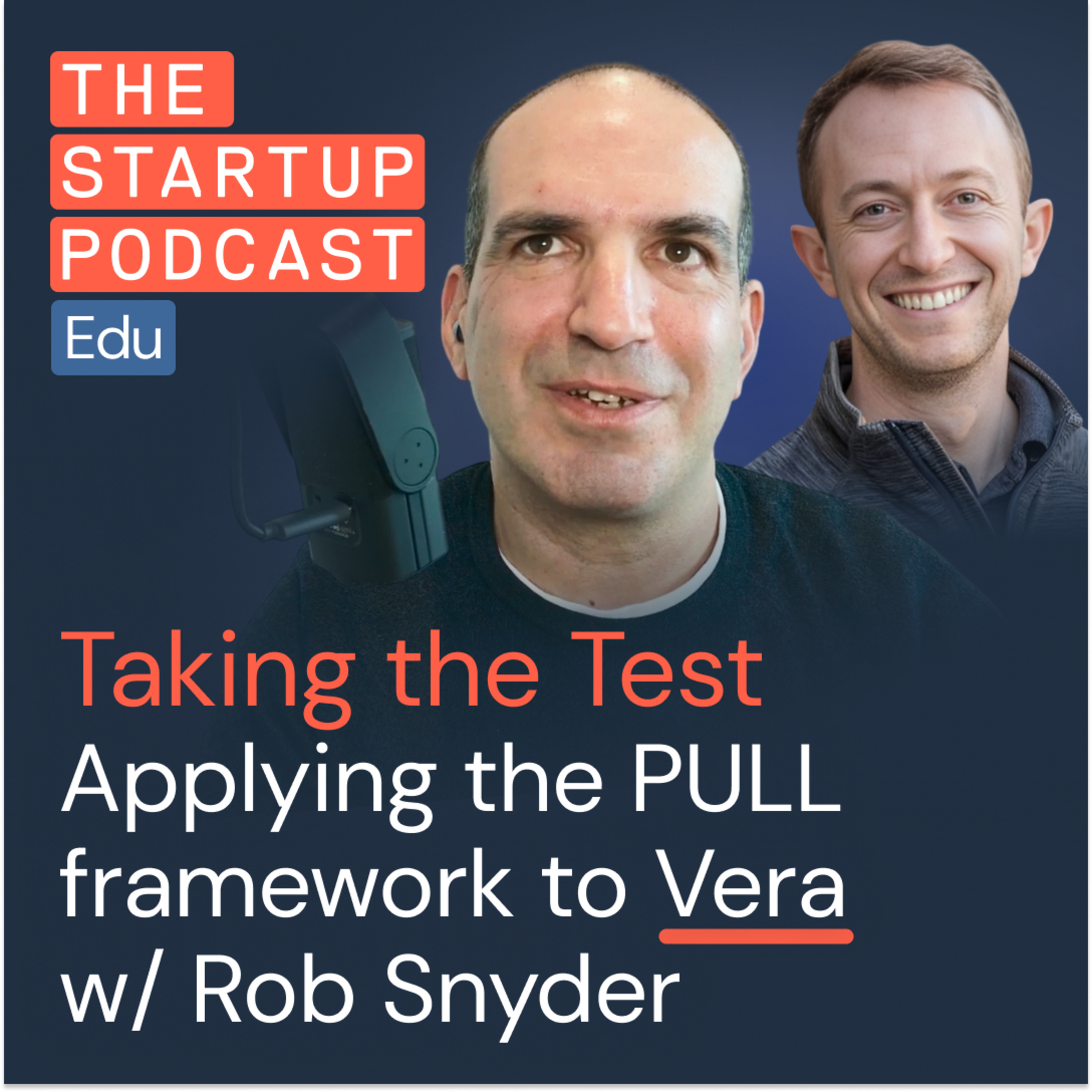
Rob Snyder demonstrates his PULL framework in real-time – using Yaniv's startup
2w ago00:52:03Tap to summarizeA few weeks ago, Rob Snyder came on the pod to introduce his PULL framework for identifying real product-market fit. Now, Yaniv turns the tables and subjects his own startup, Vera, to the same scrutiny. Yaniv and Rob strip away the noise around Vera's mission to help adult children care for aging parents and get brutally honest about where the product actually has pull, where it doesn't, and what needs to change immediately. They identify a specific, unavoidable moment in the customer journey and pinpoint that is where the real business begins, and discuss more macro issues, such as AI vs. human expertise, founder blind spots, and more. In this episode, you will:Understand the difference between an aspiration and a project, and why this distinction is vital for PULLLearn how the PULL framework cuts through startup theory to identify the exact moment when customers will actually pull your product from your hands, before they have to wait for a crisisDiscover why Vera's original problem was too abstract, and how narrowing to a specific market segment with intense, unavoidable need becomes your path to revenue and growthHear the truth behind what really pushes your customers to adopt earlier: reality does the convincing, not your marketingUnderstand the challenge of reputation in AI: how do human-shaped applications build trust the way human experts do?Timestamps00:00 Coming Up01:38 On Today's Show: Yaniv Applies PULL to Vera04:42 Defining PULL and Projects05:54 Vera's Customer Goals08:00 Unavoidable Moments and Crisis11:25 Real Users and Traction16:58 Mission vs Push Marketing24:07 Why Isn't Google Enough?28:21 Nailing the Specific Project34:02 Testing Market With Ads37:06 Bill Gates And AI Shift38:47 Human Shaped Software Design43:45 Trust And Reputation In Bots48:48 About The BookResources mentioned in this episodeThe Power of Pull by Rob Snyder: https://www.amazon.com/Power-Pull-Customer-Successful-Founders/dp/1541705955Rob Snyder's website: https://www.robsnyder.orgVera (Yaniv's startup helping families care for aging parents): https://vera.guideThe PactHonor the Startup Podcast Pact! If you have listened to TSP and gotten value from it, please:Follow, rate, and review us in your listening appSecure your official TSP merchandise at https://shop.tsp.show/Follow us on YouTube for full video episodes: https://www.youtube.com/@startup-podcast Give us a public shout-out on LinkedIn or anywhere you have a social media followingKey linksThis episode of the Startup Podcast is sponsored by .tech domains. Forget weird prefixes and creative misspellings; the availability for .tech domains is simply way better than .com. For a clean and memorable name, go to https://get.tech/tspThis episode of the Startup Podcast is sponsored by Vanta. Vanta helps businesses get and stay compliant by automating up to 90% of the work for the most in demand compliance frameworks. With over 200 integrations, you can easily monitor and secure the tools your business relies on. For a limited time offer of US$1,000 off, go to https://www.vanta.com/tspThe Startup Podcast website: https://www.tsp.show/episodes/Learn more about Chris and YanivWork 1:1 with Chris: http://chrissaad.com/advisory/Follow Chris on Linkedin: https://www.linkedin.com/in/chrissaad/Follow Yaniv on Linkedin: https://www.linkedin.com/in/ybernstein/Producer: Justin McArthur https://www.linkedin.com/in/justin-mcarthurAssistant Producer: Steph Hefferan https://www.linkedin.com/in/steph-heff/Intro Voice: Jeremiah Owyang https://web-strategist.com/
Transcribe →
Why you should run your startup like a poker player (Replay)
3w ago00:43:38Tap to summarizeThis is a remastered Replay of one of our most popular episodes, "What Startups Can Learn From Poker", which was originally published on 21 December 2022. Enjoy!Original description: All season, Chris and Yaniv have talked about the mindset that is needed to succeed at venture-backed startups. For the final episode of Season 1, we tie it all together with an analogy: tournament poker. It is amazing how many things poker and startups have in common, so in this episode we use the lens of poker to discuss the big picture of how to approach building a successful startup. We dive into each of the following commonalities between poker and startup life:01:56 Playing an iterative game10:00 Burning cash13:31 Making decisions based on uncertain information18:46 Progressive learning28:44 Avoiding 'resulting'35:02 The relatively low probability of a successful outcome (and why that’s OK!)This episode was inspired by the book 'Thinking in Bets' by former pro poker player Annie Duke.The PactHonor the Startup Podcast Pact! If you have listened to TSP and gotten value from it, please:Follow, rate, and review us in your listening appSecure your official TSP merchandise at https://shop.tsp.show/Follow us on YouTube for full video episodes: @startup-podcastGive us a public shout-out on LinkedIn or anywhere you have a social media followingKey linksThis episode of the Startup Podcast is sponsored by .tech domains. Forget weird prefixes and creative misspellings; the availability for .tech domains is simply way better than .com. For a clean and memorable name, go to https://get.tech/tspThe Startup Podcast website: https://www.tsp.show/episodes/Learn more about Chris and YanivWork 1:1 with Chris: http://chrissaad.com/advisory/Follow Chris on Linkedin: https://www.linkedin.com/in/chrissaad/Follow Yaniv on Linkedin: https://www.linkedin.com/in/ybernstein/Producer: Justin McArthur https://www.linkedin.com/in/justin-mcarthurAssistant Producer: Steph Hefferan https://www.linkedin.com/in/steph-heff/Intro Voice: Jeremiah Owyang https://web-strategist.com/#TheStartupPodcast #startups #poker #texasholdem #investment #venturecapital #resulting #probability #ChrisSaad #YanivBernstein
Transcribe →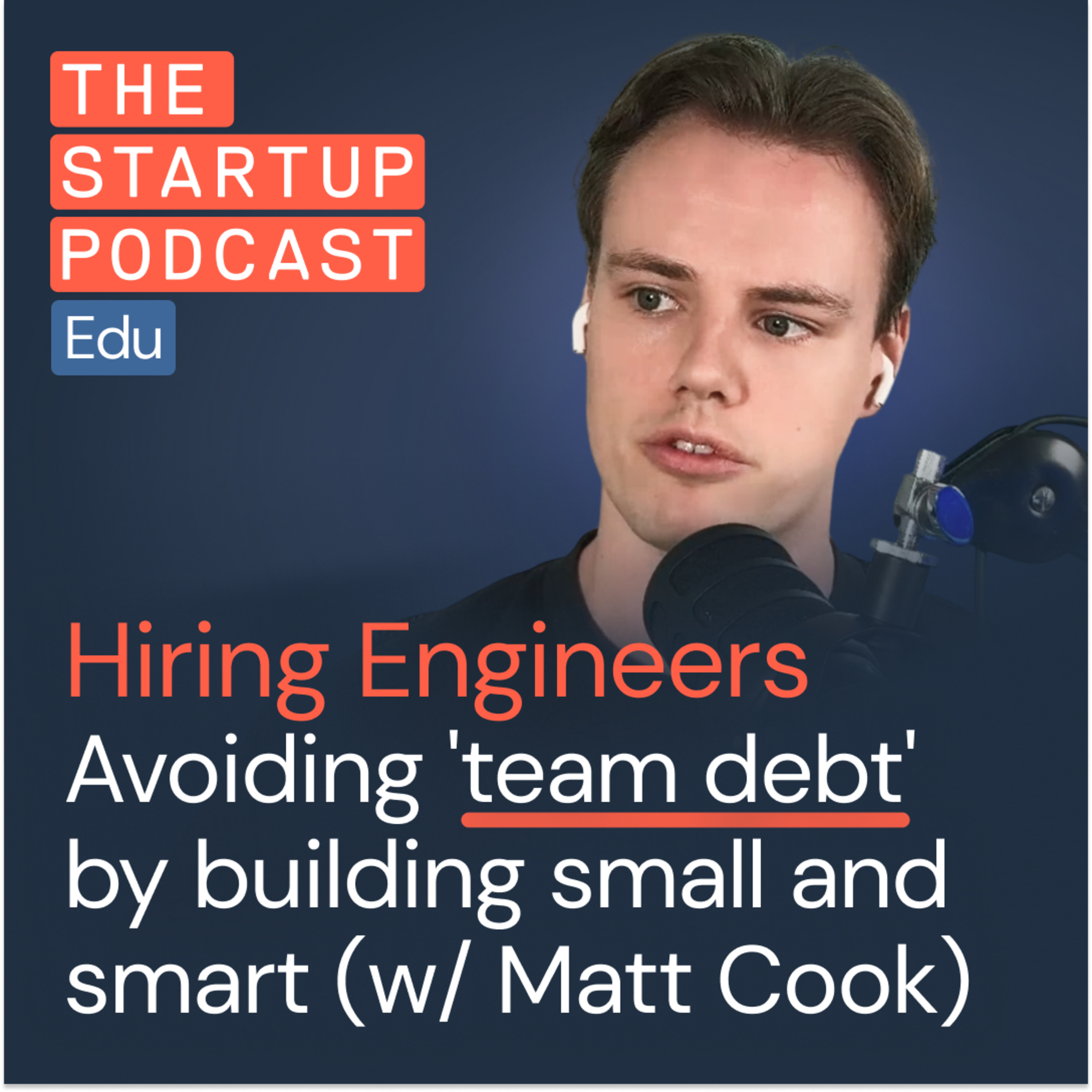
Avoiding ‘team debt’ by building small and smart (w/ Matt Cook)
4w ago00:56:20Tap to summarizeIs hiring a person still your default answer to a problem? For a growing number of startups, it shouldn't be.In this episode, Yaniv Bernstein is joined by returning guest Matt Cook, co-founder of Scouut, one of Australia's most respected engineering recruiters for early-stage startups, to unpack what's changed in engineering hiring since Matt's last visit. They cover ‘team debt’ (the AI-era sequel to tech debt), why AI is acting as an appetite suppressant for headcount, why the best engineers are now worth $400K+, and why the ‘software factory builder’ is becoming the most sought-after hire in tech.In this episode, you will:Understand "team debt", and why teams built to solve today's problems are already becoming obsoleteLearn why "removing the crutch" (like scrapping a QA gating function) forces the kind of AI-native change that timid, incremental adjustments never willDiscover why most startups were already overstaffed before AI, and why AI now acts as an ‘appetite suppressant’ for hiring rather than just an efficiency toolHear why hiring should now be treated as a last resort, and what that actually means in practice for foundersUnderstand why compensation banding and headcount-based budgeting are breaking down, and what smart companies are replacing them withLearn about the rise of the ‘software factory builder’: the rare, highly-paid engineer who uses their judgment to build airtight, AI-based infrastructure the rest of the team can lean onTimestamps00:00 Coming Up...00:58 On Today's Show: Matt Cook on 'Team Debt'02:36 What is Team Debt?05:12 Refocusing on AI Native Solutions10:40 Unlearning Old Hiring Ladders12:04 Why Companies Are Oversized14:59 AI, the 'Corporate Ozempic'19:25 Layoffs and Team Composition24:02 Disrupting Yourself at Series B28:12 The Salary Race for AI Engineers34:01 Limitations of Headcount Budgeting38:16 How Downsizing Can Help You Grow41:13 ClickUp's 'Hail Mary' Pivot44:26 Software Factory Builders and 'Forward Deployed' Automation49:14 Maintaining Safe Internal Software54:25 Closing ThoughtsResources mentionedScouut (Matt Cook's engineering recruitment firm for early-stage startups): https://scouut.com.au/Matt Cook on LinkedIn: https://www.linkedin.com/in/matthewmarkcook/ 'Corporate Ozempic' by Scott Galloway — the essay behind the AI/hiring analogy Yaniv references: https://www.profgalloway.com/corporate-ozempic/The PactHonor the Startup Podcast Pact! If you have listened to TSP and gotten value from it, please:Follow, rate, and review us in your listening appSecure your official TSP merchandise at https://shop.tsp.show/Follow us on YouTube for full video episodes: https://www.youtube.com/@startup-podcast Give us a public shout-out on LinkedIn or anywhere you have a social media followingKey linksThis episode of the Startup Podcast is sponsored by .tech domains. Forget weird prefixes and creative misspellings; the availability for .tech domains is simply way better than .com. For a clean and memorable name, go to https://get.tech/tspThis episode of the Startup Podcast is sponsored by Vanta. Vanta helps businesses get and stay compliant by automating up to 90% of the work for the most in demand compliance frameworks. With over 200 integrations, you can easily monitor and secure the tools your business relies on. For a limited time offer of US$1,000 off, go to https://www.vanta.com/tsp The Startup Podcast website: https://www.tsp.show/episodes/Learn more about Chris and YanivWork 1:1 with Chris: http://chrissaad.com/advisory/Follow Chris on Linkedin: https://www.linkedin.com/in/chrissaad/Follow Yaniv on Linkedin: https://www.linkedin.com/in/ybernstein/Producer: Justin McArthur https://www.linkedin.com/in/justin-mcarthurAssistant Producer: Steph Hefferan https://www.linkedin.com/in/steph-heff/Intro Voice: Jeremiah Owyang https://web-strategist.com/
Transcribe →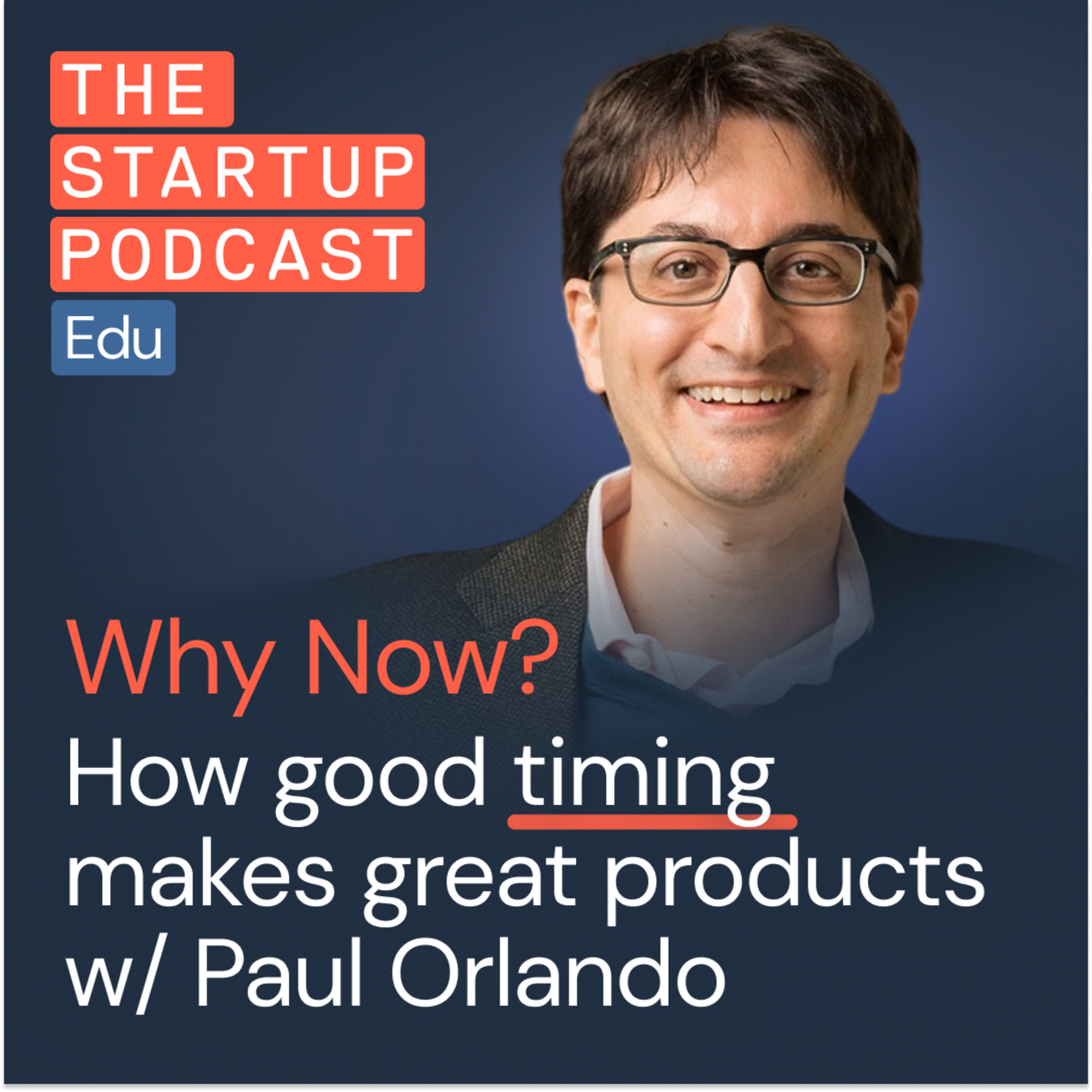
How good timing makes great products w/ Paul Orlando
Jul 600:55:56Tap to summarizeEvery startup pitch deck has a "why now" slide. Most of them are nonsense, barely considered, and only there to tick a box.But timing is more than a slide, it can make or break a company. It’s the difference between pets.com and the trillion-dollar company selling the exact same idea a decade later.In this episode, Yaniv Bernstein sits down with Paul Orlando, who has built four startup accelerators supporting over 300 companies, including Hong Kong's first accelerator and a program in Rome run in partnership with the Vatican, and has taught entrepreneurship at USC for over a decade, where he also runs one of LA's largest startup incubators. Paul has spent years obsessing over a single question: why do some ideas succeed while near-identical ones fail years earlier? The answer became his book, ‘Why Now? How Good Timing Makes Great Products.’In this episode, you will:Learn Paul's framework of timing drivers, and the five that show up again and again: technology, social/behavioral change, regulation, installed base, and crisisWalk through the YouTube case study in detail to see how broadband penetration, digital camera adoption, and falling storage costs converged to make 2005 the right year, after the identical idea failed less than a decade earlierDiscover why first-mover advantage is much narrower than founders assume, and the two specific conditions (locking in customers, locking out competitors) required for it to actually workGet a framework for balancing founder agency against timing, because you can't will your way into good timing, but you also can't wait passively for the perfect moment to arriveTimestamps00:00 Coming Up...01:04 On Today's Show: Why Timing Matters01:44 Guest Intro: Paul Orlando02:42 Is 'Why Now' Predictable?05:40 Paul's Timing Drivers Framework08:44 Case Study: YouTube's Market Timing11:47 Business Model Shifts15:16 Case Study: Pets.com Unit Economics22:16 Case Study: AI Vibe Coding24:11 What Are 'Sleeping Beauty' Startups?27:46 Incorporating AI into Timing Drivers28:52 Collapse of Build Costs33:34 Case Study: Vera and Unit Economics of Voice35:15 False 'Why Now' Risks37:46 First Mover Reality40:33 Reid Hoffman on Blitzscaling41:49 Case Study: AT&T's Picturephone and Mobile Telephony46:31 Lessons on Failure and Agency54:09 Closing ThoughtsResources mentioned'Why Now?: How Good Timing Makes Great Products' by Paul Orlando: https://www.amazon.com/Why-Now-Timing-Makes-Products/dp/B0CYXSNMT3Paul's website, Startups Unplugged: https://startupsunplugged.comPaul on LinkedIn: https://www.linkedin.com/in/porlandoPaul on X/Twitter: https://twitter.com/porlandoThe PactHonor the Startup Podcast Pact! If you have listened to TSP and gotten value from it, please:Follow, rate, and review us in your listening appSecure your official TSP merchandise at https://shop.tsp.show/Follow us on YouTube for full video episodes: https://www.youtube.com/channel/UCNjm1MTdjysRRV07fSf0yGgGive us a public shout-out on LinkedIn or anywhere you have a social media followingKey linksThis episode of the Startup Podcast is sponsored by .tech domains. Forget weird prefixes and creative misspellings; the availability for .tech domains is simply way better than .com. For a clean name that highlights your tech credentials, get a .tech domain at your favorite registrar.The Startup Podcast website: https://www.tsp.show/episodes/Learn more about Chris and YanivWork 1:1 with Chris: http://chrissaad.com/advisory/Follow Chris on Linkedin: https://www.linkedin.com/in/chrissaad/Follow Yaniv on Linkedin: https://www.linkedin.com/in/ybernstein/Producer: Justin McArthur https://www.linkedin.com/in/justin-mcarthurAssistant Producer: Steph Hefferan https://www.linkedin.com/in/steph-heff/Intro Voice: Jeremiah Owyang https://web-strategist.com/
Transcribe →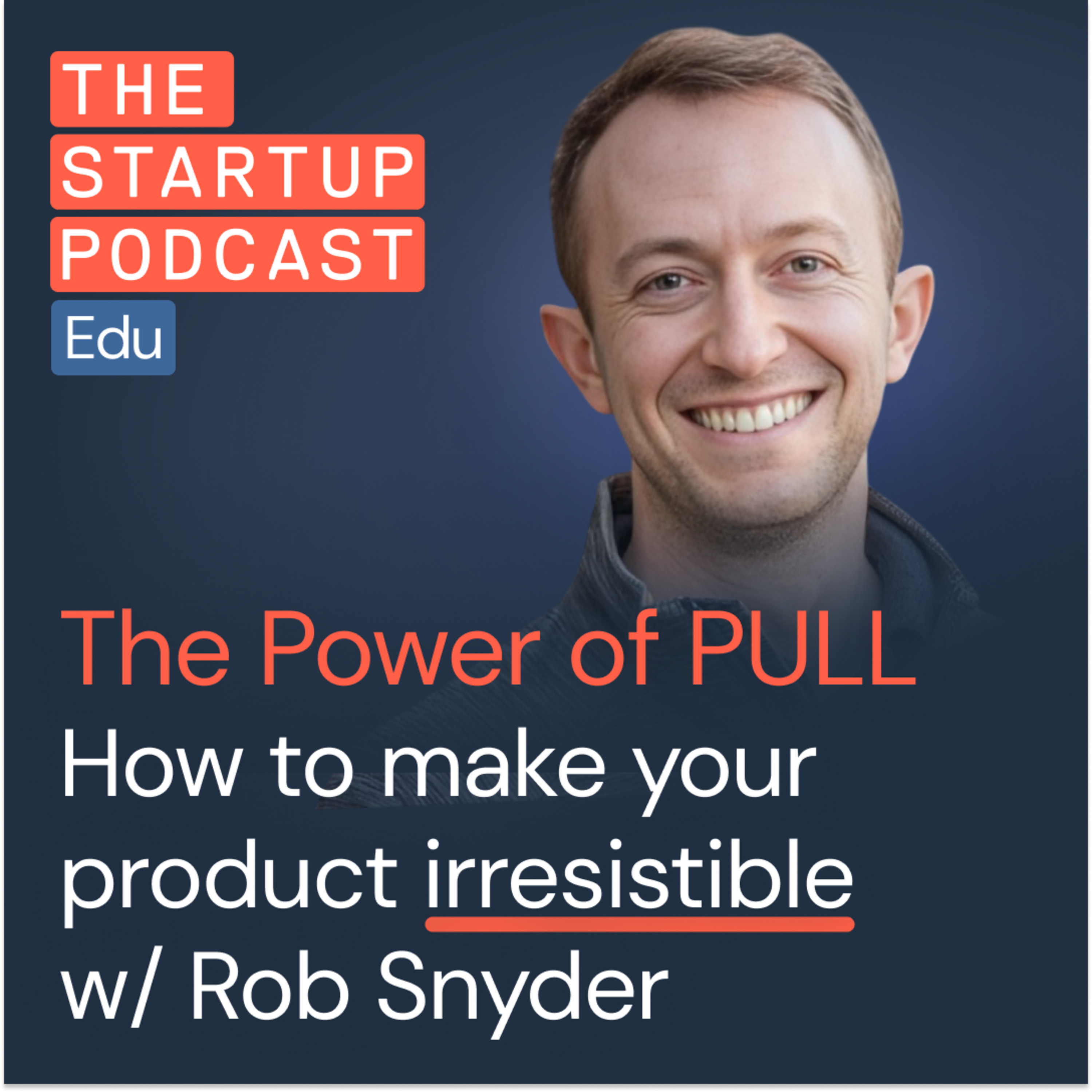
Make your product irresistible: Rob Snyder on the PULL framework
Jun 2900:53:55Tap to summarizeYou’ve done all the research, implemented every startup strategy you could find, but your product just isn’t selling. Where do you start looking for the problem? And how do you identify and implement the solution?In this episode, Yaniv Bernstein sits down with Rob Snyder – serial founder, fellow at Harvard Innovation Labs, operating partner on the venture side, and now author of 'The Power of PULL' – to discuss why most founders have fundamentally misunderstood demand, and how to accurately pinpoint it. In this episode, you will:Understand why pain points and problems alone are not demand, and why customers can have them indefinitely without ever buying anythingLearn the PULL framework (Project, Unavoidable, List of options, Limitations): the four conditions that must all be present before a customer will rip a product out of your handsHear how startup Ruby went from 10 nodding sales calls with no closes to rapid growth, simply by identifying the specific moment when their ICP's project became truly unavoidableGet Rob's two-step pull-based sales script: how to get a prospect to monologue their own pull framework back at you, and how to pitch in a way that fits their world rather than your visionTimestamps00:00 Coming Up...00:51 On Today's Show: Rob Snyder on When Sales Works03:24 Why 'Demand' Is More Than Pain05:51 What Are Other Frameworks Missing?12:36 'Vitamins vs. Painkillers' 16:12 What is the PULL Framework?21:07 Case Study: Data Migration (Ruby)26:04 Case Study: Fundraising (Campground)29:11 Where Interviews Go Wrong35:19 Practice Exercise: Rob Sells Yaniv The Book40:14 Debrief: Why Listening Wins42:48 How to Spot Real Buying Signals43:58 Reverse Engineering Fast Deals47:58 Founder Mindset and Sanity50:54 Closing Thoughts: "Get Out Of The Building"Resources in this episodeThe Power of Pull by Rob Snyder: https://www.amazon.com/Power-Pull-Customer-Successful-Founders/dp/1541705955Rob's website: https://www.robsnyder.orgRob on LinkedIn: https://www.linkedin.com/in/rsnyder1Rob's Substack, 'The Physics of Startups': https://thephysicsofstartups.substack.comEric Ries's TSP episode: https://youtu.be/HQ7cP1lGyiM April Dunford's TSP episode: https://youtu.be/QC4cKxlW81sMark Roberge's TSP episode (also discusses product-market fit): https://youtu.be/j_UeeEn7p9o The PactHonor the Startup Podcast Pact! If you have listened to TSP and gotten value from it, please:Follow, rate, and review us in your listening appSecure your official TSP merchandise at https://shop.tsp.show/Follow us here on YouTube for full-video episodes: https://www.youtube.com/channel/UCNjm1MTdjysRRV07fSf0yGgGive us a public shout-out on LinkedIn or anywhere you have a social media followingKey linksThis episode of the Startup Podcast is sponsored by .tech domains. Forget weird prefixes and creative misspellings; the availability for .tech domains is simply way better than .com. For a clean and memorable name, go to https://get.tech/tspThis episode of the Startup Podcast is sponsored by Vanta. Vanta helps businesses get and stay compliant by automating up to 90% of the work for the most in demand compliance frameworks. With over 200 integrations, you can easily monitor and secure the tools your business relies on. For a limited time offer of US$1,000 off, go to https://www.vanta.com/tsp The Startup Podcast website: https://www.tsp.show/episodes/Learn more about Chris and YanivWork 1:1 with Chris: http://chrissaad.com/advisory/Follow Chris on Linkedin: https://www.linkedin.com/in/chrissaad/Follow Yaniv on Linkedin: https://www.linkedin.com/in/ybernstein/Producer: Justin McArthur https://www.linkedin.com/in/justin-mcarthurAssistant Producer: Steph Hefferan https://www.linkedin.com/in/steph-heff/Intro Voice: Jeremiah Owyang https://web-strategist.com/
Transcribe →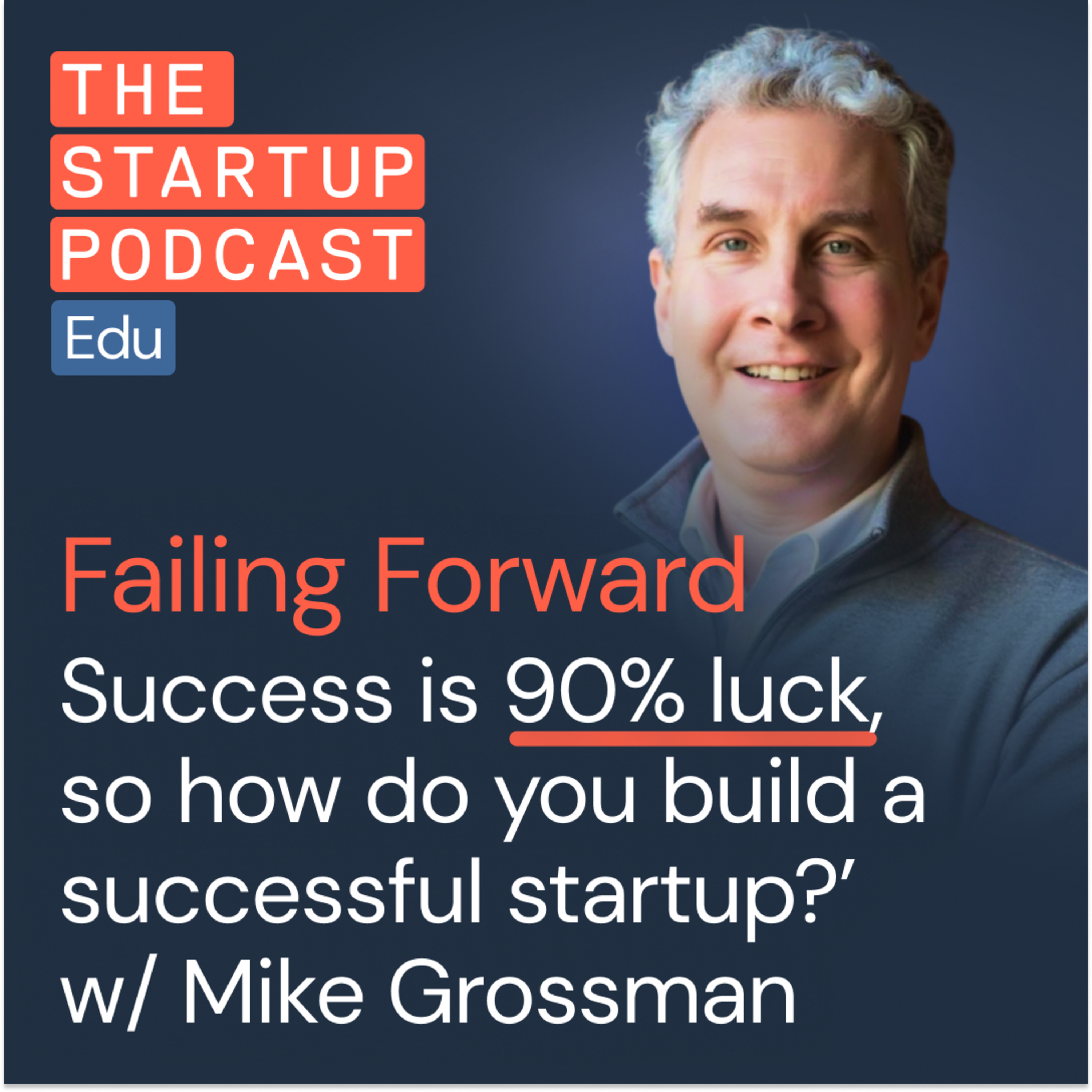
Success is 90% luck. So how do you build a successful startup? (w/ Mike Grossman)
Jun 2200:54:35Tap to summarizeFounders are told that if they work hard, build the right product and hire well, the outcome will follow. It's motivating. It's clean. And according to today's guest, it's mostly wrong.Mike Grossman has been CEO of six venture-backed Silicon Valley companies. Across them, he tried 18 different business models. Twelve failed. Five required layoffs. Three lived in persistent existential crisis. And yet all six were eventually acquired. Mike's story is one that far more founders actually live, but almost nobody tells.In this episode, Yaniv Bernstein sits down with Mike to dig into his new book, Failure Is An Option: a candid 44-essay collection drawn from three decades in the trenches. They explore the uncomfortable truth that luck dominates outcomes more than skill, why your business model is not your business, and how radical honesty is the most underrated leadership tool in a founder's kit.In this episode, you will:Learn about 'resulting': why confusing luck for skill costs founders in both directionsHear how Mike pivoted Tempo from building a Visa/Mastercard competitor to partnering with Mastercard, only to have the entire model wiped out overnight by a Senate amendmentDiscover the 'dreamers vs soldiers' framework for building teams that hold together when adversity strikesHear Mike's hard-won playbook for layoffs: why founders almost always cut too little, too late; what day two feels like; and why a smaller, denser team is often more productiveGet a clear framework for staying accountable for the process when the outcomes aren't in your controlTimestamps:00:00 Coming Up...00:34 On Today's Show: Mike Grossman on Managing Failure02:02 The Role of Luck and Timing03:41 Poker Strategy and 'Resulting'08:55 "The Business Model Is Not The Business"11:27 Tempo's Pivot13:28 Why Values Matter In A Crisis19:21 Talent Density and Layoffs: Cut Once, Cut Deep28:15 How AI Changes Hiring Pace32:15 Leading with 'Radical Honesty'36:33 Dreamers vs. Soldiers38:02 Managing Investors41:43 Luck, Agency, Process48:39 About 'Failure Is An Option'51:29 Closing ThoughtsResources mentioned'Failure Is An Option' by Mike Grossman: https://www.failureisanoption.comMike Grossman's Substack: https://failureisanoption.substack.comThinking in Bets by Annie Duke (the 'resulting' concept discussed): https://www.amazon.com/Thinking-Bets-Making-Smarter-Decisions/dp/0735216355'Incorruptible' by Eric Ries: https://www.incorruptible.co/Eric Ries's TSP episode: https://youtu.be/HQ7cP1lGyiM 'Powerful' by Patty McCord: https://www.amazon.com/Powerful-Building-Culture-Freedom-Responsibility/dp/1939714095Patty McCord's TSP episode: https://www.youtube.com/watch?v=BefnNLBEmXAThe Durbin Amendment (the legislation that killed Tempo): https://en.wikipedia.org/wiki/Durbin_amendmentThe PactHonor the Startup Podcast Pact! If you have listened to TSP and gotten value from it, please:Follow, rate, and review us in your listening appSecure your official TSP merchandise at https://shop.tsp.show/Follow us here on YouTube for full-video episodes: https://www.youtube.com/@startup-podcastGive us a public shout-out on LinkedIn or anywhere you have a social media followingKey linksThis episode of the Startup Podcast is sponsored by .tech domains. Forget weird prefixes and creative misspellings; the availability for .tech domains is simply way better than .com. For a clean name that highlights your tech credentials, get a .tech domain at your favorite registrar.The Startup Podcast website: https://www.tsp.show/episodes/Learn more about Chris and YanivWork 1:1 with Chris: http://chrissaad.com/advisory/Follow Chris on Linkedin: https://www.linkedin.com/in/chrissaad/Follow Yaniv on Linkedin: https://www.linkedin.com/in/ybernstein/Producer: Justin McArthur https://www.linkedin.com/in/justin-mcarthurAssistant Producer: Steph Hefferan https://www.linkedin.com/in/steph-heff/Intro Voice: Jeremiah Owyang https://web-strategist.com/
Transcribe →
Insiders React: Anthropic’s Fable, Mythos explained + SpaceX’s record-breaking IPO
Jun 1600:52:15Tap to summarizeThe Startup Podcast is back for its 300th episode – and it’s an absolute doozy. In today’s Reacts, hosts Chris Saad and Yaniv Bernstein break down how Anthropic became the new industry leader in AI, and why betting on coding as the 'meta domain' of AI turned out to be one of the most consequential product decisions of the decade.They also dig into Mythos and the newly released Claude Fable: what makes Fable different, whether it has something approaching genuine intelligence, and what the Anthropic 'strategy dividend' (per Ben Thompson of Stratechery) actually means for the industry.Then: SpaceX’s record-breaking IPO. With a reported valuation of around $1.88 trillion and a prospectus that talks more about AI than rockets, Chris and Yaniv ask the obvious question: is it worth it?In this episode:How product discipline and a bet on coding put Anthropic in frontStrategy dividends: how Anthropic's genuine commitment to safety became both a real constraint and a powerful marketing asset at the same timeClaude’s new models, Fable and Mythos: what's actually changed?Why Chris thinks the SpaceX IPO at ~90x revenue is a roll-up of Elon Musk's 'dead bodies'Liquidity risk: with SpaceX, Google and Anthropic all raising simultaneously, is there enough liquidity in the market?Timestamps00:00 Coming Up...00:39 On Today's Show: Chris returns, Anthropic’s Mythos/Fable, SpaceX IPO02:30 Anthropic surges ahead of OpenAI04:16 Why coding is a 'meta-advantage' for AI07:24 OpenAI’s product turmoil11:04 Are OpenAI competing with Anthropic, or Google?13:25 Anthropic’s enterprise strategy17:06 Mythos: ‘Safety marketing’ or ‘safety dividends’?23:24 Are Anthropic the good guys?26:32 Fable: “Mythos with a muzzle”28:29 Does AI only need to beat the average human?31:23 Yaniv’s experiences with Fable32:46 Reasoning logs and self-correction34:27 Is SpaceX over-valued? (Yes.)39:32 SpaceX’s moats and growth potential43:02 Why ‘second mover advantage’ sometimes wins46:05 Will there be a crash? Chris predicts a liquiditycrunch50:31 Closing ThoughtsResources mentioned in this episodeDario Amodei's essay, 'Machines of Loving Grace': https://darioamodei.com/machines-of-loving-graceBen Thompson's Stratechery: https://stratechery.comProject Glasswing (Anthropic's restricted Mythos access program): https://www.anthropic.com/glasswingEric Ries on The Startup Podcast: https://youtu.be/HQ7cP1lGyiMThe PactHonor the Startup Podcast Pact! If you have listened to TSP and gotten value from it, please:Follow, rate, and review us in your listening appSecure your official TSP merchandise at https://shop.tsp.show/Follow us on YouTube for full video episodes: https://www.youtube.com/@startup-podcastGive us a public shout-out on LinkedIn or anywhere you have a social media followingKey linksThis episode of the Startup Podcast is sponsored by .tech domains. Forget weird prefixes and creative misspellings; the availability for .tech domains is simply way better than .com. For a clean name that highlights your tech credentials, get a .tech domain at your favorite registrar.This episode of the Startup Podcast is sponsored by Vanta. Vanta helps businesses get and stay compliant by automating up to 90% of the work for the most in demand compliance frameworks. With over 200 integrations, you can easily monitor and secure the tools your business relies on. For a limited time offer of US$1,000 off, go to https://www.vanta.com/tsp The Startup Podcast website: https://www.tsp.show/episodes/Learn more about Chris and YanivWork 1:1 with Chris: http://chrissaad.com/advisory/Follow Chris on Linkedin: https://www.linkedin.com/in/chrissaad/Follow Yaniv on Linkedin: https://www.linkedin.com/in/ybernstein/Producer: Justin McArthur https://www.linkedin.com/in/justin-mcarthurAssistant Producer: Steph Hefferan https://www.linkedin.com/in/steph-heff/Intro Voice: Jeremiah Owyang https://web-strategist.com/
Transcribe →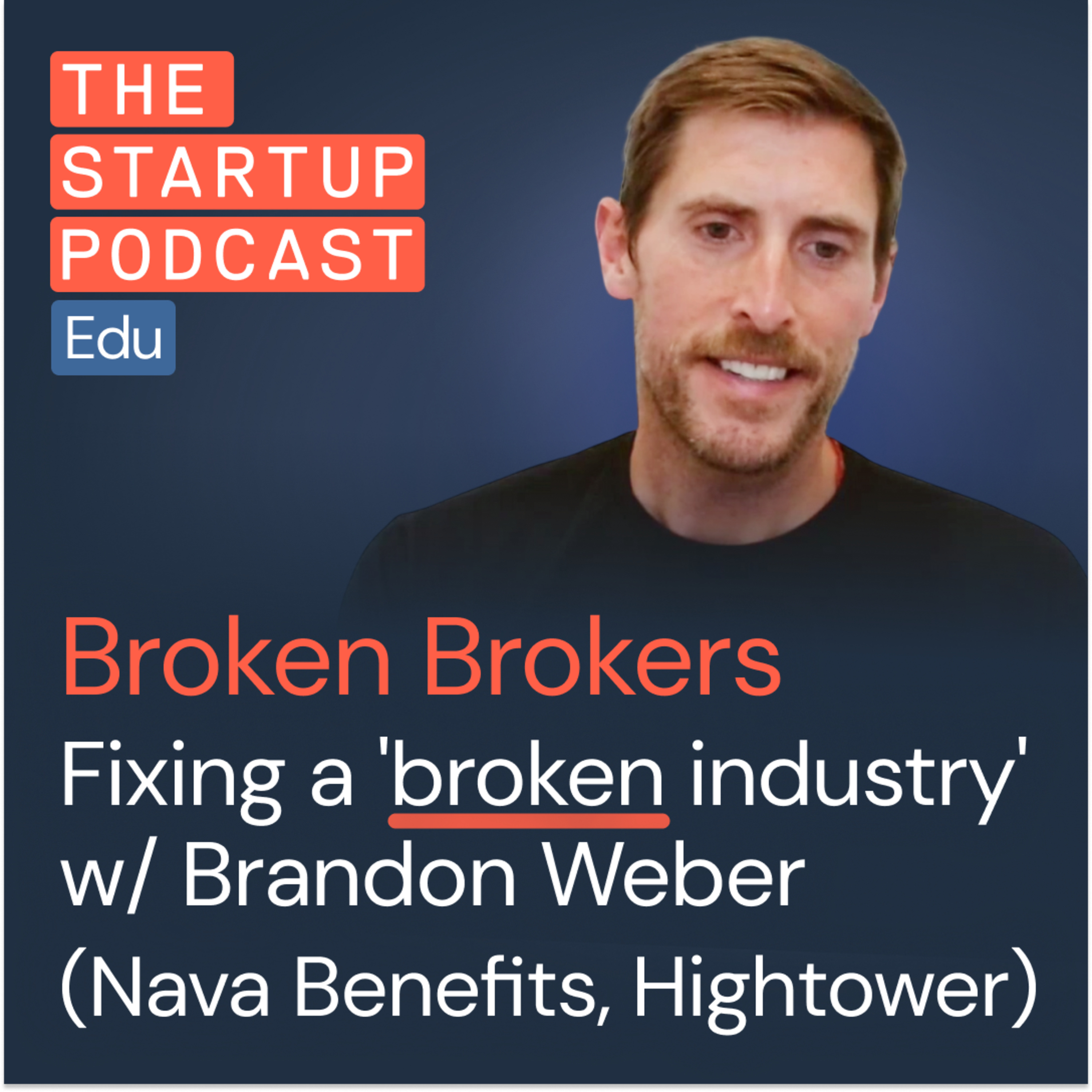
How to fix a 'broken industry' (w/ Brandon Weber – Nava Benefits, VTS, Hightower)
Jun 800:42:33Tap to summarizeEvery founder gets a version of the same advice: don't pick a fight with an entrenched industry. The incumbents have the relationships, the regulatory cover, the deep pockets - you'll bleed out trying.But some of the most interesting companies of the last decade were built ignoring that advice, winning over markets that were nearly impenetrable.In this episode, Yaniv Bernstein is joined by Brandon Weber - co-founder and CEO of Nava Benefits, a Series C-funded AI-powered health benefits brokerage. Before Nava, Brandon co-founded Hightower, a commercial real estate startup that merged with VTS and went on to run over half of all office buildings in the United States. Brandon has now done this twice in two completely different industries, and has developed a repeatable playbook for breaking into entrenched markets and using AI as a structural advantage.Yaniv and Brandon dig into what actually makes a market 'broken', why the entry point needs to be far narrower than most founders think, and how to build the conviction to keep going when a thousand people tell you it won't work. In this episode, you will:Understand the 'burning platform' signal - what makes a market 'broken', but worth spending a years breaking intoLearn why your entry point needs to be far narrower than feels comfortable, and how Brandon went from targeting 'the health insurance market' to 'employers with 50-500 employees who can't afford a dedicated benefits team'Hear why 'disrupting from within' is often smarter than disrupting head-on - and how Nava built a broker-shaped entity that the industry's immune system couldn't rejectDiscover how to design a human-AI system (what Brandon calls a 'cybernetic' service model) where agents handle 80-85% of the work and licensed professionals operate at the top of their licenseTimestamps00:00 Coming Up…00:45 On Today's Show: Brandon Weber on Fixing Broken Industries01:43 How To Spot Broken Markets03:59 Why Most Healthcare Startups Fail (Distribution)05:35 Lessons From Building Hightower and VTS08:41 How Do We Think Smaller? Finding the 'Narrow Wedge'10:57 What It Means To 'Disrupt From Within'16:53 Choosing the ICP18:35 The Innovator's Dilemma and Moving Upmarket22:57 Scaling with AI: A Business in Two Phases26:29 Service as a Software34:02 Attract and Hire Industry Insiders36:44 When to Acquire39:06 Closing AdviceResources mentioned in this episodeNava Benefits (Brandon's company): https://www.navabenefits.comGary Lo's previous TSP episode: https://youtu.be/jtMgd7Nv_HYThe Innovator's Dilemma by Clayton Christensen (framework discussed at length): https://www.amazon.com/Innovators-Dilemma-Revolutionary-Change-Business/dp/0062060244The PactHonor the Startup Podcast Pact! If you have listened to TSP and gotten value from it, please:Follow, rate, and review us in your listening appSecure your official TSP merchandise at https://shop.tsp.show/Follow us on YouTube for full-video episodes: https://www.youtube.com/@startup-podcastGive us a public shout-out on LinkedIn or anywhere you have a social media followingKey linksThis episode of the Startup Podcast is sponsored by .tech domains. Forget weird prefixes and creative misspellings; the availability for .tech domains is simply way better than .com. For a clean name that highlights your tech credentials, get a .tech domain at your favorite registrar.The Startup Podcast website: https://www.tsp.show/episodes/Learn more about Chris and YanivWork 1:1 with Chris: http://chrissaad.com/advisory/Follow Chris on Linkedin: https://www.linkedin.com/in/chrissaad/Follow Yaniv on Linkedin: https://www.linkedin.com/in/ybernstein/Producer: Justin McArthur https://www.linkedin.com/in/justin-mcarthurAssistant Producer: Steph Hefferan https://www.linkedin.com/in/steph-heff/Intro Voice: Jeremiah Owyang https://web-strategist.com/
Transcribe →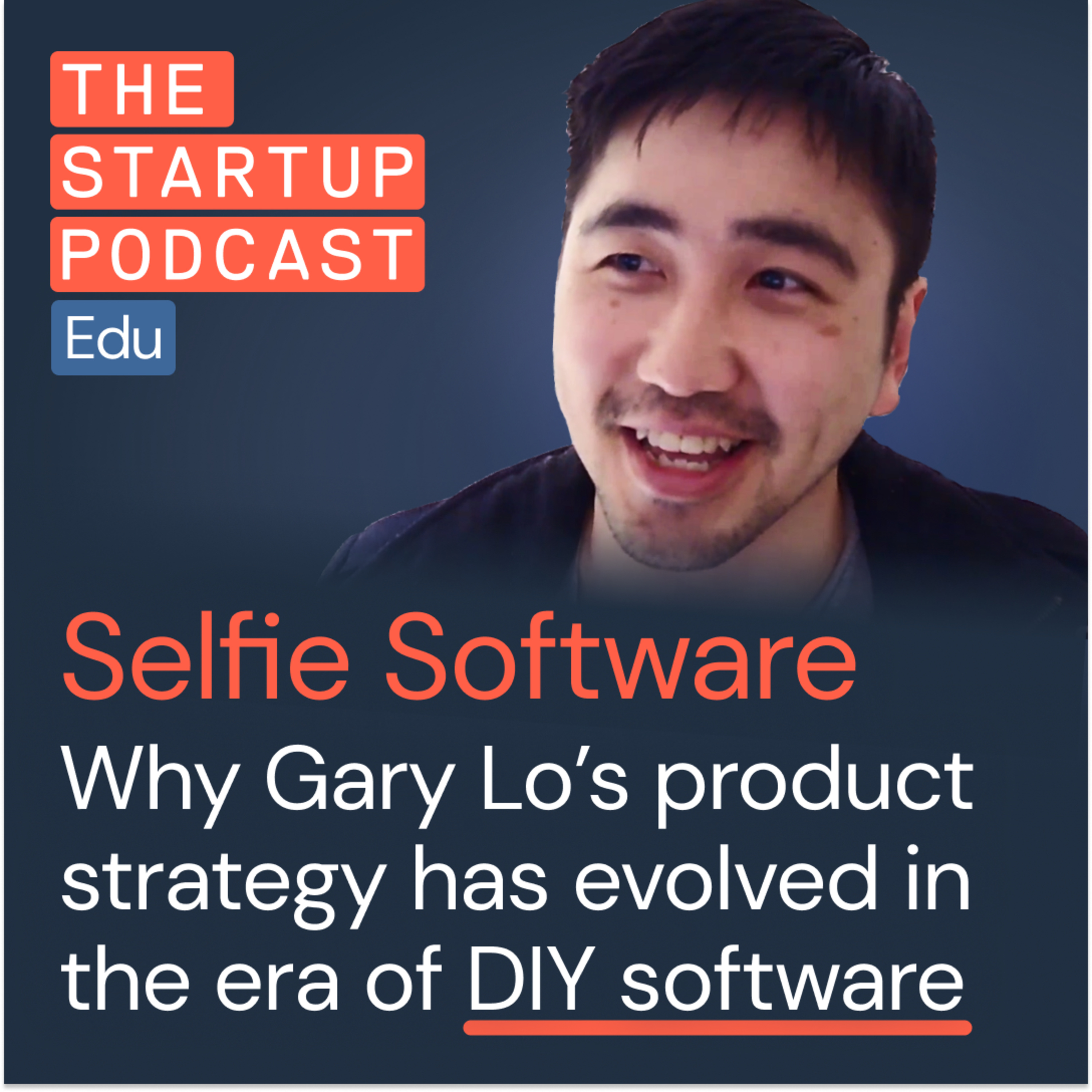
Why Gary Lo's product strategy has evolved in the era of DIY software
Jun 100:52:40Tap to summarizeWhat if writing software became as easy as taking a selfie?This episode, Yaniv Bernstein sits down with Gary Lo - founder of OpenBA and one of the sharpest AI-and-startups thinkers Yaniv knows - to discuss the concept of 'selfie software': disposable, hyper-personal, AI-generated tools that anyone can create for themselves, with no hand-written code.AI-generated tools like these are changing the startup landscape. While founders now have more tools at their disposal, it's now necessary than ever to create a product that truly disrupts the market.Gary and Yaniv discuss all of this and more, likening Claude and ChatGPT to Windows and Mac, and exploring what this tech landscape means if you're building a software startup today.In this episode, you will:Understand the 'selfie software' concept: why AI is making software disposable, personal, and low-stakes, and what that means for the market you're building inLearn why AI platforms are forcing startups to rethink whether they should build on their own infrastructure or embed into Claude and ChatGPT insteadHear Gary's 'burn it down' exercise: how to identify which parts of your product are genuinely defensible, and which will simply catch fire in the next AI waveUnderstand why software engineering isn't dead, but the problems worth solving with it have fundamentally shiftedTimestamps00:00 Coming Up...01:09 On Today's Show: Gary Lo on 'Selfie Software'02:48 About Gary03:16 How 'Hyper-Personalized' AI Is Like Photography05:36 Gary's Real Estate Workflow (OpenBA)07:29 Defining 'Selfie Software': Why Custom Tools Win10:33 So... Is It Bad Software?13:29 'Can’t You Just Add This One Thing...'15:30 When Personalization Becomes Bloat17:42 Working In-App with Anthropic and OpenAI APIs20:29 Token Economics and Moats25:28 Microsoft's Lessons in Platform Power30:27 But What If Anthropic Comes For My Vertical?32:48 How Open Source Keeps AI in Check35:18 Unlearning and Rebuilding39:05 Gary's 'Burn It Down' Test44:01 Is Software Engineering Dead? (No.)50:17 Closing ThoughtsResources in this episodeGary Lo's previous TSP episode (on OpenClaw and Claude Cowork): https://youtu.be/V3YFghiy8p0 Garry Tan's gstack: https://github.com/garrytan/gstack Andrej Karpathy on Software 2.0: https://karpathy.medium.com/software-2-0-a64152b37c35 Vera (Yaniv's startup, AI-supported guidance for people caring for ageing parents): https://vera.guideThe PactHonor the Startup Podcast Pact! If you have listened to TSP and gotten value from it, please:Follow, rate, and review us in your listening appSecure your official TSP merchandise at https://shop.tsp.show/Follow us here on YouTube for full-video episodes: https://www.youtube.com/channel/UCNjm1MTdjysRRV07fSf0yGgGive us a public shout-out on LinkedIn or anywhere you have a social media followingKey linksThis episode of the Startup Podcast is sponsored by .tech domains. Forget weird prefixes and creative misspellings; the availability for .tech domains is simply way better than .com. For a clean name that highlights your tech credentials, get a .tech domain at your favorite registrar.This episode of the Startup Podcast is sponsored by Vanta. Vanta helps businesses get and stay compliant by automating up to 90% of the work for the most in demand compliance frameworks. With over 200 integrations, you can easily monitor and secure the tools your business relies on. For a limited time offer of US$1,000 off, go to https://www.vanta.com/tsp The Startup Podcast website: https://www.tsp.show/episodes/Learn more about Chris and YanivWork 1:1 with Chris: http://chrissaad.com/advisory/Follow Chris on Linkedin: https://www.linkedin.com/in/chrissaad/Follow Yaniv on Linkedin: https://www.linkedin.com/in/ybernstein/Producer: Justin McArthur https://www.linkedin.com/in/justin-mcarthurAssistant Producer: Steph Hefferan https://www.linkedin.com/in/steph-heff/Intro Voice: Jeremiah Owyang https://web-strategist.com/
Transcribe →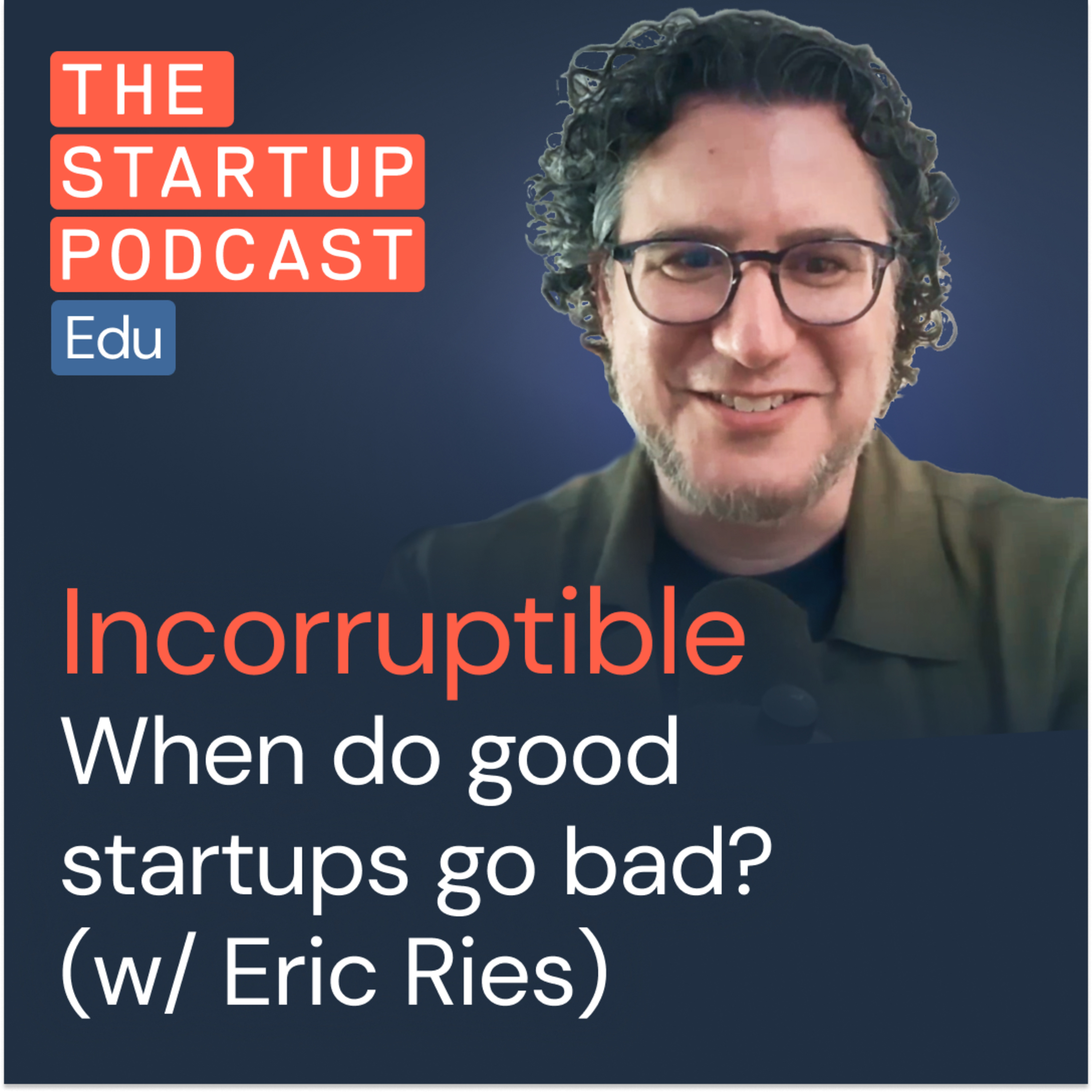
Author Eric Ries (The Lean Startup) on how to build an incorruptible company
May 2500:57:05Tap to summarizeMost founders set out to build something that matters: a company that’s aligned with their mission, now and forever. But what if the very systems we use to build ‘real’ companies are the thing that corrupts them?In this episode, Yaniv Bernstein is joined by Silicon Valley legend Eric Ries author of the era-defining 'The Lean Startup', founder of the Long-Term Stock Exchange, and now the author of a provocative new book, 'Incorruptible: Why Good Companies Go Bad and How Great Companies Stay Great'.Eric makes the case that corruption is a structural problem, rather than a failing of the people themselves. He walks Yaniv through the ‘financial gravity’ that pulls good companies away from their founders' purpose, and the governance ‘fortresses’ that a small handful of outlier companies (from Costco to Novo Nordisk to Anthropic) have used to stay great.In this episode, you will:Understand ‘financial gravity’ - the force that degrades values, corrupts economic decisions, and reduces long-term outcomesLearn the legend of Sol Price (the father of modern retail behind Costco), and why treating margins as a liability rather than a virtue can be a source of enduring strengthExplore the ‘industrial foundation’ model behind century-old giants like Novo Nordisk and Zeiss, and why companies with this structure are roughly 6x more likely to survive to year 50Hear how Anthropic's Long-Term Benefit Trust shaped its trajectory, and why in the age of AI, trustworthiness is the single most valuable corporate assetTimestamps00:00 Coming Up...01:06 On Today's Show: Eric Ries, author of The Lean Startup and Incorruptible02:41 From 'The Lean Startup' to 'Incorruptible': Why Governance Matters04:13 The Two Mysteries05:45 Case Study: Sol Price and FedMart08:58 The Shareholder Primacy Trap14:04 Costco's Governance Fortress16:50 Founder Control vs VCs19:33 Why Markets Punish Your Mission21:30 Novo Nordisk's Foundation Model26:35 Anthropic and AI Trust29:37 Governance in Action Today31:54 Doing the Right Thing33:27 Goodhart's Law and Customer Service Metrics38:36 Why 'Harder Is Easier'39:02 Costco's Hotdog Promise41:55 Mission Lock Structures43:32 Pitching Investors, Leverage and the Fundraising Decision Tree49:33 HBO's Silicon Valley and 'Minimum Viable Product'53:57 Closing Thoughts & Book PlugResources mentioned in this episode'Incorruptible: Why Good Companies Go Bad... and How Great Companies Stay Great' by Eric Ries: https://www.incorruptible.co/'The Lean Startup' by Eric Ries: https://theleanstartup.com/bookLong-Term Stock Exchange (LTSE): https://ltse.com/'Skin in the Game' by Nassim Nicholas Taleb: https://www.amazon.com/Skin-Game-Hidden-Asymmetries-Daily/dp/0425284646Mark Cuban's Cost Plus Drugs: https://costplusdrugs.com/The PactHonor the Startup Podcast Pact! If you have listened to TSP and gotten value from it, please:Follow, rate, and review us in your listening appSecure your official TSP merchandise at https://shop.tsp.show/Follow us here on YouTube for full-video episodes: https://www.youtube.com/channel/UCNjm1MTdjysRRV07fSf0yGgGive us a public shout-out on LinkedIn or anywhere you have a social media followingKey linksThis episode of the Startup Podcast is sponsored by .tech domains. Forget weird prefixes and creative misspellings; the availability for .tech domains is simply way better than .com. For a clean name that highlights your tech credentials, get a .tech domain at your favorite registrar.The Startup Podcast website: https://www.tsp.show/episodes/Learn more about Chris and YanivWork 1:1 with Chris: http://chrissaad.com/advisory/Follow Chris on Linkedin: https://www.linkedin.com/in/chrissaad/Follow Yaniv on Linkedin: https://www.linkedin.com/in/ybernstein/Producer: Justin McArthur https://www.linkedin.com/in/justin-mcarthurAssistant Producer: Steph Hefferan https://www.linkedin.com/in/steph-heff/Intro Voice: Jeremiah Owyang https://web-strategist.com/
Transcribe →