
Podcast
The Steep Stuff Podcast
Hosted by James Lauriello · EN
Your Source for all Things Trail, Mountain & Skyrunning
63episodes
Episodes
Newest firstAll episodes

Jackson Cole, Pre Beast of Big Creek Interview
1w ago00:21:50Tap to summarizeSend us Fan MailA mountain race where the “trail” turns into a real cliff scramble, a town that treats race weekend like a holiday, and a new skyrace in Washington that might finally feel like Europe without the altitude excuse. We sit down with Jackson Cole fresh off Mount Marathon to unpack why Seward, Alaska draws thousands of fans, how the hype somehow matches reality, and what it feels like to go full gas to the summit in a truly competitive field. We also get specific about what makes Mount Marathon technical, including the cliff section where route choice and local knowledge matter, and where a mistake could mean more than a lost minute. From there we pivot to Beast of Big Creek and the Olympic Peninsula, digging into why steep, rooty Washington trails are such a strong skyrunning venue, and why starting closer to sea level can make the racing fairer for international athletes. If you care about mountain running, trail racing, and skyrunning course design, there’s a lot here to sharpen how you think about terrain and competition. Finally, we talk about the unglamorous side of a stacked season: travel fatigue, quick turnarounds, and the mindset it takes to recover well and keep racing with joy. Jackson shares why he chooses races that genuinely light the fire, how he avoids burnout, and what he has lined up next with a training block and upcoming starts like Whistler 50k and The Rut. If you like the show, subscribe, share it with a running friend, and leave a rating and review so we can keep telling these stories.Follow Jackson on IG - @jayrcoleeUse code SteepStuff for 20% your cart on Sidas.usFollow James on IG - @jameslaurielloFollow the Steep Stuff Podcast on IG - @steepstuff_podFollow Sidas USA on IG - @sidas_usa
Transcribe →
Josh Potvin, Pre Beast of Big Creek Interview
1w ago00:16:35Tap to summarizeSend us Fan MailA fast sky race can look simple on paper until you add singletrack bottlenecks, an out-and-back with traffic, and a technical finish that punishes sloppy footwork. We sit down with Canadian trail runner Josh Potvin for a quick, focused catch-up before Beast Of Big Creek, starting with what training has looked like from Vancouver and why this has been one of his most consistent years ever.From there, Josh breaks down Quebec Mega Trail: the heat, the ruthless technical sections, and the mindset shift that lets you walk away proud when you execute well even if the placing wasn’t the headline goal. We also talk about the Canadian team selection process for short trail, what it takes to put yourself in the conversation, and how results plus timing can shape your season.Then we shift to something new for Josh: joining the Merrell trail running team. He shares what surprised him about the team culture, how support matters when races go sideways, and which Merrell shoes he’s been using for long runs, technical trail days, and faster efforts. We close with his Beast Of Big Creek strategy, why steep Pacific Northwest terrain is the perfect prep, plus a real-world look at 100K recovery and turning the legs around for the next block as he eyes Whistler UTMB and an OCC ticket.If you enjoy athlete stories, practical race prep, and honest talk about what actually works, subscribe, share this with a running friend, and leave a quick rating and review.Follow Josh on IG - @jjpotvinUse code SteepStuff for 20% your cart on Sidas.usFollow James on IG - @jameslaurielloFollow the Steep Stuff Podcast on IG - @steepstuff_podFollow Sidas USA on IG - @sidas_usa
Transcribe →
Mercedes Siegle-Gaither, Pre Beast of Big Creek Interview
2w ago00:15:08Tap to summarizeSend us Fan MailA course can look “runnable” and still scare you a little. That’s exactly why Beast of Big Creek is so intriguing, and why I brought back Mercedes Siegle-Gaither for a tight, honest pre-race chat. She’d just been on the route previewing and training, and her take is vivid: long stretches of shady forest on smooth trail, a relentless uphill grind, then a shift above treeline into steeper, rockier skyrunning terrain with wildflowers and big mountain energy on the Olympic Peninsula near Hoodsport.We also get real about the not-so-glam side of endurance sports: coming back from injury. Mercedes talks through finishing an earlier 100-miler while likely dealing with a pulled hamstring, the months-long recovery, and the mental whiplash of seeing old running segments and choosing to let them go for now. Add altitude back into the picture and the body gets humbled fast, but the mindset stays steady: stay calm, keep stacking work, and trust the rebuild.Gravel biking becomes the hero of the summer. We dig into why gravel cycling is such a smart cross-training tool for trail runners and ultrarunners, plus the practical fears that come with it, from cars to learning clipless pedals (including the classic slow-speed flop). We also touch on how fast Beast could be, what out-and-back passing might feel like on a narrow descent off Mount Ellinor, and what races she’s lining up next as fitness returns.If you’re into trail running, skyrunning, race previews, injury recovery, altitude training, and the Pacific Northwest mountain scene, this one will light you up. Subscribe or follow, share it with a friend training for a comeback, and leave a rating and review so we can keep telling these athlete stories.Follow Mercedes on IG - @theslimcedeUse code SteepStuff for 20% your cart on Sidas.usFollow James on IG - @jameslaurielloFollow the Steep Stuff Podcast on IG - @steepstuff_podFollow Sidas USA on IG - @sidas_usa
Transcribe →
Carmen Pelar Graves, Pre Beast of Big Creek Interview
2w ago00:25:26Tap to summarizeSend us Fan MailThe fastest way to fall back in love with running might be to become a beginner again. Carmen Graves knows what it feels like to chase mastery: high school sprinter, college soccer and track standout, then a decade-long professional grind in the steeplechase that took her to US Trials. After years of the same build-ups and the same track-season patterns, she wanted something new, so she stepped onto the trails and embraced the discomfort of learning from scratch.We talk through what really changes when you go from track to trail running and skyrunning: pacing that’s dictated by vertical gain, the mental focus of technical terrain, and the surprisingly hard skill of switching from hiking to running mid-climb. Carmen shares what she learned at the Broken Arrow Skyrace, why going out hot can wreck the final climbs, and how she’s adjusting her training for Beast of Big Creek. We also get into her strengths so far, including speed on flatter trail courses, confidence on downhills, and the areas she’s targeting most as she builds mountain-specific fitness.Carmen opens up about nutrition and why fueling has felt like a smooth transition, plus how small systems like gel flasks can make race day cleaner and simpler. She lays out a smart long-term plan too: sharpen in sub-ultra distances first, chase races like the Cirque Series and USATF Trail Championships, then move toward ultras when the foundation is solid. We also dive into what it’s like joining the Merrell athlete team, her go-to shoes, and how mentorship from Andy Wacker helps guide a new chapter.If you’re curious about transitioning from track and field to trail racing, training for vert, or rebuilding motivation after years of competing, this conversation is packed with honest lessons and practical takeaways. Subscribe, share this with a running friend, and leave a rating and review so we can keep telling these athlete stories.Follow Carmen on IG - @carmenpelarUse code SteepStuff for 20% your cart on Sidas.usFollow James on IG - @jameslaurielloFollow the Steep Stuff Podcast on IG - @steepstuff_podFollow Sidas USA on IG - @sidas_usa
Transcribe →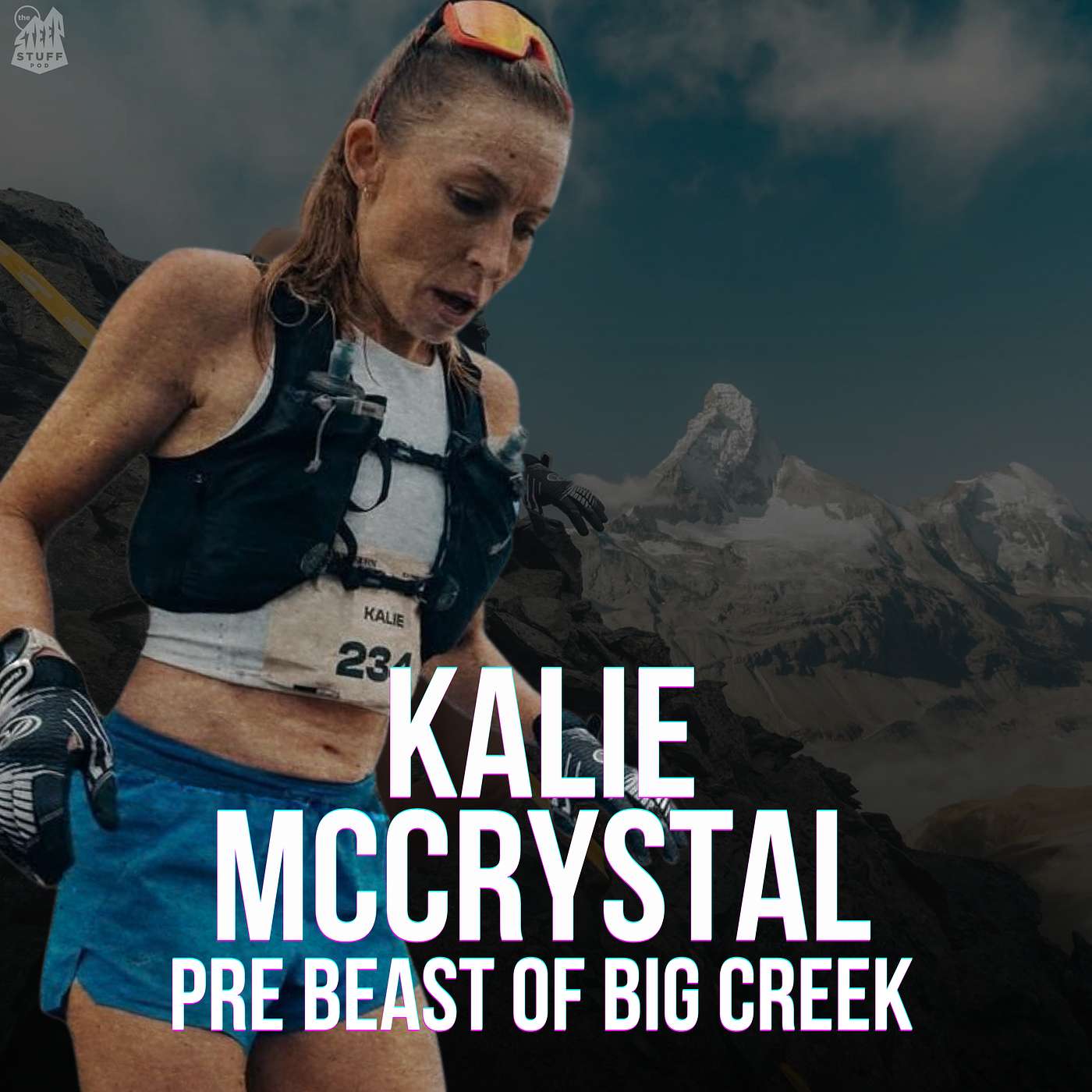
Kalie McCrystal, Pre Beast of Big Creek Interview
2w ago00:31:45Tap to summarizeSend us Fan MailA technical FKT at home can be more than a big day out. For Kalie McCrystal, it’s a proving ground for the skills that matter when the terrain gets steep, exposed, and unforgiving, and a stepping stone toward bigger goals like the Matterhorn speed record.We talk through her Tantalus Traverse FKT in the Tantalus Range across from Squamish, BC, a bucket-list alpine line that mixes runnable trail with moraines, snowfields, glaciers, route finding, and a crux that often includes multiple rappels. Kallie shares what “safe and fast” actually looks like on big mountain terrain: choosing the right weather window, deciding whether to rope up, and carrying just enough gear to manage risk while still moving efficiently. We also get honest about the unglamorous stuff that decides the day, like under-eating, bonking late, and planning water stops when there’s no resupply.From there, we shift into racing and why a skyrunning course can feel simpler than an FKT: fewer moving parts, less navigation, and more room to truly test fitness. Kallie previews Beast of Big Creek, talks about the joy of racing with friends, and lays out what’s ahead in Europe, including Trofeo Kima and an ambitious push to bring women’s times closer to men’s on iconic technical records. If you care about alpine running, technical scrambling, mountain race strategy, and the next wave of women pushing the ceiling in the sport, this one’s for you.Subscribe or follow the show, share this with a mountain friend, and leave a rating and review so we can keep telling these stories.Follow Kalie on IG - @kalie_mccUse code SteepStuff for 20% your cart on Sidas.usFollow James on IG - @jameslaurielloFollow the Steep Stuff Podcast on IG - @steepstuff_podFollow Sidas USA on IG - @sidas_usa
Transcribe →
#189 - Mathias Eichler, RD - Beast of Big Creek
2w ago00:56:03Tap to summarizeSend us Fan MailTwo weeks before a race, the glamor disappears and the real work shows up: shipping cutoffs, permit conversations, course marking decisions, and an inbox that never stops. We sit down with race director Mathias Eichler to talk about what it takes to bring Beast of Big Creek back and level it up as part of the Skyrunner World Series, without sanding off the personality that made it special in the first place.We get specific about the runner experience and the race director reality. Mathias breaks down how a family-run, community-driven trail running event can host international skyrunners, build a full weekend at camp, and still feel local through handmade details and creative choices. We also talk about the unsexy essentials that protect a race long-term: enough bathrooms, clear briefings, smart aid station planning, and communicating expectations across cultures and languages.Then we go deep on the hard constraints of mountain media and race logistics: drones in national forest boundaries, Starlink priorities for timing and search and rescue, tree cover that blocks coverage, and why livestreaming a short, technical skyrace often doesn’t pencil out. If you care about skyrunning, trail race directing, responsible trail running, and how events grow without going cookie-cutter, this conversation is a clear look behind the curtain.Subscribe or follow the show, share this with a friend who loves mountain races, and leave a rating and review so we can keep telling these stories.Follow:Mathias Eichler - @mathiaseichlerThe Beast of Big Creek - @beastofbigcreekRock Candy Running - @rockcandyrunningRegister for a Rock Candy Running Event - @rockcandyrunningUse code SteepStuff for 20% your cart on Sidas.usFollow James on IG - @jameslaurielloFollow the Steep Stuff Podcast on IG - @steepstuff_podFollow Sidas USA on IG - @sidas_usa
Transcribe →
#188 - Bayden Menton Joins the Trail House
2w ago00:59:28Tap to summarizeSend us Fan MailA 5K with nearly 3,000 feet of gain, a choose-your-own-line climb, and a descent that’s basically controlled chaos. Bayden Menton joins me right after a huge Mount Marathon performance to break down what it actually feels like to race one of the most iconic mountain running events in Seward, Alaska and why the smallest decisions on cliffs, scree, and in the gut can decide your day.We also rewind to where Bayden comes from: Joseph, Oregon, early cross-country roots, and a life built around mountains. He shares how Western Colorado University’s trail running team shaped his development, why good coaching is often about communication and consistency, and how he tries to chase progression without burning out or turning running into a joyless checklist.Then we get into the Trailhouse, a new training-house project supported by Hyperlite, Wynn, and Lever, with coaching from Matt Daniels. Baden talks about the selection process, what day-to-day training looks like with housemates, and the part nobody warns you about: being on camera and navigating social media without letting it hijack your focus. We close with what’s next, including the High Five 100, Kodiak 100K as a UTMB qualifier, and long-term dreams like Zegama and UTMB.If you enjoy deep race breakdowns and honest talk about building a sustainable trail running career, subscribe, share this with a friend, and leave a rating and review.Use code SteepStuff for 20% your cart on Sidas.usFollow James on IG - @jameslaurielloFollow the Steep Stuff Podcast on IG - @steepstuff_podFollow Sidas USA on IG - @sidas_usa
Transcribe →
#187 - Sean McCauley
2w ago00:42:25Tap to summarizeSend us Fan MailYou can hear it right away: Sean McCauley isn’t chasing trail running just for a result, he’s chasing a life he actually wants to live. We talk through his origin story of starting to run at six to spend time with his dad in a military family, then falling hard for mountains, movement, and the quiet mental space that comes with long days outside. From early races to big dreams, Sean shares how running becomes both an outlet and a craft he’s willing to fully commit to.That commitment gets tested. Sean opens up about a tough college start during COVID, mental health stress, and the moment he realizes he needs to get back to the mountains to thrive. We get into what Western Colorado University gave him as a developing athlete, why that program keeps producing top trail talent, and what changes when you step from track and cross country into modern trail racing. If you’ve ever struggled with imposter syndrome, injuries, or the feeling that you’re “all in” while others see it as just a hobby, you’ll recognize the highs and lows he describes.From there we go deep on the practical side of training for big mountain races: living in tiny Kremling, training with Eli and Tabor Hemming, learning effort-based pacing, planning long-term race strategy for goals like the UTMB OCC qualifier, and troubleshooting fueling and heat acclimation for Speedgoat 30K. Sean also shares what he learned at Broken Arrow Skyrace about positioning, staying engaged on runnable sections, and racing with confidence in stacked fields.If you’re into trail running, ultrarunning, mountain racing, or endurance mindset, hit subscribe, share this with a training partner, and leave a rating and review so we can keep telling these stories. What part of Sean's approach are you trying to bring into your own running?Use code SteepStuff for 20% your cart on Sidas.usFollow James on IG - @jameslaurielloFollow the Steep Stuff Podcast on IG - @steepstuff_podFollow Sidas USA on IG - @sidas_usa
Transcribe →
Alexa Aragon Signs with Mammut & La Sportiva
3w ago00:07:58Tap to summarizeSend us Fan MailA sponsorship announcement is only interesting if it changes something real, and that’s why we wanted to hit record with Alexa Aragon. Alexa is now officially part of Mammut and La Sportiva’s athlete teams, and she’s clear about what matters most: using brand support to expand outdoor access for her students through her adventure club. We talk about the early, tangible wins already showing up, from donated harnesses and gear to climbing shoes that help more kids try the sport without the usual cost barriers. We also get specific on the gear side for trail runners who love the details. Alexa shares what she’s racing in, why the La Sportiva Prodigio Pro became her go-to, and what she actually carries on race day, including a belt setup for bottles, gels, keys, and quick stash space. If you’re dialing your own trail running kit, this is the kind of practical breakdown that helps you streamline comfort, fueling, and efficiency. Then we zoom out to the season itself. Alexa has been racing a lot, learning fast, and feeling the reality of a “recover, race, recover, race” cycle that can crowd out real training. She tells a wild story about lining up at Quebec Mega Trail on three hours of sleep, and we use that as a springboard into smarter load management, recovery, and choosing when to skip an event to get ready for a true target race like Sierra Zinal. We also share a quick foot care segment on injury prevention, insoles, socks, and why your feet deserve as much strategy as your workouts. If you enjoyed this, subscribe or follow, share it with a friend who loves trail running, and leave a rating and review so we can keep bringing you more athlete stories and race coverage.Use code SteepStuff for 20% your cart on Sidas.usFollow James on IG - @jameslaurielloFollow the Steep Stuff Podcast on IG - @steepstuff_podFollow Sidas USA on IG - @sidas_usa
Transcribe →
Sophie Wright Signs with La Sportiva
3w ago00:23:13Tap to summarizeSend us Fan MailMount Marathon looks simple on paper, but Sophie Wright explains why it can leave your entire body trashed for days. We talk about that unique kind of post-race soreness, how falling and braking on steep terrain adds up fast, and why this year’s “no snow, straight to hard shale” descent made the race feel extra sketchy. If you’ve ever wondered why a short mountain running effort can hurt more than a long run, this conversation puts real words to it.We also get into what it takes to actually improve on technical downhills. Sophie shares what she noticed from the best descenders in the field, how line choice can change everything, and what she wants to sharpen next. From there, we zoom out into training and coaching, including her work with David Norton, the value of time-based training in the mountains, and why variety like biking can make you stronger without just piling on miles.On the career side, Sophie opens up about the mental shift from college running to competitive trail running: how pressure creeps in, how fun can disappear, and how she’s working to keep joy at the center while still chasing big goals. We cover her move to Colorado, altitude adjustment, and what the Front Range trail community adds to day-to-day motivation. Then we celebrate her signing with La Sportiva, talk shoes and gear, and look ahead to races like Cirque Series, Pikes Peak Ascent, The Rut, and Moab Half, plus why Mount Marathon will always pull her back. If you like the show, subscribe, share it with a friend, and leave a rating and review.Follow Sophie on IG - @wrightsophieUse code SteepStuff for 20% your cart on Sidas.usFollow James on IG - @jameslaurielloFollow the Steep Stuff Podcast on IG - @steepstuff_podFollow Sidas USA on IG - @sidas_usa
Transcribe →