Loading summary
Transcript186 lines
- [00:00]
Ryan Reynolds
Hey, I'm Ryan Reynolds. Recently I asked Mint Mobile's legal team if big wireless companies are allowed to raise prices due to inflation. They said yes. And then when I asked if raising prices technically violates those onerous two year contracts, they said, what the are you talking about? You insane Hollywood. So to recap, we're cutting the price of mint unlimited from $30 a month to just $15 a month. Give it a try@mintmobile.com Switch $45 upfront.
- [00:26]
Gold Belly Representative
Payment equivalent to $15 per month new.
- [00:27]
Legal Disclaimer Voice
Customers on first three month plan only.
- [00:28]
Narrator
Taxes and fees, extra speed slower above 40 gigabytes.
- [00:30]
eBay Representative
E details picture this. You're halfway through a DIY car fix, tools scattered everywhere, and boom. You realize you're missing a part. It's okay because you know, whatever it is, it's on ebay. They've got everything. Brakes, headlights, cold air intakes. Whatever you need. And it's guaranteed to fit. Which means no more crossing your fingers and hoping you ordered the right thing. All the parts you need at prices you'll love. Guaranteed to fit every time. Ebay. Things People Love hey guys, have you.
- [01:03]
Gold Belly Representative
Heard of Gold Belly? It's this amazing site where they ship the most iconic famous foods from restaurants across the country, anywhere nationwide. I've never found a more perfect gift than food. They ship Chicago deep dish pizza, New York bagels, Maine lobster rolls and even Ina Garten's famous cakes. So if you're looking for a gift for the food lover in your life, have head to goldbelly.com and get 20% off your first order with promo code Gift.
- [01:39]
Narrator
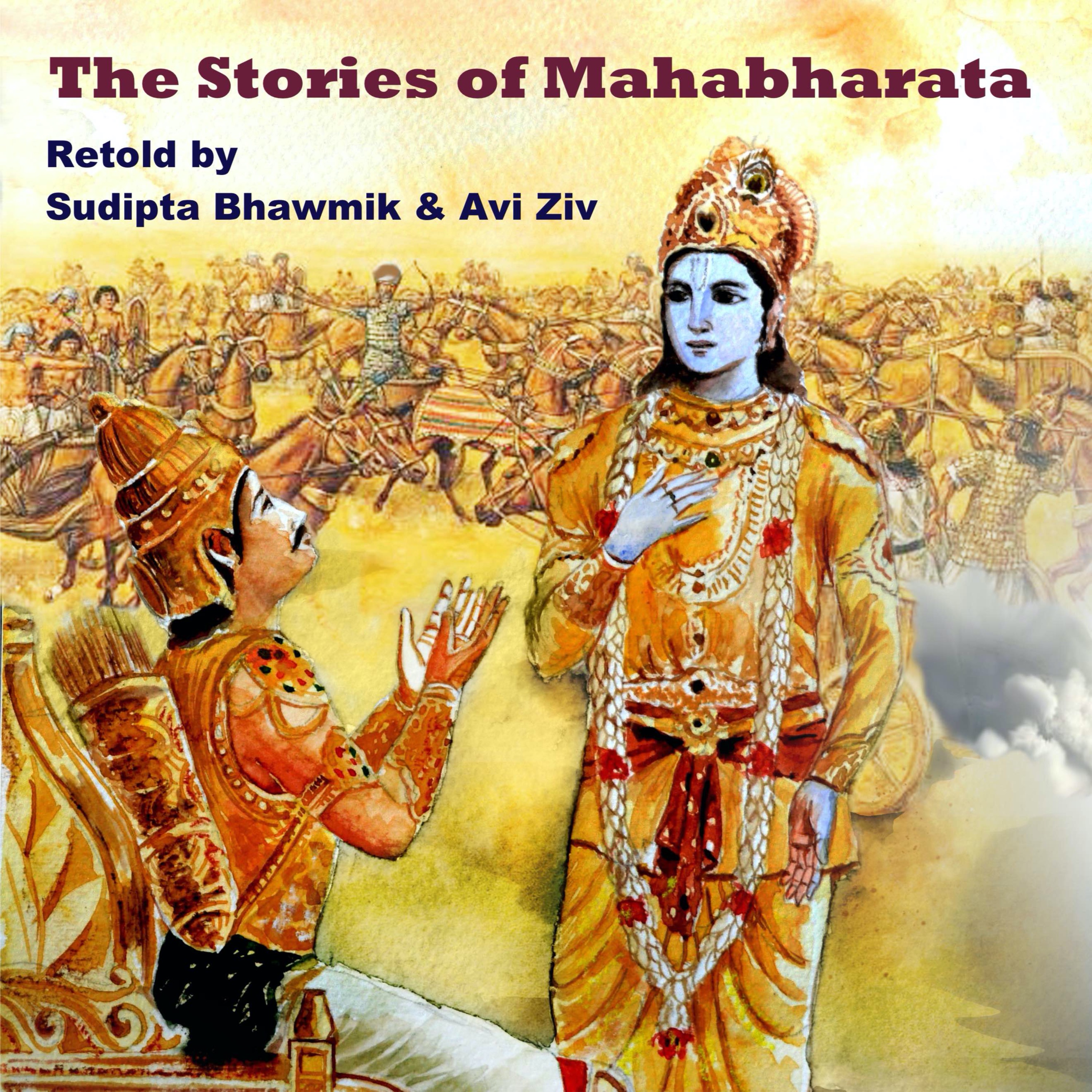
The Stories of Mahabharata Retold by Sudipta Bhomik.
- [01:54]
Podcast Host
Welcome dear friends, to another episode.
- [01:56]
Narrator
Of the Stories of Mahabharata. In the last episode, we heard how on the 17th day of the war, Bhim killed Dushan and kept his promise. We also heard how Arjun killed an unarmed and helpless Karna while he was trying to free his chariot wheel. Duryodhana was sitting alone in his tent contemplating. Seventeen days had passed and in those handful of days he had lost three of his greatest warriors. Bhishma, Dron and Karna. He had embarked upon this war depending.
- [03:03]
Podcast Host
Solely on the might of these three.
- [03:04]
Narrator
But the Pandavas had shattered his dreams. Bhishma and Drona were old and neither of them gave their best to fight the Pandavas.
- [03:15]
Podcast Host
Their death didn't perturb Duryodhan as much.
- [03:18]
Narrator
As the loss of his dearest friend. With Karna's fall, Duryodhan knew the war had already slipped away from his grip. It was only a matter of time before Yudhishthir and his brothers would claim complete victory and take over the throne of Astinapur. Duryodhana felt lonely and a deep feeling.
- [03:45]
Podcast Host
Of despair was overwhelmed him as tears.
- [03:49]
Narrator
Rolled down his cheeks. Just then Kripacharya, Ashwathama, Shalya and Kritavarma entered his tent. Duryodhana was in no mood to welcome them. He sat still with his head bowed. Kripacharya broke the silence. My dear Duryodhana, I think the time has come to revisit our options. Kshatriya Dharma says that a warrior should never give up. He must fight till the end. However, the scriptures also dictate that when one is weakened in battle it is advisable to negotiate a truce with the enemy. If we declare a ceasefire and request the Pandavas, I am sure Yudhishthir would accept you as the King. Maybe that is our best option at this moment. Duryodhan stood up slowly and faced Kripacharya. You speak like a wise man and your advice is well intentioned. Every word you speak is for my good. However, I cannot accept your proposal.
- [05:11]
Podcast Host
Surrender to Yudhishthir and live on his charity. Never. Even if he accepts me as the King of Astinapur I'll have to bow to him forever because of his generosity. It is better to die a glorious death in battle than to live like a slave.
- [05:31]
Narrator
Besides, why would Yudhishthir agree to such a proposal?
- [05:35]
Podcast Host
Especially after all that we have done to them.
- [05:40]
Narrator
Listen to me. Tomorrow we will fight with all our might.
- [05:46]
Podcast Host
We have gallant warriors like you and I believe we still have the capability to win.
- [05:52]
Narrator
Now we need to find us a commander in chief.
- [05:56]
Podcast Host
Aswathama, tell me, who do you think.
- [05:59]
Narrator
Should lead us to battle tomorrow? Aswathama bowed to Duryodhana and said O.
- [06:07]
Podcast Host
King, in my opinion King Shalaya would.
- [06:11]
Narrator
Be the best person to be our next Commander in Chief.
- [06:15]
Podcast Host
He is not only a valiant warrior.
- [06:17]
Narrator
But has proved his loyalty to you.
- [06:20]
Podcast Host
By abandoning his own nephews and his joining your side.
- [06:26]
Narrator
Duryodhana was pleased with the suggestion. He walked towards Shalaya with folded hands and said Dear uncle, now is the time to test who is our friend and who is our foe.
- [06:43]
Podcast Host
You are strong and skilled in using various weapons.
- [06:47]
Narrator
You are as powerful as Bheeshma and.
- [06:51]
Podcast Host
Drone and as wise as Krishna.
- [06:55]
Narrator
Now you are our only hope.
- [06:58]
Podcast Host
I pray you lead us in the battle as our new Commander in chief.
- [07:04]
Narrator
Shalaya was Delighted with the praise, he touched Duryodhan's head and said, My dear Duryodhana, I am pleased and honoured to have won your trust and confidence. I accept your offer to lead the Kaurava army. Tomorrow you will witness my true might.
- [07:25]
Podcast Host
When I destroy the Pandavas.
- [07:28]
Narrator
Duryodhan called in the priests to conduct the rituals and ceremony to appoint Shalya the King of Madra as the next Kaurava Commander in Chief. When the news reached the Pandava camp, Yudhishthir stepped into Krishna's tent and asked Duryodhan has appointed our uncle, the great warrior King Shalaya as his Commander in Chief. How do you suggest we defeat him? Krishna smiled. Shalaya is indeed extremely powerful and could prove to be quite dangerous. He is stronger than most of our Pandava warriors. However, I feel you are the best person, perhaps the only person who can kill the Madra King. If you don't go soft on him because he is your uncle then I am sure tomorrow Shalaya will die at your hands. The next morning the Kaurava generals Kripa, Kritavarma, Asvattama, Shalya and Sakuni met with Duryodhana and decided that none of them would engage in a one on one combat with the Pandavas during the battle. They would always cover and protect each other and won't allow the Pandavas to break through their defence. With the ringing of the Khan Shells.
- [09:02]
Podcast Host
The two armies clashed again for the 18 in the Great war of Kurukshetra. The death of Karna boosted the confidence of the Pandavas many fold and they pounced upon the enemy with such ferocity that the Kauravas felt overwhelmed. Nakul killed Karna's two sons Chitra Sen and Satyasen. Sahadev killed Shalya's son Bhim, attacked Shalaya and killed his horses.
- [09:29]
Narrator
Shalya struck back at Bhim by hurling.
- [09:32]
Podcast Host
A huge spear at him piercing his armor. Bhim pulled out the spear and hurled it back at Shalaya. The spear hit Shalaya's charioteer and killed him.
- [09:43]
Narrator
Shalaya and Bhim fought each other like men possessed till both were exhausted. Kripacharya came to Shalaya's rescue and took him away from Bhim. Yudhishthir called his brothers and said, you have demonstrated your prowess by killing the mightiest of Kaurava warriors. Now I'd request you to leave Shalaya to me today. Either I will kill him or he will slay me.
- [10:15]
Podcast Host
Satyaki, Drishtadumna, Bhim and Arjun all of you protect me from any attacks from the sides and my back but do not interfere when I fight my uncle.
- [10:28]
Narrator
With the Pandava brothers supporting and surrounding him along with Satyaki and Drishtadyumna, Yudhishthir attacked Shalaya.
- [10:38]
Podcast Host
Krishna's encouragement on the previous night gave.
- [10:41]
Narrator
Yudhishthir's confidence a big boost.
- [10:44]
Podcast Host
He pounced upon Shalya with such aggressiveness that the Pandava soldiers around him were stunned. That the soft spoken, kind man who was regarded as the personification of Dharma himself could turn out to be such a valiant and fierce warrior was something they could never imagine.
- [11:08]
Narrator
Yudhishthir's arrows killed Shalya's horses and his.
- [11:12]
Podcast Host
Charioteer Aswathama came running to rescue him. Yudhishthir continued killing Shandia's warriors with his favorite weapon, the spear.
- [11:23]
Narrator
Moments later, Shaildhya returned in a new chariot and in rapid succession killed Yudhishthir's.
- [11:30]
Podcast Host
Horses and his charioteer. Bhim couldn't control himself. He hurled his mace at Shailhya and destroyed his chariot.
- [11:37]
Narrator
Shaila jumped off the vehicle with a machete and a shield in his hand.
- [11:42]
Podcast Host
And ran towards Yudhishthir. Bhim shot a sharp arrow at Shalya and cut the handle of his machete.
- [11:49]
Narrator
Yudhishthir knew this was his moment to kill Shahlya.
- [11:54]
Podcast Host
He stood on his horseless chariot and pulled out a ferocious arrow from his quiver and engaged it to his bow. He aimed the weapon at Shah and said, uncle Shalya, you abandoned the path of Dharma and joined the evil Kauravas. And for that sin my arrow will kill you now.
- [12:14]
Narrator
Saying this, he released the weapon.
- [12:18]
Podcast Host
The arrow zoomed at lightning speed and.
- [12:22]
Narrator
Struck Shalya's chest, tearing it apart. Shalya's lifeless body crashed to the ground. Bereft of a commander in chief, the Gaurava army was in total disarray.
- [12:40]
Podcast Host
They began to flee in hordes while the Pandavas went on a killing spree. Duryodhan tried to persuade them back. The war is not over yet. We have great warriors. Aswathama, Kripacharya, Krita, Varma. We can still still win the war. Come back.
- [12:59]
Narrator
King Salwa from the lands of the northern mountains rode a huge elephant that belonged to Bhuyodhan and attacked the Pandava soldiers.
- [13:10]
Podcast Host
The elephant trampled the soldiers while Salwa showered them with arrows.
- [13:16]
Narrator
Mr. Tyumna tried to stop the elephant.
- [13:18]
Podcast Host
By shooting spears and arrows at it.
- [13:21]
Narrator
But the weapons hardly penetrated the beast's Thick skin. Salva drove the elephant towards Drishtadyumna to crush him. Drishta Dumna jumped off his chariot to.
- [13:33]
Podcast Host
Save himself, but as soon as he made his escape, the elephant crushed the chariot along with his charioteer and four horses.
- [13:41]
Narrator
He, Shikhandi and Satyaki tried to kill.
- [13:45]
Podcast Host
The beast by shooting their fiercest weapons.
- [13:48]
Narrator
At it, but the pounced off the animal, leaving it unscathed. Drishtadyumna picked up a huge mace, jumped.
- [13:58]
Podcast Host
Up and struck a huge blow to the temple of the elephant.
- [14:03]
Narrator
Instantly the elephant collapsed and crashed to the ground, dead.
- [14:11]
Podcast Host
Salwa tried to run away, but Drishtadumna.
- [14:14]
Narrator
Hurled a spear and beheaded him. The Pandavas kept ravaging the Kauravarami one by one.
- [14:22]
Podcast Host
Their generals and warriors who stood up to fight the Pandavas died at the hands of Bhim, Arjun Nakul and Sahadev. Shakuni and his son Ulugh along with their followers tried to launch a bit of a resistance and fought valiantly against Sahadev.
- [14:38]
Narrator
Sahadev hurled a spear at Uluk and decapitated him.
- [14:42]
Podcast Host
Furious at the loss of his son, Shakuni shot a fierce weapon at Sahadev who destroyed the weapon in mid flight and hurled another spear at Shakuli.
- [14:52]
Narrator
In retaliation, the spear pierced Shakuni's chest and killed him instantly. It was clear to Duryodhana that he had no hope against the Pandavas. His army had been totally decimated, his generals all killed. He was sure to be the next to face the wrath of the five brothers. He picked up his mace and quietly left the battlefield towards Lake Dwaipayan. Upon arriving at the lake, Duryodhan dove into the water and looked for a place to hide. He found a secret cove hidden behind a wall of water. Duryodhan slid into the COVID and lay down in the cool waters and thought about what to do next.
- [15:55]
Nordstrom Rack Representative
Oh my God. It's the coolest thing ever. Hey guys, have you heard of Goldbelly? Well check this out. It's this amazing site where they ship the most iconic famous foods from restaurants across the country, anywhere nationwide. I've never found a more perfect gift than food. They ship Chicago deep dish pizza, New York bagels, Maine lobster rolls and even Ina Garten's famous cakes. Seriously. So if you're looking for a gift for the food lover in your Life, head to goldbelly.com and get 20% off your first order with promo code gift.
- [16:25]
Ryan Reynolds
Ryan Reynolds here from Mint Mobile. With the price of just about everything going up during Inflation. We thought we'd bring our prices down. So to help us we brought in a reverse auctioneer, which is apparently a thing.
- [16:36]
eBay Representative
Mint Mobile Unlimited Premium Wireless Better get 30, 30.
- [16:39]
Narrator
Better get 30.
- [16:40]
Gold Belly Representative
Better get 20, 20, 20 Better get 20, 20.
- [16:42]
eBay Representative
Everybody get just 15 bucks a month.
- [16:45]
Podcast Host
Sold.
- [16:45]
Ryan Reynolds
Give it a try@mintmobile.com Switch $45 upfront.
- [16:50]
Gold Belly Representative
Payment equivalent to $15 per month New.
- [16:51]
Narrator
Customers on first three month plan only taxes and fees Extra speed slow or.
- [16:54]
Legal Disclaimer Voice
Above 40 GB Detail.
- [16:59]
Narrator
Ashotthama, Kripacharya and Kritavarma noticed Duryodhan leave. They were busy fighting the Pandavas and couldn't join him at first. As the sun descended towards the western horizon, Asvathama said to Kripacharya and Kritavarma, there is no point in fighting the Pandavas anymore. Let's find Duryodhana. He might need our help. The three warriors mounted their horses and galloped towards the direction where Duryodhana was last seen. As dusk fell on the grounds of Kurukshetra, it was clear that the war had finally come to an end. The soldiers, who were still alive, dragged themselves back to their tents and prepared to depart for their homes. But for Yudhishthir, as long as Duryodhan was alive, the war was far from over.
- [18:02]
Podcast Host
He ordered his men to find him.
- [18:05]
Narrator
But they failed to find him anywhere near the battlefield. Asvathama, Kripacharya and Kritavarma arrived near the banks of Lake Dwaipayan and looked around for Duryodhana.
- [18:19]
Podcast Host
They knew that this was the best.
- [18:21]
Narrator
Place for him to hide.
- [18:23]
Podcast Host
Aswathama called out, o King Duryodhan, where are you? Come out of hiding and join us. Together we will fight Yudhishthir and his brothers and win back your kingdom. Or else we will die and depart for the heavens.
- [18:43]
Narrator
Duryodhan answered from his secret cove. I am glad you are still alive.
- [18:50]
Podcast Host
I appreciate your concern and your willingness.
- [18:54]
Narrator
To fight for me, but I am tired and wounded. Let me rest.
- [19:03]
Podcast Host
Maybe, maybe tomorrow I will regain my.
- [19:07]
Narrator
Strength and join you to fight the Pandavas. As Duryodhana was speaking, a band of tribal hunters were passing by. When they heard Duryodhana, they ran to the Pandava camp and informed Yudhishthir about the hiding place. Yudhishthir was elated. He called his brothers and said, let's.
- [19:28]
Podcast Host
Go to Lagdai Payan and finish the war.
- [19:31]
Narrator
The Pandavas, along with Krishna, mounted their chariots and left for the lake. When Nasvathama heard the rumble of the Pandava chariots. He said, king Duryodhana, the Pandavas have found your hideout.
- [19:44]
Podcast Host
We must leave now.
- [19:46]
Narrator
With Duryodhan's permission, the three Kaurava warriors mounted their horses and galloped away. Yudhishthir arrived and looked around. He knew Duryodhana was hiding in the lake.
- [20:02]
Podcast Host
He called out, duryodhana, come out of hiding and fight. You caused the destruction of your family and now you want to flee? That's not the right thing to do for a Kshatriya. Have you lost all your pride? Don't be afraid. Come out and fight. Defeat us and rule the world.
- [20:29]
Narrator
Else die a glorious death and go to the heavens. Duryodhan answered, I am not hiding. I only want to rest a while. Don't you worry. When I am refreshed I will come.
- [20:48]
Podcast Host
Out and fight you. However, if you're impatient, go ahead and rule my kingdom. With my family dead, I have lost all interest in the throne.
- [21:00]
Narrator
Take it and let me live in peace in the forest.
- [21:06]
Podcast Host
You enjoy the throne of Astinapur.
- [21:10]
Narrator
Yudhishthir, however, was not willing to give up so easily. He stepped towards the lake and said.
- [21:17]
Podcast Host
Who are you to give us the kingdom?
- [21:21]
Narrator
I don't want to accept your charity.
- [21:24]
Podcast Host
You remember when I had asked for five villages for us five brothers? You said that without a fight you wouldn't give us even a speck of.
- [21:35]
Narrator
Land one could lift on a needle. Now let us fulfill your wish.
- [21:41]
Podcast Host
Come out and fight. We'll defeat you and win the throne with our might. I can fight. But I. I don't have chariots, armors, helmets. Besides, you are five and.
- [21:57]
Narrator
And I am alone. It will not be a fair fight.
- [22:02]
Podcast Host
You talk about a fair fight. Where was your sense of fairness when seven of you warriors surrounded the young Abhimanyu and killed him?
- [22:16]
Narrator
This is what I offer you.
- [22:19]
Podcast Host
We will give you whatever you need to fight us.
- [22:23]
Narrator
You may pick any weapon of your.
- [22:25]
Podcast Host
Choice and choose to fight any one.
- [22:28]
Narrator
Of us five brothers. If you kill the person whom you.
- [22:32]
Podcast Host
Choose to fight, the kingdom is yours. Do you agree?
- [22:38]
Narrator
I. I agree.
- [22:42]
Podcast Host
I will pick the mace as my weapon.
- [22:46]
Narrator
You can assign anybody to fight me.
- [22:49]
Podcast Host
Nobody can defeat me with my favorite weapon.
- [22:54]
Narrator
Krishna was furious at Yudhishthir.
- [22:56]
Podcast Host
How could you make such a foolish proposal? Select any of your brothers to fight.
- [23:02]
Narrator
What if he selects you or Nakul or Sahadev? Duryodhan is not only strong but he.
- [23:09]
Podcast Host
Is also the most skilled mace warrior in the world. Nobody can Defeat him in a fair mace fight.
- [23:17]
Narrator
Bhim may be stronger than him, but as far as skill is concerned, Duryodhan is far superior. Bhim stepped forward and said, brother Yudhishthir.
- [23:29]
Podcast Host
Allow me to fight Duryodhana. I have promised to kill him and I want to honour it.
- [23:35]
Narrator
Krishna, don't you worry.
- [23:39]
Podcast Host
I know how to defeat Duryodhana.
- [23:42]
Narrator
I will kill him for sure. Duryodhan stepped out of the lake with his huge mace in hand. Yudhishthir gestured towards his chariot and said, put on your armor and helmet and prepare to fight.
- [24:02]
Podcast Host
Bhim Sen will fight you on our behalf.
- [24:05]
Narrator
Duryodhan strapped on a heavy armor and put on a helmet to protect his head.
- [24:13]
Podcast Host
Then he walked towards Bhim and said.
- [24:16]
Narrator
Today I will fulfil your wish to fight me. You will die at my hands.
- [24:23]
Podcast Host
Now pick up your mace and fight me.
- [24:29]
Narrator
Bhim flared his nostrils and roared at.
- [24:32]
Podcast Host
The top of his voice, prepare to die, you evil man. Today my mace won't rest until it tastes your blood. He thumped the ground with his feet and the earth trembled as if an.
- [24:49]
Narrator
Earthquake had struck the area. At that moment, Krishna's brother Balaram arrived with a huge plough on his shoulder. He had been visiting several pilgrimages and when he heard the news that his student Duryodhana was engaged in a mace fight with Bhim, he couldn't leave. Yudhishthir and Krishna welcomed him and he sat down to watch the fight. Bheem and Duryodhan faced each other like two huge giants.
- [25:23]
Podcast Host
Swinging their maces and thumping their chests, they hurled vicious insults at each other. They moved in circles to fight the right moment to strike. Suddenly, Bhim swung his mace at Duryodhan's head.
- [25:36]
Narrator
Duryodhan ducked and avoided the blow. In the next instant he struck Bhim.
- [25:41]
Podcast Host
On his chest and left him breathless.
- [25:45]
Narrator
Bhim took a couple of minutes to recover and then attacked Duryodhan with a.
- [25:50]
Podcast Host
Huge blow on his left side.
- [25:52]
Narrator
Duryodhan reeled to absorb the impact and then bounced back.
- [25:57]
Podcast Host
The fight continued with such savagery that the gods in the heavens assembled to watch the spectacle. The maces of the giants struck each other with loud bangs and sparks flew into the sky.
- [26:12]
Narrator
Soon Duryodhan and Bheem were covered in blood, their armor shattered, helmets broken. Arjun turned to Krishna and asked, who do you think is the better warrior?
- [26:28]
Podcast Host
Who do you think will win this fight?
- [26:31]
Narrator
Krishna looked concerned. Bheem is stronger than Duryodhan, but the latter is more skilled with the mace to beat him. Bhim cannot stick to the rules. He paused and looked at Arjuna meaningfully. During the game of dice when Duryodhan made the obscene gesture at Draupadi by slapping his thighs Bhim had promised to kill him by breaking his thighs. Maybe Bhim has forgotten his promise and needs to be reminded. Arjun understood. He moved to a position where he could have direct eye contact with Bheem. Arjun then suggestively battered his thighs with his right palm and Bhim knew what to do. He crouched and ran towards Duryodhan to strike him.
- [27:34]
Podcast Host
Duryodhan jumped up into the sky to let Bheem pass under him. But the moment Bhim crossed Duryodhan he turned back and swung his mace to strike a terrible blow to Duryodhan's thighs.
- [27:47]
Narrator
Midair, Duryodhan cried out in pain and.
- [27:52]
Podcast Host
Crashed to the ground with both his.
- [27:55]
Narrator
Thigh bones shattered to smithereens Bheem began squashing Duryodhan's head under his feet and.
- [28:03]
Podcast Host
Said, you evil man. Do you remember how you and your brother Dushan insulted Draupadi? I kept my promise by drinking Dusasan's blood and now I honour the second one by breaking your thighs.
- [28:19]
Narrator
Angry, Bhim then pressed Duryodhan's head harder to crush it.
- [28:24]
Podcast Host
Yudhishthir ran up to him and said, stop him. You have crushed Duryodhan's thighs and kept his promise. You don't have to humiliate him further.
- [28:36]
Narrator
Leave him alone and let him suffer for his sins. Balaram leapt out of his seat with.
- [28:42]
Podcast Host
His hands flung out. Unfair. This is unfair. Bhim hit my pupil Duryodhan below his navel. This is against the rules. I will punish him.
- [28:53]
Narrator
Balaram lifted his huge plough over his.
- [28:56]
Podcast Host
Head and rushed to strike Bhim.
- [28:59]
Narrator
Krishna wrapped his arms around Balaram and said, calm down, brother, calm down. Bheem did what he did only to keep his promise. Duryodhana may be your people but he is the enemy of our allies, the Pandavas.
- [29:16]
Podcast Host
He committed heinous crimes and now has.
- [29:20]
Narrator
To suffer for his sins. Balaram was not happy with Krishna's logic.
- [29:27]
Podcast Host
Whatever you may say, I still can't support what Bhim did to Duryodhana. Bhim will have to suffer for this.
- [29:35]
Narrator
Saying this, Balaram stepped into his chariot and left. Duryodhan tried to lift his torso with his hands and cried out in pain. Ah. Krishna. Krishna. You are responsible for my misfortune.
- [29:54]
Podcast Host
Ah. It was you who reminded Bhim of his promise.
- [29:59]
Narrator
Don't think I didn't notice you talking to Arjun and Arjuna gesturing to Bheem.
- [30:05]
Podcast Host
You have been playing dirty all along. It was you who used Shikhandi to kill Bhishma. It was you who spread the lie.
- [30:16]
Narrator
About Aswathama's death to kill drawn. It was you who compelled Arjuna to kill an unarmed Karna. If if you had played fair, the Pandavas could have never defeated us. Duryodhan couldn't stay up any longer. He fainted and collapsed to the ground. Duryodhan's criticism made the Pandavas uncomfortable. Unable to counter his arguments, they stood with their heads hung in shame. Krishna smiled and said, don't pay attention to Duryodhana's whining. It isn't unusual to leverage unconventional strategies to win a battle.
- [31:03]
Podcast Host
For ages, people and gods have resorted to deception and other means to defeat.
- [31:09]
Narrator
A more powerful enemy. You would have never been able to kill Bhishma, not drown in a fair and straight battle. That's why I suggested a little trickery to expose their vulnerability and they fell for it. At the end of the day, we succeeded and they failed.
- [31:30]
Podcast Host
We won and they lost. Now enjoy your victory and prepare for the days ahead.
- [31:40]
Narrator
The Pandavas mounted their chariots and headed back to their camp, leaving behind an unconscious Duryodhana by the banks of Lake Taipayan to die a gruesome death.
- [31:59]
Sudipta Bhomik
The Snow Stories of Mahabharata is written, directed and told by Sudipta Bhomik Audio Engineering Original music and sound design by Avi Zeev Find us online@facebook.com MahaBharataPodcast Join the group for updates and news. Subscribe to the podcast using itunes or any other podcast catcher on Twitter. We are Mahabharataudio.
- [32:40]
Narrator
So good, so good, so good.
- [32:42]
Nordstrom Rack Representative
Perfect gifts. We've got them at Nordstrom Rack stores now. Ugg, Nike, Barefoot Dreams, Kate Spade, NY and more. Finds everything on their wish list all in one place.
- [32:53]
Narrator
Steve Madden yes, please.
- [32:55]
Podcast Host
It's perfect.
- [32:56]
Legal Disclaimer Voice
Did we just score the greatest gifts of all time?
- [33:00]
Podcast Host
Yeah.
- [33:01]
Nordstrom Rack Representative
Head to your Nordstrom Rack store to score great brands, great prices, the greatest gifts of all time.
- [33:07]
Legal Disclaimer Voice
Holiday shopping is here and Amazon Live has got you covered. Shop for the perfect gift from the comfort of your home with Amazon Live's shoppable video experience. Discover the hottest products from influencers and shop while you watch this season. Join Candi Burris from Real Housewives in her holiday Amazon Live series Generation Face off, where Kandi, her mom, Mama Joyce and daughter Riley share their favorite stocking stuffers and go to gifts across fashion, beauty and more. Watch and shop new episodes of Candy Series Generation Face off now by going to Amazon.com candylive that's Amazon.com candylive for a limited time use promo code candylive for $5 off an eligible product featured on the first episode of the series. That's K A N D I L I V E. Promotion expires on December 25, 2024. Limited supply of goods Terms and conditions apply. For full promotion Terms and conditions go to Amazon.com candy terms hey guys, have.
- [34:09]
Gold Belly Representative
You heard of Gold Belly? It's this amazing site where they ship the most iconic famous foods from restaurants across the country, anywhere nationwide. I've never found a more perfect gift than food. They ship Chicago Deep dish pizza, New York bagels, Maine lobster rolls, and even Ina Garten's famous cakes. So if you're looking for a gift for the food lover in your Life, head to goldbelly.com and get 20% off your first order with promo code gift.
- [34:40]
Sudipta Bhomik
And now for some late breaking news. The podcast is also available as a book, Dwapar Katha the Stories of Mahabharata, published by HarperCollins India.