Loading summary
Transcript18 lines
- [00:02]
Ryan Reynolds
Picture this. You're halfway through a DIY car fix, tools scattered everywhere, and boom. You realize you're missing a part. It's okay because, you know, whatever it is, it's on ebay. They've got everything. Brakes, headlights, cold air intakes. Whatever you need. And it's guaranteed to fit. Which means no more crossing your fingers and hoping you ordered the right thing. All the parts you need at prices you'll love. Guaranteed to fit every time. Ebay Things People Love hey, I'm Ryan Reynolds.
- [00:33]
Mint Mobile Representative
Recently I asked Mint Mobile's legal team if big wireless companies are allowed to raise prices due to inflation. They said yes. And then when I asked if raising prices technically violates those onerous two year contracts, they said, what the are you talking about? You insane Hollywood So to recap, we're cutting the price of mint unlimited from $30 a month to to just $15 a month. Give it a try@mintmobile.com Switch $45 up front payment equivalent to $15 per month.
- [00:59]
Narrator
New customers on first three month plan only taxes and fees extra Speed slower.
- [01:01]
Sudipta Bhamek
Above 40GB Details Getting engaged can be stressful. Getting the right ring won't be@blue nile.com the jewelers@bluenile.com have sparkled down to a science with beautiful lab grown diamonds worthy of your most brilliant moments. Their lab grown diamonds are independently graded and guaranteed identical to natural diamonds and and ready to ship to your door. Get $50 off your purchase of $500 or more with code LISTEN@Bluenile.com that's Bluenile.com Code LISTEN for $50 off.
- [01:39]
Narrator
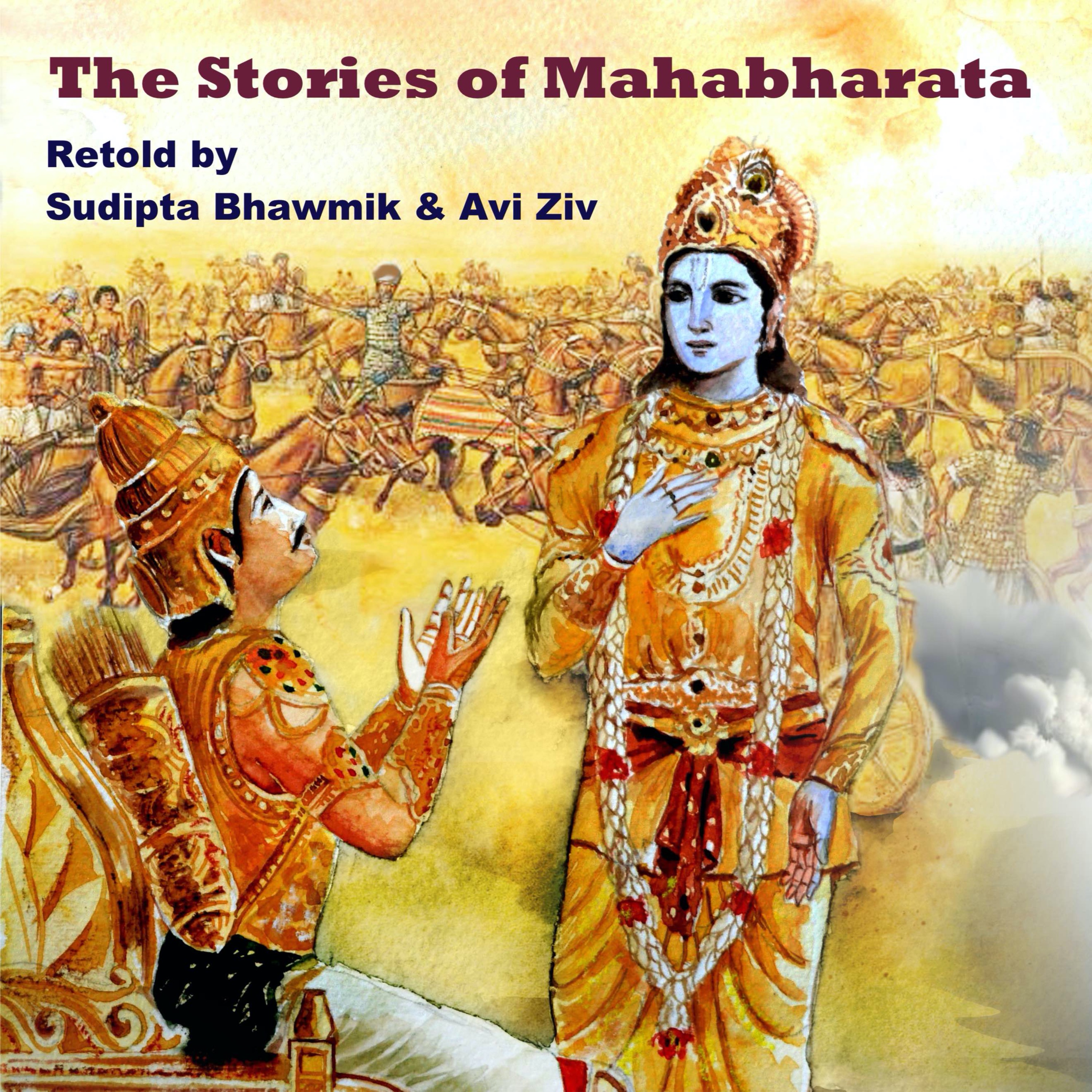
The stories of Mahabharata Retold by Sudipta welcome dear friends, to another episode of the Stories of Mahabharata. In the last episode, we heard how Aswathhama took his revenge by attacking the Pandava camp in the middle of the night and killed Drishtadumna and the five sons of Draupadi. When the blind king Dhritarashtra heard about the death of his favorite son Duryodhana, he fell from his throne and fainted. His attendants took him to his bedroom and sprinkled water on his face to revive him. Dhritarashtra woke up and the moment he thought of his son's death, he fainted again. He woke up and began to cry. Sanjay stood next to him and said, o King, please don't lament. It won't do you any good. Dhritarashtra lay on his bed and sobbed inconsolably. I lost all my sons, my friends My family. I have nobody left who can help me I lie here powerless like an old bird with broken wings I have no use for my life anymore Hearing of Dhritarashtra's condition Vidur came to see him get up from your bed Dhritarashtra. Death is the final destiny for all mortal beings. You may cry as much as you want but your sons are not going to come back so stop crying and get back to the business at hand. The great sage Vyasa came to console his son Try to get hold on yourself my son. If you keep lamenting like this Yudhishthir might kill himself in shame and sorrow I advise you to overcome your grief and welcome Yudhishthir to Hastinapur and accept him as the King he is kind and he will treat you with respect the next morning Tritharashtra left for Kurukshetra along with Gandhari, Kunti and the other Kuru widows Thousands of others followed on the way they met Kripacharya and Kritavarma and heard about the news of the death of Trishtha, Dumna and the five sons of Draupadi When Dhritarashtra arrived in the Kaurava camp Yudhishthir along with his brothers Draupadi and Krishna came to visit Yudhishthir and his brothers bowed to Dhritarashtra to touch his feet Reluctantly, Dhritarashtra embraced Yudhishthir and looked around where is Bhim? I am eager to meet him. Said the blind king as he groped around in the darkness Bheem stepped forward but Krishna stopped him and gestured him to step aside he then pushed a life size iron statue of Bhim towards the blind king. Duryodhana used to practice his mace fighting skills on this statue Dhritarashtra put his arms around the statue in a tight embrace and the Pandavas watched in awe how the old man crushed the iron Bheem with his bare arms powered by his hatred and rage as the statue shattered into pieces and fell to the ground Tritharashtra was filled with remorse. Oh. Oh. What have I done? Cried the old king. I have killed my beloved beam. Dhritarashtra dropped to his knees and covered his face to hide his shame Krishna came forward and said, O King, don't worry. You haven't killed Bhim. You have only destroyed his iron statue. Grief had distracted you from the path of Dharma and that's why you were motivated to kill Bhim Remember killing Bhim won't bring your sons back. You have studied the scriptures and are well versed in the laws of Dharma. Why do you have to behave like this? When you had the opportunity, you didn't listen to my advice and gave your sons a free run. Now you are suffering for those poor decisions. Sighed you are right, Krishna. My blind love for my sons is the cause for my suffering. Bhim, I am sorry for my behaviour. Please come to me. I would like to touch you. My sons are all dead now. Pandu's sons are my sons. Dhritarashtra embraced Bhim and kissed his forehead to bless him.
- [07:56]
Ryan Reynolds
Picture this. You're halfway through a DIY car fix, tools scattered everywhere, and boom. You realize you're missing a part. It's okay because you know whatever it is, it's on ebay. They've got everything. Brakes, headlights, cold air intakes. Whatever you need. And it's guaranteed to fit. Which means no more crossing your fingers and hoping you ordered the right thing. All the parts you need at prices you'll love. Guaranteed to fit every time. Ebay. Things people Love oh my God.
- [08:27]
Goldbelly Representative
It's the coolest thing ever. Hey guys, have you heard of Goldbelly? Well, check this out. It's this amazing site where they ship the most iconic famous foods from restaurants across the country, anywhere nationwide. I've never found a more perfect gift than food. They ship Chicago deep dish pizza, New York bagels, Maine lobster rolls, and even Ina Garten's famous cakes. Seriously. So if you're looking for a gift for the food lover in your Life, head to goldbelly.com and get 20% off your first order with promo code gift.
- [09:00]
Narrator
The Pandavas then proceeded to meet Gandhari. Gandhari, with her blindfold on, was fuming. Before Yudhishthir could meet Gandhari, the great sage Vyasa appeared. He knew that Gandhari won't be able to control her anger and her wrath would be too much for Yudhishthir to handle. He stood next to Gandhari and said, my dear Gandhari, you shouldn't express your anger towards the Pandavas. During the war, whenever Duryodhana came to you and asked for your blessings, you'd say, let victory come to those who follow the path of Dharma. That's what has happened and your blessings have come true. The Pandavas have always followed the right path and that's why they won. You must control your anger and pardon them. Gandhari knew the Pandavas were in the room with her. She turned towards them and said, my Lord, I know my sons are responsible for their loss. Their greed and arrogance caused their downfall. But I can't say the Pandavas have always followed the right path either. Bhim struck Duryodhana below the navel and that too in the presence of Krishna. How is that right? By any law? Bhim stepped forward and said, I know what I did was wrong, but I did it only in self defense. I pray you forgive me. Let me also remind you. It was your sons who defeated Yudhishthir in an unfair game of dice and refused to give his kingdom back even after we completed our time in exile. It was your sons who dragged Draupadi into the court and humiliated her in front of everybody. Duryodhan patted his thighs and made lurid suggestions to Draupadi. It was then that I promised to break Duryodhana's thighs and that's what I did. Now that he is dead, we have no animosity towards anybody in the Kuru dynasty. You killed my son Dusasan mercilessly and drank his blood. No human can perform such a horrendous act. How do you justify that? Bhim knelt in front of Gandhari. Mother, trust me, I did not drink Dushasan's blood. Dushan is my brother and his blood is my own blood. How can I drink my own blood? Yes, yes. The blood touched my lips and teeth but I didn't swallow a single drop. I killed Dusashan to keep my promise that I had made when he dragged Draupadi by her hair to the court. Mother, your sons have done terrible things to us and caused us irreparable harm. You never stopped them. You cannot blame us now. Gandhari sighed. Couldn't you have left one of my sons to survive and serve us during our final days? Bhim stayed quiet. Gandhari turned away from Bhim and asked, where is Yudhishthir? Yudhishthir was trembling like a leaf. He touched Gandhari's feet. Mother, here I am. The killer of your sons. Punish me. Overcome with rage, Gandhari couldn't say a word. She stayed silent and tried to control her anger through the bottom of her blindfold. Her eyes fell upon Yudhishthir's fingertips and instantly his nails turned black. Yudhishthir cried out in pain and retracted his hands. Kandari felt bad that she hadn't been able to control herself and inadvertently caused harm to Yudhishthir. She pulled Yudhishthir close and embraced him. She called Bhim, Arjun, Nakul, Sahadev and Draupadi and embraced them all Krishna stood on the side and sighed in relief Gandhari, Dhritarashtra and the other women then went to visit the Kurukshetra battlefield. The macabre scene of the battlefield with dead bodies and body parts strewn all around the ghastly scenes of dogs and vultures fighting to devour the flesh of humans and animals was too much for the women folk to handle. Many fainted, others cried out loud and ran to search for the bodies of their loved ones Gandhari, though blindfolded, could see the battleground with her inner eye. She said, Krishna, I can see my beloved son Duryodhan lying dead in a pool of blood with his mace in his hand I can see my daughters in law frantically searching for their husbands can you listen to their wails, Krishna? There, there. I see Karna's wife lying unconscious next to her husband's half eaten body I see Uttara sitting next to Abhimanyu's body and caressing him. I see Dushala crying like a mad woman and running around searching for Jayadra's head. So much pain, so much destruction. Tell me Krishna, tell me, why did you let this happen? If you wanted, you could have stopped this destruction the destruction of my family. Krishna didn't answer. Gandhari continued, I curse you Krishna. Just as you caused the destruction of my family you will also cause the destruction of your family, of your clan. For 36 long years you will live alone without any friends or family and then die a dishonorable death. Krishna smiled. O Queen, I know my fate. What you say is exactly what's going to happen. I will be the destroyer of my clan, the Yadavas and the Vrishnis. Nobody else can destroy them. They will destroy themselves. Yudhishthir ordered his men to set up funeral pyres to cremate the dead. Soon the sky was filled with smoke from the thousands of pyres along with the sound of the chanting of the priests and the wailing of the women. When the fire subsided, Yudhishthir and his brothers stepped into the river to offer their prayers to the dead. Suddenly Kunti stepped forward and said, my sons, wait. Offer your prayers to the man who was killed by Arjuna and who was known to the world as Karna, for he was your elder brother. Karna was born of Mayum, fathered by the Sun God. Yudhishthir and his brothers were dumbfounded with tears flowing down his eyes Yudhishthir said why didn't you say this before? The man whom we dreaded the most our most powerful enemy was our brother and you kept this a secret? Why? Mother? This news has pained us more than anything in this war if we had Karna with us nothing in this world would have been unachievable and this war would have never happened the Pandavas huddled together and cried while offering their prayers to Karna after completing the last rites for the departed souls preparation began for the consecration of Yudhishthir to the throne of Hastinapur the priests performed yagnas and other rituals Yudhishthir sat on the golden throne with Krishna and Satyak in front of him Bhim and Arjun sat on either side Kunti, Nakul and Sahadev sat on ivory thrones Nearby Priest Dhomya conducted the Fire sacrifice with Yudhishthir and Draupadi Krishna poured holy water from his Panchajannya Kaun shell Musicians played songs in praise of Yudhishthir and the Pandavas the people of Hastinapur poured in to witness the celebration and hailed Yudhishthir as the King of Hastinapuru the Pandavas began to rule their kingdom with blessings from their subjects Yudhishthir appointed Bhim as the Crown Prince and the next in line to the throne Arjun was appointed as the Minister of Defence Nakul as the Chief of the army and Sahadev as Yudhishthir's personal guard and assistant Vidur was appointed as the Chief Advisor and Sanjay was in charge of Finance the people of Hastinapur were happy to see their favorite king back on the throne however, Yudhishthir was not happy A constant feeling of guilt bothered him as he blamed himself for the death of his near and dear ones no words or scriptures could provide him with any relief from his misery Yudhishthir went to Krishna for advice Tell me Krishna how can I serve my people with this enormous feeling of guilt inside me? I feel lost and I find no joy in ruling the kingdom Krishna held his hand and said Yudhishthir, you have your greatest advisor your mentor Pita Mah Bhishma still alive. You should go to him and ask for his guidance before he leaves us I am sure he will give you the right advice the next morning Yudhishthir left for Kurukshetra to meet Bhishma who was happy to see Yudhishthir Yudhishthir paid his respects to the Great Guru Patriarch and asked grandfather, time and again you have helped us stay on the path of Dharma. With your blessings we have won the war and the throne of Astinapur. For this we had to pay steep price. We lost all our near and dear ones or friends or family, and I have lost all interest in ruling the kingdom. Please, please tell me how can I motivate myself to serve my people the right way? Bhishma smiled. I don't think I need to tell you anything as you are well versed in the laws of Dharma. But I can see that grief has clouded your judgment and you can't seem to find your path. I will try to dispel your doubts and maybe help you recover from your malaise. Bheeshma then delved into his deep reservoir of experience and enlightened Yudhishthir on the ways of leadership and gave him several tips on how to be a good ruler. Yudhishthir felt much better. He bowed to Bhishma and said, thank you for your advice. I will try to follow them to the best of my ability. I am happy to be of help. You should now let go of your sorrow and focus on making your people happy and prosperous. Come back to me when the sun begins to travel towards the northern hemisphere and bid me farewell. Yudhishthir mounted his chariot and sped towards Hastinapur to begin a new journey 58 days after he fell from his chariot. When the sun began to move towards the northern hemisphere, Bheeshma decided to leave his mortal body in the presence of Yudhishthir and his brothers Kunti, Tritharashtra, Gandhari, Krishna, Vyasa and many others. Bheeshma bid farewell to everybody and closed his eyes. The priests chanted mantras from the Vedas and everybody around watched in awe as Bheeshma's soul left his body and like a lightning bolt shot up into the sky and disappeared behind the clouds, leaving Bheeshma's lifeless body limp on the arrows. With a heavy heart, Yudhishthir and his brothers performed the last rites of their dear grandfather and left Kurukshetra.
- [24:11]
Sudipta Bhamek
The Stories of Mahabharata is written, directed and told by Sudipta Bhamek Audio Engineering Original music and sound Design by Aviz Ev Find us online at facebook.com MahabharataPodcast Join the group for updates and news. Subscribe to the podcast using itunes or any other podcast catcher on Twitter. We are MahaBharAtaudio.
- [24:52]
Mint Mobile Representative
So good, so good, so good.
- [24:54]
Goldbelly Representative
Just in and so good. Thousands of winter deals are in Nordstrom Rack stores now and that means thousands of fresh reasons to rack because we.
- [25:03]
Narrator
Get the latest trends for way less.
- [25:05]
Goldbelly Representative
Because I've been looking for these because.
- [25:07]
Ryan Reynolds
The best deals go fast, save big.
- [25:10]
Goldbelly Representative
With up to 60% off Sam Edelman, Sorel, Free People, Cole Han and more. Cold weather fines. Great brands, great prices. That's why you rack.
- [25:22]
Candy Burris
Holiday shopping is here and Amazon Live has got you covered. Shop for the perfect gift from the comfort of your home with Amazon Live's shoppable video experience. Discover the hottest products from influencers and shop while you watch this season. Join Candy Burris from Real Housewives in her holiday Amazon Live series Generation Face off, where Candy, her mom, mama Joyce and daughter Riley share their favorite stocking stuffers and go to gifts across fashion, beauty and more. Watch and shop new episodes of candy series Generation Face off now by going to Amazon.com candylive that's Amazon.com candylive for a limited time use promo code candylive for $5 off an eligible product featured on the first episode of the series. That's K A N di L I V E promotion expires on December 25, 2024. Limited supply of goods Terms and conditions apply. For full promotion terms and conditions go to Amazon.com candy terms hey guys, have.
- [26:23]
Mint Mobile Representative
You heard of Gold Belly? It's this amazing site where they ship the most iconic famous foods from restaurants across the country, anywhere nationwide. I've never found a more perfect gift than food. They ship Chicago deep dish pizza, New York bagels, Maine lobster rolls and even Ina Garten's famous cakes. So if you're looking for a gift for the food lover in your Life, head to goldbelly.com and get 20% off your first order with promo code Gift.
- [26:55]
Sudipta Bhamek
And now for some late breaking news. The podcast is also available as a book, Dwapar the Stories of Mahabharata published by HarperCollins India.