← The Stories of Mahabharata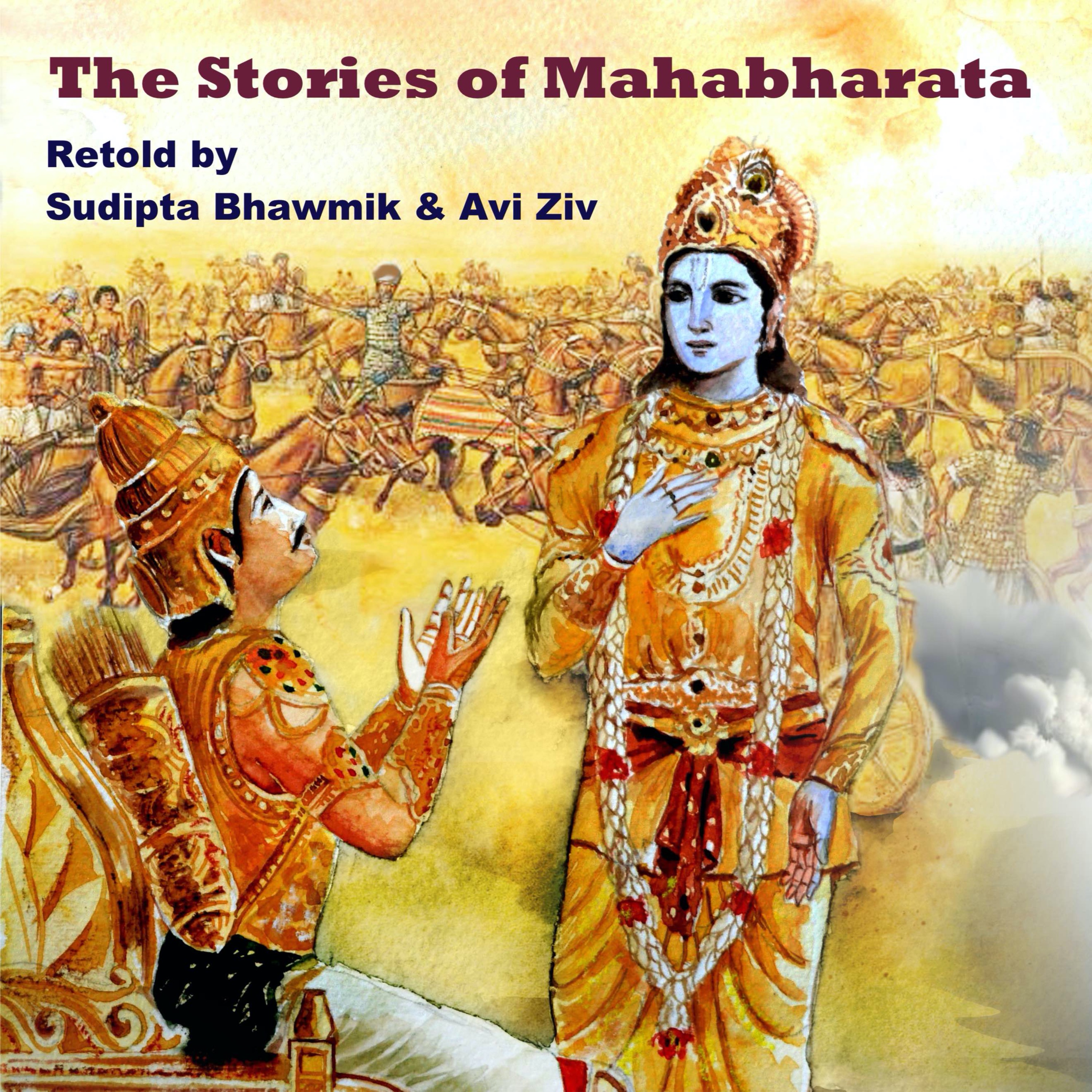
Loading summary
Transcript18 lines
- [00:02]
Sudipta Bhomik
Picture this.
- [00:02]
Ryan Reynolds
You're halfway through a DIY car fix, tools scattered everywhere, and boom. You realise you're missing a part. It's okay because, you know, whatever it is, it's on ebay. They've got everything. Brakes, headlights, cold air intakes. Whatever you need. And it's guaranteed to fit. Which means no more crossing your fingers and hoping you ordered the right thing. All the parts you need at prices you'll love. Guaranteed to fit every time. Ebay. Things people love.
- [00:32]
Ryan Reynolds here from Mint Mobile. With the price of just about everything going up during inflation, we thought we'd bring our prices down. So to help us, we brought in a reverse auctioneer, which is apparently a.
- [00:43]
Thing Mint Mobile Unlimited premium wireless. Everybody to get 30, 30. Better get 30, better get 20, 20, 20. Better get 20, 20. You better get 15, 15, 15, 15.
- [00:50]
Sudipta Bhomik
Just 15 bucks a month. Sold.
- [00:52]
Ryan Reynolds
Give it a try@mintmobile.com Switch $45 upfront.
- [00:57]
Mint Mobile Announcer
Payment equivalent to $15 per month. New customers on first three month plan only taxes and fees. Extra speeds lower above 40g.
- [01:02]
Gold Belly Announcer
Hey guys, have you heard of Gold Belly? It's this amazing site where they ship the most iconic famous foods from restaurants across the country anywhere nationwide. I've never found a more perfect gift than food. They ship Chicago deep dish pizza, New York bagels, Maine lobster rolls and even Ina Garten's famous cakes. So if you're looking for a gift for the food lover in your Life, head to goldbelly.com and get 20% off your first order with promo code gift.
- [01:39]
Sudipta Bhomik
The Stories of Mahabharata Retold by Sudipta Bhomik welcome dear friends to another episode of the Stories of Mahabharata. In the last episode we heard about the birth of Parikshit, the son of Abhimanyu and Uttara. We also heard about Yudhishthir's Ashwamedha, Yajna and Arjun's encounter with his son Babruvah. For 15 years, from the day Yudhishthir ascended the throne of Astinapur the Pandavas treated Dhritarashtra and Gandhari as their own parents. Yudhishthir consulted Dhritarashtra before taking any important decision. Please make sure our Uncle Dhritarashtra never feels like he is neglected. He instructed his brothers. He has lost his sons in the war and he feels lonely and dispossessed. But he is kind to us and loves us like his own sons. We should treat him like our own father. Bhim Saint didn't agree Though how could you forget the way he treated us? It was because of his indulgence. Duryodhana defeated you in that rigged game of dice, sent us to the forest for 13 years and then refused to give us our kingdom back. Dhritarashtra never did anything to stop his son and now you want us to treat him like our father? Let us try to forget our past animosity, my dear brother replied Yudhishthir, I hold no grudge against him and I want you all to do the same. Make sure he is treated with respect and enjoys all the facilities that he is used to spare no expense to ensure that he has nothing to complain about. Bhim didn't argue any further but he didn't make any attempts to conceal his resentments either. For 15 years Dhritarashtra tried to ignore Bhim's insolence thinking about Yudhishthir's kindness and the respect he and his other brothers showered on him. But when Bhim clapped his hands in front of the blind King and boasted, with these hands I killed Duryodhan and his friends, he couldn't take it any longer. He decided to leave the palace. The next morning when Yudhishthir came to pay his respects to Dhritarashtra and Gandhari, Dhritarashtra said, my dear Yudhishthir, you have treated us with respect and kindness all these years. You took care of all our needs and never let us feel unwanted or neglected. However, the time has come for us to take the next step in our lives. Gandhari and I want to leave the palace and live like monks in a forest hermitage and spend the rest of our days in meditation and prayers. Please grant us our wish. Yudhishthir was shocked to hear this. How could you say such a thing? Did I do anything wrong? Did anybody in the palace disrespect you? Please, please tell me. Dhritarashtra tried to console Yudhishthir. Try to understand my son. A man has to pass through four phases in his life. Brahmacharya, Grihastha, Vanaprastha and Sannyas. It is time for our Vanaprastha and Sannyas. Please let us go. Yudhishthir was deeply saddened to hear this and kept pleading with Dhritarashtra to stay. I am willing to give up the throne and make anybody you wish the king. You can be the king if you like. Please, please don't leave us as orphans once again. At that moment, the great Sage Vyasa appeared. Let him go Yudhishthir. Let them perform their worldly duties by spending their remaining days like monks. That's the right thing to do. You should not feel bad about their decision. Yudhishthir was left with no option but to agree. On an auspicious day, Dhritarashtra and Gandhari prepared to leave the palace. Yudhishthir and the rest of the Pandavas assembled to bid them farewell. Kunti stepped forward and said My sons, I too have decided to accompany them to the forest. Please do not stop me. Yudhishthir was devastated. Bhim cried and held Kunti's feet. Mother, if all you wanted was to leave us and go to the forests then why did you make us fight this war and kill thousands of people? Kunti touched Bhim's head and said My son, I didn't want you to be cheated and deprived by your cousins and live your life in poverty. That's why I encouraged you to fight and win back what was rightfully yours when my husband was alive. I have enjoyed enough luxury and have no repentance. So let me go and let me do what my heart desires. The Pandavas tried their best to stop Kunti but she was adamant. Finally Yudhishthira and his brothers had to agree. Vidur and Sanjay also decided to accompanied Dhritarashtra to the forest. Dhritarashtra, Kandhari, Kunti, Sanjay and Vidur began their journey on foot. In Kurukshetra they met the Saint King Satyub. Satyub greeted them and said O King Dhritarashtra, I would like to invite you to my hermitage in the forest. You can spend the rest of your life with me and my fellow monks.
- [09:14]
Gold Belly Announcer
Hey guys, have you heard of Gold Belly? It's this amazing site where they ship the most iconic famous foods from restaurants across the country, anywhere nationwide. I've never found a more perfect gift than food. They ship Chicago deep dish pizza, New York bagels, Maine lobster rolls and even Ina Garten's famous cakes. So if you're looking for a gift for the food lover in your Life, head to goldbelly.com and get 20% off your first order with promo code gift.
- [09:44]
Ryan Reynolds
Hey, I'm Ryan Reynolds. Recently I asked Mint Mobile's legal team if big wireless companies are allowed to raise prices due to inflation. They said yes. And then when I asked if raising prices technically violates those onerous two year contracts, they said what the are you talking about? You insane Hollywood? So to Recap we're cutting the price of mint unlimited from $30 a month to to just $15 a month. Give it a try@mintmobile.com Switch $45 up.
- [10:09]
Mint Mobile Announcer
Front payment equivalent to $15 per month New customers on first three month plan only taxes and fees Extra Speed slower above 40GB Details.
- [10:20]
Sudipta Bhomik
In Satyup's hermitage they discarded their royal garments and put on clothes made of tree bark and began their life of penance. Vidur sat in deep meditation for days and nights without having any food or drink. His body turned into a skeleton. Termite mounds grew on his body. The monks in Dharmitage tried to persuade him to break his meditation and have something to eat. Vidur didn't budge. He continued with his penance. Then one day his soul left his body and went to the heavens. The monks in the hermitage along with Dhritarashtra, Gandhari, Kunti and Sanjay were deeply saddened. When they began preparing for cremation of Vidur's body Vyasa appeared and said, do not cremate his body. Let him stay where he is. Several years had passed since Dhritarashtra left for the forest. Yudhishthir was busy with the affairs of his kingdom but he would often think of his mother, uncle and aunt. One day Nrada visited Hastinapur. He went to Yudhishthir and said, my son, I have been traveling a lot. While returning I thought I'd pay you a visit. Yudhishthir was glad to see him. He greeted Narada and offered him food and drinks. Later he asked, O great saint, during your travels did you get a chance to meet my father Dhritarashtra? Did you meet my mothers Kunti and Gandhari? How are they doing? Narada placed his hands on Yudhishthir's shoulder and said, that's why I am here to inform you about your parents. My son Tritharashtra, Gandhari, Kunti and Sanjay were engaged in severe penance. Dhritarashtra ate nothing but air. Gandhari survived only on water. Kunti ate only once a month and Sanjay once every five days. Then one day a forest fire broke out. Dhritarashtra, Gandhari and Kunti were too weak to escape. Dhritarashtra called Sanjay and said, you are strong enough to run away. Go save yourself. We will sit here in meditation and let the fire devour us. Sanjay was reluctant to leave them but he couldn't disobey Dhritarashtra's orders. He ran out of the forest while the fire engulfed the other three. Yudhishthir and his brothers were devastated to hear this. Yudhishthir cried and said, shame on us. We failed to protect our parents. How ungrateful is the fire God Agni. Arjun had once burned the Khandava forest to please him and this is how he pays us back by devouring our mother. Kunti Narada replied, don't blame Agni. Dhritarashtra was not killed by freak accident Rather he sacrificed himself to the fire. The monks had performed a Yajna and threw the burning cinders into the forest which then turned into a forest fire. So you can say your parents were consumed by the Yajna fire. You should not feel sorry for them. Yudhishthir and his brothers then visited the burnt hermitage and performed the last rites for their parents and returned to Hastinapur with a heavy heart. For 36 years after Yudhishthir's ascension to the throne the Yadavas and the Vrishni dynasties in Dwarka had fallen into decadence and corruption. They were busy killing and robbing each other and had no regard for authority One day the great sages Vishwamitra, Kanva and Narada visited Dwarka. A few of the Yadavas, led by Krishna's stepbrother Saran got drunk and decided to play a prank on the sages. They dressed up Krishna's son Samba as a pregnant woman took him to the mystics and asked Lords, it is said that you can see the future can you tell us whether this lady would give birth to a boy or a girl? The sages weren't fools and they caught their deception right away Angered by their insolent behavior they said, shame on you Yadavas. You have lost all dignity and will suffer for your behaviour. This woman is Krishna's son Samba in disguise and he will give birth to an iron club and the club will be the cause for your destruction for all of you except. Except Krishna and Balaram. Balaram will die in the oceans and Krishna will succumb to an arrow shot by a tribal hunter Jara. The next day Sambha did give birth to an iron club. King Ugrasen ordered the club to be crushed and dumped into the ocean to bring back order to the city Ugrason banned the production and consumption of alcohol in the city of Dwarka. Anybody who defied his orders would face the death penalty, he announced. The Yadavas, the Vrishnis and the Andhakas tried to be Cautious, several bad omens were seen around the city Ominous looking huge dark, bald men were seen roaming the city and causing destruction they were impervious to arrows and other weapons Krishna knew the final days of the Yadavas and the city of Dwarka were afoot. He announced, dear Yadavas, you should all leave Dwarka and go to Prabhas. The Yadava men grabbed this opportunity and went to Pravas along with their concubines and tons of food and liquor to escape Dwarka in Pravas they partied continuously and drank copious amounts of wine and liquor they didn't even care for Krishna Satyaki and Kritavarma got into a quarrel and soon it turned into a bloody fight Satyaki blamed Kritavarma for for helping Asvathama kill the sons of the Pandavas in their sleep. Kritavarma fought back but Satyaki pulled out his sword and beheaded Kritavarma Soon a battle broke out between the Bhojas, the Vrishnis and the Andhakas. They began to strike each other with whatever they could lay their hands on Krishna knew the time for the destruction of his clan had arrived he picked up a fistful of grass and it turned into a bunch of maces he hurled the maces at the Yadavas and the blow killed many. The remaining picked up the maces and began to kill each other the tall grass around the fighting men magically transformed into maces and the Yadavas used them to kill each other mercilessly. Father killed his son Son killed his father Father killed his friend Friend killed his friend. Soon nobody was left alive. Daruk, Krishna's charioteer came to Krishna and said let's leave this place and visit Balaram. Krishna agreed Krishna and Daruk looked around for Balaram finally they found him sitting quietly under a tree by the seaside Krishna knew Balaram was preparing to leave his mortal body which meant that his own death wasn't too far he turned to Daruk and said go to Hastinapur and ask Harjuna to come to Dwarka and protect the women and children he should take everybody with him since Dwarka will soon be swallowed by the ocean Daruk left for Hastinapur. Balram was sitting with his eyes closed from his mouth emerged a thousand headed serpent which slowly disappeared into the ocean leaving behind the lifeless body of Balaram. Krishna roamed around in the forest for a while and then sat under a tree behind some bushes. He mulled over Gandhari's curse At that time a hunter named Jara was looking for a kill from behind the bushes he saw Krishna's legs and mistook them for a deer the hunter shot at his target and the arrow pierced Krishna's feet When Jara saw that it was Lord Krishna himself whom he had shot he fell at his feet and prayed for mercy Krishna blessed him and said this was my destiny, my friend and this was your destiny too so don't feel bad Krishna closed his eyes and his soul left his body and departed for the heavens Daruk arrived in Hastinapur and informed the Pandavas about the misfortune that had struck the Yadava clan Then he passed on Krishna's message to Arjun who prepared to leave for Dwarka right away When Arjun arrived in Dwarka he could only hear the wails and cries of the Yadava women and children Krishna's father Vasudev held Arjun's hand and said I never dreamt of witnessing such a terrible day Arjun, you are our only savior Krishna told me to send all the women and children with you to Hastinapur and we have to do it fast since the city of Dwarka will soon be devoured by the ocean the next morning Arjun prepared to leave Dwarka with a huge caravan carrying thousands of Yadava women and children he pleaded with Vasudev to come with him but he remained adamant Leave me, Arjun. I want to die here that is my wish. Arjuna didn't push any further as Arjuna's caravan left the city the sea waters rose and began to flood the city soon no trace of the Warka could be seen except for miles and miles of sea water While Arjun travelled through the Province of the Five Rivers a band of dacoits attacked the caravan with sticks and stones to steal the Yadava women Arjun warned them but they didn't listen and began to pull the women off the chariots and carts Arjun picked up his Gandhiva bow but it felt too heavy with great difficulty he strung his bow but then he could not remember any of his divine weapons he tried to shoot at the raiders but they missed their targets he then tried to strike the dacoits with his Karn div but the raiders laughed and ran away with the women Arjuna was devastated. He knew he no longer possessed the strength and skills of the greatest warrior on earth with the remaining women and children he arrived in the city of Indraprastha There he appointed Vajra, the grandson of Krishna, as the ruler and asked him to take care of the women. He then paid a visit to Reishi Vyasa's hermitage. Vyasa said, what happened Arjun? It looks like you have been sapped of all your strength. Arjun narrated the story about the destruction of the Yadava clan, the death of Balaram and Krishna, and finally his failure to protect the Yadava women. Why did this all happen? I have lost my strength and I don't know how can I live like this any longer. Arjun was crying, don't feel bad, my son. Vyasa tried to console him. Sooner or later all good things have to end. The Yadavas died of their own fault and Krishna knew that the end had to happen. That's why he left too. You have done great deeds, but I'm afraid your time has come too. Now you too must prepare for your departure. Back in Hastinapur, Arjun narrated his experiences to Yudhishthir, who said, time consumes everyone and we are no exception. Let us prepare for our next journey.
- [25:42]
The Stories of Mahabharata is written, directed and told by Sudipta Bhamek Audio Engineering Original music and Sound Design Aviz Ev Find us online at facebook.com MahabharataPodcast Join the group for updates and news. Subscribe to the podcast using itunes or any other podcast catcher on Twitter. We are Mahabharataudio.
- [26:26]
Nordstrom Rack Announcer
It's time to save Clear the Rack is on at your Nordstrom Rack store now through Thursday. Take an extra 25% off clearance. All sales final. Hurry Shop this sale at Nordstrom Rack today. Please see Nordstrom rack.com or ask a store associate for details.
- [26:43]
Gold Belly Announcer
Hey guys, have you heard of Gold Belly? It's this amazing site where they ship the most iconic famous foods from restaurants across the country anywhere nationwide. I've never found a more perfect gift than food. They ship Chicago deep dish pizza, New York bagels, Maine lobster rolls, and even Ina Garten's famous cakes. So if you're looking for a gift for the food lover in your Life, head to goldbelly.com and get 20% off your first order with promo code.
- [27:13]
US Cellular Announcer
Gift gifting is hard, but here's a hint. Give the gift of connection from US Cellular. Not sure what that means. Well, here's a slightly more specific hint. You can choose four free phones and get four lines for $90 a month from US Cellular. Your family wants new phones, so how do we know? They told us. Yeah, the good news is that compared to wrapping presents, you're great at getting hints. So take the hint and get them four free phones and four lines for $90 a month US Cellular built for us.
- [27:46]
Sudipta Bhomik
And now for some late breaking news. The podcast is also available as a book, dwapar the Stories of Mahabharata, published by HarperCollins.