← Strategy Hour | Online Marketing for Business Growth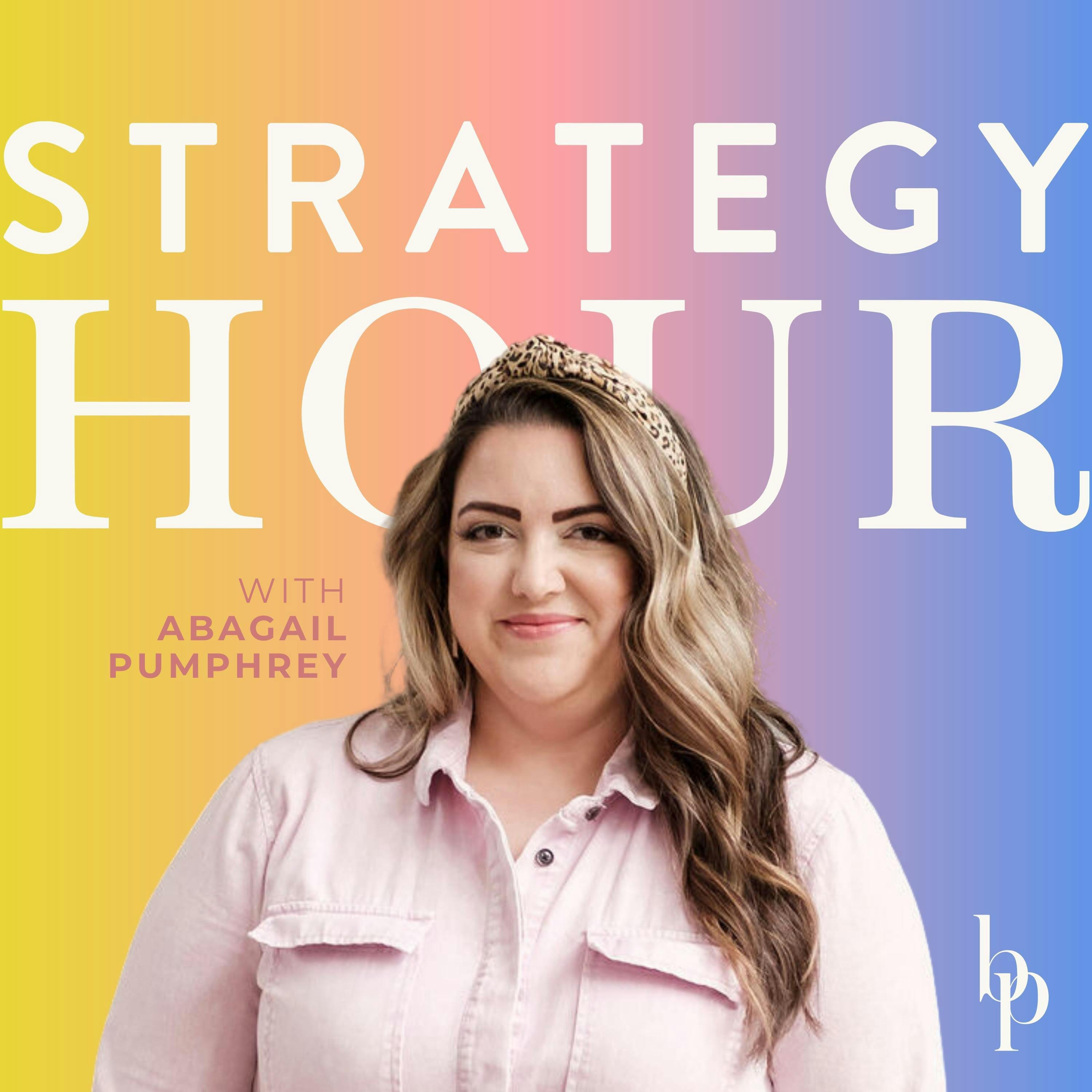
Strategy Hour | Online Marketing for Business Growth
917: Narrowing Down Your Digital Product Ideas to Find the Right Offer
00:24:45
One of the biggest hurdles for creators is deciding which idea to focus on and too often I see people stuck in decision-making and never launch anything. I don’t want that to happen to you.
Loading summary
Transcript155 lines
- [00:00]
Abigail Pumphrey
Success comes from doing something exceptionally well, not trying to do everything at once. Doing too much is ultimately just going.
- [00:10]
Emily
To dilute your effort.
- [00:14]
Abigail Pumphrey
Welcome to the Strategy Hour podcast brought.
- [00:17]
Boss Project
To you by Boss Project.
- [00:18]
Abigail Pumphrey
I'm your host Abigail Pumphrey and I'm dedicated to supporting online businesses. I don't believe in one right way to build a business. I'm here to help you build business your way.
- [00:29]
Boss Project
One that supports not only the life.
- [00:30]
Abigail Pumphrey
You have, but the life you want.
- [00:32]
Boss Project
Want.
- [00:32]
Abigail Pumphrey
I'm on a personal mission to help you become financially free. I'm taking all the lessons learned as I turned a layoff into a seven figure online business. I'm here to help you prioritize your.
- [00:43]
Boss Project
Life every step of the way. Whether you're creating your first digital product.
- [00:47]
Abigail Pumphrey
Growing an email list, or scaling an already profitable business. Settle in.
- [00:52]
Boss Project
It's time to talk strategy.
- [00:55]
Emily
Looking for a way to make a difference with your morning coffee?
- [00:58]
Boss Project
Grab a bag of talitha coffee@bossproject.com Coffee Every purchase helps support survivors of human trafficking. Make every cup count@bossproject.com Coffee do you.
- [01:11]
Emily
Have too many ideas for digital products and you're just not sure where to start? My goal is to fix that. In today's episode, one of the biggest hurdles for creators is deciding which idea to focus on. And too often I see people stuck in indecision and never launch anything. I don't want that to happen to you. At the end of this episode, you're going to have a clear framework to choose an idea. We're less worried about the right idea. More on that in a second, but I want to help you take it from concept to execution.
- [01:49]
Abigail Pumphrey
One of two things happens when people.
- [01:52]
Emily
Have too many ideas. Either they go nowhere because all of.
- [01:57]
Abigail Pumphrey
The stewing is happening behind the scenes.
- [02:00]
Emily
They're writing down plans and getting excited.
- [02:03]
Abigail Pumphrey
About where to go next.
- [02:05]
Emily
And you know, all of it is happening without anyone in their audience having any idea. Or on the opposite end of the spectrum, they are trying pretty much all the things and they're putting them all out there and it looks a little scattered and it feels confusing.
- [02:29]
Abigail Pumphrey
And your audience will start to wonder where should they start? What should they do first, what should they do next?
- [02:37]
Emily
And it can ultimately prevent people from moving forward. I think a large part about this is when people are passionate about their ideas, it can feel like by choosing that, they are abandoning the other ones.
- [02:56]
Abigail Pumphrey
That they have spent time, attention, potentially money on.
- [03:00]
Emily
And that by doing this one or.
- [03:04]
Abigail Pumphrey
Focusing on this one, or prioritizing this.
- [03:06]
Emily
One, that those Other things are going away, but I want you to reframe it.
- [03:14]
Abigail Pumphrey
When we are choosing an idea, we are simply choosing one.
- [03:18]
Emily
We are prioritizing now, but that doesn't mean that those other things won't come in time.
- [03:27]
Abigail Pumphrey
Success comes from doing something exceptionally well, not trying to do everything at once. Doing too much is ultimately just going.
- [03:37]
Emily
To dilute your effort. I want you to start completely unfiltered. I need you to brainstorm absolutely everything. I want you to be excited about.
- [03:49]
Abigail Pumphrey
All of the possibilities. I want you to write down everything. Potential templates, potential mini courses, maybe something that involves coaching toolkits.
- [04:00]
Emily
What are you thinking now?
- [04:02]
Abigail Pumphrey
Here's the thing. At this point, they don't even all.
- [04:05]
Emily
Need to be digital product ideas.
- [04:07]
Abigail Pumphrey
This just needs to encompass all of the things you've been thinking about in terms of potential offers in your business.
- [04:15]
Emily
I find that if people are too.
- [04:16]
Abigail Pumphrey
Focused on just the entry point or.
- [04:19]
Emily
Just the signature offer, that they get distracted by those other things that are.
- [04:25]
Abigail Pumphrey
Just floating out there.
- [04:27]
Emily
And because they haven't captured them, they feel like they're going to disappear. And so I need you to be excited about putting down all of your ideas.
- [04:36]
Abigail Pumphrey
What are all of your potential offers? What are all of the things you've been thinking about? What are the things that come up.
- [04:43]
Emily
For you when you're laying in bed at night?
- [04:45]
Abigail Pumphrey
What are the things that have come.
- [04:46]
Emily
Up for you when those clients have asked questions in the last few weeks.
- [04:51]
Abigail Pumphrey
Or the last few months? What has been a reoccurring theme you've been noticing? What has been something that you have learned that has been an invaluable lesson.
- [05:02]
Emily
In your own journey? What is something about the way you show up that you could reverse engineer?
- [05:09]
Abigail Pumphrey
What is something that you know to.
- [05:10]
Emily
Be true that your ideal client struggles with?
- [05:14]
Abigail Pumphrey
What do you want to change about your clients lives?
- [05:19]
Emily
How can you help your clients? What ideas do you have that could.
- [05:24]
Abigail Pumphrey
Change the course of their lives or their businesses?
- [05:28]
Emily
What do do you want to see be different for people? What is going to make their lives easier?
- [05:35]
Abigail Pumphrey
What do you want to do? What are you excited about doing?
- [05:40]
Emily
What do you want to do that you don't see anyone else doing? What do you want to do that you don't see anyone in your industry attempting?
- [05:49]
Abigail Pumphrey
What is something you see someone doing in another industry that no one in your industry has adopted?
- [05:55]
Emily
What about your competitors or peers, offers, appeals to you?
- [06:02]
Abigail Pumphrey
It's not about copying and pasting their.
- [06:04]
Emily
Ideas, but what about it got you.
- [06:08]
Abigail Pumphrey
Excited or got you envious?
- [06:10]
Emily
Was it how they showed up.
- [06:12]
Abigail Pumphrey
Was it the kind of problem they were solving?
- [06:14]
Emily
Was it the kind of way they were solving it? Was it the way it was sold?
- [06:20]
Abigail Pumphrey
I need you to just spend some time here.
- [06:23]
Emily
You can go back, you can rewind a few minutes, you can listen to those questions again. All you need to do is set a timer.
- [06:29]
Abigail Pumphrey
Set a timer, 10, 15 minutes.
- [06:31]
Emily
And I want you to write down every idea that comes to mind.
- [06:35]
Abigail Pumphrey
This does not have to be an.
- [06:37]
Emily
Extremely thought out thing. If you come up with an idea, we're not trying to outline the course curriculum. We're not trying to define what the sales page looks like. We don't need to know what the price point is. We don't need to know if it's going to be an entry offer or a signature offer. We don't need to know any of that yet.
- [06:53]
Abigail Pumphrey
We just need to get all of.
- [06:54]
Emily
Our ideas on paper. And honestly, it doesn't even have to be on physical paper. If you prefer a spreadsheet, do that. If you prefer a Google Doc, do that. Do what's going to be easiest for.
- [07:06]
Abigail Pumphrey
You to feel organized and excited about this list.
- [07:09]
Emily
I want you to then go through this list and highlight only the ones that are urgent. What are things that are like, absolutely necessary right now for your ideal client? And when I say right now, it could be one of two things. It could be timely because of the season of life or business that they're in. It could be timely because of the.
- [07:43]
Abigail Pumphrey
Time of year you're in. Now, that one's a little bit restrictive, but still worth noting.
- [07:49]
Emily
What is the thing that is required for them to address before they can move on? And when I say urgent, I mean urgent. So say, for example, I'm going to put something out there that is literally not at all digital product related, but I think helps illustrate the urgency. Say someone wants to renovate their whole kitchen, okay? But in the process their water line breaks and now there is water spraying all over their house. Do you think that person is thinking about cabinet layout or countertops or the sink they're going to put in? I mean, maybe it's probably still lurking.
- [08:33]
Boss Project
In the back of their brain.
- [08:34]
Emily
It's probably where they want to spend their time. It's probably what they'd like to address. But they got to get that freaking.
- [08:41]
Abigail Pumphrey
Waterline fixed or they're going to have much bigger problems on their hands.
- [08:46]
Emily
Do you know what I'm saying? It is urgent, it is necessary. So I need you to differentiate your list. Highlight in one color the ones that Are urgent highlight in another color. The ones that are nice to have, like exciting to have. They're the cabinets, they're the appliances, they're the fixtures. Right. What are the nice to have? What are the urgents? Now only looking at the urgent ones, which of these could you develop in a short period of time? Like, you could develop this solution in two weeks to four weeks. Like, build the product, you could get it done without additional knowledge, without hiring any outside help, without any of that. What could you get done in the next two to four weeks, development wise?
- [09:45]
Abigail Pumphrey
Now, we're not jumping to development yet.
- [09:47]
Emily
But I just need to know that it's feasible that you could do it. Okay. Now only of the things that are highlighted and starred, I want you to go in and add a second star. If you could solve it in a very short period of time, like, you.
- [10:06]
Abigail Pumphrey
Could provide an instant solution, a solution.
- [10:09]
Emily
That could come across in a few minutes, a few hours max, a couple of days. Those things are getting the double star because they already had one star if it was feasible. Now they're getting a second star if you can make it happen quickly for your ideal client. Now, if you get stuck on this Quick Win thing, go back and listen to my last podcast episode about what most people get wrong about their digital product offers. In that episode, I'm really, really, really digging into quick wins and having those instant results. So if you're feeling confused about what that looks like, it is a great reference point, but nonetheless, we're moving on.
- [10:54]
Boss Project
Have you been wanting to launch a digital product but you don't know where to start? Perhaps you're struggling to pick the right profitable idea. Is the idea there? But you just need to get the ball rolling again. I got you. I want to help you go from idea to launch in just one day. I partnered with Teachable to bring you the one day launch challenge. So far, we've helped 6,786 people do just that. Inside this challenge, we're helping you pick the right idea, getting all the tech set up. Heck, you could even collect your very first payment the same day.
- [11:27]
Emily
It's all loaded up for you and.
- [11:29]
Boss Project
Ready to dive in@bossproject.com launch. Don't wait until you're ready to sign up. We got pre challenge goodies ready and waiting for you, including 100 profitable digital product ideas. Just head to bossproject.com launch and get started today.
- [11:46]
Indeed
When you're hiring, it feels amazing to finally close out the job search.
- [11:50]
Boss Project
But what if you could get rid.
- [11:51]
Indeed
Of the search and just match you can with Indeed with over 350 million global monthly visitors according to Indeed Data and a matching engine that helps you find quality candidates fast.
- [12:03]
Boss Project
Ditch the busy work.
- [12:05]
Indeed
Use Indeed for scheduling, screening and messaging so you can connect with candidates faster. I love that Indeed makes it easy to hire when we've hired. In the past, the process was full of unqualified applicants. With Indeed, we can target the right candidates for the right position, leveraging over 140 million qualifications and preferences every day. Indeed's matching engine is constantly learning from your preferences, so the more you use Indeed the better it gets. And listeners of this show will get a $75 sponsored job credit. To get your jobs more visibility at indeed.com strategyour just go to indeed.com strategy hour right now and support our show by seeing you heard about Indeed on this podcast. Indeed.com strategy hour terms and conditions apply. Need to hire? You need Indeed now.
- [12:55]
Emily
The list is going to be a lot smaller. You're going to have very few things.
- [13:01]
Abigail Pumphrey
That are highlighted with double stars. Maybe it's a small handful.
- [13:05]
Emily
Three, five of those. What are you the most excited about producing? What do you feel really good about? What do you feel the most excited about putting out into the world? I want you to commit to one idea and the faster you commit, the faster you're going to start seeing results. So you do not need to overthink this. We are not lingering. You can come back and do another one. I promise. I promise you will come back and do another one. This is not the last thing you will ever do. It is not the most important thing.
- [13:41]
Abigail Pumphrey
You will ever do. You are simply making a decision.
- [13:43]
Emily
We are moving on. I even will have people flip a.
- [13:47]
Abigail Pumphrey
Coin if you can't decide.
- [13:48]
Emily
Flip a coin.
- [13:50]
Abigail Pumphrey
Narrow it down to 2.
- [13:51]
Emily
Flip a coin.
- [13:52]
Abigail Pumphrey
This does not have to be hard. Still debating it.
- [13:57]
Emily
Can't imagine just flipping a coin. Okay, of the few results you have, which ones are you excited about and which ones do you hear your ideal clients complain about that you know that they are just over it and they.
- [14:13]
Abigail Pumphrey
Need this thing fixed or which of.
- [14:16]
Emily
These do you think would make them the most excited, the most willing to take the next step? Now, before you go down the road.
- [14:24]
Abigail Pumphrey
Because we talked about how feasible it was, you could develop this thing in.
- [14:27]
Emily
Two to four weeks. Before you spend any time developing the actual product, I need you to test it with the sales page with a real price point. I need you to put it out into the world and offer it for sale, letting them know that they're Coming in on beta, you're going to roll this out on X timeline. They will get access, but you are pre selling it.
- [14:56]
Abigail Pumphrey
Pre sales happen in every industry.
- [14:58]
Emily
I promise you. You don't go to a restaurant and they have stuff pre cooked. That's called a buffet. We're not building a buffet.
- [15:08]
Abigail Pumphrey
Someone is ordering. You're preparing the dish and bringing it to the table. You don't have to have the dish made yet.
- [15:15]
Emily
Now, there's a lot more that goes into making an effective sales page and really getting across that you understand someone's ideas. But I think a big part of this is, is that you communicate just.
- [15:33]
Abigail Pumphrey
How quickly you can solve the problem. They need to know the timeline. If you can do this in minutes or hours or a couple of days, you communicating that as part of your.
- [15:43]
Emily
Sales process is going to be essential. Now, I do think it's worth noting that sometimes the transformation that you can provide because it's the thing that's so urgent, because it's the thing that you can do so quickly, people are still gonna be thinking about the sexy other thing they'd rather be focused on. Like, nobody wants to think about their broken pipe, they just wanna think about their beautiful end kitchen. And so I think it's important, especially when you're developing social content or sales.
- [16:20]
Abigail Pumphrey
Page content or emails that talk about.
- [16:23]
Emily
This product, that you highlight it as part of the journey that's gonna help them get to where they want to go. So I'm going to help you get.
- [16:33]
Abigail Pumphrey
Your pipe fixed so you can get.
- [16:34]
Emily
Back to focusing on your kitchen renovation, metaphorically speaking, you know, and people will appreciate that because they don't want to focus on the blaring issue, they want.
- [16:49]
Abigail Pumphrey
To focus on the sexy end game.
- [16:52]
Emily
Now this is definitely like a pro move that's a little bit hard to execute. So I really don't, I like hesitate to even bring this up, but it is worth noting from a psychological perspective sometimes to get them across the finish line or to make this feel like a total no brainer, I do think there is a time and a place to dish them up. A little bit of what they want with a little bit of what they actually need. So there is a potential where you could take one of those ideas that is not urgent, but you could solve quickly still. And it's fun and sexy and exciting and you could lead with that. But as a component of you solve the thing that's required for them to even address the other thing because it is so annoying or so distracting, they just don't even want to think about it, they don't even want to bring that up, even though it's the bigger issue potentially. Now, it's not to say that you couldn't just sell the sexy in game the thing they want, right? If you have a way to solve it quickly, just selling the thing they want is a possibility. But I need you to know that it's only doing half of the entry point digital products job. It's going to get someone in the door. You're still likely going to get sales, you're still going to get leads. But because you're not solving the problem that needs to be solved before your other offers make sense, they're still going to be stuck. And so you're going to have to quickly follow up with another solution. And it needs to feel logical.
- [18:52]
Abigail Pumphrey
Like if they just spent money on.
- [18:53]
Emily
This thing and it didn't get them to where they want to go, I.
- [18:57]
Abigail Pumphrey
Don'T want them to end up frustrated.
- [18:59]
Emily
Because even though that was sexy and that sounded cool, it didn't actually fix anything. So make sure you're really getting to the root of it, that you're really uncovering the bigger piece of the puzzle. Ultimately, I don't want you to overthink.
- [19:15]
Abigail Pumphrey
This if ultimately it passes the test.
- [19:19]
Emily
It's an idea that you can execute on. You could produce it in two to four weeks. You ultimately could put it together and put it out into the world and have someone see quick results instantly in.
- [19:35]
Abigail Pumphrey
A few minutes, in a couple hours.
- [19:36]
Emily
In a couple of days.
- [19:38]
Abigail Pumphrey
If all of those things can be.
- [19:39]
Emily
True, then it's worth just putting it out there. It's worth putting the sales page in front of people. It's worth testing in the market before you fight yourself about another potential idea. Because if it just doesn't sell, you.
- [19:55]
Abigail Pumphrey
Can go back to this list and pick something else.
- [19:58]
Emily
Like, your effort is not wasted. I'm keeping this episode short and sweet because I really do want you to move through this process. I want you to brainstorm out what's possible. I want you to run it through a filter. I want you to prioritize, commit to.
- [20:17]
Abigail Pumphrey
An idea and ultimately test it by.
- [20:20]
Emily
Offering it for sale, putting it on presale, making real income from this product, and then producing it. Now you can move through this exercise and spend the next 30 minutes brainstorming.
- [20:33]
Abigail Pumphrey
Ideas and narrowing stuff down.
- [20:35]
Emily
But if you want more guidance on the whole process, like what goes in that sales page, how do I put this out there? How do I launch it? I am inviting you to join me.
- [20:47]
Abigail Pumphrey
For my one day launch challenge.
- [20:49]
Emily
I have helped thousands and thousands of people launch their first or next digital product idea in a single day. We help you narrow down that idea and push post on launch all in one day. It has been one of the funnest.
- [21:08]
Abigail Pumphrey
Things I've ever done in this business.
- [21:10]
Emily
Watching y'all move through this process is so incredible. My process to help you narrow down.
- [21:18]
Abigail Pumphrey
Ideas is a little bit different than.
- [21:19]
Emily
What we did today.
- [21:21]
Abigail Pumphrey
So if you want another way to.
- [21:23]
Emily
Move through that process, you're going to.
- [21:25]
Abigail Pumphrey
Find another one inside this challenge.
- [21:27]
Emily
You can find out more@bossproject.com launch I can't wait to see what you come up with. I can't wait to see your quick wins. I can't wait for you to start making sales. Join me bossproject.com launch See you inside.
- [21:44]
Boss Project
Hey, a few quick favors before you leave. I'd love if you'd share today's episode, send it to a friend who needs.
- [21:50]
Emily
To hear it and post on social. You can show us where you're listening.
- [21:54]
Boss Project
From, your favorite takeaway or why someone else should listen. Be sure to tag me at Abigail Says and ossproject so we can share it.
- [22:02]
Indeed
Okay.
- [22:02]
Boss Project
Second favor to get podcast updates and all the behind the scenes news from Boss Project, I'd love if you'd join my VIP list. Just head to bossproject.com signup to make sure I have all your contact details. Really love this show.
- [22:17]
Emily
It would mean so much to me.
- [22:18]
Boss Project
If you'd leave a rating and review. It not only helps more listeners find.
- [22:21]
Emily
The show, but allows us to bring on quality sponsors so we can keep.
- [22:25]
Boss Project
Bringing you this valuable content for free.
- [22:27]
Emily
Thanks so much for listening.
- [22:28]
Boss Project
Until next time.