← Strategy Hour | Online Marketing for Business Growth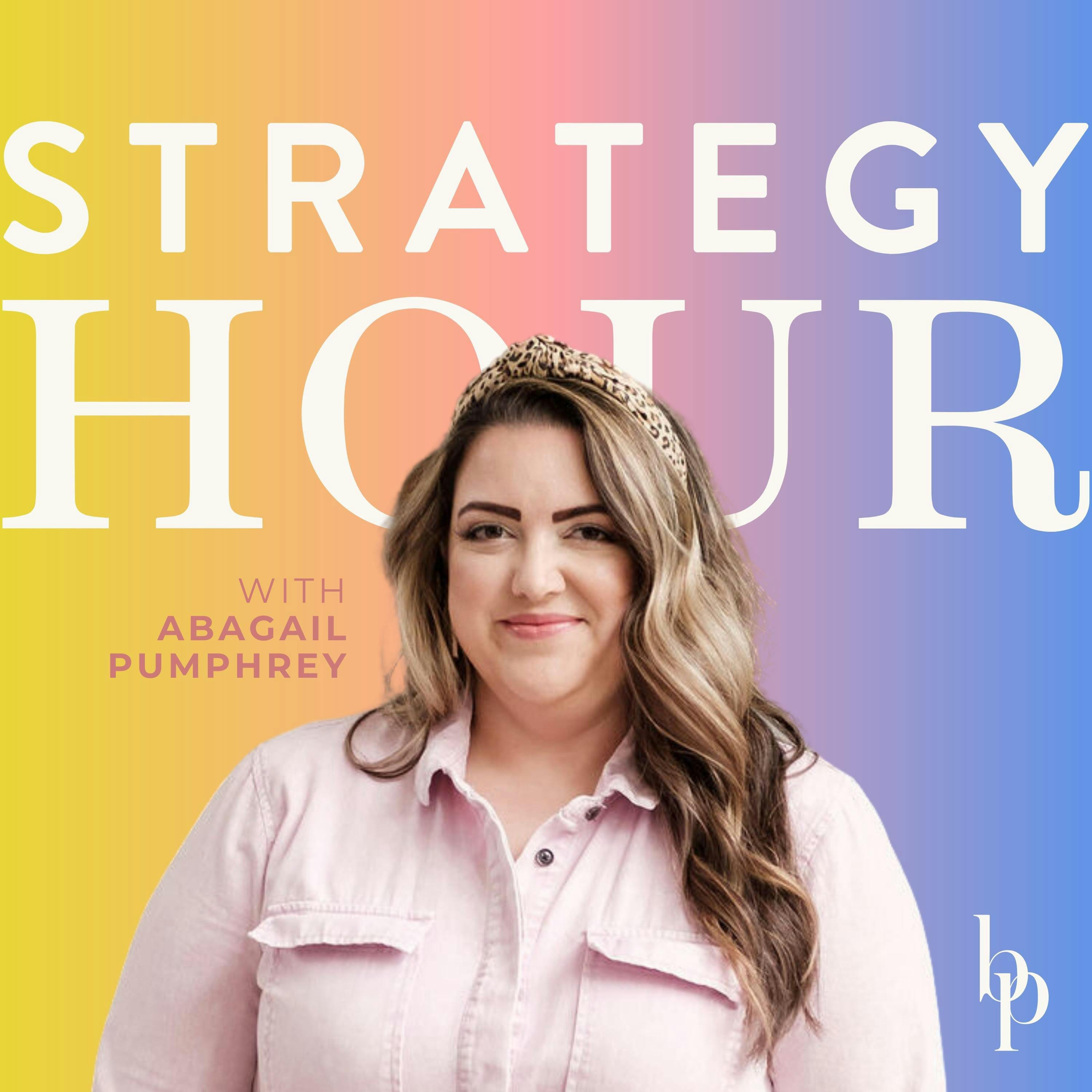
Strategy Hour | Online Marketing for Business Growth
926: 24,000 Reasons I’m Bringing Blogging Back
00:49:55
Something surprising happened in my business recently that re-inspired me to take up this untapped opportunity again. Tune in to hear why you should consider blogging, too!
Loading summary
Transcript15 lines
- [00:00]
A
If you can kind of think about your product as a spiderweb, there's all of these subtopics that surround your particular offer, regardless of what it is. And the more specific the subtopic, the more targeted you can get to drive specific traffic.
- [00:24]
B
Welcome to the Strategy Hour podcast brought to you by Boss Project. I'm your host, Abigail Pumphrey, and I'm dedicated to supporting online businesses. I don't believe in one right way to build a business. I'm here to help you build business your way. One that supports not only the life you have, but the life you want. I'm on a personal mission to help you become financially free. I'm taking all the lessons learned as I turned a layoff into a seven figure online business. I'm here to help you prioritize your life every step of the way, whether you're creating your first digital product, growing an email list, or scaling an already profitable business. Business settle in. It's time to talk strategy.
- [01:05]
A
Blogging is not dead. It's been waiting for small businesses to pick up the torch again, and I think now is the perfect time to do it. I don't know if you've like looked around and seen who was blogging lately, but I have noticed that blogging has gone to the point that pretty much the only people talking, quote unquote, like in that capacity, online publishing articles are either larger businesses, software companies, or the media. And there are less and less creators creating long form written content on the Internet than I have seen in my entire career. I've been feeling this urge to write more and I didn't necessarily know how that was going to shake out. I knew that I eventually wanted to write a book and I wasn't sure if this was the year or not to do it, but I knew I wanted to write. And when I started this business, I was writing all the time. I was publishing new articles on my blog five days a week, but I'd really gotten away from it. But something happened in my business recently that really reinspired me and really made me realize that this was an untapped opportunity that I really should be paying attention to now. It all started because a little over a year ago I needed to record a podcast and it was going to publish on Christmas Day. And I was like, I feel like no one is going to want to learn business strategy on Christmas Day. How can I talk about a topic that is not at all business related, so it doesn't feel like work but is interesting? And so for that particular episode, I interviewed my husband because he doesn't have an inner monologue, which for those of you who are like, what? Then you probably need to listen to the episode. It is so good. It is published a long time ago, but if you search Inner Monologue Bios Project Strategy Hour, it'll come right up. Nonetheless, we were reviewing our analytics from 2024, so the podcast at that point had been up a whole year because this published Christmas Day 23. And that particular blog post, well, technically, the Show Notes post for that episode had more than 24,000 hits. For a show Notes page, that is wild. So we did a little digging and we looked around to see why, like, why was this page getting so much traction? And with a little digging, we realized what had happened is that podcast answered a burning question for people. It talked about the fact that some people don't have an inner monologue. And that is a very shocking realization for people. So much so that most of the time when this conversation happens, someone is like over drinks or over dinner, talking about, like, did you realize that some people don't have an inner monologue? And then the person listening is like, I don't believe you. And then they immediately Google it. And when they do, the AI response for a version of that question provides, you know, a brief description of what that means. But our podcast episode is a recommended article in the AI generated section of this Google search result. Now, I don't know if you were like me, but I really pulled back sometime in 2023 from publishing a whole lot on my website at all because there was going to be such this huge shift in how search worked. Google was changing how they were ranking articles. They started prioritizing AI generated content at the top. More people than ever were searching social media platforms like TikTok for the answer to their questions. And I think it left a lot of people who loved publishing content on their website hesitant on what the future of SEO looks like. So I think I let it simmer long enough and I woke up a year later, and it is more evident than ever that search is still a relevant and important way that people can discover your content. And publishing on your own site is one of the only ways that you are going to own all of that content. I think we all felt it when TikTok shut down, even if it was just for 24 hours, because all of these creators who had invested time, money, effort, potentially years of their life into creating content that theoretically could be wiped out overnight. Like, how devastating? And whether you personally think that is a career or not doesn't really matter. What I want you to be paying attention to is that that content is unlikely to live forever. The Internet gets bigger and bigger all of the time. And as some of these social media platforms shut down, you know, you might be able to find some stuff in web archives. But some of the stuff that we thought would just live on isn't necessarily going to. And even if you put it on your own site, it isn't necessarily going to. If you stop paying your web hosting, it's going to go away, but you have control over when you turn that on or off. So my goal of this episode is not to convince you that you have to blog or that blogging is better than social media, or that you need to scrap all of your current plans and pay attention to this. You know, this is for you to determine what makes sense for you and your business. But I do want to talk about why I'm choosing to invest my time there and what my goals are with that and how I'm wrapping it into my day to day, but also give you some opportunities that if this does interest you, where you might start. I often have to remind myself, because it's so easy to get caught on the social media content creation wheel where you're just a running hamster just churning out more things, new things all the time, new, new, new, new, new, new, new. And I have content I wrote some like nine years ago that still gets traffic every month of every year for the last nine years. I promise I don't have a single social media post that has continued to perform that far after it was published. Now, I think there's a lot to be said for volume. People are like, well, you could get hundreds of thousands of views potentially. I've had an Instagram reel that reached one and a half million people, which is incredible. But you have to be thinking about what the value of those views actually are. And on social media, when someone sees your content, even if it's exposed to hundreds of thousands of people, only a small percentage of those are likely your ideal audience. And of that ideal audience, they might consume it, they might like it, they might even follow you, but they're only consuming that content for a few seconds. Like oftentimes it could be 10 seconds or less that you're even looking at their content. Now, if you can captivate them, get them to read your caption and interact with you in another way, then sure, you can get their attention for longer. But that is a very, very short period of time in the grand scheme of Things. With blogging, if you're answering the right question, someone is actively searching for that solution. They are invested in finding the answer. So when they discover that you have the answer, not only is something clicking for them inside their brain of like, you know, I've been looking for this and this person told me exactly what I needed. That's trust that has immediately built versus on social media, it's discovery. Like you are getting visible. There's an awareness being had, but it's not always trust building. It can be, but not always versus blogging when you actually are answering real questions and providing real value and not just opinion, which I still think opinion has its place. And I'll talk about that. You are serving a much bigger purpose. I have content on my website that for a web page, a web page to have five minutes or more of average, like they call it watch time, but like the amount of time someone is on that page. To have someone be on a page on your website for multiple minutes is like actually insane. Most pages, you know, you're lucky if it's 30 seconds or even a minute would be excellent. But if you're getting into that multiple minute or five minute mark, you are clearly giving someone something they need. I think blogging gets overlooked because social media has so much of that instant gratification. I'm addicted to it just as much as a lot of your potential ideal clients are. I love the dopamine hit, I love hitting like on that button and I like scrolling and seeing new content and it has done a number on my attention span. But I think as there's been this rise of social media for, I mean it's gone up and up and up and up over the last 10 years. I think there's an element of people feeling over it. Not that they're over social like I think people always consume social content. It is such a great way to build community. But when it's been on the rise for this long, people start to mimic other people because their content was working. So if I'm more like them, then my content won't work and people are getting bored and people want more depth, they want more personality, they want more uniqueness. And I think especially in 2025, we are going to see this rise of content that is still serving the same purpose. It is still, you know, answering questions or inspiring people or entertaining people, but it's going to have a more unique flair and we are going to see this resurgence of brand like we've not seen in years. And you're going to see people develop their own style rather than trying to look like the platform. Because I think people are like, if I look like the platform now, I just look like everyone else. How can I look like myself? And that's great for social, but I think there's an even bigger opportunity to do that with other long form content, like with YouTube and with podcasting and with blogging. When someone is consuming long form content, they are actively searching for answers, or they want to feel understood, or they want to feel heard, or they want to feel inspired. They could still want to feel entertained. But there is an element of seeking, of searching and finding versus on social media. Unless you're searching for your favorite creators to go see what they posted, more often than not, you are passive. You are not looking for anything in particular. You're just consuming content that's thrown at you. So if you're going to spend more time on long form content, regardless of medium, blogging, video, podcast, podcasts, really just being audio. So we're talking about written audio or video. You choose, regardless of how you want to show up. Long form content requires you to get a bit more specific on what you're trying to accomplish with that particular piece that you're putting out into the world. Because when people are searching and finding, they are typically asking questions. But an interesting switch in how people are searching is that when search was predominantly just articles and news outlets and links to YouTube videos, people were simply searching keywords in their search bar. So if they wanted to learn about SEO, they might search SEO Small business owner. But because of AI, because you can more naturally have a conversation, quote unquote, in like normal human language, people are changing the way they search. The way they search changes all the time. But this in particular is a really interesting phenomenon in simply how people are looking for information. Instead of simply searching keywords, you are seeing people more naturally search their exact question as if they were saying it out loud. So this is just kind of me pulling it random. But instead of searching SEO small business, someone might search how do I improve my SEO as a small business owner in the whole search bar. Which means that Google. But every search engine is prioritizing answers to questions more than anything else. But as this continues to evolve, more and more people are going to be spending less time on the search engines of our childhood and spending more time asking questions directly from AI. Now, I think a big fear that a lot of creators have had, and rightfully so, is that are these AI bots of sorts going to simply just scrape your website and use your knowledge and present it as their own. I still think that's a risk. I don't think that's not a risk. Like, should you be mindful of that? Is that something you should worry about? It's kind of out of your control. Like, this is a big enough issue that what you think about it has very little to do with what's going to actually go down. That being said, there are enough big players that publish content on the Internet that care that they're not getting ripped off, that some big dogs are going to do the lawsuits for you. Now, do I think it's going to be perfect? No. I still think AI is going to take answers and generalize the response. But even in recent months with things like ChatGPT, you can now search for a question and not only is it going to give you a response, but it's also potentially going to link you to actual content that exists on the Internet and is linked to. AI is linking to outside sources beyond itself. Now, I've been pretty aware that that was going to happen from the onset of AI. I didn't necessarily know what it meant. Like I wasn't sure if it was going to link directly to web content. Hence why I took a big break from publishing a whole lot on my actual site. But I did know AI had the opportunity to recommend and so now the game is less about how do I optimize for search. And the thing you need to be thinking about more long term is how do I create content that appeals to the way AI consumes content so that it will suggest me as a resource. And this is already happening. I get DMS on the regular. I was searching for podcasts for XYZ topic and ChatGPT recommended you. Like I am getting that quote. ChatGPT recommended you in my DMs more and more and more, which is actually so exciting. I think it feels like I don't know about you. There's something about showing up in search where it feels like you played the game right versus being recommended by AI. There's something about it, at least for me. I can't speak for everyone, but it feels like AI is validating you as an authority in a way that I never felt with Google. So much so that I also think that the person on the receiving end of that also trusts what you're putting out into the world more. Like they're coming in with more trust. They're less hesitant, they are paying more attention out the gate instead of just clicking. Now, regardless of how someone lands on your website, whether it's because they searched it, whether it's because they discovered you on social, whether it's because AI suggested you, or a million other reasons. People who land on your actual website are your highest value engaged potential clients. They took a very significant step to be here. They are the most likely to join your email list. They're the most likely to buy your products and invest in your services, way more so than someone who just hit heart on one of your latest posts. Now, I think there's a lot to be excited about. There's so much potential here and you get to decide how to fill it. Specifically looking at filling the gap in the market, I think so much of what people are getting bored by is things that look like a robot created them, for lack of a better way to say it. Because sure, there are some people that never stop blogging, but a lot of those blogs that are coming out more than ever before are entirely AI generated. And you can tell from a mile away there are dead tells. If you use AI on the regular, you know what they are. You could see them and immediately know that there wasn't a human behind this content. And because of that, people are craving things that feel more human, that feel more authentic, that feel more actionable. And you have an opportunity to bring a fresh perspective and use your voice and put it out there in a new way. Because ultimately, AI or ChatGPT can't do everything, and there are some specific things it can't do yet. And this is such a huge opportunity for you. So first of all, AI can't do anything except remix ideas that already exist. But the best insights are what comes from you, what's your take, what's your framework, what's your process without looking it up, like what is instinctively coming from you. AI also can't share opinions. AI is sticking to facts, but people actually prefer to read opinions. So the best mix is when you include both. You have the facts there, you answer the question tactfully, regardless of what it is, which places like Google and AI are going to recognize as truthful. So they're more likely to surface your content. But when someone arrives there, and it also includes your genius and your hot takes, they are way more likely to remember you, but also be interested in continuing to absorb your opinions. Now, brand voice is an interesting one because I think with training, AI is going to get better and better and better at matching someone's specific language. But your unique perspective always needs a human touch. So even if you use AI as a companion to your writing, which by the way, I am not against. I think it's such an incredible way to brainstorm and get through certain parts of the process faster. I actually recently published a blog post about how to use AI when writing in a way that still sounds like you, so definitely check that out. P.S. if you've never looked at the blog, which would make me sad if you hadn't, but I would get it. Bossproject.com blog I know you know the feeling.
- [24:56]
B
Fear that keeps you from admitting what you really want. Self doubt whispering who are you to really claim this? The overthinking that turns every decision into a time suck spiral. I've been there and I know how suffocating it feels. But here's what I've learned. The biggest thing holding you back isn't a strategy you haven't figured out or a resource you don't have access to. It's how you think, how you decide, and how you take action. That's why I created Mindset Reboot. This workshop series is my way of helping you break through those mental barriers once and for all.
- [25:33]
A
But don't wait.
- [25:34]
B
You won't be able to grab this for just $11 for long. Visit creative templateshop.com mindset to find out more. Hiring with Indeed, your search is over. When it comes to hiring, don't go searching for the 1. Just meet your match with Indeed. Get unparalleled access to job seekers with over 350 million unique monthly visitors globally, according to Indeed data and an extended reach through Glassdoor. I love that Indeed makes it easy to hire when we've hired. In the past, the process was full of unqualified applicants. With Indeed, we can target the right candidates for the right position, leveraging over 140 million qualifications and preferences every day. Indeed's matching engine is constantly learning from your preferences, so the more you use Indeed, the better it gets and listeners of this show will get a $75 sponsored job credit. To get your jobs more visibility@inn Indeed.com strategy hour, just go to indeed.com strategy hour right now and support our show by seeing you heard about Indeed on this podcast. Indeed.com strategy hour terms and conditions apply. Need to hire. You need Indeed.
- [26:45]
A
Now the other thing ChatGPT or any AI can't do is they can't walk in your shoes. They don't have your life. AI hasn't experienced what you've experienced. They haven't worked with the same clients. They haven't seen the same results. They haven't faced challenges that's where you can really shine. Your storytelling can be captivating and no one else can match your real world experience. It's just not possible. Ultimately, I think blogging gives you this opportunity to be truly creative and put your thoughts and ideas out into the world. And the interesting part about writing is writing more makes writing easier. And the easier writing is, the more you want to write. So it is a muscle and it can be strengthened if. If it's not something you're doing all the time, it can take a very long time. But the more often you write and the more often you put your words on virtual paper, the better you're going to get at it. With a blog or any form of writing, you can be as long winded or as short as you want. You're not fighting against the algorithm knowing you only have 2,000 characters to say what you want to say. Or you're limited to 90 seconds here or three minutes there. Like, you get to choose how you show up. And that's a unique opportunity. I think, as compared to social specifically, incorporating selling is a lot more natural and I think primarily is because you have more real estate, so you can spend a lot more time explaining something or walking someone through a process and then make whatever it is that you have for sale. The obvious next step Versus on social, you have so much less real estate, so much less attention from someone that if you're going to pitch, you usually have to do it in a way that just simply invokes curiosity for them to find out more. And it's much harder to make a lasting change in a single post. So I've gone on and on and on and on and on about why. But what could you do if you wanted to publish more, if you wanted to write more, what are the things you could put out into the world? And I think in terms of where I would start is really looking at what are the questions that people are asking? What are the questions that people want you to answer? What are the questions that your ideal audience is searching? Now, a good way to get to what those questions are is to think about what your products do, what problems do they solve? And if you can kind of think about your product as a spiderweb, there's all of these subtopics that surround your particular offer, regardless of what it is. And the more specific the subtopic, the more targeted you can get to drive specific traffic. So I have a course on ChatGPT prompts, like they are prompts you can use on pretty much any part of your Business, from creating content to being a better communicator with team members, to sales follow up, to planning out your long form stuff. Like it includes so much and it covers a broad range of topics. And AI is like this massive umbrella, right? But with blog stuff you can get way, way, way, way, way more specific. So one of my recent blogs was how to use AI when writing a blog. That is very specific. I could have gotten even more specific in like when writing a blog for a certain niche. But writing a blog is just one of a zillion ways you could use AI. But if someone's writing a blog, they are fairly likely to be in business, which means they are far more likely to be my ideal business owner. So write your offer down and then write all of the topics that surround what it is that you do and what could lead someone in. What could you answer for them that shows them that you know what the heck you're talking about and you have more to offer. I think that alone will give you more ideas than you have time for. So know that. But that's just one thing. That's one way to approach it because it gives you an obvious opportunity to pitch whatever it is that you offer at the end or inject it in your written content. But you can also answer FAQs from your audience, potentially even for existing clients, as a way to enhance their client experience. So if you have someone who's like coming in and they're like, here's where I'm at and I don't know where to start, and you have all of this stuff, you could write an article that's all about how to like move through your ecosystem of offers. You could answer a question that is causing a lot of customer service issues. So like maybe the offer that you have is related to a certain piece of software, for example. Well, you don't own the software company, you just teach about a topic related to the software, but they end up having issues with the software and it's bogging you or your team down with questions that you're not really meant to answer. So one of the ways you can mitigate this for sure, you could send them to a support article that the other company has written, or you could send them directly to their support team, or you could create resources for yourself that are more specific to the unique way this particular issue comes up. And it's hard to give examples here because it's just going to vary. But I guess this is a tangible one. This is kind of leading into my next topic, but still Relevant. So I teach about growing an email list and email list jumpstart. I walk you through how to pick a service provider and ultimately start building your first lead magnet and collecting your first 1,000 leads. And then if you go into part two and part three, like, ultimately you're going to start building out automated funnels and collecting sales and all of those things. But if we go back to like the very, very beginning, if someone is brand new, brand spanking new to building an email list, you would think that some of these steps are so obvious, some of them are not. And it's gotten more complicated in recent years. So I could compare software companies all day long and help someone choose a platform, but when they go to sign up for a platform, and it doesn't matter what company it is, when they go to sign up for a platform, they are going to need a custom domain, and that custom domain needs to be connected to an email. And then once you do finally have the custom domain and the custom email, you have to then connect that to your email service provider, which is the easy part. You have to go on to provide all of these authentication certificates and generate them in various ways. And this was based on some laws that changed last year, and software companies were scrambling to catch up and try to make this process as easy as possible. And regardless if this is the very, very, very first time you're doing it, that is a very overwhelming hurdle to get over. And so we recently put together two technical articles which should be published by the time you listen to this, if not probably the same week as this is coming out. But one of them was basically all about how to get a custom domain and connect it to Gmail so that you could use a custom Google workspace. Sounds simple. It's an entire blog post with a lot of technical steps that we try to make it sound as easy as possible, but we're also including video content with it. And then we have a part two article that's specifically about how do you put it into flodesk and how do you get all those verification and certificates. If someone doesn't complete that step, which theoretically is step zero, then they can't benefit from all of the other content that I have around building an email list and generating sales from email. And so it is worth my time and effort to put that out into the world primarily as a tool for my existing clients. But the beauty of not having it behind course doors, where I only put that content inside a course, is this is generic enough information. It can help a lot of people, not just my clients. And if they're at this stage and they're coming in and I walk them through it and it feels simple, they are far more likely to want to continue learning about that topic from me, of which I have a paid offer. So I think an excellent way to also address this is to put out, like I mentioned, either things specific that help with customer service or help someone get unstuck in an area they tend to get stuck in in whatever program you offer. But also those more technical tutorials, those can be incredible. So much search traffic for technical answers. When I first started blogging for Boss Project, many, many, many of the articles that had the most traffic were walking someone through how to do something technical. And when I was doing this, initially when I came into this industry, there was not a lot of specific software for small business. It was a lot of taking software that was designed for a Fortune 500 and figuring out how to make it relevant for someone that's running a solo business or a business with a small team. And so the software company wasn't out there writing content relevant to small business owners. The people doing that were in the industry sharing their knowledge. And so if you are in any industry and something is new to that industry, you learning how to do it and then turning around and sharing it is such an incredible way to build an audience of people who care about what you do. Now, I briefly mentioned out the gate that I was blogging five days a week when I started. That is a lot. I couldn't even handle five days a week right now. If it was all I was doing or most of what I was doing, sure. I don't currently have the capacity to do that. My approach right now is two blogs a month, and I also have other team members that are contributing in other ways. So we might have more blog content than that. But I'm personally authoring two, which going from zero to two felt like a lot. Now the way I ended up doing it was just batching different I have to record my podcast content anyway, but I was doing it every single week. And so I've committed to batching my podcast content every other week so that on the off week I can write a blog post. And right now I've committed to only writing one per week so that I can really put a lot of time and effort into making that one blog particularly useful. Helpful. I can get through podcasts a lot faster because so much of it's conversational, but when blog content gets more technical, it just takes longer. It just Takes longer. I do think I'm going to get faster. Like, I can already tell I'm only a couple weeks into this, like, new schedule where one week I'm blogging and one week I'm podcasting and it's already coming out faster. So this isn't about me though. This is about you. If you want to start, just commit to one post a month and make it count. You putting out 12 posts a year that lead ideal clients to what it is that you offer that is far better than none. And they're gonna live on. Like, if you can make them timeless, this is content that's going to continue to serve you. I do think that's why some people hesitate when they get into technical stuff, because if the software changes, then all of a sudden what you put out into the world is moot. And so I get that. So if that bothers you or you're worried about it shifting or changing, then pick a topic at least to start. That's not going anywhere. That is going to be the same for a very long period of time. So someone could continue to benefit from it potentially years down the road. And I want you to know that this is not something you're just doing in one place and like, hoping you get traffic. Like you putting out long form content is an opportunity for you to repurpose that content in so many different ways. Like, don't just feel like it can only be one thing. So, for example, I wrote a blog post about how to use AI. When writing, there's a lot of content in there. It includes prompts, it includes what AI can or can't do. It includes, I mean, like, I get into all the subsections, but essentially every subsection could be its own carousel post. Over on Instagram, I could write an email promoting the blog post, literally using the intro paragraph and setting them up for here's what you're going to learn and here's what's inside. Go click and read it. I can also take like little clips from it and have a conversation about it and record a short form video. I could wait six months and come back to it and share something new. I could take the prompts from it and put together a little writing guide and include it as a way to train AI in my course on AI. Like, this is not a one and done thing. When you develop something that's of deep value, you get to repurpose it and it saves you so much time. I am bad at this sometimes not because I don't know that you can do this, but because I just love creating that, I end up creating so much new stuff that like, I can barely get through it. I know there's not a single person in my audience that's consuming everything I make. They're just not. So I'm trying to slow down and take the things that I'm spending time on and use them for all they're worth and continuing to break them apart and make them into new ideas and inspire new things. I hope you leave this episode inspired and excited to write. And if you don't, it's okay. You don't have to. No one's making you write. You need to do the things that come naturally to you. But if you want to consume some quality content, definitely head over to bossproject.com blog I'm very excited to be posting new articles and our more how to technical articles are landing over@creative templateshop.com how to so definitely check that out. If you want to get started, start by answering key questions that your audience are going to be genuinely impacted by. Use blogging as a way to support your customers and enhance their experience. Write the things you're passionate about, share the things that are meaningful to you. Share your opinion, share your hot takes. I have more ideas than I know what to do with and so I just hope that this inspired you to explore what it could look like for you. And if you have an idea or something you want to hear on my blog or you want to share more about your blogging journey, I would love, love, love love love to hear from you. So head on over to Instagram. Go to Boss Project on Instagram. My personal profile at Abigail says is linked. Send me a dm. I'd love to know what came up for you during this episode. And until next time, I'm really excited for the kind of traffic that's going to be headed your way super soon.
- [46:28]
B
Hey, a few quick favors before you leave. I'd love if you'd share today's episode, send it to a friend who needs.
- [46:34]
A
To hear it, and post on social. You can show us where you're listening.
- [46:38]
B
From, your favorite takeaway, or why someone else should listen. Be sure to tag me, Abigail says, and ossproject so we can share it. Okay. Second favor to get podcast updates and.
- [46:49]
A
All the behind the scenes news from bossproject.
- [46:51]
B
I'd love if you'd join my VIP list. Just head to bossproject.com signup to make sure I have all your contact details. Really love this show. It would mean so much to me if you'd leave a rating and review. It not only helps more listeners find.
- [47:05]
A
The show, but allows us to bring on quality sponsors so we can keep.
- [47:09]
B
Bringing you this valuable content for free.
- [47:11]
A
Thanks so much for listening. Until next time.