← Strategy Hour | Online Marketing for Business Growth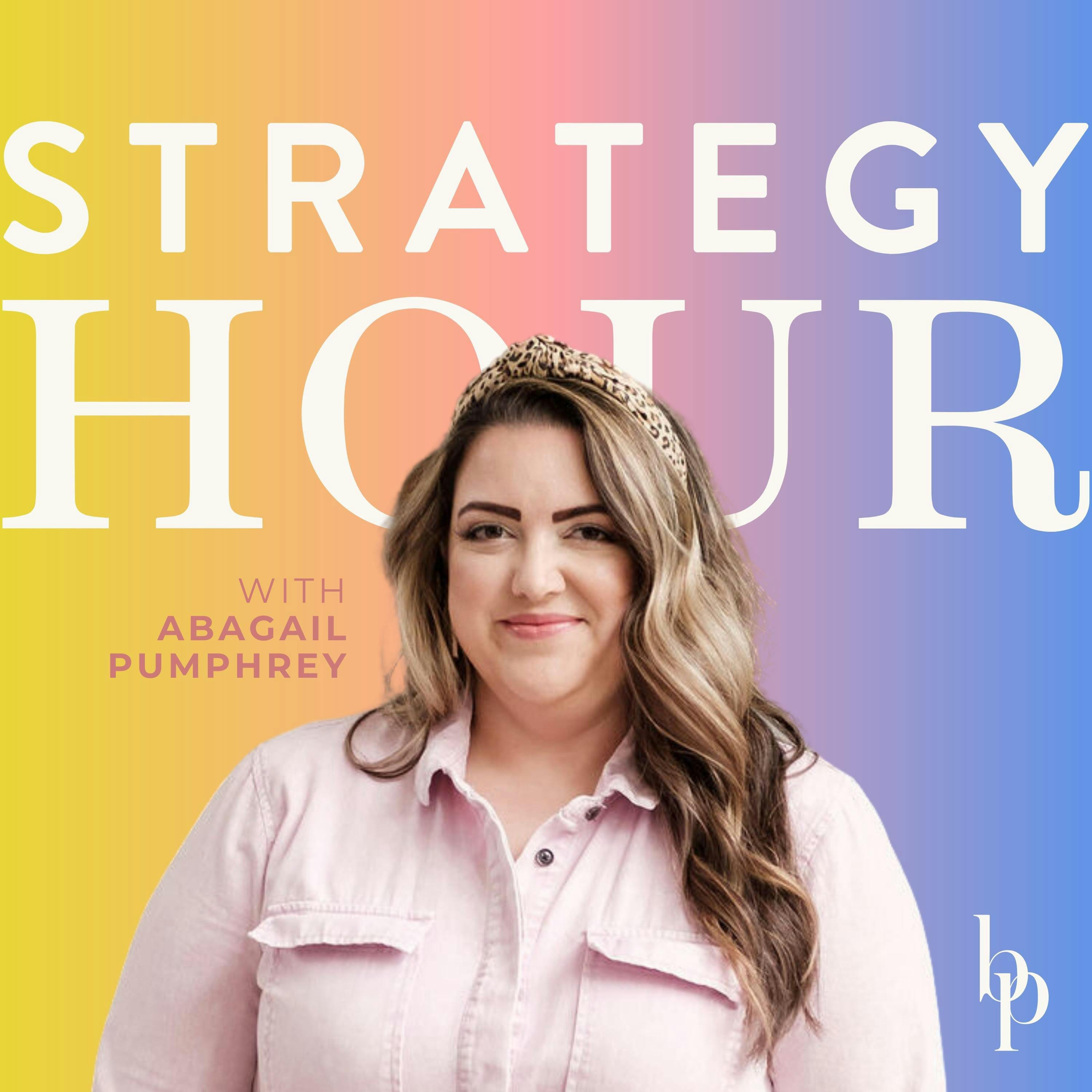
Strategy Hour | Online Marketing for Business Growth
940: Why I Was Hesitant to Build a SAAS Company (And Why That’s Changing)
00:29:02
You can build the kinds of things you’ve always wanted to build, minus all the friction it used to take to make it happen!
Loading summary
Transcript12 lines
- [00:00]
A
What would have taken a team of five months to build out. Now you, as a single person with potentially no or low development background, you have the ability and the access to build tools in days or weeks.
- [00:27]
B
Welcome to the Strategy Hour podcast brought to you by Boss Project. I'm your host Abigail Pumphrey and I'm dedicated to supporting online businesses. I don't believe in one right way to build a business. I'm here to help you build business your way. One that supports not only the life you have, but the life you want. I'm on a personal mission to help you become financially free. I'm taking all the lessons learned as I turned a layoff into a seven figure online business. I'm here to help you prioritize your life every step of the way. Whether you're creating your first digital product, growing an email list, or scaling an already profitable business. Settle in. It's time to talk strategy. Breaking News Strategy Hour needs your vote. We're thrilled to announce the Strategy Hour podcast is officially nominated for the Webby People's Voice Award. Recognized as one of the top five podcasts worldwide in creativity and marketing. This is your chance to help us take home the gold. But hurry. Voting closes Thursday, April 17. It takes less than 20 seconds and your vote truly makes a difference. Head to bossproject.comvote right now to show your love and help us snag that Webby.
- [01:38]
A
Seriously.
- [01:39]
B
Pause this episode and go vote bossproject.com vote. I'll wait. Thank you so much for supporting the Strategy Hour.
- [01:47]
A
I've always wanted to build a SaaS, a software as a service, but I never wanted to manage a full development team or take on the huge financial gamble of developing something potentially before you even have users. More than anything, the thought of building software, as much as it sounded appealing to me, as interested as I am in the industry, it never matched how I wanted to show up or how I wanted to work in my day to day life. But the game has changed. So much is different now, and with the power of AI, so much more is possible without the need to have a huge team to make it happen. For the very first time, I see a future, a path in which I can build the kinds of things I've always wanted to build, but without all of the friction that it used to take to make it happen. I feel like in a lot of ways SaaS has always matched my mission. Like I've always wanted to help people in a very tangible way. And oftentimes when you're providing services, strategy, when you are giving people direction or even educating them, there often feels like there's this missing component that's completely out of your control. You don't have a way to help them implement, that's on them. They have to take the steps. And for a lot of years I've allowed that to be true. You know, as an educator, that's just a part of the game. You have to understand that you only have so much power and there is only so much you can do to help. And then people have to want to take the next step. That's not on you, that's on them. But I find the appeal of software is often you are giving them a path to implement and make their lives easier. Not only are you giving them the tools and the strategies that are potentially going to make whatever it is that you're trying to optimize for better, easier, faster, you know, more ability to grow revenue, all of those things, you're giving them a tool. And I've built a lot of tools over the years like templates and scripts and design files and everything in between. But there's just something a little bit different about software. My hesitation about entering this space was never about running a SaaS company or assisting people in that way. I think there's a lot of room for opportunity now. I also want to acknowledge that oftentimes when you're looking at an outside industry, one that you're not actively a part of, you see the green grass and you don't necessarily see all the icky hard parts that come with it. And so I want to acknowledge that that's just part of it, that you just don't know what you don't know. So I am sure there are a lot of ways in which I have made this out to be. Not better than it could be or better than it is, but specifically that I have made it out to be, you know, with less of the gunk behind the scenes. And I'm sure it's there. I know what's there in my industry and I feel like SaaS is just like one step to the left. As I've grown this company and built it to a multi seven figure education business. This idea has come back multiple times. There has been multiple opportunities to pursue this. And every time I said no. And looking at it, I think so much of it was because as the company grew, I got more exposure to what it was like to have a bigger team and to really make SaaS what you want it to be. It often requires that you scale a big team behind the scenes. And I feared that if that was what I was doing, I would completely transition myself into management and not have the opportunity to be a creator anymore. And I've always been a creator. I went to design school, I went to art school, I studied art history for years. I spent years as a web designer with some development on the side. But I'm not a coder by any means. I was hesitant to get into the weeds. I was hesitant to have a vision for this incredible thing and then run into a lot of friction because software development is not usually all that fast. There's a lot that goes into it and making a vision come to life and match the capabilities and the types of things you want to execute on. There's a lot there. There's a lot that requires a ton of outside knowledge. But the tides are changing in like a massive, massive, I don't think you're ready for it kind of way. So let's like back up, you know, four or five years. If you had an idea for something you wanted to execute on, say you weren't ready to like fully dig into it and you just hired a developer, it could take months, months to execute a relatively small build out. And what do I mean by that? Like, in the past we have built analytics tools for ourselves. Like we've built dashboards. You guys never saw them because they were never scalable to the point that we could have outside users. They were simply ways for us to get information internally. But it took multiple people, multiple months doing this. Not full time, but a lot of the time. And at the end of the day, what we had was just okay. Now it's crazy. Like, say you did have the budget and you hired five full time developers that had a ton of synergy and could write code that worked together. And these people were dividing and conquering and building, and they saw the vision too. Say all of that was working for you. It would take months, if not a full year or more to get to the point that you could have a tool far enough along that you could get beta users. That's a lot of Runway. A lot of Runway, especially in the online world, because you could have an idea and by the time you can get it to market, now all of a sudden, the idea may not be as helpful so far. A lot of the things that have been developed in the software world, they have to be very timeless or in situations that aren't rapidly changing. But as the timeline for development continues to shorten, potentially the opportunity for different types of tools that could exist is exponential. What would have taken a team of five months to build out. Now you, as a single person with potentially no or low development background, you have the ability and the access to build tools in days or weeks, which is mind blowing. Now the crazy part about all of this, beyond what I think most people can't even quite comprehend what's happening right now, because it is just so rapid of a change. And I get it, I understand why people are panicking about their role. You know, when I was going to school, the like primo job that you could walk out of there with was in software development, like studying computer science. Many of my closest friends studied computer science so they could land in the tech space. And I can imagine that many of them are likely intimidated by the shift that is happening right now. The ability for artificial intelligence to write code without all of this, you know, nuance and error that comes with a human implementing something like that. There is now the option to prototype and iterate and get versions together so you could visualize what you had in mind. Because who knows? Like, so often the ideas that we have, they sound good in theory, and then you put it together and other people don't think the same way you do, or they don't use something the same way you do. And if you were building in a more rigid way and building something that you hoped people would all understand and then it didn't work that way, like people didn't get it, you would kind of be up a creek without a paddle and potentially out of Runway financially to keep going. Now you can build things out so much faster and test the market. Now this is going to mean there is going to be a flood, a flood of new software companies, a flood of creators that are not in the SaaS industry at all, have spent no background in tech. They're going to develop their own tools to release them to their existing audiences. And I think that is both going to be amazing and also a huge shift that's going to change a lot of industries very rapidly. But this like, access to artificial intelligence in a way that you can utilize it without fully understanding how it even works. Like we're at the very beginning, at the very, very, very, very beginning. Like artificial intelligence has existed for decades. It wasn't always all of that smart. The rapid pace in which we're changing now is mind blowing when you really sit down to think about it. When you think about the tools you were using even a few years ago compared to now, it is absolutely crazy how much has changed. But until now that has been kind of exclusively available to larger enterprises, larger companies that had the expertise to take what was kind of a giant hot mess and turn it into something that was functional for them. Now there are tools that help smaller creators and smaller businesses develop their ideas and this is what is going to change the game. This is what is going to rapidly produce new results for people.
- [13:54]
B
You're smart, you're talented, you've got the vision. So why does running your business still feels so hard? Success isn't about working harder, it's about working smarter. And that's exactly why I created the Co op. Inside, you'll get instant access to 12 plus courses, hundreds of templates and real strategies that actually drive sales without all.
- [14:15]
A
The trial and error.
- [14:16]
B
These are the exact resources I've used to build a seven figure business. So stop spinning your wheels and join me inside. Head to creative templateshop.com membership and make running your business easier today. That's creative templateshop.com is your business ready for tax time? Imagine having an easy to use accounting platform that keeps you tax time ready all year round. Wait, that's FreshBooks. It's the ideal bookkeeping solution for small businesses. Stay organized for tax time and compliant with tax regulations. FreshBooks automates invoicing and expenses, processes payments, connects bank accounts, and provides real time reporting. Switching to FreshBooks has never been easier. Even if you're coming from Another accounting tool, FreshBooks makes migrating your data simple and their support team is ready if you need help. No more late nights drowning in paperwork or searching for lost receipts. Snap photos of your expenses on the go, send professional invoices in seconds and track payments seamlessly. When tax time comes, everything's prepared and ready for your accountant. Feel more confident about your numbers. Switch to FreshBooks today. Visit freshbooks.com to get FreshBooks 70 off for four months. That's freshbooks.com get started today and thank yourself tomorrow.
- [15:37]
A
So I'm sure you may be asking, especially if you've listened for a while. You may be wondering, so are you dropping what you're doing and building a software company? Like, is there huge pivot coming? Like, what's going on? First of all, don't worry. What I'm doing is not going anywhere. I'm not abandoning courses, I'm not abandoning education. I'm not closing my membership. I am still going to be an educator in the online business space. That is going nowhere. What I am interested in doing is making tools available to the people I already serve to make the knowledge that I Am providing them even easier for them to implement. Now, I haven't announced the details yet, but I am actively in development and this is, like, beyond exciting. Like, so much so that I can't sleep. I am thinking about it constantly. I'm excited about working on it. It is coming together so much faster than I anticipated and it's really expanding my mind in terms of what's possible for the future of Boss project. Now. Before I, like, jumped into this, I didn't really worry about what was on the market. Like, Obviously I've used AI tools and I am an avid user of ChatGPT. That's like a part of my daily working life. But if I was going to develop my own thing, I didn't want to, like, get hung up on all the capabilities or all the specific things that other people were doing. I really sat down to look at how am I running my business and what are the manual processes that are taking far too long and slowing me down as a creator or as a business owner, as someone who's juggling work and life, what are the things that I want off of my plate that don't quite make sense to hire someone else to do? That's where I put the focus, because I know the things I'm struggling with are not specific to me. What I'm talking about impacts every single person in this industry. And right now there are tools that exist to help with one piece or the other, but nothing is really bridging the gap. And I can't give too much away. But this is really different. And it's really different not because I looked at everything else that was out there and decided, what's going to be my unique differentiator? Like, that's not what I went about doing. Instead, I was like, what tool do I desperately need that nothing I've used so far is making possible for me is giving me the tools that I need. What tool do I need? And what tool, if I were to create it, would change the game for my audience. It's designed to help streamline a part of your business that you're in every single day. It's going to remove a ton of friction that slows people down and allows you to not redo work that you've already done. Because so often small business owners are going so fast, the organization tends to be the thing that gets thrown out the window the fastest. You're just like, it's just easier, faster, whatever. For me to do it again. Now, I don't necessarily think this means that all of you should jump on this opportunity and go develop your own tech tool and release it to your audience and run that aspect of company. I don't think it's for everyone. Even now, even when you've removed a lot of the friction for development, the maintenance and ongoing aspects of building a tool that people are using, especially on a more daily basis, like, it adds a requirement for servicing, for providing, you know, customer service in a way that I don't necessarily think the majority of creators are interested in getting into. But if this has been a dream of yours, if you've thought, I have this idea and no one's executed on it, and I really wish you could marry this and that and then it would just exist, I need you to know that that's possible, that the things that you wish existed, they don't just have to stay thoughts in your head forever. They can be built. And much in the same way that the reason so many small businesses start the way they do, they do so because they need the cash, like they need the money to fund their life. They need this to provide a salary for them. Right? And so running an online business is one of the lowest overhead things you can do. You're paying for a few software tools. You don't necessarily need a team at all to start. Your expenses include, like, running a website and paying transaction fees on sales, but you don't necessarily have a cost of goods. You can develop things that could be sold again and again and again and again without the need to invest more. I was just watching a video last night of this creator, this woman who had a dream of building a golf brand. Now, I'm not sure if it was golf clothing or golf clubs, kind of irrelevant in the grand scheme of things, but she was talking about the things she had wanted, the things she had dreamed of, how she wanted to run this company, and then when she started crunching the numbers, just how much more expensive it is than she imagined, and that she, to get off the ground, is going to have to start a lot smaller than she wanted to. I think with the changes we're talking about, this is going to make an industry much like the product, physical product space or brick and mortar space that has this higher overhead. This is going to provide another avenue for creators and entrepreneurs and founders to build something without this huge upfront cost that they may or may not have the ability to take on. Meaning you wouldn't necessarily have to go get VC funding to make your dream a reality. And that means that you get to own your whole company, which is huge. Now, some of you, your mind is exploding right now and you have so many ideas and I love that for you. And I can't wait to see what you ultimately decide to move forward with. But I also want to give you a preview of those of you who are not yet ready to do something that intense, where potentially it becomes your whole business or a massive piece of your business. There are going to be opportunities for you to utilize similar technology to build smaller ideas that fit in the framework of what you're already doing. We're talking better lead magnets. We're talking better tools for your existing clients. We're talking, you know, instead of using outside systems, your ability to build something custom to you is going to get so much easier. And I think before long more people are going to be in this space. But not everyone is going to make it their whole company. I personally do not have a plan of making it my whole company. But never say never. Now, if you're nosy and you want to know what I'm building before anyone else, I would love for you to go to boss project.com waitlist. I'm going to have a little signup form so you can be the first to get details on what I'm building and what that means for you. Just trust me, it's going to be so good. And if you have questions about today's episode or you want to ask me something behind the scenes, you're always welcome to send me a DM over on Instagram. You can find my profile by going to Boss Project on Instagram and I'm linked there. I cannot wait to hear from you. I'm excited about what this means for our industry and I cannot wait to get more of these tools in your hands in the very near future.
- [26:07]
B
Hey, a few quick favors before you leave. I'd love if you'd share today's episode, send it to a friend who needs to hear it and post on social. You can show us where you're listening from, your favorite takeaway or why someone else should listen. Be sure to tag me, Abigail says, and bossprojects so we can share it.
- [26:24]
A
Okay.
- [26:25]
B
Second favor to get podcast updates and all the behind the scenes news from Boss Project. I'd love if you'd join my VIP list. Just head to bossproject.com signup to make sure I have all your contact details. Really love this show. It would mean so much to me if you'd leave a rating and review. It not only helps more listeners find the show, but allows us to bring on quality sponsors so we can keep bringing you this valuable content for free. Thanks so much for listening. Until next time.