← Strategy Hour | Online Marketing for Business Growth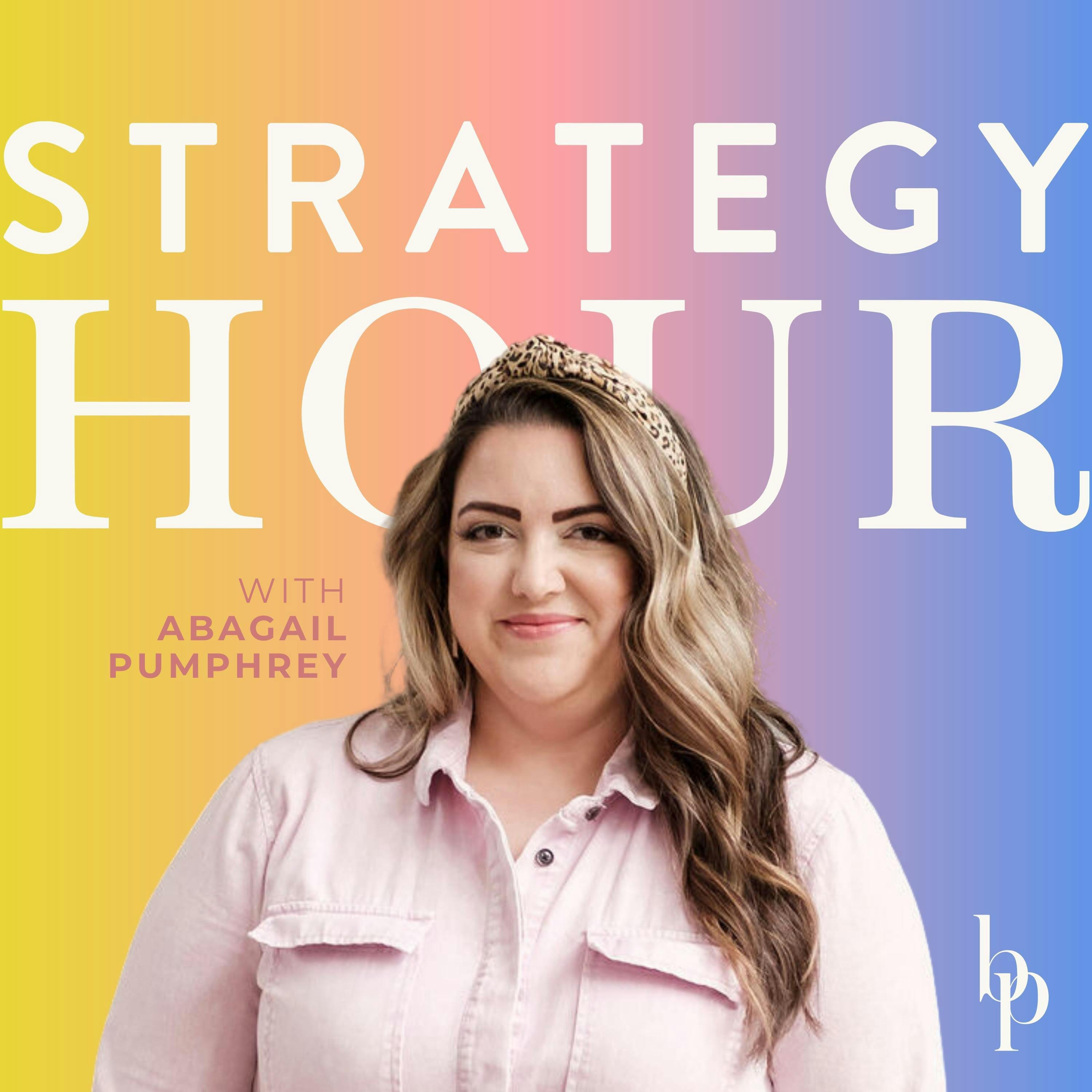
Strategy Hour | Online Marketing for Business Growth
942: Growing a Viral National Brand with a $0 Marketing Budget with Lindzi Shanks
00:50:29
What if you could build national recognition, a cult-like following, and a thriving e-commerce business without spending a single dollar on paid ads?
Loading summary
Transcript38 lines
- [00:00]
A
So for example, a few years ago we could do videos with music only. No voiceover, just pouring very, very low lift videos and they would get millions of views. That's not a thing anymore. At least not for us. People need to hear the audio. They want to hear us talking about it.
- [00:24]
B
Welcome to the Strategy Hour podcast brought to you by Boss Project. I'm your host, Abigail Pumphrey and I'm dedicated to supporting online businesses. I don't believe in one right way to build a business. I'm here to help you build business your way. One that supports not only the life you have, but the life you want. I'm on a personal mission to help you become financially free. I'm taking all the lessons learned as I turned a layoff into a seven figure online business. I'm here to help you prioritize your life every step of the way. Whether you're creating your first digital product, growing an email list, or scaling an already profitable business. Business settle in. It's time to talk strategy. Breaking news, Strategy Hour needs your vote. We're thrilled to announce the Strategy Hour podcast is officially nominated for the Webby People's Voice award. Recognized as one of the top five podcasts worldwide in creativity and marketing. This is your chance to help us take home the gold. But hurry. Voting closes Thursday, April 17. It takes less than 20 seconds and your vote truly makes a difference. Head to bossproject.comvote right now to show your love and help us snag that Webby. Seriously. Pause this episode and go vote bossproject.com vote. I'll wait. Thank you so much for supporting the Strategy Hour. Most brands assume going viral takes a big ad budget. But what if you could build national recognition, a cult like following and a thriving e commerce business without spending a single dollar on paid ads? That's what today's guest has done. Exactly that. And she has built a national brand. Lindsay Shanks is the co founder of XO Marshmallow and the world's first gourmet marshmallow cafe. A wildly fun online brand with flavors as nostalgic as they are delicious. She's an entrepreneur, strategist and content genius who knows how to make people fall in love with a product. And she did it all with a $0 marketing budget. Hey Lindsay, welcome to the show.
- [02:35]
A
Thanks so much for having me.
- [02:37]
B
I am so excited to dig in. When I think about XO Marshmallow, I think about the very, very beginning of my career. And I know that you launched a long time ago, back when we were all babies on the Internet. So I would love for the people who are unfamiliar with your brand to get a little taste of what it's been like and tell us a little bit of background about why start a marshmallow company, what inspired that and what it's kind of grown into.
- [03:11]
A
Yeah, so my business partner actually started making marshmallows her last year of law school. And she's one of five and was looking for something on a poor law student budget with such a large family. And she came across, I don't know if you remember these, but one of those classic Pinterest recipe in a jar things and it had cocoa mix and at the very bottom of the blog it said, try leveling up by making your own marshmallows. She gave it a try. It was by far the most complicated marshmallow recipe ever. Luckily, we don't use that recipe anymore. We've developed our own. But she gave them as a gift and everybody kept saying, oh my God, these are the hot cocoa. Yes, that was fine, but like, the marshmallows are amazing. You've got to do something. Fast forward to her graduation. She started experimenting with flavors like Nutella and raspberry and then announced, hey guys, I don't think I want to be a lawyer. And instead ended up getting a job at a cafe where she was working on sort of perfecting her marshmallow recipes. I was on the other side of Chicago at the same time going through something very similar. I had just graduated with my master's in psychology and originally had planned on getting a PhD. Realized that is not what I wanted to do. I had started a clothing store while I was an undergrad, continued to grow it while I was in grad school and decided to give myself a year and if it didn't work, I would go get a PhD. Well, luckily I ended up winning a free pop up shop in downtown Chicago for my clothing store. Posted to my Instagram that I was looking to hire seasonal help. Wouldn't you know this girl applies for the job and mentions in her interview she likes to make marshmallows. I was like, well that's fantastic. I sell coffee mugs. Why don't we put the marshmallows with the coffee mugs while you work for me and see what happens. And at the end of the pop up shop, the marshmallow mug combo was our number one best selling item. And I just felt like there was something there. I didn't know much about food, but I knew branding, I knew marketing, I knew social media. And I felt like there was something to be had about this. And so I was like, do you want to be business partners? To which she said no. Luckily, I ended up giving her a copy of the Glitter Plan, which is the book from the founders of Juicy Couture. And after she read it, she said yes. And now it's almost 10 years later, we have our own little marshmallow empire. We started with each putting $100 in a bank account, and now we're a multi seven figure business with a 10,000 square foot production facility and 30 employees.
- [05:42]
B
Just a small upgrade from a tiny little upgrade.
- [05:46]
A
I mean, granted, you know, it's been almost 10 years, so it's been a slow but great process.
- [05:51]
B
Yeah, no, I remember, I think I at some point collaborated with Xomarshmallow very, very early on. This probably would have been not long after you guys partnered and were like just getting things off the ground. You had already picked the name though, so I don't necessarily know when that kind of fell in the grand scheme of things, but I remember the first time I tasted Nexo marshmallow and I was like, okay, I didn't know marshmallows could taste like this. Like, this is delicious. So definitely been a fan since and it's been something I've gifted several times. So this is like super fun to dig into. But specifically for today's show, I really want to be talking about how you built such a viral brand without a marketing budget. And I know that social media is obviously a massive driver of that. I'm curious, how did that work for you early on and how is that different from today?
- [06:50]
A
Yeah, so when we first started, part of the reason we didn't have a large marketing budget is we didn't have any money. Right. We were lean. I was trying to run one business. Kat had law student debt, I had grad student debt. When I say we started with $100 each, like that is legitimately what we started with. And we had to find a way to make it work from there. I really understood Instagram at the time, and it was very much so a photo only app when we first got started. And so I really focused on creating content. You know what we then really called food porn. Right. Is like photos of products that just made your mouth water when you were scrolling through. We knew we wanted to be a colorful, vibrant brand because that was eye catching. A lot of the food photography you'd see was very like brown and black and white sort of natural colors. But because we were this Colorful candy wonderland. You know, we wanted our backgrounds to be vibrant pinks and purples and light blues. And so that in of itself ended up capturing the eyes of people and eventually the stomachs of people. Right. As we continued to work on our social media and really just captivate that branding, part of what we focused on from the very beginning too was creating community. So you may not know this, but s'mores were created by the girl scouts in 1927. So we actually call our fans, our customers, troop XO, right? So the idea is that like, you're part of the troop, you're part of the community. And so we were really able to tap into those customers we were seeing, come back again and again and send them out extra freebies and really just kind of use social media to find new customers and then make sure the customers we had became brand ambassadors for the business and shouted out, whether that's on their social or to their friends or to your point, like gifting it out to other people, knowing more about the brand in a very scrappy way. How we go about that today is a little different because social media has changed, right? We are a video content driven business, primarily our behind the scenes, our asmr, oddly satisfying type videos. We kind of discovered this a little bit when Instagram first started doing videos. Back when it was videos, before it was reels and before TikTok became a thing, we would just post a video of us pouring the marshmallow or pulling apart the marshmallow and found that those were the most engaging content we were getting. So when March 2020 happened and we were trying to figure out what the heck to do, I was like, well, I've heard of this Little app called TikTok where you can post videos, so maybe we should start trying to post a few more videos there. And I want to say our first TikTok ever in March of 2020, got something like 1.6 million views. It's like, okay, there's something here to the video game when it comes to exo. And so we've really tried to be really consistent with our video content, growing it as much as possible, giving people what they want. I'm a big believer of listening to feedback of your customers, right? Because without your customers, your business doesn't exist. So I fundamentally believe their opinion matters more than yours does. And so when they're asking us for different types of content, we're trying things out, we're seeing what works. And it's just continued to allow us to scale as our videos get more and more millions of views.
- [10:26]
B
Yeah. When I think about early on, I think one of the things you did really well was create. You mentioned the sense of community, but you did so in a way that you got a lot of people to talk about your brand for you without necessarily paying them. And it never felt, like, deceptive or like you were trying to get something out of someone for free or whatever. It was something about the way in which you just made people feel a part of something and they were genuinely excited about your product. But I'm curious why you think that worked, or, like, how you think you were able to engage people in a way where they wanted to share your product for you.
- [11:10]
A
Yeah, I think it's a couple of things. One, I think we have an inherently shareable product, which is great, it's new, it's novel, it's colorful. Who doesn't love candy? Right. And talking about candy? So I do think there is an inherent shareable aspect to the product itself. But in terms of creating community, we made it very clear from the beginning that we were over the moon when people shared our products. I don't know if you've ever seen the trends on Insta. That's like how someone thinks. We get excited when an order comes in and, you know, it's like, oh, whatever. And it's like how we really act, and it's business owners, like, throwing confetti in the air and everything like that. That was genuinely how we felt. We were so excited to see content. So when we got it, we engaged with it. We're like, this is amazing. Thank you so much. I'm so glad you love it. Once stories became a thing, we were resharing it on stories. So we knew a lot of times when people were sharing our content, they were also trying to build a community and trying to build engagement. So we thought, how can we help add value to their existing content? By engaging with it and by being genuine about it. Even to this day, you know, we don't pay influencers. We've never paid influencers. Actually, we very rarely work with influencers. The vast majority of our content is ugc. But when we do work with influencers, we have no rules. Right. We want your genuine reaction, for better or for worse. We've had people post like, this flavor is amazing. This one, not so much. That's okay. That's their authentic opinion. Right. And somebody still might try the one that they said they didn't really like. We actually get that all the time, because people will be like, I wanted to prove them wrong or something like that. I don't know. It's so. It's so interesting the way consumer behavior works when it comes to responding to videos. But yeah, to this day, we just focus on how can we provide the most value in terms of our product, but how can we provide the most value in terms of boosting up your content in an authentic way that genuinely makes you feel valued, heard, seen and that we're interested in what you're doing, not just. Not just what you can do for us?
- [13:23]
B
Yeah, no, I definitely felt that and I've seen it in action and I. I do think it's really different from what you see a lot of other brands do. Like, even if they send something out and hope you post it, I don't necessarily see the appreciation back. You might get a thanks or love that you posted this or whatever, but the way in which you've often reshared or like, you're talking about, like, genuinely commented, like, you can tell that someone took the time to watch the video or see the thing all the way through. It's not just a blanket. Here's how we say thank you to people who post. And I think that genuineness really shows through. And I think it should be a reminder for people that, like, if people are going out of their way to talk about you or your brand or what you're doing, genuinely showing that appreciation is only going to create more momentum. Like, I think more often than not, gratitude will come back to you far more than you give. So definitely worth the time and effort. I'm curious, in comparison, like, there's obviously been a lot of changes over the last 10 years to, to the way Social performs and what works and how all of that has evolved. And we could talk about blanket things that happened on platforms, but I'm curious, more specifically on trends, are you jumping on things that are happening right now or are you sticking towards like an overarching principle or plan kind of based on the way apps are performing?
- [15:05]
A
Yeah, so it's. It's a little bit of both. Right. So we don't really engage with trends in the true sense of the word. You know, let's say there's a trending audio or there's this trending script of a video, you know, POV this or what have you. We don't really do a lot of that because we find that it doesn't work that well for us. And what does is creating more evergreen content that makes sense for us that customers are used to seeing. We actually even Tried testing, changing up our content last year and it performed so terribly for us. So I do all the voiceovers for our video and that's what we find does really well. There's video with my voice over it, and you're kind of listening to me walk you through the process of what you're seeing on screen. Last year, I hired someone to help take over some stuff for me for a limited amount of time, and she started doing the voiceovers and reviews just tanked. People got so used to hearing my voice that even though they were used to seeing the content, they were having a hard time connecting that it was with our content. So she continued to help me with the videos for a while, but I always still had to do the voiceover for it, which I think is so funny because I even doing this podcast, I hate the sound of my own voice, but I'm glad that it seems to be working for so many other people. Love it or hate it, it's a voice that they recognize. Now in terms of trends of like algorithms changing and figuring out what it is that the algorithm wants, we do that, right? So we do a lot of AB testing with our videos. We try to figure out, okay, this video performed, this video didn't. We go through a back end, we analyze it, we try to say, okay, what did this one have that this didn't have? And figure out what is. What is it From a trend perspective that's performing really well. Right? So, for example, a few years ago, we could do videos with music only, no voiceover, just pouring very, very low lift videos and they would get millions of views. That's not a thing anymore. At least not for us. People need to hear the audio. They want to hear us talking about it. We used to not be able to put any text on the video. Not anymore. Most people are listening to video or watching video without sound on, so they need to be able to read the captions. So it's about finding evergreen content that works for you, but then being willing to adjust that content based on what the algorithm is looking for. And we know it changes. We know it changes on every platform relatively often. And unfortunately, it's our jobs as marketers and as business owners to adapt to them, not let them adapt to us.
- [17:58]
B
Yeah, thinking about that, I know that a lot of people get overwhelmed with it. They may hit a rhythm that they feel like is working for them. They're getting traction with that rhythm. They're seeing growth and then major plateau. Whether that means your followers aren't growing or your Content is just sort of staying stagnant or even going down in views. And it sounds like you spend a lot of time analyzing what's working. How are you going about doing that? Is there any particular software or strategy? Is it because you now have a dedicated team working on it? How does that look?
- [18:37]
A
Yeah, so I know I mentioned I hired somebody, she doesn't work here anymore. I do all of our social media content, posting it, filming it, editing it, reviewing it. So even though we have a large team of 30, I'm still doing all the social content, so I understand how frustrating it can be. In fact, right now we're going through a view slump because the algorithm has changed. And I haven't quite yet figured out what it is that TikTok now wants now that it's back from being banned with new content. And so I use Notion to plan out all of our content. And then about a week after a video has posted, I go in and I start checking the stats for it. I know that from an algorithmic perspective, right now what TikTok is looking at is watch through rate. That is the biggest thing that they're looking for. And so I can. So, okay, our videos aren't getting the watch through rate that they're supposed to. Where is it that they're dropping off? Is it that the hook got them in but the rest of it plateaued? And that's typically what it is. We hook them in and then it's kind of plateauing people out. So I'm now looking at saying, okay, I need to be able to hook them in in the first three seconds. I need to tease them with enough content to keep them and then save the final moment for the end, revealing it at the end instead of revealing it in this middle part where we're losing people. So that's kind of helping change up that content a little bit. I know it sounds overwhelming and a little boring, and there are some aspects of it that are. But I would ask people, would you rather spend your time analyzing a bunch of meta ads or would you rather spend your time analyzing your content? Because one's gonna be a lot cheaper.
- [20:27]
B
Obviously it's a lot cheaper to focus on organic. It just takes time. And I think sometimes people are not sure that it's worth it, maybe because it's not something they're as good at or whatever. But I can't imagine as someone who went to get a master's degree and then open like a retail boutique, like, it's not like this is your background necessarily. It's something you embraced and learned over time with practice. Do you have any, like, encouragement for the people that are just feeling frustrated?
- [21:02]
A
Honestly, I would say film everything and get used to doing it, right? Because keep in mind, I have been filming or shooting content at this point point for almost 10 years, right? I do it for my personal socials. I did it for my business before xo. I've been doing it for a long time. Even before I started my first business, I was doing like influencer work at the very beginning stages of blogs and Instagram, right? So I'm used to being in front of a camera. I'm used to talking. And the only way you get used to that is by doing it. I'm a very introverted person. A lot of people don't know this about me. I have to like psych myself up to go do networking events and things like this. And I'm usually very exhausted afterwards and so I have to have my like, quiet alone time. Right? But you can have introverts still engage in content because it just is practice. It's just doing it again and again. And I know it's frustrating, especially if you've been doing it and you feel that you haven't quite hit that mark. But the number one driver for virality and the number one driver for quite creating good content is consistency. So even when you don't feel like showing up, you showing up, even if it's subpar, content is better than not posting anything. And then when you have moments of enthusiasm, ride that wave and batch your content, that's something I have to do now, as I used to be someone that was like literally creating content every single day to post every single day. And now I have two days a week that I film a lot of content and then I try to spread that out over the course of the next seven to 10 days. And that allows me to be really enthusiastic on those two days and be thinking about content. Right? I would also say keep your notes app with you at all times or a journal if you're someone that you'd rather physically write things out. I, the other day literally was thinking about a content idea in the shower, was mid washing my hair, turned the shower off, ran out, typed it into my notes app and got back in the shower because I was like, this content is too good to forget, right? And I feel like those moments happen and we're like, oh yeah, yeah, I got to remember to that content. And then we forget because we're humans, right? So I'd say write the content down. Practice creating the content. Be consistent. Batch it in areas in which you have, you know, if you're, if you know you're a morning person, batch it. Then. If you know you're a night person, batch it then like use your body's own algorithm itself that it's telling you what it wants to try to create the most out of it.
- [23:49]
B
Yeah, you definitely want it to give you the most traction possible. If you're, if you're going to go through the effort, you want it to work. You're smart, you're talented, you've got the vision. So why does running your business still feel so hard? Success isn't about working harder, it's about working smarter. And that's exactly why I created the Co op. Inside, you'll get instant access to 12 plus courses, hundreds of templates and real strategies that actually drive sales without all the trial and error. These are the exact resources I've used to build a seven figure business. So stop spinning your wheels and join me Inside. Head to creative templateshop.com membership and make running your business easier today. That's creative templateshop.com do you really understand your business numbers? FreshBooks takes the stress out of bookkeeping. It's your financial BFF. With FreshBooks you can automate invoices and expenses, process payments seamlessly and get real time insights in your business finances. Build invoices in seconds and get paid twice as fast. Create reports that allow you to instantly see the health of your business. And FreshBooks grows with you with features like team management, payroll and accountant access when you need them. Switch to FreshBooks for a better accounting experience. FreshBooks is the user friendly accounting platform for your business. Switching to FreshBooks has never been easier. Even if you're coming from another accounting tool. FreshBooks makes migrating your data simple and their support team is ready if you need help. Feel more confident about your numbers. Switch to FreshBooks today. Visit freshbooks.com to get FreshBooks 70% off for four months. That's freshbooks.com get started today and thank yourself tomorrow. I'm curious how you're also balancing your time. Like ultimately you're a co founder and you have 30 people y'all are managing. What percentage of your time is actually spent on marketing versus managing employees and thinking about your product? And maybe some of those things are now outsourced to different people on your team. But what does your time look like and how do you feel like you got to the point you were able to focus on what you do?
- [26:09]
A
Yeah. So I would say about 20 to 25% of my time is focused on marketing. Part of the reason is I believe in the 8020 rule. So I believe that 20% of your output should yield 80% of your results. So I know that because content is the main driver for us and social media is the main driver for us, I need to make sure that 20 to 25% I spend on social is focused, is good, is when I'm in a good head place. So right now, because that is my. That's our primary sales driver, right? And without sales there is no business. So that's in a really important area for me. And I block out time and I'm strict with it on my calendar of nobody's allowed to talk to me during this time. Nobody's allowed to come interrupt me during this time. Now that took a long time to get to. I'm going to be honest with you, when I first started, everybody has your attention and it's really easy to get pulled and sucked into a million different ways. But batching my time for social media and content is literally the only thing that keeps me sane and keeps that content churning out. So it's about 20, 20 to 5% of the time. I also make sure that I block out about 20 to 25% of time focused on big picture. So we talk a lot about working on the business versus in the business. So in the business, you know, it's answering emails, it's talking to clients, it's engaging with employees on the business is what true CEO should be working on. And that's growth vision goals for the business where the next big project you're going to be working on, right? So you have to carve out time to do that. The rest of the time is spent managing employees, answering emails, getting sort of like the nitty gritty stuff done. But I'm very fortunate that this is the best group of employees I have ever, ever had. We really focus very heavily on our culture here and on our values. So for example, XO's mission statement is to spread joy into the world through marshmallows. So we focus a lot at work on what joy means and how do we create a joyful environment. And I think people initially think that means we're like, oh, everything's fun and happy all the time. And like, that's not what joy means. It's about service, leadership and looking out for your fellow teammates. And we do something here called fist of five. Every day everyone has to check in and say on a scale of one to five. Where am I at today? If you're at a five, amazing. You get all the extra work. Go do it. Crush it out. If you're at a one, it tells everybody else who's working, like, hey, that person needs a little extra support today. And it's no questions asked. Like, we help lift that person up. And by using that sort of core value and the culture that we've created. Actually, I don't need to do a lot of managerial support for the team because I've created a team that supports each other well.
- [29:10]
B
I mean, that's a beautiful way to run a company, is you obviously want people working in tandem and supporting each other and building the company up, because at some point, you can't do it all. Like we. I remember the feeling where I had, like, looked in reverse and realized I literally could no longer run this company by myself. Like, if I wanted to, it wouldn't be possible. Like, it just. I mean, not to say that a company couldn't exist, but the company would not be what I built it up to because there's just so many moving parts and pieces that require more time than I have. So I think taking time to appreciate what that team is doing for you is so critical. But obviously, like, your time is Limited and 20 to 25% of your time, I think a lot of people hearing this would have assumed it was all you were doing. And so I'm glad we took some time to really break that down. I'm curious, though, what are ways in which you're making bigger moves to grow the brand without necessarily spending a huge budget? Are you focusing on bigger collaborations or brand partnerships, or is there something else that's kind of brewing behind the scenes?
- [30:28]
A
Yeah. So for us, right now we're focusing on national distribution and trying to get bigger clients. So we're primarily known as a D2C company. You order from our website, we ship to your door. We also had a cafe for seven years. But what we're focusing on right now is how do we get into the Costco's Whole Foods targets, Walmarts of the world. Because the amount of effort we're spending for D2C, we could spend that same amount of effort to get a much larger order that helps really move the business to the next level. And then for us, again, always talking about customer feedback, the biggest complaint we get from our customers is the cost of shipping. And unfortunately, the cost of shipping is what it is, and it goes up every single year because UPS and USPS are going to get their Money. Okay. So we have to find ways to get our product into customers hands without them having to pay for shipping. And that just means growing international distribution. So that is our number one focus and driver of this year is how do we basically spend the same amount of effort and time? Because to your point, we don't have a lot of it. But to get bigger clients, that not only help put more dollars in our pockets from a business perspective, but it's also going to make our customers happier because they're going to be able to walk into a store and pick up the product as opposed to paying for shipping and waiting four to five days for it to arrive to their door.
- [31:59]
B
Yeah. And I think to that end you likely have a lot of fans that have bought your product a couple of times, but if they had more accessibility to your product would likely be more regular customers. But it's the fact that they have to like go through all the extra steps of making sure they're following you and seeing the sales and like going out and purchasing at the right times and planning enough ahead that it could be a gift for somebody and all of those things. So I'm excited about what that could do for you. And I know there's a lot of people listening to this show. They're like, I don't have a physical product, so like going after a brand deal in that way doesn't seem possible. But I just want to encourage you guys that very similarly I spend my time on bigger deals than I do spend my time on the one off sale. And it took time to get to the point where I could do that or even be creative enough to think about what that could even look like to make it worth it to somebody else. But it does exist on both end the spectrum. Whether you're selling information or you're selling a physical product, there's definitely ways to collaborate in a paid sort of way, whether that's exchange of goods or exchange of knowledge or expertise. So know that that's still an opportunity for you and an exciting one at that. Like being able to work with bigger brands. I think regardless of what you've been doing all of these years, it feels really validating. It feels like, oh, someone else does notice and acknowledge all of the hard work I've put in. I'm sure you feel the same way.
- [33:43]
A
Yeah, I mean, we've started working on a lot of bigger collaborations as well. So like last year we partnered with Strawberry Shortcake. The year before that we partnered with Care Bears. We have five to six upcoming collaborations That I can't talk about yet, and I wish I could. But part of what that does for your business is it also helps legitimize it. Right. So you're not only getting the exposure and the resources that a bigger brand has that you don't. Right. But you're also telling customers or clients, if it's a service based business that, hey, this big brand thinks I'm a big deal, so you should think I'm a big deal too. Right. And it's really helped for us legitimize ourselves as a true candy brand and not just like someone making candy in their house, which we've been there. Right. And when we're there, we can't work with these big brands. So it kind of helps get us to that point. And the thing I've noticed is that they're all watching each other.
- [34:47]
B
Oh, a hundred percent, 100%.
- [34:49]
A
Like, we got our Care Bears deal because they saw us working with Scooby Doo and we got our Strawberry Shortcake deal because they saw us working with Care Bears and we got some of the other collabs that we're working on this year because they saw Strawberry Shortcake or they saw us on TikTok. And so it's that legitimizing, it's kind of that domino effect of once you start working with a couple of big brands, it not only legitimizes you to customers, but it legitimizes you to the big brands that say, okay, I know you know how to work with us. Let's partner together.
- [35:19]
B
Yeah, not only that I know you know how to work with us, but also the people typically running those bigger brands, they're just like, there's like a regular person in brand partnerships that isn't necessarily been in this industry forever. Like sometimes you have, and so they could be new to their role. I can't tell you how many times I've hopped on the phone and been like, I've used this product for 10 years or whatever. And they're like, I've worked here for three months. And I'm like, oh my gosh. And it can be kind of frustrating to be on the other side when you've been supporters of a brand for so long and you're working with people that you're like, well, if you had been in this industry, you would have known I was already a big deal or whatever. So it's an interesting way. But I totally agree with you that, like, watching each other is a huge, huge part of it. And I don't know if you feel this way, but I almost think working with brands is now the new version of getting PR in the way that people used to think of it, because so much of what you guys might think of PR with like magazines and newspapers and even online publications, a lot of that is now paid. And people want to see earned expertise and earned legitimacy. And often those brand deals feel more legitimate in that way because there had to be some sort of deal reach. But I'm curious what you think about press versus brand.
- [36:55]
A
Yeah, I have an interesting relationship with press, I feel like, because to your point, it is almost all pay to play and almost all of them want Amazon affiliate links for physical products. And we don't sell our product on Amazon. It's not something we do. It's not something we want to do moving forward as a company, at least at this current time. And so we have reporters and writers who are genuinely, enthusiastically excited to write about our products, only to find that, oh, I can't get you commission when somebody orders this. So now you don't want to write about us because all of a sudden, even though you're really excited about their product now because I can't make you money, you don't want to write about it. So that's, that's its own thing. I don't think people are engaging as much with press as they used to from a brand perspective. We know, statistically speaking, gen Z uses TikTok when deciding what they want to purchase 87% of the time. Millennials aren't that far behind them like they often. I saw what was the stat the other day. I wish I could remember the number. But Gen z is using ChatGPT to make brand purchasing decisions like should I order from X Company or compare X Company to this company? And they're using AI to do the work for them. And when you have a ton of content, a massive library of content, both that you've created and is ugc, guess what's fueling those AI algorithms? The content that you've created. And it's so much easier and it's such a lower lift to create your own content than it is to go get media or paid for Playbook press. Now, when you're doing brand partnerships, not only to your point does it legitimize you to the customer and people are excited about it and they want to be part of it. But a lot of these larger companies have bigger press relationships that smaller companies don't have. And they've been doing advertising for so long with these magazines and with the online media that those writers will write about them no matter what. Now all of a sudden you're getting those articles because you're affiliated with this brand through this partnership, but you're not having to do pay for play. And that's the same thing that's happening with one of the big partnerships that we have launching in August. Their team is doing all the press tours, all the influencer kits. They're paying for everything. Like they're paying us to send them product to do influencer kits, even though we're making the money off the product. It's a very exciting collab. It's one of my favorite collabs we've ever done. Not only from a brand perspective, but from a monetary perspective. You just realize that, like these large companies have these massive budgets and they're just excited to do something with it because they're having a hard time getting organic content. They're used to doing the pay to play, the press, the advertising. So you're going to be able to use them to get press. They're using you to get organic content. And that's okay because it's a mutually beneficial relationship. It doesn't work if it's, you know, completely one sided.
- [40:17]
B
Yeah. Now, I know you've grown this company without ads. I don't know for sure if you've never run ads, but I know it hasn't been a part of your growth. Like you focus primarily on organic. I'm curious if you've ever felt the pressure to start running ads or times when you felt like organic was harder and you thought, oh, maybe we should change course. What made you stick to focusing so heavily on organic content?
- [40:51]
A
So I'm going to be fully transparent. We are going to start running ads for the first time in the next month and a half have. So I'm going to do this question twofold. So, one, I have always felt the pressure because I'm someone that my business partner describes as go, go, go, while she's, whoa, whoa, whoa. And by that I mean I like to grow the business. I want to grow the business fast. I want to see it become a household name. I want to be like the biggest marshmallow company there is. I also know we don't have the funds to do that. And so we have to do it organically. And so as the only person that does the marketing for our team, I definitely feel the pressure in making sure that we're putting out fantastic content, that the content converts into sales, that we're doing it in A way that's very, very lean and that we're able to grow the business in a way that is economical in terms of profitability and growth, while also not letting something like an algorithm change completely plummet the sales of the business. Right. Which running ads kind of helps prevent that. We are now about to start running ads and a lot of that has to do with this desire to get into grocery stores. So because we're basically changing our model from being a primarily online D2C business to you're going to be able to purchase us physically in stores everywhere, we kind of have to change up how we're targeting that audience to be more interested in coming into our store. And because we've made the decision in the last year or so to start looking at M&A. So mergers and acquisitions and a potential exit of the business because been making marshmallows for almost 10 years now and we love it. We do think the business is starting to get to a point where from a CPG and food perspective, we have taken it as far as it possibly can go on its own. Once you get to a point with like candy and food and Bev, you. You kind of need like a Hershey or a Mars Wrigley or somebody to come in and kind of take it to the next level because they have all the distribution access and all the budgets and things that a smaller candy company doesn't have. But we have to get to that point. And to get to that point where we look appealing enough to be purchased, we have to start running ads.
- [43:19]
B
It is just part of it. But I do want to reiterate like you are multiple seven figures before you decided to make that decision. I know I didn't run an ad until we had hit over 500,000 in annual revenue. And I turned it off when we were close to a million. I turned it off for like 20 months. I didn't have a single ad running because it just didn't make sense for so many reasons. And I'm not necessarily going to get into that right now. But it's just one of those things where you're going to have to debate it's worth at various points in your business. But I do want to encourage you. When you're smaller, your time, like your effort will go further than your money. Like your time will. You'll get get more return from that effort, in my opinion, than you will from putting a dollar in. At some point that won't necessarily be true anymore. And you have to decide what that point looks like. And when it's going to make sense financially. But you obviously want it to bring more income in. If you're going to go to the effort of advertising, it needs to be worth it. So before we wrap up today, I am curious. You've already talked about going into stores and preparing for hopefully a merger in Acquis acquisition in the future, but is there anything else that you feel like you're headed towards that you're evolving into as your brand continues to grow?
- [44:49]
A
Yeah, there's a couple things, both from a brand perspective and a personal perspective. So from our brand perspective, we have our first ever cookbook is launching in August. Super excited. Put our love and heart into creating it for the next year and a half. And so we've been trying to really grow the brand not only from a product perspective, but from a lifestyle perspective. Like we want people to feel joy, feel the nostalgia that we create. So as we continue to grow the business, we're thinking beyond marshmallows. We're thinking about what sort of partnerships can we do from a brand perspective that maybe we're not partnering with other food companies, maybe we're partnering with like a home decor company or something like that to create a line of XO marshmallow in inspired home decor. So we're growing it from that perspective. From my perspective, now that we're talking about potential mergers and acquisitions for the next five years, I'm thinking about what does my life beyond EXO look like. And I'm getting really excited about coaching business coaching, consulting, speaking engagements, all that good stuff. It's. I've been very fortunate that I've been able to grow not only one business, but two businesses over the last 15 years of my life. I started my first business. Yeah. When I was in undergrad. And so how can I share that knowledge as I, as I grow and maybe move from being a product based business to an information based business someday? So I'll have to come back to you and say how do I apply all these from a. From an information perspective. But I think there's a lot of really fantastic things on the horizon for xo and I'm, I'm excited to be part of them.
- [46:36]
B
Yeah. Well, I just hope today served as a reminder that you don't need a massive marketing budget to build a buzzworthy brand. You just need community, creativity and most importantly, consistency. Lindsay's really proof of that and I am so excited for the business you've built and all the things it's going to grow into. If people are interested in connecting with you specifically or the XL Marshmallow brand. Where can they find you online?
- [47:07]
A
Yeah, so for ExoMarshmallow on Instagram and TikTok and YouTube we are exo.marshmallow M A L L O W and our website is xomarcimalo.com for me. You can find me on TikTok and Instagram at Lindsay Shanks L I N D Z I Because my mom thought it would be crazy if we all had Z's in our names. So I hope to see you guys soon.
- [47:30]
B
Amazing. Thank you so much for being here.
- [47:32]
A
Thanks.
- [47:33]
B
Hey, a few quick favors before you leave. I'd love if you'd share today's episode, send it to a friend who needs to hear it and post on social. You can show us where you're listening from, your favorite takeaway, or why someone else should listen. Be sure to tag me at Abigail says and bossproject so we can share it.
- [47:50]
A
Okay.
- [47:51]
B
Second favor, to get podcast updates and all the behind the scenes news from Boss Project. I'd love if you'd join my VIP. Just head to bossproject.com signup to make sure I have all your contact details. Really love this show. It would mean so much to me if you'd leave a rating and review. It not only helps more listeners find the show, but allows us to bring on quality sponsors so we can keep bringing you this valuable content for free. Thanks so much for listening. Until next time.