
Podcast
The Summary Series: Top 100 Finance and Investing Books
Hosted by Dominus and Sophie · EN
Welcome to The Summary Series: Top 100 Finance & Investing Books, your go-to podcast for quick & insightful breakdowns of the most influential books on money, investing, and wealth creation. Each episode condenses the wisdom of top authors & financial experts into actionable takeaways, giving you the tools to elevate your financial knowledge & decision-making. Whether you’re a beginner or a seasoned investor, this series helps you unlock the key lessons from the best books in finance & investing, in a fraction of the time. Tune in & take charge of your financial future, one book at at a time.
21episodes
Episodes
Newest firstAll episodes
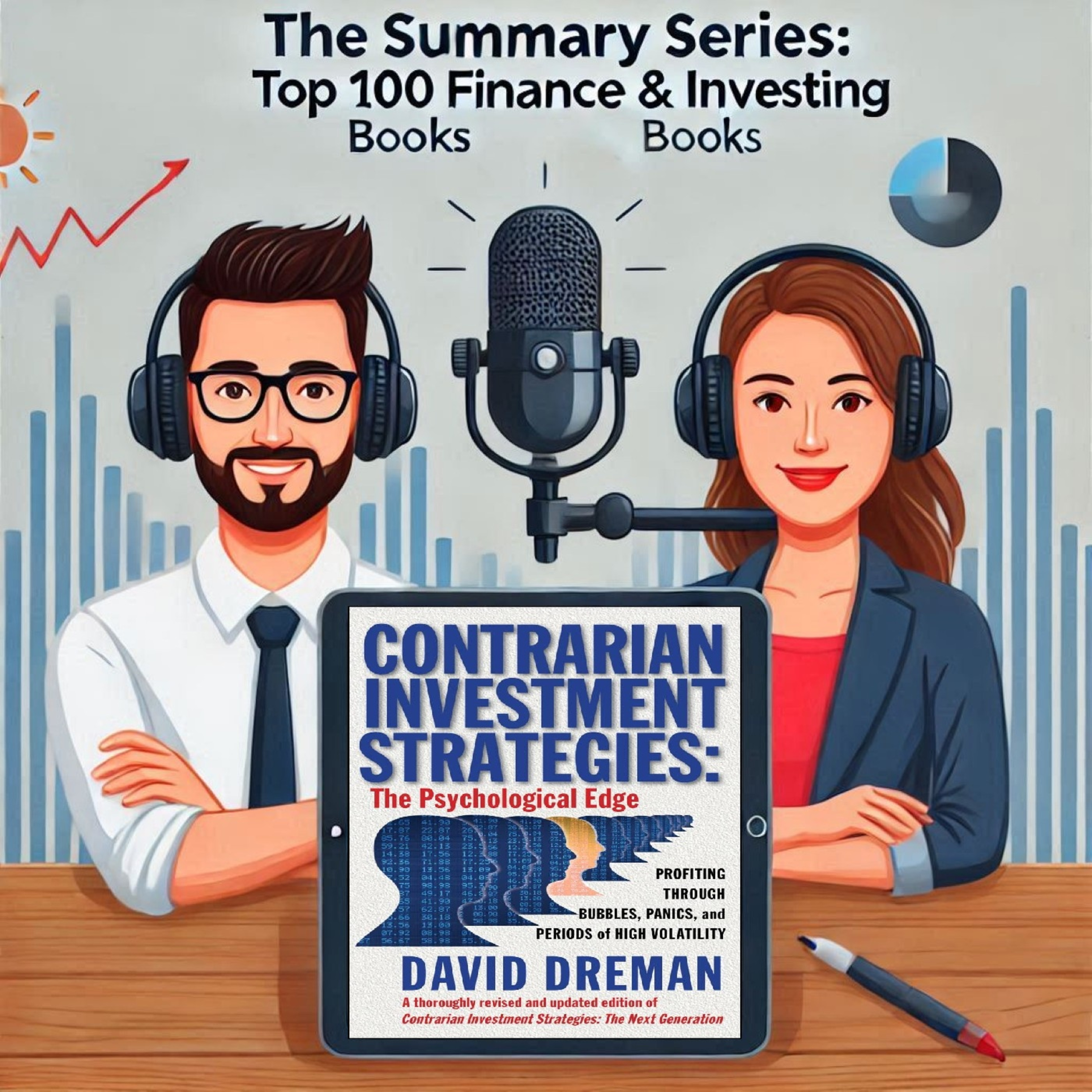
100-Contrarian Investment Strategies: The Psychological Edge (An Essential Guide for Investing)
Apr 4, 202500:13:31Tap to summarize# *Summary of *Contrarian Investment Strategies: The Psychological Edge* by David Dreman*📚 Buy this book on Amazon: https://amzn.to/41WmuqD💻 Free month of Kindle Unlimited: https://amzn.to/3ZYVJAK🎧 Grab audio version for free on an Audible trial: https://amzn.to/3PeeivQ*"Contrarian Investment Strategies: The Psychological Edge"* by *David Dreman* is a *guide to investing against the crowd*, emphasizing that *successful investors think independently and take advantage of market irrationality*. Dreman, a pioneer of *contrarian investing*, argues that *most investors fall victim to psychological biases that lead to poor decision-making and market inefficiencies*.The book provides *a data-driven approach to contrarian investing, explaining why undervalued stocks outperform over time and how investors can use behavioral finance to gain an edge*.## *🔹 Key Themes & Insights*# *1. The Power of Contrarian Investing*✔️ *Most investors follow the herd, chasing trends and overreacting to market news.*✔️ *Contrarian investors do the opposite—buying stocks when they are undervalued and selling when they are overhyped.*✔️ Historical data shows that *low P/E (price-to-earnings) stocks tend to outperform high P/E stocks* over time.🔹 *"Going against the crowd is uncomfortable, but that’s where the biggest profits are made."*# *2. The Psychology of Market Mistakes*✔️ *Investors are not rational—they are emotional and influenced by biases.*✔️ *Recency bias* – People overweight recent events, causing them to panic in downturns.✔️ *Overconfidence* – Investors believe they can predict market moves, but they rarely can.✔️ *Loss aversion* – People fear losses more than they value gains, leading to irrational selling.🔹 *"Investing success comes from controlling emotions, not predicting the market."*# *3. Market Inefficiencies and Why the Experts Get It Wrong*✔️ *Most Wall Street analysts and fund managers fail to beat the market.*✔️ *Forecasting is flawed*—experts are no better at predicting market moves than random chance.✔️ *The market overreacts to both good and bad news*, creating mispriced opportunities for contrarian investors.🔹 *"The stock market is driven by psychology more than fundamentals."*# *4. The Case for Value Investing*✔️ *Low P/E, low price-to-book, and low price-to-cash flow stocks consistently outperform.*✔️ *Blue-chip growth stocks are often overvalued, while out-of-favor stocks are bargains.*✔️ *Buying undervalued companies and holding them for the long term leads to superior returns.*🔹 *"Avoid the popular stocks—buy what’s cheap and ignored."*# *5. The Importance of Patience and Long-Term Thinking*✔️ *Contrarian investing requires patience—markets can stay irrational longer than expected.*✔️ *Short-term market movements are unpredictable, but long-term trends favor undervalued stocks.*✔️ *Avoid frequent trading—high turnover leads to high fees and lower returns.*# *6. How to Apply Contrarian Strategies in Your Portfolio*✔️ *Diversify across undervalued sectors to reduce risk.*✔️ *Avoid market timing—invest consistently instead of guessing tops and bottoms.*✔️ *Stick to a disciplined strategy, even when it’s emotionally difficult.*## *📖 Key Takeaways*✅ *Most investors make emotional mistakes—contrarians exploit these errors.*✅ *Undervalued stocks (low P/E, low price-to-book) outperform over time.*✅ *Market experts and analysts frequently get it wrong—trust data, not forecasts.*✅ *Patience and discipline are the keys to successful investing.*✅ *Avoid market hype—buy when others are fearful and sell when others are greedy.*# *📝 Final Thoughts**Contrarian Investment Strategies: The Psychological Edge* is a *must-read for value investors, behavioral finance enthusiasts, and anyone looking to beat the market by thinking differently*. David Dreman provides *a compelling case for why going against the crowd leads to superior investment returns*.
Transcribe →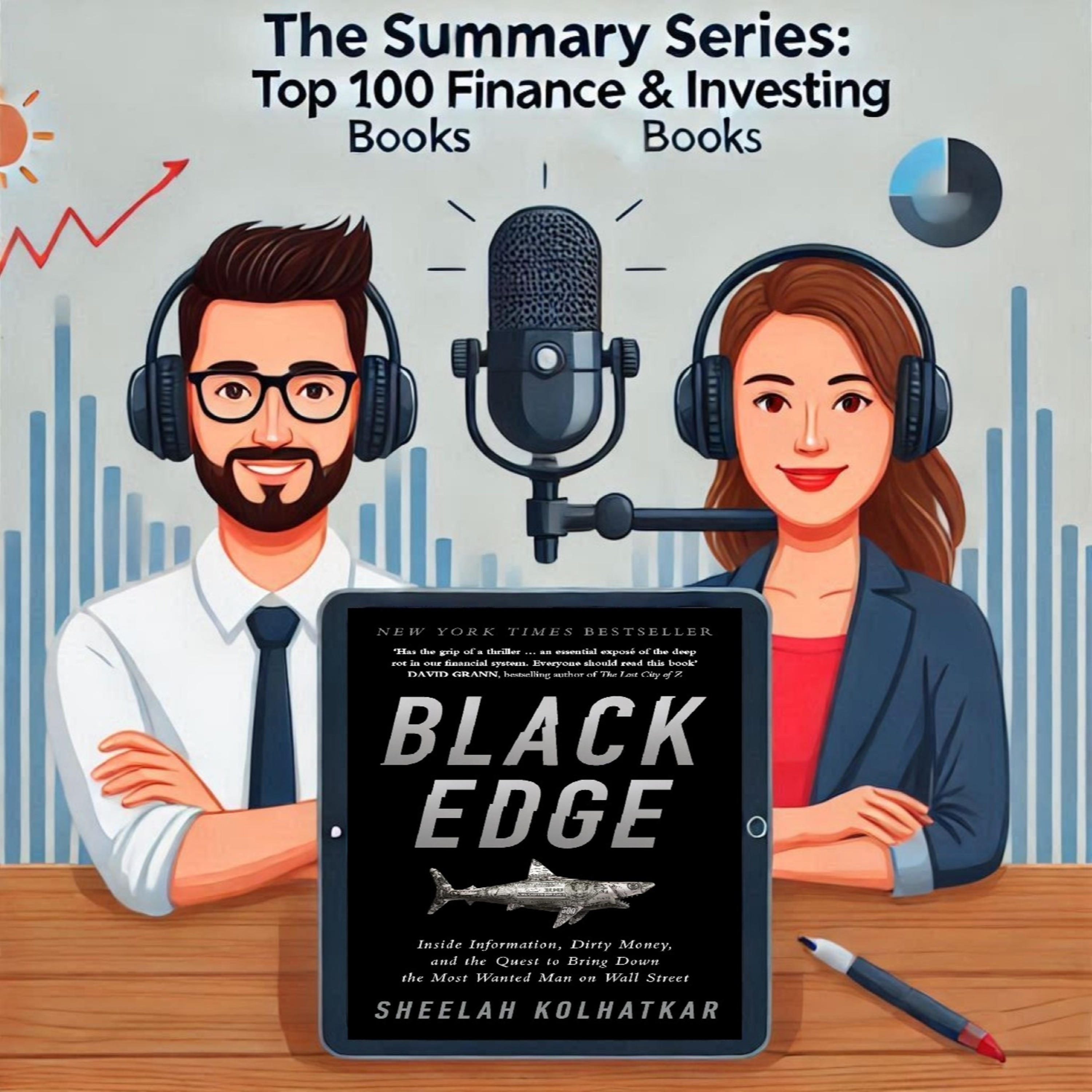
099-Black Edge: Inside Information, Dirty Money, and the Quest to Bring Down the Most Wanted Man on Wall Street
Apr 3, 202500:22:11Tap to summarize# *Black Edge: Inside Information, Dirty Money, and the Quest to Bring Down the Most Wanted Man on Wall Street* by Sheelah Kolhatkar*📚 Buy this book on Amazon: https://amzn.to/4hewkKc💻 Free month of Kindle Unlimited: https://amzn.to/3ZYVJAK🎧 Grab audio version for free on an Audible trial: https://amzn.to/3PeeivQ*"Black Edge"* by *Sheelah Kolhatkar* is a *real-life financial thriller* that tells the story of *Steven A. Cohen, the billionaire hedge fund manager behind SAC Capital, and the largest insider trading scandal in Wall Street history*. The book explores how *Cohen built his empire using “black edge” (illegal inside information) to gain an unfair advantage in the stock market* and how regulators spent years trying—and failing—to bring him down.Kolhatkar, a former hedge fund analyst turned journalist, provides *a gripping account of greed, deception, and the blurred lines between legal and illegal trading in the hedge fund world*.## *🔹 Key Themes & Insights*# *1. Steven Cohen and the Rise of SAC Capital*✔️ *Cohen was a trading prodigy*, known for his aggressive, high-risk strategies.✔️ He founded *SAC Capital in 1992*, quickly becoming one of the most profitable hedge funds in history.✔️ His firm’s success was built on *rapid trading, deep research, and a relentless hunt for market-moving information*.🔹 *"SAC Capital wasn’t just playing the stock market—it was trying to control it."*# *2. The Meaning of “Black Edge” (Illegal Inside Information)*✔️ *Hedge funds rely on different types of “edge” to gain an advantage:* - *White Edge* – Publicly available information. - *Gray Edge* – Industry insights and expert networks (questionable but legal). - *Black Edge* – Non-public, illegal insider information.✔️ *SAC Capital systematically sought “black edge” intelligence*, often getting early tips on corporate earnings, mergers, and drug trial results.🔹 *"In a world where milliseconds mean millions, having black edge was SAC’s secret weapon."*# *3. The Government’s Crackdown on Insider Trading*✔️ *The SEC and FBI began investigating SAC Capital in the mid-2000s.*✔️ Multiple SAC employees, including *portfolio manager Mathew Martoma*, were caught trading on illegal tips.✔️ The case *became the largest insider trading investigation in history*, leading to multiple arrests.🔹 *"The government had plenty of evidence against Cohen’s firm—but proving his direct involvement was nearly impossible."*# *4. The Fall of SAC Capital*✔️ In *2013, SAC Capital was charged with insider trading and forced to pay a record $1.8 billion fine*.✔️ *Cohen himself was never convicted*, though SAC was shut down.✔️ He later rebranded and returned to the industry with a new firm, *Point72 Asset Management*.🔹 *"Even after the biggest crackdown in Wall Street history, Cohen remained untouchable."*## *📖 Key Takeaways*✅ *Hedge funds operate in a gray area, where legal and illegal trading strategies blur.*✅ *SAC Capital built an empire by aggressively seeking inside information.*✅ *Despite overwhelming evidence, proving Cohen’s direct involvement was impossible.*✅ *SAC Capital’s downfall exposed deep flaws in financial regulation and enforcement.*✅ *Cohen paid a massive fine but remains a dominant force in finance today.*# *📝 Final Thoughts**Black Edge* is a *riveting, in-depth look at Wall Street’s culture of greed, risk-taking, and insider trading*. Sheelah Kolhatkar delivers *a powerful narrative on how billionaires bend (or break) the rules and how financial regulators struggle to hold them accountable*.
Transcribe →
098-The Bond King: How One Man Made a Market, Built an Empire, and Lost It All
Apr 2, 202500:23:48Tap to summarize# *The Bond King: How One Man Made a Market, Built an Empire, and Lost It All* by Mary Childs*📚 Buy this book on Amazon: https://amzn.to/3DR7VN9💻 Free month of Kindle Unlimited: https://amzn.to/3ZYVJAK🎧 Grab audio version for free on an Audible trial: https://amzn.to/3PeeivQ*"The Bond King"* by *Mary Childs* is a *biography of Bill Gross*, the legendary investor who revolutionized the bond market and built *PIMCO (Pacific Investment Management Company) into a financial powerhouse*. The book details *Gross’s rise as the most influential bond trader in history, his investment strategies, and his dramatic downfall* from the firm he helped create.Childs, a financial journalist, provides *a gripping look at Gross’s genius, ambition, and eventual downfall*, revealing *the high-stakes world of fixed-income investing and corporate power struggles*.## *🔹 Key Themes & Insights*# *1. Bill Gross and the Rise of PIMCO*✔️ *Gross started PIMCO in the 1970s* and pioneered *active bond trading*, treating bonds like stocks.✔️ He introduced *"total return investing"*, focusing on both yield and price appreciation.✔️ *PIMCO’s Total Return Fund became the largest bond fund in the world*, managing over $290 billion.🔹 *"Gross changed the way the world thought about bonds, making them a major asset class."*# *2. The Power of the Bond Market*✔️ *Bonds were traditionally seen as boring investments, but Gross proved they could be lucrative.*✔️ PIMCO influenced *Federal Reserve policy, government debt markets, and global finance.*✔️ Gross became *one of the most powerful voices on interest rates, inflation, and economic policy.*🔹 *"If stocks are the sizzle, bonds are the steak—and Gross became the master of the bond market."*# *3. The Eccentric Personality of a Financial Genius*✔️ Gross was *brilliant but difficult*, known for his eccentric habits and intense work ethic.✔️ *He obsessed over his portfolio, checking bond yields constantly.*✔️ His leadership style was *demanding, often creating tension within PIMCO.*🔹 *"Genius and arrogance often go hand in hand, and Gross was no exception."*# *4. The Fall of the Bond King*✔️ By the 2010s, *PIMCO’s dominance began to slip* as markets evolved and rivals emerged.✔️ Gross clashed with executives and *was forced out of PIMCO in 2014*, leading to a shocking exit.✔️ He attempted a comeback at Janus Capital, but *never regained his former influence*.🔹 *"Even the greatest investors can be undone by ego, power struggles, and changing markets."*## *📖 Key Takeaways*✅ *Bill Gross revolutionized bond investing, turning bonds into a dynamic asset class.*✅ *PIMCO became a financial empire, influencing global interest rates and monetary policy.*✅ *Gross’s genius was matched by his eccentricity, making him both revered and controversial.*✅ *Corporate power struggles and market shifts led to his dramatic fall from grace.*✅ *Even the most successful investors must adapt, or risk losing everything.*# *📝 Final Thoughts**The Bond King* is a *must-read for finance professionals, investors, and anyone interested in the bond market's hidden power*. Mary Childs delivers *a fascinating story of genius, ambition, and downfall in the world of high finance*.
Transcribe →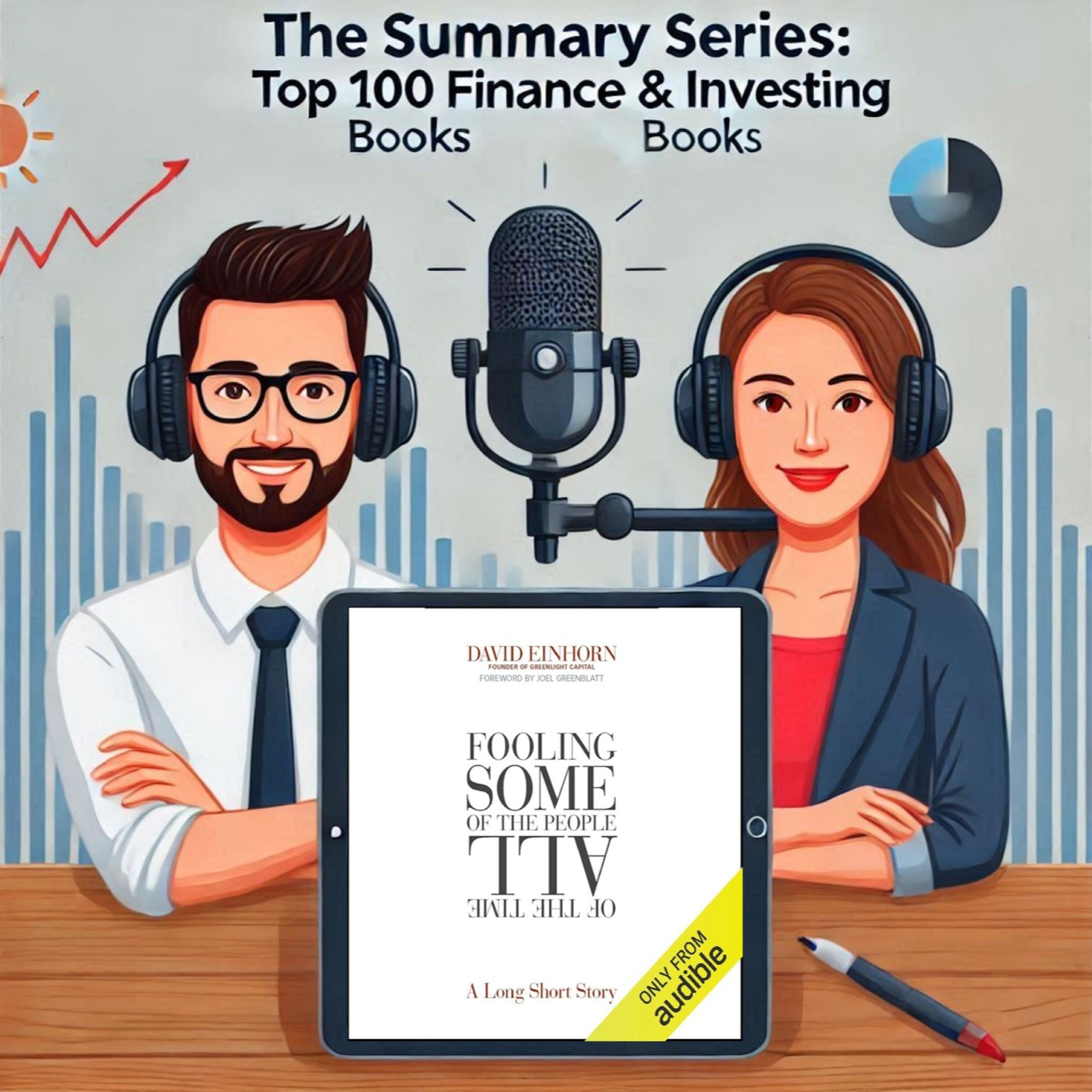
097-Fooling Some of the People All of the Time: A Long Short Story
Apr 1, 202500:16:40Tap to summarize# *Fooling Some of the People All of the Time: A Long Short Story* by David Einhorn*📚 Buy this book on Amazon: https://amzn.to/3FBR1CI💻 Free month of Kindle Unlimited: https://amzn.to/3ZYVJAK🎧 Grab audio version for free on an Audible trial: https://amzn.to/3PeeivQ*"Fooling Some of the People All of the Time"* by *David Einhorn* is a *firsthand account of financial fraud, market manipulation, and the challenges of short selling*. The book follows Einhorn’s battle against *Allied Capital*, a financial firm he accused of fraudulent accounting and misleading investors.Einhorn, a well-known hedge fund manager and founder of *Greenlight Capital*, details *his six-year campaign to expose Allied Capital’s deception*, only to face resistance from regulators, Wall Street, and even the government. The book is a *gripping real-life financial thriller that reveals how fraud can persist in public markets despite clear evidence of wrongdoing*.## *🔹 Key Themes & Insights*# *1. How David Einhorn Discovered Allied Capital’s Fraud*✔️ In *2002, Einhorn gave a speech exposing Allied Capital’s questionable accounting practices.*✔️ His research showed that *Allied manipulated earnings, overvalued assets, and misled investors*.✔️ Despite clear evidence, *the stock price remained high because Wall Street analysts ignored red flags*.🔹 *"Just because a fraud is obvious doesn’t mean it will be stopped."*# *2. The Challenges of Short Selling*✔️ *Short sellers profit when a stock declines, but they face extreme pressure and public criticism.*✔️ *Companies under attack often fight back with smear campaigns and legal threats.*✔️ Regulators and the media *are often slow to acknowledge financial fraud, fearing market panic*.✔️ Einhorn’s battle against Allied Capital shows how *short sellers play a vital role in exposing corporate deception*.🔹 *"Markets don’t always correct fraud quickly—sometimes, it takes years for the truth to emerge."*# *3. Wall Street and Government Failures*✔️ *The SEC ignored Einhorn’s warnings*, allowing Allied Capital’s fraud to continue.✔️ *Investment banks and analysts had conflicts of interest*, choosing to protect corporate clients instead of investors.✔️ *Regulatory agencies were slow, ineffective, or even complicit in protecting fraudulent firms.*✔️ *Even after the 2008 financial crisis, many of the same oversight failures remained.*🔹 *"The system is designed to protect big firms, not investors."*# *4. The Slow Collapse of Allied Capital*✔️ Despite years of resistance, *Allied Capital was eventually exposed and forced to merge with Ares Capital in 2009*.✔️ *Einhorn was ultimately proven right, but it took years for the market to react.*✔️ *His experience highlights how fraud can persist when institutions fail to act.*🔹 *"Truth eventually wins, but the market can remain irrational for a long time."*## *📖 Key Takeaways*✅ *Short sellers play an important role in exposing financial fraud.*✅ *Corporate fraud can persist for years due to regulatory failures and Wall Street conflicts of interest.*✅ *Markets are slow to correct wrongdoing, even when evidence is overwhelming.*✅ *Government agencies are often ineffective in stopping fraud, allowing deception to continue.*✅ *Investors must be skeptical and do their own research—relying on Wall Street analysts can be dangerous.*# *📝 Final Thoughts**Fooling Some of the People All of the Time* is a *must-read for investors, financial analysts, and anyone interested in market integrity*. David Einhorn provides *a real-world lesson in skepticism, patience, and the hidden risks of financial markets*.
Transcribe →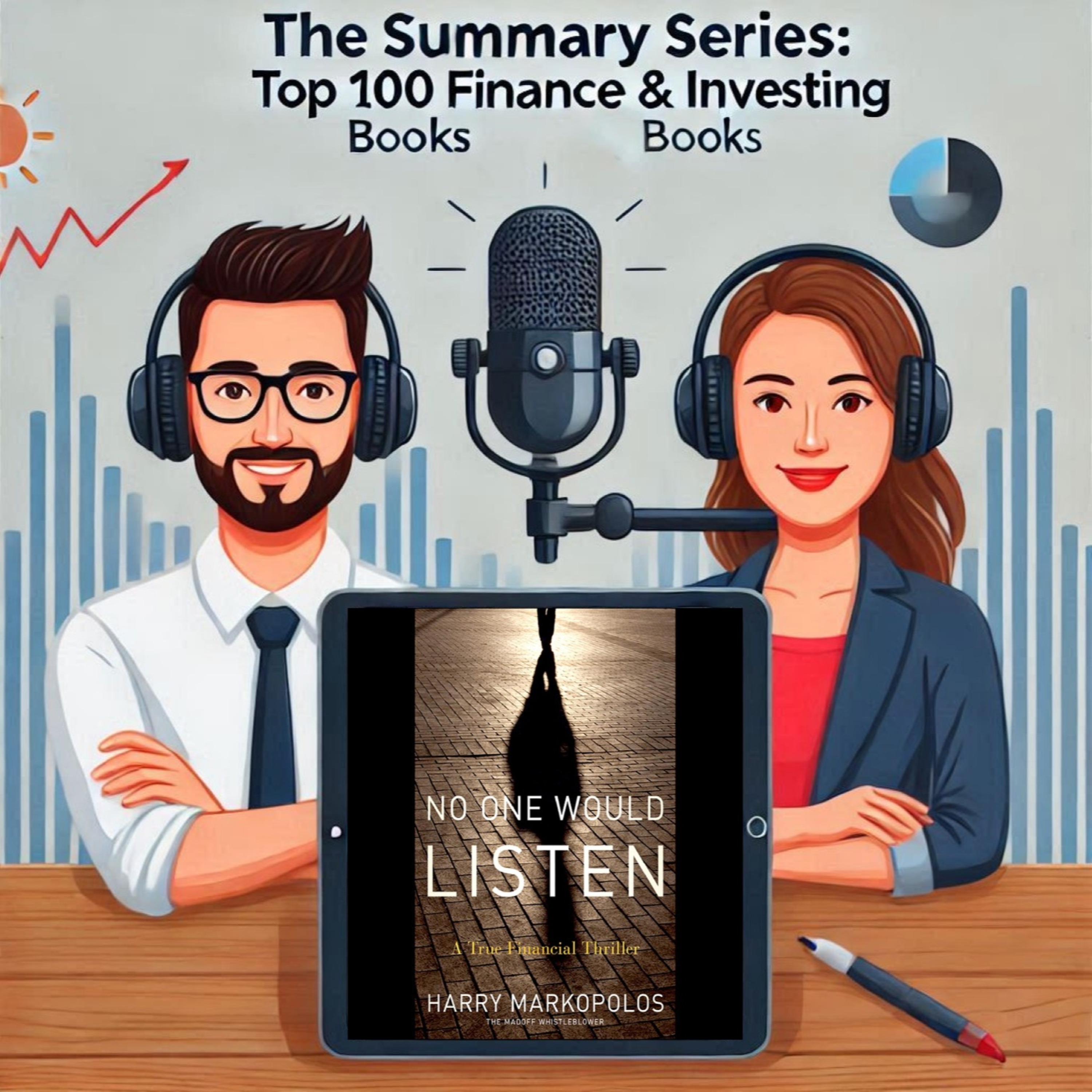
096-No One Would Listen: A True Financial Thriller
Mar 31, 202500:13:21Tap to summarize# *Summary of *No One Would Listen: A True Financial Thriller* by Harry Markopolos*📚 Buy this book on Amazon: https://amzn.to/3XX9boG💻 Free month of Kindle Unlimited: https://amzn.to/3ZYVJAK🎧 Grab audio version for free on an Audible trial: https://amzn.to/3PeeivQThe book details *his investigation, the warning signs he uncovered, and the systemic failures that allowed Madoff to operate unchecked for decades*. It’s a *shocking indictment of financial regulators and a cautionary tale about the dangers of blind trust in the financial system*.## *🔹 Key Themes & Insights*# *1. How Harry Markopolos Discovered Madoff’s Fraud*✔️ In *1999*, Markopolos was asked to analyze Madoff’s fund for a competitor.✔️ Within *five minutes*, he realized the *returns were mathematically impossible*.✔️ His team found that Madoff’s *claimed investment strategy (split-strike conversion) couldn’t produce the steady gains he reported*.✔️ *His conclusion: Madoff was running a Ponzi scheme, using new investors’ money to pay off older investors.*🔹 *"It was the biggest fraud in history, hiding in plain sight, and no one wanted to see it."*# *2. The Systemic Failures of the SEC*✔️ Markopolos submitted *detailed reports to the SEC multiple times (2000, 2001, 2005, 2007, 2008), but they ignored him.*✔️ SEC officials lacked *the financial expertise* to understand his warnings.✔️ *Regulators trusted Madoff blindly* because of his reputation and connections.✔️ Markopolos and his team risked their safety, fearing *Madoff might have them killed* to silence them.🔹 *"I handed the SEC the biggest financial fraud on a silver platter—and they did nothing."*# *3. Why Investors Fell for Madoff’s Scam*✔️ Madoff promised *steady, too-good-to-be-true returns*, which wealthy investors found irresistible.✔️ *Social proof played a huge role*—since famous banks and hedge funds invested, others assumed it was legitimate.✔️ Madoff used *exclusivity as a marketing tool*, making clients feel lucky to invest with him.✔️ Even sophisticated investors and major financial institutions ignored red flags.🔹 *"People wanted to believe in the fairy tale, even when the numbers didn’t add up."*# *4. The Collapse of the Ponzi Scheme*✔️ The *2008 financial crisis triggered a surge in redemption requests*, forcing Madoff to confess.✔️ On *December 11, 2008, Madoff was arrested*, admitting that his investment firm was "one big lie."✔️ His fraud *cost investors $65 billion*, making it the largest Ponzi scheme ever.✔️ Thousands of victims—charities, pension funds, and individuals—lost everything.🔹 *"Madoff got away with it for decades because no one wanted to believe he was a fraud."*# *5. The Aftermath: Lessons for the Financial World*✔️ *Markopolos became a hero for exposing Madoff*, but he remained frustrated by the SEC’s incompetence.✔️ *Calls for regulatory reform* led to some changes, but systemic problems in financial oversight persist.✔️ *Trust but verify*—investors must perform due diligence and not rely solely on reputation.✔️ Markopolos now works as a forensic accountant, exposing fraud cases.🔹 *"If the financial system can’t police itself, who will?"*## *📖 Key Takeaways*✅ *Madoff’s fraud was obvious to experts, but regulators ignored repeated warnings.*✅ *Investors trusted reputation over due diligence, leading to massive losses.*✅ *The SEC’s incompetence allowed the scheme to continue for decades.*✅ *Even Wall Street’s biggest players failed to spot the scam.*✅ *Financial oversight remains flawed, and investors must be skeptical.*# *📝 Final Thoughts**No One Would Listen* is a *shocking, real-life financial thriller that exposes the failures of financial regulation and human greed*. Harry Markopolos provides *a gripping, inside look at how one man tried to stop the biggest fraud in history—only to be ignored at every turn*.
Transcribe →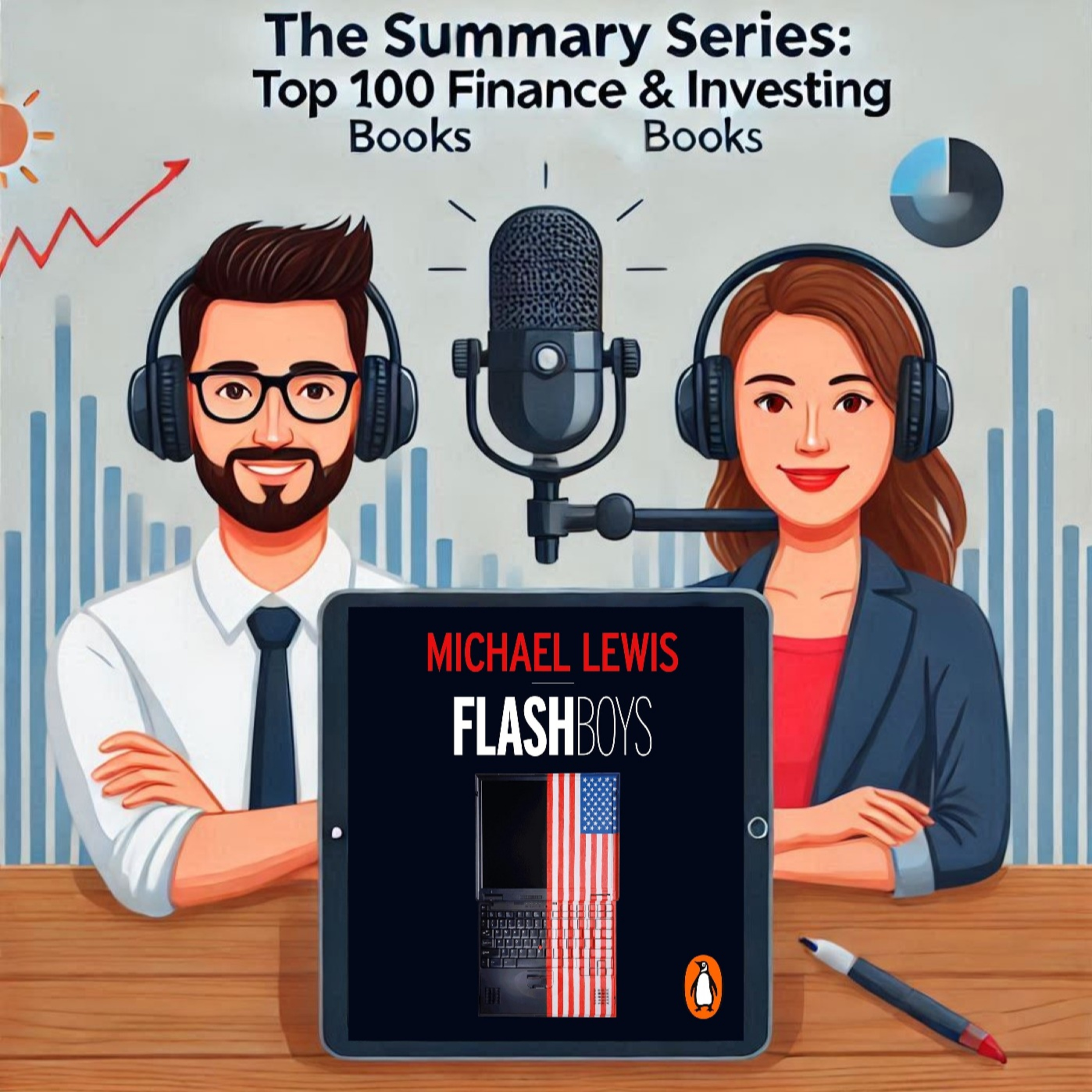
095-Flash Boys by Michael Lewis
Mar 30, 202500:13:26Tap to summarize# *Flash Boys: A Wall Street Revolt* by Michael Lewis*📚 Buy this book on Amazon: https://amzn.to/3DP2Ncf💻 Free month of Kindle Unlimited: https://amzn.to/3ZYVJAK🎧 Grab audio version for free on an Audible trial: https://amzn.to/3PeeivQ*"Flash Boys"* by *Michael Lewis* exposes how *high-frequency trading (HFT) firms use speed and technology to gain an unfair advantage in stock markets*, often at the expense of ordinary investors. The book follows a group of Wall Street insiders who uncover the *rigged nature of modern financial markets* and attempt to create a fairer exchange.Lewis, known for his investigative finance books (*The Big Short, Liar’s Poker*), provides a *gripping look at how technology, algorithms, and ultra-fast trading have transformed Wall Street into a battlefield of speed and deception*.## *🔹 Key Themes & Insights*# *1. How High-Frequency Trading (HFT) Works*✔️ *HFT firms use ultra-fast computers and fiber-optic cables to execute trades in microseconds.*✔️ They *exploit price differences* across stock exchanges to make risk-free profits.✔️ *By placing and canceling thousands of orders per second, they manipulate market prices* before regular investors can react.🔹 *"Speed is the new weapon of Wall Street, and the fastest traders win."*# *2. The Dark Side of High-Speed Trading*✔️ *HFT firms "front-run" ordinary investors by buying and reselling stocks at slightly higher prices.*✔️ *Stock exchanges secretly allow HFT firms to co-locate servers closer to the exchange to gain speed advantages.*✔️ *Banks and trading firms profit from HFT, while pension funds and retail investors unknowingly lose money.*🔹 *"The stock market isn’t rigged against everyone—just against those who don’t have the fastest machines."*# *3. The Fight Against Market Manipulation: Brad Katsuyama’s Story*✔️ *Brad Katsuyama, a trader at the Royal Bank of Canada, discovers HFT firms are front-running his trades.*✔️ *He assembles a team to understand and expose how stock markets have been hijacked.*✔️ They create *IEX (Investors Exchange), a fair stock exchange that neutralizes the speed advantage of HFT firms*.🔹 *"The stock market should reward intelligence and strategy, not just raw speed."*# *4. The Impact of *Flash Boys* on Wall Street*✔️ The book *sparked public outrage*, leading to increased scrutiny of HFT practices.✔️ *Regulators began investigating stock exchanges and HFT firms*, but change was slow.✔️ *IEX eventually launched as a fair-trading alternative, attracting support from major investors.*🔹 *"Wall Street’s biggest players fought to protect HFT, but transparency started to win."*## *📖 Key Takeaways*✅ *High-frequency traders use speed and technology to manipulate stock markets.*✅ *Ordinary investors unknowingly lose money due to market inefficiencies created by HFT.*✅ *A group of Wall Street insiders fought to expose the system and create a fairer market.*✅ *The financial industry resisted change, but *Flash Boys* sparked regulatory investigations.*✅ *Technology has transformed markets, but fairness and ethics remain in question.*# *📝 Final Thoughts**Flash Boys* is a *thrilling exposé of how Wall Street's high-speed traders exploit markets*, told with Michael Lewis’s signature storytelling. It’s a *must-read for anyone interested in finance, market ethics, and the hidden forces shaping stock trading*.
Transcribe →
094-Den of Thieves by James B. Stewart
Mar 29, 202500:23:19Tap to summarize# *Den of Thieves* by James B. Stewart*📚 Buy this book on Amazon: https://amzn.to/3RmFJoh💻 Free month of Kindle Unlimited: https://amzn.to/3ZYVJAK🎧 Grab audio version for free on an Audible trial: https://amzn.to/3PeeivQ*"Den of Thieves"* by *James B. Stewart* is a *riveting exposé of one of the biggest insider trading scandals in Wall Street history*. The book details how *Michael Milken, Ivan Boesky, Martin Siegel, and Dennis Levine engaged in illegal insider trading, stock manipulation, and financial fraud*, leading to *one of the largest SEC crackdowns of the 1980s*.Stewart, a Pulitzer Prize-winning journalist, provides *a gripping, behind-the-scenes account of how greed, ambition, and unethical behavior fueled Wall Street’s high-stakes financial crimes—and how law enforcement finally took them down*.## *🔹 Key Themes & Insights*# *1. The Rise of Insider Trading on Wall Street*✔️ The 1980s was an era of *unregulated financial innovation and aggressive corporate takeovers*.✔️ *Dennis Levine, an investment banker at Drexel Burnham Lambert, began leaking confidential deal information for profit.*✔️ *Insider trading became rampant, with major financiers using non-public information to manipulate stock prices.*🔹 *"Wall Street was driven by greed, and insider trading became the fastest way to get rich."*# *2. The Key Players in the Scandal*✔️ *Dennis Levine* – Started the insider trading ring, passing information to other traders.✔️ *Martin Siegel* – A young investment banker who leaked corporate secrets to arbitrageurs.✔️ *Ivan Boesky* – A billionaire financier who paid for insider tips and manipulated stocks.✔️ *Michael Milken* – The "junk bond king" who fueled corporate takeovers with high-risk financing.🔹 *"These men thought they were untouchable—until the FBI and SEC stepped in."*# *3. How Michael Milken and Junk Bonds Fueled the Takeover Boom*✔️ *Milken revolutionized corporate finance by using high-yield junk bonds to fund hostile takeovers.*✔️ These risky bonds *gave companies massive leverage, often leading to financial instability*.✔️ *Milken's firm, Drexel Burnham Lambert, became the epicenter of financial speculation and fraud.*🔹 *"Junk bonds created billionaires—but also led to massive corruption and financial collapse."*# *4. The Downfall: How Law Enforcement Cracked the Case*✔️ The *SEC and FBI launched investigations after suspicious trading patterns were detected*.✔️ *Levine was caught first and agreed to cooperate, leading to more arrests.*✔️ *Boesky, once a Wall Street legend, turned informant and provided evidence against Milken.*✔️ In 1989, *Milken was charged with securities fraud and racketeering*, marking the end of an era.🔹 *"Even the most powerful financiers couldn’t escape the law forever."*# *5. The Legacy of the Scandal*✔️ *Milken, Boesky, and other key figures were convicted and served prison time.*✔️ *Drexel Burnham Lambert collapsed*, marking the downfall of the junk bond era.✔️ *The case led to stricter SEC regulations and greater scrutiny of Wall Street practices.*🔹 *"The scandal exposed Wall Street’s darkest secrets and reshaped financial regulation."*## *📖 Key Takeaways*✅ *The 1980s financial boom was fueled by greed, insider trading, and junk bond speculation.*✅ *A network of corrupt financiers used illegal tactics to amass billions.*✅ *The government’s crackdown exposed deep-seated corruption in Wall Street culture.*✅ *The scandal led to tougher regulations and greater transparency in financial markets.*✅ *Michael Milken’s downfall marked the end of the junk bond-fueled takeover era.*# *📝 Final Thoughts**Den of Thieves* is a *gripping, real-life financial thriller that captures the rise and fall of Wall Street’s most infamous insider traders*. James B. Stewart provides *a masterful account of how unchecked greed led to one of the biggest financial crimes in U.S. history—and how justice finally prevailed*.
Transcribe →
093-Barbarians at the Gate: The Fall of RJR Nabisco
Mar 28, 202500:11:54Tap to summarize# *Summary of *Barbarians at the Gate: The Fall of RJR Nabisco* by Bryan Burrough & John Helyar*📚 Buy this book on Amazon: https://amzn.to/4kVqVKW💻 Free month of Kindle Unlimited: https://amzn.to/3ZYVJAK🎧 Grab audio version for free on an Audible trial: https://amzn.to/3PeeivQ*"Barbarians at the Gate"* by *Bryan Burrough and John Helyar* is a *thrilling, real-life account of the 1988 leveraged buyout (LBO) of RJR Nabisco*, which became *one of the most dramatic and expensive corporate battles in history*. The book explores the *greed, power struggles, and excesses of Wall Street in the 1980s*, providing a fascinating look at the *rise of leveraged buyouts, corporate takeovers, and the ruthless world of high-stakes finance*.## *🔹 Key Themes & Insights*# *1. The Rise of RJR Nabisco and CEO Ross Johnson*✔️ *RJR Nabisco was a massive conglomerate, famous for its cigarettes (Camel, Winston) and food brands (Oreo, Ritz, Planters).*✔️ *CEO Ross Johnson was a free-spending, charismatic executive* who prioritized personal perks over corporate efficiency.✔️ *Johnson decided to take the company private*, believing he could make more money through an LBO (leveraged buyout).🔹 *"Corporate America in the 1980s was driven by excess, and RJR Nabisco was the perfect symbol."*# *2. The Bidding War: Greed and Wall Street Power Struggles*✔️ *Johnson’s initial LBO proposal triggered a fierce bidding war* between Wall Street’s biggest players.✔️ *Investment firms like KKR (Kohlberg Kravis Roberts) and Shearson Lehman Hutton fought to take control.*✔️ *The deal ballooned to an unprecedented $25 billion*, making it the largest LBO in history at the time.🔹 *"Everyone wanted a piece of RJR Nabisco, not because they cared about the company, but because they wanted the money."*# *3. The Role of Junk Bonds and the Leveraged Buyout Boom*✔️ *The 1980s saw a rise in junk bonds, which fueled the LBO craze.*✔️ *LBOs allowed firms to buy massive companies using mostly borrowed money*, leading to excessive corporate debt.✔️ *This high-risk financial engineering worked—until it didn’t, contributing to future economic collapses.*🔹 *"Wall Street in the '80s was built on leverage, speculation, and the illusion of infinite money."*# *4. The Fall of Ross Johnson and the Triumph of KKR*✔️ *Johnson’s lack of financial expertise cost him the deal—he was outmaneuvered by Wall Street professionals.*✔️ *KKR won the bidding war but struggled to make the acquisition profitable.*✔️ *Despite the massive buyout, RJR Nabisco never regained its former glory, proving that financial engineering alone can’t sustain a business.*🔹 *"The deal was a victory for KKR but a disaster for the company itself."*# *5. The Broader Impact on Corporate America*✔️ The RJR Nabisco buyout *became a symbol of Wall Street greed and excess*.✔️ *It led to tighter regulations on LBOs and the decline of junk bond financing.*✔️ *The 1980s financial boom eventually collapsed, leading to the early-1990s recession.*🔹 *"The RJR Nabisco deal was the peak of the LBO era—and its downfall marked the beginning of Wall Street’s reckoning."*## *📖 Key Takeaways*✅ *The RJR Nabisco buyout was the biggest and most dramatic corporate battle of the 1980s.*✅ *Leveraged buyouts created billionaires but left companies burdened with unsustainable debt.*✅ *Ross Johnson’s downfall showed that corporate excess has consequences.*✅ *KKR won the deal, but the company itself suffered under the weight of its debt.*✅ *The LBO craze of the 1980s eventually led to financial crises and stricter regulations.*# *📝 Final Thoughts**Barbarians at the Gate* is a *masterpiece of financial journalism*, capturing the greed, ambition, and high-stakes drama of Wall Street in the 1980s. Burrough and Helyar provide *a gripping, behind-the-scenes look at how money, power, and ego shaped one of the biggest corporate takeovers in history*.
Transcribe →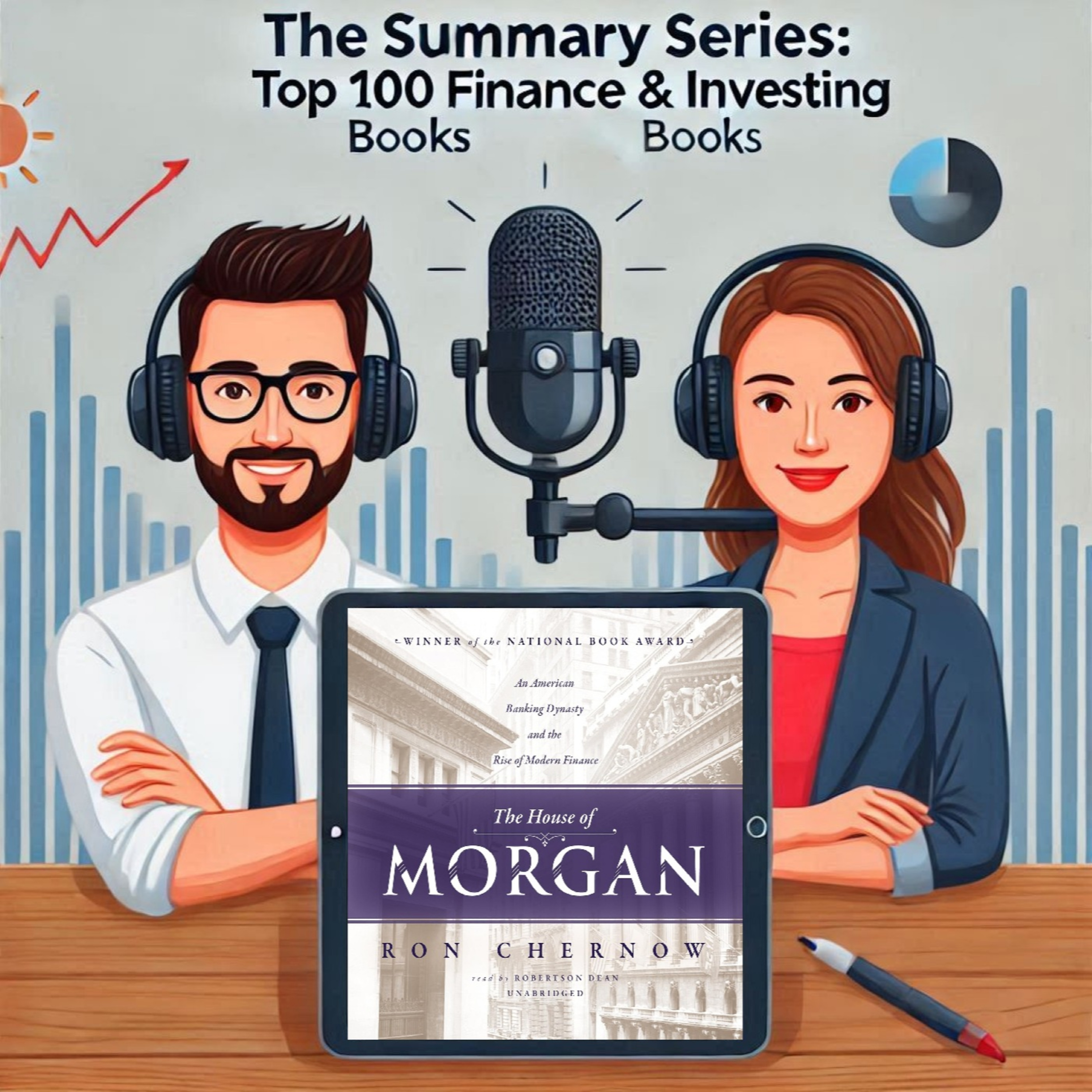
092-The House of Morgan: An American Banking Dynasty and the Rise of Modern Finance
Mar 27, 202500:27:20Tap to summarize# *Summary of *The House of Morgan: An American Banking Dynasty and the Rise of Modern Finance* by Ron Chernow*📚 Buy this book on Amazon: https://amzn.to/41XQ3rL💻 Free month of Kindle Unlimited: https://amzn.to/3ZYVJAK🎧 Grab audio version for free on an Audible trial: https://amzn.to/3PeeivQ*"The House of Morgan"* by *Ron Chernow* is a *comprehensive history of the Morgan banking empire*, detailing its *rise, influence, and transformation over 150 years*. The book explores *how J.P. Morgan & Co. shaped modern finance, influenced global politics, and navigated economic crises* from the late 19th century through the late 20th century.Chernow divides the history of the Morgans into three distinct periods:1. *The Baronial Age (1838–1913)* – The era of J. Pierpont Morgan, when banking was personal and dominated by elite financiers.2. *The Diplomatic Age (1913–1940s)* – The Morgans' role in international finance, war efforts, and government relations.3. *The Casino Age (1940s–1980s)* – The shift to corporate banking, deregulation, and high-risk financial strategies.## *🔹 Key Themes & Insights*# *1. The Rise of J.P. Morgan: The Power of One Man*✔️ *J. Pierpont Morgan was the most powerful banker of his time*, controlling vast financial networks.✔️ He played a central role in *stabilizing markets, rescuing banks, and consolidating industries* (e.g., U.S. Steel, General Electric).✔️ *Morgan acted as an unofficial central bank*, stepping in during financial crises, such as the Panic of 1907.🔹 *"Morgan wasn’t just a banker—he was a financial ruler, shaping the U.S. economy with his influence."*# *2. The Morgans and Global Finance*✔️ The Morgans *financed wars, governments, and infrastructure projects worldwide*.✔️ *They helped Britain and France finance World War I*, reinforcing their role as global financiers.✔️ *Wall Street and Washington grew closer*, with Morgan bankers advising U.S. presidents and policymakers.🔹 *"The House of Morgan was not just a bank—it was a geopolitical force."*# *3. The Fall of the Morgans' Monopoly*✔️ The *1913 establishment of the Federal Reserve* reduced the power of private bankers like Morgan.✔️ *The 1929 stock market crash and Great Depression* led to stricter regulations on banking.✔️ *The 1933 Glass-Steagall Act forced the Morgans to separate investment banking from commercial banking*, breaking up their empire.🔹 *"Government regulation and market crashes ended the era of financial titans ruling unchecked."*# *4. The Post-War Transformation: From Conservative Banking to Financial Speculation*✔️ *World War II and post-war growth led to a more bureaucratic, corporate banking culture.*✔️ The Morgans’ *conservative, relationship-based banking was replaced by aggressive deal-making and speculative finance*.✔️ *By the 1980s, Wall Street had evolved into a high-risk, high-reward industry*, far from its early days of elite banking houses.🔹 *"The House of Morgan had to evolve or die in the fast-changing financial world."*## *📖 Key Takeaways*✅ *J.P. Morgan’s dominance in finance shaped modern capitalism.*✅ *The Morgans influenced global politics, war financing, and economic policy.*✅ *The Great Depression and government regulation ended private bankers' unchecked power.*✅ *The shift from relationship-based banking to speculation marked the modern financial era.*✅ *Wall Street’s transformation reflects the broader evolution of finance—from stability to high-risk capitalism.*# *📝 Final Thoughts**The House of Morgan* is a *masterpiece of financial history*, offering a fascinating look at how one banking dynasty shaped the modern financial world. Ron Chernow *brings to life the personalities, power struggles, and pivotal moments that defined Wall Street*.
Transcribe →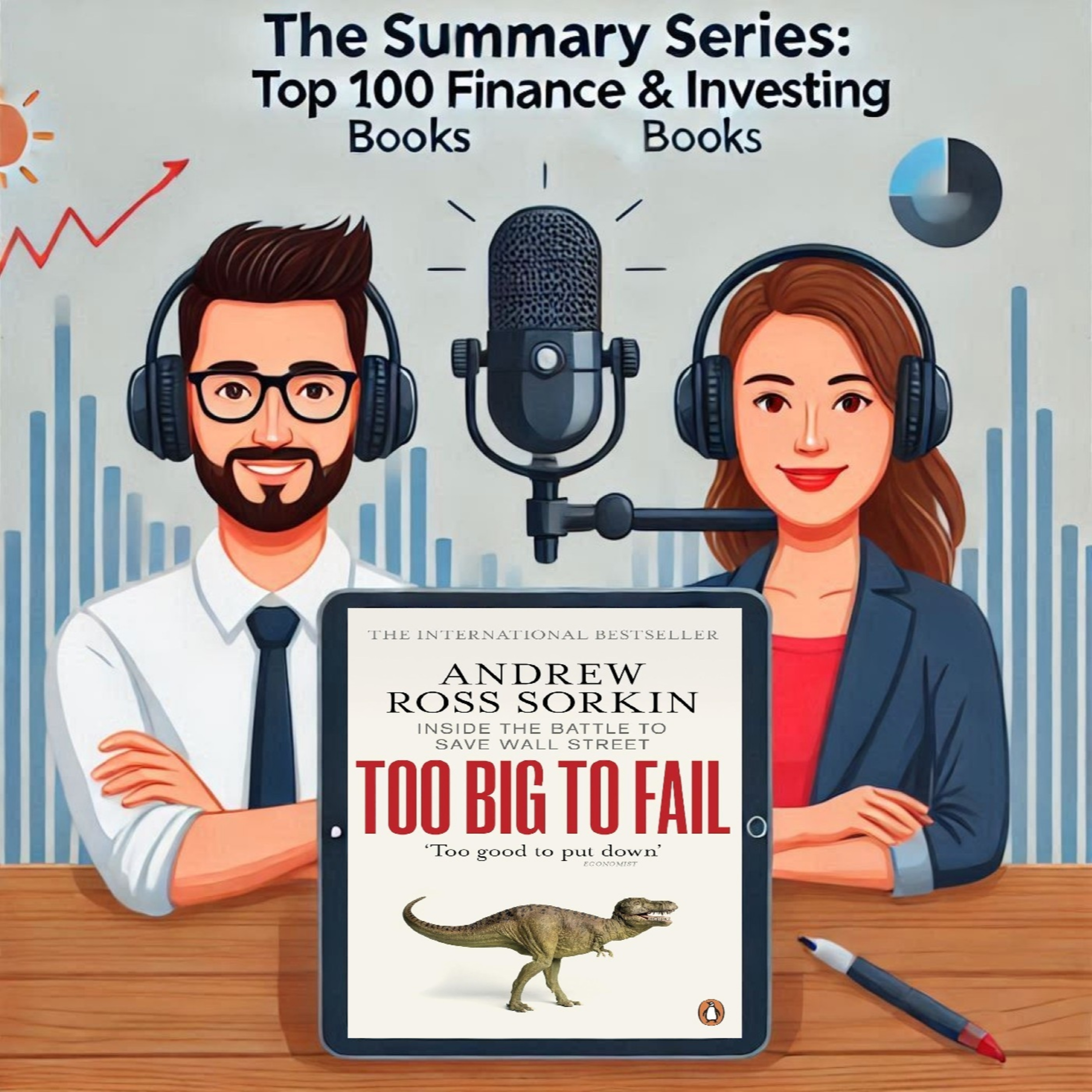
091-Too Big to Fail: Inside the Battle to Save Wall Street
Mar 26, 202500:24:52Tap to summarize# *Summary of *Too Big to Fail: The Inside Story of How Wall Street and Washington Fought to Save the Financial System – and Themselves* by Andrew Ross Sorkin*📚 Buy this book on Amazon: https://amzn.to/4icu1bX💻 Free month of Kindle Unlimited: https://amzn.to/3ZYVJAK🎧 Grab audio version for free on an Audible trial: https://amzn.to/3PeeivQ## *🔹 Key Themes & Insights*# *1. The Rise of the "Too Big to Fail" Banks*✔️ Before 2008, *Wall Street banks were making record profits by taking on excessive risk*, especially in subprime mortgages.✔️ *Lehman Brothers, Merrill Lynch, Goldman Sachs, Morgan Stanley, and Citigroup* had grown so large and interconnected that their failure could collapse the entire financial system.✔️ *Complex financial products (derivatives, mortgage-backed securities, and credit default swaps) spread risk across global markets*, creating hidden vulnerabilities.# *2. The Collapse of Lehman Brothers: The Turning Point*✔️ *Lehman Brothers, led by CEO Dick Fuld, struggled to find a buyer as its losses mounted.*✔️ The U.S. government, under *Treasury Secretary Hank Paulson and Fed Chairman Ben Bernanke*, decided *not to bail out Lehman*, believing it would set a dangerous precedent.✔️ On *September 15, 2008, Lehman Brothers declared bankruptcy*, triggering a global panic.✔️ *The failure of Lehman shattered confidence in financial markets, leading to a cascade of bank failures and stock market declines.*# *3. The Race to Prevent a Total Financial Meltdown*✔️ *AIG, the world’s largest insurance company, faced a liquidity crisis due to its exposure to credit default swaps.*✔️ *The government stepped in with an $85 billion bailout to prevent AIG’s collapse.*✔️ *Merrill Lynch, another struggling investment bank, was forced to sell itself to Bank of America.*✔️ *Goldman Sachs and Morgan Stanley were allowed to convert into bank holding companies*, giving them access to emergency funding from the Federal Reserve.# *4. The $700 Billion TARP Bailout: A Necessary Evil?*✔️ The *Troubled Asset Relief Program (TARP)* was created to inject capital into struggling banks.✔️ *Congress initially rejected the bailout*, leading to stock market crashes and heightened panic.✔️ After intense lobbying, *Congress approved the $700 billion TARP program*, saving banks but sparking public outrage.✔️ Many saw TARP as *a bailout for reckless bankers, rather than a solution for struggling homeowners and workers.*# *5. The Role of Government and Regulatory Failures*✔️ *The Federal Reserve and Treasury failed to anticipate the full scale of the crisis.*✔️ *Regulatory agencies ignored warning signs, allowing excessive risk-taking and financial engineering.*✔️ The crisis revealed *major weaknesses in the financial system*, leading to calls for stricter banking regulations.# *6. The Aftermath: Lessons from the Crisis*✔️ The *Dodd-Frank Act (2010)* introduced financial reforms to prevent future crises.✔️ *"Too Big to Fail" banks became even bigger*, as weaker institutions merged or were acquired.✔️ *Public trust in Wall Street and government was deeply damaged*, fueling anti-bank sentiment and movements like Occupy Wall Street.✔️ Many of the same risky practices that led to the crisis *still exist today*, raising concerns about future financial instability.## *📖 Key Takeaways*✅ *The 2008 crisis was fueled by excessive risk-taking, financial complexity, and regulatory failures.*✅ *The collapse of Lehman Brothers triggered a global financial panic.*✅ *The government was forced to intervene with historic bailouts to prevent total economic collapse.*✅ *TARP saved the financial system but sparked public outrage over Wall Street bailouts.*✅ *Despite reforms, many of the structural risks that caused the crisis still exist today.*
Transcribe →