← The Tara Palmeri Show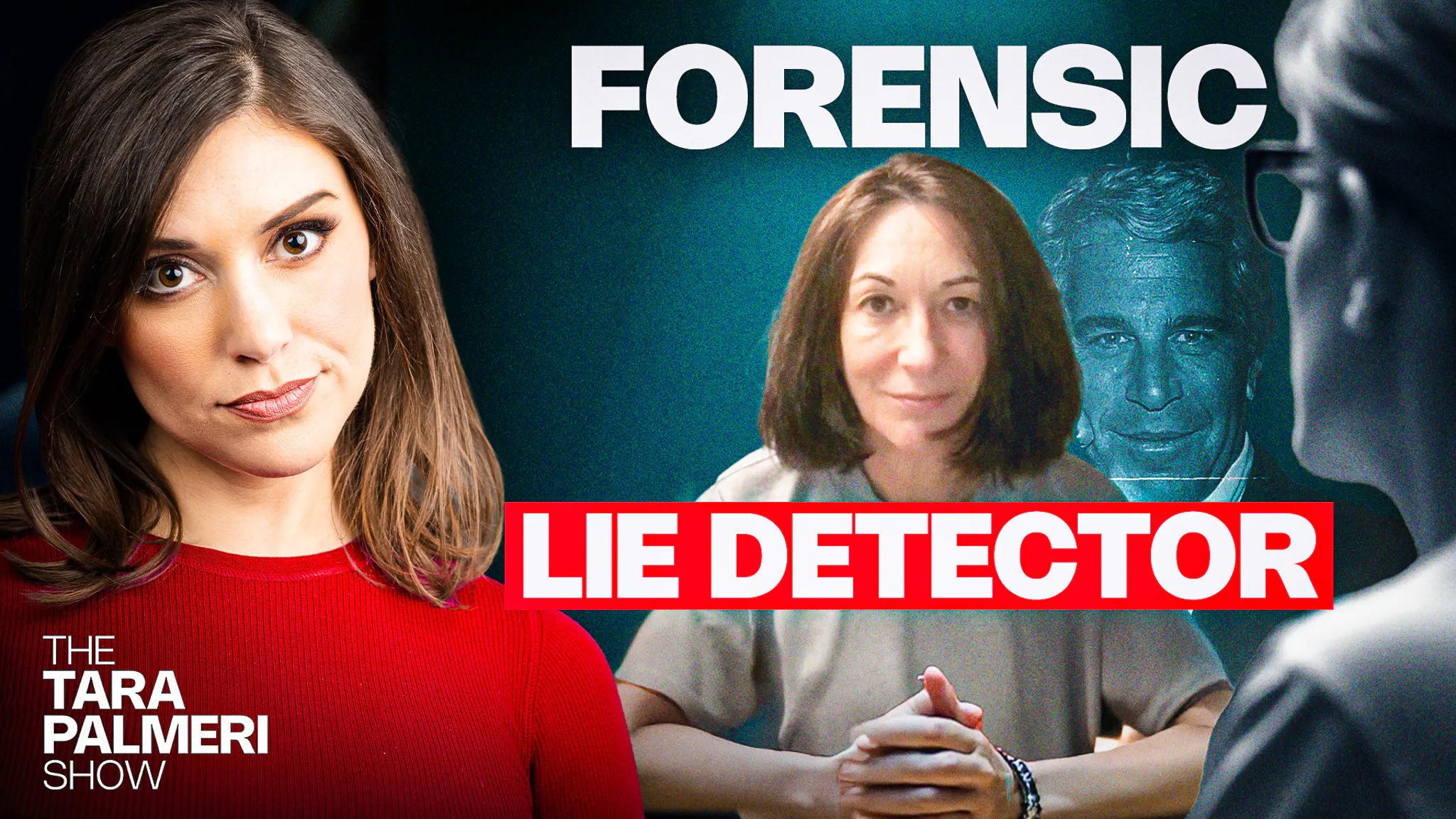
The Tara Palmeri Show
Maxwell’s Tapes, Decoded: What She Doesn’t Want You to Hear about Epstein with @drlesliegibson
00:46:41
Loading summary
Transcript219 lines
- [00:00]
A
Welcome back to the Tara Palmieri show. In 2020, Galen Maxwell was convicted of five federal charges related to her role in Jeffrey Epstein's abuse, including sex trafficking of a minor. She was sentenced to decades in prison, yet she never once took the stand in her own defense. The jury never heard her voice, and the survivors never faced her testimony. And yet, the second most powerful man in the Department of Justice, the Deputy Attorney General Todd Blanche, sat down with Maxwell, a woman charged with perjury, for six hours of deposition tape over two days.
- [00:34]
B
Do you have recollection of you ever recruiting a masseuse from Mar a Lago Spa to give. To go give a private massage to Mr. Robsey?
- [00:43]
C
I've never recruited a masseuse from Mar a Lago for that. As far as I remember. I can't ever recollect doing that.
- [00:50]
A
She was offered immunity in exchange for answering these questions. And days later, she. She was quietly transferred to a lower security prison. It took a while for me and my team to condense and compile these tapes and pick clips that can help you understand this master manipulator who many of Epstein's survivors have accused of grooming and sexually assaulting them herself. To cut through the fog, I turned to Dr. Leslie Dobson, a forensic psychologist who has interrogated criminals and coached lawyers in some of the highest profile cases. She hears what most of us miss. The slips, the rehearsed lines, the moments when silence says more than words. With Dr. Dobson's help, we can pull apart Blanche's feeble line of questioning, Maxwell's answers and her evasions to confront the disturbing truth in what's said, what's left unsaid, and who they might be covering for. I would love to get your take on Leslie, on what to make of these tapes, but first I think we need to hear and see what Ghislaine Maxwell is like when she is not in prison, being interviewed by, you know, the number two in the Justice Department, hoping that whatever she says can clear the President and help her move on from a lower max security into possible ankle bracelet, house arrest, and then being pardoned altogether.
- [02:20]
C
The reality today, though, is that the current law of the seas is based on an outdated mindset. It says that the high seas can be exploited by the few. And by the way, it is being exploited by the few so long as we all still have the right of access. It's an area that's not governed by a single entity. It's a mess of incoherent laws, unenforced laws, and no laws that's half our planet we're talking about. Activities are largely unregulated and unmonitored.
- [02:53]
A
Okay, what do you make of that? I mean, I hear a very confident woman who knows what she's saying, is clearly reading a teleprompter if she said flu instead of few. But she's on a stage talking to a number of people about this ocean charity, Terra Mar, that she used to sort of launder her name after the Epstein. Epstein. After Epstein was arrested for procuring a minor for prostitution. And it was became known in the press that she was a part of it. But what do you hear or see when you. When you look at that woman?
- [03:24]
D
I see a completely different woman than we hear in those tapes. And I'm just struck by the irony of her saying that overfishing is dangerous because we. We don't want to harm all of those little precious fish in the ocean. When she handed little precious fish to giant monsters for many years.
- [03:46]
A
Yeah. Actual human beings. So she seems to have more compassion for the fish in the sea.
- [03:56]
D
Exactly.
- [03:57]
A
Than human beings.
- [04:01]
D
The irony is. Is epic. But, I mean, she's. She's speaking fast, she's in front of an audience, she's on point, she's hitting every word. Um, she's. If you watch the video, she's engaging in eye contact, she's animated her body movements. I mean, she's confident she's alive.
- [04:22]
A
And she doesn't sound like a victim hiding.
- [04:25]
D
Not at all.
- [04:26]
A
Not the type of person who seems to, you know, portray that she was a victim of Jeffrey Epstein herself. Okay, now let's listen to Todd Blanche, who was formerly President Trump's attorney, now the deputy of the Deputy Attorney General. So the number two in the Justice Department interviewing her. This is something that you do regularly. You interview criminals as part of your work in forensic psychology, because you want to get down to the heart of what they did. You want the truth. Right. So I just want to go through what her first question, what the first question was to Glenn Maxwell from Todd Blanche.
- [05:07]
C
I'm not.
- [05:09]
B
If there's a path that. A question that I'm not asking, that you think should be asked, I invite you to volunteer. Same thing goes to your lawyers. Just to start a little bit, very briefly, can you talk about when you first met Mr. Epstein? I know that goes back a while. And just very generally talk about your relationship with Mr. Epstein from the time you met him all the way up until. Until his death.
- [05:39]
D
There are so many things wrong with that. I mean, he's setting her up. He's putting her in a frame, telling her where to go, what not to answer. Keep it general.
- [05:50]
C
He.
- [05:50]
D
He sounds meek. He doesn't sound like he's in charge at all. And he's talking slower than he would normally talk. The whole thing is just setting up. You know, be careful what you say right now. Yeah.
- [06:05]
A
I mean, he sounds like he's. He knows too, that this is going to be released publicly. Right. That these tapes are going to be made. What are going to be made public because he did end up releasing them.
- [06:14]
D
He sounds nervous. And for a trial attorney to sound nervous in something he's done a million times, that is very fishy to me.
- [06:25]
A
How would you have set that up?
- [06:29]
D
Well, you do want to have open ended questions, right? You want them to hang themselves. Basically, you know, you're looking for all of these items of the personality to show very, very similar to a psychopathy inventory. You want them to be charismatic, you want them to be boastful, you want to catch them in lies. I would definitely leave it open ended, but I would say, you know, I'm in charge. This is open ended. Go ahead and speak. I wouldn't say rein it in. Let's be very general. Let's be very careful. He opens it as he should, and then he closes it before she even answers.
- [07:08]
A
I mean, why would you want to be general or open, not specific about a massive sex criminal operation? I mean, don't you want to get down to the truth? If it's Department of Justice, don't you want justice? And if this woman has been convicted of and indicted of being a part of a sex trafficking operation that the FBI says included as many as a thousand victims, why would you want her to be general? I mean, she could have leads.
- [07:36]
D
And as we'll see in the tapes, there are moments where he can take general to specific and he doesn't.
- [07:44]
A
Okay, we'll have to keep listening. All right, let's listen to Glenn's recollection of meeting Jeffrey Epstein. It's his first question to her.
- [07:53]
C
And so sometime in 1991. We're in 1991. I met him at his offices in On Man. And I think the most memorable thing I can think about that is he was wearing a tie, which he didn't want to drink. It had a giant tomato ketchup stain on it. So I was like, wow, okay. And that was housing.
- [08:22]
B
Was your meeting at his office for you to meet him just personally or were you, were you there for work related reasons?
- [08:31]
C
No, I knew nothing about It. I. He just invited me to come and have tea, and I was like, tea? That's English. Okay. But what was unusual was in his offices. So I went to his offices and we met, and I found him very engaging, and that was that.
- [08:51]
A
What'd you make of that?
- [08:53]
D
So much. I mean, the moment he said okay, he was scared. She was about to say something. He was nervous. He stopped her, like, okay, okay, you said enough. You said enough. And then the way she starts to take control of the conversation and conclude it with that was that they both are on the verge. They're being so careful. It is uncomfortable to me.
- [09:17]
A
They're colluding, essentially, is what you sensed?
- [09:20]
D
Yes. Maybe not. Maybe not colluding in the sense that they actually know what the other person's play is, but. But they know they can't go somewhere.
- [09:32]
A
But they're trying to take care of each other in a kind of.
- [09:35]
C
Yeah.
- [09:36]
D
Or someone else.
- [09:38]
A
Or someone else. Exactly. What did you make of her slopping her hand up and down while she was telling the story? Because you could hear her sort of banging her hand.
- [09:49]
D
She does. She does seem anxious. She seems unsettled. And I think, as the more I listen to it, the more I see that, you know, she doesn't want to mess up her agenda. And her agenda is to not perjure herself, but not get in trouble and actually tell the truth, get in trouble with anybody else. So you can see that she's very, very careful. And then as her emotions catch up and her rate of speech, she's talking faster. Here she goes. She's telling the story. She always jumps back to, maybe. I don't remember. That's my recollection. Some kind of soft landing that isn't going to be perjury.
- [10:29]
A
And then the kind of awkward laughing. I guess that's an anxious laughing, right?
- [10:34]
D
It's. It sounds to me like an anxious laughing, but still she maintains a fondness of that moment with him in his tie, which is so disgusting.
- [10:46]
A
Right. All right, let's move on to the next one.
- [10:50]
C
All right, first of all, let's just state, I did not introduce him to Prince Andrew. I did not introduce him to Prince Andrew or to Sarah Ferguson. That is a flat untruth. Start with that.
- [11:03]
A
Okay, that's a moment. What did you make of that?
- [11:07]
D
So that was her being confident, right? That was her saying, you know, I don't want to get in trouble for this. I know this. I remember this. I'm clear on this. She laid her ground and he let her. He. He didn't control her at all. He didn't press her.
- [11:23]
A
It's kind of the opposite of victim. Galen, which is what you heard from the beginning. Right.
- [11:28]
D
I don't know why certain clips were released and certain clips were not. But this was the one clip where she was confident. This was the TED Talk clip. This is what somebody wanted us to hear.
- [11:41]
A
She was saying it for someone else.
- [11:44]
D
Yes, that the reason that clip was there was because she was very matter of factly saying something. And as we'll see, that changes.
- [11:54]
A
Yep. Okay, so let's play the next one.
- [11:56]
B
Prince Andrew himself, who suggested that he met Jeffrey Epstein through you.
- [12:01]
C
I think that's true. So. Well, it's true that Andrew said that. Yeah, no, I'm sure it's true because I'm English and my close friends are all close friends with Sarah and Andrew. And I would not say that I was close friends with Andrew before, but certainly we were friendly and certainly his best friends. Some of them very, very close with me. And I think that my friendship, my me being present or me is what made Andrew like Jeffrey Moore.
- [12:44]
A
What do you make of that?
- [12:46]
D
Well, who was that other voice that said something like I can't believe you said that or so it was Andrew. Did you hear that other voice?
- [12:57]
A
I didn't actually.
- [12:58]
D
There's a third voice and I know her attorneys are present. There's a third female voice. She sounds older and she was genuinely shocked. Shocked that Maxwell said that. And then we've got Maxwell changing her cadence. She changes the way she talks. She over elaborates because now she knows. Whoops. I up. Oopsie. Now I've got to explain that because I'm English, that's why I knew him. But if you listen very carefully, there is somebody else who is saying hold back.
- [13:28]
A
Yeah. Okay, let's listen to that sound again.
- [13:30]
C
It's true that Andrew said that. Yeah, no, I'm sure it's true because.
- [13:34]
D
It'S true that Andrew said that. That was not her voice.
- [13:38]
A
Nope, that wasn't her voice. That was somebody else.
- [13:40]
D
That was somebody interrupting her in this high profile interview because they wanted to guide what she was saying. That does not happen in real life. In a deposition, no one can cut you off. And if an attorney witnessed that, they would be there in a second. Why did you say that? What did that mean? I object to that. Like where the was Todd, what would.
- [14:04]
A
An innocent person sound like?
- [14:06]
D
They would be consistent, the tone would be consistent. And I think the biggest part for me would be emotions would be relevant to the Topic at hand, her emotions are quite erratic. She's giggling, she's overly confident, she's pretty flat. It doesn't make sense to the topic when the overall topic is, girl, you're in prison, you might be in prison for life. You know, you're trying to hide from the world that you know all these big players that were little girls and you're giggling. Nothing's consistent.
- [14:39]
A
Also, she's the one who acknowledges that Jeffrey Epstein was involved in sex crimes. She just says she wasn't a part of it. So, like, all, all of this should be very uncomfortable and. And should have a certain reference to it. Right?
- [14:53]
D
Right. I mean, she should be anxious and uncomfortable or she should be confident. God knows she's had enough time to practice for this. Right. Like, she's a master con artist. She's been trained by amazingly successfully psychopathic people. Why is she flipping and flopping unless she's looking around that room, looking at people's reactions and getting some guidance.
- [15:19]
A
Right. And also, if this person is the reason you are spending the rest of your life in jail or at least the next 20 years, wouldn't you know, or try to remember or flip through in your mind every single moment that you had together and how you ended up like this, where you are.
- [15:33]
D
Exactly. So the only thing I can think of is that if we don't have consistency and we have doubling down or we have this. Oh, I'm not quite sure. It's because we don't have truth.
- [15:48]
A
Okay, let's go on to the next sound.
- [15:51]
B
Okay, so the government had evidence that even as late as 2007, he paid you a lot of money.
- [16:05]
C
What was that? What was the.
- [16:06]
B
Like several millions and millions of dollars in 2007. $7.4 million.
- [16:12]
C
What was that for? Was it. Was that the helicopter?
- [16:14]
B
That was my question. I'm sorry, I don't know. So.
- [16:17]
C
So in 2007, I think that's probably the helicopter. That could have been. That could have been the helicopter, the Sikorsky, those big chunks like that. I don't personally have any memory of receiving a check from him for $7 million. I just. I just don't. But I would have to. I know. I'm. So the answer to your question went into your pocket. I would remember if it went. I would. He never paid me to. For services that you just described $7 million to. For any nefarious.
- [16:53]
B
Yeah, I think I understand what you've said about being on the payroll and help him helping you with businesses and giving you a lot of Life, things along the way, you travel with him, ate with him, is, you know, but. But there is the. This, These massive amounts of money. One time payments that I don't.
- [17:15]
C
You'd have to trace that. Right. So I, I don't believe that came into my account or I had any control. I have no memory of that. I've. No, no.
- [17:23]
B
Well, but if there's records that show up coming into your account, it sounds like what you're saying is that not putting aside your. You have no memory of that money being yours. Like, you didn't. That money is not.
- [17:34]
C
No, I wouldn't be like, oh, yippee, let me go, I got $7 million. I'm going to go buy myself a yacht. No. Or, I don't know, something else. Or move it to some of. No, I don't think. I don't think. If you look, you. You'll have to check. Well, obviously, I don't think you'll find that money moving in any. To any account other mine or it shouldn't show. I don't believe. Anyway, as far as I reckon, it wouldn't show me spending it.
- [18:01]
B
Right.
- [18:01]
C
Does that make sense?
- [18:03]
D
What the Was that?
- [18:05]
A
Yeah.
- [18:06]
D
Can we tap dance more?
- [18:09]
A
Also, who doesn't remember getting that much money?
- [18:12]
D
Well, she does remember because she said that she had two options, that she was going to go buy a yacht or move it, but then she was like, that sounds a little too much like, I knew I got it. Well, you check if I got it. Oh, let's giggle. Let's join. Let's manipulate the interviewer.
- [18:27]
A
Oh, okay.
- [18:27]
D
Let's kind of get him off his game a little bit. And let's go back to owning the interview. And I'm not really sure if I ever got that money. I guess you'll find out. Right, because you're so big and powerful. It's such a manipulative moment.
- [18:42]
A
And Todd, Blanche is like, string me along, please. Save me. Throw me a life jacket.
- [18:48]
D
I mean, I would have. You know, he says 7.4, I think. Why didn't he say 6.8? How does she react? Does she clarify? I mean, why isn't he testing her at all? He's not. He's feeding her information and taking care of her answers.
- [19:05]
A
That's interesting. And I'm guessing when you interview criminals, you never do that. You're never.
- [19:10]
D
Well, a big. A big part of assessing lies is saying the same in different ways over time and seeing how people react and how they answer. Right. Because it's really hard to lie to One person. And it's really hard to lie to a bunch of people. We know several people were in that room. Right. She's also lying to the world. She's lying to documents, she's lying to history. She's lying to her lawsuit. Right. She has to be very careful because her story has changed so many times and so many different ears are on it. And she's trying to speak to everyone at once. So she's tap dancing around and not being clear in a precise answer. Now, if you can remember the name of a helicopter, I'm pretty sure you're going to remember the faces of powerful individuals that you interacted with. And $7 million.
- [20:01]
A
Yeah, that is very true. She knew the name of the helicopter. Very astute. Okay, let's move on to the next one.
- [20:08]
B
So there was. There's a list, a list of multiple masseuses that is floating around. I think you had new discovery. I think you were just talking about that. That list. Do you know how that list was created?
- [20:26]
C
No. That all that stuff that came out of that book, I now find suspect.
- [20:32]
B
It's part of the story you just told us.
- [20:34]
C
Yes. Now, I'm not saying it's all fake. I don't know what's real and what's not. I don't know what name is true. Now that it's been to my mind anyway. Now that it has been without a doubt contaminated and possibly fraudulent.
- [20:49]
D
Without a doubt. It's painful to listen to. I mean, he opens with, it's just floating around. Let me just lay that out there. And then he continues with this lack of confidence that it even is there.
- [21:12]
A
But she's actually kind of pathetic. Like, if I knew someone that sounded like that, I would. I would think they were in a very uncomfortable position. You're the number two person in the Justice Department.
- [21:25]
D
Yes. I mean, at one point he says, I think you were just talking about this. Were you? If not, can you. It's just not how you would interview someone as a psychologist or a lawyer.
- [21:45]
A
Yeah. Because you work with a lot of lawyers. So this is something you actually coach them on sometimes. Right?
- [21:49]
D
I coach them. I'm always testifying. I'm on the stand. I go through cross. If you want information, there are ways to get it. He did not.
- [21:57]
A
What did you make from without a doubt? What does it mean when someone says without a doubt or.
- [22:04]
D
I think there's a cultural component here. Yeah, there's a cultural component with the language. Because without a doubt, you know, means a little. It's just a Saying in England and in different countries as well. But, I mean, she wanted to make sure, without a doubt, that she let the world know that whatever information you are getting about this list, you cannot trust. But again. Oh, wait. I don't really remember actually being there or being a part of any of this, so. But without a doubt, it's not true. I don't remember, girl. I don't remember taking her underwear off. But without a doubt.
- [22:40]
A
Yeah, right. Yeah, yeah, yeah. I mean, it's a really important piece of evidence, too, in the case against her, which her lawyers are, by the way, taking to the Supreme Court to try to overturn.
- [22:52]
D
I'm sure her eye contact was on point with every word she said and where she would take that. And that's why we don't have video of this.
- [23:00]
A
But we do know she's smashing the table around with her hand.
- [23:05]
D
Yeah, she sounds oppressed by some type of a desire from someone, like she's not quite sure what she's saying and what she can say, what she wants to say, what she knows. I mean, the overall theme is we do not have consistency out of this woman. This. She's not old. This was her life. She wasn't on substances. She remembers things very clearly, and at times, she has no memory. It doesn't make sense.
- [23:30]
A
Okay, let's keep going.
- [23:32]
D
Were you ever in a massage room.
- [23:34]
B
With him, with a masseuse that was.
- [23:36]
D
Naked or giving him any sexual favors?
- [23:39]
C
I never saw that. I remember. Okay. Did you. Did you ever. Did any of the masseuses ever discuss with you giving. That they gave sexual favors to Epstein? No.
- [23:52]
B
Did you ever see an underage girl.
- [23:54]
C
Go into a massage room with Mr. Epstein? No.
- [24:00]
D
If you had seen that, what would you have done?
- [24:03]
B
Would you have left?
- [24:06]
C
I can't even conceive. I. I can't even conceive of. I can't imagine what I would have done. All right.
- [24:13]
B
I'm sorry. No, that's okay.
- [24:15]
C
Okay.
- [24:15]
B
Did you ever observe Mr. Epstein masturbating during a massage?
- [24:22]
C
Yes. I mean, when I'd seen him on a massage table, I had seen him masturbate. I don't know if there was a masseuse present, but I've seen him on a massage. Okay. Sorry. I just.
- [24:33]
B
Did you ever see him masturbate with a masseuse? You know, with. With a naked woman either, giving a massage, reporting to give him a massage?
- [24:43]
C
I don't remember seeing that.
- [24:47]
B
Did you give him massages, by the way? I mean, there's a photo of you rubbing his Feet.
- [24:51]
C
And I think I never. I. I certainly have been in the massage room with him, and I have certainly rubbed his feet when he would talk and. But I was not a masseuse, and I didn't perform massage on him.
- [25:08]
B
Did you along during the. Over the years, did you pay the masseuses?
- [25:17]
C
It was typically not my job, but if there was nobody else, normally. So in Palm beach, the houseman would give the money, and in New York, he would do that because I wouldn't be in New York when he. I mean, I don't remember ever paying masseuse in Europe.
- [25:33]
B
So it wasn't your job on a regular basis to pay the masseuses. So if there was a masseuse seven days a week, it wasn't expected that seven days a week, you would be the one handing them money.
- [25:46]
C
Mostly I would not. I'm not saying I never did it, because that wouldn't be true. But it was not my job to pay him. I mostly recall he would either pay them himself, he would have money, or the Habsman, and I think some of them would have probably received checks.
- [26:06]
B
And so just picking up on what Mr. Marcus was just asking you.
- [26:13]
D
Did.
- [26:13]
B
You participate in sexual activity with him with a masseuse, like at the same time?
- [26:18]
C
No.
- [26:19]
B
And so does the testimony. I don't know if there was testimony, but the women who have said that that happened categorically. That's not true.
- [26:29]
C
That is categorically not true. Did you.
- [26:36]
B
Moving past the. And moving into the 2000s.
- [26:41]
C
I mean, I just want to say that I have been. I mean, I remember there'd be times when he'd be getting a massage, I would be in the room. I could be on his feet, and somebody else could be on his feet, and we could be talking. So there is that.
- [26:54]
B
But that's not. You're not talking about something that's sexual. You're talking about literally just rubbing his feet.
- [26:58]
C
Yes. Okay, but I mean.
- [27:00]
B
But that's not what I'm talking about.
- [27:02]
C
That could be the. Sometimes the women might be topless who are giving that. So you could say that was sexual in that context.
- [27:10]
D
So we end with a topless young girl massaging Epstein while Glain is massaging his toes. Yet we began with. I've never seen anything sexual. I've never been in a massage room. That I can remember. Don't perjure yourself.
- [27:30]
A
Glean that I can remember.
- [27:33]
D
She said that I can't remember. Yeah.
- [27:37]
A
That I can't remember. Yeah.
- [27:39]
D
Oh, no. She said, I never saw that. That I Can remember. That was the beginning. Then we end with the qualifier.
- [27:47]
A
Is what they use often to not perjure themselves.
- [27:50]
D
Yep.
- [27:51]
A
I can't recall. Or that I can remember.
- [27:53]
D
And she couldn't maintain it. Even as oddly bashful the lawyer was. Why are we bashful? You're sitting in prison as a top person in our government with one of the top offenders, and you're bashful. And who. Okay, so he says at one point about sex, something. And then he apologizes to her and says, I'm sorry. And then there's a third voice again. There is someone else's voice that says, it's okay. And then they continue.
- [28:28]
A
Who are all these people? Sending a woman who's been indicted for trafficking.
- [28:32]
D
Yes.
- [28:32]
A
And is in jail.
- [28:34]
D
Why is he apologizing?
- [28:35]
A
He cuts her off at times when she's about to actually speak. Who cuts off a person that you're trying to get information from?
- [28:44]
D
I would fully understand if this were time limited and he was getting paid by the hour, but this guy's on salary, so we're not worried about that. She's not going anywhere. He wasn't there to get information. If he had, he could have gotten.
- [28:59]
A
Almost felt like he was feeding her lines.
- [29:01]
D
Yes, he was. He said categorically not true. Then she said it. He didn't just feed her lines. He told her where to go. He told her when to stop. He told her what to say, and so did whoever else was in that room.
- [29:18]
A
I mean, I know that you've probably seen this Epstein book that has just come out, which is disgusting and depraved and shows that so many of his friends. A book that Glenn Maxwell, by the way, put together has a section called Children in which there is a sexy girl picture of what looks like a child where they're posing, and you see lots of young girls massaging Epstein's feet topless. There's, you know, even a check with a girl, and it says that, you know, she's been sold to Donald Trump or from Donald Trump to Jeffrey Epstein. You know, obviously, so many references to wet dreams and sex, sexual depravity and children and breasts and women and. And there's a picture of Glenn Maxwell in the. In the pool with Jeffrey Epstein, topless.
- [30:08]
D
But, yeah, I think the best thing that I've seen is somebody. It was online, but somebody said, here's your birthday book. Happy birthday from all your friends. Except this one. This one's fake. What? Like, I'm just gonna give you a fake one. Your. This birthday card's fake because we want to make sure that this one was in here. It's just. It's disgusting. If you look at the sketches, they. There is a point where they are drawing the breasts of the girls to be present, but very small. They're drawing bodies consistent with a pedophilic interest. They are prepubescent bodies.
- [30:54]
A
The school girl thing is a big theme as well.
- [31:00]
D
On their knees, ready to please.
- [31:04]
A
All right, let's keep going.
- [31:07]
B
There's recently been reports about a birthday book that you assembled for Mr. Epstein, I think, for his 50th birthday in 2003.
- [31:17]
C
That's true.
- [31:18]
B
What do you. What do you know about that?
- [31:20]
C
So my mum did a birthday book for my father at his 60th, and when I, Epstein, would talk about his 50th, he said, I don't know what I'm gonna do. And I said, well, it's a nice thing. My mum did this book for my dad. He said, I love that idea. He said, can you help coordinate it? And he organized who. He called a lot of the people himself. I coordinated the putting together of the book, and in some instances, I called people that asked them to contribute.
- [32:00]
B
What was in the book? Like, what was the ask of the people you call.
- [32:05]
C
It's his 50th birthday. Same thing you want on a piece of paper. Okay. I mean, nothing more, Right?
- [32:10]
B
I mean, it was an obvious question. But you. Basically, his folks were invited to send something to you to celebrate his birthday.
- [32:18]
C
Yes. To say happy birthday with, like, have a wonderful day or something else. There was no. There was no ask. But I wasn't responsible for everybody in that book. And there were people that he would ask himself, myself to contribute.
- [32:34]
B
Do you remember some. Do you remember specific names of individuals who did send letters or who did contribute?
- [32:44]
C
It's been so long. I want to tell you today, I don't remember. I honestly don't remember.
- [32:51]
B
The article talks about several names, but including the folks. The article, which is on Donald Trump, do you remember President Trump submitting a letter or a card or a note?
- [33:04]
C
I don't.
- [33:05]
B
Do you think the articles. Well, do you remember seeing that book or any portion of the letters in your discovery in New York?
- [33:19]
C
Yes. Okay.
- [33:20]
B
What do you remember seeing?
- [33:21]
C
I remember there was. There were some portions of that book, but what surprised me. Yeah. What surprised me was how few there were. Because I thought if you had those, where are the rest? There was none of Mr. Trump in your discovery? In my discovery, sorry, President Trump, There was nothing from.
- [33:47]
B
And do you remember but separate, apart from Your discovery. Do you remember one way or the other whether President Trump submitted a letter for his 50th birthday?
- [33:56]
C
I do not remember.
- [33:59]
B
And the, the article that references the letter talks about like a, like either a picture of naked woman or something like. Like that. Do you have any recollection of that?
- [34:11]
C
I do not. Wait, just. No, I don't.
- [34:19]
B
Do you remember. So what do you remember seeing from your discovery around the book? Like you said, portions of it or some of the pages.
- [34:27]
C
I remember there were. Maybe that's what I just want to say about the discovery that I had about. Maybe this is an exaggeration. I'm not sure. But in my mind, it's about close to 5. 5 million page. 5 million documents. It was a lot. And of that giant document dump that I received, I was only maybe as much as 30 to 35% I was never able to access. And this is documented on at the court. And so I cannot say that I saw everything, because I didn't.
- [35:05]
D
Yeah.
- [35:05]
B
Okay.
- [35:06]
C
I just want you to know, and I think that that was by design.
- [35:10]
D
So now she's throwing other people under the bus. Yeah, it was by design.
- [35:18]
A
The DOJ knew that Trump was in that book, by the way, even when he denied it, because it was in discovery in the case. I mean, that's as. As I have. My understanding is that. And they would have asked for the. Why would they not ask for the entire book? Why would they only ask for pieces of it? And so that's a great question. They probably didn't think the book would ever be made public. But I believe that Todd Blanche went into that interview knowing that that book was real and that, that that President Trump had, had, had contributed to the book. He says he. That it's fake or he didn't, you know, take it for what it's worth, even though now we have seen it, it matches with the Wall Street Journal reported. But it's interesting to hear him interview when I think we should assume that he knew that Donald Trump was in the book. What do you, what do you make of that? Knowing that.
- [36:23]
D
Yeah. Again, we, we have a short sound clip, yet we still have massive inconsistencies in so many ways. I mean, we start the clip with a very long pause after his question. All right, let's. Let's get our ducks in a row before we go to this one. And then she quickly wants to make herself very lovable. She talks about her mom. I did this. I. Because I love people. You know, this is what you do when you love.
- [36:56]
A
I'M a normal human being. I have a family too. I'm just like everyone else.
- [37:00]
D
These are also, these are little children naked in a book. But I love my mother and I'm normal. Okay. So. But then he starts with, you know, do you remember? Do you remember? And he's not getting the answers he wants. He's not getting, it's not going the way. Right. She's shut down. She's saying no. She's saying no. And then he kind of moves to what do you remember? And then he's quick to really cap that off. And she doesn't remember. But at the beginning she remembers the.
- [37:31]
A
Yes, which is like, yeah, you're not supposed to start with yes or no questions. I even know that as a journalist.
- [37:37]
D
Yes. So she, she doesn't remember, but she knows that she did it because of this long late story about the love of her parents and that we do this right, and then all of a sudden we don't remember what's in it. What I would have done is had very open ended questions for her. So we have this book, we all know what's in it. Nothing's redacted. What do you have to say about that? Where are you with all of this? Look at like, imagine these graphic pictures now. How do you feel about being a part of handing over this book? Do you have any emotions around this? Are you human? You're talking about your mom. What would your parents think of this?
- [38:21]
A
Yeah.
- [38:22]
D
Where's the humanity in this conversation? And why are we talking about Trump when we could have talked about anyone? There weren't. Trump wasn't the only person that could have been questioned. There were so many other contributors, allegedly, potentially to this book. Why aren't we asking about them? Why is this so focused on him?
- [38:38]
A
Because then they'd have to actually do a real investigation into the Epstein files.
- [38:43]
D
God forbid, God forbid we bring justice to these survivors.
- [38:49]
A
Yeah. I've already been through so much. It's interesting that she started by saying like, his folks were invited, his family. She really humanizes him despite the charges that she knows that he pled guilty to.
- [39:05]
D
Yeah.
- [39:05]
A
Procuring a minor for prostitute. She really, like, you can tell from her answers that she still holds him in high regard. She's not like, I'm, I'm disgusted by it. I, I didn't know how like foul it was, but like, is that weird to you or is that something that I, that a criminal would do? I don't, I don't understand.
- [39:30]
D
It's not weird to me necessarily. Because, you know, I know a lot of us don't believe in Stockholm syndrome. Or maybe we do. Maybe it exists. I don't know. When you align with your captor and you them. But when you're away from your captor for such a long period of time and you're seeking mental health therapy, your story should change. Your view of your captor should change. And her peasant. It doesn't sound like an insightful person who was wrongly accused, who is angry that she was put in this position, who was manipulated and trafficked herself. No, none of that is present.
- [40:08]
A
Yeah. No. You think she, though, wanted to sound like a victim, though, at the same time, like that's what she hoped.
- [40:19]
D
Or.
- [40:19]
A
A victim of her circumstances, like she's been unfairly accused but not a victim of Jeffrey Epstein?
- [40:28]
D
Yes. I think there's a. There's a meekness and a softness to her voice which she plays with at times and she alters depending on the content. You know, where's the win for me if I answer it like this? And she has a motive, and I don't think she's always careful to cover the motive, which is, you know, to get out. Right. I don't want to get in any more trouble, and I want to get out. But it's not consistent. There's so many inconsistencies in that clip. But she does mention that she thought the book would be bigger. She has an image in her mind of the book. She was surprised by what she was shown. She's aware that things are left out. She draws upon the numbers and statistics. That is a very good memory. Like, she. She's on point. She knows what she's talking about. But then at other times, she can remember some things. Yeah, she can remember some things. And that's not how memory works. It's not a consistent portrayal of trauma, altered memories. She's not consistently inconsistent, as we would see somebody who endured trauma over time.
- [41:37]
A
Interesting. Any last thoughts?
- [41:43]
D
I mean, my thoughts are that I don't know what this theater. I don't know what this dog and pony show is. It's all over the place. But we have to step back and see the forest for the trees. Why is it all over the place? Why is this happening? What is the point? Why is so much money and time going into just not coming out with very direct answers? Because we're human beings. I remember who I had sex with when I was 16. I'm sure she has a memory of massaging his toes with a naked girl. And they were talking. She Said they spoke okay. Did that naked girl have breasts? How old do you think she was? Was her voice particularly high or low? Where are all the questions? Where's the information?
- [42:35]
A
Yeah, it's just like a weird scene, to be honest.
- [42:40]
D
It's not transparent and it's not authentic at all. And that's one thing we do know. We have a lot of questions, but we do know that we have not gotten real honest answers.
- [42:52]
A
Leslie, thank you for your time. I've been enlightened by this. Dr. Leslie Dobson is incredible, and she does this sort of forensic analysis regularly on a number of cases. For her podcast, Intentionally disturbing. It's an iHeartRadio hit podcast. It's also on YouTube. You can find her on Instagram, where she's extremely prolific and has a huge following. And she's also on TikTok. And, Leslie, is there anywhere else that you're on? I saw that you have a book. I saw that the other day.
- [43:25]
D
You are.
- [43:26]
A
She is a wonder woman. I don't know how you do it all.
- [43:31]
D
I don't get a lot of sleep. But I do it for the justice. And if it brings us closer to the truth, in any case, for any victim, for any survivor, for anybody wrongly accused, I do it to get there.
- [43:45]
A
I really admire that. And you've been personally, really helpful to me when I've been on the other end of some harassment and you've sort of made me feel in control in a. In a time when I felt that I was. I didn't have a lot of control in my situation. And. And your knowledge about what stalkers and harassers do, it was really helpful. So thank you for that.
- [44:12]
D
Good. I'm so happy that we met.
- [44:16]
A
I know.
- [44:16]
D
Shout out to Rob for introducing us.
- [44:19]
A
I know it was weird circumstances, but it's a. It's been a great partnership and I hope we continue to do more shows together. And I want to thank my team, my producer, Eric Abenate. I want to thank Adam Stewart on thumbnails. And Abby Baker, who is doing research and social media for me. It's a great team we've got over at the Tara Palmarie Show. You can also sign up for my newsletter, the Red Letter, by going to tarapalmary.com it's a way to support. Support my independent journalism and get my exclusive scoops straight to your inbox. See you again soon.