← The Tara Palmeri Show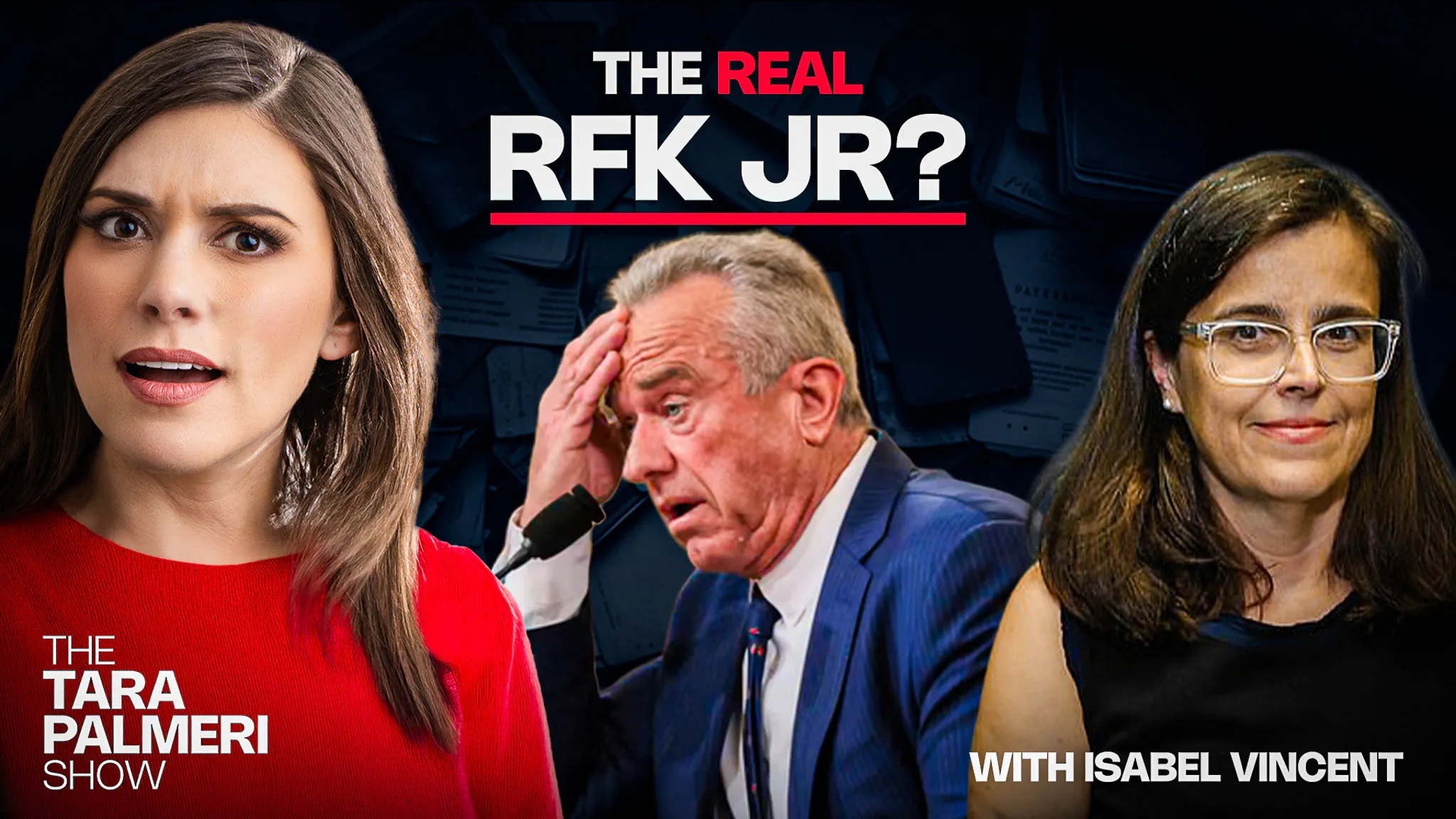
The Tara Palmeri Show
What RFK Jr.’s Secret Diaries Reveal About His Next Run w/Isabel Vincent
00:35:17
Loading summary
Transcript74 lines
- [00:00]
A
You're listening to this podcast, so I know you've got a curious mind. Here's a helpful fact you may not know yet. Drivers who switch and save with Progressive save over $900 on average. Pop over to progressive.com, answer some questions and you'll get a quick quote with discounts that are easy to come by. In fact, 99% of their auto customers earn at least one discount. Visit progressive.com and see if you can enjoy a little cash back. Progressive Casualty Insurance Company and affiliates. National average 12 month savings of $946 by new customers surveyed who saved with Progressive between June 2024 and May 2025. Potential savings will vary. Welcome everyone, to the Tara Palmieri Show. We have a special juicy interview with my former colleague, Isabel Vincent. She's currently in the library of the New York Post where I used to work. Isabel is a dogged reporter who is out with a new book called RFK Jr. The Fall and Rise. You should go out and buy it. We're going to talk about RFK Jr. He is obviously bizarre, creepy, the whole roadkill thing. There's so much more which Isabel uncovers in this book, but she really has an incredibly deep psychological portrait of this man who has very big ambitions and has already made it to to a very prominent role in the President's cabinet controlling our health. His father obviously was the Attorney General, but, you know, he has not given up on the dream of Camelot and leading his family in the White House. And that's why all of the anecdotes and all of the stories and all the investigating that Isabel has done will help paint a portrait of someone who in her own, you know, title the Fall and Rise, this is a man who just can't seem to be killed in a way. I mean, not killed, but, you know, in the political way, sort of like Donald Trump and so plays by his own rules. He seems to get away with it. And it's an incredible book and psychological portrait because Isabel was actually using RFKJR's diaries to write this book. He didn't hand them over to her either. She obtained them like a true investigative journalist. So we're gonna get into all of this and more. We definitely want you to send us your questions through the chat. I'll be monitoring it through my producer. And Isabel, thanks so much for coming from the show to the show and I love that you're in the newsroom right now hiding. So be quiet.
- [02:51]
B
Thank you for having me.
- [02:52]
A
Of course. I'm so impressed with everything that you've done and are doing. And I've always admired how you were able to really sustain a very intense job at the Post and still write so many great books. So you should see the depth of Isabel's work. She's been covering, actually, RFK for a very long time. I mean, you were the first to report that his late wife, Mary Richardson Kennedy, who killed herself after what's clear, a lot of infidelity, unclear if it's entirely connected, but you were the first to report that her family wanted an autopsy, investigation into how she died.
- [03:35]
B
Yeah, so. So I've been on the RFK story since 2012, since his second wife committed suicide at their home in Westchester. And a year after that, a source of mine. I met with a source of mine, and we had dinner on the Upper east side. And this source, without telling me anything, left me three volumes of Robert. Robert F. Kennedy Jr's diaries. And I. I didn't quite know what I had. I took them on the subway. I thought, oh, my God. But what was interesting and what was interesting and what we first focused on were his infidelities at the Post because diaries relate. Like, one of the diaries has trysts with, like, 37 women that he was having affairs with. And it was really interesting the way he portrayed them in the diaries. So he would assign. At the back of the diaries were a list of women with numbers from 1 to 10, and the numbers according to Mary. And my source sort of told you how far he'd gotten with 10, meaning he'd gone all the way. But on. Besides some of the names, there was the word victory followed by, you know, exclamation points. And in getting deeply into the diary, I realized that victory meant that he was. That he had not slept with these women and that the diary was this confessional, you know, this. He's talked about keeping a diary in the past because he's very much, you know, he. He's very dedicated to the 12 step program and going to Alcoholics Anonymous meetings every day. And so the, The. The diary was a way for him to keep tabs on himself. So when he talks about women in the diary, for instance, he talks about being mugged. Like, he talks about himself as the victim and how they, you know, how these women threw themselves at him. And I think that that's partly true, but, you know, the other part of it is that, you know, he went after them and. And so the victory meant he was able to resist them. He was able to resist that temptation just a fast at all of the temptations he's trying to resist in writing about in the diaries,
- [05:58]
A
which is incredible to me. Like, the. The victory is, is. Is I didn't sleep with this person because that is how rampant it was. And I remember in your reporting, you reported that he would refer to, like, some of the women as Goombas.
- [06:12]
B
Yeah, he would. Yeah. And he would. You know, he had all these names, and a lot of them were just listed by first name. There were also women listed by first and last name, but we decided that we were going to keep the women's names out of, you know, to protect their privacy. Yeah, but he was a serial philanderer. And, you know, before we published this in the Post, we had a meeting about, you know, what is the public good back in 2013 of revealing all of this. And we came to the conclusion that it was the first time that a Kennedy, you know, a Kennedy man had had, in his own writing, confessed to all of these affairs. I mean, we've heard that jfk, rfk, his father, and his grandfather, Joe Kennedy had, you know, these. These dalliances with all of these women. But. But this was proof. And so who knew that, you know, you know, 12 years from. From. Or less than that, 11 years from that time that he would be running president? So he's now a public figure, and I think it's important that we understand who he is.
- [07:23]
A
I mean, it's incredible. And he was a really big part, bringing his MAHA coalition, which ended up becoming very politically powerful to. To the Trump team. That was all brokered. I just, you know, I want to just talk for another second about his views on women. Do you think he sees them as purely tools, like something to use? I mean, how do you think he views?
- [07:46]
B
I think. I think there's a real, you know, disconnect with him about a lot of things. So, you know, the diaries, sort of. I. I don't think he thought it through. Like, you notice that when he was running for president, he. He made this apology to one of his former nannies. Oh, you know, I don't remember groping you in the hallway, but maybe I did. So I'm sorry, but. So he didn't. He didn't think it through because he's been conditioned through. Through, you know, years and years of entitlement. I mean, this whole family, when you look back, starting with Joe Kennedy having his affair with, you know, Gloria Swanson and moving through the generations, I just think he didn't think about it. What's also frustrating is he's a very smart guy. And, you know, his wife, his second wife is, is. He's writing about how they're fighting and that she's showing him a schedule of their four kids and, and their various activities that, that she has to, you know, keep tabs on. She has to ferry them to all sorts of things. And he's not understanding why she's so angry at him. Because he's, you know, going across the country, he's giving speeches on the environment at that time, he's like this environmental crusader working for humanity. And his wife's at home with these four little kids, you know, all of them under the age of 10, not being able to cope and then having to deal with all of the affairs he's having. So it's a lot of pressure. And, and again, so how he views women, how he views other people in general is. It's sort of very interesting. Is that that sense of entitlement that he has that I also think he, he's trying to wrestle with in the diaries.
- [09:32]
A
Yeah, I, I there, there's one part of the diary that you quote, and he writes, I am letting slip the opportunity for real power and fear that I will become a kind of gentleman environmentalist without any real import or prestigious office. What does this tell you about how he sees himself? Because to me, we can all just, like, laugh him off and be like, this is just a fluke. He becomes HHS secretary. Oh, he tried to run for president. It's a fluke. But he seems to think that this is not the end for him. This is a stepping stone.
- [10:05]
B
No, and you're absolutely right. I mean, he's been conditioned since he was a kid, since before his father was assassinated. His own father said of him that he's most like the president, meaning his brother, jfk. So he's been conditioned very, very young age that he was the one who was going to be the heir to Camelot. He was going to be president one day. And so he also says in the diaries at one point, when he's being very reflexive, he says, you know, I know Daddy, and he calls him Daddy. I know Daddy was in heaven looking down on me, and I was failing him. So when his father died, he was 14 years old. And he's taken over by, you know, his mom doesn't really have time for him. She's going through her own grief. She's pregnant with her 11th child. And so Lem Billings, who's an Kennedy acolyte, in a friend, close friend of the families, becomes this Surrogate father to him and his whole time with him, it's like, you are going to be president one day. You're going to, you are going to be the one that takes this family forward. So this has been drilled into him his whole life. So I'm not surprised when he, I wasn't surprised when he ran for president. And I, you know, he's, he's been coy and said, oh, I'm not running in, in, in, you know, I'm not, I'm not going to run for president in 2028. I don't believe that. I think, I think you're going to see him run for president.
- [11:29]
A
And what makes you think that he won't believe that? What is your reporting say that he
- [11:35]
B
just, from everything I've seen from people I've talked to who are close to him, that, yes, he's, he's definitely going to do it. I mean, he's. So, he's put himself out there as, first of all, he's realized one of his big dreams is to be part of the presidential cabinet. This is a guy who in his Westchester home had framed photo, had framed letters from every single president of the United States. He loves the presidency. He's, it's a big honor for him to be part of this administration in the cabinet. So from what I'm seeing is that he is going to go, he is going to go forward. Now, whether he's going to run as a Republican would be super interesting. Right? And, yeah. And, and historic.
- [12:23]
A
What about Cheryl Hines, his wife? How does she feel about that? She was pretty humiliated recently.
- [12:28]
B
Well, I think that, you know, it's a marriage of convenience at this point. She's gotten a lot of. Let's start with the $600,000 advance that she got for Unscripted, her book about, you know, her autobiography. I mean, this is a result of being Kennedy adjacent. I mean, Kennedy has, or before he became HHS secretary, he had a retainer with his publishing house, Skyhorse Publishing, to bring in new works. And among those new works was Cheryl's memoir. So she's got, you know, she's got a lot to win at this point by, by being close.
- [13:15]
A
I mean, she wasn't. Her, her acting career did not really take off, let's be honest.
- [13:19]
B
Right. And then, and, and, and what did she do when, when Kennedy was, during that time that he was running for president? Didn't she have a cosmetics line with her daughter? And wasn't there that crazy Instagram post where Kennedy was in the shower nude like, you could see him from the back and she was like, hawking her cosmetics. I mean, I don't think that was accidental. I think.
- [13:41]
A
What about the reporter? I mean, what happened with. With. With Olivia and RFK yeah. How did that impact their family?
- [13:48]
B
Right. So she, in her memoir, talks about how, you know, they got over was a bad scene. But we talked about it. We sat in our car and we talked for hours about it. You know, maybe they did, but I think it was from everybody that I've spoken to, they almost ended their marriage over that because he, you know, having read what I've read and having studied him and he's been in my head for like 13 years, I don't think. I don't think that he stopped his, you know, whatever you want to call it, his trysts with other women just because he's married. I mean, I'm willing to bet that that didn't stop.
- [14:31]
A
Yeah, it's so. It's a psychological addiction.
- [14:35]
B
So I, you know, I think that there was a pact made that he didn't want to have another divorce if he was going to go, if he was going to be serious about political office. And so I think that that's where it stands.
- [14:46]
A
Okay. So it's a marriage for the. The future. You know, I covered Department of Health and Human Services, and what I found was that he basically got rid of everyone inside of the communication shop that were there, a lot of them civil servants. And he. When he did use the civil servants, he was trying to use them as a sort of hype machine for himself and his. And his Persona. Like he wanted to put.
- [15:13]
B
Push.
- [15:13]
A
Use resources from the Health and Human Services to promote himself and to disperse disinformation. Do you think that he'll, like. Do you see that as part of his. What he thinks is his role?
- [15:24]
B
Well, I mean, that's very interesting because what have we seen? We've seen him turn into a. A cartoon character, right? Like he's punching out a twinkie in one cartoon or one meme that he's got up. He's got those. Those videos of being in the sauna with Kid Rock and, you know, going into a cold pool with his j. I think it's all part of, you know, this myth making of Robert Kennedy Jr. Whether it's effective with his base. I'm sure it is. You know, he's putting his message across, and I'm not surprised at what, you know, what he's done with Health and Human Services, because this is a pattern of behavior that began when he was at Riverkeeper, I mean, he annoyed everybody at Riverkeeper with his ideas.
- [16:12]
A
But the environmental group.
- [16:14]
B
Exactly. And, and they kept him on. Why? Because he's, he's, he's a Kennedy. And so Kennedy brought in a ton of donations to that group. I'm not saying he didn't do stuff that was important. He, he did do a lot in cleaning up the Hudson, in bringing the Hudson river, and in bringing awareness to that. But at the same time, you know, there was this trade off. Oh, Kennedy is going to bring us a lot of money, which it did.
- [16:40]
A
Do you think he's satisfied with his tenure? Because a lot of people seem to think that supported and feel like he hasn't done enough.
- [16:45]
B
Frankly, I think he, I think from talking to friends and people who have known him for, you know, decades, that he really believes that what he's doing is great and that he really believes that he's helping people. So whether he's satisfied, I think he realizes that maybe he's got a long way to go and this is what drives him. A mochi moment from Mark, who writes, I just want to thank you for making GLP1s affordable. What would have been over $1,000 a month is just $99 a month with mochi. Money shouldn't be a barrier to healthy weight. Three months in and I have smaller jeans and a bigger wallet. You're the best. Thanks, Mark. I'm Mayra Amit, founder of Mochi Health. To find your mochi moment, visit joinmochi.com Mark, is a mochi member compensated for his story?
- [17:40]
A
Yeah. I pointed out to friends that I've heard that he has met with lobbyists from various organizations, pharmaceutical, food that they are not happy about. I mean, they expected a purity test from him that I don't think he's frankly reached at hhs.
- [17:57]
B
Right. And, and you know, this again, is part of his M.O. like he's going to grab onto an idea and he doesn't care what the science says, what, what everybody else says. It's this like, obdurate, you know, stubborn behavior. And he's just going to go forward with what he believes. Yeah.
- [18:14]
A
I mean, just watching him in these congressional hearings, he refuses to back down, he refuses to give an inch. Does he really believe the things he says?
- [18:22]
B
I think so, yeah. From everybody I've talked to. But didn't he give an inch on the oncology drug that everybody wanted. Everybody wanted approved this week? And, and then, you know, he, he was asked about it, I think yesterday, and he said Oh, I got to go back and, and, and look at it. So he kind of, you know, he, he kind of gave an inch there, but. But he's, he's incredibly stubborn, and people will tell you that, like, when he was at Riverkeeper, he wanted to. He wanted to commercialize, like, the Hudson River's water. He wanted to bottle the water and sell it. And everybody was completely against. This is a crazy idea for an environmental group to do. But he went ahead with it. He had these taste testings. He brought it to, you know, he brought it to his sister Rory's wedding, which became a tragic event when JFK Jr and his wife and her sister died in the plane crash. But these. He had like, boxes and boxes of water in his car so you could do taste tests at the wedding. And, you know, again, and Riverkeeper was completely against this. Wow.
- [19:35]
A
You know that thing where you get an amazing pair of shoes at a really great price and want to tell everyone about it?
- [19:41]
B
Yeah. So do we.
- [19:43]
A
Here at Designer Shoe Warehouse. We'll give you something to brag about, like the latest styles from brands you
- [19:48]
B
love or the trends everyone's obsessing over,
- [19:51]
A
or shoes that make you feel like, well, you.
- [19:55]
B
So go ahead, show off a little. Buying shoes that get you at prices that get your budget.
- [19:59]
A
That's your DSW store or dsw.com today.
- [20:02]
B
DSW. Let us surprise you.
- [20:05]
A
You know, he's pretty matter of fact about depression in his diary. He seems self aware when it comes to that. Do you think he has self awareness or only, like, at times, self awareness or on certain, certain, you know, certain things. He can, he can really grab onto certain things. He lives in a.
- [20:26]
B
So. So there were days I really liked him because he was really self aware and he was bringing in, you know, philosophy and religion, and he knows how he acts. And when he, you know, he would talk about going to Hollywood, for instance, and talking about how it's always his downfall there with women. Like, he can't help himself. So he knew. Right. But did he do anything about it? You know, and he admits that he failed a lot of times. And so, you know, you have those passages where you think, okay, he's, he's. He's gonna do something. He's gonna, he's gonna rise to the occasion. But then, you know, and then there's. There's entry after entry about how he doesn't understand what his wife is going through, what Mary is going through with her depression and her, you know, addiction. But then there are passages where, oh, we're going to pray together. We're going to get through this. So it's. It's a duality, I think, is the best way to. To. To explain it.
- [21:30]
A
Yeah. I mean, the entitlement, though, is pretty spectacular. You write that he was consistently going above the speed limit on the highway, on his work, to the Attorney General's office, and it resulted in his deputy asking to raise the speed limit so that Kennedy wouldn't get a ticket.
- [21:52]
B
Yeah, that starts there with his dad when he was Attorney General. So he's like the top cop in the United States.
- [21:58]
A
Right.
- [21:59]
B
He's. He's speeding to work, and everybody around him, his deputies, are so concerned that they go to. They go to the Secretary of the Interior, Stuart Udall, at the time, and they say, can you just raise the speed limits so we don't. Embarrassing situ. So it starts there. It starts with his mother, too, getting a speeding ticket, like on the same highway in Virginia, and telling the cop to send it to the New York office. And the cop's like, what are you talking about? And she drives away. So, I mean, it's. It's insane what he.
- [22:29]
A
Yeah, he learned from them.
- [22:32]
B
Yes, exactly.
- [22:33]
A
And he. And he. He thinks of them fondly. Right. He thinks about death a lot in his father's. Well, in the book, you say that, too. He writes a lot about death.
- [22:40]
B
Yeah. And he goes to everybody's funeral. He volunteers to be a pallbearer at everybody's funeral. He does the eulogies. And I talked to a middle school friend of his who's now in his 70s and said, you know, the one thing I remember about him is that we were kind of friends in middle school, but when my dad died in 1979, I got a letter from him, and he was out in South America somewhere, but he took the time to write it, so. So it's. You know, And I also heard from other people that his wife's suicide is still something that weighs incredibly on him. You know, he still. Hope so. Yeah. He's still very torn up about it. Yeah, it's because you didn't. You didn't get that sense at the time. You know, it seemed like he'd. He was already dating Cheryl Hines, that he just, you know, went on with his. Went on with his life. They had a funeral, and then, if you recall, she was buried in. In Hyannis Port. And then he reburied her. He had her dug up and reburied her to another part of the cemetery, saying that he had bought a family plot. He wanted Everybody together. It was just, it was just completely bizarre.
- [23:52]
A
Hey guys. Lately I've been more intentional about what I wear day to day. I lean into pieces that feel effortless and comfortable, but I still need to look put together. After all, I am running a media company. And that's why Quint has become my go to. It just makes getting dressed simpler because the fabrics are elevated, the fits are flattering, and everything just works without having to overthink it. I have been wearing the 100% washable silk slip dress all the time. I have it in navy and I plan to buy it in champagne. It just looks elevated. And you can wear it with a blazer or jean jacket however you want to wear it. Flats or high heels. It's just sort of a staple in my wardrobe and I can't get enough of it really. It is such high quality silk. And the best part is you don't have to drop it off at the dry cleaner afterwards. Refresh your everyday with luxury you'll actually use. Head to Quince.com Tara for free shipping on your order and 365 days of returns. Now available in Canada too. That's quite Quince. Q-U-I-N-C-E.com Tara for free shipping and 365 days of returns. Quince.com Tara and of course, when they ask you how you found out about us, please say you heard about it here. So the press is like obsessed with his. I guess the word is bestiality. Would you use that word to describe his animal? Yeah, the roadkill. The bear in the park. He leaves. That was a big story in the elect during the election that he left a dead bear in the middle of the park. He strapped a whale on his roof once. A dead whale. And then the latest is was uncovered in your book about he picked up a dead raccoon roadkill off the street and then castrated it.
- [25:46]
B
Yep.
- [25:47]
A
What's up with this obsession? Yeah, I don't, I don't know if it's the word bestiality, but like there's something disgusting going on. I don't understand it.
- [25:56]
B
Okay. So you got to go back to his childhood to understand that this is a guy who his whole life wanted to be or his whole early life wanted to be a vet. He had a job at the National Zoo in D.C. after school. He was, he was always going off into the forest and collecting things. He still collects, you know, seagull skulls. He's got a whole collection at home. So what happens with the raccoon is. He sees road. He sees a roadkill raccoon on a stretch of highway. He's in a van with like four of his kids. So his children with Mary. And he stops. He gets out as he's cutting the penis off of the raccoon. I mean, it's a very funny moment in his diary. He's thinking how weird some members of his family are. And it just struck me as like, you were doing the weirdest thing right now, and your family, because some of them hold a grudge, are weird. So. But he takes it back. He freezes some of the roadkill and he studies it later. I mean, this is just a guy who's like. So when I read that, I didn't even think that that act was that bizarre until, you know, last week when my book came out and everybody was like, talking about it, and I was like, again, I've been in his head. And so for him, that's like a very normal thing to do. And the way he described it was just so great. You know, like, the kids waited patiently in the car while he finished, and then they drove off with the raccoon penis.
- [27:29]
A
But kids are just like, whatever. Do they. What kind of a relationship does he have with his children?
- [27:34]
B
I think, judging from everything that I read in the diaries, that he loves his kids. Like, he absolutely adores them and so spends whatever time he can. I mean, he. He talked about his young. His youngest son, Finn, and teaching him how to ski at the age of like three or something, and how proud he was of him and how proud he is of Bobby, his. His eldest. His eldest son. I mean, at one point they all get together with Cheryl Hines and they. They're making a film that Bobby wrote about Hunter S. Thompson. And so it's like, you know, he takes great pleasure in doing all these sporting events with them. I mean, it's a very Kennedy thing, you know, capture the flag, skiing. So I think, judging from what I read and how proud he is every time one of them catches a fish, he documents it by. By weight, by size, by type. He seems to be a devoted father, except when it comes to having to do the day to day, taking so and so to soccer practice, taking school, doing their homework. I mean, I think that fell to. Certainly with his second wife, it fell to Mary, and she was very, very upset about it.
- [28:54]
A
Yeah, unfortunately, very common, I think.
- [28:59]
B
Right.
- [29:00]
A
But not. Not to give him a pass on this. And like, obviously the Kennedys, all of them, there's so many of them. I know that but it seems like not a single one of them is close to him. Unless I'm wrong. What's the family reaction to him and what he's doing? We've heard a lot about it publicly, but I'm wondering if you. If you have a. Found a deeper understanding or some new anecdotes.
- [29:20]
B
So I think that, yes, they're all upset he left the Democratic Party. That was a big thing. And, you know, the. The split between John F. Kennedy's side of the family. So Caroline Kennedy and her. Her son, Jack Schlossberg, they've never really gotten along with the Robert Kennedy side of the family, who everybody for years has seen as totally crazy. So Ethel Skakel Kennedy, his mother, one of her brothers, once wanted to hunt a whale a la Moby Dick, and hired this crew in the Azores. Life magazine followed him. And there's like, this feature in Life magazine from the 1960s of this guy surfing on his Uncle Bobby's uncle on his mother's side, surfing on blood, the blood of the whale off of the Azores. And so this is the kind of family that, you know, is associated with the Robert Kennedy, Ethel Skakel side. They're all crazy. They're all into these extreme sports. And, you know, a lot of the kids turned out to have problems with addiction, so they were never that close. But when he ran for president, of course, there was like a big split. Even his sister, Carrie Kennedy, who has been, you know, incredibly close to him growing up, put up all these things on Twitter on. On X, saying, you know, that he's caused all of this harm. But I think that even though they've done that, that his siblings are still close to him. Maybe not the eldest, maybe not Joe Kennedy, maybe not Joe Kennedy Jr. But, but I think the ones he grew up with, they're still close. They would still help him out, you know, if he had a problem. But publicly, they're. They don't want to associate with him.
- [31:21]
A
What was the hardest story for you to cooperate there? Things that you put in that, you know, talk about that stuff as a journalist.
- [31:29]
B
I like just, you know, around the Mary Kennedy suicide because there were a lot of questions at that time, and her family had hired an investigator to look at, you know, the circumstances around her death. And I had seen emails that the investigator had sent to. To the family, and there were. There was some unanswered questions. For instance, why were her, you know, when the family showed up at the home after the suicide, there was no suicide note. There were no computers. Her computer was Gone. Her phone was gone. And there were never any real answers to that. Like, you've got four kids. There's no suicide note. I mean, those things were difficult. And then to me. Right.
- [32:21]
A
They're not, too.
- [32:23]
B
And to make matters worse, when I went to get the police report, when I foiled the police. For the police report, half of it is redacted. And why is it redacted if it's a public document? And that. That made me crazy. Like, I actually called the. The DA In Westchester, and I said, can I redactive police report? I mean, it's been like, 13 years. Can I just see it? And so, you know, there were things like somebody had visited Mary, like, a couple of days before she committed suicide. The name was redacted. I'm like, why are we doing that? Is that still part of the Kennedy entitlement? Like, if. If it happened, if. If it happened in anybody else's family, would those names be redacted? Maybe. Maybe they would. But this was. This was very frustrating to me that. That, you know, we couldn't just tell it like we would, you know, a normal suicide.
- [33:16]
A
And you would know this. I mean, you've covered this. These stories all the time. We would cover them at the New York Post. We know what. The kind of information that you get from these police reports.
- [33:26]
B
So I just. You know, that was very frustrating not to be able to sort of take that story to its logical conclusion. Yeah.
- [33:36]
A
So Isabel is an outstanding reporter. Isabel Vincent go out and buy her book about RFK Jr. The Fall and Rise. And he may be rising even further and has bigger plans. So this is why we should all be continuing to pay attention to rfk, his psychology, and who he is, because, you know, it's interesting that you said that he's trying to mythologize himself, because that is what he's doing. And if anything, Trump has showed us that if you want to succeed in politics, capturing pop culture and mythologizing yourself is the way to do it. And he's clearly using his position right now to do that.
- [34:14]
B
Yeah, no, absolutely. Absolutely.
- [34:17]
A
Yeah. Thank you, Isabelle. So great to reconnect with you too. And congrats on the book.
- [34:23]
B
Congrats on your show.
- [34:25]
A
It's brilliant. I'm so happy to have you on Chef. Cheers.
- [34:28]
B
Take care. Hi, I'm Tamsen Fadal, journalist and author of how to Menopause and host of the Tamsen Show, a weekly podcast with your roadmap to midlife and beyond. We cover it all from dating to
- [34:42]
A
divorce, aging to adhd.
- [34:44]
B
Sleep to sex, brain health to body fat, and even how perimenopause can affect your relationships. And trust me, it can. Each week I sit down with doctors, experts and leaders in longevity for unfiltered conversations packed with advice on everything from hormones to happiness and, of course, how to stay sane during what can be well, let's face it, a pretty chaotic chapter of life. Think of us as your midlife survival guide. New episodes released every Wednesday. Listen now on Apple, Spotify, or wherever you get your podcasts.