Loading summary
Transcript29 lines
- [00:02]
A
DSW semi annual sale starts now. Twice a year, tons of deals going fast. It's all or nothing. A designer shoe warehouse will give you something to brag about, like 40% off clearance in all DSW stores or an extra 10% off clearance@dsw.com don't sleep on these savings. Find shoes that get you at prices that get your budget. Dsw, let us surprise you. We know that the powerful want this to happen and they're probably going to get it sooner than we will be able to stop them. And so while we stave off disaster, let's start solving the problem. So I want people to get the id. I want people to have all of the paperwork they can have. But that paperwork should not determine the quality of your citizenship.
- [00:54]
B
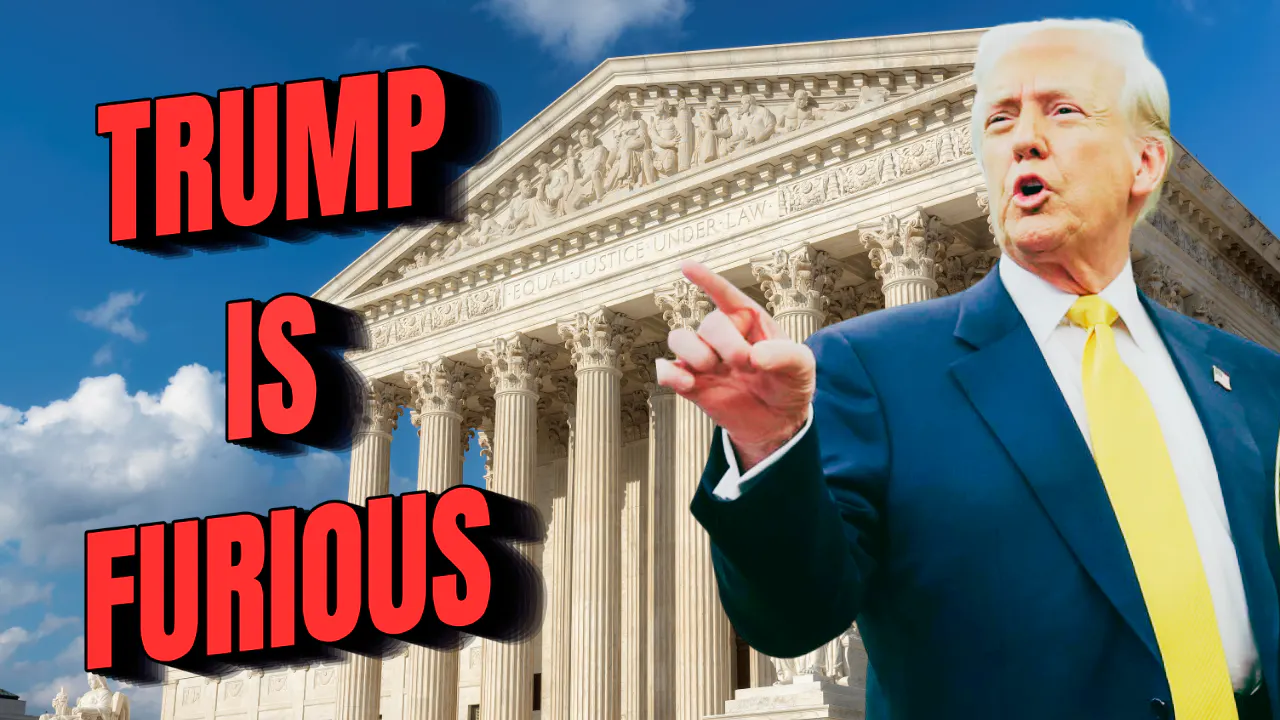
Welcome back to the Tara Palmieri Show. President Trump is furious because the Supreme Court is allowing mail in ballots to be counted five days after the election.
- [01:05]
A
Gives people more time to vote illegally.
- [01:08]
B
Let's say he won't sign a single bill until his Save America act passes because it requires proof of citizenship to vote. And he wants it done now before the midterms in November. So Congress is at a standstill. Trump wants to make it more difficult to vote, but what does it mean for all of us? Take a listen to my interview with voting rights advocate and two time gubernatorial candidate Stacey Abrams. I do want to ask you about the Supreme Court's ruling on mail in vote ballot voting which is a win for the, for your cause. And they will allow late arriving ballots to be counted after election day up to five days. Now President Trump called it a tremendous loss, loss, not surprisingly. And he's pushing that the Senate pass the Save America Act. Now just so you all know, Save America act, they don't have the votes in the Senate. They, he, he would have to overturn the filibuster because you know, in order to pass this with a two thirds majority, they just don't have that. They'd have to do simple majority. And it would obviously, you know, there's something to be said about upholding rules and making sure that we don't have the whiplash from party to party when, you know, while rules and laws are being passed, that's, that's what the Senate is sort of for. So how does this change the strategy for Democrats in the midterms?
- [02:33]
A
What this means is that democracy can continue. When I ran for governor in 2018, one of the reasons we surged and had 800,000 more people vote between 14 and 18, that's how many people I didn't register 800,000 people in four years, but we turned out 800,000 new people in four years. And one of the reasons we had a very intentional use of mail in ballots because it meant more people could participate. Senior citizens, the disabled, students, military, people
- [03:05]
B
who work, people who go to work and vote yes, no, I know this
- [03:13]
A
is a fantastic outcome. Now let's, again, we can't, we can't rest on the success. They're going to come after California. That's why they, you know, the person who's, you know, was nominated and then got his nomination pulled for the DNI role through the Director of National Intelligence, Jay Clayton. He, you know, did the conspiracy theory about mail in ballots, but you also have to watch the fact that there was a recent federal court that said that the United States Postal Service could not thwart and say, stop mail in ballots from being delivered because they didn't have the, that, you know, these states have refused to give these lists to the federal government. So we got to remember that even if the Supreme Court has said, this is not the vehicle, that doesn't mean the fight is over. And I use that to bring us to Calais. The Calais decision, which gutted Section 2 of the Voting Rights act, came two years after the same Supreme Court said in Allen v. Milligan, yes, it is perfectly okay to defend and protect Section 2. They just didn't like the Milligan argument. We know that what they did in Mississippi on mail in ballots can be undone next year. And so our responsibility is at the state and local level to pass voting rights laws wherever we can because we cannot count on the Supreme Court and Congress to save us.
- [04:31]
B
Yeah, I do want to talk about the Save America Acts, since President Trump is so obsessed with it that he shot down a housing bill that that would have, you know, really helped. I mean, it was a bipartisan housing bill. Nothing really gets passed. Bipartisan, very rarely, except maybe the Epstein Act Transparency Act. But there was a bipartisan housing bill which would have made it less expensive to, for construction loans, etc. And his party wanted him to sign this right and he refuses because they have not passed this Save America Act. Can you sort of like paint a picture to me of the person who gets shut out of voting because they have to show proof of citizenship requirement? I mean, I'll be honest. First for me, I would show up with my license, but, you know, I drive. But tell me, like, what type of person doesn't have any sort of, I guess even birth certificate? I don't know where mine is. But I'm sure I have it somewhere.
- [05:31]
A
I hope.
- [05:31]
B
One thing I love about this show's sponsor, Ground News, is that it lets you compare how different outlets come cover the exact same story side by side. Take California's proposed Billionaire tax, a measure that's so controversial that even some Democrats, including Governor Gavin Newsom, are opposing it. On Ground News, I can instantly see how outlets across the political spectrum are framing it along with the publication's political leaning, factuality and ownership. For example, the New York Post, which Ground News rates as right leaning and with mixed factuality they ran this headline, California's raid on the rich passes major milestone as hated Billionaire tax qualifies for ballot. Meanwhile, the sf, which Ground News rates as left leaning and with high factuality, framed it this way. Billionaire tax petition signatures confirmed and coalition forms to battle against the ballot measure. Same story, two very different angles. That's why I use Ground News. It helps me see just not what the news is, but how it's being presented and who's presenting it. It lets you compare side by side coverage. See media bias and factuality Ratings from all over the world go to ground news.com to get 40% off the unlimited Access Vantage plan, which is the one that I use to work on this show and unlock worldwide perspectives on today's biggest news stories. But you can only get this by using my link. So you go to ground news.com Tara T A R A for 40% off. That's ground news.com Tara but yeah, tell me the type of person gets shut out. So I've always sort of wondered about this one.
- [07:10]
A
Okay, so let's, let's start with how voter suppression works. It's three things. Can you register and stay on the rolls? Can you cast a ballot and does that ballot get counted? Well, this act tries to decimate your right to vote using all three of those pieces. So let's start with registration. There is not a single federal law right now requires proof of citizenship in order to register to vote. It is the law right now. What they are doing is making it more difficult and restricting the kinds of proof that you can use. So if you are in the military and you are overseas and the SAVE act passes, unless you decided to bring your birth certificate with you to, you know, South Korea or to Oman, you now have to go back and get it and go through the process, which means you could miss out on participating in election.
- [08:02]
B
There isn't a form of identification that you get as a military, as a
- [08:05]
A
serviceman, no, that it's not Included. Number two, if you are a woman who changed her last name, yes, you've got your birth certificate, but it's not the name that you need to register under. Well, you have to have your birth certificate and you have to have the piece of paper they may or may not have given you or when you filed your name change. And if you got divorced or changed anything else, that's half. That's like 100 million women who could immediately access number three if you grew. If you were born during Jim Crow, like my parents, like my grandparents, My grandparents have passed on, but my parents were born under Jim Crow. You were not guaranteed that you could be born in a hospital, which means you may not have a birth certificate. Now, you were able to get additional pieces of paper, but depending on how restrictive that birth certificate rule is, remember what they did to Obama when they questioned the fact that he didn't he had a certified birth certificate instead of the original. Well, if you were not born in a hospital, the birth certificate that you may have access to may not be validated by the group that has to say that you are a citizen. Which means you've got people of color, you've got women, you've got the military, and let's say you're rural. You may not live anywhere near where your birth certificate is from, and they may not be willing to send it to you. And you might not have the Internet because we never quite got that taken care of. So you lose your right to vote until you solve a structural problem that is a manufactured problem. So that's the first part. The second part is, so can you register and stay on the rolls? Can you cast a ballot? When people say, there's not a state in this nation that does not require identification to cast a ballot, it's not, do you have identification? It's how restricted is that identification? In Texas, you can use your gun license, but not your student id. And so we've got to remember that what the SAVE act is going to do is push out any voter they think will not support the policies they want. People of color, children, young people, the disabled, communities that have difficulty getting access and may not have the money half of Americans do not have. So it's 60 million women who would be pushed out, but 100 million people don't have passports. So if you have a passport, you're good. Anything else? It's questionable. And that's a problem. We don't know who could lose their right to vote.
- [10:31]
B
Here's the thing, though, on the flip side, like, do you think that you should have some sort of identification when you show up to vote.
- [10:38]
A
Every state requires it already. This is a. This is a false argument. I wrote a book. It's called Our Time is Now.
- [10:45]
B
And I said, what is it exactly? Like, what exactly would I need to vote? What would I need?
- [10:49]
A
Depends on your state. Some states have more restrictive. That's why I use Texas as an example. In Texas, you don't have to be trained to shoot a gun, but you can get a gun license. But to get to be a student at one of their universities, you've got to jump through all kinds of hoops. They will let you bring your gun license to vote, but not your student id. So this is not about proof of who you are. This is about the kind of people they want to have show up. There is not a state in this country that does not require proof of identity. It is a question of how restrictive that proof is and who can afford to get that proof. That's the point. We let them wrap us into this conversation. That is complete and utter bollocks. There is not a place in America where you don't have to have proof of id. It's just a question of what proof you have to provide to make your citizenship valid in their eyes.
- [11:44]
B
Are you worried that by, like, talking about this that you're. That some Dems are just thinking it's not even worth it to show up to vote because it's going to be too difficult?
- [11:53]
A
So people make that argument, and here's how I frame it. We've got to talk about what the hurdles are, but we've got to talk about what the solutions are. So what we did in Georgia in 2018 and 2020 and in 2022, what we did in 24, what we keep doing and what I've done across this country is that we got to tell people what they face. It is never a safe thing to do to hope that if we don't talk about it, it won't hurt us. But then we've got to talk about it in terms of how do we solve it? And you solve it by voting in the midterms, but voting up and down the ballot. You solve it by making sure that your state legislators actually care about you as a voter. You solve it by making sure that young people get registered to vote the minute they turn 18. And you solve it by having groups like vote writers out there getting people the IDs they need. We know that the powerful want this to happen, and they're probably going to get it sooner than we will be able to stop them. And so while we stave off disaster, let's start solving the problem. So I want people to get the id. I want people to have all of the paperwork they can have, but that paperwork should not determine the quality of your citizenship.
- [13:02]
B
Okay, so some of the people in the chat we're seeing Stacey for president in 2028. There is a lot of buzz, though, in political circles about Senator Jon Ossoff, president. He's in Georgia. He's in your state. What do you think about him? Is he ready?
- [13:19]
A
So I'm going to say this. I'm going to let John speak for himself. And John said he is not interested in running for president in 2028. John is interested in being the US senator who gets reelected in 2026. So if you love Jon Ossoff, if you like John Ossoff, if you love America, invest in Jon Ossoff right now. John should win this reelection. We need him in the U.S. senate. That's where he wants to do the work. We need senators who believe in democracy, and that's where he wants to be focused. So let's do everything we can to reelect John Ossoff and send him back to the U.S. senate.
- [13:49]
B
So I want to be respectful of your time because I heard that you have an event, and I really appreciate your time, by the way. But some of our people want to know, what are your top three Democrats who you want to see in the 2028 presidential primary?
- [14:04]
A
So I'm not going to do that because I. I don't know who. So. But here's what I'm gonna tell you. Instead of trying to pick the person,
- [14:11]
B
your endorsement would go a long way. So I do think this is a.
- [14:15]
A
But it's 2026. But I want people to think about things differently because one of the reasons we keep getting what we get is we keep using a metric that is not, I think, the right one. So instead of looking for names, because those are the ones who've been lifted up, I look for archetypes. I want to see who has a plan, who can articulate the nation they want to see the day after the election. Not what they want me to believe, but has a plan for what can be. Number two, who is being courageous in this moment, who is not waiting to be called up and holding their fire and holding their horses until they win, who's being soft versus who is being willing, who's willing to fight. And then third, and I think most important, who has been doing the work irrespective of the power that they hold. Because too often we equate title with capacity. You don't have to have a title to do the work. What you have to have is the will to do the work. And so as you're thinking and as you're shopping for your candidate in 28, I want you to watch how they're living this moment. Watch what they're doing when the hard things happen. Listen to what they say they want to see on the other side and see how that resonates with your values. We don't know who's going to run, but what we do know is what we need. We need a democracy that delivers for Americans. And if we do not have candidates willing to step up in this moment and help us get there, then we're not going to get what we need on the other side of 28.
- [15:45]
B
Well, Stacy, this was amazing. We appreciate having you on the show. Everyone was tuned in and sending in questions and so thank you to all of the people who watch subscribe. You know, if you follow Stacy on Substack, hit that subscribe button. Hit the subscribe button for the red letter as well. If you're on YouTube, consider becoming a member. Also hit the subscribe button and support independent journalism and independent work. So thank you so much for your time and we will hopefully have you back soon.
- [16:16]
A
I look forward to it. And Tara, thank you so much for having me. I appreciate it.
- [16:19]
B
That was another episode of the Tara Palmieri Show. Thank you so much for tuning in. As always, you can support the show by hitting the subscribe subscribe button. Liking commenting, telling all your friends about it. You can go to tarapalmieri.com you can see that little barcode. By scanning that, it takes you to the red letter where I write my exclusive newsletter. It is how you can support my independent journalism and get all of my best reporting straight to your inbox. I want to thank all the people on my team who make this independent journalism possible, like Abby Baker, my producer Joshua Friday, who produced and edited this show, Dan Rosen, my manager and Nicole Staple. See you again soon.
- [17:09]
A
Insurance isn't one size fits all. That's why customers have enjoyed Progressive's Name youe Price Tool for years now. With the Name youm Price Tool, you tell them what you want to pay and they'll show you options that fit your budget. So whether you're picking out your first policy or just looking for something that works better for you and your family, they make it easy to see your options visit progressive.com, find a rate that works for you with the name youe Price Tool, Progressive Casualty Insurance Company and affiliates Price and Coverage Match limited by state law.