← The Team House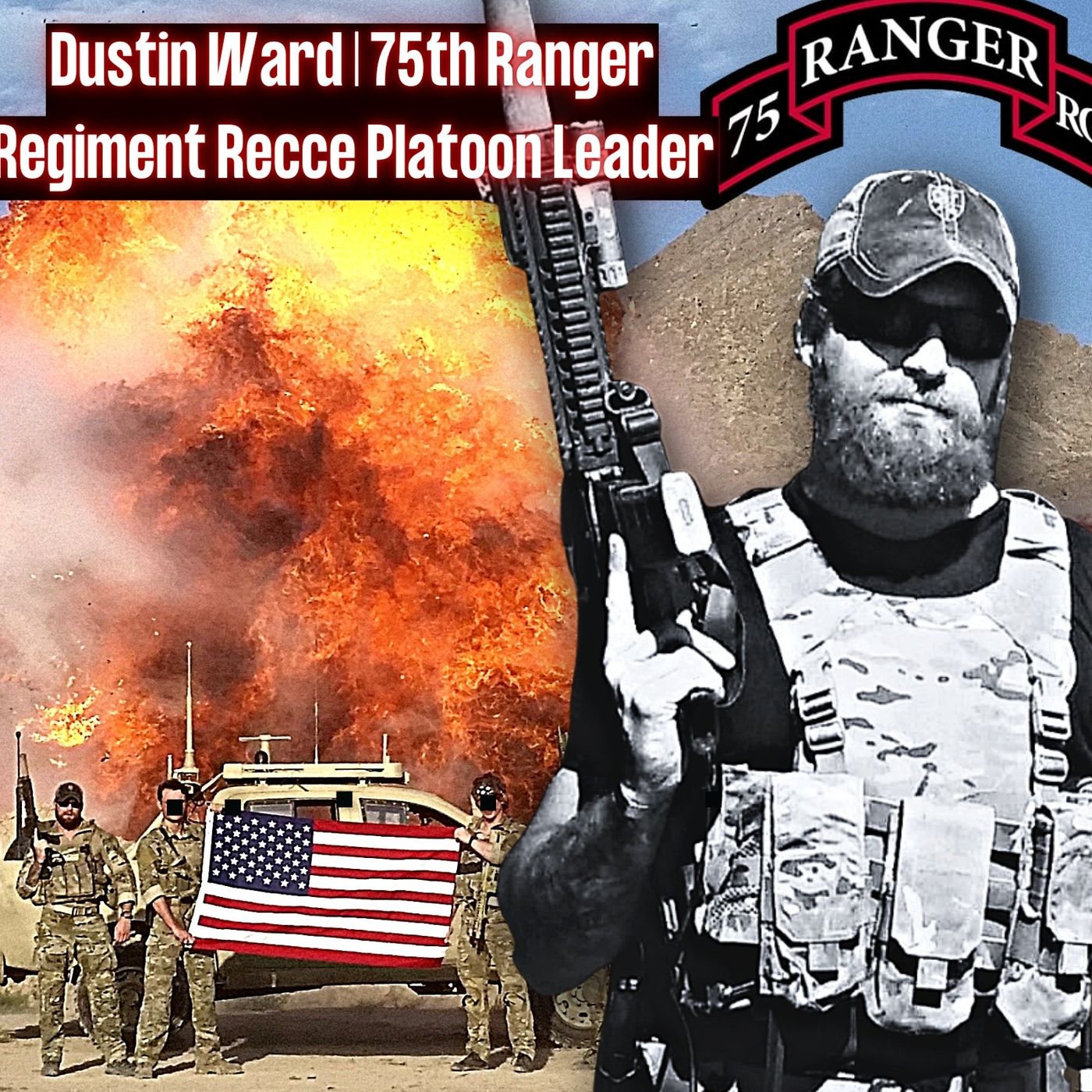
The Team House
75th Ranger Regiment Recce Platoon Leader | Dustin Ward (throwback episode)
02:28:43
original airdate 4/7/23 Dustin Ward served with the 75th Ranger Regiment with the Recce section and worked on special programs in Afghanistan. Grab Dustin's Lite Sleeping Bag!⬇️ https://thelitesleeper.com/ To help support the show and for all bonus...
Loading summary
Transcript1,115 lines
- [00:00]
Ryan Seacrest
Tax season has arrived and doing taxes without the right help can feel overwhelming. Intuit TurboTax is here now to guide you through it with confidence. Match with a TurboTax full service expert who handles everything for you from start to finish. Your dedicated expert checks every single deduction in credit to help you get the best possible outcome so you can feel confident you're getting every dollar you deserve. And the best part? You'll see real time updates on your expert's progress right on your phone while you live your life. Plus, you get unlimited expert help at no extra cost even on nights and weekends during tax season. Visit turbotax.com Only available with TurboTax full service experts. Real time updates only on iOS mobile app at Lowe's.
- [00:41]
Dan Morgan
Get up to 35% off select major appliances.
- [00:45]
Dustin Ward
Plus members get free delivery, install and.
- [00:47]
Dan Morgan
More when you spend $2,500 on select major appliances. Lowe's we help you save valid through.
- [00:54]
Dustin Ward
225 while supplies last Selection varies by location. Excludes Massachusetts, Maryland, Wisconsin, New Jersey. Florid loyalty programs subject to terms and conditions.
- [01:01]
Dan Morgan
Visit lowe's.com terms for details.
- [01:03]
Dustin Ward
Subject to change.
- [01:04]
Jack Murphy
Visit your nearby Lowe's on Colorado street in Kennewick.
- [01:10]
Dustin Ward
The Team House with your hosts, Jack.
- [01:14]
Jack Murphy
Murphy and David Park. Welcome to episode 201 of the Team House. I'm Jack Murphy here with David park and our guest on tonight's show is Dustin Ward. Dustin served in the infantry as a sniper and in the long range reconnaissance teams and then went over to the Ranger regiment and served as a platoon sergeant in the battalion reccection, amongst other positions that you had over there. Dustin, thank you for coming out here to godless New York City.
- [01:51]
Dustin Ward
I appreciate it man. Thanks for the invite.
- [01:54]
Jack Murphy
Fly it up here man. It's awesome to have you here in person.
- [01:56]
Dustin Ward
Thank you.
- [01:58]
Jack Murphy
So look, we're going to start at the beginning, so tell us about, you know, kind of like how you grew up and sort of like what it was to sort of like directed you towards the military.
- [02:07]
Les Sandusky
What's your origin story?
- [02:09]
Dustin Ward
Origin story? Yeah. So I was born to a military family. My dad was in the Air Force, served 22 years. My mom was a typical stay at home mom, military spouse. I have a brother as well, he's five years younger. Moved around a lot. I was born in Mississippi and then we pretty much ended up in North Dakota for the majority of my life. My dad worked on B52s, so Minot, North Dakota. Great place if you ever get a chance to go. Towards the end of that, moved down to Texas. And that's where I graduated high school and joined the army. Me and stuff. But you know, growing up I said had an awesome household. My dad was gone a lot TDY taking care of the family, mom took care of us at home. And I just had this outdoorsman military mentality. Growing up like I wanted to, I was always wearing my dad's BDUs. We're outside playing set up, hide and seek. We call it a manhunt. Yeah. To make it more manly. But anytime I went back to my grandparents house in Missouri, I was out in the woods. You know, I've probably been shooting guns. I was, you know, six years old shooting.22s and hunting squirrels, hunting deer. Always knew I was going to join the military. I think one of my favorite movies still to this day is Dumb as it is is the Rock.
- [03:35]
Les Sandusky
It's a great movie, it's a lot of fun.
- [03:38]
Dustin Ward
It's a, it's a good movie. And I, I just remember having like a little play MP5 and had this somewhere, this little battery charger for a Game Boy that had a cord and I'd put in my ear like it's an earpiece. My dad freaking out, he thought I was going to shock myself with this battery charger. But I, I don't know. I always had this, this war mentality. I think every able bodied male should serve their country in some aspect. And that's the route I took. I did initially join the air force after high school. I was in the depth program. I was gonna pass all the prereqs, I was gonna be a pj. But they told me hey, we'll call you within six months to leave for basic. And I was like nah man, I quit my job yesterday. So I took a year off after high school. Just kind of enjoy after high school life. And they're like, well that's not going to happen because there's only so many pipelines a year and you have to hit the pipeline at a certain time or go to basic at a certain time, something like that. So I walked across the hall, the army recruiter and walked in and there's this big cardboard cutout of a green beret standing there and he's like, what do you want to do? I was like, I jump out of planes and shoot people, man. How do I do that? And showed me the old cliche, you know, ranger recruiter view guy coming up out of the swamp. It's actually my friend now. I know, it's kind of funny.
- [05:02]
Les Sandusky
We have that, well, we have the the documentary over there.
- [05:05]
Jack Murphy
The vhs.
- [05:06]
Les Sandusky
Vhs.
- [05:07]
Dustin Ward
His name's Mike Connor, but show me that. And it's like I said, cliche. Put his arm around me. I was like, that could be you, man. Yeah. I was like, you're right. Yeah. I was like, that could be me. He's like, yeah, Sign here. You leave in two weeks, and here's $20,000. I was like, sweet.
- [05:24]
Les Sandusky
Oh, you got an enlistment bonus for that?
- [05:26]
Dustin Ward
Oh, yeah.
- [05:26]
Les Sandusky
That's fantastic.
- [05:27]
Jack Murphy
What.
- [05:27]
Les Sandusky
What year was this?
- [05:28]
Dustin Ward
It was 05.
- [05:29]
Les Sandusky
Okay.
- [05:30]
Dustin Ward
Yeah.
- [05:31]
Les Sandusky
So the world was already kind of on fire in terms of, like.
- [05:33]
Jack Murphy
Yeah.
- [05:34]
Les Sandusky
Military and. Yeah, yeah.
- [05:36]
Dustin Ward
And I remember. I remember the war kicked off in 03. Not the Afghan war, obviously, but the Iraq war. And my buddy and I, you know, at the time, I think it's aol. I am, you know, aim. So they're messing each other, like, oh, my God, we need to hurry up. The war's gonna be over by the time we get out of high school. Like, lo and behold, 20 years later, still going on. So plenty of time to enjoy the war. But, yeah, they gave me a bonus. It was a special forces intent bonus. Just the intent didn't actually have to go. Oh, really? Yeah. Join the army. 05 January, 05.
- [06:15]
Les Sandusky
Now, did they have an X ray program at that time?
- [06:18]
Dustin Ward
They did. I was an 11x ray. Okay. Dodge that bullet.
- [06:21]
Les Sandusky
Oh, an 11x ray. Yeah, I went in 11x ray, too. I meant an 18x ray, though. Could you go. Could you enlist? Straight into it.
- [06:27]
Jack Murphy
Say, dodge that bullet. What does Les say about all this?
- [06:30]
Dustin Ward
Les, awesome guy, man. That's why I'm here. Because Les, he told me, give a shout out. So I'll give a shout out, Les. But yeah, did not become an 11 Charlie. Came 11 Bravo. I don't know if 18 x ray program was a thing.
- [06:43]
Jack Murphy
Yeah, yeah, I think it was around by then.
- [06:45]
Dustin Ward
Was it? Okay, so I went to. I went to SVAs in oh, 7, and there were some 18x rays there.
- [06:52]
Les Sandusky
So it might be now. So for people who are watching, don't know, in, you know, in the military jobs, the Moss, the 11 series is the infantry series. And the Charlie, Well, Bravo is Rifleman, Charlie is Mortarman. They also used to have 11 mics, which was motorized and all that was still a thing.
- [07:13]
Jack Murphy
Yeah, but.
- [07:14]
Les Sandusky
But when you go in X, you're gambling, you're rolling the dice.
- [07:19]
Dustin Ward
I. I think.
- [07:20]
Jack Murphy
I think all of us were 11x Ray. I don't think you can go in specifically for.
- [07:26]
Les Sandusky
Oh, you can.
- [07:27]
Jack Murphy
I don't think you Can, No.
- [07:29]
Les Sandusky
Now, did you know you're rolling the dice?
- [07:31]
Dustin Ward
I did not. Yeah, they did not explain that at MEPs. So.
- [07:34]
Les Sandusky
Yeah, so, so you, you go to basic, do all that, and then where, where do you go from? From there.
- [07:51]
Dustin Ward
So I graduated basic training in May of 05.
- [07:54]
Les Sandusky
And you got 11 Bravo.
- [07:55]
Dustin Ward
Got 11 Bravo, went to Fort Lewis, Washington. Kind of my basic training cohort at that time. There's a unit standing up at Fort Lewis called a 2nd Cavalry Regiment. 2 Cr. They just moved up there from Fort Polk, I think, but they're standing unit up. So we were the first lower enlisted guys there besides, you know, senior leadership. We showed up. The first question they asked was, hey, out of all you who qualified, expert in basic training, kind of raised my hand like, sniper section. I was like, hell, yeah.
- [08:31]
Jack Murphy
Sweet.
- [08:32]
Dustin Ward
That worked out.
- [08:33]
Les Sandusky
Yeah.
- [08:34]
Dustin Ward
And funny backstory with that is, you know, my mom would tell a story and she'll laugh about it, but I was probably in fifth or sixth grade. We're like a family reunion down in Missouri somewhere. And one of my relatives asked me what I want, what I wanted to do when I grew up. And I said something about being an assassin. And my, my mom looked at me and look at my relative. It's like, dustin, shut up. Like, do not say that. I was like, sorry. But when I went to sniper section, you know, I called my mom, like, next day, I was like, guess what?
- [09:09]
Jack Murphy
I made the same mistake. When my, my high school guidance counselor asked me what I wanted to do with my life, and I said, I want to join the military and be a sniper.
- [09:15]
Dustin Ward
Yeah.
- [09:16]
Jack Murphy
This very nice woman sat there, she said, well, follow your dreams.
- [09:23]
Les Sandusky
I, I, I mean, if we're all going to embarrass ourselves, like when I went to the army recruiter and asked them about Special Forces, I asked him if there was a knife guy. I wanted to be the knife guy.
- [09:35]
Jack Murphy
The knife throwing expert.
- [09:36]
Les Sandusky
Yeah, because, you know, because I thought there was a demo guy, There was a gun guy. There was.
- [09:42]
Jack Murphy
That's what GI Joe led us to believe.
- [09:43]
Les Sandusky
That is where GI Joe and the A Team is where I got my knowledge on Special Forces.
- [09:49]
Dustin Ward
Nice.
- [09:51]
Jack Murphy
So you became an assassin for the Army.
- [09:54]
Dustin Ward
Became an assassin for the Army. I did that from 05 to 08. In that time frame, I did a, well, that unit I was in reflagged to 2nd Infantry Division, and then we deployed to Iraq for 15 months. During the surge, we spent three months in Baghdad. I was about three months in Baghdad and then went and ripped out with a new unit or unit Replacing and Bakuba, or Bakuba, however you want to say it. And five, warhorse. We spent the rest of deployment there. And that was. That was the wild west.
- [10:30]
Les Sandusky
Now out of curiosity, you know, you were one of the first guys to show up to the sniper section, this newly formed unit, did they send you to the army sniper school like immediately?
- [10:41]
Dustin Ward
No, I didn't go until like March of 06.
- [10:44]
Les Sandusky
And then did they have anybody with experience come on to be like the.
- [10:50]
Dustin Ward
We all went together. So there was team leader and all shooters went to sniper school together.
- [10:56]
Les Sandusky
So one of the, one of the challenges with snipers sometimes is having somebody who can teach young officers how to properly employ snipers. Right. How did you guys manage that, especially for your first deployment?
- [11:13]
Dustin Ward
So they had this course at the time called the Sniper Employment Officer course Course. Okay. And I can't remember if our PO went to it or not, but I mean, he was all about letting us do our thing and he didn't micromanage us at all. He's like, hey, whatever ranges you want, whatever shooting you have to do, you know, you guys go do that. Just be proficient at your task. And when we got, we got the M1, M107 Barretts, we got those. And they held a course kind of locally on Fort Lewis for that, just to kind of break them in and get to know the weapon system. So he came to that too. Kind of learned, Learned the job a little bit.
- [11:53]
Les Sandusky
Yeah.
- [11:54]
Dustin Ward
But yeah, the squad leader I had at the time one of my favorite squad leaders I ever had. I look up to him to this day and kind of base my leadership skills off him. He was, he had the SF mentality of everyone needs to know everybody's job and, you know, just kind of spread the knowledge. And he, he was prior service, got out, came back in. So he had some experience or had done a couple deployments. But he was a. He let us do our thing. It was good. That's awesome.
- [12:25]
Jack Murphy
So what was the mission up at Bakuba?
- [12:29]
Dustin Ward
So it's funny, we're in Baghdad. JSOC was obviously operating in Iraq and they were doing the. At the time, I think we called them TST missions, Time sensitive target missions. And they would get a lock on a guy and launch. Well, there were so many targets, they didn't have enough personnel to get all these targets. So they came down and trained us how to do it. The sniper platoon or sniper team, Battalion snipers and Battalion Recce platoon, which I was in. Snipers are part of battalion recce in the big army, trained Us how to do it and how to use the assets and everything. So we tagged along in that mission. We were sharing targets with them, which was probably one of the better ways to spend 15 months. Sure. Because the rest of the line companies, they were out in a little outpost in the middle of the city just burning poop in a barrel, you know. Felt so bad for those guys because we just got hit a target, come back and go to sleep. Yeah. But that's. That was our target set, our mission set. What we did for 15 months, go out almost every night, and we did, you know, it varied from based off the target and based off what happened when we got to the target. You know, doing silent entries and silent clears and waking them up in their sleep and, like, taking their guns from them while they're sleeping.
- [13:49]
Jack Murphy
Legit.
- [13:50]
Dustin Ward
Like taking their guns from them while they're sleeping and then waking them up. Yeah, like, hey, sorry, we're here.
- [13:54]
Les Sandusky
Yeah.
- [13:55]
Dustin Ward
Or it'd be a, you know, cordon and call out, just depending on the situation.
- [14:00]
Les Sandusky
In about what year was this?
- [14:02]
Dustin Ward
That was 0708. Okay.
- [14:04]
Les Sandusky
Yeah. So people had kind of moved beyond the explosive breaching when they could do something else generally.
- [14:11]
Dustin Ward
Yeah, yeah, we didn't do any explosive breaching. Yeah, well, we didn't have that capability in the big army.
- [14:16]
Les Sandusky
Yeah, yeah.
- [14:18]
Dustin Ward
I think the most explosive breaching we did, we drive a Striker through the gate. Yeah, yeah, it worked.
- [14:26]
Jack Murphy
So they kept you guys pretty busy. And, I mean, that was a busy time in Iraq to begin with.
- [14:30]
Dustin Ward
Like I said, Baku is the Wild West. When we showed up, the sister unit we were replacing, from third brigade to ID, we're fourth grade to ID. They were third brigade to ID, and I think they had like 12 working strikers at the time when we showed up, because they were just getting blown up. There was like 70 sig acts a week when we got there. And then after us for. After us being there for, I don't know, three to four weeks, it dropped to like 12 sig acts a week. And we put a. Hurting and hurting on them so bad. I mean, the biggest ID is going off, maybe pop a tire on the Striker. And there was some suicide bombers that, you know, hit us, hit personnel. But as far as, like, vehicle IDs, they weren't doing much.
- [15:16]
Les Sandusky
What. What did you guys do to change the tempo?
- [15:21]
Dustin Ward
A strict curfew. And then every military age male got pretty much rounded up and then put in the bat hide system.
- [15:30]
Les Sandusky
Yeah.
- [15:31]
Dustin Ward
So biometrics. Yeah, Rounded them all up, put them in bat hide system and Then, yeah, strict curfew. And then I won't say any names, but I mean like an ID would go off somewhere and this wasn't my direct unit as another company, but I mean ID would go off and if he saw a dude on a phone anywhere near that, he'd just shoot him.
- [15:54]
Les Sandusky
Yeah.
- [15:54]
Dustin Ward
And they learned like, hey, don't mess around. Yeah, these guys aren't playing. And Baghdad was, that was hot at the time too. Before we went to Bakama, we were responsible for putting in all the T walls. I don't know if you guys remember that. All the T walls through Baghdad Dora sector, which was. There's a lot of infighting between Sunni and Shia. They're just murdering each other left and right. And I think it's like our second or third week during. Right. Sea rides for the entire deployment. I mean we just pulled up and there's like five dudes hog tied and executed on the side of the road.
- [16:37]
Les Sandusky
Yes.
- [16:38]
Dustin Ward
We're like, what the heck is going on? And you bang on the door and like, hey, what's up with the bodies in the road? They're like, what bodies? Yeah. This is how it's going to be, huh?
- [16:47]
Les Sandusky
Yeah.
- [16:48]
Dustin Ward
And it was, it was hot.
- [16:51]
Les Sandusky
Yeah.
- [16:51]
Dustin Ward
It's a good time.
- [16:54]
Les Sandusky
So what were, what were your. When you weren't working for, you know, doing the TSTs, what was sort of the conventional army, were you guys doing a lot of presence patrols? Was there a lot of, were there a lot of targets?
- [17:07]
Dustin Ward
They, they did just clearance ops. It was almost like a. It's just a vicious endless cycle. You start in this sector and start working your way around the city and by the time you get back here, you're starting all over again because all the guys you pushed out of here are down here now, you know, so they just, just kept doing that. We did a lot of palm grove clearing.
- [17:30]
Les Sandusky
Yeah.
- [17:31]
Dustin Ward
Just online walking through these palm groves and 120 degree heat, you know, trying to find caches.
- [17:37]
Les Sandusky
Yeah.
- [17:38]
Dustin Ward
IDs.
- [17:38]
Jack Murphy
Do you find a lot?
- [17:39]
Dustin Ward
Yeah, we did. Yeah. Yeah. I remember distinctly one time it got handed over to us. We didn't find it specifically, we went out and took it over because I think the people that found it detained the personnel and left with them. And then we took over the site. But I mean there was over 500 anti tank mines double stacked like in rows like almost in a, like a farmer's field. They're just lined up, you know, like five or six 55 gallon drums filled with initiators and timers and God how many? Like 205 gallon jugs of nitric acid. There's a Suburban rigged with a vbid like ready to go. I mean the funny thing is after we gathered all that and bipped it and whatever, the EOD guy, he's like, yeah, we probably knocked this cell out for like two weeks. I'm like, that's it. Two weeks. Like all that for two weeks. It was crazy, man.
- [18:38]
Jack Murphy
You guys demo it in sight?
- [18:39]
Dustin Ward
EOD did, yeah.
- [18:41]
Jack Murphy
Yeah.
- [18:42]
Les Sandusky
Did you know being in like the sniper, was it a section or a platoon?
- [18:48]
Dustin Ward
We had, it was just a Section 2 team. Is a team, a squad in the recce platoon.
- [18:54]
Les Sandusky
Okay, so, so you were, you fell under recce then. So how did you guys operate in that environment? Were there a lot of sniper specific missions? Were you working with recce a lot or were you just kind of folded in to the line unit?
- [19:10]
Dustin Ward
Folded in? Well, we didn't fold in with the line units. We did our own thing with the TST missions with recce. Pretty much overwatch as the wrecking platoon was hitting a compound or if a, if a line company was doing like a med cap, we would go out there and do overwatch while they're doing like a med med cap or hand out soccer balls at a school. We pull over watch while they're doing that. Platoon leadership changed out through deployment and we had one, one pl that he was, he was an ex SF guy, enlisted SF guy with ocs. But he, he was all about us doing what snipers do. And he's like, hey, I don't care where you guys go, what you do, as long as you follow Roe. Give me a 10 digit grid and have a radio. Mm. So we'd trunch off into the hinterlands with you know, three or four guys on radio.
- [20:07]
Les Sandusky
That's fantastic.
- [20:08]
Dustin Ward
I mean just watch for guys and place naids.
- [20:10]
Les Sandusky
Yeah, I mean and the reason I said it's fantastic for people to know like, and especially in conventional unit, but in any unit there, there's really a lot of, there are a lot of rules, there's a lot of control. There's not a lot of freedom for you guys to do. But if you guys kind of do.
- [20:27]
Jack Murphy
Your own missions, a lot of younger Pls don't understand how to utilize any sort of like special unit or special team, be it mortars, snipers, reconnaissance, you know. So it's cool that.
- [20:38]
Dustin Ward
Yeah, I'd say they don't. Not to bash new Pls, but yeah, I understand they don't want to, they don't want to get in trouble. Yeah, they don't want to get in trouble either. They don't want to overstep.
- [20:48]
Les Sandusky
Right, right.
- [20:50]
Dustin Ward
But that mission. I wouldn't say mission, but letting us go out in three or four guys and do our own thing was, you.
- [21:00]
Jack Murphy
Know.
- [21:03]
Dustin Ward
We'Re sitting in this house one, one day. Just an example, since I was over watching this river and this bridge and just waiting for something to happen. But I'll be announced to us there was a big army. I think it was first calf or something like that. Whatever the big army unit is with the horse and the slash calf. Calf, yeah. They were doing this big clearing operation through the palm groves that we were in, and they didn't know we were there. And they, we saw them coming, we could hear them coming, and they ended up hitting the house that we were up in. Oh, we're yelling down the stairs like, hey, Eagle. Eagle. Eagle.
- [21:38]
Les Sandusky
Yeah.
- [21:38]
Dustin Ward
You know, and I remember this first time he kind of like stomped in like, this is my house.
- [21:43]
Les Sandusky
Why aren't you wearing your patrol your PT belt?
- [21:47]
Dustin Ward
Yeah, that's pretty much what it seemed like. But he's like, who you guys? I'm like, hey, we're sniper section with this unit. He's like, okay, what are you guys doing? We kind of told him and it was towards the end of our mission time window anyways, we're getting ready to exfil and we're like, hey, you're going the direction we're going, right? He's like. I was like, do you mind if we expo with you guys? He's like, nah, man, go ahead. Thank you. Yeah, it's like middle of the day.
- [22:19]
Jack Murphy
And I also just want to give a quick promo to the show if you guys go a shout out to us.
- [22:26]
Les Sandusky
Whoa.
- [22:27]
Jack Murphy
If you look down the description, there is a link to our Patreon. If you want to support the channel and you want to have access to all of these episodes ad free, so go down there and you jump on our patreon. It's just $5 a month. And also please like and subscribe to the channel if you haven't already. Really appreciate it, guys, look, I, I.
- [22:47]
Les Sandusky
I, you know, your $5 a month.
- [22:50]
Jack Murphy
Keeps us in the booth and also pays for our legitimate FiOS Internet connection so we don't have inappropriate hiccups in the stream.
- [23:00]
Les Sandusky
And also keeps us in the booze more.
- [23:02]
Jack Murphy
More that.
- [23:03]
Dustin Ward
Yeah.
- [23:03]
Ryan Seacrest
Hey, it's Ryan Seacrest for Albertsons and Safeway. It's cough cold and flu season. Do not get caught feeling under the weather. Get back to feeling good with savings on all your cold and flu Essentials now through February 24, shop in store or online to stock up and save on items like Mucinex Fast Max Liquid gels, Vicks Dayquil and nyquil. Combo packs, holes, cough drops and Tylenol Children's liquid. Offer ends February 24th. Restrictions apply. Offers may vary. Visit albertsons or safeway.com for more details.
- [23:34]
LifeLock Announcer
Are you a fraud paying American? It's a fact that one in four honest, hard working, tax paying Americans has been a victim of identity theft. With Lifelock Identity Theft Protection, though, if your identity is stolen, they fix it, guaranteed, and get you your money back. Last year the IRS flagged over $16 billion in refunds for identity fraud. That's billions of dollars that could come from your salary, overtime or second job. But this year, you don't need to stay a victim. LifeLock monitors millions of data points per second for your personal information and alerts you to threats you could easily miss on your own. And if your information does fall into the wrong hands, only LifeLock has US based restoration specialists who are backed by the million dollar protection package. Because this tax season, fraud paying American is something no American should have to claim. Visit lifelock.com iheart and save up to 40% your first year. That's 40% off. @lifelock.com iheart terms apply.
- [24:35]
VRBO Announcer
You know what they say. Early bird gets the ultimate vacation home. Book early and save over $120 with Robo because early gets you closer to the action, whether it's waves lapping at the shore or snoozing in a hammock that overlooks, well, whatever you want it to. So you can all enjoy the payoff come summer with Verbo's early booking deals. Rise and shine. Average savings $141. Select homes only.
- [25:05]
Jack Murphy
So, Dustin, you're after this deployment, you at that point you went over to worse, right?
- [25:12]
Dustin Ward
Yeah. Towards the tail end of that deployment, the first arm came over and said they're standing up a core long range surveillance unit at Fort Lewis and if anybody was interested in going and kind of a military history buff, like even when I was a kid, I had like flashcards of, you know, Focker airplanes from World War I, World War II and everything. Big military buff. So I knew what Lurs was based off Vietnam, lurps books and everything. So I rose my hand, I raised my hand and I was like, yeah, I'm interested. Because I always wanted to go do something special. I looked at it as like the next step up the ladder. I wanted to do it right. In my eyes, right. Was working your way up nothing else. To me, you just go to selection but. Or just join as an 18x ray. But yeah. So I went to that. October 08 is when I went to worse like tryouts. And it was, it wasn't anything crazy, just road march, pt test, swim test, stuff like that. Land have. And then yeah, I went there October 08, then January 09. Went straight to pre Ranger, Ranger school, airborne school, everything, and then deployed that next summer. In 09 I was only home for like a year. Went for another year to Iraq.
- [26:32]
Les Sandusky
Now can you tell us the difference between how a recce unit, a recce element might be used in alert unit? Is there a functional difference between them compared to the recce? Like the, you know, you went from snipers, you know, kind of under recce to lur?
- [26:48]
Dustin Ward
Oh yeah. So LURS reconnaissance detachment operates at a company level.
- [26:56]
Les Sandusky
Okay.
- [26:57]
Dustin Ward
By itself, the LUR company operates at a battalion level. Okay. So at a platoon detachment level, we're doing MDMP instead of tlps.
- [27:09]
Les Sandusky
Right.
- [27:11]
Dustin Ward
So we're mission planning at a battalion level for a six man operation or a platoon operation versus a big army reckon platoon just doing TLPs like Ranger School.
- [27:23]
Les Sandusky
Right.
- [27:24]
Dustin Ward
And our reporting criterion and CCIR is going much higher than a big army battalion. Recce is going to a brigade, battlefield surveillance brigade, which then reports to the corps and can really shape strategically. I wouldn't say strategically, but theater. Right.
- [27:43]
Les Sandusky
Instead of tactically strategically theater.
- [27:46]
Jack Murphy
In terms of theater in the worse units are interesting in that they really are, other than maybe rrc, the closest to the Vietnam warp teams, six man teams going out. And if you'll pardon my little digression, my little, my little rant, I have. And I'd be interested to hear your opinion, Dustin. The army keeps disbanding worse units and then restanding them up. And how many times have we seen them do that? Just during the GWAT era.
- [28:12]
Dustin Ward
Exactly.
- [28:13]
Jack Murphy
You kind of live through some of that. I mean, what's, what's your feelings about how we keep seesawing between this and, and really the capabilities of worse and what you guys bring to the table as opposed to all the drones and the, the SIGINT and Emmett and all these other technological capabilities that have been great for the military. But is there still a relevancy to that six man team on the ground?
- [28:36]
Dustin Ward
In my personal opinion, professional opinion, there will always be a relevance for boots on the ground intelligence, yes. You know, IMT and drones and SIGINT and all that is great. Technology is awesome. The stuff we do with technology is mind blowing. But can a drone see through the clouds?
- [28:57]
Jack Murphy
Bad weather.
- [28:58]
Dustin Ward
Yeah.
- [28:58]
Jack Murphy
Bad weather inside a building.
- [28:59]
Dustin Ward
Can those vehicles drive through a muddy road? No. Can six guys walk through that muddy road?
- [29:04]
Jack Murphy
Yeah.
- [29:05]
Dustin Ward
Can six guys sit in a hide site for four to five days at a time and watch an objective you know, the entire time persistently? Yeah. Can a drone do that? No. It has to go refuel. Right. It's got to bring up another drone and you know, hopefully have a good handoff on Emmett or sing it and then. No. Bad weather can force them out too. I would say that the limiting factor for, you know, six guys on the ground is depending on who the commander is. Just medevac. Right. You know, bad weather obviously affects medevac. There's that saying that nothing can stop the US Military. Well, that's false. Lightning within five will stop it every time. Right, right, right. Yeah. The whole disbanding and re standing up and just. They just need to stand them up and keep them. Right. There's still National Guard LURC units. I think there's one in Indiana, maybe one in California. I don't know where they're all at, but they need to stand them up and they need to move them underneath Special operations. Honestly, if you look at all the other armies in the world, their Pathfinder units, their LORIS units, or special operations.
- [30:14]
Podcast Host
Right.
- [30:15]
Dustin Ward
Why are we the only ones that don't have those guys as special operations? Right. It's a special task and they go to special schools to learn how to do that. And they're, you know, being asked to do extraordinary missions.
- [30:30]
Les Sandusky
Well, and it's funny and sad. Funny, sad. There's probably a German word for that, but. But that, that the same time the conventional army is saying these lurch units, whatever, like, there. There are other things that we can use to replace them. You have RRD the Ranger recce detachment getting bigger and becoming a national level asset where it's not. It doesn't even have anything much to do with like, it's not a regimental level last anymore. It's a national level asset now because we're like, oh, this is really good stuff. You know, and meanwhile they're like, oh, Larson. But it.
- [31:15]
Jack Murphy
When, when you went over to worse, did you, as far as like the special training, did your team get to go to arse or any of that?
- [31:21]
Dustin Ward
Yeah, pretty much everybody went to arsenic. We did send the first shot of guys going to Ranger school I mean, I think we sent 12 to 16 guys at one time. It's unheard of.
- [31:37]
Jack Murphy
Yeah, yeah.
- [31:37]
Dustin Ward
To Ranger school from one company, you know, to Ranger school one time, you know, half past half recycled or whatever. And then while we're there, the rest of the guys went to Arselic. And then after that first push, everybody just kind of trickled into Ranger school in arsenic.
- [31:51]
Jack Murphy
Could, could you tell the, the squares out there who don't know the benefit of arsen, like what that course is and what, what they, what you learn there?
- [31:57]
Dustin Ward
Yeah. Arselic is the Reconnaissance surveillance Leadership school or leadership course. It's called something else now I believe because it falls under a CAV unit now.
- [32:06]
Ryan Seacrest
Really?
- [32:06]
Dustin Ward
Yeah.
- [32:07]
Jack Murphy
I thought it was like a TRADOC unit attached to Ranger school and all that.
- [32:10]
Dustin Ward
They transitioned because Fort Knox shut down and moved all the armor to Fort Benning. Oh. So now Fort Benning is the maneuver center of excellence.
- [32:21]
Jack Murphy
Wow.
- [32:22]
Dustin Ward
So it's now part of the Cav schools, I think. Don't quote me on that. It's just what I remember what I think I've heard. Yeah. The ARSA course is awesome course. It teaches you how to operate in a six man element. Teaches you how to do the MDMP process. Not TLPs, communications and then all your optics and observing equipment. Equipment and teach you how to do that and how to build a hide site and sit there and watch a target for, you know, four to five days at a time and then how to possibly break contact as a six man element. How to land NAV as a six man element. Just everything that.
- [33:05]
Les Sandusky
Can you tell us a little bit about the difference between TLP as the troop leading procedures and the mdmp, like why is that? What's the difference in that and why is it meaningful?
- [33:16]
Dustin Ward
Troop leading procedures in a nutshell is company level and below. That's for smaller unit operations. It's faster. It doesn't take as much planning. When you get to mdmp, it's battalion echelon planning. So now you're looking at all the back like major backside support that goes along with an operation. It just takes a long time to plan. Plan that.
- [33:40]
Les Sandusky
Can I say something really sarcastic for a second? Just I wanted to say that, you know, they got rid of lurch units because they don't need them, they can't afford them. But there was enough, there were enough officers that they wouldn't fire enough general, you know, general level officers to rename the Arselic to something, you know, to get their, get their bennies.
- [34:00]
Dustin Ward
Yeah.
- [34:00]
Les Sandusky
Because we don't let go of general officers anymore or.
- [34:02]
Dustin Ward
Yeah, admirals and. Yeah, yeah.
- [34:05]
Jack Murphy
So second round in Iraq with worse. What was the mission this time around?
- [34:12]
Dustin Ward
So we were on the Iranian border and the Hawaza marshes kind of near Basra.
- [34:18]
Jack Murphy
Oh, wow.
- [34:18]
Dustin Ward
Yeah, I think our cob, we're at a cob, not a fob. It was a Cobb Adder, I believe it was called. And we would go out to the Iranian border for two weeks at a time, legit, Living in a patrol base. We're at a border fort. So the Iraqis and Iranians, they have a border fort system. So on the entire border there's these forts and it's, it's legit. Like Saddam told his guys he wants forts and they just googled fort. And it's, it's a square with like four turrets, like four turret towers and that's it. So there's all these dotted up and down the border and the Iranians have the same thing, just mirror.
- [35:03]
Les Sandusky
So short, almost like a dmz.
- [35:05]
Dustin Ward
It is, there's, I think it's like a five kilometer DMZ in between. But yeah, they just mirror each other all the way up another border. So we'd go out and link up with the border patrol. Iraqi border patrol worth worthless. But we'd go out there for two weeks at a time. Living out of our trucks, you know, MREs for two weeks, no shower for two weeks, shitting in a hole for two weeks. We would take trailers, attach them to our humvees for enough fuel so we can get back because there's, there's a three to six hour drive, depending on what happened on the way there to get to where we're going. So enough fuel, enough water, enough food. We did do a couple aerial resupplies while we were out there. But yeah, we'd go out there for two weeks live our trucks. And our main objective, our main mission was to stop lethal aid from coming from Iran into Iraq. So whether that be money, weapons, explosives, whatever, but we'd sit in that patrol base for two weeks and we'd kick out a six man team per night to go do a patrol. And we're pretty free to plan our missions however we wanted. I don't remember there being any restrictions on how far we could go away from the patrol base. It was like, hey, as long as you got six guys and I know where you're going, you know, I trust you in your training.
- [36:34]
Les Sandusky
How's the food and Tehran?
- [36:36]
Dustin Ward
It was all right.
- [36:38]
Les Sandusky
So were you, did you get did you have at all any kind of interdiction mission with. With that or was it observation?
- [36:45]
Dustin Ward
No, that was our mission.
- [36:46]
Les Sandusky
It was interdiction.
- [36:47]
Dustin Ward
Yeah. Did we interdict anybody? No. But did we stop them? Because they knew we were out there. Yeah, they knew we were out there because I remember it was middle of the day, and we were looking at something, we're taking pictures, and I was like, man, this would be a good, good place for hindsight over here. Next time we come out and the Iranian guard tower is a good distance away, but they had this big, giant drop a quarter in binos, like on the Statue of Liberty. And we could see them looking at us. So they knew we were out there. And they also lobbed some mortars at us and shot some PK at us. One time, I would say one of the coolest things from that. I was talking to Jack earlier about it, and I felt bad for the younger guys because they had not deployed yet. And this is towards the tail end of the war. There wasn't a lot of conflict, you know, direct engagements going on, and they just wanted to go to war. Right. Here we are doing this recce mission. Well, cool. Like, if you're getting shot at, when you're doing recce, you're not doing recce properly. So we didn't get shot at. So did a good job. But they didn't see all the bigger picture stuff we were doing, or they didn't understand it. Maybe it was our fault. All as team leaders not telling them, you know, directly what we're doing. But Iran was flying drones over us and our unit, our company, not my platoon, but our company was responsible for, you know, creating the first, like, SOP for dealing with Iranian drones, because we were seeing them and we were tracking them on Falcon View, like, drawing their routes back in Iran. And remember, we scrambled some F16s to come, try to shoot it down, and these F16s flew out and they radioed down like, hey, we can't fly slow enough to shoot these things. Sorry. You know? Yeah, it is what it is. We're like, all right, but when we scramble those F16s and they're flying up another border trying to find this drone. Iran scrambled the F14s and they're just going up and down again, mirroring each other. And we're sitting there like, oh, we're gonna start World War Three. Yeah, we got front row seats. This is cool. That was just one, you know, one of the cool things that we did, like, one of the unspoken things that we did. That no one really saw or heard about. We did some other stuff, you know, me and probably three other team leaders all. We're all still really good friends. Probably the only 11 Bravos that could get their basic aviator badge because we did some ISR missions where we flew in the aircraft. Oh, cool. We actually got to fly there. And pilot was like, yeah, take over. I'll take a nap.
- [39:43]
Jack Murphy
What aircraft?
- [39:45]
Dustin Ward
It's a Cessna. It's like a Cessna 333. Maybe it's a push pull. It's like bat 21. Think about 21 is that aircraft. Even their call sign was bat and had emblems on it and stuff. But it was just pilot us and then a sensor operator in the back, really. And flew out to where we were operating. So we'd go out there for two weeks, come back for two weeks. During that refit time, we would fly with ISR to go continue watching.
- [40:11]
Jack Murphy
That's cool.
- [40:11]
Dustin Ward
What we were supposed to be watching. Watching.
- [40:13]
Les Sandusky
Yeah.
- [40:13]
Jack Murphy
Again, it's like a throwback to like Vietnam era, where you'd have worps flying around with Bird dog. Was it Bird dog? Right? The facts exactly.
- [40:20]
Dustin Ward
Yeah, it's exactly what it was. Yeah. Yeah, we liked it. We like to joke. So we're like, yeah, we're probably the only 11 Bravos that can say that. Yeah, it's pretty cool. So that's a good mission.
- [40:30]
Les Sandusky
Yeah, that's awesome. Now when. When you guys. Because you. I assume you were pretty far from the nearest air base, how long would it take, like F16s to get to you when you guys called them or scrambled them?
- [40:44]
Dustin Ward
I couldn't even give you a guesstimate on that. Yeah, I don't remember.
- [40:47]
Les Sandusky
Did you have air. Air assets if. If the Iranians or.
- [40:51]
Dustin Ward
We did. We had apaches on call. F16s, obviously. It's funny you bring that up, because I remember the. I remember this guy's name, General Cone. I won't say bad things, but not a fan. He flew out one time to visit us. He was like the. Our MNCI South General.
- [41:13]
Jack Murphy
Gotcha.
- [41:14]
Dustin Ward
Yeah, he came out to visit us and he was just. He was flabbergasted. He's like, you guys have this support and this support. I'm like, yeah. He's like, I don't even have that.
- [41:28]
Jack Murphy
Well, you're a general.
- [41:29]
Les Sandusky
You're in a jock.
- [41:30]
Dustin Ward
You're not 30 guys out here sitting by yourselves. Yeah, you know, but yeah, we did have that support. So, yeah.
- [41:39]
Jack Murphy
So that deployment winds down and when does the Ranger regiment start to Enter into your peripheral vision.
- [41:49]
Dustin Ward
Oh, towards the end of that deployment, probably the year after, we kind of got in that training mindset, you know, the war pretty much over in Iraq. I was still trying to keep my guys in shape and ready to go for Afghanistan. So we're doing a lot of rucking and a lot of hill climbs and stuff like that. But the lunar at Fort Lewis was the only other airborne unit besides first group and 275. So a lot of guys that got RFS from 275 came to the unit because it's the only other airborne unit. They don't want to lose their jump pay, and they want to keep doing, you know, Ranger things. So I'd say, you know, like, 75 of our leadership, senior leadership at Dolores unit was 275. My platoon star was a 275 guy. And so. And so. And they pushed that Ranger mentality, you know, which I. I loved the discipline mentality and the respect and everything that you don't see in other units. Honestly, you don't. And then I had a platoon sergeant, Zach, who was a recy guy at 275. Super awesome mentor. He just texted me the other day talking about, you know, just how proud he is of me and everything. And he's a. He's a good guy. And he talked about 275recce and Ricky this and wreck you. That forced us to have an SOP book and just all the little things that people don't think about, you know? And then RC came around and gave a recruiting brief for rc, and I sat in on it, and I was like, I'm gonna go do that, because that's, like, the next step in my recce path, you know? So I went to RC selection and went to spring selection in 2012, did not make it. And then I went to the fall selection that same year and got picked up. And then immediately following RC selection, you go to RASP to get selected for regiment.
- [44:05]
Jack Murphy
That's an interesting.
- [44:06]
Les Sandusky
What is RS? Is RSC like rope? Is it the new rope?
- [44:11]
Jack Murphy
RASP2 is what replaced rope.
- [44:14]
Dustin Ward
Yeah. Okay.
- [44:15]
Les Sandusky
And.
- [44:15]
Jack Murphy
And I'd like to, like, just talk about this for a moment, because I think it's really interesting that. Again, another little digression, but RRD was the Regimental Reconnaissance Detachment, then became the Regimental Reconnaissance Company. And for the longest time from when did it stand up? Like 1984. It was the 1980s. It was like, 84, I think. And their job was really just to do reconnaissance for airfield seizures. So there were three Teams. Each team was for each battalion, each of the three battalions. And then they kind of grew, especially as the war kicked off, they grew into something else. But those guys were always drawn from within the regiment. And then you were, I think, about probably the first, like, generation of guys that they started recruiting from the conventional military. Yeah.
- [45:01]
Dustin Ward
I think. I'm not trying to put words in anybody's mouths or anything, but I think they realize, like, there's some good dudes in the big army that could be beneficial. Right, right, right. Just like any unit. I mean, it's like cag. I mean, they recruit from everybody, Right?
- [45:13]
Jack Murphy
Yeah.
- [45:13]
Dustin Ward
Right. So why weren't they doing the same thing? And I think that's what they realized. And maybe because some guys went from big army to regiment and then rd, that might be a reason. I don't know why specifically. I said, I'm not gonna put words in anybody's mouth. So I don't know. Yeah, yeah.
- [45:32]
Les Sandusky
I mean, back then, it was just because it was a.
- [45:34]
Dustin Ward
It was.
- [45:34]
Les Sandusky
It was. It was regimental. Like, it was. It was someplace you went from battalion, like, you know what I mean? Then I think it got bigger, and then they also.
- [45:43]
Dustin Ward
Yeah, so it was a. RD was a detachment from Regimental Headquarters.
- [45:47]
Les Sandusky
Right.
- [45:48]
Dustin Ward
Then they became a company, Right. Under RSTB Special Troops Battalion and. And went from, you know, the three teams to eight. Eight teams, might be six now.
- [45:58]
Jack Murphy
I don't know what was. I'm interested in, you know, your experience. What was it like going to selection for. For that course or for that unit?
- [46:06]
Dustin Ward
I won't get into the specifics of selection because I don't want to ruin it for.
- [46:10]
Les Sandusky
Right.
- [46:10]
Dustin Ward
Other people going.
- [46:11]
Les Sandusky
It's like a spoiler.
- [46:12]
Dustin Ward
It's part of the fun.
- [46:13]
Les Sandusky
Yeah.
- [46:14]
Dustin Ward
I probably signed an NDA, too. I don't remember. But. No, it was. It's fun. It's your typical army selection. A lot of rucking. A lot of rucking. I would say total. If you don't get lost, you're probably looking at 200 miles you're walking total for the three weeks. But, I mean, it's the typical, you know, your 12 mile road marsh, your PT test, your Ranger PT test. Not Army PT test, some psychological testing and IQ tests and stuff like that. And then you have, you know, a practice week where, you know, you learn how to land nav. Because I. I'm pretty sure CAG does it the same way. It's. They're going under the assumption that nobody knows how to land now.
- [47:01]
Les Sandusky
Right.
- [47:02]
Dustin Ward
So they want to make sure everyone's on the same playing field and they teach you. It's like two, three days of land nav classes. They teach you land nav and you go out and do some cadre led and there's another road march in there that's disguised as, you know, another training event was a timed event and then you move on to stress phase and you're doing land nav every day and sleeping out in the woods with the culmination event that I won't spoil.
- [47:34]
Jack Murphy
And after you on the second time around getting selected and then you go. And then you had to go to rasp. So that's an interesting thing too. You had to go to two selection courses essentially to get picked up for the regiment.
- [47:46]
Dustin Ward
Yeah. So the RD selection ROC selection was for the company and then RASP is for the regiment. And yeah, RASP sucked. Even though it was rest too. Like it sucked, man. It was not fun.
- [48:04]
Les Sandusky
What can you tell us about it? Because it wasn't. So it wasn't a gentleman's course at all.
- [48:09]
Dustin Ward
I mean it was. There's no yelling and screaming.
- [48:11]
Les Sandusky
Yeah.
- [48:11]
Dustin Ward
Thing. But it's just. It's physical. Physically mentally draining at the time when I went through. I don't know what it's like now.
- [48:18]
Les Sandusky
Yeah.
- [48:19]
Dustin Ward
But a lot of class learning about the regiment and the history of the regiment and how the regiment operates. Because you're a, you know, non commissioned officer or officer officers right to it too.
- [48:28]
Les Sandusky
You're an import.
- [48:29]
Dustin Ward
So you're learning how the regiment operates and then you know, again going out and doing land av. The land nav piece is interesting because you. They pair you up with the RASP1 guy. So RIP guys, they pair you up with one of them or two of them and it's your job as an NCO to teach them how to land. So you're doing land Nav with RASP1 gas. Yeah. So if they suck, I'm just like, that's a nightmare. But I was good and we got all our points and I was like, all right guys, sit down, sit down. Eden and Murray, let's hang out. There's a couple other physical events. Ftx, you do an FTX as a class and there's some stressful events during that. And you really kind of see who can handle being an nco, Right. The regiment or an officer under a stressful situation, you know, Man.
- [49:28]
Les Sandusky
Yeah, because the, the. So I.
- [49:33]
Dustin Ward
You.
- [49:33]
Les Sandusky
It's RASP too. It used to be rope, which was different than rip because. So for people who don't know for a lot, the Way regiment works is you're a private, 18 years old or 27, however old you are, when you get go in and. And, you know, you go to your infantry basic, you go to the Ranger indoctrination program, or now it is rope one.
- [49:57]
Dustin Ward
Right. Ranger orientation program, Ranger assessment selection program, Rangers.
- [50:02]
Les Sandusky
Okay. And then you go to Ranger battalion, and you grow up in Ranger Battalion. You go through private and, you know, to specialists and. And, you know, whatnot. And Ranger battalion. But they also have opportunities for people who did not grow up in battalion to come into battalion.
- [50:22]
Jack Murphy
Well, the interesting thing is the regiment's really strict about making guys go back through selection to get back into the regiment. So even if you were an enlisted Ranger, you go green to gold, become an officer, and now you go do your PL time in the 82nd, wherever you're at. And now you want to come back to the Ranger regiment and take a Ranger platoon, you got to go back through rasp.
- [50:42]
Dustin Ward
Yeah. So that's a thing.
- [50:43]
Jack Murphy
They don't mess around.
- [50:45]
Dustin Ward
So that's this thing now, too, with NCOs, started by 2014, 2015, Abrams Charter, which is why officers went out and came back. Went out and came back. Now NCOs also have to go out. Oh, do they really?
- [51:00]
Jack Murphy
They're bringing that back.
- [51:01]
Dustin Ward
Yeah. So every time you go from, like platoon sergeant to first sergeant or first sergeant to ops or what, whatever, you're taking the next leadership position as an nco, you got to go out for a year and come back.
- [51:11]
Les Sandusky
Oh, you have to go out to the big army.
- [51:12]
Dustin Ward
So they say big army again, Going sitting on a desk is so calm.
- [51:16]
Jack Murphy
Is still Abrams charter. Was, you know, when they stood up the Ranger regiment in the 80s. Or no, I'm sorry, in the 70s. It was supposed to be like a. A role model for the rest of the post Vietnam Army.
- [51:29]
Dustin Ward
Exactly.
- [51:30]
Les Sandusky
Yeah.
- [51:30]
Jack Murphy
And so the idea. I'm. I'm not trying to lecture you, Dustin. I'm trying to just tell folks out there who maybe don't know what we're talking about that the idea was that you would grow this nucleus of highly skilled, trained soldiers, and then they would go out into the larger army and spread that knowledge and those skills around.
- [51:49]
Dustin Ward
And that's. Yeah, that's why they brought back NCOs. Going out was to do that. Right. Two problems, though, is some guys are going out to the big army and like, oh, it's not that bad. Right.
- [52:02]
Les Sandusky
I can kick it.
- [52:03]
Dustin Ward
I can just sit back and chill.
- [52:04]
Les Sandusky
One, I'm kind of a legend here.
- [52:07]
Jack Murphy
Exactly.
- [52:07]
Les Sandusky
Yeah. I'm kind of a legend. And it's easy street.
- [52:10]
Dustin Ward
Yeah. Guys would go out and not come back.
- [52:13]
Les Sandusky
Yeah.
- [52:13]
Dustin Ward
I'm a big fish in a little pond.
- [52:15]
Les Sandusky
Yeah.
- [52:15]
Dustin Ward
Instead of a little fish, even if.
- [52:16]
Jack Murphy
They'Re chilling down at McDill in Tampa, they're like, beach is pretty nice.
- [52:20]
Dustin Ward
Yeah, exactly.
- [52:21]
Les Sandusky
Yeah.
- [52:22]
Dustin Ward
And the other problem was regiment realized that guys weren't coming back back by choice. And numbers started kind of getting depleted. So instead of sending guys out to the regular army to spread the knowledge, guys would go to SOCOM or JSOC or USASOC and do an ops job for a year. Instead of doing what they're supposed to.
- [52:44]
Jack Murphy
Do, you're gonna make. Make them miserable on staff. They'll come right back.
- [52:47]
Dustin Ward
Yeah.
- [52:48]
Les Sandusky
Right.
- [52:48]
Dustin Ward
So that's what happened to that. I love regiment death. I will always love regimens. Best time of my life. But regiment is a snake eating its own tail.
- [52:59]
Les Sandusky
Yeah.
- [53:00]
Dustin Ward
Like just, you know, it keeps moving and keeps getting rid of good guys. Keeps moving, keeps getting rid of. Yeah. Because you have a guy that gave his whole life to the regiment, from private to, you know, E67. He steps on his dick one time. Yeah. A minor thing.
- [53:14]
Les Sandusky
Yeah, yeah.
- [53:15]
Dustin Ward
And then gone.
- [53:16]
Les Sandusky
Yeah. I was actually going to bring that up because you mentioned that when you, you were at like the L unit that you had, I think a L unit or, or Rocky.
- [53:27]
Dustin Ward
But.
- [53:27]
Les Sandusky
But you would have guys who would. RFS now in Ranger battalion in the regiment. RFS is released for standards. And what that means is you did something. And it may have been something heinous, but generally something heinous will get you kicked out of the military.
- [53:44]
Dustin Ward
Subjective.
- [53:44]
Les Sandusky
Yeah, but generally it's something that, that, you know, you might, you might get RFS for getting.
- [53:54]
Jack Murphy
It could be got into a bar fight.
- [53:56]
Les Sandusky
A bar fight and you had had a drink. Even if the fight wasn't your fault, it was an alcohol related incident. Like. And it really depends on what your chain of command feels about you and feels about covering their ass at that point in time, whether or not you get released for standards. And so when you get released for standards, it's not you. You don't get kicked out of the military. You're just like, you can't be arranged anymore. You got to go down the road. And in second or like in Fort Lewis, down the road is hopefully, hopefully it's lurks because they could be condemned to like Korea a fate worse.
- [54:32]
Jack Murphy
Korea is always the threat.
- [54:33]
Dustin Ward
Exactly. Exactly. I mean like another, another example of the whole go to rasp thing. You know, one of my guys I worked with at the Lurch unit that got RFS, he spent 12 years at 275.
- [54:49]
Les Sandusky
Yeah.
- [54:50]
Dustin Ward
And then he had to go to RASP again because he made E7. He's gonna take up two star job. And in the board they said no. And the reason was he's not aggressive enough. His mentality wasn't aggressive enough enough to be in regimen. I was like, what? Because he's, he's like us, like he's just laid back, man.
- [55:09]
Les Sandusky
Yeah.
- [55:10]
Dustin Ward
You don't need to be a chest beaten girl all the time.
- [55:12]
Les Sandusky
Right.
- [55:13]
Jack Murphy
Well, when you, when you say it's a snake eating its tail, it's exactly. What you're alluding to there is that you recruit and select and breed a generation of soldiers that are really tightly wound and really intense. And then it's like you cut them loose on a three day weekend. It's like, no, they got to deal with dui. Yeah, yeah. You know, you stress these guys the hell out.
- [55:33]
Les Sandusky
They got in a bar fight in Seattle, I'm sure.
- [55:36]
Jack Murphy
Figure I am shocked.
- [55:37]
Les Sandusky
How does that happen? Yeah.
- [55:38]
Dustin Ward
The thing is, the thing with being a regiment too is it's. There's only so many positions available.
- [55:45]
Les Sandusky
Right.
- [55:46]
Dustin Ward
Someone's always trying to get your job.
- [55:48]
Les Sandusky
Right.
- [55:49]
Dustin Ward
But no, no matter what position you're in, someone's waiting for you to mess up or for you to leave. So it's almost like you're always kind of walking on eggshells all the time too. Like it's just, it's a stressful place to work.
- [55:59]
Les Sandusky
Yeah.
- [56:00]
Dustin Ward
Honestly, especially when I was there, the position I had, you know, I was. We haven't got there yet, but I was the youngest platoon sergeant in the most senior platoon sergeant position. And it was just every day I felt like I was gonna just mess up. Get sound.
- [56:17]
Jack Murphy
Let's, let's. Yeah, let's walk towards that. You make it through RASP and then the next step is the. There's. The RRC has its own sort of like operator training course, right?
- [56:28]
Dustin Ward
Yeah, they call it RTC, the Reconnaissance Training Course. Roughly 10 months long. I think it's 10 months long. Started that in January of 13. It's broke up into three phases. Phase one ended in May. I'm not going to get into what the training is for their training course, but arsenic on steroids and a bunch of shooting programs and free fall school and all that stuff. Yeah, I made it through phase one and the phase one board. I got the thanks but no thanks. Not really. They don't give you a reason why. They don't tell you why. It's just, hey, you're not a good fit. I think I know why, but. Yeah. So I left there, went to the 3 shop at RSTB as the Air NCO for a couple weeks, and then the sergeant major came over and was like, hey, I think I got a job for you. Are you interested? I was like, yeah, what do you got? And he said, 375 recce. And that's where I went.
- [57:35]
Les Sandusky
And so what are you. What rank are you right now?
- [57:39]
Dustin Ward
A master? A retired master?
- [57:41]
Les Sandusky
No, no, not right now, but at this point in time, yeah.
- [57:44]
Dustin Ward
E6.
- [57:44]
Les Sandusky
E6. And what year is this?
- [57:47]
Dustin Ward
13.
- [57:48]
Les Sandusky
Okay. So things are still hot. Relatively hot. Like things are still happening. And you get offered the shop for recce. You're an E6. Is that A. Is that a TL and recce.
- [58:02]
Dustin Ward
What is it? Okay. I showed up to 375recce. The platoon sergeant at the time, my buddy Matt, he. He's a prior RC guy too, except he got out of the army, went National Guard, realized the real world sucks, came back in the army and was at 375recky now. But I showed up, he kind of knew my background, did an interview with me, got to know me, and then was like, hey, man, I need your help. Like, I need your help shaping this platoon and what it should be into a reckable tune. Not. I call it a senior squalor hangout platoon. A lot of guys did their squalor time, and their reward was to go to recce and go do the omega thing and stuff like that.
- [58:52]
Jack Murphy
Grow. Have a beard.
- [58:53]
Dustin Ward
Yeah, go grow beard. Yeah.
- [58:55]
Les Sandusky
How old was recce at this point in time? In. In regimen?
- [58:58]
Dustin Ward
I mean, you're there, and they stood up. Was it 03?
- [59:00]
Jack Murphy
Yeah. The battalion recce was 2004. Yeah. So I was on. I was a sniper, but I was on the first deployment with. With the battalion recce guys. Yeah.
- [59:10]
Dustin Ward
So just about 10 years old. Okay. But the guy I was talking about, Matt, when he was in the National Guard, he was in alerts unit.
- [59:21]
Les Sandusky
Yeah.
- [59:21]
Dustin Ward
So he went from RSC to National Guard lures and then came back to 375 recce. So he knew what Lur is and what reck he is. Had a very good understanding of what it should be. And me and him kind of molded this platoon into what it should be. And I'd say about three to six months later, I was just bebopping down the hallway, going to My office. He stopped me and he was like, hey, man, did first sergeant talk to you yet? I was like, no. Why? He's like, well, him and sergeant major talked and he needs to talk to you.
- [59:54]
Jack Murphy
I was like.
- [59:56]
Dustin Ward
I just got here, man. What's going on now? So I go to first arm's office and I walked in, he's like, hey, what do you think about being a platoon sergeant? You want to take over recce? I was like, oh, yeah, absolutely. Like, not gonna turn it down, you know, and that's. That's when I became the platoon sergeant for 375 recce. And I was. Teams aren't for three and a half. Three and a half years.
- [60:19]
Les Sandusky
So. So recce wasn't new. It was 10 years old. But you guys sort of created this thing. Is it because at that time or during that time, there wasn't that lurce experience that nobody knew what rookie should actually look like?
- [60:38]
Dustin Ward
I think that's exactly what the problem was.
- [60:40]
Les Sandusky
Okay.
- [60:42]
Dustin Ward
They didn't have a. A good recce background, as you said. And there just wasn't a. There wasn't a mission for him. Yeah, you know, overseas it was a strike forces going out and hitting targets. Like, what's. What's Ricky gonna do?
- [60:57]
Les Sandusky
Right.
- [60:57]
Dustin Ward
You know, you got, you know, you got the preds, right. You got every ISR asset you can think of for all task force over your target. Why do you need recky out there? That was the mentality. And they didn't have a mission when.
- [61:10]
Jack Murphy
When. I mean, this is like ancient history, you know, taking baby steps. But that first deployment, I remember the guys doing some CTRs, doing some, you know, on foot kind of reconnaissance stuff. And then when we did get some strike operations, I remember the guys going out and like, doing like. Because actually we started doing FID too, with a SWAT team out in. In Kaust. And so taking those guys out and doing like, BPs and, you know, black side security. And so that. That was sort. But it was all very like a nascent sort of form, right?
- [61:44]
Les Sandusky
Yeah, yeah. And I mean, like, if you're doing ctr, so CTR is close target reconnaissance. And in that environment, if you're doing ctr, you're either like in a vehicle or you're tasking indage to do it. Like, it's very hard sometimes to do it.
- [61:56]
Dustin Ward
And that was. That was RC's mission, was the CTRS.
- [61:59]
Les Sandusky
Yeah.
- [62:00]
Dustin Ward
Like an airfield.
- [62:01]
Les Sandusky
Yeah.
- [62:01]
Dustin Ward
They would drive by in vehicles and film or do whatever like Ricky wouldn't do. But.
- [62:06]
Jack Murphy
But now we're at the point where RRC is out doing Secret Squirrel stuff. And so you're, you're saying that when you got there, sort of the battalion recce teams were sort of in limbo that.
- [62:17]
Dustin Ward
Not quite sure they were in limbo. We had the interagency mission program and then also had guys tasked to RC to help them with their program.
- [62:28]
Jack Murphy
Okay, cool.
- [62:30]
Dustin Ward
So they were filling billets for RC as well.
- [62:33]
Les Sandusky
Okay.
- [62:34]
Dustin Ward
And that was a funny story too. When I left, RC went over 375. When I showed to 375, I mean, like the next day, he's like, hey, you need to go over RC to talk to them about this deployment coming up. I was like, what the? So go back over there. Knock on the door and guy that was on my board, Terry, he answered the door and he's like, what's up, man? I was like, I was told to come over here. I guess I'm working with you now. And he's like, huh? He's like, that worked out, didn't it? Yeah, guess so.
- [63:07]
Les Sandusky
Yeah. So was there a formal. And Jack, you can answer this too. Was there a formal. Because like in the sniper section, you went to sodic, Right. You know, at least soda too, if not sodic one, but you'd go to sodic Special Operations target interdiction course for recce. When they stood them up, was there a formal training program for them?
- [63:30]
Dustin Ward
I don't know.
- [63:31]
Jack Murphy
When they said, well, back when they stood up, it was like again, they were all, you know, building an airplane in flight. But they did have a training program that they were standing up. Yeah.
- [63:39]
Les Sandusky
But it was an in house training.
- [63:41]
Jack Murphy
Yes.
- [63:41]
Les Sandusky
Okay.
- [63:42]
Jack Murphy
And I can't remember if they went to our slick or not, man. I would have to hit up some of those guys from back in the day and talk to them. Them. But I mean, what was it like when, when you got there?
- [63:52]
Dustin Ward
When I got there, when I was a platoon sergeant, I didn't send anybody to arsenic because I could teach arsenic.
- [64:00]
Les Sandusky
Yeah.
- [64:01]
Dustin Ward
And that's what I did with my guys.
- [64:02]
Les Sandusky
Yeah.
- [64:05]
Dustin Ward
Taught the squad leaders or the team leaders how to do it, and then they taught their guys how to do it the way the army should work. In my, in my mind at the time, all arsenic would do for me is. Yeah, cool. Gave them an identifier.
- [64:17]
Les Sandusky
Right.
- [64:18]
Dustin Ward
But I also lost. I just lost that guy for three to four weeks.
- [64:21]
Les Sandusky
Right.
- [64:22]
Dustin Ward
You know, so I would rather, instead of top down training, I would go bottom up. Like, you know, go to my team leaders. What does your team need to Learn. What do you guys need? You know, you have the manuals. What do you not know in the manual? And then we would go over it.
- [64:39]
Les Sandusky
Now was Arsec taught like a Tradoc schooler? Was it taught like a soft school?
- [64:44]
Dustin Ward
Tradeo school.
- [64:45]
Les Sandusky
Tradeo.
- [64:45]
Dustin Ward
Okay. The tradeox. And again, that's another reason, like we don't want to go do that.
- [64:51]
Les Sandusky
Right.
- [64:51]
Dustin Ward
Not saying we're better than that. But.
- [64:53]
Les Sandusky
But you are. And, and, and the. So when we talk about Tradoc and soft, we're talking about training, indoctrination.
- [65:01]
Jack Murphy
Training indoctrination.
- [65:03]
Les Sandusky
Indoctrination, yeah.
- [65:04]
Jack Murphy
Which is all the schools, all the.
- [65:05]
Les Sandusky
Army training and doctrine. So yeah, so it's very formalized process has been put together by an officer who may or may not know what they're doing. And like it's very formalized training that teaches to standard, not to or whatever it is. Like, but, but they don't necessarily always teach things the way they need to be taught. So you're sending somebody to a school that is an army taught school, which means it's a bureaucrat taught at school.
- [65:36]
Dustin Ward
Exactly.
- [65:36]
Les Sandusky
And not saying that the arsenic instructors aren't great at their job or anything like that, but. But the curriculum itself has been laid out by the bureaucracy.
- [65:46]
Dustin Ward
Yeah, that's true. It's been laid out by the bureaucracy. And 75% of stuff they're teaching is from Vietnam.
- [65:53]
Les Sandusky
Yeah.
- [65:54]
Dustin Ward
Which, I mean, it's still applicable, you know, but I would rather teach my guys what I know and what has worked right. And what does work right versus what Tradoc is telling me to teach them.
- [66:07]
Les Sandusky
So when you guys turn this or when you sort of, you know, develop this recce element, this reccection, how do you impress upon the command what your new improved capabilities are or. Or get sort of operational okays?
- [66:27]
Dustin Ward
So that was. Well, you have a couple different avenues. You got your TFTs, your task force trainer missions, and you got MLAT multilateral training missions. TFT is just kind of a smaller MLAT per se, minus the airfield. We're not seizing an airfield during tft. But the real big kind of kicker for us, we went to NTC and it was like the first time regiment's gotten NTC in who knows how long. And we were supporting a big army unit that was going through their rotation as a SOF capability enabler. So we were, we were separated from them, but we knew what their mission was. We had, I think our BC and a small staff was in their jock with them. And then they tasked us, I Think we had one or two line platoons there and then recce platoon. And the BC called us in or called me in, and he was like, dustin, check it out. He's like, I don't care what we have to do. We're here to win. He's like, so do what you gotta do to win. I was like, roger that, sir. But we did our thing. We went and got our four wheelers and our m raisers and drove out. Climbed up a mountain, the biggest mountain we could find. I think it's tford mountain in ntc. I don't know why I remember that name, but probably because it was big. We climbed up there and we climbed up there, knowing OP4 is not coming up there. No one's climbed this mountain to come find us. Like, it's a pain in the ass. It took us all night to get up there and set up our hindsight. And we're observing the battlefield and the battlefield we could see the battle space. We could see was the staging area for the OP4 before they moved into the engagement area with the rotational unit to start off before the. The war, the simulated war even kicked off. We could see something way off in the distance. And me and my JTAC are sitting up there and I'm like, looking through a spotting scope and looking at a map and just looking. We probably spent 30 minutes, an hour just kind of, you know, just. Just guesstimating where it was at. And finally we just fat finger on map was like, whatever. Whatever that is, is right here. And it's not friendly because the friendly is over there. You can tell it's a big development. And so we called up a simulated himars strike, and it ended up being the enemy brigade, like, their talk, their staging area. And did the simulated himars strike, wiped out their brigade talk task force, launched a strike force in ospreys to go clear through. And I remember the NTC general, whatever general's in charge of ntc, came storming in the talk. I was like, no, no, no, no. Like, they're still alive. Send them back. Like, brought the strike force back. Like, they didn't even get to land and clear.
- [69:36]
Les Sandusky
It's sort of like when you're playing. I was like, we just know I shot you.
- [69:41]
Dustin Ward
Yeah. It's like we just won. Like, yeah, hour 12 of this war. Like, what, What's. What's the problem? Anyway? So they. They came back live, whatever. And then they were staging in that little court, the corridor I was talking about, and they just had all their armor Abrams, Paladins, Bradley's, everything just in a line. And we took pictures of it all and sent it up via hpw, sat to the talk with reports and everything, intel reports. And then they struck that alive again. Anyways, I say all that to say we exfil. Got back to the. Back to our talk. And as soon as I walked in my office, the phone rings and it's the BC who's at the rotational units talk. And he's like, ward, he's like, that was awesome. He's like, this unit is eating up everything you're giving us. Can you go back out in 24 hours? I was like, oh, my God. That's what you get for being good. Yeah, yeah. We just spent four days out there. You're like, you know, freezing our butts off. So, yeah, we went back out, you know, 24 hours later to the other side of that corridor I was talking about and did some more stuff back there. I think that was a real proving point for us.
- [70:58]
Les Sandusky
Yeah.
- [70:59]
Dustin Ward
Because they saw what we were capable of doing.
- [71:01]
Les Sandusky
Yeah.
- [71:02]
Dustin Ward
On top of that, when he said, you know, I'm here to win. Do what you got to do for us to win. I sent my guys to go do a, you know, low viz, AFO type operation. I was like, you know, go put your civilian clothes on, take one of our beacons, go into the enemy motor pool and tag their AAA pieces. Which they did. That's awesome. I was like, give me a plan. Don't just go out there and wing it.
- [71:31]
Les Sandusky
Right, right.
- [71:31]
Dustin Ward
So they gave me a plan and they went out there and tagged their AAA pieces, their anti air, and we just tracked them all through the box at NTC. As soon as they stopped, we struck those.
- [71:41]
Jack Murphy
The E4 mafia strikes again.
- [71:43]
Dustin Ward
So we eliminate their anti air, like right off the rip. And it was. It was pretty awesome. What was even better is when the war was over and the OP4 is back in their motor pool, you know, downgrading or whatever they're doing, and sent my guys back over to recover the bees.
- [71:59]
Les Sandusky
Right, right.
- [72:00]
Dustin Ward
And they didn't put on civies. I just walked in, was like, hey, there's something on that vehicle I need to get. The guy's like, who are you? Like, what? What are you getting? He's like, don't worry about it. Just like, pull this pelican box off the under from.
- [72:12]
Jack Murphy
I mean, when you guys did the AAR for ntc, I mean, they must have been fairly pissed over all this.
- [72:20]
Dustin Ward
I didn't sit in on it, but I'm sure it was, yeah.
- [72:23]
Les Sandusky
So to catch people up. So NTC and it's JRTC dc, right?
- [72:28]
Dustin Ward
In Louisiana.
- [72:29]
Les Sandusky
Yeah. So they're basically war games. And I never went to either of them, but they're basically war games. And the OP4, the people who are actually stationed on those bases are good. And it doesn't necessarily mean they're great combatants. I don't know, but they're good at war gaming. It's like, it's like going. It's like a SWAT team going up against professional paintballers.
- [72:50]
Dustin Ward
I mean, those guys are probably the most well trained unit in the army realistically, because they're doing it all the time.
- [72:56]
Les Sandusky
All the time, Right. And they know, they know the train, they know everything else like that. So like I said, I don't know about combatants because I don't know. But. But they're good at what they do there. And it's very hard to beat those units in, in these war games, so. And you guys basically beat them three times.
- [73:13]
Dustin Ward
They, they weren't used to fighting a special operations unit.
- [73:17]
Les Sandusky
Right.
- [73:17]
Dustin Ward
Because we had isr, which big army units typically don't have all the time.
- [73:21]
Les Sandusky
Right.
- [73:23]
Dustin Ward
We had High Mars, we had casts, we had everything. And we just, I mean, we just sat there and called it in all day. And I remember watching. There's one unit that was close enough to us when I called in a strike on him. I remember watching him through just binos, like look up in the sky and like throw his hands up.
- [73:38]
Les Sandusky
Yeah.
- [73:38]
Dustin Ward
And like a guy come over there and give him a casualty card like, you're dead. And they packed up and drove off. And I was like, yeah.
- [73:45]
Jack Murphy
So meanwhile, back at Battalion, your, your platoon's getting deployed now. So walk us through some of that. Like, what's going on in the war at this point.
- [73:58]
Dustin Ward
In 2013 or 2014? 2013.
- [74:01]
Jack Murphy
Tell me. Start where you want to start.
- [74:02]
Dustin Ward
2013, I didn't, I did not deploy as a platoon sergeant. I was a jock NCO and then went out to coast to do the interagency thing for a little bit. 2014, the strike force was still going out. I don't remember how many platoons we had over there or companies wasn't really involved in that. The recce platoon was tasked with an interagency mission and we supported that by sending, you know, five guys to five different locations. So as platoon sergeant, like, not only did I have a platoon to manage, but now I had to manage, you know, four to five different teams. Right. Four to five different outstations. And what those outstations were doing. Granted, those guys I sent out there, they were their, their own team leader out there, which is cool.
- [75:03]
Ryan Seacrest
Hey, it's Ryan Seacrest for Albertsons and Safeway. Are you feeling those winter blues? Well, do not worry. They've got you covered with ways to boost your mood, add a little sweetness to your day. With big savings on all your favorite sweets, shop in store or online and save on items like Gummy Savers, five flavors, Reese's Peanut Butter Cup Sour Patch Watermelon, M M's Party Size Stand Up Bags and Ferrero Rocher Mixed Variety squares. Offer ends February 24th. Restrictions apply. Offers may vary. Visit albertsons or safeway.com for more details.
- [75:35]
VRBO Support Announcer
Support is available 24. 7 with VRBoCare. We're here day or night, ready whenever you need help. Because a great trip starts with the right support.
- [75:50]
Les Sandusky
If you're an H VAC technician and a call comes in, Grainger knows that you need a partner that helps you find the right product fast and hassle free.
- [75:58]
Dustin Ward
And you know that when the first.
- [75:59]
VRBO Announcer
Problem of the day is a clanking.
- [76:01]
Les Sandusky
Blower motor, there's no need to break a sweat.
- [76:04]
Dustin Ward
With Grainger's easy to use website and.
- [76:06]
VRBO Announcer
Product details, you're confident you'll soon have.
- [76:09]
Dustin Ward
Everything humming right along. Call 1-800-GRAINGER click granger.com or just stop by Granger for the ones who get it done. Very hands off as leader. Like, only hit me up if you need something, bro. You know, like I'm not gonna micromanage you. You're a big boy, do your thing, right? But the Recipe Platoon did the inner, the interagency mission for that deployment. Every deployment I did. And I mean we were going out every night just about and hitting targets.
- [76:44]
Jack Murphy
Could you describe that mission as far as you're. You're able to like what it ent detailed what, what you guys were tasked with?
- [76:49]
Dustin Ward
Yeah, with the interagency mission. Again, I say interagency. It's a conglomerate of agencies, right? You got any three letter acronym you can think of or three letter agency you can think of that we're working with? It's just a, it is a task force. And as the big, not big army, but as the army representative of that task force, our team was responsible for being enablers to provide capabilities to those civilian agencies. Because civilian agencies don't have Apaches, they don't have F16s, they don't have ISR as much as we do. They have ISR but not as much as we do. And we Provide further intel support, more targeting abilities. You know, it's. You always want as many tools in a tool bag as you can have. And that's what we did. And the team leaders, including myself, at each outstation was where the eyes and ears and voice of the task force commander for that interagency commander.
- [77:58]
Les Sandusky
So, like, if you're going out with, for instance, maybe. Maybe like the FBI is there because there's a poppy field they want to investigate. They can't talk to them military, they don't have air support, they don't have. Whatever.
- [78:09]
Jack Murphy
Yeah, I. I'll just say I. I talked to somebody who is part of a other governmental agency, and he was describing me how when they tried to call, the only thing they really could call, he said, was ECAs, like emergency close air support, which takes, you know, who knows how long that's going to take? But when you have rangers out there on target with you, close air support, medevac, all this sort of like, good army stuff, support stuff that comes along with you guys is suddenly available and drastically shortens the amount of time that.
- [78:40]
Dustin Ward
All of these things take. Yeah, because our. Our teams that we had at each outstation was comprised of, you had the team leader and assistant team leader, and then he had a jtac, a medic, an RTO and an EOD guy. So you have pretty much every capability you think of in one team. Not everyone, you know, not everyone's Levin Bravo. Not everyone's a trigger puller, but everyone's either a Ranger or better and can really bring. Bring some hurt to the battlefield when needed.
- [79:10]
Jack Murphy
And now we're also getting into another sort of like, interesting role change in that. Yeah, there's a recce component, but also, like, you guys are going out on, like, strike operations, right?
- [79:22]
Dustin Ward
We were going out more. More than the strike force. Right. I honestly, I felt bad for the strike force and the line companies that would deploy for regiment because. Yeah, you had squad leaders on tunes. Aren't set. Grew up through the early 2000s. I mean, getting after it. Right. With Team Merrell, Team Darby and all these things. And then you get to the mid 2010s and it slows down drastically. Right. And like, Taliban wasn't allowed to be targeted because we're in peace talks with them. Right, right, right, right, right. But the interagency task force was allowed to target him, so we were going out after him because we were part of that task force. But strike force. Yeah, I mean, five to ten times the entire planet they're going out.
- [80:14]
Les Sandusky
And that's got to be a frustrating thing, especially for a young Ranger.
- [80:18]
Dustin Ward
Oh, my God.
- [80:18]
Les Sandusky
Who came in to get at it.
- [80:20]
Dustin Ward
I mean, they just, they.
- [80:22]
Jack Murphy
They did do. And we're referencing like, less is when he was talking, when Les was talking about doing the Nangarhar clearing operation. And I've talked to other folks. We're like the Ranger regiment. Sounds like they were involved in some like a couple really substantial large scale combat operations in Afghanistan.
- [80:41]
Dustin Ward
Yeah, that. That Nangohar clearance operation happened multiple times. The first time was in. It was in 2016, towards the tail end of our deployment. We actually extended for like 30 days for that operation to happen. And it sucked for us as a JVAD during that time. And it sucked for us because task force was saturating that Nangarhar Valley. And JBAD's right there in Nangarhar. If not, you know, next to Nangar, they're saturating that valley with fires. There's a high mars strike, you know, two to three times a day every day. And then just isr. And so they took all of my assets as interagency team leader, I'm like, I can't do anything, give my assets back. But yeah, they flexed over, man. I think we pushed over the rest, like the rest of the battalion. So Almost all of 375 was there for the operation Les was talking about. And before that operation kicked off, the sergeant major and some other first sergeants came down to JBAD to kind of do a PDSS because that's where the warmbase was that they were going to launch out of. And that's my opinion. He's like, hey. He's like, warden, you know, what do you think about this? And I looked at him, I was like, I think you're gonna die, man. He was like, what? I was like, it is hot. This is middle of July and you're going to send an entire Ranger battalion, quote, unquote, online right through. Like, we are not built for that. Right. We are a direct action. Hit a target and leave.
- [82:27]
Les Sandusky
Yeah.
- [82:27]
Dustin Ward
Not get online and walk right for a valley, you know. And lo and behold, guess what happened. You know, guys had. Right. I mean, there's multiple heat cats.
- [82:37]
Les Sandusky
Yeah.
- [82:37]
Dustin Ward
I think one dude had kidney failure because his heat cat was so bad.
- [82:40]
Les Sandusky
Oh my gosh.
- [82:41]
Dustin Ward
And it was just terrible. It personal professional opinion, they can chalk it up as a success because we killed some ISIS guys. But, like, in the grand scheme of things, it was a failure. Like, it was just an utter failure. The fact that we had to do it, you Know, version one, version two, version three, version four should be. It should just be version one, you know, And.
- [83:07]
Jack Murphy
And if you guys go back and watch the episode with Les Sandusky, you'll hear the sort of, like, boots on the ground of it.
- [83:14]
Dustin Ward
We try to get boots on the ground from where I was at, as the interagency task force that we had there at jbad, because we could provide with our task force, you know, all the stuff that we talked about earlier, providing as far as fires and medac, but with the indigenous personnel that we had, we would be able to be able to provide, you know, 100, 100 trucks and dishkas and RPGs and mortars. Anything on a Sunday you think of, and we can just drive there. It's right down the road, instead of flying guys in and not be able to leave unless the birds came back. That was a big problem. But we got shut down. We couldn't. Couldn't go because the interagency hire said no. So could.
- [84:07]
Jack Murphy
Can you talk a little bit about the. The indigenous force that you worked with?
- [84:12]
Dustin Ward
I will say it is a conglomerate of Afghans from the entire country, and it's really awesome to watch them work together. That was one of the coolest things I've seen in country, because there's a lot of infighting. You know, there's tribes and costume and Dari and Uzbeks and Tajiks and just everybody hates everybody. But those guys that I worked with genuinely wanted Afghanistan to be better, and they genuinely liked each other, and they worked together. And. Sounds bad to say, but they hated the. The typical Afghan almost more than we did. Like, they would put boots to the head and mess these guys up, you know, the Taliban and ISIS and everybody. And they would rough them up good and make it a point like, hey, quit, you know, quit our country up, man.
- [85:13]
Les Sandusky
Yeah.
- [85:14]
Jack Murphy
You told me, you know, as sort of a point of reference, that it reminded you of, like, the American military in the sense that it's like some dude from North Dakota and some cat from New York, York working together.
- [85:24]
Dustin Ward
And that's exactly what it was like. And so they worked so well together. They're paid very good. I'll say a Afghan in that unit, a private in that unit, made about 900amonth good money. Compare. Yeah. In Afghanistan. Yeah, yeah. If you compare that to Afghan National army general, he got $900 a month. So we paid them very well. We treated them very well. They had good food, that air conditioning, good barracks, and worked on the referral program. So I vouch for you? You vouch for me? I'm like, hey, Jack's a good guy. He should come work here. But if you mess up, I'm gone too.
- [86:13]
Les Sandusky
Yeah.
- [86:13]
Dustin Ward
And that's how you keep them loyal, along with the money.
- [86:16]
Les Sandusky
Yeah.
- [86:18]
Dustin Ward
And unfortunately, you know, some of those guys didn't make it out. A lot of them did, thank goodness.
- [86:22]
Les Sandusky
Yeah.
- [86:23]
Dustin Ward
Don't know where they're at. They might be sitting in some other country right now waiting to get their visas or whatever, but a lot of them made it out, some didn't. And it's terrible.
- [86:34]
Les Sandusky
What, what was, was there a minimum rank to go to Recce at at the time?
- [86:41]
Dustin Ward
I tried to put E5 on it.
- [86:42]
Les Sandusky
E5?
- [86:43]
Dustin Ward
Yeah.
- [86:43]
Les Sandusky
So they at least had to be tabbed. Yeah. They had to have.
- [86:46]
Dustin Ward
You had to be tabbed. Yeah.
- [86:48]
Les Sandusky
So is that why is. I was trying to figure out why Recce got this essential, essentially lno job basically. Right. Or this liaison job. Was it because of the overall maturity of the recce elements?
- [87:08]
Dustin Ward
I think it was the maturity and mentality. Because those interagency jobs, you got to have the right personality and the right person in those positions. If you know anything about Ranger regiment, you know, you're from private on up, you know, it's Ranger injury. Yeah, just Ranger. I'm just trying. I'm trying to think of the words of that, like offending somebody. But Ranger Smash, just chest beaten, you know, fire. Fire breathing team leader. Right. You know, you don't, you don't want that in those positions. You need somebody that can. It's kind of mellow, can read the room, speak intelligently and know when to talk and when to listen. Not embarrass the regiment or the army.
- [87:59]
Les Sandusky
Right.
- [88:00]
Dustin Ward
You know, because you never know when you're working with a bunch of civilians. You never know who's who. Right. Right. So I think that's why we got that. That job.
- [88:09]
Les Sandusky
And. And what works great as a TL or a, you know, a squad leader, whatever, on the line, like get, you know, flighting a fire under people's asses, like getting them. Especially when you're dealing with, you know, 18 year olds fresh off the street, like, there's nothing wrong with that. They're is great for that job.
- [88:29]
Dustin Ward
They need it.
- [88:30]
Les Sandusky
Right. But sometimes it takes a different sensibility to work in each other in these other positions.
- [88:35]
Dustin Ward
Yeah. Then we're not. When I was a producer, like I. I pride myself when I was. Did not have a single incident, not a single incident alcohol related or other. And I think a big Part of that was treating them like men.
- [88:52]
Jack Murphy
Yeah.
- [88:53]
Dustin Ward
And then also, I don't think I yelled one time.
- [88:56]
Les Sandusky
Yeah.
- [88:56]
Dustin Ward
I don't think I smoked anybody one time. I did more of the. The disappointed dad leadership.
- [89:03]
Les Sandusky
Right, right, right.
- [89:04]
Dustin Ward
You know what I mean?
- [89:05]
Les Sandusky
Yeah.
- [89:05]
Jack Murphy
Or you treat. You treat a boy like a man and they man up.
- [89:08]
Dan Morgan
Right.
- [89:08]
Les Sandusky
Well, also the. I think one of the keys to avoiding alcohol related incidents. Incidents is like a tight team and a hasty X fill. Like.
- [89:17]
Dustin Ward
Like combat part.
- [89:19]
Les Sandusky
Yeah. Get out pre prior planning. Right.
- [89:23]
Dustin Ward
I mean, it was like two weeks after I left. There was a dui, you know, two weeks after. And they're like, why did you leave us? It's not my choice. I'm sorry.
- [89:33]
Jack Murphy
So is as you're going on these deployments, I mean, and I mean, it's. It's really cool to hear about this because I think that the cliche about Rangers, even to this day with some folks, is that Rangers are like a blocking force for, you know, Delta Force operations. And it's like, well, yeah, the boys have gone off and done all sorts of interesting, unique things, be it direct action or otherwise.
- [89:56]
Les Sandusky
Yeah, that was the Arkansas National Guard. Like the Rangers.
- [89:59]
Jack Murphy
Yeah. So, you know, as you're going off on these. These sorts of unique missions, I mean, are there any of them that kind of like stand out in your mind that, you know, you'd like to talk about?
- [90:12]
Dustin Ward
I would say one of the. One of the most impressive ones we did was kind of proof of concept, a national strike proof of concept. You know, for that. That deployment, I was stationed just outside Kabul. And we wanted to see. We want to prove that we could go as far as we can go. Mez, which is, you know, northern Afghanistan. Afghanistan. So we came up with a plan, found a target that was still active up there. And we, you know, we sent some guys in civilian vehicles. They drove all the way up there. Afghans, our indigenous force. And then we flew some guys commercial air up there undercover, you know, and then the rest of us took a private jet jet, which I thought was ridiculous.
- [91:04]
Jack Murphy
Super Bowl.
- [91:05]
Dustin Ward
I was like, are we really in a private jet right now? And the. The pilot was like, that's a. It's a 93 model. I was like, it's still a private jet, dude. Like, are you kidding me right now? You guys are.
- [91:14]
Jack Murphy
I mean, that's. That's about as baller as it gets. Manual. Like, probably four of us.
- [91:17]
Dustin Ward
Yeah.
- [91:18]
Jack Murphy
Ranger hunter killer team. It's like riding around in a private jet.
- [91:22]
Les Sandusky
It's like riding in a 2005 limousine. It's like, I don't care. It's 2000 still.
- [91:25]
Dustin Ward
Limo?
- [91:26]
Les Sandusky
Yeah.
- [91:26]
Dustin Ward
You got a boost cart?
- [91:27]
Les Sandusky
Yeah.
- [91:29]
Dustin Ward
And then we sent. It's like a civilian C130. It's called L100. So we loaded up some, we call them Scooby vans. Looks like a mystery machine Scooby Doo. Loaded those on there and flew those up there. And we all linked up up there. Me and one of my interagency partners, we walked up to the gate guard. There's a big army, like probably a National guard guy or something. And you know, here I am, or here we are, you know, looking like this. And I was like, hey, man. And you know, like 15 minutes you're going to have, you know, about 20 Afghans show up in civilian vehicles with weapons. You can't stop them. Don't search them. They're with us. Just let them through. They're coming over here. And he's just like, yes, sir. I was like, thank you. That's easier than I thought it was going to be. I was gonna have to go talk to somebody else. But we all link up, get our vans, vehicles, guns and everything together and we go out and hit this target out in Mez that. I mean, no one's operated in Mez in probably five years. Ish. So he had no idea we were there. We'd show up and, you know, bang down his door, scoop him up. And he just looked at us like, what? Who the hell are you? Like, where'd you guys come from? I've been bad. Like, I stopped being bad, you know, and detain him, take him back to the hangar and kind of felt bad for the guy because he honestly hadn't done anything bad in a couple years. And I don't know what he did before that. You know, he was still a target, so whatever. And. But he sat in the corner of that hangar, you know, ear muffed, blindfolded and handcuffed for probably about 12 hours. Like, it was kind of. I felt bad. I was like, man, this guy has no idea what's going on right now. And then we load him up on the L145 minute flight back to Kabul and he's peeing himself and pooping himself and throwing up the entire time because he has no idea where he's going. Probably first time he's ever been on a plane, ever land and cobble, take him off that. We get on an Mi17 helicopter, fight our base again. He has no idea what's going on, where, where he's going. He just lost in the sauce and then take him back there and debrief him. And I think they just put him on his commercial air and flew back.
- [93:58]
Les Sandusky
Gave him a few hundred bucks.
- [93:59]
Dustin Ward
Hey, thanks for the proof of concepts.
- [94:01]
Jack Murphy
Sorry, bro.
- [94:02]
Dustin Ward
Yeah, but it was pretty cool to be a part of that.
- [94:04]
Jack Murphy
It shows. You know, I think we're talking a little bit before we started the show. I mean, it kind of shows, like, what could have been. And, you know, like, in full. Full disclosure, I was like, definitely in favor of us pulling out of Afghanistan. But on the flip side to it, what you guys were doing shows, I think that there could have been a very light footprint American presence in Afghanistan, maintaining that sort of residual counterterrorism force, large or really almost entirely working through Afghan partners. And that operation shows. Yeah, it could have been a national asset, not just regional.
- [94:41]
Dustin Ward
Yeah, absolutely. Another. I mean, another mission that comes to mind was, you know, my. My jtac, he got. He got shot up one night, got shot four times. And we were going after this SFS facility. So we hit. Hit the suspected SFS facility, and there's like, a legit family in there. And he's like, yeah, not us. You might want to talk to the guys across the street, though.
- [95:11]
Les Sandusky
Yeah.
- [95:12]
Dustin Ward
So we go across street, and as we were maneuvering, they squirted out the back and took off running. We had Apaches overhead already. We collapsed. Collapsed them in overhead. So they had eyes on. We're kind of chasing after these guys. And in the. The farm fields in Afghanistan, you have a field, and then there's like an irrigation dish that runs through them or it's raised for a walkway. So either one. It's either sunken down or raised up. And we were getting ready to come up to a cross section or intersection where these irrigation ditches and walkways crossed. And my JTAC was standing up on the raised section, and he's talking to birds, and he's like, hey, do you have, you know, eyes on hot spot? Like, yeah, it's about 25 meters in front of you. And as soon as he said that, they just started ripping rounds at us. And he was the first person they could hear and see because it was probably a full moon for all I know. But he was lit up. You could see him plain as day standing on this berm. And he took in the thigh, the abdomen, the ribs, and his helmet. And he didn't have his chin strap buckled, which I think saved his life, honestly, because that round was. Is sticking through the inside of his helmet. So if it was tight. It would have had something to. Right. Some type of. What's. What I'm looking for some type of resistance.
- [96:49]
Les Sandusky
Yeah, it would have been stabilized. Yeah.
- [96:51]
Dustin Ward
But his helmet was unbuckled, so it knocked it off. And, you know, I was about 50 meters to his left, a couple guys down from him.
- [97:00]
Jack Murphy
So he got a full burst.
- [97:02]
Ryan Seacrest
Yeah.
- [97:02]
Dustin Ward
I mean, straight up.
- [97:03]
Les Sandusky
Yeah.
- [97:05]
Dustin Ward
And I said, knock this helmet off. He's yelling, I'm hit. I'm shooting back, yelling him to put a tourniquet on it. The rest of the team is shooting back, yelling for the medic. Shooting back, yelling for the medic again, because he's shooting so he can't hear me, like, come over here, you know, medic. Because he was probably about 25 meters to my left. So he's running across all these. All this fire to get to him. Meanwhile, my JTAC had the wherewithal to scoop his helmet back up, put it on his head, key up to the birds, you know, while he's bleeding out, and tell them that he's hit. Take all commands from two one. Who's me? The gfc. And I thought that was pretty cool that he had the.
- [97:51]
Les Sandusky
Yeah.
- [97:52]
Dustin Ward
You know? Yeah, he was able to do that. Yeah. He could think through things. He wasn't freaking out. But as he's yelling, I'm. I'm hit. I'm yelling at him to put a tourniquet on him. I'm like, shooting, like, I can't help you right now, man. Trying to kill. These guys first started trading grenades back and forth. It was like playing hot potato with grenades.
- [98:11]
Jack Murphy
Yeah.
- [98:12]
Dustin Ward
I mean, legit. Like, think grenade landed from me to you. And, you know, the entire time you've grown up in the army, when a grenade comes at you, what do you say?
- [98:21]
Les Sandusky
Oh, you're supposed to jump away.
- [98:22]
Dustin Ward
You say, grenade. You know, yo, grenade.
- [98:24]
Les Sandusky
Right, right, right.
- [98:25]
Dustin Ward
When you throw. When you say frag out, one comes in a yo, grenade. My buddy. I don't know if it was, like, the stress of the moment or something, but he was like, frag in. I was like, what blew up right.
- [98:38]
Les Sandusky
There in front of us.
- [98:39]
Dustin Ward
I was like, oh, my God. And we start. Start throwing it back. I watched some guy just, like, limp wrist one had to, you know, kind of die from that, but we ended up, you know, taking care of that problem. But those guys actually had, like, a defended, fortified sandbag position.
- [98:55]
Les Sandusky
Yeah.
- [98:55]
Dustin Ward
Like, they ran to it, waiting for us to come to them. And it was a near ambush. We were within 25 meters. I mean, we Were. You could see him.
- [99:02]
Jack Murphy
They had a fallback position.
- [99:04]
Dustin Ward
Yeah. We ended up smoking them. Worked on the jtac.
- [99:10]
Les Sandusky
He.
- [99:13]
Dustin Ward
Remember him like laying on the stretcher and he, like passed out. And I was like, oh, he just died. And he's like, you know, my best friend? I was like, I kind of look at him, I look at the medic. I'm like, medic's not freaking out. I'm like, what the hell, man? I kind of slap him in the face. I'm like, trevor, come back to me, man. And he stayed passed out. The medic was like, hey, dude, he's in. He's in that K hole.
- [99:34]
Les Sandusky
Yeah.
- [99:34]
Dustin Ward
Ketamine.
- [99:35]
Les Sandusky
Yeah.
- [99:36]
Dustin Ward
He's like, just let him go. He's in a good place right now.
- [99:38]
Les Sandusky
He's happy.
- [99:39]
Dustin Ward
I was like, all right, if you say so. But he had popped back up. He like woke up and like, pop back up. And he's like, dustin. I was like, what's up? Stop yelling, man. What's up? He's like, hey, man, make sure you eat big. Lift big, get big. He like passed back up. I was like, seriously? They woke back up again and called out to our RTO Jeremy. He's like, jeremy. He's like, yeah, what's up? He's like, give me a dip. He's like. I looked at him, I was like, you're not getting a dip right now. Like, you're not. You're not gonna dip. Sorry. He's like, all right, pass back out. Doc Bowman at that time did a freaking phenomenal job saving that guy's life, man. I mean, from tourniquets to freeze dried plasma. I don't know if anybody, if anybody knows that freeze dried plasma at the time is still. We were the only ones using was kind of experimental. We're the guinea pigs. It's French. It comes in two glass bottles. One's powdered plasma, one's the solution to mix it. And you gotta like suck it out of the syringe. It's vacuum sealed. And I was pulling on that syringe as hard as I could, trying to get as much solution as I could and shoot it into the powder mix and the other glass bottle. So Doc always had this. It was like a CLS bag with these two glass bottles. And you think carrying glass bottles on like a mission, like, they're gonna break, you know, but they're like bubble wrapped and everything. But then you swirl. You can't shake it. You gotta swirl it. So I'm sitting here like swirling the.
- [101:20]
Jack Murphy
Solution like, like you're mixing a drink.
- [101:21]
Dustin Ward
Yeah, I'm like sitting here swirling the solution like waiting like, is it, is it good yet? He's like, yeah, give it to me. Gave him the freeze dried plasma, you know, like I said, tourniquets, the dressings, freeze dried plasma, fentanyl pop, ketamine, just everything was awesome. Doc did a phenomenal job.
- [101:39]
Jack Murphy
You guys did like a. I mean, I know there's a difference between blood and plasma, but essentially you kind of gave him like a blood.
- [101:45]
Les Sandusky
Yes. So it's like, it's like an infusion. Can it. So it can kill carry oxygen, unlike an iv.
- [101:53]
Dustin Ward
Exactly.
- [101:53]
Les Sandusky
Fascinating. That's amazing, really.
- [101:55]
Dustin Ward
When you give somebody an iv, all you're doing is increasing their blood pressure.
- [101:57]
Les Sandusky
Right, right.
- [101:58]
Dustin Ward
So.
- [101:58]
Les Sandusky
Right.
- [101:59]
Dustin Ward
But the, the plasma actually carries the oxygen.
- [102:01]
Jack Murphy
Right.
- [102:02]
Dustin Ward
So bird came in, which pissed me off because the LZ we were lazing, they said they couldn't land at. They said it was too small. They're like, hey, we got to push over some lz.
- [102:16]
Les Sandusky
So this was a conventional bird then.
- [102:17]
Dustin Ward
Yeah. Dust off.
- [102:19]
Les Sandusky
Yeah.
- [102:20]
Dustin Ward
And they landed like two fields over, which was the exact same size as the fields at anyways. But what pissed me off about it was, is like that field wasn't cleared.
- [102:27]
Les Sandusky
Right.
- [102:28]
Dustin Ward
They could have landed on an IED or something. Right, right. You know, so they land and we, you know, come walking over there to like try to clear a path as best as we could visually to bring the casualty over, load him up. The doors are off. The, the, the Blackhawk, the pilot and co pilot doors, the cockpit doors they had off and the pilot's sitting there, you know, looking down at his screen, just waiting. And I kind of walked up and I slapped him on the shoulder and it scared the out of. He's like, what the. I was like, hey. I was like, thank you. Like, shook his hand and they took off. So got back to go back to JVAD base and yeah, save. Yeah, he's alive today.
- [103:12]
Jack Murphy
It's awesome, man.
- [103:13]
Les Sandusky
It's amazing.
- [103:14]
Dustin Ward
He's a really good dude. Really good friend. It was exciting at the time because I said he was shot and he said, take all commands from two one. I'm not a jtac.
- [103:27]
Les Sandusky
Yeah.
- [103:28]
Dustin Ward
But when you call up the task force, you say eagle's wounded. They're pushing everything they have to you.
- [103:33]
Les Sandusky
Yeah.
- [103:34]
Dustin Ward
Luckily me and him and work together for three, three years. He had been my personal JTAG for three years. And we had this bond and we were always kind of cross training. Like he'd quiz me on things And I just listen. Just listen to him. Talk to aircraft. You learn, you know, what to do and how to talk to him. And once he gave me control of the assets and task force pushed me every asset. So, like, I was in control of, like, three ISR birds, two Apaches, two F16s, two A10s, AC130. I just had all this stuff, and I was like, instead of stressing out.
- [104:10]
Les Sandusky
Yeah, yeah, yeah.
- [104:11]
Dustin Ward
Like, I knew what to do. Yeah, it was cool. And at that point I was thinking, war. I was thinking, will we blow it up today? Yeah.
- [104:19]
Jack Murphy
It fell on you then to, like, smoke check that position, right?
- [104:21]
Dustin Ward
Yeah, yeah, smoke check it. And then the Apaches left with the dust off. I let them escort.
- [104:28]
Les Sandusky
Yeah.
- [104:28]
Dustin Ward
Because they were pretty much beyond go anyways.
- [104:30]
Les Sandusky
Yeah.
- [104:31]
Dustin Ward
But then just controlling all the sensors, like, watching us on the way back, and if something happened on the way back, how to control them as well. And it was. Yeah, I say cool. It was just cool to be able to do, like, know how to do that from.
- [104:46]
Les Sandusky
Yeah.
- [104:46]
Dustin Ward
Paying attention to him.
- [104:47]
Les Sandusky
Yeah.
- [104:48]
Dustin Ward
Because the first time me and him worked together and got into an engagement, I think I was in E6 at the time. And. Yeah, I wasn't E6 at the time. We had some guys maneuvering on us, and he came over and he's like, hey, we got guys, you know, coming up. Can I shoot? I was like, yeah, man. Tell the Apaches. Tell them to shoot. And he walked away. Came back like a minute later. He's like, hey, are you sure? I was like, yeah, dude. Like, as long as you don't hit any civilians or blow up any civilian buildings, like, I don't care. Shoot them. And he's like, okay. I just. I just Never had an E6 clear me hot before. I was like, you have now. Yeah. And like, it was at that point, like our synchronicity.
- [105:32]
Jack Murphy
Right.
- [105:33]
Dustin Ward
We just kind of mind melded.
- [105:35]
Les Sandusky
Yeah.
- [105:36]
Dustin Ward
And worked. Worked together very well after that because he knew what my expectations were, and I knew he wasn't gonna do anything stupid. And we just. I mean, half the time we use fires, I'm just like, have it. You know what I want, man.
- [105:49]
Les Sandusky
Yeah.
- [105:49]
Dustin Ward
I just do it.
- [105:50]
Les Sandusky
And. And those guys. And we've talked about on the show before, whether they're JTACs or CCTs or tech Ps or. Those guys were so good at their job.
- [106:02]
Jack Murphy
Here's. Here's the interesting thing. Tell them who this jtac was, though.
- [106:06]
Dustin Ward
He's an army jtac. He's a ranger. He's a fister 13 fox. Oh, really? Yeah.
- [106:15]
Les Sandusky
I, I, to get to that level, like calling an artillery and calling in naval gunfire, I mean, it's, it's one thing calling an error in, in an engagement like that. You've just got to be cool as a cucumber to be able to do that and quick. And they're just.
- [106:30]
Dustin Ward
He was awesome. And I said he was an army jtac, which for people out there, far and few between. Yeah, it's usually an air force job, but regiment has their own. He's a 13 fox. So he's an artillery. Yeah, artilleryman.
- [106:45]
Les Sandusky
So he was a fisher in the regiment. He wasn't an attached jtac.
- [106:49]
Dustin Ward
No, he's a fister in the regiment.
- [106:51]
Les Sandusky
That's amazing.
- [106:51]
Dustin Ward
But we don't have artillery assets. Right. So that's their job, their jtax, which kind of screws him. Talking to him, you know, throughout our time together, kind of screws them career wise.
- [107:03]
Jack Murphy
Right. Because they don't have artillery time.
- [107:06]
Dustin Ward
Exactly.
- [107:06]
Les Sandusky
Right.
- [107:07]
Dustin Ward
Going like E78 boards.
- [107:08]
Les Sandusky
Right.
- [107:08]
Dustin Ward
And the sergeant major in charge of boards is like, I don't give a about your jtag. Stuff like that has nothing to do with being an artilleryman.
- [107:14]
Les Sandusky
Right.
- [107:15]
Dustin Ward
Which is stupid because it's better than being an artilleryman.
- [107:19]
Les Sandusky
They're. They're, they're actually more like. They sound more like they're anglico guys, you know, more like the marine angle company. Yeah. It's interesting because I had a similar experience earlier early on in Afghanistan. Nobody got injured, fortunately, but it made me realize that there are no, like, squirters. Their only maneuver elements.
- [107:40]
Dustin Ward
I like your style. Yeah, yeah. His. I was saying, I showed him a picture earlier today. You know, he took around to the helmet. There's a PK round, and if it wasn't for his helmet being unbuckled, it probably will punch all the way through because in the picture, you can. It's sticking through his helmet. It scratched his head. There's a scratch.
- [108:02]
Les Sandusky
Really?
- [108:03]
Dustin Ward
Yeah. And what's crazy is the ops core helmet is only rated to 9 millimeter. It has a PK round.
- [108:10]
Les Sandusky
Yes.
- [108:11]
Dustin Ward
It's a lightweight 762 by.
- [108:12]
Les Sandusky
Yeah.
- [108:13]
Jack Murphy
54 rounds.
- [108:14]
Les Sandusky
Yeah, yeah.
- [108:16]
Dustin Ward
And it punched through and stopped when it touched his head. But, I mean, it was right here in his temple. Like, it went through where the rail is on the helmet.
- [108:24]
Les Sandusky
Yeah.
- [108:24]
Dustin Ward
If anybody knows what I'm talking about. And I mean, if he would have been looking to the left, to the right, or up, and he would have took it to the Face.
- [108:32]
Jack Murphy
It looked like either the bullet came at, like, maybe an upward angle or, or, or the round keyholed through the helmet. I, I, I wasn't there. I have no idea which it was, but it was interesting the, the hole in the side of the helmet.
- [108:46]
Dustin Ward
I think what it, what happened was, because obviously he got hit here first, second, third.
- [108:50]
Les Sandusky
Yeah, it was a zip.
- [108:51]
Dustin Ward
Yeah, I think it zipped up as that one hit. He, you know, flinched.
- [108:55]
Les Sandusky
Yeah.
- [108:56]
Dustin Ward
Or whatever. And just hit him right in the head.
- [108:58]
Jack Murphy
That. Yeah, that makes sense.
- [108:59]
Dustin Ward
It's just a fraction of a second that saved his life.
- [109:02]
Les Sandusky
What did you said that the, that the, the Afghanis that you worked with, that they got along. How were they in terms of combat?
- [109:15]
Dustin Ward
I would say I, I trusted them with my life. I still do. I mean, I did. I had to trust them in my life because there's five of us and five interagency people, and then, you know, 100 Afghans, or however many we had, and sitting. They're the ones that are hitting the targets. They're their primary breach, their primary everything. We are technically advisors and to kind of sit back a couple times, you know, every now and then and just watch them put a ladder on the wall, climb up the ladder, pull security, go over, open the gate from the inside, everybody flow in and secure everything. It was awesome. It's like watching us hit a target. They are well trained. They, they know what they're doing, and they need to be utilized. Still to this day, like, we need to be utilizing those guys. They're very well trained. I'll caveat it with. If one of those Afghans has been carrying a ladder for 10 years, it doesn't matter if you're gonna hit a tent in the middle of the desert. He's still going to carry a ladder, because if you take that ladder away, he doesn't know what to do.
- [110:34]
Les Sandusky
Yeah.
- [110:35]
Dustin Ward
If that makes sense.
- [110:37]
Les Sandusky
They were very good at what they were trained on. But if there was a complex problem or something was out of the ordinary that they might.
- [110:45]
Jack Murphy
Something I would also like to point out is, as far as I'm aware, that program that you guys were working on pretty large. A lot of Afghans throughout 20, you know, essentially 20 years of war. I'm not aware of any green on blue incidents.
- [111:03]
Dustin Ward
Zero at all. Zero, yeah.
- [111:05]
Jack Murphy
Which I think, I think speaks a lot to the efficacy of the program. And whatever you guys were doing, it was working in that regard.
- [111:12]
Dustin Ward
There's zero green on blue. We thought we might have had one. One, not an actual green on Blue, like a developing green on blue. We were able to nip it in the buddy and fired both those guys and got them out of here because the referral program.
- [111:26]
Les Sandusky
Yeah.
- [111:27]
Dustin Ward
So they're gone, but yeah, not a single green on blue incident. And even, you know, some of those outstations that we had shut down, like the one in Assadabad shut down. However, those guys stayed there and operated on their own.
- [111:44]
Jack Murphy
Oh, really?
- [111:45]
Dustin Ward
Those Afghans stayed there and operated on their own with no American help. They finally did get some American help towards the end of 2016 through just. Just some funding and weapons here and there. But they stayed there and police their own community, and they would come down to jbad like once a month and kind of give us a debriefing of what they've been doing and they're still getting after.
- [112:12]
Les Sandusky
Yeah.
- [112:12]
Dustin Ward
On their own.
- [112:13]
Jack Murphy
Did they ever get to the. The point where they were able to have their own JTACs and like, talk to Afghan helicopters?
- [112:19]
Dustin Ward
No, not our guys. Hail to the. No, no.
- [112:24]
Jack Murphy
I. I mean, even talking to Afghan Air Force.
- [112:28]
Dustin Ward
I'm sure the KKA probably did a regular Afghan army, but our guys weren't Afghan army, so they wouldn't talk to them anyways.
- [112:37]
Jack Murphy
Gotcha. Oh, yeah, I see what you're saying. So as your. Your three years as recce platoon sergeant are winding down, what's sort of the next step for you?
- [112:49]
Dustin Ward
Got finished as platoon sergeant, got moved to the three Shop, you know, glorious three Shop. Spent about a year there as the AOPS nco and I was just miserable. The guys deployed again without me. And I even emailed Sergeant Major. I was like, hey, I'll go just as a trigger puller.
- [113:15]
Les Sandusky
Yeah.
- [113:15]
Dustin Ward
I won't be in charge of anything. Just let me go.
- [113:18]
Les Sandusky
Yeah.
- [113:18]
Dustin Ward
And he's like, no, we need you back here. And I was like, it's like working an office job is my nightmare. Like, that is my nightmare. And I like working with my hands. I like to be in the field. I like teaching. I like, you know, being with the guys. And I was just miserable in my job.
- [113:35]
Ryan Seacrest
Hey, it's Ryan Seacrest for Albertsons and Safeway. Are you feeling those winter blues? Well, do not worry. They've got you covered with ways to boost your mood, Add a little sweetness to your day with big savings on all your favorite sweets. Shop in store or online and save on items like Gummy Savers, Five Flavors, Reese's Peanut Butter Cup, Sour Patch, watermelon M&M's, party size stand Up Bags, and Ferrero Rocher Mixed Variety Squares offer ends February 24th. Restrictions apply. Offers may vary. Visit albertsons or safeway.com for more details.
- [114:07]
VRBO Announcer
You know what they say. Early bird gets the ultimate vacation home. Book early and save over $120 with Robo, because early gets you closer to the action. Whether it's waves lapping at the shore or snoozing in a hammock that overlooks, well, whatever you wanted to. So you can all enjoy the payoff come summer with VRBO's early booking deals. Rise and shine. Average savings $141. Select homes only.
- [114:37]
Dustin Ward
Did you know you can save up.
- [114:38]
Ryan Seacrest
To 70% on the best brands just by shopping at. From rebel.com we're talking about strollers, car.
- [114:44]
Dustin Ward
Seats, high chairs, espresso machines, cookware, everything you need for way less. Here's how it works.
- [114:51]
Ryan Seacrest
Every single day, REBBL drops thousands of new products on the site for up to 70% off. It is a constant stream of endless deals from top brands like Uppababy, Nuna, Baby bjorn, Breville, Nespresso, KitchenAid, Le Creuset, and more. But you have to act fast because every deal is one of a kind. So if you see something you love, make sure you add to cart fast. So stop paying full price when you don't have to.
- [115:19]
Dustin Ward
Whether it's baby gear, kitchen upgrades, or a treasure for your home you didn't.
- [115:23]
Ryan Seacrest
Know you needed, Rebel has it for way less. Up to 70% less. Shop from rebel.com and save big.
- [115:32]
Dustin Ward
My performance was probably not great. Like, I tried to go to work as less as possible. Like I just. Some days I wouldn't. I wouldn't even show up, whatever. And it showed. Not. Not ashamed to say it. And I finally got the. Got the invite to leave regiment. Like, the officer major pulled me in. He's like, hey, man, like, you know, I think it. It might be time for you to find somewhere else to go.
- [115:56]
Jack Murphy
Thank you for your service.
- [115:57]
Dustin Ward
Yeah.
- [115:57]
Les Sandusky
Yeah.
- [115:58]
Dustin Ward
And I asked him, I was like, am I being RFest? He's like, no, no, no. He's like, you're not being rfs. Don't take it that way. He's like, you personally need to find somewhere else.
- [116:05]
Jack Murphy
Yeah.
- [116:06]
Dustin Ward
He's like, you're miserable. I was like, all right. So I kind of went and hunted around, went to Ranger training brigade where Ranger school is. And the sergeant major of the brigade was my previous sergeant major of Italian. Awesome guy. Vic is one of the best sergeant majors you could ever work for. And, you know, just cold knocked his office. Actually I knocked on his office. He wasn't there. I waited in the parking lot until he got there. Watched him walk in. And I walked in behind him and I was like, hey, what's up? But I told him what was going on and he can give me a job because the retention guy, battalion was like, hey, man, you're either gonna go to the sfab, which, screw that, or go to Fort Polk jrtc. And I was like, I will go awol right Before I. Before I go to jrtc. Right? Like, there's always another way. I was like, I refuse to let the army tell me what I'm going to do. And so I went and talked to Vic and he was like, hey, what do you. What do you want to do? I was like, I'll be a Ranger instructor, man.
- [117:15]
Jack Murphy
Like, I don't.
- [117:16]
Dustin Ward
I don't care. I'll be out in the woods. And he kind of looked at me and he like. He's like, you don't want to do that. I was like, what? He's like, it sucks. He's like, you're going to be out there. Rain, shine, snow, heat, holidays away from your family. 24 on, like 48 off. Like it. He's like, it's not fun. I was like, all right, well, never mind then. Then he goes, but we just took over Jump Master, Airborne and Pathfinder. Okay, so that all falls. Falls under ArtB now.
- [117:47]
Les Sandusky
Oh, really?
- [117:48]
Dustin Ward
Airborne Ranger training.
- [117:49]
Les Sandusky
Oh, interesting.
- [117:50]
Dustin Ward
And I was like, well, I'll do Gem Master or Pathfinder.
- [117:54]
Les Sandusky
That's a nice badge. You haven't had it before.
- [117:56]
Dustin Ward
So I went to be a. I already had Pathfinder.
- [117:59]
Les Sandusky
You did? Well, can you tell us about the Pathfinder School? Because it's not. It's. It's a coveted school and not a lot of people get.
- [118:05]
Jack Murphy
Does it still exist?
- [118:06]
Dustin Ward
Nope, it's gone.
- [118:07]
Les Sandusky
It's gone.
- [118:07]
Dustin Ward
No longer coveted.
- [118:09]
Les Sandusky
Well, now it's doubly coveted. You should go back in just to wear that badge. Right.
- [118:13]
Dustin Ward
They still have them for the National.
- [118:14]
Jack Murphy
Guard, but it's like a glider badge with that.
- [118:17]
Dustin Ward
I want the Army Space badge. Dude, have you seen that thing they have that. Yeah, it's like Space Ghost. Holy. Looks awesome. But yeah. So I want to be a Pathfinder. A Pathfinder instructor. Okay. That's where I went after Regiment. Be a Pathfinder instructor. I was a drop zones instructor. So Pathfinder School teaches sling loads.
- [118:38]
Les Sandusky
Okay.
- [118:39]
Dustin Ward
HLZ Operations and Drop Zone Operations. Teaches all three of those. You don't have to be airborne to go. You can get Sling Load certified from the Sling Load Certification course. It's called Slick. You can get Air Assault HLZ certified from Air Assault School. But Pathfinder is the only one that teaches all three in one shot. The only one that teaches drop zone operations. Basically you're learning. And the history of Pathfinder School comes from World War II when the Pathfinders went into Europe before the invasion and set up drop zones for the paratroopers from 82nd, 101st to jump in. And that's why everybody goes to Pathfinder schools to learn drop zone operations. They're not going there for sling loads or HLZs because like I said, you can go to other schools for those. You're going there to learn drop zones and that's what we're known for. And you learn how to calculate width and length of drop zones and green light time of drop zones, how many jumpers and equipment you can put on a drop zone, what type of aircraft a drop zone can accommodate, Just everything along those lines.
- [119:54]
Jack Murphy
What is it? The L, The L shaped with the flares that you put out when they.
- [120:00]
Dustin Ward
I'm talking about bundle drops like a GMRS drop.
- [120:04]
Jack Murphy
This might be more high tech than even what, what we were doing back in those that time.
- [120:08]
Dustin Ward
Yeah, there's a. I think what you're talking about said it's a ground marked release system, right. So you pretty much make an L with VS17 panels for the daytime or strobes or flares at night time, but you make an L shape. And as the aircraft flies over that jump master is looking out the door. You know, the L is the this way. This is the long axis of the drop zone. So they're flying up this way. As soon as these lights get online and they're in line, that's his green light. That's when he's pushing everything so he doesn't have to talk to anybody on the radio. So for special forces or recce teams, GMRS is very enticing because I can go out and set up a GMRS drop zone to receive my resupply of food, ammo, whatever equipment, whatever I need, I can set that up and not even have to be there. I can go back off into my hide site or my patrol base and you know, hear the plane fly over, don't have to talk to anybody. They're just going to line those panels or strobes up or flares up, kick out where they're kicking out and then I'm gonna go out and pick it up, break everything down.
- [121:15]
Les Sandusky
And do they do any adjustments for like the wind at the time or.
- [121:18]
Dustin Ward
Anything like that or. Oh, during the drop. Yeah, the aircraft is not. No, that's. That's on you on the ground.
- [121:26]
Les Sandusky
Okay.
- [121:26]
Dustin Ward
Yeah. So.
- [121:28]
Les Sandusky
So you just have to beat the villagers.
- [121:30]
Dustin Ward
Yeah, yeah, I kind of wing it.
- [121:31]
Jack Murphy
They're also like 500ft off the ground too, right?
- [121:34]
Dustin Ward
You can be. Yeah. 300 to 500.
- [121:37]
Les Sandusky
Yeah. Yeah. No, that's fascinating. And like I said, I. They don't talk like you don't hear much about what happens at the course. It's just. It was always one of the most coveted badges. It's, it's, it's a beautiful badge. And you know, the army is all about.
- [121:54]
Dustin Ward
They still have. They still have the National Guard Warrior Training center at Fort Benning.
- [122:00]
Les Sandusky
Yeah.
- [122:00]
Dustin Ward
They still run their Pathfinder school. Fort Campbell still has their Pathfinder School. But the regular army deemed it necessary to shut down the Pathfinder School.
- [122:15]
Les Sandusky
Sure.
- [122:16]
Dustin Ward
The proponent for all Pathfinder operations. Because, like, we were at that schoolhouse, we were responsible for the trainings. National Guard, we're a training center and responsible for Fort Campbell. We go up and audit them, you know. But then you're gonna shut down the schoolhouse.
- [122:32]
Jack Murphy
Well, like, like the worst teams. It'll be back one day.
- [122:35]
Dustin Ward
They will.
- [122:35]
Les Sandusky
Hopefully they'll. They'll reinvent it.
- [122:37]
Dustin Ward
Yeah, I mean, I get guys, you know, guys that came through Pathfinder when I was an instructor there at Regiment. I mean, I had a guy hit me up like three or four weeks ago. He's like, hey, I'm doing this and this, like on this drop zone. Can I do this or this? I sat there and explained it to him, like, yeah, you can do this, but think about this and whatever. And he was like, can I get you to come out here and like, go over this stuff? He's like, I feel like this is a dying art and it needs to be taught. I was like, yeah, man.
- [123:05]
Les Sandusky
So if. If they didn't have a specific school for the drop zone, they had it for the other things, but they don't have it. Who. Where do people learn those DZ skills now?
- [123:14]
Dustin Ward
Warrior Training Center, National Guard or Campbell, they tried a pilot program. I don't know. Well, so Jump Master teaches a little bit. Jumpmaster teaches Carp drop zones, which is Air Force drop zones. So there's army drop zones and Air Force drop zones. Army drop zones is GMRS and viirs. GMRS is Ground Marked Release system and VIIRS is verbally initiated release system. So you're talking on the radio telling them when to drop. So those are Army Air Force is CARP computed air release points, which means the computer on the aircraft that C17 or C130 is calculating everything.
- [123:57]
Jack Murphy
Oh, interesting.
- [123:58]
Dustin Ward
Give them a grid and it does everything. And that's the green light. So the green light in the aircraft, the C130 or C17, we jump. That's all ran by a computer. Jump master teaches that. So jump master still teaches carp. Not sure if they started teaching veers or GMRs at all. There was a pilot program where they were just going to do. I think, I think Pathfinder was just going to do drop zones, which I could see be a viable option because you can get those other certifications at other schools. So why not just teach drop zones? But we fall back in. What we talked about at the beginning of the interview was Pathfinders and LURs are not viewed as specific. Special.
- [124:47]
Les Sandusky
Right.
- [124:47]
Dustin Ward
In the American Army.
- [124:48]
Les Sandusky
Right.
- [124:49]
Dustin Ward
For whatever reason. I, I don't know.
- [124:50]
VRBO Announcer
Right.
- [124:50]
Dustin Ward
I don't know why they don't. I, I think it's honestly a senior people, this is my personal opinion. Senior people went to these schools or tried out for these units and didn't make it. And they're like, you know, they're never going to be special. I didn't make it. No one can make it. You know, so they don't want them to be special or elevated to something higher than them. Yeah, if that makes sense.
- [125:15]
Les Sandusky
No, it, I mean, look, it's sort of like giving, I mean if rangers are special, it obviously is the Black Beret that makes them so. So let's give it to the whole army and the whole army will be special.
- [125:27]
Dustin Ward
Exactly.
- [125:28]
Les Sandusky
I, I mean, I get it, but, but it just seems like a real lack of foresight in that, you know, we're moving to this near pyramid. We don't know at any given time what combat will look like. And you know, we can say that we have, you know, drones and ISR platforms and all these things, but as SIGINT or is like signals warfare, electronic warfare, cyber warfare come online, all of those things may be countered.
- [125:56]
Jack Murphy
I think just looking at what we are planning for right now, what DOD is looking at is potential expeditionary warfare in the Pacific. Looking at exactly right. Very like long, long range. Like it's not going to be these like a 30 minute helicopter trip, these new vertical takeoff and landing helicopters. We're going to adapt. They're looking at like much longer insertions, having people way out there. So I think that, yeah, having DZs and these sorts of skills are going to be imperative.
- [126:28]
Dustin Ward
It's like when you have this in the Indo Pacific Paycom area. An island hopping campaign.
- [126:35]
Les Sandusky
Right.
- [126:36]
Dustin Ward
Who's on the ground setting up? Right, these HLZ's and DZ.
- [126:39]
Les Sandusky
Yeah, yeah, yeah, exactly.
- [126:40]
Dustin Ward
You gotta have somebody there.
- [126:41]
Dan Morgan
Absolutely.
- [126:42]
Les Sandusky
And you know, and we can throw all the electronics in the world out there. But again there are countermeasures that, and even if they're just setting up like you know, isolated random EMP burst to like to clear areas, there are so many countermeasures that even we start talking about augmented reality and you know, blue force trackers and what people might see in their headsets if somebody hacks into that. You have a lot of blue on blue. Like we still need to have the old techniques. Like people still need to be able to navigate via compass and map. They still need to be able to set up, you know, you know, a non computer, you know, assisted drop, you know, these things. Because the other thing is you encrypt your signal so that nobody knows what you're saying, but they still know somebody's saying it. If you're blasting out, you know, it.
- [127:40]
Jack Murphy
Might be able to jam it.
- [127:41]
Dustin Ward
Not only do they know that you're saying something, they can direction, they can figure it out, they can get it.
- [127:47]
Les Sandusky
Clock direct with AI like it's, they're going to be able to triangle so quickly once that comes online and is like set up that you know, it's, it amazes me that we have to relearn these lessons every single, after World War II, after Vietnam, like we, you know, we have to relearn them every time.
- [128:09]
Jack Murphy
You know, because I'm a mega nerd, I read like the publications from Fort Benning and stuff like that and they talk about how, you know, the electronic warfare environment may become so intense that you know, sniper teams using these old school techniques being bolt action rifles, glass scopes, making field sketches with pencil and paper that they can actually penetrate into that ew bubble and do their operations and maybe take out the jam, take out jammers or whatever else needs to be done out there. You know, without having their, their equipment interfered with.
- [128:44]
Les Sandusky
Yeah, without having a signature. Right. Yeah.
- [128:46]
Jack Murphy
Right. So yeah, it's very interesting. So after you do your time at Pathfinder, working as an instructor there and what's the next assignment for you?
- [128:57]
Dustin Ward
I was a Pathfinder instructor for two years and I moved on to so infantry or ranger branch called, called. I was like, hey, are you tired of Fort Benning? I was like, kinda. He's like, where do you want to go? What do you want to do? I was like, man, like, I would wouldn't mind ROTC if you got it. And he's like, all right, what. What region? I said southeast. He's like, all right, I'll call you tomorrow. Calls back. And he's like, hey, how does the University of Alabama sound? I was like, yeah, sounds great. Like, Roll Tide, man. He's like, all right, you'll have orders in like 30 minutes. I was like, cool. I get these orders and I look at them and it says University of Alabama at Birmingham. I was like, what is this universe at Birmingham? So I had to, like, Google it. It's a whole nother university I didn't know existed. It's called uab. University of Alabama at Birmingham University. So not the Roll Tide I was thinking. Right. But it was only two hours away, and it actually worked out better, I think, than going to University Alabama, smaller program. I was the MS.3 instructor, so I taught the juniors and got them ready for their summer camp that they go to. One of the most rewarding assignments I've ever been to. All the other stuff is cool, and you can write books and movies and stuff about, but teaching those young future army officers what right is and showing them the ways and just kind of making that first impression depression on them before they come in and be an army officer. And to have them still contact me almost daily, like, hey, this is. This is an update. Like, hey, I'm an XO now. You know? Are you proud of me? Yeah, I'm proud of you. But just kind of guiding them through their college career and their. Their life, you know, I can't tell you how many times I've had a cadet on my couch, my office just break down crying because something's going on in their life.
- [131:21]
Les Sandusky
Yeah.
- [131:21]
Dustin Ward
So here I am again, dad.
- [131:23]
Les Sandusky
Yeah. Yeah.
- [131:29]
Dustin Ward
They looked at me as like a big brother, you know, There was still an NCO in charge of me. He was like the dad figure and he was awesome guy. Love working with him. Travis is one of the best NCOs I've ever worked with. But he's very professional. You know, he's very. Just. I told him when I left, I was like, you're so professional. It pisses me off. Dude, why do you have a hind tight?
- [131:55]
Jack Murphy
We've had a couple guys on here who their NCOs, who their final assignment was ROTC. Javier Mackey and Paul Howe both come to come to mind. And. And I. They had similar things to say that.
- [132:07]
Dustin Ward
It'S a very rewarding experience. It is very rewarding. And it's. Is also, you know, one of the reasons I wanted to get out of the army, too, because I, you know, the ones that I enjoyed teaching and the ones that were receptive, awesome. But there's always ones that slip through the cracks.
- [132:29]
Les Sandusky
Right.
- [132:30]
Dustin Ward
You know, and you see that caliber of people, people coming in the army and then also. And they're going to be leading the Army.
- [132:35]
Les Sandusky
Right.
- [132:37]
Dustin Ward
And then the direction the army was going at the time, too, is, you know, not what we're used to.
- [132:44]
Les Sandusky
Right.
- [132:45]
Dustin Ward
I was like, man, this is going to be my last assignment. Like, I'm done after this. But ROTC was fun. It was a good.
- [132:52]
Dan Morgan
I think.
- [132:52]
Dustin Ward
I think the best last assignments, I.
- [132:54]
Jack Murphy
Think Paul had something similar to say. And I don't want to put words in. In Paul Howe's mouth because I'm a little afraid of him. But. But I think. I think he had a similar impression that he loved working with the soldiers and mentoring those guys. But it was like, also, like, not totally happy with the direction the army.
- [133:12]
Dustin Ward
Was going in because that. That was my last assignment. I medically retired at 17 years, and I made that decision. It wasn't a light decision to make, you know, three. Three years ago.
- [133:24]
Les Sandusky
Yeah.
- [133:24]
Dustin Ward
But I looked at it and I was like, can I do three more years? Because that was. If I was going to do three more years, that was not going to be my last assignment.
- [133:33]
Les Sandusky
Right.
- [133:33]
Dustin Ward
Like, where was I going after that?
- [133:35]
Les Sandusky
Right.
- [133:36]
Dustin Ward
And to that point in my career, the army had never told me where to go. Right. I had always chosen or volunteered. Like, they never told me, hey, you're going here. You're going here. So I didn't want the army to tell me to go somewhere that I didn't want to go.
- [133:52]
Les Sandusky
Right.
- [133:54]
Dustin Ward
And I was like, don't want to spend three more years unhappy in a assignment that possibly sucks. Or don't want to medically retire now and get the same benefits I would as if I retired.
- [134:08]
Les Sandusky
Right.
- [134:08]
Dustin Ward
Actually, even better benefits.
- [134:10]
Les Sandusky
And go out on high note. Like, go out on a high note. Yeah.
- [134:15]
Dustin Ward
And go off and be happy and make more money and do my own thing.
- [134:18]
Les Sandusky
Yeah.
- [134:19]
Dustin Ward
Not be told what to do every day for.
- [134:21]
Les Sandusky
Out of curiosity, for the ones you say that were, like, slipping through the cracks, like, what was their motivation for going into the military? Like, why did they want to put themselves through it? Money.
- [134:31]
Dustin Ward
Money.
- [134:33]
Jack Murphy
Yeah. Not really the right reason to be there and that kind of job.
- [134:37]
Dustin Ward
Money. Or just, you know, to get out of where they were. I mean, well, that the army that.
- [134:43]
Jack Murphy
I can sort of get.
- [134:43]
Dustin Ward
Yeah, well, the arm. Well, I don't mean like that, but like the army paid for their school. They couldn't pay for their school, so the army paid for.
- [134:48]
Les Sandusky
Right.
- [134:48]
Dustin Ward
Which is, I guess, money, but. Right. Same thing.
- [134:51]
Les Sandusky
Yeah.
- [134:51]
Jack Murphy
Do d. Do we have any questions for. Okay, questions for Dustin from the chat.
- [135:00]
Dustin Ward
Why are you so monotone. Some Jackson.
- [135:13]
Les Sandusky
How much cross pollination is.
- [135:15]
Dustin Ward
There between BN RECCE and rrc? Also, are BN RECCE guys more likely to undertake CAC selection than line rangers? Much cross pollination between what?
- [135:26]
Les Sandusky
Battalion Rocky. Battalion Rocky and rrc?
- [135:30]
Dustin Ward
I'd say cross pollination is or was decent when I was there. Like I said, we filled. Filled some of their billets because they didn't have enough people to fill all their teams. So a natural.
- [135:44]
Jack Murphy
A lot of those guys go to selection too for rrc.
- [135:49]
Dustin Ward
My time there, I maybe had two.
- [135:51]
Les Sandusky
Guys go, okay, dude, does I. I mean, a lot of line rangers go to.
- [135:56]
Dustin Ward
To.
- [135:57]
Les Sandusky
Well, not a lot lot, but you know, it's. It's a thing to go to CAG Selection. Is that also with RC or do they more. I mean, not RC but recce. Yeah. Or do they.
- [136:07]
Dustin Ward
Because you still, you still have that mentality.
- [136:09]
LifeLock Announcer
Sure.
- [136:09]
Dustin Ward
You still have that I want to go kill mentality. Right? Right. I want to go be the best of the best.
- [136:14]
Les Sandusky
Right.
- [136:14]
Dustin Ward
You know, I had a couple guys go, a couple peers go as well while I was there. I had another guy, he was on the fence of, you know, should I go to RC selection or should I go to CAG selection?
- [136:29]
Les Sandusky
Yeah.
- [136:30]
Dustin Ward
And one of my buddies, that's RC guy told him, like, go to CAG selection, dude. Like, why not go varsity if you can go varsity, right? You know, go try out for varsity. And I think that's one of the biggest issues in today's society as a whole civilian and military is it's so easy to be a rock star because mediocrity is just rampant. Like it God's honest truth, like, people are so mediocre they will self select and like, oh, I'm not good enough.
- [137:05]
Les Sandusky
Right, Right.
- [137:06]
Dustin Ward
They'll never select me.
- [137:07]
Les Sandusky
Right.
- [137:08]
Dustin Ward
Like you don't know that, man. Just go try.
- [137:09]
Les Sandusky
Yeah.
- [137:10]
Dustin Ward
Like go. I can't tell you how many selections I've been to.
- [137:13]
Les Sandusky
Right.
- [137:14]
Dustin Ward
I've tried out for everything under the sun. I've been told numerous times, you throw enough at the wall, eventually something will stick. Right. You know, so it works out in.
- [137:24]
Jack Murphy
The end and you got to do some of the coolest stuff that the army had going on in my humble Opinion.
- [137:29]
Les Sandusky
Yeah, for sure. And you know, and that's one of the things that we've talked about on the show before is like we've had some people from the conventional side on before, but like the conventional army and the Marine Corps, like they were out there hooking and jabbing like non stop on these long ass deployments. I've been there and, and they do.
- [137:52]
Dustin Ward
Not seen both sides.
- [137:53]
Les Sandusky
They don't. Right. Like they don't get the credit that.
- [137:56]
Dustin Ward
They deserve at all. And I have a lot of guys that I did the long 15 month or year long deployment with and then they got out afterwards.
- [138:05]
Les Sandusky
Yeah.
- [138:05]
Dustin Ward
And you know, that's, that's what they have. They have that 15 months.
- [138:09]
Les Sandusky
Yeah.
- [138:09]
Dustin Ward
And that no one gives them enough credit for that.
- [138:11]
Les Sandusky
Yeah.
- [138:12]
Dustin Ward
And some of the best dudes, I mean I have a group chat on my phone. It's like six of us from my very first platoon and we talk every day.
- [138:19]
Les Sandusky
Yeah.
- [138:19]
Dustin Ward
You know, that's cool. And that's what they have. And they deserve the credit.
- [138:24]
Jack Murphy
Yeah.
- [138:25]
Dustin Ward
And because they went through some, man.
- [138:27]
Les Sandusky
Yeah.
- [138:28]
Dustin Ward
You spend 15 months somewhere, you get.
- [138:30]
Jack Murphy
To know someone, you, you learn somebody.
- [138:33]
Dustin Ward
And also in that environment, you kind of lose your humanity a little bit, man.
- [138:36]
Les Sandusky
Yeah.
- [138:36]
Dustin Ward
And it takes a little bit to get it back.
- [138:38]
Les Sandusky
Yeah.
- [138:39]
Dustin Ward
And someone didn't get it back.
- [138:40]
Les Sandusky
Yeah. How was it for you when you went, when you went to regiment? Because like I was in Rangers during a peacetime military and it's. And it's very different. But there was always this stigma until a guy earned his, like it earned his way. Right. Like until he showed that he was a good leader and, and you know, was a good. I don't say operator because at the time like the Rangers were still, you know, like CQB and stuff like that were just coming on board like it was still the premier light infantry and you know, we still did patrol bases and like that but. But there was that stigma of being an import. Right. How was it for you, you when you first showed up?
- [139:28]
Dustin Ward
I never had that impression. Impressed on me. Yeah, I'm sure it was there. The only time I ever saw it happen is our very first. It was like the first month or so I was at the platoon and we're doing team live fire exercises and there is just a hot mess. And the platoon center that I was talking about earlier, that was like, I need your help. Yeah. Was like, hey man, can you go grab those guys and like teach them how to really break contact as a team? I was like, yeah man, sure. So I kind of had to, you know, kind of nut up and overstep the other team leaders that were already there, right? And pull all their teams in. It's like, hey, guys, like, bring it in. Let me. Let me show you guys how to do this. This, you know, and those team leaders, they kind of stepped off to the side.
- [140:18]
Jack Murphy
And I was like, yeah, they're feeling you out.
- [140:21]
Les Sandusky
Yeah.
- [140:21]
Dustin Ward
Who the is this guy? Think he is, you know, like. But I think it was like, you know, the week after that, I was sitting in the team room, the cages, and I was back there and I had my big old SOP binder that my platoon sergeant forced me to make as a team leader in lur. And it went everything from individual movement techniques to platoon operations. I was just sitting there flipping through it, just kind of refreshing myself because it'd been a minute and a squad leader or one of the recy team leaders came over. For people that don't know a squad leader in recce is a team leader, it's the same, same, same. It's a E6. But he came over, he kind of stood on my shoulder. He's like, what are you looking at? I was like, my SOP book. He's like, I see that. I was like, just take it, dude. I was like, you need it? I was like, just take it. You can have it, copy it, you know, whatever. Because every team should have their own SOP because everyone operates independently, you know, or teams operate independently. But I said as an import, like, I mean, no one is walking down the hallway hitting me in the nuts, Right? Right. Like nothing bad happened.
- [141:27]
Ryan Seacrest
Hey, it's Ryan Seacrest for Albertsons and Safeway. Are you feeling those winter blues? Well, do not worry. They've got you covered with ways to boost your mood, add a little sweetness to your day. With big savings on all your favorite sweets, shop in store or online and save on items like gummy savers, five flavors, Reese's peanut butter cup, sour patch, watermelon, M m's party size stand up bags, and Ferrero Rocher mixed variety squares. Offer ends February 24th. Restrictions apply. Offers may vary. Visit albertsons or safeway.com for more details.
- [142:00]
Podcast Host
I've got Dan Morgan here on the pod. Say hi, Dan.
- [142:03]
Dan Morgan
Hey, how's it going today?
- [142:05]
Podcast Host
It's going good, man. Tell us who you are and what you do.
- [142:08]
Dan Morgan
I'm Dan Morgan. I'm an attorney and a managing partner at Morgan and Morgan, which is America's largest injury law firm.
- [142:14]
Podcast Host
That's pretty awesome. I think I saw a billboard of Yours recently it said 20 billion one. 20 billion is an insane number.
- [142:23]
Dan Morgan
Yeah, 20 billion recovered. It's actually, I think somewhere north. Probably closer to 22, 23 after this year. And each year we get bigger and badder and our army grows. So the number will hopefully keep getting bigger and bigger as time goes on.
- [142:35]
Dustin Ward
Awesome.
- [142:35]
Podcast Host
So how does someone get in contact with Morgan and Morgan?
- [142:38]
Dustin Ward
What.
- [142:38]
Podcast Host
What would I do if I got into an accident?
- [142:40]
Dan Morgan
Probably the easiest way is dialing pound law. That's £529 from your cell phone. We are always open. Our call center is always waiting to take your call. 24. 7. 365.
- [142:50]
Dustin Ward
Wow.
- [142:50]
Podcast Host
Dan Morgan from Morgan and Morgan, America's large injury law firm. Thanks for coming by the show.
- [142:55]
Dan Morgan
Thanks for having me. Visit forthepeople.com for an office near you.
- [142:59]
VRBO Support Announcer
Support is available 24. 7 with VRBoCare. We're here day or night, ready whenever you need help. Because a great trip starts with the right support.
- [143:14]
Dustin Ward
I was kind of intimidated, to be honest, because I didn't have a scroll on my right shoulder.
- [143:18]
Les Sandusky
Right.
- [143:19]
Dustin Ward
I had my Lurs patch or my 2 ID patch until I did that first appointment and I put a scroll on. Never took it off. And people got my respect. It was interesting because I didn't grow up in Regiment.
- [143:37]
Les Sandusky
Yeah.
- [143:39]
Dustin Ward
So a lot of the E6s in below had no idea who I was because I didn't go to RIP with them. I didn't do platoon operations with them. I wasn't in the line with them. But everybody from like platoon sergeant above or first sergeant above knew who I was and respected me and it was an interesting dynamic for a little bit.
- [144:01]
Jack Murphy
Any more questions for Dustin.
- [144:04]
Dustin Ward
Job here? Thank you. Hey all. Dustin, you talked about your conventional leaders, but what was your experience with officers at regiment? As I understand operating is really the role of an enlisted. So how are they at employing your guys? Enhanced skill sets. So officers and regiment. I'll talk about regiment as a whole and we can talk about recce PL if we want. Officers as a whole in regiment are very good at managing tasks and shielding their platoons. For lack of a better word. Their main job is, you know, be a politician with battalion, especially company level and platoon level. The pls I had at Regiment, I mean I was there for three years. I think I went through five PLs as a platoon sergeant and that PL he was in charge of not only the wreck you platoon but but also the wrist of platoon which is the reconnaissance, surveillance, target acquisition. They do a lot of the tech stuff. So he Kind of had. He was in charge of two platoons, but each platoon had their own platoons. Aren't. It was a weird dynamic. Simultaneously, K9 and snipers had one PO platoon for two Z. That's kind of how that was set up as far as special people teams. But every Pl I had was rock solid. They all actually, they. They all left and went to sf. Yeah.
- [145:48]
Jack Murphy
Questions for Dustin.
- [145:50]
Dustin Ward
One from Chris Ward. I have a question. What was your favorite moment out of your entire career outside of retirement office, obviously. Chris Ward. That's my brother. Graduating Ranger school like that is, I would think. Yeah. Graduating Ranger school was probably the. Not the highlight of my career, but one of the proudest moments because it is the premier leadership school of the Army. One of the hardest schools anybody could ever go to. Never been to buds, but bad adventures say it's harder than buds. Sorry. Navy seals.
- [146:27]
Jack Murphy
Spicy take.
- [146:27]
Dustin Ward
Yeah, spicy take. I mean, Navy seals get to go home every night. No buzz. You have a bearish room, bro. Or you can go to your house.
- [146:35]
Les Sandusky
Don't do that.
- [146:36]
Dustin Ward
Ranger school. But yeah, because once you're a Ranger, you're always a Ranger, man. That's the way I look at it.
- [146:43]
Les Sandusky
Yeah.
- [146:44]
Dustin Ward
Super proud to graduate Ranger school.
- [146:46]
Jack Murphy
Anything else?
- [146:48]
Dustin Ward
Last one from a Stacy Ward.
- [146:50]
Jack Murphy
Oh, boy.
- [146:51]
Dustin Ward
My favorite moment was being able to present him with a flag that had been flown on a B52 that hit.
- [146:55]
Dan Morgan
A target he called for.
- [146:58]
Dustin Ward
Yeah, so that's my dad, Stacey Ward. He's talking about the operation. We're talking about the big push. So my dad was in the Air force. He's a B52 guy. Still has friends in the B52 community. He's electronic warfare officer or electronic warfare technician guy. B52S. During that time, they were flying over and dropping bombs. The MOAB, which wasn't from B52, but is that time Madison was in charge and was just raining, you know. But my dad caught wind that we were also there in Nangarhar and talked to the pilots and they flew a flag for me and gave me a certificate.
- [147:42]
Jack Murphy
That's pretty cool.
- [147:43]
Les Sandusky
Oh, that's amazing.
- [147:44]
Dustin Ward
Got some pull pins from like the. The arming pins from the. From the bombs.
- [147:48]
Les Sandusky
Yeah.
- [147:48]
Dustin Ward
And like the little leaflets they dropped to. And he brought it to me on my birthday and stuff. It was pretty cool.
- [147:54]
Jack Murphy
So how has post military service life been treating you? What are you up to nowadays?
- [148:00]
Dustin Ward
Oh, man, retirement's awesome. I don't have to shave anymore. Yeah. When I first got out. So my actual job job, I'm a contractor for Department of State right now. Just doing stuff overseas when I'm stateside. I've started a company called the Light Sleeper and we make ultralight, basically a wooby. Explain. It's a woobie with a sleeve to put a sleeping pad in and a pillow attachment. It's just a light sleeping system for light backpackers. It weighs 2 pounds, so you don't got to take a whole sleep system or a stuff sack and all that, you know, Bivy Sack started. That company is doing very well. We just started shipping last week.
- [148:50]
Les Sandusky
Oh, congrats. Yeah, you started shipping last week.
- [148:52]
Jack Murphy
You show me on. On your website earlier and it's inexpensive. It's like what, seven. 70 bucks?
- [148:57]
Dustin Ward
Yeah, 70 bucks.
- [148:58]
Jack Murphy
And yeah, I want one.
- [149:01]
Les Sandusky
What? Yeah, I'm. Yeah, absolutely. What's the website where people can get it?
- [149:05]
Dustin Ward
The Light sleeper dot com.
- [149:06]
Les Sandusky
The Light sleeper dot com. The Light sleeper dot com. It's going to be down in the video description. Buy yourself a woobie with a sleeping pad. That's the most amazing.
- [149:18]
Jack Murphy
That's. That's the. The Taj Mahuch.
- [149:20]
Dustin Ward
It is caveat. It doesn't come with a sleeping pad.
- [149:24]
Les Sandusky
Okay.
- [149:24]
Dustin Ward
It comes with a pocket to put your own sleeping pad in because everyone has their own preferences. So I'm not gonna look.
- [149:29]
Les Sandusky
You had me at woo. You had movie like the. The only piece of army gear that ever.
- [149:38]
Dustin Ward
That's what I went with.
- [149:38]
Les Sandusky
Did what it's meant to do.
- [149:40]
Dustin Ward
I came up with the idea because I was. I was sitting there packing my son's nap mat for school. I don't know if you know what nat mat is.
- [149:46]
Jack Murphy
Yeah, yeah.
- [149:47]
Dustin Ward
So I was rolling his up, got out of the dryer. I was like rolling up, put it in his back backpack for school and kindergarten. And I looked at it, I looked at my wife and I was like, what? Why is this not a thing for adults? She's like, what? I was like, I love taking naps.
- [149:59]
Les Sandusky
Yeah.
- [150:00]
Dustin Ward
And I kind of like just sat there and thought about it for a minute. I was like, why did not have this in the field? And I hit up some buddies, like a buddy in marsoc. Andy. I was like, you think it's a good idea? He's like, dude, yeah. Why is that not a thing already? I was like, I don't know. I'm gonna go. I'm.
- [150:15]
Les Sandusky
Oh, I'm buying one. Hey, everybody, make sure buy the Light Sleeper. The Light sleeper dot com. You owe it to yourself.
- [150:23]
Jack Murphy
I got. I got a scouts field trip coming up, camping trip with my daughter.
- [150:28]
Dustin Ward
So actually, I Just had a guy, he just bought three for his scouts. All right, all right. Yeah, we shipped over 100 orders this past week. We just started shipping this last week and over 100 orders already it's been.
- [150:40]
Les Sandusky
That's fantastic.
- [150:41]
Jack Murphy
Awesome.
- [150:41]
Dustin Ward
Yeah.
- [150:42]
Jack Murphy
Off to the races, man.
- [150:43]
Dustin Ward
Other than that though, I went and got certified as a bounty hunter. Just kind of keep things spicy at home.
- [150:48]
Jack Murphy
Yeah, yeah, yeah, you gotta do that. So you go and knock on people's doors. Unpaid parking tickets.
- [150:54]
Dustin Ward
Haven't done it yet. Yeah, I just got certified last October, November.
- [150:59]
Jack Murphy
Okay.
- [151:00]
Dustin Ward
Me and my buddy from RC that retired also. Yeah, we went and got certified together. I was like, dude, we should do this. I was talking to a guy overseas that used to do. Do it sound really easy. I was like, why are we not doing this?
- [151:09]
Jack Murphy
Yeah, like I, I talked to a dude who did bounty hunting at one point and he had some wild stories.
- [151:16]
Dustin Ward
Yeah.
- [151:17]
Jack Murphy
But yeah, suffice to say if like a dude that looks like Dustin comes and knocks on my door and is like, yeah, yeah, you're going to jail now. It's like, how much, how much of a fight am I gonna put up? Probably just gonna go along.
- [151:28]
Dustin Ward
That's kind of what the guy I was talking to said because I asked him. I was like, you know, what's the, you know, is it kind of like a bro code, like you don't know me so you're not going to hire me type thing? Yeah. He's like, no, no, no, no. He's like, if you and your buddy asked to work for me with your resumes and looking the way you do, he's like, I'm getting everybody I got.
- [151:47]
Les Sandusky
Oh, nice.
- [151:48]
Dustin Ward
Yeah. But we just got our company certified back in March, so we haven't had the ability to go out and get anybody yet. But looking forward to it.
- [151:56]
Jack Murphy
This dude, I remember him telling me a story about how he got on a floor flight to Honolulu and they had like 48 hours to find this guy or they're going to eat like a fifty thousand dollar bounty.
- [152:05]
Dustin Ward
I was like, holy.
- [152:07]
Jack Murphy
But then at the same time, the same guy told me, he's like, if I knock on a guy's door and it's like over unpaid parking tickets or something and the bounty is, you know, $2,000 and he offers me 3,000, I'm taking the money.
- [152:19]
Dustin Ward
They do. Yeah, that's perfectly legal too.
- [152:21]
Les Sandusky
Oh, is it really?
- [152:22]
Jack Murphy
It's not, it's not like you're bribing a public official.
- [152:25]
Dustin Ward
They're paying their bounty. It's. It's perfectly legal.
- [152:27]
Les Sandusky
Oh, interesting.
- [152:29]
Dustin Ward
As long as they pay their contractual fee, like, you're good. You don't have to take them to jail every time. If they can pay it right there on the spot. You don't got to take them to jail.
- [152:38]
Les Sandusky
Yeah, I. I know a guy who did it and he said it's just, it's a lot of detective work. It's like, find out who the girlfriends were, stuff like. Like where are they holding up?
- [152:46]
Dustin Ward
You know, and that's why we.
- [152:48]
Les Sandusky
Yeah.
- [152:48]
Dustin Ward
Why we haven't done anything yet. Because there's federal databases you can get access to.
- [152:54]
Les Sandusky
Yeah.
- [152:55]
Dustin Ward
But you have to have a company that they give those accesses to a company, not a person. So we gotta wait for a company to get certified.
- [153:01]
Les Sandusky
Yeah. I don't.
- [153:02]
Jack Murphy
I don't know if I can wrestle a 300 pound felon, but I'll be the guy with the paintball. Pepper pellet.
- [153:08]
Les Sandusky
No, the beanbag.
- [153:10]
Jack Murphy
I'll do that for you. I'll do exactly.
- [153:12]
Dustin Ward
I was thinking about buying a taser.
- [153:13]
Les Sandusky
Yeah.
- [153:14]
Dustin Ward
And I said no, I'll just go beanbag shotgun.
- [153:16]
Les Sandusky
No, I think there's.
- [153:16]
Jack Murphy
I can do that for. I can do that for you. I'll be your backup.
- [153:19]
Dustin Ward
Would you rather. Yeah, I don't know. I think I would be more rebellious against a taser than a shotgun. Racking.
- [153:28]
Jack Murphy
No, but I'm telling you, man, you just go and knock on the door like, hey, come on, man, like, let's go. And, and like, you know, that's.
- [153:34]
Dustin Ward
If you talk to a lot of bounty hunters, that's. That's the process. Yeah. Yes. Just treat them like a man. Like it's a. It's a business thing.
- [153:40]
Jack Murphy
Yeah.
- [153:40]
Dustin Ward
Hey, dude, like, you messed up. Come on.
- [153:43]
Les Sandusky
Right? And they've already been to court. It's not like.
- [153:46]
Dustin Ward
Yeah, they're gonna go spend like a day or two.
- [153:47]
Les Sandusky
Yeah, right.
- [153:48]
Dustin Ward
Forever.
- [153:49]
Les Sandusky
Yeah.
- [153:50]
Jack Murphy
So bounty hunting. We got some Dustin the Bounty hunter, live TV coming and anything else you want to throw out there that you're working on.
- [154:02]
Dustin Ward
Nothing to think of, man.
- [154:03]
Jack Murphy
Okay.
- [154:03]
Dustin Ward
That's about it, man.
- [154:05]
Jack Murphy
I mean, it's been a hell of an interesting military career and post service life.
- [154:11]
Dustin Ward
That's a ride. Yeah, it's a ride.
- [154:13]
Les Sandusky
Hey, D, was there anything on Patreon? Okay.
- [154:20]
Jack Murphy
Well, dude, thank you so much for flying in and doing this interview. It's been super cool, man.
- [154:24]
Dustin Ward
Appreciate you guys having me, man. This is fun.
- [154:27]
Jack Murphy
Absolutely. And thank you, Les, for.
- [154:30]
Dustin Ward
Yeah, thanks, Les.
- [154:32]
Jack Murphy
Putting the, Putting the shout out for us next week. I cannot. So after, after this whole interview. I cannot for the life of me remember who's on next week. I'm so sorry. But I promise it's gonna be cool. Every episode of the team.
- [154:47]
Les Sandusky
It's gonna be amazing.
- [154:48]
Jack Murphy
It's gonna be a thing. Yeah, it's gonna be an event.
- [154:51]
Les Sandusky
Jack will be there, I'll be there.
- [154:52]
Jack Murphy
Dave will be there, I'll be there. Deep will probably be there. If he doesn't quit on us.
- [154:58]
Dustin Ward
Somewhere.
- [154:58]
Les Sandusky
Else, back doesn't go out again.
- [155:00]
Dustin Ward
Yeah, Gary.
- [155:02]
Les Sandusky
No.
- [155:03]
Jack Murphy
Yes, Gary. So Gary was an FBI negotiator. He was recently on the Netflix documentary Waco American Apocalypse. He was in that documentary because he was one of the FBI negotiators early on. And then they, they kicked him out. There's a whole thing there that we will, we will no doubt talk about. So, yeah, I'm excited to talk to Gary and I'm sorry that I couldn't remember initially. So we'll see you guys next Friday episode. We're in the 200s now, so episode 202.
- [155:35]
Les Sandusky
And also go to the light sleeper.com if you don't. The commies win.
- [155:41]
Jack Murphy
Exactly. The terrorists win. If you don't. Get yourself a high speed would be stuff sack. And also check out our Patreon again. I'm gonna plug it. Go down there. Get A.D. free episodes, man.
- [155:53]
Les Sandusky
Less than a cup of coffee a month.
- [155:55]
Jack Murphy
Exactly.
- [155:56]
Les Sandusky
You can support alcohol habit.
- [155:59]
Jack Murphy
So we will see all of you next Friday. Thank you for joining us. Thank you again, Dustin.
- [156:03]
Ryan Seacrest
Hey, it's Ryan Seacrest for Albertsons and Safeway. Are you feeling those winter blues? Well, do not worry. They've got you covered with ways to boost your mood. Add a little sweetness to your day with big savings on all your favorite sweets. Shop in store or online and save on items like Gummy Savers. Five flavors. Reese's Peanut butter cup Sour patch Watermelon M&M's party size, stand up bags and fruit Ferrero Rocher mixed variety squares. Offer ends February 24th. Restrictions apply. Offers may vary. Visit albertsons or safeway.com for more details.
- [156:36]
Podcast Host
I've got Dan Morgan here on the pod. Say hi, Dan.
- [156:39]
Dan Morgan
Hey, how's it going today?
- [156:40]
Podcast Host
It's going good, man. Tell us who you are and what you do.
- [156:43]
Dan Morgan
I'm Dan Morgan. I'm an attorney and a managing partner at Morgan and Morgan, which is America's largest injury law firm.
- [156:49]
Podcast Host
That's pretty awesome. I think I saw a billboard of yours recently that said 20 billion one. 20 billion is an insane number.
- [156:58]
Dan Morgan
Yeah, 20 billion recovered. It's actually I think somewhere north, probably closer to 22, 23 after this year. And each year we get bigger and badder and our army grows. So the number will hopefully keep getting bigger and bigger as time goes on.
- [157:10]
Dustin Ward
Awesome.
- [157:11]
Podcast Host
So how does someone get in contact with Morgan and Morgan? What would I do if I got into an accident?
- [157:16]
Dan Morgan
Probably the easiest way is dialing pound law. That's £529 from your cell phone. We are always open. Our call center always waiting to take your call. 24, 7, 365.
- [157:26]
Ryan Seacrest
Wow.
- [157:26]
Podcast Host
Dan Morgan from Morgan and Morgan, America's largest injury law firm. Thanks for coming by the show.
- [157:30]
Dan Morgan
Thanks for having me. Visit forthepeople.com for an office near you with VRBoCare.
- [157:36]
VRBO Support Announcer
Help is always ready before, during and after your stay. We've planned for the plot twists, so support is always available because a great trip starts with peace of mind.
- [157:48]
Jack Murphy
Mind and.
- [157:55]
Ryan Seacrest
Hey, it's Ryan Seacrest for Albertsons and Safeway. It's cough, cold and flu season. Do not get caught feeling under the weather. Get back to feeling good with savings on all your cold and flu Essentials now through February 24th. Shop in store or online to stock up and save on Items like Mucinex, Fast Max Liquid Gels, Vicks, DayQuil and NyQuil combo packs, Halls, cough drops and Tylenol Children's liquid. Offer ends February 24th. Restrictions apply. Offers may vary. Visit albertsons or safeway.com for more details.
- [158:27]
Podcast Host
I've got Dan Morgan here on the pod. Say hi, Dan.
- [158:30]
Ryan Seacrest
Hey.
- [158:30]
Dan Morgan
How's it going today?
- [158:31]
Podcast Host
It's going good, man. Tell us who you are and what you do.
- [158:34]
Dan Morgan
I'm Dan Morgan. I'm an attorney and a managing partner at Morgan and Morgan, which is America's largest injury law firm.
- [158:41]
Podcast Host
That's pretty awesome. I think I saw a billboard of yours recently. It said 20 billion one. 20 billion is an insane number.
- [158:49]
Dan Morgan
Yeah, 20 billion recovered. It's actually, I think somewhere north, probably closer to 22, 23 after this year. And each year we get bigger and better and our army grows. So the number will hopefully keep getting bigger and bigger as time goes on.
- [159:02]
Dustin Ward
Awesome.
- [159:02]
Podcast Host
So how does someone get in contact with Morgan and Morgan? What would I do if I got into an accident?
- [159:07]
Dan Morgan
Probably the easiest way is dialing pound law. That's £529 from your cell phone. We are always open. Our call center is always waiting to take your call. 24, 7, 365.
- [159:17]
Jack Murphy
Wow.
- [159:17]
Podcast Host
Dan Morgan from Morgan and Morgan, America's large injury law firm. Thanks for coming by the show.
- [159:22]
Dan Morgan
Thanks for having me. Visit forthepeople.com for an office near you.
- [159:26]
VRBO Support Announcer
At Vrbo, we understand that even the best of plans sometimes need a little support. So we plan for the plot twists. Every booking is automatically back by our VRBO Care guarantee, giving you confidence from the very start. Whenever you need help, it's ready before your stay, through the moments in between and after your trip. Because a great trip starts with peace of mind and maybe a good playlist. But we've got the peace of mind part covered.
- [159:58]
Ryan Seacrest
Hey, it's Ryan Seacrest for Albertsons and Safeway. It's cough cold and flu season. Do not get caught feeling under the weather. Get back to feeling good with savings on all your cold and flu essentials. Now through February 24th, shop in store or online to stock up and save on Items like Mucinex, Fast Max Liquid Gels, Vicks DayQuil and NyQuil combo packs, hulls, cough drops and Tylenol Children's liquid. Offer ends February 24th. Restrictions apply. Offers may vary. Visit albertsons or safeway.com for more details.
- [160:31]
Podcast Host
I've got Dan Morgan here on the pod. Say hi, Dan.
- [160:33]
Dan Morgan
Hey, how's it going today?
- [160:35]
Podcast Host
It's going good, man. Tell us who you are and what you do.
- [160:38]
Dan Morgan
I'm Dan Morgan. I'm an attorney and a managing partner at Morgan and Morgan, which is America's largest injury law firm.
- [160:44]
Podcast Host
That's pretty awesome. I think I saw a billboard of yours recently that said 20 billion. 120 billion is an insane number.
- [160:53]
Dan Morgan
Yeah, 20 billion recovered. It's actually, I think somewhere north, probably closer to 22, 23 after this year. And each year we get bigger and badder and our army grows. So the number will hopefully keep getting bigger and bigger as time goes on.
- [161:05]
Dustin Ward
Awesome.
- [161:06]
Podcast Host
So how does someone get in contact with Morgan and Morgan? What would I do if I got into an accident?
- [161:10]
Dan Morgan
Probably the easiest way is dialing pound law. That's £529 from your cell phone. We are always open. Our call center is always waiting to take your call. 247365 wow.
- [161:21]
Podcast Host
Dan Morgan from Morgan Morgan, America's large injury law firm. Thanks for coming by the show.
- [161:25]
Dan Morgan
Thanks for having me. Visit forthepeople.com an office near you.
- [161:29]
VRBO Announcer
Early birds always rise to the occasion for summer vacation planning because early gets you closer to the action. So don't be late. Book your next vacation early on verbo and save over $120. Rise and shine. Average savings $141. Select homes only.
- [161:49]
Ryan Seacrest
Hey, it's Ryan Seacrest for Albertsons and Safeway. It's cough cold and flu season. Do not get caught feeling under the weather. Get back to feeling good with savings on all your cold and Essentials. Now through February 24th. Shop in store or online to stock up and save on Items like Mucinex, Fast Max Liquid Gels, Vicks DayQuil and NyQuil combo packs, Halls, cough drops and Tylenol Children's liquid. Offer ends February 24th. Restrictions apply. Offers may vary. Visit albertsons or safeway.com for more details.
- [162:21]
Podcast Host
I've got Dan Morgan here on the pod. Say hi, Dan.
- [162:24]
Ryan Seacrest
Hey.
- [162:24]
Dan Morgan
How's it going today?
- [162:25]
Podcast Host
It's going good, man. Tell us who you are and what you do.
- [162:28]
Dan Morgan
I'm Dan Morgan. I'm an attorney and a managing partner at Morgan and Morgan, which is America's largest injury law firm.
- [162:35]
Podcast Host
That's pretty awesome. I think I saw a billboard of yours recently that said 20 billion one. 20 billion is an insane number.
- [162:43]
Dan Morgan
Yeah, 20 billion recovered. It's actually, I think somewhere north, probably closer to 22, 23 after this year. And each year we get bigger and badder and our army grows. So the number will hopefully keep getting bigger and bigger as time goes on.
- [162:56]
Dustin Ward
Awesome.
- [162:56]
Podcast Host
So how does someone get in contact with Morgan and Morgan? What would I do if I got into an accident?
- [163:01]
Dan Morgan
Probably the easiest way is dialing pound law. That's £529 from your cell phone. We are always open. Our call center is always waiting to take your call. 24. 7. 365.
- [163:11]
Dustin Ward
Wow.
- [163:11]
Podcast Host
Dan Morgan from Morgan and Morgan, America's largest injury law firm. Thanks for coming by the show.
- [163:16]
Dan Morgan
Thanks for having me. Visit forthepeople.com for an office near you.
- [163:20]
VRBO Support Announcer
Support is available 24. 7 with VRBoCare. We're here day or night, ready whenever you need help because a great trip starts with the right support.
- [163:39]
Ryan Seacrest
Hey, it's Ryan Seacrest for Albertsons and Safeway. It's cough, cold and flu season. Do not get caught feeling under the weather. Get back to feeling good with savings on all your cold and flu Essentials. Now through February 24th. Shop in store or online to stock up and save on Items like Mucinex, Fast Max Liquid Gels, Vicks Daycol and NyQuil combo packs, Halls, cough drops and Tylenol. Children's liquid. Offer ends February 24th. Restrictions apply. Offers may vary. Visit albertsons or safeway.com for more details.
- [164:11]
Podcast Host
I've got Dan Morgan here on the pod. Say hi, Dan.
- [164:14]
Ryan Seacrest
Hey.
- [164:15]
Dan Morgan
How's it going today?
- [164:16]
Podcast Host
It's going good, man. Tell us who you are and what you do.
- [164:19]
Dan Morgan
I'm Dan Morgan. I'm an attorney and a managing partner at Morgan and Morgan, which is America's largest injury law firm.
- [164:25]
Podcast Host
That's pretty awesome. I think I saw a billboard of yours recently that said 20 billion one 20 billion is an insane number.
- [164:34]
Dan Morgan
Yeah, 20 billion recovered. It's actually, I think somewhere north. Probably closer to 22, 23 after this year. And each year we get bigger and better and our army grows. So the number will hopefully keep getting bigger and bigger as time goes on.
- [164:46]
Dustin Ward
Awesome.
- [164:47]
Podcast Host
So how does someone get in contact with Morgan and Morgan? What would I do if I got into an accident?
- [164:51]
Dan Morgan
Probably the easiest way is dialing pound law. That's £529 from your cell phone. We are always open. Our call center is always waiting to take your call. 24. 7. 365.
- [165:01]
Jack Murphy
Wow.
- [165:02]
Podcast Host
Dan Morgan from Morgan and Morgan, America's largest injury law firm. Thanks for coming by the show.
- [165:06]
Dan Morgan
Thanks for having me. Visit forthepeople.com for an offer near you.
- [165:11]
VRBO Support Announcer
Support is available 24. 7 with VRBoCare. We're here day or night, ready whenever you need help. Because a great trip starts with the right support.
- [165:30]
Ryan Seacrest
Hey, it's Ryan Seacrest for Albertsons and Safeway. Are you feeling those winter blues? Well, do not worry. They've got you covered with ways to boost your boost your mood, add a little sweetness to your day. With big savings on all your favorite sweets. Shop in store or online and save on items like Gummy Savers, five Flavors, Reese's Peanut Butter Cup Sour Patch, watermelon, M&M's party size stand Up Bags, and Ferrero Rocher Mixed Variety squares. Offer ends February 24th. Restrictions apply. Offers may vary. Visit albertsons or safeway.com for more details.
- [166:03]
Podcast Host
I've got Dan Morgan here on the pod. Say hi, Dan.
- [166:06]
Dan Morgan
Hey, how's it going today?
- [166:07]
Podcast Host
It's going good, man. Tell us who you are and what you do.
- [166:10]
Dan Morgan
I'm Dan Morgan. I'm an attorney and a managing partner at Morgan and Morgan, which is America's largest injury law firm.
- [166:17]
Podcast Host
That's pretty awesome. I think I saw a billboard of yours recently that said 20 billion one 20 billion is an insane number.
- [166:25]
Dan Morgan
Yeah, 20 billion recovered. It's actually, I think somewhere north, probably closer to 22, 23 after this year. And each year we get bigger and badder and our army grows. So the number will hopefully keep getting bigger and bigger as time goes on.
- [166:38]
Dustin Ward
Awesome.
- [166:38]
Podcast Host
So how does someone get in contact with Morgan and Morgan? What would I do if I got into an accident.
- [166:43]
Dan Morgan
Probably the easiest way is dialing pound law. That's £529 from your cell phone. We are always open. Our call center is always waiting to take your call. 24, 7 365.
- [166:53]
Dustin Ward
Wow.
- [166:53]
Podcast Host
Dan Morgan from Morgan and Morgan, America's largest injury law firm. Thanks for coming by the show.
- [166:57]
Dan Morgan
Thanks for having me. Visit forthepeople.com for an office near you with VRBoCare.
- [167:03]
VRBO Support Announcer
Help is always ready before, during and after your stay. We've planned for the plot twists so support is always available because a great trip starts with peace of mind.
- [167:21]
Ryan Seacrest
Hey, it's Ryan Seacrest for Albertsons N Safeway. Are you feeling those winter blues? Well, do not worry. They've got you covered with ways to boost your mood. Add a little sweetness to your day with big savings on all your favorite sweets. Shop in store or online and save on items like Gummy Savers, five Flavors, Reese's Peanut Butter Cup, Sour Patch watermelon, M&M's party size stand Up Bags and Ferrero Rocher Mixed Variety squares. Offer ends February 24th. Restrictions apply. Offers may vary. Visit albertsons or safeway.com for more details.
- [167:54]
Podcast Host
I've got Dan Morgan here on the pod. Say hi, Dan.
- [167:57]
Dustin Ward
Hey.
- [167:58]
Dan Morgan
How's it going today?
- [167:59]
Podcast Host
It's going good, man. Tell us who you are and what you do.
- [168:02]
Dan Morgan
I'm Dan Morgan. I'm an attorney and a managing partner at Morgan and Morgan, which is America's largest injury law firm.
- [168:08]
Podcast Host
That's pretty awesome. I think I saw a billboard of yours recently. It said 20 billion one. 20 billion is an insane number.
- [168:17]
Dan Morgan
Yeah, 20 billion recovered. It's actually, I think somewhere north. Probably closer to 22, 23 after this year. And each year we get bigger and badder and our army grows. So the number will hopefully keep getting bigger and bigger as time goes on.
- [168:29]
Dustin Ward
Awesome.
- [168:30]
Podcast Host
So how does someone get in contact with Morgan and Morgan? What would I do if I got into an accident?
- [168:34]
Dan Morgan
Probably the easiest way is dialing pound law. That's £529 from your cell phone. We are always open. Our call center is always waiting to take your call. 24, 7 365.
- [168:44]
Ryan Seacrest
Wow.
- [168:45]
Podcast Host
Dan Morgan from Morgan Morgan, America's largest injury law firm. Thanks for coming by the show.
- [168:49]
Dan Morgan
Thanks for having me. Visit forthepeople.com for an office near you with VRBoCare.
- [168:54]
VRBO Support Announcer
Help is always ready before, during and after your stay. We've planned for the plot twists so support is always available because a great trip starts with peace of mind.
- [169:13]
Ryan Seacrest
Hey, it's Ryan Seacrest for Albertsons N Safeway. Are you feeling those winter blues? Well, do not worry. They've got you covered with ways to boost your mood. Add a little sweetness to your day with big savings on all your favorite sweets. Shop in store or online and save on items like Gummy Savers. Five flavors, Reese's Peanut Butter Cup Sour Patch watermelon, M&M's party size stand Up Bags and Ferrero Rocher Mixed Variety squares. Offer ends February 24th. Restrictions apply. Offers may vary. Visit albertsons or safeway.com for more details.
- [169:46]
Podcast Host
I've got Dan Morgan here on the pod. Say hi, Dan.
- [169:49]
Dan Morgan
Hey, how's it going today?
- [169:50]
Podcast Host
It's going good, man. Tell us who you are and what you do.
- [169:53]
Dan Morgan
I'm Dan Morgan. I'm an attorney and a managing partner at Morgan and Morgan, which is America's largest injury law firm.
- [169:59]
Podcast Host
That's pretty awesome. I think I saw a billboard of yours recently. It said 20 billion one. 20 billion is an insane number.
- [170:08]
Dan Morgan
Yeah, 20 billion recovered. It's actually, I think somewhere north, probably closer to 22, 23 after this year. And each year we get bigger and badder and our army grows. So the number will hopefully keep getting bigger and bigger as time goes on.
- [170:20]
Dustin Ward
Awesome.
- [170:21]
Podcast Host
So how does someone get in contact with Morgan and Morgan? What would I do if I got into an accident?
- [170:26]
Dan Morgan
Probably the easiest way is dialing pound law. That's £529 from your cell phone. We are always open. Our call center is always waiting to take your call. 247365 wow.
- [170:36]
Podcast Host
Dan Morgan from Morgan Morgan, America's large injury law firm. Thanks for coming by the show.
- [170:40]
Dan Morgan
Thanks for having me. Visit forthepeople.com for an office near you with VRBoCare.
- [170:46]
VRBO Support Announcer
Help is always ready before, during and after your stay. We've planned for the plot twists so support is always available because a great trip starts with peace of mind.
- [171:04]
Ryan Seacrest
Hey, it's Ryan Seacrest for Albertsons N Safeway. Are you feeling those winter blues? Well, do not worry. They've got you covered with ways to boost boost your mood, add a little sweetness to your day with big savings on all your favorite sweets. Shop in store or online and save on items like Gummy Savers. Five Flavors, Reese's Peanut Butter Cup Sour Patch watermelon, M&M's party size stand Up Bags and Ferrero Rocher Mixed Variety squares. Offer ends February 24th. Restrictions apply. Offers may vary. Visit albertsons or safeway.com for more details.
- [171:37]
Podcast Host
I've got Dan Morgan here on the Pod, say hi, Dan.
- [171:40]
Ryan Seacrest
Hey.
- [171:41]
Dan Morgan
How's it going today?
- [171:42]
Podcast Host
It's going good, man. Tell us who you are and what you do.
- [171:45]
Dan Morgan
I'm Dan Morgan. I'm an attorney and a managing partner at Morgan and Morgan, which is America's largest injury law firm.
- [171:51]
Podcast Host
That's pretty awesome. I think I saw a billboard of yours recently that said 20 billion. 120 billion is an insane number.
- [172:00]
Dan Morgan
Yeah, 20 billion recovered. It's actually, I think somewhere north. Probably closer to 22, 23 after this year. And each year we get bigger and badder and our army grows. So the number will hopefully keep getting bigger and bigger as time goes on.
- [172:12]
Dustin Ward
Awesome.
- [172:12]
Podcast Host
So how does someone get in contact with Morgan and Morgan? What would I do if I got into an accident?
- [172:17]
Dan Morgan
Probably the easiest way is dialing pound law. That's £529 from your cell phone. We are always open. Our call center is always waiting to take your call. 24. 7. 365.
- [172:27]
Dustin Ward
Wow.
- [172:27]
Podcast Host
Dan Morgan from Morgan and Morgan, America's largest injury law firm. Thanks for coming by the show.
- [172:32]
Dan Morgan
Thanks for having me. Visit forthepeople.com for an office near you.
- [172:37]
VRBO Support Announcer
Support is available 24. 7 with VRBoCare. We're here day or night, ready whenever you need help because a great trip starts with the right support.
- [172:56]
Ryan Seacrest
Hey, it's Ryan Seacrest for Albertsons and Safeway. It's cough, cold and flu season. Do not get caught feeling under the weather. Get back to feeling good with savings on all your cold and flu Essentials now through February 24th. Shop in store or online to stock up and save on Items like Mucinex, Fast Max Liquid Gels, Vicks, DayQuil and NyQuil. Combo packs, Halls, cough drops and Tylenol Children's liquid. Offer ends February 24th. Restrictions apply. Offers may vary. Visit albertsons or safeway.com for more details.
- [173:28]
Podcast Host
I've got Dan Morgan here on the pod. Say hi, Dan.
- [173:31]
Ryan Seacrest
Hey.
- [173:32]
Dan Morgan
How's it going today?
- [173:33]
Podcast Host
It's going good, man. Tell us who you are and what you do.
- [173:36]
Dan Morgan
I'm Dan Morgan. I'm an attorney and a managing partner at Morgan and Morgan, which is America's largest injury law firm.
- [173:42]
Podcast Host
That's pretty awesome. I think I saw a billboard of yours recently. It said 20 billion. 120 billion is an insane number.
- [173:51]
Dan Morgan
Yeah, 20 billion recovered. It's actually, I think somewhere north. Probably closer to 22, 23 after this year. And each year we get bigger and badder and our army grows. So the number will hopefully keep getting bigger and bigger as time goes on.
- [174:03]
Dustin Ward
Awesome.
- [174:03]
Podcast Host
So how does someone get in contact with Morgan and Morgan. What would I do if I got into an accident?
- [174:08]
Dan Morgan
Probably the easiest way is dialing pound law. That's £529 from your cell phone. We are always open. Our call center is always waiting to take your call. 247365 wow.
- [174:18]
Podcast Host
Dan Morgan from Morgan Morgan, America's largest injury law firm. Thanks for coming by the show.
- [174:23]
Dan Morgan
Thanks for having me. Visit forthepeople.com for an office near you.
- [174:27]
VRBO Announcer
You know what they say. Early bird gets the ultimate vacation home. Book early and save over $120 with VRBO because early gets you closer to the action, whether it's waves lapping at the shore or snoozing in a hammock that overlooks. Well, whatever you want it to so you can all enjoy the payoff come summer with VRBO's early booking deals. Rise and shine. Average savings $141 select homes only hey.
- [174:57]
Ryan Seacrest
It'S Ryan Seacrest for Albertsons and Safeway. Are you feeling those winter blues? Well, do not worry, they've got you covered with ways to boost your mood. Add a little sweetness to your day with big savings on all your favorite sweets, shop in store or online and save on items like Gummy Savers, five Flavors, Reese's Peanut Butter Cup, Sour Patch watermelon, M&M's party size stand Up Bags and Ferrero Rocher Mixed Variety squares. Offer ends February 24th. Restrictions apply. Offers may vary. Visit albertsons or safeway.com for more details.
- [175:27]
LifeLock Announcer
Are you a fraud paying American? 1 in 4 tax paying Americans has been a victim of identity fraud. With Lifelock. If your identity is stolen, they fix it, guaranteed or your money back. Last year billions in refunds were stolen. Could be from your salary, overtime or second job gone. But this year you don't need to stay a victim because this this tax season. Fraud paying American is something no American should have to claim. Save up to 40% your first year. Visit lifelock.com iheart Terms apply every year.
- [175:59]
Dustin Ward
People make the same fitness goal.
- [176:01]
Ryan Seacrest
Train harder.
- [176:01]
Dustin Ward
But most fail because recovery gets ignored. Especially connective tissue that muscles depend on to grow.
- [176:07]
Ryan Seacrest
Frog fuel was developed by Navy Seals and perfected by a Stanford trained scientist. Delivering 15 grams of nano nano hydrolyzed.
- [176:14]
Dustin Ward
Collagen protein that digests in just 15 minutes.
- [176:17]
Ryan Seacrest
It's science backed and ready to drink. No mixing, no sugar, no junk. This year. Don't just train harder, recover smarter.
- [176:24]
Dustin Ward
Go to frogfuel.com that's frogfuel.com Stay unbreakable.