← The Team House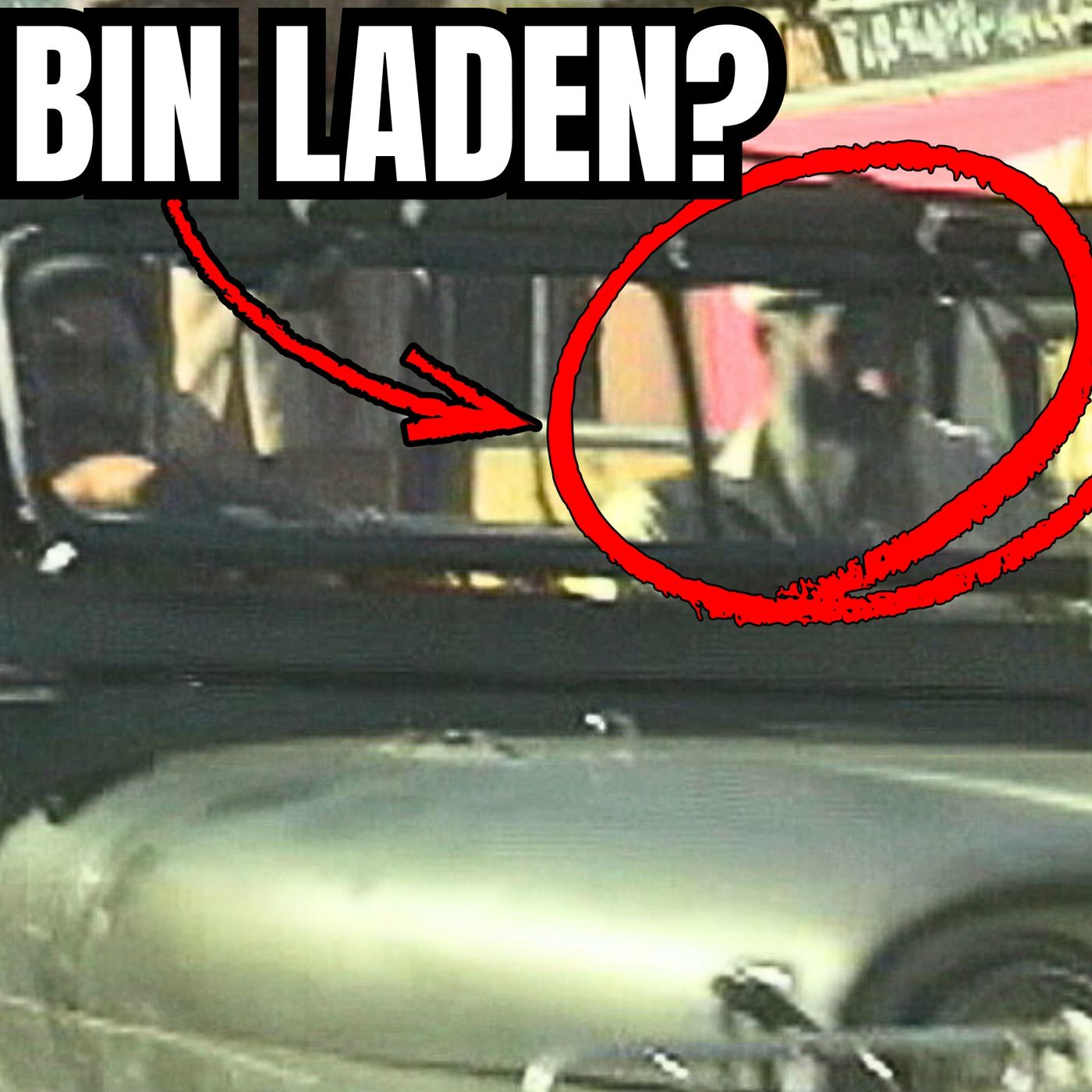
The Team House
Bin Laden Sighted in 2005 in Pakistan with Jack Murphy & Sean Naylor
00:51:17
In this episode, Dee, Jack Murphy, and Sean Naylor delve into a significant story about a sighting of Osama Bin Laden that was captured on camera by a CIA contractor. They discuss the backstory of how the information was gathered, the analysis of the...
Loading summary
Transcript111 lines
- [00:00]
TurboTax Announcer
Tax season has arrived and doing taxes without the right help can feel overwhelming. Intuit TurboTax is here now to guide you through it with confidence. Match with a TurboTax full service expert who handles everything for you from start to finish. Your dedicated expert checks every single deduction in credit to help you get the best possible outcome so you can feel confident you're getting every dollar you deserve. And the best part? You'll see real time updates on your expert's progress right on your phone while you live your life. Plus, you get unlimited expert help at no extra cost, even on nights and weekends during tax season. Visit turbotax.com Only available with TurboTax Full Service Experts Real time updates only on.
- [00:38]
CVS Announcer
Ios mobile app CVS it matters that we're not just in your community, but that we're part of it. It matters that we're here for you when you need us, day or night. And we want everyone to feel welcomed and rewarded. It matters that CVS is here to fill your prescriptions and here to fill your craving for a tasty and, yeah, healthy snack. At cvs, we're proud to serve your community because we believe where you get your medicine matters. So Visit us@cvs.com or just come by our store. We can't wait to meet you. Store hours vary by location.
- [01:14]
Host (Steve)
Hey guys. Welcome to another episode of Eyes on Geopolitics, a special one with Jack Murphy. Sean Naylor. They have the High side substack. You should check it out. That link is in the description. They do stories that most news outlets don't do or don't have the sourcing to do. Usually what happens is they'll do a story about something like zero units and Omega teams and then like big, big publications will rip them off and do stories about it too. Like six months, a year later. At least that's my observation. So if you want. Yeah, if you want the news, like really cool espionage special operations stories, go to the High side sub stack. That link is in the description. It's well worth it. The story we're talking about today is pretty crazy because I've been waiting for this to happen for like years now. Like three, four years now. When Jack told me about this, it's about a sighting that the CIA initially thought was Osama bin Laden in the Central Valley. Is that how you say it? Central in Pakistan. You know, some CIA contractor spotted this guy, took video of it. I mean, you guys know the story better than I do and it's on the High side right now. So check out the high side. Jack, where do you want to start with this? Because this has been a story that's been in the making for, like, a decade.
- [02:32]
Jack Murphy
Yeah, yeah. I'll.
- [02:33]
Sean Naylor
I'll kind of flesh out a little bit of, like, the backstory. Some people might be interested in how sort of this story came about. And I. You know, sometimes reporters have to sit on a story for a certain amount of time, and there's a few different reasons why you might have to do that. But long story short, the source in this case wasn't comfortable coming forward with it just yet. So I basically had to wait a little over a decade, I think, before we could really do the story. But for me, on my side, it started, like I said, probably over a decade ago at this point, where I was told that somebody would like to meet with me. And, you know, but you got to go talk to him in person. It was all kind of like, what? So I got on a train to a undisclosed location, and I remember I was on the train all day, got off the train, I'm at the station and meet this guy. And, yeah, I won't give any identifying details. I say, I met this. This gentleman, and we were going to go out to a diner and eat. And he's like, hey, before we go in there in front of all those people, I want to talk to you privately. And we sit in his car. So I'm sitting in the passenger seat of his car, and he's telling me his whole story, which is what this article became. And he hands me a manila envelope, like a manila folder, and I fold it out, and inside is pictures he took of Osama bin Laden in 2005. And I'm like, holy shit, this is crazy. So he tells me the whole story. We go and have lunch, and I. I think I may have stayed the night there and then took the train back the next day. But he wasn't comfortable going forward with the story just yet, so I, you know, had to hold on and wait until he was comfortable with it, because it is his pictures, you know, and it's his story, and I wasn't gonna go forward and put him in an uncomfortable position, of course. So just in the last couple months, you know, we started earnestly working on the story, and Sean started. You know, Sean pretty much wrote this story. You know, I. I did a lot of the reporting and investigating, but, you know, Sean pretty much wrote and edited this. This whole piece.
- [04:59]
Jack Murphy
Yeah, I mean, I was sort of kind of like you were, Dee. But a bit later on, I Mean, when Jack described this to me a few months ago, you know, my reaction was like, wait, what? You know, at first, you know, part of me was like, okay, so some CIA guy or CIA contractor guy thinks he saw Osama bin Laden in, you know, remote part of Pakistan. Okay. And then, you know, but the killer was, Jack said, and he took photographs. I'm like, okay, interesting. And then Jack's like, and we have the photographs. And then I was like, okay, why? You know, let's, let's publish this story as soon as possible now that we've gotten the green light from the original source. And I do think it's important to say that, well, when we started working on the story, we were of the opinion because as we explained in the article, when these photographs got sent back to Langley to CIA headquarters, their photo analysts determined that the figure in the photographs who looked like Osama bin Laden almost certainly was Osama bin Laden. Now, the reporting that we've done in the last sort of six weeks or so indicates that that probably isn't true. And it was probably a doppelganger. Well, that the Pakistani government supposedly tracked this guy down after being given a sort of a heads up on it by the CIA. And as we mentioned in the article, it probably wasn't too hard for the Pakistanis to track this guy down because even though it's the middle of nowhere in Pakistan, the still images from the video that the, that the CIA contractor took have the vehicles that the Osama lookalike character is riding in, license plate, clearly visible on them.
- [07:28]
Host (Steve)
So I would imagine signage too, of like, you know, like there's signages of like the market and stuff like that. So I would assume analysts could figure that out.
- [07:36]
Jack Murphy
Yeah, but, yeah, I would imagine, not for me to tell police, state, intelligence organizations how to do their job, but I would imagine if the Director General of the isi, Pakistan's sort of leading intelligence agency, gets a photograph like that, he, you know, quickly goes down the chain of command and somebody probably hot foots it up to Chitral to figure out who's got that vehicle with that license plate. And, you know, once they find that out, I would imagine it would be pretty easy to figure out who his passenger was. And we explain who the passenger was in all likelihood, because the CIA themselves then sent individuals into a remote part of Afghanistan to track this guy down. And they managed to do that. And they confirmed that it was a guy who looked exactly like Osama bin Laden, but was not Osama bin Laden.
- [08:48]
Sean Naylor
Just to back up a little Bit and tell people what we're talking about, how it came about. This story is fundamentally about three people all working for the CIA. A case officer, a contractor, and a interpreter driver that went up into a very remote valley in Afghanistan. Not that they had any reporting, but they sort of had a hunch. Like, this is a valley south of Kunar Tora Bora, where bin Laden was last known sort of in that area. Some people suspect he came across the border from a town called Barakot. So it kind of makes sense that he could be in the Chatral Valley system. So they drive up there to take photographs. And, you know, one of them is a member of a organization in the counterterrorism center that was kind of just called the surveillance group. As I understand it was started by Billy Waugh and those guys, you know, they were contractors and they were nicknamed the Marco Polos. Sometimes you might hear that name thrown about. And what he was doing, you know, this surveillance job, they were going in to, you know, recon this valley and, you know, see maybe if this is a place where bin Laden could possibly be hiding instead of taking pictures, because obviously you're just walking around taking pictures all day. He found it easier to just have a camcorder and just make recordings. And at the time this incident happened, they were pulled off on the side of the road, and he was holding the camera right here, like he'd be doing that as they're driving around recording. And so while they're on the side of the road doing, like, a map check, this vehicle comes down on the opposing lane of traffic, and it's like a Jeep with a driver, a passenger, and a couple kids in the bed of the truck. And the passenger. I mean, when you look at the photographs which are in this story, you'll be like, holy, that's bin Laden. Like that. And that's exactly what these CIA personnel thought. They're like, oh, my God. And then you get into the question of, well, and we didn't write about this in the article, but, well, if they saw bin Laden, why don't they just take him out? Right then they had pistols, they had rifles in the trunk. And the source told me, interestingly, he was like, I had Never even in 2005, seen a lethal finding on bin Laden. So he's like, if I got out of the car and shot him, I could have gone to jail. You know, he could have gotten charged. Now, realistically, I don't think that ever would.
- [11:28]
Jack Murphy
Sure.
- [11:29]
Sean Naylor
But, you know, there was that. And then the other factor was okay, great, you killed bin Laden, but good luck getting out of that valley, bro. Yeah, you ain't, you're not gonna. There's only one way in and out. So that's a, that's a one way trip for you.
- [11:46]
Host (Steve)
He wasn't traveling with like a, you know, 30 guy. 30. No, no motorcycle.
- [11:50]
Sean Naylor
It defied some of the expectations, you know, that he was traveling around in the open, that he didn't have a security detail around him. These, these were kind of surprises. And they took those. They, after they got that footage, they took it back to their base and they took still photographs from the video, I think 26 stills, sent it back to CTC and the surveillance group and they did an analysis. And the analysis that came back positively identified bin Laden somewhere above the 90th percentile. And they were, this was considered the best evidence we had on bin Laden on his location since, you know, 2002. And then from there there's a, there's a whole unwinding of this story, which, which Sean got into a little bit.
- [12:38]
Host (Steve)
Yeah. And I think obviously it's, I wanted it to be bin Laden. I wanted this to be like some crazy thing, you know, because there isn't much talked about about where he was between, you know, 2001 and 2011.
- [12:51]
Jack Murphy
Well, it could be.
- [12:53]
Sean Naylor
You know, I still, I think it's plausible that it was not bin Laden, but I think there's also a chance that it could have been. And I think that even if we had access to all of the CIA's secret documents and files, I don't think you could ever at this point prove beyond a shadow of a doubt that it is or it isn't. I don't think you're gonna, you're gonna get that close to the truth. But there is, you know, as Sean got into a little bit, you know, one of the big breaks, I guess, or one of the surpr. I had as I was canvassing people for more information about this, and I'm sure all the former agency people that I send these canvas emails out to really appreciate my prying. But I did find, I did find somebody who was actually sent up into Kunar in Afghanistan because they thought that this bin Laden quote, unquote, you know, in air quotes at this point might be up there, and they sent him up to confirm or deny. I don't know, maybe you want to take it from there, Sean?
- [14:01]
Jack Murphy
Yeah, I mean, that was an, you know, testament to your source network, but also still a lucky break that, that, that you reached out to A guy who happened to have been someone who had sort of knowledge of the eyes on mission to check out basically what the Pakistanis had told the Americans about, oh, you know, it's not bin Laden, it's really this other guy, don't worry about it. And I think the CIA was like, you know, trust but verify, you know, when it came to that. So they sent their own team up to Kunar. There was a sort of a cover for action, if you like, for that mission where they went up with some Navy SEALs and some of their Afghan militiamen to do a MEDCAP, which is basically, it's when you bring medical personnel into the hinterland and offer, you know, first aid and basic medical care to the locals who may not have had access to that previously. And there were a couple of agency officers on those hilos going up into Kunar and they sort of, I guess, peeled off from the MedCap and tracked down the chief of police and the local Afghan intelligence representative and said, hey, we're looking for this guy and he looks just like Osama bin Laden. And the police chief apparently was like, I know who you're talking about. Yeah, he does look like bin Laden. You know, come with me, we'll go meet him, you know. Very shortly thereafter, the CIA officer was face to face with the bin Laden lookalike, bin Laden cosplayer, the guy who was photographed in Chitral. And I don't have any reason to doubt that. As Jack said, anytime you're involved with such a strategic level issue, particularly if it was really bin Laden in Chatral, the Pakistanis would have been looking very suspicious. And I quote somebody in the article, you know, somebody who'd been posted to the US Embassy in Islamabad saying that as far as they were concerned, while they don't think that this individual was Osama bin Laden, they are convinced that the Pakistanis were managing bin Laden, that the ISI had, you know, probably a small compartmented team that, that was managing bin Laden.
- [17:23]
Host (Steve)
Yeah, it was like his reverse Alex station.
- [17:26]
Jack Murphy
Yeah. I think one of the most, you know, interesting parts of the story, especially for people who get into the sort of spy versus spy business and who are interested in the way, the controversial way I think that the US government has handled its relations with Pakistan since 9 11, is that the station chief, the CIA station chief in Islamabad, the senior CIA officer in Pakistan was back in Washington at around this time. Well, just after this mission into Chitral where they caught the bin Laden looking character on camera, because the head of the ISI, then Lt. Gen. Kayani, who went on to become the, the head of the entire Pakistani army, he was at the Bethesda Naval Hospital, the US Bethesda Naval Hospital in Bethesda, Maryland, just a 10 minute drive from where I am right now getting treatment. Which is the sort of thing that apparently the US Government offered a lot of senior Pakistani military and intelligence folks if, if there was a belief that they could at some point be of use to the United States. And, and so the, the station chief takes it upon himself to go to, supposedly to go into Kayani's hospital room and, and kind of boast to him almost to say, hey, you know, we've got photographic proof that Bin Laden is in Pakistan, you know, and sort of here it is. And so supposedly Kayani took that in stride and said, okay, well, you know, we'll look into it. And then the story transpired. As we've discussed already, the individual that is the supposed person who was photographed and who the CIA officers met up in Kunal was actually an Afghan lumber merchant who frequently crossed the border from Kunar and sort of that part of Afghanistan, the sort of northeastern part of Afghanistan, across the border into Pakistan, into, into the Chitral Valley. And he was on one of those trips when he got, when he got photographed.
- [20:27]
Host (Steve)
I mean, the conspiracy, I'm not a conspiracy theorist, but the conspiracy theorists in me is like, if they really were managing bin Laden, right, why not, you know, get a double and you know what I mean?
- [20:40]
Jack Murphy
Yeah, right.
- [20:41]
Sean Naylor
I mean, yeah, I mean, if it really was him, they would go in there and really manage him and get him under thumb at that point and try to redirect attention elsewhere. But I don't know that that's the case.
- [20:53]
Host (Steve)
Sure. No, that's like, obviously a conspiracy, like, that's a reach. There's no evidence of that.
- [21:00]
Jack Murphy
And what, what was quite clear from our interviews was that the, the act of the CIA station chief divulging this information to the head of the ISI made a lot of people in the CIA very upset.
- [21:20]
Host (Steve)
Yeah, I put it right here. I put that, like, highly controversial in the CIA in my notes right here. Because I'm sure he did it on his own. No, like talking with whoever you need to talk to be like, maybe this is a move or something like that. Well, how wise is beneficial for us? Yeah, I'm sure people were not happy.
- [21:38]
Jack Murphy
Yeah, there's, there's a, a long running sort of, I don't know how to describe it. Cleft in the CIA or certainly, you know, controversy. Certainly back then as to whether the Islamabad station was too friendly with the isi. You know, the ISI essentially had created virtually the Taliban, at least the Taliban would never have been able to take over Afghanistan the first time without the ISI's support. And the ISI only reluctantly, sort of half dropped them as clients after 911 when the United States was in full sort of blood and thunder mode in the wake of 9 11. But they pretty quickly picked them up again and you had this absurd situation where the United States would sometimes describe Pakistan as an ally. But the whole reason in the end that the United States was bogged down in a war in Afghanistan was because of the Taliban, which the ISI was supporting. You know, the Shura that ran the Taliban, the Quetta Shura, was based in Quetta, which is a garrison town in Baluchistan in Pakistan. So, you know, it became very frustrating and there was a real feeling right after 911 that amongst some of the CIA officers who were working with the Northern alliance that the Islamabad station had sort of essentially been captured by the isi. I'm not saying that that was the case. I'm just saying that that perception existed amongst some in the agency.
- [23:54]
Host (Steve)
I mean, is that an effort on the, and the, on the Islamabad station to like cooperate better with like your, the, the country's intelligence service?
- [24:04]
Sean Naylor
There are always these sorts of accusations of like source capture that, you know, you want to appease the liaison that you're working with. And you know, there's, you probably have heard these complaints about the State Department too, that they, you know, especially the political appointees, they forget who they're working for because they get so close to the host nation.
- [24:25]
Jack Murphy
Yeah, yeah.
- [24:26]
Host (Steve)
I mean, CIA guys are know the difference. So.
- [24:29]
Jack Murphy
Yeah, it's just that in a lot of these countries the liaison relationship is, is key to how the CIA operates. And in, in a lot of the countries it makes obvious sense. Okay. I mean, obviously in other Western countries, you know, the London station chief, you would expect to have, you know, incredibly close relations with MI6 and so forth. Even in the more authoritarian but generally pro Western Arab capitals, like, you know, in Morocco or somewhere like that, you'd expect to have a close liaison relationship. In Pakistan, it just becomes more controversial because the ISI so often has seemed to be working against American interests. So it starts to become a question of who, who is playing who in that, in that relationship.
- [25:43]
Host (Steve)
Yeah, and it's funny you guys mentioned the. There was a report that came out after Bin Laden was killed by Pakistan, and in that report there was One line talking about that valley. And another thing about that, that was very interesting, that speaks to the CIA ISI relationship is like they reported in that report that after that moment the CIA pretty much stopped cooperating with the isi.
- [26:11]
Jack Murphy
Yeah, certainly on bin Laden location, that supposed hospital room conversation in which the station chief divulged what the CIA thought regarding these photographs from Chitral, according to the Abbottabad Commission, which is the commission that the Pakistani government set up in the wake of the 2011 raid on Abbottabad that killed Osama bin Laden. According to the station chief, I beg your pardon, according to the head of the ISI who was referenced in the Abbottabad Commission report, that that conversation was the last time that the CIA fed any useful information to ISI about where they thought bin Laden might be. So it proved, it certainly proved. I mean, that was a nice thing to find in the report because, you know, it. It made clear that the CIA had indeed, it backed up our sources who said, yeah, the CIA told, told the ISI that, that they thought bin Laden was in Chitra.
- [27:42]
Host (Steve)
So, yeah, another crazy part. You guys referenced the Eggs, the Exile. Is that the book you guys referenced in the article?
- [27:51]
Jack Murphy
Yeah, yeah.
- [27:52]
Host (Steve)
Where they think that Osama bin Laden went from Kunar, I want to say, to Karachi for a couple months. I mean, how does the world's most wanted guy go to a fucking Karachi? I mean, it's not exactly a short drive for a couple months before he ends up in a body like that.
- [28:15]
Jack Murphy
How he got there, I'm not sure. But the, you know, those cities in Pakistan are immense, densely packed, you know, it's easier to hide, you know, I would say in a big city like that than, you know, out in a remote valley somewhere. Frankly, they ended up, I mean, when they ended. One of the ironic things about this is that the agency think when they, when they were sure that they'd found him in Chitral, they, you know, they had a rethink about what his footprint would be like. And they, they were like, wow, there's no visible security detail here at all. You know, we've sort of been barking up the wrong tree on that regard for the last few years. And then it turned out that even though that wasn't in all likelihood the real bin Laden, the actual real bin Laden also wasn't using a big security detail.
- [29:32]
Host (Steve)
Yeah. Who do you have in that compound? His sons, the courier and the, there's.
- [29:36]
Sean Naylor
Like, there's like one, one armed guy, I think, on the ground floor, if I recall.
- [29:40]
Jack Murphy
Right. Yeah.
- [29:43]
Host (Steve)
And then they they also did like a, what they call MedCap right around the bottom. Bottom. When they did the vaccines or whatever to see if they can stay inside.
- [29:52]
Jack Murphy
That wasn't really a medcap per se. It was. They had a doctor who was giving polio vaccines, but was also sort of helping the CIA on the side.
- [30:08]
Host (Steve)
Moonlighting.
- [30:09]
Jack Murphy
Yeah, yeah. I'm. Well, I think the idea was they were trying to get DNA and that's from the compound to see if any of, if any of the kids he could get DNA from had, you know, bin Laden family DNA in them.
- [30:29]
Host (Steve)
I really would love a deep dive about the, the relationship between the CIA and ISI. And this 20 plus years of.
- [30:37]
Sean Naylor
It's like a story that you're never, you're never going to get the whole story on that one.
- [30:42]
Host (Steve)
Right.
- [30:43]
Jack Murphy
I think, I mean, I, I know we're here to talk about our work, but I think Steve Coll has done a lot of, a lot of work on that. If you look through his, his books and, and the Exile, the book that I, that you mentioned that we reference in the article is a very deeply reported book on the movement of Osama bin Laden and his family and the other senior Al Qaeda leaders as they were in flight after 9, 11, and especially Tora Bora and, you know, where they went and so forth. I think it's an extraordinary work of reporting that should have gotten more publicity when, when it was published. Yeah.
- [31:40]
Host (Steve)
I mean, if you guys know him, I'd love to get them on either.
- [31:43]
Sean Naylor
Here or I don't. We could look though, because I think.
- [31:48]
Host (Steve)
Yeah, like the times where, you know, bin Laden was missing for 10 years. Right. And it's just like little hits here and there that are in the public sphere. But for the most part, the story's really not super flushed out. Another bit of thing. I'll talk about the seat. I want to talk about the CIA and ISI connection. I spoke to a former CIA paramilitary officer who wrote or they lied because it turns out they were the ones hiding him. That's a direct quote from a CIA pmo.
- [32:24]
Sean Naylor
Right. And that, and that brings into, brings up all sorts of questions about what did Kayani really know and when did he know it. And then it gets into some other stuff that's even more controversial. You know, the Seymour Hersh article.
- [32:44]
Host (Steve)
Sure.
- [32:45]
Sean Naylor
That that implies, if not says outright, that the Pakistanis knew we were coming on on some level, at a high level, and there were assurances made they'd keep their aircraft on the ground that night. It's one of Those stories, you're never going to get the whole story on what really happened there.
- [33:00]
Host (Steve)
I read the Seymour Hirsch article. It seemed a bit crazy.
- [33:05]
Sean Naylor
Yeah, I, I agree that there are parts of it that I don't think are true, but there are other parts of it I think likely are. And, and that's the confusing thing with some of Mr. Hirsch's latter works, is that it comes across like a mix to me. My opinion, anyway.
- [33:26]
Host (Steve)
Yeah, he's actually getting a Netflix documentary about him.
- [33:31]
Sean Naylor
He's done incredible work in years past. Broke massive, massive national security stories.
- [33:41]
Host (Steve)
Yeah. So what do you guys, what are you guys cooking up next? What do we got on the burner?
- [33:50]
Jack Murphy
I am trying my best to wrestle the second half, the concluding part of our two parter on Havana Syndrome, to the ground before the end of the year. I may never want to hear the freight of Anna Syndrome again once I'm done with that, but it's pretty interesting. We are going to anybody who's watching who's a longtime subscriber to the High side, you may be wondering what happened to our series on the called in the Kill the Life and Times of Willie Murkison, which has been on a lengthy hiatus, but which I fully intend to finish up in the new year with some, you know, with a crazy story right out the bat. Still. We left Willie in Khartoum in Sudan, having just helped in the evacuation of several Mossad officers in wooden crates, just one step ahead of Libyan counterintelligence operatives out of Khartoum Airport. And we're going to rejoin that story with him still in Khartoum and other crazy, crazy stuff going on, going on there. So I'm excited to pick that up. Yep.
- [35:31]
Sean Naylor
And there's some other things on the. Well, they've been on the back burner, but coming onto the front burner for 2026. Some exciting stories, I think.
- [35:42]
Host (Steve)
Yeah, I can't wait. The Willie Markerson one is so good. The Havana Syndrome part one was so good because it's like an angle of the story that no one really talked about where it's like these, these victims are getting like actively harassed by either foreign intelligence or whoever else. Like they're, you know, getting with actively as if they were like on, like on assignment in another, in a non permissible country or Israel, for lack of a better word. Yeah, that happens to them there too.
- [36:11]
Jack Murphy
Yeah.
- [36:13]
Host (Steve)
Incredible. Also, like because of the crazy news that happened last week with the National Guardsmen getting shot and the one passing away, the former Afghan, can I call him a C.T.P.T. is that okay? Is that what he was? The zero units. It was part of that?
- [36:32]
Sean Naylor
It sounds like it to me. Yeah.
- [36:34]
Host (Steve)
Okay. It's likely a ctpt, Counter Terrorism Pursuit Team Omega Team, which was the CIA J sock joint thing where they had Afghan militia's a. I mean, it's a little.
- [36:49]
Sean Naylor
A little convoluted, but the Omega teams were actual US army guys that were attached to the agency for these things. Then there was the. The actual ctpts, you know, that were spread around the country. The one that this guy was a part of, I believe was the Kandahar Strike Force. I actually have a couple pictures from a friend that thinks, you know, this is the guy from Tours. He was. Yeah. With over there. But then the NDS called those units like NDS 010203. Hence zero units. But they were only like, kind of like on paper. NDS units, like in real life, they were being run and paid for by the CIA.
- [37:34]
Jack Murphy
Yeah. The NDS being the Afghan intelligence service that the CIA created after the invasion of Afghanistan.
- [37:45]
Host (Steve)
And we had a great. Our last episode. You know, Mick Mulroy was a former CIA paramilitary officer. He was intimately involved with those units and stuff like that. And he said it, and I kind of believe it. I mean, where these guys were vetted more than like 99 of the people that they worked with. The US worked with anyway. And like, listen, if you're in. In war perpetually for 10 to 15 years where like, you know, servicemen go home after a few months or six months, these guys are working the whole time. I mean, you're not going to come out of it like a totally adjusted human being. I would assume so. I don't think it's out of, you know, it's brutal what happened and you should meet, go to jail and suffer the consequences, but I think it's like a larger conversation about kind of the fallout of the G WAT Yeah, yeah, definitely. So, yeah, if you guys want to read about the Omega teams and stuff, they have an incredible, incredible article with pictures that everybody else steals. They're incredible. You have to check it out. It's the. It's the high side stuff. Stack that link is in the description. Sorry, Sean, I caught you off. I wanted to get a plug in.
- [38:54]
Jack Murphy
No, I was, I. I think I was about to say the same thing. So if you want. If you want to. If you want to read a bit more about the Zero units and the Omega teams that we have a pretty in depth article from a year or more ago on the site.
- [39:16]
Sean Naylor
Yeah, I Mean, if you guys to hawk our wares here. If you guys go and subscribe to the High side, there's enough on there to keep you busy for a few weeks at least. And some of those articles are pretty substantially long, like 10, 15,000 words and covers everything from like historical retrospectives about like the special forces teams jumping in backpack nukes, stuff that's kind of like on obscure to the public, like the commanders in extremist force. We have a whole article about that. And then things that have just been super top secret for many years, like the Omega teams, but also the, the investigation about Havana syndrome that you mentioned. He sock preparing for ops in Gaza. There's all kinds of different stuff on there. CIA guys getting into trouble with the law.
- [40:09]
Jack Murphy
Our rule of thumb at the High side is it has to be substantially exclusive information. So you know, you're not getting just hot takes from us.
- [40:22]
Sean Naylor
Right.
- [40:22]
Jack Murphy
And that's not to disparage other people that do what I would call hot take national security websites. But what we are is investigative reporters. And so we hear of something and we dig into it and then, you know, if it's worth publishing, we publish it. And the rule is if, you know, one of the first things I often ask if somebody gives me a tip or says, hey, you know, I, you know, I know of this story you guys should do is have you talked to any other reporters about it? Because if you have and they're going to do it, then we're not going to do it because I'm not willing to invest a month of my time to just, you know, add a little bit of knowledge to what's being published already. So that's, you know, that's right. And I'm glad you mentioned how, you know, how meaty the articles are. You know, we're coming into winter now. You could definitely hole up in a, in a cabin with a couple of good bottles of whiskey and the High side. And so long as you have electricity and an Internet connection, you know, you don't really need anything else to pass the time for a few days.
- [41:45]
Host (Steve)
Are you guys sniffing anything about like Venezuela, what's going on there?
- [41:49]
Sean Naylor
A little bit, yeah. I don't know if they will end up reporting on. Well, look, if something big happens in Venezuela, I'm guaranteed we'll be reporting on it sooner or later. But yeah, I don't know, it remains to be seen as far as on our end because just like Sean kind of outlined the basic protocols of the stories we go after. Like it has to be something that's newsworthy and previously unreported, reported and properly sourced. So if those things come together. Yeah, I mean, we'll, we'll report on it.
- [42:23]
Host (Steve)
I think there's something real spicy with the CIA General Counsel stepping down and the Deputy Director appointing himself a General Counsel. It's like a month ago.
- [42:34]
Sean Naylor
Yeah. I mean, you don't need me to tell you firing all these Jags and all these, like, legal count, like. Yeah. What you think is happening is what is happening.
- [42:43]
Jack Murphy
Yeah.
- [42:43]
Host (Steve)
If the CIA is to the point where, like, General counsels are resigning because, like, this might be too crazy what's going on. Like, it's, it's pretty alarming because I might be right, I might be wrong. Correct me if I'm wrong, but like the General Counsel, the CIA is also an appointed, appointed position. I don't think it's just, it's like, got. It has to be approved by Congress.
- [43:11]
Sean Naylor
Almost.
- [43:11]
Host (Steve)
I've heard that from a CIA guy.
- [43:13]
Sean Naylor
It could be.
- [43:14]
Jack Murphy
Yeah.
- [43:16]
Host (Steve)
So for the Deputy Director, so it's Director, Deputy Director, and General Counsel. Those are the three positions that are Senate confirmable. So for the Deputy Director to name himself Interim General Counsel, because the General Counsel who's there is like, I don't want to do this because what we're doing is fucking highly illegal to me. There's spice there because, like, you know, we're blowing up ships in the fucking Caribbean.
- [43:38]
Sean Naylor
Yeah, well, well, that's, that's JSOC doing.
- [43:41]
Host (Steve)
Sure.
- [43:41]
Sean Naylor
You know, the CIA story right now is how little they're actually doing, perhaps.
- [43:46]
Host (Steve)
So the word is that they went to the CIA and the CIA balked, but then JSOC picked up that baton.
- [43:51]
Sean Naylor
Okay. So, yeah, there's, there's something to that. And if you recall Pete Hegseth's little trip down to Dam Neck, Virginia, and what, what that was about because. Because damn neck balked at it too.
- [44:06]
Host (Steve)
Shit. Okay.
- [44:07]
Sean Naylor
Yeah, so, yeah, you're right. I mean, your, your, your intuition on that is right. That they' is some spicy content there.
- [44:15]
Host (Steve)
Anything else, guys? Hit me with it. Carte blanche. Tell me, what are your deepest, darkest secrets?
- [44:22]
Jack Murphy
Well, you know, I think Jack and I like to, you know, sit on a lot of the stuff that we get and not talk too much about it ahead of time until we know it's going to come to fruition. You know, we've got. I mean, without exaggerating, I'd say we've got story tips, ideas that, you know, the core of a story in several cases at the moment in our Computers that would make Hollywood movies and that we pretty much know are true. But proving that they're true and fleshing those stories out with just two of us is incredibly time consuming. And for each one that you're doing that with, the great example would be the Havana Syndrome story you were referencing earlier about how, how some organization or organizations was taking it upon themselves to target Havana Syndrome victims in the United States. I mean, that takes months and months of digging before the, you know, and drafting the story before it's ready to go. And so these other ones would be too. But I'm excited to get to them because, you know, blow some people's minds. Blow a lot of people's minds.
- [46:03]
Host (Steve)
Yeah, I'm totally excited and I could totally understand you guys have to triage stuff. It's only two of you. Yeah, I wish I could read and write. I would help, but I'm. I'm excited for what's to come. For sure. There's some wild stuff and I look like. And frankly, you know, most reporters would probably run with the. That they have just to, like, get it out there and get clicks and like, not be well sourced and not be well researched. That's what I think cuts you guys above the rest. And that's why they all literally rip off your stuff, you know, so get it at the high side. It's, it's not, it's not expensive. You know, it's five bucks a month and you get like, hardcore investigative stuff where, like, you're not reading anywhere else. I would say you guys are two of the best source reporters probably on this beat. I'm sure there are others that are great, too, that have it, but it's a very small, short list, I'd say.
- [47:03]
Sean Naylor
Yeah, there's not a lot of people in this field and, you know, I, I hope I'm not making promises I can't keep, but in 2026, we hope to, you know, have some collaborations with friends of ours and, and that, you know, who are outstanding national security reporters. There's one story I hope to get to which we'll probably have four of us working on at the same time. So it's, it's going to be interesting.
- [47:35]
Host (Steve)
How do you four of you guys.
- [47:38]
Sean Naylor
Well, we have, we have not written it yet, so I'm just saying ourselves.
- [47:43]
Host (Steve)
For investigative reporters, which are like, everybody.
- [47:47]
Sean Naylor
Everybody will bring something to the table on it, you know, something different probably. And all of that will have to be combined into one whole holistic piece.
- [47:58]
Host (Steve)
I can't wait. And guess what? Everybody who's listening or watching right now? I am a subscriber, paid subscriber. The high side. So if I could do it, you could do it. Because I can get these articles for free if I really want.
- [48:11]
Jack Murphy
So.
- [48:13]
Host (Steve)
Do yourself a favor and get the high side. That link is in the description. Also Jack Murphy. We Defy the Secret History of Special Forces. Out now, out now on Amazon. That link will be in the description. Sean Naylor, if you guys don't know, you're. I mean, people are watching this. Know. But he literally wrote the book on jsoc. Relentless Strike. Incredible book. One of like the four books I've ever read in my life. So really, really good. No bullshit. That link is in the description as well. And I think that Willie Merkerson book, that Willie Merkerson series is a book.
- [48:47]
Sean Naylor
Yeah, I've. I've told Sean that it should be a book.
- [48:49]
Host (Steve)
It is a book. And honestly, if Willie Merkerson's cool with it and they like his family and stuff, self publish it. Don't even wait for a fucking publisher.
- [48:57]
Jack Murphy
Yeah. And see that. That book or the. Honestly that the stuff that was happening in. In Sudan while he was there, right. Be a book in and of itself. I mean, that's just because it's. That's tight in terms of the timeline. It's just a few years. There's incredible drama there and it's, you know, it's in a sort of a very, you know, Hollywood friendly, sort of exotic locale. The hottest. Khartoum is the hottest capital city in the world, statistically.
- [49:36]
Host (Steve)
Yeah, I won't be visiting. Yeah, yeah, I'll read about it in the book. I won't be visiting. Guys, as always, this is awesome. Of course, the Team House podcast. Check that out. Check out all the other guys. Stuff to those links are in the description. The best place to support the show, this show and team house is patreon.com the team house. You get both Eyes on Geopolitics and Team House episodes ad free early. You can message us, tell us some how handsome we are and high side. Check out their substack. It's down in the description. Do yourself a favor. If you're interested in national security, espionage, all the things we're interested in, and you watch the show for the that's the one substack you should subscribe to. Thanks, guys.
- [50:26]
Jack Murphy
Yeah, thanks, Steve.
- [50:27]
Sean Naylor
Appreciate it. Hey, guys, I want to tell all of you today about a new newsletter that we're launching that encompasses both the Teamhouse podcast, the Eyes On Podcast, and the High side news outlet, which I run with Sean Naylor. The newsletter is going to be once a week it's going to come into your inbox and you're going to get the most current podcasts on Eyeson and the team House and whatever's topical or current on the High side. So it's another way for us to get the information out to you as social media outcome algorithms are pretty iffy and you never really know what you're going to get. So this is a once a week email. It'll slide into your inbox and it will have you know the greatest hits of that week. It's really good checking it out. The website for it is teamhousepodcast.kit.com join teamhousepodcast.kit.com Join you go there and you enter into your email list or you enter your email into the little thing on the website and you're good to go and that'll be it. So we really appreciate your support and hope you'll consider signing up. The link will also be down in the description if you're looking for it there. And that's Teamhouse Podcast Kit k it ko.com join SA.
- [52:18]
Jack Murphy
Foreign.
- [52:30]
CVS Announcer
This is Karissa Thompson from Calm down with Erin and Carissa. Max Softness, Max Energy Max Run. Go on a run that never runs out in the New Brooks Glycerin Max 2 dual cell DNA tuned cushion is optimized for soft landings and powerful toe offs while the glide roll rocker helps provide a more fluid step through. To help you truly tun and max your run, shop the Glycerin Max 2@brooksrunning.com Apple Books is the best way to read or listen to the books you love without a subscription right on your iPhone and a heads up for listeners. Apple Books is the official audiobook and ebook home for Reese's Book Club so you can discover every exciting pick, plus author curated collections and more all in one place. Open the Apple Books app to explore a world of books and audiobooks. You can set and track your reading goals and get great recommendations for your next read or listen. Again, no subscription required. Visit Apple Co Reese that's R E E S e Applebooks to find out more at cvs. It matters that we're not just in your community, but that we're part of it. It matters that we're here for you when you need us, day or night, and we want everyone to feel welcome and rewarded. It matters that CVS is here to fill your prescriptions and here to fill your craving for a tasty and, yeah, healthy snack. At cvs, we're proud to serve your community because we believe where you get your medicine matters. So Visit us@cvs.com or just come by our store. We can't wait to meet you. Store hours vary by location.