← The Team House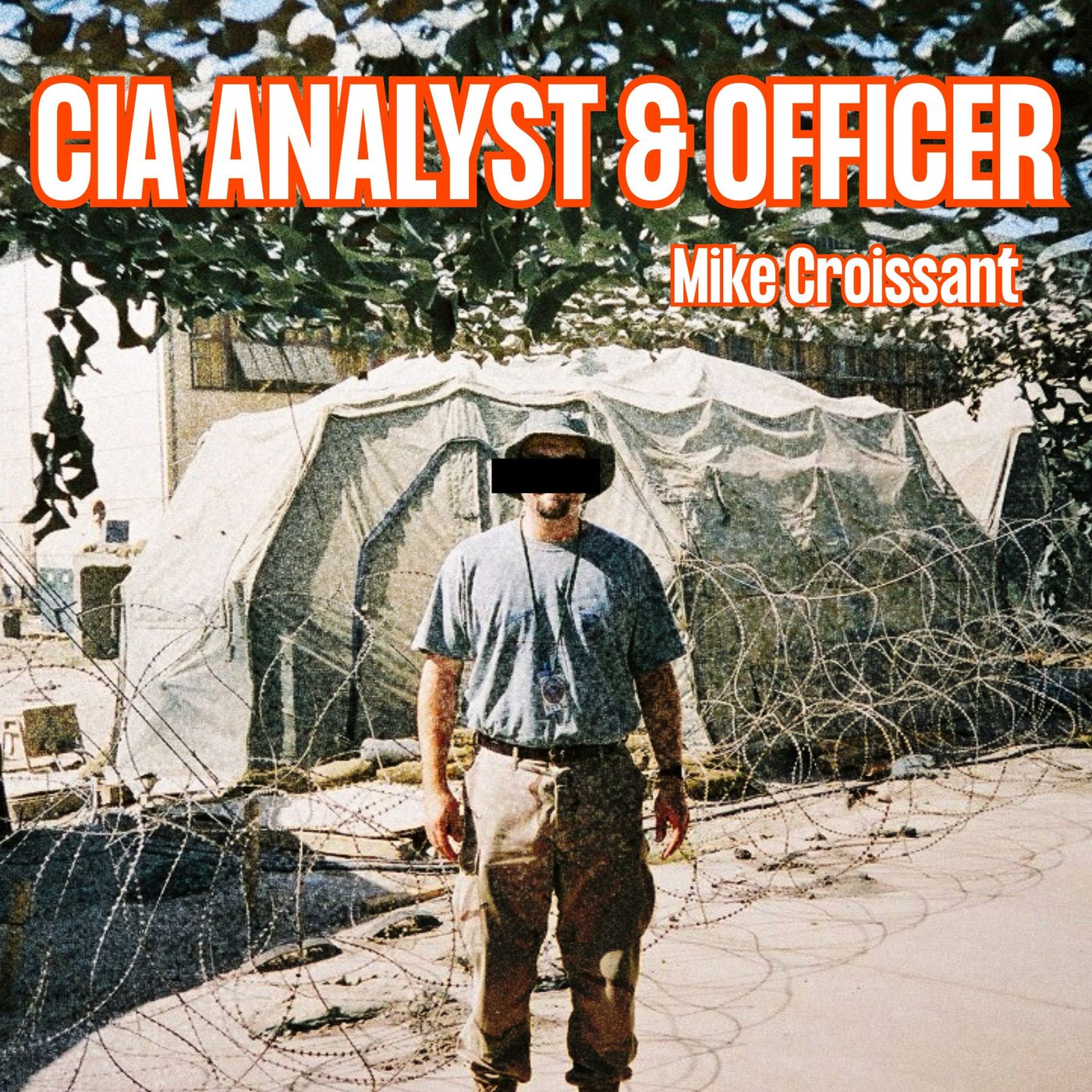
The Team House
CIA Targeting Officer Reveals Terror Plots You Never Heard About
01:39:59
Former CIA analyst and counterterrorism targeting officer Mike Croissant breaks down his 22-year intelligence career, from being inside Langley on 9/11 to hunting extremists overseas. He walks through disrupted homeland plots, warzone targeting work,...
Loading summary
Transcript107 lines
- [00:00]
Advertiser
Did you know you can save up to 70% on the best brands just by shopping at from rebel.com we're talking about strollers, car seats, high chairs, espresso machines, cookware, everything you need for way less. Here's how it works. Every single day Rebel drops thousands of new products on the site for up to 70% off. It is a constant stream of endless deals from top brands like Uppababy, Nuna, Baby bjorn, Breville, Nespresso, KitchenAid, Le Creuset and more. But you have to act fast because every deal is one of a kind. So if you see something you love, make sure you add to cart fast. So stop paying full price when you don't have to. Whether it's baby gear, kitchen upgrades or a treasure for your home you didn't know you needed, Rebel has it for way less. Up to 70% less. Shop from rebel.com and save big.
- [00:56]
Mike Croissant
Well, the holidays have come and gone once again. But if you've forgotten to get that special someone in your life a gift. Well, Mint Mobile is extending their holiday offer of half off unlimited wireless. So here's the idea. You get it now, you call it an early present for next year. What do you have to lose? Give it a try@mintmobile.com Switch limited time.
- [01:16]
Advertiser
50% off regular price for new customers. Upfront payment required $45 for three months, $90 for six month or $180 for a 12 month plan. Taxes and fees. Extra speeds may slow after 50 gigabytes per month. When network is busy, see Terms the.
- [01:27]
Jack Murphy
Team House with your hosts Jack Murphy and David Park. Hello everyone. Welcome to episode 384 of the Team House. I'm Jack Murphy and our guest tonight is Mike croissant. He spent 22 years at the CIA first as a analyst and then as he was at the counterterrorism center being deployed to garden spots around the world. He is also the author of Bombing Hitler's Hometown book that he has out that came out last year. So we'll be getting into his career about the research for the book and whatever other topics come up. Mike, thank you for joining us tonight.
- [02:13]
Mike Croissant
Thanks Jack. Glad to be here.
- [02:15]
Jack Murphy
So you know to kick it off, I mean tell us about your background and kind of what took you towards the CIA eventually. How, how did you grow up and where did you grow up?
- [02:25]
Mike Croissant
I'm a living, living in embodiment of the American dream. I from a very small town in Illinois called Marel in in north central Illinois. Great place to grow up in the 70s and 80s, just a small little quiet town where nothing really ever happens. I grew up with a strong interest in current events. My mom tells me that I would resist going to bed until I had watched the news at night. And one of my earliest memories is listening to the news talk about Palestinian gorillas and being confused because I mistook gorillas in the military since for gorillas. And she said that I just couldn't get enough of, of watching the news. So I, I also noticed at an early age I had an affinity for writing and I also was very patriotic. It's a, it was a patriotic family, but both my father and my uncle were World War II veterans. A very patriotic part of the country. So I grew up wanting to serve and went into the United States Air Force ROTC program at the University of Illinois. But unfortunately, during my sophomore year, I developed a drug resistant stain strain of bronchitis that really hamstrung my physical abilities. And then as you may know, in the summer between your junior years, excuse me, your sophomore and junior years, you go off to field training. Well, when I did that, I was just unable to physically do it and unable to perform. So soon after that I saw the writing on the wall. I believe everything happens for a reason and I believe that I just wasn't meant to put on the unit. I finished my college days. Excuse me.
- [04:29]
Jack Murphy
Go, go ahead, we're listening.
- [04:32]
Mike Croissant
In My, my. The latter half of my four years at the University of Illinois is when a lot of internationally significant things happened. The, the Soviet Union broke up, the Cold War ended. And I became fascinated with the former Soviet Union. They were at that time, there were reports in places like the New York Times about these exotic, mysterious new countries called Kazakhstan, Uzbekistan, Tajikistan and others. Aeran and you know, ethnic conflicts were breaking out. There was this talk of a new great game between the Russians and the United States and the Iranians and the Turks and the Chinese to compete for resources in these regions. And I became hooked. So when I got my degree in political science and history, went on to graduate studies at the, at Missouri State University. And there I really started to hone in on my interest in these, this part of the world. I got a master's degree there and I continued my studies. I went to Indiana University. By now it was the mid-1990s. And there in the Central Eurasian Studies program, I really hit my stride. I studied Uzbek, I studied Russian, I studied Azerbaijani. I didn't unfortunately develop a great proficiency in any of those, but I could muddle through in, in Aerani and in the closing months of my second master's degree, the CIA came recruiting on the campus of, of Indiana University. I landed an interview and on the strength of my recruitment resume and the fact that I had published two books, they offered me employment. So I started after taking the polygraph and the background check. I started at the end of 1999.
- [06:37]
Jack Murphy
And Mike, when, when they recruited you, was this just like a couple guys in suits coming to the school and they have like a booth and they're handing out pamphlets like, like how did that kind of take place?
- [06:48]
Mike Croissant
I think there was a flyer or maybe any saying that they were coming, but it was a two part thing for me. The first night was sort of a, an information session where people in suits talked about careers at the CIA. Now a funny story related to that was I, I wanted to look good, you know, so I, I got a shirt out and I starched the daylights out of it and even bought a fancy new pair of shoes. And I was a newly, newlywed college student. I was, didn't have enough, didn't have a lot of money to, to go all out, but I starched the crap out of my shirt and I get to this information session and I learned that I'm allergic to the starch. So I, I start to leak from every facial orifice and of course I don't have a hanky, so I'm embarrassing myself in the back, sneezing and, and, and leaking. And luckily though, I didn't have to talk to anyone that day. And I landed interview, didn't use time and, and did a passable job on the interview. And I got an offer on just on the basis of the interview. I didn't even apply.
- [08:03]
Jack Murphy
And what were the two books that you had published that caught their interest?
- [08:07]
Mike Croissant
The, the first was essentially my master's thesis at Missouri State University that I turned into a book. It was on the conflict between Armenia and Azerbaijan over the, the mountainous Karabakh region. I followed that a year later with an edited volume about the Caspian Sea and the oil riches there.
- [08:28]
Jack Murphy
Awesome. I would, I'd love to ask you more about that as we go through this interview about Azerbaijan and South Ossetia and Nagorno Karabakh. These are like contentious parts of the world that we as Americans often don't know anything about, frankly. But we'll get there. So you get hired as a analyst.
- [08:56]
Mike Croissant
Sometimes the US government does things that actually make sense. They hired me to be the political analyst for Uzbekistan, having studied US back. And though I didn't get to travel there. I studied the politics, the history, the culture to some degree. So they made me the political analyst for Uzbekistan. Now what is a political analyst? It's fairly self explanatory. You're, you're the analyst of the CIA who has to know the inside, the ins and outs of the political system of that particular country to understand the key players in the government, to understand the foreign policy orientation, the foreign relationships that that country has. Other types, other types of analysts would be economic, military, which are kind of self explanatory. You have leadership analysts who tend to try to get into the heads of foreign leaders to understand how they, what makes them click, and a few other types of analysts. You're on teams that represent the world geographically. So I was the Uzbekistan political analyst and that's where I was on September 11, 2001. And Uzbekistan went from being kind of a strategic backwater for the United States to being a frontline state in the coming wars. That was an interesting place to sit that day and for many months following. And I got a very good sense then for how hard it is to steer this, to help steer the ship of state and help policymakers make better decisions.
- [10:49]
Jack Murphy
I want to ask you a little bit more about being an analyst. And I mean, first off, working in this office with these other analysts, was it kind of cool to like work with people who presumably are just like you and have the same fascinations that you do?
- [11:04]
Mike Croissant
It is, you know, analysts are a quirky bunch. Oftentimes. I, I'm an introvert, but I, I serve with a lot of very extroverted people, Very, very, very smart people. I often felt way out of my league with them, with many of them. But you know, these are people who, no matter which way they, they shift in the voting booth in November, they, they love the country and they do their best to perform their duties with distinction and help help policymakers make better decisions or realize threats when they're coming or, or whatnot.
- [11:48]
Jack Murphy
And as a analyst, presumably you're getting reports from case officers in the field in addition to other forms of intelligence information. And you were putting that together. I mean, not everything goes into the President's daily brief. I mean, day to day, what are you writing or who are you writing for? Is maybe what I should say.
- [12:11]
Mike Croissant
Good question. We are all source analysts, meaning we, we look at everything, open sources, intercepts, diplomatic reporting from our embassies, human intelligence, everything under the, the sun. And using that, we try to piece together what, what's going on. Is there a strategic threat emerging from a certain country, Is there an upcoming election that the policymaker needs to pay attention to, is there an economic deal to be made, you know, etc. Etc. In the, the pre 911 days, we, we were not, you know, a major interest for policymakers. So therefore the writing we did was largely for people beneath the presidency, mid level officials. But when, when 911 came along, that changed overnight. Now to say a few words about CIA analytical writing. The, the audience is the American policymaker and the American policymaker is, has limited space, limited mental space. And I don't mean that in a derogatory way. They just, they are, they have a lot of other things going on, particularly for someone like the President who's dealing with both foreign policy and domestic policy, but just limited time to focus on an issue. So the writing that we are trained to do is extremely concise and we are taught how to boil the most complex problems down into the most easily understandable way. You know, the, the first two sentences typically are what you get to, to explain the bottom line of your piece. This is not journalism or academic writing where you build into your conclusion. You, you give your conclusion first and then you take that conclusion and, and show why you reached it. So in order to do that in a quick way, you, you get, you get a paragraph, you get a page, you get two pages, maybe, if you're lucky. And for, for what we, for our purposes, a research paper that you might do in college for 15, 20, 30 pages was about five, maybe 10 if you're lucky. So the, the writing is stripped really of all character, all color, all creativity. And what you're left with is something that anybody in theory could pick up, read it, and have no question in their minds what that piece was about and what the bottom line was.
- [15:09]
Jack Murphy
This time of year, the pace doesn't slow down, but you still need to. The calendar's packed, the weather's changing, and your body's reminding you that it's time to rest and reset. That's where Ghostbed can help. It's a family run company founded by a team with over 20 years of mattress making expertise. They've spent decades perfecting how to build a bed that's durable, comfortable, and engineered to help you recover. Every Ghostbed mattress is made with premium materials, proven cooling technology, and their exclusive procore layer, a targeted support system that reinforces the center of the mattress where your body is the heaviest. It helps to keep your spine aligned and your back supported so you wake up ready to take on what's next and Ghostbed's cooling materials don't just keep you from overheating, they help regulate your temperature year round. Each Mattress comes with 100 one night sleep trial and a 20 to 25 year warranty plus fast free shipping. Most orders arrive in two to five days, so better rest is just around the corner. Right now. During Ghostbed's holiday sale, you can get 25% off site wide. For a limited time, just go to ghostbed.com house and use the promo code house at checkout. That's ghostbed.com house promo code house. Upgrade your sleep with Ghostbed, the makers of the coolest beds in the world. Some exclusions apply. See site for details and thank you Ghostbed for sponsoring the show. Please check out the link down in the description and support our sponsor.
- [16:48]
Sponsor Announcer
From Taco night in Tulum to sushi in Tokyo make every bite rewarding with gold from Amex wherever you dine four times Membership rewards points at restaurants worldwide are piling up. Learn more@americanexpress.com Explore Gold terms and Points.
- [17:03]
Mike Croissant
Cap apply I built this business the old fashioned way. Hard work and a whole lot of spreadsheets. Yeah, about that.
- [17:09]
Jack Murphy
I upgraded us to Odoo. Odoo puts everything we need sales, inventory.
- [17:13]
Mike Croissant
Accounting on one connected platform.
- [17:15]
Jack Murphy
No more juggling systems, no more headaches. So it all works together.
- [17:19]
Mike Croissant
Exactly.
- [17:20]
Jack Murphy
Odoo is the all in one business software that makes running and passing on a business easier than ever. Take your business into the next generation. Try odoo free@odoo.com that's O-O-O.com from taco.
- [17:34]
Sponsor Announcer
Night in Tulum to Sushi in Tokyo, make every bite rewarding with gold from Amex wherever you dine four times membership rewards points at restaurants worldwide are piling up. Learn more@americanexpress.com Explore Gold terms and Points.
- [17:48]
Jack Murphy
Cap apply and I'd like to ask you a little bit about 911 and what that experience was like for you. Because as you mentioned, Uzbekistan was seen as sort of a strategic backwater. But after 911 it became our way into Afghanistan as I recall. Wasn't. Didn't we launch a lot of stuff out of. Was it Kashi Karnabad?
- [18:08]
Mike Croissant
Yes. Yes. Well, 911 was obviously a incredible day, but for us it really began on September 9th. When I say us, I mean my team because that is the day that the leader of the Northern Alliance, Ahmed Shah Masoud was assassinated. He was the the the Tajik leader of the the main resistance to the Taliban in Afghanistan. And on September 9, 2001 against his wishes to Arab journalists were his presence, and they happen to be agents for Al Qaeda, they detonated the explosive device in their camera and killed themselves in Massoud. So for us on the Central Asia team, this was potentially a game changing event. The, the, the Northern alliance was supported deeply by the CIA and the, the worry from the perspective of the governments of Central Asia was that this would, his assassination would open the door for the Taliban to take the, the remaining part of Afghanistan that it didn't control at that time and be a very disruptive force in the region. So September 9th happens. So on the them, on both September 10th, which was a Monday, and September 11th, we were discussing what his assassination could mean for our countries. Now, excuse me, September 11th comes along and when you, when you have a, a group of analysts, you, you tend to chat a lot in the morning meeting. And that, that morning meeting went, went on for quite some time to talk because we were talking about Massoud's death and what it means and, and so forth. So we were in that meeting for an extended period. And when I, when I exited that conference room and returned to the secured area where my office was, I could hear at the other end of the office a television on. And that was very, that was different because, you know, you, you just don't do that in a, in a place where people are trying to get work done. And, and I also saw people congregating around the tv. So I went over there and that's when I saw the news from New York City. And by that time, both towers had been hit. So this was not a case where, you know, in many people's experience, they, they heard about the first lane hitting and then tuned in and watched the second one happen live. By the time I got onto the scene, we knew that we were at war. We knew this, this, there was no other explanation than, than a terrorist attack. So I, I returned to my desk and it's a little blurry, understandably, but I called my wife, who was pregnant with our first child. I called my mom in Florida, called my parents and told them to turn on the news. The world was changing. Not long after that, the Pentagon was hit. In my, My first, first thought was for my buddy who was in the Pentagon at the time. And I would only learn later that the, the wing of the plane went into the office right below his, and the, the explosions sent him flying into the roof of his office. But he did make it. Okay, wow. So within the space of just, you know, 30 seconds, it goes through my head, okay, this is not an event isolated to New York. And I also thought about, you know, terrorist Ramsey Yousef who had had the idea to fly an explosives laid in Cessna airplane into CIA headquarters. So I, I quickly deduce that, you know, this building could be a target. And shortly before the, the building was evacuated, I logged out of my computer and left. So driving home, trying to make sense of it all, listening on the radio, you know, this was before smartphones, so I couldn't, you know, watch what was happening. I had the radio in about halfway through my journey home is when the first tower fell. And of course envisioning that I pictured, you know, a collapse that happened sideways and took out all the buildings around it. I didn't envision an, an implosion as it happened. So I'm, I'm thinking on my way home, what is happening? I mean, did we just lose, you know, half of lower Manhattan? So it was just that kind of a day. I, you know, I got home and my wife was pregnant, as I said, and we just spent the rest of the day watching TV and trying to make sense of it. And you know, a few hours later it was announced through a leak by one of the senators that Al Qaeda had had probably perpetrated it, which is what we suspected anyway.
- [23:35]
Jack Murphy
I wanted to ask you too, Mike, from an analytical perspective, do you think there is any linkage between the assassination of massoud and the 911 attacks? Or were they separate operations?
- [23:53]
Mike Croissant
So hard to say. I, I, I, I don't know. I mean it makes sense that it would, it would, one would follow soon after the other. But I don't know if we should give that much credit to Al Qaeda.
- [24:06]
Jack Murphy
Yeah, yeah, right. That it, it implies a certain level of forethought that they're going to prepare the environment to stymie us before the big show.
- [24:15]
Mike Croissant
Right, right.
- [24:17]
Jack Murphy
Yeah, maybe you're right. We might be giving them too much credit there.
- [24:21]
Mike Croissant
Yeah. So the, the towers fall and just I remember distinctly that the next day going to the office and I live pretty far out, so I would leave really early in the morning. I would leave well before sunrise so I could beat the traffic both going in and leaving. So there were just a handful of people walking through the turnstiles the, the next morning. And I remember walking in and, and being, feeling the weight of what had just happened on my shoulders. You know, there, there was no sense that early on that the, the efforts to save as many people were as, to save people were as, were as successful as they were. You know, I I thought we had lost 20 to 50,000 people and to lose as many as we did is a terrible tragedy. But it could have been so much worse.
- [25:23]
Jack Murphy
Yep.
- [25:24]
Mike Croissant
So I'm walking into the building thinking that on my watch we had just lost, you know, tens of thousands of people and just feeling crushed. And yet there was a little bit of a spring in my step because I had the opportunity to, to do something about it. So the next, you know, days and weeks are a blur. You know, the many, many things had to happen. We all knew that there would be a military response and we knew that these countries that were once a backwater were now frontline states. So we immediate, we immediately began preparing policymakers for that. We would need overflight rights to stage forces. We would need to get permission from the, the host countries to do so. In the case of Uzbekistan, we asked for and got permission to open an air base and we would later do that in Kyrgyzstan as well. We were preparing, we were educating the policymakers for how, how to get things done in this region, prepare them for things that the host countries might ask for us in return for their cooperation and so forth. So the, the f. Like I said, the following days were, were a bit of a blur. And then in addition to that, the fall of 2001, and to my knowledge this has not been made public, but there was a stream of reporting of follow on attacks that were imminent. And we, we all thought that 911 was just going to be the opening, the opening move in a campaign. And the, the reporting that came in in those weeks and months after 911 was truly terrifying. And I, I remember distinctly reading some reports that came in that suggested the use of weapons of mass destruction in washing the Washington D.C. area. And I'm not exaggerate, exaggerating at all when I say that there were days when I went to the office and I, I didn't know that I'd be leaving. You know, depending on if there was a weapon of mass destruction in the vicinity, it could have been the, the last day from many, many people, including me. So. And then of course there was the whole anthrax, the anthrax attacks which have largely been forgotten, unfortunately. So the, the whole, the whole period of the fall of 2001 was just threat after threat and uncertainty and devastation and guilt. And we just went at it one day at a time.
- [28:10]
Jack Murphy
And Mike, from your point of view, and I, I mean I only recall what hit the news because I was, let's see, I was like 18, 17, 18 when 911 happened. So I just remember what was being reported on the news and yeah, it was like pandemonium. Like there was a new threat every day. From your perspective though, were any of those threats credible? Did any of them have to be disrupted? Was there anything that came of that or was it really like were kind of see jumping at shadows at that time.
- [28:48]
Mike Croissant
We had to run every threat down. But you know, the nature of intelligence analysis is that there is a need to know and there is this, there's a certain desire to protect sources and methods and those who didn't immediately need to know about the more about the sourcing of the information just didn't get access to that background in order to protect where that information came from. So I was, excuse me, merely a consumer of, of these bloom and doom reports in the fall of 2001. And it scared the hell out of me, I do not deny it. Like I said, I, some days I thought I might not make it home. And there was at one point a map showing the, the last effects of a weapon of mass destruction that went off at 1600 Pennsylvania Avenue. I saw it with myself showing how many casualties would, would result from that detonation at various points of distance from the, from the epicenter. So I took that very seriously. But I have to be honest, I don't know how that all actually ended up other than they never happened, thankfully.
- [30:10]
Jack Murphy
And so tell us a little bit about how eventually you got out the door and they, they deployed you abroad.
- [30:17]
Mike Croissant
Sure. I spent the next several years being an analyst for Uzbekistan. You know, I didn't mention this earlier, but in the, the agency you're encouraged, though not required to, to change jobs every two or three years just to get a, a better sense for the, the different career paths that are out there to help you broaden your horizons and so forth. I stayed on the Uzbekistan political account, as we called it, for five years, which was an outlier. I just became really, I be, I be, I, I really believe that there was good work to be done there. But I did eventually move on and I desired to get overseas more, you know, as, as a small town guy from Illinois, you know, from a lower class, lower middle class family. I didn't get to travel much at all. You know, just, just to go to Chicago, which was only an hour and a half away, was a pretty big deal for my family. So, you know, and when my boss walked into my cubicle one day and told me you're going to go in the summer to Georgia, Uzbekistan, Kazakhstan, London and Aaban, I was just Floored because it's just something that people where I'm from don't get to do. And finally getting to, to use the languages I had studied and getting to see these places that I had read about and written about was amazing, and I became addicted to it and I traveled every chance I got. So to, to. To bring that all together, I wanted to work from the field. And the Agency in the late 2000s started to roll out a program where they would take analysts and put them in our. In our post overseas, which are called stations. It was. So it was the analyst and station program. And you would work there shoulder to shoulder with case officers, with reports officers, with, you know, all of the different types of CIA personnel deployed in these stations. And then also because these, these platforms are almost always deployed inside US Embassies, you would get to see how embassies work. So it was a really great opportunity to see how the sausage is made and to, to begin writing things that would have more concrete results, should we say.
- [33:04]
Jack Murphy
And when you got to. I don't know if you can mention what state you were in, but in the former Soviet Union, you kind of got involved in the counterterrorism game in a, In a, maybe a more direct way. Is, Is what I'm thinking of.
- [33:21]
Mike Croissant
I did indeed. I was. I, I will not mention the name of the country. I'm not supposed to, but it was in the former Soviet Union in one of the Muslim majority republics. This was a great place to be. You know, small country, small CIA station. So when you're, you're in a station and something happens, you know, it doesn't matter what your title is. You. You have to help. So, you know, we would get. There were all kinds of. It was a target rich environment, shall we say. We would. We had a lot of people in that country from countries that we were very interested in collecting intelligence about. There were a lot of Chinese, a lot of Iran, Iranians, North Koreans, Russians, you name it. They were in this country and they were targets for recruitment. We also had a terrorism problem in this country at this point in the late 2000s is when the surge was happening in Afghanistan. And many, many Sunni extremists from this country were in the Afghanistan Pakistan theater, causing a lot of trouble and for American forces. So one of the major Sunni extremists for. From this country, whom I cannot name one day in the late 2000s, decided that he was going to. Going to come back to his home country. And we got advanced warning of this through intelligence channels. And I cannot say how, but we got, we got advanced warning that he was coming back. Now, we didn't know why, but we knew that he was, he was coming back. So over the course, and this, this was Easter, the week before Easter. So over the course of a very dramatic couple of days, that information would come to me and I would sanitize it and get it approved to pass on to our local partners. These would be the ones who would go out and take action. So as each day passed, we would get new information that would kind of update us on where this guy was and how close he was getting to, to coming home. So the great fear was that he was coming back to cause trouble for Americans. This guy, he was a bad guy in every sense of the word. He had American blood on his hands. He had personally killed Americans. Holy. So I wanted him, I wanted to get him so bad. And the, the, the big missing piece of the puzzle was we didn't know his intention. Was he coming back to attack us? Was he coming back to take a break from his jihadi ways? Whatever. Why, why was he coming back? We didn't know that. But the, the embassy has something called the emergency action committee. This was a small group representing different departments in the agency who would meet to discuss threat information. The information that we were able to pass to that body caused them to believe it was not necessary to delay the spring party at the US Embassy that year, which was going to happen on a Saturday. That caused me some heartburn. And though I didn't know if this guy was going to come to attack us, you all as know as I do that in most countries where there isn't a large American military presence, the U. S. Embassy is usually the default target for terrorists. So I was deeply concerned that the U. S. Embassy would be a potential target if that was the guy's intention. So it was decided to, to go on with the spring, spring celebration at the embassy. And by the way, the embassy is surrounded on all sides by skyscrapers, so. And we were not set back far from the road, so we were an easy target. So I took my young kids and my wife to this spring party. And with great consternation that I couldn't share with anyone, I was hoping and praying that RPGs would not start falling onto my children. Luckily, they didn't. That was Saturday. The following day was Easter and I went to church. That church was undefended and was potentially another easy target that passed without event. And the following day, Monday, one of our officers went off to, to talk with our Local partners and came back around lunchtime and said that we had, that the local partners had picked him up. So for, for me, that was a tremendous weight off my shoulders. It was a great success. This was a, the, the, the local equivalent of a Zarqawi or the Iraq example. This was a bad guy who deserved to be, to be taken off the street. Unfortunately, he was. So the, the rest of the day was, you know, a celebration and a few drinks were raised. It was also my 40th birthday, so it was a good ending to a, to a couple of days.
- [39:20]
Jack Murphy
And what, what became of that guy?
- [39:23]
Mike Croissant
He was put away for. He was, he was given, given a trial and sentenced to 10 years. So he, he would have gotten out a couple of years ago.
- [39:31]
Jack Murphy
So I want to take a minute today to tell you guys about the perfect jean. I've been wearing them for a few weeks now and really enjoy them, and I just want to share it with our audience. You know, sometimes jeans have this problem where, you know, you guys all have seen these skinny jeans that they, like, crush your balls and, you know, it's just not comfortable to wear or the other way around, jeans are, like, too baggy. You know, you have this sort of like diaper in your ass area, it looks like. So there are these problems that, you know, different fits of different types of jeans have. And the Perfect Jean strives to fix that. Both the fit, but also the, the mobility, the maneuverability. It has a stretchy fabric like they say it's like yoga ready, but, you know, I would say it's athletics ready. You know, moving furniture, doing things around the house. You're not going to have that, like, super tight, like, constricted fit that you feel like you're not going to be able to move around in. And There are over 400,000 people out there wearing these jeans at this point. So not all of them can be wrong. I hope you guys will go and check them out. So a few scenarios where you can wear these jeans and where they really come together, everything from, you know, doing yard work or doing things around your house. If you have to move furniture around or you have to do handiwork, they're perfectly comfortable, but you can wear them, you know, getting your man spread on, on the subway, if that's your thing. So the perfect gene is great for all kinds of different environments, whether it's doing handiwork around the house or on the job or athletics. And we really hope you guys will go and check them out. For a limited time, our listeners get 15% off their first order plus free shipping at ThePerfectGene NYC. Or Google the perfect gene and use the code HOUSE15 for 15% off. That's 15% off for new customers at ThePerfectGene NYC with promo code HOUSE15. After you purchase, they'll ask you where you heard about them. Please support our show and tell them we sent you. So fuck your khakis and get the perfect gene. Hey guys, it's your pal Jack. I just want to take a moment to tell you about the sponsor for this show which is stock Stopbox. Stop box makes this very cool box to secure your items in or your valuables or weapons. Could be a firearm knife, things that you want to keep away from kids. Opens up like so and the way it locks is very interesting. And you can change the combination by the way so you have these actuators on the side and in this case for demonstration purposes, the code is to hold down the index finger and pointer finger and then come over and there's a thumb. Hit that and it opens up. So that's the code. And this thing is proudly made in the US of A. So they keep the quality very high. It's also TSA compliant, so you can throw this in a bag and travel with it. And Stopbox also offers a range of other innovative products including their vehicle Safe chamber lock and other essential gear designed to keep you prepared and protected wherever you are. For a limited time only, our listeners are getting a crazy deal. Not only do you get 10% off your entire order when you use the code house@stopboxusa.com, but they are also giving you a buy one, get one free for their StopBox Pro. That's 10% off and a free Stopbox Pro when you use the Code House.
- [43:07]
Sponsor Announcer
From taco night in Tulum to Sushi in Tokyo, make every bite rewarding with gold from Amex. Wherever you dine four times. Membership rewards points at restaurants worldwide are piling up. Learn more at americanexpress.com explore-gold terms and.
- [43:21]
Jack Murphy
Points cap apply@stopboxusa.com discover a better way to balance security and readiness with Stopbox. Oh, interesting.
- [43:30]
Mike Croissant
I don't know what became and when.
- [43:32]
Jack Murphy
You talk about some of the like the stress you were under at that time. I think it's interesting to maybe talk a bit about that because you know, soldiers, you know, we know experience post traumatic stress from seeing combat and even case officers work under a certain type of stress that they could be compromised at any moment, etc. But I sense with the analysts is a different type of stress. And you know, you, you had this stress that you have this information you have to keep to yourself. Essentially there could be an attack, you're not sure. And then if there is one, it's like, is that my fault? You know, I know those, those types of feelings exist. I was wondering if you could speak a little bit to that from your experience.
- [44:23]
Mike Croissant
You're exactly right. Being an analyst, it's a flawed analogy, but it's kind of like putting a jigsaw puzzle together, but you don't have all the pieces. You don't know what the picture looks like. And the bad guys get to say they can throw into the mix some puzzle pieces that look like, like they may, may go with the puzzle, but they actually go to a different puzzle. You know, they're engaging in denial and deception. So it's, it's nerve wracking and you are very worried that you're going to miss something and that people will die, you know, for. In terms of 911 though, I wasn't an Al Qaeda analyst per se. I was paying attention to what Al Qaeda was up to as it relates to the countries of Central Asia. But when 911 happened, you cannot help but feel some amount of guilt. You know, did, could I have done something to prevent this? And it devastated me and I, I slipped into darkness for many, many years. And it was only through events like the, the one that I just described where I was able to finally get out and not be at the tip of the spear like you guys were, but be, you know, a little bit closer to it, where I could actually do something.
- [45:51]
Jack Murphy
Yeah, it's being, being proactive puts you in a better mindset. You know, like the military analogy would be like going on the offense as opposed to sitting in the trenches just getting mortared every day. Right, right.
- [46:07]
Mike Croissant
Exactly.
- [46:10]
Jack Murphy
It's. After that trip, it sounds like because of this trip in some ways you kind of decided to go on a different track from being an analyst. Can you tell us a bit about that?
- [46:22]
Mike Croissant
Yeah. I so loved the experience of being in this country and being overseas. Other than the terrorist threat, it was a great place to have a young family and we were many families in the embassy with kids of a similar age. So it was, it was a wonderful opportunity for our family. And unfortunately my kids were too young to really remember much of it, but we got to do things like spending Christmas in Rome one year and just it, it was amazing. And I extended twice. You know, I milked that assignment for as long as I could because I just, I didn't. Despite all the challenges, I didn't want to. I didn't want it to end. It was good to be able to make a difference and it was good to, to live the overseas life. But coming back, you know, I, I had decided that I just wasn't meant to be an analyst in the traditional sense. You know, I wasn't satisfied with writing reports or briefing officials and not knowing if anything was ever done with them and not knowing if I had been able to nudge the ship of state in any particular direction. So, excuse me. I pursued as much as I could the counterterrorism angle. And finally, in the mid 2010s I, I took a war zone assignment in South Asia. Can't say where exactly I was, but it was a frontline state in a war and a very harrowing place to be given the, the threat environment. It was harrowing and that we experienced major earthquakes regularly. I was in a 7.9 at one point. And just being in an environment where you're constantly looking over your shoulder facing counterpart service that's often speaking friendly verbiage out of one side of its mouth and then taking hostile actions out of the other in, on any given day. So it was, it was challenging. At this point, I was a little bit older than the, the people I was working with, so the experience wasn't quite, quite as good as it had been in the earlier post in the former Soviet Union and, and in a war zone, you can't take your family with you. So I was separated from my family for the better part of a year. I got to come home every couple of months, but cumulatively I missed every birthday at least once, except my daughter and I. I missed every holiday but Christmas. And that's just part of the job. You know, you don't like it, but it has to happen. And in terms of the work, this was dedicated counterterrorism work. This was debriefing folks who had been captured. This had been developing targeting packages for people to go out in, in the dark of night to action targets. And this was work to, to provide warning about a rising extremist group, one that I cannot name, but one that has since shed a lot of American blood. I was the first targeting officer to, to kind of take it, take it on and warn people that this was a threat that we would have to deal with. So that was a one year span of my life that I look back on with great reverence. I was glad to have gotten to do it. I was honored and glad that me and everyone I knew got home in one piece.
- [50:19]
Jack Murphy
Could you tell us a little bit about that, about being a targeter and, and what that job entails?
- [50:25]
Mike Croissant
Sure. A targeter is not necessarily something as sexy as it may sound. And I hate to. To point out any movies because movies about the CIA and the CIA life are wildly inaccurate, but the one that I, with caveats, recommend, is Zero Dark Thirty. And I do that because the, the main character, the character played by Jessica Chastain, represents a targeting officer. Yeah. And although that character is a composite of dozens of people, it captures with some accuracy what a targeting officer does. The targeting officer is charged with using all, all sources of intelligence to pinpoint the, the identities of people that in, in the counterterrorism sense need to be recruited or neutralized, removed from the battlefield, detained or killed. So that movie depicts, depicts that rather well, though there are many liberties taken with the truth in that movie. So the targeting officer helps directly with identifying individuals that need to be neutralized or recruited. So that is what I did impact in the war zone assignment that I served in.
- [52:15]
Jack Murphy
And during this time frame, you told me there was a homeland threat threat that you guys disrupted.
- [52:24]
Mike Croissant
We did. And this was primarily an FBI thing. I was only there for purposes of coordination. But there was a, a serious homeland threat centered on New York City and it's been made public, so I can discuss it somewhat. The, the individual was a Pakistani American named Talha Haroun and he had, he had aspirations to attack the New York City subway system. This was in 2015 and 16. He. And the indictment has been made public in the Southern district of New York. So you can, you can read what this person was writing in his chat group. Fortunately, one of the members of the, the chat group was of confidential source for the FBI and allowed us to disrupt it. But essentially the, the plot was to travel to New York City, assemble a number of suicide vests and take small arms and attack one of the subway lines. And when essentially when they had run out of bullets to set off their vests and kill as many people as possible. So obviously a serious situation and one that fortunately, through the good work of both the agency and the FBI was disrupted. And, and I use this as an example, though I, I don't often talk about these things, but when I do, I use this as an example to prove to people or to show to people rather that the threats of the homeland since 911 have not ended. It has been an unending parade of threats to our country and Though a few lone wolf attacks have happened, unfortunately, the, the big ones, the mass casualty attacks, the spectacular attacks, have until now, the date of this recording, all been disrupted. And I say that with great pride. And I know, trust me, ladies and gentlemen, the bad guys have not stopped trying to strike this country and kill as many people as possible. But the agency and our other partners in the intelligence and law enforcement communities have become very, very good at disrupting those before they reach our shores. So the, an entire generation at this point has grown up without having to watch buildings fall, people jump from windows, because that was the best alternative to them. And I, I take great pride in having a small, small role in disrupting one of those.
- [55:18]
Jack Murphy
You know, we're here in Brooklyn, so I mean, I'm on this subway often enough and an attack like that would kill hundreds of people during, especially during rush hour. I shudder to think. I mean, that's, that's scary.
- [55:33]
Mike Croissant
It is indeed. And unfortunately, as far as I know, the, the Pakistanis have not been. The, the Pakistanis arrested this individual. I'd like to use another term, but I won't. But enter. Arrested this individual and have not yet extradited him. So it's, you know, it's, it's weird, you can't talk about these things, but one day I was at the breakfast table with my oldest son who has, has, is very empathetic and is, has been able to divine some of the impact that this work had on me over the years. And we were at the breakfast table and breaking news came on the, the channel we were watching about a terrorist threat that was disrupted. And you know, obviously my ears perk up. I was still serving at the time. And then I heard the name, the name of this individual and, and I realized that it finally been made public. So when the, the breaking news ended, I, I told my son that I had had a small part in this. And he said, dad, these, those people will never know what you did. And I said, I understand, but that's how it is. And again, I, I played a 1% role in, in this successful operation, but getting a view into what happened and working shoulder to shoulder with people who had a much bigger role. I have great pride in, in saying that we saved lives and we made a America a little bit safer.
- [57:11]
Jack Murphy
Well, your son knows that's the only thing that really matters. I think at the end of the.
- [57:14]
Mike Croissant
Day, I, I think he gets it.
- [57:19]
Jack Murphy
Yeah. Yeah. And then as time goes on, you went on some TDYs to go pick up some other bad guys over the years.
- [57:29]
Mike Croissant
I did, when I got back from this war zone assignment, I. I finally realized the. The writing on the wall and I made the formal switch and I ceased being an analyst to be and became a formerly counterterrorism targeting officer. You know, I worked in rotational assignments for quite a few years, probably more than I should have gotten away with, but I made it formal and the. My title officially changed in my personnel file and I worked in the counterterrorism center for the twilight of my career. And there it becomes very real very quickly. The. The office that I work for, it's divided up geographically. So the. The office I worked for focused on essentially the Horn of Africa and the Gulf region. So the. They quickly became. It came to my attention that there was a. An organization. Well, that probably overstates that there was a group of individuals in one of the countries in. In our region that was using the. The freedom that this country afforded them to raise money that would be laundered and sent to fund a branch of the Taliban. So I was the guy who got the tap on the shoulder. It related to my work in the war zone. So it made sense and I, I took on that assignment and I began a multi year operation to penetrate this network. To. To understand it, to understand its reach, to understand its modus of. Modus operandi, how it was laundering money, who all was participating in it. And I just, it was. It was my bread and butter. It was exactly the kind of thing that. That I am wired to do. And I recruited a team to, to help me with this effort. We innovated some really interesting ways to get at these guys and understand their network and how they operated. We operated very effectively with a local partner, a couple of local partners. Actually. It was a country operation. I spent 18 months sketching out this network, who was involved, what they were doing, how they were doing it. And the end product was the money that these people were laundering was ending up with a branch of the Taliban that was killing innocent people. So it took a. A couple of very interesting tbys to the. To the Gulf region, interacted with some tremendous, tremendous local partners who were just wonderful man, wonderful intelligence officers, extremely professional and capable. And together over the course of a couple of days we completely dismantled this network, disrupted a major source of funding to the. To this branch of the Taliban. Now unfortunately, the you. You talk about highs and lows in the career, this was a high, but very quickly was met by a major low. We had. I. I had positioned the pieces on the chessboard in such a way that it would be almost impossible for it to be anything less than a complete running of the table against the enemy. But unfortunately, Very late in the process, a piece of paper didn't get passed in time to one of the other foreign partners and a lot of the bad guys ended up getting away. So it wasn't a complete and utter victory and it left a terrible taste in my mouth. But it was enough of a victory that we saved a lot of lives, including American ones, and we were decorated. One of the pieces of paper beat back here behind me is a meritorious unit citation that I take great pride in for having dismount this terrorist financing network.
- [62:04]
Jack Murphy
You certainly disrupted the network and hopefully we drone strike to those guys down the line anyway.
- [62:12]
Mike Croissant
I hope so.
- [62:17]
Jack Murphy
You're going through the rest of your career at ctc. And then I think you told me earlier that your career was sort of bookended by 911 and the withdrawal from Afghanistan. Tell us about the, that final bookend and how that came about for you.
- [62:36]
Mike Croissant
The last year of my career I wanted to spend in Afghanistan. You know, this was, this was my generation's war. 911 happened less than two years on onto my watch. The. Like I told you earlier, I, I bore a lot of guilt over the years about it and I wanted to finish my career in Afghanistan. So I, I took an assignment in one of our bases out in the, in bad guy country and I was going to be a targeting officer there, much closer to the tip of the spear. And I, I was in training, I was all ready to go and then covet, hit and also the peace agreement with the Taliban. So unfortunately, the assignment was canceled, the base was closed and my, I was left kind of in limbo now having left my family behind for one war zone assignment without a safety net, without people locally to help them other than just friends. I had planned to move my family to Texas where my wife has family, so they would at least have someone nearby to help while I was gone. We got our house under contract. We were planning to move to, to, to move the family to Texas when the assignment was cancelled. So I, you know, begged the agency to give me an assignment in Texas where I could finish my, my last year and then I would retire and we would call it even and I would go on my merry way. And to their credit, they let me work with another federal agency in the Houston area for the last year. I went back and I retired and I'm now for the last four years a retired civilian.
- [64:50]
Jack Murphy
And what's, what have you been up to. In your life, you know, being quote, unquote, retired and to, to.
- [64:57]
Mike Croissant
Sorry to backtrack a little. Yeah, please answer your, your question. The, the Afghanistan withdrawal happened in the last month or six weeks of my career, and it devastated me. It absolutely devastated me. You know, we good Americans can have a debate in good faith about what America's role in Afghanistan should have been. My, my view is personally that we should have pulled all the stops and gotten bin Laden in those first couple of months and then, you know, gracefully exited the scene. That's not how it unfolded. But anyway, the, the, the withdrawal from Afghanistan as it unfolded was a disgrace and it personally devastated me. The, the moral injury that, that I suffered at seeing our allies be left behind was utterly devastating. You know, I had worked on Afghanistan on and off all through my, all throughout my career, particularly at the end. I worked with many, many great Afghans over the course of my career, and I just could not stomach seeing our people be left behind and our reputation be sullied in such a way. You know, the business of intelligence relies a lot, you know, almost entirely on reputation. And people, you know, people that we asked to spy on their country on our behalf have to believe that we have their back. People that we asked to fight for us on our behalf have to believe that we have their back. And that was a major violation of that principle. You know, if I were a foreigner watching the Afghanistan withdrawal happen, no way would I work for America. No way. And I believe the, the Afghan withdrawal, the line between that and the full out invasion of Ukraine just a few months later, that there is an unbroken line between here and there. America showed weakness. It showed that it would abandon its friends, and Ukraine is what we got. And many other bad outcomes. Again, we can debate how Afghanistan should have ended, but that was not the way.
- [67:35]
Jack Murphy
Yeah, yeah, absolutely.
- [67:36]
Mike Croissant
So the, the, the last six weeks of my career, which I was utterly devastated, and I went through so many drafts of my retirement speech, from anger to.
- [67:49]
Jack Murphy
Yeah.
- [67:49]
Mike Croissant
To whatever it finally came out as. But the, the, the moral injury has persisted. The, the belief that we abandoned our friends has persisted. But unfortunately, in the last, the very recent past, I've volunteered to work with Badger 6, which is a non profit organization that is dedicated to providing critical humanitarian assistance to the Afghan partners and families who helped the first CIA team that was deployed behind enemy lines after 9, 11 to help get them out, to help them get on their feet in America and live a life as great Americans.
- [68:33]
Jack Murphy
And that's our friend of the show, Justin Sapp is Very much involved in Badger 6. I've been to one or two of their events. They're, they're doing great stuff.
- [68:46]
Mike Croissant
They are indeed. And I'm, I'm proud to be on their team. You know, I've been friends with David Tyson who was part of the team then and now he was with Mike Spann when Mike was killed, the first American casualty after 9 11. Been friends with David for decades since come become friends with Shannon Spann, Mike's widow, and other members of the team. So that has given me really a shot in the arm, a sense of purpose. You know, one of the great things that I missed having retired was the loss of a sense of mission. And working with Badger 6 has, has helped rejuvenate me and heal the, the moral injury that I suffered. And it's just, it's helped me see with my own eyes and I was just with one of the Afghan families a couple of weeks ago to see that the, These are great Americans in the making. These are people who are not looking for a hand out, they're looking for a hand up. They're looking to get on their feet and going to be great Americans. And the, the, the incident with the, the killing of the National Guards men and the critical injuring of another recently is an abomination and is the act of one individual. And I. It is my great hope and prayer that the Afghan community that was evacuated after911 will not be hard with the same rush as this Inc Individual was. You. You asked me what I'm doing since I retired. In addition to Badger 6, I now work for a small company in Houston on risk management. Got to. To visit Ukraine and Yemen and other interesting places. We, we essentially help foreign clients make better decisions about where to put their money. Excuse me? Where to. Where to invest, where you know who to deal with, who not to deal with, who to avoid things like that. So a shade of my former self is still, still working, but I also published a book last year and that's a whole different story. This intersected with the closing years of my career.
- [71:10]
Jack Murphy
Yeah, please get into that.
- [71:13]
Mike Croissant
Sure. Well, the book is called Bombing Hitler Some Town and I appreciate you mentioning it earlier. The, the making of the book is almost worthy of a book in itself. It begins with a family mystery. My uncle, Ellsworth Croissant was a Bombardier in the 15th Air Force in World War II. This was the, the strategic Air Force that was based in Italy. You had the 8th Air Force in England and the 15th in Italy. They were attacking targets in the Southern area of the Third Reich. My uncle had to try three times to get into the service. He was denied the first two times. Once for a heart murmur, once for flat feet, both of which he had to use a doctor's excuse to debunk. And on the third try, guy, he was allowed into the service. He served in the Army Medical Corps building the Alaska Canada highway. And it just wasn't enough for him. He wanted to be more a part of the action. So he volunteered for the Air Corps. He was accepted and became a Bombardier and a very good one. He served with great distinction in the closing weeks of the war. He went on 21 combat missions, didn't suffer so much as a scratch, and came home. The war ended, he came home and he was based in Sioux Falls, South Dakota, essentially running out the clock, waiting to be discharged. He planned to go to my alma mater, my future alma mater, the University of Illinois, to study agriculture. And as I like to think of it, he wanted to become a farmer and spend the rest of his days living out in peace. He got a. A plane to fly home one weekend and the plane crashed and killed. All aboard.
- [73:13]
Jack Murphy
Oh my God.
- [73:14]
Mike Croissant
So obviously this was just a matter of weeks after the war ended. So know, obviously I never met my uncle. It was before my time. But I knew that and my father were close and that his death devastated my dad and all of his siblings. It was a family of eight, eight children. So in about 2007, I started to look into my. My uncle and why his plane crash. The family was told that his plane crashed in bad weather after running out of fuel, circling the airfield. So I got on Google one day and I looked up and I found the accident report that the Army Air Forces completed after the accident. And I had determined that it wasn't that the. He didn't die because of the reasons that the family was told. So being a good CIA, CIA analyst, I wrote up a report for my family telling him why I thought the crash happened, to try to give them a little bit of peace. And doing that, I. I got a. I got a kind of a bite of the apple about my family history. And it just started to snowball. After that. I started to look into my uncle's life. I started to take interest in what he did during his years as a bombardier. And to try to make a long story short, it. I contacted his last surviving crew member, who luckily for me, was his best friend. Wow. We met several times and, you know, in the closing years of his life, I learned what my uncle was like, like I acquired all of the letters that he wrote home, both to my father and to his mother and father. And a picture started to form of my uncle, including the, the list of missions he went on. So I started to go through out of sheer curiosity, the, the list of missions he went on. And I would do a little bit of research on each target, why the Air Force bombed it, what was significant about each area, if anything. So I'm coming, I'm going, going through the list and I come to Linds, Austria. And that quickly caught my attention. I, I didn't know it at the time, many people probably don't. But Lynn's Austria is the city that Adolf Hitler considered his hometown. I mean, he wasn't born there, but his family lived there for a good chunk of his adolescence. And some very formative things in young Adolf's life happened while he lived in Linds. So the Hitler connection grabbed my attention. And when I started to look into that specific mission. April 25, 1945, to the extent that there were any veterans accounts available to me through a quick Internet search, the ones that I found described a devastating mission. The, the amount of defense that the Germans mounted to defend that target and the closing days of the war was incredible and it deeply impacted the men. So those things really grabbed me and it just became a snowball rolling downhill, getting larger and larger. And by the time 2012, 2013 rolls around, I've formed a picture in my head of this. There's a story here that needs to be told. I started to contract contact veterans. I, I did research in the National Archives, I went through unit histories, I did Internet research and I started to, to write letters. You know, these, this was a generation that wrote letters. So when I would come across a name, I would look them up on the Internet and find an address and write a letter telling them, you know, this is who I am, this is my connection to the story, this is my interest. Would you please call me? And I, looking back, I probably got a 50% response rate. Men would, would call me and that's when it really got real. The stories they told me would just give me goosebumps. The, the Nazis went to tremendous lengths to, to defend Linds in the closing days of the war because the, the, the noose was shrinking around the neck of the Third Reich at this time. Vienna had fallen few days earlier and the, the Germans withdrew their anti aircraft guns that were defending Vienna and they placed them in Lind because Lens was the, the site of a major rail system that could Move supplies both north and south and east and west. And the great fear at the time was that the Germans were going to launch an insurgency from the so called national redoubt in the, in the Alps and extend the war indefinitely. So the fear was that these supplies would end up there. So the 15th Air Force decided that Lyns had to be. The rail system had to be taken out and all of the rail cars, some 2,000 rail cars that were spotted there by reconnaissance had to be destroyed. So that was the mission. And unfortunately for the men who all believed that the war was almost over. The Germans fought tooth and nail to defend Lynn's and within four minutes of the first bomber crossing over the city, the first bomber was shot down and 14 more would follow. So we sent about 6000 young Americans into the air over Lynn's that day. About 5000 in bombers and a, you know, more in fighter escorts. And they were shot to pieces. So bombers were falling out of the sky and God bless them, the men, when I got to them in their late 80s and early, early 90s, though most had never spoken of it or had barely spoken of it, were finally ready to talk.
- [79:40]
Jack Murphy
Wow.
- [79:41]
Mike Croissant
I would get calls from men who would tell me these incredible stories about what it was like flying in these unpressurized bombers where it's 50 degrees below zero and you're only, you're only able to breathe through an oxygen mask that, that would freeze up if you didn't, you know, break the ice every few minutes. And who would look out in front of the aircraft and see this incredible anti aircraft barrage and think that they were going to die? You know, one, one of the first men that I interviewed who is in the book, he's nicknamed Duck. He described a scene that led him to believe that he only had a few more minutes to live. He was in the ball turret, which was the spherical turret underneath a B24 bomber. And when his nose gunner called out over the intercom flacked 12:00 clock level, meaning straight front of the aircraft is a major barrage. He rotated his turret and what he saw chilled him to the bone. And he thought I've only got a few more minutes to live. So he starts to say the Lord's Prayer and he only gets a few words into it and he decides I don't have time to finish this prayer. And he asks God, will you have me? And the, the answer he gets back is a, is a one that fills them with peace. So they fly straight into this barrage and are quickly Shut down. So I interviewed Duck and two men on his crew. I interviewed men or have first person accounts from every other bomber that went down that day. The, the accounts are incredible. The, the men that shared with me.
- [81:44]
Jack Murphy
So, so Duck and Duck and his survivors had to bail out of the aircraft at altitude and, and parachute down now, now into Germany and, and they're so high there is the equipment back then. They're freezing and they're going hypoxic.
- [82:00]
Mike Croissant
Right? Yeah. I mean the, the men were, the men were shot. The pieces, 15 bombers, nine of them ended up coming down over German controlled territory, six of them over Soviet controlled territory. And the, the, the spectrum of experiences that the men had were more varied. You know, some men who were captured by Germans but were actually Austrians and treated them quite well. You had, there was one crew that, that parachuted out right over Math Housen, the, you know, infamous concentration camp. They were taken inside and abused and three of the men were killed. So there's a wide experience, wide range of experiences on the German side and on the Soviet side. You know, the Soviets being our quote unquote allies, they were obliged to take good care of our men and get the, excuse me, get them back to American military control. Control. And for the most part they did so in their kind of slap dash, yeah, vodka soaked Soviet ways. But in one case they, they did not. In the case of Dale Shibilski who I interviewed, this, this guy was injured in the airplane and then they crash landed in Hungary. His crew and he, he was taken in by friendly Hungarian partisans who convinced him to turn himself, to turn himself over to the Soviets. While dale was a 20 year old, blonde haired, pale skinned boy of Polish extraction from Nebraska. The Germans accused him of being a German spy. Excuse me, the Soviets accused him of being a German spy. So they tortured him for days, quite ruthlessly. And it's detailed in the book, I won't go into it here, but just barbaric behavior. And the reports you see from Ukraine these days show that the Russians have, have not changed at all.
- [84:11]
Jack Murphy
Yep.
- [84:12]
Mike Croissant
But the, the book is about one bombing mission. It's about how the men who were shot down got back. And then where it really gets emotional and gets extremely powerful is where I describe how it affected the men and how they got home both literally and figuratively, how they got on with their lives. I mean these were, these were boys who were 18, 19, 20 years old. And though they didn't probably appreciate at the time, they saved the world as we know it and then came home and all asked almost nothing in return. Yeah, so the, the book, you know, having talked to, you know, more than 50 of the men who went on this mission and came back changed forever because of it was a great blessing. And the book is a love letter to them. And it's also a. A message to their children because for the most part, these men never talked about it.
- [85:19]
Jack Murphy
Yep.
- [85:20]
Mike Croissant
This was a generation that just held. Held it all inside. So I was a grateful steward of their stories. They opened up to me, and I became very, very close to many of the men, and unfortunately, none of them made it to the finish line with me and saw the book come to fruition. I did meet earlier this year, one of the men who was on the mission, but it was not in the book. He. He is supposedly read it three times. He likes it that much. But I try to put the reader in the cockpit of, of these aircraft, and the, The. The lengths to which I went to make it feel authentic are, I hope, worthy of what the men went through. I went for a ride in the B24. I studied technical manuals. I looked. Studied photos in great detail. You know, I dove through mission records and everything I could get my hands on to get the story right. And if. If a man told me, you know, I turned over my shoulder and saw this on the bomber, I tried to verify that that was indeed what he would have seen. And I gotta tell you, the. The memories that these men imparted on me were so vivid that they. They made my hair. The hair stand up on the back of my neck sometimes. And I'll give you one example. Ken Becker, who was a very, very accomplished navigator on a B17 on this mission, very studious guy. He just. He loved navigation and did it with great determination and great sense of duty. He told me that on. He knew. He knew that the war was coming to an end. And on this particular mission, he realized that out of all of his combat missions, he had never gotten up and actually looked outside the nose of the aircraft at the target while passing over the target. And for whatever reason on that particular day, he decided, I'm gonna get up and look outside. And he said, I. I looked out the window through the hell that was exploding around me, and I saw three types of smoke. I saw black smoke, brown smoke, and white smoke. And this is a direct. Probably a direct quote, I might be paraphrasing a little, but he said, mike, I didn't know what that meant, but it scared the hell out of me. So I'm not kidding you, I Went to the National Archives and I found an aerial photo taken from a bomber in his squadron that day. And I saw three types of smoke, black, brown, and white. What happened that day was seared into the memory of these heroes, and they carried it with them. And it was. I'm blessed, truly blessed to have caught them in the twilight of their life when they were finally able, finally willing and able to talk about it.
- [88:43]
Jack Murphy
It's. It's amazing. And I'm glad that you captured that history. And the. The book is available now. People can go find it at the bookshop on Amazon. We'll have links too, down below for folks that are watching this.
- [89:00]
Mike Croissant
I appreciate that. And again, these men are my heroes. They. They were my friends. And the message that they taught me was that service is a noble thing. The country is worth defending, no matter the circumstance, no matter the, the political affiliation of the person calling the shots. The. The country is worth defending. And then the, the humil. Humility that they had that. That they showed and that they asked almost nothing in return is something that I just. I treasure knowing these men. And it was a great blessing to be able to tell their stories. Finally, you know, I went. I went to my uncle's grave very, very early on in this process, and I knelt at his grave and I promised him that I would tell a story. Now, in. In retrospect, that was a stupid thing to promise because at that time, all these years ago, I probably couldn't have written more than five pages about my uncle. So having. Fast, you know, fast forwarding 12 years, once the book was published, I returned to his grave and I laid a copy at his graveside. And I, you know, had an emotional moment with my uncle and I considered my mission accomplished. I had told a story. There's an entire chapter dedicated to his. Not dedicated, but an entire chapter that tells the story of his passing and how it affected the family. And it's. Even for someone who wrote those words, it's hard to read. And I hope that people will remember him and will remember the 24 other Americans who didn't return. You know, he. He survived the mission and was able to live for a couple more months after that. But 20, 24Americans went on that mission and didn't come home. So the story is a love letter to them and to their children and to my uncle. And I hope that those who read it will understand why it was so hard for the men who did get to come home to talk about it afterwards.
- [91:35]
Jack Murphy
Yeah, yeah.
- [91:36]
Mike Croissant
You know, I'd been all around the country promoting the book and talking to the children and grandchildren of the men. And the, The. The overwhelming message I get is, I'm learning from you what my, my loved one went through because they didn't talk about it. And oftentimes they're saying that through tears. So I, I hope the book explains why they couldn't talk about it. You know, a lot of the men that I became close with explained it to me that we, we didn't talk about it because it was just too hard. Yeah, there were, There are just no words in the English language to accurately convey what we saw, what we went through and how it affected us. So we just didn't talk about it. So if, if you give the book a try, and I, I hope you will. I hope I will help you understand that generation a little bit better and help you appreciate America more.
- [92:37]
Jack Murphy
Thank you for sharing the story about your book Bombing Hitler's Hometown. It's available now for folks out there. Yeah, there it is. That's awesome. So, any other future book projects on the horizon? Because my experience with authors like you is, as you say, you get a bite at the apple and it just opens up more doors and more ideas.
- [93:03]
Mike Croissant
Oh, it sure does. And I, I've come to realize, you know, through the process of being a dad and being a lover of history that, you know, raising kids, I, I've tended to convey the lessons of history through stories. And I've come to find through not only writing the book, but talking to other Americans about the story is that I have a storytelling gene. So you're, you're right. I, I have a. There's something missing in me now that I. The book is done, and I don't have that project. I don't have that story to tell. Now. I, I went to. To Ukraine last summer through my. My work in the private sector, and I, I got to visit a small museum in central Kiev, a city of. Excuse me. A museum dedicated to the history of Kee. Now, for obvious reasons, the. The main artifacts telling that story have been evacuated so as to avoid the Russians destroying them. Museum has been converted into essentially a museum of the current war. And as I'm walking along, I come to a. A map showing KE and how close the Russians came in those opening days and weeks of the war to. To surrounding and taking the city. You know, I, I had. I was nearly retired and I was paying attention to some extent when the invasion happened. And like most people, I was outraged by it. But it really hit me staring at that map how close the Russians had come. And then over the. I was only there for four days, but having the, the great opportunity to interact with a lot of great Ukrainians and, and talk to them and hear their stories, it really tantalized me. You know, there's a story here and then I started to look into it about the initial Russian attempt to take Kiev in the first week of the war and the, the great battle at the Ostomel airport where the, the Antonov, the famous Antonov aircraft was based on and subsequently destroyed. And I, I. To make a long story short, I want to tell the story of how the Ukrainians defended their capital in the opening weeks of the war. You know, the, the, the unit at that airport where the Russians tried to make an airborne assault or they, they did make an airborne assault that eventually that ultimately was. Was unsuccessful. The Ukrainians on site were largely, as I understand it, administrative staff. A precious few men ran out to voxels and you know, shot down helicopters with Soviet era weapons and ultimately were unsuccessful in defending the airport but delayed the invasion long enough to buy time to prevent the Russians from taking ke. So I've. It's my dream to be able to tell the story of those init. Those initial attempts to take heave. I done a couple of interviews and I am blessed to have connections enough to allow me to hopefully conduct some in depth interviews in the future. So that that's an aspirational goal of mine and constantly toyed with an autobiography based on around music. You know, I'm, I'm not, I don't think that my life is worthy of an autobiography, but I am a life. Lifelong lover of music. So my, my thought is to do partly humorous account of my CIA career told through the lens of you know, maybe 10 songs that, that affected me at the time. So we'll see. You know, it's as you know, as an author yourself, an idea will, will seize you and sure you know, and not let you go and you just some. Sometimes you can make a story happen, sometimes you can't. But, but you know, for, for us storytellers it's frustrating when you don't really have a story or if you don't know if you have a story that's sellable because at the end of the day you have to sell your story to, to someone who will pay to have it published.
- [98:03]
Jack Murphy
And where can people go to find you online? You know, I, I know you're working in corporate intelligence and obviously an author. Can people find you on LinkedIn or is there a Website. Where should people go?
- [98:16]
Mike Croissant
I. I have a website. It's my first name and last name, Mike croissant.com and you know, I. It was a culture shock to go from leaving a secretive life to suddenly having to, you know, be a. Be a presence online, even in a small way as I am. But in order to, to promote the book and get the story out about the men and the World War II mission, I've had to, to, to to form this website, though it still makes me uncomfortable to this day. But micron.com is where you will find more about me. And you know, I had to trim a lot of stuff out of the book. The book was originally about 700 pages, I'm told. I had to cut it way back. So a lot of the stories that I believe are worthy of being known are not in the book but are on the website.
- [99:07]
Jack Murphy
That's cool.
- [99:07]
Mike Croissant
So I appreciate you visit me. There's.
- [99:10]
Jack Murphy
Yeah. Good reason to go check it out. Thank you, Mike. And anything else that we haven't talked about in this interview that you'd really like to cover.
- [99:19]
Mike Croissant
I just want to reiterate that, you know, it's a pleasure to be able to serve the United States. We're a great country despite our warts, despite our disagreements. We're a country that's worth defending. And anyone, I hope, who listens, either to me or me or to anyone else on your show, you have a lot of great guests. If you find inspiration that. That calls you to serve, whether in uniform or out of uniform, I hope you will consider doing so. Because everyone is significant in their own way. You can make your own contribution in your own way. Please consider serving America because it's worth it.
- [99:56]
Jack Murphy
Absolutely. Thank you, Mike. I really appreciate you sharing your story with us and telling us about the book too.
- [100:03]
Mike Croissant
And thank you. Thank you for your service.
- [100:05]
Jack Murphy
Yeah, thank you. And for everyone else, we'll see you guys next time. Thanks for joining us. And don't forget to check us out on Patreon. There'll be links to Mike's website, Patreon, all that stuff, his book be all down there in the description for folks who are watching this on YouTube or listening to the podcast. So thank you guys. Hey guys, I want to tell all of you today about a new newsletter that we're launching that encompasses both the the Teamhouse podcast, the Eyes On Podcast, and the High side news outlet, which I run with Sean Naylor. The newsletter is going to be once a week. It's going to come into your inbox and you're going to get the most current podcasts on Eyeson and the team house and whatever's topical or current on the high side. So it's another way for us to get the information out to you. As social media outlets algorithms are pretty iffy and you never really know what you're going to get. So this is a once a week email. It'll slide into your inbox and it will have you know the greatest hits of that week.
- [101:07]
Mike Croissant
It's really good man. Checking it out.
- [101:10]
Jack Murphy
The website for it is teamhousepodcast.kit.com join teamhousepodcast.kit.com Join go there and you enter into your email list or you, you enter your email into the little thing on the website and you're good to go and that'll be it. So we really appreciate your support and hope you'll consider signing up. Where's the link? The link will also be down in the description if you're looking for it there and that's teamhousepodcast kitkit kilo India tango.com join SA.