← The Team House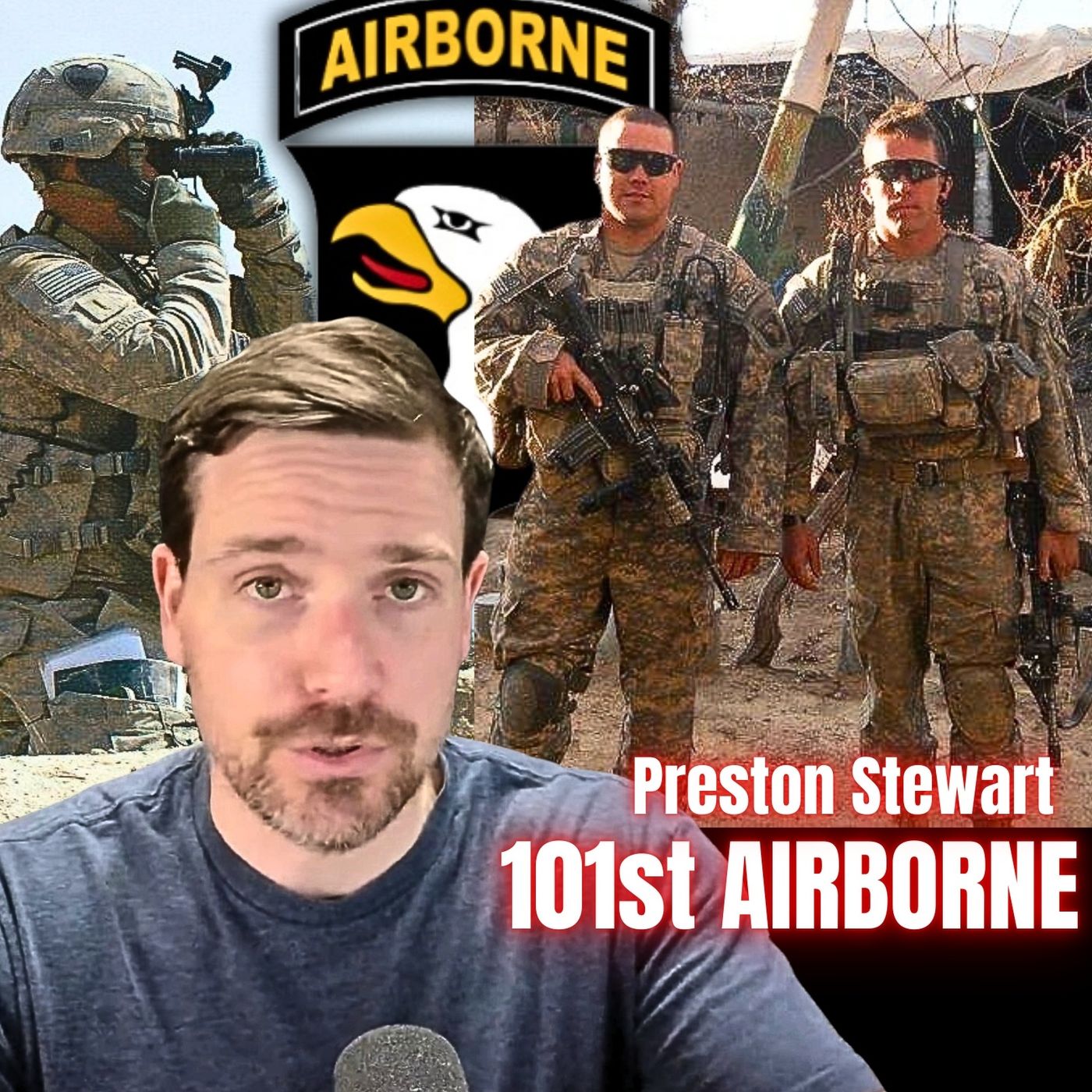
The Team House
From West Point to the 101st to 1 Million Subscribers | Preston Stewart | Ep. 402
01:28:43
We sit down with West Point graduate Preston Stewart to talk about combat deployments in Afghanistan, the realities of leadership under fire, and the challenges of transitioning out of the military. He shares how he built a YouTube career breaking...
Loading summary
Transcript335 lines
- [00:00]
Preston Stewart
Rewards programs are a lot like pop culture. They can be hard to keep up with. But with Venmo's new rewards program, Venmo Stash Rewards are so easy because the more you do, the more you get and you choose the bundle of brands
- [00:14]
Jack Murphy
you get cash back at.
- [00:15]
Preston Stewart
It's giving Fiscal Queen, it's giving Star. It's giving up to 5% cash back at your favorite brands. Just pick a bundle of your go to spots to shop with your Venmo
- [00:26]
Jack Murphy
debit card and earn cash back at them.
- [00:29]
Preston Stewart
Do more, get more with Venmo stash. The Venmo MasterCard is issued by the Bancorp Bank NA Venmo Stash bundle terms and exclusions apply. Max $100 cash back per month. See Terms at Venmo Me Stash Terms
- [00:45]
Sponsor/Ad Voice
Tax season has arrived and doing taxes without the right help can feel overwhelming. Intuit TurboTax is here now to guide
- [00:52]
Preston Stewart
you through it with confidence.
- [00:53]
Sponsor/Ad Voice
Match with a TurboTax full service expert who handles everything for you. From start to finish. Your dedicated expert checks every single deduction
- [01:01]
Preston Stewart
and credit to help you get the
- [01:02]
Sponsor/Ad Voice
best possible outcome so you can feel confident you're getting every dollar you deserve.
- [01:06]
Preston Stewart
And the best part?
- [01:07]
Sponsor/Ad Voice
You'll see real time updates on your expert's progress right on your phone while
- [01:11]
Preston Stewart
you live your life.
- [01:12]
Sponsor/Ad Voice
Plus you get unlimited expert help at no extra cost even on nights and weekends during tax season. Visit turbotax.com Only available with TurboTax Full
- [01:21]
Preston Stewart
Service Experts Real time updates only on iOS mobile app hey everyone, I want
- [01:26]
Jack Murphy
to tell you about my new novel, the Most Dangerous man out in June. It is a novel about a Regimental Reconnaissance Company soldier who gets kidnapped while he's on a mission to West Africa and when he wakes up he finds that he is now being hunted for sport by a group of tech billionaires through the wilds of West Africa. This book is based on stories that I heard over the years about safari guides taking wealthy clients hunting for poachers on game reserves in Africa. I took that and I took a century old short story, the Most Dangerous Game and modernized it. And the product is this book which I think will feel contemporary and resonate with audiences today. Thank you and please check it out. Guys. This is 402 episode 402 of the Team House. I'm Jack Murphy here with our guest today, Preston Preston Stewart. He is a former army officer and Today runs a YouTube channel amongst other things and if people want to find you on YouTube, it's under your name. It's Preston Stewart.
- [02:44]
Preston Stewart
Correct it is, yeah. Try to keep it simple there.
- [02:46]
Jack Murphy
Cool, cool. And so thank you for coming on the show today. I really appreciate it and looking forward to talking a little bit about your military career and kind of veteran transition experience afterwards.
- [03:01]
Preston Stewart
Yeah, appreciate it, Jack. It's an honor to be here, man.
- [03:04]
Jack Murphy
Yeah, thanks. So let's see. I mean, you know, the question I pretty much ask all of our guests is about their origin story. If you can tell us a little bit about, you know, where you grew up, what your upbringing was like, and, you know, how that took you towards, in your case, West Point.
- [03:21]
Preston Stewart
Yeah, I, I have a feeling very similar to a lot of folks in our generation. I'm 40, so I know we're about the, about the same age. And I was a sophomore in high school when. When the 911 attacks occurred. So I was in that period of my life trying to decide what's next and, and military just jumped out. My. Both my grandparents were in service, so grew up playing army like all boys. And that just, that was kind of a driving factor of wanting to do something. So from high school, the kind of agreement with my parents is they said college. And I said, well, I don't know, military sounds pretty good. And we found this middle ground of what if I can go to college and do the military? So came across West Point, kind of started looking in that route and was fortunate to get in. Ended up doing. Had to do an extra year kind of post grad between high school and college to get the grades up a little bit and meet their criteria. But then in 2005, entered the Academy and yeah, that was. So the war was still pretty hot at that point. It was interesting experience looking back. I mean, the 07 time period, of course, pretty nasty with a lot of casualties coming out of Iraq. And they would at breakfast or lunch announce graduates that had been killed. And there was a stretch in there where it felt like almost every day. So it was interesting being there, going to classes and kind of knowing what you're getting into. For better, for worse. It's a year, two years, three years down the road. But a great benefit there is we had instructors that had. They were all captains and majors that and then senior NCOs running the companies. All of them had 1, 2, 3, 4 deployments. And they would tie that into everything and then of course, keep you on your toes and you, you know, you'd be late or something and they'd say at least you weren't getting shot at. And like the guy telling you that was in fallujah so you're like, all right, I got it. My problems aren't so bad, but great experience there. And then. Then off into the Army 101st Field Artillery.
- [05:29]
Jack Murphy
Yeah. So West Point, I got to ask, did they have. I didn't go to West Point. I was an enlisted dirtbag. Did you have to do or did they get rid of it by that point where you get demerits and they make you like marching back and forth across the field.
- [05:46]
Preston Stewart
Yeah, yeah. It's called hours. And you just don't have a lot of time when you're there. Is this right? You just, you're just. They give you, you know, you have 17 hours of homework in a night or something like that. You just can't get to it. So you're constantly. Which big picture. Looking back is a good thing because it makes you prioritize and kind of figure out how to get through some stuff quickly. So they would take away your time was the punishment. And they dole these out. You could march two hours on Friday and five on Saturday, so you couldn't leave post until they were all. All done. So seven hours a weekend was max. I think I had 40 some total. It's awful, man. You're in your full dress uniform with a rifle and you literally just march back and forth in a line for 50 minutes and then they give you a 10 minute break and then you do it again. It's just a waste.
- [06:38]
Jack Murphy
And on. Yeah. On top of all that stuff, you mentioned how little time you have. I mean, academically it's very challenging. Do you have to play one or two sports?
- [06:48]
Preston Stewart
You have to be involved with sports. So if you're a. You can be a Division 1 athlete and then you do that. You can be a club athlete and then you do that. If you don't do either one of those, you have to do intramurals and you just play against all the other cadets. So I did, I did intramurals each year. And I mean, they had a ton. So we had rugby, we had football, soccer, swimming, wrestling, all that stuff. And the, the challenge there is like, everyone's a good athlete that's there. Like the vast majority of them are varsity and like we would go out play intramural football and the guys that we're going up against were like four year varsity lettermen in their high school. Right. They're not. They're not just strapping on pads for the first time. So every one of those was. Was interesting. And each time, like did swimming once and one of the guys Was like the captain of his swim team in high school but just couldn't, you know, wasn't able to pull Division 1. But for us, you know, makes us look silly. So yeah, intramurals, but it was a fun time.
- [07:43]
Jack Murphy
There's a book out and I'm really sorry, sorry that I can't remember the title offhand, but there's a book out about the rugby team at West Point.
- [07:51]
Preston Stewart
Yes, yes.
- [07:53]
Jack Murphy
It came out right around kind of. I think it's about the cohort of guys in like maybe the year after 9, 11 and then it kind of tracks their career. And I don't want to speak out of turn. I believe one of them was killed in combat. I believe one of them may have died tragically outside of combat. But there's a whole book out there about, you know, rugby at the academy and how it kind of shaped these guys lives. Yeah, it's called Brotherhood When West Point
- [08:23]
Preston Stewart
Rugby Went to War.
- [08:24]
Jack Murphy
Yeah, thank you, thank you.
- [08:26]
Preston Stewart
And they've got a new little documentary that just came out. I don't know where it's airing, but it's called Brothers on Three. All about army rugby.
- [08:33]
Jack Murphy
Oh, cool.
- [08:33]
Preston Stewart
That's that. My roommate for a couple years was the captain of the rugby team when we were seniors, John Wagner. And they were good. Like they actually competed at the national level. But that is, Holy cow, man. That is a brotherhood more than anything else. I think at the academy those guys are tight knit. They're still in touch. Incredible, incredible group there. You should talk, you should pull those guys on. They'd have some interesting stories to tell because they've, they've got some of the guys that, that from the rugby team went off and did just incredible things.
- [09:05]
Jack Murphy
Yeah, yeah, yeah. No, that would be very interesting. I, I interviewed years ago. The, He's a journalist that wrote that book and he's talking about. The head coach for rugby at West Point is like this legendary guy that was there for like forever, decades. But yeah, I'll have to look into that.
- [09:24]
Preston Stewart
They're cool. They're good dudes.
- [09:27]
Jack Murphy
So graduate West Point and can you tell us a little bit about how you got assigned your branch and how that process sort of worked and for civilians out there or people thinking of joining the military. When I say branch, I'm talking about the speciality of service that officers get put into. Artillery, aviation, infantry, whatever. On the enlisted side. It's called an mos. A military occupational specialty. Just what your job is in the army. Sorry, Preston had to lay that out for people.
- [09:58]
Preston Stewart
No, that's good. We're not choosing Navy or Air Force or army. We're all going army for the most part. There's like one or two that would cross over. They'd be lost. But it was a. I think it was a pretty cool process. We. We kind of got to choose both branch and post. So for the branch, I chose field artillery. We had a set number of slots for every branch from, you know, there's certain, like, Special Forces is not a branch you can go into as a second lieutenant, so that wasn't an option. But infantry, armor, field artillery, signal quartermaster, all of that Cyber's new, so we didn't have that when I was commissioning. But you had to rank order your top 20 at the start of your senior year. So freshman, sophomore, junior year, you're doing summer training. And they do a really good job of exposing you to these different things. So a little bit of time with pilots, a little bit of time with most of it, a little bit of time in tanks, a little bit of time with howitzers. So you kind of get a little taste of what each one of these jobs could be like. And then you. You rank order at 1 through 20, and the number one person ranked in the class gets their number one choice. And then like, that one comes off the list and you just kind of move down that. My field artillery is my first choice. I was excited about that. I wanted to be a fire support officer. And fortunately there were always more field artillery slots than there were people that wanted it at that time. So it was. It was an easy one for me to get. But things like military intelligence, aviation, infantry actually was always. You had to be top half of the class to get infantry kind of peak gwat Guys wanted to do that.
- [11:31]
Jack Murphy
Yeah,
- [11:34]
Preston Stewart
so that was. That was branch. You did branch in the fall, and then post was in the spring. So I want to say it was around spring break, and you would get together with your branch. So I was with all the field artillery guys. I think we were at the football stadium. I don't know. They put you into a room and up on a wall is every post and the number of slots at that post. So I chose Fort Campbell. So they had Fort Campbell and then, you know, 10100 first patches underneath it. And the same thing, they go top to bottom class rank now by branch, they call out your name. You walk up there and you grab your spot. There was for field artillery, one spot in Italy, two spots in Hawaii, six spots in Germany. You know, all the good spots are going fast. Eight in Hawaii. Or whatever. And Fort Hood. Anybody that wants to go to Fort Hood can go to Fort Hood. Fort Polk was wide open, but Campbell was. I wanted to go to Campbell. It was Midwest. I'm from the Midwest. Band of Brothers played a big role in. In my. I was in high school when that came out and like, holy cow, it was incredible. So the idea of being a part of that organization and yeah, Fort Campbell was an option, so jumped on it.
- [12:43]
Jack Murphy
Oh, that's cool. So tell us about getting to your first unit there as a first lieutenant and what that reception was like.
- [12:54]
Preston Stewart
There wasn't one. And it was. It was a great intro to the army too, because they. And I wouldn't have had it any other way. I joined the 2nd Brigade Combat Team 101st. They were at JRTC when I showed up at Fort Campbell. So they were in their deployment train up to go to Afghanistan. So I showed up and all the contacts that I had are in Louisiana and don't have cell phone reception and they can't help me. So I just have to find my way on post and just start looking around at different signs and asking random soldiers, where am I supposed to go? And most of them have no idea. So I checked in with the rear detachment group and didn't really do anything for the next two or three weeks because the entire organization was prepping to go to war. So it was. It was kind of a weird intro. And then when I did meet him, all these guys came back just after this pretty tight bonding experience. And those are. Until you go down range, those are your war stories, what you do at a major training event like that. So all the. I'm outside for all the inside jokes for a while, but I. I think it worked out well because as soon as they got back, we started packing containers. So I got all my gear and immediately started loading up with these guys and got to know them, of course, very well because we're, I think a month or two later on a bus to the airfield and going downrange them.
- [14:16]
Jack Murphy
Do you want to explain for folks real quick what the Brigade combat teams were? Obviously, you know more than I do. I believe there was four of them eventually in the 101st.
- [14:26]
Preston Stewart
It was a good concept. It changed around a bit. I don't know when these first rolled out. By the time I got there in 09, they were standard, so at least a couple years prior. But the concept was that these were individually deployable units. So Fort Campbell would have. We had four infantry brigade combat teams, but then we had like some Aviation and sustainment brigades, things like that. The 2nd Brigade Combat Team that I was in had a field artillery battalion, two infantry battalions, a, a cavalry battalion, and then a logistics and then a sustainment support and logistics. They kind of broke it out. It was like a special troops, which was military police and intel and then sustainment which was more logistics focused. So like that brigade as a package could just go commanded by a colonel and then they would, they would put that brigade in charge of a battle space and you had a lot of what you needed. You know, we didn't have internal air support, no internal aviation helicopters, anything like that. But for that type of fight I think it worked pretty well.
- [15:33]
Jack Murphy
It was sort of the concept of like, you know, you can have a brigade that's green, yellow and red, right? You have like, you know, the training cycles, one's deployed downrange, one's in training at JRX or whatever the case may be. And then one is like on leave doing admin stuff, professional development schools, that sort of thing.
- [15:52]
Preston Stewart
And we didn't, we didn't really train side by side either. Like, we didn't really do division level training with like third Brigade over here. And first, I think probably to your point, like, because one of them would be in Iraq and the other one would be coming back from Afghanistan and the other one would be like getting ready to go. So it was built for that type of war where you're kind of rapidly deploying small units.
- [16:15]
Jack Murphy
And now let's take a second to tell folks about what a field support or a fire support officer, an FSO does As again, I've limited exposure to this stuff, but there's a lot of maths involved. You know, you got, there's a lot going on there, a lot of things that you have to keep in your head.
- [16:33]
Preston Stewart
At one time I loved it, man. That's the reason I wanted to go field artillery. And it was risky because on the officer side. So on the enlisted side you can choose to be a 13 fox. That's your mosquito. You are a fister, you are a fire supporter. If you want to be on the guns, you can be a 13 Bravo. And they're like, they're different specialties.
- [16:53]
Jack Murphy
Oh really?
- [16:54]
Preston Stewart
On the officer side you do all, you're supposed to do all of them. So you're either going to be on the guns as a platoon leader in the fire direction center or forward as a fire support officer. The FDC is all math and I'm not good at math, so that was terrifying. But I got to Be a fire support officer. So my first. First three years in the army, three and a half years, was all as either a company or a battalion fire support officer. And the job there at the company level is as a second lieutenant. I had a team of. My team was three, but it could be up to 10 other artillerymen that were forward observers. We would. We were a part of that infantry company. So I was in Dog Company, 2502 Infantry. And then it was my responsibility to coordinate kind of all of the big things. So mortars, artillery, airstrikes, close air support, helicopter gunships, Apaches, Kiowas, things like that. We were the ones then. That was our responsibility. So we would plan that ahead of time. We coordinate when it was needed, and then the guys on the ground could focus on just, you know, not stepping on IEDs and watching out for the Taliban ahead. So I loved that job. It was. It's a lot to keep in your head.
- [18:10]
Jack Murphy
Yeah.
- [18:10]
Preston Stewart
Because you're trying to figure out where you are on the ground also, like, what aircraft is one space over and how. How far away are those helicopters? Should you call in mortars now or wait? Because the helicopters are inbound. It was good. It was stressful in a good way. It felt like a lot of pressure. And I'm sure you've had probably dozens of guys at this point that just kind of reiterate. You just don't want to let anybody down.
- [18:33]
Jack Murphy
Right.
- [18:33]
Preston Stewart
So it kind of. Yeah, it felt like a pinch point. So it made me focus even harder. I loved it. It was favorite job.
- [18:42]
Jack Murphy
Were. Were at that time, were you guys still using the big plotting boards or was it going digital?
- [18:48]
Preston Stewart
They kind of. So we were still learning that at the schoolhouse, but then once you. You know, it's that dynamic of schoolhouse to the active army to deploy. And. And at the schoolhouse, they were still teaching it as, like, you have to know how to do math without a calculator kind of thing.
- [19:05]
Jack Murphy
Yeah, yeah.
- [19:06]
Preston Stewart
But then once you get into the field, like, it was all digital at that point, and it could be because it's Afghanistan, and, like, they couldn't, you know, stop us from using a little. Little handheld device to calculate that stuff. Right, right, right.
- [19:21]
Jack Murphy
Hey, guys, this is Jack Murphy. I want to tell you about tonight's sponsor, which is Quince. They are a company that makes a thoughtfully built wardrobe that comes down to pieces, that mix well. And last, that's where Quince really shines. They use premium fabrics, considered designs, and everyday essentials that feel effortless to wear and dependable even when the seasons change. What I'm wearing today is their 100% Mongolian cashmere sweater, the same stuff that luxury brands use. It is a staple in the industry and it stays soft and doesn't pull. It keeps you nice and warm throughout the year. I've been wearing this for a couple months now. New York City winters get pretty cold and also the linen shorts have become a go to for me. They don't wrinkle like cheap linen does and they work with everything. And they don't cost a fortune either. Right now you can go to quints.com house for free shipping and 365 day returns. That's a full year to build your wardrobe and love it. And you will now available in Canada too. Don't keep settling for clothes that don't last. Go to Q U I n c e.com House for free shipping and 365 day returns. Quince.com House thanks for supporting the show everyone.
- [20:46]
Sponsor/Ad Voice
Hey, it's Ryan Seacrest for Albertsons and Safeway. Are you looking for a refresh this spring? Make sure you take some time for self care with savings on all your favorite hair care Essentials. Now through March 31st. Shop in store or online for participating hair care items from Pantene, Head and Shoulders, Aussie and Old Spice and earn four times points. Points can be redeemed later for discounts on groceries or gas. Offer ends March 31. Restrictions apply. Promotions may vary. Visit albertsons or safeway.com for more details. It's tax season and by now I know we're all a bit tired of numbers. But here's an important one you need to $16 billion. That's how much money in refunds the IRS flagged for possible identity fraud. Here's another one in four honest, hard working, taxpaying Americans has been a victim of identity theft. But it's not all grim news. LifeLock monitors millions of data points per second for your personal information and alerts you to threats you could easily miss on your own. If your identity is stolen, LifeLock's US based restoration specialists will fix it, backed by another good number, the million dollar protection package. In fact, restoration is guaranteed or your money back. Don't face identity theft and financial losses alone. There's strength in numbers with Lifelock Identity Theft Protection. For tax season and beyond. Visit lifelock.com iheart and save up to 40% your first year. That's 40% off@lifelock.com iheart terms apply.
- [22:16]
The Bleacher Report app is your destination for sports right now The NBA is heating up, March Madness is here, and MLB is almost back. Every day there's a new headline, a new highlight, a new moment you've got to see for yourself. That's why I stay locked in with the Bleacher Report app. For me, it's about staying connected to my sports. I can follow the teams I care about, get real time, scores, breaking news and highlights all in one place. Download the Bleacher Report app today. So you never miss a moment.
- [22:47]
Jack Murphy
So I mean, you kind of described the job there and you mentioned, you know, you were just a month or two away from deployment when you got to the unit. How did the job differ from the way you were trained or maybe what you were expecting versus what you found when you got overseas?
- [23:04]
Preston Stewart
It was a lot more problem solving than I thought of. Just you wake up and there's some issue and you don't know what the issue is, you've never come across it before and you've got to piece it together and just talk to the right people. And I don't know, there's not really a way to prepare for that. The schoolhouse is very, this is exactly how things will go. And I essentially went from the schoolhouse to a deployment because that time in the active military was just packing containers. I mean we were, it was that pre deployment period where we had long weekend after long weekend. We weren't going to the field, we weren't shooting. We were just spend time with your family before we go. So it was very regimented. Here's the process for planning fires, here's how everything will be called in. And then you get there and kind of find out it's different for the, for the better. Like it's more streamlined. They've removed all of the things that are kind of unnecessary bulk. But the big thing for me was just, and I, I, I thought it was a lot of fun as a fire support officer. You know, I only had three guys that I was directly in charge of. So I ended up kind of working in the headquarters element. And it was just a constant, constant new projects of things that happened. Like you move into a new strong point and there's a hundred things you've got to figure out to make it operational. And it was a lot of that, that, and I haven't found that anywhere but in the military where you're just constantly having to identify and solve problem after problem after problem.
- [24:30]
Jack Murphy
Put out fires.
- [24:32]
Preston Stewart
Yeah, constant.
- [24:34]
Jack Murphy
So where in Afghanistan did you get deployed?
- [24:39]
Preston Stewart
So 2010-11 was in Zari District. That was in Kandahar province. So the southern portion of the country, and then in 2012 was in Lagman. So up in the east.
- [24:52]
Jack Murphy
Okay, let's start off with the first one. You know, where you guys were garrisoned and were you just supporting your combat team or there are other units in that AO that you were providing support for?
- [25:04]
Preston Stewart
We were a. We went down there as part of the surge in 2010. So we ended up being a brigade combat team, plus Colonel Kendarian. Art Kandarian was our brigade commander. And he. I want to say we had seven battalions, seven maneuver battalions or something like, we just kept pulling more people in. So we really held all of Kandahar. When you went west of the city, from the outskirts of the city all the way over to Helmand, was held by our brigade combat team. So it was a big area, but it was falling in on a bit. So because it was a surge, our brigade fell in on a battalion. So it was a battalion's worth of infrastructure. Our companies went to platoon outposts, Our battalion went to company outposts and just started building. So there was a battalion brigade base there called Passab or FOB Wilson. We were just a little ways down the road at an old Canadian base called Housing Medad. And then about pretty early in the deployment, we pushed south into the Taliban area and started setting up these strong points that we would live at for the duration of the deployment. Little, you know, take over a house, put some sandbags in the. In the windows and roof and call it home kind of thing.
- [26:18]
Jack Murphy
And like, I remember we interviewed not so long ago. Maybe they were hundred and first, they were artillery guys, and they packed our artillery, went to Afghanistan, never took them out of the warehouse. They were basically used as infantry the whole deployment. But I mean, for you, you were bringing. Were you bringing 155s with you out to these outposts?
- [26:41]
Preston Stewart
No, but I think those artillery men might have been ours. So the.
- [26:46]
Jack Murphy
The Argandab Valley guys.
- [26:47]
Preston Stewart
Arganda Valley? Yeah.
- [26:48]
Jack Murphy
Okay. Yeah, yeah, yeah.
- [26:50]
Preston Stewart
That was this deployment, so.
- [26:51]
Jack Murphy
Oh, no. Okay.
- [26:53]
Preston Stewart
That was. There's some pushback on that, man, because they. That was a serious fight, a very serious dismounted fight, and our artillery were there doing it. So while they were in that, we had our first, second, and and Cav battalions training to get into the fight. Like, we weren't really doing anything yet. And those boys were up there getting after it. Yeah, and we moved. We moved some of our senior platoon leaders up there. Our scout platoon leader went up there. Some of our scouts went up there to Try to kind of backfill because, yeah, it was an artillery unit and, like, you know, your audience knows, like, guys will. They'll figure it out and they'll get the job done. But that was a nasty fight, and they were in it right out the gate. So they did not bring the howitzers out at all. We ended up being supported by a unit that had triple 7s. But, yeah, top Guns, that was. That was no joke.
- [27:49]
Jack Murphy
Yeah, those guys were in the shit. I mean, some of the stories they've told is like, oh, my God.
- [27:54]
Preston Stewart
Yeah, it would have been nasty for anybody. And, you know, so when I came back, I went to Top Guns for a couple months before moving back to the battalion FSO spot. They're so proud of what they did, and they should be. Yeah, because it was just a complete hodgepodge. Like, one of the guys that. That was one of the studs on the deployment was a weatherman. That was his job. In an artillery unit, you have guys that tell the weather. And he was a weatherman. And he ended up being, like, one of the most lethal, most effective platoon sergeants they had in this close range, like, jungle fight, almost.
- [28:28]
Jack Murphy
Yeah, it's like Vietnam War stuff.
- [28:31]
Preston Stewart
Yeah.
- [28:33]
Jack Murphy
And so you get to where you're going and set up your fire direction center. And what was the unit actually providing the guns for you again?
- [28:42]
Preston Stewart
So we had a unit out of Germany, two. Two, I want to say the second Battalion. Second Striker. Yeah, we had Striker support out of a couple different bases, and they put their howitzers there. And we didn't fire a lot of 155s, though. We had battalion mortars. And then again, because it was a surge, we had so much air support.
- [29:04]
Jack Murphy
Yeah.
- [29:05]
Preston Stewart
I mean, and it was just. Look, that's easy for us. It's probably easier for everybody, especially when it's helicopters. Like, you see that thing? Yeah, that's the bad guy. And they do it like. So we did fire a fair amount of mortars, a little bit of 155, but for the most part, it was just having those helicopters over day and night.
- [29:26]
Jack Murphy
Yep, yep. Any other. I mean, you mentioned putting out fires, but any other big challenges that came up during that deployment for you could be, you know, leadership challenges or combat challenges or whatever. Whatever came across your desk, so to speak.
- [29:42]
Preston Stewart
Yeah, I. So I was a new second lieutenant, and our first big fight I wasn't a part of at all. It wasn't supposed to be a fight, probably how it normally goes, and our guys were just rolling out to Do a quick battle damage assessment and you know, seven hours later and black on ammo and all that nonsense. And it was a small element. So I was back in the command post. And it's an important job to be moving those resources and relaying information and all of that. It has to happen. But I felt sick to my stomach, like, is this what I'm going to be doing while these guys are out there? The guys that I'm with, the guys that I want to help. It did not end up being like that the entire time, but it was kind of a, it was a learning curve to recognize, like, especially as an officer, your job is not going to be very sexy a lot of times. Like the most. I had three studs for fire supporters and we had three maneuver platoons. They went with the platoons like that was their job. They were good. That's what they were supposed to do. My job was to be back a little bit and help kind of sift through the assets to give them what they needed when they needed it. And you know, you're not out there getting the cool pictures. And I mean, with the cool pictures come dodging IEDs and, and gunfire. But that was a, that was a tough one to navigate. Recognizing that my job, my role was to be more often than not back, not forward.
- [31:18]
Jack Murphy
That's really stressful, isn't it? I think people on the outside kind of underestimate how stressful it is for someone like what you were doing at the fire support center or fire direction center, I should say, or even people who are like intelligence analysts and things like this that they, they have to get it right. And if something goes wrong and somebody gets hurt, the first thought is, oh my God, that's my fault. I missed something. I didn't do something. Which is not usually the case, of course, but there's this tremendous internal pressure that folks put on themselves because the stakes are so high.
- [31:55]
Preston Stewart
Yeah. And we had a first sergeant who just pinned. And he. I think he. I don't remember if he came from regiment or if he was maybe doing some instructing, but maybe he was at the schoolhouse. But anyways, great, great guy. First Sergeant Eric Allen was his name. And he showed up and wanted to be on every patrol. And as a first sergeant, you're not supposed to be right. There's so many other things that only he can be doing. But he just kind of said, screw that. I'm a first sergeant, I'm gonna do what I want. And would go on like squad level patrols because he wanted to Be out there with the guys. I never felt like I could do that as again a second lieutenant until towards the end of the deployment, but it did. Yeah, I, I think I navigate. Everybody's on good terms in the unit. We all loved each other. So I think we, it was, it was probably more in my head than anything else. I doubt any of the soldiers were like that. Stuart Chump won't go, won't. You know, he's not going out as much as we are. It's like I'm not even close, man. Not even close. These teams and squads were doing two or three patrols a day. I was doing two, two a week. Yeah, that was a weird little demon to battle throughout.
- [33:06]
Jack Murphy
And that changed a little bit towards the end. You said you started getting outside the wire a bit more.
- [33:11]
Preston Stewart
Yeah, we wrapped up the deployment with a fair number. Now to be, to be fair, our, our outpost was like a mud hut that took fire almost every day. So know, it wasn't like living on an airfield in air conditioning or something. But I wasn't out doing the movement to contact that a lot of our studs were doing. So at the end of the deployment we spent the last like 60 days doing air assaults across southern Afghanistan. And it was kind of this like mop up idea with RC south where some special operations team would go in and just kind of kick the hornet's nest for six to nine hours. And then right before the sun came up, we'd come in and it's like now there's a massive, like a battalion size presence in that area where this raid took place the night before. We'd stay for 48 hours and then, and then X fill. So for that everybody was there, all hands on deck. So yeah, by the end was, was going out more. But again, it wasn't even. Maybe I just felt more comfortable with it at that point, like recognizing it's stupid to just, you know, you get shot at, you DODGE A couple IDs, like, what do you need? Who, what are you trying to, what am I trying to prove to these guys? Right?
- [34:32]
Jack Murphy
Like, yeah, yeah. You know, it's like, you know, I heard a quote from a film director recently and he was saying something like, unless you're Ridley Scott, everyone else working on this film knows more about filmmaking than you do because you're just a director that comes in every couple years and makes a movie. I mean it's kind of, kind of the case being an officer that you're there for a couple years and these NCOs that have been there for such a long time. You know, you really have to rely on that experience.
- [35:01]
Preston Stewart
We had a great team. I, yeah, across the board, just awesome guys that were, I mean I got the, the normal picking on as a second lieutenant, as one should and as you should expect, but in a good way where all of them were. We had a small company, it was an anti tank company. So we were about 70 or 80 soldiers all in. And across the board, the NCOs are just awesome. Like yeah, they what can we do? How can we help? Yeah, that's, that's the team.
- [35:32]
Jack Murphy
Loads of combat experience in that unit too.
- [35:34]
Preston Stewart
Oh Jesus. Yeah.
- [35:36]
Jack Murphy
And it sounds like towards the end there you were actually doing some like really classic 101st Air mobile operations.
- [35:43]
Preston Stewart
Yeah, that was, that was nerve wracking because you make it through an entire deployment, right. And you're like, now it's time, now we're going home. Like now we're just going to bounce you all around the AO and good luck out there. So you finally get used to like, you know, don't go by that house and that road is bad news. And this tree line is where they shoot from to completely new areas. Welcome. So that was interesting. We, I think we did four missions. It was a cool experience because we had, they moved us out of an operating ao. We were off on the side, a place called FOB Ramrod out out west of ways. And our only job there was to plan for these missions. And there are usually two company missions. So we would, I mean it was very by the book. Like we get the warno, we'd have three or four days to start prepping. You'd be coordinating with the other units. We'd have full on sand table rehearsals, like big ass sand tables. Yeah, it was, it was cool to be a part of that. It was overall pretty uneventful, but as uneventful as like, you know, they're dropping bombs on the LZ when we're coming in so they can clear it from any IEDs and you're, you're landing in the middle of the night on top of that. So as uneventful as that can be, it was.
- [37:00]
Jack Murphy
How many birds does it take to get that many soldiers in the air? Oh gosh,
- [37:07]
Preston Stewart
let's see. So we, we had, we were doing that with our Afghan partners because everything was partnered at that point, but they were probably about 50% our strength. So if our company was 70, there may be worth 30 of them. We were packed in those Chinooks pretty tight.
- [37:23]
Jack Murphy
Yeah.
- [37:23]
Preston Stewart
So dudes on the ground. God, I'll bet it was probably, it was probably four birds for our company and we were a smaller company. They were bas. What they were doing is they would, they would shuttle us to a nearby base and you'd get off and you'd sit on that airfield and then they do runs in and out. So. So it wasn't like. So it wasn't like 60 birds in the sky or something. Gotcha. But yeah, there's a lot.
- [37:54]
Jack Murphy
I bet. So. So you wrap up that deployment and then you're going back to Fort Campbell, Kentucky.
- [38:05]
Preston Stewart
Yeah.
- [38:05]
Jack Murphy
And now you're going through the full like, scope of training, you know, to get ready for the next deployment.
- [38:13]
Preston Stewart
Yeah, kind of. We, we. This was during the period and you don't like the 101st, where you kind of know when your next deployment is before you're even home, for better or for worse. And we, we got tapped to go back in about 11 months. So we had kind of a modified train up period. So as soon as we hit the ground back home, it was starting to look towards that different, different mission set. More of the advising, we were tied into a, I was advising like a brigade level officer on artillery and we only deployed a very small contingent to do that. But yeah, I mean, before we even got back home, they were talking about get ready, get ready to come on back.
- [38:55]
Jack Murphy
What was that training cycle like for you?
- [38:59]
Preston Stewart
That was tough for me. I, my first deployment. And towards the end of it, you start to recognize how much of it is lucky. And like the, the soldiers, the super soldiers that are stronger, faster, smarter than me and like they're, they're better than me in every way that stepped on an IED for some reason that like, you know, that type of stuff that start. For me that, that started to, to settle in towards the end of the deployment of just how many lucky steps people took or how many times you step on a bomb that doesn't go off. So I was still kind of processing through that when we got tapped to go back. And I just had a real nasty lapse of like how many times you can roll those dice, man, you can do it for. You know, there's probably not, not too many times you want to go down that path. So I, that, that period of time was a lot of, a lot of drinking, a lot of, a lot of eating, got pretty big. You'd think that it would be all about like, now that I know what it's like. Train, get ready, get back in the fight. I kind of took the other Approach of I don't know if I'll make it back, so I'm just going to enjoy life for the next nine months. Yeah. Not ideal, but it was fine. It was a different deployment, and it was mostly in an office, so maybe I willed that.
- [40:28]
Jack Murphy
Well. Yeah. And thank God, you know, you're like, in your 20s and your body can handle it.
- [40:35]
Preston Stewart
Yeah, it. Sorry, cut off a little bit there.
- [40:38]
Jack Murphy
Oh, I was just saying. Well, thankfully, you're in your 20s at this point and your body can handle all that.
- [40:44]
Preston Stewart
Yeah, it could.
- [40:45]
Jack Murphy
Papa John's every night.
- [40:48]
Preston Stewart
Dude, if there's, you know, a 12 pack and papa John's and if there's ever time to, like, dial it in and lose weight, it's. It's on undeployment, so. Oh, man. Yeah, I got. I was in great shape by the time that next one wrapped up, but the train up was. It was good. It was fast and furious. We all kind of expected something different. It was being pitched as this was the beginning of the SFAT teams going to Afghanistan and 2012, and it was being presented as, like, Special Forces light. So the guys kind of took that mindset of, like, we're going to be out in the boonies, you know, kind of running ops with these Afghan commandos. And, like, it wasn't quite that, or at least at our level. I was. I was on a battalion staff, so we were on a major base talking about logistics and showing up to work with. With Afghan officers.
- [41:43]
Jack Murphy
So. Yeah. Where precisely in Afghanistan did you get deployed the second time around?
- [41:48]
Preston Stewart
Bob Gambieri. In Lagman province.
- [41:51]
Jack Murphy
Okay. And you said, now, this is very much like making that transition. Our Afghan partners need to stand up and start standing on their own two feet. And you got paired up, I believe you said, with a Afghan fire support officer that worked at a brigade level.
- [42:10]
Preston Stewart
Yeah, that was a weird one, man. In retrospect, this is where, again, I deployed this time. I was a first lieutenant when I went over. So you're still learning everything. But we started writing our end of tour awards the first month we were there, and just because of the time, I guess it takes to get that approved. So our end of tour awards, we were writing about all of the successes that we had had, and it was just this surreal feeling of like, what are we doing if we're writing up our successes before we even start? It feels like this is just made up or what's. What is this game again, in retrospect, you know, I think that was probably how a lot of that, a lot of that war actually went. But yeah, not to. Not to go down that rabbit hole. It was. It was coaching and training for me. Our battalion trained an Afghan brigade, so it was like a battalion staff minus. I think there were 15 of us on the team. I was the fires guys who brought over an S2, S3 signal, all of that. Commander Sergeant Major, and then I helped them stand up. We fielded D30 howitzers, and they stood those up and trained their guys in using artillery. So which is, you know, which was a wild run, but that was the job that year.
- [43:39]
Jack Murphy
Yeah. I was going to ask you, like, how does that go? What artillery is even organic to the Afghan army at this point? And how did it go for you trying to get this capability stood up?
- [43:50]
Preston Stewart
It was a unique experience, man. They. They. So the D30s, it's the old Russian howitzer. They're getting blown up in Ukraine left and right now. So it was 122 millimeter towed howitzer. And they didn't have a lot of them. They. Most Afghan units and Kandax did not. Or corps did not start with artillery. We kind of rolled it out to them. We did the training there at Gambieri because we had a pretty big open area to conduct it. But it was. It was tricky. I mean, they could learn it. The. The big challenges we had that were. Didn't really see coming is the concept of indirect fire was very challenging to get across. Like, you can't see. To try to explain to the gunner that you're not going to see the target and explain to the forward observer that you're not going to see the gun. We had a very, very hard time getting that to really mesh. And most of the time, by the time we left, they were using them in direct fire and just slinging rounds into the sides of hills.
- [44:54]
Jack Murphy
When you say direct fire, you mean like line of sight, not actual line of sight? Yeah, yeah.
- [44:58]
Preston Stewart
Like looking. Looking over the barrel there's gonna go. Right? And it. You know, it does work in some areas of eastern Afghanistan because of those mountains and where some of the bases are located. That was a big challenge. And then like any. With any Afghan unit or any unit, we had guys that were great and very focused and spent a lot of time digging into the weeds and then others that just didn't want to be there at all. So of course navigating that. But when it came time to actually deploy the systems, that too ended up being something that was just hard to anticipate. We're looking at like, where are the hotspots where do you have the most, you know, the. The most fields of fire where you could utilize this weapon system? And where could you support the most of your maneuver elements across the ao? And they only wanted the howitzers in the most populated city center because they wanted to show it off that they had howitzers. So, like, what good is a howitzer if I got to put it out there at a cop in the middle of the mountain that nobody's going to see?
- [45:59]
Jack Murphy
You know, it's. This is like an interesting thing in that, you know, when you're dealing with people in a country like Afghan, they're surprisingly very mechanically inclined, actually, like, the. The stuff they can do to, like, Jerry rig a Toyota Hilux and keep it going to get those vehicles unstuck. And they're good drivers, too. They know how to drive those things around the mountains. They know what they're doing. But then when it comes to something that's, like, a little bit more abstract, like you were saying, just the concept of, you know, having. What's the term I'm looking for? Field. Field, like the. The call for fire, dude, you know, who can't see the actual mortar pit. Sort of a more abstract concept like that is just something that's hard for them to grasp.
- [46:49]
Preston Stewart
I don't know if you ever experienced this, but we had a stretch where they would shoot through bushes or. And we would have to be like, guys, we are on the other side of those bushes. You can't shoot through that. Like, they would hear a crack, crack, crack in the distance and. And spin and start shooting. And we'd have to explain, like, the bullets. Just because you can't see what's over there. Like, the bullets are going straight through that stuff, man. And it was the same thing of, like, I feel like this should be landing. It's not landing, right?
- [47:19]
Jack Murphy
Yeah, yeah. There's something that's not a connection that's not really being made there.
- [47:23]
Preston Stewart
And to be. To be fair, though, like, I'm generalizing, and we had awesome Afghans doing really, really incredible work and plenty that nuances of, like, indirect fire and to not shoot at bushes when your friends are on the other side. But there were always a couple where it was like, wait a minute. I feel like we should have this under control.
- [47:42]
Jack Murphy
Yeah, well, I mean, yes, you need to keep in mind that every American soldier has a high school diploma or a ged. At least people in Afghanistan have not had that benefit. So it is what it is. When you're trying to teach complex Topics Sometimes you're just not going to get through to everybody.
- [47:59]
Preston Stewart
Yeah. Good people though.
- [48:02]
Jack Murphy
Yeah. Well, so how did, how did kind of that deployment like wind down for you as you got to the end of it? Did you feel that they at least had a pretty good starting point when it came to field artillery?
- [48:16]
Preston Stewart
Yeah, that was tough. That was. So when you're. My first deployment, we were with a company of Afghans and they were out there. You know, we had like one Afghan officer and they were out there like getting in fights with the Taliban and we could, we heard stories of the corruption and the problems up the chain of command, but really weren't exposed to it at all. This second deployment we were at the, the, the brigade headquarters. So we got to see a lot of the kind of inner workings and it just wasn't working very well. It seemed like they were doing things for us, if that makes sense, like checking the box while we're there. And if we weren't showing up, then they weren't showing up. It wasn't a very optimistic feeling leaving because it was about a year, about a year and a half apart from when I left the first time to the second time. And in both cases it was. I don't think they can do this on their own yet. And it's just a little bit nerve wracking of how long is it going to take until they can. But on the personal side, I was planning on exiting the military. After that I made the decision to leave active duty. So coming home, I had about a year and a half left on my active obligation. And that was kind of the, kind of the focus as that deployment wrapped up.
- [49:30]
Jack Murphy
Okay. Yeah. Someone told me a while back about how they tried to teach the Afghans to fly drones at one point. And I believe it may have been ScanEagle. And that went hysterically, as I understand it, meaning not at all, basically. So yeah, there are limits. But you get home from this deployment and you have a year and a half left. How did you kind of finish out your time on active duty?
- [50:00]
Preston Stewart
I was in a planning shop. So I went back to Top Guns and you kind of within a bct, you kind of move as an artilleryman. You move between roles and kind of always come back to the mothership that is artillery. And I was a assistant S3. I pinned captain right about the time we got back. And then just they were, they were 101st. They were getting ready to go back again. So they started their train up and my time then was focused on kind of facilitating that Train up. I was kind of a unique role because you're there but you're not going. So I could help kind of move things behind the scenes and, and get things going for all the guys that would actually go back down range. So. And then it was kind of an uneventful end to my active career because they were all gone. They were downrange or in the process. And I just, you know, went to work on Tuesday and didn't go to work on Wednesday kind of thing.
- [50:54]
Jack Murphy
And describe for us kind of like how that transition process was for you.
- [50:59]
Preston Stewart
It was weird. I. You don't know. What you don't know is the first job I'd ever had. I mean I had high school jobs, but trying to move back into the civilian workforce and not really knowing what I should be looking for. Not trying to. Trying to. The nightmare of moving your military service onto like a civilian resume and looking at it and be like, what the hell is this? Like, doesn't make sense anymore. And you want to be proud of the things that you did. I remember my first resume write up was talking about like number of fire missions we called in southern Afghanistan. Like, that was awesome, man. It's like the most in the entire brigade. That's such a cool thing. Means nothing. Of course it means nothing to anyone else. So that was tough. I ended up. My wife was finishing up medical school in or then fiance in Michigan. So we went up there and I took a job that, because it was available at Northwestern Mutual, I thought it was going to be like financial advisor type stuff and it was just selling insurance and I was miserable from about the first hour. So we pretty. Again you're coming out and you're like, I don't, I don't know what I'm going to like to do. It's between the army and West Point, getting ready for the army, you know, it's been 10 years at this point. So just kind of kept trying and eventually found a good job. Former army guys set up a software company in Chicago and I was. I worked with them for a couple of years. Just more. I don't know. It's tough because you don't know what you're looking for. You don't know what the thing is. You don't know where you'll fit and you don't know what'll make you happy or at least personally. That was something I struggled with.
- [52:43]
Jack Murphy
What kind of software company was this that kind of got you doing something interesting again, something you enjoyed.
- [52:50]
Preston Stewart
It was called Configure 1 they ended up being a part of Autodesk, but it was. The software is boring and I'm not very technologically inclined. But it was right back to the same role of just putting out fires and figuring out projects left and right. So every day was different. And I'd go in and there just be something to sort out the. The boss there again, old army guy, I loved it because he would just. He would just. This one's on you. Hey, can you figure this out? Yep. Let me know when it's done. And just delegated, delegated, delegated. And it was a breath of fresh air to be able to just kind of get after stuff again, felt trusted. That's another. You know, that's random when you get out is think about how much trust, you know, a captain in a battalion has. And you go from that to people that are like, we can't. We don't know. You can't do anything. Or, you know, you might be. You can't be in charge of anybody for the next five to 10 years until you've done this. And I get it, but it's just for everybody, I'm using myself as the example, but for everybody coming out of the military, that's tough.
- [53:52]
Jack Murphy
Yeah. When you talk about the insurance company, it's funny because when I got out of the army, the first job I applied for was to be a pizza delivery man. They said, you're not qualified. The second job I went for was insurance salesman. And that first hour I went in there and did the little intro thing, I was like, see you later, guys. I'm not doing this. Yeah, it is. You bounce around a little bit looking for. Yeah. What are you going to feel passionate about? And of course, what's going to pay the bills. You know, ideally, you can check both
- [54:27]
Preston Stewart
those blocks and you don't know when you're in the. When I was not actively searching for a job, my entire time at West Point was not searching for a job when I was in the Army. So I don't really know what the opportunities are that are out there or aren't when they're out there or how to go out of them. Yeah, yeah, right. Networking is what everyone says, just networks. Like, I'm trying to network. I feel like I have a decent network. I don't know.
- [54:49]
Jack Murphy
I'm on LinkedIn.
- [54:51]
Preston Stewart
Yeah. Isn't that. That's it. Right. But that was tough. I ended up coming back into the National Guard at one point because I couldn't figure out it was a combination of, like, I don't feel anything. I'm not excited to like, to be blunt, like, not excited to get up in the morning. Seems boring. It felt like everything was in the past because at least in the army you're like working towards the next deployment and you're getting ready to go and it's life or death, it's serious. And now it's like configuration software might not go live on Thursday. So went back into the National Guard at that point thinking that that would be. And it did. Checked a lot of the boxes of being back with soldiers. Even just the one week in a month, two weeks, a year kind of thing was, was really good for me at that time.
- [55:36]
Jack Murphy
Did they let you come into the Guard as an officer?
- [55:40]
Preston Stewart
Yeah. Cool. Came in as is. So that was an interesting. They don't teach us enough about the Garden Reserve at West Point. So I didn't know what I was getting into at all. What such a shortcoming there. Because I would have stayed in one of those components instead of taking a couple years off. And I have a lot of friends that were excellent officers and got out. But I know they would have stayed if it was a, you know, an administrative role once a month in there, in the town they lived in, maybe even a non deployable unit or something. Right. There's countless non deployable units if you really want that stability. And I just didn't know what these options were. But yeah. Joined a field artillery unit down in Texas. So right back into that.
- [56:25]
Jack Murphy
Cool. And you did that right up until just a couple years ago, Right?
- [56:31]
Preston Stewart
Yeah. Ended up moving over to the Reserve, kind of some administrative roles. And then about a year ago just wrapped that up. So it got to the point on the, so the, the benefit, I, I guess on the officer side or once you get to a point is you, you can just say like, I'm, that's enough. It's been fun. I'm gonna move on. I didn't have any more obligations. So hit that point about a year and a half ago, like, this is now boring and I'm not looking forward to going in. And I found myself getting frustrated more than I probably should. Bitching about a lot of stuff that like, is just part of the Army.
- [57:06]
Jack Murphy
Sure.
- [57:06]
Preston Stewart
I was like, all right, that's probably a sign. We'll. We'll hang it up for now.
- [57:10]
Jack Murphy
Are on the other side of it. On your civilian life and your civilian career, were things starting to pick up for you? And maybe that played into the decision also.
- [57:20]
Preston Stewart
It did. I love what I do every day. I'm excited about it. And going to a drill weekend meant two days of sitting in a random classroom learning about sexual harassment or something. And I couldn't do this. It was starting to bleed into getting phone calls on Tuesdays to knock something out for the army, like, no, I've got other stuff I've got to do. And then I. I knew that it was going to be a headache at some point that I'm talking to so many different people around the world. I. I just went to Ukraine a few months ago. I didn't even want to consider that while I was still in the army. And then, you know, the chats are filled with soldiers and units from. From Israel to Ukraine, elsewhere, just like keeping up with what's going on. And that's a nightmare if you want to stay in government service, you know, and if I had to choose one or the other, it's. I like what I'm doing, so. But yeah, so tell.
- [58:18]
Jack Murphy
Tell us about that, what you're doing now, how you kind of came into that.
- [58:23]
Preston Stewart
So we moved to Tennessee about five years ago. My wife and I were starting a little business, and it was during COVID So it was a weird time. I started making some content about military history because I like military history. And that was just doing well. People would watch it, which is crazy to see that. The war in Ukraine kicked off. My background is international relations and terrorism. That's what I studied at the academy. So I've always liked that. And when the war in Ukraine kicked off, all of a sudden there was a large audience of people trying to understand what are tanks versus artillery, what is air defense, all of those things. So I started just trying to provide some updates on that and try to break it down for folks. And there's an insane audience out there for this stuff. And just the segmentation of the Internet today, there are. I mean, I've got friends where all they do is talk about cartel activity in Mexico, and they've made a career out of it. So it just. Each month more people would watch, and it. It was not intended to be a career. Kind of got there accidentally and just kind of kept making these update videos and went from TikTok over to YouTube and started making longer videos and then started doing some interviews and. And all of a sudden you kind of woke up and it was. It's a. It's a career. Wow.
- [59:43]
Jack Murphy
What was kind of like that turning point when you realized, like, wow, this is more than just, you know, a side hustle or a hobby?
- [59:52]
Preston Stewart
Oh, gosh, it was slow is part of the problem. Like, even when I was making military history content, Tick Tock opened up their creator fund and I started making like $6 a day or something. And I thought, oh, yeah, what is this? Right? Like, are you.
- [60:06]
Jack Murphy
That's beer money, Preston. That's what it is.
- [60:09]
Preston Stewart
And then with. It's probably three years ago, maybe longer than that, I started putting shorts on YouTube when they opened that process up and a couple of those went viral and it made like $7,000 in a month. And I was like, wait a minute, this is actually like, if I could do that every month, that's, that's. We're good, taken care of. It did not work out that way as, as the Internet, you know, the Internet gives, it takes away. So it's like a great month and then the next one is like, it didn't exist. So there wasn't like a tipping point, but just a lot of those little signals that, hey, this could be a thing, right? Just a little $6 a day on Tick Tock is like, okay, but what if that was $60 a day and then YouTube one month is $7,000. You say, okay, but what if like every month was three and. Right. Just kind of keep going. Yeah.
- [61:02]
Jack Murphy
You know, you mentioned going to Ukraine for one of these projects. Like, if you were to tell people a little bit about your channel, again, the channel you can find on YouTube. Preston Stewart, if you were to kind of pitch folks out there on it, what are like some of the projects, some of the videos that you've done on there that you're particularly proud of, that you think are particularly insightful, that people should go and check out right after they finish this interview.
- [61:27]
Preston Stewart
Oh, perfect. I only have one video pinned to the channel and it's kind of a recap of the trip in Ukraine.
- [61:31]
Jack Murphy
Oh, cool.
- [61:32]
Preston Stewart
So that's. That was just a once in a lifetime opportunity that I don't have. A lot of the way that I make the content is kind of looking at the last 24 to 72 hours. And here's what happened with the war in Iran or here's how things, you know, between Israel and Hezbollah. So in turn, a lot of the videos, even like three or four days later, they're just not all that relevant because things have changed. So most of the videos don't stand out as, you know, something that you really want to. Nobody's going to. A lot of it. Nobody's going to watch in a year, two, three years, unless they're doing research on this period of time. Some of the interviews have been awesome. Being able to talk with soldiers that are in the fight, especially with Ukraine and Russia where it's new tactics. They're fighting a war that, that we're learning about in real time. So getting those guys to come on and explain, like, what is happening day in and day out is wild to hear that. Yeah, it's been, it's been really cool, man. I, I didn't. You're talking. We were joking about networking earlier. This is networking.
- [62:38]
Jack Murphy
Yeah.
- [62:38]
Preston Stewart
And I didn't ever think of it that way, but, like, that's what it is. You know, you do have an interview with somebody and especially one of these soldiers. We share a fundraiser or here's their. Here's their unit page or whatever, and they introduce you to their friend and then their commander. And, you know, it's networking. Content is networking in so many ways.
- [62:59]
Jack Murphy
Yeah, no, you're absolutely right. And I've also found I'm not very good at schmoozing and that's sort of going to these dinner parties and things like that. But I am good at, like, going after things that I'm interested in, the sort of things that we're talking about. And through that, as you just described, you end up networking. You end up meeting a lot of interesting people.
- [63:20]
Preston Stewart
Absolutely. And it's, it's, it's cool. It's awesome now because the channel has done well and the different platforms have done well to where, like, I can actually offer something to these folks. It's not just. It's not just, hey, will you please? Because I'm sure you get it. Somebody, will you come on my show? Will you do this? Will you? And people are asking for your time because they're, they're trying to get, you know, any number of things. It's awesome to be able to go to these guys and say, like, can I share that for you?
- [63:46]
Sponsor/Ad Voice
Right.
- [63:47]
Preston Stewart
And I like, would it be okay if I linked to this and just. Yeah, it feels good to be able to provide something. Yeah, yeah, absolutely.
- [63:56]
Jack Murphy
And it's particularly important, too. I mean, you mentioned Ukraine. I'll ask you again about that in a second. But everything going on with Iran right now, there is a role and our government doesn't necessarily do a great job of it. And unfortunately, even people in the spaces we work in don't necessarily do a great job of it, too. A lot of times explaining how the military works, explaining the military and combat to a civilian audience and sometimes even to the military itself. I mean, I was in the army, but what do I know about aviation? What do I know about, you know, how do you close off the Straits of Hormuz? I don't know. That's not my area. So the types of videos that I think you work on are really important to get that kind of information out to the public right now.
- [64:45]
Preston Stewart
It's a balancing act there, too, because we have too many acronyms and too many fancy words, and it's very easy to go down that path. And then you're talking to one part of the audience, that audience appreciates it and you're a part of the team. But it's an active thought to step back from that and say, instead of saying JTAC or fob, let's open that up a little bit and explain the guy that talks aircraft onto targets or whatever. Yeah, that's the nature of this is you can't. When you put the video out there, you don't know who it's going to. And you're trying to reach a larger audience. So.
- [65:23]
Jack Murphy
And then, and then if you sort of like use more generalized language so that the larger audience can understand it, the person that does work in that field is going to be in your email box. Like, oh, why it's really called this? It's really that. It's like, dude, I know, I know, but there's this whole world out there I have to also speak to.
- [65:43]
Preston Stewart
There's. Yeah, it's. And there's some great people that do it. Like when it gets, when you get into the naval side of things or tanks or small arms, there's. The Internet's so awesome because you can find like the genuine experts on that stuff I've found. I try to more and more add a little bit of clarity to some of the things that seem confusing but maybe shouldn't be. Recently there was a spike in stated US Casualties in Iran. And immediately it went to conspiracy theories of the US Is hiding this and here's why they don't put the information out. And I, I don't know if this worked or not, but tried to explain that we cannot announce that right away. It. It hurts the United States. If we were to say this strike on this base caused this many casualties yesterday, like, that's not information that we should share. And, and trying to get across, like, there's a window, you know, you can't sit on that for a month. Yeah, but, but you cannot expect it the same day. And trying to figure out, like, we're just, we're not, we're not used to that. That's not a world we've grown up in.
- [66:52]
Jack Murphy
Yeah, no, definitely. I mean, it's interesting that it almost feels like dod and I don't want to be a conspiracy theorist, but we don't have a history in this country really, at least modern history of concealing our casualties. We've been very transparent about that stuff throughout the war on terror and for them to now kind of slow roll that stuff to the public is sort of new, as far as I can tell.
- [67:18]
Sponsor/Ad Voice
Yeah.
- [67:19]
Preston Stewart
Oh, messy, not done well. There's a ton of different descriptors I would use there, but we, but still trying to provide a little bit of like, okay, it's not going to come out the same day. We can't do that. There has to be some degree of, you know, it doesn't do any good to overnight let Iran know that that strike took out half of a company in Kuwait. But yet the way that it's come out has not been good. I don't know if that's a broken system or something more sinister, but yeah, hopefully that improves.
- [67:53]
Jack Murphy
Yeah, no, it probably isn't something sinister. It's more just like how incoherent everything is right now, frankly. Back to Ukraine for a moment. I want to ask, because of your background as an FSO and you've obviously been interviewing a lot of people working over there, keeping tabs on all the developments with the drones, what are you seeing? Like, if you were to write your thesis paper today about the future of field artillery and indirect fire, what are some of the things that are coming out of Ukraine that you would really want to highlight?
- [68:29]
Sponsor/Ad Voice
Hey, it's Ryan Seacrest for Albertsons and Safeway. Cold weather can wreak havoc on your skin. You don't want to miss out on this month's great savings on all your favorite skin care essentials. Now through March 31, earn four times points when you purchase participating skin care items like Dove Soap, Dove Body Wash, Dove Beauty Bar, Soft Soap Body Wash and Irish Spring Body Wash. Points can be redeemed later for discounts on groceries or gas. Offer ends March 31. Restrictions apply. Promotions may vary. Visit albertsons or safeway.com for more details.
- [69:00]
The Bleacher Report app is your destination for sports right now. The NBA is heating up, March Madness is here, and MLB is almost back. Every day there's a new headline, a new highlight, a new moment you've got to see for yourself. That's why I stay locked in with the Bleacher Report app. For me, it's about staying connected to my sports. I can Follow the teams I care about. Get real time, scores, breaking news and highlights all in one place. Download the Bleacher Report app today so you never miss a moment.
- [69:30]
This podcast is sponsored by IQ Bar. I've got good news and bad news. Here's the bad news. Most protein bars are packed with sugar and unpronounceable ingredients. The good news, There's a better option. I'm Will and I created IQ Bar plant protein bars to empower doers like you with clean, delicious, low sugar, brain and body fuel. IQ bars are packed with 12 grams of protein, brain nutrients like magnesium and Lion's Mane, and Zero Weird Stuff. And right now, you can get 20% off all IQ Bar products, plus free shipping. Try our delicious IQ Bar Sampler Pack with seven plant protein bars, four hydration mixes and four enhanced coffee sticks. Clean ingredients, amazing taste and you'll love how you feel. Refuel smarter, hydrate harder, Caffeinate larger with IQ Bar. Go to eatiqbar.com and enter code BAR20. To get 20% off all IQ Bar products plus free shipping. Again, go to eatiqbar.com and Enter code BAR20.
- [70:31]
Preston Stewart
Got to stay adaptable is the 100%. The biggest thing is we've got to be agile. We've got to be able to change. So something that we're seeing right now, like day to day, is the kill zone has gotten too big to where artillery cannot range enemy targets. So to get howitzers close enough to be able to hit Russians, they're in drone range and get taken out.
- [70:56]
Jack Murphy
Gotcha.
- [70:57]
Preston Stewart
And a howitzer is no man. Like, you know, the minute that thing goes boom, there's a dozen drones zeroing in on it. So if you can't move the howitzers forward, they're repurposing artillerymen to serve in that same general role with drones. They've retrained them to operate instead of the short range drones and instead of the deep strike or recon drones, they're hitting targets in the 20 to 40 kilometer range. They're going after artillery focused targets. So they're supporting maneuver elements and they're set up where you might set up an artillery firing point. And there's kind of a call for fire type thing that goes out and these guys respond and that's how they have to be used right now. I don't think, you know, I think we'd be, I think it's foolish. We do, we do a good job of this. Jumping too far in every direction, overcompensating. It's not the End of artillery. There's still plenty of artillery being used, but in some of the hotter sectors of the front, it can't be. So they're changing those artillerymen. Those bodies still need to be used and they're just doing that same skill set with a different tool.
- [72:03]
Jack Murphy
I mean, you could see the DOD making all these investments in counter uas and I guess that's exactly the reason why that you mentioned there. But if America were to go to war in the future. Well, I mean, okay, that's kind of a stupid thing to say. If we were to go to a large scale conflict with the Russians, for example, I mean, we would bring different military hardware to the table. We would fight a little bit differently. Do you think the introduction of like laggard munitions and things like this would kind of switch up the dynamics that you're currently seeing in Ukraine?
- [72:40]
Preston Stewart
This is one of the tough ones because we look at the war in Ukraine and it's so tempting to take away those exact lessons.
- [72:48]
Jack Murphy
Yeah, yeah.
- [72:49]
Preston Stewart
But if we are engaged in this type of fight with Russia, we failed.
- [72:54]
Jack Murphy
Yes.
- [72:55]
Preston Stewart
Because I mean, the reason that this is happening the way it is is because there's no air superiority. Neither country will fly anywhere near the front lines. And we would think, I mean, and the US has done it now in Iran. Right. We have air superiority at least over good portions of the country. That's the fight we want to fight. So if we are in some ground pound match, artillery duel and drone duel with Russia, we screwed up and it failed somewhere along the lines.
- [73:18]
Jack Murphy
If we have Americans in trench lines, something's gone wrong.
- [73:22]
Preston Stewart
Yeah. So like, I don't think we should spend a lot of time planning for that to be a portion of war, maybe being ready to adapt if needed. My concern is less about the offensive aspects and more about how adversaries are going to adapt to this. This is such a low cost, inexpensive, which is the same word that I use twice. Low cost, easy to use weapon system that we haven't experienced yet. Again, IEDs are flying at you and like to be blunt, we aren't ready to deal with that yet. And I don't know what it'll take.
- [73:59]
Jack Murphy
Did you see the video footage of the Iranian drone flying. I can't talk today. Flying over one of the fobs over. I believe it was in Iraq.
- [74:09]
Preston Stewart
Yeah, yeah. Clear as day. Right? Yeah. I think that one had a fiber optic cable. So that's another one. We're like, we've got electronic warfare for days, but electronic warfare doesn't do Anything to a drone that has a cable attached to it. And like, again, I, I don't know. We have to be flexible. That, that it is, that is not an easy threat to adapt to. When those things start hitting in numbers, everything changes. Yeah. And I don't know, that's, that, that makes me nervous. I got a little sick to my stomach when I saw that one, that video.
- [74:41]
Jack Murphy
Yeah. Yeah. One more sort of like tactical question, I guess, if we were to shift over to the Persian Gulf. You know, I was having a conversation with, with Dmitry before we got started today. You know, the war in Ukraine is certainly the war that really fully introduced medium and short range drones into the battlefield. But I think this war with Iran right now, maybe it's going to be debated by historians, of course, but maybe the defining characteristic is that it's the first war where AI is really in the mix as far as like used as propaganda and psychological operations. And it's gotten good enough that I watch those and you see like a video of missiles falling on supposedly Israel at night. I honestly, I can't tell if a lot of them are real or not. Some, some you can, but a lot of them, it's pretty difficult to discern. I was wondering if you had any thoughts on that and about, you know, the use of AI as a force multiplier in psychological operations and what that maybe means for the future.
- [75:52]
Preston Stewart
It's terrifying. There was, for whatever reason, we haven't seen a ton of that with Russia and Ukraine, but you're right, I don't know what it is. I mean, it's the same thing when, when the, the war was thick in Gaza for some reason there was just a shocking amount of mis and disinformation being shared from like Syria. So I don't know what the dynamic is in the Middle east that we're seeing more of that, I think. But the, the one that stands out to me was the Pakistan Indian conflict. There was, and I'll mix up who did it to who, but for sake of argument we'll say that it was Indian press briefing and their chief of staff or whatever get up and give the talk every night. Here's what we did, here's what happened, here's what's coming for the next 24 hours. And then Pakistan, if I remember correctly, kind of deep faked it because he did the same presser over and over in the same uniform, same background to where he got up there. And he said, we regret the loss of seven aircraft that were shot down over Pakistan and the thing went viral.
- [76:49]
Jack Murphy
Wow.
- [76:50]
Preston Stewart
And it took a while for. And for me, when it's like it's being translated on the screen, like, I don't have a chance. Right. It looks like every other video.
- [76:57]
Jack Murphy
Right.
- [76:58]
Preston Stewart
That kind of stuff seems very simple to do. I don't know the thing that makes me nervous about some of the. Like you're talking about the strikes in Iran or how about like a jet flying over that gets hit and gets knocked out of the sky. My guess is you have probably seen some of those and you don't know for sure.
- [77:17]
Jack Murphy
You're like, ah, is it squinting at the screen, like.
- [77:22]
Preston Stewart
And if you're doing that, we're in trouble. Right. Like, the vast majority of people aren't spending that much time on it and wouldn't be able to tell the difference. Right. So. Right. I don't know. It's. It's a messy information space. How much that impacts things, I don't know. Because, yeah, I don't know what the measurement would be there, but it's. I've definitely seen folks with Gaza just tune out in the past. They said there's too much, too much fake information. I can't keep up with what's happening. I'm out. I wonder if that's a desired effect.
- [77:54]
Jack Murphy
Yeah, no, I hope I'm not checking out, but I mean, there is enough of it out there that as far as, like, if I see a video on social media of a strike in Iran or Israel or I just assume it's not real at this point. I don't know really. Like, I can't, I can't believe what I'm seeing. Like, I just can't trust it.
- [78:13]
Preston Stewart
But we've also, we're also in this weird spot where they. There's a lot of censorship, wartime censorship going on. So in Iran, they just shut down the Internet, like, so nobody can really do anything. That's a different level of censorship. But from Israel to the Gulf states, they are doing, you know, arguably at times more than we would, but they're telling the citizenry, like, do not share missile impacts because Iran will learn from that. So there's not a lot of footage or pictures of the battle damage shown from these strikes. So it's. They're happening. I think a lot of them are being intercepted.
- [78:49]
Jack Murphy
Yeah.
- [78:50]
Preston Stewart
But not all. So there's a very strange. There's a short. There's a gap in that footage and I think that's allowing some of the AI to thrive is people are expecting, like, we know there were two missile Barrages fired at Israel earlier today. We haven't seen anything from Israel, so it probably opens the door for some fake footage.
- [79:11]
Jack Murphy
It's so crazy. It's like, yeah, you're firing the missile at that point to support the psychological operation. So, yeah, we're in interesting times here. Any other ones? Anything going on with Iran or anything else that you have your eyes on that you'd like to talk about or direct people towards something you've done on your channel about.
- [79:36]
Preston Stewart
Well, Iran is really interesting. One of the reasons that I started doing this, getting into more of the current events, I always have in the back of my mind our buildup to the Iraq invasion. I think that's like one of our defining moments for our generation. And in retrospect, I always wonder if there is more of an independent media or YouTube or Twitter or whatever, would more people have been able to kind of flesh that out and say, this doesn't make sense, or you're fabricating this, or this is an exaggeration. Like, would we have had the ability to do that? I don't know, but I think about that a lot now and hope that we could do that. If there's a misleading statement or an exaggeration or something that's pulling us into a war for any number of reasons, I hope that we have the ability now as a society to look at different sources and say, wait a minute, that doesn't add up. So the Iran one is interesting right now because I think we are right in the middle of that. It's building up. Like, we can see the path to escalation. We can see the path to boots on the ground. We can see the path to a prolonged conflict. And it's really interesting to be in the middle of that with Iraq in the back of our minds. Again, not trying to say that there's something evil or lies or whatever, but just it's a moment in history. This is like going back to, you know, the winter of 03, trying to wonder, like, which way is this going
- [81:03]
Jack Murphy
to go Now, I don't want to, like, drag you into politics or anything, Preston, but I mean, my kind of take on what's going on right now, I mean, I think it's in the past, when you and I were teenagers, our government still had to, in the case of the Iraq war, manufacture a certain amount of consent. They had to lie to us about WMDs and some other things to get people on board for this conflict. But what we see today is our government doesn't even have to do that anymore it's not necessary. You know, we'd have these debates like, you know, we're fighting for freedom, we're fighting for democracy. And now our government just says, we gotta get the oil, gotta get the oil, guys. Like, we're not hiding it, we're not, there's no pretext, there's no, you know, just cause theory of warfare. You know, all that seems to be out the window. And I mean, yeah, I think you're right. We're seeing the escalation, the possible buildup to something even bigger. But I mean, I think it's mind blowing that the government doesn't even have to make the case to the public anymore that they can just go to war. And after the fact, Congress is just sort of like in this state of limbo, like, well, we don't not support the war, but we also don't support it. Well, what's going on here, guys?
- [82:21]
Preston Stewart
Yeah, I don't, it makes me nervous because if they don't really need our support to do it, then what does it matter if we catch them? And like, right, we're not on board. Be like, well, or say the American people say we're not on board, what does that even matter?
- [82:34]
Jack Murphy
Or it's like, that makes me too late now, bro. We're in the middle of it.
- [82:38]
Preston Stewart
We're hearing that a little bit right now. And I think that's one of the reasons that the, I think the media around this is so important, especially from people with military backgrounds or with military experience, to be able to say, like, those soldiers, sailors, airmen and marines are incredible. And what they're doing is so, so impressive. And I want the best for them. I want the best for their families. I'm thinking about them. Do we know what we're doing here?
- [83:00]
Jack Murphy
Right, exactly that. Yeah.
- [83:01]
Preston Stewart
And I think, I think it's important for that segment of the media to be, I think there's the credibility factor
- [83:08]
Jack Murphy
when, you know, when the special ops guys pull Maduro out of his bed at night and snatch him right out of there with no friendly fatalities. I mean, incredible tactical proficiency. I, I, I have nothing bad to say about that at all. About what the job those guys did, or even the bin Laden raid for that matter. I mean, some things went a little wrong, but the guys adapted, they got the job done and got out of there. Incredible proficiency. But we have not seen that level of proficiency at the policy side where the operations made up with the strategic intent. If there is a strategic intent. I sure hope there is.
- [83:47]
Preston Stewart
Yeah, I think it's that's. I think we're in a pretty key moment right now.
- [83:52]
Jack Murphy
Yeah.
- [83:52]
Preston Stewart
You know, again, I don't know what an off ramp would look like or a dialing back would look like. It's pretty clear what an escalation would look like, but I don't know. I'm still optimistic. I think there's. We can still push and if, if the American people truly are against something, which I think it's still a bit mixed on this conflict, but if the American people are really against something, I'm hopeful that we can make ourselves heard.
- [84:18]
Jack Murphy
Anything else you want to get into? You know, I know field artillery units. There's some issues that have come out in recent years about tbi. Some of the effects that it has on these guys, particularly the dudes that were in Syria. I think that got reported in the New York Times.
- [84:37]
Preston Stewart
I didn't, I didn't follow that super closely. Definitely an issue. I mean the, the artillery guys more than. I'd probably put them up there with engineers and aviators where even when you're not in a war zone, you're still around those, those heavy sounds non stop all the time. But I think they started when I got out. When I left field artillery, it was still like foam earbuds.
- [84:58]
Jack Murphy
Yes.
- [84:58]
Preston Stewart
Which, you know. Well, I'm what I'm seeing more and more guys with like actual legitimate ear pro being used when they're on the firing line, which is good. But yeah, honestly, not something I, When I was starting to make more military history content, I was part of it was thinking of maybe getting more like DoD focused and domestic stuff focused. Then Ukraine happens, I was like, well, I'm gonna just focus on the, the stuff overseas, the kinetic stuff. So for better or for worse, haven't paid a lot of attention to a lot of the kind of internal things of late.
- [85:34]
Jack Murphy
Well, that was gonna be my next question and maybe as we kind of start to wrap it up here. But I mean, you can speak from your personal experience or whatever you'd like. Kind of like being a veteran today. Here we are in 2026. You served in Afghanistan. What are kind of your takeaways from this sort of experience of transitioning to civilian life and sort of what the role that veterans may play in society today and into the future?
- [86:02]
Preston Stewart
I think it's still, I think it's still net positive. There's still a ton of really good veterans out there. I will still say it now, but like, if I was going to start a business tomorrow, I'd want to Hire veterans. I'd want to hire a junior or senior NCO and just like, hey, here's the thing we need to get done. Because I know they'd be able to figure it out and, and would. Would run through a wall to make it happen. So I still love running into veterans left, right and center. It's, it feels weird because there's fewer. You know, it's been five years now since anybody was in Afghanistan. I mean, there's still guys getting combat patches, of course, in harm's way, but the numbers are nowhere near what they were. So it does feel like we're in a bit of a transitional period, which is net good because that means that we're not fighting wars.
- [86:53]
Jack Murphy
Right.
- [86:54]
Preston Stewart
So it's a good thing. But yeah, I'd be interested to see how, from what I've seen, most veterans still speak very highly of their time in service and their experiences in the military. And I wonder what kind of recruitment will look like for a little while here if we don't have, you know, I had 9 11. Our generation had 9 11. Yeah, for a long time. I mean there were guys still joining in like 0, 9, 10, 11, where like their reason for joining was 9 11. That we can't. That doesn't work now. So what's it going to be? What's going to be the defining factor that get people to, to, to sign up and, and serve? That'll be an interesting one. I feel like a lot of it will probably fall in veterans giving good reviews and talking up the experience, even when it's not, you know, the, the, you know, going down range and, and into a war zone. So I don't know. It's good, it's good. A lot of good veterans, a lot of, lot of veteran support, I would say, when kind of navigating the transition period because everybody, I think, I think everybody struggled and what there's, there's far more that struggled on their way out in some way or another than like knocked it out of the park the first time.
- [88:06]
Jack Murphy
So, yeah, it's a rocky road. And sometimes people. I've had people say like, oh Jack, you had a good transition. Like, dude, you have no idea. You have no idea how many times I fell flat on my face. Where can people find you again? YouTube channel is under your name Preston Stewart. Any other places people should go to look for you, to find you, social media or otherwise.
- [88:31]
Preston Stewart
That's the most content is there on YouTube. But it's the same my name on Twitter or X Instagram and Tik Tok. All the same type of content going up in each place. A little bit different based off the platform, but my name across the board. Hey, Preston, I have a question. Big fan, by the way. How do you get a million subscribers on YouTube?
- [88:51]
Sponsor/Ad Voice
What's the easiest way?
- [88:53]
Preston Stewart
Please tell us the easiest way. Yeah, there's some Pakistani bot farms and if you pay them, they. No, the, the big jumps in subscribers. It's. It's in a weird way, like not intentional, but like you kind of position yourself and then when an event kicks off, there's a lot of people that all of a sudden are interested. So when I want to say it was like after October 7th, I gained like 70,000 in a month. The 12 day war was like 50,000 in a month. Just because you're already like established as there's war and conflict, and then when one starts, there's just an influx of people that, you know, didn't care at all. Yesterday and today are like, I have to know what's going on there. So that's the thing. Get into Warren conflict, start a couple wars. Problem solved. Easy enough. That sounds good.
- [89:51]
Jack Murphy
Piece of cake.
- [89:52]
Sponsor/Ad Voice
Also, Preston, tell us, are you still
- [89:54]
Preston Stewart
doing the fundraisers for the Ukrainian guy? The Ukrainian troops get them like trucks and stuff you want?
- [89:58]
Sponsor/Ad Voice
I'll put the link there in the
- [89:59]
Jack Murphy
description, but just let us know about it.
- [90:01]
Preston Stewart
Awesome. Yeah, it's constant. That's been an awesome experience because we get to such a weird war where you can help these guys on the front that actually need it. And then it's something more than just saying, I'm on your team. What can I do? We're providing real stuff. So we got a couple going right now. One is through Ziggus Paw. We're providing mid range strike drones to an artillery unit because they retrain their artillery guys to start doing this instead of fire missions. And then another one car for Ukraine. We're picking up, I think, 35 vehicles over the course of the year to outfit an entirely. They. They stood up a new battalion and we're outfitting that battalion with vehicles. So both of them are pretty great organizations, great units. Yeah, I'll send you over both those, man.
- [90:47]
Jack Murphy
Cool.
- [90:48]
Preston Stewart
Is that the 4th Ranger Battalion is there? Do you know anything about that? Because you got somebody reached out to us about that to possibly have them
- [90:57]
Jack Murphy
on or figure something out and get
- [90:59]
Preston Stewart
something done with them. I can help. I can help navigate that. I've got a flag from them in the gym, in the garage because it's a cool looking flag. But I have an American friend that does a lot of work at their special operations from a civilian side, like helping just coordinate stuff. And I've had a couple dudes reach out and he's very quick to like vet it or find out is this person legit or not or where they've served. So. Okay, I can. I know you guys have all of your systems there as well, but if there's any benefit there.
- [91:32]
Jack Murphy
Oh, no. Thank you. Well, Preston, appreciate your time, man.
- [91:36]
Preston Stewart
Thank you.
- [91:37]
Jack Murphy
Jake joining us on this Monday afternoon. And thank you everyone else who joined us watching this show. We'll be back again on Wednesday. Well, the time when is this going to air on Preston's episodes coming out
- [91:49]
Preston Stewart
Wednesday night, Wednesday morning on audio, Wednesday night on video, and then Wednesday show
- [91:56]
Jack Murphy
that we're recording on Friday.
- [91:59]
Preston Stewart
Awesome.
- [91:59]
Jack Murphy
There you go.
- [92:00]
Sponsor/Ad Voice
But if you join our Patreon, you
- [92:01]
Preston Stewart
get it for free.
- [92:02]
Jack Murphy
You can watch the day of. All right.
- [92:05]
Sponsor/Ad Voice
Also join Patreon.
- [92:06]
Preston Stewart
Join Preston's Patreon as well.
- [92:08]
Jack Murphy
Yes. Thank you for all, Jack.
- [92:11]
Preston Stewart
Thank you so much.
- [92:12]
Jack Murphy
Yeah, thank you, Preston. We'll see you next time. Feel free to stay in touch.
- [92:16]
Preston Stewart
Awesome, man.
- [92:20]
Jack Murphy
Hey, everyone, I want to tell you about my new novel, the Most Dangerous man, out in June. It is a novel about a Regimental Reconnaissance Company soldier who gets kidnapped while he's on a mission to West Africa. And when he wakes up, he finds that he is now being hunted for sport by a group of tech billionaires through the wilds of West Africa. This book is based on stories that I heard over the years about safari guides taking wealthy clients hunting for poachers on game reserves in Africa. I took that and I took a century old short story, the Most Dangerous Game and modernized it. And the product is this book, which I think will feel contemporary and resonate with audiences today. Thank you and please check it out.
- [93:16]
Sponsor/Ad Voice
Hey, it's Ryan Seacrest for Albertsons and Safeway. Are you looking for a refresh this spring? Make sure you take some time for self care with savings on all your favorite hair care essentials. Now through March 31, shop in store or online for participating hair care items from Pantene, Head and Shoulders, Aussie and Old Spice and earn four times points. Points can be redeemed later for discounts on groceries or gas. Offer ends March 31. Restrictions apply. Promotions may vary. Visit albertsons or safeway.com for more details.
- [93:46]
The Bleacher Report app is your destination for sports right now. The NBA is heating up, March Madness is here and MLB is almost back. Every day there's a new headline A new highlight, a new moment you've got to see for yourself. That's why I stay locked in with the Bleacher Report app. For me, it's about staying connected to my sports. I can follow the teams I care about, get real time, scores, breaking news and highlights all in one place. Download the Bleacher Report app today so you never miss a moment.
- [94:16]
This podcast is sponsored by IQ Bar. I've got good news and bad news. Here's the bad news. Most protein bars are packed with sugar and unpronounceable ingredients. The good news? There's a better option. I'm Will and I created IQ Bar Plant Protein Bars to empower doers like you with clean, delicious, low sugar, brain and body fuel. IQ Bars are packed with 12 grams of protein, brain nutrients like magnesium and Lion's Mane, and Zero Weird Stuff. And right now you can get 20% off all IQ Bar products plus free shipping. Try our delicious IQ Bar Sampler pack with seven plant protein bars, four hydration mixes and four enhanced coffee sticks. Clean ingredients, amazing taste and you'll love how you feel. Refuel smarter, hydrate harder, caffeinate larger with IQ bar. Go to eatiqbar.com and enter code BAR20. To get 20% off all IQ Bar products plus free shipping. Again, go to eatiqbar.com and enter code BAR20. Hey, it's Ryan Seacrest for Albertsons and Safeway. Are you looking for a refresh this spring? Make sure you take some time for self care with savings on all your favorite hair care Essentials. Now through March 31st. Shop in store or online for participating hair care items from Pantene, Head and Shoulders, Aussie and Old Spice and earn four times points. Points can be redeemed later for discounts on groceries or gas. Offer ends March 31. Restrictions apply. Promotions may vary. Visit albertsons or safeway.com for more details.
- [95:50]
The Bleacher Report app is your destination for sports right now. The NBA is heating up, March Madness is here and MLB is almost back. Every day there's a new headline, a new highlight, a new moment you've got to see for yourself. That's why I stay locked in with the Bleacher Report app. For me, it's about staying connected to my sports. I can follow the teams I care about, get real time scores, breaking news and highlights all in one place. Download the Bleacher Report app today so you never miss a moment.
- [96:20]
This podcast is sponsored by IQ Bar. I've got good news and bad news. Here's the bad news. Most protein bars are packed with sugar and unpronounceable ingredients. The good news? There's a better option. I'm Will and I created IQ Bar Plant Protein Bars to empower doers like you with clean, delicious, low sugar, brain and body fuel. IQ Bars are packed with 12 grams of protein, brain nutrients like magnesium and Lion's Mane and Zero Weird Stuff. And right now you can get 20% off all IQ Bar products plus free shipping. Try our delicious IQ Bar Sampler Pack with seven plant protein bars, four hydration mixes and four enhanced coffee sticks. Clean ingredients, amazing taste and you'll love how you feel. Refuel smarter, hydrate harder, Caffeinate larger with IQ Bar. Go to eatiqbar.com and enter code BAR20 to get 20% off all IQ Bar products plus free shipping. Again, go to eatiqbar.com and Enter code BAR20. Hey, it's Ryan Seacrest for Albertsons and Safeway. Are you looking for a refresh this spring? Make sure you take some time for self care with savings on all your favorite hair care Essentials. Now through March 31st. Shop in store or online for participating hair care items from Pantene, Head and Shoulders, Aussie and Old Spice and earn four times points. Points can be redeemed later for discounts on groceries or gas. Offer ends March 31. Restrictions apply. Promotions may vary. Visit albertsons or safeway.com for more details.
- [97:54]
The Bleacher Report app is your destination for sports right now. The NBA's heating up, March Madness is here and MLB is almost back. Every day there's a new headline, a new highlight, a new moment you've got to see for yourself. That's why I stay locked in with the Bleacher Report app. For me, it's about staying connected to my sports. I can follow the teams I care about, get real time scores, breaking news and highlights all in one place. Download the Bleacher Report app today so you never miss a moment.
- [98:24]
Jack Murphy
Want a game changing way to watch
- [98:26]
Sponsor/Ad Voice
college basketball with a one day pass
- [98:28]
Preston Stewart
from Sling, get instant access to to
- [98:30]
Jack Murphy
the men's and women's tournaments starting at just $4.99. You can catch all the action on
- [98:35]
Sponsor/Ad Voice
TNT, TBS, ESPN and ESPN too.
- [98:40]
Preston Stewart
Want even more hoops?
- [98:41]
Sponsor/Ad Voice
Then add an extra pack to your subscription for just $1. No overpaying, no over committing. Just tournaments. So crazy they'd be crazy to miss.
- [98:50]
Jack Murphy
Visit sling.com to learn more.
- [98:52]
Preston Stewart
Sling lets you do that.
- [98:59]
Sponsor/Ad Voice
Hey, it's Ryan Seacrest for Albertsons n Safeway. Cold weather can wreak havoc on your skin. You don't want to miss out on this month's great savings on all your favorite skincare essentials now through March 31, earn four times points when you purchase participating skincare items like Dove Soap, Dove Body Wash, Dove Beauty Bar, Soft Soap Body Wash and Irish Spring Body Wash. Points can be redeemed later for discounts on groceries or gas. Offer ends March 31. Restrictions apply. Promotions may vary. Visit albertsons or safeway.com for more details.
- [99:31]
The Bleacher Report app is your destination for sports right now. The NBA is heating up, March Madness is here, and MLB is almost back. Every day there's a new headline, a new highlight, a new moment you've got to see for yourself. That's why I stay locked in with the Bleacher Report app. For me, it's about six staying connected to my sports. I can follow the teams I care about, get real time, scores, breaking news and highlights all in one place. Download the Bleacher Report app today so you never miss a moment.
- [100:00]
Preston Stewart
When you manage procurement for multiple facilities, every order matters. But when it's for a hospital system, they matter even more. Grainger gets it and knows there's no time for managing multiple suppliers and no room for shipping delays. That's why Grainger Granger offers millions of products in fast, dependable delivery so you can keep your facility stocked, safe and running smoothly. Call 1-800-GRAINGER, click grainger.com or just stop by Grainger for the ones who get it done.
- [100:38]
Sponsor/Ad Voice
Hey, it's Ryan Seacrest for Albertsons and Safeway. Cold weather can wreak havoc on your skin. You don't want to miss out on this month's great savings on all your favorite skin. Now through March 31, earn four times points when you purchase participating skincare items like Dove Soap, Dove Body Wash, Dove Beauty Bar, Soft Soap Body Wash and Irish Spring Body Wash. Points can be redeemed later for discounts on groceries or gas. Offer ends March 31. Restrictions apply. Promotions may vary. Visit albertsons or safeway.com for more details.
- [101:09]
The Bleacher Report app is your destination for sports right now. The NBA is heating up, March Madness is here, and MLB is almost back. Every day there's a new headline, a new highlight, a new moment you've got to see for yourself. That's why I stay locked in with the Bleacher Report app. For me, it's about staying connected to my sports. I can follow the teams I care about, get real time, scores, breaking news and highlights all in one place. Download the Bleacher Report app today so you never miss a moment.
- [101:40]
It's time for Trash Day Nose yoga with Hefti Lets transform stinky scenarios with
- [101:46]
Preston Stewart
a joyful scent of fabuloso. Inhale you forgot to empty your kid's lunchbox. Exhale a field of lavender.
- [101:55]
Sponsor/Ad Voice
Inhale stinky leftovers.
- [101:59]
Preston Stewart
Exhale watermelon in the summer.
- [102:03]
Sponsor/Ad Voice
That's the power of hefty Ultra strong trash bags with fabuloso Hefty Hefty Hefty. Hey, it's Ryan Seacrest for Albertsons and Safeway. Are you looking for a refresh this spring? Make sure you take some time for self care with savings on all your favorite hair care Essentials. Now through March 31st. Shop in store or online for participating hair care items from Pantene, Head and Shoulders, Aussie and Old Spice and earn four times points. Points can be redeemed later for discounts on groceries or gas. Offer ends March 31. Restrictions apply. Promotions may vary. Visit albertsons or safeway.com for more details.
- [102:47]
The Bleacher Report app is your destination for sports right now. The NBA is heating up, March Madness is here and MLB is almost back. Every day there's a new headline, a new highlight, a new moment you've got to see for yourself. That's why why I stay locked in with the Bleacher Report app. For me, it's about staying connected to my sports. I can follow the teams I care about, get real time scores, breaking news and highlights all in one place. Download the Bleacher Report app today so you never miss a moment.
- [103:17]
Want a game changing way to watch college basketball with a one day pass from Sling?
- [103:22]
Preston Stewart
Get instant access to the men's and
- [103:24]
Jack Murphy
women's tournaments starting at just $4.99.
- [103:27]
Preston Stewart
You can catch watch all the action
- [103:28]
Sponsor/Ad Voice
on TNT, TBS, ESPN and ESPN too. Want even more hoops? Then add an extra pack to your subscription for just $1. No overpaying, no over committing. Just tournaments. So crazy they'd be crazy to miss.
- [103:43]
Jack Murphy
Visit sling.com to learn more.
- [103:46]
Sponsor/Ad Voice
Sling lets you do that.
- [103:53]
Hey, it's Ryan Seacrest for Albertsons n Safeway. Cold weather can wreak havoc on your skin. You don't want to miss out on this month's great savings on all your favorite skincare Essentials. Now through March 31st. Earn four times points when you purchase participating skincare items like Dove Soap, Dove Body Wash, Dove Beauty Bar, Soft Soap, Body Wash and Irish Spring Body Wash. Points can be redeemed later for discounts on groceries or gas. Offer ends March 31st. Restrictions apply promotions may vary. Visit albertsons or safeway.com for more details.
- [104:24]
The Bleach Bleacher Report app is your destination for sports right now. The NBA is heating up, March Madness is here and MLB is almost back. Every day there's a new headline, a new highlight, a new moment you've got to see for yourself. That's why I stay locked in with the Bleacher Report app. For me, it's about staying connected to my sports. I can follow the teams I care about, get real time, scores, breaking news and highlights all in one place. Della Download the Bleacher Report app today so you never miss a moment.
- [104:54]
Want a game changing way to watch college basketball?
- [104:57]
Jack Murphy
With a one day pass from Sling,
- [104:59]
Preston Stewart
get instant access to the men's and women's tournaments.
- [105:02]
Jack Murphy
Starting at just $4.99.
- [105:04]
Preston Stewart
You can catch all the action on
- [105:05]
Sponsor/Ad Voice
TNT, TBS, ESPN and ESPN too.
- [105:10]
Jack Murphy
Want even more hoops?
- [105:11]
Sponsor/Ad Voice
Then add an extra pack to your subscription for just $1. No overpaying, no overcome committing. Just tournaments so crazy they'd be crazy to miss.
- [105:20]
Jack Murphy
Visit sling.com to learn more.
- [105:23]
Preston Stewart
Sling lets you do that.
- [105:31]
Sponsor/Ad Voice
Hey, it's Ryan Seacrest for Albertsons and Safeway. Cold weather can wreak havoc on your skin. You don't want to miss out on this month's great savings on all your favorite skincare Essentials. Now through March 31st. Earn four times points when you purchase participating skincare items like Dove Soap, Dove Body Wash, Dove Beauty Bar Soft Soap Body Wash and Irish Spring Body Wash. Points can be redeemed later for discounts on groceries or gas. Offer ends March 31. Restrictions apply. Promotions may vary. Visit albertsons or safeway.com for more details.
- [106:02]
The Bleacher Report app is your destination for sports right now. The NBA is heating up, March Madness is here, and MLB is almost back. Every day there's a new headline, a new highlight, a new moment you've got to see for yourself. That's why I stay locked in with the Bleacher Report app. For me, it's about staying connected to my sports. I can follow the teams I care about, get real time scores, breaking news and highlights all in one place. Download the Bleacher Report app today so you never miss a moment.
- [106:33]
Preston Stewart
I've got Dan Morgan here on the pod.
- [106:35]
Sponsor/Ad Voice
Say hi Dan.
- [106:36]
Preston Stewart
Hey, how's it going today? It's going good, man. Tell us who you are and what you do. I'm Dan Morgan. I'm an attorney and a managing partner at Morgan and Morgan, which is America's
- [106:46]
Jack Murphy
largest injury law firm.
- [106:47]
Preston Stewart
That's pretty awesome. I think I saw a billboard of yours recently.
- [106:51]
Sponsor/Ad Voice
It said 20 billion one 20 billion
- [106:54]
Preston Stewart
is an insane number.
- [106:56]
Jack Murphy
Yeah, 20 billion recovered.
- [106:57]
Sponsor/Ad Voice
It's actually, I think somewhere north, probably
- [106:59]
Jack Murphy
closer to 22, 23 after this year. And each year we get bigger and badder and our army grows. So the number will hopefully keep getting bigger and bigger as time goes on.
- [107:08]
Preston Stewart
Awesome. So how does someone get in contact with Morgan and Morgan, what would I do if I got into an accident?
- [107:13]
Jack Murphy
Probably the easiest way is dialing pound law. That's £529 from your cell phone. We are always open. Our call center is always waiting to take your call. 247365 wow. Dan Morgan from Morgan Morgan, America's largest injury law firm. Thanks for coming by the show. Thanks for having me. Visit forthepeople.com for an office near you.
- [107:38]
Sponsor/Ad Voice
Hey, it's Ryan Seacrest for Albertsons and Safeway. Cold weather can wreak havoc on your skin. You don't want to miss out on this month's great savings on all your favorite skincare essentials. Now through March 31, earn four times points when you purchase participating skincare items like Dove Soap, Dove Body Wash, Dove Beauty Bar, Soft Soap Body Wash and Irish Spring Body Wash. Points can be redeemed later for discounts on groceries or gas. Offer ends March 31. Restrictions apply. Promotions may vary. Visit albertsons or safeway.com for more details.
- [108:10]
The Bleacher Report app is your destination for sports right now. The NBA is heating up, March Madness is here and MLB is almost back. Every day there's a new headline, a new highlight, a new moment you've got to see for yourself. That's why why I stay locked in with the Bleacher Report app. For me, it's about staying connected to my sports. I can follow the teams I care about, get real time. Scores, breaking news and highlights all in one place. Download the Bleacher Report app today so you never miss a moment.
- [108:41]
Preston Stewart
I've got Dan Morgan here on the pod.
- [108:43]
Sponsor/Ad Voice
Say hi, Dan.
- [108:44]
Preston Stewart
Hey, how's it going today? It's going good, man. Tell us who you are and what you do. I'm Dan Morgan. I'm an attorney and a managing partner. Partner at Morgan and Morgan, which is America's largest injury law firm. That's pretty awesome. I think I saw a billboard of
- [108:58]
Sponsor/Ad Voice
yours recently that said 20 billion won.
- [109:01]
Preston Stewart
20 billion is an insane number.
- [109:03]
Jack Murphy
Yeah, 20 billion recovered.
- [109:05]
Sponsor/Ad Voice
It's actually, I think somewhere north, probably
- [109:07]
Jack Murphy
closer to 22, 23 after this year. And each year we get bigger and badder and our army grows. So the number will hopefully keep getting
- [109:14]
Preston Stewart
bigger and bigger as time goes on. Awesome. So how does someone get in contact with Morgan and Morgan? What would I do if I got into an accident?
- [109:21]
Jack Murphy
Probably the easiest way is dialing pound law. That's £529 from your cell phone.
- [109:26]
Sponsor/Ad Voice
We are always open.
- [109:27]
Jack Murphy
Our call center is always waiting to take your call. 247365 wow. Dan Morgan from Morgan Morgan, America's largest injury law firm. Thanks for coming by the show. Thanks for having me. Visit forthepeople.com for an office near you.
- [109:40]
Sponsor/Ad Voice
It's tax season and by now we're all a bit tired of numbers. But here's an important one you need to hear. Sixteen billion. Billion. That's how much money in refunds the IRS flagged for possible identity fraud. But it's not all grim news. LifeLock monitors millions of data points per second and alerts you to threats you could easily miss on your own. If your identity is stolen, they'll fix it. Guaranteed. Save up to 40% your first year. Visit lifelock.com iheart Terms apply when Kohler,
- [110:11]
Preston Stewart
global design leader in luxurious kitchen and bath products and asked me to be their ambassador for timeless, elegant, durable cast
- [110:18]
Jack Murphy
iron, I said, I'm in.
- [110:21]
Preston Stewart
Soon after, I was in their Kohler
- [110:23]
Jack Murphy
Wisconsin foundry watching molten iron, poured, enamel
- [110:27]
Preston Stewart
applied by hand, and the beautiful finished pieces ready to ship. Since 1883, Kohler cast iron has been crafted by incredible artisans and seeing it firsthand gave me a whole new appreciation for their craftsmanship.
- [110:43]
Jack Murphy
Now I'm proud to lend my stamp
- [110:45]
Preston Stewart
of approval to my favorite Kohler cast iron products for their durability, beauty and enduring style.
- [110:52]
Jack Murphy
Shop my curated picks@kohler.com as the Kohler
- [110:56]
Preston Stewart
Cast Iron Ambassador, I say long live cast iron.
- [111:01]
Sponsor/Ad Voice
Here's the truth. You could literally be adored by everyone and then come home and still get completely ignored by your own cat. It's classic cat behavior, but new Shiba Premium Puree is a lickable treat that changes all that. They're protein rich, made with bone broth, and have the smooth, creamy texture cats go crazy for, especially when it's hand fed.
- [111:21]
Jack Murphy
Yeah, it's more than a treat.
- [111:23]
Sponsor/Ad Voice
It's a fast pass to favorite human status. So feed your cat Sheba and go from totally ignored to truly adored in just 12 days, guaranteed or your money back. Learn more@shiba.com.