← The Team House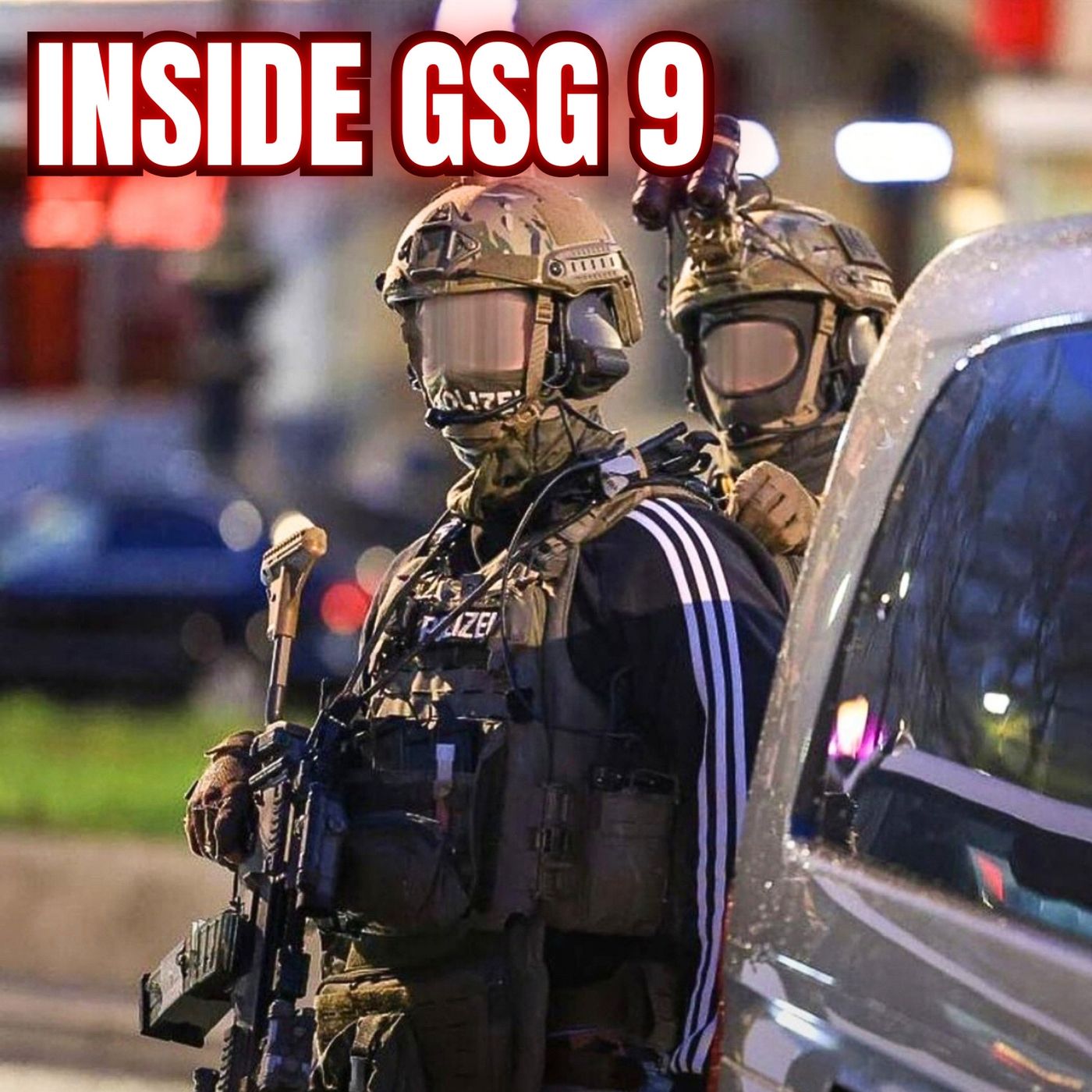
The Team House
Inside GSG 9 (Germany's Tier 1 Counter Terrorist Unit) | Martin Herzog | Ep. 383
02:12:25
This episode dives into the rise of modern counterterrorism in Germany, tracing how the failures of Munich ’72 led to the creation of GSG-9. Our guest, Martin Herzog, breaks down the Lufthansa hijacking, the Mogadishu raid, and the evolution of state...
Loading summary
Transcript93 lines
- [00:00]
Sponsor Voice
You know that wellness goal you set at the start of the year? It's not too late to stick with it and make your future self proud. Especially with the all in One Nutrition Shake from Kachava with 25 grams of protein, 6 grams of fiber, greens, adaptogens and more. No fillers, no nonsense, just the highest quality ingredients. Stick with your wellness goals. Go to kachava.com and use code fitness for 15% off. That's K A C-H-A-V A.com code fitness did you know you can save up to 70% on the best brands just by shopping at from rebel.com we're talking about strollers, car seats, high chairs, espresso machines, cookware, everything you need for way less. Here's how it works. Every single day, Rebel drops thousands of new products on the site for up to 70% off. It is a constant stream of endless deals from top brands like Uppababy, Nuna, Baby Bjorn, Breville, Nespresso, KitchenAid, Le Creuset and more. But you have to act fast because every deal is one of a kind. So if you see something you love, make sure you add to cart fast. So stop paying full price when you don't have to. Whether it's baby gear, kitchen upgrades or a treasure for your home you didn't know you needed, Rebel has it for way less. Up to 70% less. Shop from rebel.com and save big the.
- [01:27]
Jack Murphy
Team house with your hosts, Jack Murphy and David Park. Hey folks, welcome to episode 383 of the Team House. I'm Jack Murphy, here with today's guest, Martin Herzog. He is the author of GSG 9 From Munich to Mangadishu the Birth of Germans Counterterrorism Force. Martin is a author, journalist, academic. I read this book just this week. I hope you guys will go and pick it up. I thought initially, as I was telling Martin before we started the show, I thought I had read all about this subject already. But when I picked up this book and started reading through it, I realized there's a lot I didn't know. And so we're going to talk about the Munich massacre, the origin of GSG9, how that came about and about. I guess it really is the very first successful aircraft takedown. And is it the first one that was ever done successfully in manga issue?
- [02:33]
Martin Herzog
Hi Jack. Yeah, thanks for having me on the show. And yes, I think it is actually the first takedown and to this day I think arguably the most complex that ever happened. So yeah, it was a first for everybody involved I guess.
- [02:53]
Jack Murphy
And it showed the Western world, I think, that it's possible to fight back against terrorism, that they weren't helpless, that there was a way. We'll get into the implications of all of it during this show. I'm excited to talk about this. Like I said, there's a lot going on, actually, and there's a lot of ancillary things around that hijacking that are connected to it that we'll get into. But, Martin, if you could first tell us a little bit about your background. What kind of like, you know, I know your background is in journalism. How did that kind of take you into this subject of, you know, the German military and police force in this case?
- [03:33]
Martin Herzog
Well, I studied philosophy and history and politics here at the University of Columbia, Cologne, where I'm based. And I naturally am very much interested in the history. And I came across GSG9, I think it was in 2007. That was the year when the Mogadishu. The Mogadishu operation was 35 years. They, they kind of celebrated this anniversary. And of course, there was a lot of media coverage about that. And so I was working for wdr, that's the. The public broad here. And they asked me to do a TV piece and I did a radio piece about that. And I came in touch with a couple of the veterans who had been founding members of the GSG 9 in 1972, just after the Olympic massacre, but who have. Have also participated in the Mogadishu operation. So that was when I first got interested in this whole matter. And then over the years, I went deeper, deeper and deeper into that matter and did a couple of segments for TV, radio documentations. And in 2018, I think it was, or 2019, I did a deep dive interview with Dieter Fox, who is one of the. Of those who founded the GSG9 and who was also very, very tightly participating in the Mugadishu operation. And so he told me the whole, which I realized I only had covered part of it. And that was mainly the days in between the hijacking of this Lufthansa plane, LH181, the Landshut, that's the name of the aircraft. And it was hijacked on October 13, 1977, and it was liberated five days later. And the story, what happens in between that was something that fascinated me. And Dieter Fox was one of. Was the one guy who accompanied the commander of GSG9, Ulrich Wegener, all these five days, when it was the abduction of an aircraft developed into an odyssey throughout the Mediterranean, the Middle east, and finally ended up in Mogadishu in Africa. So that was very fascinating. And I thought, well, this is a story that has not been told in any great detail in Germany, surprisingly, because I thought, I looked it up and thought there must be literature about that, but there wasn't. And so I thought, well, this is a story that is much more than for a 20 minute radio show. And so I started researching the book. I asked Dieter Fox if he was happy to support me. And so through him and then through GSG9 headquarters here close by, and they are based not far from Cologne, I was able to really dive very deeply into the history and the founding history and the story of the Mogadishu operation and finally write a book about that, which was then published in 2022. And, well, now you have just said that you read this week the, the English version of this, these first five years of GSG 9 from 1972 to 1977.
- [07:14]
Jack Murphy
And this book is available now through Casemate. People can go and find it.
- [07:21]
Martin Herzog
So, yes, that's, that's the case. You can buy it online, I think, in all the, the big online departments. You can find it and also in good bookstores everywhere in the US and in the UK as well. It's a little bit hard to get your fingers on it when you're in Germany, but people living here probably will refer to the, or will rather go for the, for the German version of the book, I imagine.
- [07:52]
Jack Murphy
So let's go back in time to 1972. We have to imagine for our younger audience, this is before the war on terror, before 9, 11. This is a time in the 70s where terrorism is sort of a newish thing. International terrorism and taking of hostages and hijackings is something that's becoming a weekly or monthly occurrence. And then one of the big catalyzing events of terrorism that happened at that time was what later became known as the Munich massacre. Most of our viewers are probably familiar with that event through the Steven Spielberg film. But I'd like to hear your description of that event, what happened and what went wrong and what were some of the lessons learned out of it.
- [08:45]
Martin Herzog
So the Olympic Games in Munich in 1972 were the first after the 1936 Olympic Games in Nazi Germany. And they were very monumental and very, well, you could say rather grim Olympic Games. So that was all for the purpose of the propaganda of the Nazi regime. And this time around, Germany wanted to do it differently. They wanted to create happy games, they wanted to create jolly games. That was the Expression heitere spiele jolly games. So they wanted to present, you know, it was shortly after the invention, mention of the color tv. So it was very colorful. They wanted to create a very, very nice environment, welcoming the international community. They wanted to present Germany as a modern, open, liberal state to the world stage. So they planned for everything and they had a very, very nice Olympic stadium. I can strongly recommend, whenever you're in Munich, visit it. The Olympic stadium is still magnificent. It's very, very, very beautiful. And so everything was planned for, but for the, but not for the security measures. Barely any existed. There was may maybe or not maybe. There was a fence, a 2 meter fence around the Olympic village. And that was about it. There were no further measures. There were no contingency plans for any criminal or let alone terrorist activities. There were no plans for cris happened, nothing whatsoever. And so, but nobody, nobody thought, I mean you, you mentioned it. It was a time of rising terrorist activities, skyjacking of airplanes and the German home made terrorism of the Red army faction. We probably talk about that a little bit later on. It was, it was, it was rampant. But nobody expected for anything to happen on such an event because it was a happy sports event, what, what should happen there. So nobody did cared for it. So. And the first two weeks went fine, the weather was great, the games were on and everybody was happy. It was the first live event that was really televised around the globe 24 7. And then on September 5, in the night of September 5, a Palestinian commando entered the Olympic village, went to the location of the Israeli delegation and they took the Israeli delegation hostage, killed two of them right away. And they took them hostage and demanded the liberation of some 200,030, I think it was Palestinian fighters from Israeli prisons coupled from Turkish prisons and German RAF terrorists from German prisons. So that were their demands. And over the day, I mean nobody, as I said, nobody really thought that something like that could happen. So haphazardly they established a crisis staff with police forces, ministers and the mayor of Munich and the mayor of the Olympic village. And they tried to, to gather police forces and tried to do, well, something because nothing was planned. It was all very. They were, you know, in over their heads. They nothing really worked out. And they tried, in the afternoon they tried an assault, but that was, you know, as I said, it was televised live all over the world. So on every TV set you could see what was happening there. And nobody bothered to, to shush away away the, the journalists and the TV cameras. So everything was really broadcast live worldwide. So when they tried to sneak up on, on this, on the delegations, on the delegation's house, the Israeli delegation's house, they could, inside the house there were TV sets. In every delegation there were TV sets so they could watch the sneaking up of the policemen who tried to yeah, go there. They were dressed in World War II helmets and had old guns that were also probably from the Second World War and they didn't know how to approach, they didn't know anything. And while the, the orders are not really known what they actually said, but it was something along the line well get in there and then see what you can do. That was basically their, their strategy. That was all their orders that were given to them. So within minutes this all fell apart and the, the terrorists said no, well don't, don't even think about it. And so this, this didn't take take long for them to, to detect and to well end it basically. And so the problem was that the Israeli government said well you. To the, to the German government. Of course there were consultations between the German and the Israeli government and the Israeli government said well do whatever you want but we will not agree to any prisoner exchange. And so yeah, the German government was left to their own devices. Additionally there was the problem that the Germany government was not in power really of the situation because in Germany police, not unlike in the states is authority of the states of the. Of the. The lender, the provinces. So it was the Bavarian province that was responsible for the police there and all the action there and the Munich city police. So the, the federal government couldn't do very much really. And so there was the, the Minister of the Interior, Hans Dietrich Gen was there and who was there to advise but he didn't have any authority of what should happen or not. So this dragged on. There are a lot of more details, very interesting details. But it dragged on for the whole day and in the evening finally it was agreed to fly the terrorists with their hostages to Cairo. That's what they told the terrorists. So the idea was to fly them with helicopters to the near part nearby military airport of Furstenfeldbrook and from there put them into an aircraft and fly them to Cairo. That's what they told them but that was not what the plan was. There were a couple of policemen, no special forces, there were no special forces, there were just regular police cops and they were given a couple of, of I think two submachine guns and otherwise just like pistols and they were told okay, go into this aircraft that is parked there, that is ready for the terrorists dress up as Lufthansa employees, stewards. And when they come in, then you just get control of the situation and seize them or kill them. That was the plan. These guys, when they were told that and there were not even all uniforms for them to dress them accordingly. And they would know that 12 people, Lufthansa people in one tiny plane, would raise suspicion by the terrorists right away. They didn't have the right weaponry. They were not trained for such a situation. So they quickly talked amongst each other and decided, no, we will not go on such a suicide mission mission, and left the aircraft in Furstenfeld Brook just at the time when the helicopters with the terrorists were arriving. So the helicopters landed. The terrorists got out of the helicopter, two of them, the leader and another one, and they went into the aircraft and saw that it was empty. And they suspected a trap. Of course they did. And then they came out and signaled as much to the other terrorists. And that was the moment when the fire. When the. The. The. The firefight began, because there were like five sharpshooters. That's a very. Well, that's a very big word for these guys because that was just guys with some rifles. And they were placed around the area where the helicopter was. Was sitting. And nobody knew who gave the order because there were no radio contact. They didn't have any. Any radio on them. So at some point they just started shooting. And this shooting lasted for almost two hours. And the final result was that. That all the. That. That all terrorists safe. Three. It was. All in all, there were eight. So five terrorists were killed. And everybody of the Israeli delegation to both helicopters that landed there were blown up with everybody inside. And so in total, it was. One German police officer was killed as well. And so all in all, finally, there were 16 dead bodies and police that was completely in over their heads, who completely. It was a complete disaster, complete failure. And this whole scenery was witnessed by Hans Dietrich Genscher, the Minister of the Interior. He sat there and couldn't do anything. And next to him was his liaison officer to the Bundesgren, the border guards. That was Ulrich Wegener at the time. He also witnessed the whole thing. And when it finally was clear that this was an absolute and utter disaster, they both came to the conclusion that in order to prevent something from happening again, something like that from happening again, there need to be some unit that is able to deal with such threats and such terrorist attacks. That's when basically that when the idea came up to create GSG9. And within three weeks, GSG9 was founded and came into existence.
- [20:40]
Co-host / Additional Sponsor Voice
Hey, what's up guys? I want to thank our newest sponsor, Wild Alaskan company. It's the best way to get wild caught. Perfectly portioned, nutrient dense seafood delivered directly to your door. Trust me, you haven't tasted fish this good. They sent us a box like two weeks ago. I want to say they sent us a bunch of stuff. Sockeye salmon, co host salmon, the Pacific halibut, Pacific cod. I destroyed the halibut and I destroyed the cod. I made actually fish and chips with the cod and it was awesome. I gave the salmon to my dad. My dad calls me back like four days later is like asking for more fish. I'm like dude, you got to go to wildalasskin.com house and you get $35 off your first box. 100% wild caught never farmed. This means there are no antibiotics, GMOs or additives. Just clean fish. Real fish that support healthy oceans and fishing communities. Wild Alaskan fish is frozen off the boat to lock in taste, texture and nutrients. Like omega 3s. Wild caught from Alaska. Every order supports sustainable harvesting practices and your membership delivers flexible shipments, expert tips and truly feel good seafood. The other kicker is you could try it risk free. There's a hundred percent money back guarantee if you're not completely satisfied with your first box. While the last one company will give you a full refund. No questions asked, no risk, just high quality seafood. Not all fish are the same. Get seafood you could trust. Go to wildalaskin.com house for 35 off your first box of premium wild caught seafood. That's wildalaskin.com house For 35 off your first order. Thanks to Wild Alaskan Company for sponsoring this episode and thank you guys for the continued support supporting us supporting the companies that help support the show. We really love you. Thank you. Wildalaskin.com House $35 off your first order. Thanks guys.
- [22:26]
Sponsor Voice
This is the new Weight Watchers. It works for members like Jojo, who's.
- [22:32]
Martin Herzog
Learning simple, healthy habits. Sharia who's making progress with meds, and Kim, who still gets to eat what she loves.
- [22:39]
Sponsor Voice
For over 60 years, we've helped millions.
- [22:42]
Martin Herzog
Of members find what works for them. Now it's your turn.
- [22:45]
Sponsor Voice
Watch your life open up. Watch your story shift.
- [22:49]
Martin Herzog
Watch what you're capable of. Watch it work. Get started today@weightwatchers.com there's nothing like the American Express Platinum card.
- [22:59]
Co-host / Additional Sponsor Voice
Find out your welcome offer after you apply, which could be as high as 175,000 points.
- [23:05]
Jack Murphy
Learn more and find out your offer@americanexpress.com.
- [23:07]
Martin Herzog
Explore Platinum terms apply and you know.
- [23:12]
Jack Murphy
GSG9 being an acronym, you can tell us exactly what it means, but it's one of the border patrol unit sections or I don't want to say platoons, but one of their elements was this counterterrorism unit placed within the border guards because they were the force that had federal authority around federated Germany as opposed to, you were mentioned earlier, the different provinces of Germany each had their own thing going on.
- [23:40]
Martin Herzog
Yes, it was a very complicated situation and without something like the Olympic massacre, the, the massacre at the Olympic Games In Munich, probably GSG9 would never have come into existence because as you said, Bundesgrand Schutz, the border guard is federal and it was at the time it was still very paramilitarily organized because they were basically a force to protect the border to the. To eastern Germany and the core the. The eastern bloc. But the Minister for the Interior Gensha wanted to make it a real police force and so this was, was part of it. So it came in very handy that they had a paramilitary background on the one hand, but that they were a police force and they were federal. In normal times, probably he would have had a hard time arguing for such a thing with his colleagues on the provinces because they were very, very suspicious and they were very, very keen on keeping their authority in terms of police and security. That was, you know, that was a result of the Second World War. It, you know, the decentralization of Germany give the provinces a lot of power in terms of culture, of education, but also most importantly in terms of security and police forces. So they wanted to federalize that in order to have not such a centralized force. And so they were also the German ministers of the interior of the provinces. They were really keen on keeping this authority and not handing over too much of that power to the federal state. But yeah, that was the reason why the Bundesgren Schutz, the BGS border patrol was chosen to house such a unit. They had helicopters, they had what they thought was all the equipment that they would ever need. Turned out they didn't. They needed different stuff, completely different equipment, different weaponry. But that at the time they thought was ideal to. Yeah, to, to bring a special unit and to create a special unit like the GSG9. And for the name, just quickly there were up to this time there were seven Grand Schutz Groppen G SG Grand Schutz Groppe one to seven and there was a. So that means border patrol group. And there was a helicopter unit that was the eighth. And then came GSG9 as a very small unit, but they had regimental status which gave them access directly to the Minister of the Interior. So they didn't have to. They were not a subgroup within one of the existing groups. And so Wegner, who was the liaison officer for the big, for the Border Patrol to Minister Genscher, he had a direct line and kept it that way by having GSG9 being placed in this kind of on the same level as the much bigger other groups within the Border Patrol.
- [27:24]
Jack Murphy
And part of that or a big part of it was because of that personal relationship between those two.
- [27:31]
Martin Herzog
Yes. He was working for Genja for the last three years. I think 1969 was when they met. And he was. Wigner was, was very much in high regard with, with gentry. And so they worked together for three years. He liked his very direct hands on approach, no nonsense approach, talking clearly, not trying to, to soften things, but just like a very direct approach. He liked that. And so it was the natural choice it seems for him. And there was no other competition in terms of leadership or anything like that, something that would take place certainly today. But it was just. He was just named as the one who would create GG9 and that was basically it.
- [28:32]
Jack Murphy
So tell us a little bit more about Wagner. And you told us why he was selected. But who was this guy as a person? What was his background?
- [28:42]
Martin Herzog
His background was military. He was born in the late 1920s in Juterburg, that's a little town southeast of Berlin and that was a garrison city. And his father was a soldier. He served with the Reichswehr, that was the predecessor of the Wehrmacht of the Third Reich. So he very early came into contact in touch with the military. And he was also. His father was very conservative. They were very Prussian in their, in their whole approach. He liked that very much. He was, he liked punctuality and, and, and values and keeping to your word and these, these, all these values that are connected with, with Prussian and German. Well, how do you say that, that he, he was very, very Prussian in that sense. Very conservative, but not very keen on the National Socialists that were just coming on in the 1930s. His father didn't like the whole ideology. He was very patriotic, very nationalist, but he didn't like the ideology of anti Semitism of the nsdap, the National Socialist movement. And he liked the whole. The Hitler cult and all that surrounds it. He clearly disliked that Ulrich, being a young kid at the time, he saw himself in a position that he needed to join the Hitler Jugend, the Hitler Youth, because everybody was going there. So he thought, I have to go as well. And in his memoirs, he writes that he had to apply the Hitler salute. That was a necessity, but he didn't like it too much. He was certainly no resistance fighter against the Nazi regime, but he was kind of swimming along with it. When the war was almost over, he was just at the age that he could be drafted and was sent to defend the Eastern Front. But that was a very short episode. And then the war was over and, yeah, he was left in the eastern part of Germany that was controlled by the Soviet Union. And he hadn't been really a resistance fighter against the Nazis, although he didn't like them, but he surely was anti communist. So he founded a kind of a little resistance movement himself, basically printing letters and leaflets and, yeah, spreading them. And it didn't take long until the Volkspolizei, the people's police of eastern Germany, caught him and put him on trial, very short trial. And 18 months later, he was allowed to leave prison. So he was in a situation where he thought, well, what do I do now? And he went to western Germany, returned for a short period, but then finally went to the western part of Germany, where he ended up up after his incarceration. He was very, very thin and. And, yeah, he had barely. He was bones and. And skin, basically. And he ended up in an. In a camp, in a refugee camp in southern Germany and was a little bit. Yeah, you know, he got better after a couple of weeks. And then there were people looking for personnel for the local riot police. And that's when he joined the police. And a couple years later, he decided whether to go to the newly established Bundeswehr, so the national army, or the Bundesgrandschutz, the border guard. He applied for both. And he just ended up with the border guards because the acceptance letter arrived first from the border guard. So that's how he got into the. The force. And then he worked his way up through the ranks basically in the coming years and decades. And he obviously spoke very good English, so he was sent to the. To Bavaria, to the border in the east. And so every time American army officers came to inspection, he was sent there to give them the tour. And so he was kind of the interpreter of this unit that he was serving with. Yeah. And so he worked up his way through the ranks. And then there was a big maneuver in 1968 called Falaks 68, and he was sent to Bonn, to the Ministry of the Interior as a liaison officer to prepare for this, for this big maneuver, military maneuver that the Border Patrol was part of and was taking part in. And that's when he met Genscher and that was then when he became his liaison officer over the limited time, beyond the limited time that was connected with this maneuver. And that's how they met and how they got to know each other.
- [34:46]
Jack Murphy
So I would love to ask you how Ulrich Wagner went about establishing GSG9. Having to build this unit from scratch essentially. And for context, for our American viewers, 1972, this is five years before the United States even began creating Delta Force. The unit was started in 77, I think fully activated in 1980. So we as Americans did not know how to do this stuff either in 1972. There's no textbook really that he can go to and read. How did he start to put this capability together?
- [35:24]
Martin Herzog
Yeah, that was the first big question. As I said, the unit was established, or at least the legal work for the unit was established within a couple of weeks after the Olympic massacre in Munich. So the letter of the Ministry of the Interior went out on the 26th of September, which was three weeks up to the day, three weeks after the massacre in Munich. So he had a couple of ideas, but as you said, there is no textbook for it. There were in the US there were the first SWAT teams kind of being created, but they didn't really seem to know what they were doing with it. The British had some experience, experience with the SAS at the Special Air Service. And there were basically only the Israelis who really had operational experience in this field. And so what Wigner did, and that was, is really something out of the ordinary is he went to Gensha and asked him to go to Israel and ask the Israelis how they do that stuff. And you can imagine just a couple of weeks after the whole Israel delegation, Olympic delegation has been murdered on German ground and with the complete and utter failure of German security forces that they probably wouldn't be too pleased about hearing. You know, now as a German, he wants to learn about all that. So Gencha told him that, that he was crazy, that they would probably, that they would certainly not have him. But they did and they said, yes, let's, you can come over, we have a course, a training course and you can participate. And that was really something out of the ordinary because there as a side note, just a couple of weeks, just on the day before Vigner went to Israel, there was an another abduction of a German aircraft to Yugoslavia. And the demand of the terrorists was to liberate those three surviving terrorists from Munich. And the German government, well, they didn't hesitate one moment. They just released the prisoners. So you can imagine that the Israeli government was not too amused about that. They really, really were disappointed. And the Israeli German, West German, one must say there was an East German state as well. But the West German Israeli relationships at that point were on an absolute low. So. And in this situation, Ulrich Wegener goes to Israel and takes part in this two week course. And he is not received very well in the beginning, but within one week they realize that Wigner is very serious about what he wants to learn. He knows exactly what he wants to learn. He asks questions, he doesn't say much, he just asks questions and only stops asking questions when he's really, really satisfied with the answers. And they respect that. And over the time there are, there are even friendships that are being developed out of that and even lifelong friendships.
- [39:08]
Jack Murphy
One that jumped out at me, Martin, was his. One of his friends in Israel was Yani Netanyahu, who, which seems, seems very natural. Like knowing what I've read about the two of them, they sound like very similar take charge leaders, you know?
- [39:25]
Martin Herzog
Right, exactly. Yeah. There are a couple of names that stand out. One of the unit leaders, one who was ordered to stand by. That was another little side story of the olympic story. In 1972 there was a unit on standby in Tel Aviv in order. They were ready to go in there and solve the situation, but they were not allowed because the German government didn't allow foreign forces on German ground. So they never did that. And the leader of that unit was Ehud Barak, who later then became Prime Minister of Israel, of course. And so he was also on that course. And also from there there was a friendship with Wegner that developed from this point on. And since then there has been a very close relationship between the Israelis and GSG9 in Germany. And up to this day it's very, very close because they said, you know, of course that was a disaster what happened there in 1972 in Munich. But you know, we have to make sure that we're fighting on eye level with the Germans, that something like that might not happen again. And so they were open. And as they said, I've spoken to Reuven Caspi, who was also, I'm not sure if he was in that first cause, but he was a lifelong friend and who established a special force anti terror force for himself. And he told me we went much, much further with the Germans than with any other nationality because we knew that they could do the job, that they would if they set their mind to it, they would be very, very good in what they're doing. And they understand, understood how you go about special operations and counterterrorism measures. And so that's how this relationship was established. And as I said, it's, it's still stands today.
- [41:38]
Co-host / Additional Sponsor Voice
If you're in the market for a new mattress, you've probably seen all the brands out there vying for your attention. Big names, splashy ads, all promising. But here's the only brand that does it right. It's Ghostbed. Ghostbed was created and is still run by manufacturing experts with more than 20 years of mattress making experience. They know the craft and they know how to build a bed that actually lasts. So how do they offer premium mattresses for up to 50% off less than the competition? It's not hype, it's smart logistics. As a family owned company, that means there's no board of investors to answer to. It's just folks working hard selling mattresses. These are the true manufacturing pros. And the result is an exceptional cooling and comfort at a price that won't keep you up at night. Every Ghostbed mattress includes proven cooling materials backed by a 20 to 25 year warranty. You also get 100 one night sleep trial with free returns if the mattress doesn't work for you. And fast free shipping. Most orders arrive in two to five days. Right now, as a teamhouse listener, you can get 25% off site wide for a limited time time you can just go to ghostbed.com house and use the promo code house at checkout. That's ghostbed.com house promo code house. Upgrade your sleep with Ghostbed, the makers of the coolest beds in the world. Some exclusions apply. Seaside for details. I want to thank Ghostbed so much for continuously supporting us. It's been going on a year almost, so I really appreciate that. I hope you guys, if you're in the, if you're in the market for mattresses or pillows or bedding, check out Ghostbed. You can go to ghostbed.com house and get 25% off right now. Love you and love Ghostbed. Thanks guys.
- [43:19]
Jack Murphy
There were some unique things that Wagner took away. Like one of the things you talk about in the book is how he task organized his unit into smaller strike groups. Where did that kind of idea come from? Was that German or Israeli?
- [43:35]
Martin Herzog
Neither. He came back with, from, from this two week trip with, you know, a bag full of ideas and then of course, then the next question is, okay, how do we implement that into, into German necessities and German structures? How do we incorporate that? And so he started wondering, okay, how do I organize this, this whole thing? And he looked through the literature and couldn't really find something. And then he basically crossed the aisle to the opponent opposing side. And he read a book by Marigella is his name. He, that was the handbook for the guerrilla war that was very, very popular in left, leftish, well left, extremely left violent circles. And so there were. Yeah, it was a small book, basically just like 40, 50 pages long. It was not an official print. It was only black copies that were circulating. And so he suggests that there needs to be fire squads in order to be flexible and to do the things that, that a gorilla, a guerrilla group has to do. You need to organize yourself in fire groups and that they, they consist of no more than five or six people and they work more or less autonomously. Initiative is the key word here. So there's, there's nothing without initiative. Of course they are connected to each other and they have to follow orders, but in the situation they have to decide for themselves what is best and they have to act autonomously and also get into the initiative and don't just wait for orders from above. And so Vigner more or less took this idea one on one and just implemented that. And he created not fire groups as Margallo told said as Margallo told it, but he named them sets. Vital Einsatz Troops Special Operation Team. And that was the nucleus of GSG9. So there were five man strong sets and they would be part of one of the three GSG9 units, operational units. And the idea was that everybody has to, to be able to rely on everybody else within this group. Trust is a key word for that. And also the, the possibility and capability that each member of the group can do the job of each other member of the group so that you know, you can, you can rely on each other. And if one member is, well, is. Is taken out or is, is not part of the group anymore, the, the group is still able to act and to work together. So that was the, the basic idea. And Vigner got that from a gorilla guerrilla handbook.
- [47:14]
Jack Murphy
And and then he also faced all kinds of problems with sourcing equipment, right? Like the, the pistols were inadequate, the holsters for the pistols were inadequate, the repelling harnesses were inadequate. How did he go about the, you know, testing and evaluation and development of the gear that the unit was to use?
- [47:34]
Martin Herzog
Well, that's, that's funny. That's of course something that Wegner didn't do just by himself. So we have a couple of those veterans, some that I had the opportunity to interview as well. And they told me that they basically did it, lights on end with brainstorming, thinking about, okay, you know, what do we have, what is the equipment, what is the weaponry that we have and what do we want to do and what we can, what can we use for, for that, what we want to do. And the answer was basically nothing. So they said, well, we, we didn't need heavy armament. We didn't need heavy armed vehicles. We need fast vehicles. We need helicopters. In terms of the uniform, you know, they hadn't, they had nice uniforms from the border guards with nice pockets and shiny buttons and all that stuff. And so they said, well, for what we are going to do, if we have to, you know, if we have to go out on a night, we can't, can't have shiny buttons. They had a nice, a nice tie. A bow tie? No, not a bow tie, A tie. And you know what happens with a tie? You get strangled by the, by the bad guys. So off with it. So they started to redesign their own uniforms. They took their working uniforms that they had, that. And then they started literally with needle and thread to rework their uniforms to make them adequate for what they had in mind, what they would do so that it could move, that it could fight. You know, that if you go into a close quarter fight, you need to be able to move. So. And since, as we have established already, since there was no textbook book and no, no, no, no where, where you could see how it's done. It was just trial and error. And then at some point Vigner would come in and he would look at it and say, yeah, fine, okay, let's do it like that. And that was very much out of the ordinary because the, the Bundesgren, the border patrol was very much very traditional, very conservative, and you just wouldn't do certain things. Like the headgear, they had a very nice cap. You know, it looks a little bit like a baseball cap, but it's, it's, it's not it. And they said, well, you know, when we move, it just falls off. It's, it's no use, this cap. So what headgear can we use? And Vigner brought back from Israel a beret. And so they said, okay, then let's have a beret. That's cool. And it sticks on your head when you move so let's have a beret. And they were able to actually have that inspected by the Inspector general of the Bundesgren, Schutz, the highest ranking officer. When he came for inspection, he first said, well, you completely gone nuts. You can't run around with that headgear because nobody had that at the time. Nobody was wearing berets. And that was very, very unusual, either in the army nor in the Border Patrol, the Border Guard. So that was very out of the ordinary, but then they convinced him to do it anyway and that stuck with it. And it didn't take long until other units within the border patrol were also wearing berets. And up to this day that's the case.
- [51:28]
Jack Murphy
Yeah, I was just checking, seeing that the pictures of some of the heads of GSG9, the pictures you have in your book, they're wearing berets. So that's a tradition that stuck around, right?
- [51:39]
Martin Herzog
Yeah, yeah, absolutely. And they're very proud of, of their berets and also being like the first ones, as the GSG9 has been the first ones with a lot of stuff. And that is true for, for their uniforms, that's true for their equipment. They kind of served as a. Yeah, as a think tank and workshop for the whole of the Border Guard. So what they developed and what they, what they deemed serviceable soon would their way would make their way to other units as well of the Border Guard. And that is also true for the weaponry, of course, because what they had wouldn't serve them any good in any counter terrorist operation. So they talked to Heckler and Koch and to other manufacturers of weaponry and gave them their specifics. And basically a lot of new developments were exclusive, not exclusively, but were first of all made for GSG9. And they put it into service like sharpshooting rifles and so on, and then they made their way to the other units of the Bundesgrandschutz.
- [53:05]
Jack Murphy
So to kind of switch gears a little bit, I want to ask you about the Red Army Faction or the, the Bader Meinhof Gang. Who were they and what were they up to in Germany at this time frame? Because this is of course going to play into what we talk about next.
- [53:24]
Martin Herzog
Right? The banner Meinhof Gang, which was then later termed or called itself Red Army Faction, raf. So not to be confused with the Royal Air Force. They, they were a result of the 1968, 69 demonstrations, the protests against the Vietnam War in Germany. There were big protests in the US of course, but they were also in Germany and there was a big left wing movement and some of those who protested there, most of them stayed of course, illegal, but some moved into illegal terrain. And that the Bada Meinhof gang was one of those terrorist cells that established in the late 1960s, early 1970s. And so bada was. I'm just forgetting the, the first name of Andreas. It was his name. Andreas Bada was the head of, of the whole thing. The. Basically, yeah, the, the male head of the gang. And Ulrike Meinhof was the intellectual figurehead of this gang. And they came into existence, as I said, in the late 90s, 1960s, beginning 1970s and committed, at least in the, in the beginning it was more like arsonist attack. But then soon turned into deadly attacks against politicians and against institutions. And just in the, in the spring of 1972 there was a six week long offensive. 1972 they called it, with a lot of attacks and killings. If I remember correctly, it was eight people were killed in, in that time against the state, the West German state. And they were in the sub by the summer. They were all incarcerated. All members of this gang were incarcerated, incarcerated and waiting for trial. And that was then when the Olympic massacre happened in the summer. And so of course the terrorists demanded the release also of these, the terrorists of the Red army faction, of the Bada Meinhof gang, who had been trained before by Palestinian terrorists. And so there was a very close connection between the German terrorist RAF faction and other German terrorist groups and Palestinian terrorists groups like the pflp. And so that's what it came about. And it was clear when GSG9 was established that RAF would be one of their most exquisite opponents and that it would be necessary to mainly fight against them. That when a terrorist threat would arise, it would probably be the RAF that they would have to go against.
- [56:59]
Jack Murphy
Was there. I mean, this is probably a little controversial, but was there ever any connections between the RAF and any of the Warsaw Pact intelligence services?
- [57:11]
Martin Herzog
Sorry, you were blocked out for just 10 seconds.
- [57:14]
Jack Murphy
I was just asking. This is a little controversial, but was there ever any evidence of the RAF working in tandem with any of the intelligence services in the Warsaw Pact?
- [57:28]
Martin Herzog
Yes, there is. It's not controversial. That is well established that there was cooperation. I'm not, not sure if that was already in the early years, like 1972 or even 1977. I know that there was cooperation in the 1980s and a lot of, or quite, quite a few of those RAF combatants, terrorists, they went to the gdr, to Eastern Germany to live there, to avoid being captured in West Germany. So yeah, their close connections to the Stasi, the Staatsicherheit. I think it is established that there were the connections, how deep they were. I think this is not completely uncovered so far. I'm not sure if it will be uncovered because the documents have been destroyed as far as I know. So there might be. No, not, not much to. To discover anymore. There is, but I think the documents are just missing.
- [58:42]
Jack Murphy
And also in the, in the lead up to what we're. What we're working up to here is there was another incident too where there was a demands for several RAF terrorists to be released. They were sent to third countries, but then they came right back to Germany and went back to their life of crime. Right.
- [59:02]
Martin Herzog
Right. That was in 1975, when that was not RAF, that was the revolutionnaire cell, the Revolutionary Cells, when they abducted the candidate, the conservative candidate for the mayor of Berlin for a couple of days. And so they demanded the release of hostages, sorry, the release of prisoners from German prisons, as it's always the case. This whole endeavor of the German terrorists soon turned into a liberate the guerrilla guerrilla, you know. So they fought for release of their prisoners. And there were RAF prisoners as well that were supposed to be released. They were very close connected, the Revolutionary Cells and the raf. Partly the personnel was the same. Different name, but same people. So that was the abduction of this candidate and the German government under Helmut Schmidt. It will become important in a moment. He. They decided, and Helmut Schmidt decided to say, okay, we will give in. We release these prisoners. We demand that they leave Germany and never come back. That was what. Is what was agreed. And so the candidate for the mayor of Berlin, he was released and the prisoners were released and they were put into aircraft and sent away into the destinations they. They gave. They probably most of them in the middle of Middle east countries in the Middle east who would receive them. But it didn't take very long for them to just show up in Germany again and then continue their terrorist career. And that was the moment when Helmut Schmidt Chancellor, when he decided, okay, we will not play this game again next time. We will remain strong and will not give in to the demands because this just leads to an encouragement to commit further terrorist attacks, to have more abduction and press free more prisoners from their side. So this is a game we cannot win if we give in. And that was the moment when he decided, okay, next time we will do it differently.
- [61:44]
Jack Murphy
All right, so let's jump into the next time in this whole sequence of events that kind of culminates with this pretty epic GSG9 operation in Mogadishu to start at the beginning, tell us about the kidnapping of the head of the employers association.
- [62:05]
Martin Herzog
That was in September, on September 5, 1977. And if you remember, the attack on the Olympic team, the Israel Olympic team was on September 5, 1972. So it was to the day, five years after that terrible event in Munich. And so Hans Martin Schleier, who was a industrial leader, the. He was called the boss of the bosses in Germany. So he was a very high ranking industrial, very powerful person. He was abducted here in Cologne. And in. Basically, if you see the, if you see the photos from the crime scene, it looks like a Hollywood movie. And so his, his personal detail and his driver, four, four people sitting with him in his car were shot, they were killed and he himself was abducted by the Red Army Faction. One must say this wasn't the first incident in this year. It was the, the third abduction or killing in this year. A couple of months before the Attorney General Buak, he was killed on the street by raf. Then a couple of weeks later, Jurgen Ponto, the boss of the Deutsche bank was killed. As it turned out later, that was the first attempt to abduct one political figurehead, or not a political, but a financial figurehead. But the abduction failed. And so they just killed him. And now this was the third one. And this was the beginning of what now is called the Deutsche Habst. The Deutsche Habst, the German Autumn. And that was the six weeks that would lead from the abduction of Hans Martin Schleyer to then the operation in Mogadishu. That's when it started. And it was a situation, an atmosphere here in Germany. I can't remember it. I was 5 years old at the time. But from my parents and from everybody who has consciously witnessed this time was, was really scared because it was a very spooky atmosphere. Atmosphere. When Hans Martin Schleier was abducted, this triggered the, the largest search operation in German history. Tens of thousands of policemen were involved. You had checkpoints established, cars were searched when you know, wanted posters everywhere. When you looked alike a little bit like, like people from the RAF or if you drove a car of the same make that they would be known to be driving, then you would be stopped and searched with submachine guns, officers with submachine guns standing by. Something that has never happened before in Germany. You know, German police was usually, you know, the, your friendly cop on the corner and who, you would not be threatened with anything more than a truncheon. So this was really an extraordinary situation. And that went on for weeks on end because he was abducted and never found. And GSG9 was involved in the search for Hans Martin Schleyer. They searched apartments, they searched whole buildings, but they never succeeded. Sometimes they seem to have been very close with, you know, entering rooms, empty beds, the bed still warm, coffee warm, a cigarette still smoking on the table. And so they seem to have been sometimes very, very close, but they never got to him. And then on October 13, 1977, there was the news that an aircraft has changed its course over France and it was obviously abducted. And that's when the Mogadishu story began.
- [66:41]
Jack Murphy
And so tell us about that. Did GSG9 get pulled off of the search? Because that was a Lufthansa aircraft.
- [66:52]
Martin Herzog
Right? It was not clear at the beginning was it really abduction, a skyjacking that. That took a couple of hours. But at the time, GSG9 was just busy as well. Again, here in Cologne, there's a very, very big residential building called the Unicenter. It's close to the University of Cologne. A lot of students live there, and it's a complex of some 960, I think, apartments there. So a huge building. And GSG9 was there the whole day, searching from the ground up, from the top down, from the inside and from the outside. And they were like climbing with ladders outside from balcony to balcony, going into the apartment and searching for Hans Martin Schleier, because there was a car parked in the basement that obviously was rented by the Red Army Faction. So they suspected. And there was suspicious apartment there that they had searched before. And so there was the suspicion that he was stashed somewhere in one of these more than 900 apartments. So the whole day they were searching this whole building. And in the afternoon when they were almost finished, the news came in that this plane has been deviating from its original course. They were started in Majorca, island of Majorca. So it was a tourist plane by Lufthansa, mostly German passengers on board, on their way back to Frankfurt. But they deviated and then ended up in Rome. And so while they were on their way to Rome, GSG 9, Ulrich Wegener, he got the information from the crisis staff in Bonn, which had been established after the abduction of Hans Martin Schleier, the industrial boss. And he was ordered to take action and start the pursuit of this Lufthansa aircraft to see what is possible. By that time, it was not clear that there would be an actual liberation operation, but they should just prepare for.
- [69:09]
Jack Murphy
The eventuality and as I recall, the Italians weren't a lot of help, as they just wanted the aircraft out of their country as fast as possible. So by the time Wagner got out of Germany, the terrorists, the hijacked aircraft was heading to Cyprus.
- [69:27]
Martin Herzog
That's correct, yes. That was not the only government, though, the Italians that were happy when the plane took off again, when they could get rid of them, because, you know, that's always quite a big inconvenience if you have a. And a foreign aircraft on your soil with hostages and terrorists on board. So how do you react? What do you do? So, yeah, the Minister of the Interior of Italy just allowed for the aircraft to be refueled and then was very thankful that they soon left and went to Cyprus. And when. So when Wagner and 20 people of the GSG 9, when they were on their way to Rome, they heard the news, okay, now we have to go to Cyprus. When they arrived in Cyprus, they already knew that the aircraft again had taken off and was heading towards the Middle east, where they tried to land in the Lebanon and in other countries, I think four or five countries who denied the landing of the aircraft because nobody wanted to have them. And so finally they ended up in Dubai. But that was, you know, that was almost a day later. And Vigner then ended up in with the plane in Turkey, in Ankara, because they were supposed. So it was not only GSG9 on the airplane, but also people from the Ministry of the Interior, from the Bundeskamnaland, the Federal Crime Administration or Criminal Administration, and all these guys on board. And they had the order to ask the Turkish government what they thought of the whole thing, because the demand of the terrorists was to liberate a couple, to liberate the German RAF terrorists, but also a couple of Turkish terrorists. So they went to Ankara to ask, okay, what do you guys think of it and how do you want to participate? And the Turkish just said, well, you, you do whatever you think you have to do and keep us out of the whole thing. And so they were in Ankara where they were detected by a camera team. And soon enough, not only the Turkish public, but also the German public knew that GSG9 was in pursuit of the aircraft. And that was of course not a good thing. So they were ordered back to Germany. They couldn't do that. And the officially, the Turkish government said, well, we don't, of course, we don't allow a German army unit in, in Ankara on our soil. We can't have that. So they couldn't officially just leave them there. So they had to send them back. Of course, it was a police. Police unit, but. But that didn't matter at the moment, at this very moment. So what happened was that Most of the GSG9 had to go back. But Wigner talked to Chancellor Helmut Schmidt and he got the okay to select a couple of people to take up the pursuit again in a smaller aircraft. And that's what he did. He chose his, I don't know, adjuncts.
- [73:18]
Jack Murphy
Yeah, like his deputy. I'm sorry, like his deputy. His executive officer.
- [73:25]
Martin Herzog
Exactly, yeah. And he chose Dita Fox for whatever reason, never known to this day, but he wanted to have him on his side. So 3 GSG 9 guys then took up the pursuit of the, the abducted aircraft. And, yeah, that developed into an odyssey because it. They first ended up in, in, in Dubai. And there they, they had the idea that they could do something and start a liberation attempt, but they ran into trouble because the, the Sheikh of, of Dubai, he didn't like the idea, and he said, well, if there will be a liberation attempt, I will have my rangers do that and maybe you can show them how you do that so they can do it in a better fashion. And of course, GSG9 had trained for the liberation of aircraft for years on end. That was something they really specialized in because as we said in the beginning, there were a lot of skyjacking incidents in the late 1960s and 1970s. And it was clear from the outset that skyjackings will be the most probable situation scenario that GSG9 would have to deal with with. And so for days on end and nights on end, they practiced aircraft assaults and did it over and over again. Very, very detailed, very, very specific in what they did and how they did it and learn every detail, because it's the details that count in such a situation. You know, the, the liberation of an aircraft is basically the, the, the. The highest level of liberation that you can have. A room is difficult. A car or bus is even more difficult. A train, very, very difficult. Boat. Yes. One, one more step. But since you don't know what is going on inside an aircraft and you only have those tiny windows and usually the blinds are shut, in situations like that, you have no idea what is going on, and you only have very few access points. So you, you really have to train and, and, and exercise a lot in order to be able to do that. So now they're in Dubai and they, they are being told, well, okay, show our ranges in an afternoon. How you deal with such a threat. How do you. You do an, An Aircraft assault. And that's what they tried and that's what they, they tried to teach them, but it failed. And they tried to convince the sheikh that it would be better if the Germans did it, but he would not have it and would just insist that his people would do it. But before this actually could put into practice the land suit, that's the name of the aircraft, it took off again and nobody would know where they would be going. And so they followed them once again and went to Aden where the aircraft was touching down. Again, they didn't get. They were not allowed to land there, but they did it anyway. The, the. The. The Runway was. Pl. Was blocked by tanks. But the co pilot, he sat down the, the aircraft on, basically on, on the.
- [77:36]
Jack Murphy
It was like a dirt, a dirt strip adjacent to the Runway.
- [77:41]
Martin Herzog
Yeah, yeah. And so the, they, they thought that the landing gear was, was affected by that because it was just, you know, it was just a sand track that they were landing on. They had to, they didn't have any fuel left in the tanks anymore. So they sat down there on the tracks. And the captain of the aircraft, Captain Schumann, he said, well, I have to check the landing gear. And he was allowed by the terrorists to step outside and check the landing gear, but he didn't return for more than half an hour, almost an hour. And so the terrorists got nervous and when he finally came back, he, the leader of the terrorists got very, very angry and shouted at him and had him kneel befront him and kneel, kneel before him in the middle aisle of the aircraft. You must imagine like passengers left and right and in the middle of the middle aisle he would have him kneel and ask him, what did you do? What did you do? And he said, nothing, I just checked the, the gear. And then the terrorist leader of the terrorists executed him with a shot in the head. So that was the moment when GSG9 learned of that, that mass, of that assassination, of that killing that they knew, okay, it's very improbable that we reach a solution, a peaceful solution. It will be a violent solution necessary in order to, to end this whole thing. So GSG9 was not allowed to, to touch down in Aden. They, they deviated. And then finally the Mansu took off from Aden and a couple of hours later they ended in Mogadishu. What I've told now took place over four days. So this, this is basically a very concise, even though I've talked for quite a bit, this is a concise very, very shortened version of what happened there in these five days. But yeah, that was the story that led to Mogadishu. And in Mogadishu, of course, Valvegna then tried to convince the President of Somalia, dictator of the name Barre. That was his name. He tried to convince the dictator to have GSG9 do the raid. And it was more or less like a deja vu for him because the president said, no, I have my own people, I have rangers here. They can do that. You can show them how to do it. And so once again, he ordered his guys to show the, the guys there on the ground how to do it. And it was even worse than in Dubai. And at some point the, the commander, the Somali commander said, okay, I agree, we can't do this. You do that. And then it took some convincing of the, of the President until he finally agreed, okay, we have a foreign force, the German police force on Somali soil conducting this operation. But finally he agreed. And that was the point when they called in the rest of the GSG9 force that had been waiting in the Mediterranean in the meantime. And so they, they negotiated with the terrorists a couple of hours so that GSG9, they, they told them, basically, okay, we, we have reached an agreement. We set your prisoners free, we follow your demands, but we need to bring all the prisoners from German prisons together and have to put them on an aircraft to then send them over to Somalia. So that takes a while. And that was the story that they told them. They never planned to do anything like that. It was just the explanation to gain time in order to get the GSG9 to Somalia, to Mogadishu. And well, when they arrived, it was almost night and they, they started preparations for the assault. And all the time the passengers on the plane, they were there and their situation was very, very miserable, very miserable because they had spent the last five days on this plane and starting after two, three days, the toilets were clogged. It was really a disaster. They had no possibility to go to the toilet. They were forced to soil their seats. You can imagine what that means. They, the terrorists had taken all that. The, the, the purses and the hand baggage from the female terrorists. Sorry, from the female hostages. So what happened? The, A lot of young ladies were on board and they didn't have the, the anti. Reception.
- [83:26]
Jack Murphy
The birth control medication.
- [83:28]
Martin Herzog
Yeah, the, the medication. They didn't have that. So they started to get their menstruation. And so, you know, all, all of this happened on board during this time. And it was really nasty inside and of course it was hot that they were Sitting on the Runway, they were only open to. Only able to open the door one door at a time. So there was no really exchange of air. It was really, really a terrible condition for the hostages. And so, yeah, in this situation, the preparations for the assault on the night of the 18th of October then began.
- [84:13]
Jack Murphy
And so Wagner is on the ground with, I believe was the German charger that's having to go through the political process and they get, they have to go and get the okay from Helmut Schmidt. Schmidt, correct.
- [84:27]
Martin Herzog
Yes. Ultimately it was Helmut Schmidt's decision. He had to give the order and he was back in Bonn at the crisis staff. And one has to imagine that of course the telecom telecommunication system back then was much more rudimentary than it is today. You had bad telephone lines where you had to shout into the, the, the speaker in order for somebody on the other end to hear anything. And so maybe a telehex, but that was about it. So he was reliant on the information that he was getting from the, the, the charge. De Fer Libal was his name and of the. Well, he, he was Hans Jorge Visi. He was the Minister of State who was also sent there to negotiate with the President of Somalia. And he was on the plane for a couple of days and he was very well known in the Middle East. He spoke the Arabian language and was very close as well with the, with the Palestinians, not so much, but with Arabian states and with the Israelis as well. So he was basically the chief negotiator in the cabinet of Helmut Schmidt. And he dealt with the President in the first place. And so yeah, he, he would then say, okay, I have Schmidt on the line, Helmut Schmidt. And you have to give now the order to actually do that. And that was a very tough decision to. For the Chancellor because he knew that a lot of things can go wrong in such an operation. They didn't know if they had had explosives on board. They, I think, yeah, they, they knew that there were explosives. But were they hot? Were they. Were the doors, for example, did they put explosives on the door? So when they would open the door, the, that they would go off, would they maybe, yeah, blow off the whole, the plane? That was a risk that he was taking and he had to make the decision to say, yes, we are going to do that. So it was for him, it was politically a big gamble. His resignation letter was already written, just needed the signature. So if that whole operation had gone sideways, he would have stepped down the next morning. So it was a pivotal moment for this government and to be Honest, for the whole, for the whole country of Western Germany. And I think it's hard to imagine how, how it would have turned out if this operation had gone wrong.
- [87:24]
Jack Murphy
Didn't Dieter tell you that if it had gone south, the entire unit would probably be finished at that point?
- [87:31]
Martin Herzog
Yes, that is what Dieter Fox told me. He's very convinced, convinced of that. And he has discussed that with Ulrich Wigner several times. He told me. And I've talked to politicians, I've talked to a former Minister of the Interior who said. Who denies that, who says, no, no, of course not. You know, things can happen. And maybe if this had gone, if this had gone sideways, GSG9 would probably not have have been abolished. But having said that, that would really have been the least of Germany's problems at that point. Because this, as I said, this was really a pivotal moment in the history of Germany, of Western Germany at least, but I think for all of Germany, because this was really a test for the German state, for the rule of law, for the German democracy, this whole German autumn, this, as it is called today, that was putting Germany, the West German state, to the test. And if that had failed, as I said, I think the abolition or the, the ending gsg9 would have been the, the least of the problems that would have come out of it.
- [89:02]
Jack Murphy
And before we get into the assault of the aircraft, one thing I want to mention that the terrorists who took over the aircraft was a Palestinian group, but they were doing this ostensibly sort of like as a favor to the raf.
- [89:16]
Martin Herzog
Right, that's. That's right. It was a kind of a terror joint venture, so to speak. The relationship between the Red Army Faction and the PFLP was quite close. As I said, the top members of the Bada Meinhof gang had been trained in Palestinian camps, and so there were close relationships between the two. And there was also an agreement also with Japanese terrorists groups that in situations like these, they could call in each other and to do jobs for them. And this is, this is exactly what happened. It was about the. The whole abduction of Hans Martin Schleier was an RAF Red Army Faction operation. They wanted to have their prisoners released, the original founding members of Red Army Faction. And so when this didn't work out, when the abduction dragged on for weeks on end, they decided to step up a bit to up the ante and, and, and then hired basically PFLP to abduct the Lufthansa flight LH 181. And that's how it happened. Yeah, it's. It's surprising that, you know, it's, they, they had, their demands were the release of German prisoners. Why? Yeah, because of this tight connection.
- [90:57]
Jack Murphy
And as Wagner is preparing for the assault, there's one final detail I'd like to mention. I thought it was very interesting. He noticed one of his men didn't have body armor and so he takes off his and gives it to one of his men and then he personally leads the assault on the aircraft. And like when I read that I was like, okay, I understand immediately why these guys loved him.
- [91:21]
Martin Herzog
And this is exactly the reason why. Yes, they were very happy because they received anti bullet vests, new anti bullet vests from the British. They supported the whole, the whole operation quite a bit. And one of the things they brought along were these vests. But they were one short of these vests. So Vigner had one and as you said, he just took it off, gave it to one of his, one man without the vest and then said, okay, I'll be in the front and every, everybody after me. And that's why, why they loved him really. They admired him deeply because he was not one to be in the background and, and you know, being on the commander's hill far away where the bullets can, can't reach them. But he was the one to say, okay, I'm, I'll be in the assault group. He didn't go in as the first one. He was I think the third or fourth one. But because they had set rules for who opens the door, who holds the, the ladders, who goes in first and so on so they, they wouldn't disrupt that. But then Wagner went in and he is the only one to be known to have killed at least one of the terrorists. Otherwise it is not known, known who executed the terrorists.
- [93:01]
Jack Murphy
Okay, so walk us through the actual assault they have. The Chancellor of Germany says this is a go. You got the green light. How do they decide when to execute this assault and go through with it?
- [93:15]
Martin Herzog
So they would approach the aircraft from the rear end, so, so that nobody who was maybe accidentally look outside would be able to see them. The approach took them about an hour. So they started at 11 at night local time. And it took them an hour to go there. There were like some 20 GSG, nine men carrying six letters, two always having two carrying six letters, two of each. And in the surrounding dunes, sand dunes, there were snipers. So they had, of course, I'm not sure how many. There was like three or four sniper groups that would secure the approach, would start firing if accidentally a terrorist would look out of the window or during the assault when somebody tried to escape, they had the order to terminate the threat. And so they approached very, very slowly, very, very silently. And Dieter Fox told me that it was really nerve wracking because they thought, because they were highly sensible to every noise, every, every little, little squeak and crack and thought, well, they must hear us, they must hear us, which they didn't. Nobody looked out of the, the window, nobody looked out of the door. They were not detected. And then when they finally reached the aircraft, they had another problem because there were strong lights from the, from the apron lighting up the, the, the aircraft. So their shadows would cast under the, under the body of the, the aircraft. And so if then somebody looked out, they would see, okay, they are shadows, there must be somebody underneath the aircraft. But also that didn't happen luckily. And so what they did is they changed, checked with microphones on the, the body of the, the plane and checked noises. They tried to make sure by the negotiation team that the terrorists would be in the front of the aircraft in the cockpit. And then they leaned the letters against the hull of the aircraft very, very slowly, very silently, they crashed, crept up the. It was a Boeing 737, so not, not a huge aircraft. So they had to be really careful not to start shaking the aircraft. You know, if you, if you tread a little bit or if you push a little bit, it starts shaking so that nobody inside notices it and it's really silent. And that took quite a while until everybody was in position. And as a distraction, they had ordered, not ordered, but they had agreed with the Somali Air force to light a fire just before the beginning of the operation in front of the cockpit. So that was a destruction measure. And then two stun grenades were thrown by British SAF officers who were there to support the operation. And that's when it started. As soon as they exploded, all six doors were opened at the same time. They stormed in and started the firefight, which lasted not longer than about a minute, and then it was over. Three of the terrorists were dead, two were dead at once. One died on the way to the hospital and one, Ms. Andravis, was severely injured, but survived. And she was the one in that iconic photography.
- [97:43]
Jack Murphy
Sorry, she was the one in that iconic photograph where they're taking her off in the stretcher and she's like, like covered in blood and everything.
- [97:51]
Martin Herzog
Yeah, and shouting, kill me, kill me. Yeah, she was, she was actually put on trial back in the 1990s. It took that long until there, there was a, a trial against her, but she was also sentenced in, in Germany, but she was living in Norway I think by the time. And Norway would not, would not deliver her to the German authorities. So, yeah, a very weird thing. So she survived, but three of them were dead. One was. At least one was killed by Ulrich Wagner. And it is not known who else fired deadly shots against one of the terrorists. So the hostages were evacuated. One of the terrorists was able to. To throw two hand grenades, one of which exploded and injured one of the stewardesses. But the other one was just got caught in under the seats. And it was still. The next morning it was only found it was still hot, but it, yeah, it didn't go off. So that was luck. And yeah, apart from this injury and a couple of scratches from the evacuation procedure, nobody was really hurt. One of the GSG9 guys was very, very lucky because when they started, when they tried to open the door in the front on the right side, it was blocked, so they just could open it a little bit. The specialty with the Boeing 737 doors is you have to first push them in before you can open them. So they could push them, could push the, the door open a little bit just a crack. And that was when one of the terrorists saw that and fired probably blindly a shot through this crack. And it hit one of the GSG 9 officers in the neck. And it went through, through the, the whole neck, but it didn't hit any arteries or it just failed to hit anything that was vital. And so with just basically a couple of stitches and a neck thing around his neck, he. He survived and he was, he was good a couple days later. So that was the only. Yeah, not casualty, but the injury that GSG9 guys suffered. One bullet got stuck, I think in an armor plate, but that was about it. And so eight minutes after the beginning of the assault, Ulrich Wegner was able to finish, to end the operation and to give a telephone call to Chancellor Helmut Schmidt, who was really, really happy that this was a happy ending for him. And he's not known to be a very sentimental guy, but that was the moment when he actually went to, into the next room to, to cry. He was really done with his, his nerves and yeah, that basically saved his Chancellorship. He went on to be Chancellor of Germany until 1982. So that was a, a big relief for everyone, not only for the Chancellor, but of course for all of Germany. And when GSG9 returned to Germany the next day, they were welcomed as heroes, which they were, but that was really out of the ordinary, one must say, because German. German reverence for heroism is strongly discouraged still to this day. So we're not big in that. And that was one of the very few moments that the national pride could really be taken out and everybody could say, well, now, today I'm proud to be German, because these guys really did the job.
- [102:12]
Jack Murphy
And the sort of epilogue to this story is what happened with the RAF prisoners who thought they were going to get released. And what happened to. Was it Shaler, the employers association leader?
- [102:27]
Martin Herzog
Yeah, that is the sad part, because everybody was relieved. Everybody was happy that this hostage situation came to a happy end. And the next morning, the news were full of it, of course, and there were extra issues of newspapers being printed. And everybody was happy that that was the talk of the day, of course. But in the afternoon, it was clear that this operation had more repercussions. And so the news came out that the prisoners in. Of the Royal Red Army Faction, that they had committed suicide in their cells. Nobody knows up to this day how they got the information really that this operation of GSG9 was successful and there was no hope for them to be released, but somehow they did it and they were able to commit suicide. So that was that. But that again meant that the destiny of Hans Martin Schleier was also, yeah, coming, coming to an end. And he was found two days later in the trunk of a car in close to the border in France. And he was shot dead. Because they realized this, this game had come to an end and they would not get their prisoners free. They were dead. So there was no use anymore for the. For their hostage. So they killed him and as I said, put him in a trunk and called the local press to tell where to find them.
- [104:14]
Jack Murphy
One of the other kind of outcomes of this operation was you talk a little bit about how it changed this sort of hijacking or skyjacking culture, that this was the first time it really showed that, yes, we have a countermeasure, yes, we can fight back. And aircraft hijackings started to drop off quite abruptly.
- [104:37]
Martin Herzog
That's true. And of course, it's the question how much of it was contributed by this operation in Mogadishu, by GSG9? We can see the security measures in airports being ramped up at the same time. It starts before the Mogadishu incident, but then really picks up afterwards. So the. The question is, of course, you know, how much did that contribute to the. To the reduced or to the lower numbers and, and receding numbers of skyjacks afterwards? But it's pretty clear that, that this operation in mogadjishu by the gsg9 contributed quite a bit because at this point they knew terrorists, knew that there was a force that could meet them and could just take them out. And of course, other countries saw that this was a success. And of course there was a lot of interest afterwards in the GSG9 as a force and as a teacher, as an instruction team for the establishment and the inception of other special forces in other countries. So within a year, there were more than 60 requests from 60 different countries asking for advice, for training, for improvement of their own forces that were more or less in the phase of being established at the time or for the new development of their own GSG9, so to speak. And yeah, in my book, I call it. It was kind of an act of a midwifery that GSG did there for quite a lot of different speculation, Special forces, be they military or police in origin.
- [106:45]
Jack Murphy
And Charlie Beckwith, as he was standing up Delta Force, came to learn from them. And you wrote that they have. I guess it makes sense because they're police officers. They have a very tight relationship with the FBI Hostage Rescue Team.
- [107:01]
Martin Herzog
Yes, that was very early, from the inception of GSG9. They try to establish good connections to the FBI and the hostage Rescue Team and have very good relations up to this day. Yeah. And yeah, Charlie Beckwith, uh, he came, uh, in, uh, 1977, uh, couple of weeks after Mugadishu, he came to Germany and uh, he wanted to establish what was to become Delta Force. Afterwards he was still in the process of getting the go for his force and so he traveled to. To the UK because he was a former associated, formerly associated with the sas. So he came to the UK to learn from them. And then he heard from. He heard of the GSG9 feat in, in Mogadishu, and he came to Germany to learn from the Germans. And shortly after that, German officers, one of them being Dieter Fox, went to Fort Bragg and. And, and, well, yeah, trained. Were part of the. Of the selection process for candidates for Delta Delta Force and also brought a couple of quite good German weapons with them to see what maybe Delta Force could make use of them.
- [108:36]
Jack Murphy
And. Yeah, and later on they went to the Heckler and Kook MP5. So I guess they sold those. Yeah, sold some guns. So I'd like to. There's a couple chapters you mentioned that, that didn't make it into the English version of your book, but I'd love to ask you about it in this interview in 1993 GSG 9 in Germany is still dealing with the RAF. And there was this, you know, as you told me, sort of a political crisis in 1993 in the aftermath of a shooting. Can you tell us a little bit about that?
- [109:15]
Martin Herzog
Sure. That was, yeah, in the, in the, in the years after the German reunification. And so there was this little town of Bad Kleinen in eastern Germany and there's it, it was the end of a long observation mission that GSG9 was not particularly involved, but a lot of other crime fighting institutions in Germany. So the, that was a big thing. And they were going after one of the two or two of the figureheads of RAF as we have established. In 1977 the leading figures of RAF committed suicide after Mogadishu. So they are called the first generation of RAF. The ones who try to liberate them are called the second generation generation. And this now was the third generation of RAF terrorists that the German state was now looking for. So they got a hold of them and they knew that this RAF couple, they would be in Butt Kleinen on the central station or well, central station on the train station of, but Klein in very small town in eastern Germany. And they wanted to, to apprehend them there and make sure they get incarcerated. So they call in gsg9. This whole thing went sideways because of a lot of different, a lot of details that I can't go into right now. That's a little bit too complicated for such a podcast like this. The whole operation went sideways and in the end, one of the terrorists was apprehended and the other one made an escape, went up from the, the underpass where they were supposed to be apprehended and he could escape, ran up the stairs to the platforms and started shooting while running, turning around, shooting, and he shot, shot the first GSG9 operative that was following him and that was Michael Neftzela. And he was killed on that day. So that was a lucky shot. And it, he was hit in the heart and he died a couple of hours later. And so there was a wild shooting. There were like some like something like 100, 150 shots being fired. You must imagine on a Sunday with full platforms, you know, people roaming everywhere, a lot of bullets ended up in trains. So there was a lot of chaos, a lot of, a lot of things happened all at once within a couple of seconds. And the result was that this terrorist, Wolfgang Grams, he was lying with his back on the tracks and he was hit by several bullets and one was shot to his head. And it soon turned out that he had, that the, the bullet that went through his head was coming from his own gun, so he killed himself. But there were a lot of inconsistencies and a lot of, in the aftermath, Martha, of this whole thing, there was a lot of discussion that would soon come up, a lot of mistakes that were taking place with the CSI operation in the aftermath, cleaning the whole thing up. There were jackets being cleaned that should, shouldn't have been cleaned because they had to serve, you know, the jacket of Wolfgang Rams. And there were like traces on his hands that had been wiped off. And a lot of things happened which should not happen in the, in the aftermath of such an operation, particularly when two people die. So that was all a pretty big disaster. And soon GSG9 came into the suspicion that it was not Wolfgang Grams who had committed suicide with his last breath, but that one G39 operative had taken his gun from his hands and had shot him from short distance. So execution by the states. And this caused a huge uproar and a big, big scandal. All of this evaporated, all of this didn't turn out to be true. The GSG9 was completely washed off. Every accusation in the end, but only after more than a year. So in the meantime there was a huge political scandal that developed, particularly in a situation in Germany and with our historical background and you know, know the, the idea we don't have the capital punishment. We, you know, it's some, somebody dying and the suspicion of somebody dying by the hand, not in an, in an, by the hand of a state actor, not in an emergency, but after the situation is clear, he's is clearly lying on the tracks, he's has no possibility to defend himself. And then being executed like that, that was a big uproar. The suspicion of. That was a big, big uproar. And that led to the resignation of the Minister of the Interior, it led to the firing of the Attorney General in Germany, it led to the firing of the Vice President of the Bundes Criminalam, the federal crime investigation institution in Germany. So you know, that, that it was really an uproar and it was a state crisis and all connected to the question, has GSG9, an operative of GSG9 willful, willfully and intentionally executed a human being, be he terrorist or whatever, you know, after the situation is done? That is not something that should happen. So there was a big debate and it took a very, very long time. And yeah, Germany, GSG9 really came into a very, very bad situation where even the, the end of GSG9 was being discussed shortly. But that was what of the topics.
- [116:18]
Jack Murphy
And how did the Red Army Faction eventually collapse? Like how did that organization dismant get dismantled?
- [116:30]
Martin Herzog
Well, I, it's, I, I can tell you what factually happened, why it happened is a little bit difficult and I'm not sure if anybody has a good answer to that. They became irrelevant, relevant. Basically this, this after the, the death of one of their head figures, Wolfgang Grahams, they didn't really commit any, any major acts. There was a bombing attack against a newly built prison, but that was, you know, nobody was hurt, it was just the, the prison wall was a big hole in it and that was it. And then by 1998 they declared their self dissolution. Can you say that? I'm not sure. They just wrote one of their very famous infamous letters and with a lot of left wing anti imperialist rhetoric pages over pages where they didn't declare that anything that they're sorry for anything, they just declared it doesn't make sense to go on with armed action with terrorist attacks. Of course for them it was not terrorist attacks. For them it was just a fight against imperialism. But they said it doesn't make any sense anymore. And we try to find other ways to fight against imperialism and the fascists German state that. And that was that. And then it was never heard from then from them again, apart from a couple of old RAF members who then started their private career with bank robberies and other stuff. So. But I was just, you know, more or less just criminals. And this story is going on up to today. But the raf, the Red army faction as a terrorist group has been ended in 1998 with this letter of resignation, so to speak.
- [118:44]
Jack Murphy
So let's talk a little bit about GSG9 today. You're the opportunity to go and visit them at their home base and to interview the commander. Actually it seemed like maybe two commander commanders you got to interview. Tell us a little bit about what the unit is like today and what they do.
- [119:03]
Martin Herzog
Sure, yeah. I actually got to talk to four commanders. So the current one, Robert Hammerling, which I actually will visit tomorrow and talk to him. I will present one of my books to him. And so his predecessor was Jerome Foucault. Up to 2023 he was the commander of GSG9. I talked to his predecessor, the predecessor, Olaf Lintner, who is now the president of the parent organization of GSG 9, the Police HEI direction 11 in Berlin. And I talked to one more commander who was commanding GSG9 in the 1990s. So, yeah, I had the opportunity to meet the guys also, you know, the rank and file of them. And so it's, it's very interesting there. They're still. Their headquarters is still in Sankt Augustine. St. Augustine is a very small town close to Bonn. And Bonn was the Cold War capital of West Germany. So that's how they were placed there, in a border guard garrison that just came in handy when they were established. They wanted to be close to Bonn and that was the right place to go. And so they have remained there for the last 50 years. But of course, after the reunification of Berlin, the capital moved from Bonn to Berlin. And now the action is there. And while in Germany things take a while sometimes, so the capital moved there mid of the 90s. And some five, six years ago, there was a dependency. A branch was opened up in Berlin of GSG9. So they spread out to there. Now GSG9 is facing new challenges, or the whole of Germany and whole of Europe is facing new challenges. And that is to do with the war in Ukraine and the Russian threat. So the Baltic Sea comes into focus and just this year they have opened up another branch right on the coast of the Baltic Sea. So their maritime unit that they always had is now permanently situated there. So they have now spread from Sankt Augustine here in the middle of Germany or West Germany, to the north and to Berlin and have. Have spread out to engage with the. The threats that are now occurring there, particularly on the Baltic Sea. That. This is something that, that really comes into focus in recent years and that is something that will probably be a main focus in the next years of GSG9's situation here.
- [122:15]
Jack Murphy
I. There's. I just want to ask you if there's anything else you want to talk about before we wrap up the interview today. Martin, there's lots of interesting stuff. I hope people will go and read the book. There's a chapter in here about East Germany's version of GSG9 which is pretty interesting. Anything else you want to talk about?
- [122:37]
Martin Herzog
Oh, there. So as you said, there's. There are so many things. I mean, one thing that we haven't talked about, talked about really in detail a little bit maybe, is that GSG9 is a police force. And that is something that is really what fascinates me with GSG9, because, you know, we have, as a police force, we are. The GSG9 is much more limited to the, to the rules and the laws that are being set by the constitution. And the, the German constitution is very strict indeed in terms of what you can do and what you cannot do. So what I find very fascinating is how they are able to, on the one hand, do the job, get the job done that they need to do. They need to be tough and have to be able to also apply lethal force. But on the other hand, there are restricted and limited by the German constitution. And so if this is. This goes back again to the German history and we are very cautious to allow lethal force being applied in whichever situation there might be. So there are very limited options when it's actually justified to apply lethal force. And what I find Fascinating is how GSG9 has managed to bring these two sides together, being limited on the one hand, but then making the best of this limitation and trying to act always in accordance with the constitution. And that leads to a different mindset than Special forces in the military might have. The mindset is not, well, we go in and liberate the hostages. That too, of course, but we save lives. Our upper and foremost interest and objective is to save lives, even the ones of the terrorists. If I don't have another option, this is what the GSG nine guys tell me. You know, I can only go by what they tell me. But this is very consistent, be it the old veterans or be it the. The ones, the operatives that are with GSG9 today, they very consistently say, we have to try to save lives, not because we have pity with the terrorists or because. Because of some sentiment, but because we need him for the trial, we need to bring him to court. And so that again, then there's a different mindset which results in different tactics. And I find fascinating that this actually works. So their. Their whole mindset is we try to avoid using lethal force, we try to avoid using our guns. Every operation, be it just an exercise or an actual operation, if we find ourselves in a situation where we have to use our guns, if we have to shoot, then afterwards in the debriefing, we will discuss very intensely what could we have done in order to avoid it. We don't see having to use our weaponry. Firearms is not a failure, but it is something that we need to work on so we can avoid it the next time. I find that very fascinating because, of course, this puts you in even greater danger if you go in and try to liberate a hostage and you have to make this decision in this, you know, microsecond that it is. Where do I put place the bullets? When you talk or. Yeah, when you talk to Special Forces people on the military side. I hear and I read that it's very common to say, okay, we put two bullets in, in each terrorist just to make sure that he will not be a problem afterwards, you know, in whatever respect, particularly when you do room clearing, for example, and you have to go in the next room, you don't want to have somebody even half dead behind you, so you make sure that he will not be able to act. That is not the mindset that they have. They really go in and try to save lives, even the lives of the perpetrator of the terrorist. And if I can add a little anecdote that I also write about in my book, I also talked to Renate Boonen, who is the medical officer for the operational medicine department of GSG9. And she was called in to a hostage situation here in Cologne at the central station in Cologne a couple of years ago. That was not, not the GSG9 that was operating there, but one of the SA cars, the Special forces of the province here. So it was a hostage situation in a pharmacy and a guy took a couple of employees hostage and the whole thing dragged on for a couple of hours and they decided, okay, we have to go in and solve this problem with violent means. So they did. And Renate Boonen, as the medical officer, she, afterwards, she counted 18 holes in this guy's body. Entry and exit wounds, but all of them in the periphery, in the arms, in the legs, nowhere lethal. So when she told me, I asked her, well, yeah, well, good luck. And she said, good work. Work. And that is the spirit that these, these units work beats the, the special units of the lender or the special unit GSG9. They don't aim for the kill, they aim for the, the saving of, of lives. I find that very, very impressive. This guy survived. He had 18 holes in his body where there were no, not supposed to be, but he survived. And that I, I, I imagine there was also a little bit of luck involved in that. But, you know, they were not aiming for the kill, they were aiming for this, the saving of the hostages and the saving the life of the terrorist.
- [129:51]
Jack Murphy
It's actually, it's, as far as I know, for our police officers, it's actually mandatory. If they're going to shoot at a criminal, they're shooting center mass, no trick shots allowed.
- [130:03]
Martin Herzog
Yeah, I mean, and there is this, this saying among special forces, probably not among special forces. A man who deserves being shot deserves being killed. And I can understand from a military point of view that this makes a lot of sense, but yeah. And of course, from a normal police officer, you will not be able to demand that he will, he will put a shot in the periphery. You know, they just don't have the training. How could they do that? So they, of course, are aiming for the safe shot, not safe for the perpetrator, but safe for stopping him. So I can understand that. But these guys are trained to, to a point that they actually can make this decision and can judge in, in for the sake of the, of the hostage and for the sake, hopefully of the perpetrator whether to make a, a lethal shot, to give fire a lethal shot or a non lethal shot. And again, I find that quite impressive.
- [131:22]
Jack Murphy
Well, I hope everyone will go out and read the book again. It's called GSG9 from Munich to Mangadishu, the Birth of Germany's Counterterrorism Force. I really enjoyed it. Got all my notes and underlines in here as I read through was really cool. And because of Martin's background, he was able to get access to all of these leaders in the unit and all this source material in Germany. And I think you're really seeing it in English for the first time, I suspect, in this book, which definitely makes it worth going and picking up. The people who watch this podcast will want to have this one in their library for sure. Martin, thank you for joining us this afternoon. I imagine this evening for you in Germany.
- [132:05]
Martin Herzog
Yes, that's right. Yeah, it's 10:30 at night right now.
- [132:09]
Jack Murphy
Okay, well, we'll let you get to bed. Appreciate you coming on the show and doing this interview and look us up anytime you're in the neighborhood or writing another book.
- [132:20]
Martin Herzog
I will do so. Thank you so much for having me. It was great fun talking to you.
- [132:24]
Jack Murphy
Thank you very much and everyone else out there. We'll see you next time. Hey, guys, I want to tell all of you today about a new newsletter that we're launching that encompasses both the Team House podcast, the Eyes on podcast, and the HISOP news outlet, which I run with Sean Naylor. The newsletter is going to be once a week, it's going to come into your inbox and you're going to get the most current podcasts on Eyes on and the Team House and whatever's topical or current on the high side. So it's another way for us to get the information out to you as social media algorithms are pretty iffy and you never really know what you're going to get. So this is a once a week email. It'll slide into your inbox and it will have, you know, the greatest hits of that week. It's really good man.
- [133:12]
Martin Herzog
Checking it out.
- [133:13]
Jack Murphy
The website for it is teamhousepodcast kit.com join teamhousepodcast kit.com join. You go there and you enter into your email list, or you enter your email into the little thing on the website and you're good to go. And that'll be it. So we really appreciate your support and hope you'll consider signing up.
- [133:37]
Martin Herzog
Where's the link?
- [133:38]
Jack Murphy
The link will also be down in the description if you're looking for it there. And that's Teamhouse Podcast Kit k it ko.com backslash join.