← The Team House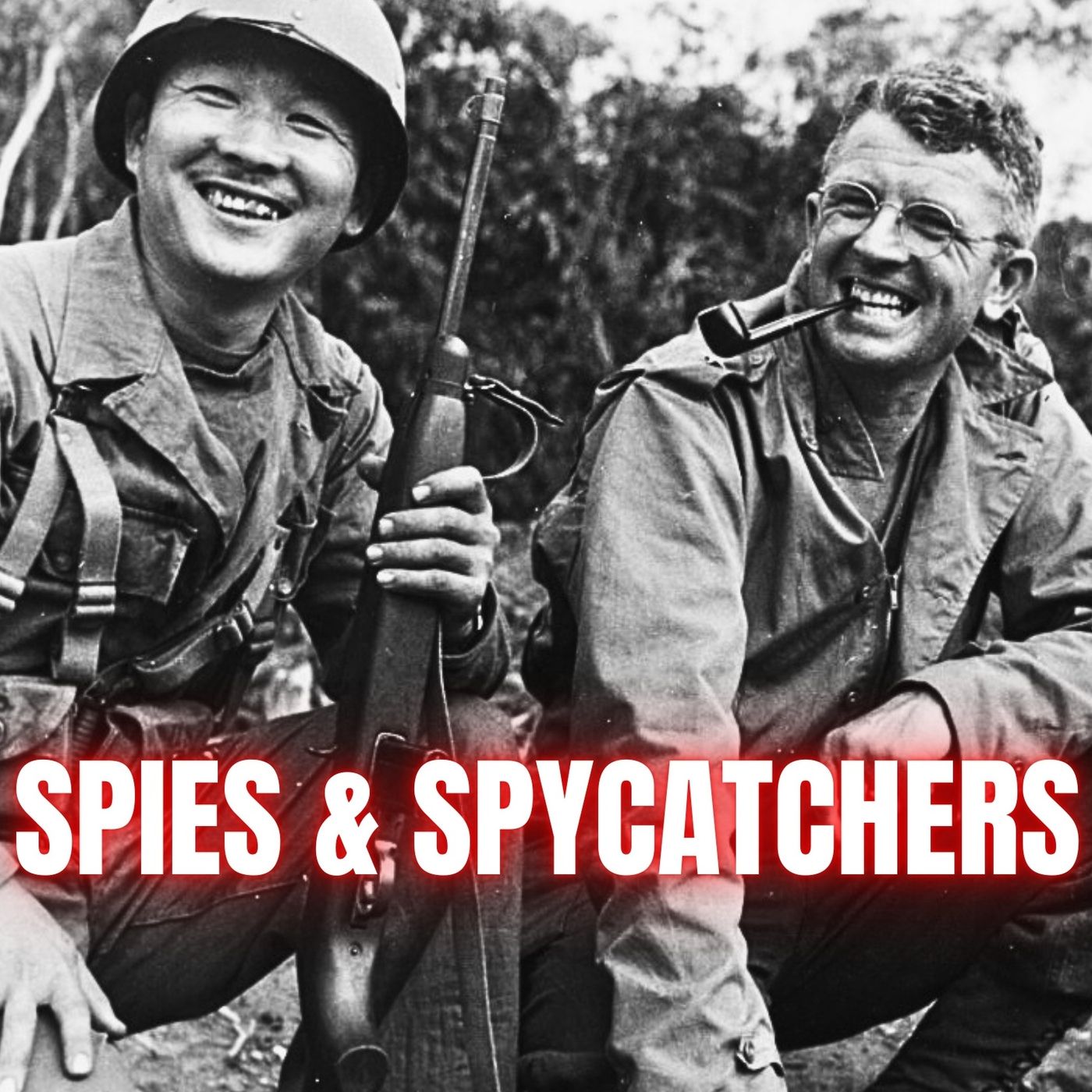
The Team House
Inside Military Intel in WW2 | Tim Scherrer | Ep. 395
01:28:41
In this conversation, Tim Shearer shares his extensive background in military intelligence, detailing his journey from Quincy, Illinois, to becoming a counterintelligence officer in the Army Reserve. He discusses his experiences during Desert Storm,...
Loading summary
Transcript103 lines
- [00:01]
A
Support is available 24. 7 with VRBoCare. We're here day or night, ready whenever you need help. Because a great trip starts with the right support. RingCentral's AI receptionist uses Voice AI to answer on the first ring so you'll never miss a call again. In just a few minutes, you can personalize your own AI receptionist to answer questions, route calls, schedule appointments, and even send texts in multiple languages. Plus, it's easy to scale create unlimited AI receptionists across any phone system. It's all powered by one reliable platform for effortless AI communications. See for yourself@ringcentral.com RingCentral Voice of your.
- [00:44]
B
Business the Team House with your hosts.
- [00:49]
C
Jack Murphy and David Park.
- [00:57]
B
Hey everyone, my name is Jack Murphy. This is the Team House. I'm here tonight with our guest, Tim Shear. He served as an Army Counterintelligence section chief amongst other positions that he held service in Desert Storm and elsewhere. He's also the author of Spy Catchers, Interrogators and analysts, tactical U.S. army military intelligence and World War II. I was just looking through this the other day while I was here in the office. It's super cool. I mean, if you're interested In World War II era military intelligence, you're definitely going to want to have this book on your shelf. Tim, thank you for joining us tonight.
- [01:35]
C
Yeah, thanks for having me. I'm very humbled to be here. And yeah, I was, I had a variety of jobs when I was in again, I was an Army Reserve counterintelligence guy and I was mobed for Desert Storm stateside and also 9 11. So I don't want people to think I'm trying to oversell myself.
- [01:54]
B
Well, tell us a little bit about that, you know, sort of the process that you took towards joining the Army.
- [02:02]
C
Yeah, I'm, I grew up in Quincy, Illinois. So if you're not familiar with where Quincy is, if Illinois was a pregnant woman, Quincy would be the belly button. So we're just right across the Missouri or the Mississippi river from Missouri. So I basically grew up in the same home, came into that home as a baby until I graduated. So I was always interested in the military. And my mom would take us to the library and they had these CB Colby books like Equipment of the Cold War, Weapons of World War II, things like that, you know, and I remember opening that book and seeing that Davy Crockett on the back of that jeep, thinking that was the coolest thing ever. So. And I was always definitely interested in World War II. And there was one point when I was super young. I was maybe five or six, like the movie the Battle of the Bulge was on and, and the parents were trying to get me to go to bed and I didn't want to go to bed because I want to know how the war was going to turn out. I mean the Germans had patent tanks. I mean, how could they not lose? But so my dad said, go to bed, you'll be fighting World War II for the rest of your life. And that's kind of, kind of how it's been, I think. So my dad served the military. My, I had some uncles that served. One was in Patton's army. I have one that's a little bit of a mystery. He was a aviator who received a silver star during the Japanese attack at Clark Field on 8-12-41. And he survived the Bataan Death March and died afterwards. And also, I mean my brother served in the Air Force. My niece just got back from a deployment as the chief of staff for the Air Force base in the uae. She just got back like a week ago.
- [03:56]
B
So you know, you had some family background and did you know as far as becoming an officer, did you go through ROTC or how did that work for you?
- [04:06]
C
Yeah, I was really thinking I was going to go more of like a radio broadcasting route. I think that was where my interest was in high school. And then I realized it was kind of a suck job. So I think, well, if I'm going to go to college, I might as well go for four years and I might as well study history. And then ROTC presented itself. So yeah, I started participating in ROTC as a freshman and then I ended up getting a three and a half year scholarship which because I got it at the end of that semester that gave me the money to buy my 73 Volkswagen Beetle, which was my college car. So drove that all the way through school. You know, I'm a first gen college student so my dad basically said this is a waste of money, why are you doing this? When I moved into the dorms, my parents literally just said, hey, just go put your stuff up there and drive back the next day and then we'll drop you off. Like there was no big move in day. Like we didn't know how to do any of this. So. And I was again, I was a band kid to the nth degree. I mean Quincy Public Schools had bought a child sized tuba and I was the guinea pig for the child sized tuba. And so I started playing it in fourth grade and I remember having to march in like you Know, three mile parades with like a full size fiberglass sousaphone that's almost like dragging on the ground and stuff like that. Although I was a pretty good, pretty good tuba player in that, I think I only set second chair one time in my life. Ended up being all state actually my senior year. And then I really walked away from it. I, I just decided, you know, there's not going to be any big resurgence in polka music. And I think so far I've called that one right. I could have bought a tuba with my scholarship money, but I thought the car would do me a little more good, so. And again, I was a skinny kid. I was 160 pounds. And I really worked hard during my freshman year, my sophomore year to, to build up and get strong. I've got these ridiculously skinny arms. So like push ups are just like the mechanics for push ups for me are just not pretty. And so the second semester of my sophomore year in college, I got mono and I went from like 160 to 130 and I lost everything and I had to completely start over. So, you know, went through my junior year became, went through RTC Advanced Camp Fort Riley. I would have been summer of 86. And then I was a pretty mediocre cadet again. I just wasn't that physical. I mean I was just a skinny kid that was, you know, just had model like a year before and. But I did the best I could and you know, I never, I never struggled with anything but it was just always a bit of a, bit of a challenge for me. So they, they do like an internship for cadets and I got, it's called Cadet Troop Leader Training. So I got a CTL T assignment and it was like the worst CTLT assignment in the world. I got assigned to the jail commander at Fort Gordon, Georgia. So I'm like, I show up and like day one, hey, we're feeding them. Hey, we're they're getting showers. Hey, they're doing this. And then like day two, hey, we're feeding them. Hey, we're doing. So actually I, we, we went and kind of farmed out and rode along with the, the MPs busting up fights at the enlisted club. I stood gate one time, caught a drunk driver. You know, all these sort of fun things that I got to do. So when it came time to commission again, you submit your dream sheet and mine didn't come back the way I'd hoped. I mean I ranked as a distinguished military graduate, but then I got put in the reserve component And I got the branch I wanted, but. And no one could seem to quite understand how that happened. And everyone's like, you're DMG and you got in the reserves. I'm like, yeah, I have no idea how that happened. So I didn't really have a plan B. So I had to move pretty quick and figure things out. So I had to. And. And when you're in the Army Reserve as an officer, there's no career manager for you. Like you are your own career manager. There's no one you call and say, hey, what jobs are open, you have to figure it out yourself. So I figured out there were two MI detachments in St. Louis. One was the 485th MI detachment, which was a infantry brigade support unit. And the other One was the 283rd MI debt, which was a EUCOM theater level CI counterintelligence unit. And so to me the, the 485th seemed like the place to go. So I went ahead and signed on there. I was really kind of an extra officer until I went to my basic course, which was not until October, but so I show up for my first drill, have no idea. Never been to a drill in my life. And I'm just kind of sitting there and it's a warm June day and all these guys are taking off their blouses because it's warm and they all got guns. I'm like, do I get a gun? Like I don't. Is this normal? They were all St. Louis city cops. So they were, they were packing guns with them all the time because you never know, they might walk out of the reserve center and see somebody that they knew. But. So we ended up doing our very first annual training that summer and we were going to Gagetown Canadian Forces base. Now the 45th mission was US army forces republic of Iceland. So there's the Icelandic Defense Force and then there are the different service components. Navice, which is active duty, afice, which is active duty. And then the reserve component had a. Had the army headquarters was a reserve unit out of a. Oh gosh, an Air Force base out of. Out of Massachusetts. And the 187th siblings army reserve. This was before the off site agreement. And the Army Reserve lost all the combat units. They were out of Massachusetts. And so, so because I didn't have a job, didn't have really anything to do, I got put on advanced party. So we went up there and we had all kinds of problems. Sato screwed up our tickets. Like our connecting flights were booked for the second day. Ended up sleeping in The Bangor, Maine airport with my ROTC colleague. And then when it came time for us to pick up our vehicles, so we had this blue Bonneville station wagon with like wood grain on the side. It's what they rented at the airport to kind of run around until we got all of our equipment. So our equipment had been rail loaded out of St. Louis and shipped up to like New Hampshire and then put on flatbeds to haul up to Gagetown Canadian Forces Base, which is New Brunswick. And so we go up to pick up our vehicles and we quickly discover that we only have one of our vehicles. We only have our two and a half ton truck. Unfortunately, that's got all of our tents and everything else in it. I mean, we only had like five vehicles to begin with. So our, our other vehicles were involved with the fatal traffic accident. Hampshire and the state police impounded them. So like we didn't know when we were going to get our stuff. And so we decided to keep the Bonneville wagon for a while. And so we, you know, fortunately we had our tents. We got our tents and everything set up and the brigade commanding general showed up and there's, you know, this kind of like Strak E5. He sees I've got a different patch. He goes, hey, where are you from? I said, I'm on 45th of Maya St. Louis, where you're in my guys. He goes, okay, so what's going on? How's it going? I'm like, well, not well, we don't have any of our vehicles because of this thing happen. And he said, oh, okay, well thanks for letting me know. And so he told the general and next thing you know, like the Brigade S4 came looking for us. He's like, hey, you guys, don't you got. Your vehicles are gone, like, okay, we can loan you two M151 jeeps. We're like, hey, that's awesome. Thank you. And so we got the two M151 jeeps. And then so in the motor pool, you know, it's like Humvee, Humvee, Cuck v Bonneville with wood grain. Humvee, Humvee, Humvee. And they, they wanted the jeeps back after like two days. So we started hiding the jeeps. So we found a place where we could park them where no one could see them. And so then the, you know, the S4 would come back, Hey, I need my jeeps back. And we're like, oh, you know, they were just here five minutes ago. Here, why don't you come back in about two hours and we think they'll be here. So we finally got our vehicles like well into the second week. But I remember we did a jump talk for the brigade and so it was an RTEP exercise. So the aviation unit Cairo warriors is flying overhead. I can see the Cav squadron screening us on the flanks and the M113s and, and I'm in the Bonneville in the middle of this convoy. So that was, that was an interesting experience. So, so from there I went to MIOBC Class 88 2. It's about a half active, half reserve start in October. And it was a really good experience. I did pretty well there. And there's a guy in there which I've never quite figured out who he was to this point. I think his name was, his last name was McKenzie and I want to say Bob McKenzie, but that may be like a, that may be like a great white north mix up in my brain. But Bob had a really curious intel background and he had some stories about how he had been in, in Grenada, he'd been in the invasion of Lebanon in an Israeli uniform and he had just come from infantry Officer Basic course and then he was going through MI Officer Basic course. I'm like, who does that? So we, and he was going to brag. So we're kind of curious. So if anyone knows Bob let me know kind of who he was. But. So he actually ended up getting hurt in Ranger school, which he went to right after that. I think he got out, processed. But so then I had another opportunity to go for active duty that what was called the Commandants program. And so I ranked 6 out of my 45 members of my class. But my, my buddy, good friend of mine, he ranked fourth out of 45. So I, he ended up getting it and he was clearly the better man. But so then I'm like, okay, I got to go back and find a job. And that's what I did.
- [14:46]
B
This time of year the pace doesn't slow down, but you still need to. The calendar's packed, the weather's changing and your body's reminding you that it's time to rest and reset. That's where Ghostbed can help. It's a family run company founded by a team with over 20, 20 years of mattress making expertise. They've spent decades perfecting how to build a bed that's durable, comfortable and engineered to help you recover. Every Ghostbed mattress is made with premium materials, proven cooling technology and their exclusive procore layer, a targeted support system that reinforces the center of the mattress where your body is the heaviest. It helps to keep your spine aligned and your back supported so you wake up ready to take on what's next. And Ghostbed's cooling materials don't just keep you from overheating, they help regulate your temperature year round. Each Mattress comes with 100 one night sleep trial and a 20 to 25 year warranty plus fast free shipping. Most orders arrive in two to five days, so better rest is just around the corner. Right now. During Ghostbed's holiday sale, you can get 25% off site wide For a limited time, just go to ghostbed.com house and use the promo code house at checkout. That's ghostbed.com house promo code house. Upgrade your sleep with Ghostbed, the makers of the coolest beds in the world. Some exclusions apply. See site for details and thank you Ghostbed for sponsoring the show. Please check out the link down in the description and Support Our sponsor RingCentral's.
- [16:25]
A
AI receptionist uses Voice AI to answer on the first ring so you'll never miss a call again. In just a few minutes, you can personalize your own AI receptionist to answer questions, route calls, schedule appointments, and even send texts in multiple languages. Plus, it's easy to scale create unlimited AI receptionists across any phone system. It's all powered by one reliable platform for effortless AI communications. See for yourself@ringcentral.com RingCentral Voice of your business At Vrbo, we understand that even the best of plans sometimes need a little support, so we plan for the plot twists. Every booking is automatically backed by our VRBO Care Guarantee, giving you confidence from the very start. Whenever you need help, it's ready before your stay, through the moments in between and after your trip. Because a great trip starts with peace of mind and maybe a good playlist. But we've got the peace of mind part covered.
- [17:22]
C
From taco night in Tulum to sushi in Tokyo, make every bite rewarding with gold from Amex. Wherever you dine four times membership rewards points at restaurants worldwide are piling up. Learn more@americanexpress.com Explore Gold terms and Points Cap apply.
- [17:39]
B
Is that how it works in the reserves? They're not just assigning you somewhere?
- [17:44]
C
Well, I mean I was already. I was in the 485th. That was my unit, but I had to go find a like a civilian job.
- [17:50]
B
Oh, oh, on the outside.
- [17:51]
C
Gotcha, right? And it's hard when you're in in the reserves, especially when you're young, because you might get called up or Whatever. And so I ended up working for a trucking company for a while. It's actually my mom's competiting company. So I did that for, like, about a month and a half. And it was kind of a meh job. And so they. I had put in orders for the intelligence and terrorism counteraction course at Fort Huachuca. Two weeks of school. And I went to my boss on Friday, and I'm like, hey, I've got these orders. I can get them canceled if need be. I kind of like to go. Came into work Monday and he fired me. So it all actually kind of worked out in that the next day I actually got a much better job offer for where I worked for 12 years. So it turned out to be pretty well. So my job was I worked at Northeast Missouri State and I maintained 1492 apartments and dorm rooms. I had 26 staff and just basically kept all those kids warm, dry, and safe. Did that for 12 years. And that was never a dull moment. For sure. Yeah.
- [19:07]
B
So what was going on with your military service throughout that time frame?
- [19:13]
C
Well, I mean, I was formally assigned to the CIA section, so as the CIA section chief. And the 485th was a pretty cool unit in that it was a very capable unit. Even though, like, we had steel pots, we had gamma goats, we had just, you know, we had an M16, not even an A1 in 88, I think it was. But the unit was really capable in that, like, my CI section chief was me. I had a warrant officer who was a school teacher, librarian. But he spent all summer going to army schools and teaching in army schools. So he, you know, he was an interrogator. He was. He was a CIA agent. He had taught at the schoolhouse, all that kind of stuff. And then I had a deputy sheriff from Madison County, Illinois. So he's a full time cop. And then I had a guy who was a St. Louis City cop, former Prior Service Sergeant, York Crewman, if that says anything. And then I had a guy who was a private investigator. So I had a pretty stacked little team of guys who did stuff on their outside work from the unit. The interrogator section had a bunch of St. Louis city cops, a postal inspector, our photo interpreter. Warrant worked at Defense Mapping, the order of battle. Warrant worked at Defense Mapping. I mean, there's a lot of very good crossover inside of that unit, despite the army not giving us a whole lot of anything.
- [20:53]
B
About what years was this that you were there?
- [20:57]
C
I commissioned 87, and it came back in 88. And then I was there until Desert Storm spun up. So we did go to Northern Viking 89. We took our, took the CI section up there and they took the, the rice headquarters, brigade headquarters and one battalion. And then we were kind of an attachment. So we actually got to run around on our ground and we liaised with NIS and was able to give them a few leads on a few different things. But that was super cool. If you've ever read Red Storm Rising, that's, that's the scenario right there. That's, that's what was going to go down in Iceland. And we like, I remember we were next to the flight line and like an F15 would go screaming off the Runway and you could follow it because the sky was so clear, you know, and it's going up to intercept a bear bomber in the sky. There were anti submarine aircraft flying all the time, things like that. So it was, it was pretty fascinating. It was also during summer solstice, so it really didn't get dark the whole time we were there. So when we came back we're like eating dinner in Connecticut and we're like, it's dark. You see that? It's dark outside. Yeah, it's dark. So that was a, that was an interesting experience.
- [22:15]
B
What kinds of things did you do there as a CI guy? I, we were just interviewing another person earlier who's telling us he was a CI guy. Also he's telling us about how he had to put the kibosh on the young soldiers going to the strip club in a foreign country.
- [22:33]
C
Yeah, it was a real challenge when we went to Iceland because the Icelanders are xenophobic, very xenophobic. They don't like outsiders very well. They didn't like us. In fact, when we went out of town, me and my guys, we found these like Icelandic Canadian pins that we would wear so people would be nice to us. But the biggest problem we had off post, which our, our soldiers didn't go off post a whole lot for that exercise, but these were inner city Boston kids and that's like the Flava Flav era. So I remember one guy walking around with the big clock and all this kind of stuff. And so that was, that was a bit of a challenge. And also we were just doing standard tactical CI, making sure that they had good operational security practices, make sure they weren't throwing operators and dumpsters and, you know, listening to radio nets and visiting sites for camouflage and all those sorts of things. We, we actually, the year before we did, we were with the separate Infantry Brigade out of Oklahoma. And we decided. We. We were talking to the battalion commander. He's like, oh, yeah, you guys can collect on my boys. We're. They're good. I'm like, okay, that sounds like fun. So we snuck some guys in and they used a lighter and burned. Burned off the insulation on their WD1 wires. And we tapped them and ran a line off of that, flew around and got aerial imagery of it. We took. We had a interrogator, female. So she put on a pair of shorts and a tank top and went for a ride on the roach coach and start asking questions to see what kind of information she could get. So when it was all over with, we gave this guy like, of. Yeah, I actually sat and listened to the radio nets and the traffic analysis on it and stuff like that. So we presented, you know, okay, here's your battalion. This is what we know about them. So that was good. That was. That was actually good training.
- [24:27]
B
Did they shit bricks when you give a brief on that?
- [24:30]
C
Yeah, they were. They were a little humbled by everything we were able to get. And we really were not that capable either. I mean, we were. We're pretty old school. I think we stole a. We. We got the frequency off one of their vehicles, and that's how. Then we were able to then start building their radio net through traffic analysis. Like S3. He's the angry guy. You know, things like that when he's on the radio. So, yeah, that was fun. So in the summer of 1990, we didn't have an annual training. Like, people were just going to schools. So I actually got sent to kind of a crap job. I got to. I got sent to Fort Leonard Wood to the Special Security Office. Although it turned out to be interesting because that was July of 1990 and I was producing the black books for the engineer school. And that was the entire buildup of Saddam on the Kuwait border. So I'm reading all of this intel before, of course, you know, it ended and I went home. But little did I know a few months later I would get roped into it.
- [25:32]
B
Well, tell us about that. Spinning up for the Gulf War. How did that come about?
- [25:38]
C
Well, it's pretty clear the 485th wasn't gonna. Wasn't gonna get mobilized unless, like, the Russians were crossing the Mississippi river. So the 283rd did get called up and they went to. They went to Germany. And by the time they got spun up and trained, like, the whole thing was over. And they came back, like, a couple months later. So they actually pulled Two officers out of the unit, myself and another guy who worked at McDonnell Douglas, which is now Boeing in St. Louis. And they sent us to us J. The, the J2 of Transcom, which is at Scott Air Force Base Joint Force Headquarters, four star headquarters. And at that point Transcom was really only two years old, as Goldwater Nichols had just happened. And the J2 was really just the Military Airlift Command in shop. And then they had like a little space with about a dozen people in it. Navy guy, there was like an army imagery guy and a few others. And I was, I was either the second or third army guy assigned to the J2 there at Transcom. And so then I got thrown over to be the briefer on the Crisis Action Team. And so I was briefing the four star general like within two days of me getting there and I was like, I was not a good briefer. I had to figure it out quick. And it actually worked out okay. But so I did that for like 45 days. And then the other lieutenant swapped with me. He came over to the Crisis Action Team and we were working four days on, two days off, and then we would flip to nights and then we do four days on and then two days off and then flip back to days. So every six days we were flipping days and nights. They just didn't have enough people to do days and nights. So I was working in the Crisis Action team among all the, all the operations folks, the logistics team, the air team, Navy team, all those guys that are making all of this high level logistics working. And so we would give them our, our J2 update. So I, so I got swapped out and I actually went over to write a trucking study on the Saudi Arabian Peninsula. So that was my job for like 45 days. You got to write this trucking study on Saudi Arabia. I'm like, okay, so I'm researching, I'm trying to find everything. I asked for a couple days of, of like a permissive tdy. I went back to my college library, spent two days and all I found was a, a reference in Smithsonian magazine that said no self respecting Bedouin truck driver would drive anything less than a Mercedes. I'm like, I went to my boss, I'm like, I am floundering on this. So another guy came in and he's like, why don't we call a, why don't we call like a auto company? They called the Ford Motor Company and like, you know, four days later we had a printout like this thick of every vehicle that has ever been sold to Saudi Arabia, so. So I've got a citation for that, but I obviously didn't do much on it. So the other guy decided he wanted to go back to Boeing or McDonnell Douglas. So I was left there. And then I got joined by an army guy who transferred in by the name of Brock Ayers. Now, Brock actually had grown up in that area. He was a captain as a lieutenant, and I was a brand new first lieutenant at that point. And he had just come out of the White House situation room. In fact, he was the southcom briefer for just cause. So. And he had some really good stories about, you know, how all that went down. But so how he briefed in the Oval Office and how he went and briefed Quail separately and things like that. So he was a really great mentor for me. And we were working together this. These kind of day and night shifts. So there were a few moments when we didn't actually know what to make of anything. So Brock's like, hey, let me call my buddies, you know, and he'd get on the Stew three and call and pop up White House, hey, Bob, tell me what's going on. That kind of thing. So it was, it was really interesting to be there, but. So the J2 desk was actually right next to the snack bar and the J3, General Cross, Walt Cross, was kind of a junk food junkie. And so he would always come over and looking for something to eat, and he would just strike up conversations. And we had complete access to all the gos there. There was, there were no, there were no people we had to go through. We needed to talk to anybody. We could just go talk to them. And I remember one day I was reading Bodyguard of Lies, and he's like, lieutenant, I'm so proud of you for that. So it was, it was, it was pretty, pretty, pretty busy. I actually did make an attempt to try and deploy. I went over to the helicopter unit, Army Reserve Helicopter Unit, which is part of our command. I said, hey, I'm an. Am I a guy? I'm trained up. I'm already working the problem. I'd like to go with you guys. And they're like, no, I think I probably worked it wrong. But they were actually the unit. They were a super cool unit. They were. A lot of the guys worked at Aviation Systems Command, which is at that point was in St. Louis, Missouri. And all the warrants were Vietnam guys. And they actually ended up being like the distinguished visitor helo unit for centcom. So they flew Schwarzkopf to the peace talks with the Iraqis, things like that. So that was a kind of a missed opportunity for me. But so, yeah, there was, there was a lot going on. And when Israel started receiving Scuds from Iraq, we got like a warning and execution order like, like that. Like we got to do this right now. We had to get patriots down to Israel. So my colleagues worked that, that evening. I didn't really have much of a play in it other than, you know, making sure that the A pods and S pods were okay in Germany. And then the next night they were set up in Israel and we watched them like knock, knock missiles out of the sky and save lives. That was so cool.
- [31:47]
B
Yeah, I mean, I, I, for a documentary project, I was watching some of the news, news footage from back then of the Scuds coming into Israel and hitting residential areas. And I mean, it looks so terrifying.
- [32:01]
C
Yeah, I had kind of a funny experience with those. So we didn't have any connectivity where the crisis action team was actually in the old commissary, the post commissary, they built a new one as a big open building. So they just chopped it up into a bunch of offices. And so the CAT team was in there. And so to read intel traffic or pick up intel traffic traffic, they would print it. We put in a suitcase, carried over to us. It's about two block walk. And then we'd read it over there. And so I was in the, the watch center and I heard the beep, beep, beep, beep, beep. And, and the enlisted amps like, we got a critic. We got a critic. Like, okay, we got a critic. Okay, let's see what happens. And beep, beep, beep, beep, beep. Okay, we got a Scud. It's coming out of Iraq, it's going to Turkey, it's going into Turkey. I'm like, turkey, Turkey's a NATO country. So if they shoot a missile at Turkey, that means that's an attack on a NATO country, which means NATO is probably going to join the Gulf War. I was like, oh, this is, this is pretty big deal. And then another one comes in. We got the azimuth wrong. It's going to Israel. Like, geez Louise. So, you know, the war kind of drew down and so there's a little bit of an insurgency that popped up there. And I ended up, I was briefing the, the general and the general really kind of took a shining to me. Hansford T. Johnson, Air Force four star guy. And like all the gos kind of took a shining to me because I was you know, a younger version of them. And so there was one moment in a briefing where the four star at that point they were called sinks. Like I'm briefing something about Iraqi insurgency. And he's like, well, why don't they just fade into the woodwork in like Vietnam? I'm like well sir, there. And I just shot right back and I'm sure there is no woodwork in Iraq. And there was this like pregnant moment. I'm like, I am so screwed, like I'm about to get fired. And then he started laughing. And so from then on I became Lieutenant Woodwork. So as things spun down, we worked on like Northern Watch. I remember I had to hand draw a map for the four star debrief him. I literally hand drew a map and laid it on the table for him and kind of explained it to me. He's like lt, what's this? I go sir, that's an infantry company. You know, things like that. That was a little crazy. One of the weirder things we did was as Desert Storm was, Desert Desert sorte was starting to pick up, which is the return. We got like a warning order that there had been some sort of humanitarian disaster in Iran. And, and there were there, they, they wanted us to start looking at the possibilities of taking humanitarian supplies into Iran. We're like oh geez, that's a weird one. So I got with the Middle east analyst and we started looking at road networks and train network and roads and all that kind of stuff. We got like a day into it. And then the Iran, Iran put out a message that they didn't want any AIDS infected blankets from the US So that pretty much shut that whole thing down immediately. So I kind of like, I guess smallpox blankets, I don't know.
- [35:37]
B
Yeah.
- [35:40]
C
So really from there I went back. So I got demoed, went back to the 485th for a couple months and then when they, they created the Joint Transportation Reserve Unit, which was the first reserve unit, stood up on a joint manning document. There were some different units that may be drilled together, but we were actually under a unified command. Joint, joint document everything else. But when they stood up the army element In October of 91, they made us a drilling IMA detachment, which basically just means you're not going to get paid. I figured that out. So I actually went eight or nine months without getting any of my drill pay, which was not cool. And I ended up having to work through my congressman like every single month so I could actually get my drill pay. It was so screwed up. So then when we went into Somalia, Restore Hope, I believe is. Is that name. Yeah. Exercise? I think so, yes. So I was down there for a weekend, and then they're like, okay, we're gonna call you up, we're gonna put you on 90 day orders, and, you know, you guys are going to run the, the Situation Shop or the, the J2 for this particular exercise. And we're like, okay, that's, that's good. Super cool in that. There was the intel system where I, you know, you could chat with people. I remember I was chatting with an anib and hey, I need some pictures of the dock. Can you get me pictures of the dock? You know, some gun. He's like, ah, sure, sure. LT, I'll get it right for you. You know, two hours later, these JPEGs show up. I'm like, this is so cool. Like this thing, this Internet thing's pretty interesting. But when I actually reported, the day I report, I remember I was checking into the Scott Inn and I saw the seals coming over the beach on cnn. And the lobby of the. I'm like, okay, well, this is going to be different. And then that pay issue continued. I was going towards my second month of active duty and still had not been paid, which was ridiculous. So I would work a night shift and Army Reserve personnel center is 9700 page in St. Louis. So I would come off. Come off a full night shift. And I drove over there. I'm like, I'm. I'm not going to leave until this is resolved. I end up having to go back three times to get it resolved and. Sounds typical. Yeah, yeah. And like, well, in the first month wasn't so bad because I was still getting my civilian salary, but. And when I was in there, I just completely understood how the army can get screwed up. There'd be like a pallet of 201 files sitting in the hallway and like, one of them would fall off the top and get on the floor and people would start walking on it. Next thing you know, the whole file's all over the place. All over the place. And somebody kind of scoops it back up, but it's probably missing a few pages and stuff like that. So I demobed around March, I think, and that was well before Blackhawk down happened. I did brief the weekend of Blackhawk down, but we had no idea what was going on over there. We just, you know, typical operations in Somalia at this point. We. We heard about it later. Later on.
- [39:08]
B
And when was it that you started coming up on company commander time?
- [39:16]
C
Yeah, I Had a few more, a few more things the company command came up on in like 1995 or 1996. You know, I'd been at the J2 too long. I was feeling like I needed to get green. I was, I'd been a lieutenant, I was now a captain. We did have one other kind of interesting thing happen, and that was one weekend I walked in and on a Friday, because you go on the Friday if you're going to brief. And I walked into the conference room and there's a VTC going on and it's the. They're briefing the airdrop plan for the brigade of 82nd to go into Haiti.
- [39:55]
B
Yeah, yeah.
- [39:58]
C
And so the air M.O. at that point, I think it might have been Air Mobility Command versus Mac. And so we, we got that whole plan. And I got a phone call before I left. They said, hey, you know, we may send you down to Homestead to be an LNO down there. I'm like, okay, you know, I'll just, I'll pack some extra clothes and, you know, I'll show up and just tell me, tell me where to go. And then on Saturday they're like, no, we think we got all this covered, so we don't need you, so just go home. So I, I worked this plan for like two, two days. I'm like, go home and watch it on cnn. My roommate was like, hey, let's watch something else. I'm like, no, we're gonna watch CNN tonight. Why? Because we're gonna watch CNN tonight. So. But yeah, I ended up going on to becoming a company commander. And again, there's. By that point, the MI debts had completely folded in St. Louis. They were gone. There were no MI slots there. So the only way I was going to get a company command was get like a 01 Alpha branch of material. So there was the second of the 334th Infantry Regiment, which is an Army Reserve basic training company. And they were located in my hometown. They had a debt up in my hometown of Quincy. And the main unit was in Granite City, which is right across from St. Louis. So I talked to the battalion commander. He goes, you know, I need someone to be an S1. And we got to merge three battalions into one. And then when you finish that, I, I'll give you a company command. I'm like, okay, that's good. So did that. We didn't do like a two week annual training. We busted it all up into two weekends. So generally we were working two weekends a month, which was getting kind of old by the end of it. But. So, yeah, I took this basic training company Command, D Company, 334th Infantry Regiment. So. And I had a little bit of street cred. Like, I'm the MI geek coming out of nowhere, like. Like, who is this guy? But I was also from Quincy, so I got a little bit of street cred there. And so I did that for three years. We did multiple, you know, annual training cycles. I. We did two at Knox, and we did one at Benning. The. The Benning one was kind of just kind of weird because the Basic Combat Training Brigade was standing up at that point, and it had only been the ITB at that point, so they stood up this other brigade to do basic training. And some of the drill sergeants came from itb, and a bunch of them were brand new, and they kind of dumped us on us on top of them to. To help them out because, I mean, we had drill sergeants that have been on the trail for 20 years doing that. So. But they were just doing really. Just dumb stuff. I'm just looking at this, like, what are you people doing? So one of the things, when we were at Fort Knox, we were always. We were always to be in the exact same uniform as the privates. Like, the privates are wearing helmets. We're wearing helmets. We're wearing lbe, they're wearing lbe. And these. These drill sergeants didn't want to do that. And so they were trying to figure out ways to carry water, and they're doing, like, Gatorade bottles and Camelbacks and all this kind of stuff. And I'm like, dude, the army has a thing that has canteens on it that carries water if you just want to wear it. So that was also. Gosh. So the unit that relieved me was out of Chicago, and we tried to do a good handover to them. And I remember the company commander came in. I'm like, where are your guys? They're supposed to right seat ride, left seat ride. She's like, well, my NCOs had a meeting today, and they decided they didn't want to come in this early. I was like, excuse me. Your NCO's had a meeting and decided they didn't want to come in this morning. Okay. So that was. That was curious. But so then I finished out of. I finished my company command. And then there was an opportunity to go back to Transcom, and it was a major slot, which is good, because I needed that again. Again, you got to manage your own career. So I actually went to the Advanced Airlift Tactics training Center, which is a super cool course that the Air Force runs out of Rosecrans air base in St. Joe, Missouri. So it's really to teach airlifters how to do defensive tactics besides just to curl up the ball and die, so protect themselves from aaa, missiles, aircraft, things like that. So it was a two week school. We went to Rosecrans for like four or five days. And then we flew to Huachuca and. Which, you know, I'm familiar with Huachuca. And then we did the flying phase. And like, they would literally teach them to fly over a mountain, drop a wing and fly down the other side, like in a C130. Also we had a C17 and we had a G333 there as well. And one of the guys, one of the pilots over banked a C130 doing this training. So they had to ground that. I did win the biggest puker award. Although in my own defense, like, they had to give it to the army guy. They just had to. But in my own defense, I was the third person to puke on that aircraft. The Hope Air crew had been out drinking all night, and they were definitely not 8 hours throttle to bottle. So they were hungover. So we're taking off and I look over and the nav is on oxygen. I'm like, this is not a good sign. And we take off. And that was the word where they were doing the train flying and falling down the other side of a mountain.
- [45:47]
B
Yeah. Flying nape of the earth.
- [45:49]
C
Yeah. In big trash haulers.
- [45:52]
B
And.
- [45:55]
C
So he started puking. The flight engineers start puking. And then I start puking. And then. So apparently I was like the biggest puker, even though I was the third one to puke on the aircraft. But we had a C17. They brought in a third pilot to clear the wings to make sure they didn't hit anything with the wings of the aircraft. So that was. That was pretty interesting to do all that. So from there, I left my job at Truman nmsu, which became Truman State. And Army ROTC was doing contractor jobs to teach rotc. And they were hiring guard, reserve, and active duty officers. And at that point, they didn't want anyone to know our status. They didn't want anyone to know our contractor. So we were our BDUs, just like everyone else. So I had BDUs with the cadet command patch, and I had, you know, stuff for my unit. And I just kind of swapped the blouses depending upon where I was at. And I had opportunities. I was a, you know, captain straight out of company command And I had an opportunity to go to Mizzou, Illinois State and Southern Illinois University at Edwardsville. But I also had a Class 3 MP40 Schmeisser, and I couldn't take that to Illinois. So that kind of made my decision to go to Mizzou. So I went to Mizzou and started some history classes. I taught the freshmen. I was a platoon TAC officer that summer. Greg Hammer, Panama Ranger, was my pack nco. Great guy. We had a blast. We had so much fun together. And when I was at Mizzou, we had some interesting kids go through there. Some of the. Some are just people in general. Andrew Bailey, who's now the deputy director of the FBI, he was a cadet there at that time. Will Edens, who was a KIA in about 2004, he was there. And then Sergeant Major Kevin Griffith was my colleague. My, my. He was the senior NCO there for a couple of years. And he actually, he was one of the four that got killed in that suicide attack. That Flo Goberg shoved the guy away and received the Medal of Honor. So it was kind of wild to see those people pop up here and there.
- [48:21]
B
Yeah.
- [48:25]
C
Take a drink?
- [48:26]
B
Sure.
- [48:31]
C
So then 911 happens, and I'm at Mizzou. I'm teaching Mizzou. I was doing pt. I was leading, like, incentive PT that morning. And I come back and like, the first plane hits the tower, I'm kind of like, you know, B25 hit the Empire State Building. World War II. The second. The second plane hit the tar. I'm like, damn it, this is Al Qaeda. And I just lost next year. So by 10 o' clock, I had an email said, hey, we need people to come in at the. Transcom, which was my reserve unit of assignment at that point. And so I actually went down there on the Friday after 911 and checked in and got on my J Wicks terminal, watched Bush on the mound for my J Wix terminal. And my shift changeover was a guy who was, you know, had been working on 9 11. He's like, okay, we have fighters on strip alert at Lambert Field in St. Louis. So if you see any threats, let us know. We can, you know, send some fighters after him. And I'm like, damn, I'm at like 100 miles from where I grew up. And this is insane. So went back to Mizzou and like, they kept telling, we're going to get called up, we're going to get called up, we're going to get called up. Finally, they called us up on the 1st of October, my boss was the PMS was starting to be kind of a jerk about it. And so when I finally did get called up, like two days in, he shoots me an email. Hey, since you were mobilized, you can't come back to work here. And I had, I just had an excellent performance evaluation. There were no issues up to that point. I'm like, really? So I printed it, sent it to U.S. department of labor, filed a case, won, that, got my job back. So in the, in the beginning, we augmented the night team. And so we would do this terrorism VTC in the middle of the night. And there were so all the different agencies, CIA, dia, Joint Terrorism Task Force, and there was a Special Ops task force. I think this was around the Rhino era when we were in. In Rhino. And so like joint task force, whatever, 20 or whatever they were would pop on. And they were clearly in a tent. So we were sitting there one night and we're doing the roll call to make sure everyone's on and task force, whatever it was, 20 pops in and there's gunfire. We're like, damn, what's going on there? Are they getting overrun or whatever? And it gets muted and we hear, sorry, we were watching a movie. So that was a little, little nutty. But another funny thing that kind of happened is we were getting ready to put all those C17s into Rhino. I think they were moving in the 101st and maybe some Marines in there. And in the middle of the briefing, you know, the C17 can land on a dirt strip. Like it has that capability. But in the middle of the briefing, the J3 is like, have we done any studies about the long term effects of landing C17s on dirt runways? The room went quiet. Everyone's just looking at each other. He's like, well, I guess we're about to find out.
- [51:52]
B
So.
- [51:54]
C
So my job eventually became the asymmetric threat chief. So we produced the dye some. I had the briefing team, had a group of briefers that would then do the. The. The J2 and the J3 briefs in the morning. So they would come in at like midnight. I would come in at like 3 or 4, kind of read the intel, read their products. We'd brief it to the deputy or the current intelligence chief, and then we brief it in the J2 and then we go and we brief it in the J3 later in the morning. So one of the weirder days is we walked in on a Monday and Anaconda had just happened. And like, the J3 is like hair on fire. Like, okay, we're air refueling direct Apaches from for Campbell and we're, we're rounding up all this AC AC130ammo from all the world, air refuel direct. Getting it over there in the briefing that the J3 is like, two, how come you didn't tell us about this? And we're like, that's because we're the two. Like, we don't know what the J3 is doing. We know what the two is going. Is doing. So they actually had to assign an officer to keep track of that and keep them up to date of what the three was doing because we've really had no idea. We were just reading intel traffic. So I did get to go to the. Oh, I did get a information war briefing that was super fascinating. I had a guy who kind of worked information war. So we had this arm come in and it was a contractor contracting company and they were running the information war campaign for that war. And they gave us, you know, how they do things, how they do information bracketing. Like they would put stories out there in advance to get picked up by the media and to drive their briefings. And it really changed my view on everything. These were just a political company that was hired and they were doing that. And, and they, they were on like a joint VTC every morning to get the messaging right. Just things that you don't really get to see a whole lot of. But I went to the dynamics of international terrorism course, which was at joint Special Ops U, which was pretty amazing. Course our speakers were gen General Dozier.
- [54:20]
B
General.
- [54:22]
C
Who had gotten kidnapped by the Red Brigades. We had the real guy who was kidnapped by the FARC in proof of life. We had the force protection guy from Cobar Towers. So it was, it was a legit course. It was really, really good. So. So yeah, I, I got released after a year. And in the middle of that, I got another issue with my job in that the contract went from one company from MPRI to Comtech. And I got an email from Comtech and they're like, you've never worked for us, so you don't have any re employment rights with us. So I went to my department of labor rep and I'm like, dude, what's going on here? Like, I don't, I don't know what to make of this thing. Goes no problem. Got it. It's a continuation of interest. So they ended up having to hire like a dozen people back that they tried to screw over. So. So then I went back to Mizzou, that reserve unit and, oh, yeah, another thing is, I did do is I did brief at the. The 1003 TFID briefing or Iraqi Freedom, and that was in February of 02. So I, you know, went into the vault, got right into the plan, and then presented my briefing before the assembled crew. And the. The TIPFID meeting is like a big food fight for everyone wants to get their folks in early. Like, do you take the loggies in early? Do you take the infantry in early? Do you do those kinds of things? Like, what's the right flow for all this, where everything works the best. So that. That was pretty interesting. So I went back to Mizzou, and then I was back at rotc. Everything's going great. And then I get another email. Hey, from. From my company. Hey, we are overstaffed at your position, and you're the junior employee, so you have to go. I'm like, are you kidding me? I'm the original guy. Like, I'm. I'm the first guy. Like, none of this happened without me getting called up a year ago or a year and a half ago. So again, I called him. Dennis McElroy, U.S. department of Labor. He's like, like, what are these people thinking? So again, I got reinstated again. Third time I had to get my job back. Now I felt awful, though, because the guy who had taken my position, buddy of mine named Terry Heisler, he Signal Corps guy. So he was losing his job, but I actually called Transcom and got him hooked up with the J6 because he was a Signal Corps dude and he. So he got orders to go to go to Transcom J6 for like a year. And it actually worked out for him because his daughter got really sick with cancer and needed that medical attention that would be paid for. So. So that actually worked out for him. He now owns a beer garden in Washington, Missouri. So John G's, if you ever go there. So. So really, I mean, from there just continued to teach ROTC. Summer of 07, I walked. I walked sticks lanes, and I was doing pretty well. I felt pretty good about all that. So I was at the advanced camp up in Lewis walking, I don't know, five, seven miles a day with gear. I got back and I was at a World War II division reunion to connect with some vets I knew. And I had this massive chest pain. I was like, oh, what is this? I went white. And then I recovered. I went and saw the doctor. They didn't know what it was. So then I went to. A couple weeks later, I was at Kansas City for drill. And I had another one of those in the heart in, in a hotel room. I was by myself. So I called 91 1, ended up in the hospital and really that started like a year long ordeal for me. My son spleen was destroying my red blood cells and my hemoglobin count was like 4.8 where it's supposed to be like 15 to 18. So it's really my spleen that was causing that. So I went through that for, for a period of time and then it was really kind of time for me to get out of Mizzou. Like Mizzou. I was just kind of done with it and so I went ahead and got a job at Missouri Military Academy. Although the last year year we were there, we got the MacArthur Award for best ROTC program west of the Mississippi and we had failed a inspection like four years before horribly. I mean I thought my boss was going to jump over a table at our personnel person, but so I, I also changed reserve units. I got out of the, got out of the jtru. I just felt like I'd done everything I could there. And again, it's your free agent. You got to go find another job. So I actually found the Command and General Staff College, which I had a background in education that seemed to be like a good fit. So they, so they put me in as the S3 and then I could become a student after that, which was perfect because I wasn't have to do like two weekends. So my first job as the S3 was to give a PT test to 80 lieutenant colonels. And that was a good time. And so I ended up finishing the course and became a instructor. And then I eventually became a lead instructor and then I became a head of school for that unit. On the civilian side, I went to Missouri Military Academy as a director of college placement counseling. So it was again another uniform job I did testing college placement toss history, military history. One of the kids that was there, some people may know, Ian Ives, he was a combat cameraman that got blown up in Afghanistan in 2019. So he was one. He was one of my kids there and he's doing okay. I think he lost an eye and jacked up his arm pretty good. But so I was there for six years. It was pretty toxic. So then I ended up looking for another job. And my final job in the Army Reserve was that I had to set up a schoolhouse at Camp Parks, California, which is where the Mythbusters blow everything up. So it's right across the mountains from Oakland, California. And so it was a new site. I had to go out there, had to figure out how everyone was going to get there, messing classrooms, all that kind of stuff. And then when we did our first iteration out there, it was March of 2015, and I had four classrooms, maybe eight instructors. And at one point I had like 12 inspectors there on the ground. And these are all people that got orders to come out to California in the winter. And then they would check in with us for like an hour or two hours and say everything's going great, and we wouldn't see them for four days. So. But yeah, I ended up retiring from there, and then I ended up at the Catholic school that I'm at right now because I was friends with the principal and she wanted the program, placement program that I built at the military academy. I kind of turned around that program. And so we. I ended up getting hired in 2014 and jumped in there and basically started doing a lot of the same things I was doing at the military academy, except this time I got to work with girls. So working with, you know, working all with boys before, and now there are boys and girls. Although our kids are so sweet. They're great kids. So. So yeah, I'm in my 12th year there. Fourth principal, went through Covid school. We stayed open where the public schools closed. So I do the master schedule Career center, which is like our VO Tech center. Coordinate with that. I'm like the LMO for that. Moberly Area Community College. We're the largest earner of dual credits for Moberly Area Community College, although we are one of the smaller schools testing. Just drop a few names of some kids we've had through the school. This guy in Brooklyn you might know by the name of Michael Porter Jr. Plays for the Mets.
- [62:28]
B
I don't know anything about baseball, I'm.
- [62:29]
C
Afraid the only person from Mets, the.
- [62:33]
B
Only person from Brooklyn that people seem to be talking about this week, it's Jeffrey Epstein.
- [62:40]
C
Imagine that. Imagine that. Well, anyway, they're talking about trading him from Brooklyn to Detroit, but. So he was a kid at our school for a couple years. His brother, John Tay, really good kid, but he got caught up in that whole gambling thing up with the Toronto Raptors. Oh, yeah, so. And he got banned for life from that. And then Cam Lee is a kid that just got picked up by the Baltimore Orioles. And then there's another kid who was just kind of floating around by the name of Sophie Cunningham, who you might know of her as a player on the Indiana Beaver. She's a. She's like the Enforcer for Caitlin Clark. So she didn't go to my school, but she. She was the same age and went through eighth grade with the kids in my school. And so she was always around, and I actually knew her grandma. So those are kind of all my brushes with greatness. Yeah. Yeah. So it's. It's been interesting. We've had a lot of. A lot of kind of known people that I brushed up against here and there. So it's been. It's been a good run.
- [63:39]
B
And how did the writing come into the picture? How did that start for you?
- [63:45]
C
Yeah, really, it was. Again, I got a BA MA in history. And that's what you do, you write. And so when it came time to write my master's thesis, I was discouraged to write anything military. Like, you can get a job if you write something military. So I was a little bit desperate for a topic. So I was watching the movie Convoy with. With. Based upon the song, the C.W. mcCall song, Kris Kristofferson. I'm watching this movie. I'm like, this is an amazing expression of American culture. So I actually wrote my master's thesis as a cultural history of CB radios, which is actually my first book. In fact, I argue that it's. That it's really America's first social media platform. So there's that. The second book was a just a paper I turned into about a doctor who gets himself arrested down in southern Boone county and gets himself released by the president. And then third book was a series of articles I sewed together about army chaplains. Like what. What they. What were their qualifications? What equipment did they have? And what were some of, like, the basic soldier religious items? And then the third book, a fourth book, involves this guy right here. Homing Pigeon. Yeah. I wrote the book War Pigeons, which is about the pigeon corps and how the signal pigeon corps operated and how a signal pigeon company operated in the army and all the different equipment and things like that. So that was a lot of fun to write. And I get to speak about that one in Missouri. And then my fifth book was about a small town in Missouri that burned in 90 minutes in October 22, 2022. Combine spit a wall of flame at them at. At the town. Eight minutes later, the first home caught on fire. And 90 minutes later, half of this town of 20 people was gone.
- [65:53]
B
What. What led up to that? Just out of curiosity, like, how did it burn so quickly? That's, like, kind of unheard of in this day and age, right?
- [66:00]
C
Well, it's certainly unheard of in the Midwest. Like California, you know, it's no big deal.
- [66:05]
B
I wrote a book about huge wildfire. Yeah.
- [66:07]
C
Yeah. I mean I wrote a book about wildfires before. Wildfires were cool in Hawaii and California, but it was a, it's a red flag warning. Average 20 mile per hour winds. There was a defect in the, in the combine and he was going basically east to west. The winds were coming from the south. And it just put out this wall of flame. Quarter mile wall of flame. And those winds just pushed it into the first homes. And you know, people, people looked out their doors and there's a wall of flame coming at their house. So it was a little crazy. And the first responder, I have all the audio recordings for it. I have the 911 call and I have the, the like the first responder. And so there's like a 22 year old firefighter. He lives in the fire station, volunteer fire department. He, you know, five acre brush fire, Wooldridge, Missouri. He rolls down there, he shows up in the whole town's catching on fire and he's by himself. Wow. And you can hear it in his voice. He's like, he's stressed but he's like. He immediately called for second tone and then third tones to get backups. He started evacuating the town. He got on the speaker on, on his brush truck and told people to get out of there and called for backup. And he's really a, he's a little bit of a hero. Well, well, he did everything right, let's just say that.
- [67:30]
B
Yeah, yeah.
- [67:32]
C
But the people in that town, only one family had insurance. Everyone else lost everything. They didn't get anything from female. It's just kind of a really, really sad story about what happened there. But it was the largest mutual aid fire response in the history of the state of Missouri. 163 firefighters from 66 departments showed up to that. So that was. And I only got into that story because we were, I'd heard about it, I was out of town when it happened and I heard about it. We had some families that lived in that area from the school and I, I just, I, I called the, the family contact. I'm like, you guys need help? We've got like a day off coming up here. We can get some kids to come down and help them. Like made some calls. Yeah, sure. We had 44 kids show up and parents and, and we didn't have to tell them to do a damn thing. Like they, they saw what they had to do and the only thing that was left was like doorknobs and appliances. And, you know, some kids were digging around and found some rings and a few other personal artifacts, but it was. It was. It was not good. And then they called us and wanted us to come back. And so we went back over Christmas and New Year's, and a couple weeks later, I had this brilliant idea to write a book about it. And I thought, oh, 100 page book. You know, firefighters being helpful and safety and all that kind of stuff. And then I got into it and it got pretty dark at different points, but it came out on the anniversary of the fire. Wow.
- [69:04]
B
No, I mean, it's. It's great that you were able to chronicle that piece of local history.
- [69:11]
C
Yeah, it's. It's. It's really a crazy story when you get into it. And just. And I'm. And the problem with writing that book is like, 20 things are happening literally at the same time. So you have to kind of interweave and introduce characters and things like that. So my fifth, my sixth book was on the U.S. military hand cart, which I know people are super excited about that, but. So the US military used handcarts from World War I, really, until Korea. So the whole purpose of them were to carry heavy weapons. And so before half tracks existed, the plan for mechanized infantry was to use ton and a half trucks. And this is in the mid-1930s. So the 10 and a half trucks would go up to a couple miles short or maybe like a mile short of the front lines as the tanks rolled forward. And then these guys would dismount and they would take their weapons on these carts. And so the army perfected that design. But then by World War II starting, they had half tracks, they had jeeps, they had things that they could mount weapons. So they ended up. They ended up giving them to airborne units and assault units that may not have their equipment. So a lot of people refer to them as airborne carts, but they really predate airborne by like five years. So that was my sixth and now my seventh. Spycatchers, interrogators and analysts. And that's why we're here today.
- [70:42]
B
Yeah. Yeah. So tell us about this book, what this one's about.
- [70:49]
C
Well, most. Most history about intelligence in World War II focuses on really two things. The OSS and Glorious Basterds, that kind of stuff. And in Bletchley park, like the whole imitation game and things like that. And so I knew that there were a lot of other folks on the ground, so I went through to kind of document all of these other moss, which are really the foundation for what we have in MIT today. And I started off with doctrine and looked at it and it's really not that different than what I learned in, in the 80s, late 80s intelligence for the commander. They have a decision support template that's part of that. It's, it's a little slightly different. They have essential elements of information which is really like their pirs at that point. But so I, I, I documented that and then I went through the pipelines of where these soldiers came from. Now the US didn't have really any cape serious capability before World War II. They had like 16 counterintelligence police, there were some sick ganners and that was about it. But so they went to the Brits and said, how do you guys do this? And they gave him a template and that's what they ended up using. So they stood up a schoolhouse at Camp Richie, Maryland and the, the schoolhouse trained the photo interpreters and order battle teams and then they also trained the ETO based linguists and a lot of those were expat German Jews. Again they're called the Richie boys because they had.
- [72:28]
B
Henry Kissinger is in the book.
- [72:31]
C
Yeah, Kissinger is a little bit different. Kissinger was actually never a school trained mi guy guy and his, the guy that he rode on the coattails with was also not a school trained guy. In fact, Fritz Kramer, the other guy was trying to get into the OSS and they didn't take him. So he got drafted as an infantryman and he was up on a platform yelling during a training exercise. I mean he's like an infantry private yelling at them in German to try and make the training seem better. And the division commanders there, he's like, who's that guy? Who's that guy there? So they actually, actually moved him into the G2 shop and he became friends with Kissinger. Now Kissinger was a high IQ guy. He was going to Brooklyn College maybe or somewhere like City College of New York to become an accountant. And he gets drafted and he gets, he's a high IQ guy. So he gets put in this army specialized training program which took high IQ guys and they sent him to college to try and have them get degrees and operate the more high tech equipment in 1945, 1946, 1947 as the war goes on. So you know, Kissinger goes to a college in Pennsylvania and you know, doing well. And the army in the spring of 1944 discovers they have a personnel shortage, they have an infantryman shortage. And where can we get more infantrymen? There's 300,000 college boys. So they, they knocked the ASTP from 300,000 to 30,000 and sent all those guys on orders to the infantry divisions. So Kissinger shows up to G company of the 335th infantry, just a normal infantry company and he immediately gets poison ivy and is in the hospital for 45 days. And then they did some sort of a psychological test with him and they found that he wasn't really suited to be an infantryman so they made him like a driver. And then eventually his connections with Kramer who talks to the division commander gets him assigned to the Counterintelligence Corps. And he ends up working in the Counterintelligence Corps. And Kramer gets a German garrison to surrender of like 50 guys by himself in like November, December of 44. He literally just walks into this town and talks to him and gets him to surrender. So he gets a field promotion. And then Kissinger is given this assignment to stand up like civil affairs operations in this one German village. And he gets everything going in a period of like two weeks. And he gets promoted to sergeant. They tried to get him constructive credit to be a CIC agent and the army said no. And he did actually get his, he actually did become a certified agent but that was not until like 1946. 7. So Kramer and Kissinger actually became long term friends. And the book actually has a picture of Kramer and Kissinger in the Oval Office with Nixon. Yeah, it's pretty cool.
- [75:33]
B
And so what has the reception been like to the book so far?
- [75:38]
C
It's been pretty good. It's pretty good. I was just a show of shows in Louisville and it was, you know, people are like, oh this is really interesting. Sold quite a few copies of it and just starting to get the promotion for it out there. That's why we're talking today.
- [75:54]
B
Sure.
- [75:54]
C
But, but it's, it's just a completely different angle and really a lot of this information is already out there. You know like the NISI interpreters, interrogators, that whole, that whole school that they, they set up in Minnesota, the SIGIN operations at Vinhill Farms. The CIC got itself into a little bit of trouble early on. They, they tried to make them into, they tried to make them into like G men. So their schoolhouse was in Chicago at the Tower Town Club on Michigan Avenue. So they would go out and they'd do their practice surveillance exercises and stuff on Michigan Avenue and they would, they would go to Underwriter's laboratory to get some like scientific training in the Chicago police lab. In 1943 they got themselves in a little bit of hot water. So they were, they were following a guy who was involved with the youth labor movement who they thought was a communist. I feel pretty sure he was a communist, in fact. And he was friends with Eleanor Roosevelt. In fact, Eleanor Roosevelt introduced him to his future spouse. And so the CIC recorded a meeting between him and Eleanor Roosevelt. And then later on they recorded an encounter between him and his future wife in the same hotel room. That's one version of the story. The other story is a little bit different. Just some of the details are a little different if you read the guy who was involved account. But word gets back to the White House that the CIC may have intercepted an encounter with the first lady. And that did not play well. So they ended up shit roll downhill to the CIC and they got banned from Washington. The schoolhouse got shut down for like a year. Eventually it was re established at Richey and they focused on tactical counterintelligence. But it was kind of a. Not a good situation for them to be in.
- [78:13]
B
Yeah, no, I can imagine. Well, I think it's great that you captured this unit history and this is the type of book that, you know, people in your career field are going to want to read. And as you said, I mean, a lot of it is already out there, a lot of this stuff is declassified, but it's incumbent on folks like you to kind of bring it all together.
- [78:36]
C
Yeah. I've got one story I want to talk about though, from my school, if you will indulge me.
- [78:41]
B
Sure.
- [78:42]
C
So a few years ago we had, and I have permission from the parent to do this, but we had an international kid that had come to our school. Very, very talented kid from a country that had just been invaded. You can figure out which one it is. And you know, a 6 foot 10 target's not a good thing. Junior Olympic level player. And he showed up on our doorstep and so we gave him an i20. He was there for about five days and we lost him. He disappeared. We didn't know where he went, and we're trying to find him. He was with this like post high school basketball team thing that turned out to be a little sketchy. So but we couldn't find this kid and we, we called the cops. We did everything we could do and we were getting into a situation where we were in the i20 fraud. And so I saw him on Valentine's Day in the grocery store, but I lost track of him. And then like about a week later, my phone rang and it was a Sports agent from somewhere in Virginia. And he calls me and he's the guy that put the kid into this particular school. And so it turns out what had happened is the sports program had the prior year. There. There's going to be a connection here. Just let me get to it. The. This particular sports program the year before had lived in some student housing and not paid the entire year. And they got. They got fined $74,000. So this was the second year. So he actually, the guy who ran it rented a dorm from a local university, and then he didn't pay them either. So they kicked him out because there was vandalism and drug use and things like that. So. And then they bounced from hotel to hotel to hotel with. With as soon as, you know, like a week, no payment, they would move. Another week, no payment, they would move. And this is like 20 people. This is not a small group. And so this. This coach calls me, says, you know, this. This kid, I put him here. I feel bad. He's in a bad situation. We gotta go get him. Like, like we gotta do something here. This is not a good situation. The. That particular team had ended. So this kid was living in an apartment with a mattress and nothing else. The dudes he was living with were like charging him to go to the grocery store. Not a cool situation. So we're like, okay, well have him get to school. So he gets to school and we figure out what's going on. All these different threads about, you know, what's really going on with this situation. We called a guy from organization called City of Refuge. He found like an older couple who was going to. Who were willing to take him, were like, oh, thank God. And so they called her doctor to get advice. And the doctor was a school mom for my school. And she's like, well, we'll take him. So. So, okay, we got a good place for this guy, but we got to go get this kid. And so the City of Refuge guy thought that this might be a little bit shady. Like this may. This may break bad for us. So, you know, rather than a pickup, it could become an extraction. So he called a lady named Nanette who's with the Stop Human Trafficking coalition. And she agreed and she gave us a security guy. So we met at the fire station. And this security dude rolls up, and this dude is freaking John Wick. He's driving a 5 Series BMW. He looks like he just stepped out of a. Out of a structure store. And we kind of developed a plan. And then we went, knocked on the door. It Turned out to be a non event and the John Wick dude disappeared. So I finally figured out who John Wick was. That was a guy by the name of Ryan Burke. Does that ring a bell?
- [82:32]
B
No.
- [82:35]
C
Andrew Milborn would know who he is. He's the guy that sued Andrew Milborn for defamation.
- [82:44]
B
I'm sure that.
- [82:45]
C
So he just got shot and killed, actually, that guy.
- [82:48]
B
Really?
- [82:49]
C
Yeah. Yeah. And that. That's kind of where I was going with this. Yeah. He got about two weeks ago, Saturday night, our Sunday night before, before Martin Luther King Day, he was doing a Facebook Marketplace deal, and these four kids showed up, the oldest being 18. One was a juvenile. The deal went bad and they shot and killed him.
- [83:14]
B
I think I saw this. Yeah, it was in the press. I didn't know it was the guy that tried to sue Milburn. Wow. Holy.
- [83:23]
C
Yeah, it's the same guy. And actually I found out later on that he almost became my co worker in that he was. He was in the running for, like, a campus ministry job to work with me. And the lady that we ended up hiring ended up actually becoming really good friends with him and actually was so distraught she couldn't come into work the day after this happened. But. So I would suggest everyone look at his Facebook profile and just see who he is and what he is. The allegations that came out from Andrew. I think Andrew was coming from an honorable place. I think that he, you know, again, he law. He won the lawsuit, the defamation suit, although that may not necessarily. That may just speak to his motivations and sourcing, but not necessarily what occurred. In the end, only two people in the world know what happened in that situation. And I know people who went to high, who. Who grew up with him here in Columbia. I knew people who knew him when he was at Mizzou. I was at Mizzou at the same time. This was the dude that showed up from the Human Trafficking Coalition to go get that kid on a Sunday morning that he didn't know. And I don't know what happened in Ukraine, but I can say. What I will say is it's completely out of character with who he is. Absolutely out of character with who he is. And I'm actually very nice. There are many of my friends who are like, this is absolutely so. But again, I'm not accusing Andrew of anything. I think he was probably coming. He's an officer and a gentleman. I'm assuming he's coming from a good place. But, you know, stuff can happen with alcohol. I get that. But in the end, this is completely out of character with the rest of this man's life. And I'm just trying to set the record straight because I met him, I looked him in the eye, and he helped me.
- [85:25]
B
Yeah, I mean, people are multifaceted. They're not all good or all bad, as we often want to believe.
- [85:34]
C
Sorry to drop that on you at the end, but, you know, I say the people that I knew, that knew him were just amazing. 20 of the best people I've ever met in my life. And, you know, people are still upset about it, so I believe it, of course. So I don't. I don't know what happened in Ukraine, but I can tell you everyone in his hometown and in the town where he died thinks it's. It's not true.
- [86:02]
B
I mean, whatever. The case is kind of irrelevant, isn't it? I mean, the guy got murdered by, you know, trying to sell something on Facebook. Facebook, Marketplace. I mean, I think that's sort of the bigger issue here.
- [86:15]
C
Yeah, I think so. But this is like, the day after this happened, a local media company put out a story saying that he may have been murdered because of what happened in Ukraine. And I'm like, oh, I don't.
- [86:29]
B
I don't think so.
- [86:30]
C
Yeah, I don't. I. No, I don't think so. I think this guy was just trying to grab a headline and things like that, but it really kind of brought it back to the forefront and really, really sullied this guy's reputation. So I would encourage anyone to just go look at his Facebook profile and see who he was. It's very curated, very millennial. But, like, there's, like, one of the last videos he posted was him playing his guitar for a bunch of school children in Uganda, and that was a couple weeks ago.
- [86:57]
B
Damn, that's terrible.
- [87:00]
C
Yeah.
- [87:02]
B
So, Tim, anything else you want to talk about before we get going tonight?
- [87:08]
C
I think that's basically it. I, you know, I appreciate. Appreciate the time coming on here. If you're interested in the book, go to lulu.com and search for my name, Tim Shear. S C H E R R E R and should come up with my page. It's not on Amazon yet and might not for a while, but I think it's a solid book. I had a lot of fun writing it, and I think people are going to enjoy it.
- [87:39]
B
Yeah, that's great. And your other books can be found there, too.
- [87:43]
C
Yeah, everything's on there. Actually, there's a cat calendar on there, too, although I made that for my mom, so. And, in fact, my mom loved Loved your book.
- [87:52]
B
Oh, really?
- [87:53]
C
Mom loved your book. Oh, yeah, yeah.
- [87:55]
B
I'm happy to hear that.
- [87:56]
C
Yeah.
- [87:56]
B
Yeah.
- [87:57]
C
I gave it to her for Christmas last year and it was a big hit in the 85 year old nursing home demo.
- [88:05]
B
That's great. It's right their wheelhouse. Everyone, thanks for joining us tonight. Really appreciate Tim Shearer joining us on the show. The book is Spy Catchers Interrogators and Analysts. I hope you guys will go check it out@lugu.com and we will see all of you next time. Hey guys, I want to tell all of you today about a new newsletter that we're launching that encompasses both the Team House podcast, the Eyes on podcast and the High side news outlet, which I run with Sean Naylor. The newsletter is going to be once a week, it's going to come into your inbox and you're going to get the most current podcasts on Eyes on and the Team House and whatever's topical or current on the High side. So it's another way for us to get the information out to you as social media algorithms are pretty iffy and you never really know what you're going to get. So this is a once a week email. It'll slide into your inbox and it will have, you know, the greatest hits of that week. It's really good, man.
- [89:09]
C
Checking it out.
- [89:10]
B
The website for it is teamhousepodcast.kit.com join teamhousepodcast kit.com join go there and you enter into your email list or you enter your email into the little thing on the website and you're good to go and that'll be it. So we really appreciate your support and hope you'll consider signing up.
- [89:34]
C
Where's the link?
- [89:35]
B
The link will also be down in the description if you're looking for it there. And that's teamhousepodcast kitkit kilo India tango.com backslash join.