← The Team House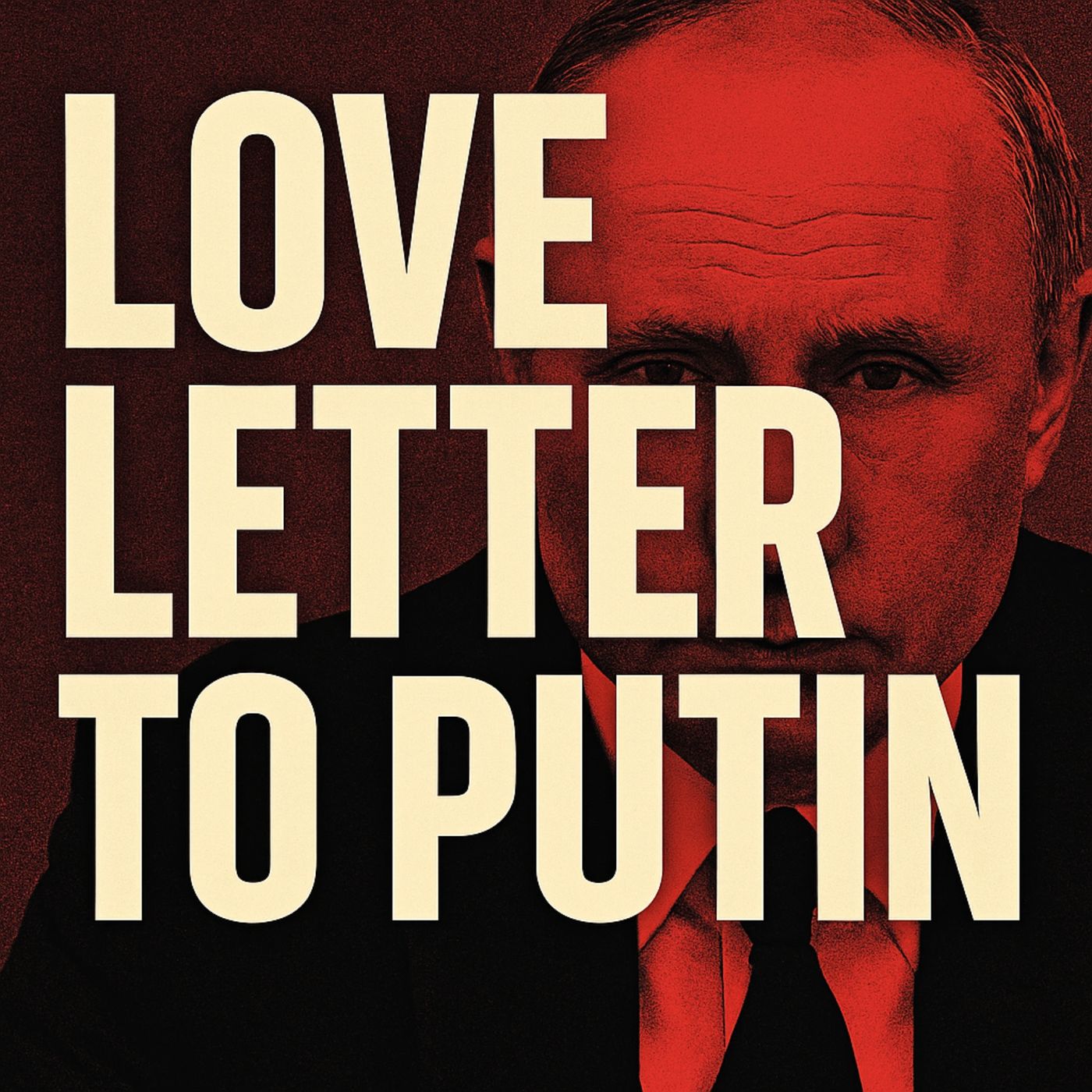
The Team House
Inside the Disastrous New U.S. Security Strategy | EYES ON GEOPOLITICS
00:54:12
In this episode, the team breaks down the newly released U.S. National Security Strategy, calling out its dramatic shift away from Europe, democracy promotion, and traditional alliances in favor of a hardline, transactional, Western Hemisphere–first...
Loading summary
Transcript157 lines
- [00:01]
Mick Mulroy
There's nothing like the American Express Platinum Card.
- [00:03]
Demetri Kontakos
Find out your welcome offer after you.
- [00:05]
Mick Mulroy
Apply, which could be as high as 175,000 points. Learn more and find out your offer@americanexpress.com.
- [00:13]
Demetri Kontakos
Explore Platinum terms apply.
- [00:15]
Mick Mulroy
My AMEX Blue Cash Everyday Card is my go to accessory. When I shop, I can earn 3% cash back on US online retail purchases. Try on the Blue Cash Everyday Card. Learn more@americanexpress.com Explore BCE terms and cash Back Cap apply.
- [00:31]
Demetri Kontakos
Hey everybody. Welcome to another episode of Eyes on Geopolitics. I am Demetri Kontakos. I'm here with Jason Lyons. Mick Mulroy, we're here. Do us a favor like and subscribe. If you're listening to us on audio, Give it rated 5 stars. Subscribe there as well. And if you want to Support the show. Patreon.com TheTeam House Mick has a new podcast, of course, the Pub and the Porch. Applied Stoicism. It's great. Comes out every Monday. Check it out. Links are in the description. Jason's links are in the description. Everything and anything you need to know is down in the description or the show notes. So thank you. Alright guys, a lot happening as usual. The big news, I think it came out on Friday, was the National Security strategy and I dubbed it and I'm gonna trademark this, so I'm gonna call it the Love letter to Putin. Our love letter to Vladimir. Incredible stuff. I'm sure, Mick, you mentioned that you've been talking about it since it's been, since it came out. So what are your, what were your initial thoughts? And then after you started going through it, what, what did you come up with? Did anything change? Where are you at with this?
- [01:38]
Mick Mulroy
Yeah, yeah, I've been totally geeking out. I'm gonna lie about this, not in a good way, but certainly really digging into what this means for the United States and the world because we are the concept most consequential nation, I think. Bias, of course. But the National Security Strategy for the United States impacts essentially the globe. Where to start? Sea change from the last, really, Any, any national security strategy going back to the end of World War II, including the National Security Strategy we drafted in 2017, the first Trump administration, which was very much in line with past national security strategies. This is a complete departure in my estimation. So the. And you. We could talk about this for three episodes, to be frank. Even though it's a, you know what, around 30 pages. The first thing is the reorientation from basically having a major impact globally to A focus that's on the Western Hemisphere. So what they're calling them on Road Doctrine 2.0 or the Trump Corollary. And I'll stop at each section because if not, I'll just be rambling for now.
- [03:00]
Demetri Kontakos
Yeah.
- [03:03]
Mick Mulroy
That is, you know, it's, it's an allusion to the Monroe doctrine of what, 1820. So it's a 19th century doctrine where the United States said, you know, we need to control our backyard. It was predominantly about European powers coming into the Western Hemisphere and we thought that was a challenge to us. Now it is focused mainly on mass migration. So the issue of. And it's called mass migration. So not just illegal immigration, but of course it's probably mostly illegal in the context they're using it, stopping the flow of narcotics and essentially dominating the Western Hemisphere. So it. And I, and it took some quotes from it. So the new national security strategy frames US Security as beginning at home in our hemisphere, where threats now move faster than alliances. So that, that says, you know, exactly what I just mentioned, that we're focusing on the Western Hemisphere and we're doing so regardless of, of any kind of cooperative effort. So it's not based on alliances, it's not trying to develop, you know, countries to be trading partners, et cetera. You know, we've get done away with most of our foreign aid. It is, it is trying to force our agenda on the Western Hemisphere. We can see that in Venezuela right now. Right, so I'll stop there because there's a lot more to say about this. But that means, of course, much less emphasis on Europe and we'll get to that. I got that in a whole separate category, less emphasis and less military power in the Middle east, even after these new security arrangements with Qatar and Saudi Arabia and overrunning the, you know, ceasefire in Gaza, but less emphasis on that. Africa's barely mentioned, but it's mostly, you know, economic opportunities that are valuable to the United States, not, not a cohesive like plan to build partnerships and democracies and free market systems and stuff like that. And then Indo Pacific gets a little bit more emphasis, probably Colby's influence, but also because we still view China as a competitor. Russia, by the way, in the first time ever, is not listed as an adverse adversary in this. But China, it's, it's predominantly based on economic competitions, but it talks about the need to have a substantial military presence. But of course, if we're going to also signal that we're not going to do things like defend Japan and South Korea and the Philippines and All these things, then just having a military force there isn't as consequential as you would think. Because if you're sending a clear signal to China like you're not going to invade or we're not going to defend Taiwan, then who cares if we have aircraft carrier strike group out there? So I'll stop there, throw it back to you guys. But my first category from this NSS is the Monroe Doctrine 2.0.
- [06:11]
Jason Lyons
Yeah, it's, I mean it, for lack of a better term, it's going to be a lonely road if we stick with this. And my fear is how is this going to weaken us as a nation? Because as you said, we are the most consequential nation on earth. I believe that as well. But I mean literally we're handing this to our allies, our friends, and then turning our backs. So here, read this. And turning our backs on them. And I fear we're down the road even if 20, 28 and beyond this administration is out of office, that this is going to take years to repair, if at all. And so that's my big fear.
- [06:59]
Mick Mulroy
I think I found it.
- [07:00]
Demetri Kontakos
Yeah. I have a couple questions. So how often does the national security strategy come out? Every year.
- [07:07]
Mick Mulroy
So we did one for the term of the first and it's usually done once. And that's a good point to make. Here is so you get the national security strategy, which is everything, right? So it's diplomacy, economics, obviously, security, intelligence. It's, it's the big picture. And then from that, and that's what Secretary Hept is doing at the Reagan foundation this week or this weekend, he's talking about, I don't know if it's completely come up, but the national defense strategy flows from the national security strategy. So that's how the military is going to do its part in this, in the national strategy, and then from that, the national military strategy. So that's the, that's the actual uniform military saying, okay, this is our defense strategy, this is how we're going to carry it out. So that's what gets down to the nuts and bolts, but that's how it flows and it's usually done with all those every, every four years. So yeah.
- [08:11]
Demetri Kontakos
Somebody, maybe I'm a dummy, but somebody explained to me when the Western hemisphere outside of illegal immigration has ever been a place where we have not dominated the area.
- [08:27]
Mick Mulroy
So the original Monroe Doctrine was concerned about European powers and that's just not a concern anymore. If anything now I think the proponents, and I have to be frank, I know a Lot of people that wrote this were involved in it and they never talk like this before ever. So I don't know what happened there, but I think the proponents of this plan would say that China, Russia, Iran are having, especially in places like Venezuela, are having too much of an influence, and it's right in our backyard, and we got to change that. I don't know why we couldn't, you know, do that as well as still be the leader of the free world. The, the leader that Ronald Reagan envisions, you know, be that champion of democracies. But that's another clear part of this, is that we are not. It's, you know, I have some quotes from it on how we're basically not going to focus on being that Chinese city on the Hill anymore. That it's going to be, you know, American prosperity is a foundation of American power. Our policies will prioritize economic returns of our citizens.
- [09:40]
Demetri Kontakos
Yeah. We're open for business is what it's saying.
- [09:43]
Mick Mulroy
Foreign engagements must demonstrate clear financial benefits to the United States.
- [09:50]
Demetri Kontakos
Yeah.
- [09:51]
Mick Mulroy
Right. So that says. Yeah, that's, that's. I mean, I'm not saying that we shouldn't look out for our own financial interest, but it has to have a clear benefit or we're not going to take part.
- [10:00]
Demetri Kontakos
Yeah. But I feel like the overall national security strategy of the last 40 years has been like American interests. Right.
- [10:09]
Mick Mulroy
Which American interests were believed to also include promoting democracy and civil rights. Yeah.
- [10:15]
Demetri Kontakos
Yeah.
- [10:15]
Mick Mulroy
One more quote for you from the thing. The United States will pursue peace through strengths and advantage, not ideology or moral aspiration. It's hard to believe somebody would put that last three words in a strategy for their own country. Not ideology or moral aspiration. So it, it. I mean, the issues that people have, and I think next we should talk about the Europe situation, but is. It clearly indicates profit over principles.
- [10:52]
Demetri Kontakos
Yeah.
- [10:53]
Mick Mulroy
I guess is the way I put it. And I don't think the US has ever viewed themselves that way. I think we should put our interest first. Right. Because I mean, especially our government employees, they work for the people. But our interests should include in my, I guess, dated view of the world is the promotion of democracies to promotions of individual siblings. Free markets. I mean, free markets used to be a core part of conservative political beliefs. It clearly states in this document that that's not true, at least for this administration. It is tariffs as a means of coercion, which is not. Which is antithetical to the idea of free markets. Yeah.
- [11:42]
Jason Lyons
I mean, and then, I don't know.
- [11:44]
Mick Mulroy
I don't think you read that part.
- [11:45]
Jason Lyons
It says about Africa. The Africa section says, for far too long American policy in Africa is focused on providing and later on spreading liberal ideology. So there's that. And then the Latin America one says they talk about encouraging governments and political parties that broadly align with ours, but we must not overlook governments with different outlooks with whom we have nonetheless shared interests and who want to work with us. That is a really broad and open door to saying we'll work with the worst of the worst, you know, as long as it gets us what we want. And. And people can come back and say, well, you guys were CIA. Isn't that what you do? You know, you did all the time? Yeah, on a tactical level, yeah, that's what we did. But it was in. In the furtherance of our democratic policies, you know, so. And it was against those bad guys, you know, so. Yes, that's not an excuse.
- [12:43]
Mick Mulroy
Very good point, Jay. And I think it's clearly stating that they're not so concerned. I mean, one of the things that AID USAID was supposed to do is help develop the economies of other countries to be trading partners with the United States. It wasn't to keep them in a perpetual state of need. Right. Oh, but now it's. And they. It's. That's all gone now. It seems to be our policy in Africa is where is the rare earth minerals? And whoever's in charge of that is now our friend, and we'll work with them for the economic benefit. Now I get it. I mean, it's easy to sound like a complete ideologue and say, you know, but it's a balance, at least the way I view it. We want to develop countries to be trading partners so that we don't have complete imbalance economically. That's what causes the mass migration, which is the undercurrent of the entire national security strategy. In fact, this is the first one I can remember where it specific talks about, you know, specific policies of another country like Europe. So Europe is one of the next to the United States largest bastions of democracy. Right. And it specifically criticizes Europe, challenges the very notion that we're in an alliance with them. It says things like, quote, internal governance failures. It says, European partners must confront the consequences of uncontrolled migration that strains cohesion and fuels extremists. And they actually use this term, and I didn't write this down, but it's like cultural erasure.
- [14:22]
Demetri Kontakos
Oh, yeah, saw that. Right.
- [14:24]
Mick Mulroy
So it's criticizing Europe, not the countries, the despots. Around the world.
- [14:30]
Demetri Kontakos
Yeah.
- [14:30]
Mick Mulroy
Again, we already talked about Russia, who has no legitimacy in its elected leadership and specifically invaded a democracy, has deliberately targeted civilians and stole 20,000 children. So we're not going to criticize them, but we are going to criticize Europe for its lax, what we're calling lax migration policies. It also says the United States will not underwrite Europe, European security indefinitely. Well, the one thing, I've mentioned this before, I mean, Europe should have woken up a long time ago that it needed to defend itself and not just rely on the US umbrella. But now it is crystal clear, it's crystal clear that they're actually challenging the future of NATO. So Europe needs to. And if I was European, I would start taking my security entirely in my own hands. I wouldn't rely on anything outside. I would develop a comprehensive, integrated European military and I would be as strong as anybody else on the planet. That'd be my plan. And we could get into the how that would affect Ukraine. But right now I would hope that European leaders are waking up to this. There's no more neutrality. I'd also throw that out. And you know, my beloved homeland, ancestral homeland, being part of it is if you're in Europe now, you need to contribute to the overall defense of your coalition. You've got the example of why right next to you waging a war in Europe, which they've already said this week, although they don't want to, they're perfectly ready to go to war with Europe, which if you, if you don't take that as a, another warning. In addition to this national security strategy, you have your head in the sand.
- [16:17]
Andy Milburn
This time of year. The pace doesn't slow down, but you still need to. The calendar's packed, the weather's changing and your body's reminding you that it's time to rest and reset. That's where Ghostbed can help. It's a family run company founded by a team with over 20 years of mattress making expertise. They've spent decades perfecting how to build a bed that's durable, comfortable and engineered to help you recover. Every Ghostbed mattress is made with premium materials, proven cooling technology and their exclusive procore layer, a targeted support system that reinforces the center of the mattress where your body is the heaviest. It helps to keep your spine aligned and your back supported so you wake up ready to take on what's next. And Ghostbed's cooling materials don't just keep you from overheating, they help regulate your temperature year round. Each mattress comes with a 101 night sleep trial and a 20 to 25 year warranty plus fast free shipping. Most orders arrive in two to five days so better rest is just around the corner right now. During Ghostbed's holiday sale you can get 25% off site wide from a limited time. Just go to ghostbed.com house and use the promo code house at checkout. That's ghostbed.com house promo code house. Upgrade your sleep with Ghostbed, the makers of the coolest beds in the world. Some exclusions apply. See site for details and thank you Ghostbed for sponsoring the show. Please check out the link down in the description and support our sponsor.
- [17:57]
Demetri Kontakos
It's kind of a wild place to be where you have European leaders doing damage control in terms of we're going to stand for democratic institutions and stuff like that and America isn't. And whether whatever you believe it or not, like America's imperialist whatever your view might be, the fact that and Europe's got a lot of problems like any other country but they're democratic for the most part, right? Like they are not China, they're not Russia, they are not Iran which are straight up authoritarian plus plus countries that are up to no good. The only thing they give a about is their own regime survival. Putin's throw it has thrown a million plus people into this meat meat grinder in Ukraine doesn't give a about any of them. And it's like unbelievable that an American administration can come out and do something like this. I mean the writing's been on the wall since they got in. Let's call it a spade of spade. Like that February meeting in the Oval Office was the launching point. But to actually put it in like hard writing which is like this is our actual strategy and is a joke and when you come out and and the you know, Russian. The Russian government has publicly welcomed the shift saying the new NSS is largely consistent with Moscow's world view. We should never be consistent with the Kremlin or Moscow's worldview. They're lunatics. Vladimir Putin's a lunatic. That's why I called it Love letter to Vladimir because it's an absolute joke. And the fact is this like all this is NSS is saying is hey guys, whoever you are, whether you're an authoritarian, whatever, we're open for business. So we don't give a shit what you guys do, how many people you starve, how many people you kill. We're open for business if it's in our interest in terms money wise like we're all in and I don't know if that speaks to whether this is like some late, late staged mutant, you know, mutated capitalism or what it is because yeah, free markets, it's not free. It's. It's who controls and has the biggest guns. They can make the rules. There's nothing free about this at all. Make back to you. Sorry I blacked out just now. I blacked out.
- [20:23]
Mick Mulroy
So just a direct comparison. I, you know, I. This is a quote from the 2017 Russia is described as a revisionist power seeking to undermine the US and its allies and is explicitly labeled as an adversary. I asked our cyber overlords, I. E. AI how was Russia categorized in the 2025 NSS and its response is Russia is no longer identified as an adversary, rival or a threat category at all. That's what AI when it read it. So that, you know, do that at your own peril. Right. Russia would love for the US not to be view it as even an adversary anymore, yet they're going to do whatever they can to undermine us all around the world. If you go in, Ben Connible, a friend of mine, super smart, I used to be at Rand. He did a thing. One of his posts talks about all of the terms used against Russia in the 2017 one. And it is what I think most people would think. We view Russia, none of it's in there this time. It is a complete shift. So that, that has to have some consequence. I mean your Ukraine should read that and view that they need to basically get Europe more not only on their side. I think they're obviously on their side, but they need to be their main advocate like there. If, if we're going to just send special envoy Witkoff with a pro Russia dictated peace plan to go talk to the people who dictated it, it's not going to amount to anything. It's not going to amount to any ceasefire. It's just a delay and a reason to actually put consequences. So we're not going to do the secondary sanction bill that has overwhelming support in the Senate. We're not going to push for releasing the over $400 billion worth of frozen Russian assets so Ukraine can defend itself. We're not doing these things because Russia agrees to have a meeting next month and then the next month and the next month, even though. And they're in. Shockingly and not shockingly, yes, the Russian advances are incremental right now in Ukraine, but the Institute for the Study of War just highlighted that they took more territory in the last four weeks than they did in the previous four weeks.
- [22:51]
Demetri Kontakos
Almost 250 square miles, right? I think it was, yeah.
- [22:55]
Mick Mulroy
So the other thing that's attached to this, the consequences of this security strategy is when is Europe going to start talking about where's our red line? Like a real red line? Like, are we going to allow them to take Keef? I'm not saying they're going to. I think some of the. It's overstated how much. But from the Russian perspective, I mean, from the Europeans perspective, when would they be willing, if they will be willing to deploy forces to stop an advance that consumes Ukraine? And again, I'm not saying it's going to happen, but you got to talk about this now and you got to start sending clear messages that if you can't come to an agreement, if not, and say hypothetically, Russia takes Ukraine for the rest of history, they will ask, what did all these European leaders do as they clutched their pearls and twiddled their fingers as Russia kept taking incrementally over parts of Ukraine until it was too late? And then what if Russia immediately turns and goes after Moldova or another, or, or a NATO country? Yeah, we're just gonna clutch our pearls and twiddle our fingers for that.
- [24:09]
Demetri Kontakos
I mean, I'll bet money that the US Wouldn't do to be on at this point. I'm gonna be completely honest. I mean, that's the signal that's coming out of the administration. If they went and took over Estonia, which is probably not that difficult to do. It's a tiny country and God bless them, like they're, they fucking hate the Russians more than most. If they. What we. What would we do? Would we actually fucking step up? I don't even know. Europe would, sure. But like, would we? I doubt it.
- [24:35]
Mick Mulroy
Well, I mean, if you view the, the strategy as definitive on the topic, and I would point out we write strategies sometimes and don't do it like we're always talking about pivoting for the middle age, for example. It's like, it's like a perpetual thing that people in D.C. talk about. And then, I mean, look, look, look how engaged we are in the Middle east right now.
- [24:55]
Demetri Kontakos
Yeah, yeah.
- [24:57]
Mick Mulroy
But anyway, if this is definitive, then the answer to your question would be Europe needs to do is clearly.
- [25:04]
Demetri Kontakos
Yeah, it's.
- [25:05]
Mick Mulroy
Here's some other quotes, please, from. I already read that one.
- [25:11]
Demetri Kontakos
I also think while you get that, like, Europe really needs to decouple and like, I know they have a military industrial base, they should really decouple from the American one and be as self sufficient as humanly possible. I know they do have a really solid one, but, you know, our, our stuff is kind of their backstop too. You know, like from engines to F35 to everything. I wouldn't trust America as an ally because to be completely. If I'm a European country, if I'm Poland, I'm sketch this out with, with what's going on with America, you know, like, I really am. It's. Or any, any European country, it's like, we can't trust these guys. And it's, it's a funny thing when, because everyone's tiptoeing around Trump and everyone's trying to get like a great meeting with Trump. So, like, the headlines are good the next couple days, but what is the substantive change that happens after a quote, unquote, good meeting? Nothing happens. Everything stays the same. And now it's in black and white for Europe to see it that they're not us is not coming to their backs. And it's a fucking joke, to be honest. It's like, what the fuck we spending a trillion dollars a year for in defense? What? Give me some free health care if that's the case, if this is the deal, let's all get free health care and not spend a trillion on defense if we're not going to fight for or even support tyrants invading democratically. A democrat democracy and Ukraine might be corrupt. And I get it, like every other country. We could look in the mirror and look at America.
- [26:41]
Mick Mulroy
Yeah. We got a lot of corruption going on the United States.
- [26:43]
Demetri Kontakos
Right. But the fact is Zelensky was. There's a. It's a democracy.
- [26:48]
Mick Mulroy
Yeah. He was elected leader and he's actually more popular than I ever was.
- [26:51]
Demetri Kontakos
Right.
- [26:52]
Mick Mulroy
So it doesn't matter. I mean, it's, it's not. It's. I mean, he was elected leader. Their constitution says they can't have an election in the middle of an invasion. Right. That makes sense.
- [27:02]
Demetri Kontakos
Plus 20 of their countries gone. Right. Who does anyone vote there? How does that work? Like, what are the logistics?
- [27:08]
Mick Mulroy
And, and so we're obsessed about whether Zelensky gets another democratic election and gets reelected when Vladimir Putin hasn't been elected in how many years?
- [27:17]
Demetri Kontakos
Right.
- [27:17]
Mick Mulroy
I mean, it's, I mean, this is a clear right and wrong. Right. Yeah. Just pointing out there's some corruption, apparently that continues in Ukraine is, is both accurate and irrelevant. I mean, we should do everything we can to make sure the money we provide gets used for the purposes. But there's corruption in the United States. There's Congress, people that are both caught, convicted and pardoned all in a matter of a few years and we just kind of look the other way. That has nothing to do with I think in the past the United States has viewed itself as that beacon of democracy and leader of the free world. If you don't want to be the leader of the free world, then it's going to be less free in my estimation.
- [28:01]
Demetri Kontakos
Sure.
- [28:02]
Mick Mulroy
And it's going to leave a vacuum that might not be created by the next champion of freedom and democracy. It might just be overcome by China who says great, they're detaching from the world. They're focused on the Western hemisphere. We're going to dominate not only the Indo Pacific, but Africa and the Middle east and, and then Russia says great, we'll take Europe and we're over here focused on, on the Western hemisphere. Again I think we should probably be paying more attention to the western hemisphere. It is in our backyard. But I don't think we're coming at it as, as benevolent with benevolent intentions. I think we're coming at it to dominate.
- [28:42]
Demetri Kontakos
Right, right, right. Yeah.
- [28:44]
Mick Mulroy
You know it's, you know, I call it hemispheric fortification is what it sounds like. They want to basically force countries to deal with migration. I'm okay with that. But it's going to be done with military because the national defense strategy they just created I think a western hemisphere section of the U.S. army. Right. So there it all adjusts, everything adjusts based up based on the national strategy, the defense strategy, the military strategy and of course, and I've always advocated for having a, an appendix to the defense strategy. That's for intelligence. Right. Especially covert stuff. But either way it's all going to adjust based on the strategy. That's how it works. So if this is actually carried out, we are going to, we're going to be getting again hemispheric fortification. We're going to be going from a more alliance based to a more transactional based world. And, and we are going to get away from promoting democracies, civil rights, etc. And more just totally geared toward economic self interest of the country. And that's probably going to be for corporations, right?
- [29:55]
Andy Milburn
No.
- [29:56]
Mick Mulroy
What do you think US Corporations? I mean, I don't, I don't know how necessarily the U.S. taxpayer you think.
- [30:03]
Demetri Kontakos
It'S trickling down to like the middle class. Yeah, bullshit. Yeah, go ahead.
- [30:08]
Jason Lyons
Sorry. No, I'm just saying they, they're, I mean they're not stupid. They throw buzzwords into these, into the nss like prosperity, you Know, this is about prosperity. But who is that? Prosper, prosperous for who? You know, the cronies. Exactly, exactly. But they know, along with, they also threw in that beloved buzzword DEI in there, that this is for, you know, to root out dei. Somebody tell me. And I'm guaranteeing I'm going to get a text or a message or something. Well, actually, tell me where DEI has, has been a burden on national security. Give me one instance where it has. But they know if they throw these deep, these buzzwords in there, you know, prosperity on the positive side and DEI on the negative side, it's going to, number one, it's going to get people riled back up. And number two, they. People who already support them, it's going to fortify them. See, this is why he needs to do this. And going back to what Mickey was saying about Russia and China, in the long run, they can afford to abandon the Western hemisphere. Whatever they're doing in South America. They can afford to, you know, hey, not a problem, you know, America, we're out of here as long as you leave us alone in Europe to do what we want and in the Pacific, you know, to do what we want. They, they can afford it in the long run.
- [31:27]
Demetri Kontakos
So they don't. That's a huge trade point. That's a massive trade up. Who wouldn't take that, right?
- [31:32]
Jason Lyons
Like, exactly.
- [31:34]
Mick Mulroy
Yeah, yeah, that's a very good point. People should be looking at that very point, Jay, because it, I haven't heard it made, but this could be an offer to like basically just divide up the world.
- [31:45]
Jason Lyons
Yep, absolutely. Yeah. And then as far as Europe is concerned, you know, we, we just had an incident with them, you know, where they, certain countries said, we're going to stop sharing intel with you as far vis a vis or vis a vis South America and Central America concerned, because we don't agree with what you're doing. Well, now let's shift that to Europe. If we cut them off, you know, we still have US citizens that live there who go vacation there. You know, we still have embassies there, things like that. So what says that they get. Somebody gets wind of a impending terror attack or something like that, and they decide, screw them, you know, they're not. The US isn't helping us. So we might hold off on this for a little bit until we know for sure that it's going to be an attack, you know, so the ripple effect, the butterfly effect of this is going to be far reaching.
- [32:39]
Mick Mulroy
It is, it is. I think we'll be talking about this for a long time, especially if we see it play out in policy.
- [32:44]
Jason Lyons
Yep.
- [32:44]
Mick Mulroy
Like I mean to go to do have this big of a shift in and over any president. Right. Over the last. Since 1947. Well like for example, European Europe was a core partner like the core partner with. With us on security matters since 1947. Right. So this is a complete departure. So if it's a complete departure that tells me they intend to do it. Right. What's the point of writing like a very controversial, totally change perspective even from your first administration and then not do it?
- [33:17]
Jason Lyons
Yeah, right.
- [33:18]
Demetri Kontakos
Also yeah, I think it's happening totally Mick. What's would you call it? Cultural erasure? That's happening. Right? That, that's what they mentioned in the NSS in terms of like mass migration from into European countries and our country. Yeah. Why don't we just call it what it is and call it white supremacy, bro. That's what the it is. Let's be real. Like, oh, they're not Western. They're not western European white people that are coming into these countries. Meanwhile, the only reason America is so prosperous because of immigration. Let's call a spade a spade here. The reason why we're so. We were are so popular and have dominated the world the last 80 years is because of our immigration. I'm a child of an immigrant. My dad came from Greece when he was 9. It's what, because I'm white. I look, I'm white coated. It's all good. A brown guy from Mexico's no bueno. Like this is a joke.
- [34:17]
Mick Mulroy
I mean, I mean that's a total sorry I'm getting protected about coming back on to talk about this on the news and stuff. Yeah. I don't know anybody out there has a different definition of cultural erasure.
- [34:32]
Jason Lyons
Yeah, yeah, exactly.
- [34:33]
Mick Mulroy
I mean you're talking about a culture. You're talking about European culture people can have. You know, if European culture is democracy based on individual civil liberties, human rights, freedom of religion, all that stuff.
- [34:49]
Demetri Kontakos
Right.
- [34:50]
Mick Mulroy
You could come from anywhere and be part of that culture. Right, right. Look at America. Look at America. Right. There is no skin tone requirement for that. So but then they're equating migration so people coming in from other places to the erasure. So I mean over to somebody else who explained that they're not talking about a racial group. Right, right.
- [35:16]
Demetri Kontakos
Yeah. It's. It's just incredible how this is just plain as day in our faces in a official US government document that is super important. Right. The national security strategy. Like I mean what Are we doing, bro? What are we doing? Like, honestly, it's an absolute joke.
- [35:38]
Mick Mulroy
And what is it going to mean. What is it going to mean for actually where the US Will push its force around the world?
- [35:46]
Demetri Kontakos
Right.
- [35:47]
Mick Mulroy
Does, I mean, right now, obviously, Europe.
- [35:49]
Demetri Kontakos
Should be the highest bidder.
- [35:52]
Mick Mulroy
Just where our economic interest in are. That means, you know, very limited places in Africa and largely working with people who are dictators. It's Europe. You're on your own. It's Middle East. Even though we just made a lot of commitments.
- [36:08]
Demetri Kontakos
Right.
- [36:09]
Mick Mulroy
It's kind of like, stabilize yourself. There's also a lot of talk, you know, I do Middle Eastern media. There's a lot of talk about a shift to. From Israel being. What was the term they used? Exceptional. That wasn't a term to a partner who needs to deal with his own stuff. I'm kind of, I'm kind of mischaracterizing the way it was termed. But it downgrades. Israel is, is not like the preeminent relationship with the United States. No. Just a partner with con. With requirements. Right. So that's going to send shockwaves in Israel, if they read it that way. And they are countries that we're really tight with who are like, oh, I thought we were doing all these mutual defense agreements and having you guys stage your forces in the Middle east for a reason, you know, like Al Udaid, for example, and there's Bahrain in the fifth Fleet. I don't know. Does that mean we're moving them out? Will that stabilize the region or will it just become an arms race? Will Iran rebuild its strength? I don't know. There's consequences.
- [37:22]
Jason Lyons
I know this is the Middle east, but wasn't there maybe you sent it a story about true US Troops in Romania got pulled out, I think. Yeah. And there was no, no announcement. It just happened.
- [37:36]
Mick Mulroy
Yes, yes. Family members over there who are being told their last, last ones to deploy. Right. So you're already seeing the consequences of the strategy.
- [37:47]
Jason Lyons
Yeah.
- [37:48]
Mick Mulroy
And again, you know, I, and I have seen. I talked to a lot of European national security types. They are standing. They are like, like Germany's decided they're gonna have the baddest army in the best. I mean, in Germany. I mean, in Europe.
- [38:05]
Demetri Kontakos
Right.
- [38:05]
Mick Mulroy
Poland's kicking butt. You're seeing a lot of money go into the military. It's going to take a little while. And again.
- [38:12]
Demetri Kontakos
Right.
- [38:13]
Mick Mulroy
They shouldn't have been in this situation. They shouldn't have just said, you know, we got, you know, a big brother here. So we're just going to go ahead and spend money on ourselves and let them cover our defense for the last four decades. But they are doing it, and that's good. And I need to do it. And they need to just completely take responsibility for their own security and for the advocacy of Ukraine. I think.
- [38:38]
Demetri Kontakos
Yeah, if Europe's not ringing alarm bells, specifically defense economics wise, where they're just like, let's get. We cannot count on America as a defense partner, really, from in terms of soldiers and alliances to all the way down to the nuts and bolts literal. They're crazy.
- [38:59]
Mick Mulroy
Specifically says that they, because of migration, that European countries are going to become so non European that it challenges our belief in their ability to be in NATO. It's.
- [39:13]
Demetri Kontakos
Oh, sick. Why don't they just. Why don't they just goose step and seek Heil real quick. Why don't they just do that?
- [39:21]
Mick Mulroy
Google that on specific. I'll just read. It's 33 pages. A lot of stuff people don't read because it's just like a thousand pages stuff. This is not, this is not, you know, complicated. You could read it in half an hour. So there's that.
- [39:37]
Demetri Kontakos
Yeah, great. No, I was just feeling really, really good about what's going on here in.
- [39:41]
Mick Mulroy
The leadership conversations about this. I mean, if there's people that want to defend it, you know, I, I obviously think we should control migration and it should be on our. I do think, you know, it talks about having the strongest military. Of course. Yes, I agree with that. Every, I think every strategy said that. But I mean, people that want to support dumping Europe in favor of Russia, go ahead and do it. Jump on tv. You know, I mean, I, I talked to plenty of Republicans that are elected leaders. None of them are the stuff that's in this strategy.
- [40:22]
Demetri Kontakos
So, I mean, you even said it to a lot of the people that were authors of the strategy probably seven, eight, nine months ago were not, not in favor or not backing what is being said and what they wrote in the strategy. I think it's the same thing applies for most politicians where they move away and back away from their ideology and what they really believe in because it helps them professionally. Like, bottom line, we're all human. I get it. We all like the next rung on the ladder. But at some point, the rubber's got to meet the road and you got to either be like, am I gonna be a shill or am I gonna stand up for what I believe in?
- [41:03]
Mick Mulroy
Yeah. And if you're not standing up for what you believe in, what's the point?
- [41:06]
Demetri Kontakos
I mean, yeah.
- [41:07]
Mick Mulroy
You might as well just be stay in business and.
- [41:09]
Demetri Kontakos
Right.
- [41:09]
Mick Mulroy
You know, I mean, if you come back.
- [41:11]
Demetri Kontakos
Businessman. Yeah.
- [41:12]
Mick Mulroy
Or be a good businessman.
- [41:13]
Jason Lyons
Sure.
- [41:14]
Demetri Kontakos
Or that's an option too.
- [41:15]
Mick Mulroy
But I'll be saying like it's. If you're, you're not going to talk to Congress to promote your ideas.
- [41:20]
Demetri Kontakos
Yeah, right.
- [41:21]
Mick Mulroy
If you're not going to do that, then what's the point? I mean, you're universally disliked. Politicians are. And you know, for the most part, they're not doing anything. They've become just a punditry. And that, that's not the intent. It's. It is the first branch of government, meaning that it's Article 1. Right. So. Yes. And by the way, if you haven't seen the American Revolution by Ken Burns, please do. I'll plug it every time until I think everybody that listens to us has watched it. It's excellent. But it really does go through how we developed our, you know, system of governance and the legislature, who during the Revolutionary War was essentially running the show.
- [42:07]
Demetri Kontakos
Right.
- [42:07]
Mick Mulroy
Because there was no president. The Continental Congress was running the show through its General Washington. Right. So they're supposed to have a lot more say in everything, especially in matters of war and peace.
- [42:24]
Demetri Kontakos
Yeah, no, they are abdicating their responsibility completely.
- [42:28]
Mick Mulroy
And I'm, I'm part of this group called the Vandenberg Coalition, which is, it's nonpartisan. But the whole point, it comes from a quote from Senator Vandenberg that says politics is supposed to stop at the water's edge. Right. So we should have a uniform like national strategy that incorporates, you know, both sides of the political spectrum. Because the other thing that could happen here is such a, such a deviation that it lasts for three years and then somebody else comes in, whether it's a more traditional Reagan type Republican or Democrat, and that's all gone. So everything that we headed down one direction, whether you agreed with the direction or not, is just going to do the drastic back and forth. The way to try to stop that is to have that dialogue potentially in the Foreign relations committees in the House and Senate with the White House to talk about, you know, where we should go as a nation. So we have a long term projected strategy that we can actually compete with strategies of China, etc. Who have a very long view. We, we don't really have that luxury, but we are making it such that this could be, you know, four years from now. Nobody's talking about Monroe 2.0, right? Nobody.
- [43:43]
Demetri Kontakos
Also, I feel like what would help probably and not hurt is Gutting the National Security Council. I feel like that's probably a move that would help find a succinct policy when it comes to specific areas of the world.
- [43:57]
Mick Mulroy
That's where it's supposed to be developed. In the national nsc. Yeah, National Council. And then it goes down. And then we. We at the Pentagon turn it into defense strategy and the military strategy. So we'll see within. As this comes down, it might already be happening. We'll start seeing force redeployments.
- [44:19]
Demetri Kontakos
Yeah, maybe.
- [44:20]
Mick Mulroy
Maybe closing sub diplomatic posts. I mean, that it should. It's. It's a national strategy, so everybody should adjust to it. So if we say we don't care about X region, then we should have less diplomatic missions there, less personnel in those missions, less military deployments there, potentially collect less intelligence there.
- [44:41]
Demetri Kontakos
Right.
- [44:42]
Mick Mulroy
It's all based on the national strategy.
- [44:47]
Demetri Kontakos
Wild. Yeah, I can see totally, like, embassies closing in and around Europe. Imagine, you know, like all those big money donors who, you know, who get the ambassadorships in the kush places. You're gonna have to look for some other work, but they'll probably just become, you know, Secretary of Defense or something. You know, get a bigger job. So I'm being spicy today, guys. I'm sorry, because this national security strategy is a joke. It's real clear, especially when it comes to Russia, like, and Ukraine, what's going on. It's like, not only. I mean, I don't understand why we kowtow to everything Russia says and we copy and paste their peace plan. The fact that we're not outwardly and openly with them in any possible way we can, and by whether it's intelligence sharing, weapons, Tomahawks. We went from you. Zelensky's getting Tomahawks in August to now. Like, they. He had a deadline, another bullshit deadline that he wasn't gonna get any intelligence sharing or anything to make this bullshit peace deal by Thanksgiving. This is as clear as day. It doesn't matter if you're right, left, center. It doesn't matter. Like, what's going on with Russia. Putin is a dictator. He is invading a democratic country. This should be easy, guys. You know, I don't know, sending the.
- [46:07]
Mick Mulroy
Wrong message, but it's definitely in line with the national security strategy that came out on Thursday night. Yeah, there you go.
- [46:15]
Demetri Kontakos
So we'll obviously keep an eye on this. I mean, everything else is still going on. We're still, you know, blowing people up in the Caribbean, which is great. And I, in my. I'm going all in in my opinion, completely illegal. So we're still in a kind of holding pattern when it comes to like strikes on Venezuela, inside of Venezuela. We'll see what happens there. Obviously we're monitoring this as it comes, so we'll keep you guys updated. Things are still fucked up around the world, so don't worry, we'll keep an eye on it. Is anything else you guys want to hit on?
- [46:50]
Mick Mulroy
Well, I do think, you know, we're gonna have to see what happens in Venezuela because you can't just keep this level of military capacity in the Caribbean.
- [47:00]
Demetri Kontakos
Yeah.
- [47:00]
Mick Mulroy
Costs a lot. So is it going? It's clearly aimed toward regime change. Right. So you don't need the level of firepower to do the drug interdiction. So we're going to have to see what comes from it. I mean that's, you know, we've seen the reports on the negotiations. I assume my old organization CIA is doing that. I don't know. But I'm trying to get him to leave. Right, that would be great. It'd be great for Venezuela. But who's going to come next, you know?
- [47:27]
Demetri Kontakos
Yeah. Didn't he offer to leave if he would get like him and a hundred of his associates amnesty and stuff like that and then put in power his vice president until elections were held and we said no to that. Frankly, I don't give a who runs Venezuela. I'm gonna be completely honest, guys. I think we're just cherry picking a conflict to have and maybe just to highlight and push the national security strategy. Gonna be completely honest because we're not interdicting many drugs. Let's be honest, I can get cocaine really easy around here. So who are we? And there's no fentanyl coming from venezuela, so.
- [48:04]
Mick Mulroy
Right. 90 of fentanyl comes from Mexico.
- [48:06]
Demetri Kontakos
And like you said, like, is this just a regime change? There's no actual, like, what are we doing here? This is the reason why we're doing X, Y and Z.
- [48:16]
Mick Mulroy
We must be seeing the implementation of the Western hemisphere part of the national security strategy before the strategy actually came out.
- [48:25]
Demetri Kontakos
Yeah, yeah, yeah, yeah.
- [48:27]
Mick Mulroy
This is it. So who's next? Who, who, who's, who else are we talking? We're talking about Colombia, apparently.
- [48:33]
Demetri Kontakos
Colombia and Mexico. Right. Mexico, who's a huge trading partner. You know, when we talk about free markets and stuff, there's a reason why things are relatively inexpensive. Relatively inexpensive is because a lot of the stuff in manufacturing happens in Mexico. Right. They are a legitimate partner. And I don't know if tearing up their area in terms of a war is really good for their economy. And what will that do with my firm migration, in terms of people from Mexico coming to the America? I don't. I'm not an expert, but I feel like it would probably bump it up pretty, pretty high.
- [49:07]
Mick Mulroy
Yeah.
- [49:08]
Demetri Kontakos
And let's not forget people from south and Central America. The people who run this fucking economy. They're the backbone of it. Sorry, I'm done. I'm off. I'm off. I'm off my lefty. My lefty pulpit. All right. As usual, a pleasure. I didn't expect to get so worked up, but Mick. Mick was a little worked up, so he got me going. I was feeling mixed vibes, and I was like, all right, I'm gonna push it too. It. It's ridiculous.
- [49:35]
Mick Mulroy
We've been talking about this for a long time.
- [49:37]
Demetri Kontakos
Make this is your life lifestyle. Jason, too, right? Andy Milburn, everybody, who's on this show, right? This is. You guys served for decades. Not because you guys want to see American power projected everywhere and everything like that. It's because we represent democracy. Like it or not, we do. I don't give a. About the tankies out there who think we're imperialists. All this. When a dictator invades a democratic country. It's real easy what, what. What side you need to stand on. And the fact that the United States administration is not doing that is a fucking joke. And it's a disappointment, and it's un American, frankly.
- [50:22]
Jason Lyons
Comment on social media that said American men and women died fighting communism since the end of World War II. And now we're just. We're just basically spitting in the face of those people that lost their lives.
- [50:35]
Mick Mulroy
Yeah, I remember Russia was a bad guy as of, like, Wednesday.
- [50:44]
Demetri Kontakos
There are. But it's amazing how they. There was nothing even said about Russia in the nss.
- [50:49]
Mick Mulroy
Oh, it's in there. But it's. It's like you've got to work to stabilize the region and. Yeah, but it's. It's not as an adversary. It's when they're clearly an adversary. I mean, they're almost jumping up and down, holding up their hands, and I want to be an adversary of the United States. They. They literally, I think sometimes just say, what does the United States wants to do in this region? Okay, let's do the opposite. Yeah, it's literally just to be the villain for us. And then we go, now you're not.
- [51:13]
Andy Milburn
You're not.
- [51:14]
Demetri Kontakos
And like, they went and zapped a bunch of our diplomats and officers. Mark P. Being one of them. Right. Like, they're outwardly and offensively going after our people. It's time for us to start doing that to them. Yeah, we gotta pee pee whack them. They got to get peepee whacked, for lack of a better term. I know that's not high, you know, diplomatic high brow. I think it is.
- [51:38]
Mick Mulroy
Bad visual.
- [51:39]
Demetri Kontakos
Yeah. All right.
- [51:42]
Jason Lyons
I think said this. Sorry last night. I think Mick said this a while back. It's not like if we decide we're going to go all in with Russia and, you know, we're going to make peace with Russia and everything is great with Russia, that they're all of a sudden going to say, okay, we're gonna match that, you know, one for one. No, they're gonna take that and be like, you idiots, and then stab us right in the back and go do what it was that they were doing anyway.
- [52:06]
Mick Mulroy
Yep, absolutely. That's what they've proven over and over and over again.
- [52:12]
Demetri Kontakos
Yeah. All right, guys, we'll keep an eye on. As always, check out Mix podcast, the pub and the porch. Applied stoicism that links in the description. Jason's links are in the description. Andy Milburn, too. And Support the show. Patreon.com TheTeamHouse you get eyes on geopolitics and the team house ad free early. You can ask us questions and you can support the show. So as always, guys, a pleasure. Thank you.
- [52:39]
Jason Lyons
Thanks, gents. Take care, everybody.
- [52:42]
Andy Milburn
Hey, guys, I want to tell all of you today about a new newsletter that we're launching that encompasses both the team house podcast, the Eyeson podcast, and the high side news outlet, which I run with Sean Naylor. The newsletter is going to be once a week. It's going to come into your inbox, and you're going to get the most current podcasts on Eyeson and the team house and whatever's topical or current on the high side. So it's another way for us to get the information out to you, as social media algorithms are pretty iffy and you never really know what you're going to get. So this is a once a week email. It'll slide into your inbox and it will have, you know, the greatest hits of that week.
- [53:23]
Mick Mulroy
It's really good, man.
- [53:24]
Demetri Kontakos
Checking it out.
- [53:26]
Andy Milburn
The website for it is teamhousepodcast.kit.com join teamhousepodcast.kit.com Join go there and you enter into your email list or you enter your email into to the little thing on the website and you're good to go, and that'll be it. So we really appreciate your support and hope you'll consider signing up.
- [53:49]
Demetri Kontakos
Where's the link?
- [53:51]
Andy Milburn
The link will also be down in the description if you're looking for it there.
- [53:54]
Mick Mulroy
And that's teamhousepodcast kitkit kilo India tango.com join SA.