← The Team House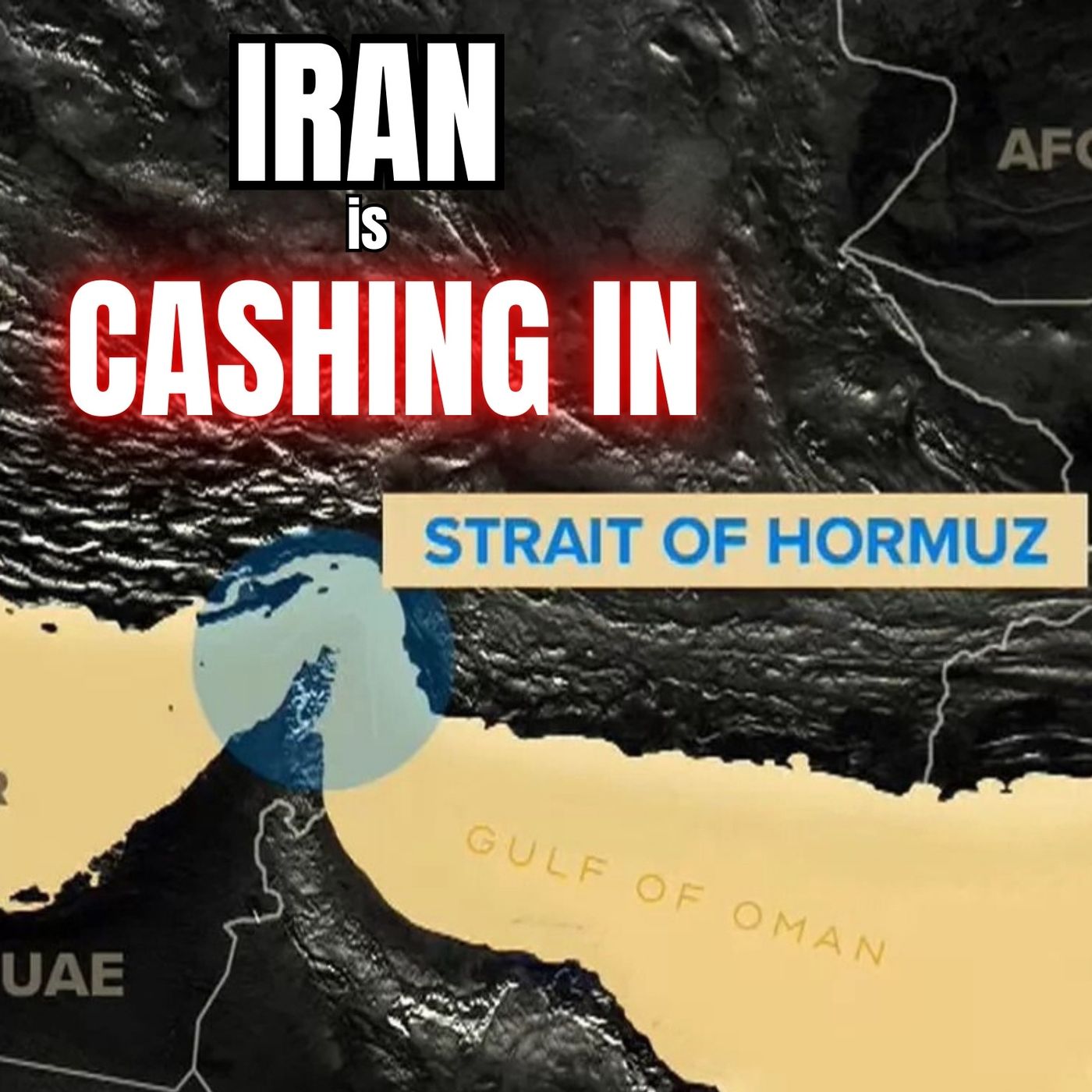
The Team House
Iran is Making MORE Oil Money Since the War Started | EYES ON GEOPOLITICS
01:03:52
We break down the latest developments in the war with Iran, including strikes on key targets, the mining of the Strait of Hormuz, and the growing economic impact on global oil markets. The discussion dives into Iran’s black market oil trade with...
Loading summary
Transcript158 lines
- [00:00]
A
Want a game changing way to watch college basketball? With a one day pass from Sling, get instant access to the men's and women's tournaments. Starting at just $4.99. You can catch all the action on TNT, TBS, ESPN and ESPN too. Want even more hoops? Then add an extra pack to your subscription for just $1. No overpaying, no over committing. Just tournaments so crazy they'd be crazy to miss. Visit sling.com to learn more. Sling lets you do that.
- [00:31]
B
Calling all daydreamers and date nighters. Come immerse yourself in the rich culture of Texas and dig into our mouth watering barbecue. Trailblazers can explore our natural wonders
- [00:46]
C
and
- [00:47]
B
beach lovers will wonder why they've never felt so relaxed before. You're invited to discover experiences you can only find in Texas. Visit traveltexas.com and plan your trip today. Let's Texas.
- [01:01]
C
Hey, what's up guys? This is D. Do us a favor and check out our patreon page. It's patreon.com the teamhouse. You get both Teamhouse episodes and Eyes on Geopolitics episodes completely ad free. You get them early too. You can ask us questions. You can also watch the team ass episodes live as we shoot them. So. And you help support the show and support what we're doing here. It's patreon.com theteamhouse those links are in the description or if you're listening, it's in the show notes down below so you can click it real quick and easy and it helps us keep the lights on. So we appreciate it and we appreciate you guys listening. Thanks a bunch. Hey everybody. Welcome to another episode of Eyes on Geopolitics. I'm here with Andy Milburn and Jonathan Hackett back again. Our resident Iran expert Mark P. Will be joining us soon. I think he's on the road. He should be home soon. So very excited for that. Two Greeks, two Marines. I think we could win a lot happening. You know, you guys are, you know, people who watch and listen to this show are as glued to what's happening and monitoring the situation. I've seen those memes and they're hilarious. You know, a man can only monitor so many situations. You know, it's like never ending. Some of the most recent stuff is Centcom said that we've hit over 5,000 targets, which is great. I don't know if like is the regime still there? I think so. Also I wanted to bring up, I didn't talk about this with Jonathan before. Like we, we struck that girls school that killed 180 kids. No bueno. Just want to make sure we acknowledge that fuck up. Some of the more recent updates is are, you know, they started mining the straight of Hormuz with small, like, their speedboats or whatever they have. I know they have a lot of those. Even though we're saying that we destroyed their navy and all that stuff, which is probably true. But last number I saw in terms of the Navy was about, like, 42% of the Navy was knocked out. You know, there's still a good amount more. Everyone can tell the oil prices have gone up. There's no real end in sight to this. President Trump did say yesterday in some statements, like, he was talking about how he. I don't know if he's floating the idea that this is going great and it's like, we're done. We've achieved our objectives, and he's going to declare victory and just, you know, go home without thinking of, like, the reverberations of this stuff. A couple other things that came out yesterday as well, during the nuclear negotiations. Steve Wyckoff and Jared Kushner didn't have a nuclear, like, expert with them in the room, which you would think, you know, anybody with some wrinkles in their brain would have somebody in the room that knows what they're talking about in terms like, of the technical specs of what's happening. Yeah. So just. I just dire, you know, puked out a bunch of stuff. John, what are you tracking as far as what's happening?
- [04:10]
D
Yeah, so what's most interesting to me is the economic impact of the conflict, because that's obviously the driver of how long this can go on for the United States. As a capitalist country, the US Is beholden to the world economy. The interesting part of that economic angle is that Iran is actually shipping and receiving more revenue than before the conflict in oil sales to China, both in actual real volume and in dollar returns on those oil sales. And to put it in perspect, there are 10 vessels currently inside the Persian Gulf that are moving eastward out into the ocean from Iran. There are zero vessels from other countries doing the same. These vessels are bound for China. So China is continuing to obtain oil from Iran despite what's going on. This is because for some reason, that is inexplicable. Iran is able to pass through these supposedly mined and dangerous areas unmolested, while other ships cannot. And the US Is unable to guarantee that those vessels could move just like these falsely flagged vessels. And I say falsely flagged. For example, one vessel has the flag of Cameroon. And it's not actually like. So normally when Iran tries to move these vessels, they'll get a flag of some country in Africa, typically in West Africa, which is where these flags typically issue from. Well, these flags aren't even from those countries. They're actually fake. They're not even from those countries. They've just put them on the vessel to move through. And they've turned off their AIs systems, which are the systems that tell the world where they are. But they're still being tracked by two European agencies that are monitoring. This is why we know that they're there. And each of these vessels has around 2 million barrels of oil on it. And if you do the legit oil price, which right now is around $80, that's $160 million per vessel. But these are not being sold in the legit market. They're being sold in the black market. So you can increase that perhaps by double or even more per vessel. That is going to go into the pockets of the regime. And the important thing is, when we think from a Western perspective, we think, oh, the oil sales happen in China and the money goes back to the country that sold it, Iran. That's not how it works. It actually goes into banks in Hong Kong, for example, which is most common. And from those banks in Hong Kong goes to banks in Europe and United States and Canada. And this is how the regime stores its assets from these oil sales. Because you can't take a suitcase full of dollars back to Iran because Iran doesn't belong to the swift banking system, because we kicked them out in 2018, which basically pushed them wholesale into the black market instead of a little bit in the black market. They had no other place to go, so they completely moved into the black market. So these dollars and pounds and euros are going to banks that we consider friendly. The regime also has banks in France. There's a bank in Hamburg. There's a bank in London, part of the bank Meli Network. Bank Meli is actually the official bank, the State bank of Iran, that's underneath the Central bank of Iran that is still operating 100% in all these places I just mentioned, and other countries as well. And there is a London branch of Bank Meli in Hong Kong. So it's not the central bank's direct branch. It's a subsidiary of the British bank in Hong Kong where this money goes into the UK And I'm sure people have seen the headlines about Mojtaba, the new Ayatollah, who is miraculously put into the position by the IRGC rather than the process that's supposed to exist in the system. He has $100 million or pounds of real estate in London that he uses to generate income. Very interesting that someone who's grown up in a charitable capacity, who has never worked and had income, has £100 million of real estate in London. So I just want to put that economic spin on it because this is part of the conflict. And you cannot exclude economics from grand strategy. We always learn this in the military, that there's diplomatic, informational, military, economic and political components to a grand strategy. And a lot of what we're seeing in the media is the military instrument of national power. And I think it's very important to bring the economic instrument into this, especially in an oil or commodities based conflict where the price of a commodity affects not only the outcome of the war, but the length of the war.
- [08:07]
E
John, when we're talking about, and there's, you know, this is more than semantics. When we're talking about the, now the Iranian administration owning these assets, we're really talking about the irgc. Right. And, and then in the wake of this, the, the appointment of the new Supreme Leader, I've, I've read articles that assert that this really is kind of a solidification of IRGC's power. All right. It's a, not even a, I mean a subtle shift in a sense from the last vestiges of the revolution and the Muller's right lock, stock and barrel into the hands of the irgc. So maybe that's, you know, it's a question, is that perhaps one unintended consequence of this conflict. We've talked about the downside of decapitation. Right. That might be one of the downsides of removing Khomeini from the chessboard.
- [09:10]
D
Yeah, the 4D chess that we're all pawns in. So basically you're, you're right. And what it is, is kind of the veil has been removed. So there was this pretense that the clerics were ruling the country, it's an Islamic clerically ruled country, etc. Although at the same time it was actually run by the irgc, which we have spoken about many times in the show and many others have, that veil is gone. There's no longer the pretext that, oh, this is actually a clerical regime. Now we see that it's actually the IRGC ruling the country inside and out.
- [09:37]
C
Hi, Mark.
- [09:39]
E
Hey there, Mark.
- [09:40]
F
Good to see you rushing back from dc. Sorry, I had to do some, some TV very early in the morning, which I'm sure none of you watched because you don't watch TV at 5 in the morning.
- [09:51]
E
If I'd known you were on Mark, I would have sent my alarm earlier. Sadly. Hey, John, how are you doing?
- [09:59]
D
Good. Yeah. I did BBC at 1am I'm surprised
- [10:02]
E
you didn't watch that.
- [10:02]
C
Oh, my God.
- [10:04]
E
But the BBC doesn't pay, do they?
- [10:07]
D
No, they pay you in exposure.
- [10:09]
E
Oh,
- [10:11]
C
that's what they say.
- [10:14]
D
It's implied.
- [10:15]
C
Yeah. I got you.
- [10:16]
D
Okay.
- [10:16]
C
Well, it's the same thing here. I don't, I don't pay anybody here. No.
- [10:21]
D
I thought I was getting bags of cash to my bank Melly account.
- [10:24]
C
Yeah, that's.
- [10:24]
E
That is, that is these hook too though, for various shows. And I will pay you an exposure and it works. You get some big names.
- [10:33]
C
Yeah, no, we don't.
- [10:34]
F
I mean for teammates.
- [10:35]
C
We don't pay for guests.
- [10:37]
F
No, I've never heard of that before. Paying for, you know, podcast. Paying for guests. But maybe people do or it's certainly. I don't. When I go on as a guest, I don't get paid.
- [10:46]
C
I don't think. No, I mean, we don't do it. I don't think big, you know, it would be. We're not even a big podcast. But if you're going to podcast, you know, that's massive exposure. I mean, I see it. Msnbc. Sure. There's people watching, I guess, maybe.
- [11:01]
F
Look at this. D. You're very in my, My espionage skills. I snatched a mug from the studio today.
- [11:06]
E
ESPNR skills.
- [11:08]
C
That's what they taught you at the Farm?
- [11:10]
F
Yeah, they did. One of the cameramen's like, take it. I'm not watching. I'm like, I'm taking it. I don't get paid.
- [11:18]
C
All right, so. Hey, Andy, you were going to say something, so.
- [11:21]
E
No, actually I had another question for, for both John and Mark now. So it. And, and obviously we're all outside. We're all outside. Thank goodness. The, you know, the planning, decision making, execution process here. But someone asked me a question the other day that really kind of resonated with which is he on, on the military side. Right. We always learn that at the street, you know, the nexus between, at strategic leadership. Nexus. Right. Between political leadership and the military. The, the, the obligation of the military leaders is to get. Give best military advice. Right? Where it's to give best military advice, but then not necessarily just stand back and said, hey, I advise them. Right. So, you know, the, the question really is this. And, and I know the answer, but we all know that this plan has been around for a while. You know, the execution of this plan didn't just emerge in the last few months. It's something that all of us have been somehow connected with in our previous lives, but connected with this plan has always been end conditions and end state envisioned. Right. And that was the best military advice. Hey, this is the best way to get to this end state. Do you guys, from your informed speculation background, do you think that conversation's taking place right now, as in, hey, boss, we can't get there from here, or hey, another, another week and we should have achieved those air condition, those end conditions? I mean, do you think the administration, based on that advice, has a very clear picture of where this ends, or do you think perhaps there's a little bit of static in that nexus between political and civilian leadership now where the military leaders are saying, hey, this campaign is designed to do X, it's not designed to do Y. And the conditions for X, we will know and we will let you know when they're happening. And we advise, you know, at that point that the campaign has reached its natural termination. Right? It's achieved its end state.
- [13:40]
D
I'll jump in first on that. On the operational level and building the campaigns, as you mentioned, Andy. So the component commander and the forward commanders, the CENTCOM commander, for example, will have those strategic end states for the campaign, but he can't set the strategy for the overall connection of campaigns together. And we can see there's always the air campaign, the ground component, and the sea component, all these things coming together, which at the operational level can be set by that CENTCOM commander. But the President sets the policy objective, which is that grand strategy objective. And the CENTCOM commander can't come and shake the President and say, please give me an end state. Instead, he's got to operate off of what he expects that end state to be, based on what the signals are from the Oval Office and from National Security Council and whomever else is setting policy to the best of his ability. And at the operational level, when we see the campaign plans, it's actually kind of easy to do that, to make those inferences. But the problem is those inferences might not be accurate because politics change much more rapidly than campaigns plans change.
- [14:41]
E
And now I've got to follow up with this question. Exactly right. So this happens a lot. We saw it happen in Afghanistan. We saw it happen in Iraq. And what we saw, I thought, was this kind of attitude of, well, I gave my advice. Whereas for me personally, having a background as a military officer for 31 years. I think there's more to it than that. Hey, hey, boss. I just want to let you know these are the risks of continuing, right? It's not simply, hey, I'm trying to guess what you want, boss. And here's the campaign. There should be at some point, sir, I need to talk to you about what your goals are, because this is what I've given you, but I can't go beyond that and we can't achieve anything beyond this. You've got to tell me what you want.
- [15:32]
D
Yet I think that also shows the difference between military risk that we think about risk to personnel and risk to mission versus political risk, which are two totally different things. And I think back to historical example, Operation Eagle Claw to rescue the American hostages at Desert One. And if you look at the operational plan for that, it's exceptionally risky. It's one of the most risky plans I have ever seen. And the reason it was approved was not because, because the President was willing to take on the military risk. It's because he thought it as a political risk problem. And he basically subordinated the military risk to the political risk factors that were in his mind. And that's a president who was probably thinking through this more clearly than presidents that came after him up until now. And the question is now looking back to Trump won. For example, I remember when we received a list of three dozen cultural sites in Iran that the US Was going to strike after the Soleimani assassination because Iran had retaliated and struck Al Asad Air Base and some other targets. And we were getting ready to strike all those targets inside of Iran in centcom. And there was a lot of discussion about the political risk of doing this versus the military risk of doing this. The military risk was actually relatively low for a short term view that the regime wouldn't be able to do very much at that time. But the political risk was considered too high. And so the President actually backed off because of the political risk balance, which is an interesting inversion of what we're talking about right now, where it seems that the President's more willing to take political risk now, which is pushing the military or forcing the military into a position where there is no strategic end state that's been announced, which is a challenge for forming the end states of those campaign plans that are supposed to fit into those strategic end states.
- [17:14]
F
So the one thing I would add on this is that under normal circumstances, a military campaign just does not, of course, only have the military component. There's a diplomatic component too. And these things are usually planned, and I don't think it's happened now. And that's why I think you see this tactical military success, but then the strategic incoherence. But it's usually planned with a national security process where you have all elements of US Power. It's diplomacy, it's the State Department, obviously, it's the US Military, the intelligence community. You have kind of the Department of Treasury, others, but they are part of a very kind of sequence set of meetings. The National Security Advisor, the nsc, chairs this, and everything comes into kind of focus together. So you have a coherent plan that uses just about every tool in the US Government. And everyone is on the same page. And in these discussions, there will be a policy process and an end state. What are we here to achieve? How can each element of US Power achieve this? And I think that this doesn't necessarily exist in the Trump orbit. I think they sit around. I mean, maybe this is a little dramatic, but they kind of come up with stuff on a napkin. In the Oval, you have a quarter of the State Department is gone. Gone. Under this administration, you have an NSC staff that's been hollowed out. The National Security adviser, Marco Rubio, wears 14 hats. And there's nothing more fun than watching all the memes on social media, whether he's. I think he was in a mine layer outfit.
- [18:50]
C
Yeah, yeah.
- [18:51]
F
I mean, come on. Other times, he's the Grand Viceroy of Venezuela or he's the old Shah in kind of dramatic Iranian garb, but where is he on this? And so I don't think there's a process in which, Andy, the things that you asked about, why is this not kind of more cohesive? I think it just doesn't exist. And then you get the perfect example. There's so many examples of this, but how in the world, if you serve in embassies overseas, one of your core functions in the country. Team meeting is ensuring the safety of Americans. And how we kind of screwed up the evacuation of several hundred thousand American citizens is incredible. And so that was not done correctly. And then you go to the mixed messaging. I mean, every day there are three or four different goals that Secretary of War, Secretary of Defense, whatever you want to call him, Pete Hegseth. And then Marco Rubio with all of his hats and Trump, they all say different things. And then you have CENTCOM chief coming out and saying, these are our three objectives as well. So everyone. No one's on the same page. And you throw on top of that a president who just bases his Decisions on kind of the whim of the day. And so he might just decide, let's just call it quits now. Oil prices are too high, Energy infrastructure targets are being hit. Now we have to deal with, I don't know if you guys talked about it already, the mining of the Strait of Hormuz. How does the U.S. navy conduct this kind of operations? If you remember in the 80s when we were escorting ships through this, I think we escorted one ship a week. It would take about three years to get the 300 ships clogged in the Strait right now through. But again, but these things, I mean, all these kind of problem sets that are now out there, like, we should have been addressing this earlier and that, I mean, I sound like a bureaucrat and I was one, I guess, but that should have been addressed earlier and in normal policy planning meetings. And, you know, I was very critical and I was involved in meetings that, you know, in the Obama era with National Security Council staff that had 400 people in it. And I wanted to rip my hair out. Maybe that's why I don't have any left. But now I don't know if any of these things are going on. And so, you know, ultimately, I think that it's a lot of dysfunction is because of really this unique nature of the administration. And so, you know, there's just. And again, it's a president who at any time can say, we're done now. Israelis are going to go crazy with this because they want to keep going. And I think the increased Israeli strikes are a function of. They're getting nervous now that Trump is just going to start getting really, really nervous, really worried about the US Economy. And I don't know. D. I apologize again. I was late. But one item to talk about is how administration officials are openly manipulating the oil markets. I mean, the idea that, I think it was that was the energy secretary or someone came out yesterday and said that we actually were escorting a ship through US Navy was through the Strait of Hormuz, which was false. Oil prices dropped after that. I mean, this is not even like, they're not even hiding it. And I think that's a reflection of how nervous they are.
- [21:55]
C
They're buying the dip.
- [21:57]
F
I mean, it's crazy. You know, this.
- [21:59]
E
Yeah, I, I mean, I, Mark. Yeah, I mean, I think that was a great, you know, great greater summary. I, and, and I, you know, my, my point is not an argument against that. It is simply, I, I think we've got used to four stars being just very docile in this process. Right? So, you know, think back to the, the shellacking that Mackenzie General McKenzie took in the aftermath of Kabul, which, you know, I think was justified. All right? It wasn't. It wasn't that everyone was blaming him for political errors. It was the fact that people were blaming him for not speaking up when planned.
- [22:39]
G
The sun shining, birds are singing, and all feels right in the world until
- [22:45]
B
the season changes and suddenly you lose your motivation to get out of bed. In fact, one in five people experience some form of depression no matter the season or two time of year.
- [22:54]
G
At the American Psychiatric association foundation, our vision is to build a mentally healthy nation for all because we want you to live your best life and be your best you all year round.
- [23:05]
B
Please visit mentallyhealthynation.org to learn more.
- [23:09]
G
Shop the Sherwin Williams spring sale and get 35% off paints and stains March 13th through the 23rd. Whether you're refreshing your interior or exterior, we've got the colors to bring your vision to life. And with delivery, getting everything to your door is easier than ever. Shop online to have it delivered or visit your neighborhood Sherwin Williams store. Click the banner to learn more. Retail sales only some exclusions apply. See store for details. Delivery available on qualifying orders.
- [23:38]
E
Ants were clearly not going to work in his best military judgment and result. And the probability of bad things happening from the way things were evolving was high. And that he is the, the senior military commander had an obligation to voice his reservations and because those reservations were so serious to offer his resignation. I'm not suggesting we're at that point, but I'm suggesting that, I am saying that there is a gap here, there's a void and that military leadership has a role when there is such a void to speak out.
- [24:21]
F
It's also a unique president. I mean, so, you know, I mean, you know, I think the tendency is, you know, everyone is so this is, this is just human nature. People want to keep their jobs. And you know, and Trump is over appraised of the chairman of the Joint Chiefs over and over and over again. I mean, that starts to get to your head. I'm sure you do hear reports that Kaine has provided counsel to Trump, that perhaps there are some courses of action he shouldn't take. But I would go back to the responsible person in this should be the national security advisor. He is the one who is supposed to kind of correlate all different views and ask for dissenting views. But I mean, I don't know, like there's reports in the press that everyone's wearing the same type of Florsheim shoe. Because Trump, you know, is asking that everyone wear this shoe. You know, you guys know what I'm talking about.
- [25:10]
C
Yeah, I saw that.
- [25:11]
F
Yeah. And so, you know, there's, there's pictures of Marco Rubio wearing these oversized shoes. People are zeroing in on it. I just don't know if there's the ability to provide dissent to Trump because he's so mercurial. And so, Andy, perhaps you're right on that. But I also think that at senior levels, careerism comes through. It's just human nature. It's not great. You should never. You should. I like when I hear stories of leaders who walk into a position of seniority who have a resignation letter typed out in their desk in their safe. They have to be able to look at themselves afterwards. But a lot of times people don't do that. And that's across all administrations too. I mean, I've lost count how many times I've been disappointed when people haven't done the right thing. I had an old boss of mine at CIA and she gave me some tremendous advice and it was just simply that just do the right thing every time period. And if you gotta leave, if you gotta quit, that's okay. You gotta be able to look at. But I don't know if it works.
- [26:08]
E
I would go back to. So, yes, absolutely. When you've got an administration where everyone's wearing the same shoes, you do have to rely on the one guy who's worn core frames all his life. Right. Which is. That's what I'm getting back to. Sometimes that, that guy who, who is not even part of the administration but happens to be a four star component. I mean, a force four star combatant commander, he's the guy in that hot seat. Right.
- [26:39]
D
The challenge is that these are Senate confirmed positions. And especially within the last year or so, generals that have been put into three and four star positions rely on those positions because of their political views more than their military stature at that point. You know, the one star and the two star, yes, there are some politics in the background, but once you cross that two to three, now it's really about politics.
- [27:02]
E
Which emphasizes again, why the military needs to be, you know that very obvious point. Right. Because you want a guy, regardless of political background, context, who is just saying, hey, this is not going to turn out well. I mean, I'll give you just, just examples. Mark already brought up a couple, but the drone threat, right, the drone threat was clearly. And John, I'd love to hear Your thoughts on this. But we should have anticipated that. There's no doubt about it. There should have been a contingency plan. This isn't me being smart after the fact, before the fact. I know that drones were no one cares about, I mean they do. But ballistic missiles are not such a threat. Cruise missiles, not such a threat. Especially when you're talking the distances from Iran. You would think that given the distances from Iran, like over a thousand kilometers towards their targets, they that slow moving drones might be easy to intercept. But recent experience to include from Ukraine shows that they're almost impossible to intercept when you have a large enough inventory.
- [28:06]
D
Actually, Andy, that's an excellent point. It's a very rare opportunity to see something like that used in combat and evaluate it from an intelligence perspective before this conflict. And we were able to do that, or we had the opportunity to do that in Ukraine when Iran built the Alavuga facility in Russia. And we could actually see what combat level production capacity looks like for an active armed conflict, which is obviously Ukraine, where they're able to produce 400 to 600 drones per month. So we could actually see what production levels look like in wartime and then we could actually create intelligence assessment. Okay. In the future, if we go to war with Iran, we can expect this level of productivity even though during peacetime it's lower obviously. So we're not surprising ourselves by this tripled output during wartime. And I think Israel put out some intelligence saying there were 80,000 of these drones already produced before we kicked off. Right. And of course in wartime Iran is absolutely going to produce more than they normally would produce. So we can expect them to be replenishing those very rapidly. The other challenge, I don't know if you've seen the imagery of the GPS jamming around the Gulf. So the GPS jamming is a big problem if you have GPS in your equipment. If you don't have gps, you don't need to worry about it. And some of these smaller drones don't have gps. They have pre programmed positions. Some of them are just going in a specific direction that's set before they launch. Without even mapping. Exactly. And I actually saw these in action in 2011 in Afghanistan. There was an Iranian drone over our base that lost contact with its handler but still had pre programmed activities it was supposed to do in flight and did those activities without any control from the controller over the horizon. And that was 15 years ago. Right. And they've been modifying these obviously and using them to great effect and learning combat errors in Ukraine and adjusting Those errors, not only in production, but in the capacity of those drones to move through air defense systems. And again, this is something that we could evaluate and hopefully had evaluated. I don't know if we have or how we've used that evaluation in this current conflict.
- [30:01]
E
So there is an exact example of where military leadership has failed to give best military advice. Hey, boss, I want you to know this is what could happen because. And again, this is where I kind of push back a little bit on the distinction, because there isn't always a clear distinction between military and political risk. And here is one area where they both combine. Right. That gap, which was significant, although perhaps not in terms of casualties, not even in terms of infrastructure destruction, it was a significant military and political risk because of the threat to Gulf Cooperation Council, GCC countries. Right, exactly.
- [30:43]
D
Our regional allies, especially those partners close in.
- [30:47]
F
I mean, this is not a huge kind of analytic stretch. I mean, maybe the four of us here know a thing or two, but I mean, the idea that we are unprepared for the drone warfare after seeing what happened in Ukraine is extraordinary to me. And so it's not, you know, is the US Military who is unprepared? What about the intelligence community? I mean, again, when you go through these operations and things are presented at the National Security Council, there are, you know, cost benefit assessments. This is what could happen. You do all the left of boom planning. I mean, this is just basic. I mean, any one of us could have said this off the top of our heads. Hey, we gotta get Americans out of the region. The Iranians are gonna use drones. Look what happened in Ukraine. This is tough. Are we ready for this? I mean, this is not rocket science. So I think that's one of the things that really surprised me, that we weren't as well prepared for this. But there's another thing that I think for both. For Andy and John to comment on has to do with this notion of boots on the ground. And I was laughing. There was. I can't remember if it was on Fox or Newsmax or one. They had someone come on and said, well, you know, the use of special operations forces, that doesn't count as boots on the ground. It kind of does if you're one of those forces who are what on the ground? You know, we've kind of been there. Like, you know, if you're on, if you're, you know, if you're walking around, maybe you're not wearing your army boots, maybe you're wearing your Solomons because you're a member of Some tier one unit. But you're in Iran. I don't know even if it's for a couple hours. What are your thoughts on that? Because, and I think that's it's most important when we think about two things. One is what to do about the Iranian nuclear program. You know, is that. And again, we're not sure if that's a goal anymore because they keep changing. But the idea of, you know, how do you get to that highly enriched uranium do we have to have. And you all both you guys know this, you can address it. There are, you know, our kind of top soft units are trained in this, whether it's, you know, Dev Group or Delta, you know, do you expect that to happen? And then I think on the other part has to do with, and I know we're going to get in the weeds is about how to kind of deter the Iranians potentially or they are mining the Strait of Hormuz. What about Krag Island? Would there be some kind of effort of us to take that? Which I think is the kind of, the huge, kind of the locus of Iranian export capability. So what are your guys thoughts on that?
- [33:14]
D
Yeah, so I always tell this anecdote, I actually used to teach a class on military diplomacy and about why the boots on the ground thing is so contentious. So we were in Syria with marsoc. We were in Syria and Obama comes on and he says we have no boots on the ground in Syria. And we look at our boots and they're on the ground in Syria. And we're like looking at each other like what? And you know, and it's funny because you know, on the ground level, as a force there, you're not part of this big political discussion. You're just, you're just there doing the thing that you're supposed to do, you know, and there's actually reasons they say boots on the ground and they're like legal distinctions between what does it mean to be deployed and anyone who's had to be in a command position to have to put forces out there. You've had to sign something called a boots on the ground letter or a bog letter that says we have X number of forces in this country. The chief of mission approves that number of folks based on NSD 38, which is something that Ronald Reagan put into place where the chief of mission is the one that gets to say how many forces are in the country. But if those forces aren't there for military reasons, they're there for something else. They don't count for the Boots in the ground number. And there are all these different ways you can, like, push these levers to get that tier one unit in there without actually saying legally that they're even there, which is kind of fascinating. We had the problem in Libya as well when we said, when Obama said there are no forces in Libya, there was a MARSOC unit rolling across the airfield with their weapons out, which they weren't supposed to have in the newspaper. So there's all these examples of when we say that, and it's not true, but of course there's reasons for that, obviously, operational security reasons and many other reasons. But on your point about the Carg Island, I just want to jump on that because if you look at a satellite image of Carg island, it's not very large. It's a very obvious oil refinery or oil shipment point. There's nothing else on the island except these vats of oil and gas on the island, which to me is like in a conflict where oil and gas are at the center of the conflict as far as the Gulf is concerned. Legitimate military target. If the regime is. Is selling this on the black market to China and to no one else. There are no other benefactors of this oil. It just screams to me, strike here. There's a big X on it. Hit this spot. And for some reason, that has been one spot the US has not touched at all. I just don't understand why. It doesn't make sense to me.
- [35:28]
E
A couple of comments on that. One is the difference between a certain number of boots on the ground and more boots on the ground is not such a big difference. Right. So that, you know, John, to your point about. I'm familiar with the, the bulk report that, that, that went through endless machinations to make it look as though we had fewer guys in, for instance, Iraq and then Syria in oir. Right. But it's a, it's a huge significance between no boots and some. And, and, and, you know, while all of us understand that politically there's no difference between conventional and SOF or covert boots on the ground, in, in practice, I mean, politically there isn't. But in practice, of course there is because we just. I, over the last three or four decades, the United States has had just not good experiences of putting mass boots on the ground. Right. Flooding the zone. Whereas we, when, when we're doing things a little more with a little more precision and we're using soft or using the agency, we've had generally a much better record, right. All the way back to, you know, you name it I mean, back to El Salvador, plan Colombia, but. Yeah, so, but, but it's an emotive term and we've seen how this hit the media. Right. So did you see the headlines a couple of days ago? The President does not rule out boots on the ground? Well, really, it was, it was the Secretary of War and the press secretary saying, hey, we don't want to rule out anything because that, that, that helps the enemy. Right. So, but having said all that, all right, I don't, you know, as a. It's a lengthy way of saying, I don't think there's a plan to put conventional troops on the ground, but I could be proven wrong. I, I wouldn't be surprised if there was a plan for SOF or there were covert plans. And I just hope that those plans are linked, linked in the practical term to strategic end state. And for instance, I hope we're not putting all our eggs in the Kurdish basket, right, in the hope that we're going to replicate the. We're going to take what the SDF did and replicate that in Iran, because all of us here, again, know that doesn't happen.
- [37:52]
F
I think Dee's Kurdish friends turned that off. Erdogan fit on through a fit. So I'm not sure that's going to happen with the Kurds. I think the Israelis are doing it, but I don't know if we're going to do it. Who knows?
- [38:04]
E
Can I. Are there practical missions for, you know, Mark, you mentioned essentially bda, right, on the nuclear facilities.
- [38:14]
F
How do you secure the highly enriched uranium? I mean, that's, you know, obviously I'm not saying anything secret. It's out in the press. I mean, we have our Tier one units. There's specific units trained for this. If we really wanted to make sure that Iran is not a nuclear threat, we have to find that remaining heu, and presumably, hopefully they know where it is.
- [38:33]
D
So the thing is, there are like two dozen locations that we have publicly disclosed have some of this uranium and other materials. So that's not just the uranium itself, it's also the centrifuges, the computer equipment that's used. All this has to be taken not only because of the technological capacity that it provides to the regime, but also because it's actually radioactive. We have to remove some of this material from the country. And places like Isfahan, for example, have huge amounts of uranium. You can't just send a small team in with a backpack and take it out. You have to have logistics and sustainment behind them moving it out safely. You know, for example, the United States, when we move nuclear material around, we have security forces, the Marine Corps and Air Force as well, that actually go with that material and transport it on the ground wherever it's going. Not Tier one units doing this, but regular forces doing this, because it has to be escorted so that there's no possibility. If you've ever seen the movie Broken Arrow with back in the Day, that was a great movie. And that's the thing you don't want to happen, is that this nuke just makes its way out somewhere or the uranium makes its way out somewhere. And that's only one mission, though, because there's the uranium counter WMD mission, but there's also the UW FID mission, which, if you were using Kurds or Aeris, those are two separate missions under two separate authorities, which introduces a lot of complexity because you can't have the same commander doing both activities. So now you have two task forces in there managing that, plus external actors like the Agency, Department of Energy and others who are going to be also playing a role in this as well. And as I keep mentioning these, you have to think about all these layers of bureaucracy that are being added when these two simultaneous operations are occurring, rather than just one of them or the other.
- [40:08]
F
Do you think it's going to happen? Do you think that soft units will be involved in such a, you know, such an operation against the Iranian nuclear program?
- [40:18]
D
I think in a normal political atmosphere, it would be easier to answer that question, but because of the whipsaw nature of foreign policy right now, it's very hard to say.
- [40:28]
F
Andy, quick question for you. And I'm going to get certainly in trouble. This morning when I did a TV hit, I said, steve Witkoff is the worst US Envoy in diplomatic history.
- [40:40]
C
I think that's fair. I think that's fair.
- [40:43]
F
And it's. Because what I'm going to ask you about is when he actually said yesterday, he said that we're taking Russia's assurances that they're not providing targeting assistance to the Iranians, that gave me and a lot of other people, I think, post traumatic stress from the Helsinki.
- [40:58]
E
Thank God for that.
- [40:58]
F
From Helsinki a couple years ago, when Jonathan Le Maire is a friend of mine, asked President Trump, who do you believe about Russian interference? And Trump said, well, I believe Putin. What do you think of Wyckoff's comments on that? I'm asking you only because of your Ukraine experience, too, and how Witkoff has kind of bumbled through Ukraine. But I mean, this is the kind of this is a, frankly a more influential member of Trump's team more so than Marco Rubio. I think giving the Russians a pass. I think everyone was astounded at this.
- [41:31]
E
I think it does not all go well for Witkos. Understanding of this is a vast understatement. Right. So where I'll go from here, I think it's part of a larger problem that my, my concern and I don't know this is the case, but that this administration is kind of so set against Zelensky and Ukraine and, and so inclined to give Russia a pass that it, that this wasn't their only. This wasn't the only error. Right. That now the Russians are in a position where they're doing targeting and, and of course the Russians are doing that. And of course they will justify it ethically because they are defending an ally under attack from the United States. And after all we did that with the Ukrainians. Right? We helped the Ukrainians with.
- [42:22]
C
That's one thing for them to do it, but it's another thing for the president to be on Air Force One spinning about it.
- [42:27]
E
I'm not justifying, I'm not justifying what the Russians are doing.
- [42:29]
C
No, no, I'm saying about what the administration's doing in terms of spinning.
- [42:32]
E
What I'm saying is that we're willing to overlook acts of war from Russia because we're so set against Ukraine. The other. But perhaps even the more serious aspect of this is we didn't consult with Ukraine before doing this and now Middle Eastern countries are saying are contacting the Ukrainian government directly. Indeed, the Ukrainian government's agreed to send mobile training teams to Middle Eastern countries.
- [42:57]
F
The United States, the Saudis are going
- [42:59]
E
to give billions the United States not part of this. Right. In order to help with their short range air defense. So we have failed on two. First of all because we have known for a long time that we have a gap in our short range air defense. Right. We've known this and we've never closed that gap. We've never closed that gap and we haven't. The Ukrainians have. The Ukrainians are everything from drone target acquisition. And I'm not going to get too technical, mainly because I'm hanging up on my fingernails here. But why are drones are a different problem set than cruise and ballistic missiles. You can use Patriot and Thaad, but first of all, you're mismatching your inventory. It's not cost effective. Secondly, you're running your magazine slow. And thirdly, Patriot and Thaad are not the best interceptors for Small drones with a. I mean for drones. Slow moving, low altitude, low radar cross section. Okay. This has been our problem for a long time. From acquisition to engagement, using integration of EW and other means to short term kinetic defense. We have a massive gap. And that's no secret. It's been a gap for a while and we made no effort as we planned this to reach out to Ukraine to try and close that gap. We lost credibility with our partners because of that. Now they're saying, hey, thanks very much for your help, United States. We're going to reach out to the experts directly.
- [44:27]
C
So what's funny is yesterday Axios came out with an article saying US dismissed Ukraine deal for anti Iran drone tech. Last year near seven months ago, Ukraine officials tried to sell the US their battle proven technology for downing Iranian made drones and they said no thanks.
- [44:43]
E
Could that have been useful?
- [44:46]
C
I'm not a military expert, but I'm going to say yes.
- [44:49]
D
We'll never know.
- [44:51]
F
I want to shift just one quick thing here because I thought there's. And this. I'm going to defend Pete Hegseth on this and the Pentagon.
- [44:59]
E
You're always doing that.
- [45:00]
F
Not something I usually do, but there was a controversy or maybe something about the millions of dollars spent on steak and lobster. And all I will say is when you're in kind of shitty places, if you can get a good meal of steak or lobster, it's a glorious thing. So I will back up the DOD and whatever they want to spend on this kind of stuff. You guys have been there. And I will add one other thing too. They didn't talk about the agency budget, but CIA always had at every war zone base, great food. We had great chefs. And that is important.
- [45:32]
C
I can't even imagine how, you know, the level of like getting ripped off the CIA is getting for like chefs and cooks.
- [45:39]
F
Who cares?
- [45:40]
C
I'm just saying like, I'm saying like they're probably super excited, like, oh, the CIA.
- [45:46]
E
Did you ever have to fill out a missing gear statement during your time in the agency?
- [45:50]
D
No.
- [45:52]
F
Are you kidding me? I have more.
- [45:54]
E
Hey, pay, pay for a lost poncho liner, a broken eto.
- [45:58]
C
So I think the issue with that was last month, this last month of DOD spent 93 billion. The most since 2008 when we were actually in a war.
- [46:08]
F
I can understand steak. I don't care. Yeah, that. I mean, you got to agree with me, right?
- [46:12]
C
I agree with you.
- [46:13]
D
We actually had lobster and steak on the Navy birthday in Afghanistan. I remember it and it was like, I don't care whose birthday it is. I'm having steak and lobster.
- [46:19]
F
Bring it on. You've been eating MREs, you know, and so I thought that was funny.
- [46:25]
C
What's interesting is they said it was 93 billion and then they listed a bunch of stuff that was like, all right, you're listing a ton of stuff that's like not adding up to 93 billion.
- [46:34]
F
Right.
- [46:35]
C
You know, it's adding up to maybe a few hundred million. And it's like, shouldn't we actually look at what the DoD is spending? Except besides like, state the. Like that, like, it was just the story to, you know, to get viral. To go viral.
- [46:49]
F
Yeah. So anyway, so I'll defend the Pentagon and the Secretary of Defense on that. Bring on the lobster.
- [46:55]
E
I thought it was, you know, if. When you are, when you have a bunch of stuff that is happening or not happening that is quite serious and pertains to national security and global stability and all of this, I thought it was delving into minutia to start going after meals. Right. How about, you know, the topic we just discussed, Short range air defense. Now that is a, that, that is, that. That is potentially criminal negligence. Right? I'm, I'm overusing the term criminal. I don't mean literally criminal, but it's negligence of the high order that we ignore this.
- [47:38]
C
Well, didn't they destroy, didn't one of our big radar domes get destroyed in Kuwait? That's costs, you know, a couple billion dollars. Bahrain, sorry, that costs a couple billion dollars and can't just easily be replaced.
- [47:51]
D
You know, I think that's why they don't want to talk about it, because it seems like the narrative coming from the Department of Defense, which by statute it's still called Department of Defense.
- [47:58]
F
Right.
- [47:59]
D
Is that they don't want to, to reveal any weakness in their narrative. So they're unwilling to acknowledge that there are combat losses, even in losses of life. If you see the way that they describe losses of life and injury. General Kaine did a good job of it during his press conference last week. But the civilian side is doing a very poor job of acknowledging any cracks whatsoever, which I think is also a mistake because it looks a lot like hubris, which is one of the most dangerous errors or perhaps is the most dangerous error you can make in combat operations.
- [48:26]
F
And we've seen this before. I mean, again, in the 20 years of the GWAT in Afghanistan and Iraq, there was a lot of bullshit spewed at press conferences. I do think Kaine is an interesting figure. Again, he's the Chairman. So he's the president's advisor on military affair. You know, when they do these joint press conferences, you know, you go through the cringeworthy moments of Hegseth when he's acting like a JV football coach, using all of his kind of the same crap that you guys probably heard when you were young in your careers from a second lieutenant or a captain. And then Kane comes out and he's much more sober and kind of. I don't see him acting with the hubris that certainly Hegseth is just kind of spewing forward all the time, and that gives me some hope. But again, as you noted before, there's the military aspect of this, but then there's also the, you know, what are our goals? And so perhaps that's something that Kaine, you know, I mean, it's not his job to be the national security advisor. His job is to go out and try to tell the truth to the American public. And I've, you know, I mean, I think when he was even asked about, you know, how's the war going? And he's, you know, he said, the Iranians are fighting back. You know, the enemy does get a vote. And so I think that's important.
- [49:41]
D
That's what concerns me, too, about if the US Pulls out right now and stops, just turns it off and says, I don't know if you saw Caroline Leavitt said that Trump will define what the unconditional surrender looks like, which is a very interesting new way to look at how a war ends. And I just think about the enemy gets a vote, and especially now, Iran is in a position to react in ways that we probably hope they had never acted. And especially if we look back in the war in Iraq, when they activated Shia militias and they were using explosively foreign penetrators, that is a small drop in the bucket to what a dying regime will use. They will do anything. Right. And I think that that's the scariest type of enemy, is one who's not constrained by any rules anymore. And we've given them the opportunity to remove those constraints. In fact, we have removed them ourselves from them. And I think that's perhaps what is scary to me is that if we say it's over, it's actually not over, and it's worse.
- [50:34]
E
We've also given our adversaries, Russia and China, a kind of the moral high ground for siding with Iran openly now. Right. For a number of reasons. I mean, I'm not criticizing execution of the plan because I think, you know, I mean, It's a, it's a complex question. Was the war justified? Wasn't it justified? But the bottom line is again, that those of us here know Iran's been a bad actor, a bad regional influence for some time. Inevitably, something had to be done about it. Right. You know, even if it was just mowing the grass. That's not what I'm critiquing. But, but again, it's the being sure of your end state, being sure of your goals, being open and transparent with the American people and of course, their elected representatives about what those goals are. That is how a democracy fights a war. And that is the way we, that's. Those are the things that concern me.
- [51:40]
F
I agree with.
- [51:41]
D
And having.
- [51:41]
F
Yeah, go ahead, go. Sorry, John.
- [51:43]
D
I was going to say having end states publicly announced does nothing to operational security. And it sounds like that's the excuse a lot of the administration folks are trying to say is that if we say what we want to do, it's going to disrupt what we're doing. And I look at history and I think that that's never happened. And you can make. And end states are typically quite nebulous. They just kind of point in a direction. They don't actually say on this date at this time this is happening. I think World War I was the only time that we actually picked the date that it's happening. And people were still shooting at each other when we had the armistice signed. And I don't think that's what Americans are looking for. And looking at the approval numbers for the war, I think it's like 20, 26% of Americans approve of it. Well, you can get those numbers up if you communicate when there's an unknown, people aren't going to be comfortable with that unknown for a variety of reasons. Some of them are not even political. Some of them just want to know what's going on in their country. And I think that might be contributing to the negative decline of that approval rating.
- [52:38]
F
Hey, are you guys concerned about again? And I think, Andy, you just raised it. So we are now mired again in a Middle Eastern war. Kind of extraordinary as, as, you know, the Trump, the campaign and his kind of this whole kind of reason for being on foreign policy was this not to happen. But when you, when you think about, you know, what's the long term pacing threat to the United States and I think a lot of maybe I don't know if you guys agree, but there's. It used to be in the national defense strategy, it's not anymore, but China was That, you know, with, with the amount, you know, we're spending a billion dollars, Is it a billion a day? The numbers are extraordinary. But with all sorts of stocks now being reduced with our. I mean, our fleet of aircraft carriers are going to be going to need serious retrofitting after this. How dangerous is this moment now as China looks at this and says the U.S. actually, while the U.S. military is, I think we would agree, the most powerful force on the planet, we're going to be exhausted after this. Is there some danger in that? Have we left the Pacific way exposed in what's happening now in the Middle East?
- [53:49]
D
I think looking at our defense industrial base for a long time, it's been clear that we are not able currently to sustain an actual conventional conflict with China. I think this is kind of well known. And China is currently evaluating how we're reacting to a much lesser adversary in Iran and probably getting very positive feelings from that evaluation, especially considering the further logistical challenges across the Strait of Taiwan, which is much further, it's almost 10 times further across than the Gulf is, and the ability of the US to resupply and continue the conflict in that smaller space, exponentially more difficult. It's not a geometric difference. It's an exponential difference across the Straits. And that's just the straits. That's not the smaller islands like the Spratlys and the Cross Islands and things like that in South China Sea, which will be also a major theater of conflict if we had a war with China, and we have Guam, very far away, very far away from the actual weapons engagement zone that we would be inside of if we were fighting against China. Not only that, we've also pushed away our allies and partners in the Pacific, starting with the National Security Strategy that recently came out, excluding those partners and allies from the strategy. If we looked back at the Biden strategy, mentioned allies and partners something like 270 times in only 20 pages. Right. It doesn't mention them at all in the National Security Strategy now, which is, is our strategy. That is what the policy position is of the United States. It's not like there's some secret policy somewhere else. Like this is the strategy. And China reads that. China understands that, and China probably believes it. I would imagine it would be smart for them to do so. So I think they're looking at this, at this and probably feeling a little more confident than before the war kicked off that they'd be able to actually take Taiwan and suffer less resistance from the US side, at least not talking about the Taiwanese themselves, but from The US I think they're feeling more confident probably.
- [55:34]
F
Yeah.
- [55:34]
E
I would say this, and I don't, I'm not a China expert, but I would say that Xi undoubtedly has a plan. Undoubtedly. And I think this simply, this, this reduces, this is validation, reduces the risk on that plan. And I would guess, of course, I don't know, but I would guess that that plan includes step one, consolidation in the South China Sea. All those places, John, that you mentioned and others. Right. Where they, where China's been pretty aggressive anyway and has pushed ahead despite protestations from the Vietnamese and the Filipinos and amongst others, they will continue consolidate there. And then step two, I would guess would be a kind of an anaconda policy on Taiwan. Right. Beginning with political infiltration or affecting the, the parties manipulating Taiwan's elections as much as possible. And they don't, China knows they don't have to do of stuff as complex as what Russia did in 2016 in the United States. I mean, you're talking about similar cultures, you're talking about the same language. They're very, very understanding of party politics within Taiwan and, and how to influence it. And, and that would be step one combined with economic incentives and disincentives. You know, I don't think they even have to get to the blockade point, but I'm sure that's on their, you know, their, their escalation of force. And then what you're talking about actually crossing the straits. You know, by that time it comes to a decision on that, I think it would be almost the fait accompli which be seeing a pro China. Great. Perhaps not a pro Chinese government, overtly, strongly pro Chinese government in Taiwan, but certainly a lot of pro Chinese sympathy and mobilized. Right. That mobilized political forces within Taiwan that favor unification.
- [57:42]
F
Was it wasn't there the Indo PACOM chief or I know it was. Bill Burns too said, you know, there's this mythical 2027 date, but we're coming up close to it now. That was when I guess the consensus in the military and the intelligence community was the Chinese would be ready to do something. Well, it's, I don't know, It's March of 26 is coming up. And that didn't even take into account a very tired and exhausted U.S. you know, military.
- [58:07]
D
So I think I just add on there.
- [58:08]
F
What's that?
- [58:09]
D
So, so I just want to mention. So I worked in the South China Sea quite a bit and with MARSOC as well. And I was inside the nine dash line right on the tip of the cow's tongue. In Natuna Basar, which is a very small island that's actually an Indonesian island. And it's Indonesia's only physical territory inside the nine dash line. And while we were there, this is 2014, so 12 years ago, China was doing daily two ship overflights with fighter aircraft interfering with Indonesia's airspace every single day. And Indonesia could do nothing about it, and neither could we. And this is really important to understand because China is not a democracy, obviously. Their strategic outlook is far longer than ours, not because they're brilliant or special, but because of the way their political system domestically is set up. So if they pick a strategy 20 years ago to do something, there's no disruption to that strategy politically. It remains in place. And it has been in place. Like I said, it's been in place for decades. They've been thinking about this for a very long time, since they entered the World bank back in the early 2000s. And they became this new economy within the international system, which I think a lot of people don't remember this, that China was not always economically viable, even in recent memory. This is a new thing. It's a new entrance economically, and China does not want to let go of that. South China Sea is a major part of that. The internal island chain, the first island chain is very important to that, which includes Taiwan. The second island chain is Japan and all the way down through to Okinawa. And the US doesn't really understand. Some do. There are some people within the government that understand this important kind of philosophical outlook that China has in the Pacific. This is a strategic opportunity right now for China to leverage that. That doesn't necessarily mean using the military instrument of national power. In fact, they probably won't. They'll probably use a combination of diplomatic information and economic levers and avoid the military lever at all costs because it is extremely expensive with disparate impacts to use a military instrument. I have a friend who's in the Taiwanese government now mentioned to me about, in Taiwan, on TV and at, like, gas stations, for example, they have little screens at the stations. There's Chinese propaganda all the time on all of those screens right now that the Taiwanese government's unable to do anything about. China has already been doing the informational instrument. And this is something again, to those who've been watching it, they know this. It's obvious. But to, I think the general public is not something understood that it's not going to be a salvo of ballistic missiles like we have with Iran right now. It's a war that has already begun. Has already been going on for decades.
- [60:35]
F
And wouldn't that. Of course, if they do it in that kind of slower methodical measure, and if, let's say they did it under this administration, that almost guarantees the US doesn't respond in any fashion.
- [60:47]
D
Right. And if we're looking at this from a grand strategy level, what they want, what China wants to happen, no shots fired. They want a government in Taiwan that's elected that opts to join China. This is the goal. It's not a war. And I think for us in the west, we're thinking it's always about war. No, it's about the easiest and cheapest way possible to achieve the objective that this country has, and that is a domestic choice to rejoin the mainland.
- [61:15]
E
And they're well positioned to do that. They're well positioned to influence. And there's nothing right now the United States is doing to counter that.
- [61:23]
D
You know, I mean, we've actually turned the spigot down in the last, let's say, seven years or so.
- [61:28]
C
Good God, guys, things are going great.
- [61:30]
F
Hey, D, I have some good news for you.
- [61:33]
C
Don't tell me. Some Red Sox bullshit.
- [61:35]
F
No, not Red. So, you guys, this is the sign of my age. I actually went out and I bought some Skechers.
- [61:42]
C
Like the shoes?
- [61:42]
F
Yeah, the shoes. The slip on Skechers.
- [61:45]
C
Congratulations.
- [61:46]
F
Isn't that. That is a sign. I just got back from Florida, so, you know, I was hanging out with a lot of old folk and so I'm going to wear some SKEC around. How do you like that?
- [61:52]
C
Full retiree mode.
- [61:54]
F
It's incredible,
- [61:58]
C
guys. As usual, this does not give me any confidence with the world today.
- [62:04]
E
Pepsi should have different people on the podcast.
- [62:07]
F
Yeah, right.
- [62:07]
C
Might be right. I might just have like a good news podcast or something. Just like. So I'm not depressed every time we do this. John, one quick question. What's like, if, you know, like in terms of internal polling in Taiwan, what are people for reunification against it? Where's it at?
- [62:25]
D
So the competing party right now that's possibly going to take over in the next election is pro mainland. And this is kind of a crazy thing to believe that this is possible. Let's say it was 10 years ago. You wouldn't have believed I'd be saying that, but there's been such incredible pressure from mainland on domestic politics in Taiwan that they have. They have been succeeding in gaining significant ground to the point where this person I know who is in the current government is concerned that they're going to lose the election to this party. And I think that is what China wants. I mean, like that exact outcome is what they've been pushing toward and investing resources into. And they're very likely to succeed right now.
- [63:06]
C
When is the election?
- [63:08]
D
Next year.
- [63:09]
C
2027. Great. This is going great, guys. Jesus Christ. All right, anything else? All right, do us a favor, get everyone's books. Everyone here has a book except for me. I have one coming out in September. Actually, I'll drop that.
- [63:26]
D
But it's a book of business. That's even better.
- [63:28]
C
Yeah, right? Yeah. John Hackett. Links are in the description. Mark P. Link are in the description. Andy Milburn. Of course. Links are in the description. There's something else I wanted to say. Oh, Team House. Patreon.com TeamHouse Help support the show so I could pay these guys eventually. Thanks, guys, as always.
- [63:51]
E
Yeah, thanks everyone.
- [63:52]
F
Thank you.
- [63:53]
E
See you next week.
- [63:56]
H
I want to tell all of you today about a new newsletter that we're launching that encompasses both the Team House podcast, the Eyes on podcast and the High side news outlet which I run with Sean Naylor. The newsletter is going to be once a week it's going to come into your inbox and you're going to get the most current podcasts on Eyeson and the Team House and whatever's topical or current on the High side. So it's another way for us to get the information out to you as social media algorithms are pretty iffy and you never really know what doing you're going to get. So this is a once a week email. It'll slide into your inbox and it will have, you know, the greatest hits of that week.
- [64:36]
D
It's really good, man. Checking it out.
- [64:40]
H
The website for it is teamhousepodcast.kit.com join teamhousepodcast kit.com join go there and you enter into your email list or you enter your email into the little thing on the way website and you're good to go and that'll be it. So we really appreciate your support and hope you'll consider signing up.
- [65:03]
F
Where's the link?
- [65:04]
H
The link will also be down in the description if you're looking for it there. And that's Teamhouse Podcast Kit K I
- [65:12]
D
T Kilo India Tango.